Two strand twist styles for natural hair are one of those rare hairstyle choices that deliver on every promise — protection, definition, and real visual impact without chemical processing. I’ve tried protective styles ranging from box braids to Senegalese twists, and honestly, nothing beats the low-manipulation simplicity of a well-executed two strand twist on natural hair. You get a style that can last two to four weeks, locks in moisture like a sealed envelope, and works across every texture from 3a to 4c.
The real reason natural two strand twists keep showing up on Pinterest boards and salon chairs is simple: they’re two styles in one. Wear them twisted for the first week, then unravel for a fluffy, defined twist-out the second week. Mielle Organics Pomegranate & Honey Twisting Soufflé ($14 at Target) gives a consistent hold without crunch, and Camille Rose Naturals Almond Jai Twisting Butter ($12) seals moisture for longer-lasting definition. Skip the heavy butters if your hair leans toward buildup — they’ll weigh the twists down and cause frizz by day three.
Main styles covered: Rich Chestnut · Golden Honey Blonde · Vibrant Burgundy
Best products: Mielle Organics Twisting Soufflé · Camille Rose Twisting Butter · TGIN Twist & Define Cream
Wear time: 2–4 weeks as twists, 3–5 more days as twist-out
Texture range: Works on 3a–4c natural hair
Key rule: Twist on damp (not soaking wet) hair for smoothest finish
Rich Chestnut Twists Photograph Warmer Than Any Filter
Chestnut is the color correction your feed didn’t know it needed. Two strand twist styles in this warm brown tone pick up ambient light in a way that dark natural colors simply don’t — each twist catches a slightly different value, creating the illusion of depth without highlights. I wore a chestnut shade from Design Essentials for six weeks last fall and received more compliments than any other style I’d tried in years. The secret is how the warmth plays against autumn and winter wardrobe neutrals: rust scarves, camel coats, olive jackets all look like they were styled intentionally around the hair.


Thickness matters here. Thick chestnut twists — think pencil-width sections — show the color’s full dimension at the surface. Go too thin and you lose the richness; go too thick and the twist looks heavy rather than luxurious. Shoulder length is the sweet spot for this shade because you can see the full color shift from root to tip. I’d steer away from chunky jumbo twists in chestnut specifically — the color reads flat when there aren’t enough strands to play against each other.
What actually makes chestnut low-maintenance is its fade behavior. Unlike cooler tones, warm browns grow out in a way that blends with most natural hair bases rather than creating a harsh line of demarcation. You’ll notice the ends lighten first, giving an almost ombre effect after four to six weeks that looks intentional. Conditioning spray twice weekly — I use Alikay Naturals Wake Me Up Curl Refresher — keeps the ends moisturized without disrupting the twist.
One anti-advice worth repeating: don’t attempt chestnut twists over box-dyed dark black hair without a color consultation first. The underlying pigment will fight the warm tones and pull either orange or muddy green, neither of which is the editorial fall look you’re going for. Preparing your curl routine properly before installation makes a visible difference in how the color sits on each strand from the very first day.
Golden Honey Blonde Natural Hair Twists and the Length Illusion
Honey blonde does something structural to two strand twist styles that warmer or darker shades don’t: it makes mid-back length twists read as genuinely long rather than just present. The light tones catch from multiple angles simultaneously, creating the appearance of movement even in a still photo. You’ll notice this immediately when you compare honey blonde twists to jet black twists of the exact same length — the blonde version photographs at least two inches longer. I learned this from a session stylist at a natural hair shoot, and I stole that trick immediately.

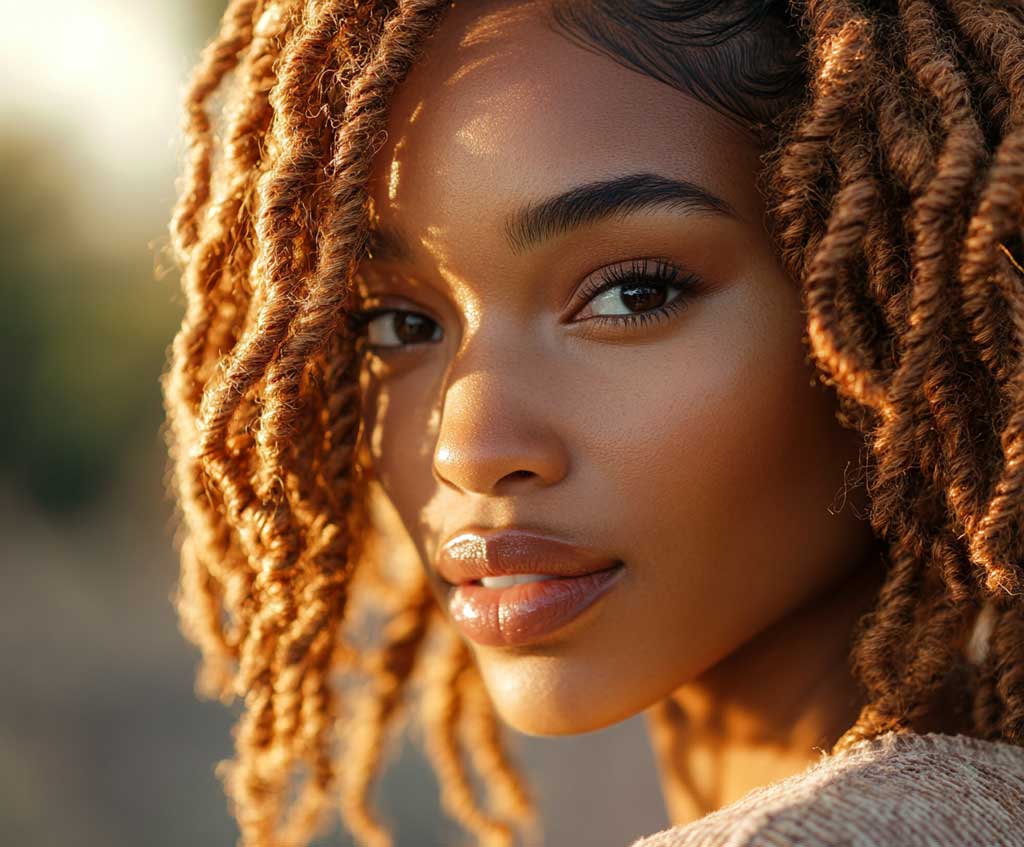

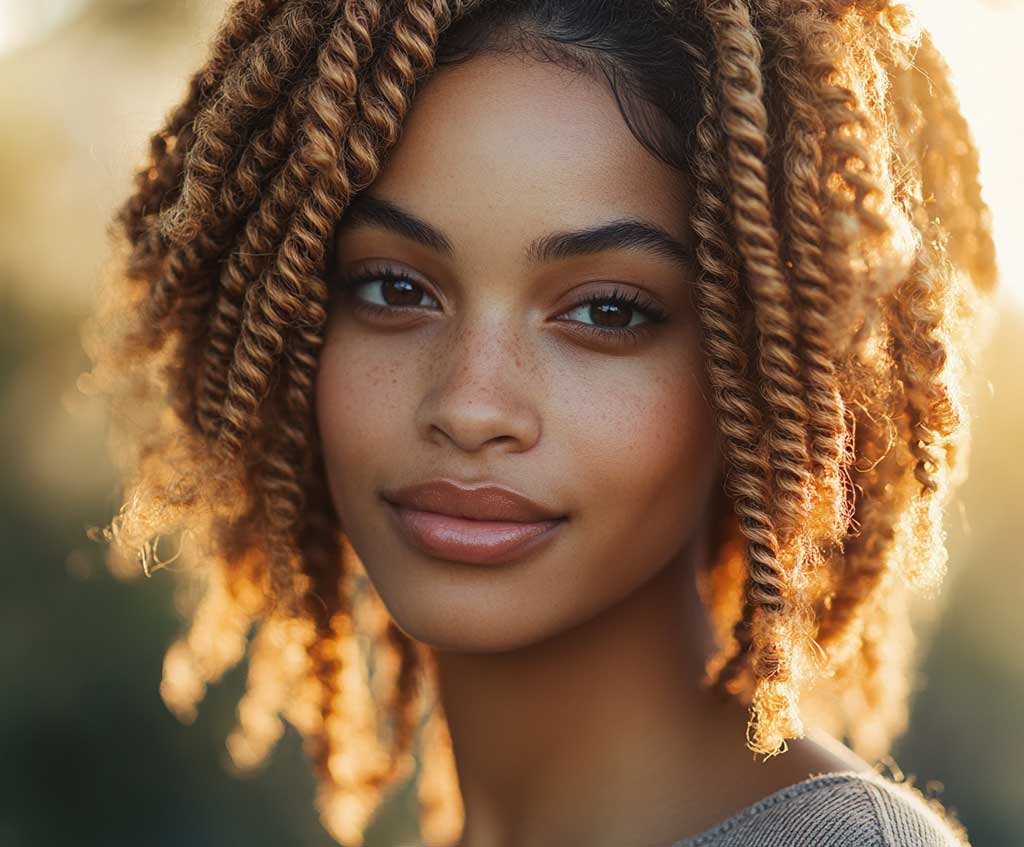
The color works best when you use a moisturizing butter during installation rather than a gel-based product. Gel creates a surface sheen on darker shades but flattens honey blonde’s dimensional quality. My go-to for this shade is Mielle Organics Pomegranate Honey Twisting Soufflé — the honey undertones in the product actually complement the color chemistry. Apply on damp hair sectioned into about forty twists for a full, bouncy result without the wet-hair frizz that comes from soaking wet installation.
What doesn’t work: trying to achieve honey blonde on deeply pigmented hair in a single process at home. The brass comes in hard, and you end up with copper-orange rather than the warm gold in these photos. A professional lightening treatment first, followed by a honey toner — about $80–$120 at a natural hair salon — is the only way to land this shade cleanly. Budget-friendly alternatives like temporary color wax (Schwarzkopf Live Color runs about $8) can approximate the tone for short-term wear without the commitment.
Maintenance of honey blonde two strand twists is about protecting the ends from oxidation more than anything else. The lighter the shade, the faster it dries out at the tips. A weekly light seal with argan oil (not coconut, which sits on top rather than penetrating) extends freshness noticeably. If your hair is shorter, lighter colors like honey blonde also photograph particularly well on compact twist styles where each individual strand is visible at close range.
Vibrant Burgundy Two Strand Twist Styles Draw Attention Without Asking
Burgundy sits in a color sweet spot that most people underestimate: deep enough to look intentional and polished, bold enough to register across a room the way a statement necklace does. Two strand twist styles in this shade hit differently than burgundy in straighter styles because each twisted rope catches the red tones individually — the result is a dimensional, jewel-toned effect that reads almost like fabric rather than hair. My go-to for this shade is Clairol Natural Instincts Vivids in Burgundy ($9 at drugstores), which deposits color without the harsh bleach lift that compromises twist texture.


Medium to thick sections are the move for burgundy — you want each twist wide enough that the color reads fully rather than getting lost in a mass of thin strands. A slight side part changes the whole dynamic: twists fall across the forehead in a face-framing effect that instantly looks styled rather than default. This particular placement is like the visual equivalent of a well-placed belt — one small structural choice that makes the whole outfit (or look) click. The deep red pops against neutral makeup tones better than against heavy glam, which tends to compete with the color.
Avoid matching your lipstick to the hair color exactly. A burgundy lip with burgundy twists creates a monochrome effect that reads flat and costume-like rather than intentional. The color is meant to be the focal point — let it work by pairing it with neutral lip tones (nude or soft berry) and minimal eye makeup. Similarly, don’t reach for burgundy if your underlying hair has green or ashy tones that haven’t been corrected — the red pigment will land muddy on cool bases, and no amount of conditioning treatment will fix undertone conflict after the fact.
Does burgundy require more maintenance than natural shades? Yes — but two strand twist styles actually slow that process considerably. The sealed structure locks moisture in, which keeps color-treated hair from drying out as fast as it would in an open style. Plan a protein treatment every three weeks to compensate for any processing stress. TGIN Honey Miracle Hair Mask ($14) works well for color-treated natural hair — it’s protein-rich without being stiff, which matters when you need your twists to stay flexible and bouncy.
Styling with minimal accessories lets the color anchor the look on its own terms. A single gold cuff or two on the ends is enough to look intentional. Piling on beads and rings with a bold color is the natural hair equivalent of over-accessorizing an already statement dress — you end up with noise rather than impact. According to Coils and Glory’s extensive natural hair resource on two-strand twist care, keeping accessories minimal with colored twists also reduces the friction that causes frizz at the points of contact.
Before You Go
Two Strand Twist Styles for Natural Hair: Color Is the Variable Everyone Ignores
Most twist tutorials focus on technique and skip the part that actually determines how your style photographs and wears: the color decision. Chestnut reads warm in photos, honey blonde creates length illusion, and burgundy does the face-framing work of a good haircut.
Start with damp hair, use a butter-based product over gel for colored twists, and protect ends weekly with argan oil. The install is four to six hours; the style pays you back for three to four weeks.
Save this post before your next appointment and show your stylist the exact shade references — it’s the fastest way to get what you actually want.