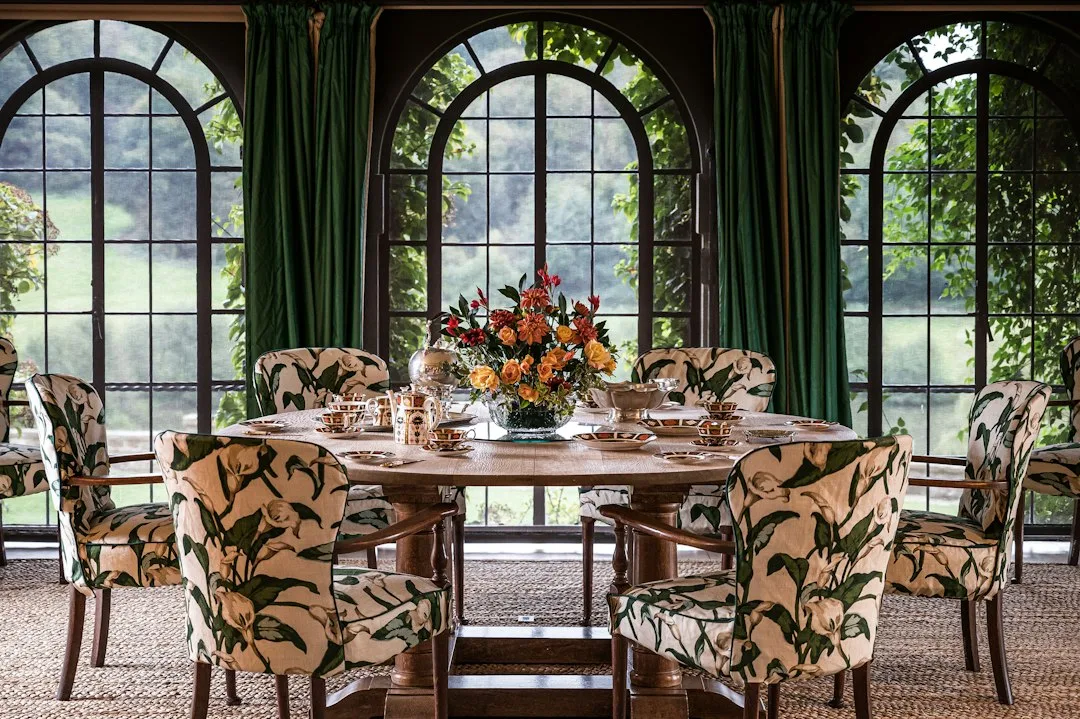
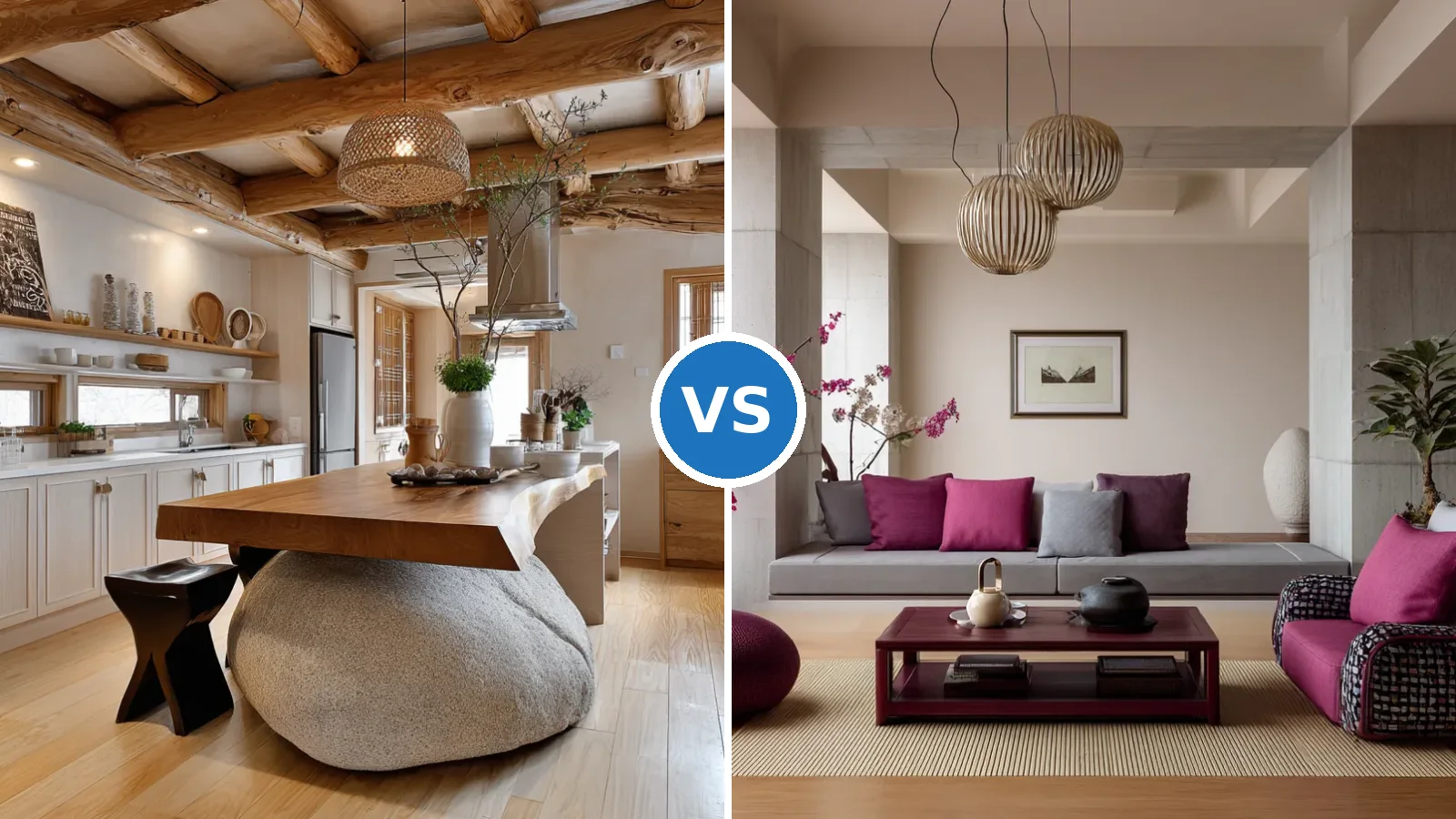
Artisan interior design style is what separates a home that feels collected from one that feels purchased. I’ve spent years pulling rooms apart and rebuilding them around a single hand-thrown bowl or a reclaimed walnut sideboard, and the difference is not subtle — it’s structural. You stop noticing what’s missing and start reading what’s there. The artisan approach works not because everything matches, but because every piece earned its place.
Rooms built on artisanal design carry a quality that showroom furniture physically cannot replicate: irregularity. A hand-woven Oaxacan rug from $180 at a local import shop has warp threads that shift mid-row, and that tension is exactly what makes it readable from across the room. Ikea’s version costs less and photographs identically, but you’ll stop seeing it within a week. Your eye already knows the difference.
What This Post Covers
- How to build an artisan living room without looking like a craft fair
- The artisan kitchen details that cost under $300 and read as intentional
- Bedroom materials that hold up past the first styling session
- The one mistake that kills the artisan look in every room
- FAQ: artisan style vs artisanal design, where to source, and what to skip
A Living Room Built on Handcrafted Furniture Reads Differently at 10 Feet
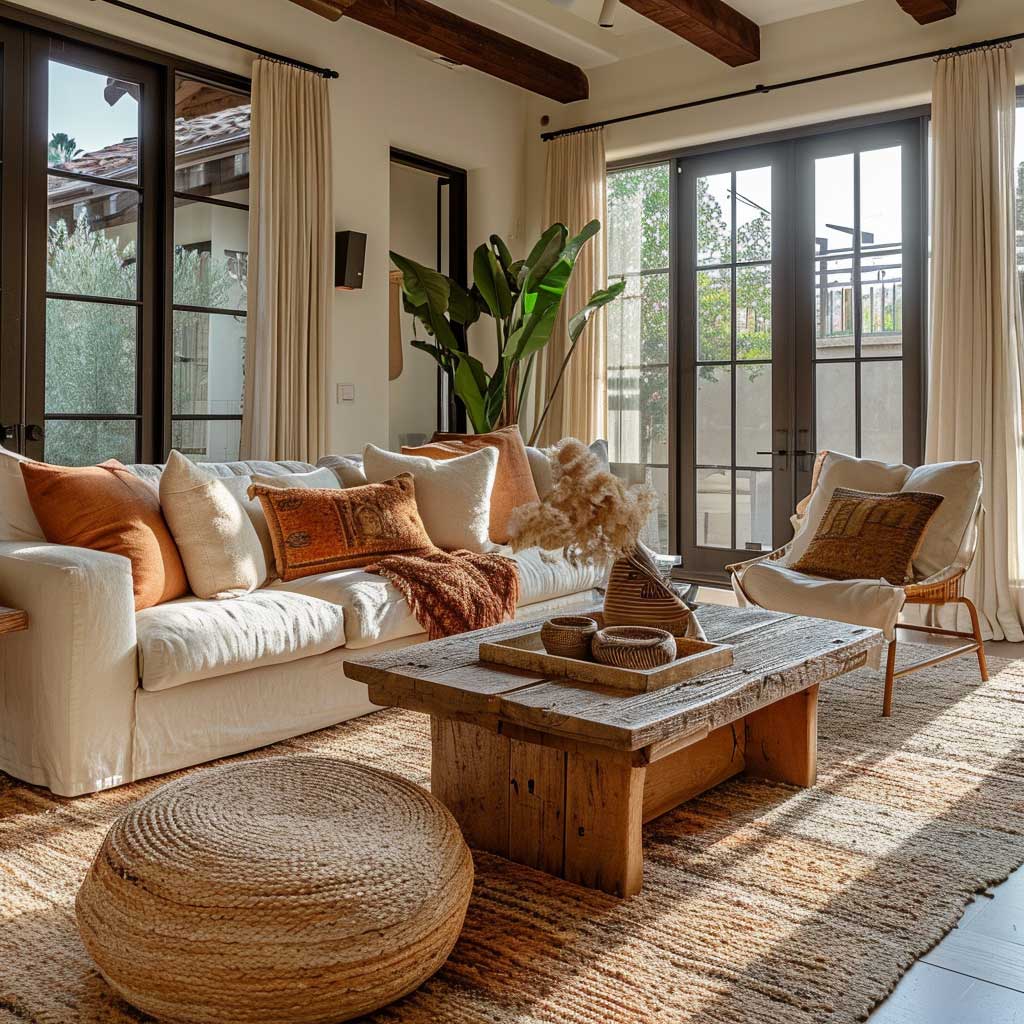
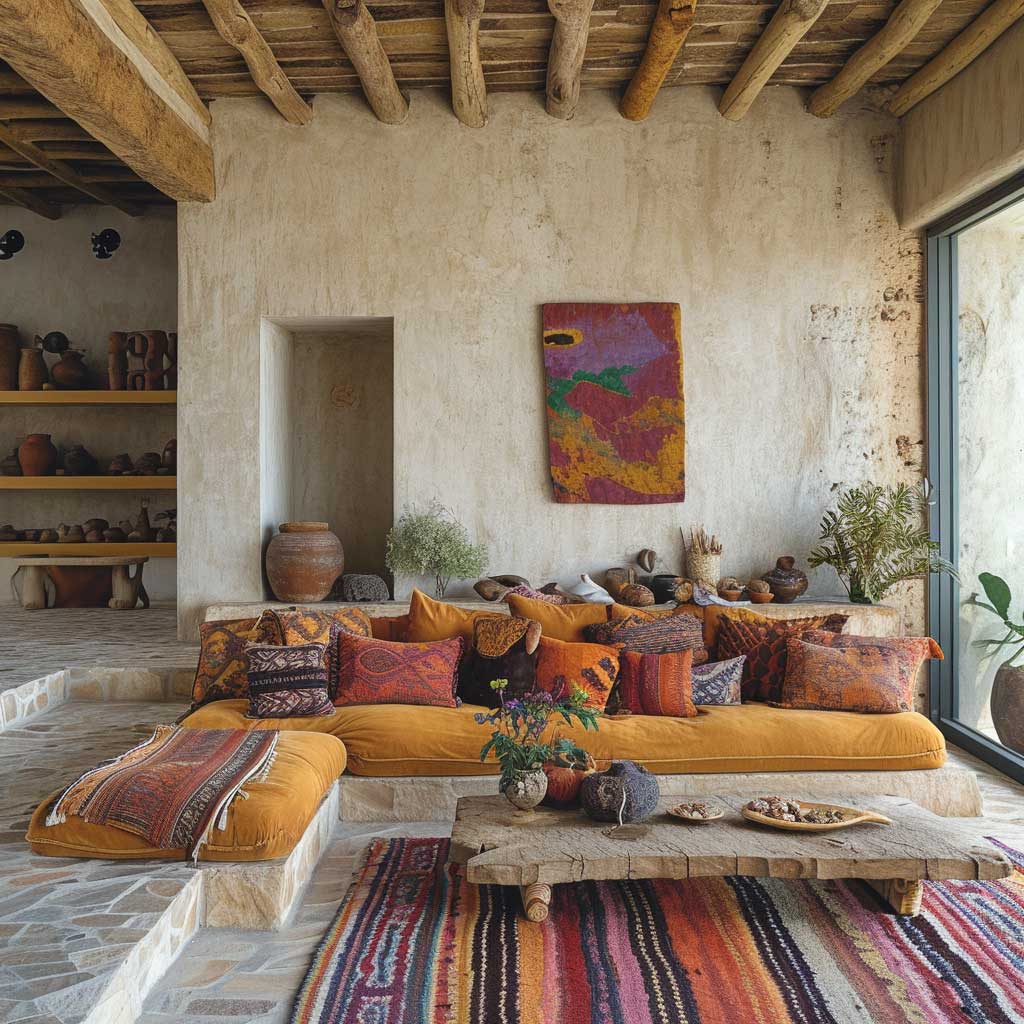
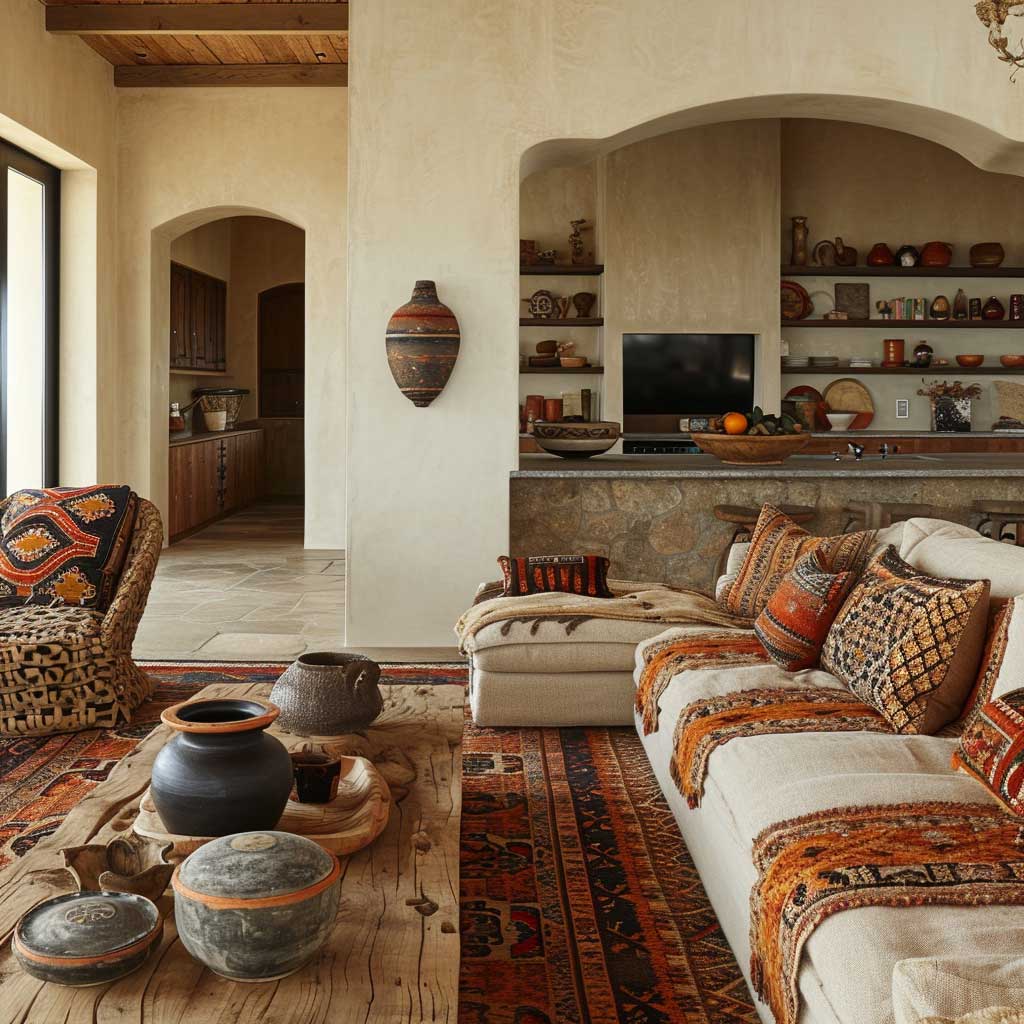
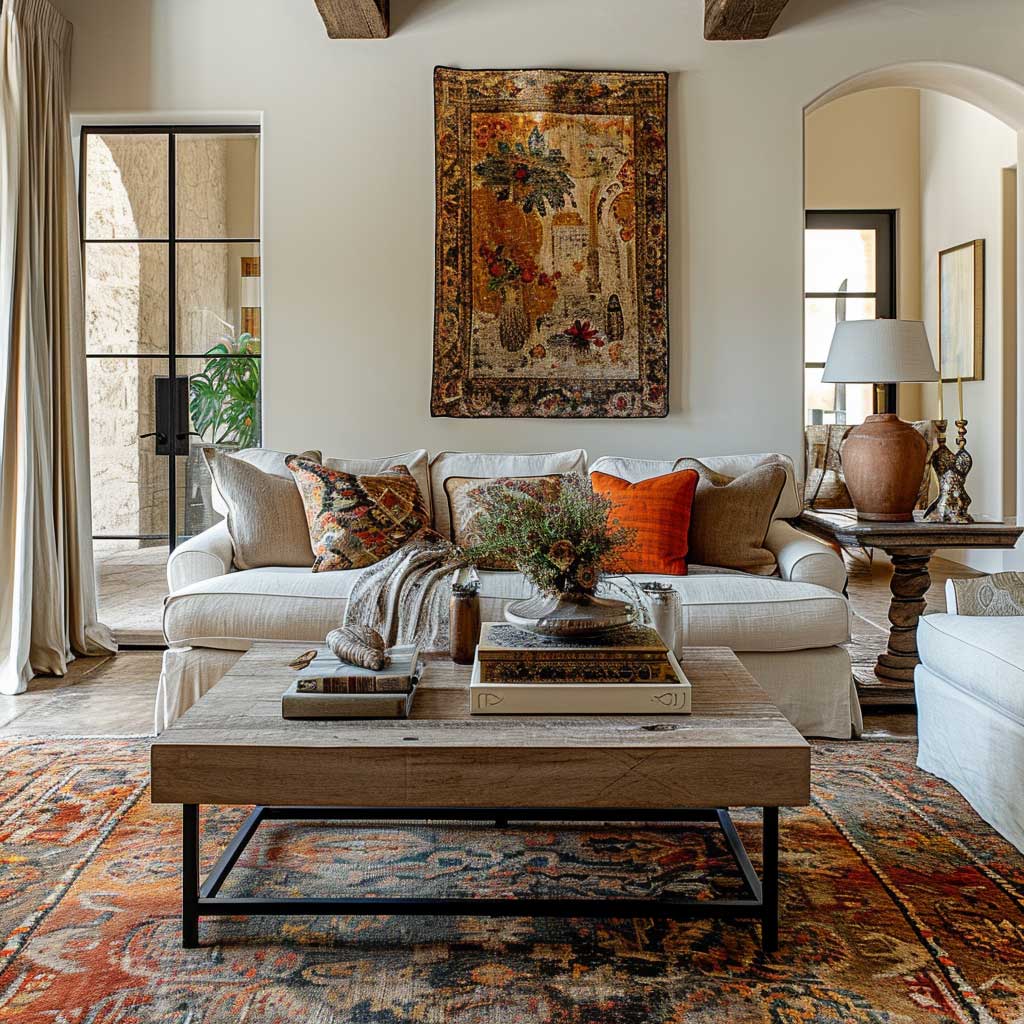
The first piece I bought for my own living room that actually worked was a $240 walnut coffee table from a furniture maker in Vermont — rough-hewn apron, visible hand-plane marks on the underside. Nothing about it was polished. It was also the first piece any guest touched without being told to. That’s the artisan living room in a sentence: things people reach for. Start with the coffee table or the sofa, not the accessories.
Sofas and chairs upholstered in handmade fabrics — kilim panels, hand-loomed linen, block-printed canvas — add layers that plain upholstery cannot. You’ll notice the pattern shifts slightly every 12 inches on a hand-block-printed fabric, and that shift is the point. CB2’s printed linen is fine. It won’t make anyone lean in. The artisan version from a small Indian textile house on Etsy — around $45 per yard — will.
Pottery is the cheapest and most effective artisan investment in a living room. A set of three hand-thrown stoneware vessels from local ceramic artists — mine run $35–$80 each at studio sales — beats any shelf arrangement built from box-store ceramics. The glazes are irregular. The rims wobble slightly. Place them at different heights on an open shelf and the composition is done. Don’t style around them; let them do the styling.
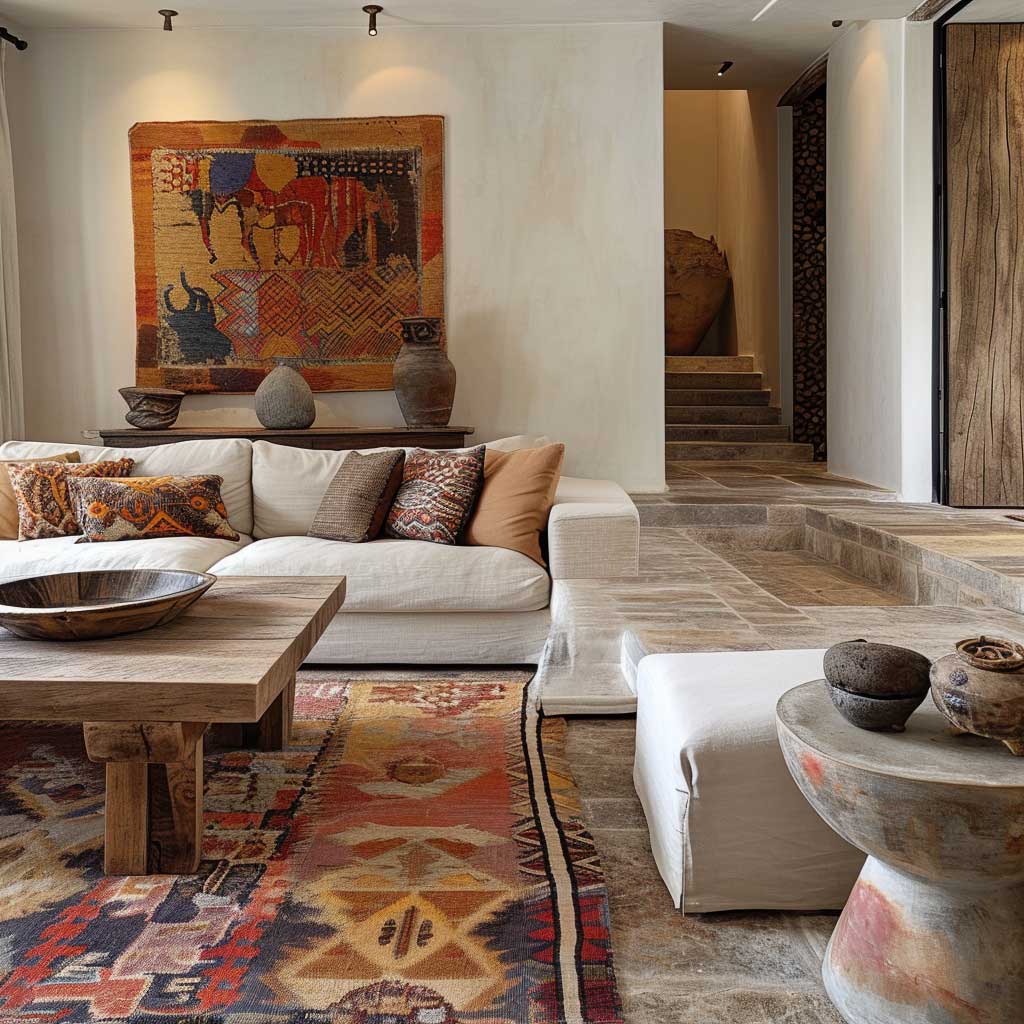
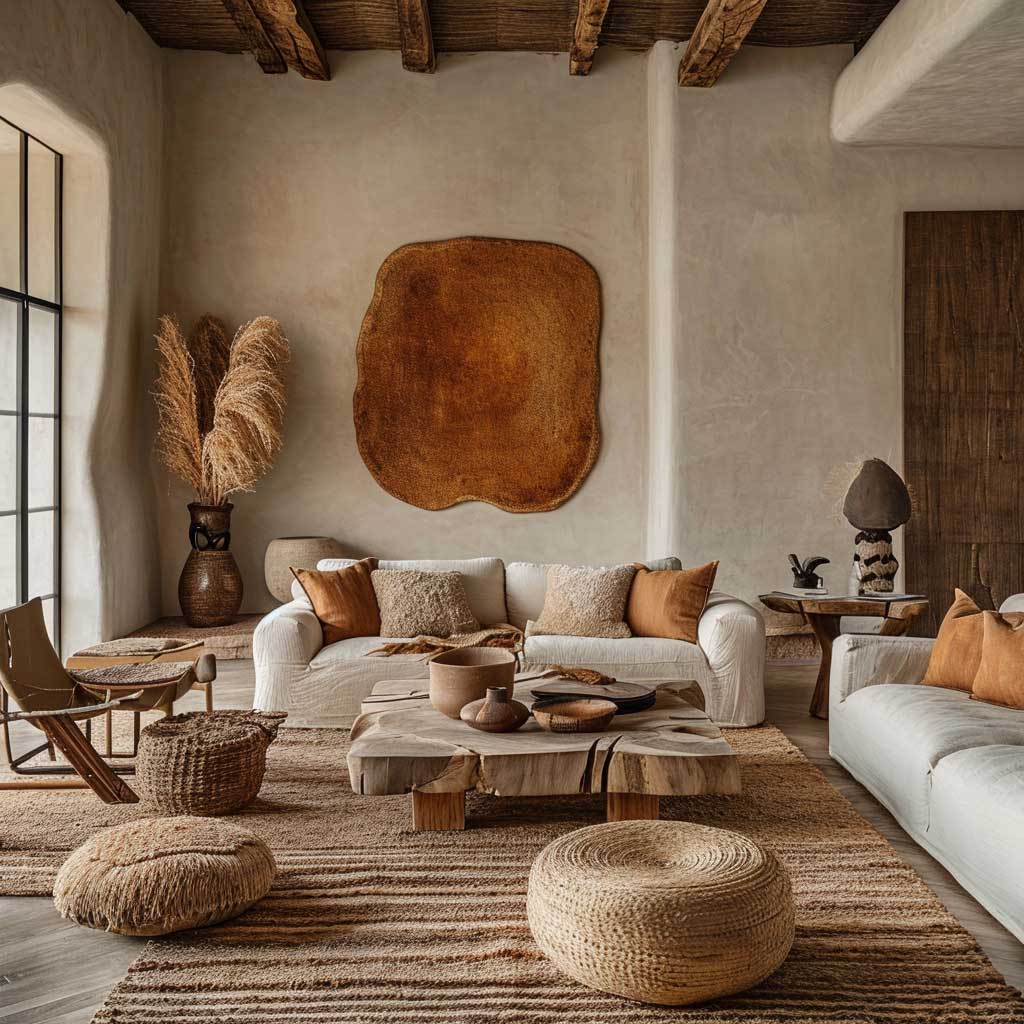

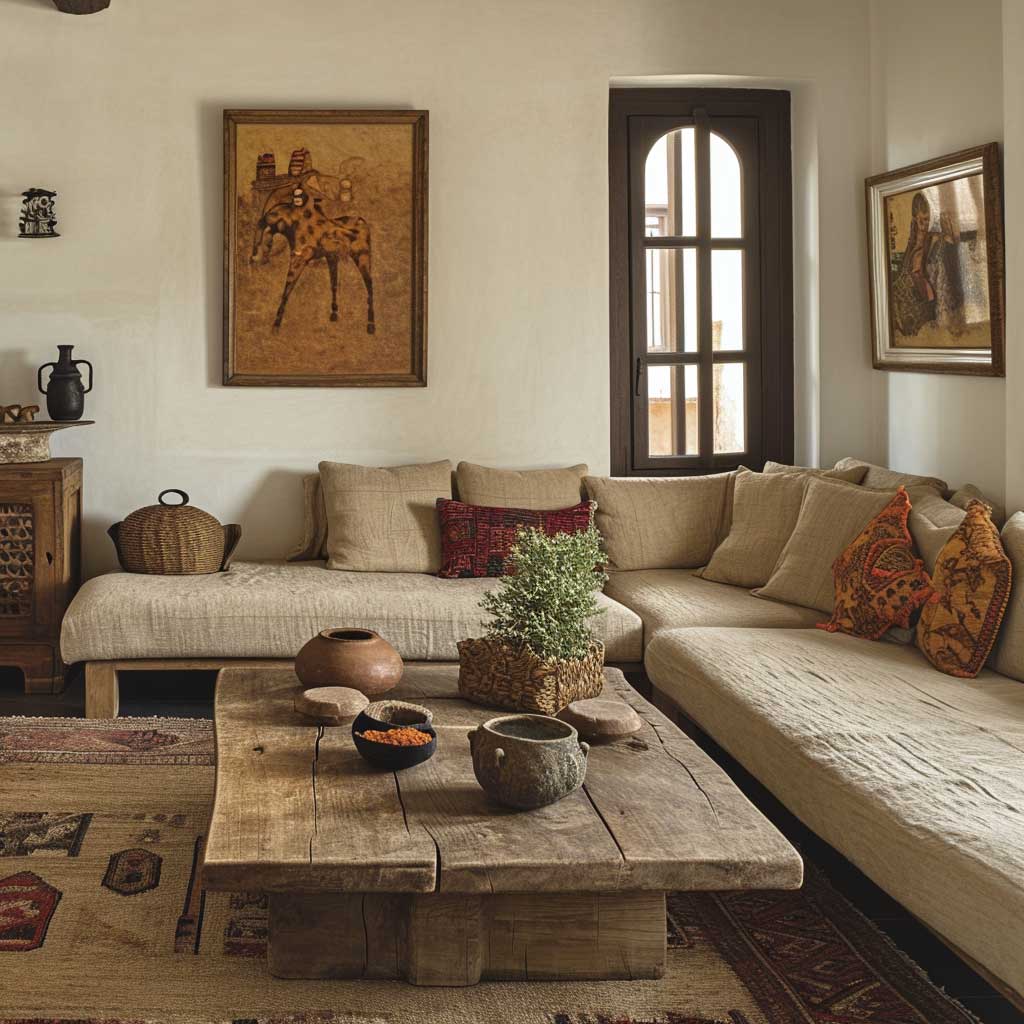
Textiles build the room’s temperature. Hand-woven rugs, throw pillows with artisanal embroidery, hand-dyed curtains in indigo or madder root — these items create warmth that painted walls and furniture alone never will. The irregularities in handmade textiles aren’t flaws; they’re the proof of process, and your eye registers that proof as comfort. Skip the machine-made “artisan look” textiles from HomeGoods. They have the pattern without the weight.
Lighting in an artisan living room should be made, not manufactured. I stole this trick from a ceramicist friend: a pendant with a hand-blown glass shade — around $180 from Schoolhouse Electric — casts a light pattern that factory-made glass can’t replicate because the thickness varies. That variation creates warm spots on the ceiling. It’s the difference between a room that’s lit and a room that glows. Buy one good handmade fixture and let everything else recede.
For related living room ideas that pair well with the artisan approach, see how minimalist bohemian styling handles texture and handcrafted objects without overcrowding the space.
DON’T DO THIS
Buying 12 “artisan-style” accessories from the same mass retailer and placing them all at once. The artisan living room takes years to read as intentional — not because you need years, but because the pieces need to look like they arrived from different places at different times. Buy one or two real handmade objects per season. If everything in the room was purchased in a single afternoon, the room will look like a set, not a home. Layering takes time, and that’s entirely the point.
The Artisan Kitchen Starts with Cabinetry, Not the Backsplash


The artisan kitchen conversation always starts with tile. Wrong. Tile is finish work. What determines whether a kitchen reads as artisanal or not is the cabinetry — specifically, whether it was made by a person or a factory. Solid wood cabinets with visible mortise-and-tenon joints, hand-fitted drawers, and iron or bronze pulls carry weight that MDF-with-veneer cannot. My go-to cabinetmaker charges $350–$500 per linear foot for solid white oak. It’s not a small number. It’s also not a purchase you replace in ten years.
Countertops in an artisan kitchen are where natural material actually matters. Honed Calacatta marble shows tool marks at the edges. Soapstone develops a patina from oil that factory-sealed granite never will. Hand-cast concrete countertops — around $80–$120 per square foot installed — have pinholes and trowel impressions that read as craft. What doesn’t work: “leathered” granite from a big-box fabricator. The texture is mechanical, and the eye can tell.
Hand-painted backsplash tile from studios like Fireclay Tile or Ann Sacks ($12–$45 per tile) brings color and pattern while celebrating the process behind the glaze. Each tile is slightly different. Install them in a simple running bond and let the variation do the work. The ones to avoid are ceramic subway tiles marketed as “handmade” at a uniform $3 each — no variation in glaze, no variation in size. Those are factory tiles with a marketing label.


Earthenware pots, hand-turned wooden spoons, and wrought iron racks are load-bearing decor in the artisan kitchen — not styling props. A cast-iron pot hanging from a hand-forged ceiling rack costs $45–$80 from a local blacksmith or Etsy ironworker and does double duty as art and function. The kitchen equivalent of the coffee table test: does the thing in front of you look like it was made or ordered? Only one of those answers produces the artisan interior design effect you’re after.
A farmhouse apron sink — Kohler’s Whitehaven at $1,200, or a fireclay version from Bocchi at $900 — anchors the artisan kitchen more effectively than any decorative element. Pair it with unlacquered brass faucets from Waterworks or Rohl and the hardware will age visibly, developing a patina that makes the space feel like it’s been there for generations. What doesn’t pair well: polished chrome. It reads as clinical in a room built on warmth.
If you’re working with an existing kitchen and want to introduce artisan style without a full renovation, earthy terracotta furniture and accessories can shift the room’s mood in a single afternoon without touching a single cabinet.
| Material | Artisan Option | Approx. Cost | Mass Alternative to Skip |
|---|---|---|---|
| Cabinetry | Solid white oak, hand-fitted | $350–500/linear ft | MDF veneer box |
| Countertop | Honed marble, soapstone, cast concrete | $80–120/sq ft installed | Sealed granite slab |
| Backsplash tile | Fireclay Tile, Ann Sacks hand-glazed | $12–45/tile | “Handmade look” factory subway |
| Sink | Kohler Whitehaven or Bocchi fireclay | $900–1,200 | Stainless undermount |
| Hardware | Unlacquered brass (Waterworks, Rohl) | $180–400/faucet | Polished chrome |
Artisan Bedroom Materials Earn Their Place Before You Make the Bed

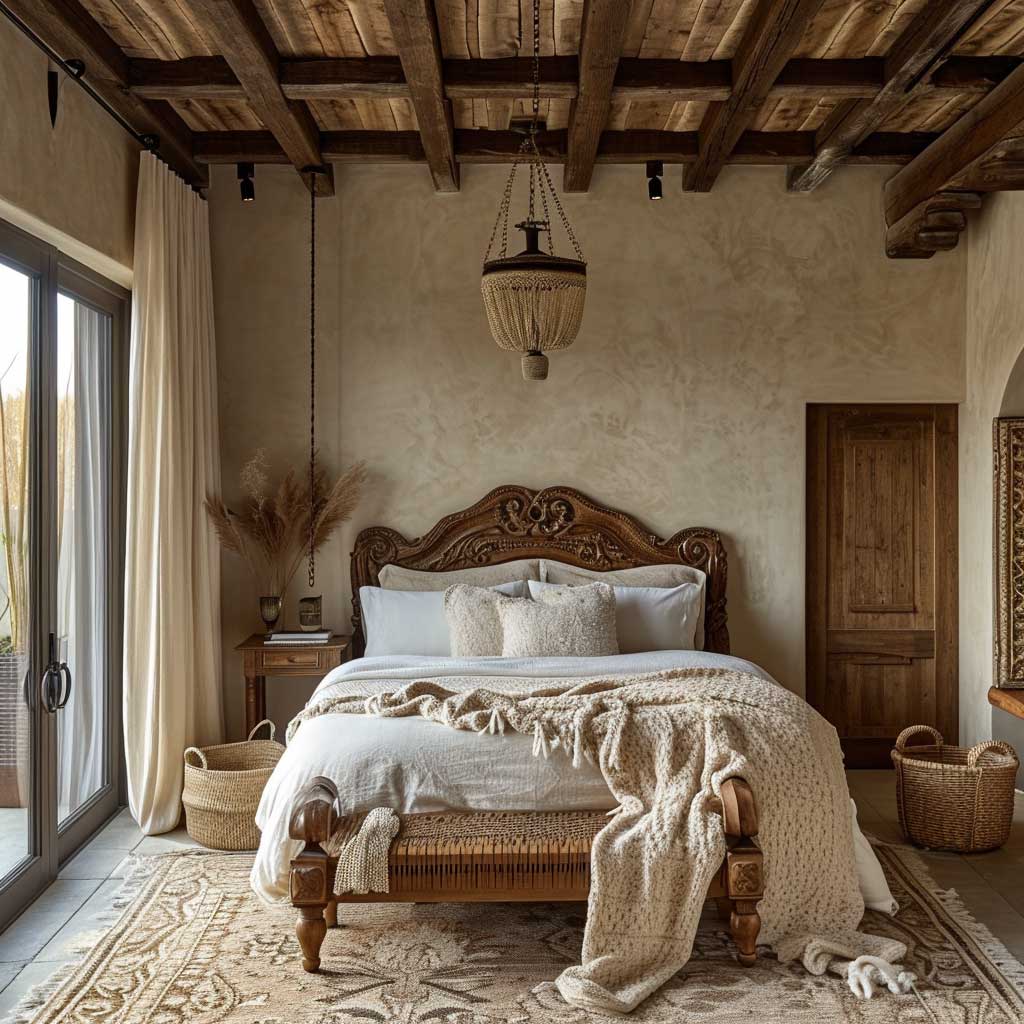


The bedroom is where artisan interior design either commits or collapses. You can get away with one or two mass-produced pieces in a living room — the handcrafted items carry enough weight to compensate. In a bedroom, the bed itself has to do the work. A hand-carved platform bed in walnut or cherry, built by a furniture maker rather than a factory, changes the room before you put a single pillow on it. I own one from a craftsman in Asheville — total cost was $2,200. It’s the only piece of furniture I’ve never considered replacing.
Artisan-woven linens are not the same as “stonewashed” linen from a bedding brand. Hand-loomed cotton from Anchal Project or Boll & Branch’s handcrafted lines ($180–$350 for a sheet set) has a weight and texture that reads as intentional. You’ll notice it when you travel and sleep on hotel cotton — everything feels thin by comparison. Hand-stitched quilts or hand-loomed throws add pattern without requiring a decorator. Pick one with a regional textile tradition — Guatemalan striped weaves, Japanese sashiko — and let the craft speak.
Lighting deserves specific attention in the artisan bedroom. Bespoke handcrafted lamps from Rejuvenation or Cedar & Moss ($120–$350) cast a different quality of light than anything bought from a big-box store — not brighter, softer. The shade material matters: pleated linen diffuses light the way a paper lantern does, spreading it rather than directing it. Wall sconces in hand-forged iron or hand-thrown ceramic bases on either side of the bed eliminate bedside tables altogether and free up floor space. Do not use polished nickel in an artisan bedroom. It belongs in a different room.

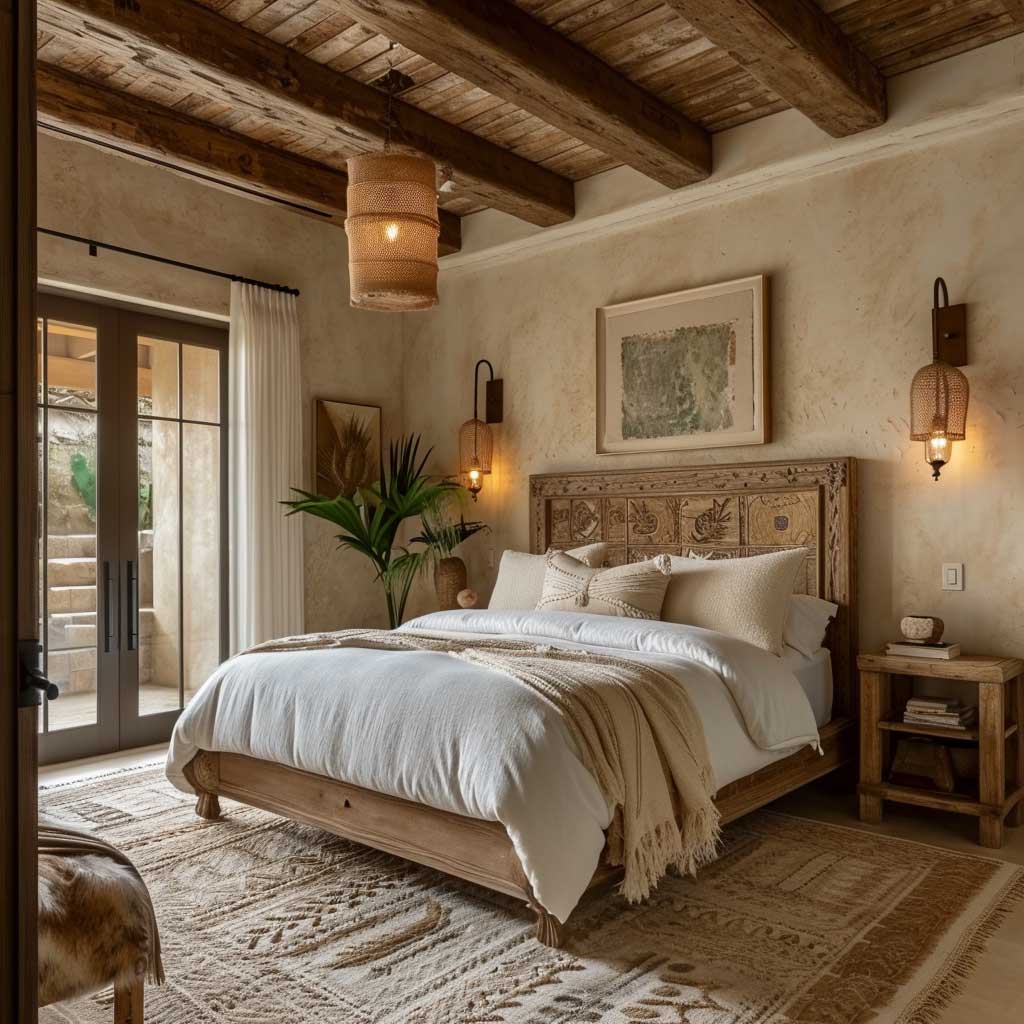
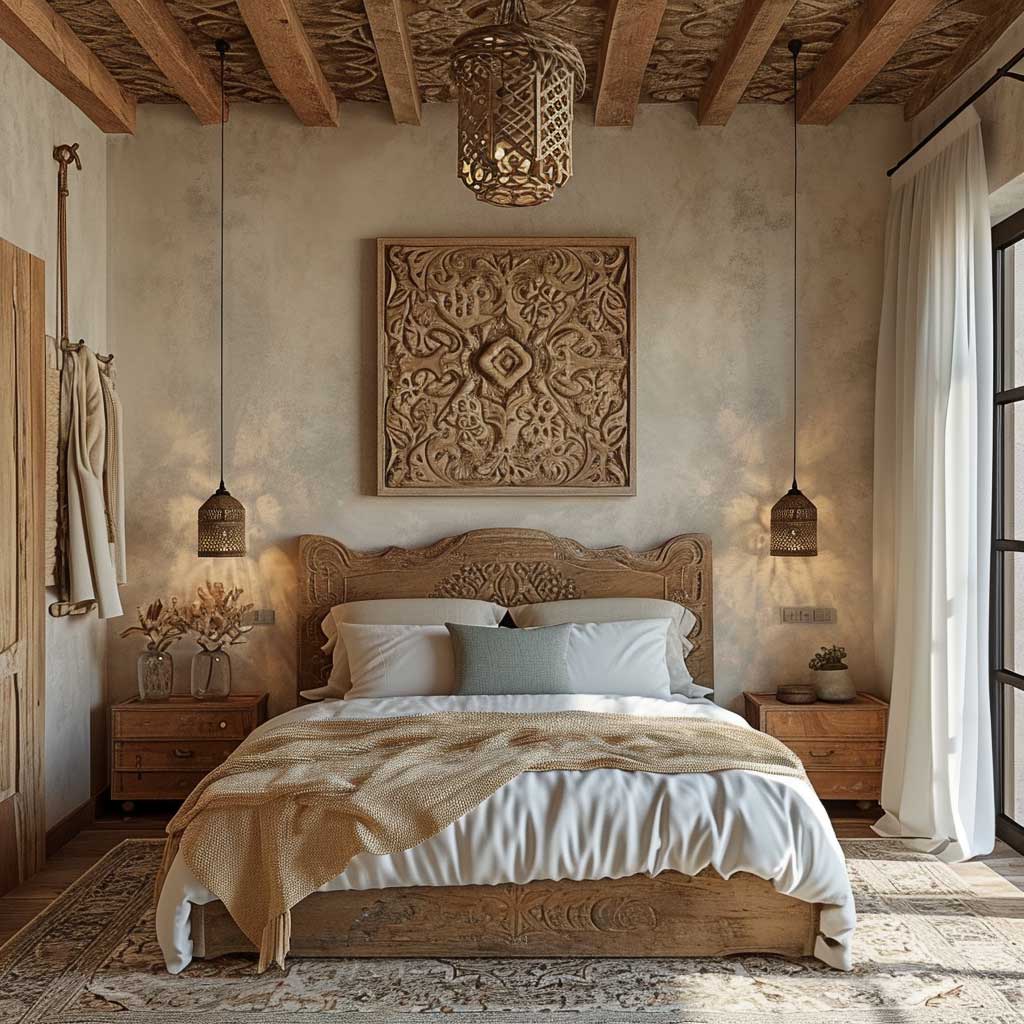
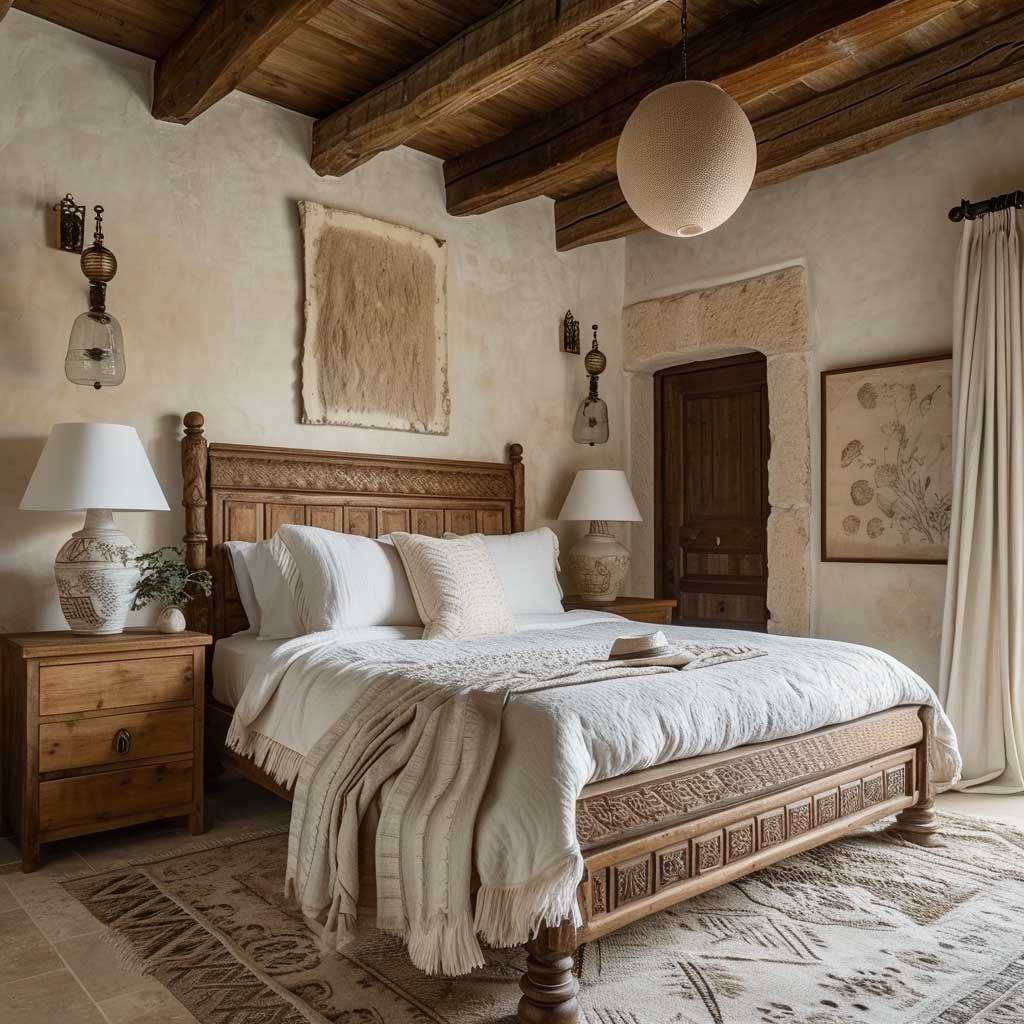
Wall art in an artisan bedroom should be made by a person you can name. Not “inspired by” someone. Not “artist-signed” prints from Society6. Original paintings, textile works, or small sculptures from a ceramicist or weaver you found at an open studio — those carry provenance into the room. A 12×16″ painting from a local artist costs $150–$400 and contributes more to the artisan bedroom atmosphere than a gallery wall of framed prints ever will.
What doesn’t work in this space: matching bedroom sets. The artisan design style is built on the logic that pieces came from different makers, different regions, different decades. A complete bedroom set from any furniture brand — no matter how “rustic” the finish — reads as a single purchase, and that singularity is exactly what artisan decor is built to undo. Mix the bed with nightstands from a different maker. Add a dresser from a different era. The friction between pieces is the style.
For bedroom ideas that layer artisan textiles and handmade objects with a more maximalist spirit, the warm orange bohemian bedroom approach shows how macramé and woven wall art hold up at scale.
Worth Knowing
The artisan home isn’t built in a weekend. It’s built in the gap between the right piece and the wrong one.
Every room covered here — living room, kitchen, bedroom — follows the same logic: one real handmade object outperforms ten “artisan-look” items from a chain store. The specifics change by room; the principle doesn’t.
Budget by category, not by room. Spend on the piece with the most surface area — the rug, the cabinetry, the bed — and let the rest follow slowly. Artisan style scales by addition, not renovation.
Save this post — return to it when you’re deciding between the handmade and the fast version. The slow choice is almost always right.