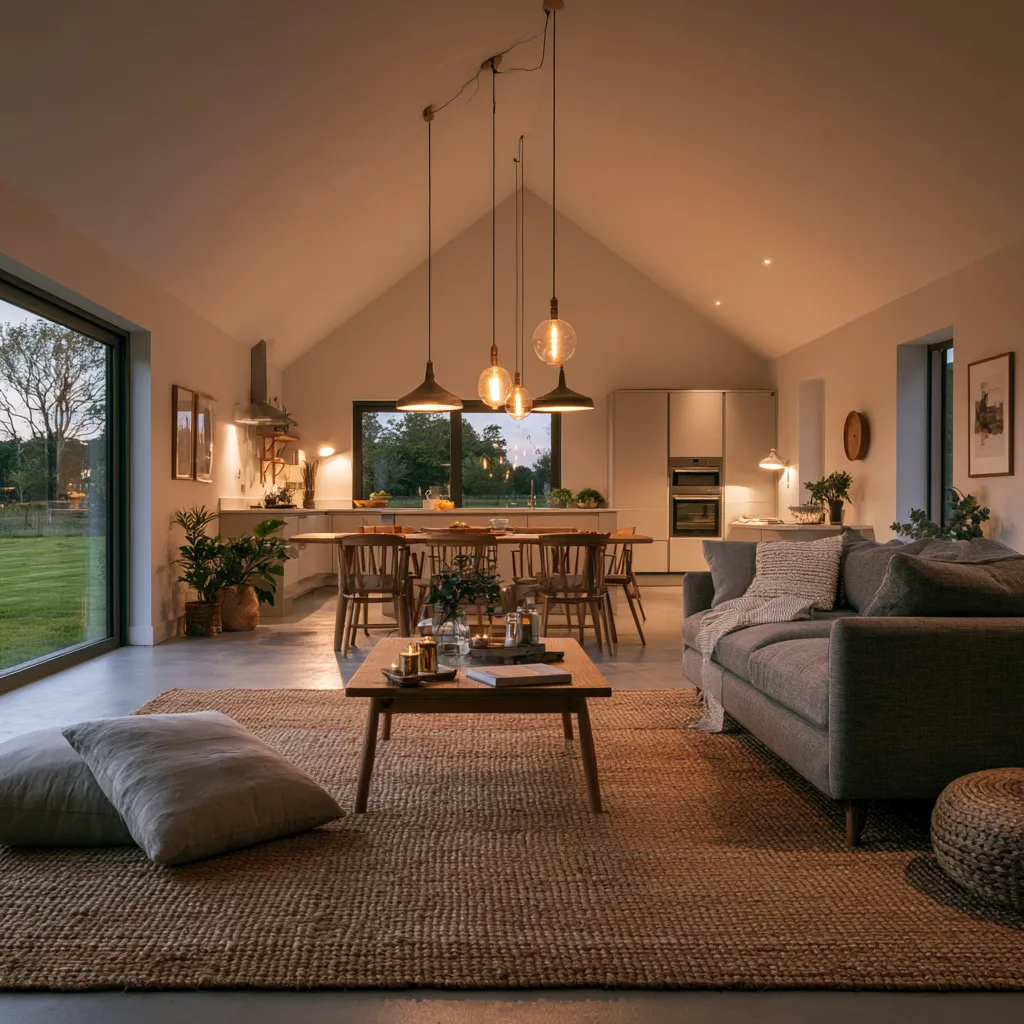
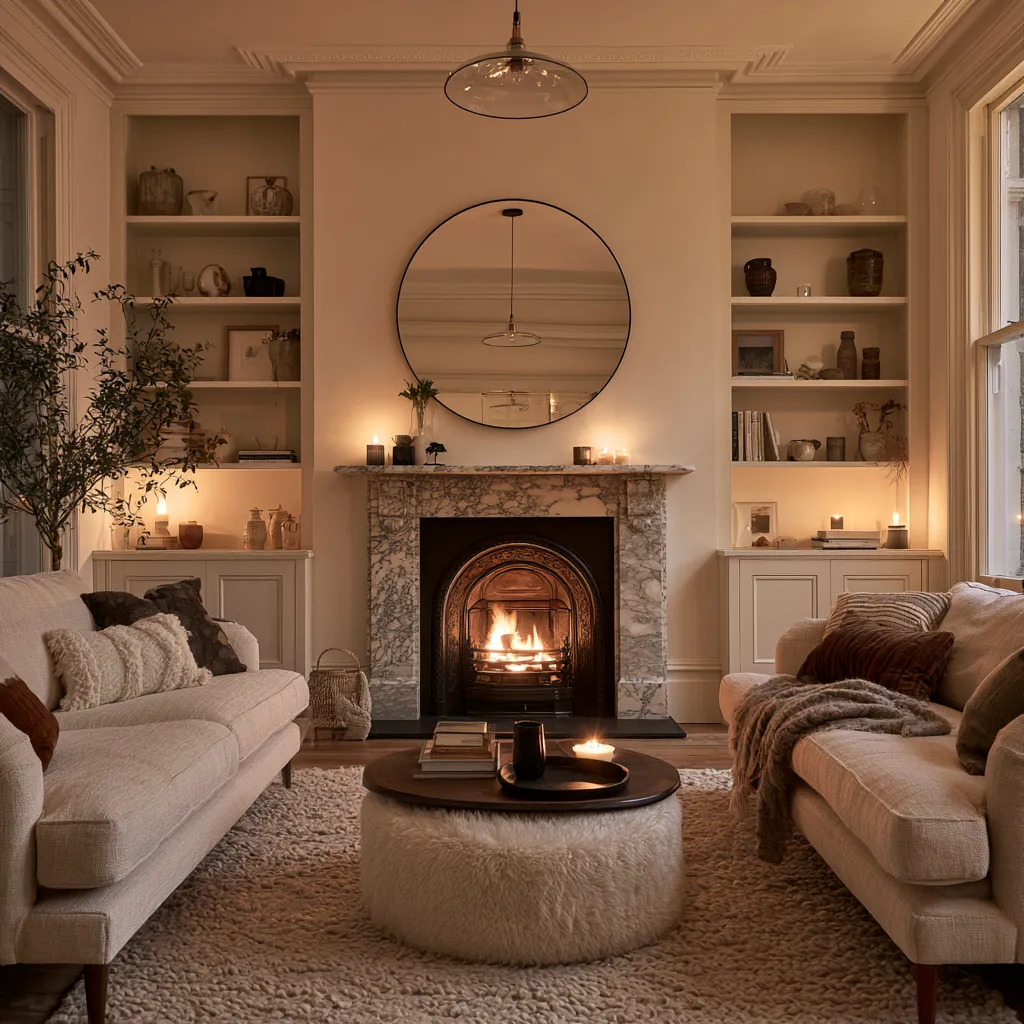
Modern living room blinds ideas deliver precise light control, privacy and a clean visual finish without the bulk of heavy drapery. The right pair of blinds turns a standard window into a functional design element that works from morning glare to evening privacy. Roller, cellular and faux-wood options cover most living-room needs at mid-range prices of $50–$200 per window according to current market averages.
Choose the style that matches your architecture and daily light patterns, then match material to the room’s humidity and furniture palette. A well-chosen blind reduces heat gain in summer and heat loss in winter while keeping the space looking intentional rather than temporary.
The sections below break the main approaches into clear choices so you can decide quickly which direction fits your living room.
- Roller shades give the cleanest modern profile and start around $50 per window.
- Cellular shades cut heating and cooling energy by up to 15–20 % according to Department of Energy data.
- Monochrome gray or charcoal blinds keep a minimalist room calm and cohesive.
- Patterned fabric or woven wood adds character without heavy curtains.
- Industrial metal or textured finishes work with exposed brick and concrete.
- Always measure twice and prefer cordless or motorized for safety and a cleaner look.
Monochrome Minimal Blinds for Clean Living Rooms


Monochrome living room blinds ideas work like a quiet stage set: one color family, multiple values of gray or charcoal, and nothing that competes with the furniture. The first visual effect is order. Light slides across the surface instead of fighting patterned fabric. Average mid-range monochrome roller or cellular shades land between $60 and $150 per standard window, making the look accessible without custom pricing.
Why does a single-tone palette calm a busy room so effectively? Because the eye stops scanning for contrast and settles on form and light instead. Pair soft gray fabric with a matte charcoal frame or keep everything in the same value range for an almost invisible edge. Avoid high-gloss finishes; they turn into mirrors under afternoon sun and break the quiet effect.
Texture becomes the only variation that matters. A subtle weave or ribbed cellular structure catches light the way a linen shirt does, giving depth without pattern. Mount the blinds as close to the glass as possible so the wall remains uninterrupted. This approach rewards rooms with clean furniture lines and limited artwork.
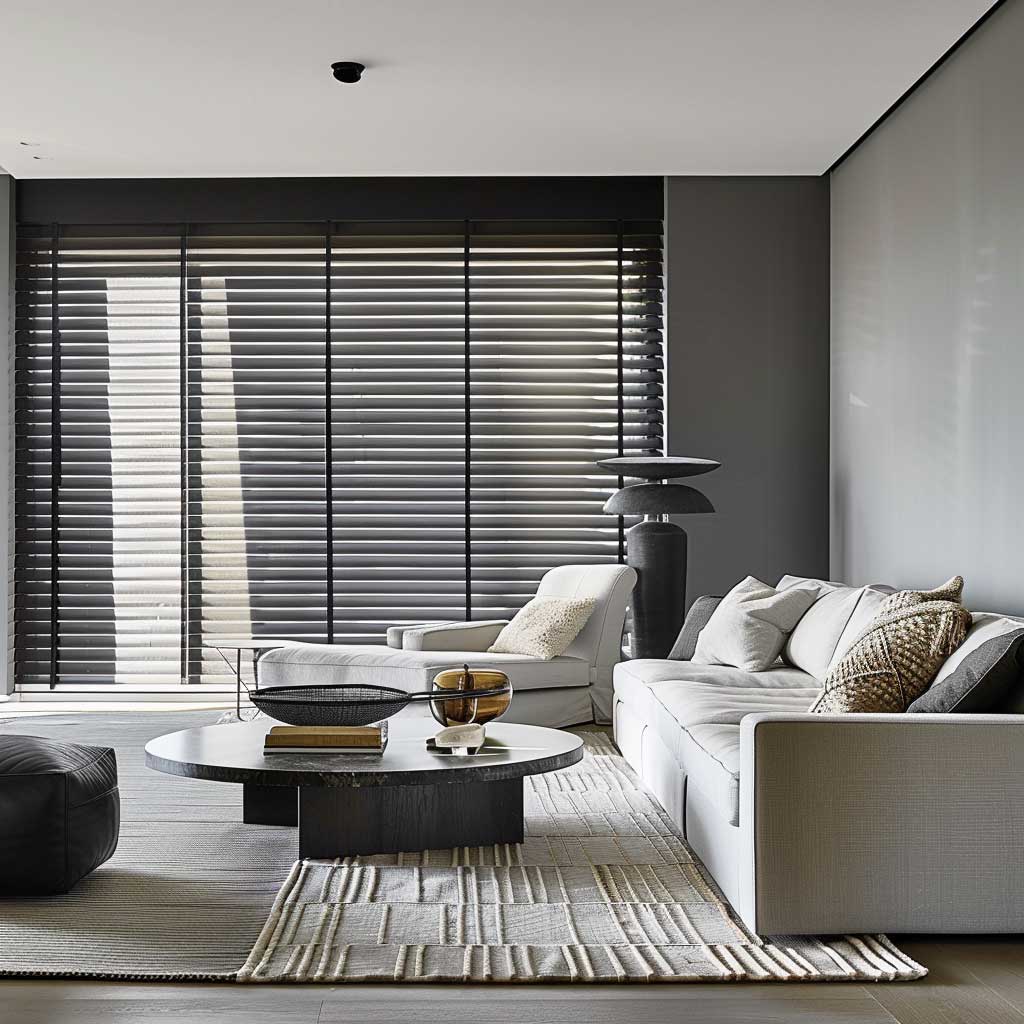


Daytime adjustment is simple: lower the blinds just enough to cut glare while still admitting soft light. At night the same surface becomes a continuous quiet plane. Do not add patterned cushions that fight the monochrome field; the blinds already supply the structure. One strong sculptural lamp or a single geometric table is enough accent.
Think of monochrome blinds as the architectural equivalent of a tailored white shirt. They disappear when you want them to and still look deliberate when the light hits them. For a related approach to layering light fabrics, explore fresh window treatment ideas for living rooms.
Bohemian Patterned Blinds That Bring Texture and Color
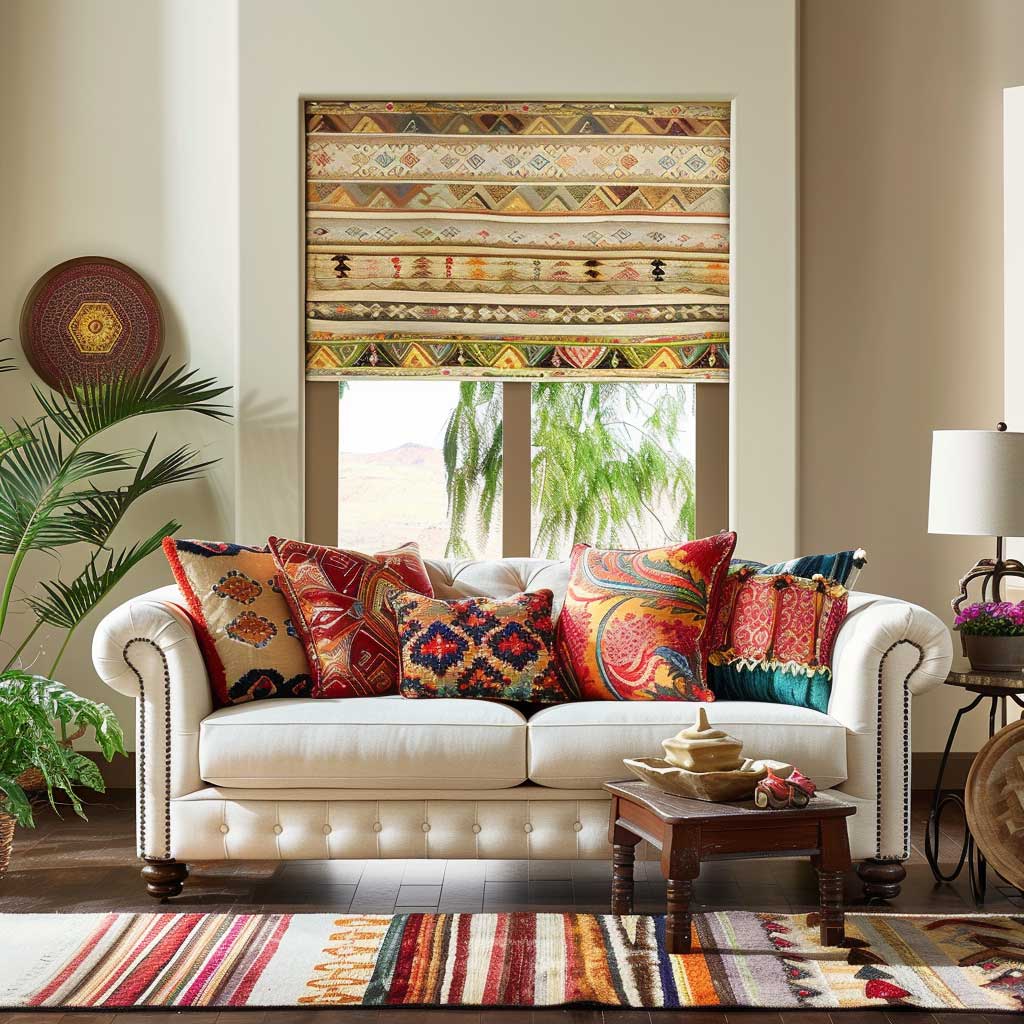
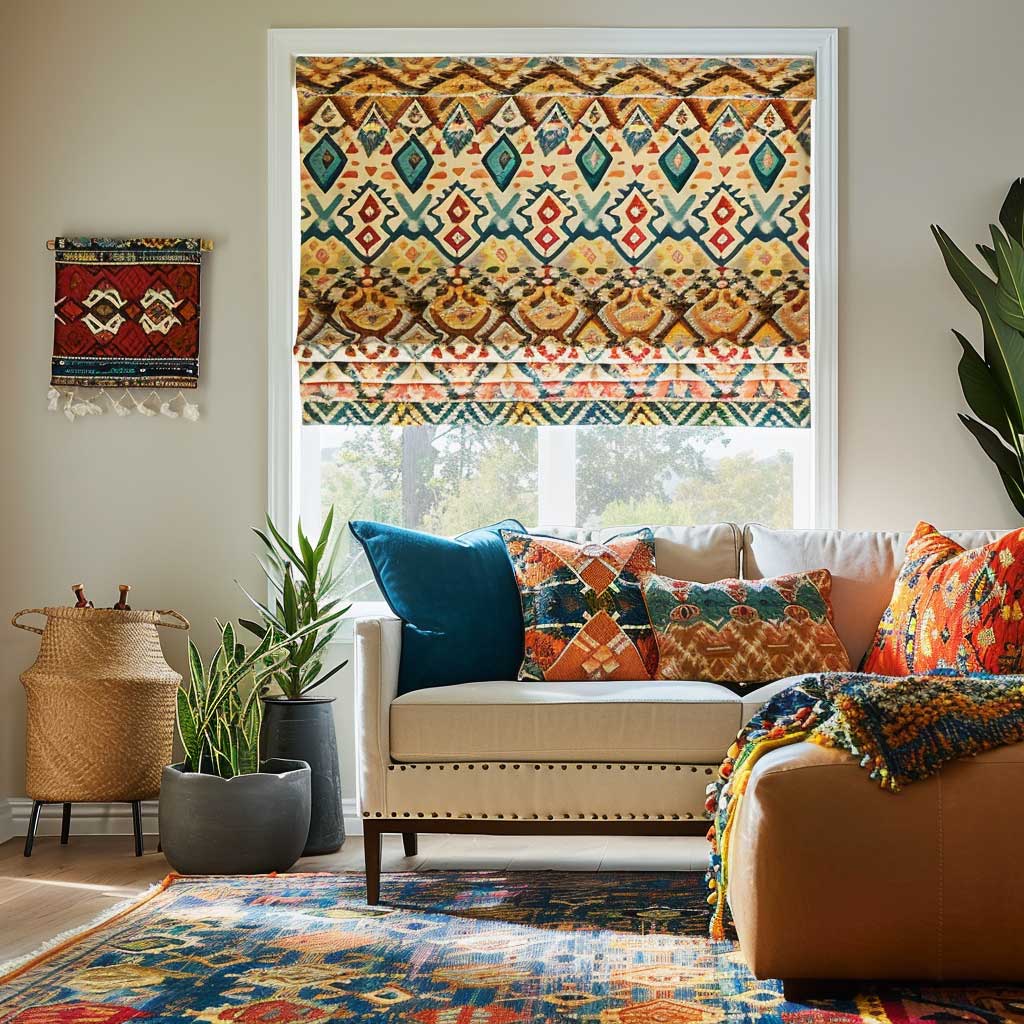


Bohemian living room blinds ideas trade restraint for story. Patterned fabric, woven wood or printed roller shades become the room’s visual diary. The first rule is scale: large motifs read better from across the room than tiny repeats. Mid-range patterned rollers or Roman-style blinds typically cost $70–$180 per window depending on fabric weight and print complexity.
How do you keep a patterned blind from overwhelming the space? Anchor it with solid furniture and let the plants and textiles carry the secondary color. A single strong print at the window works like a large textile on the wall; everything else can stay quieter. Avoid matching the blind pattern to the sofa fabric—the two surfaces will compete and cancel each other.
Natural materials such as bamboo or reed add an extra layer of texture that synthetic prints cannot match. They filter light into soft stripes that shift through the day, turning the window into a moving element rather than a static panel. Pair them with low seating and layered rugs so the overall effect feels collected rather than staged.


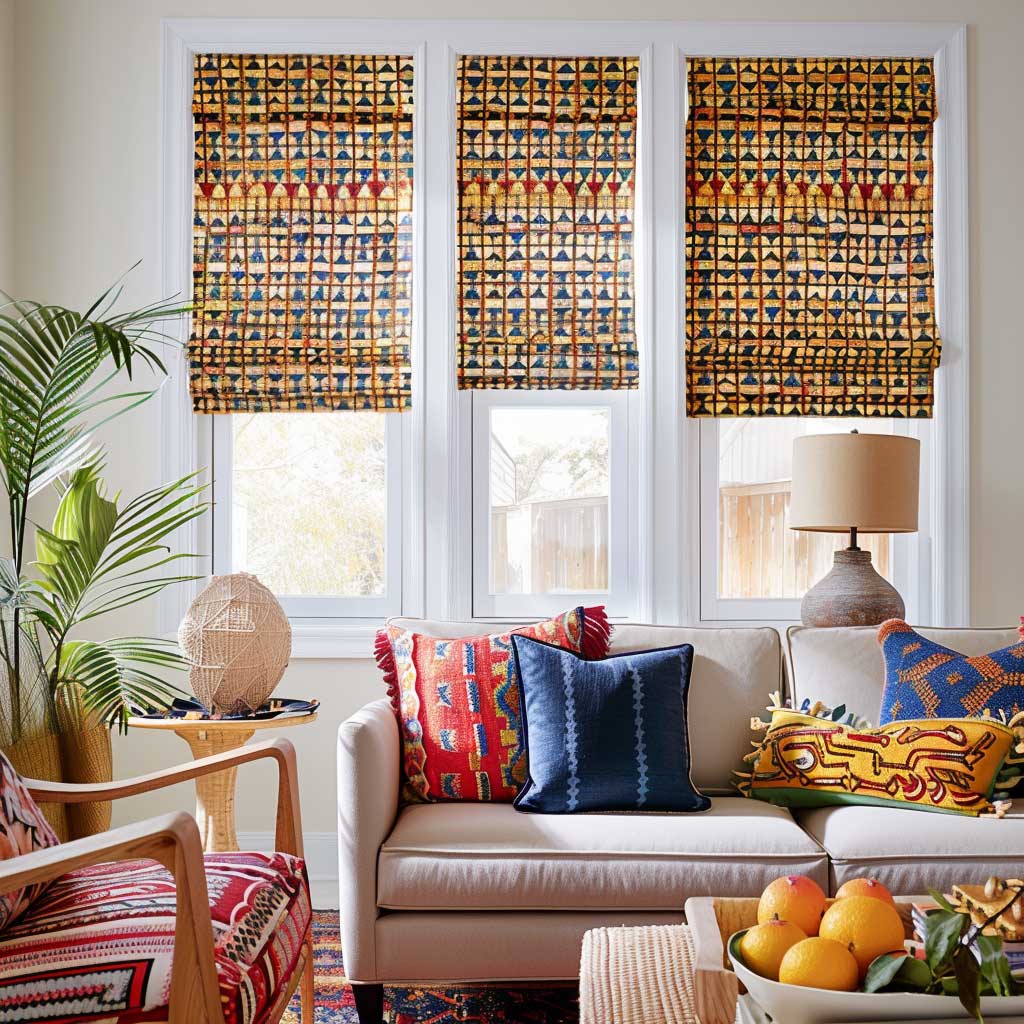

Layering is optional but powerful. A light-filtering roller behind a printed Roman shade gives you two levels of control without visual clutter. The combination costs more—often $120–$250 combined—but the daily flexibility is real. Keep the hardware matte and simple so it does not fight the fabric.
Bohemian blinds succeed when they feel like part of a lived-in collection rather than a matching set. One strong window treatment is enough; the rest of the room can stay loose and personal. For bamboo and natural-fiber combinations that lean quieter, see living room curtain ideas with bamboo shades.
Urban Industrial Blinds with Raw Texture and Metal Notes
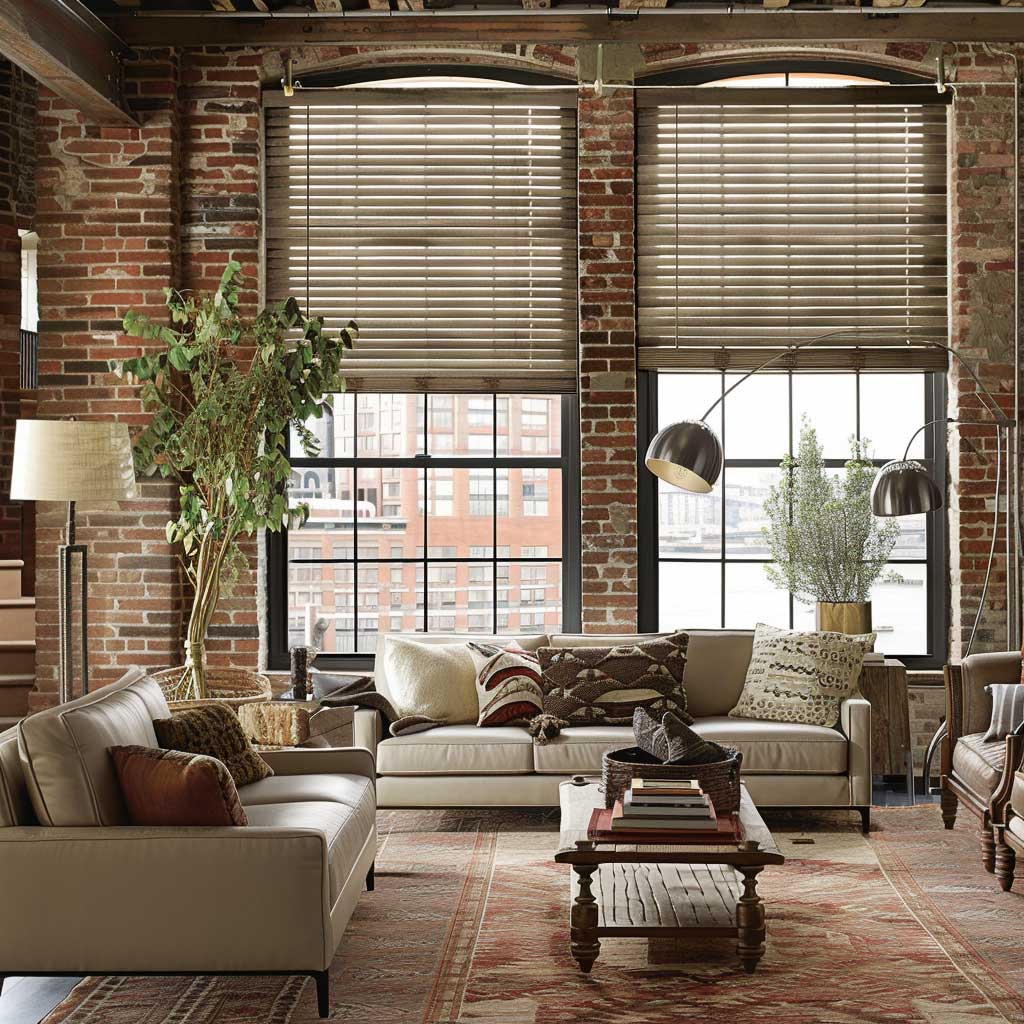

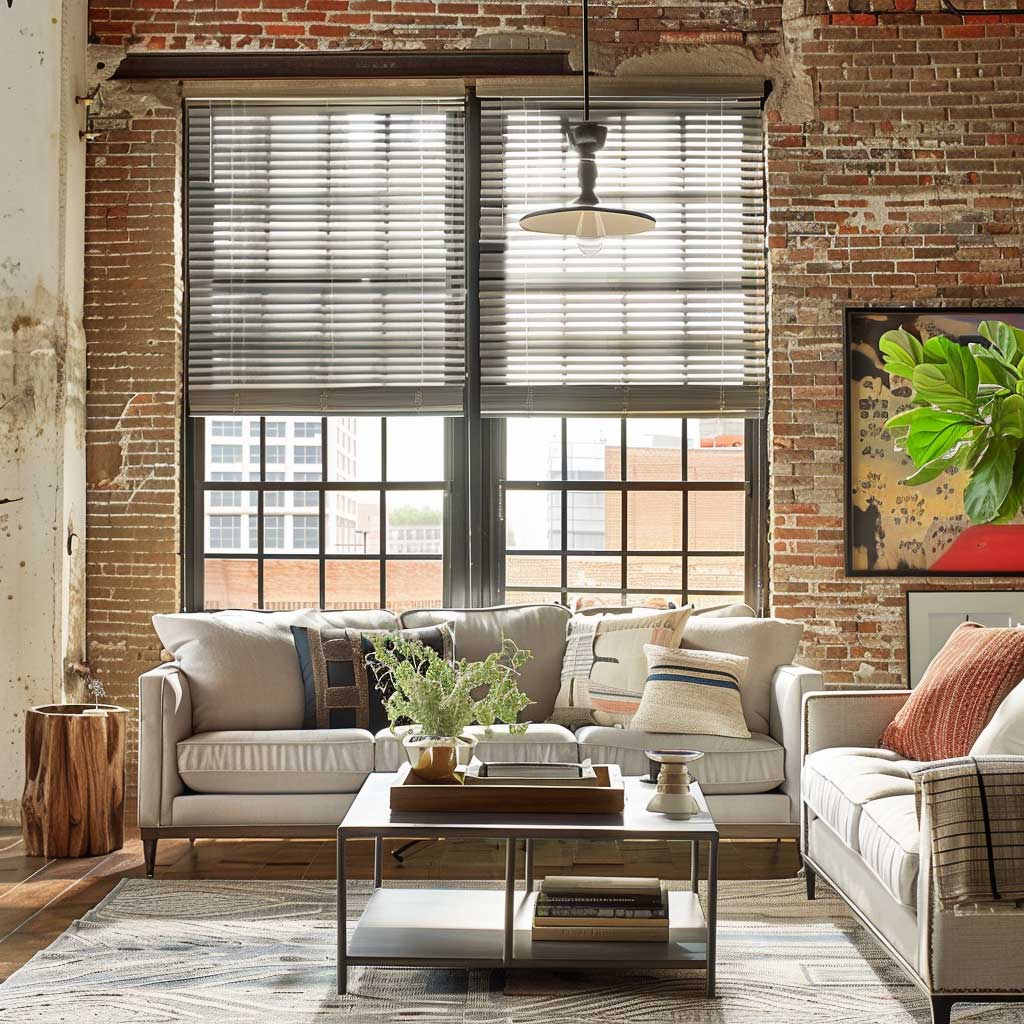

Urban industrial living room blinds ideas lean into material honesty. Metal-look rollers, textured fabric that mimics concrete, or rugged woven finishes sit comfortably next to brick, steel and reclaimed wood. The goal is contrast that still feels intentional. Expect mid-range industrial-style blinds to run $80–$220 per window once you move beyond basic vinyl.
What keeps the look from turning cold? Soft furniture and warm wood tones. The blinds supply the edge; the sofa and rug supply the comfort. A metallic or charcoal roller shade against an exposed brick wall creates a deliberate tension that reads modern rather than unfinished. Avoid high-polish chrome hardware—it fights the matte industrial surfaces.
Large windows common in loft spaces benefit from wider rollers or panel-track systems that stack cleanly to one side. Motorization becomes practical here because the panels are heavy and the ceilings are often high. A basic motorized upgrade adds $150–$400 per window but removes daily friction.
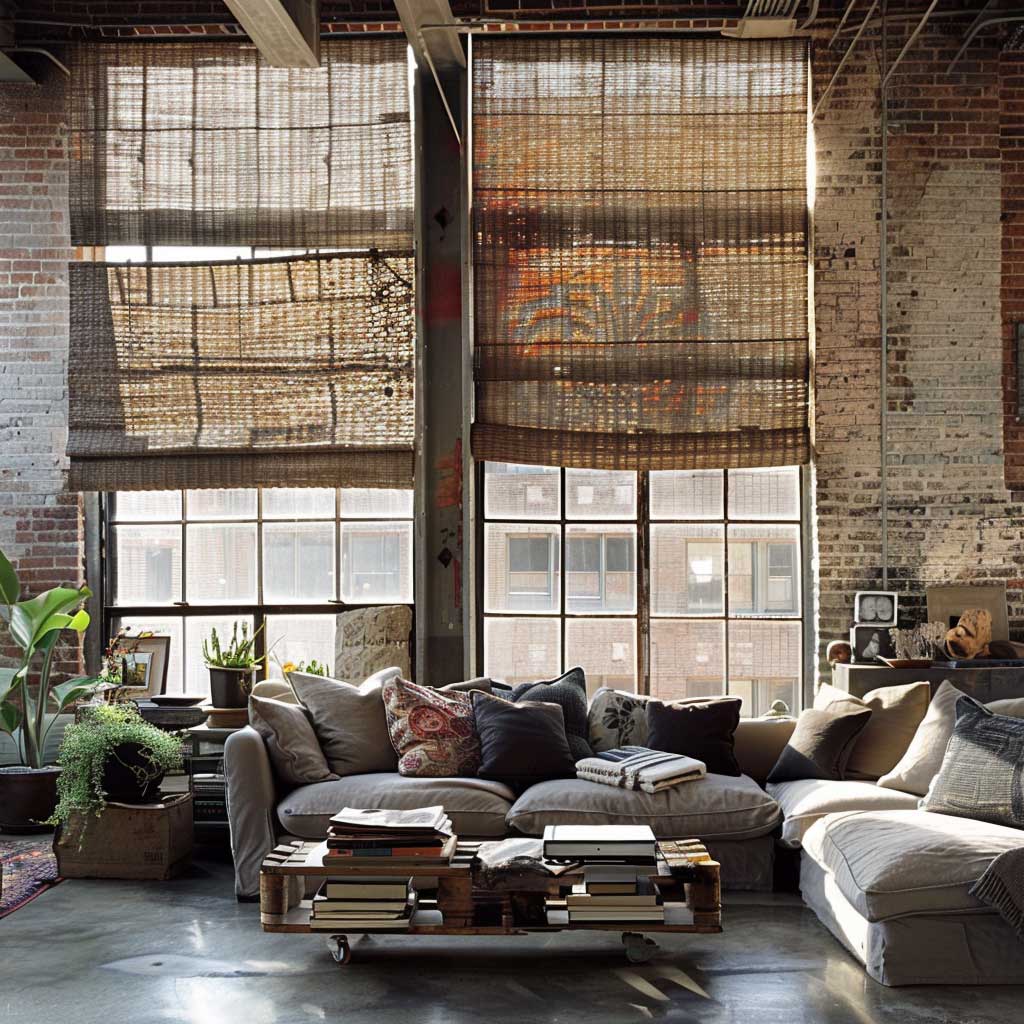
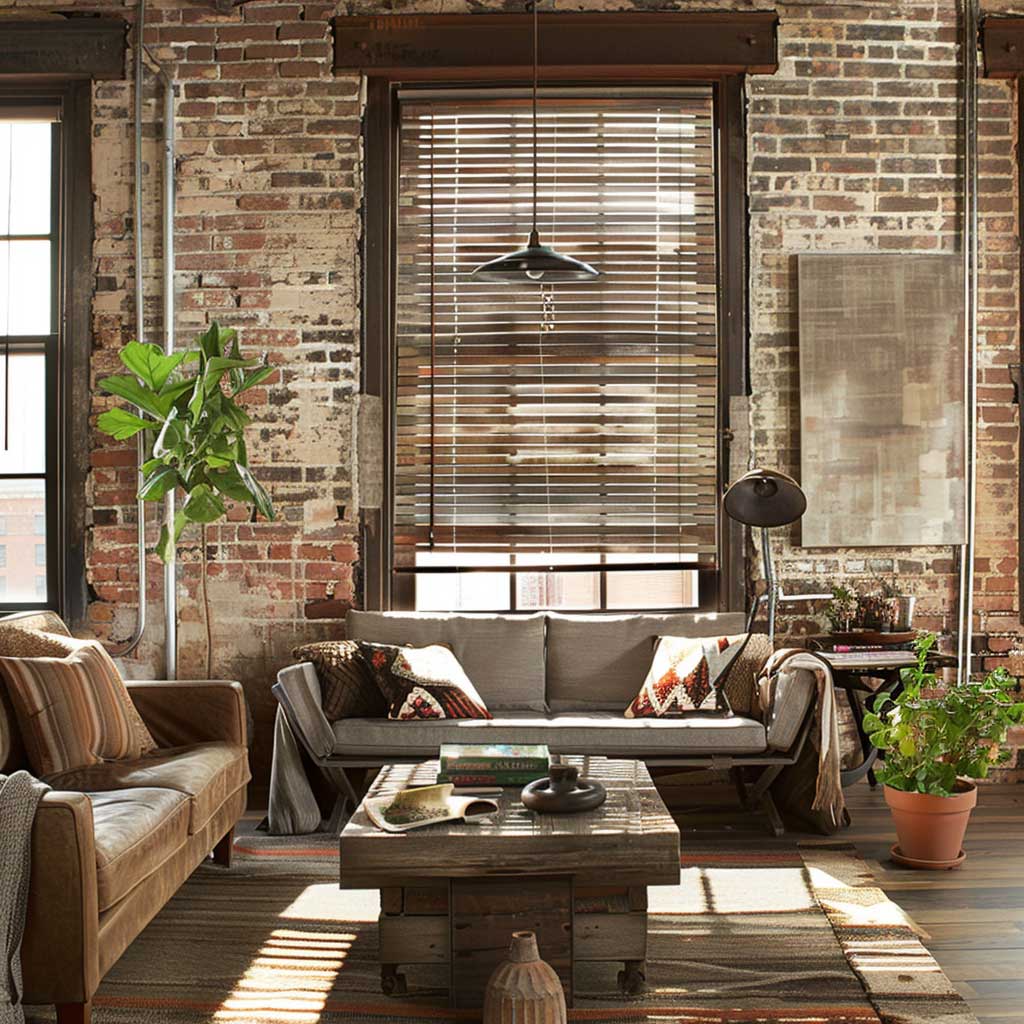
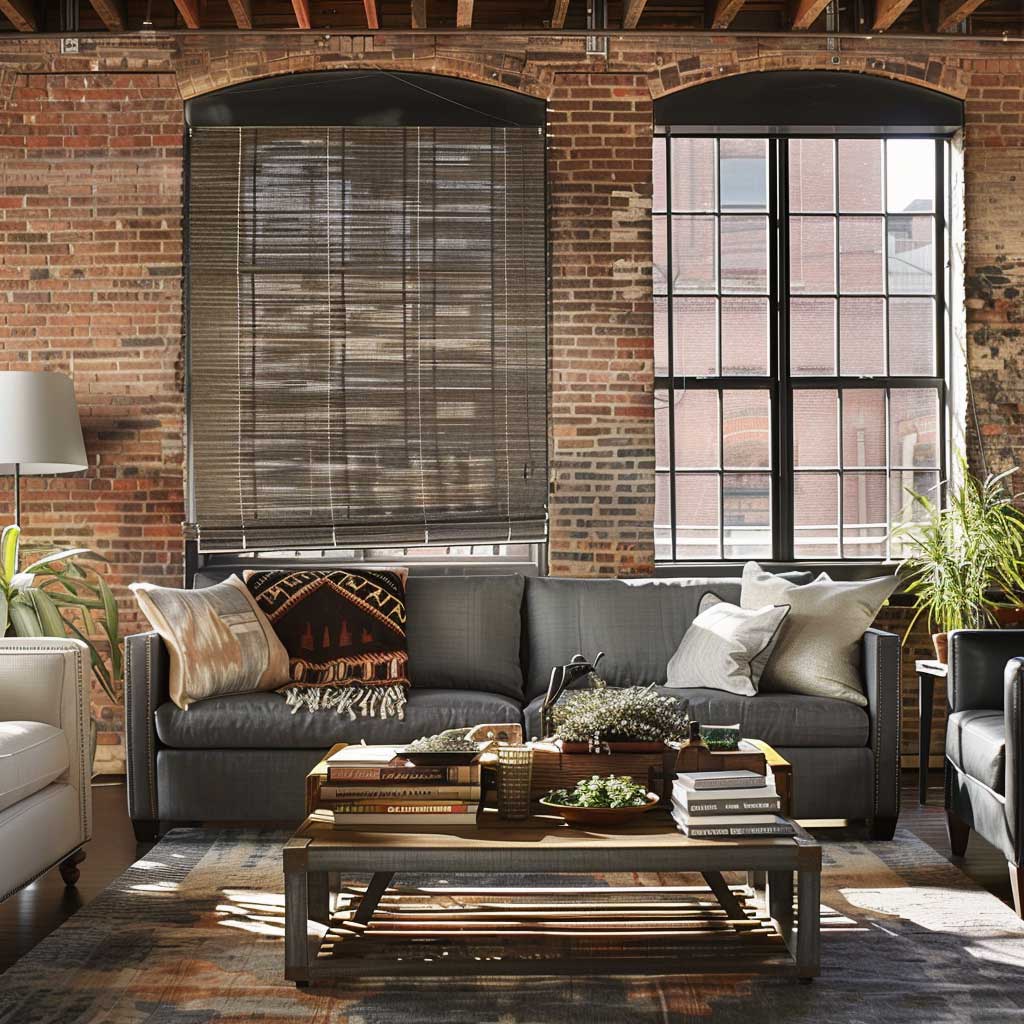

Light control remains the practical core. Lower the blinds during the brightest hours to protect floors and reduce glare on screens, then raise them in the evening to open the view. The same surface that looks tough during the day becomes a quiet backdrop once the room lights come on.
Industrial blinds work best when they feel like part of the building rather than an afterthought. Choose materials that echo the existing architecture and let the soft furnishings do the rest of the work. For monochrome contrast options that stay equally strong, review black and white curtain ideas for living rooms.
Comparing Popular Blind Types for Living Rooms
| Type | Best For | Light Control | Approx. Price per Window | Key Strength |
|---|---|---|---|---|
| Roller shades | Minimal modern rooms | Filtering to blackout | $50–$200 | Cleanest profile |
| Cellular shades | Energy efficiency | Filtering to blackout | $45–$200 | Insulation up to 15–20 % |
| Faux-wood blinds | Transitional spaces | Adjustable slats | $30–$100 | Moisture resistance |
| Roman shades | Softer traditional look | Moderate to blackout | $70–$220 | Fabric folds |
| Woven wood / bamboo | Natural or bohemian rooms | Filtered light | $80–$180 | Organic texture |
Cellular shades stand out for measurable energy performance. According to U.S. Department of Energy research, properly installed cellular shades can reduce heating and cooling energy use by roughly 15 % compared with bare windows or basic vinyl blinds. That figure is worth factoring into the total cost of ownership, especially in homes with large south- or west-facing glass.
Do not default to the cheapest option if the windows face strong afternoon sun. A light-filtering cellular or solar roller will protect furniture and keep the room cooler than a basic aluminum mini-blind. Measure the exact window opening and confirm inside-mount versus outside-mount before ordering.
Practical Rules That Keep Blinds Working Long Term
Modern living room blinds ideas only succeed when the daily operation stays simple. Cordless or motorized systems remove dangling cords and look cleaner. Child-safety standards have tightened; continuous-loop cords are no longer the default for new residential installations in many markets.
What is the single most common measuring mistake? Ordering the exact glass size without accounting for the mounting depth or the side channels. Always add the manufacturer’s recommended clearance. A gap of even half an inch on each side lets light leak and reduces both privacy and energy performance.
Think of blinds as the room’s adjustable skin rather than a fixed decoration. Raise them fully when you want the view and lower them when the sun or privacy demands it. The best systems disappear when open and still look intentional when closed.
Don’t Do This
Do not hang patterned or heavy blinds on a rod mounted at the exact top of the window frame. The visual height of the room collapses and the blinds look like an afterthought. Mount the hardware several inches above the frame or as close to the ceiling as practical so the window appears taller and the treatment feels architectural.
Final Choices That Hold Up
The strongest modern living room blinds ideas start with function and finish with restraint. Pick the light-control level you actually need, match the material to the room’s existing surfaces, and keep the operating system simple.
Roller and cellular options cover most contemporary rooms at realistic prices. Patterned or woven treatments add personality when the rest of the space stays quieter. Industrial textures work when the architecture already supplies the edge.
Measure carefully, prefer cordless or motorized mechanisms, and treat the blinds as a permanent part of the room rather than a temporary cover. The result is a living space that controls light without visual noise and stays useful every hour of the day.
Start with one window if the budget is tight, then expand once the first set proves itself in daily use. Consistent material and mounting height across the room creates the calm, finished look that makes the whole space feel intentional.