
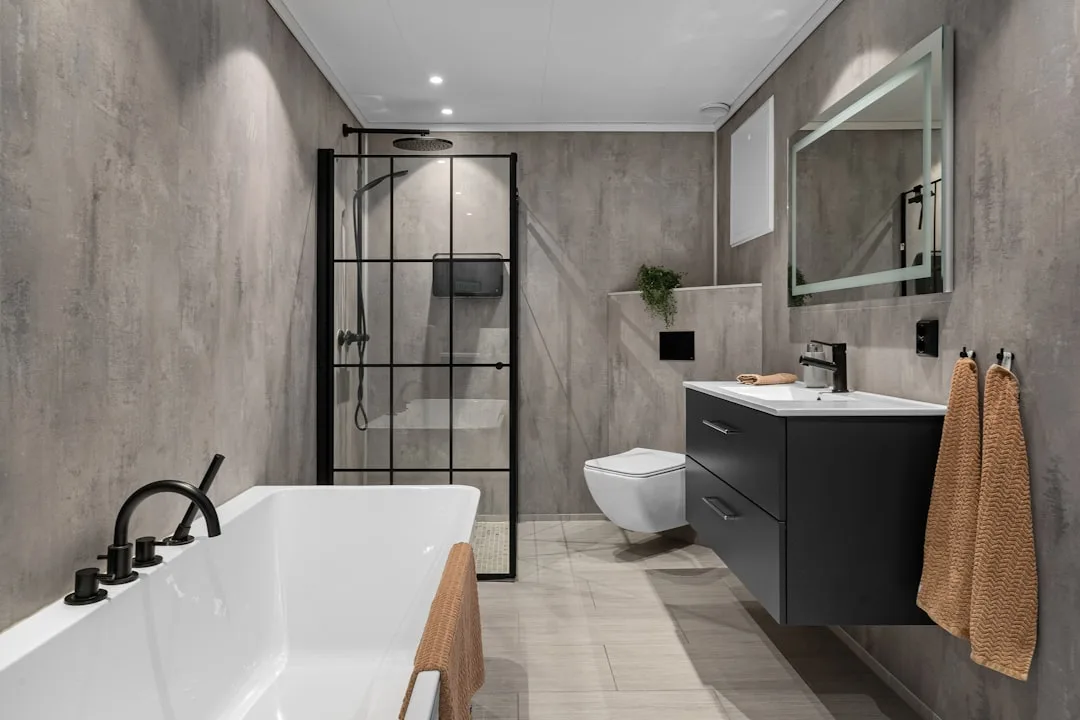
Industrial bathroom mirror ideas work especially well when a bathroom needs stronger character without sacrificing everyday function. Metal frames, restrained shapes and visible hardware give the room an urban edge, while the reflective surface can brighten the vanity zone and make a compact layout feel less enclosed.
The practical question is proportion: how large should an industrial bathroom mirror be? A useful starting point is to keep the mirror slightly narrower than the vanity, with roughly 2–4 inches of space on each side; placement around 5–10 inches above the countertop is another common guideline. Measure the wall, vanity and lighting positions before choosing the frame.
Quick scan
- Choose metal frames when the bathroom needs a sharper industrial accent.
- For many vanities, a mirror slightly narrower than the cabinet creates cleaner proportions.
- Compact rooms benefit from slim frames and generous reflective surface.
- Exposed mounting hardware can become part of the design instead of something to hide.
- Match black, steel or aged-metal details with faucets, lighting and other hardware.
Industrial Bathroom Mirror Ideas With Strong Metal Frames


Industrial bathroom mirror ideas with substantial metal frames suit bathrooms where the mirror should read as architecture rather than decoration. A blackened steel, charcoal or aged-metal edge gives the reflective panel a firm outline, much like a steel window frame gives a loft wall its structure. The question is not whether the frame should stand out, but how much visual weight the room can support.
A 36-inch vanity, for example, is commonly paired with a mirror around 32–34 inches wide in sizing guidance from major bathroom brands. That small reduction leaves breathing room while keeping the mirror connected to the basin below. Avoid choosing an oversized frame simply because the wall allows it; measure the vanity and nearby sconces first.
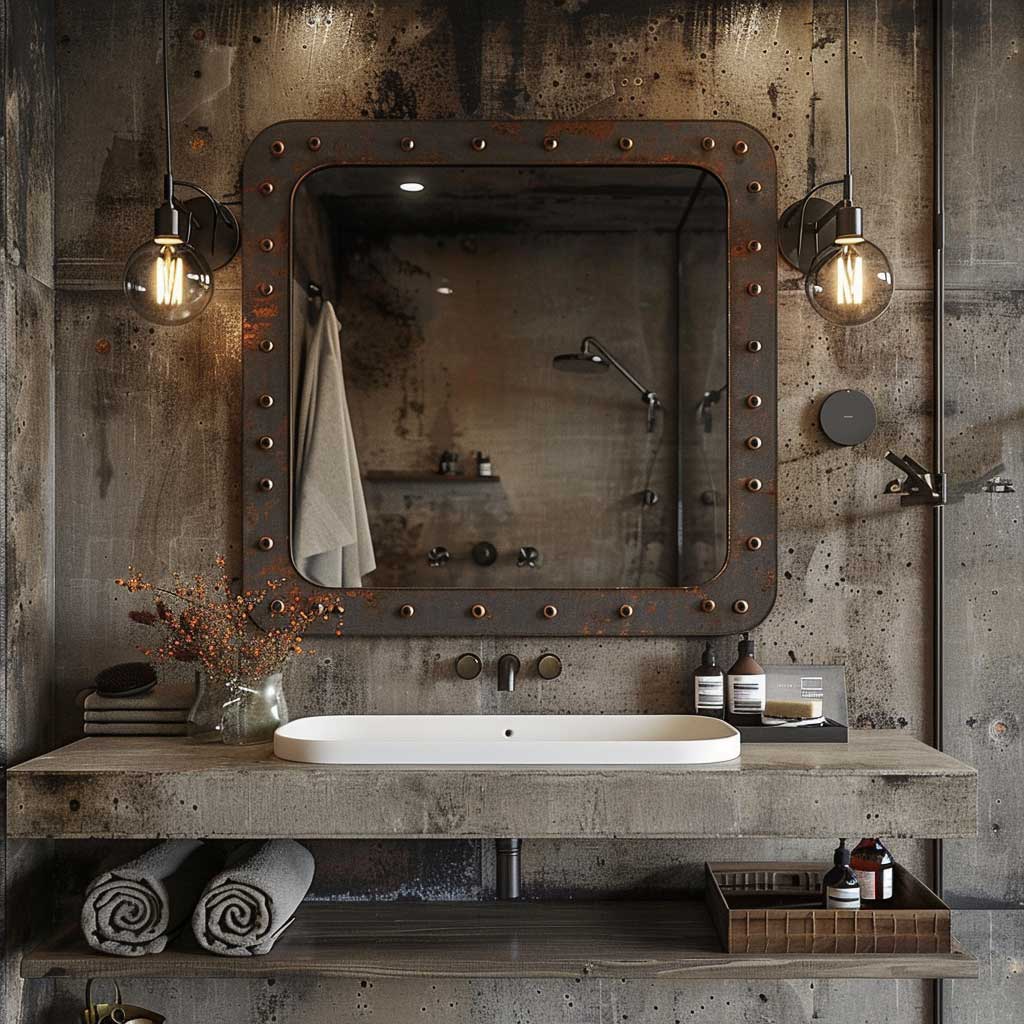


Metal framing becomes more convincing when another two or three bathroom elements repeat the same finish. Black faucets, steel lighting or dark towel hardware can make the mirror feel intentional instead of isolated. A good industrial mirror should behave like a punctuation mark in the room: distinct enough to register, but not so heavy that it overwhelms the sentence.
Don’t do this: Avoid pairing a heavy industrial frame with several unrelated statement finishes. If the mirror already carries strong metal detail, let the tile, vanity and lighting provide quieter support.
For a second layer of reference, minimalist bathroom mirror design ideas show how thin black frames and simple geometric shapes can keep a strong mirror from making a small room feel crowded. The useful question is whether the frame reinforces the vanity rather than competing with it, so compare the finish and width before buying.
Compact Industrial Bathroom Mirrors With Slim Metal Details


Compact industrial bathroom mirrors need less visual mass, not less personality. A slim metal border can define the mirror while leaving more wall visible, which helps a tight vanity zone breathe. Think of the frame as a thin architectural line rather than a second piece of furniture.
For a 30-inch vanity, current sizing guidance commonly places the mirror around 24–28 inches wide, depending on the shape and surrounding fixtures. Does that mean every small bathroom needs a narrow rectangle? No; a round or vertically oriented mirror can work when the wall proportions support it. The useful move is to measure first and let the geometry determine the silhouette.


Light is the hidden advantage of a well-placed mirror in a compact bathroom. A broad reflective panel can bounce daylight or vanity illumination back into the room, while a slim frame keeps the perimeter visually quiet. Avoid filling every available wall with dark metal accents; one defined mirror can create more impact than several competing details.
- Measure the vanity width before choosing the mirror.
- Check the position of sconces, switches and wall cabinets.
- Keep the frame proportionate to the reflective surface.
- Repeat the metal finish in one or two nearby fixtures.
For practical sizing, a 48-inch vanity is often matched with a mirror around 42–46 inches wide, while a double 60-inch vanity can use one mirror around 54–58 inches or two mirrors around 24–28 inches each. These figures are starting points, not rigid rules. When the wall is unusually narrow, prioritize clearance around the hardware and keep the mirror centered over the basin.
A useful external sizing reference is Kohler’s bathroom vanity mirror sizing guide, which recommends allowing 2–4 inches between the mirror and vanity edges and placing the mirror roughly 5–10 inches above the countertop. Use those measurements as a planning baseline, then adjust for the actual wall and lighting layout.
Minimalist Industrial Bathroom Mirrors With Exposed Hardware


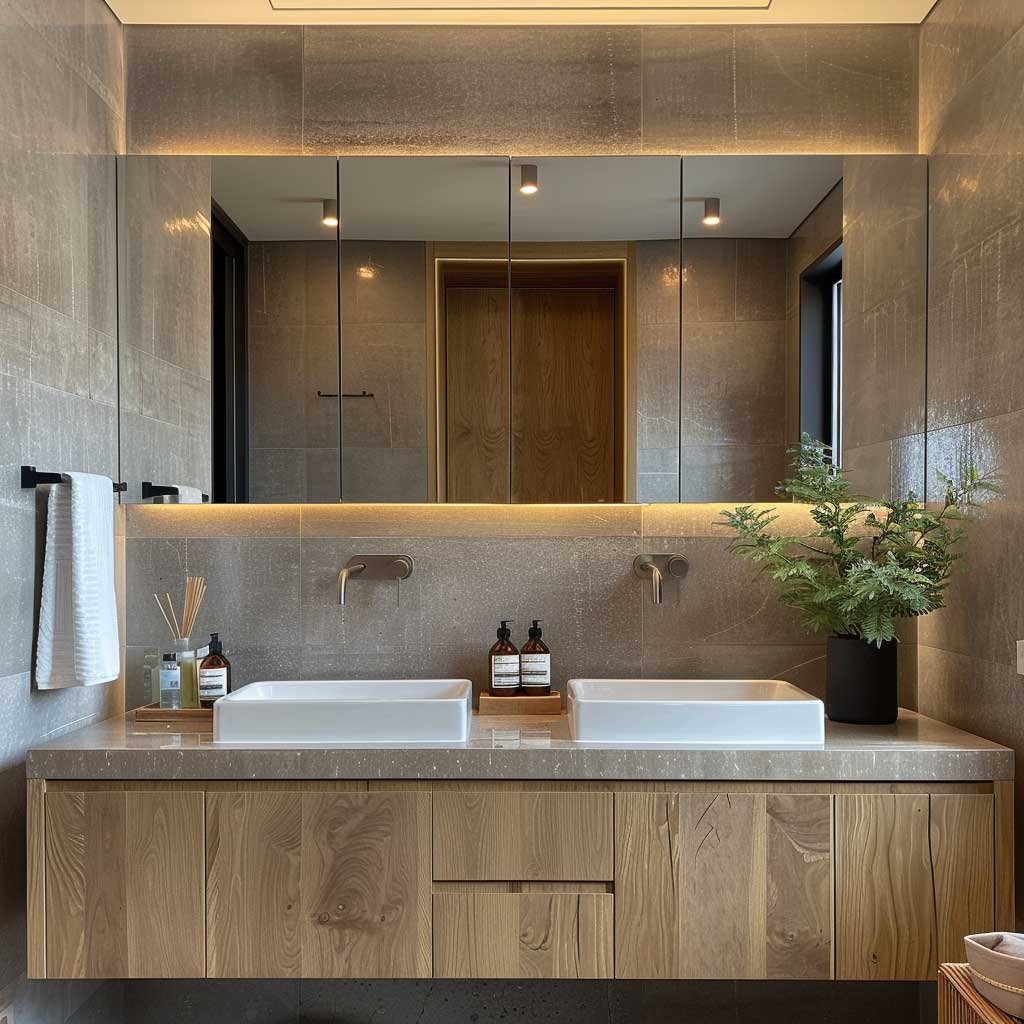

Minimalist industrial mirrors with exposed fixtures take a different route: instead of hiding brackets, bolts or mounting rails, they make those details part of the composition. This approach works when the rest of the bathroom has similarly honest materials such as concrete, tile, black metal or unfinished-looking wood. The result resembles a workshop drawing brought into the finished room.
How much hardware is enough? Usually, the answer is whatever is necessary for a secure installation plus one deliberate visual cue. A 24–36 inch mirror can already become a focal point when its mounting system is clearly integrated with the frame or wall. Avoid adding decorative hardware that serves no structural or visual purpose; industrial style loses credibility when the details look pasted on.

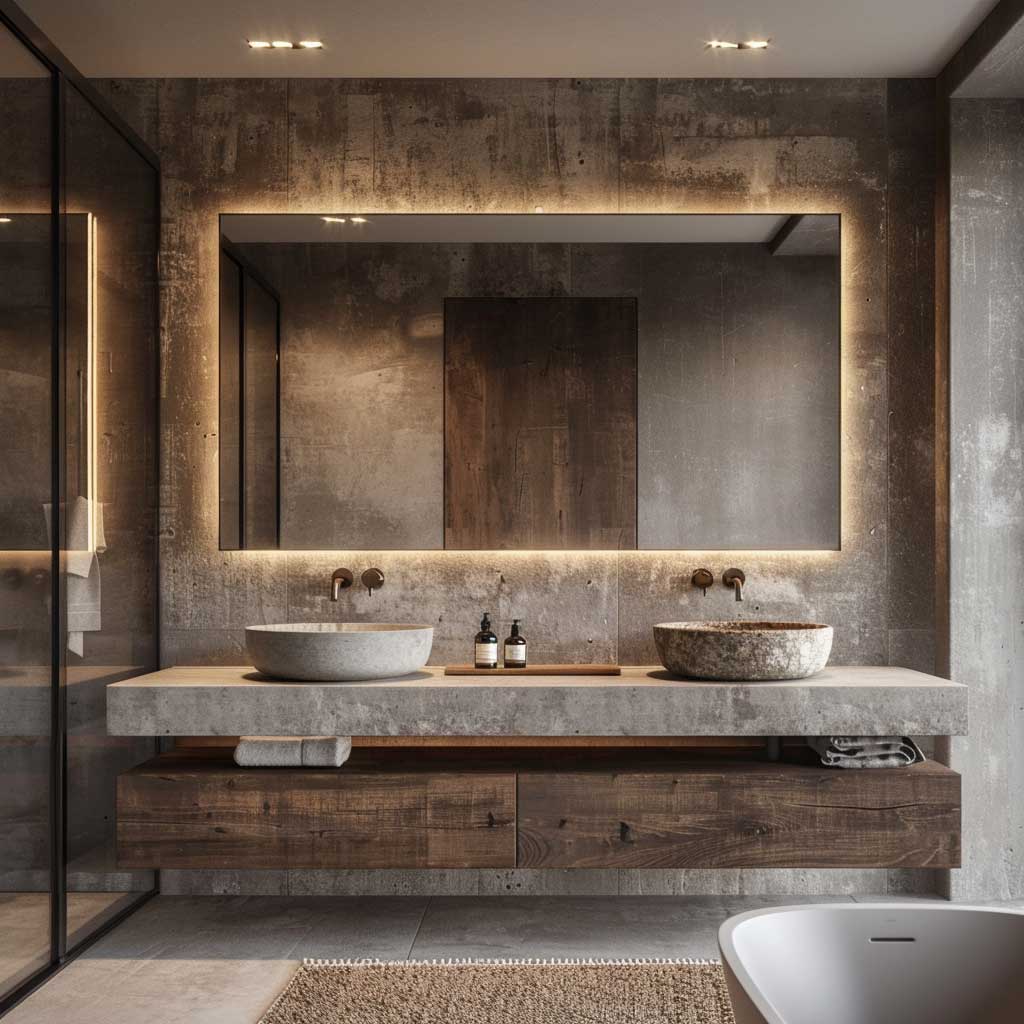


Exposed fixtures also make coordination especially important. If the mirror uses black mounting hardware, repeating black in the faucet or wall light creates a visual thread across the vanity area. If the hardware is brushed steel, keep nearby metals compatible rather than introducing several unrelated finishes. The goal is controlled contrast, not a showroom of disconnected parts.
| Mirror approach | Typical visual role | Useful starting point |
|---|---|---|
| Heavy metal frame | Strong focal point | Keep the mirror slightly narrower than the vanity |
| Slim metal frame | Light industrial accent | Useful for compact vanity walls |
| Exposed hardware | Architectural detail | Coordinate mounting finish with nearby fixtures |
The strongest industrial bathroom mirror ideas usually follow one simple rule: let the mirror carry one clear design message. If the frame is heavy, keep the shape straightforward; if the mounting hardware is expressive, simplify the surrounding finishes. A bathroom mirror should work like a well-drawn grid, giving the room order while leaving enough empty space for the eye to rest.
Before installation, check the vanity width, mirror height, lighting clearance and wall fixing method as one system. Current bathroom guidance commonly places the mirror several inches above the countertop, while double vanities may use either one wide mirror or two smaller ones depending on basin positions. Do not copy a showroom arrangement without checking your own measurements; the wall should make the final decision.
For another related reference, modern wash basin mirror trends with industrial metal accents demonstrate how raw finishes can be balanced with cleaner contemporary forms. The useful takeaway is to connect the mirror to the rest of the bathroom through material, proportion or geometry, rather than relying on the label “industrial” alone.
THE TAKEAWAY
The right industrial bathroom mirror gives the vanity a clear architectural anchor without making the room feel crowded.
- Measure the vanity before selecting mirror width.
- Use metal finishes consistently across nearby hardware.
- Choose exposed details only when they strengthen the overall composition.
Complete guide
Bathroom Design Ideas That Transform Every Space From Ordinary to Exceptional
Tiles, colors, fixtures, layouts, remodels, mirrors, decor — all in one place
Complete guide
Loft Design Ideas That Transform Raw Space Into Home
Bedrooms, kitchens, living rooms, styles, materials, layouts — all in one place
You Might Also Like

Related Topics