Small patio design ideas work best when you stop treating square footage as a limitation and start treating it as an edit. I’ve transformed a 6×8 ft concrete slab into an outdoor room I use every single evening — and the most valuable thing I learned is that most people overfill the space, not underfill it. The patios that photograph well and feel luxurious in person are almost always under-furnished.
You’ll notice that the most common mistake in small outdoor spaces is buying furniture sized for a full deck. A loveseat from the Article Sodo line ($799) or a IKEA ÄPPLARÖ bistro set ($149) scaled to the footprint changes everything. Scale is the one variable most people completely ignore, and it’s also the one that costs nothing to fix — just a return and a swap.
This post covers furniture placement, color, plant layering, and lighting — the four levers that actually move the needle on a compact outdoor space. Each section has at least one thing I wish someone had told me before I made an expensive mistake.
- Scale furniture to the footprint — bistro sets and two-seaters outperform sectionals in spaces under 120 sq ft
- Light neutrals and a single bold accent color make a small patio feel 30% larger
- Vertical planters and wall-mounted trellises add greenery without consuming floor space
- LED string lights ($25–$60) pull more ambiance than any other single purchase in this price range
- One statement piece — a rug, a pendant lantern, a sculptural planter — beats ten small accessories every time
Furniture That Earns Its Place in Small Patio Spaces
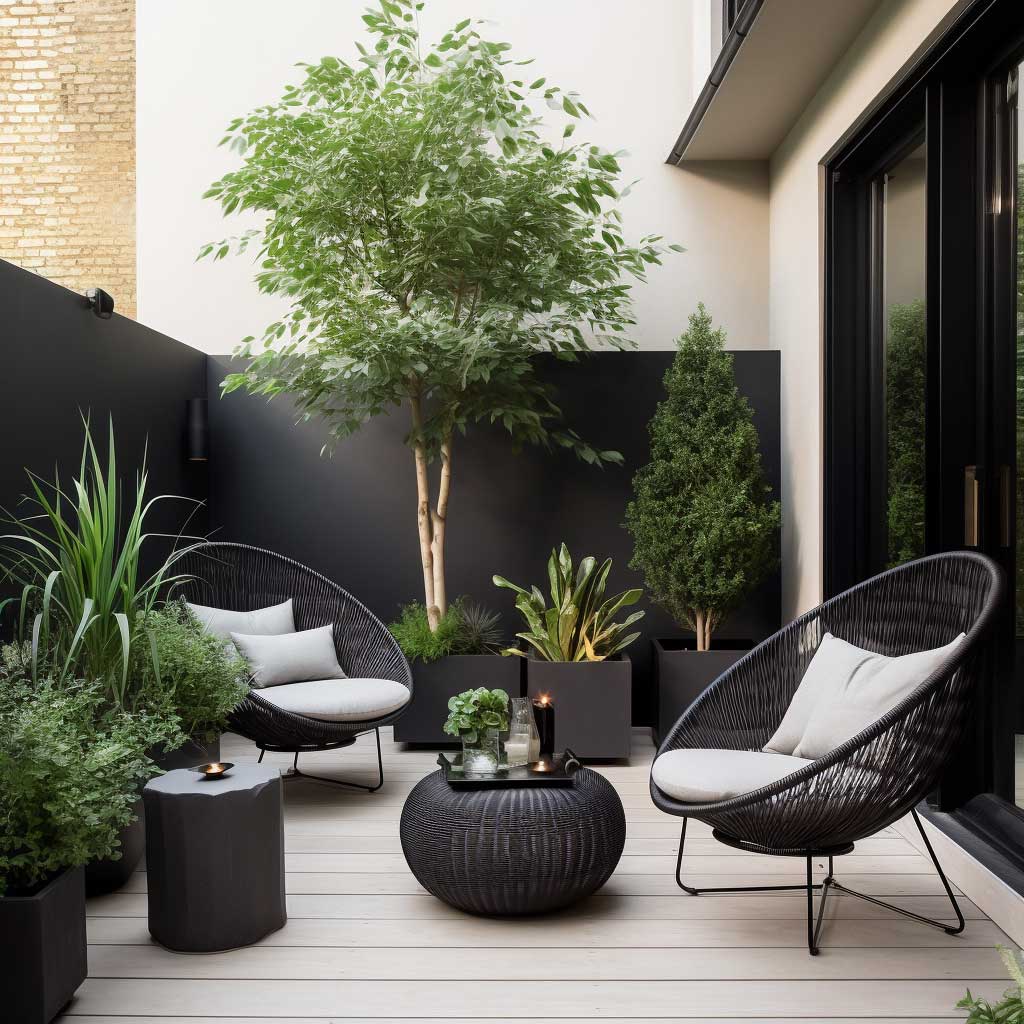
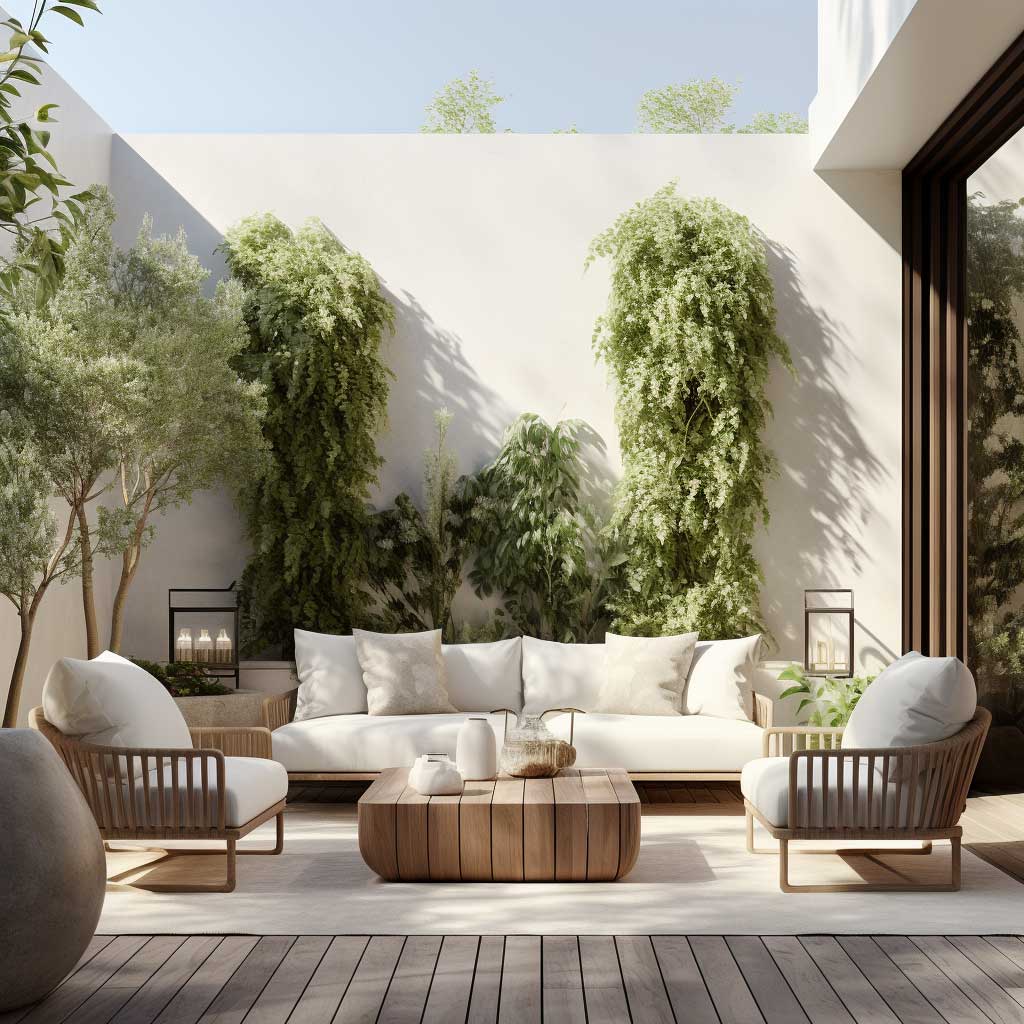
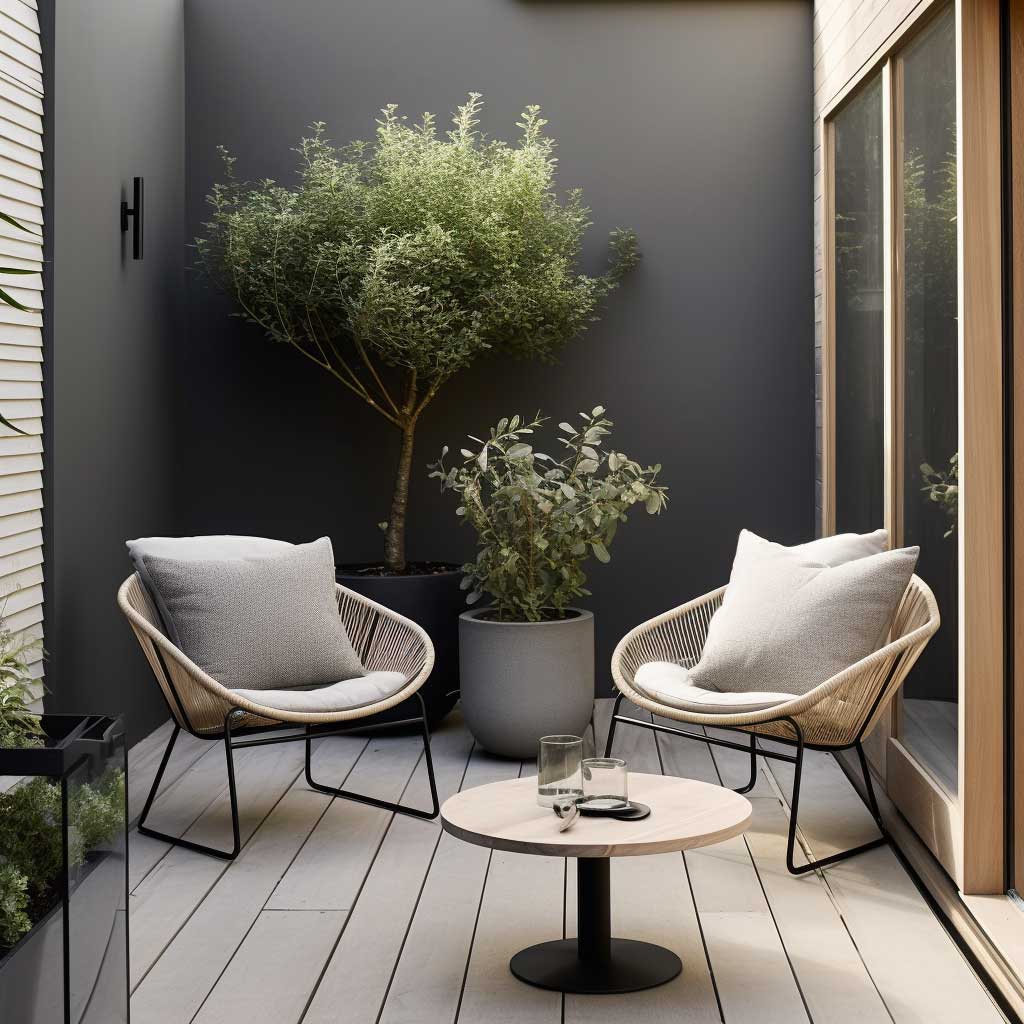
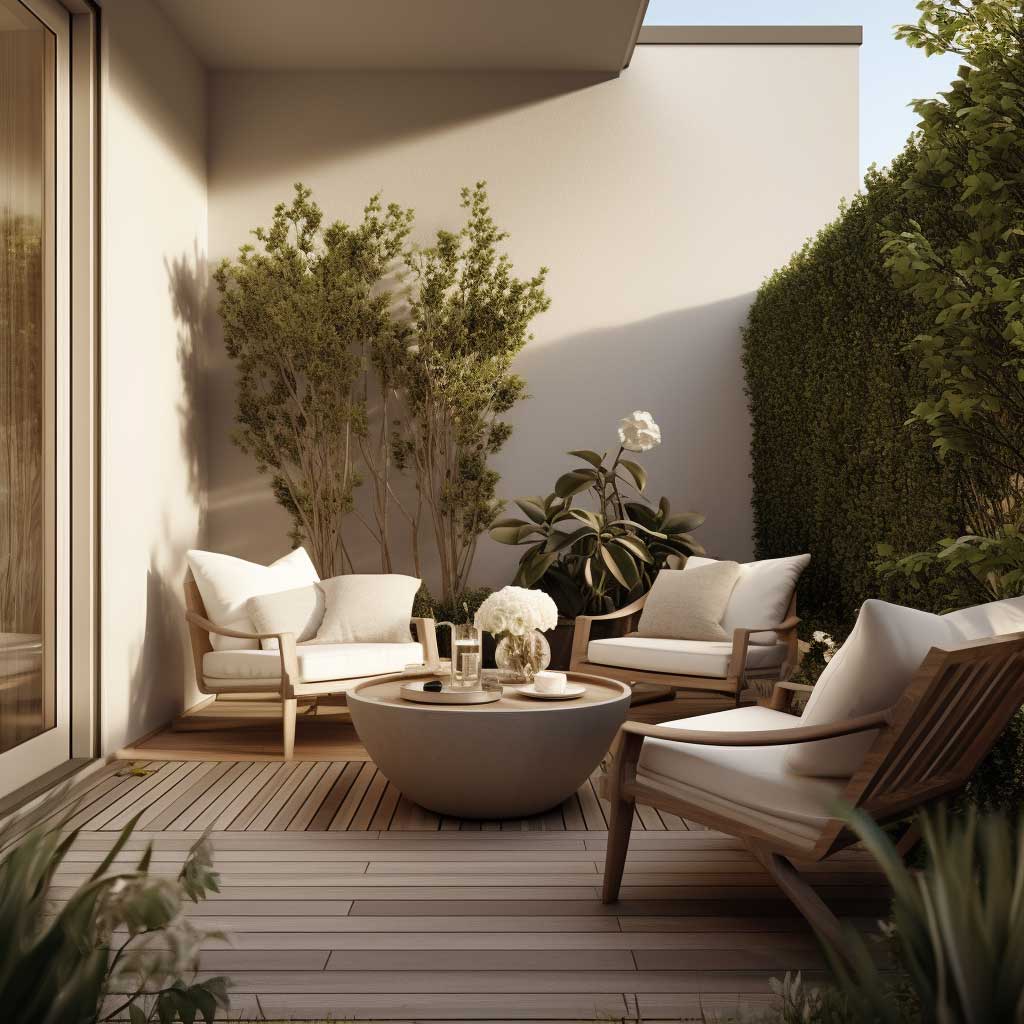
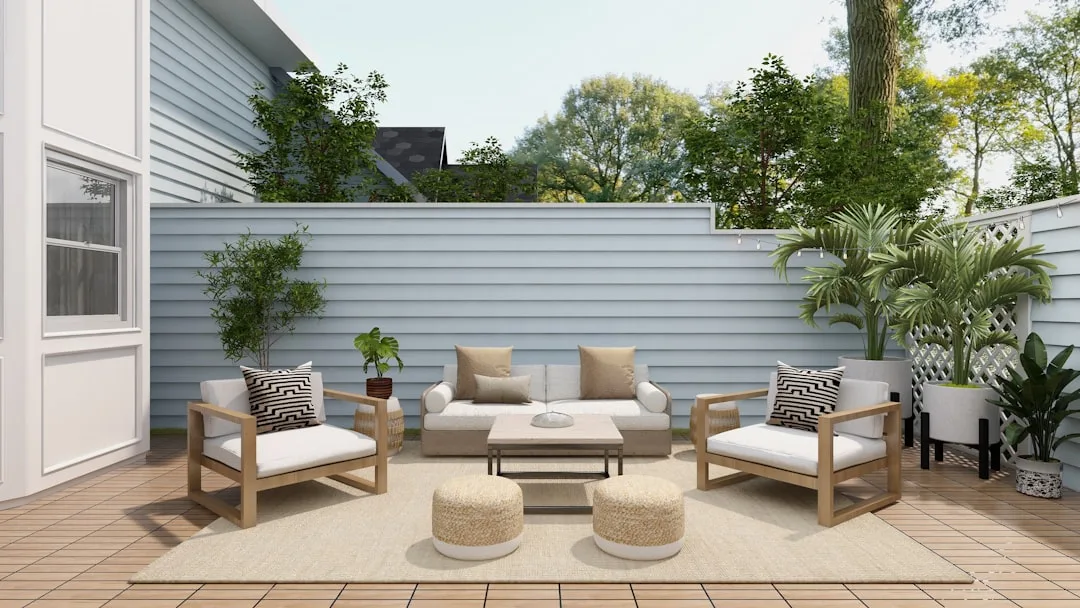
Outdoor patio ideas for small spaces almost always hinge on furniture scale, and the rule is simpler than it sounds: if you can’t walk around a piece comfortably after placing it, it’s too large. My go-to for tight patios is the IKEA ÄPPLARÖ bistro set — two chairs, one round table, folds flat when not in use, and costs $149. For anyone wanting something with more presence, the CB2 Rocha Armchair ($299) has a narrow profile that reads as intentional rather than crammed.
Dual-function pieces are where compact patio design earns real ROI. A Keter store-it-out bench ($119 at Home Depot) gives you seating for two and 70 gallons of storage underneath — that’s cushions, a string light extension cord, and a box of outdoor candles all hidden away. I’ve had mine for three seasons and it has not faded once. What doesn’t work: oversized sectionals marketed as “modular.” I’ve bought two. Both ended up on Facebook Marketplace within a year.
Does the furniture need to match? No — and it looks worse when everything coordinates perfectly. I mix a powder-coated iron bistro chair with a teak folding stool and a concrete side table. The mismatched materials create a collected-over-time feeling that staged showroom patios never achieve. The one consistency I maintain is cushion color: all outdoor cushions in the same family, usually warm white or dusty sage.
For spaces under 60 sq ft, eliminate seating entirely on one wall and use it for a slim console table or a wall-mounted bar shelf instead. You reclaim 18 inches of depth and suddenly the patio moves from crowded to intentional. Article’s Bel Air folding wall table ($189) mounts flush and drops down for dining — it’s the one piece of outdoor furniture that genuinely pulls its weight in tiny spaces.
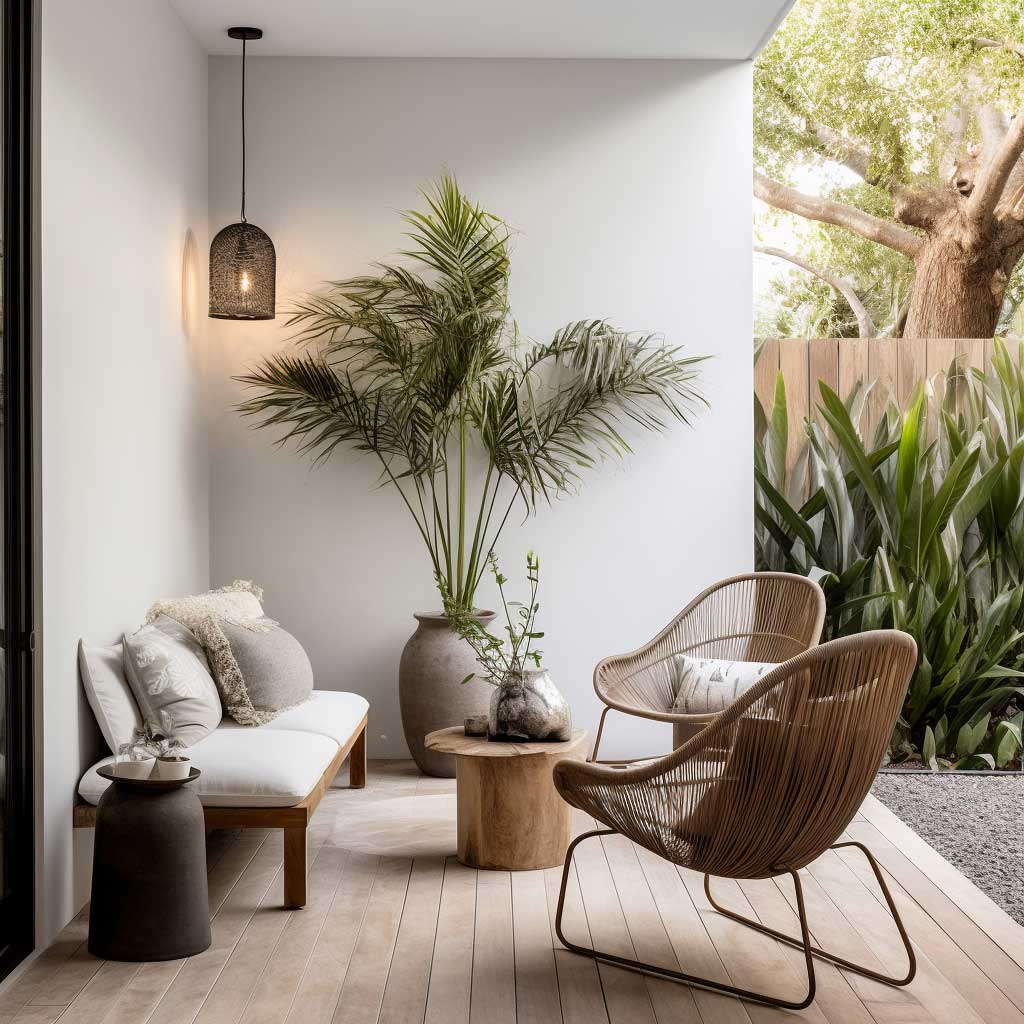
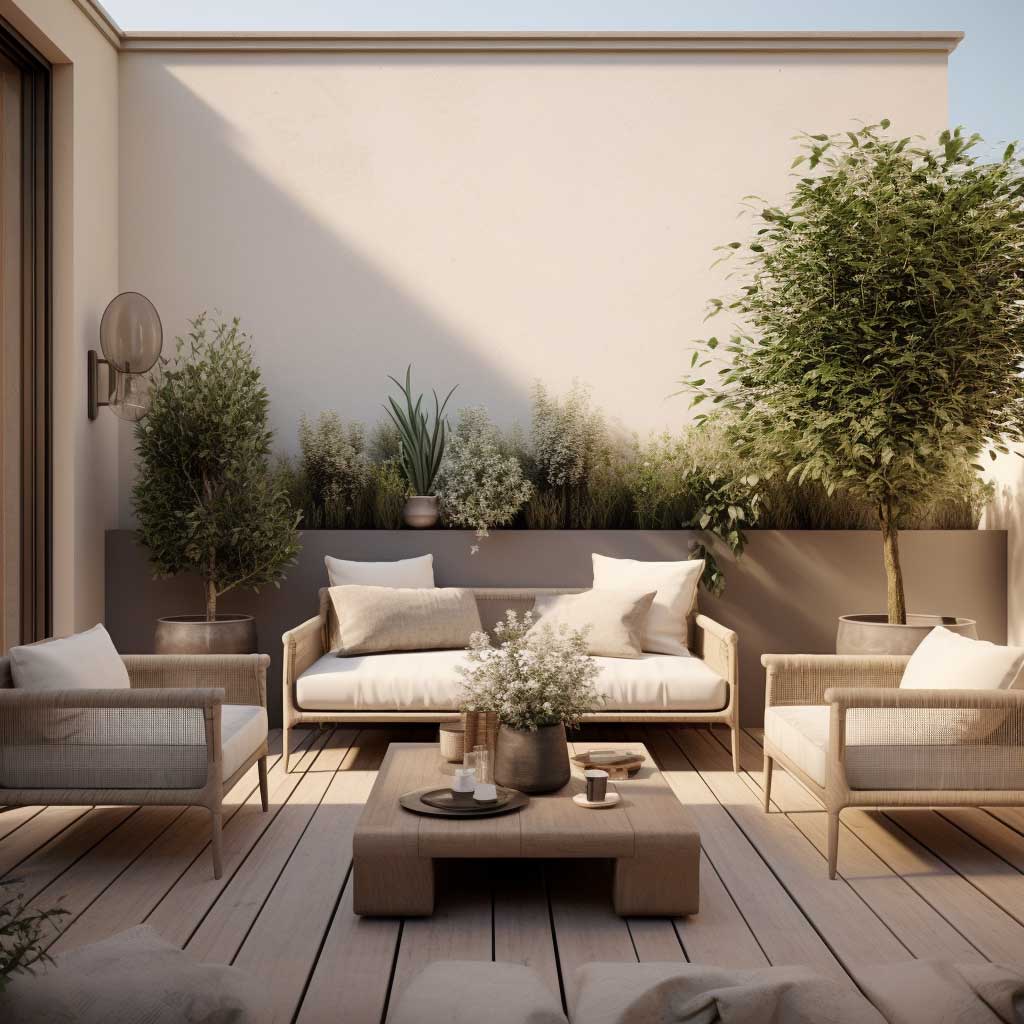
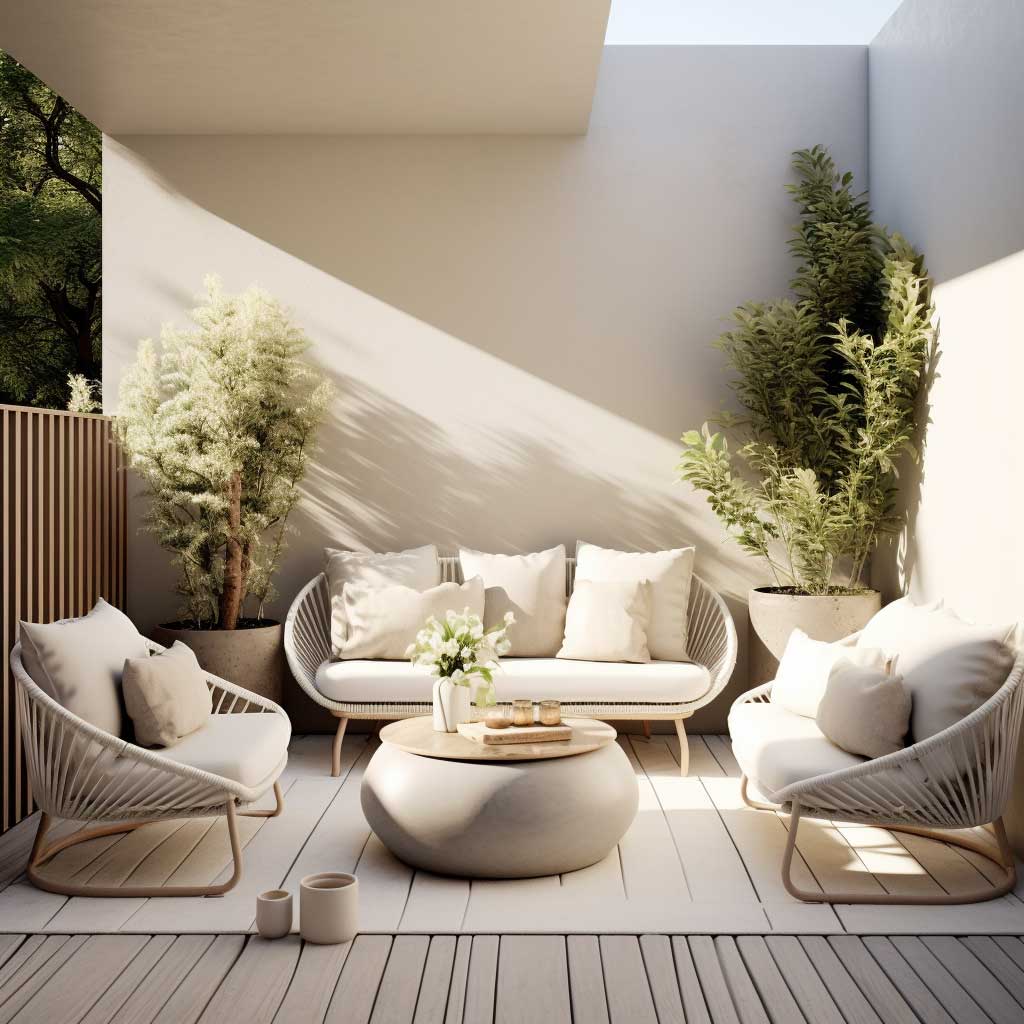
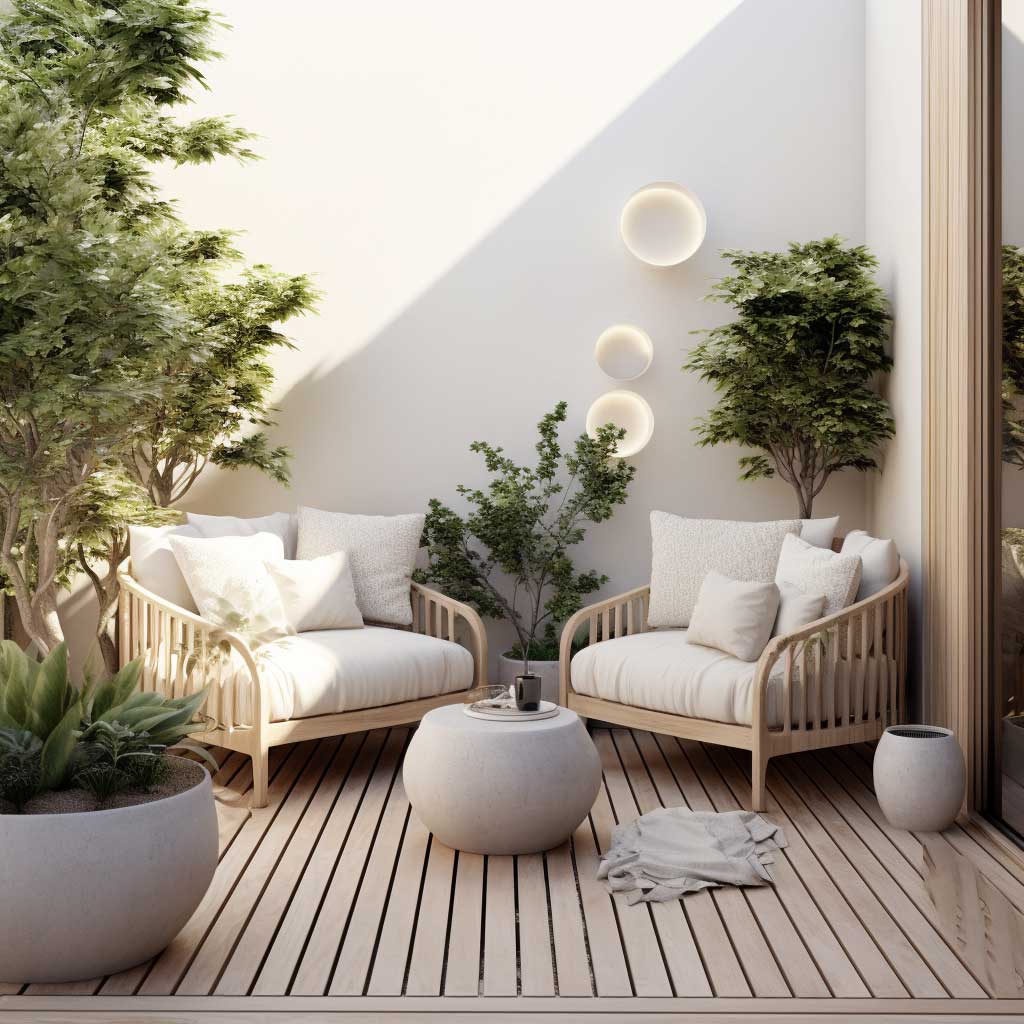
Keep a mental rule: every piece of furniture on a small patio needs two uses or a very good visual reason to exist. A side table that only holds a drink is borderline. A side table with a shelf underneath that holds books and a candle earns its spot. This is not minimalism for its own sake — it’s the difference between a patio that feels curated and one that feels like a storage unit with chairs.
- Don’t buy a round dining table over 36 inches in diameter for spaces under 100 sq ft — you’ll spend every dinner doing a sideways shuffle to reach your seat.
- Don’t use heavy upholstered outdoor sofas in humid climates without covers — they mold from the inside out within one rainy season, and no cover actually stops it completely.
- Don’t place furniture flush against all four walls — it creates a perimeter-only layout that feels like a waiting room, not an outdoor room.
- Skip the umbrella in spaces under 80 sq ft — the pole eats floor space and the canopy creates a ceiling that makes the area feel like a tent, not a patio.
Color and Layout Logic for Small Patio Design
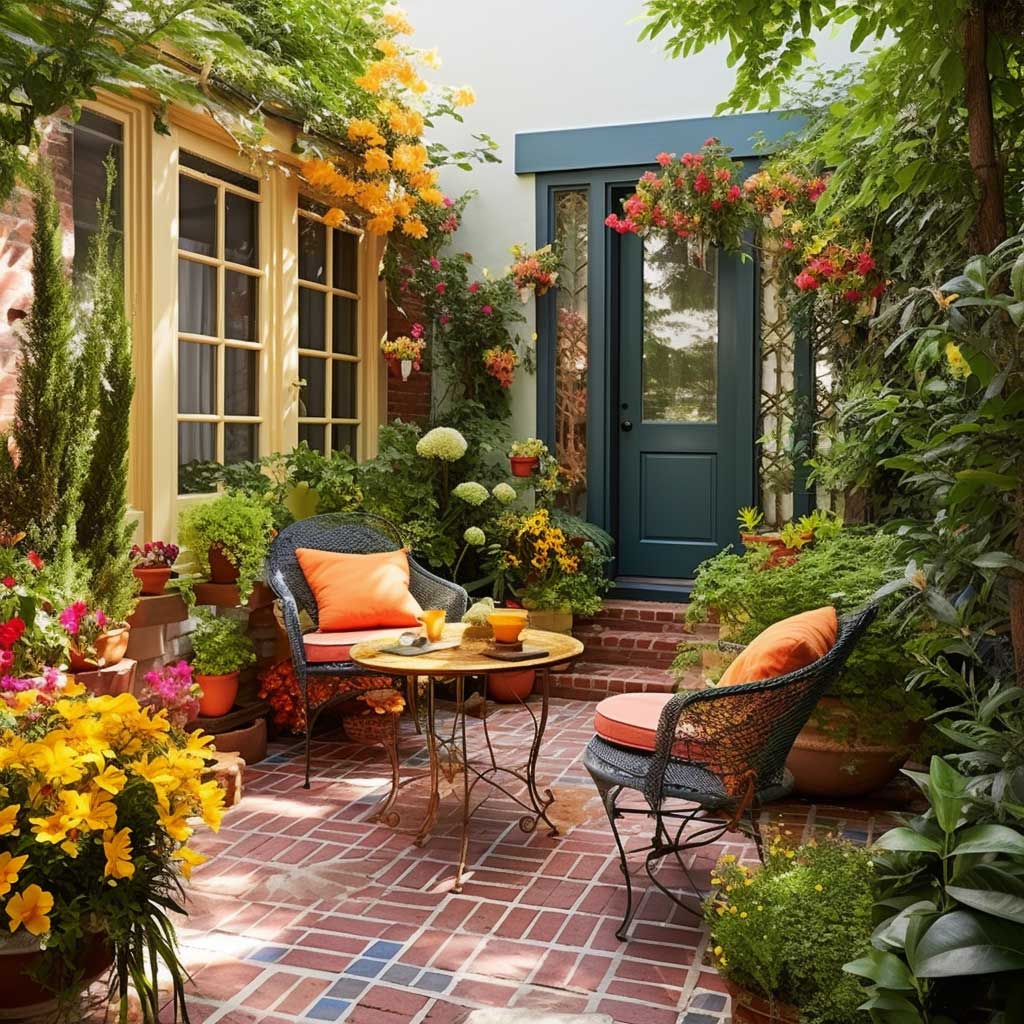
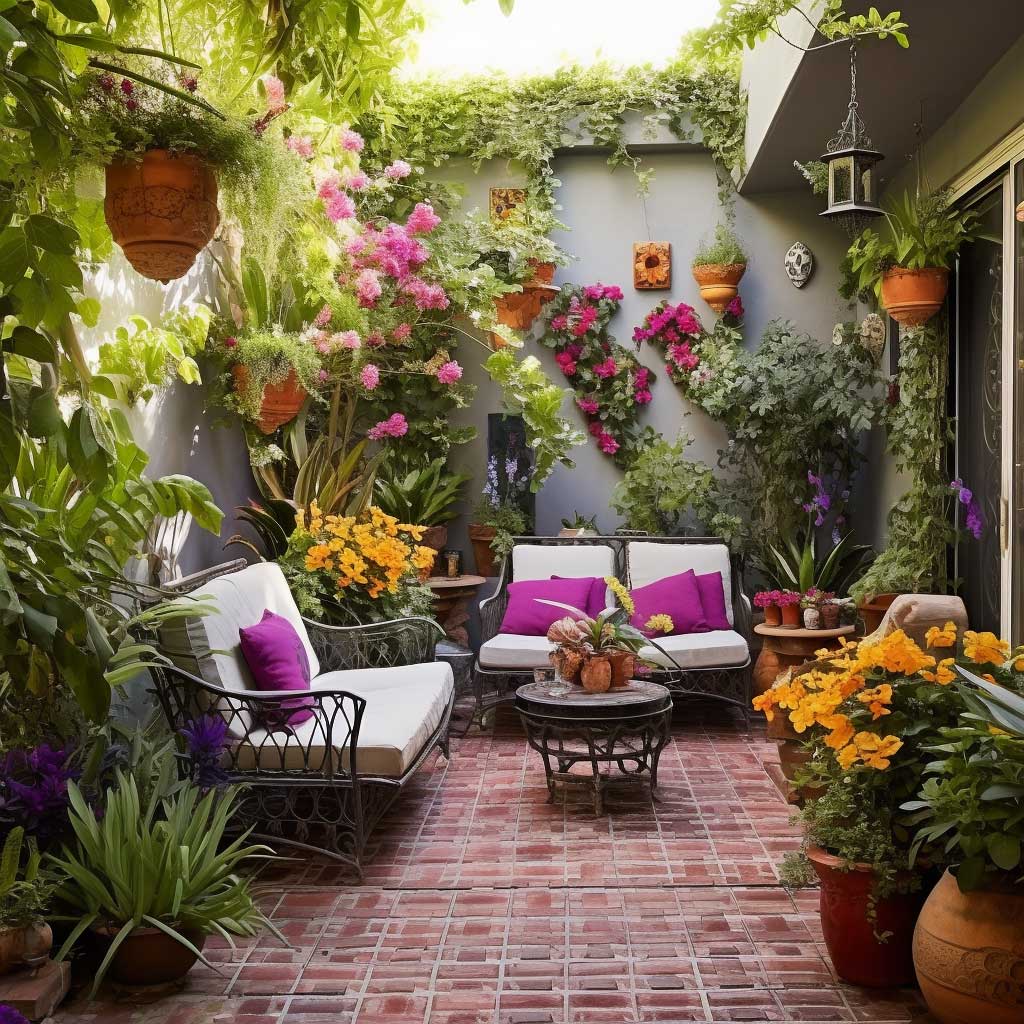
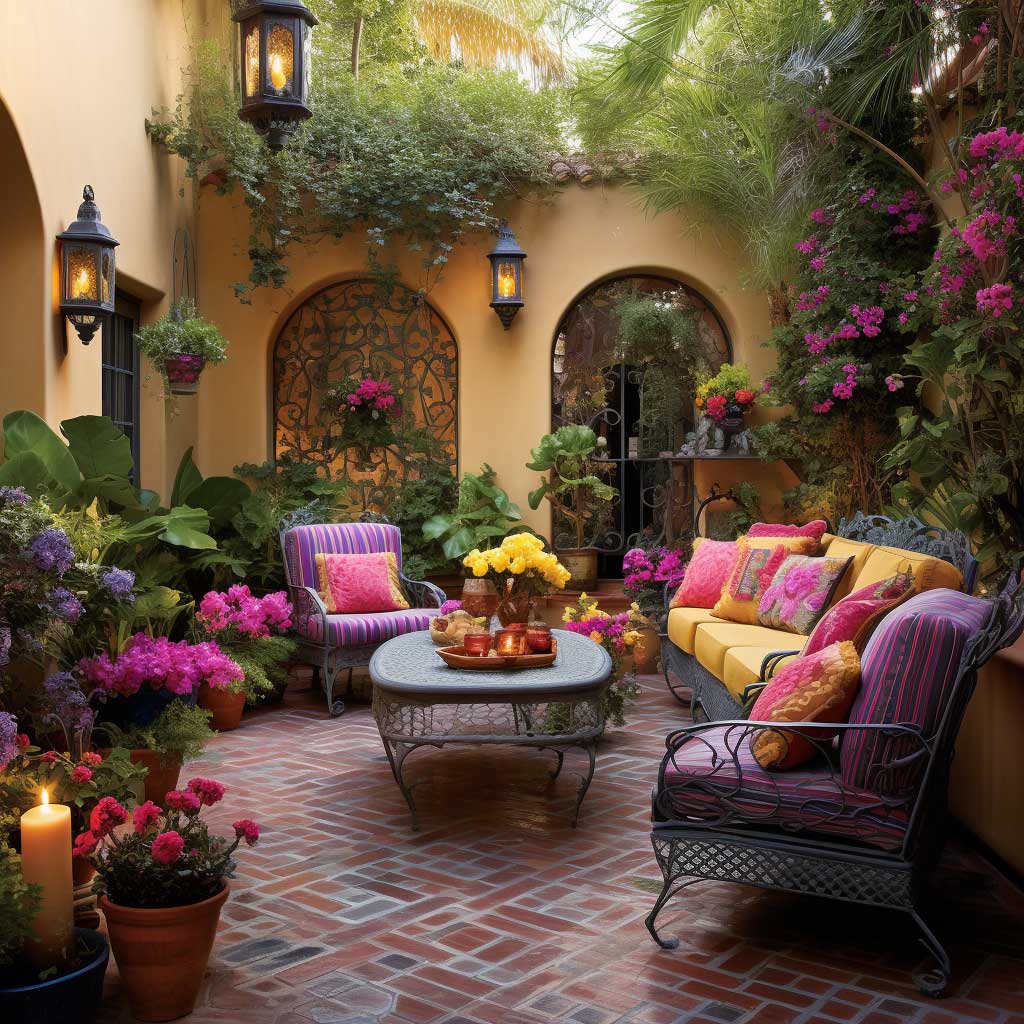
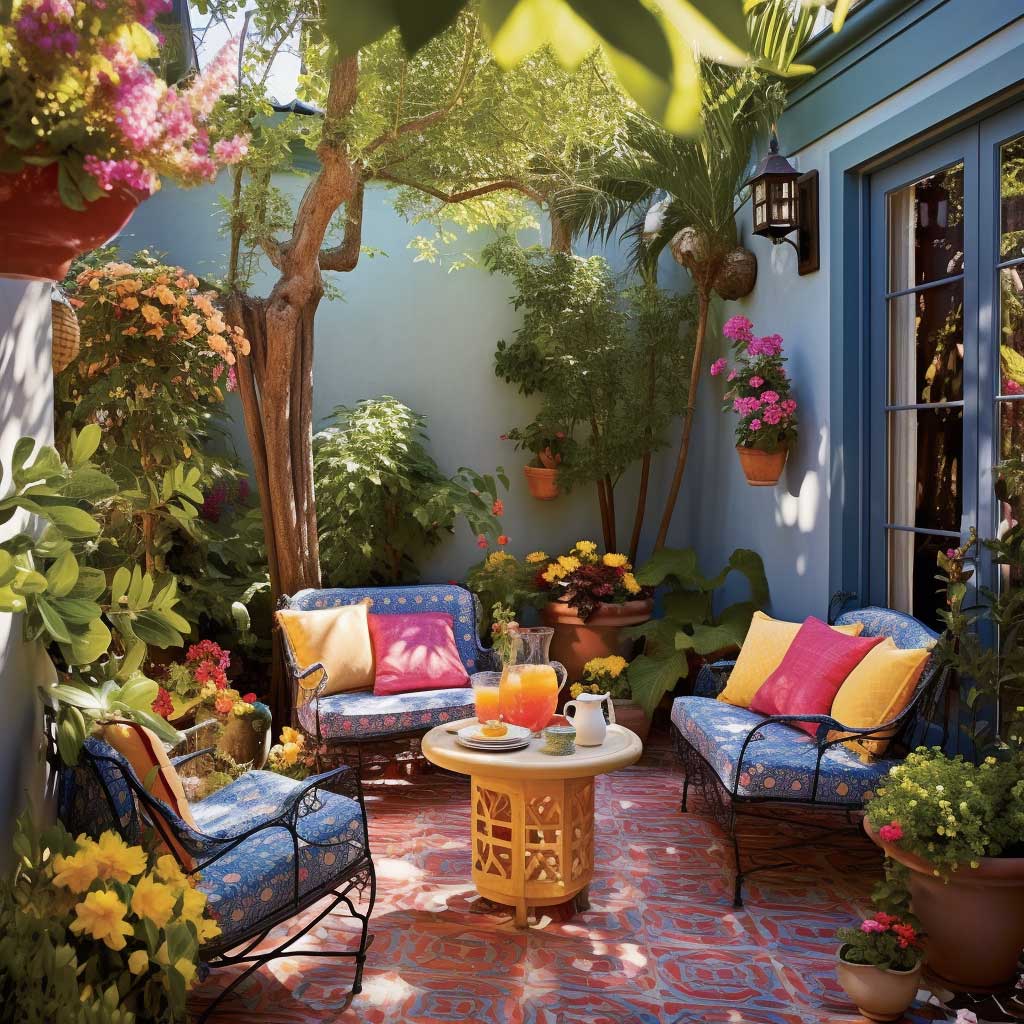
Small patio design ideas with real impact almost always start at the fence or wall, not the furniture. Painting an exterior wall or fence in a deep, considered color — Farrow & Ball’s “Mizzle” or Sherwin-Williams “Pewter Green” ($75/gallon, exterior formula) — collapses the visual boundary between patio and garden. The space stops reading as a box and starts reading as a room. I painted my back fence two years ago and it was the single highest-ROI change I’ve made to any outdoor space.
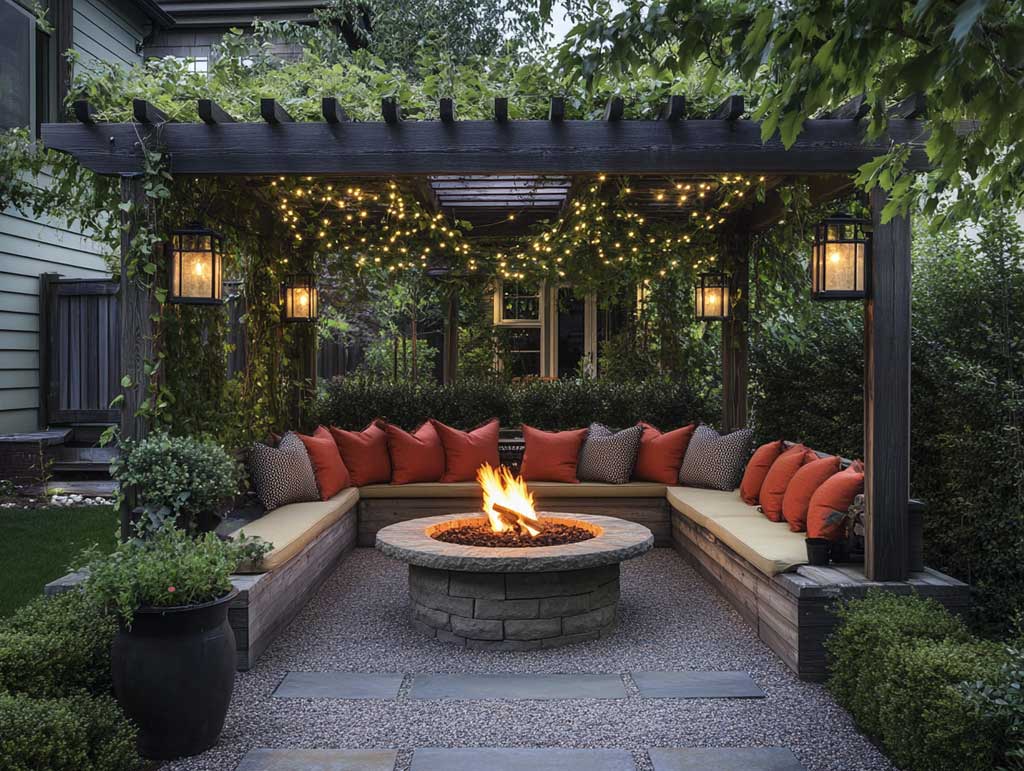
The layout rule for small patios is the same as small apartments: define one focal point and arrange everything else toward it. A fire pit table, a sculptural planter, or even a dramatic outdoor lantern works as a focal anchor. Everything else is supporting cast. When you have two or three competing focal points in 80 square feet, the eye doesn’t know where to land and the space feels chaotic rather than designed. You need one statement, not a committee.
Rugs are the fastest way to define zones in a small outdoor space. A Rugs USA Zen Natural Jute rug ($89 in 5×7) placed under the seating creates a “room within a room” effect that reads as intentional on camera and in person. The mistake people make is buying an outdoor rug that’s too small — a 4×6 disappears under furniture and looks like a doormat. Size up to at least 5×7 and let it anchor the full seating arrangement. For a reference on scaling outdoor furniture to your layout, this breakdown of space-saving outdoor furniture has specific measurements worth bookmarking.
Lighting placement defines the ceiling of a small patio more than any physical structure. Draping string lights — the $35 Brightech Ambience Pro LED set is my go-to — from the house to a fence post at a 45-degree angle creates a diagonal ceiling that makes the space feel taller and wider simultaneously. That trick I stole from a restaurant patio in Porto and it works in a 60 sq ft backyard just as well as a 300 sq ft terrace.
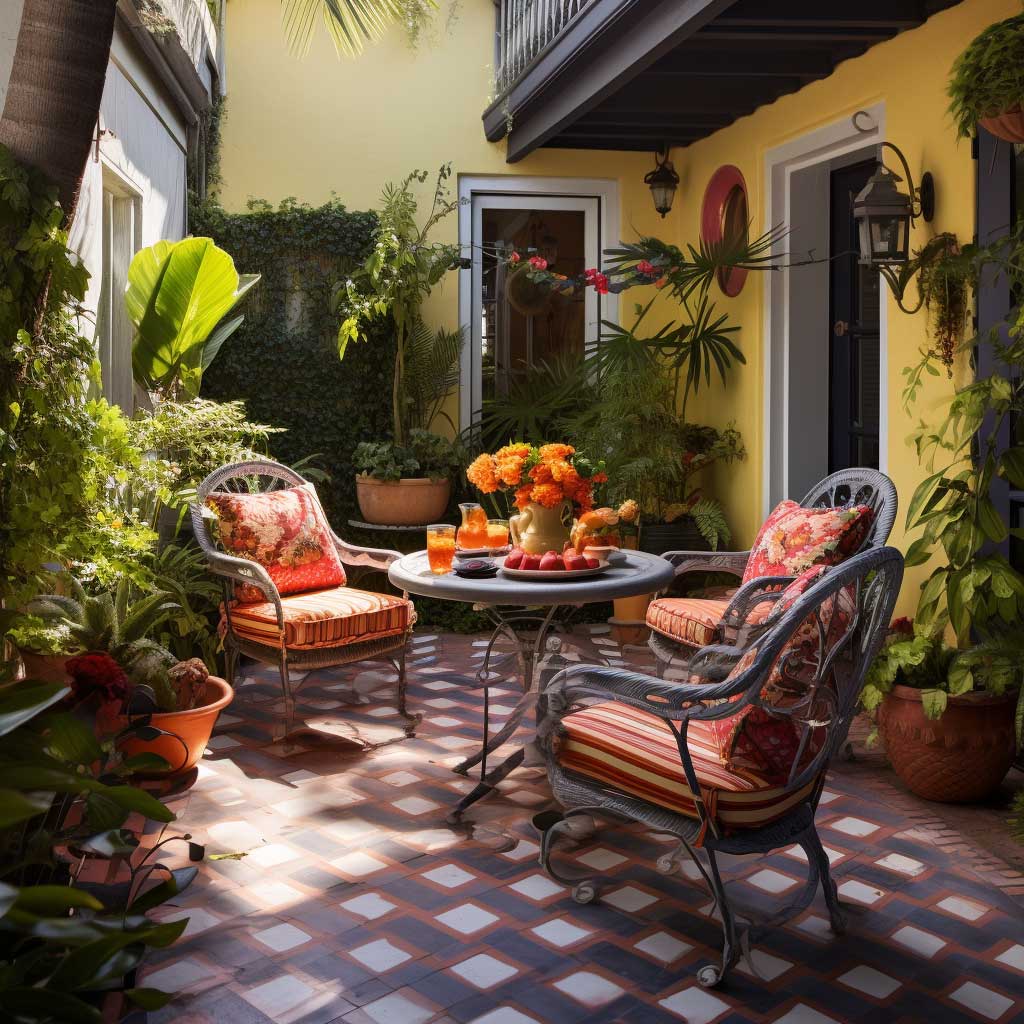
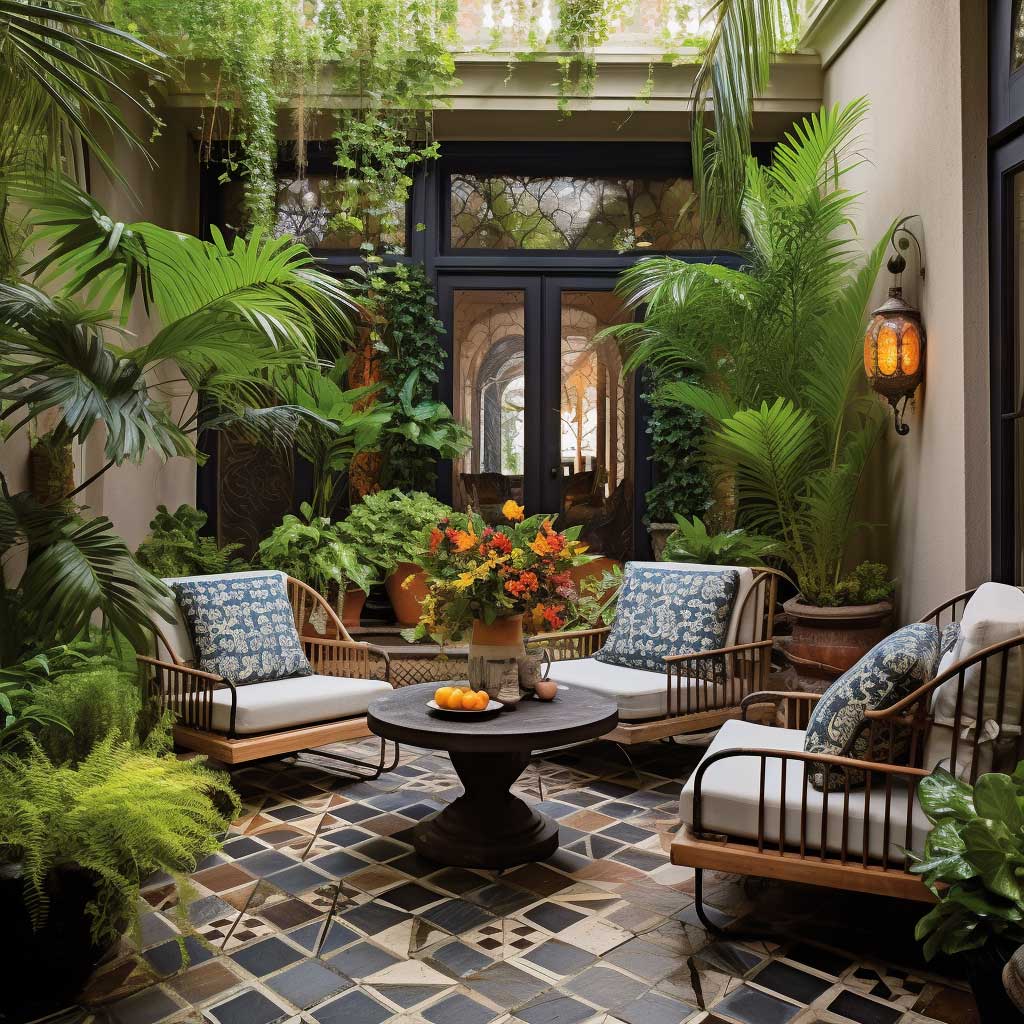
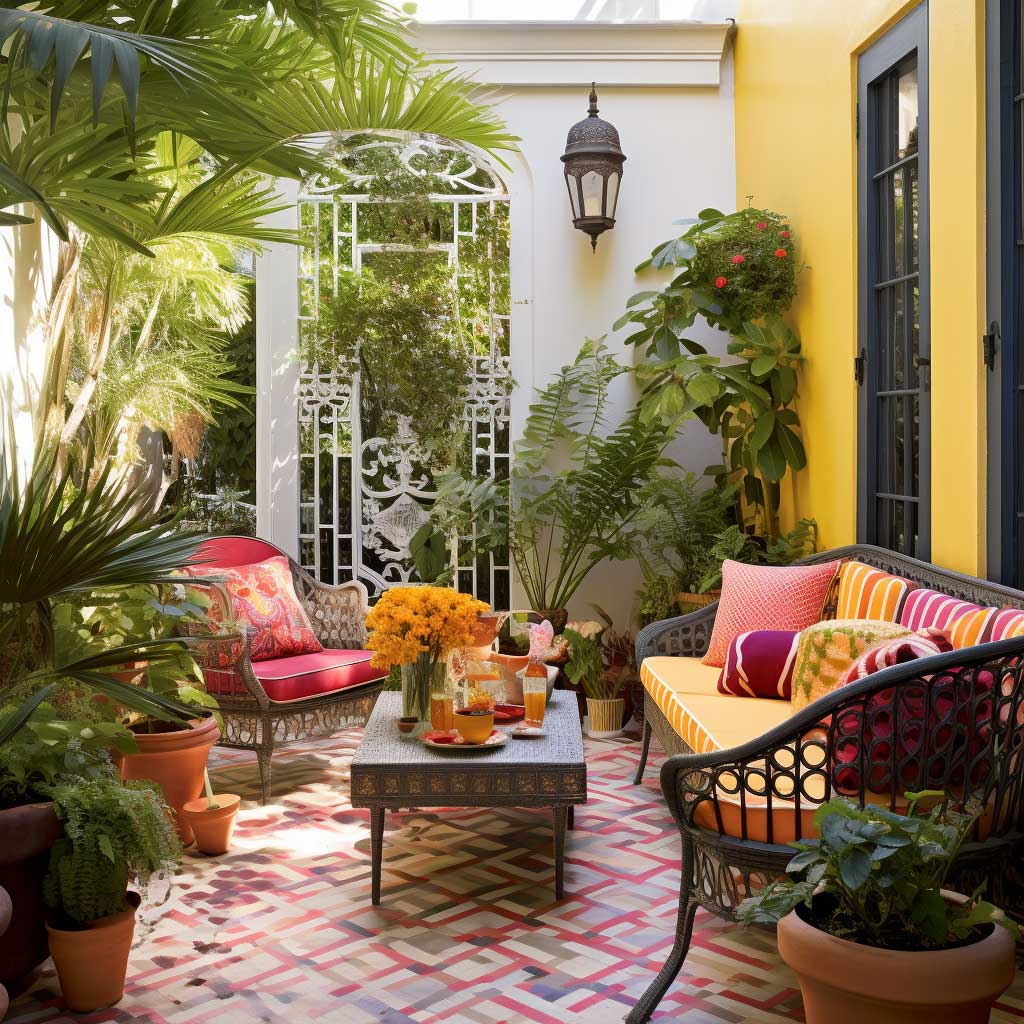
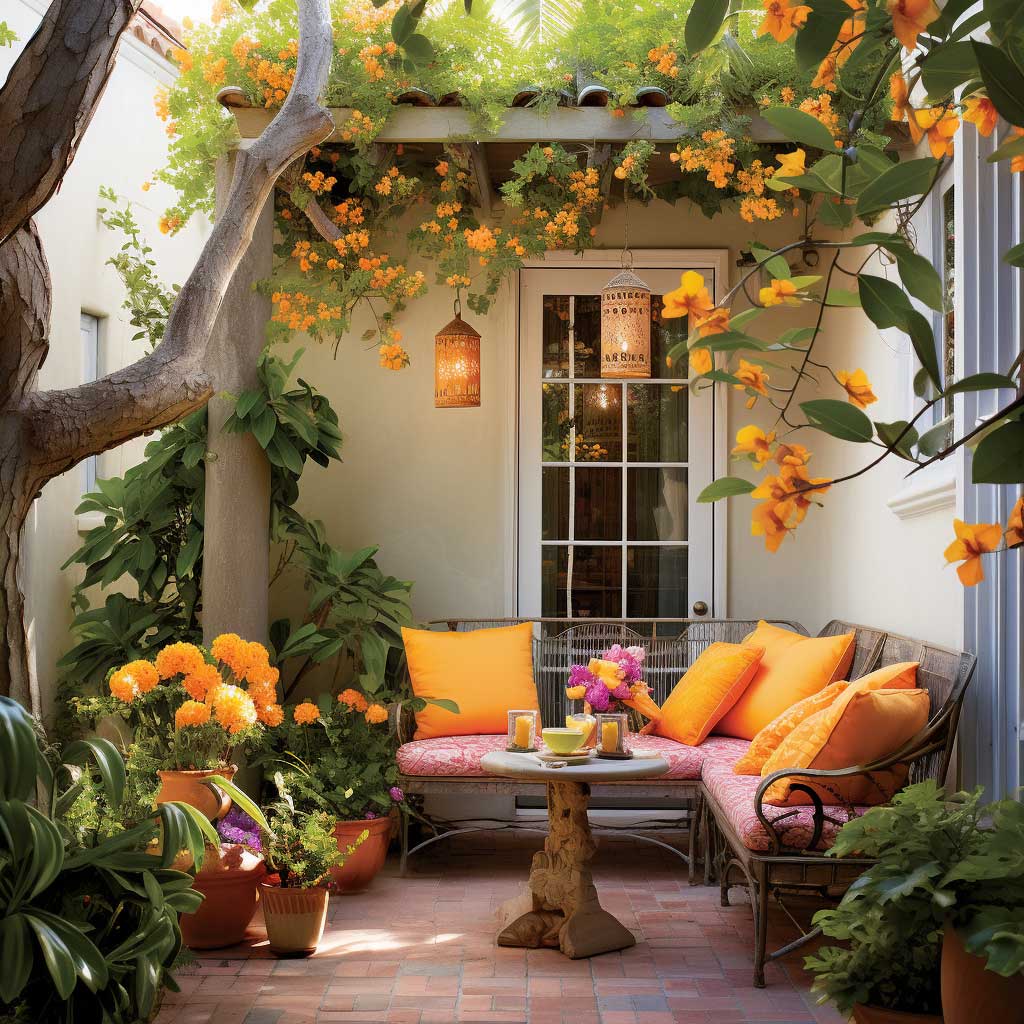
What kills the look faster than anything? Mismatched plastic containers. I’ve seen beautiful patio layouts ruined by a collection of 12 different terracotta, plastic, and ceramic pots in seven colors arranged along a fence like a garage sale. Pick two pot materials — I use matte black iron and natural terracotta — and commit. The restraint signals intentionality in a way that variety never does. Also avoid ignoring privacy in your patio layout — a well-placed screen or tall planter can transform a completely exposed slab into something that feels genuinely retreated.
Plants That Pull Weight in Small Outdoor Spaces
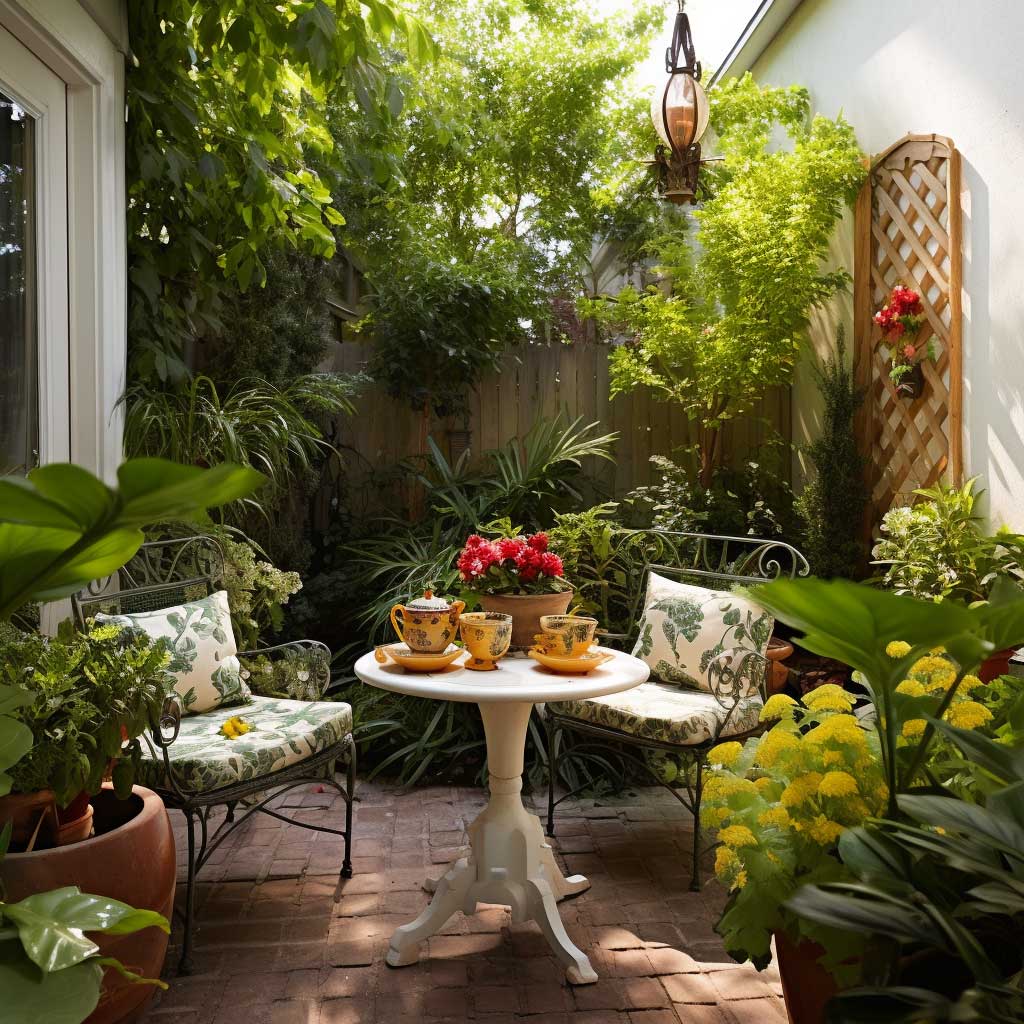
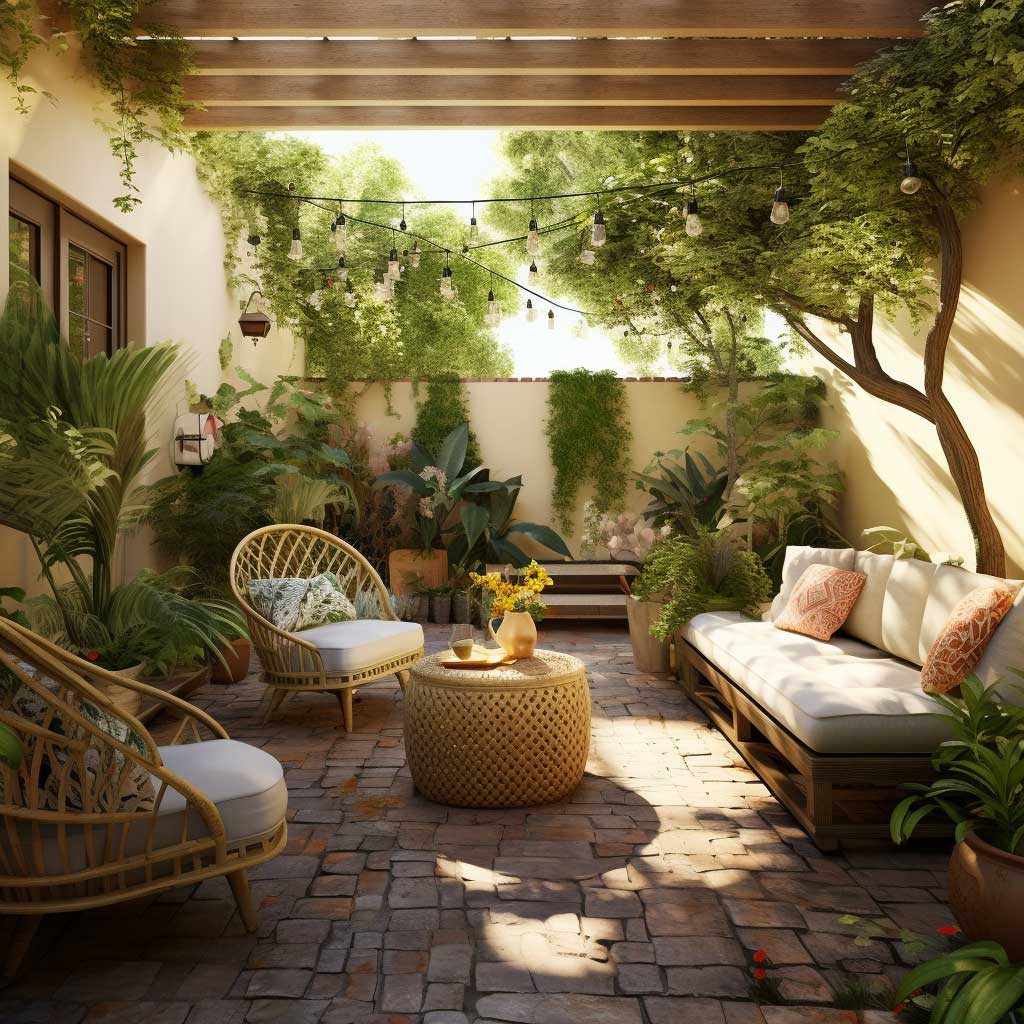
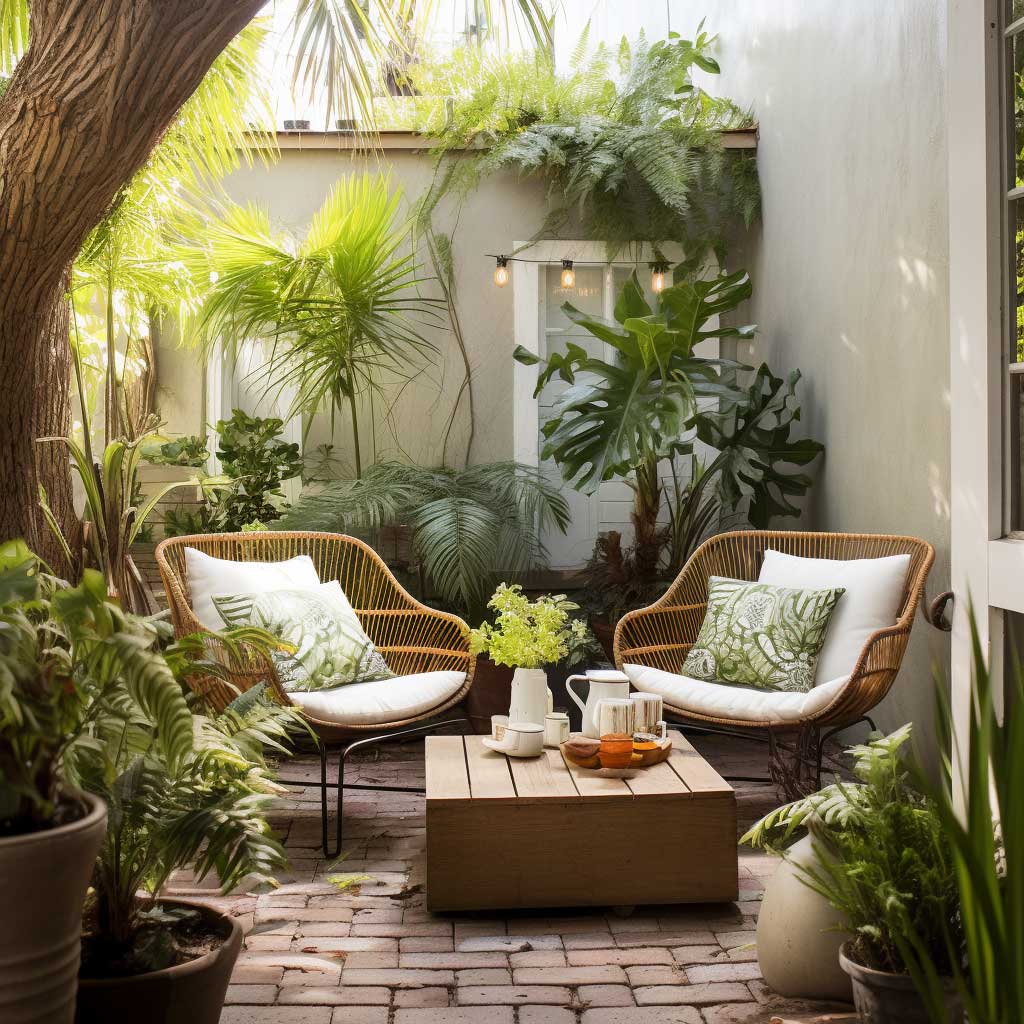
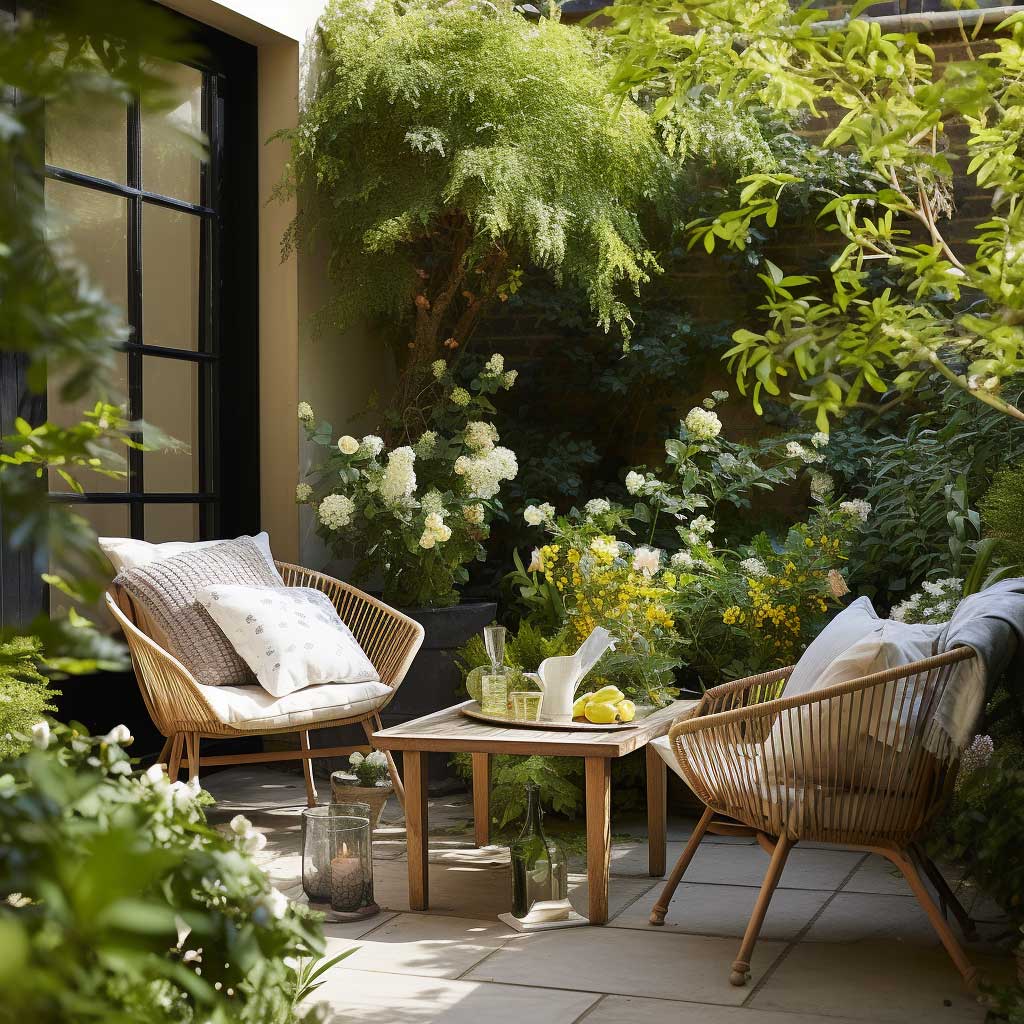
Outdoor patio ideas for small spaces live or die by how plants are deployed, and the number one error is spreading them out in individual pots at ground level. That approach creates a plant obstacle course, not a garden. Instead, I cluster plants in groups of three at different heights — one tall architectural plant (a 4 ft olive tree in a Lechuza Canto column planter, $89), one mid-height shrub, and one trailing plant that hangs over the pot’s edge. The effect is a planted vignette that reads as a designed moment, not a collection of survivors.
Vertical gardening is the single highest-impact move for a tiny patio. A wall-mounted modular planter system like the Wally Eco pocket planter ($45 for a five-pocket set) turns a blank fence into a living wall in one afternoon. I’ve grown basil, thyme, trailing petunias, and small succulents all in the same panel. The Garden Tower Project’s freestanding vertical tower ($325) fits a 2×2 ft footprint and holds 50 plants — I use one to grow lettuce and herbs year-round and it has more than paid for itself in grocery savings. For a proper step-by-step on setting one up, Garden Tower Project’s vertical patio guide is the most practical one I’ve found.
What plants actually work in a small shaded patio? Ferns, hostas, and Japanese forest grass handle low light and stay compact. For sun, a dwarf bougainvillea trained up a trellis delivers maximum drama per square inch — you get flowering color at eye level without losing floor space. Jasmine on a $15 garden trellis is my go-to for a scented backdrop that makes sitting outside feel like a reward. What doesn’t work: large ornamental grasses in containers. They look right in the nursery and wrong on a 6×8 patio within a week of bringing them home.
Is container size important? Critically. A plant in an undersized container stresses out within one hot week and starts looking shabby right when you want it to look good — peak summer. Err large: a 15-gallon container for anything you want to anchor a space, a 3-gallon minimum for herbs. I fill the bottom third of large containers with perlite instead of soil — it reduces weight by about 40%, which matters a lot if your patio is on a rooftop or elevated deck with a weight limit.
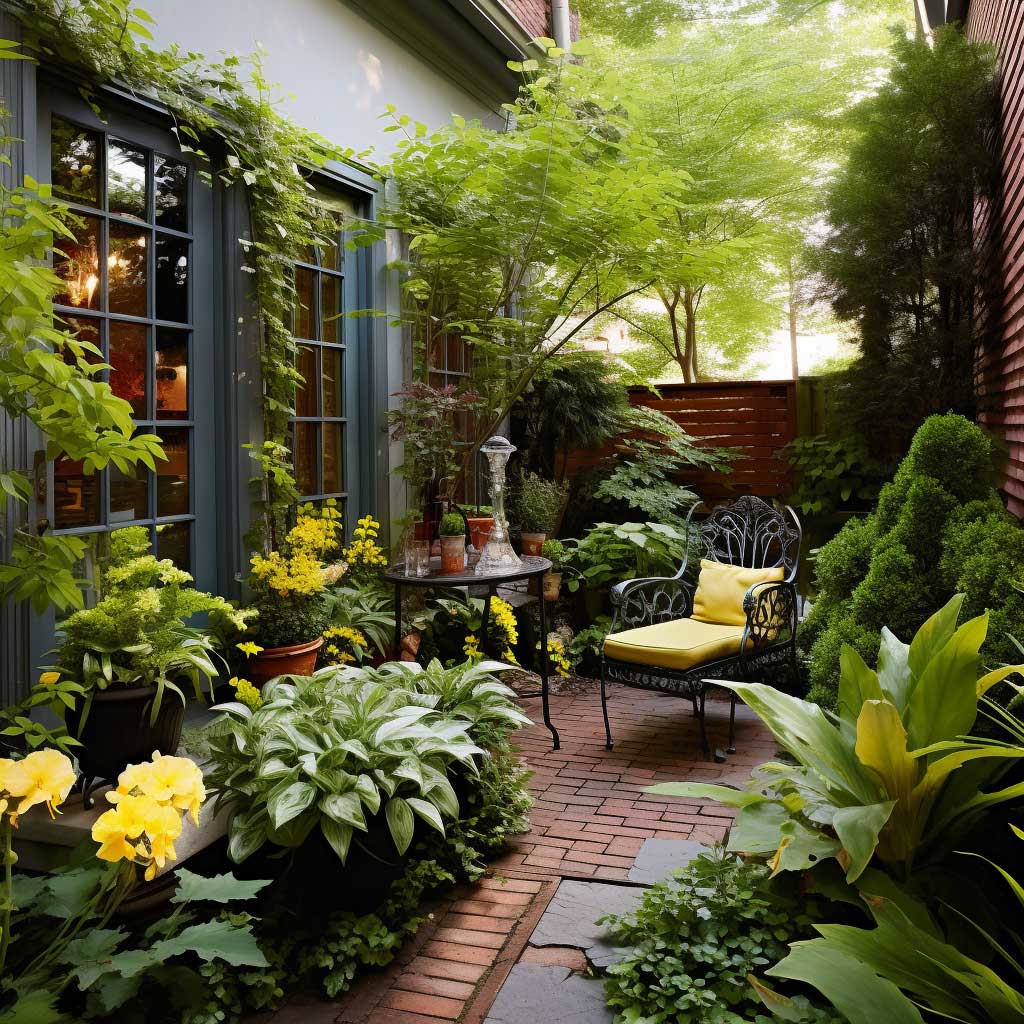
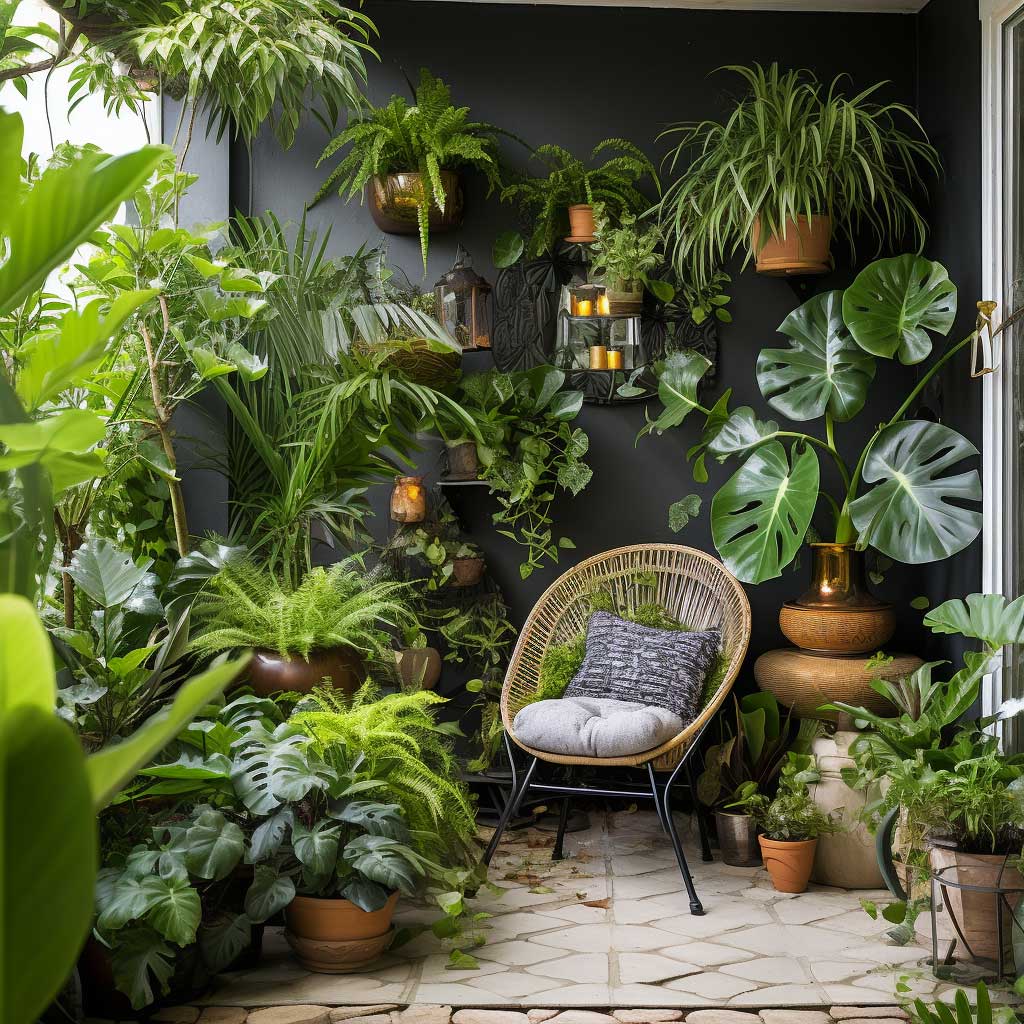
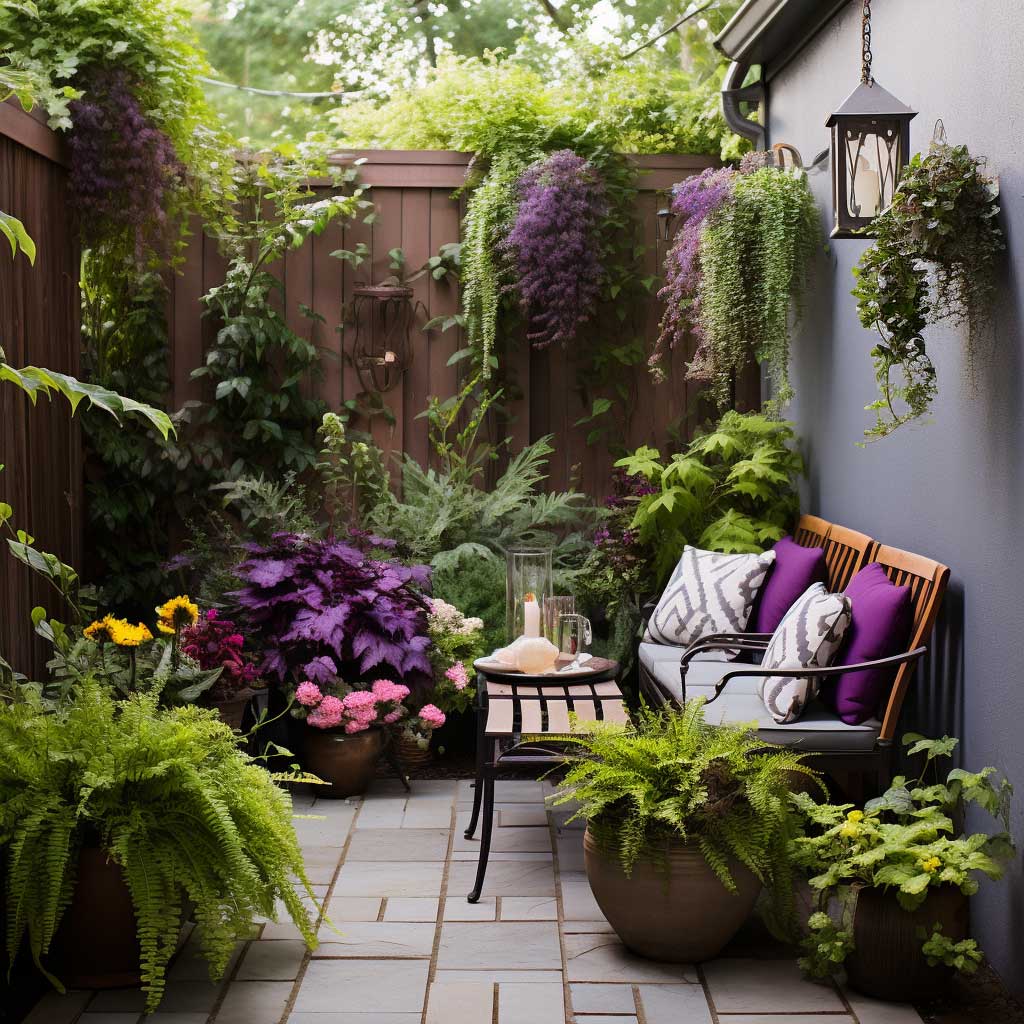
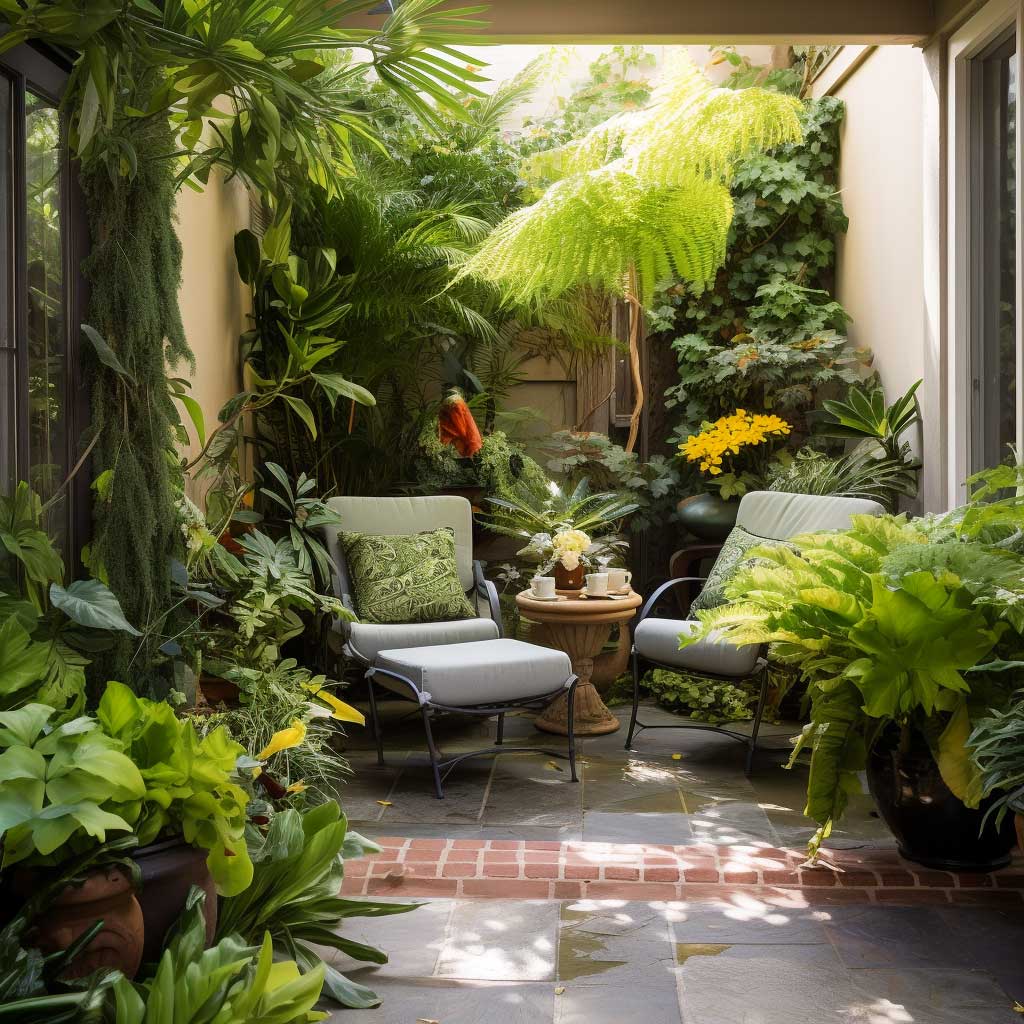
Mix ornamental plants with edible ones like compact herbs and dwarf tomato varieties for a patio that looks considered and feeds you. A single ‘Tumbling Tom’ tomato plant in a hanging basket ($12 from a garden center) produces 3–4 lbs of cherry tomatoes per season and looks better than most ornamental hanging plants by midsummer. The unexpected bonus: anyone who visits notices it first and asks about it before anything else on the patio.
THE TAKEAWAY
Small Patios Reward One Good Decision at a Time
Scale your furniture to the footprint first — everything else is adjustable, but an oversized sofa on a tiny slab cannot be fixed with accessories.
Paint or treat the vertical surfaces before buying a single cushion. A $75 can of exterior paint changes the entire mood of the space in three hours.
Plant in clusters at three heights, not in scattered individual pots at ground level. Save this post and revisit before your next outdoor refresh.
Related Topics
FAQ
What is the best furniture for a small patio?
How do I make a small patio look bigger?
What plants work best for small patio design?
How do I design a patio on a small budget?
What are good patio ideas for small spaces with no grass?
How many chairs fit on a small patio?
Complete guide
Small House Design Ideas That Make Every Square Foot Feel Intentional
Exteriors, layouts, kitchens, bedrooms, bathrooms, outdoor — all in one place
Complete guide
Patio and Yard Ideas That Turn Any Backyard Into a Living Room Outside
Flooring, furniture, shade, pools, kitchens, fire pits, courtyards — all in one place