Outdoor lighting solutions transform a dark patio into a usable, inviting space after sunset. The right mix of ambient, task and accent light answers the core question immediately: yes, these systems work for dining, conversation and safety when you match fixture type to function and weather exposure.
Most homeowners need only three layers—overhead glow, eye-level softness and low-level path definition—to cover 90 percent of evening use. Budget string or solar sets start under $50; a complete low-voltage layout typically lands between $1,500 and $4,500 installed according to recent cost surveys.
Skip single-fixture thinking. Layering different sources creates depth that one bright floodlight can never match and keeps the space flexible from casual nights to larger gatherings.
- String lights deliver the fastest ambient canopy for under $100 per run.
- Solar path and accent fixtures eliminate wiring but need direct sun for reliable runtime.
- Layered schemes (ambient + task + accent) outperform any single lighting type.
- IP65 is the practical minimum rating for exposed patio fixtures.
- LED and solar options cut operating costs to a few dollars per month.
- Motion and smart controls add security without sacrificing atmosphere.


String Lights Create Instant Patio Atmosphere
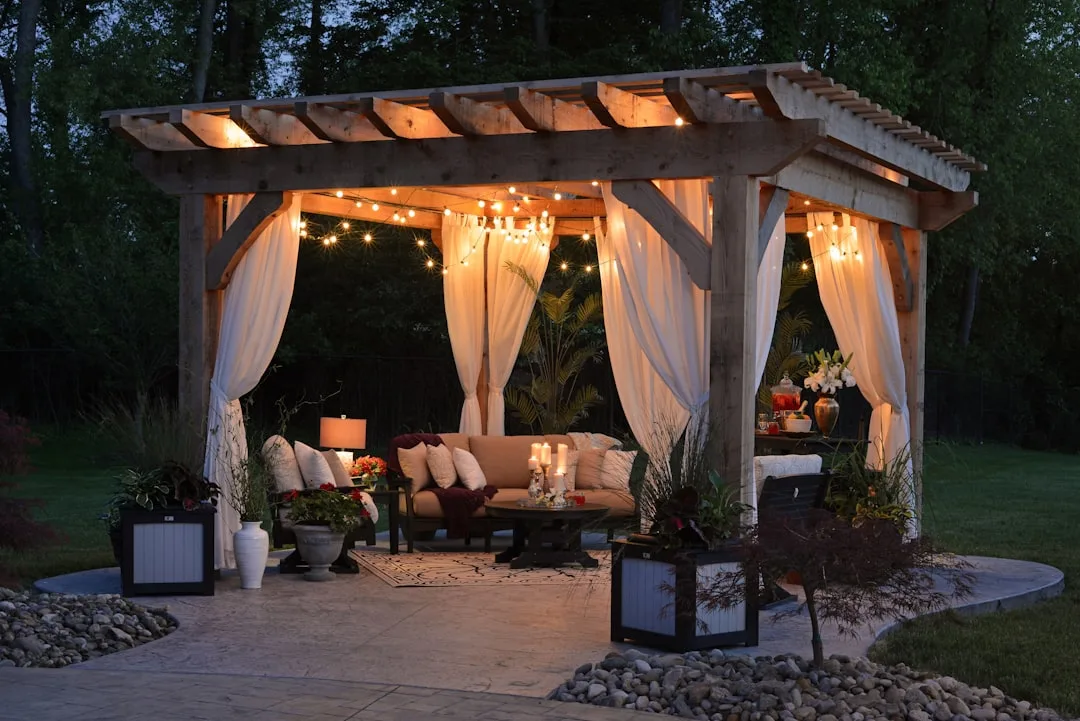
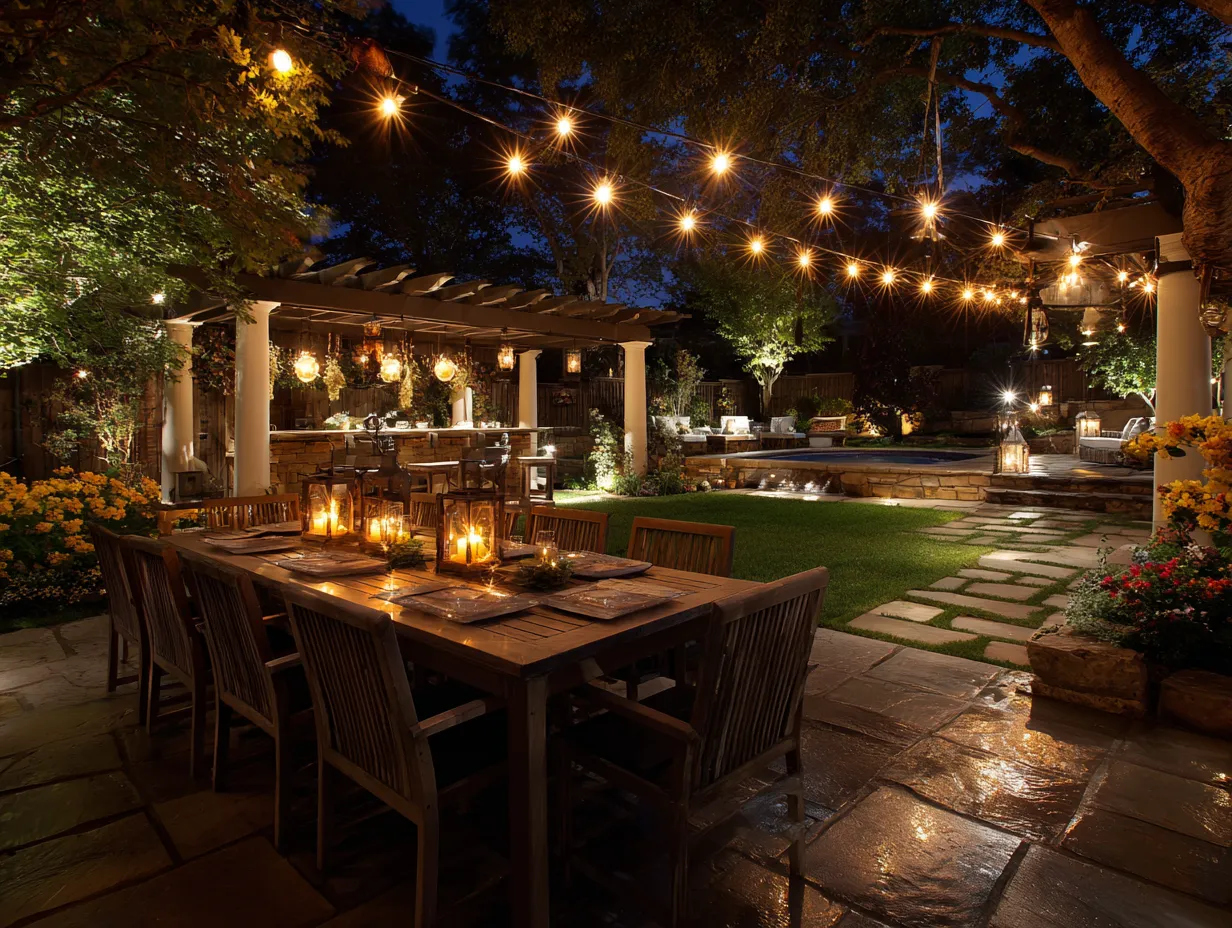
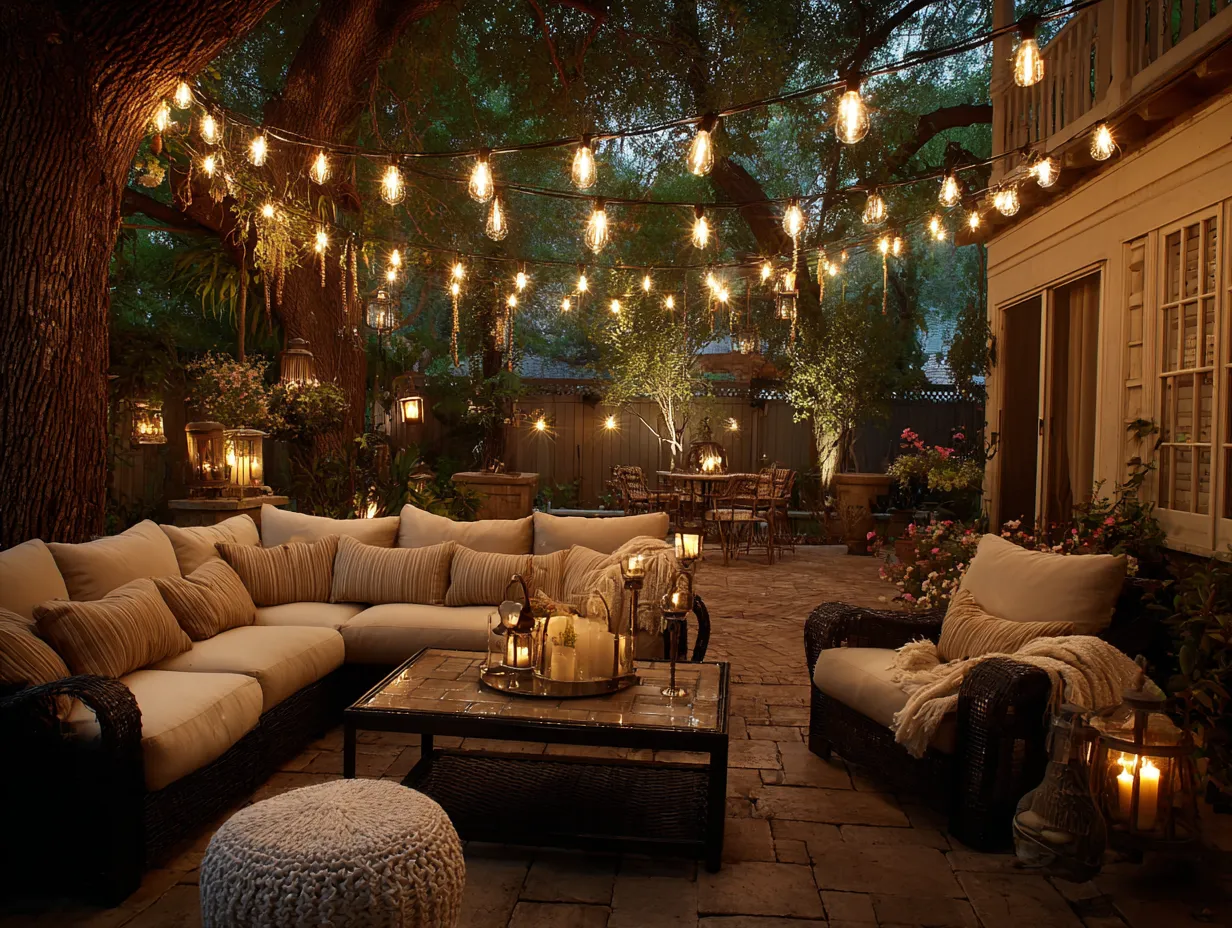
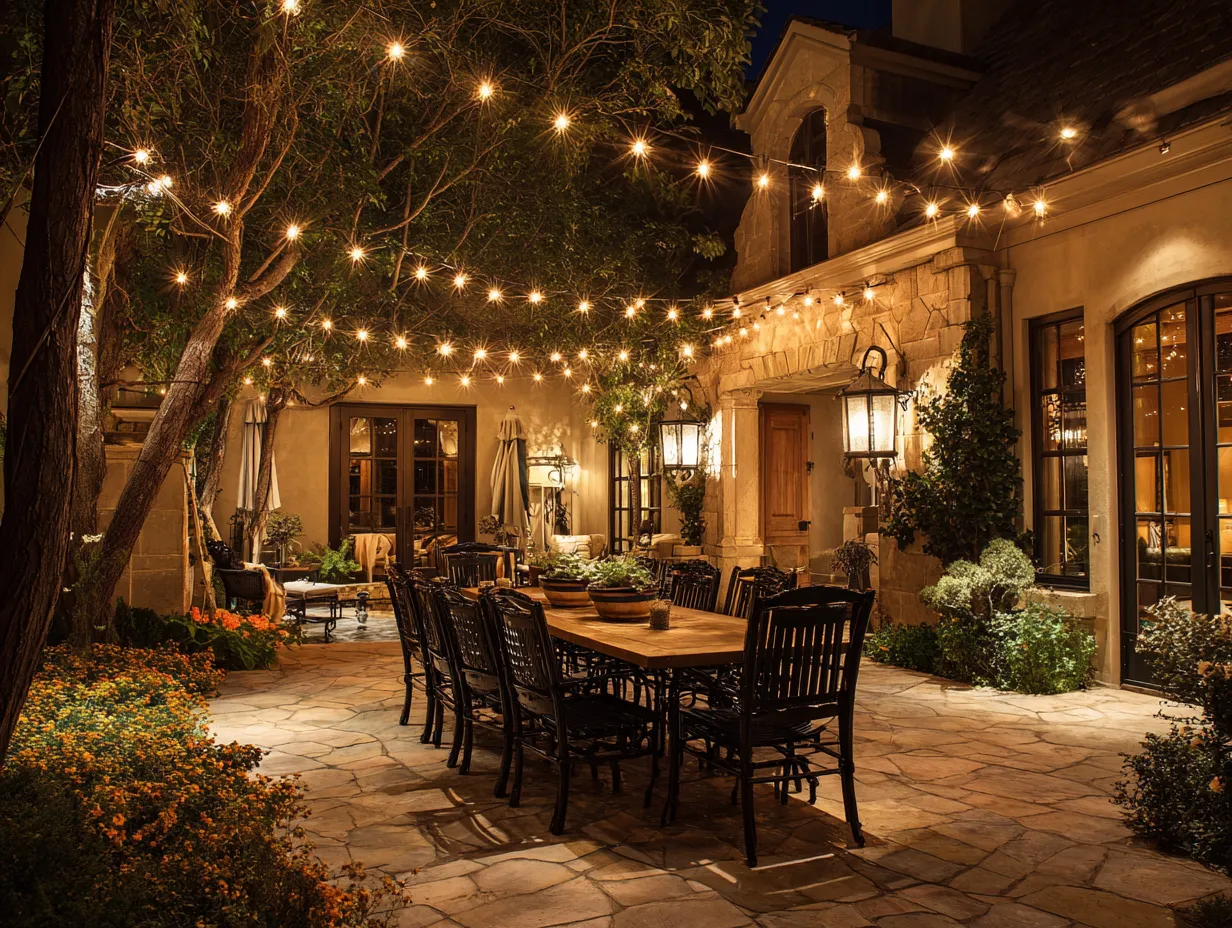
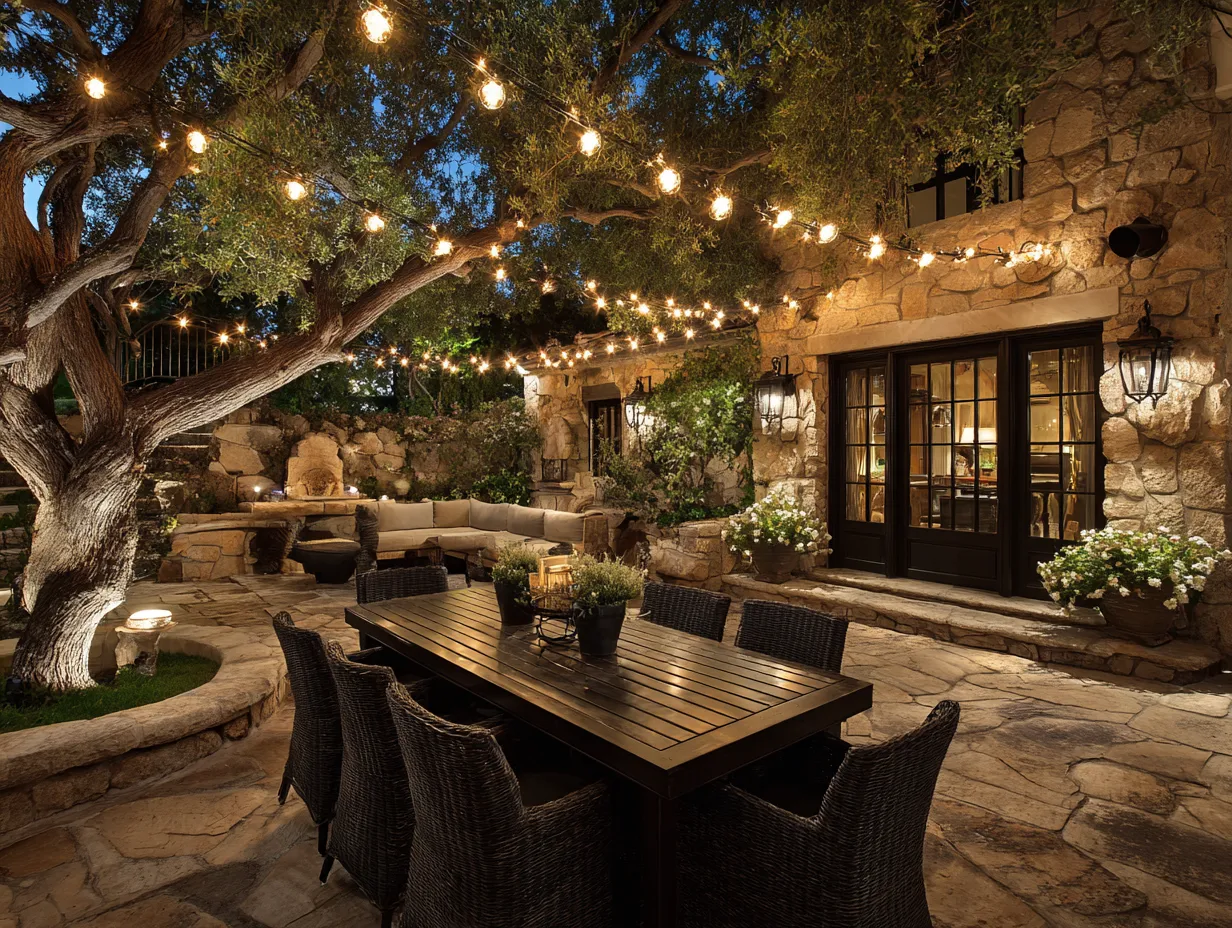
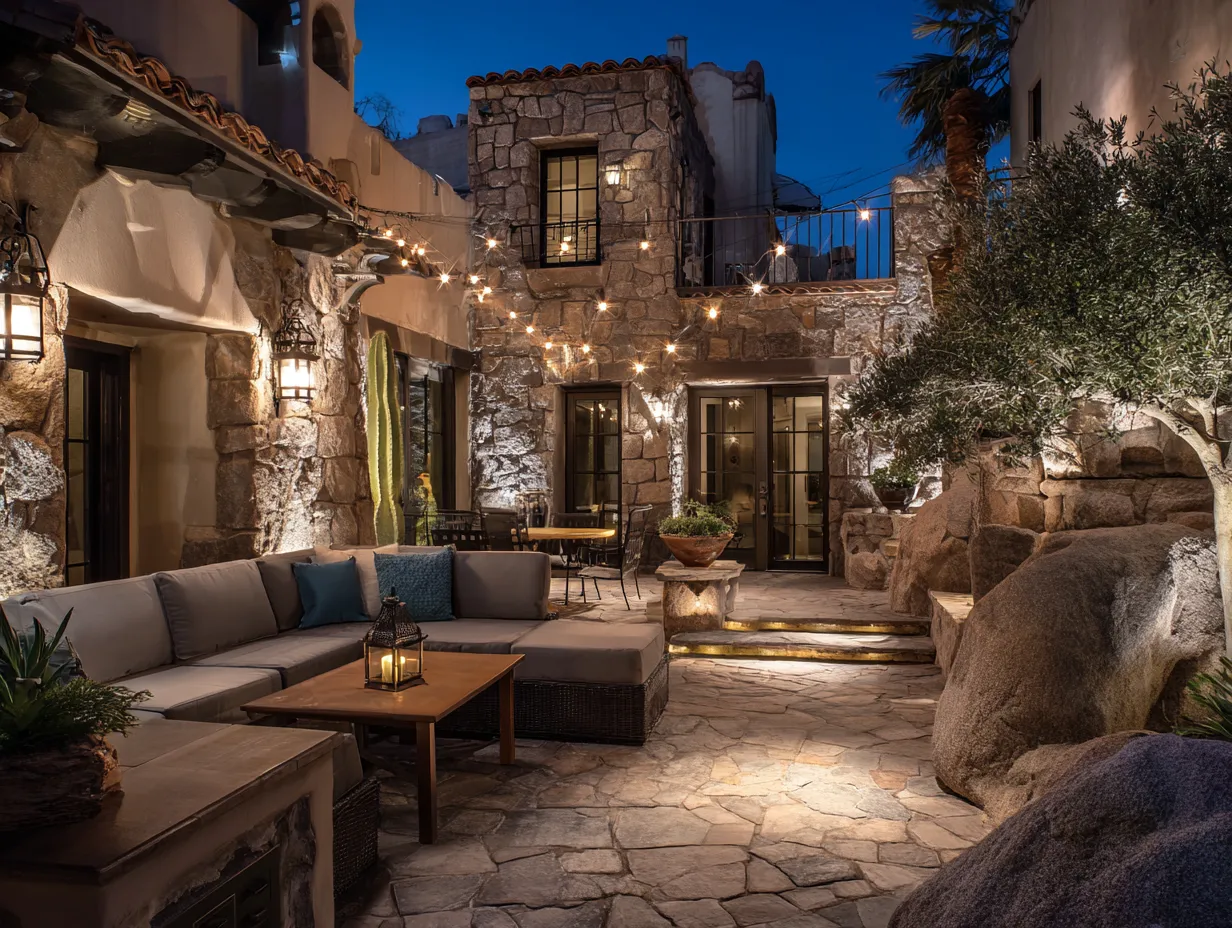
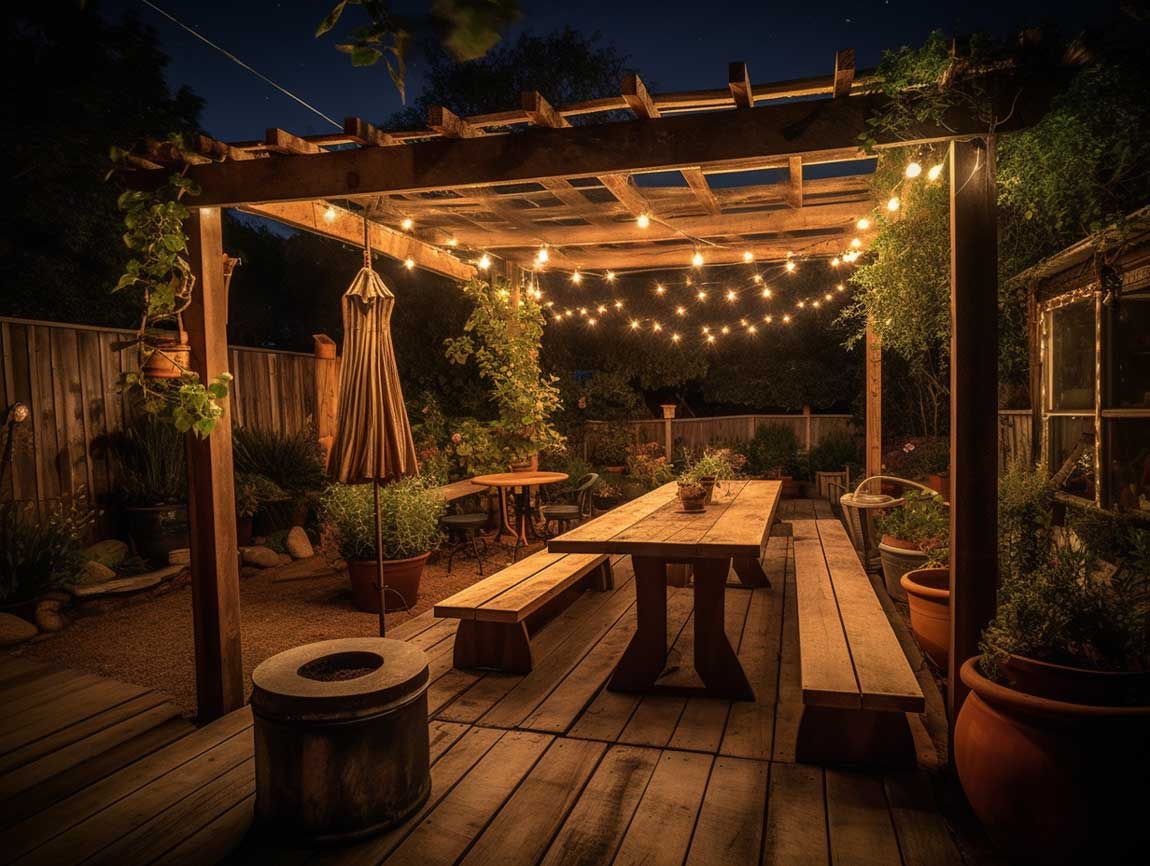
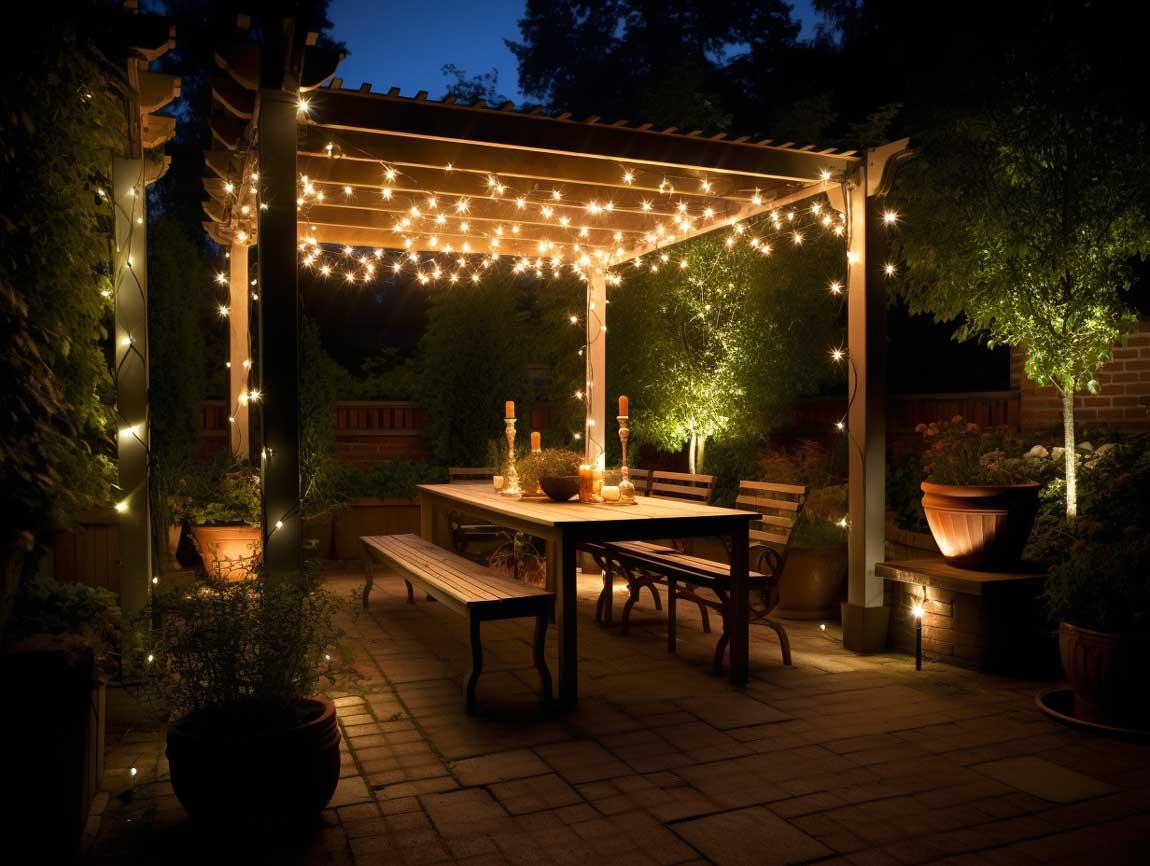
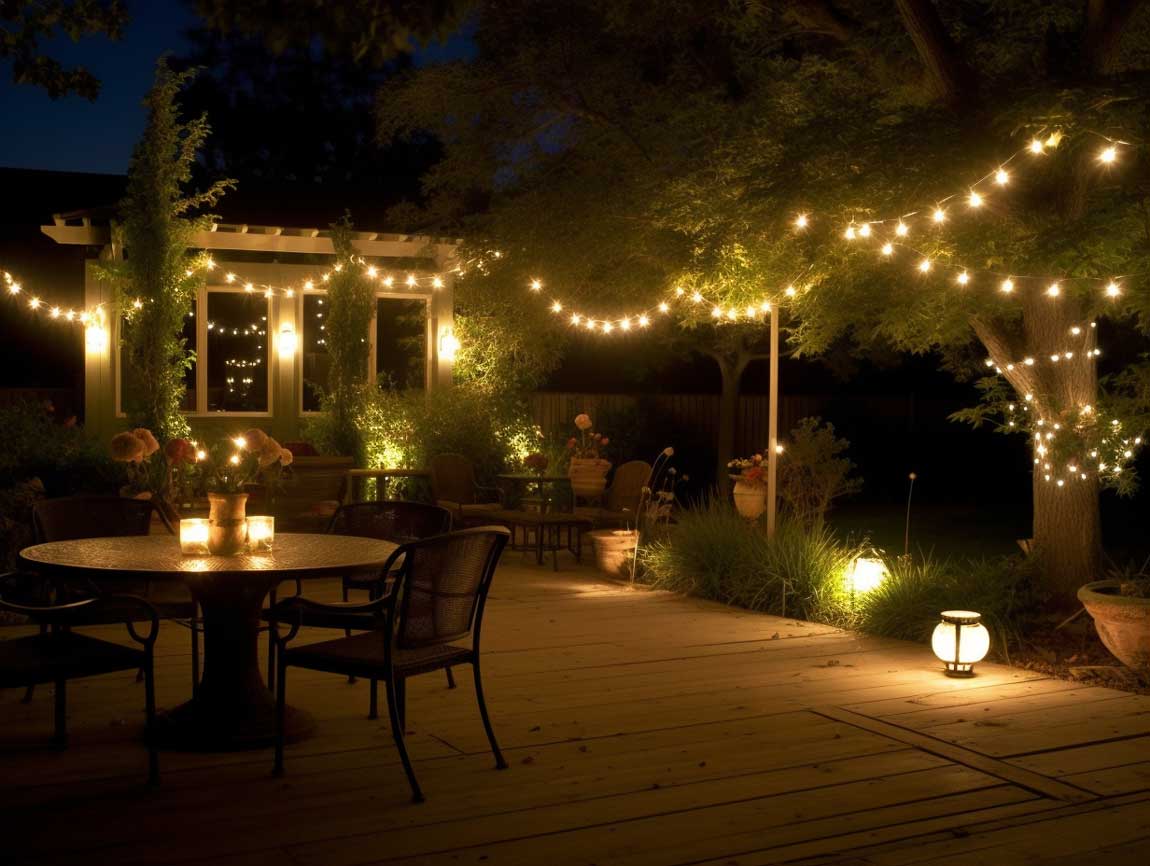
String lights remain the quickest outdoor lighting solutions for adding overhead warmth. A typical 48- to 50-foot strand with G40 or S14 bulbs costs $20–$50 and covers a small dining zone when hung in a gentle grid or catenary curve.
What happens when the lights look temporary instead of architectural? Zip ties fail after one season of UV exposure. Mount with conduit clips or insulated hooks so the line stays taut and professional. Warm 2700K LEDs produce the soft glow that flatters faces and food.
Think of the strand as a low ceiling that defines the room without walls. Avoid single straight runs that read like a parking lot. Cross the space or drape from posts to a central point for depth that feels deliberate.
Lanterns and Candles Soften the Patio Edges
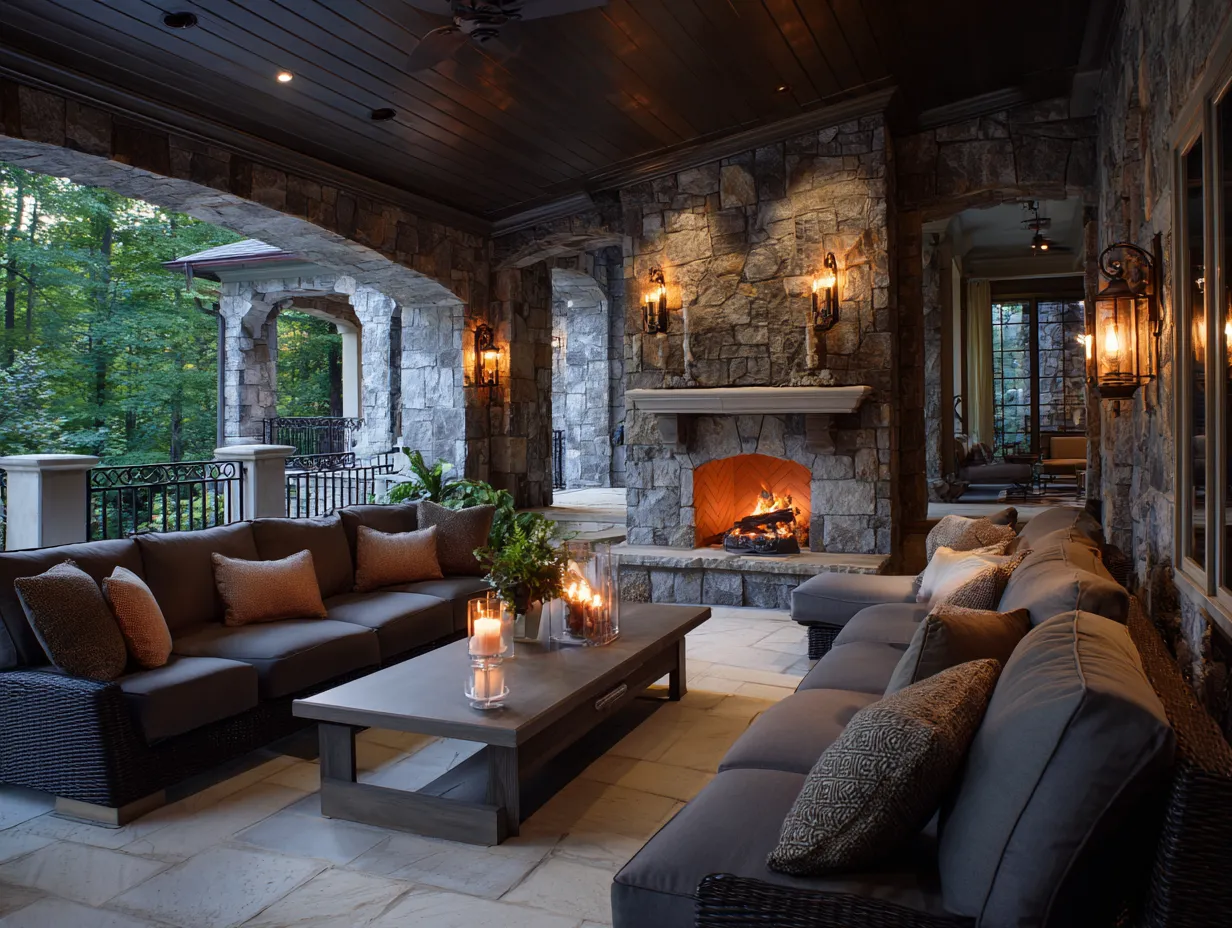
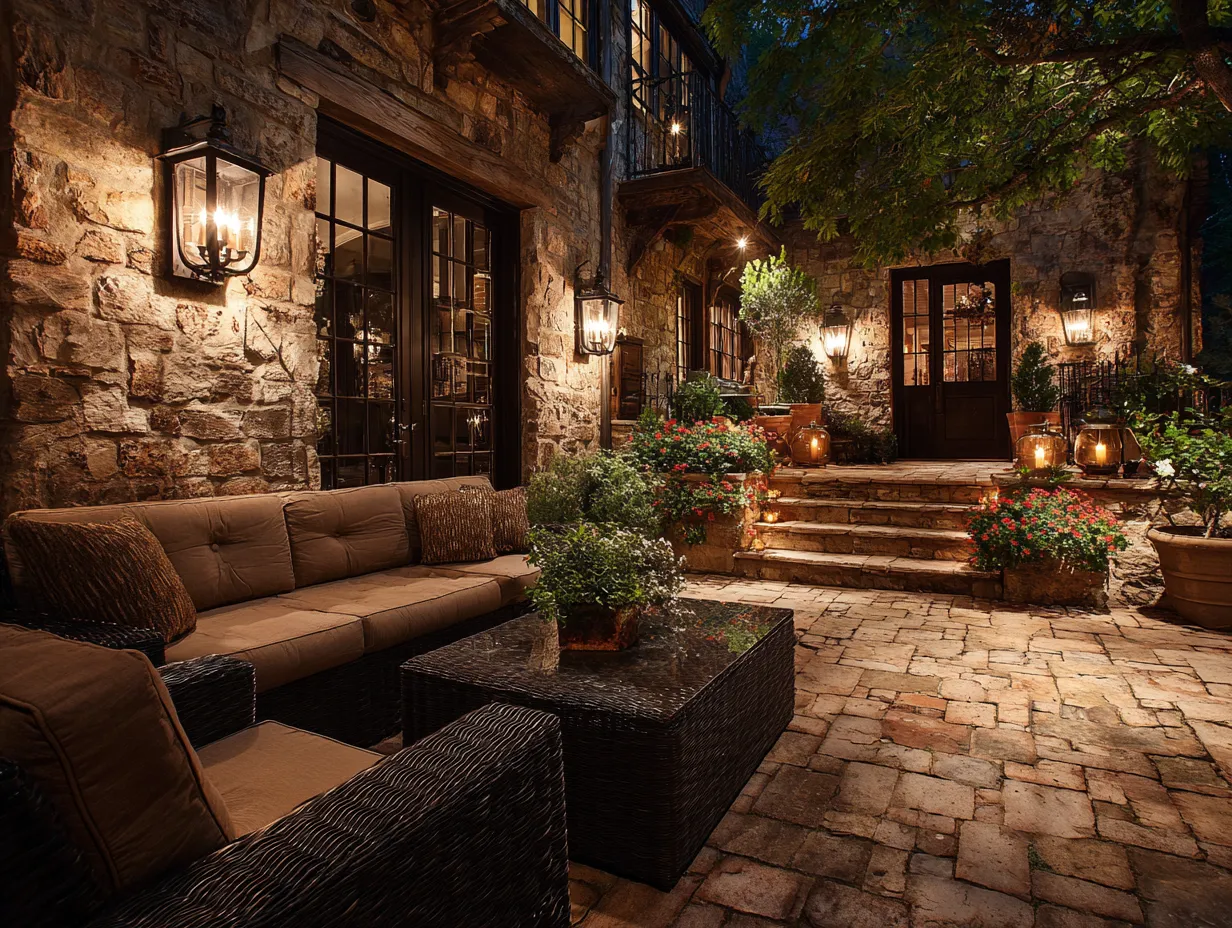
Lanterns and candles deliver traditional outdoor patio lighting ideas that feel intimate rather than technical. Metal, glass or ceramic vessels sit on tables or hang from hooks and throw a pool of warm light that encourages conversation.
Real flame candles need wind protection and adult supervision. Flameless LED versions with realistic flicker cost $10–$25 each and remove fire risk around children or pets. Citronella options add insect deterrence during warmer months.
Cluster three lanterns of varying heights the way a stylist layers objects on a shelf. The staggered glow prevents the flat look of identical fixtures spaced evenly. Keep open-flame sources away from fabric seating and dry foliage.


Modern Fixtures Keep the Look Clean and Functional
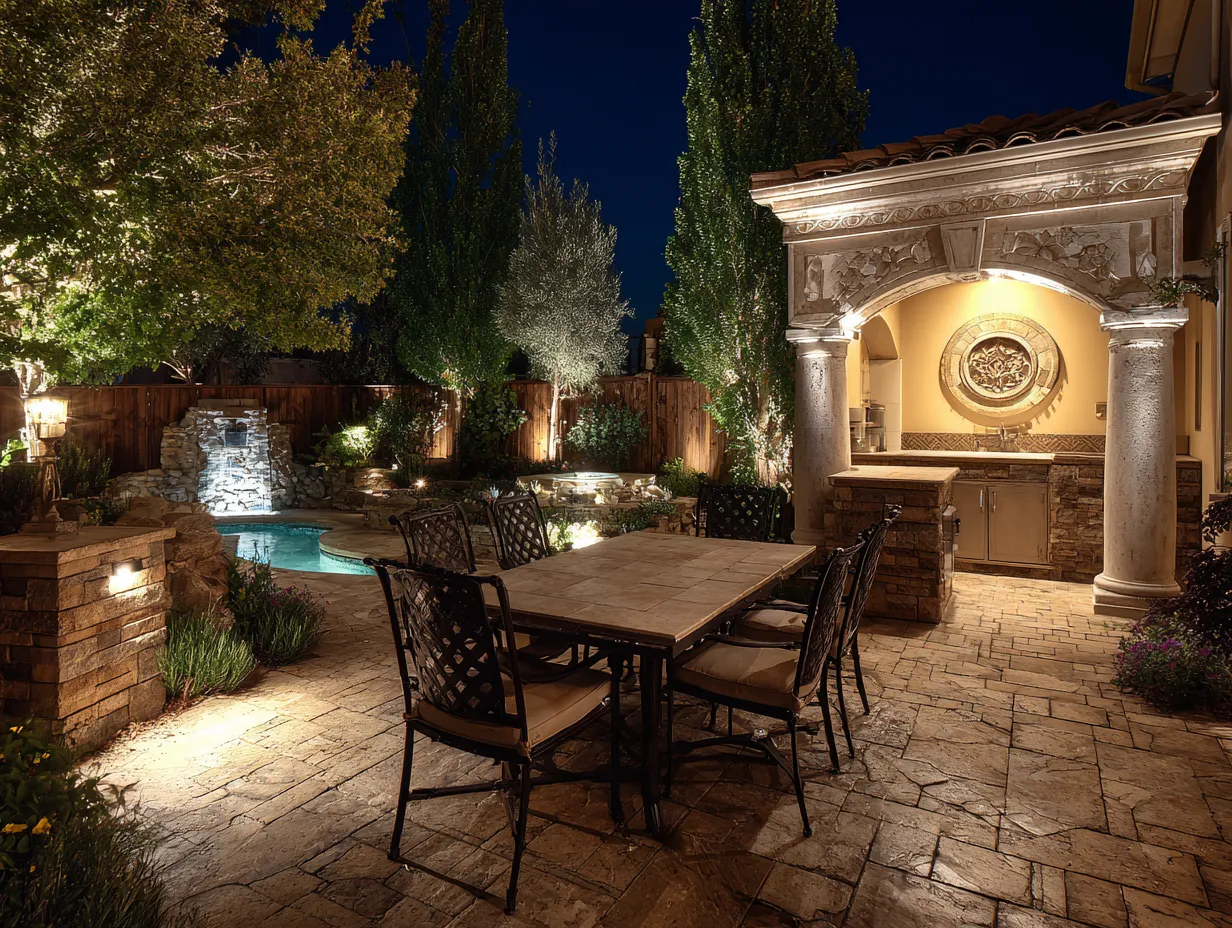
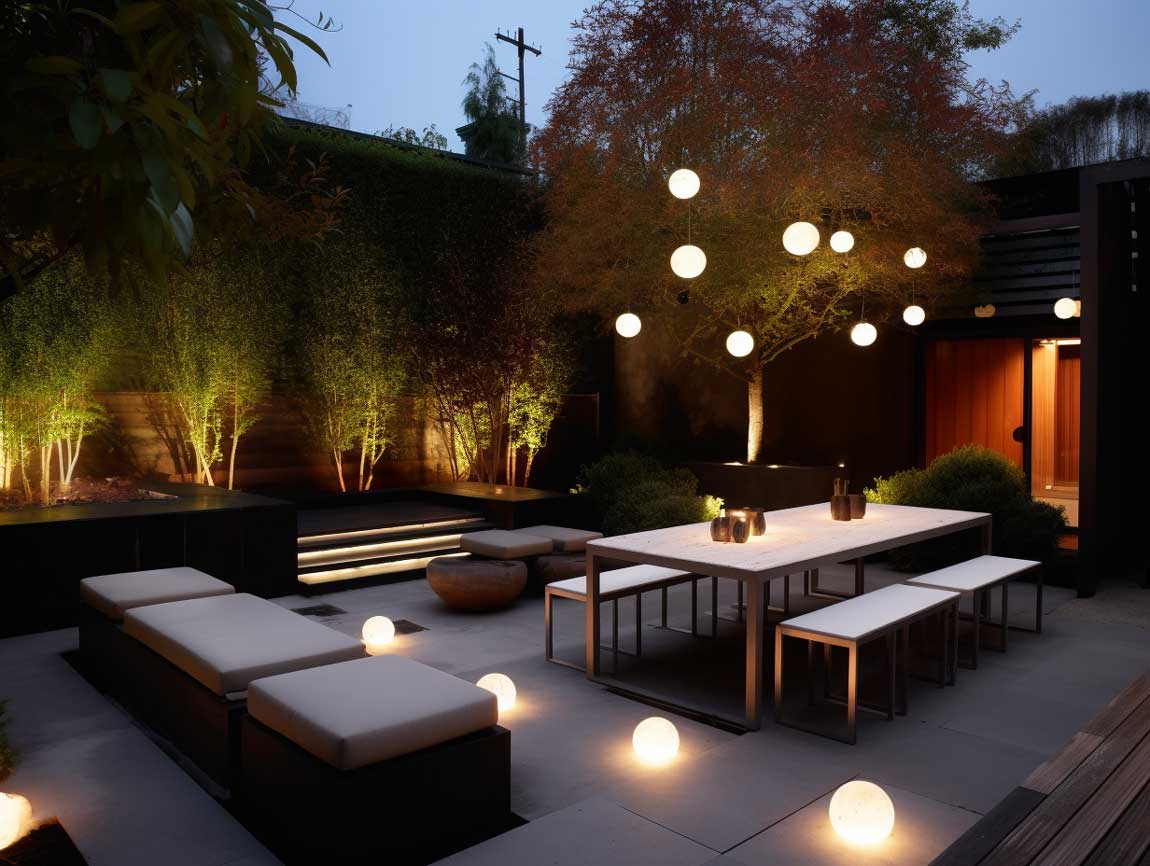
Modern and contemporary outdoor lighting solutions favor recessed floor lights, slim wall sconces and geometric pendants. These pieces disappear during the day yet mark steps, edges and seating zones after dark.
Recessed deck lights installed in risers or surface boards cost $40–$100 each and eliminate trip hazards without visual clutter. Pair them with a single statement pendant over the dining table for focused task light. LED versions draw far less power than older halogen options.
Cool-white temperatures above 4000K feel clinical outdoors. Stick to 2700K–3000K so the space still feels like a living room extension. Avoid over-lighting; the goal is soft definition, not stadium brightness.


Rustic and Vintage Pieces Add Character Without Effort
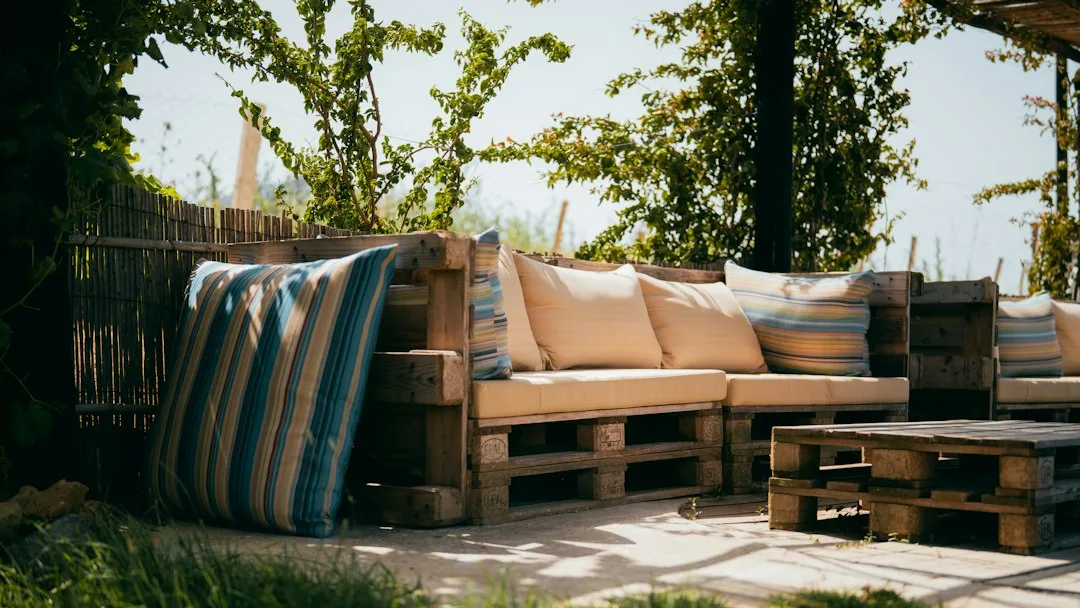
Rustic outdoor patio lighting ideas lean on mason jars, antique lanterns and exposed-filament Edison bulbs. These elements create nostalgia that modern fixtures rarely match and often cost less because many start as thrift finds.
A basic Edison strand runs $25–$60 and pairs well with weathered wood or metal frames. Dimmer controls let you dial the intensity for quiet nights versus larger groups. Wrap lights around tree trunks or branches to pull the surrounding landscape into the patio zone.
Don’t force every surface into the same vintage look. One strong cluster of jars or a single antique lantern on a side table does more work than a dozen matching pieces. The eye needs contrast to register the warmth.


Solar Options Remove Wiring and Lower Running Costs
Solar-powered outdoor lighting solutions charge during daylight and switch on automatically at dusk. Path lights, string sets and decorative orbs work well for edges and accents when the panel receives several hours of direct sun.
Quality solar string lights deliver 6–8 hours of glow after a full charge and often carry IP65 ratings. Path stakes start around $5–$15 each in multi-packs. Runtime drops in winter or under heavy tree cover, so treat solar as secondary rather than primary illumination.
Place the solar panel where it actually sees sky, not in the permanent shadow of a pergola or fence. Moveable designs let you shift units as furniture or planting layouts change. For reliable all-night light on steps or main walkways, hardwired LED remains more consistent.
Festive Color Brings Energy to Special Evenings
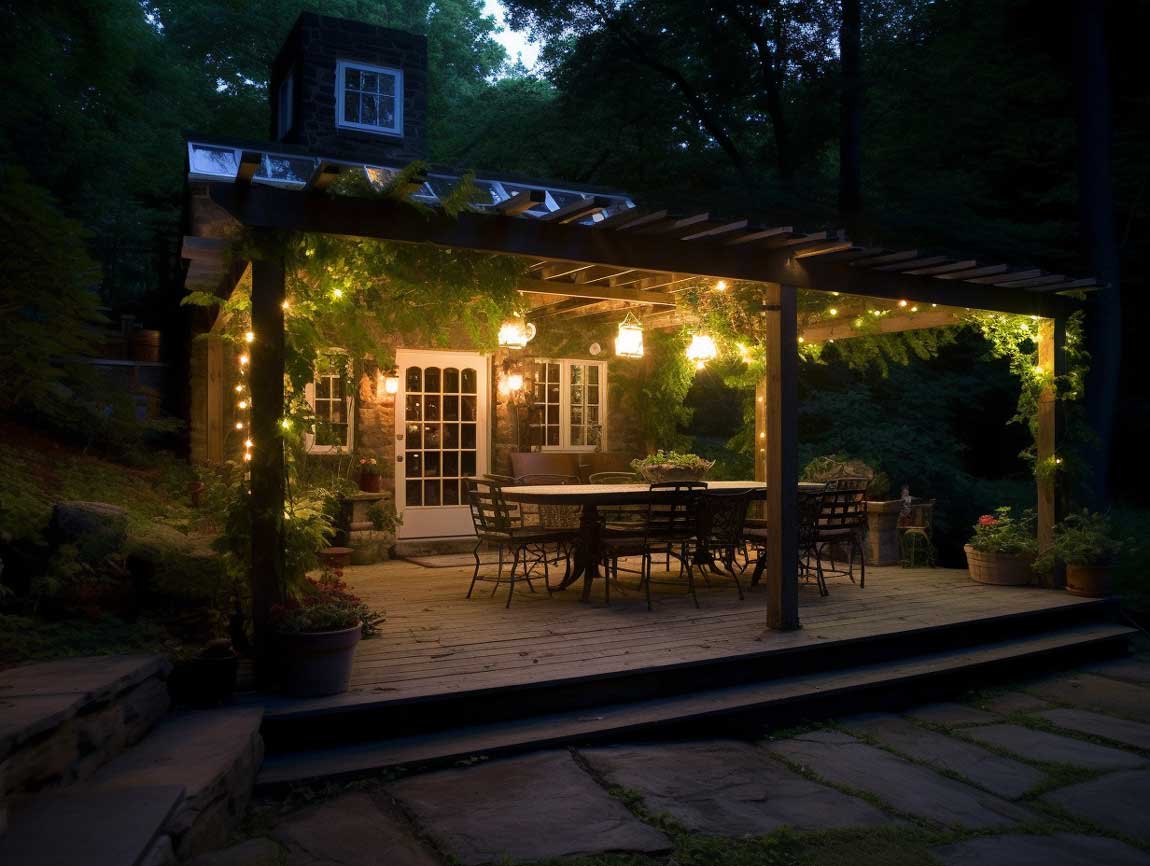
Festive outdoor patio lighting ideas use color-changing LEDs or bold fixture finishes to shift the mood for parties. Multi-color string sets or projectors that cast patterns onto walls and floors turn a quiet space into a celebration zone in minutes.
RGB LED strands with remote or app control cost $30–$70 and let you lock a single warm white for everyday use or cycle through hues for events. Keep the intensity moderate so guests can still see faces and food clearly.
Permanent color installations can feel dated after the first season. Portable or switchable sets give flexibility without committing the entire patio to one palette. Store the brightest options when the gathering ends and return to warmer whites for regular nights.


DIY Projects Deliver Custom Looks on a Tight Budget
DIY outdoor lighting solutions stretch limited budgets while adding personal character. Mason jars filled with battery fairy lights or wine-bottle candle holders cost almost nothing beyond the lights themselves and hang from branches or railings with simple wire or twine.
Repurposed ladders, crates or even hula hoops become frames for string lights with a few hours of work. Average materials for a small set of jar lanterns stay under $30. Secure every hanging element so wind does not turn decoration into a hazard.
Test battery life before the first guest arrives. Cheap cells fade after a couple of hours. Rechargeable packs or solar versions reduce ongoing cost and waste. Keep electrical connections elevated and weather-protected even on temporary builds.

Layered Schemes Give the Patio Real Flexibility
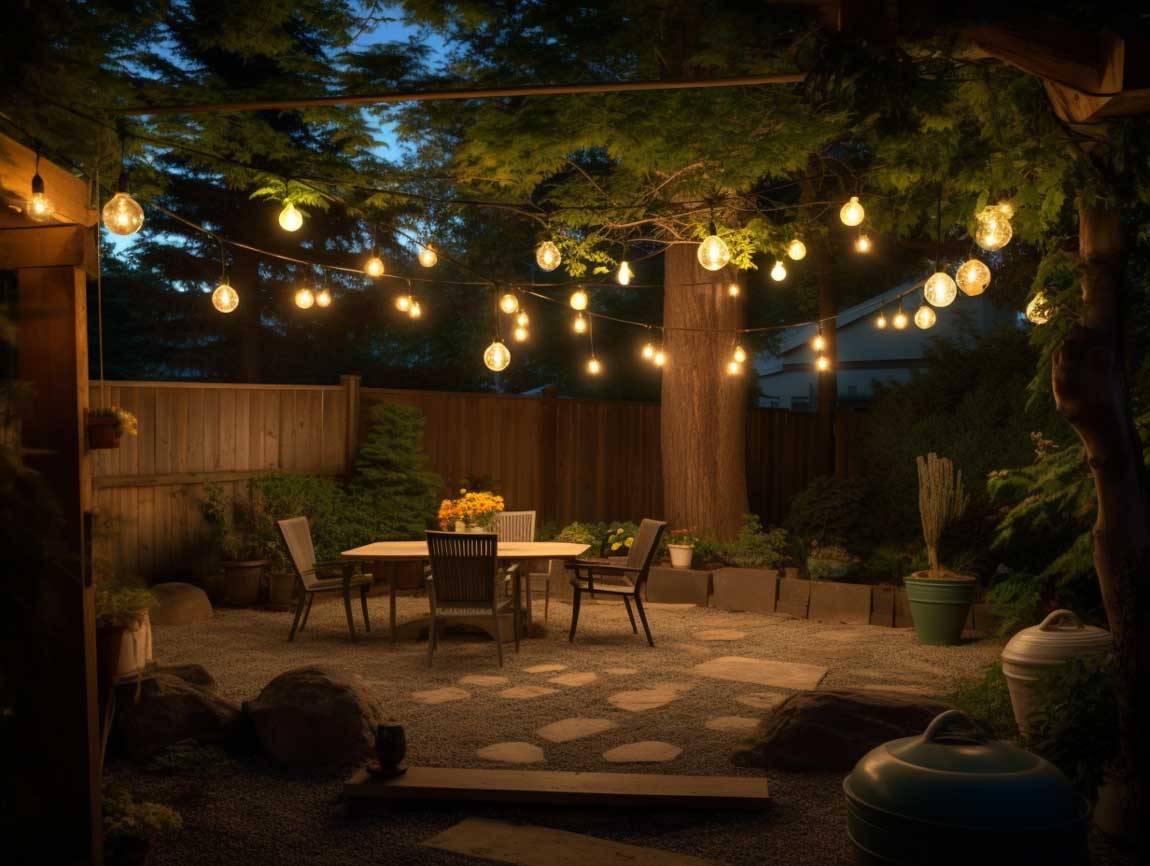
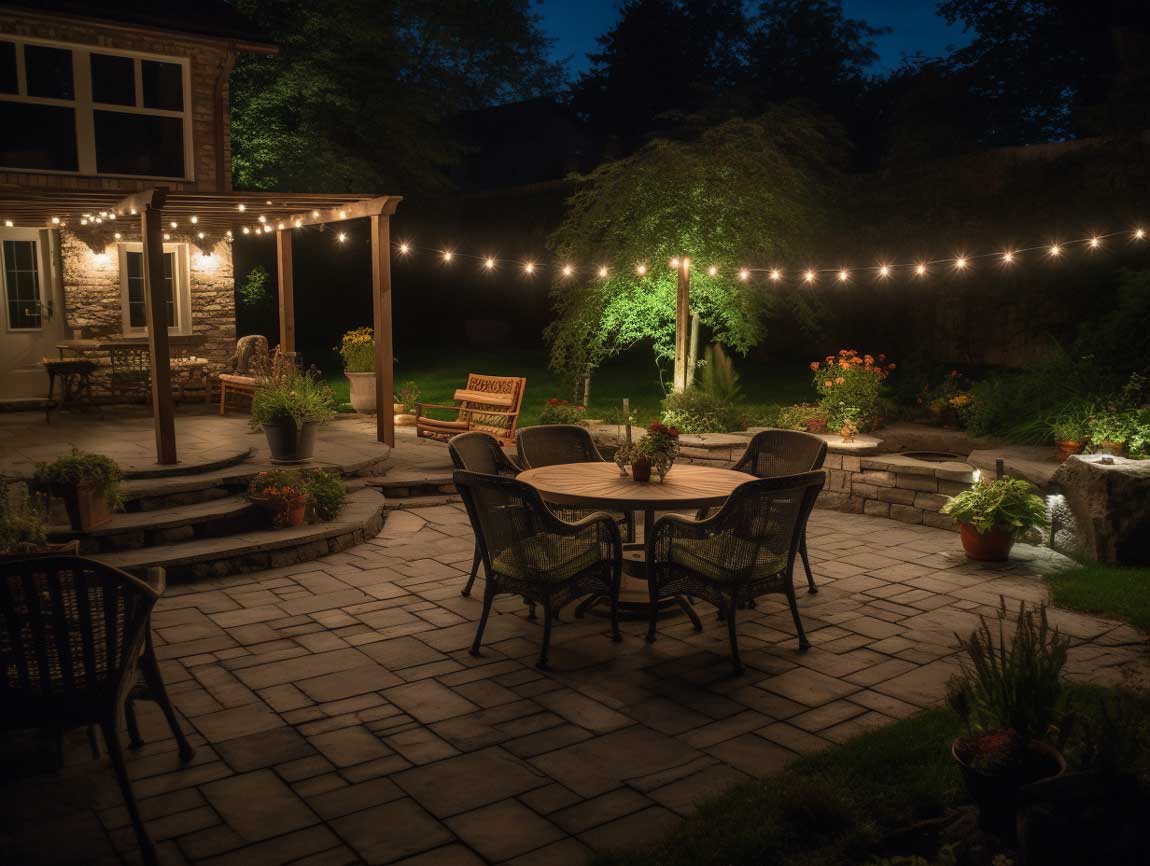
Layered outdoor lighting solutions combine ambient, task and accent sources so one patio serves dinner, conversation and quiet reading. Ambient sets the overall glow; task focuses on tables or cooking zones; accent highlights plants, walls or architectural details.
A practical mix for a mid-size patio might include one string run, four path lights and two uplights on key trees. Low-voltage kits for this scale often total $500–$1,500 before professional installation. Dimmer switches or smart controls let you shift the balance without walking the yard.
Think of the layers the way a stage designer builds depth—front light, side light and background fill. Missing any one leaves the space either flat or harsh. Start with ambient, add task where people gather, then place accent only where it earns its keep.
For more layout context that pairs with lighting decisions, see these contemporary patio layout designs that treat zones as rooms rather than leftover yard.

Safety and Security Lighting Protects Without Killing Ambiance
Safety and security outdoor lighting solutions mark steps, gates and dark corners while still allowing softer decorative layers. Motion-activated floodlights near entries deter unwanted movement and switch on only when needed.
Pathway and step lights spaced every 6–8 feet keep walking surfaces visible. LED versions draw minimal power and last far longer than older bulbs. Position fixtures so the beam stays low and avoids glare into neighboring windows.
Bright security lights should not become the only source. Pair them with dimmable ambient sets so the patio stays welcoming once the motion sensor resets. Test coverage at night before final placement; daytime judgment often underestimates dark zones.


Smart Controls Put the Whole System in Your Pocket
Smart outdoor lighting solutions connect fixtures to phone apps or voice assistants so schedules, brightness and color shift without leaving the sofa. Systems such as Philips Hue outdoor ranges integrate with existing smart-home hubs.
App control typically adds $50–$200 per zone depending on bulbs and sensors. Create scenes—soft dinner mode, brighter cleanup mode, security overnight—and trigger them by time or motion. Weatherproof outdoor-rated components remain essential even with smart features.
Don’t over-automate. A simple dusk-to-dawn timer still outperforms complicated routines that fail when the Wi-Fi drops. Start with one controllable zone and expand only after the first set proves reliable through a full season.


Energy-Efficient Choices Keep Monthly Costs Low
Energy-efficient outdoor lighting solutions center on LED and solar sources that consume far less power than older halogen or incandescent bulbs. A typical LED string or path set runs for pennies per night.
Twenty LED path lights at 5 W each running eight hours cost roughly $3 per month at average electricity rates. Solar options drop that figure to zero after purchase. Timers and dimmers further reduce waste by limiting hours and intensity.
Replace any remaining high-wattage bulbs first; the savings appear on the next bill. Pair efficiency with proper IP ratings so the fixtures last long enough to repay the upgrade. Cheap LEDs that fail after one winter erase the economic advantage.


Weather-Resistant Hardware Survives Real Outdoor Conditions
Waterproof and weather-resistant outdoor lighting solutions must carry an IP65 rating or higher for open patio exposure. That rating means dust-tight construction and protection against water jets from any direction.
IP44 may suit fully covered locations, yet exposed decks and open patios need the stronger seal. Stainless steel, aluminum and UV-stable plastics resist rust and fading far better than thin painted metal. Expect quality fixtures to last 5–10 years with minimal maintenance.
Check the rating on the packaging before purchase rather than trusting the word “outdoor.” Ground-level or recessed units benefit from IP67 if water can pool around them. Proper installation—sealed cable entries and correct mounting angle—matters as much as the factory rating.
When planning a structure that will support lights, explore these pergola ideas for backyard outdoor living spaces that already account for secure light mounting and year-round durability.


Comparing Fixture Types at a Glance
| Fixture Type | Typical Cost Range | Best Use | Key Limitation |
|---|---|---|---|
| String / Café Lights | $20–$100 per strand | Ambient canopy over dining or lounge | Needs secure anchors and power or solar panel |
| Solar Path / Accent | $5–$50 each | Edges, temporary accents | Runtime depends on daily sun exposure |
| Recessed Deck / Step | $40–$150 each | Safety on stairs and walkways | Requires careful placement and often wiring |
| Lanterns / Portable | $15–$80 each | Table-level intimacy | Battery or candle maintenance |
| Smart / App-Controlled | $50–$200+ per zone | Schedules and scene changes | Wi-Fi or hub reliability |
Choose the Mix That Matches How You Actually Live
The strongest outdoor lighting solutions start with how the patio gets used rather than with the latest fixture trend. Ambient string or lantern layers set the mood; path and step lights protect movement; a few accent pieces give the space depth.
Budget under $200 buys a solid string-and-solar combination that covers most casual evenings. Mid-range low-voltage layouts between $1,500 and $4,500 deliver reliability and layered control for frequent entertaining. Smart features add convenience once the basic layers already work.
Prioritize IP65-rated hardware and warm color temperatures. Test placement after dark before final mounting. The patio that feels ready at 8 p.m. on a Tuesday is the one that earns its keep year after year.
Keep the system simple enough to maintain. A few well-chosen, durable sources outperform a complicated array that fails after the first hard winter.