Earthy pink is a practical way to bring warmth to a house exterior without pushing the facade into an overly sweet or theatrical look. The right muted pink can sit comfortably beside stone, wood, gray roofing, white trim, and mature planting. For most homes, the safest approach is to choose a dusty or beige-leaning pink and test it against the fixed materials before committing.
The three palettes below show how soft pink can move in different directions: quiet and rose-toned, warm and peachy, or deeper and sunset-inspired. Which soft pink shade works best? Start with the roof, masonry, paving, and daylight rather than the paint chip alone, because exterior light can shift the perceived color dramatically. Treat the facade like a large watercolor and check the sample outdoors before ordering the full quantity.
Quick Scan
- Earthy pink works particularly well when it has muted beige, peach, or gray undertones.
- Warm white trim can keep a pink facade architectural rather than sugary.
- Gray, charcoal, natural wood, and muted green provide reliable counterpoints.
- Exterior color changes with sunlight, so evaluate samples at different times of day.
- Keep the surrounding palette restrained when the facade itself carries the color.
Whispering Rose Gives Earthy Pink Exterior Design a Quiet Edge
Earthy pink exterior design starts with a restrained rose tone that has enough gray or beige underneath to avoid looking candy-bright. Whispering Rose works especially well where the architecture already has texture, such as traditional trim, masonry, timber details, or layered rooflines. Think of the color as a soft filter over the facade rather than a loud feature, and keep the supporting finishes calm.
What makes a muted rose shade useful outside? It creates contrast without demanding the same visual attention as saturated red or magenta, while still giving pale architecture more character. A useful reference point is exterior paint durability: ArtFasad notes that many exterior paint jobs are expected to last about 7–10 years in moderate climates, so the undertone deserves as much attention as the initial impression. Choose the sample that still looks balanced when the novelty wears off.


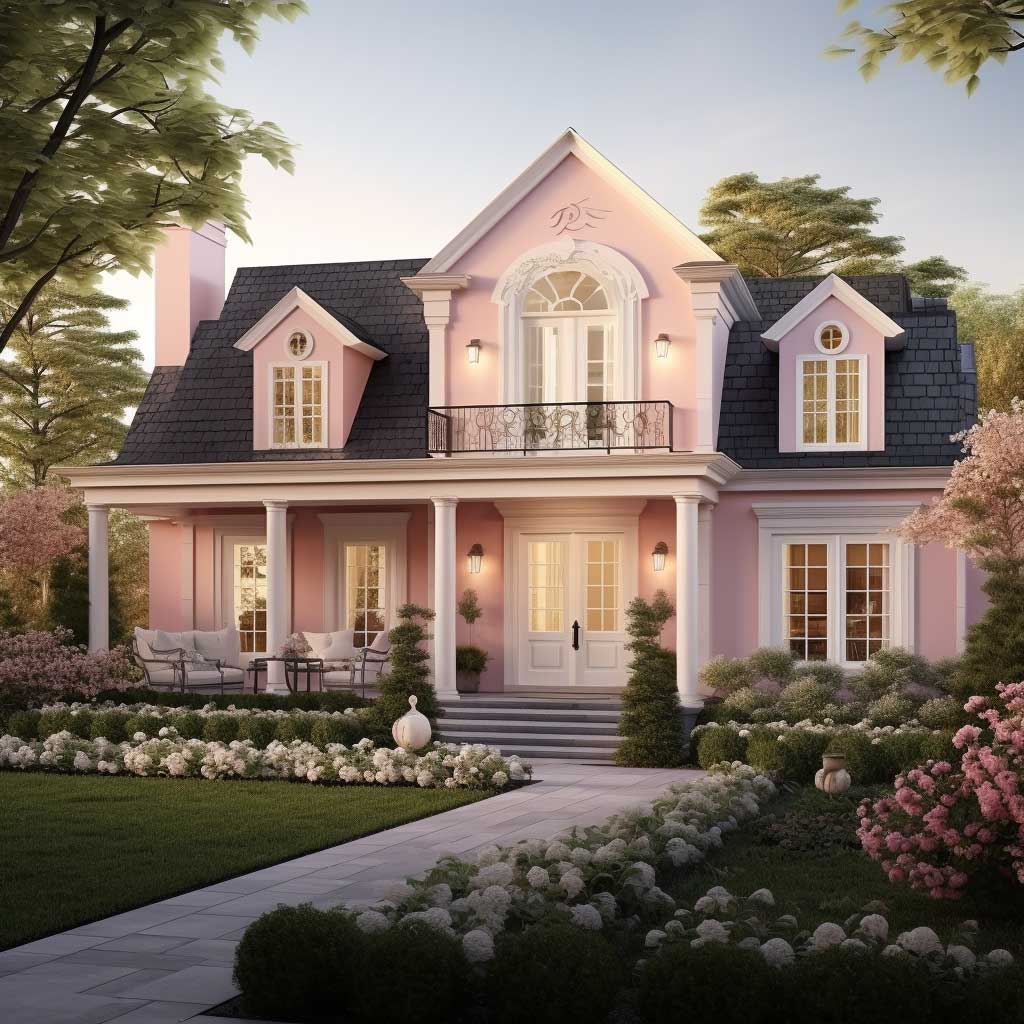


Pair this palette with warm white around windows and doors, then let charcoal or medium gray handle the heavier visual elements. The same principle appears in soft pastel pink and gray exterior combinations, where the cooler partner gives the pink enough structure to read as architectural color. Why does that pairing work? Gray acts like a picture frame around a painting, so use it where you need edges and definition rather than spreading it everywhere.
Do not make every trim element another shade of pink just because the main facade is pink. That approach can flatten the architecture and make individual details disappear instead of giving them definition. The better move is to repeat one neutral across several elements, creating a visual rhythm from roof edge to window frame and door.
For a softer result, natural wood and leafy planting can replace some of the contrast normally supplied by dark paint. Is Whispering Rose suitable for both classic and contemporary houses? Yes, provided the surrounding finishes share its temperature and the facade has enough tonal variation. Use one small exterior sample first and judge it in direct sun and shade before scaling up.
Blush Harmony Makes an Earthy Pink Exterior Feel Warmer
Blush Harmony takes earthy pink toward peach and beige, making it useful for facades that already contain warm brick, terracotta, timber, or sandy stone. The shade has a softer visual temperature than a cool blush and can make a large wall plane feel less stark. Picture it as the architectural equivalent of late-afternoon light: warm enough to soften hard edges, but still controlled.
How should a blush pink house exterior be tested? Paint or place a large sample directly against the facade and watch it as daylight changes rather than judging it under indoor lighting. Color Concierge recommends checking exterior colors because natural light can substantially alter their appearance, and its current sample guidance includes large 9-by-14-inch samples made with two coats of real paint. Use a generous sample area before buying the complete paint order.


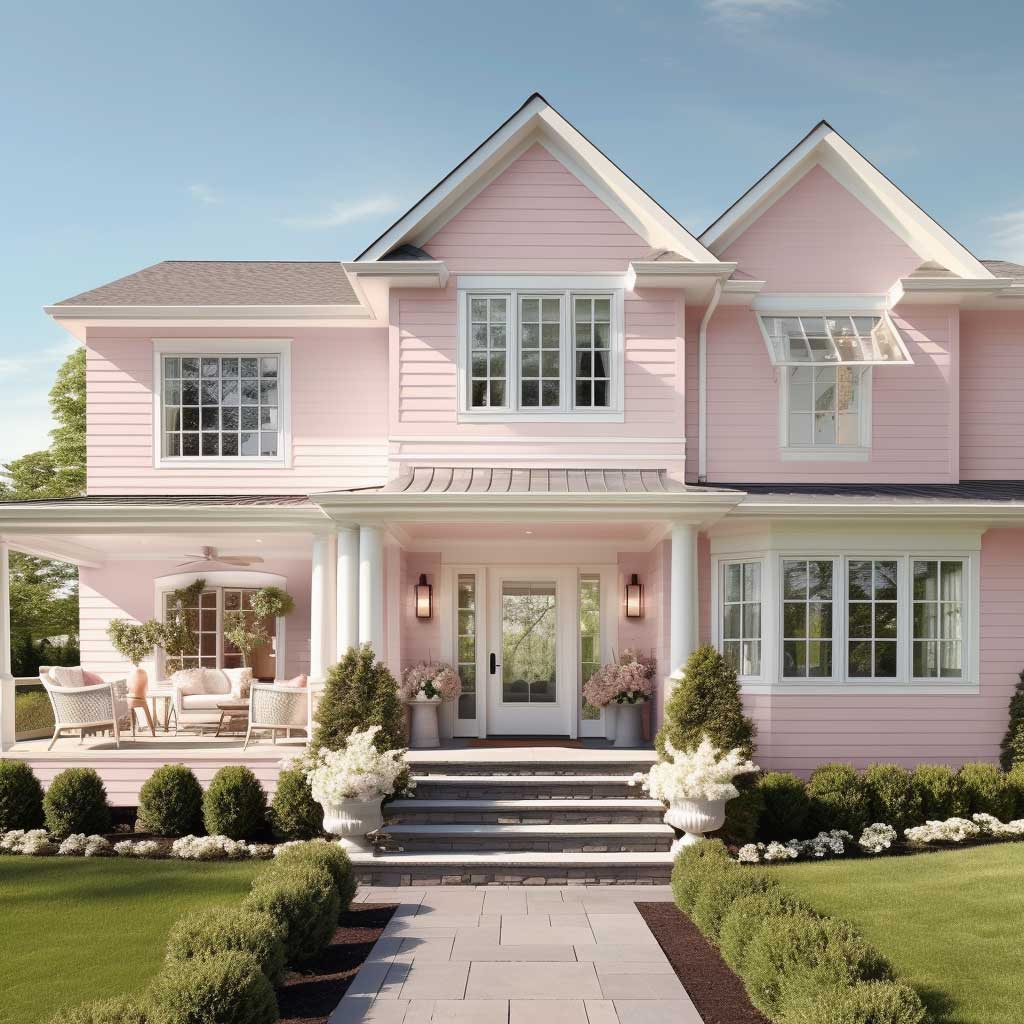

Warm white trim is the obvious partner, but a deep blue door, muted green planting, or weathered wood can add more depth without turning the facade into a color chart. For a broader look at exterior palettes, house outside colour combinations that balance contrasting finishes show how light and dark elements can divide a facade into readable layers. Keep the strongest accent on one architectural feature so the blush remains the main field color.
- Use warm white when the roof and masonry have yellow, cream, or terracotta undertones.
- Choose charcoal or deep blue when the facade needs a sharper modern edge.
- Repeat natural wood if the property already has timber doors, beams, or fencing.
- Let greenery provide color contrast instead of adding several painted accents.
Do not select the pink first and force the roof, paving, and stone to accommodate it. Those fixed surfaces are the house’s permanent furniture, so the paint should work around them. If the existing materials lean cool, shift toward a grayer blush; if they lean warm, a beige or peach undertone will usually sit more naturally.
One more useful check is scale: a small color card can make a muted pink appear cleaner and cooler than it will look across an entire elevation. What is the simplest way to avoid that surprise? View a large sample from the street and from the main approach to the house before deciding. Treat the test patch as a rehearsal and the final paint job as the performance.
Sunset Glow Pushes Soft Pink Toward Romantic Depth
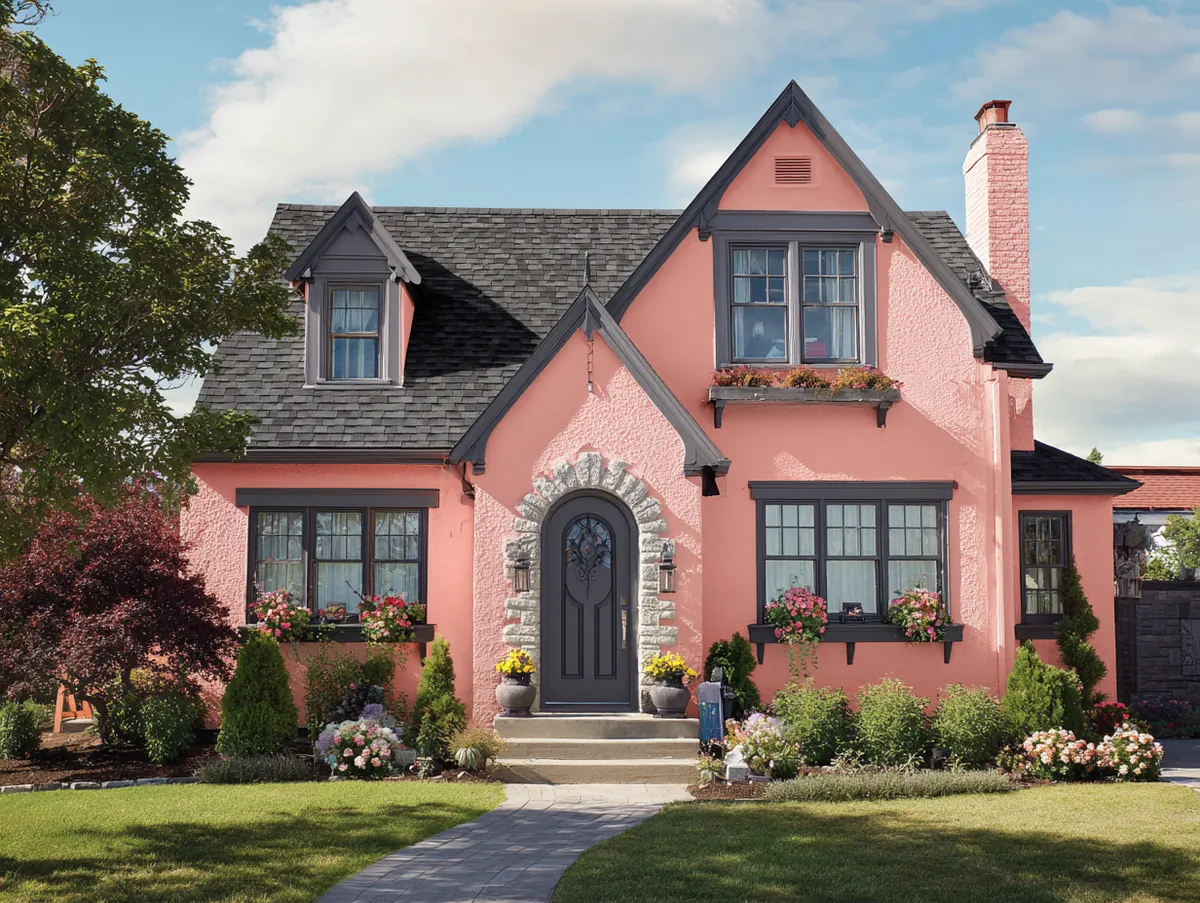
Sunset Glow moves soft pink toward a richer peach-rose range, making the facade feel more dimensional as daylight shifts. This direction suits Mediterranean, cottage, coastal, and eclectic architecture where warm natural materials can reinforce the color. The shade behaves like a sunset reflected on plaster: subdued in one moment, warmer and deeper in another.
For an earthy pink exterior with stronger contrast, pair the main color with charcoal, burgundy, muted olive, or a dark natural wood tone. ArtFasad’s guidance for blush-and-charcoal facades uses a charcoal share of roughly 15–20% of the visible facade to create enough separation on larger volumes. Use that proportion as a visual reference rather than a rigid formula, especially when windows, doors, and roof elements already provide dark areas.


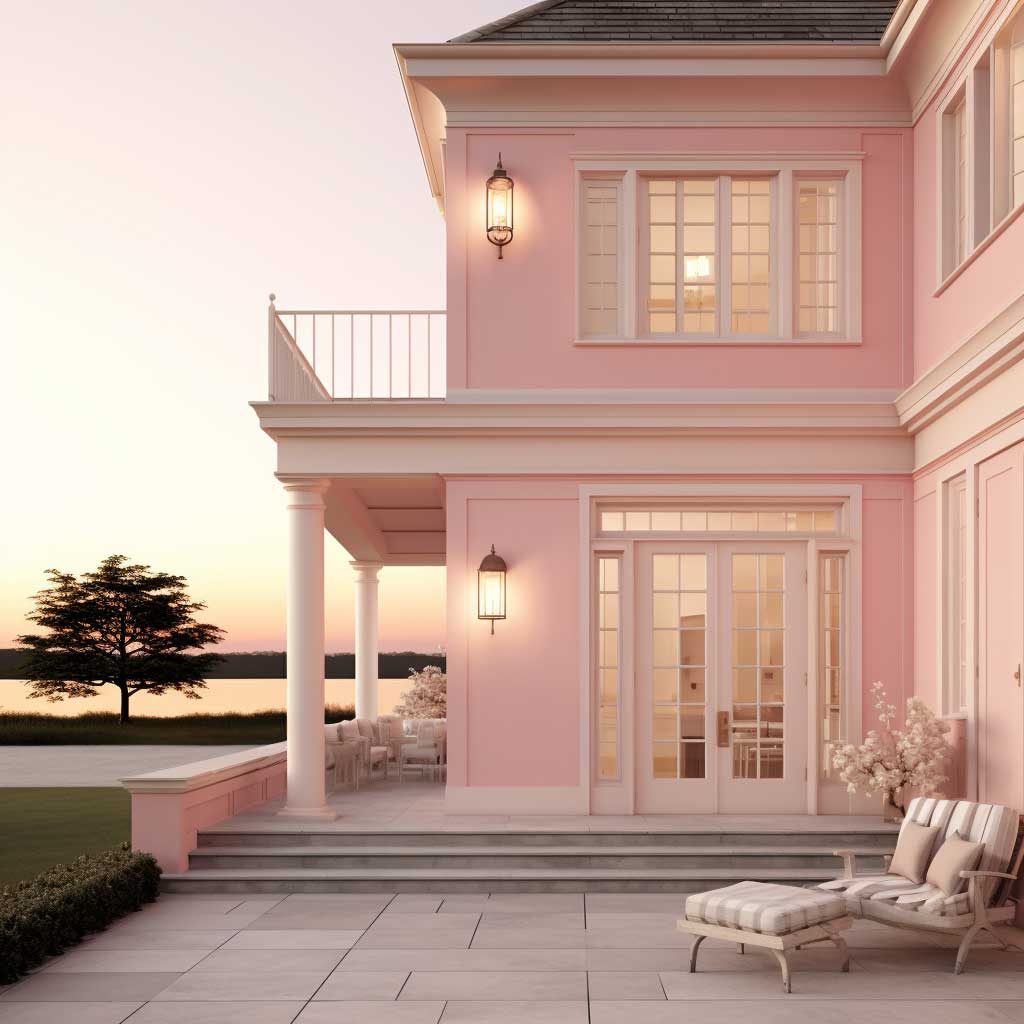


The advantage of this deeper palette is its ability to give broad walls more visual weight without abandoning the softness associated with pink. A dark roof can anchor the upper edge, while pale trim keeps windows and doors legible. Which detail should carry the strongest contrast? Usually the entrance is the logical focal point, so keep secondary accents quieter and let the doorway finish the composition.
Do not cover every available surface with the darkest accent. Too much charcoal or burgundy can turn a gentle facade into a patchwork of competing blocks, especially when the roof and windows are already dark. Start with the existing fixed elements, estimate their visual share, and add only enough contrast to clarify the architecture.
Natural landscaping is particularly effective with this version of soft pink because green foliage provides a complementary counterweight without requiring another painted color. Is Sunset Glow limited to romantic or traditional houses? No; simplified modern forms can carry it too when the trim, roof, and paving remain disciplined. Test the color on the actual wall and record how it reads in morning, midday, and evening light before final selection.
THE BOTTOM LINE
Earthy pink works when the undertone belongs to the house, not when the house is forced to belong to the paint.
Start with the roof, masonry, paving, and existing trim.
Use warm whites, gray, charcoal, or natural wood to give the pink clear boundaries.
Test a large exterior sample in changing daylight before ordering the final paint.