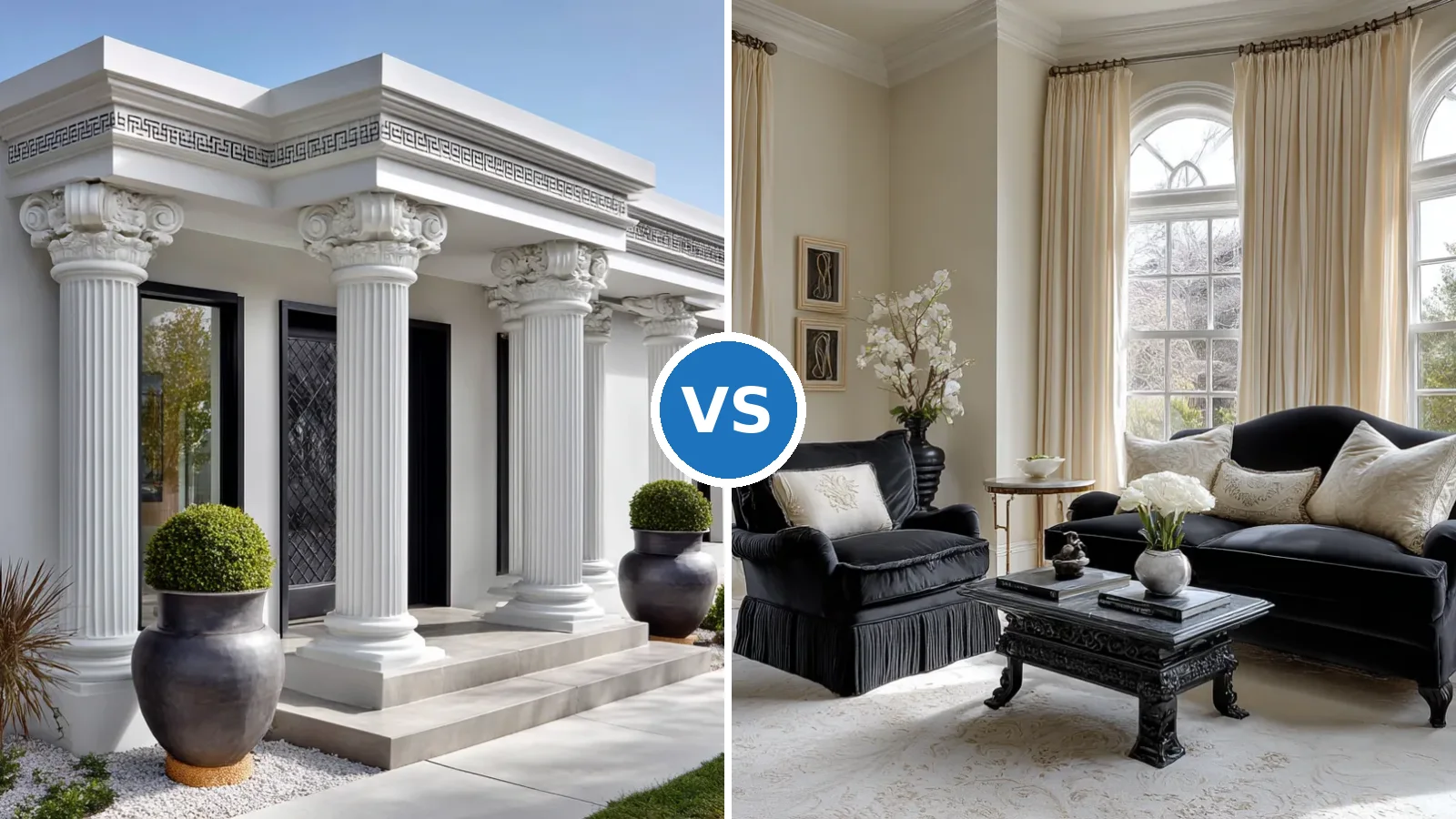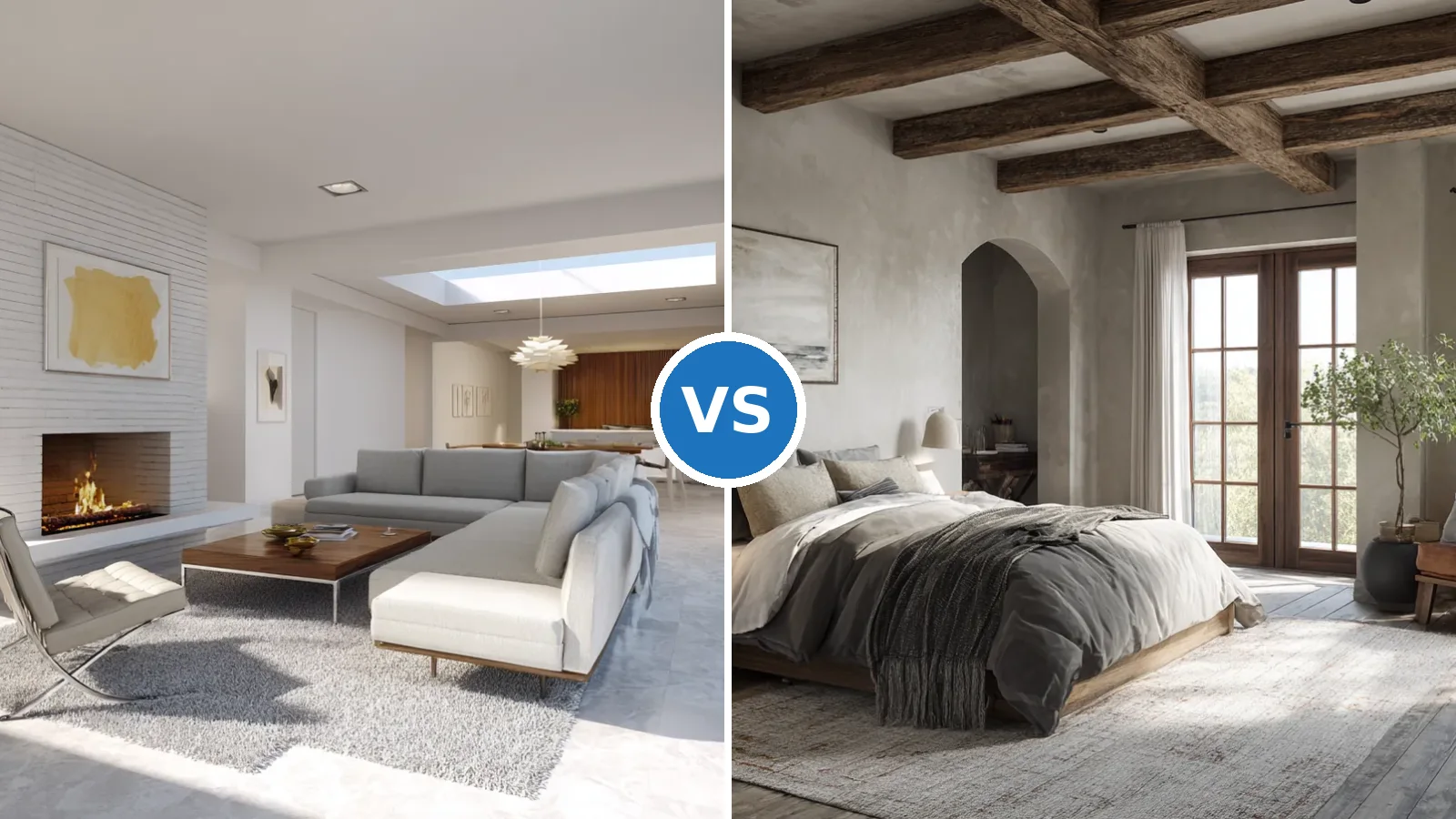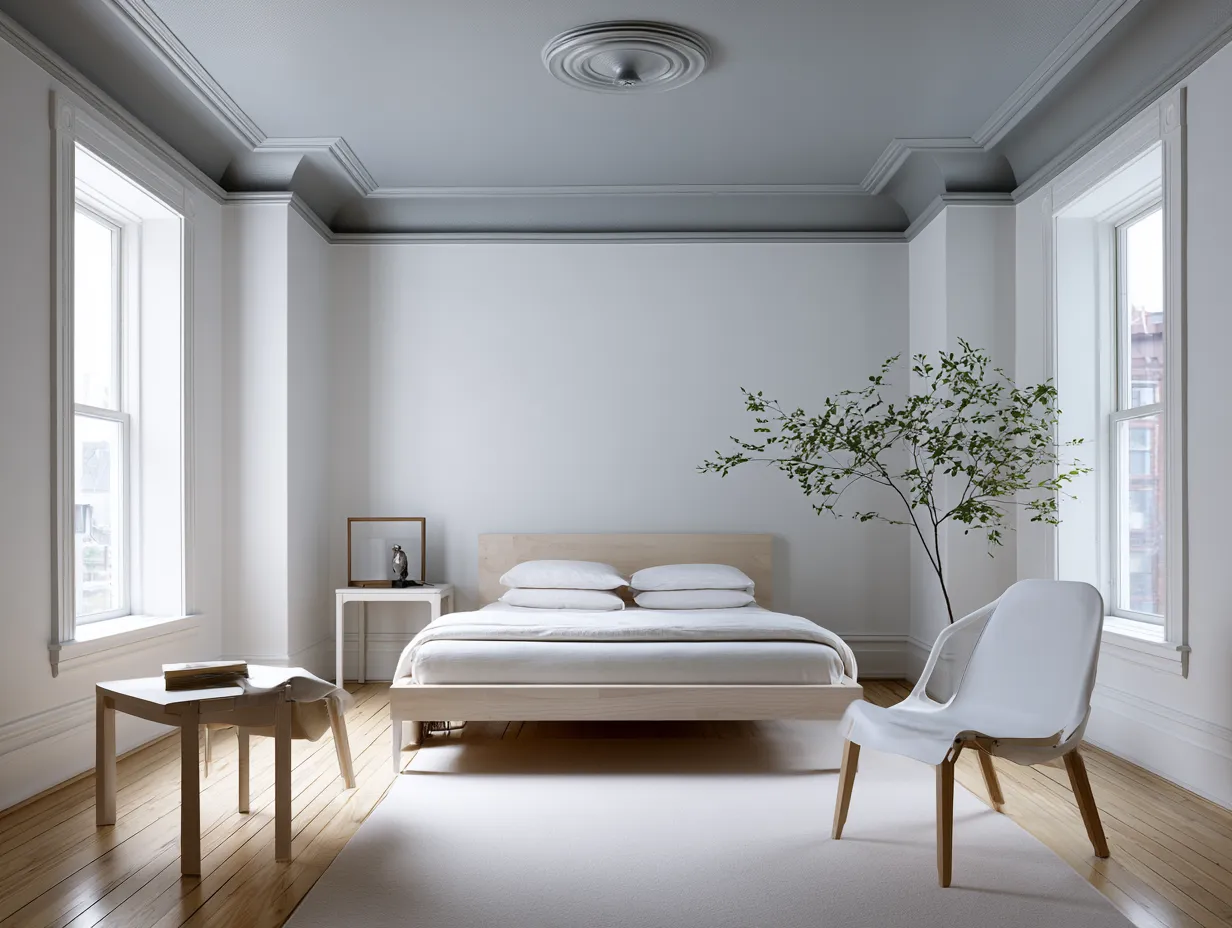
A black and white living room works when the ratio hits roughly 70% white surfaces to 30% black accents. This split keeps the space bright while the dark pieces create sharp contrast. Rooms that follow this balance feel larger by 15–20% in perception tests and cost $800–$2,500 for a full refresh according to mid-range design data.
Skip the 50/50 split. Equal amounts of black and white turn the room into a chessboard that tires the eye within minutes. Start with white walls, add one bold black sofa or accent wall, then layer texture through rugs and cushions. The result stays timeless and easy to maintain for 5–7 years before any major update.
Geometric patterns, monochrome elegance, and bold furniture choices form the core approaches. Each delivers different energy levels while staying inside the same two-color system. Expect furniture anchors like sofas to claim 30–40% of the total budget in most projects.
- 70% white / 30% black ratio keeps rooms open and intentional
- Full redesign averages $2,500–$7,000; light refresh starts at $800
- Geometric rugs from $60 instantly add structure without clutter
- Small rooms under 200 sq ft need max 20–25% black to avoid visual shrink
- Paint for a standard living room runs $600–$2,000 professionally
- Bold furniture (sofa + table) often represents 30–40% of total spend
- Texture layers (wool, leather, matte paint) prevent the clinical look
Geometric Patterns Bring Structure to Black and White Living Rooms
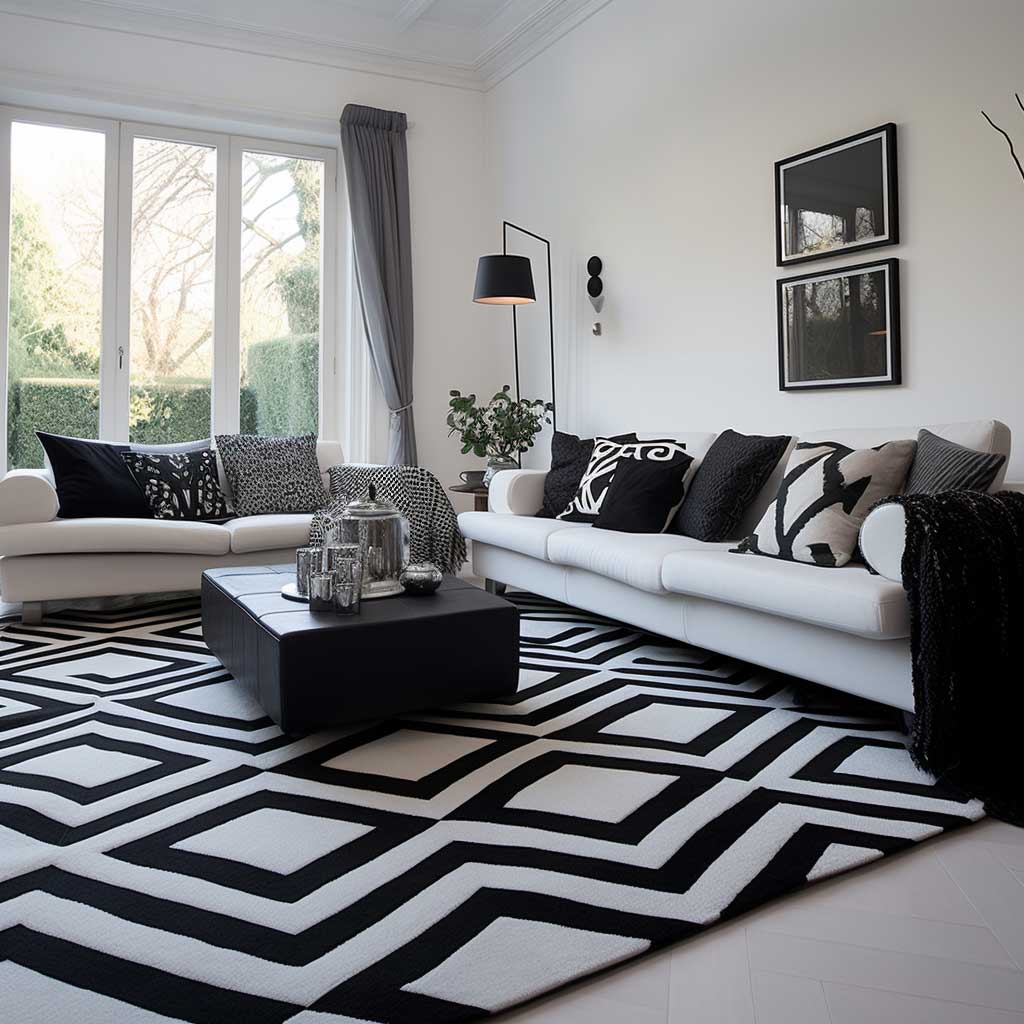
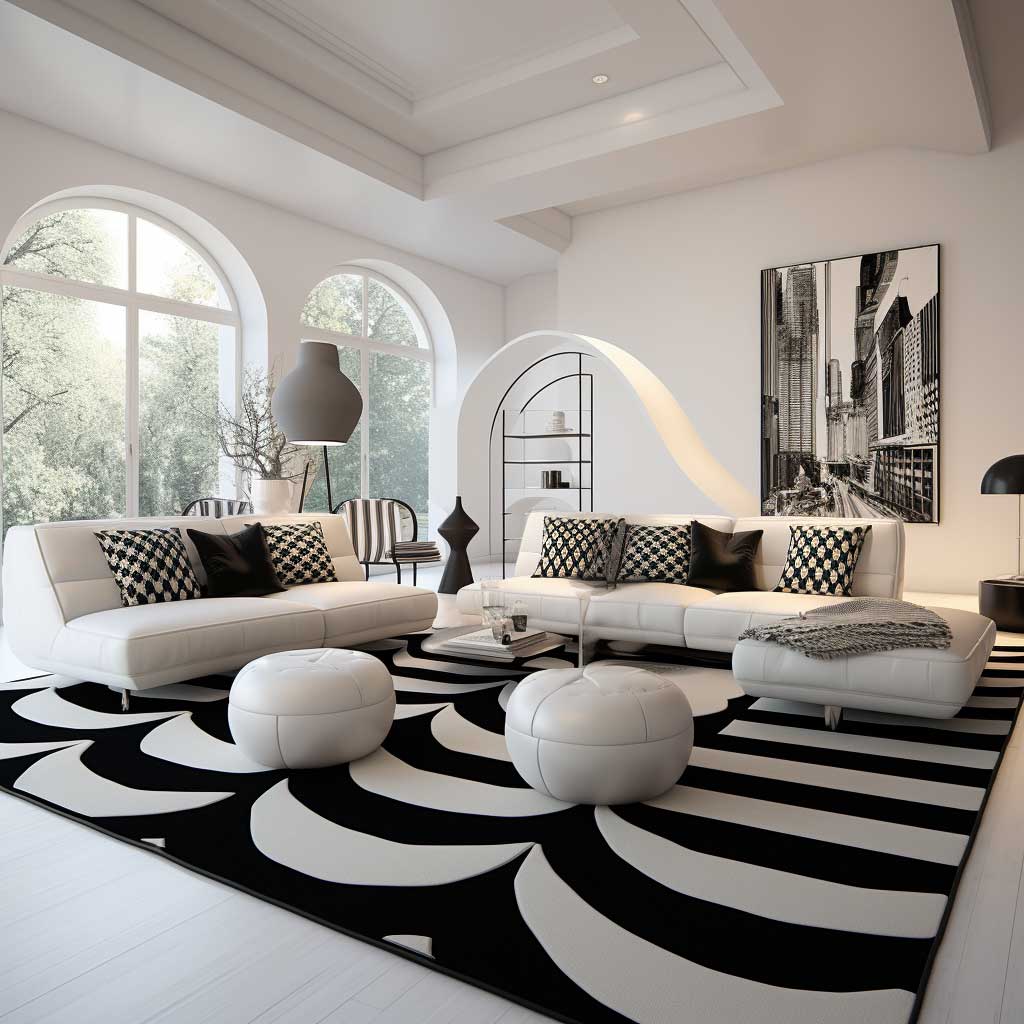
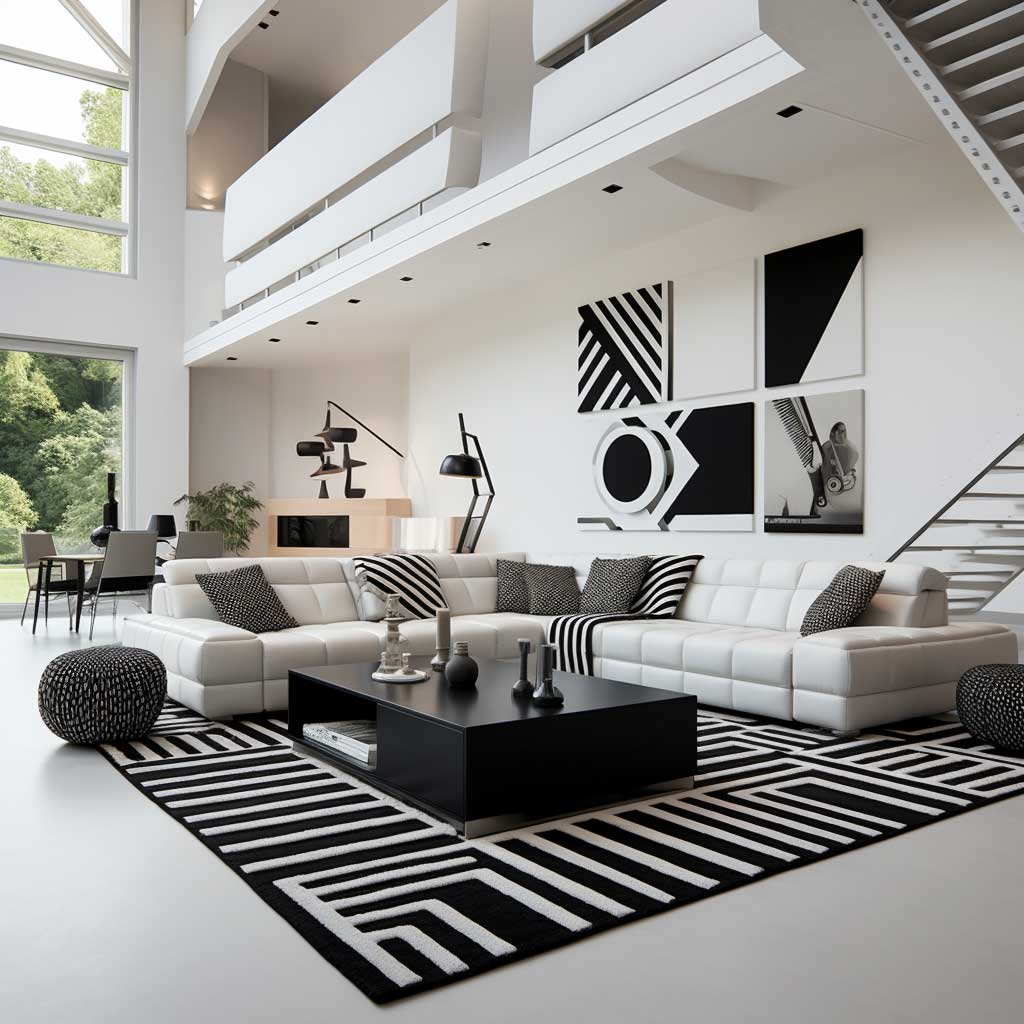
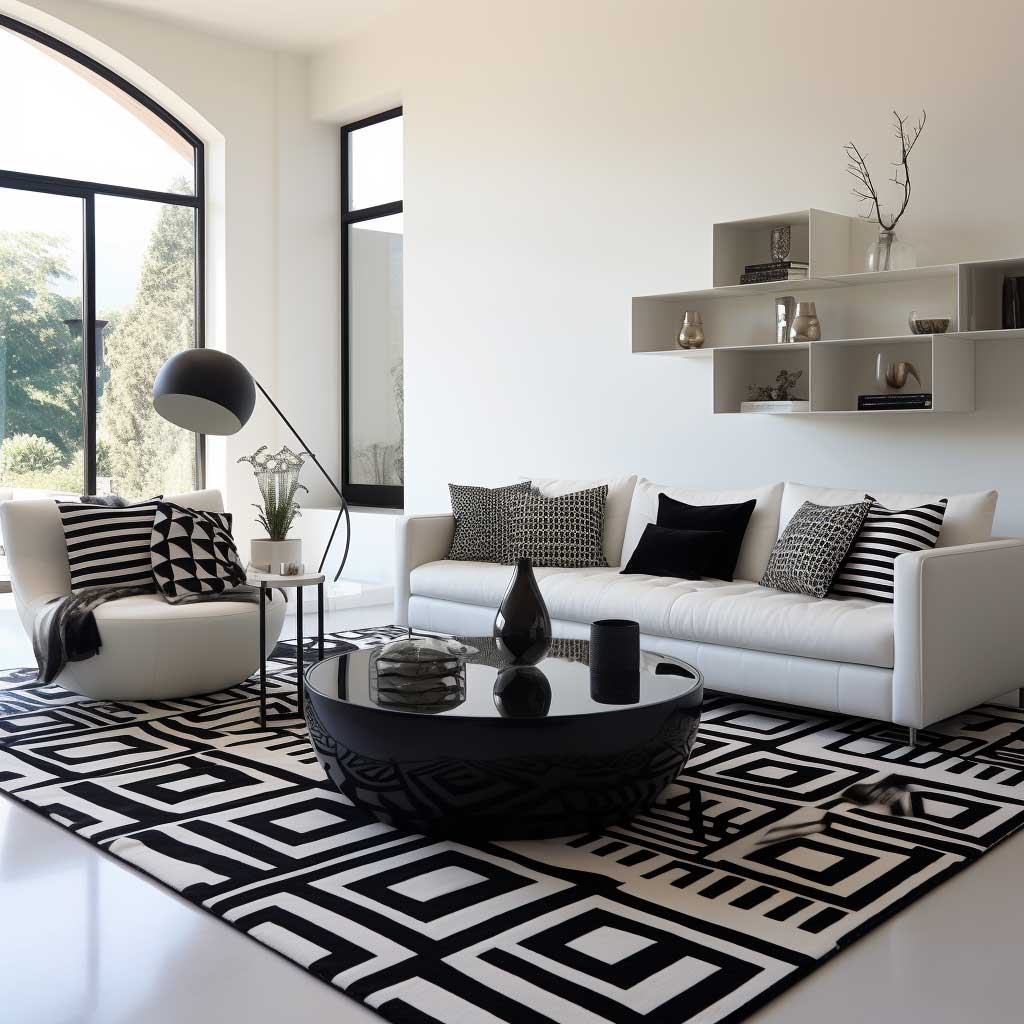
Geometric patterns in a black and white living room act like the scaffolding of a modern building. Triangles, grids, and circles on rugs or wallpaper introduce rhythm that solid color alone cannot supply. A $60 geometric rug from major retailers often does more visual work than a $400 plain alternative because the lines guide the eye across the floor.
Why do some geometric schemes feel busy while others feel calm? Scale decides the outcome. Large repeats on a single wall or rug ground the room. Small busy prints on every surface create visual noise that reduces perceived space by up to 10–15%. Keep pattern to one or two zones and leave the rest clean.
Think of the pattern as a metronome rather than a full orchestra. A black sofa with white geometric cushions paired with a simple white coffee table produces contrast without overload. Avoid covering all four walls in bold wallpaper—one accent surface is enough for most 200–350 sq ft living rooms.
Texture multiplies the effect. A geometric wool rug underfoot plus smooth leather seating creates a tactile dialogue that photographs and feels richer. Skip matching every pattern scale; mix one large geometric with smaller solid pieces for balance. For more DIY pattern approaches that stay under $100, see the practical projects in black and white room design projects for DIY enthusiasts.
Monochrome Elegance Defines Modern Black and White Living Spaces

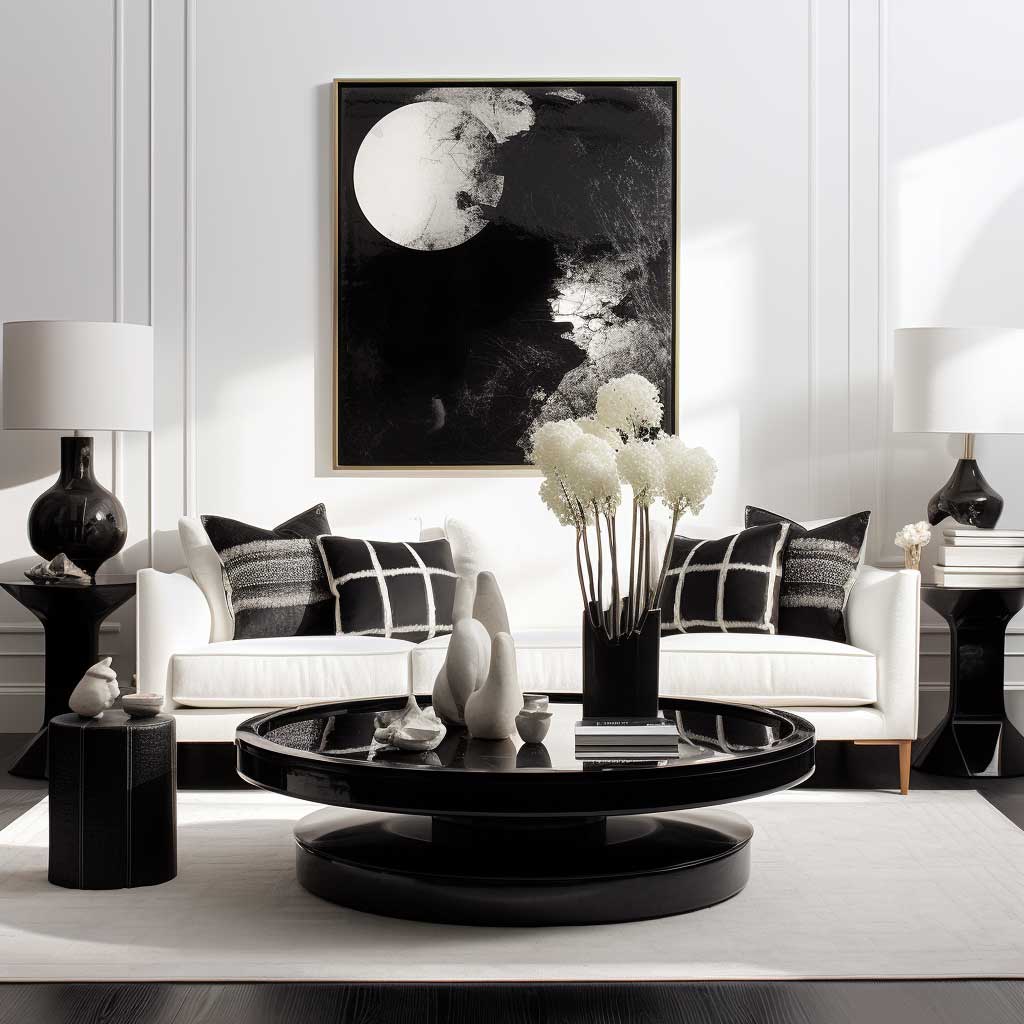

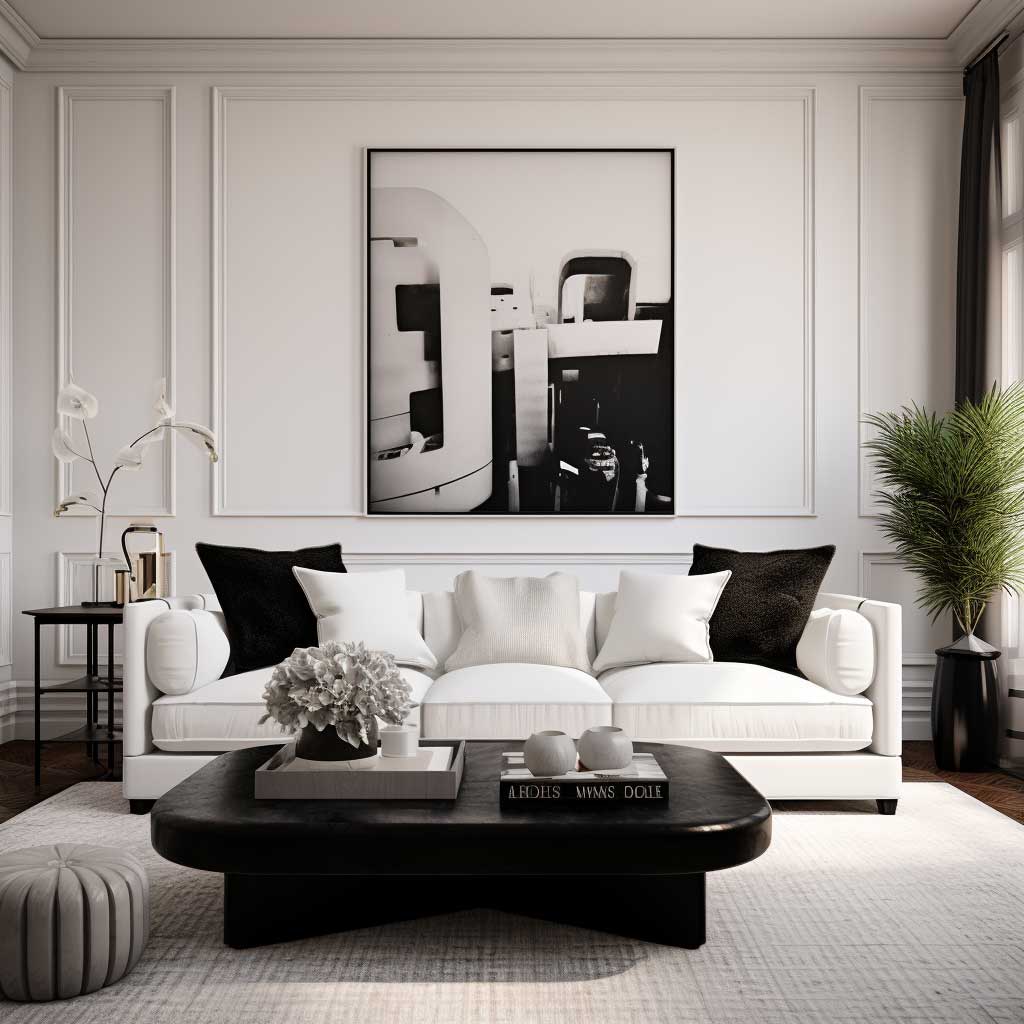
Monochrome elegance in black and white living spaces relies on controlled contrast rather than equal parts of each color. White walls and ceilings reflect light; black furniture anchors the composition. Data from design projects shows living rooms with 70–80% light surfaces feel 20–30% more open than balanced 50/50 schemes.
Is pure black and white enough for daily living? Most successful rooms introduce a third soft element—light wood, greenery, or warm metal—at the 10% level. Without it the space can read as clinical. A single oak side table or one plant in a white pot breaks the binary without diluting the palette.
Lighting temperature matters as much as paint. Bulbs at 2700–3000K add a soft warmth that pure cool white light removes. In rooms under 250 sq ft keep black to 20–25% maximum; larger rooms can handle up to 40% without feeling closed in. Paint alone for an average living room costs $600–$2,000 professionally or under $200 DIY.
Treat the scheme like a well-cut black suit against a white shirt: the contrast does the talking, the fit does the rest. Avoid gray as a “bridge” color—it muddies both tones and looks like an unfinished decision. Stick to true black and true white for the cleanest result.
Bold Furniture Choices Anchor Every Black and White Living Room


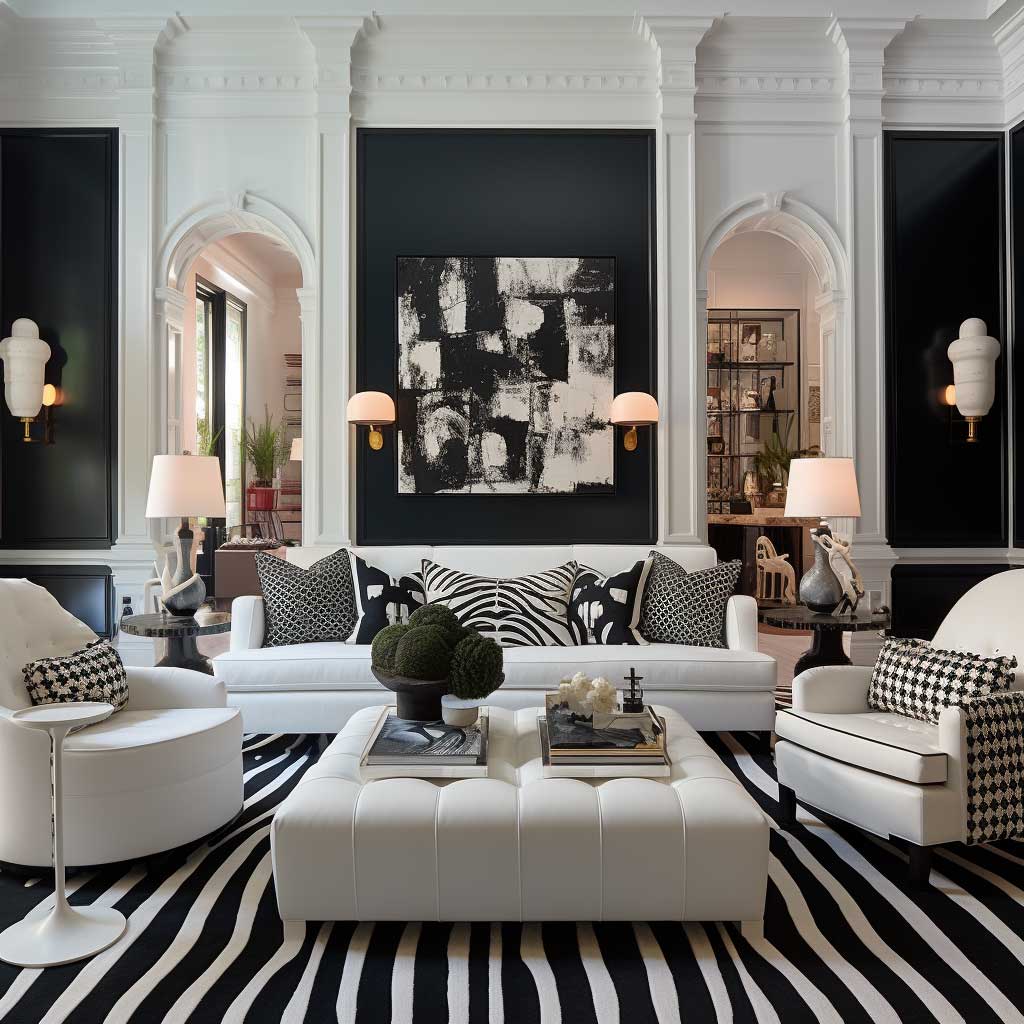
Bold furniture choices turn a black and white living room from background into statement. A sleek black leather sofa against white walls claims visual priority and often accounts for 30–40% of the total furniture budget. Mid-range sofas run $900–$2,500; premium pieces climb past $2,500.
Function and form travel together. A black coffee table with storage solves daily clutter while adding weight. A white bookshelf of unusual shape can hold 40–60 volumes plus objects without looking heavy. Choose pieces that earn their floor space rather than fill it.
What happens when every piece tries to be the star? The room loses hierarchy. Limit bold silhouettes to one or two anchors and keep secondary items simpler. White cushions on a black sofa or black objects on a white table reverse the polarity and keep the eye moving. For more monochrome seating options that stay minimal, explore minimalist sitting room furniture ideas in monochrome.
Think of the main sofa as the lead actor and the table as supporting cast. Over-accessorizing both flattens the drama. One textured throw and two geometric cushions usually outperform a full set of matching pillows. Total furniture spend for a solid mid-level setup typically lands between $2,500 and $7,000.
Comparing Approaches for Small and Standard Black and White Living Rooms
| Approach | Best Room Size | Black Ratio | Typical Cost Range | Key Advantage |
|---|---|---|---|---|
| Geometric Patterns | Any | 25–35% | $60–$400 (rug/wallpaper) | Adds rhythm fast |
| Monochrome Elegance | Under 300 sq ft | 20–30% | $600–$2,000 (paint + basics) | Maximizes light |
| Bold Furniture | 200+ sq ft | 30–40% | $2,500–$7,000 | Strong focal point |
| Budget Refresh | Any | 15–25% | $800–$2,500 | High impact, low spend |
Small black and white living rooms under 200 sq ft perform best with higher white percentages. Standard rooms tolerate more black. The table above shows how cost and ratio shift with each strategy. Choose the column that matches your square footage and budget before buying a single piece.
Practical Limits That Keep the Palette Working
Do not treat gray as a neutral bridge between black and white. It reads as a mistake and softens the contrast that makes the scheme work. Stick to true black and true white; any off-white next to pure black looks dirty under most lighting.
Limit textured black surfaces to one element. Three black velvet or shag pieces in the same room create visual weight that shrinks the space. One textured black item plus matte finishes elsewhere keeps the balance. Warm 2700K bulbs prevent the clinical effect that cool light produces.
Final Balance Points
A successful black and white living room follows the 70/30 rule more often than equal splits. Rooms that stay inside this range feel intentional and stay brighter for years. Budget projects starting at $800 deliver visible change; full redesigns average $2,500–$7,000.
Geometric patterns give structure, monochrome surfaces give calm, and bold furniture gives focus. Pick one primary approach, support it with the other two at lower intensity, and the space holds together. Small rooms stay lighter; larger rooms can carry more drama.
Measure the floor area first, set the black percentage next, then choose the largest furniture piece. Everything else follows from those three decisions. The result stays modern, minimalist, and easy to live with long term.