Red bathroom flooring works best when one strong material carries the color and the walls and fixtures stay calm. Red marble brings luxury, red geometric tiles bring pattern, terracotta brings warmth and red epoxy gives a seamless modern finish, and each pairs naturally with white, black, gold or wood.
The right choice depends less on the shade than on how the floor handles water and daily use. Below are four red floor options with styling pairings, the care each one needs and the slip and maintenance points to check before you commit.
Quick Scan
- Red marble suits a formal bathroom; choose a honed finish and seal it regularly.
- Red geometric porcelain or ceramic tiles give the most pattern for the least upkeep.
- Terracotta adds warmth but is porous and must be sealed in a wet room.
- Red epoxy is seamless with no grout lines, but needs an anti-slip additive.
- Keep walls white, grey or wood so the red floor stays the focal point.
Red marble tiles for a luxurious bathroom


Red marble is the most formal way to bring color to a bathroom floor. Deep red tones with natural veining look rich on their own, and white fixtures sharpen the contrast while gold taps and mirror frames push the room toward classic luxury.
Marble needs more care than it seems. It is a natural stone that can absorb water and stain, and acidic cleaners can dull the surface, so plan on sealing it and using pH-neutral products. A honed or textured finish is the better choice underfoot, since highly polished stone becomes slippery when wet.
Bold red geometric tiles for a modern look
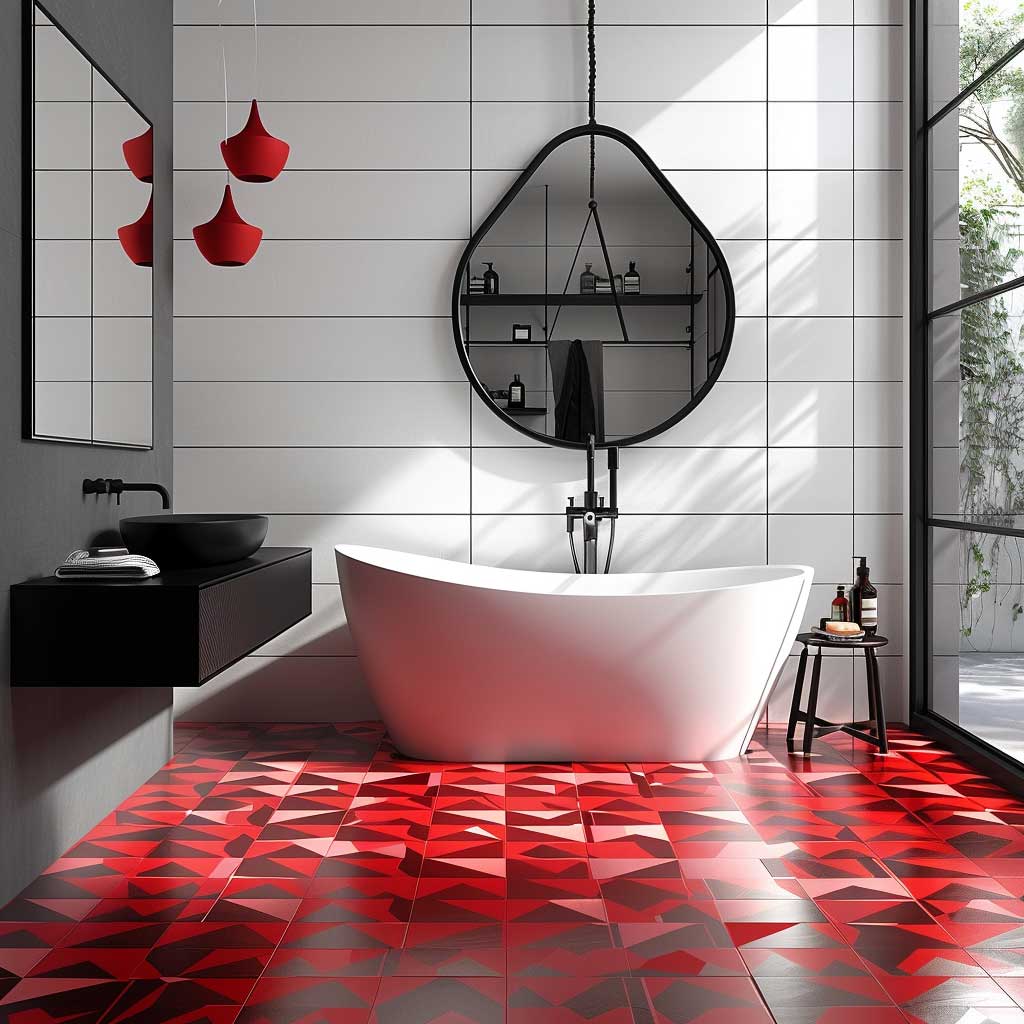


Geometric tiles turn the floor into the main feature of the room. Red hexagons, chevrons or encaustic-style patterns look energetic against white walls, and sleek black fixtures add an edge that keeps the scheme contemporary.
Porcelain and ceramic versions are the practical pick here: they resist water well and need only routine cleaning, with the grout as the main thing to look after. Smaller tiles mean more grout lines, which add grip but also more joints to keep clean. If the full floor feels like too much, use the pattern as a rug-like zone in front of the vanity or tub.
Rustic red terracotta tiles for warmth


Terracotta brings an earthy, sun-baked red that makes a bathroom feel relaxed. Wooden cabinetry and green plants strengthen the natural mood, and the slightly uneven surface of the tiles gives texture that smooth materials lack.
Unglazed terracotta is porous, so in a bathroom it must be sealed and resealed over time to resist water and stains. Its matte, textured surface tends to feel less slippery than polished stone, and it pairs well with underfloor heating for a warmer feel underfoot. Glazed terracotta-look porcelain gives a similar color with far less upkeep.
Modern red epoxy flooring for a seamless finish


Red epoxy creates one continuous, glossy surface with no grout lines, which makes the color look intense and the room feel larger. Minimal fixtures and simple shapes suit it best.
The gloss is also its weak point in a wet room: a smooth epoxy floor can be slippery, so ask the installer about an anti-slip aggregate or a satin topcoat. Epoxy also needs a sound, dry subfloor and careful preparation, which is usually a job for a professional. For a direct look at how resin compares with stone-chip floors, see terrazzo flooring vs epoxy.
Comparing red bathroom floor materials
Each material delivers red in a different way, and the trade-offs are mostly about upkeep and grip.
| Material | Look | Water and stain resistance | Main care task |
|---|---|---|---|
| Red marble | Formal, veined, luxurious | Moderate; porous stone | Regular sealing, pH-neutral cleaners |
| Geometric porcelain or ceramic | Patterned, modern | High | Grout cleaning and sealing |
| Terracotta | Rustic, warm, matte | Low unless sealed | Sealing and resealing |
| Epoxy | Seamless, glossy, modern | High | Anti-slip finish, protecting from scratches |
A common mistake is choosing the floor from a photo and ignoring the finish. A polished red marble or glossy epoxy floor that looks dramatic in a showroom can feel risky in a family bathroom after a shower. If grip and warmth matter most, also consider softer options covered in cork flooring vs vinyl plank.
Making a red bathroom floor work
Let the floor be the only strong color and keep walls in white, warm grey or natural wood. Repeat red once in a small accent, such as a towel or a framed print, so the floor feels intentional rather than isolated.
Choose the material by how the bathroom is used: marble or epoxy for a guest or main bathroom where style leads, porcelain for busy family rooms, and terracotta where warmth and texture matter more than low maintenance.