Picture a day that starts with brunch and ends at a dinner party, with one outfit that has to handle both. That is the real decision behind 70s vs 80s retro dressing: sparkle and flowing silhouettes, or bright color and sporty pieces. Both subjects belong to the same nostalgic world, but they answer very different occasions.
The 80s clothes option suits anyone who wants bold color for casual days, meetups and active outings. The 70s fashion option suits people dressing for evenings or for layered everyday wear that can shift into a night out.

What each retro look actually is
Quick Verdict
- Choose 80s clothes if you want bold color, casual outings and outfits built from simple basics.
- Choose 70s fashion if you are dressing for evenings or want layered pieces that move from party to daytime.
- Choose 80s clothes if your plans are a workout, a coffee meetup or a festival day.
- Choose 70s fashion if you want sequins, platforms or cozy knitwear for cooler days.
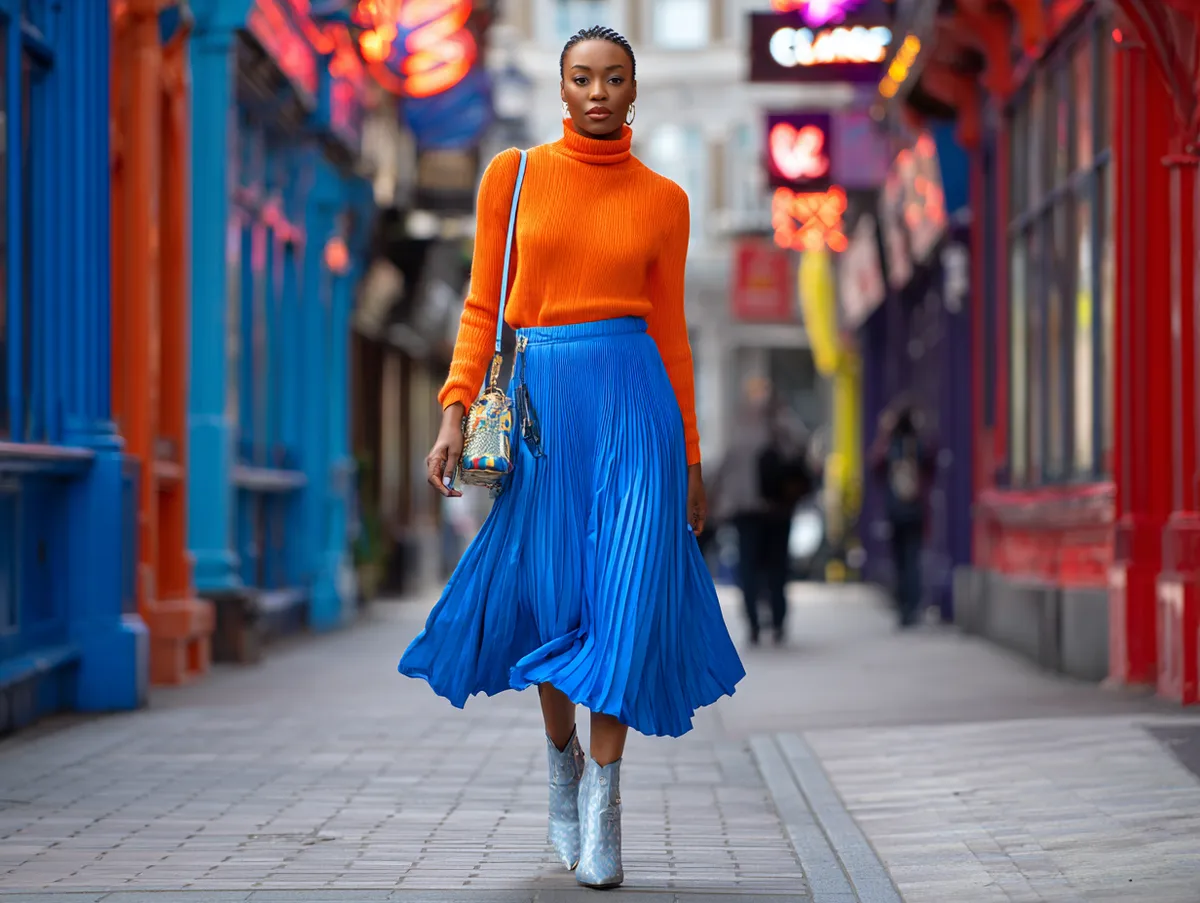
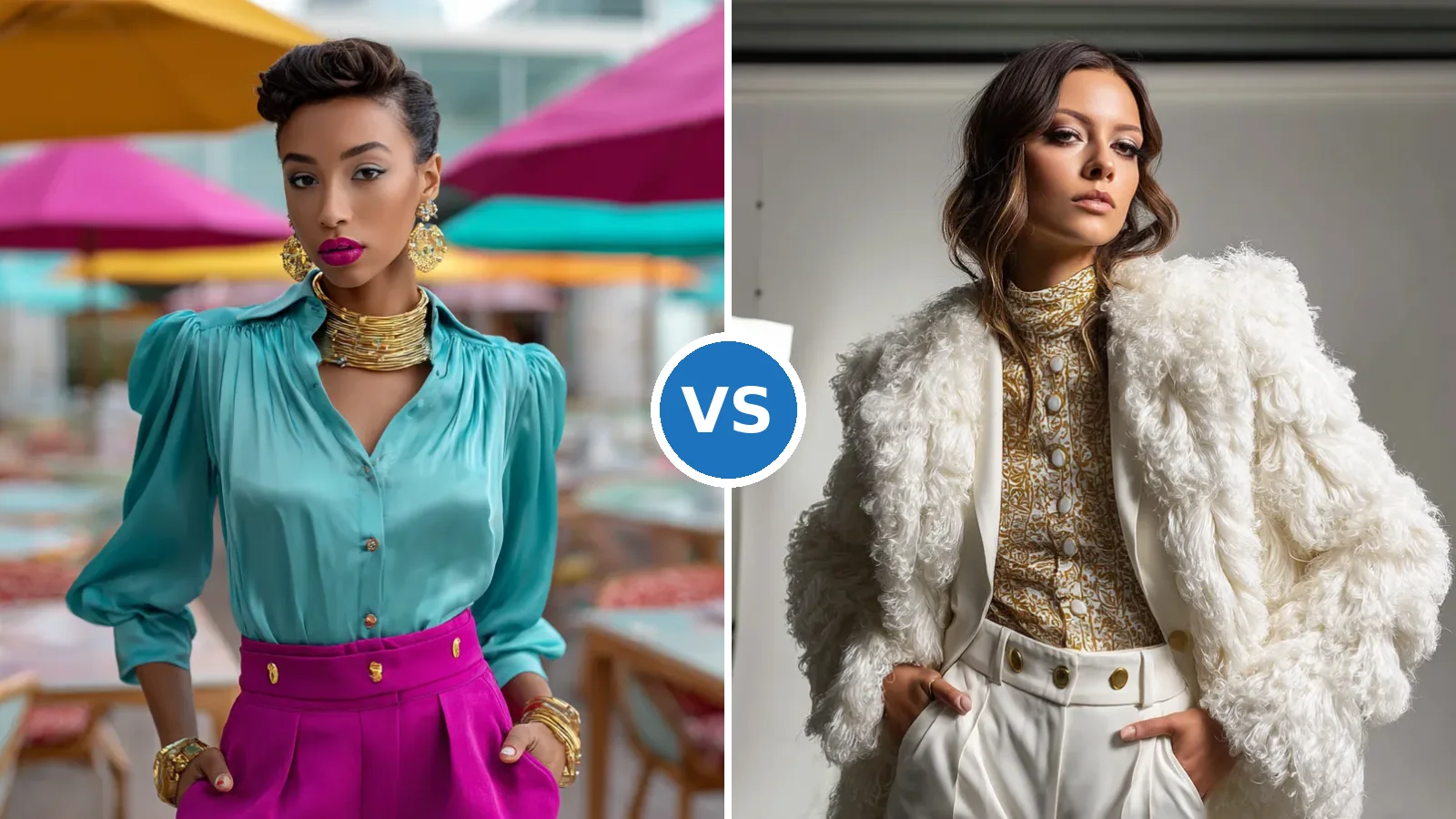
The 80s side, detailed in our fuchsia and turquoise 80s outfits piece, is built on color pairings. A fuchsia bomber jacket meets turquoise leggings, a turquoise blouse pairs with high-waisted fuchsia pants, and a fuchsia mini skirt sits under a turquoise graphic tee. Each look leans on sporty or playful silhouettes.
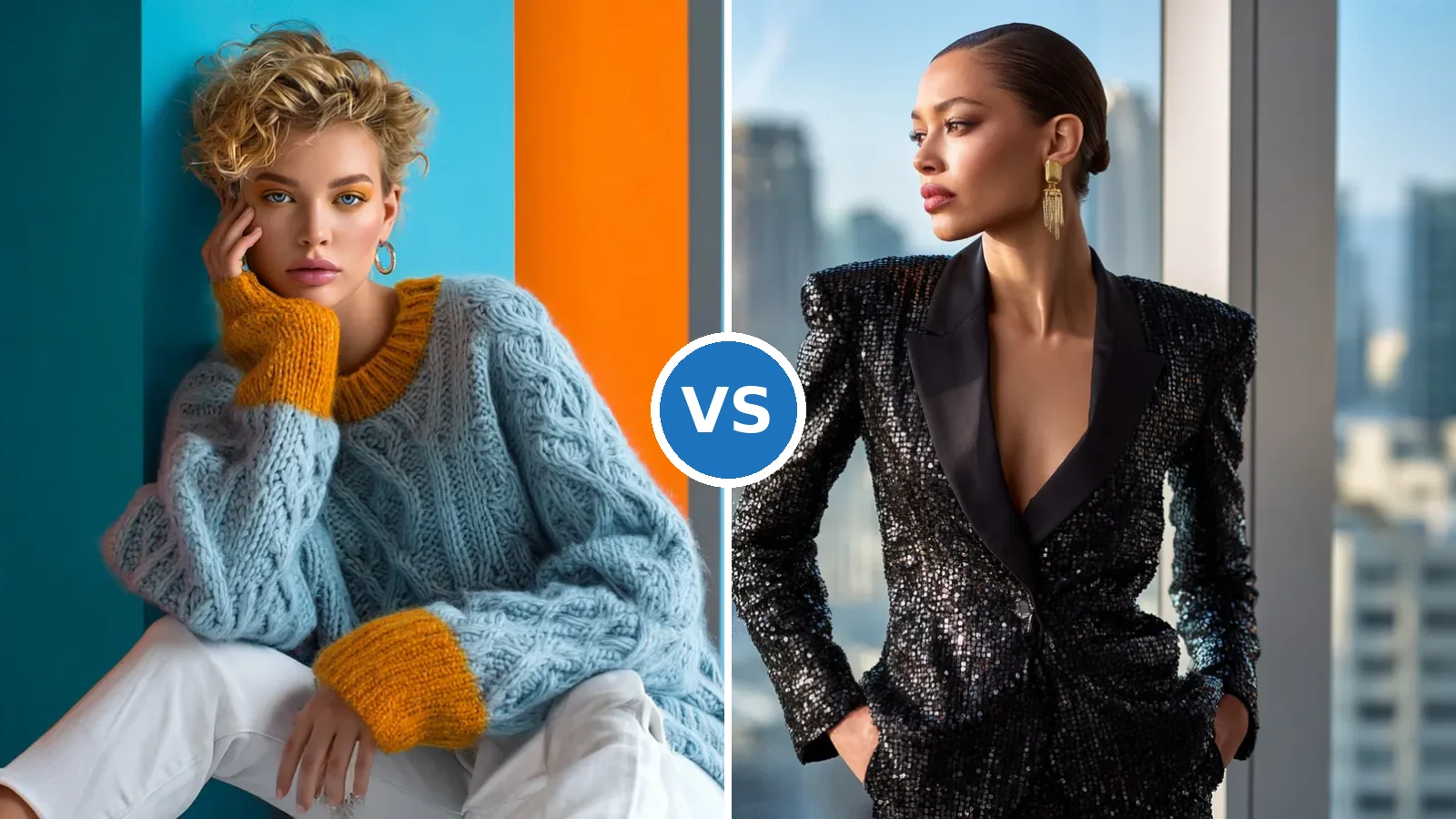
The 70s side, covered in our 70s party and everyday looks article, splits into two moods. Evening pieces include sequined gowns, satin jumpsuits and platform shoes, while everyday pieces include wide-leg trousers, flared denim and knitwear. That split is what matters most when you choose between them.

Comparing the 70s vs 80s look across key criteria
| Criteria | 80s clothes | 70s fashion |
|---|---|---|
| Signature look | Fuchsia and turquoise pairings with satin and metallic accents | Sequins, satin jumpsuits and platform shoes |
| Evening glamour | Suits date nights and semi-formal events, with less sparkle | Strongest, led by sequined gowns and metallic clutches |
| Color energy | Leads with fuchsia and turquoise on their own | Earthy ochre and emerald, plus vibrant prints |
| Everyday layering | Graphic tees, leggings and sporty pieces | Flared jeans, cropped cardigans, vests and corduroy skirts |
| Ease of assembly | Easier, built from mostly basic pieces | More pieces to coordinate |
| Flexibility | Mostly casual and sporty pairings | Wrap blouses and midi skirts move from party to daytime |
Color is where the 80s look clearly leads. Fuchsia and turquoise carry an outfit on their own, while the 70s palette calms things down with earthy ochre and emerald. A clear win for 80s clothes.
Glamour and adaptability go the other way. Sequins, satin jumpsuits and platform shoes give 70s fashion its evening presence, and wrap blouses and midi skirts can shift from a party to a weekday.
That flexibility is a clear win for 70s fashion.

Where the 80s look pulls ahead
The 80s look wins on how easy it is to assemble. Its core pieces, like a graphic tee, leggings, chunky white sneakers and a fuchsia headband, are simple basics that many closets already hold. Few decisions are needed.
Accessories stay minimal here, with stud earrings, a retro-style watch or turquoise bangles doing the work. That keeps the focus on color and suits casual meetups, city strolls and workouts. Fewer delicate sparkle pieces also means less fuss, since sequins usually need gentler handling.
Sporty pieces move from a city stroll to a workout with little change. That makes the 80s look the easier everyday pick.


Where the 70s look pulls ahead
The 70s look wins on evening glamour. Sequined gowns, satin jumpsuits and platform shoes turn an ordinary celebration into something memorable. Metallic belts and clutch bags add polish without taking over the outfit.
It also wins on everyday layering. High-waisted flared jeans, cropped cardigans, oversized vests and corduroy skirts carry the decade into daily wear. Clogs, loafers and block heels keep the look comfortable, with textured details adding character.
Layering is also where the 70s look adapts well to changing plans. A patterned sweater or suede jacket can soften a bold print at lunch and carry into the evening. Pieces like these do the switching.


The mistake that derails most retro outfits
The most common error is dressing head to toe in one decade’s signature color or sparkle, whatever the setting. Picture someone buying a full fuchsia-and-turquoise set, with a satin bomber, leggings and a headband, then wearing it to a formal dinner with nothing to tone it down.
The result reads like a costume. Nothing in it looks chosen for the room.
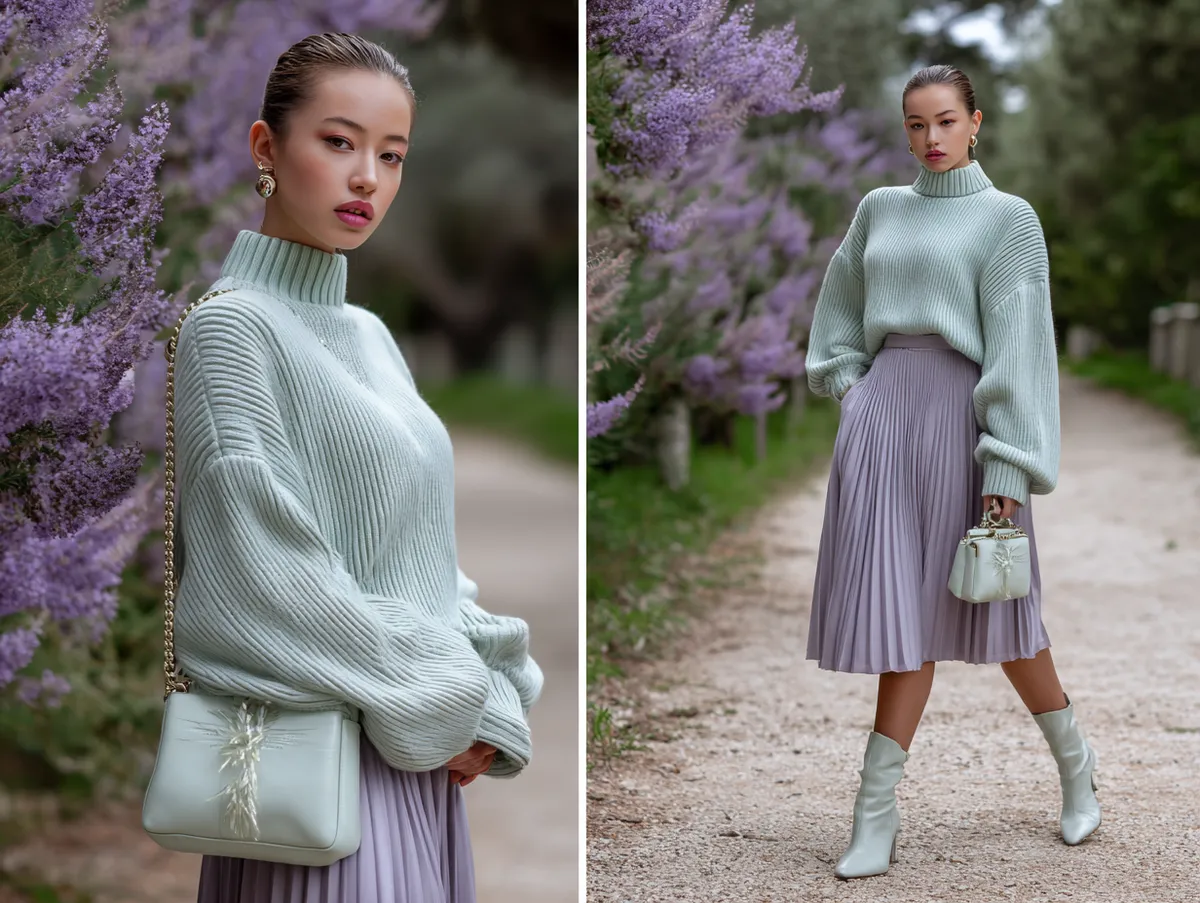
The fix is simple. Keep one bold piece as the focal point, then balance it with quieter pieces such as the pointed flats from the 80s set or a plain wrap blouse from the 70s side. One loud item does the talking.

Final verdict on who should choose which
Choose 80s clothes if your days are bright, casual and active, and you want color to carry the outfit. Fuchsia and turquoise make that easy. The basics are simple to assemble, and this is the stronger pick for brunches, workouts and festival days.
Choose 70s fashion if your calendar includes evenings, parties or layered everyday wear. Sequins and platforms suit the night. Denim, knitwear and wrap pieces carry the daytime.
That flexibility suits anyone wanting one wardrobe for both. Pick the decade that fits your calendar.
Cost is not ranked here, because neither source article gives prices. Compare what you already own before shopping. Both decades reward one clear focal piece.