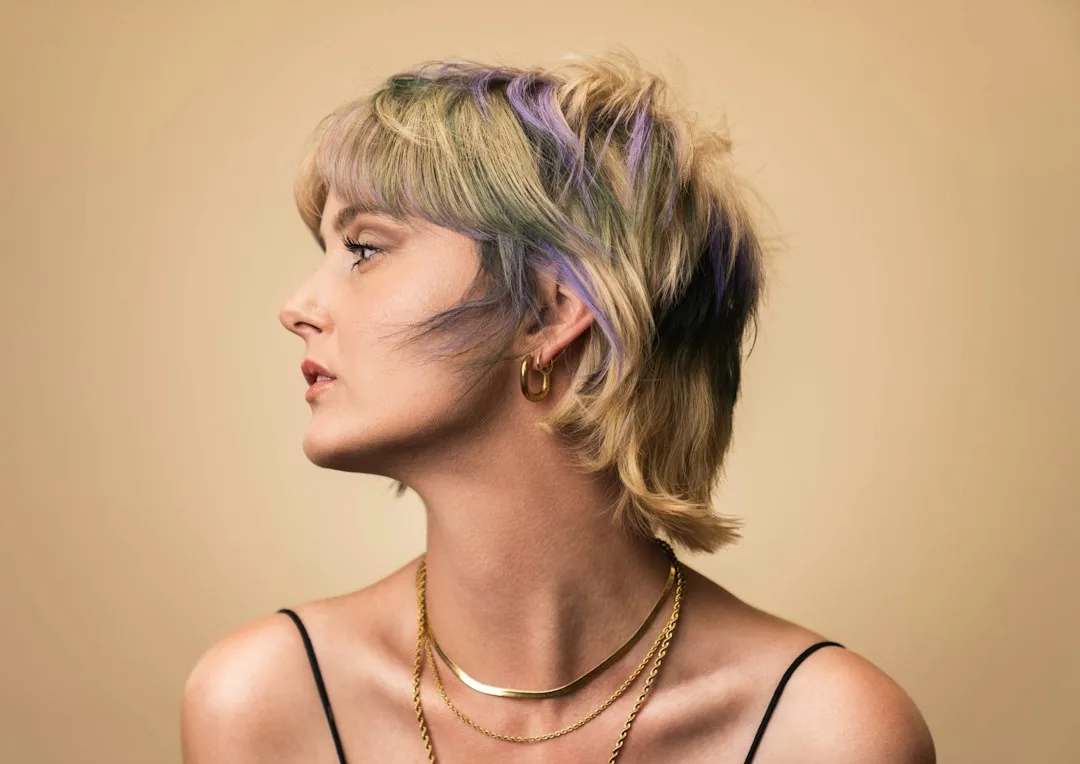
A side fringe does something almost no other hair detail can: it frames the face with precision while asking nothing of you in return. At the beach, where salt air and humidity can undo most styling decisions within an hour, that kind of low-maintenance payoff matters. Whether the hair underneath is a loose braid, a half-up twist, or completely free, a well-placed side fringe keeps the look intentional from the first photo to the last sunset.
What makes the side fringe particularly suited to coastal settings is its built-in adaptability. Worn smooth in the morning, tousled by afternoon breeze, or pinned back when the wind picks up — it transitions without effort. Shorter lengths pull attention to the eyes, while longer sweeps skim the cheekbone for a softer effect. Neither requires much more than a comb and a light hold spray to stay put.
The three looks below push the side fringe further by pairing it with bold, vivid color. Neon yellow, candy apple red, and vibrant magenta each bring a different energy to a seaside setting — and each works best with its own styling approach, product choice, and upkeep rhythm. Read through before packing your bag.
- Neon yellow side fringe: UV-reactive color, loose bun pairings, sun-protection products, $13.99 DIY option
- Candy apple red side fringe: half-up styling, humidity hold tips, natural light advantage
- Vibrant magenta side fringe: braid pairings, conditioning spray routine, $17.99 Amplified formula
- Comparison table: which color suits which situation
- FAQ on trimming schedules, humidity control, and at-home styling
Neon Yellow Locks Around a Side Fringe That Catches the Light
Neon yellow hair at the beach operates like a second light source — it reflects sun, draws every camera, and makes an ordinary shoreline walk look produced. Manic Panic Electric Banana Amplified ($13.99 for 4oz at manicpanic.com) delivers that UV-reactive intensity and holds the color for 4–6 weeks with proper care. The catch: it requires pre-lightened hair at level 10 blonde before application, or the yellow reads as muddy rather than electric. Skip that step and the color will disappoint regardless of product quality.


The side fringe works as a natural focal point within neon yellow hair, breaking up the expanse of color with a defined diagonal line across the forehead. Pin-straight fringe reads as fashion-forward; soft waves in the fringe section feel more relaxed and work better in windier conditions. What stylists recommend regardless of texture: keep the fringe length to just above the brow — longer than that and the color mass becomes too heavy at the front, visually weighing down the face.

For styling at the shore, a loose bun with a few strands left free is the pairing that works best. The fringe stays put while the rest of the hair moves naturally — and that contrast between controlled fringe and relaxed volume is exactly the dynamic that photographs well. Does UV exposure fade neon color faster? Yes, noticeably. A color-protecting UV spray applied before going out, rather than after, coats the strand cuticle before damage sets in rather than trying to compensate for it.

Neon yellow pairs naturally with the visual palette of a beach environment — colorful umbrellas, turquoise water, warm sand — in a way that more muted shades can’t. Oversized sunglasses or a bright headband worn behind the fringe (not over it) amplify the effect without competing with the color. Avoid patterned headwear directly against neon yellow; busy prints fight the hair rather than supporting it.
Candy Apple Red Finesse — Where a Side Fringe Earns Its Place
Candy apple red hair against a coastal background is one of those combinations that makes sense immediately — the warmth of the red reads differently under natural beachside light than under indoor fluorescents, and the result is almost always more vivid than expected. Manic Panic Pillarbox Red Classic ($13.99, manicpanic.com) is the reference standard for this shade: a true fire-engine red that shows brilliant warm tones even on virgin, unbleached hair. The color lasts 4–6 weeks with standard semi-permanent care, though weekly washing shortens that window considerably.


The side fringe in this color scheme provides balance. A half-up arrangement — top section gathered back, the rest loose — gives the fringe a clear visual lane: it sits at the front of the face, directing attention to the eyes without the rest of the hair competing for focus. This works particularly well when the fringe is set smooth with a light mist of flexible-hold spray before heading out. What the spray does mechanically: it reduces moisture absorption from humidity, which is the main enemy of a well-placed fringe in a beach environment. Apply before, not after, the ocean breeze hits.

Matching the makeup to candy apple red hair tends toward two camps: complementary (red lip, red cheek stain) or contrasting (berry, plum, or nude). The complementary route works at midday when the light is bright; the contrast approach reads better at a bonfire or evening gathering where light is warmer and the red hair shifts toward orange. Why does this matter? Because red hair changes dramatically under different light temperatures — what looks polished at noon can look washed out at 4 PM if the makeup hasn’t shifted to compensate. For side fringe updo styling at more formal events, the same color logic applies — the time of day dictates the makeup strategy, not just the venue.

Layered ends throughout the hair add dimension to candy apple red that flat, uniform length doesn’t. Think of each layer as a slightly different plane catching sunlight — the deeper the color and the more layers, the more the red shifts between ruby and copper as the hair moves. Flyaways around the fringe are the one area where lightweight clips earn their keep: a neutral-toned clip tucked near the hairline can control errant strands without flattening the fringe itself.
Braided Magenta with a Side Fringe That Survives Sunrise to Sunset
Vibrant magenta hair in a side-swept braid produces a silhouette that reads as intentional from any angle — the color saturates each strand of the braid in slightly different tones depending on how the light hits, and the side fringe anchors the whole look at the front. Manic Panic Hot Hot Pink Amplified ($17.99 for 4oz, manicpanic.com) delivers the cool-toned magenta-pink that works for this shade, with an Amplified formula that extends wear to 6–8 weeks with proper maintenance — longer than the Classic formula, which fades closer to 4–6 weeks. The cost difference of about $4 is recovered within the first week of not needing a touch-up.


Sunset lighting is where magenta hair truly justifies itself. The color’s undertones — warm pinks and cool roses — respond to orange and amber light in a way that deepens the overall effect rather than washing it out. The side fringe, draped just above the eyebrow, focuses the eye on the face rather than letting the braid’s visual mass dominate. A ribbon or hair tie in a contrasting color at the braid’s end creates a second accent point that draws the composition together. What doesn’t work: matching the ribbon exactly to the hair color — the repetition flattens what should be a layered effect.

Throughout the day, the fringe can shift from smooth and polished to gently tousled without any product — the natural movement of the ocean air does the work. When the wind becomes strong enough to push the fringe across the eyes, a discreet pin at the temple redirects it without disrupting the overall silhouette. Does pinning back a fringe ruin the look? Only if the pin is visible and mismatched. A small clip in a metallic tone that echoes any jewelry on the ear keeps it cohesive. If you’re considering cutting side swept bangs at home before your trip, trim to just above brow-length — that’s the range that stays manageable on a fringe through a full beach day.

Vivid colors like magenta fade fastest at the ends, where the hair is most porous, and slowest at the root, where the shaft is newest. A conditioning spray or lightweight oil applied mid-length to ends before sun exposure slows this uneven fading pattern. What accelerates it: chlorinated water or direct saltwater submersion, which strips the outermost pigment layer faster than daily shampooing alone. A quick freshwater rinse after ocean exposure — not a full shampoo — removes salt without triggering a full color wash cycle.
| Color | Works Best For | Fringe Style | Key Risk |
|---|---|---|---|
| Neon Yellow | Full-sun daytime beach, action photos | Pin-straight, brow-length | Fades fast without UV protection |
| Candy Apple Red | Afternoon and bonfire settings, group photos | Smooth, flexible-hold spray set | Shifts color tone under warm light |
| Vibrant Magenta | Sunset, layered lighting, formal beach occasions | Soft tousle, just above brow | Uneven fading without post-ocean rinse |
Stylists at Jean Louis David note that a side fringe is one of the most reliable options for a beach setting precisely because it can be pre-set and then largely left alone — unlike a blunt fringe, which requires active maintenance to stay flat in humidity. For a deeper look at the mechanics of fringe care at the shore, their fringe at the beach guide covers the pull-back, sweep, and maintenance options in practical terms.
The Bottom Line
Bold Color Needs a Grounded Detail — and a Side Fringe Is That Detail
Neon yellow, candy apple red, and vibrant magenta each demand a styling anchor at the front of the face. A side fringe provides that structure without adding weight or complexity — it’s a diagonal line that directs the eye and keeps the look from reading as all-color and no shape.
Pre-setting the fringe with a light hold spray before heading out beats correcting it mid-beach. Color care starts before sun exposure, not after — UV protection spray on neon shades, freshwater rinse for magenta after ocean exposure.
Save this post before your next trip — these details are easier to check at home than to figure out on the sand.