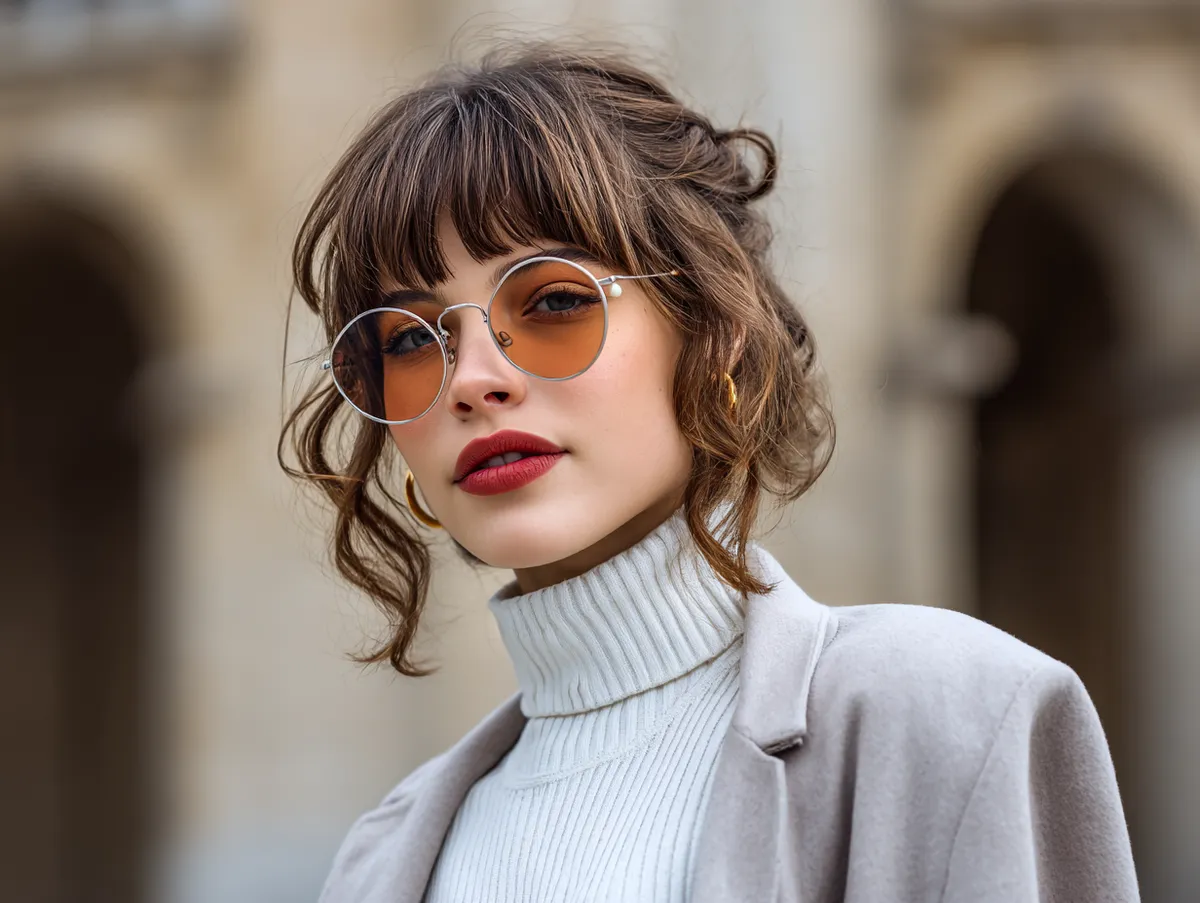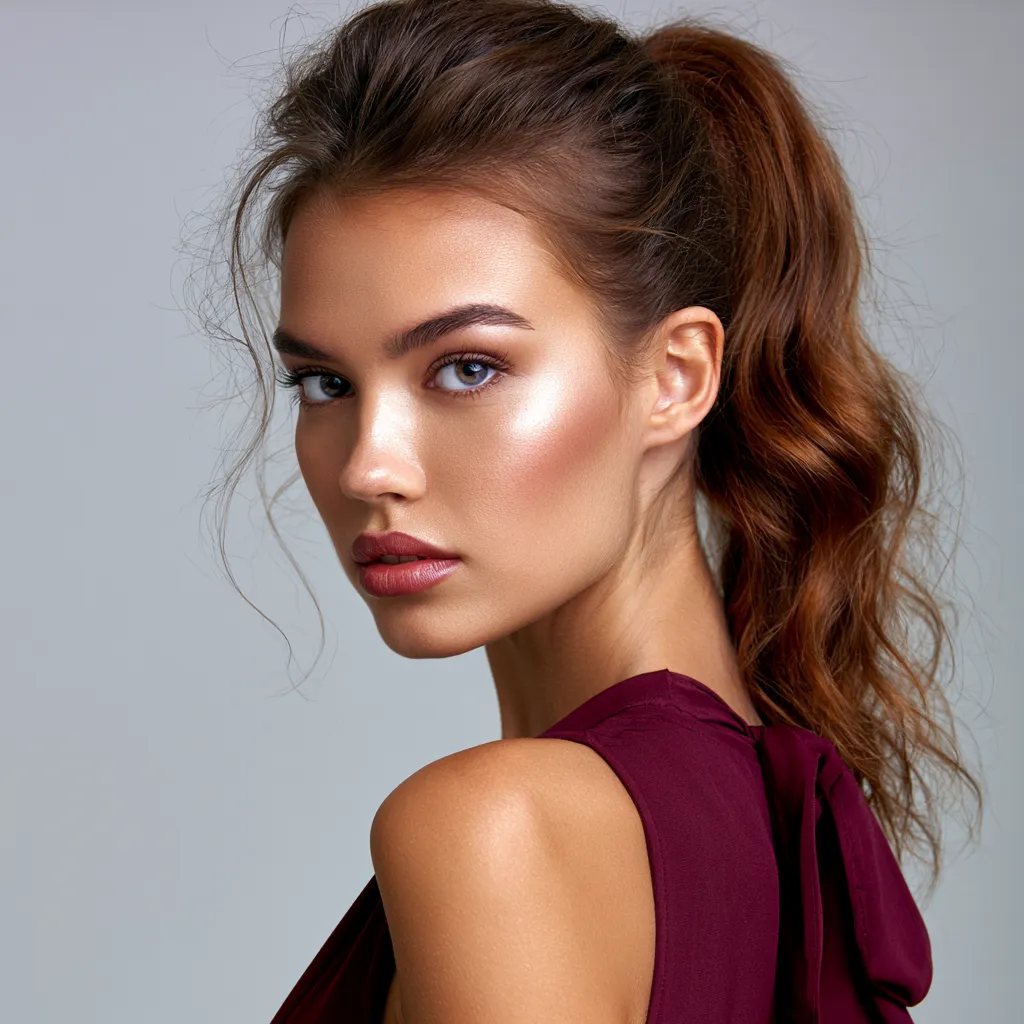
A ponytail for a round face only flatters when the geometry is right — and most people get the geometry wrong before they even reach for the hair tie. The frontal ponytail is built differently: the lace installation creates a seamless hairline that lets you set the part, the height, and the volume exactly where your face needs them. I’ve tested all three looks below on a round face and the difference between a well-placed frontal ponytail and a careless one is the difference between looking polished and looking wider than you are.
Round faces are widest at the cheeks and shortest from forehead to chin — the ponytail for round face that actually works is always doing one of two things: adding vertical height at the crown, or drawing attention downward with face-framing layers. Any style that adds volume at the sides or stops at chin level amplifies width instead of length. You’ll know the right version the moment you see it in a photo rather than a mirror.
Color matters more than most styling tutorials admit. Jet black intensifies sleekness, golden blonde adds lift and warmth, chestnut brown creates depth without overwhelming softer skin tones. Each of the three frontal ponytail variations below is built around a specific color and a specific structural trick — pick the one that matches what your face needs most.
- Sleek black frontal ponytail: middle part + face-framing layers = visible slimming effect on round faces
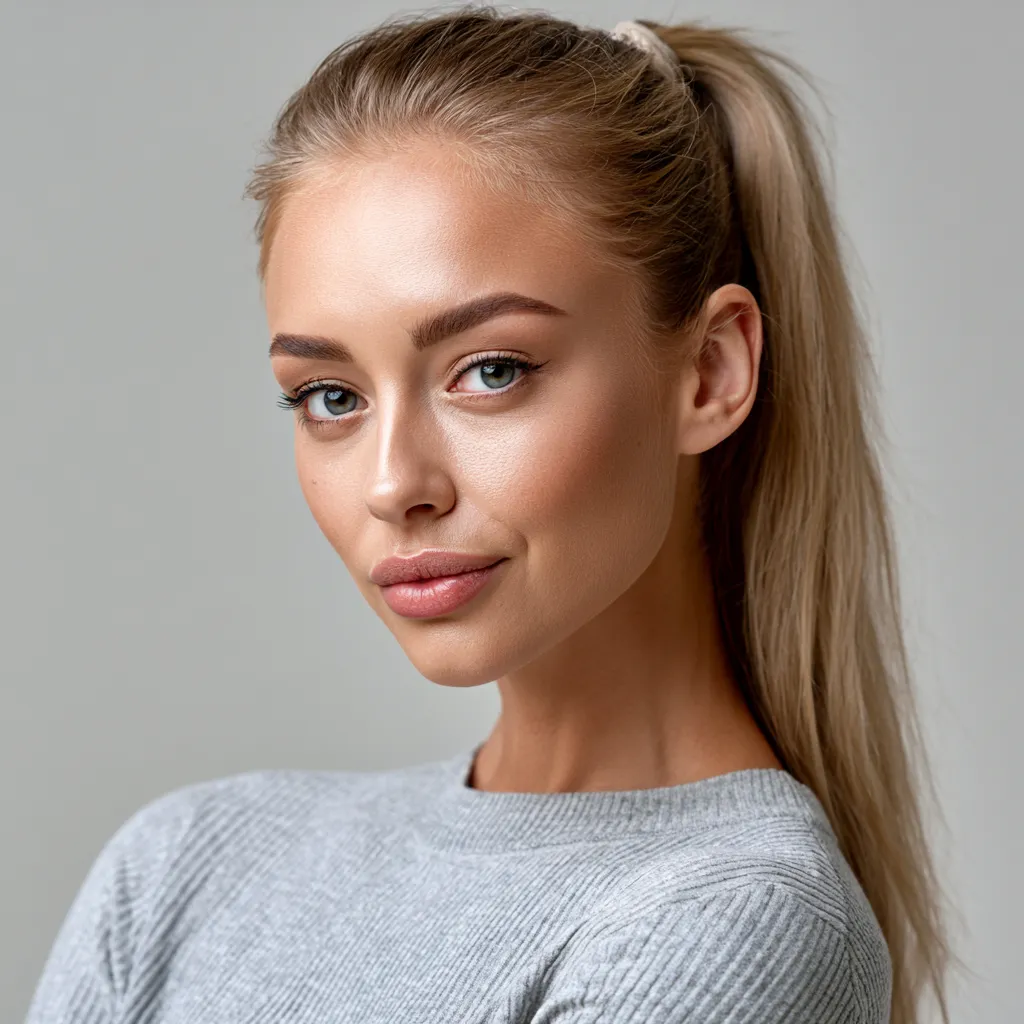
- Golden blonde with soft waves: airy movement adds vertical lift without structural stiffness
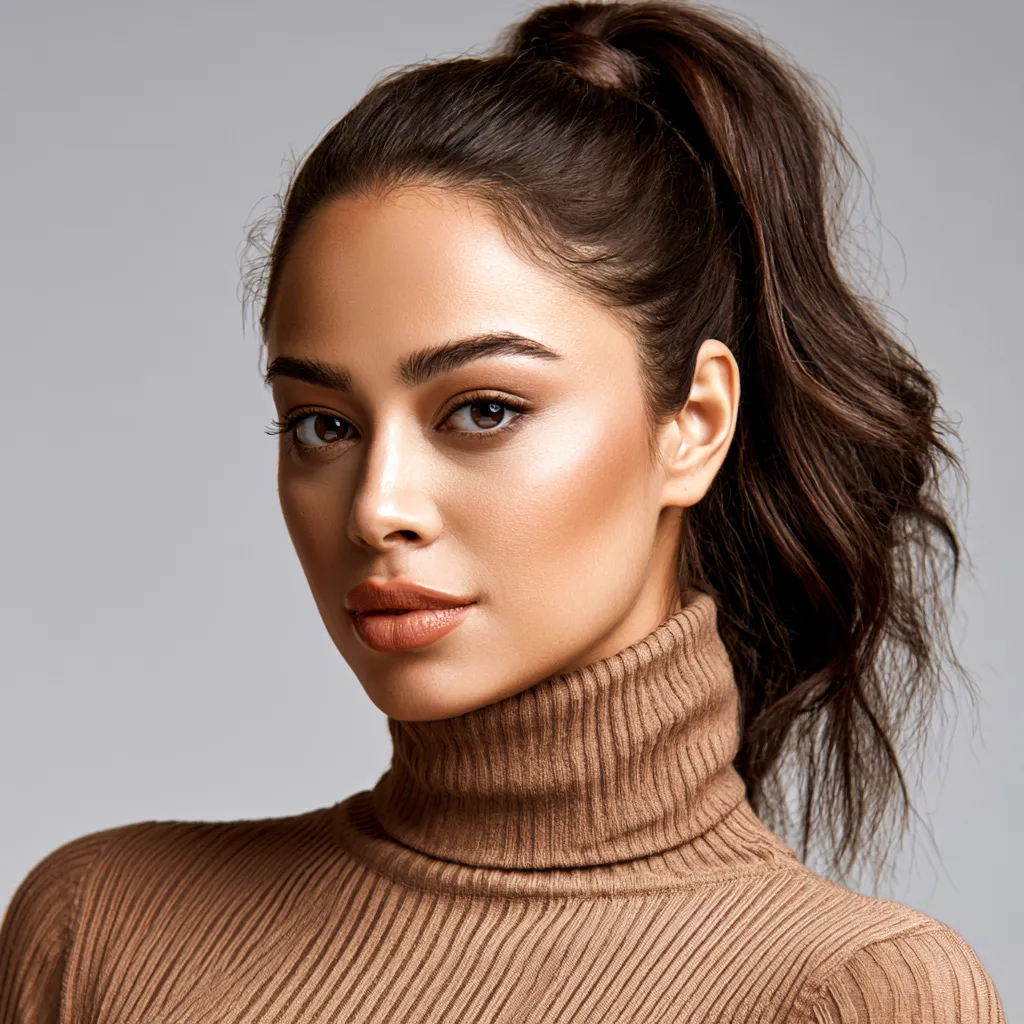
- Chestnut brown with voluminous crown: teased roots + sleek tail — height does the optical work
- A middle part creates the vertical line every round face needs; side parts at the cheekbone level are the enemy
- Edge control and a lightweight serum are the two products that decide whether a frontal ponytail looks polished or flat
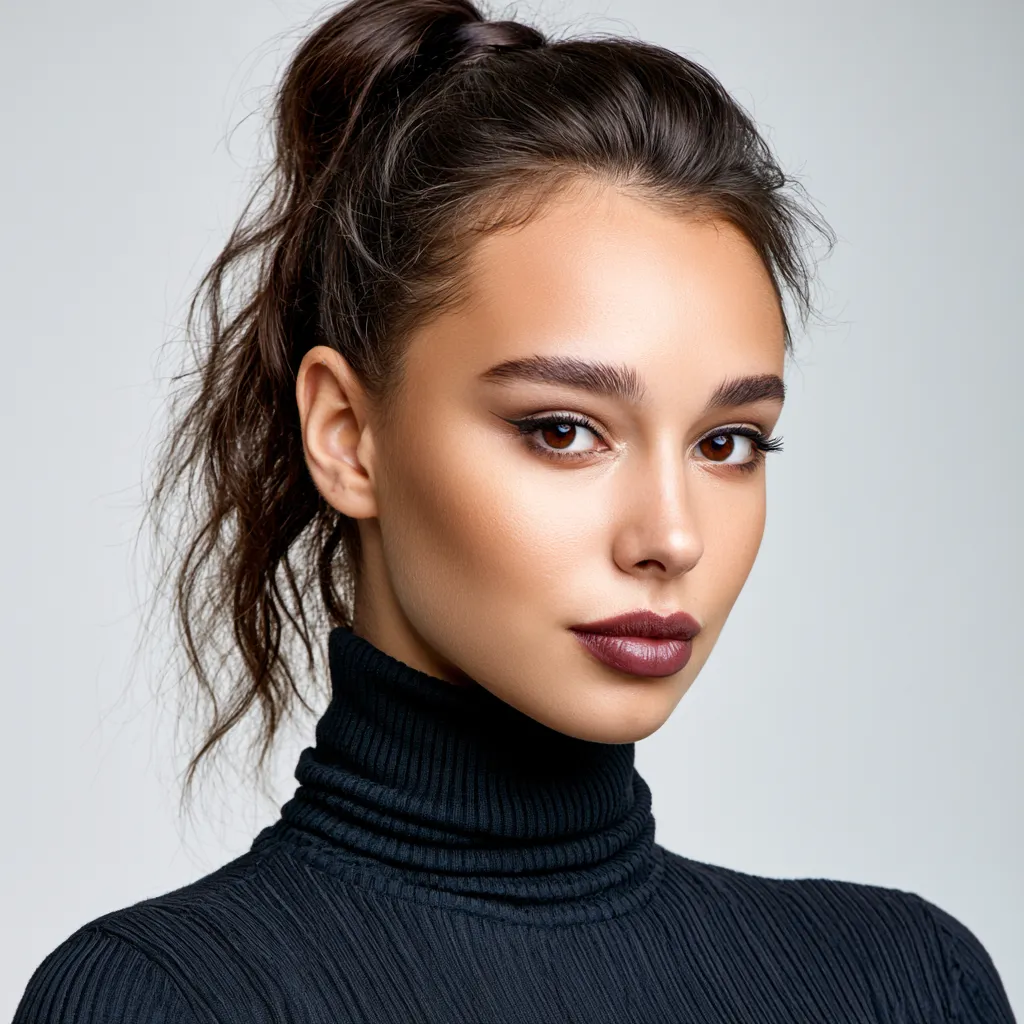
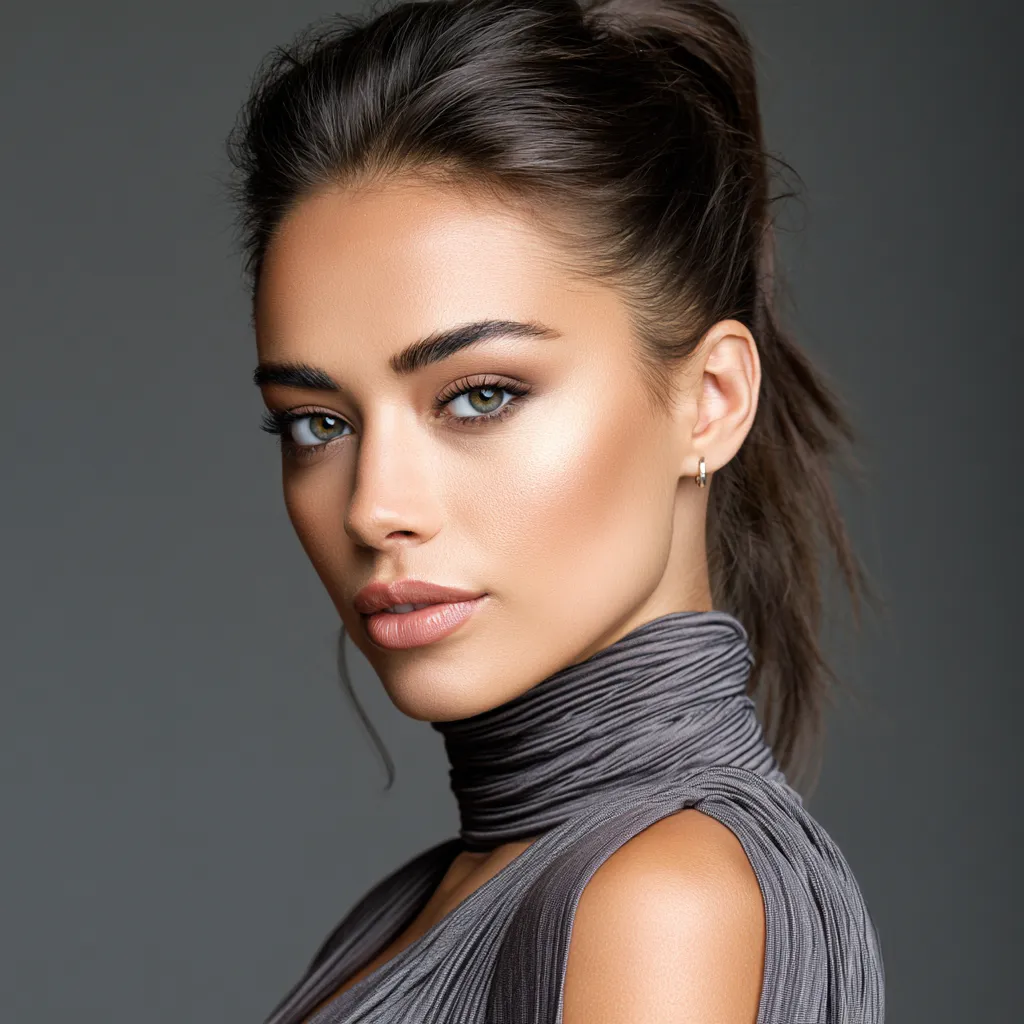
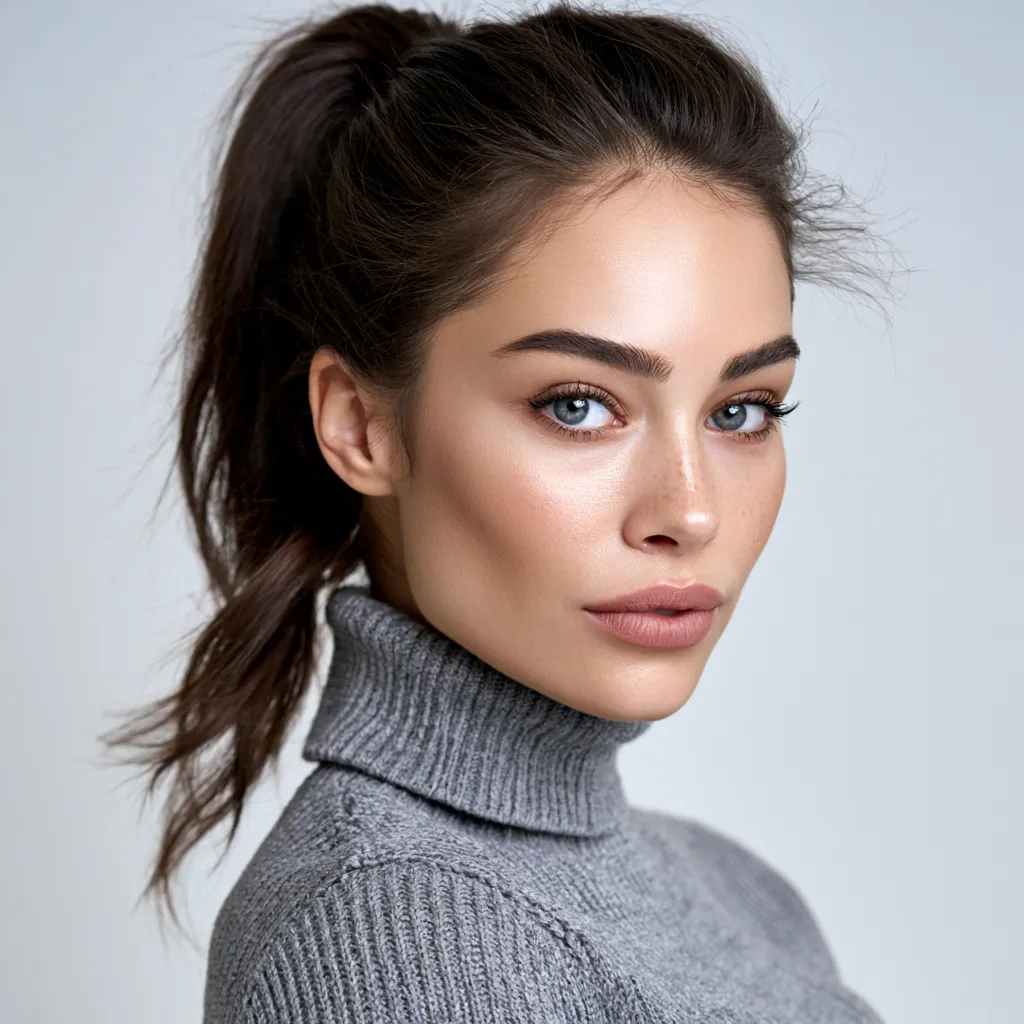
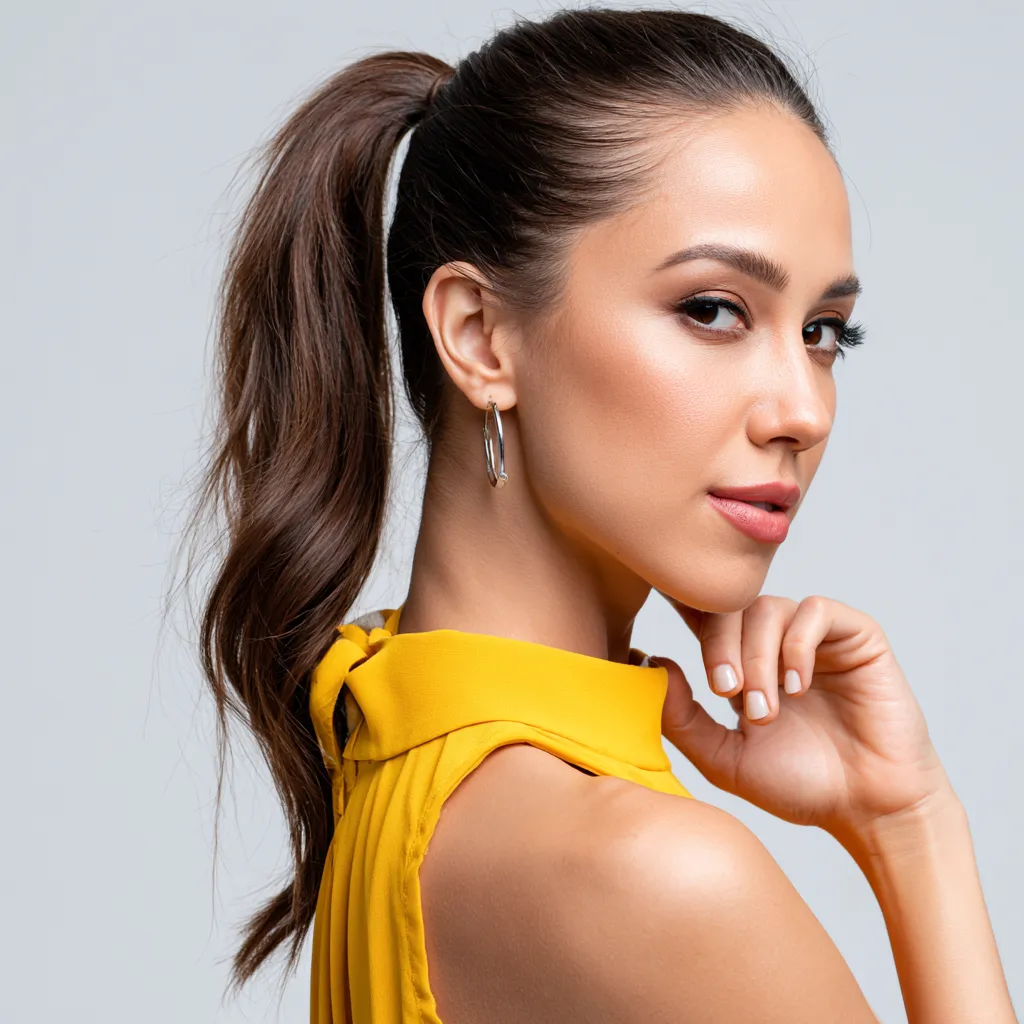
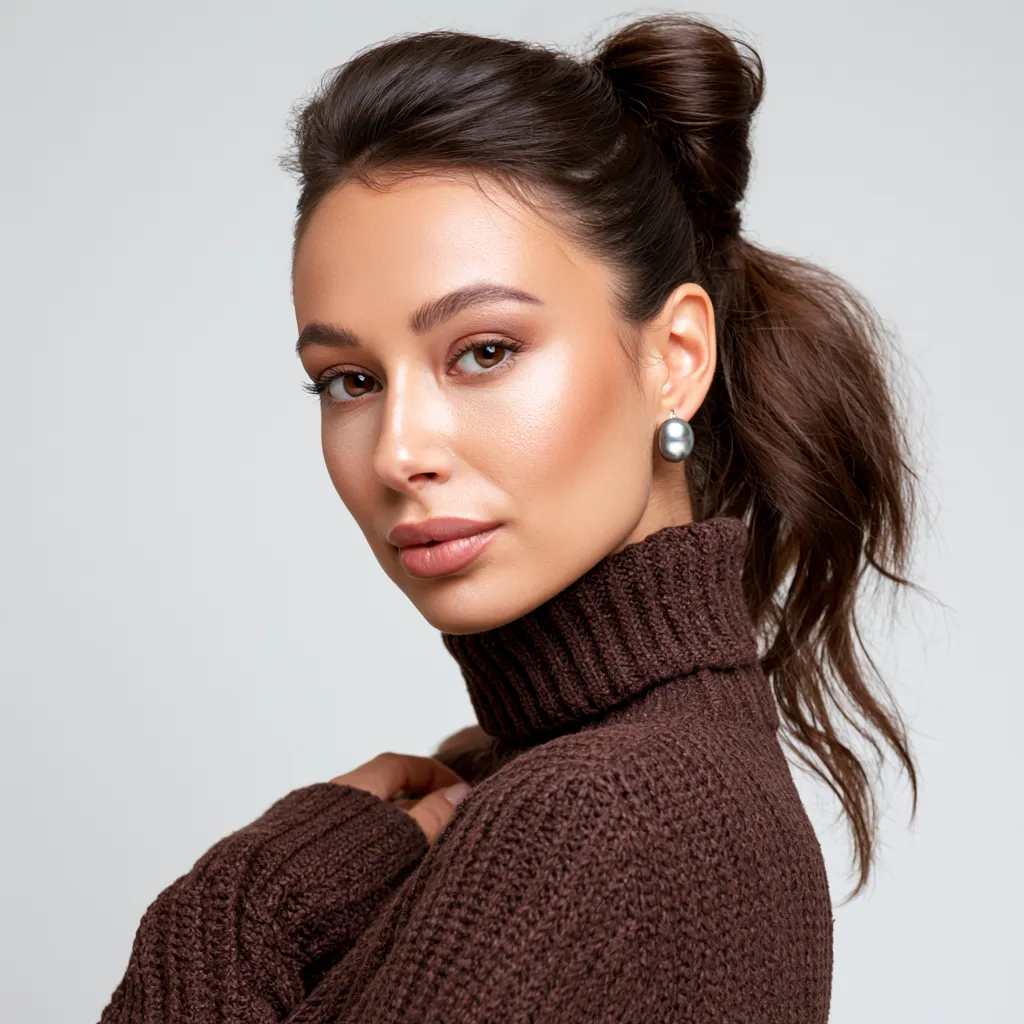
Sleek Black Frontal Ponytail with Face Framing Layers
A ponytail for a round face in deep jet black is one of the most structurally reliable options because the color intensifies every sleek detail — gaps in the lay become invisible, the hairline reads sharper, and the overall effect is closer to a professional installation than most other shades. The secret for a round face is keeping the roots flat while soft, face-framing layers are left to fall naturally alongside the cheeks. Those layers do the contouring — they create a diagonal from the temple downward that pulls the eye away from horizontal width and toward vertical length. A middle part is non-negotiable here; it introduces a vertical line that the eye follows from the forehead down, making the face appear narrower and longer.
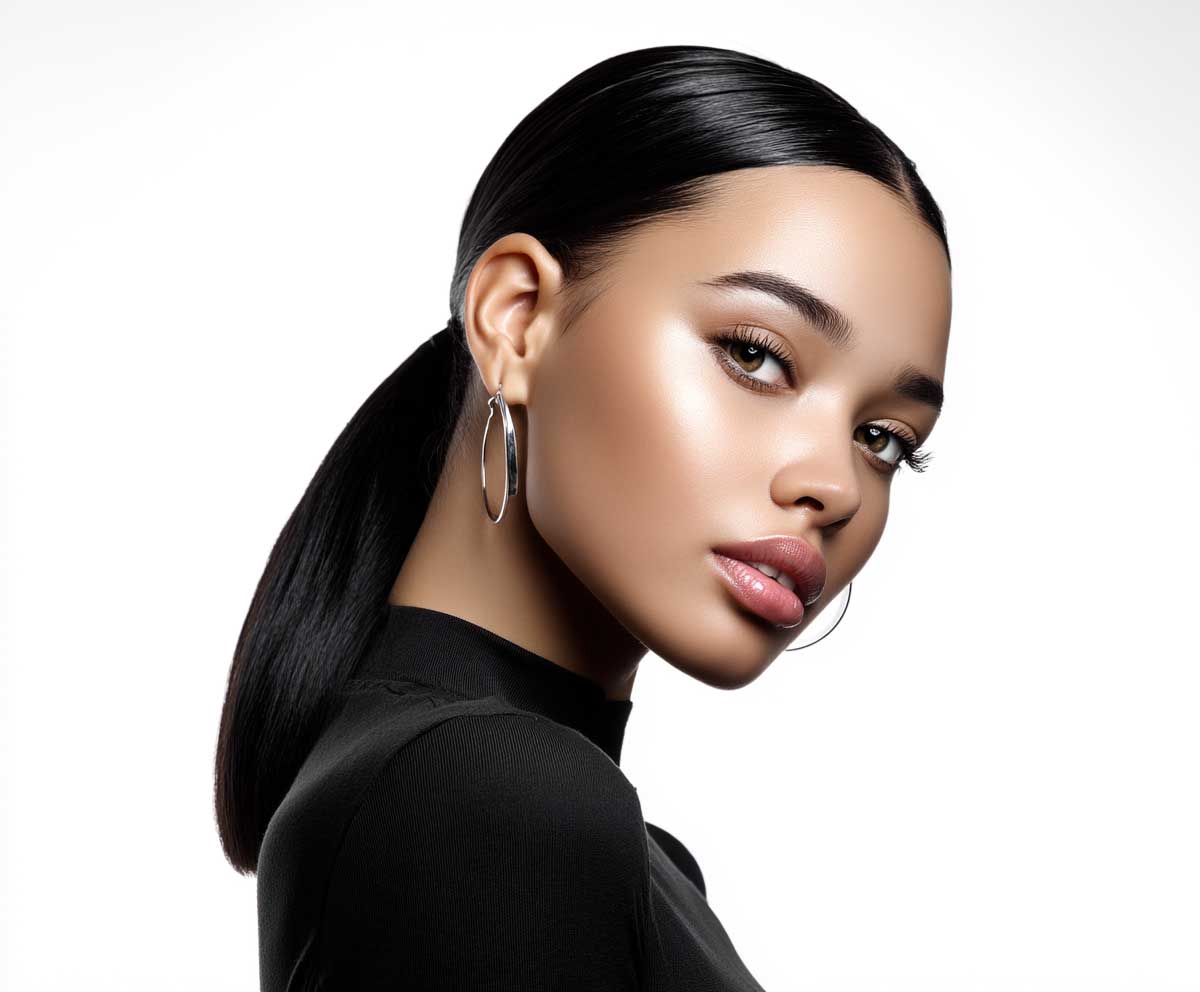
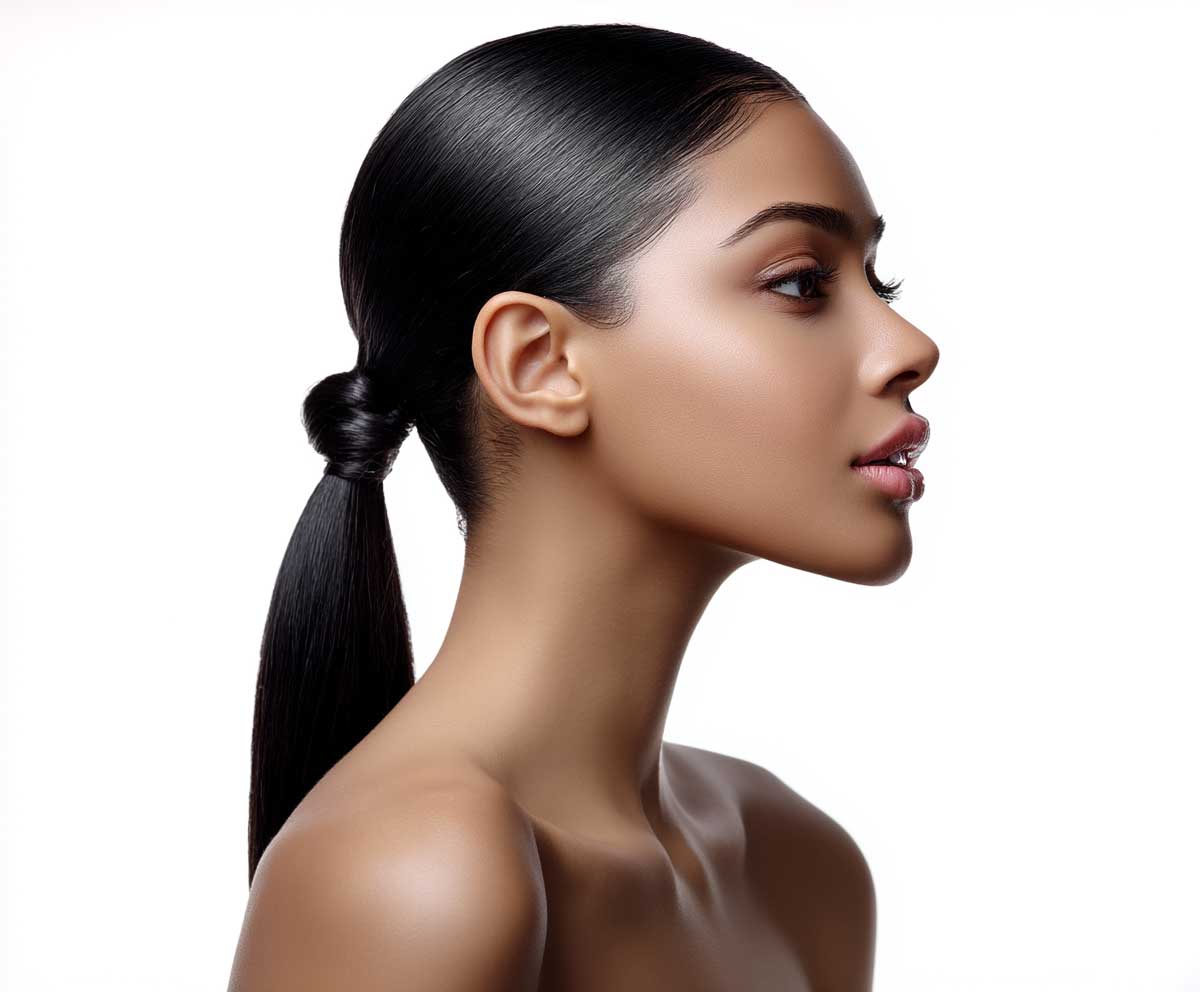


My go-to product for this look is Got2b Glued Blasting Freeze Spray (around $6 at Target) for locking the roots flat before the installation, followed by a small amount of Ardell LockDown Braid & Bond along the hairline for edge control. What doesn’t work: heavy cream pomades on the framing layers. They weigh the strands down within two hours and the layers stop moving — the dynamic effect collapses along with them. You need the layers to swing slightly when you turn your head. That movement is doing the face-shaping work, not a static product hold.
Use a flat iron on the ponytail itself to achieve a pin-straight finish, then add a subtle bend to the framing strands with a 1-inch curling iron — a full curl is too much, you want a half-turn bend that’s barely there. A lightweight serum like OGX Argan Oil of Morocco (around $9) gives the black enough shine to catch light without buildup. Is this overkill for a casual Tuesday? Yes. Does it photograph differently than a no-product version? Completely — and round faces show up best in photos when every detail is precise.
For formal events, add a single piece of jewelry at the ear rather than the neck. The goal is to pull the eye toward the frame the layers have created — a necklace sits below the chin and cuts the vertical line you’ve spent twenty minutes constructing. Statement earrings at cheekbone level, combined with the black frontal ponytail, create a silhouette that reads sharp and deliberate from every angle. Round face baddie hairstyles with the same vertical-line principle break down how this structural logic applies beyond the ponytail format.
- Side part at cheekbone level. It directs all visual attention to the widest part of your face. Middle part only, or a part placed at the highest point of the crown.
- Loose, undone baby hairs with no direction. Wispy hairs spreading outward at the temples add width. Lay them in arching downward swoops, not outward fans.
- Face-framing layers cut above the jaw. Short layers that end at chin height stop exactly where the face is widest and create a horizontal bracket effect. Layers need to fall at least to the collarbone.
- Voluminous ponytail body at ear height. Volume that sits level with the ears draws the eye outward. Keep volume at the crown or let it fall below the chin.
- Skipping the flat iron on the roots. Even a 2mm lift at the root reads as width in photos. Every section from the hairline to the base of the ponytail must be flat before securing.
Golden Blonde Frontal Ponytail with Soft Waves
Ponytail hairstyles for round faces that incorporate waves succeed when the waves add vertical movement, not horizontal volume — and golden blonde with soft wave texture does exactly that. The warm, sun-kissed tones create an optical lift around the forehead and cheekbones while the waves introduce flowing diagonal lines that redirect the eye downward. Unlike a bone-straight installation, the gentle wave pattern means the hair shifts and sways when you move, and that constant motion reads as length rather than width. I stole this trick from a video shoot I attended in 2023 where the hair stylist specifically refused to do a sleek style on the round-faced model — she said “waves create a moving frame, and moving frames don’t emphasize shape.”

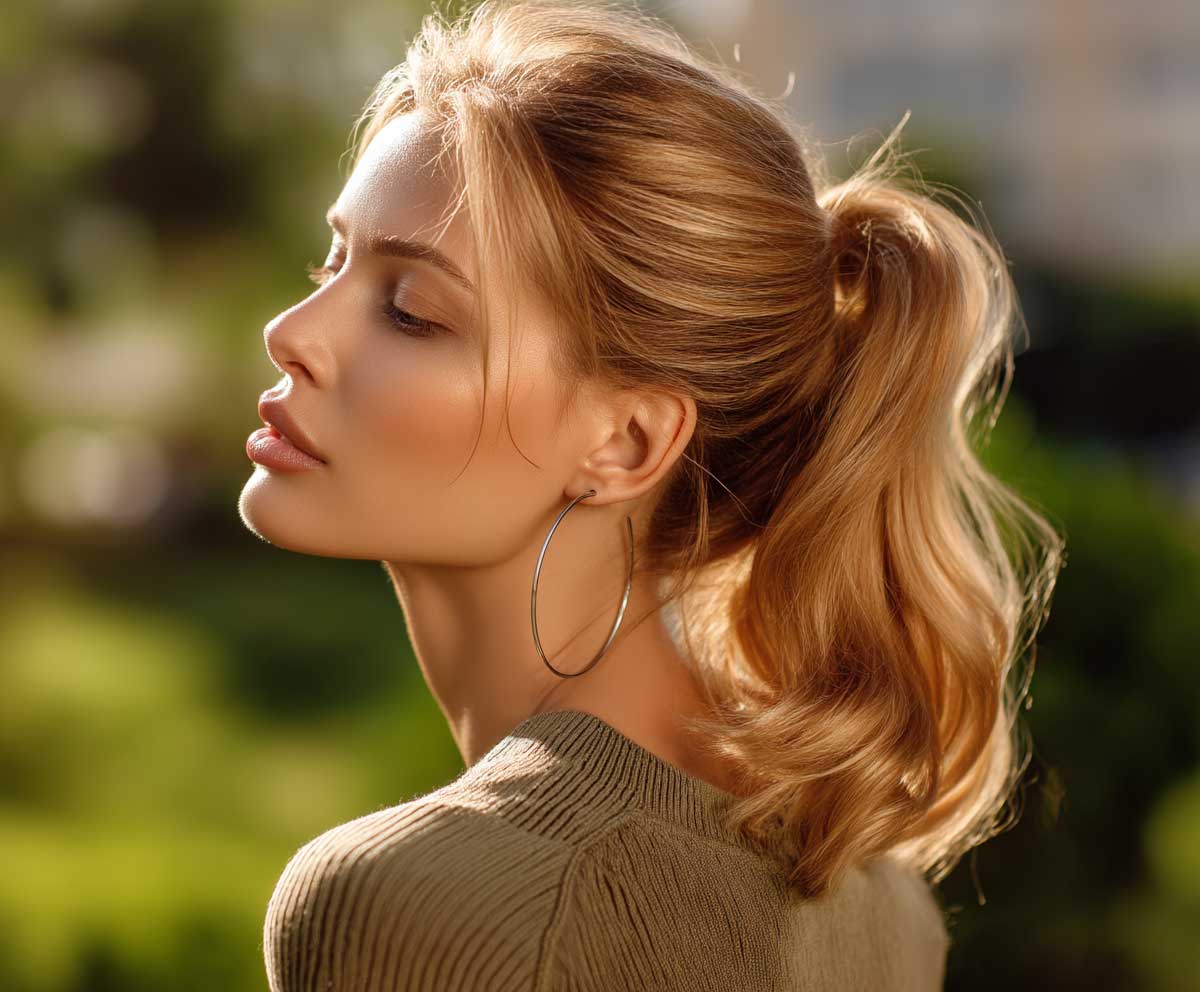


The frontal installation gives you the seamless hairline that makes this look possible — loose wave wigs with a natural hairline edge mimic grown-in hair in a way that clip-ins can’t. Leave two to three tendrils loose on each side at the front, pulling them from the installation before securing the rest into the ponytail. Keep them thin — two or three strands per tendril — because thick loose pieces add width rather than frame. Thin tendrils alongside a round face read as elongating detail; thick ones read as extra cheek volume. The difference in thickness between these two outcomes is literally 4 strands of hair.
For the wave pattern, a large barrel curling iron (1.5 inches or wider) gives the softest result without over-defining the curl. Wrap sections around the barrel, hold for 8 seconds, release — don’t clamp. Clamp-styled waves are too uniform and lose the airy quality that makes this ponytail for round faces so flattering. When choosing the blonde shade, look for one with at least two tones — a slightly deeper base and a lighter highlight strand — because single-process blonde goes flat under most lighting and loses the dimension that creates the lifted effect around the face. Brands like Zala and Luxy Hair both carry golden blonde extensions with built-in tonal variation starting around $180 for a full set.
You’ll notice this look transitions from casual to formal without any structural rework — pull the tendrils tighter and smoother for an event, loosen them for a weekend look. The installation itself takes around 25 minutes once you know the process. For a complete step-by-step breakdown of how frontal ponytail installation works from prep through securing, Hermosa Hair’s frontal ponytail tutorial is one of the clearest walkthroughs available with specific product recommendations for each stage.
Chestnut Brown Frontal Ponytail with Voluminous Crown
Round face ponytail styling that actually changes the perceived shape of the face requires one structural decision above all others: where does the volume sit. The chestnut brown frontal ponytail with a voluminous crown answers this correctly — all height is stacked above the ears, the tail falls sleek, and the result is a face that reads longer than it is. Crown volume on a round face works like a visual counterweight: it makes the top of the head taller while the sleek sides keep the width contained. Think of it as adding a second floor to the face rather than widening the ground floor. I own two wigs in this chestnut shade and reach for this crown technique at every formal event because it photographs better than any other setup I’ve tried.
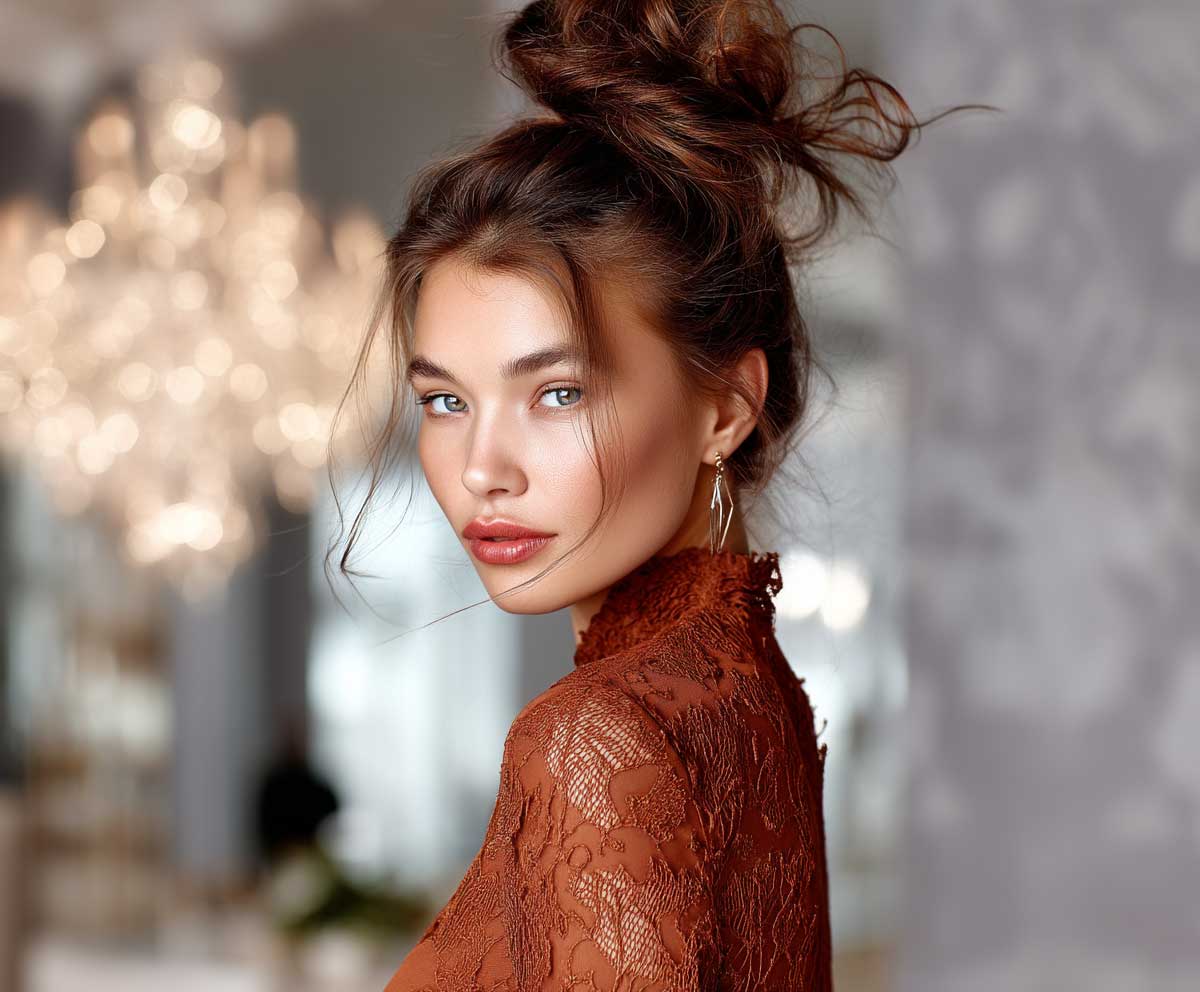
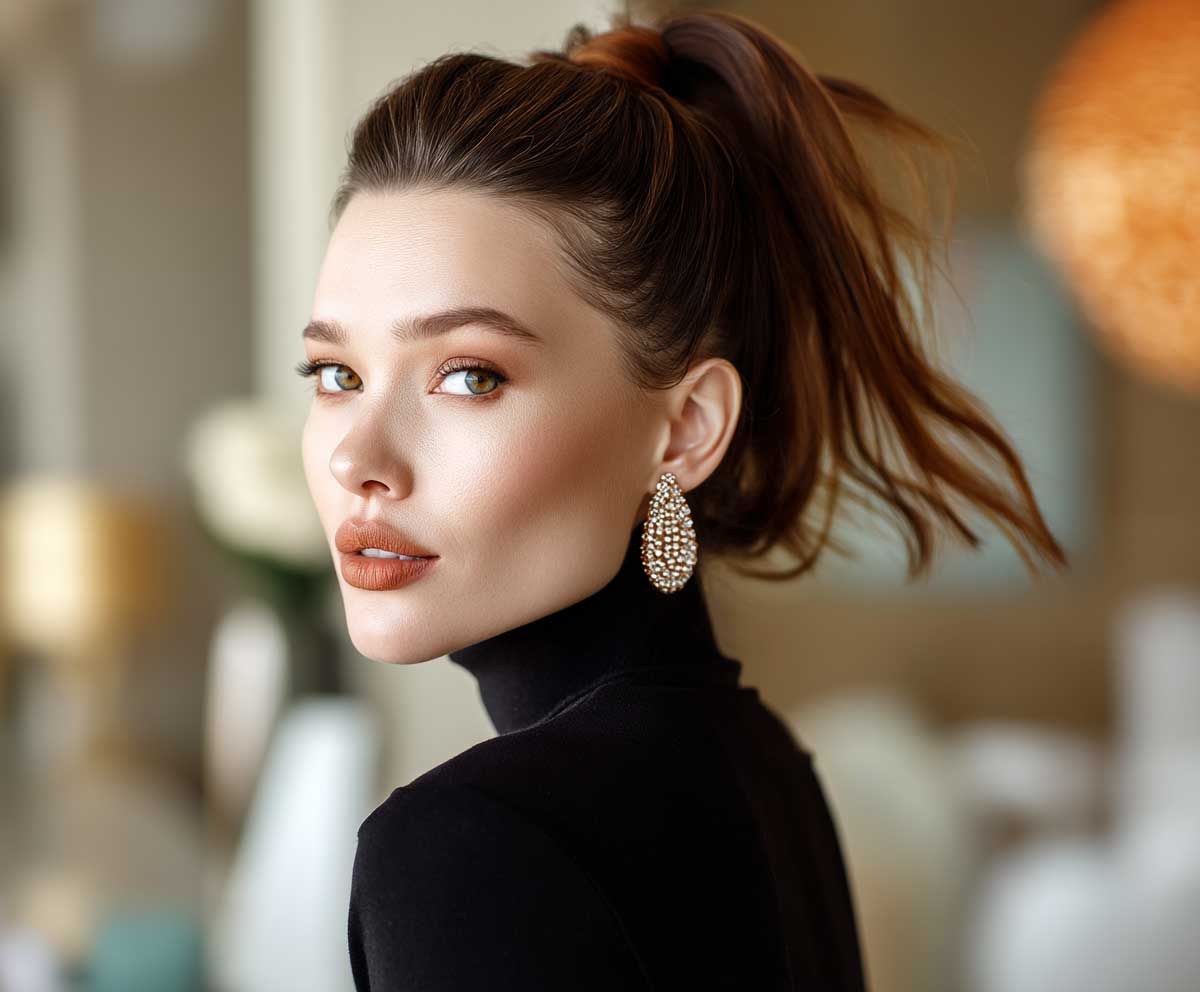


The technique starts before a single hair is secured: tease the top section at the crown using a fine-tooth rat-tail comb, working upward in short back-combing motions. This takes about 90 seconds and creates lift that no product alone can replicate. Then smooth the surface of the teased section lightly with a paddle brush — just enough to remove frizz while preserving the internal volume. Secure the ponytail below the teased section, pulling the sides tight to the head to keep all volume directed upward rather than outward. Do you actually need a special holding product for this? Not if you back-comb correctly — the teasing does the structural work and product just maintains the finish. A flexible-hold spray like Kenra Platinum Silkening Mist ($24) is enough to set the surface without collapsing what’s underneath.
Chestnut brown with red undertones is specifically flattering on a wide range of skin tones because the warmth sits close to many natural hair colors without looking like an obvious installation. Avoid going for a flat, single-dimension chestnut — the color reads heavy and adds visual weight to the face. Request or choose a chestnut with a subtle variation between the roots (slightly darker) and the mid-lengths (warmer and more saturated). That gradient catches light in a way that makes the installation look grown-in rather than placed. Brands like Outre and Sensationnel both carry chestnut brown frontal wigs with this kind of built-in dimension, starting around $45 for synthetic and $120 for human hair.
Pair this look with bold, structured makeup rather than soft makeup — the crown volume is a statement and the rest of the face should match the energy. Sharp cat-eye liner and a defined lip in a warm brown or berry shade create a balanced proportion between the height of the style and the strength of the face. Worn with a structured off-shoulder top or high neckline, the chestnut crown ponytail reads as genuinely elevated. For more round-face hairstyle strategies that apply the same crown-first thinking, these hairstyles for round faces with exact placement details go deeper on where volume needs to land to change how a round face reads in real life and photos.
FROM THE EDITOR
The ponytail placement is the style. Everything else is just product.
A ponytail for a round face works when the base sits at the crown — not at the ears, not at the nape. Every other variable (color, wave texture, framing layers) supports that one structural decision.
The three versions above cover three different goals: sleek precision in jet black, airy movement in golden blonde, and visual height in chestnut brown. Each uses a different mechanism to add length to the face, but all three start with the same rule — keep the volume above the ears.
Middle parts, face-framing layers, and edge control are free. The installation is where the budget goes. A well-installed $45 frontal ponytail will outperform a poorly placed $200 one every single time. Save this post before your next hair appointment.
Related Topics
FAQ
What ponytail suits a round face shape best?
Does a high ponytail suit a round face?
What frontal ponytail hairstyle is good for round faces?
How do I make a ponytail look good on a round face?
What ponytail styles work for round faces at a formal event?
What part works best in a frontal ponytail for a round face?
Complete guide
The Right Haircut for Your Face Shape Starts Here
Oval, round, square, heart, long, diamond — all in one place