The best haircut for men with square faces isn’t the one that softens your jaw — it’s the one that works with it. I’ve watched guys with genuinely great bone structure walk out of barbershops looking flat because their barber defaulted to a generic fade with no textural thought. Square faces need specific decisions: how the top volume sits, where the fade line lands, whether the side part creates useful asymmetry. Get those three things right and the jaw stops being a problem to solve and starts being the whole point.
The cuts below work across dark brown, blonde, and black hair — because hair color changes how a silhouette reads. A mid fade on dark brown hair hits differently than the same cut on platinum. Worth understanding before you sit in the chair.
Quick Scan
- Dark Brown Hair — Mid fade with textured top. American Crew Fiber for hold. Trim every 2–3 weeks.
- Blonde Hair — Voluminous quiff with low fade. Slick Gorilla Styling Powder for lift without weight.
- Black Hair — Modern tapered side part. Suavecito Original Hold pomade for polish.
- Buzz Cut Option — Works on square faces because it highlights the jaw geometry, not fights it.
- What to skip — Blunt bowl cuts and boxy mid-lengths. They square off the silhouette completely.
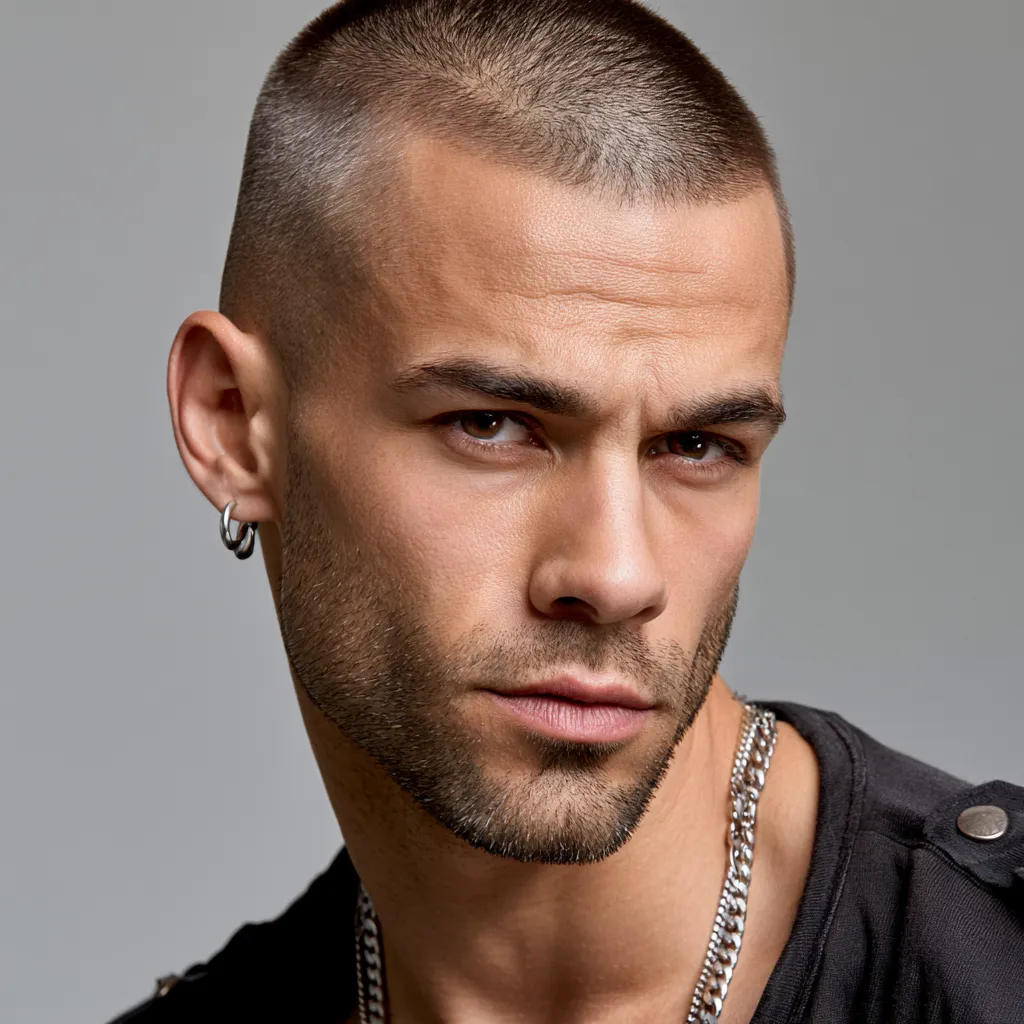
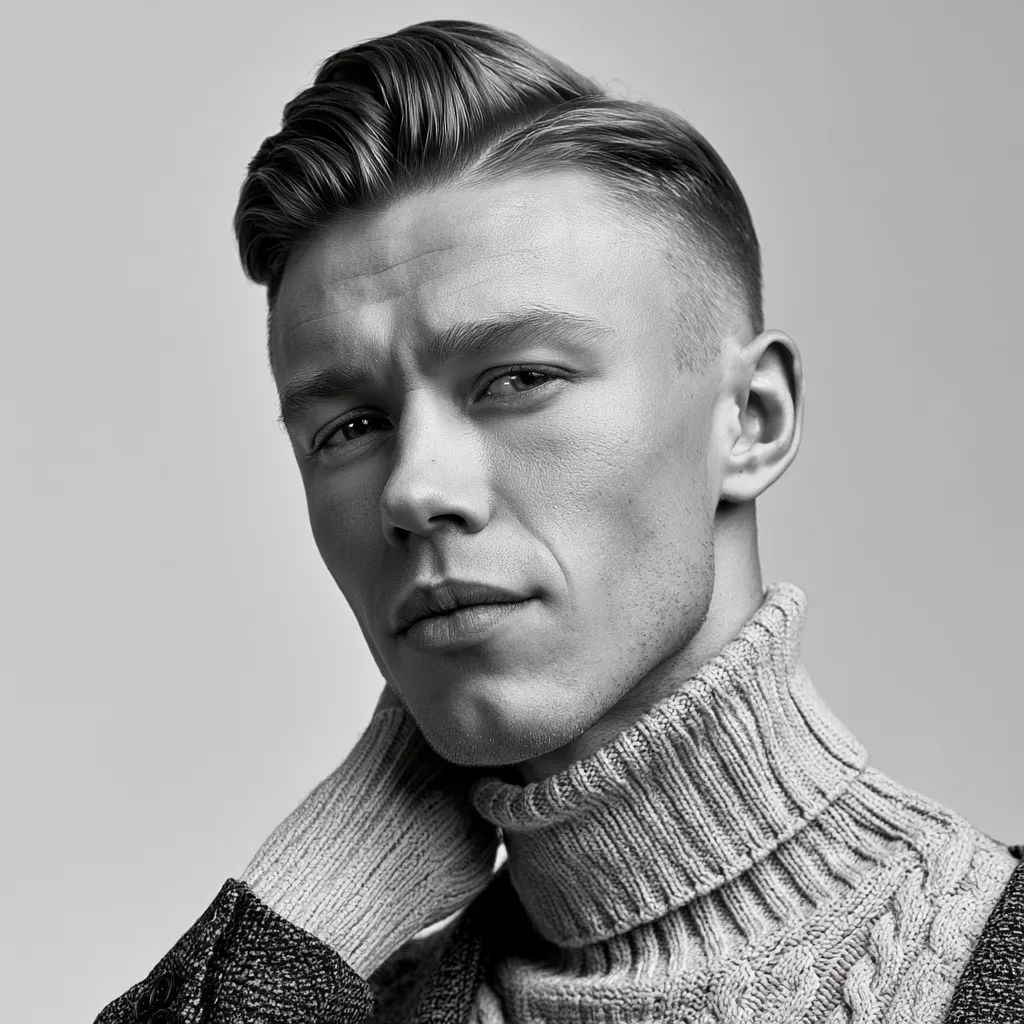
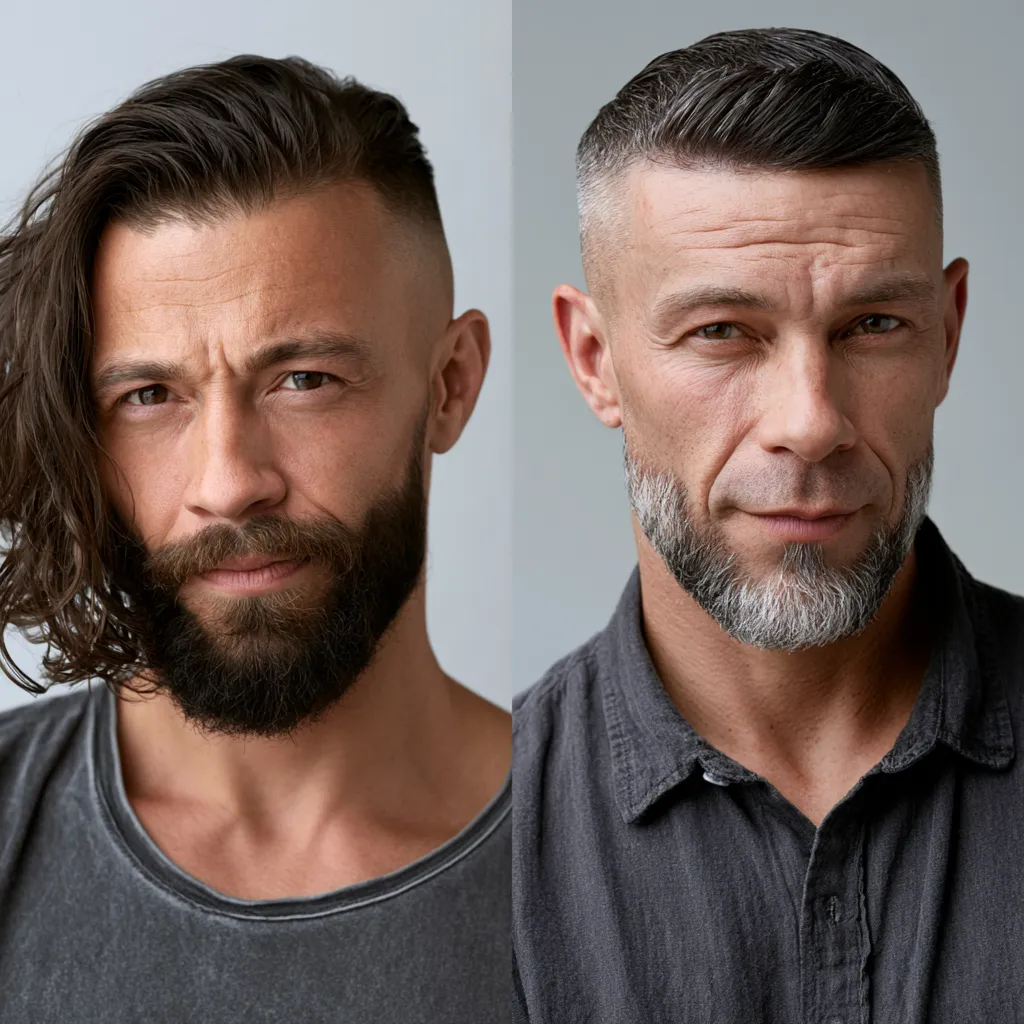
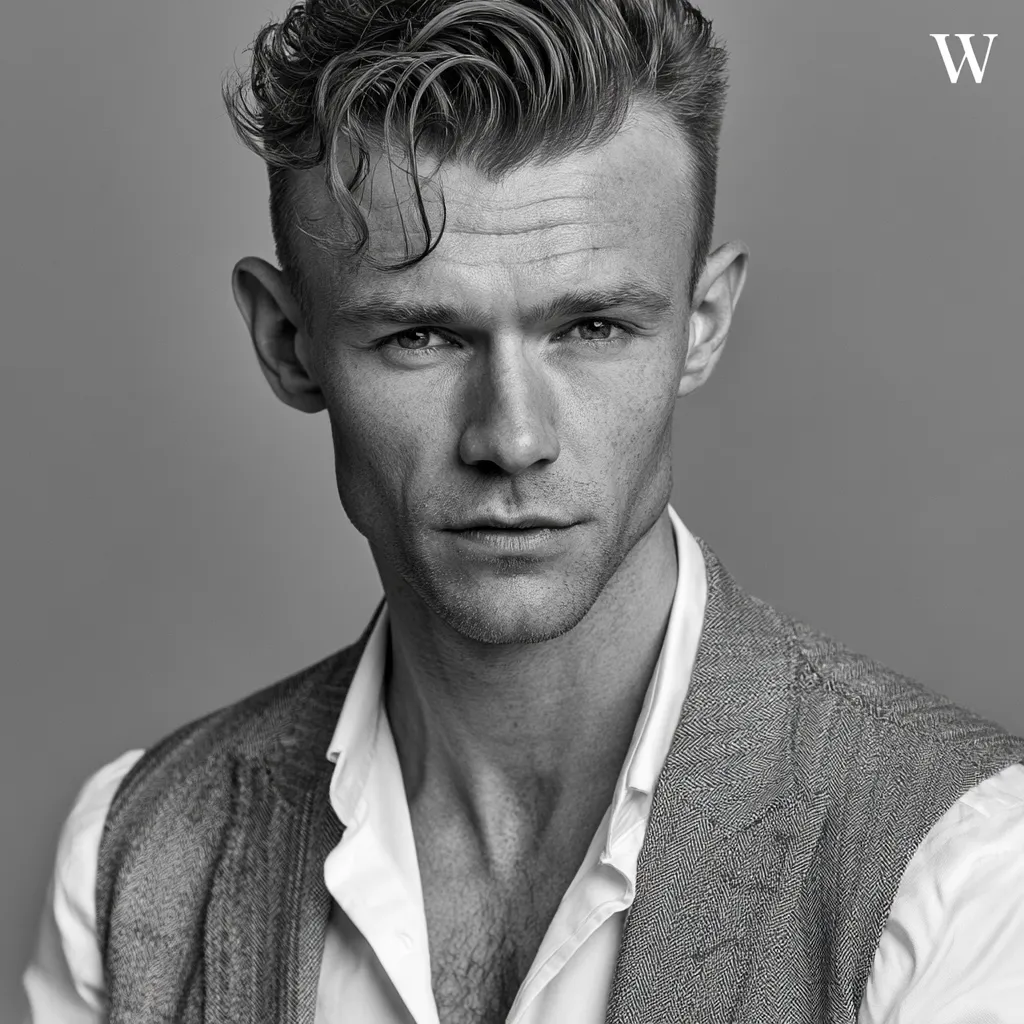
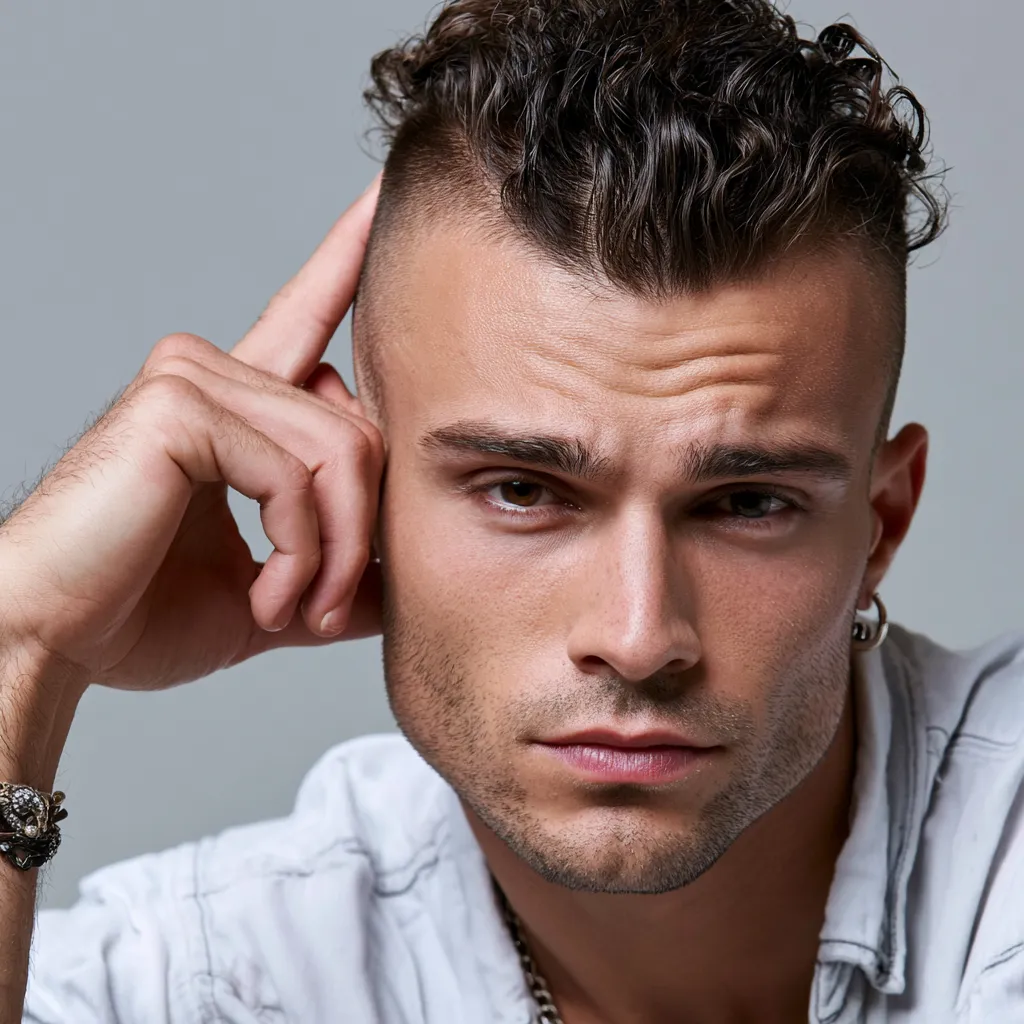

Dark Brown Hair and a Mid Fade That Actually Uses the Jawline
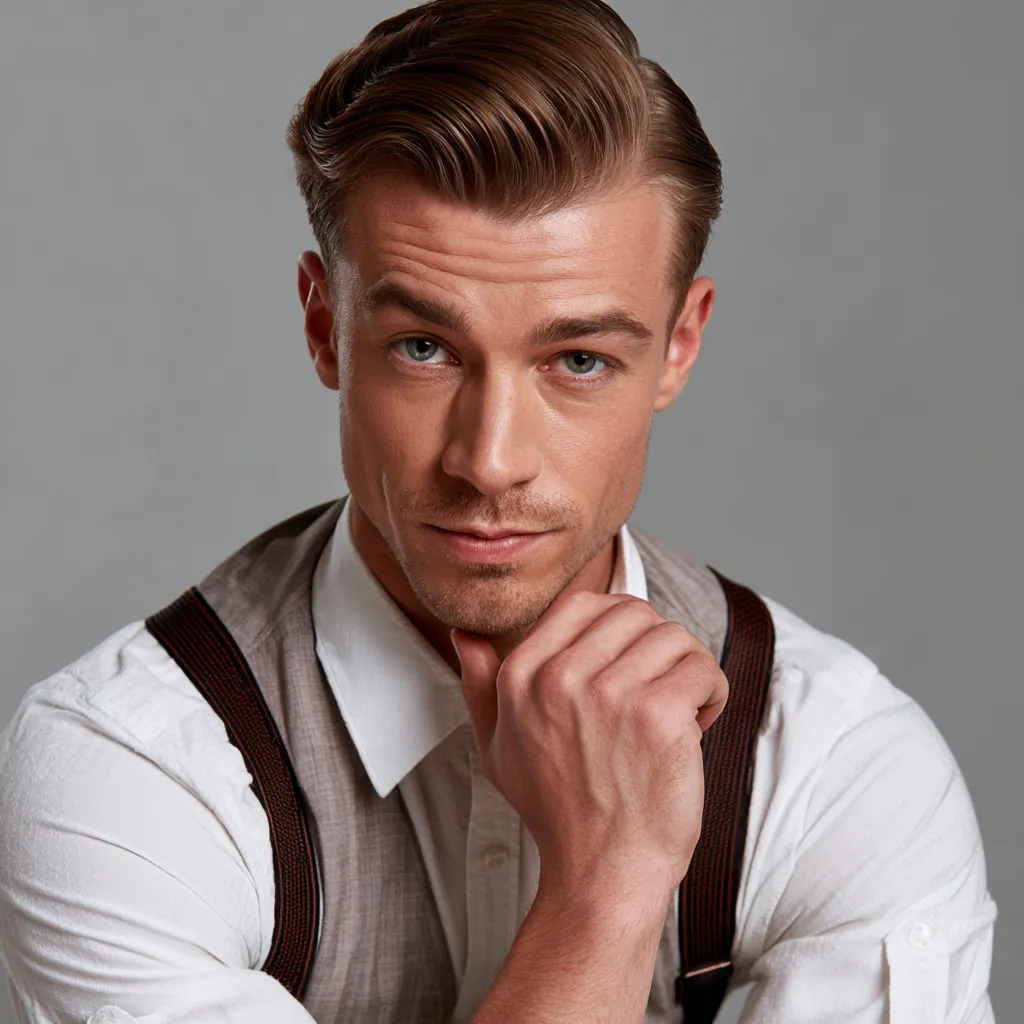
Mid fade with a textured top is my go-to recommendation when someone with dark brown hair and a square face sits down. The fade line — starting two fingers above the ear — creates a clean visual separation that pulls attention up toward the textured crown rather than anchoring it at the jaw corners. You’ll notice the difference immediately compared to a low fade, which just blends everything into a soft blob. Dark brown hair is ideal here because the depth of color makes the gradient pop without needing toning appointments.
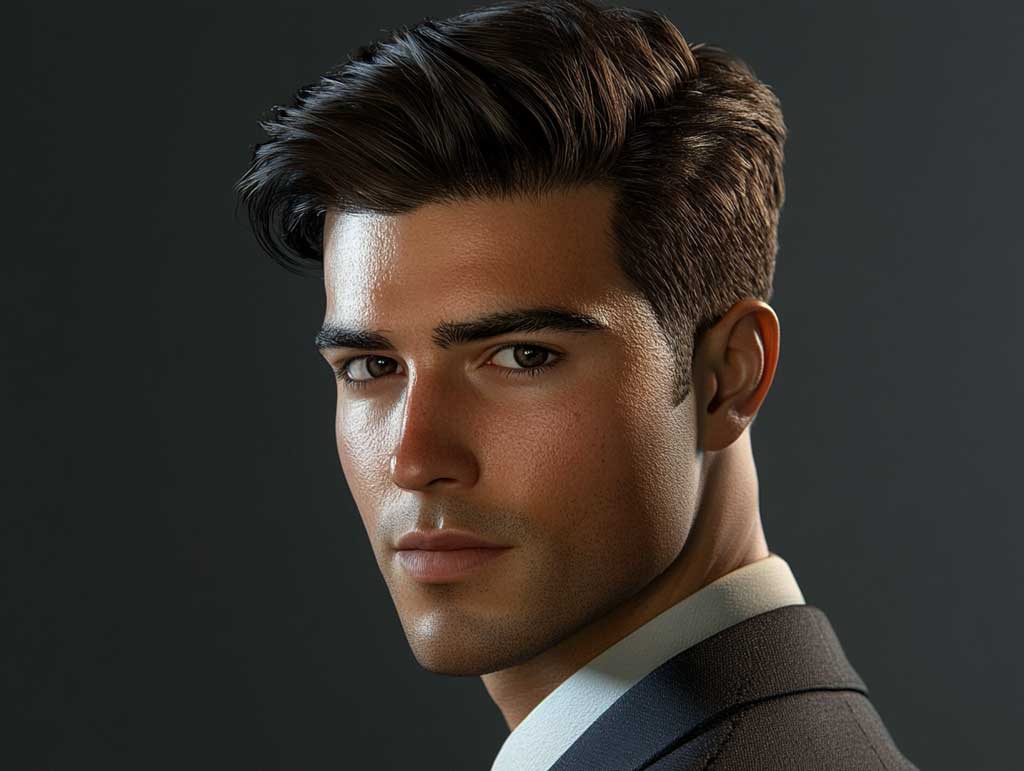
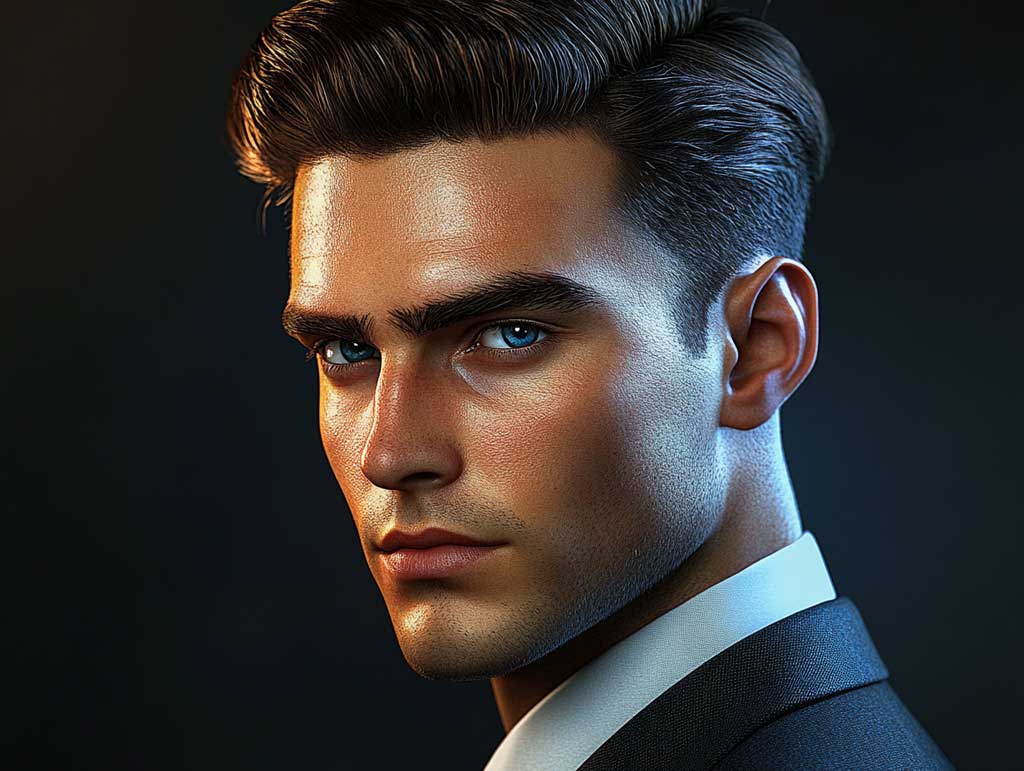
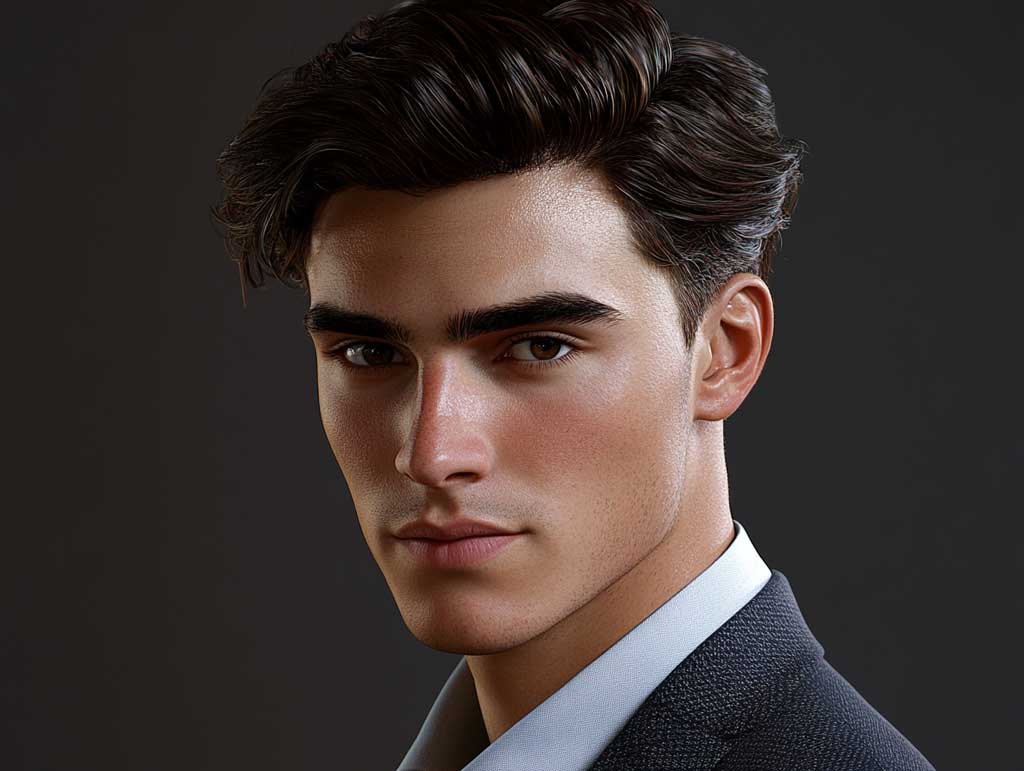
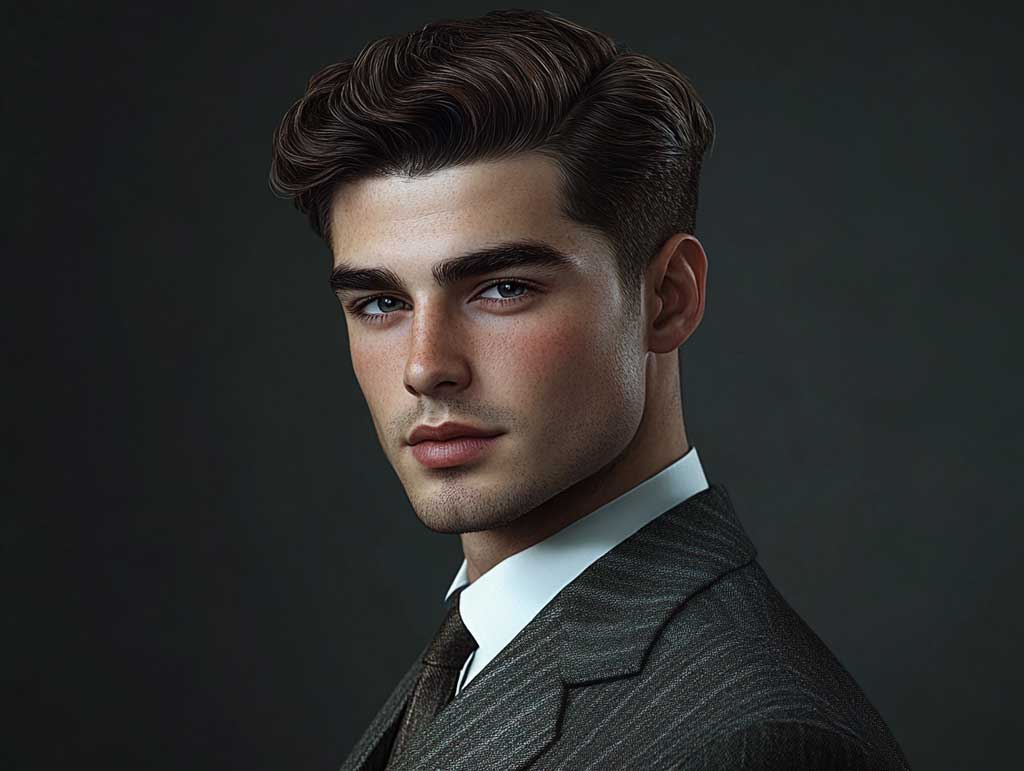
The textured top is where most guys blow it. They let the barber cut it flat, and a flat top on a square face just reinforces the geometry instead of adding movement. Ask for point-cutting through the top section — scissors angled vertically, not straight across. That introduces broken edges that move when the wind hits them. American Crew Fiber ($18 at most drugstores) is the product I’ve used for years on this look. It’s a matte clay with medium-strong hold that lets you push the texture around without cementing it. Work a pea-sized amount through towel-dried hair, blast with a diffuser for 60 seconds, then shape with your fingers.
Light stubble does something clever with this cut — it rounds the jaw corners slightly, so the overall silhouette shifts from perfectly rectangular to slightly tapered. Clean-shaven is fine too, but don’t try a full beard if you’re going for a mid fade. The volume contrast between a full beard and a faded side looks off-balance on square faces. Trim every two to three weeks. Any longer and the fade loses its definition, and the cut stops doing its structural job.
Don’t Do This
Avoid the boxy mid-length cut that sits evenly around the head like a helmet. I see it constantly on square faces — even hair length with no fade, no texture — and it does one thing: makes the face look wider. The issue is symmetry. Square faces need deliberate asymmetry or gradient to avoid looking blocky. A blunt, even cut is the opposite of that. Same goes for heavy side-swept quiffs styled flat — they create a horizontal shelf line across the forehead that visually widens rather than lengthens. If your barber suggests “just an even trim all around,” that’s the moment to redirect.
Blonde Hair Needs Volume Above the Temples, Not at the Sides
Blonde hair reads differently on a square face because light tones lose contrast at the fade line — which means you need more height up top to compensate. A voluminous quiff with a low fade is the cut I’d pick here, and the reasoning is specific. The quiff builds vertical volume directly above the forehead, which optically lengthens the face. The low fade keeps the sides smooth and receding, so there’s no visual competition between side bulk and the quiff’s height. Together they shift the shape from square toward oval without any tricks.
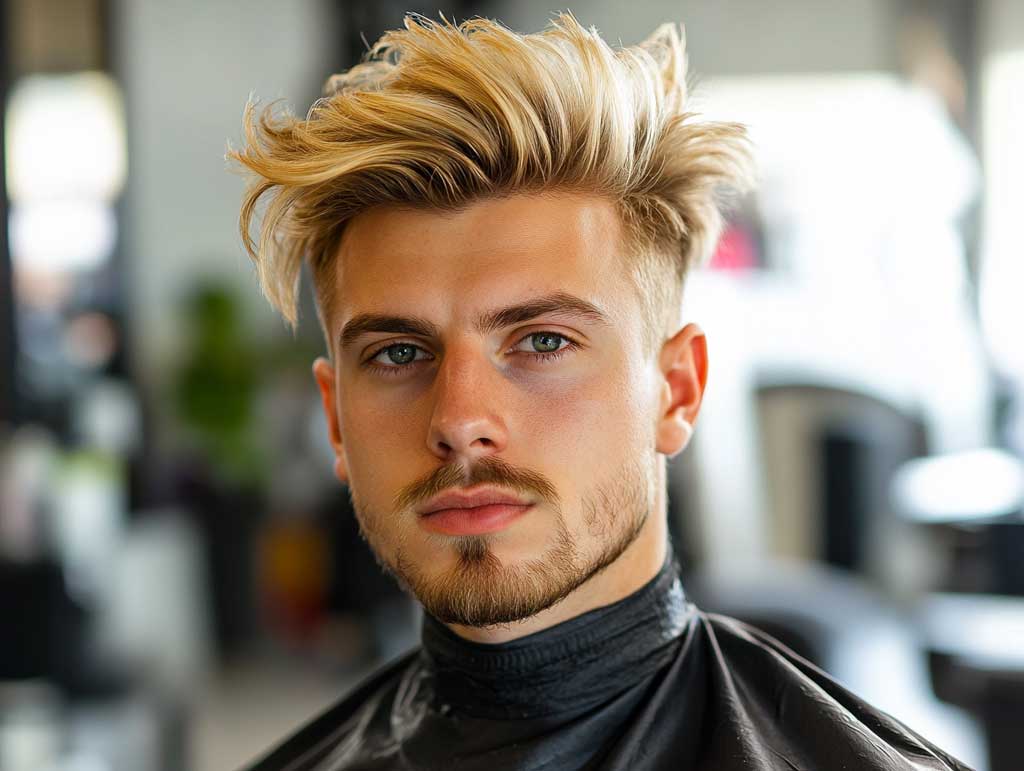
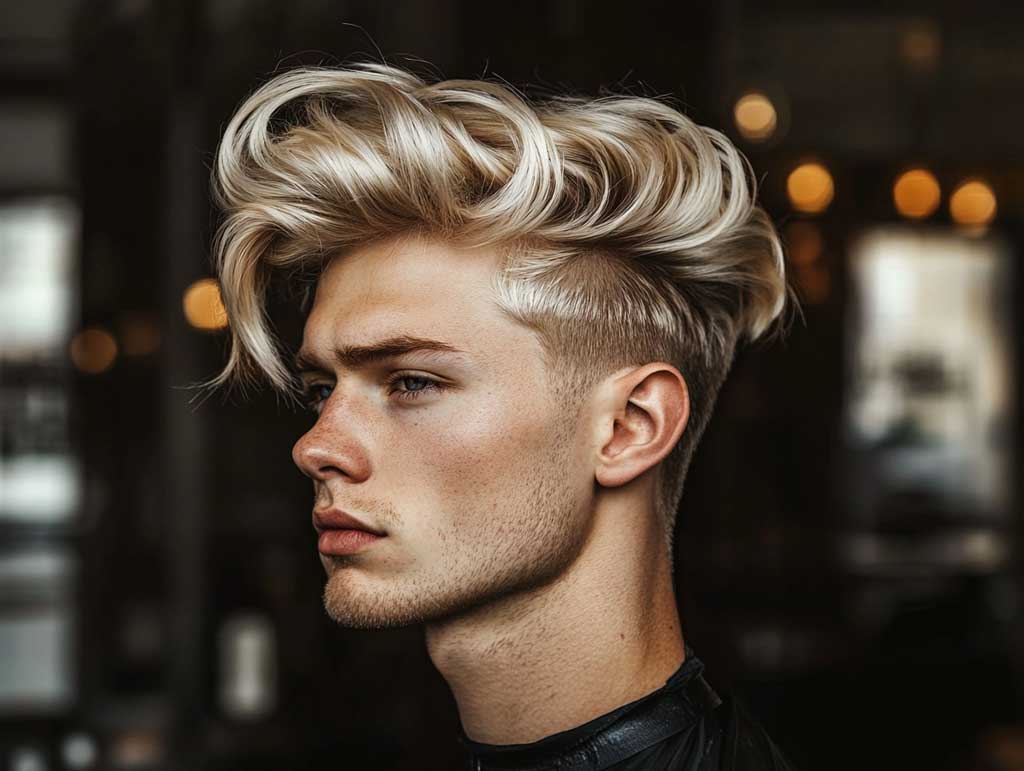
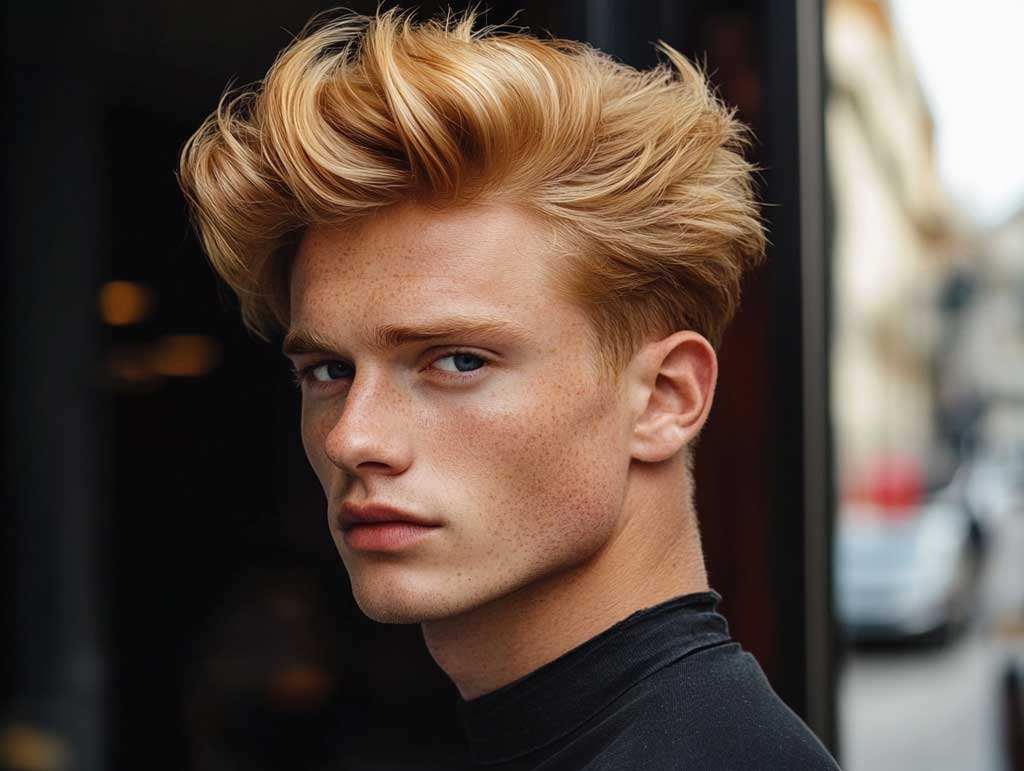
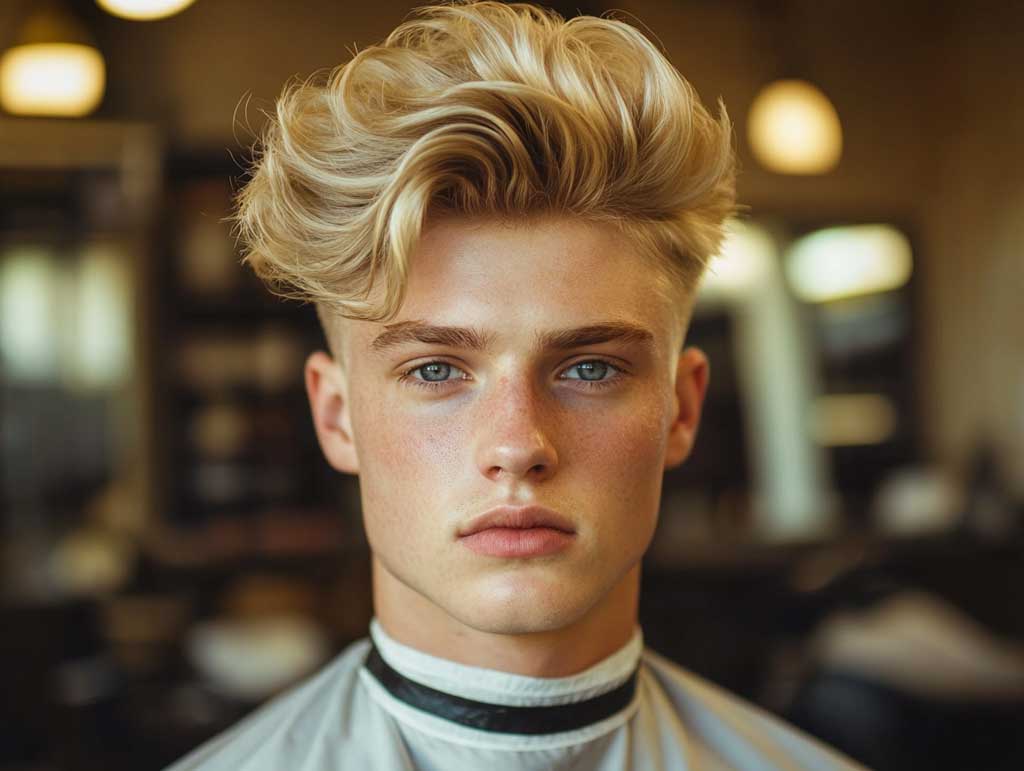
For the quiff to actually hold shape — especially on blonde hair, which tends to be finer — you need a powder product, not a cream. Slick Gorilla Styling Powder ($14) is the one I keep coming back to. Half a pump pressed into dry roots, then blow-dry lifting from underneath with a round brush. The powder adds grip to each strand, so the quiff holds its lift for eight-plus hours without that stiff, lacquered look you get from traditional pomades. Avoid anything with glycerin in the first three ingredients if your hair is fine — it weighs down blonde strands and collapses volume by afternoon.
This cut grows out well, which is a practical argument for it. The low fade can stretch to four or five weeks before it starts looking ragged, and the quiff adjusts naturally as the top gains length. Platinum blonde is the one shade I’d flag as tricky here — the toner maintenance schedule (every three to four weeks at $60–$90 per session at a mid-range colorist) can push this cut’s real cost higher than expected. Natural or honey blonde handles the fade gradient more forgivingly. For a comprehensive breakdown of how blonde fade variations behave across different tones, this guide on blonde mid fade cuts covers the specifics in detail.
Black Hair and the Side Part That Softens Without Losing Structure
A modern tapered cut with a hard side part is the move for black hair on a square face — and the reason is contrast. Black hair makes every line sharp. The taper creates a gradient from dense top to close sides, and the side part draws a clean diagonal across that gradient. That diagonal is doing structural work: it introduces asymmetry that stops the face from reading as a perfect rectangle. It’s the same principle as placing a tilted frame on a symmetrical wall. The tilt is what makes you notice the art.
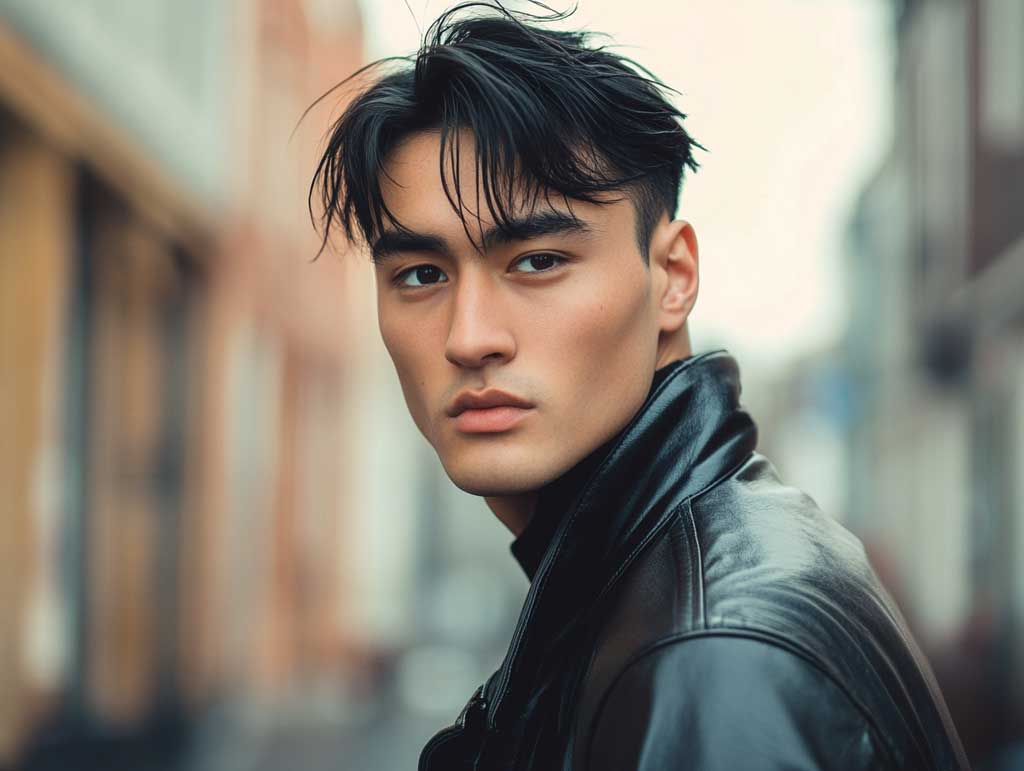
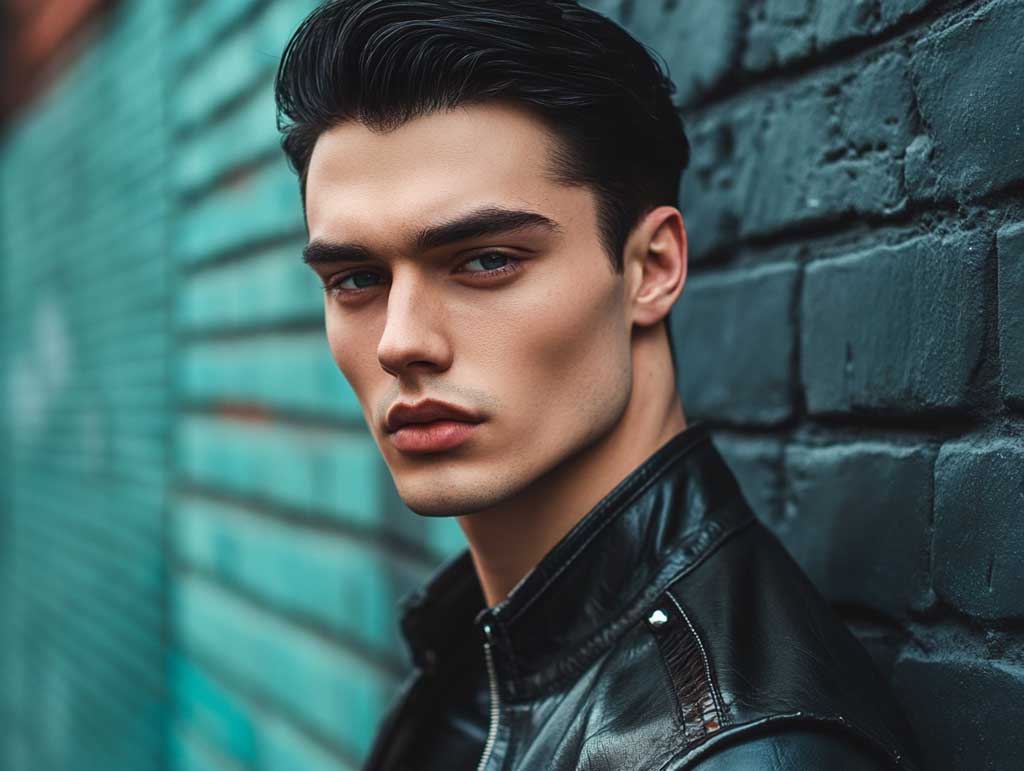
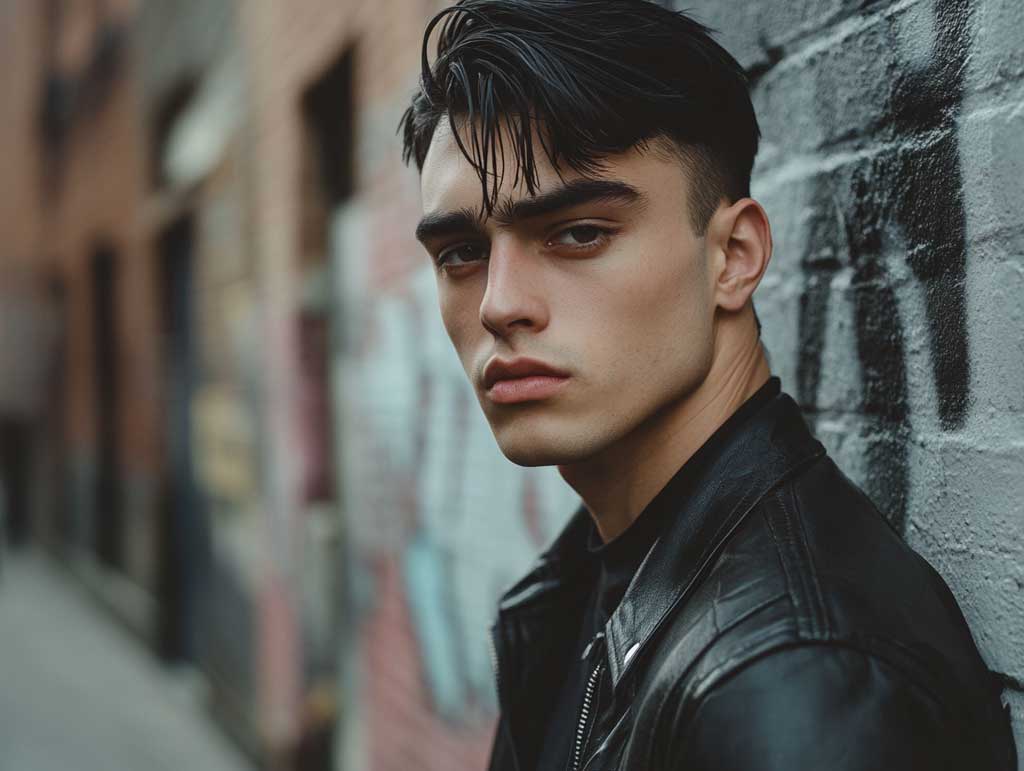
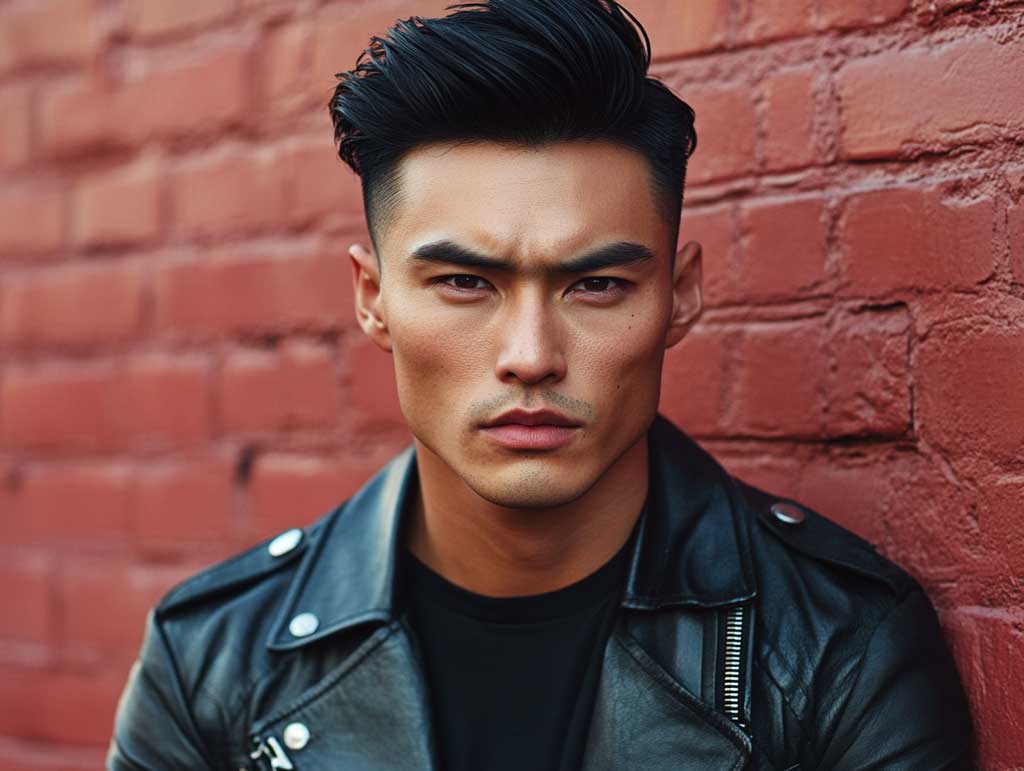
Suavecito Original Hold Pomade ($12) is the one I’d reach for to set this look. It’s water-based, which means it goes on smooth, builds the side part without stiffness, and washes out without shampooing twice. Apply to slightly damp hair — not soaking, not bone dry — then use a fine-tooth comb to carve the part starting from the outer edge of the left brow. The part line should be clean but not razor-thin. A razor-thin part on black hair creates a too-deliberate look that reads formal even in casual settings.
One thing I’ve learned from watching this cut go wrong: the taper length at the back matters more than most people realize. If your barber leaves the back too long, the neckline gets heavy and the overall shape widens at the bottom — which is the last thing a square face needs. Ask specifically for a high taper at the neckline. That means the fade starts higher up the back of the head, keeping the bottom of the silhouette narrow. Trim every three weeks to keep it crisp. This cut is a solid choice for both formal settings and weekend wear — though for corporate environments specifically, low fade looks in jet black offer another set of closely related options worth bookmarking.
Buzz Cut on a Square Face — Stop Overthinking It
The buzz cut gets complicated advice thrown at it — “avoid it if your jaw is wide,” “only do it if your skull is symmetrical” — and most of it is noise. A buzz cut on a square face works because it removes the question of volume entirely and puts the face structure front and center. That structure, on a square face, is a strong jaw. It’s a feature, not a flaw. A #3 guard all around is my starting point: not so short that every scalp irregularity shows, not so long that it looks like a grown-out fade.
Where buzz cuts fail on square faces is when the hairline isn’t cleaned up. A ragged hairline on a buzz cut reads unfinished, and on a strong jaw, “unfinished” is the only thing people notice. Your barber should edge the lineup with a trimmer — hairline, temples, neckline — every single appointment. That $5–$10 add-on is the difference between looking intentional and looking like you grabbed clippers in a hurry. I’d also recommend adding a mid-length beard (roughly half an inch) to round the jaw corners slightly if the buzz cut feels too angular. For more on how fade variations interact with buzz cut lengths, therighthairstyles.com’s breakdown of men’s square face haircuts covers the gradient mechanics in detail.
Hair Type Comparison by Haircut
| Cut | Best Hair Color | Maintenance Frequency | Product | Avg. Cost / Visit |
|---|---|---|---|---|
| Mid Fade + Texture | Dark Brown | Every 2–3 weeks | American Crew Fiber | $30–$45 |
| Voluminous Quiff | Blonde | Every 4–5 weeks | Slick Gorilla Powder | $30–$45 |
| Tapered Side Part | Black | Every 3 weeks | Suavecito Original Hold | $30–$45 |
| Buzz Cut | Any | Every 2 weeks | None required | $20–$35 |
Final Word
A Square Face Doesn’t Need Softening. It Needs the Right Cut Direction.
The jaw you have is not a problem to correct — it’s an asset most guys with round or oval faces would trade for. The only real mistake is picking a cut that fights the geometry instead of using it. Mid fade, quiff, tapered side part, buzz — any of these works if the proportions are deliberate and the product is right.
Avoid barbers who default to “just a trim all around.” That phrase, on a square face, is a warning sign.
Save this post before your next barbershop appointment.