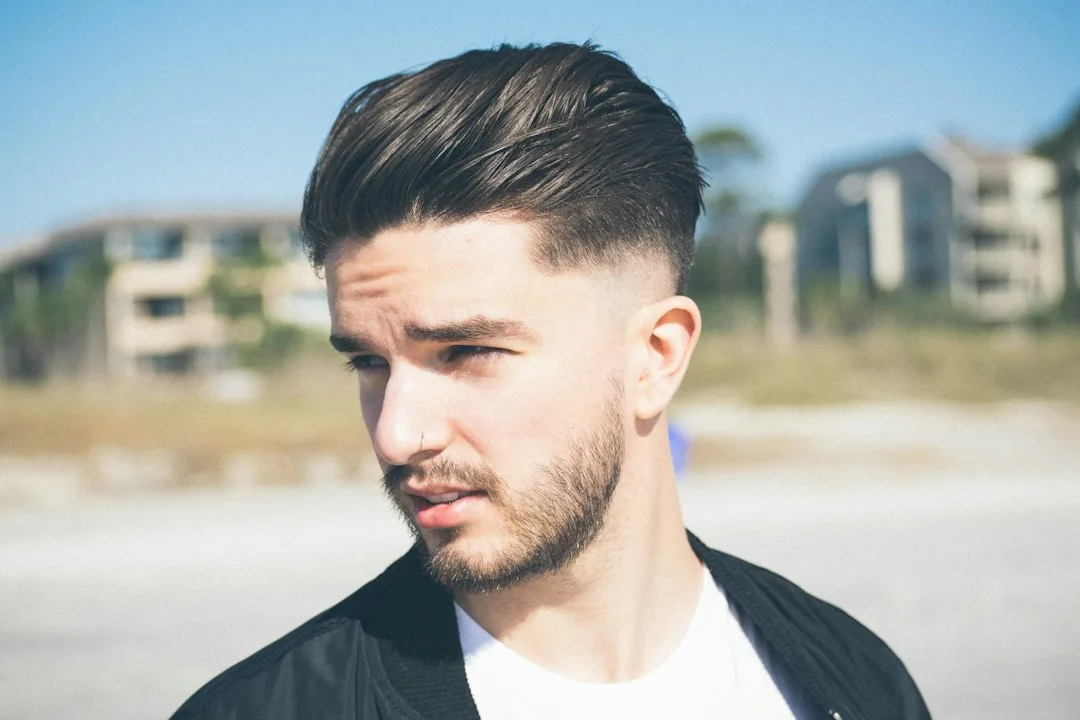
A blonde burst fade pairs a curved fade around the ear with bleached or platinum length on top, and it works best for anyone ready to book a touch-up every two to three weeks. The curve arcs behind the ear like a half-moon, so the neckline keeps some length while the sides drop close to the skin. Pale hair makes that arc far more visible, because bright strands catch light against the darker regrowth near the scalp. Plan both calendars, cut and color, before the first appointment.
Does it suit every hair type? Straight, curly and coily textures all carry the shape, though curls hide regrowth longer and straight hair shows it fastest. Full platinum sits at level 10 on the color scale, so dark hair usually needs several lightening sessions spaced weeks apart. Dirty blonde or platinum highlights deliver much of the same contrast with far less lifting. If the budget covers only one service, prioritize the cut, since a sharp fade makes even a modest blonde look intentional.
The layered pixie, curly top and mohawk below show how far one burst shape can stretch. For the basics of fade heights and how long each one stays sharp, see this breakdown of how fade haircuts differ by height, face shape and upkeep. The comparison table and maintenance plan further down turn the look into numbers you can bring to a barber and a colorist.
- Burst fade touch-ups every 2–3 weeks keep the curve crisp against blonde length.
- Full platinum means lifting to level 10; dark hair often needs 3–4 sessions spaced 4–6 weeks apart.
- Platinum highlights or dirty blonde give strong contrast with less bleach stress.
- Curly tops hide regrowth longer; straight hair shows the fade line fastest.
- A low burst stays clean for roughly 3–4 weeks; higher placements need attention closer to every 2 weeks.
- Purple shampoo once a week, 3–5 minutes, keeps platinum from turning brassy.
Layered Pixie Top Over a Platinum Burst Fade
A platinum burst fade under a layered pixie top gives short hair structure at the sides and movement on the crown. The fade clears bulk around the ears, so the layers look lighter without adding any length. Think of it as a frame on a painting: the tight edge makes the bright color in the middle look deliberate. Ask for point-cut layers at the crown rather than blunt ones, which stop the platinum from sitting flat like a swim cap.
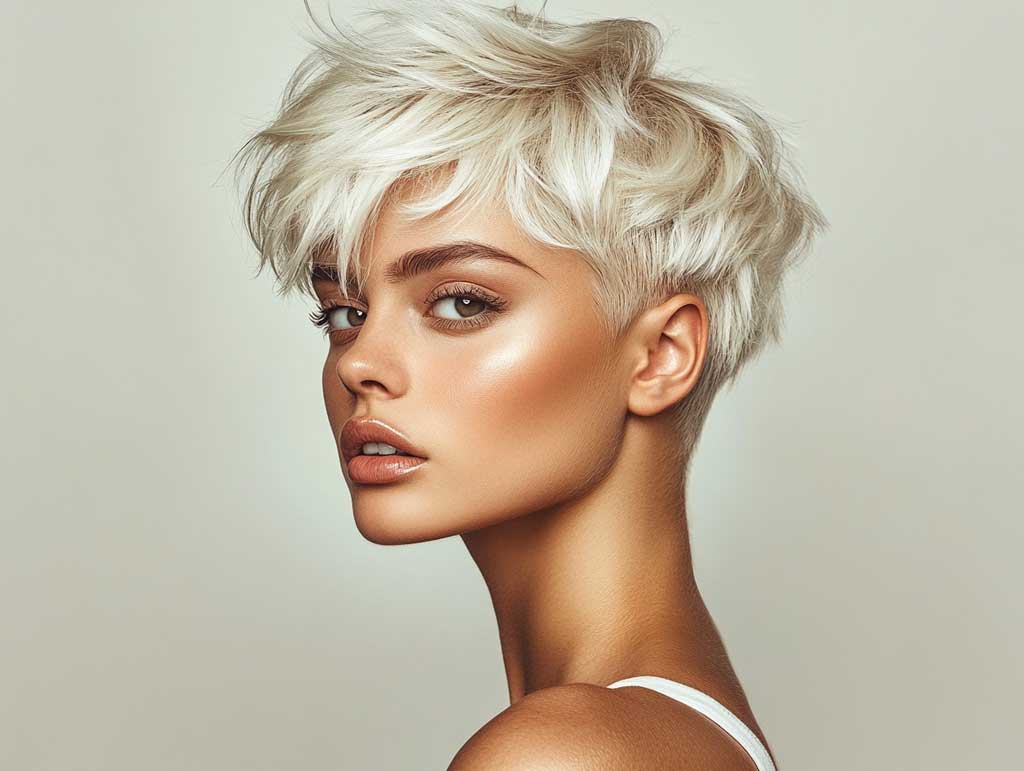
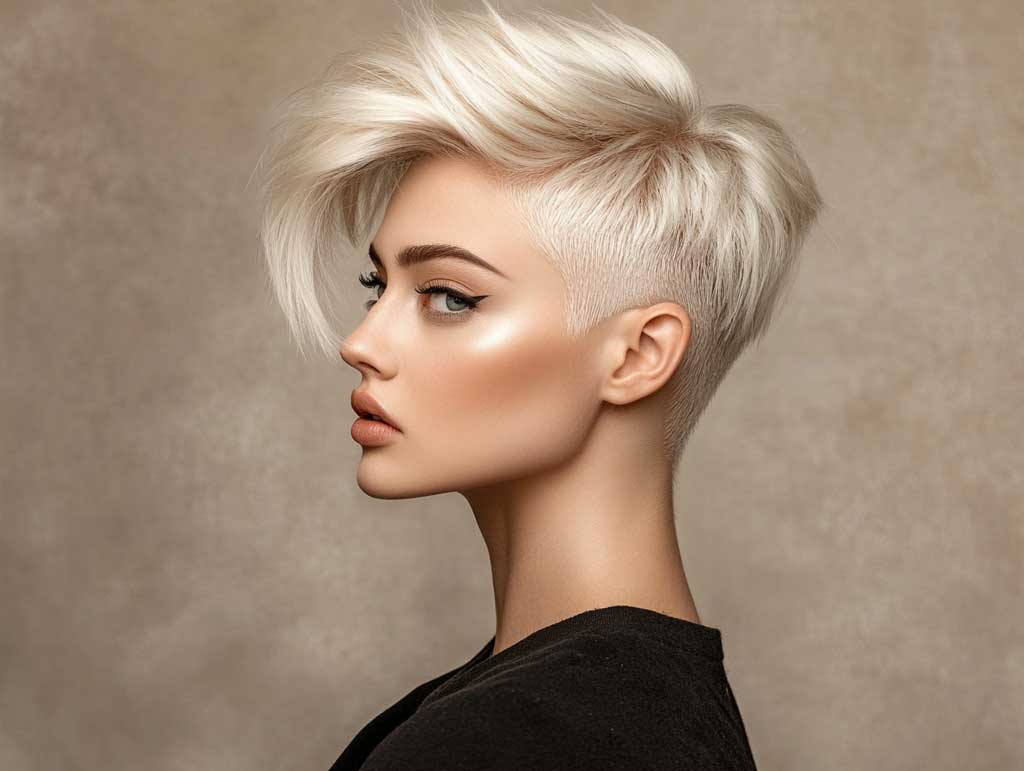


How often does this combination need a salon visit? Color specialists usually put platinum pixies on a four-to-six-week cycle, and the burst curve asks for a clipper pass sooner than that. Many clients split the two, booking a quick fade cleanup at the barber between full color appointments. Skip heavy pomade on top, because a greasy finish makes platinum layers look yellow and clumped. A pea-sized amount of matte paste worked through dry hair is enough.
Styling range is the main reason this version keeps showing up on saved boards. Tousled layers read casual, while a side sweep with a flat brush turns the same cut polished for work. Burst fade platinum highlights instead of a full bleach suit anyone testing the idea, since the pixie top gets trimmed away within a few months anyway. Try a sweep to one side first and see which profile the fade flatters most.
Platinum Highlights or Full Bleach on a Blonde Burst Fade
Choosing between platinum highlights and full bleach on a burst fade comes down to your starting shade and your patience. Platinum means lifting hair to level 10, the top of the color scale, and dark hair often gets there only after three or four sessions spaced four to six weeks apart. Dermatologists recommend staying within three shades of your natural color, because bigger jumps require stronger peroxide and cause more damage. Avoid box bleach on a fresh fade, since the short sides lift unevenly and leave patchy hot spots.
Is dirty blonde a compromise or a style of its own? A dirty blonde burst fade keeps some warmth near the root, so regrowth blends like sand into darker soil instead of drawing a hard stripe. Average salon pricing for a medium-brown-to-blonde transition runs around $300–750 across two to three sessions, which makes partial lightening the cheaper entry point. Cookies and cream fades go the opposite way, pairing a dark base with bright platinum pieces for deliberate two-tone contrast. Pick dirty blonde first if low maintenance matters more than maximum brightness.
| Blonde option | Lightening effort | Regrowth visibility | Best match |
|---|---|---|---|
| Full platinum | Lift to level 10, often 3–4 sessions from dark hair | High, dark roots show quickly | Mohawks, pixie tops, maximum contrast |
| Platinum highlights | Partial lift on selected pieces | Medium, roots blend between strands | First-timers, straight hair |
| Dirty blonde | Light lift from a mid-brown base | Low, soft grow-out | Low-maintenance routines |
| Cookies and cream | Platinum top over a dark base | Planned two-tone contrast | Curly and textured tops |
Curls Stay Bright When the Burst Fade Keeps Them Light
A burst fade with blonde curls sets tight sides against soft volume, and that contrast does most of the styling work. Curly and coily textures disguise regrowth better than straight hair, so the fade line tends to hold its shape longer between cuts. Platinum on curls acts like a highlighter pen, tracing every spiral so the pattern reads clearly from across a room. Keep lightening gentle on curls, since lifted spirals lose moisture fast and frizz first at the ends.
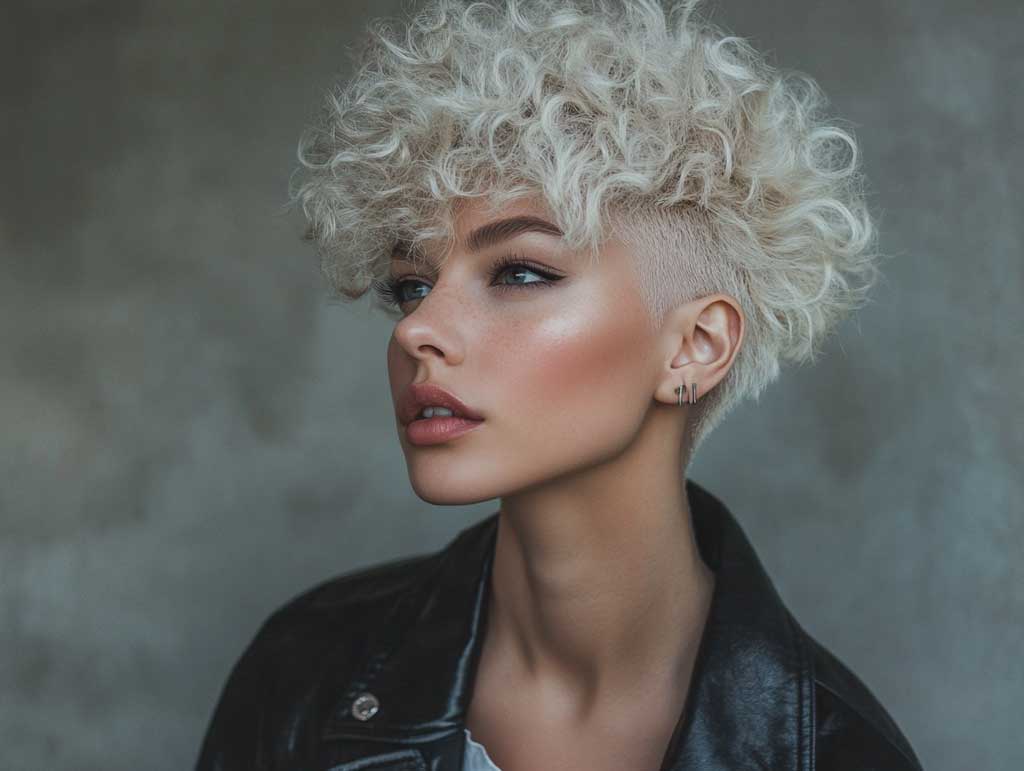


Why does the fade matter so much for curls? Without it, a bleached curly top spreads sideways into a triangle, and the burst curve pulls that width back behind the ears. A low burst version typically stays clean for three to four weeks, giving curls a longer window before the sides look fuzzy. Do not brush curls while dry, because that breaks the clumps and turns platinum spirals into frizz. Scrunch a light curl cream into damp hair and let it set untouched.
A diffuser on low heat lifts the roots without blowing the spirals apart. Heat protectant matters more on bleached curls than on untreated hair, since lightening has already weakened the internal bonds of each strand. The result reads playful on weekends and still neat under office lighting. Diffuse to roughly eighty percent dry and let air finish the rest.
Straight Hair Shows Every Line of a Blonde Burst Fade
A burst fade on blonde straight hair gives the sharpest contrast of any texture, because nothing hides the curve. Straight and fine strands reveal regrowth quickly, so the arc softens within two to three weeks, and higher versions closer to two. It behaves like a freshly painted line on a tennis court: crisp on day one, visibly worn after a few matches. Avoid a skin-tight base if frequent visits are out of reach, since bare skin grows back as a dark shadow under pale hair.
Which top works best on straight blonde hair? A textured crop, a side-swept fringe or a short quiff all keep the eye on the curve instead of lying flat against it. Matte products suit bleached straight hair better than shiny gels, which exaggerate dryness at the ends. Ask for texture cut into the top so the blonde breaks into visible pieces rather than one flat sheet.
- Burst height: low behind the ear or mid toward the temple.
- Shortest point: bare skin, a zero or a guarded length, since “burst” sets the placement, not the depth.
- Neckline: keep length at the back so the half-moon shape reads clearly.
- Top: length in inches, plus whether you want visible texture or a clean finish.
Low or Mid Placement Changes the Whole Silhouette
Picking between a low and a mid burst fade on blonde hair decides how much scalp shows and how often you return to the chair. A low burst hugs the ear and grows out gently, while a mid burst climbs toward the temple and exposes a wider arc. Barbershop touch-ups usually cost around $25–40 per visit, so keeping a tighter cut can add up to $50–80 a month. Do not choose mid height purely from photos, because head shape and cowlicks change where the curve actually sits.
Is a low burst the safer first attempt? For most people, yes, since it keeps dark or dirty blonde regrowth tucked near the ear and buys an extra week between visits. Mid placement suits a strong jawline and a short platinum top, where the contrast works like a spotlight on the face. Start low, then raise the arc one step at the next appointment if you want more drama.
Platinum Mohawk With a Burst Fade Base
A platinum mohawk over a burst fade is the loudest version of the look, with bright length down the center and a tight curve on each side. The burst shape keeps length at the neckline, which lets the mohawk strip run all the way to the nape without a hard stop. Picture a lit runway at night: the darker sides make the pale strip impossible to miss. Resist bleaching the faded sides along with the top, because short bleached stubble grows back patchy and uneven.
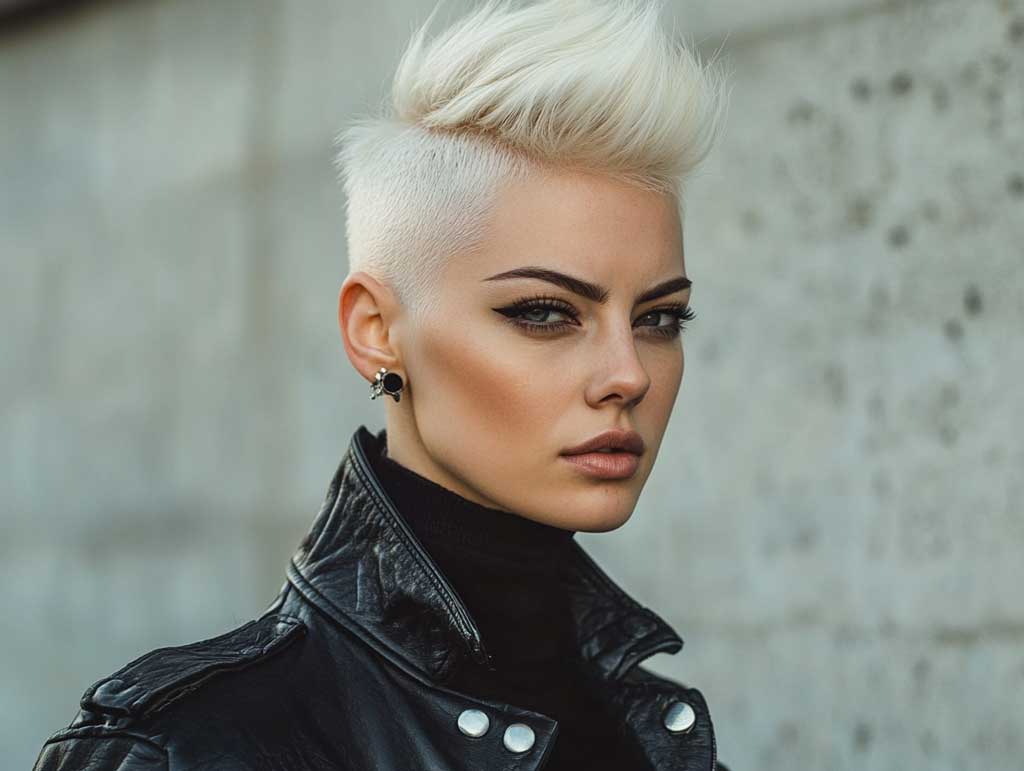
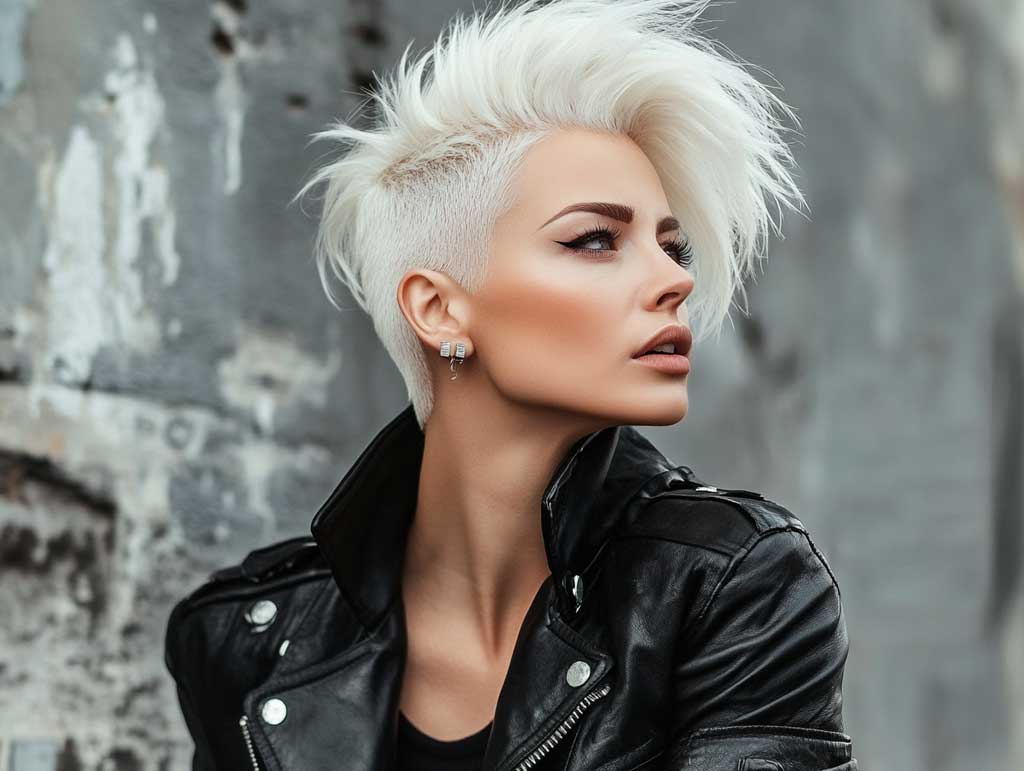
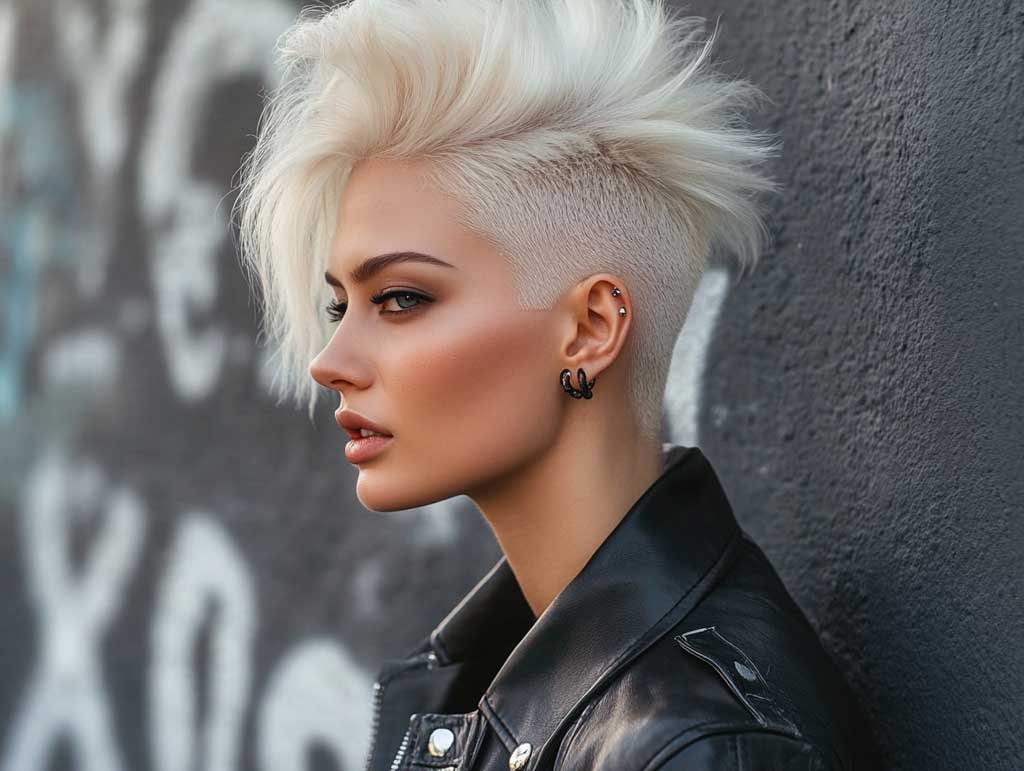

Can the same mohawk look polished? Spiked with a strong gel, it leans punk, and smoothed back with a light wax, it turns into a sleek fashion silhouette. That range suits people who move between gigs, offices and formal events in the same week. Keep one strong-hold product and one light product on the shelf, and pick by occasion rather than habit.
Upkeep on this version runs highest, because both the arc and the central strip must stay symmetrical. Higher fade placements typically need a touch-up about every two weeks, and dark roots on a narrow platinum strip show up as an obvious stripe. Book color and cut on the same day when possible, so the proportions reset together. A weekly deep-conditioning mask helps bleached lengths handle gel and heat.
Keep the Fade Crisp and the Blonde Cool
Keeping a burst fade blonde and fresh depends on two routines that run on different clocks. The cut needs attention every two to three weeks, while toning and root work usually follow a four-to-six-week cycle. Treat them like oil changes and tire rotations on a car: separate schedules, same vehicle. Do not stretch the fade to match the color appointment, because the curve loses its shape long before roots become obvious.
- Use purple shampoo once a week, leaving it on for 3–5 minutes and focusing on the edges and nape.
- Apply heat protectant before every blow-dry or flat-iron pass.
- Wear a wide-brimmed hat in strong sun, since dermatologists note UV leaves bleached hair weak and brittle.
- Book the next fade appointment before leaving the chair.
How fast does platinum shift between toner appointments? Short hair has less length holding pigment, so the cool tone fades sooner than on long bleached hair. The routine used for very short platinum pixie cuts with textured layers transfers almost directly to a burst fade top. Wash every other day rather than daily, since each wash strips a little toner.
- Don’t bleach the faded sides; short lightened stubble grows back patchy.
- Don’t leave purple shampoo on past five minutes, or pale ends can turn lilac.
- Don’t flat-iron bleached hair without heat protectant.
- Don’t jump more than three shades in a single session on dark hair.
Worth the Bleach and the Barber Chair
A blonde burst fade rewards commitment more than any other fade, because the color turns a precise cut into a clear statement.
Start with a low burst and platinum highlights or dirty blonde for a first round of lightening. The contrast still lands, and the grow-out stays forgiving.
Go full platinum only when the budget covers several lightening sessions and a fade cleanup every two to three weeks. Anything less shows quickly on pale hair.
Match the top to your texture: a layered pixie for fine hair, curls for volume, a mohawk for maximum edge. Bring photos of the curve, not just the color, to both appointments.