Red bathroom wall tiles are one of the few design choices that still genuinely surprise people — in a bathroom where most walls fade into the background, a red surface commands the room instantly. The shift happening right now in interior design moves away from clinical whites and cool grays toward deep, enveloping colors that make a bathroom feel intentional rather than accidental. Red sits at the center of that shift.
The finish you choose matters as much as the color itself. Glossy red tiles bounce light and read as bold and modern; matte red brick tiles absorb it and feel grounded and warm; patterned red tiles in herringbone or geometric layouts turn the wall into the focal point. Each delivers a completely different room — same color family, three distinct personalities.
Budget is also more accessible than most people assume. Daltile’s Restore Red glazed ceramic wall tile runs $5.29 per square foot at Home Depot — a 60-square-foot bathroom wall project stays under $320 in materials before installation. The bigger cost variable is the pattern: standard brick-lay installation runs $6–$10 per square foot in labor, while herringbone can reach $12–$20 per square foot depending on your market.
- Glossy red ceramic tile starts around $5–$10/sq ft; total installed cost typically $10–$50/sq ft depending on pattern and labor market.
- Matte red brick-look porcelain (e.g. MSI Rustiva Red Brick) runs as low as $4.72/sq ft — the most budget-friendly finish in this category.
- Herringbone pattern installation costs 30–50% more in labor than standard brick-lay; plan for it before you commit to the layout.
- Glossy tiles are easier to wipe clean; matte tiles need grout sealing every 1–2 years in wet zones to prevent staining.
- Red tiles work against every fixture metal — chrome, brass, and matte black all land differently, and the pairing changes the mood more than the tile shade itself.
Glossy Red Tile and the Light It Rewrites
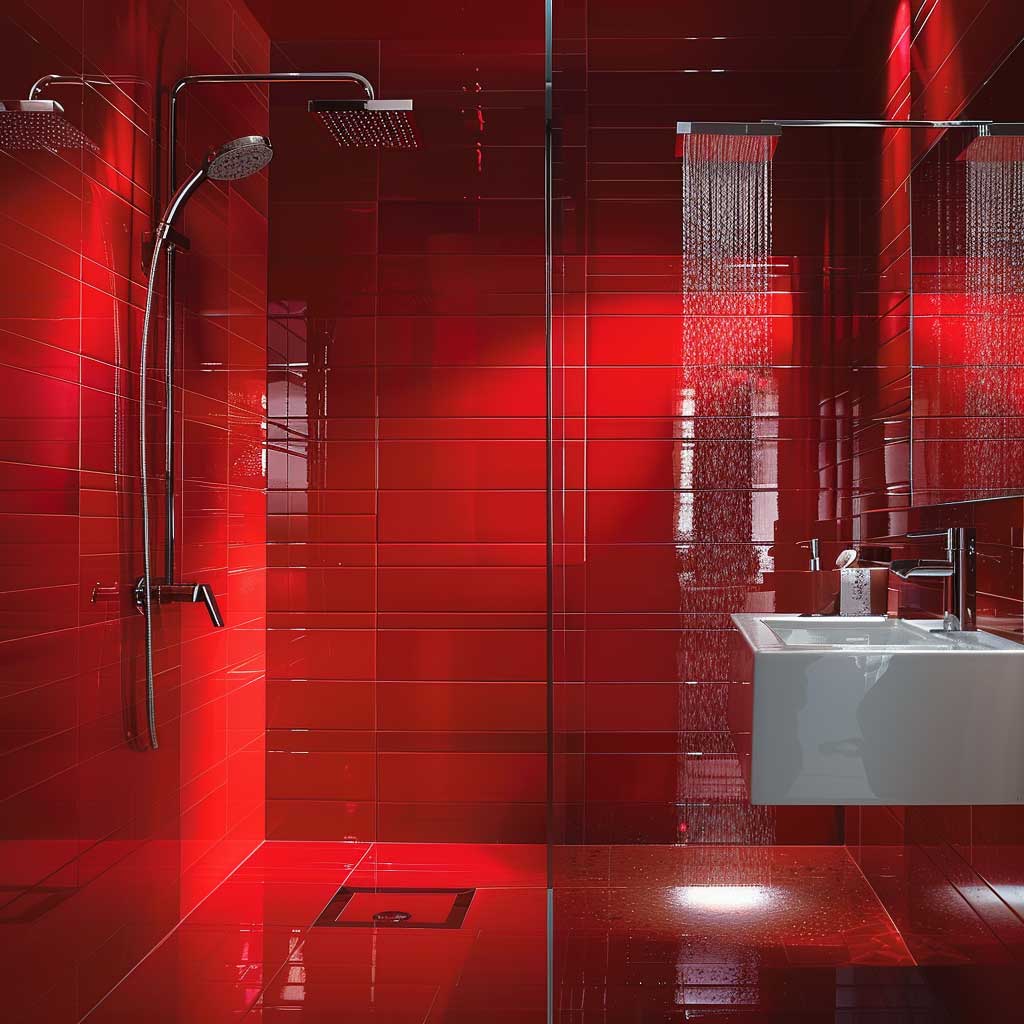
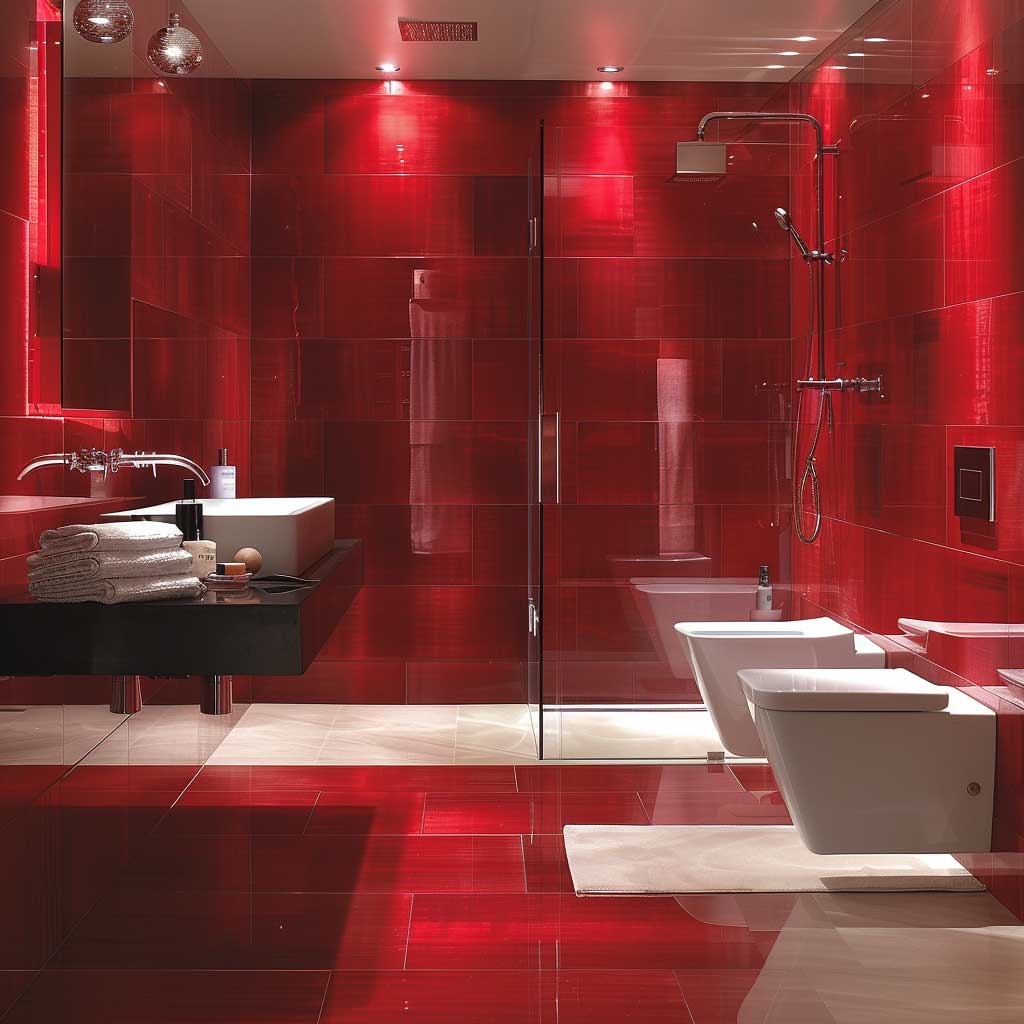

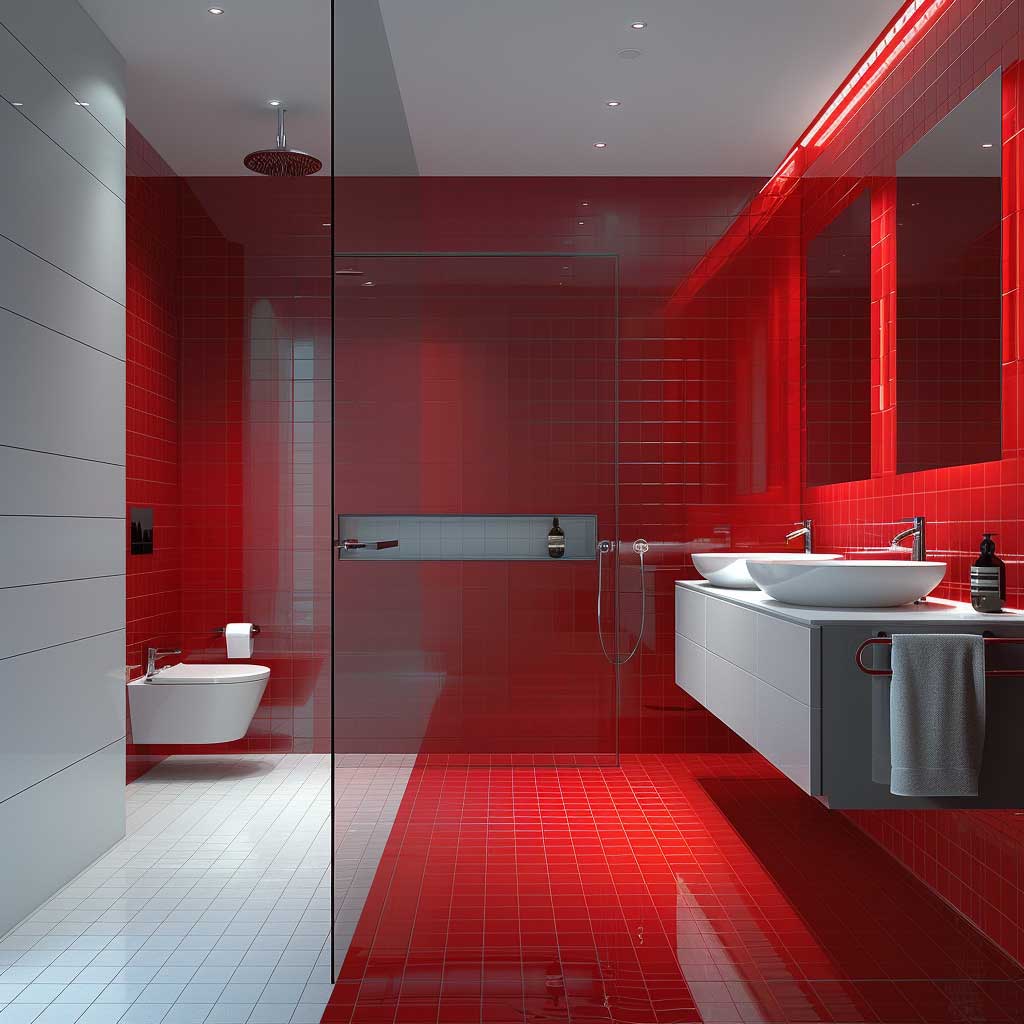
Glossy red bathroom wall tiles do something matte finishes never can — they multiply the room’s light source, bouncing it off the surface the way a mirror does, just softer and more diffuse. In a bathroom with a single window, this effect can make the space feel genuinely larger. Daltile’s Restore Red glazed ceramic tile ($5.29/sq ft at Home Depot) is one of the most accessible entry points into this look, covering 12.5 square feet per case at a price that keeps a full feature wall under $350 in tile materials alone. The question worth asking before you buy: does your bathroom have something interesting to reflect?
Chrome fixtures are the obvious pairing — they echo the tile’s reflectivity and sharpen the modern edge. Matte black hardware reads differently, pulling the red darker and more moody, closer to burgundy in tone even when the tile itself hasn’t changed. A frameless mirror on the opposite wall doubles the effect: the tile appears on both surfaces and the room feels like it extends beyond its actual dimensions. Tash Bradley, Director of Interior Design at Lick and a color psychologist quoted in Homes & Gardens, specifically calls out deep reds as ideal for the material-drenching approach — using the same tone across tiles and walls to create a fully immersive space.
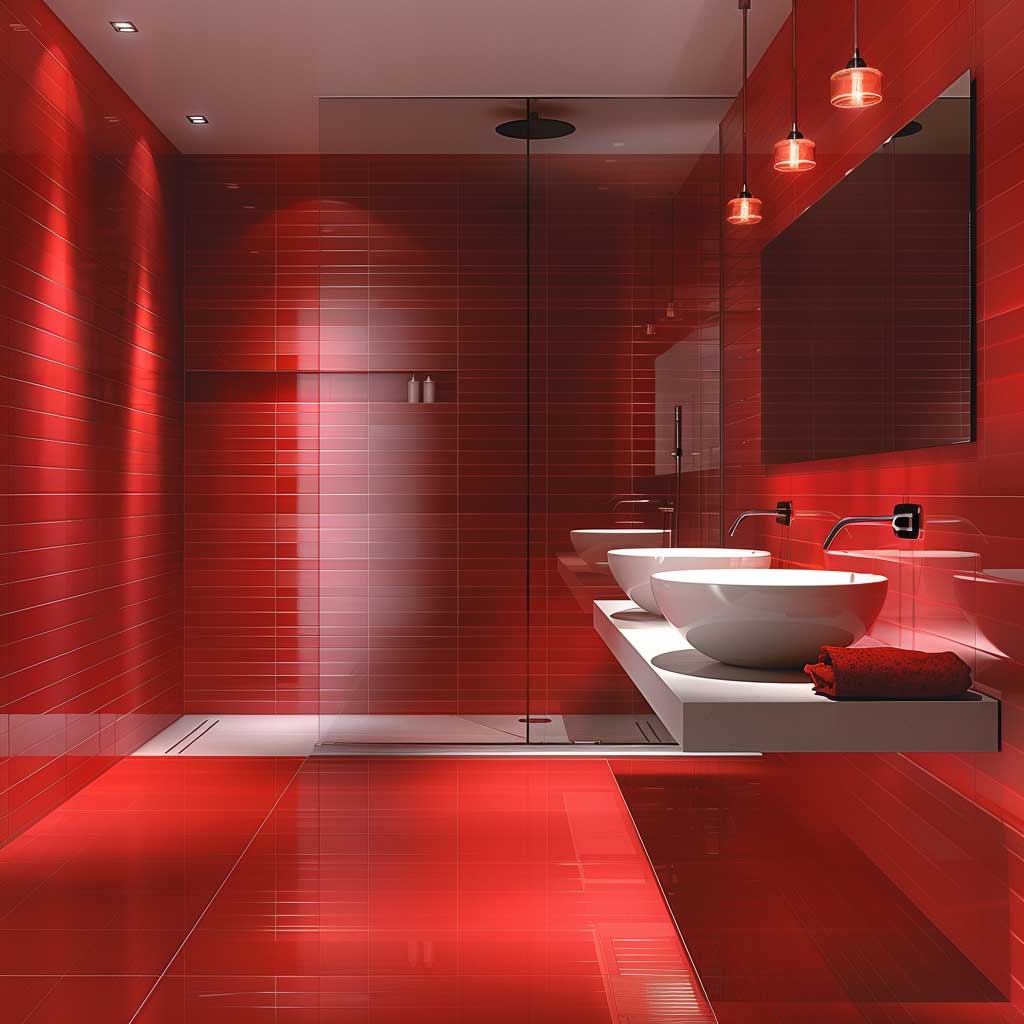
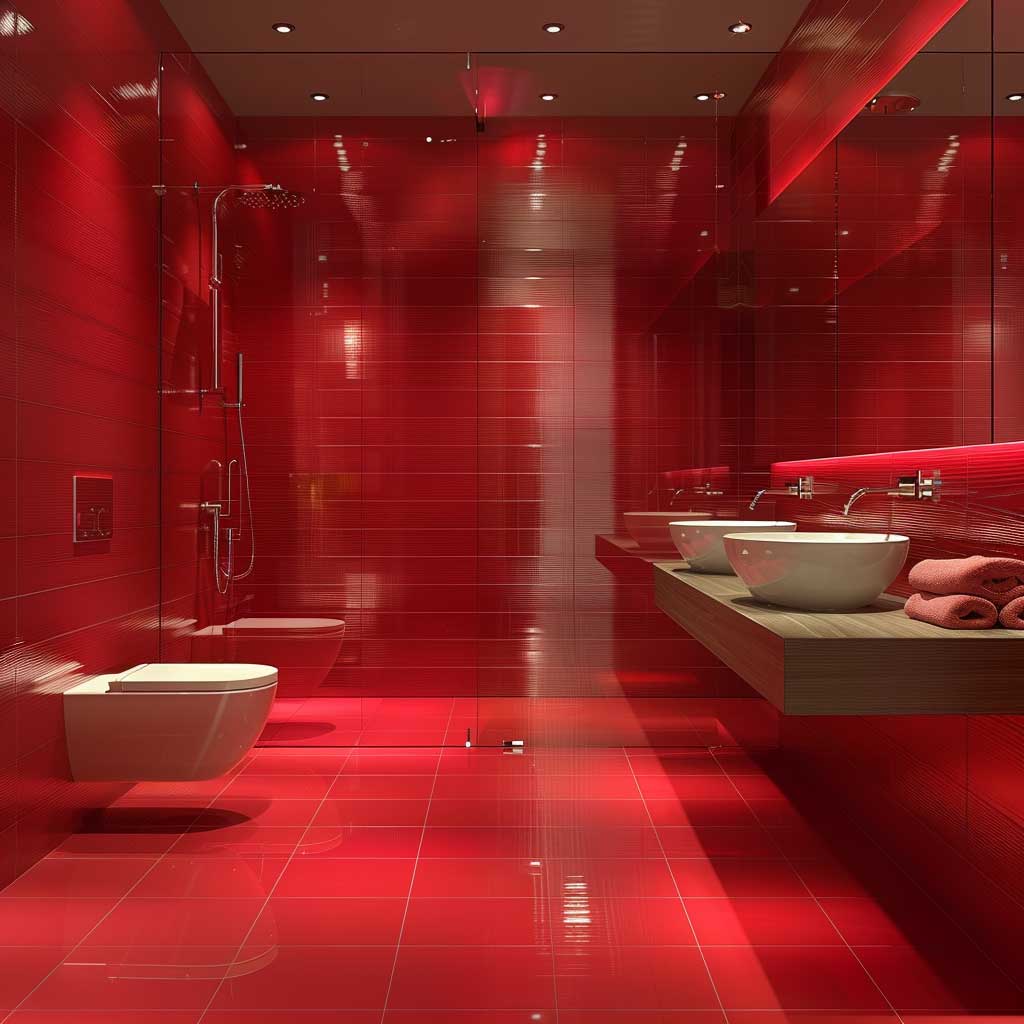
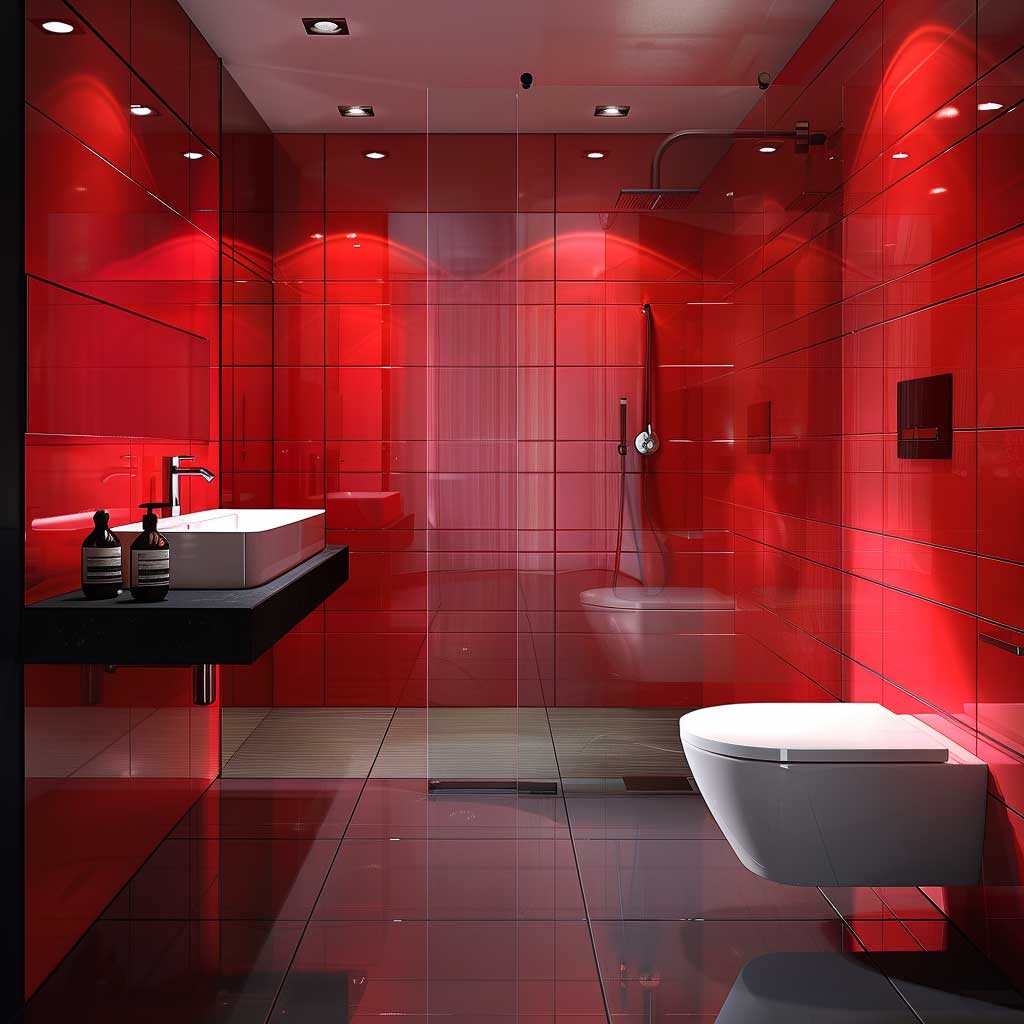

Maintenance on glossy red is the easiest of the three finishes covered here. The smooth, non-porous surface wipes clean with a damp cloth — water spots and soap residue come off without scrubbing. Where glossy red fails is grout: white grout goes dingy fast in a shower environment, and when it does, the contrast against the vivid tile color becomes obvious. Specify epoxy grout from the start, or plan to re-seal cement-based grout every 12–18 months. A matching or tone-on-tone grout color (deep red or charcoal) solves the visibility problem entirely and reads more intentional anyway.
What doesn’t work: mixing glossy red tiles with another bold surface in the same room. A patterned floor, a statement vanity, and glossy red walls are too many focal points competing at once — the room reads cluttered rather than dramatic. Stylists consistently recommend treating the glossy red wall as the star and keeping every other surface — floor, vanity, ceiling — quiet and flat. Think of the tile as the main actor and everything else as the set.
Matte Red Brick Tile — Warmth Without the Rustic Cliché

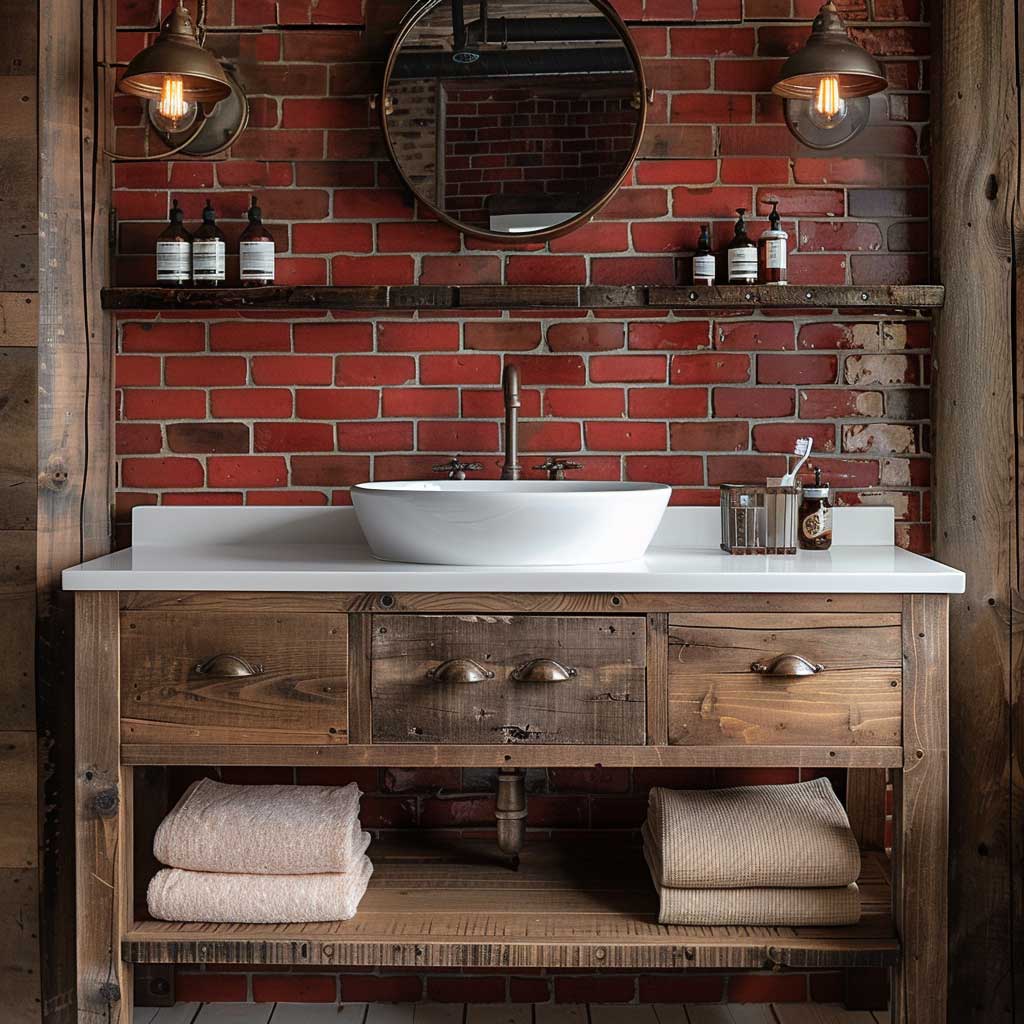
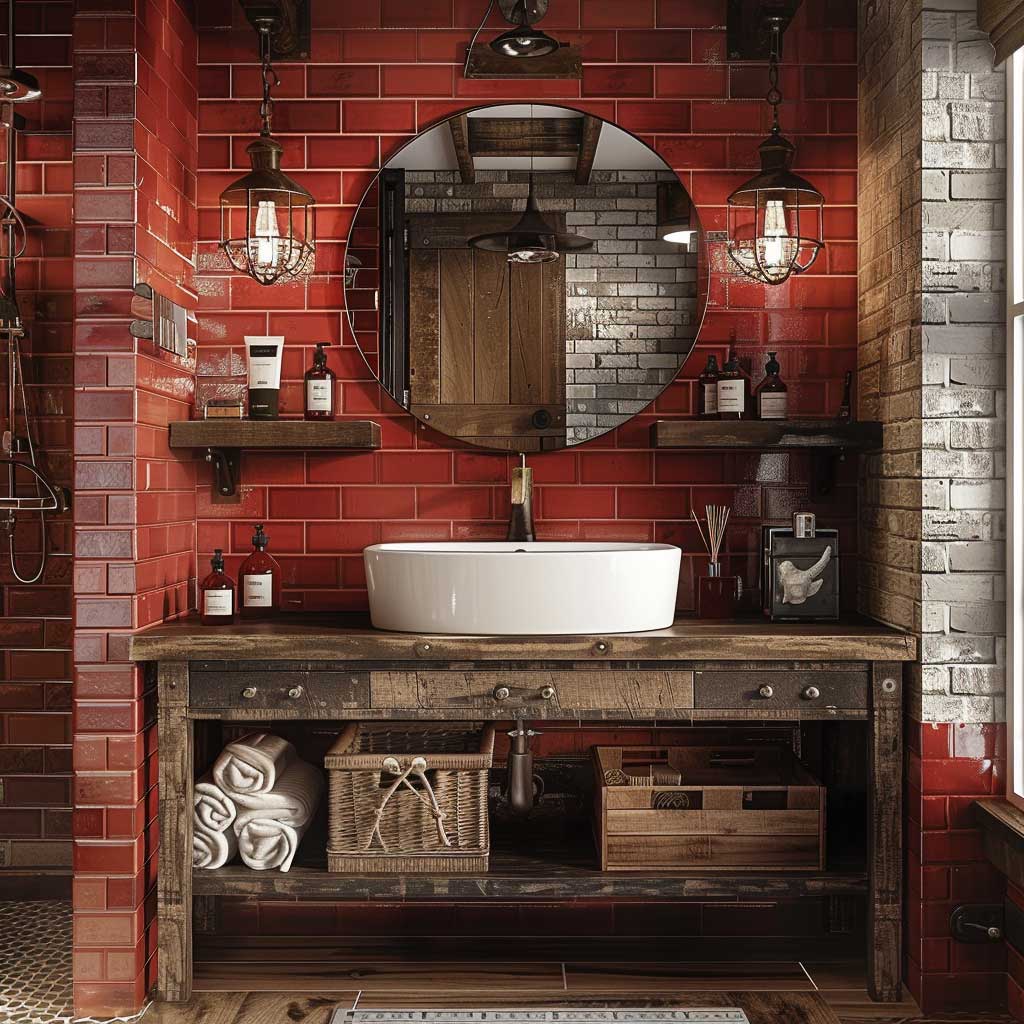
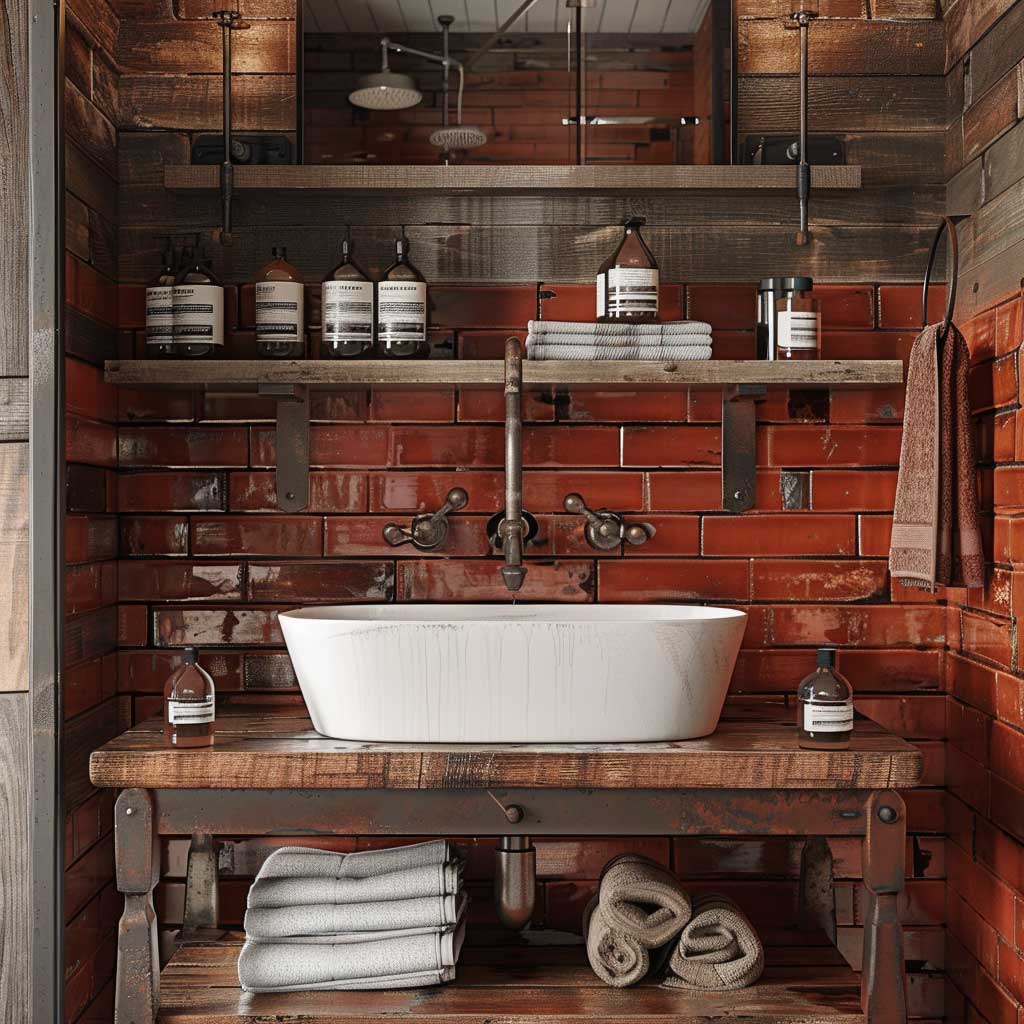
Red brick bathroom tiles in a matte finish are a different proposition from glossy — they read warmer, heavier, and more grounded, like a material that belongs to the building rather than something applied to it. MSI’s Rustiva Red Brick 2×18 matte porcelain tile currently sits at $4.72 per square foot at Home Depot (on sale from $7.73), which makes it the lowest-cost option in this article for a look that typically photographs as significantly more expensive. The 2×18-inch format mimics real brick dimensions closely enough that the illusion holds even at close range, which is not something every brick-look tile achieves.
Fixture pairing changes everything with this tile. Bronze or brass hardware pulls the earthy red tones toward warmth — the two read as belonging to the same material family, like iron and oxidized copper. Chrome does the opposite: it cools the tile down and pushes the look toward industrial rather than rustic. Open pine shelving or a reclaimed-wood vanity front echoes the organic, aged quality of the matte surface. Avoid polished white vanities — the combination of matte brick and high-gloss white creates a strange tension that makes neither element look intentional.
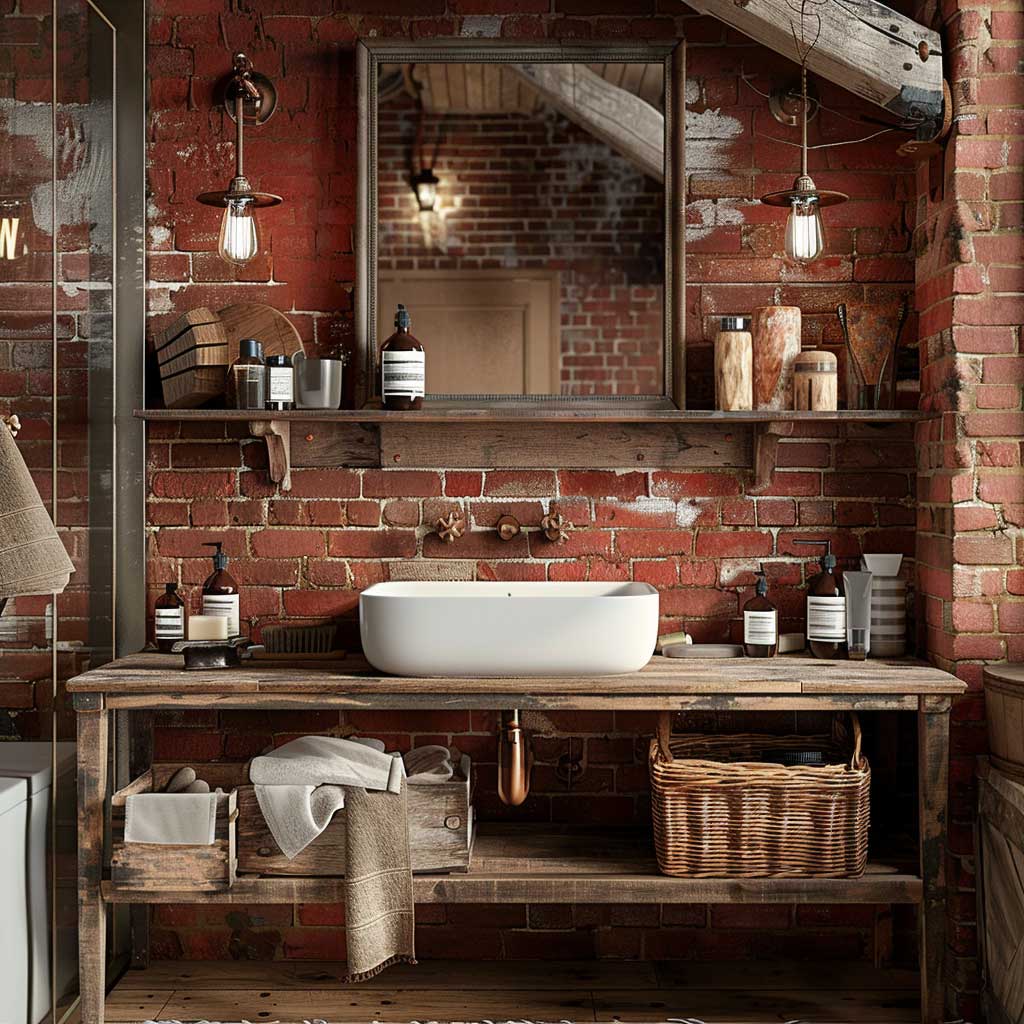
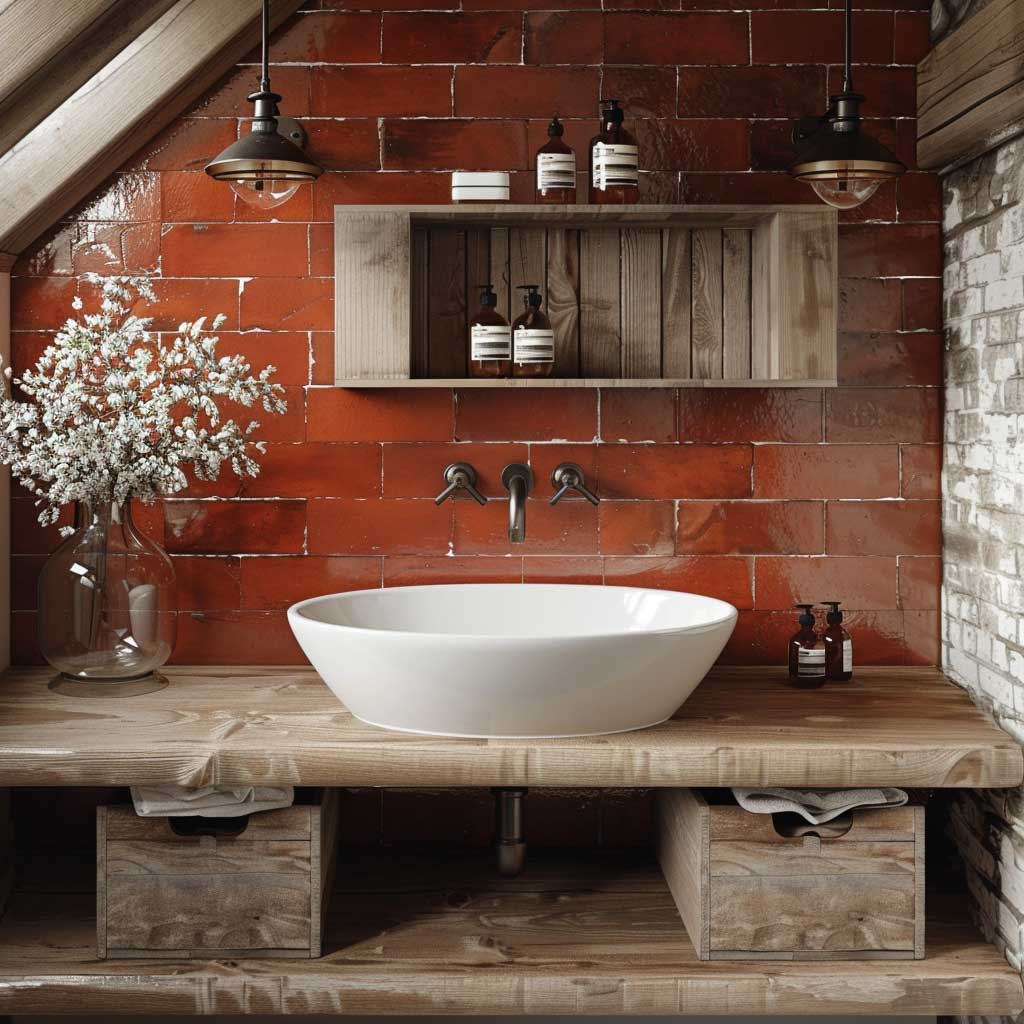
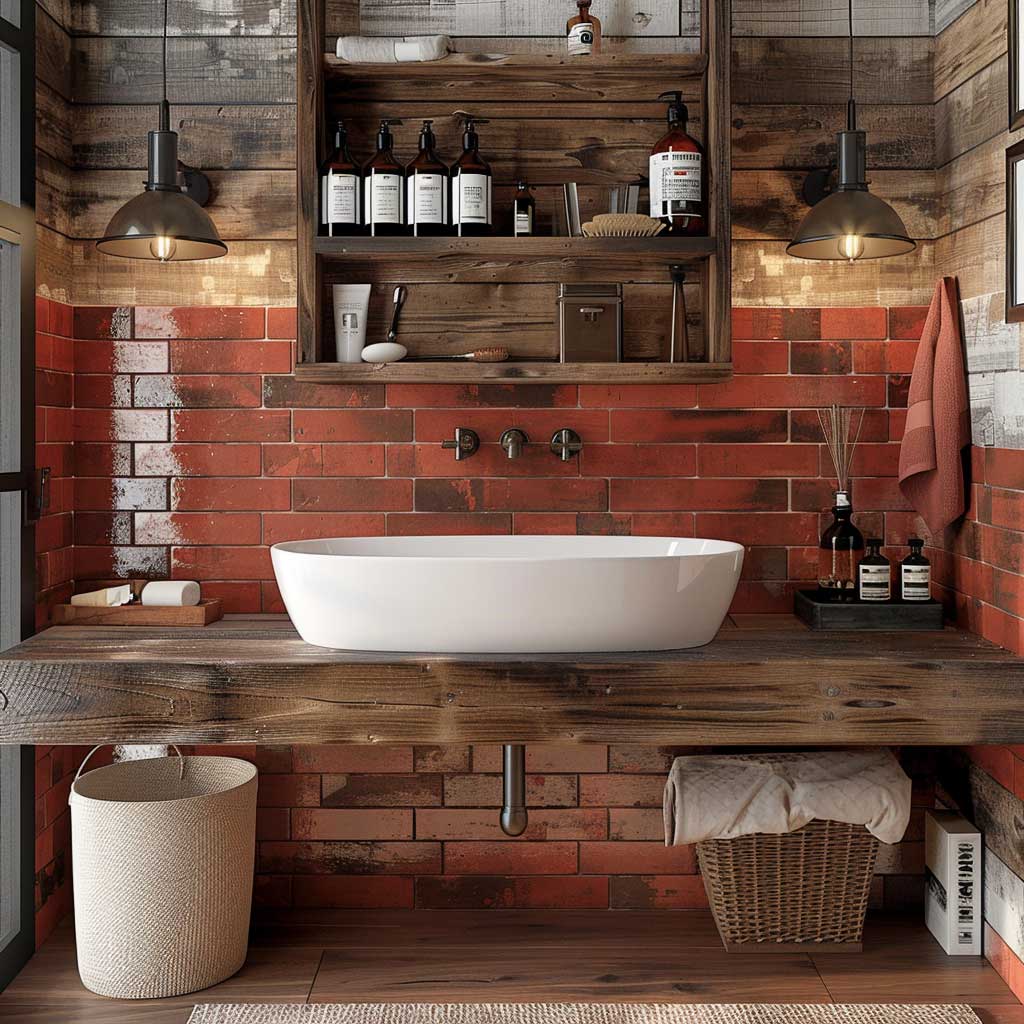
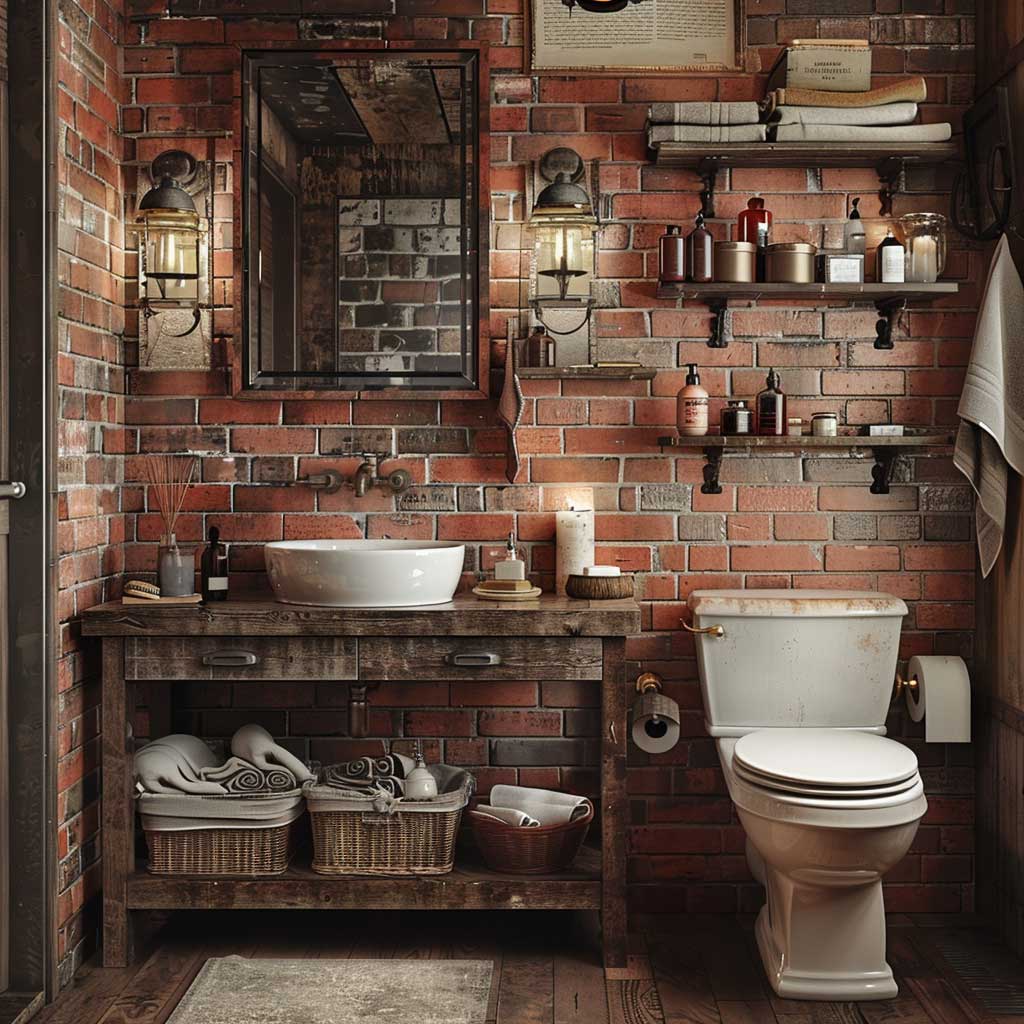
Lighting is the lever that makes or breaks a matte brick bathroom. Ambient sconces — warm-toned bulbs, ideally 2700K color temperature — bring out the depth in the tile’s surface texture the way afternoon sun reads on an exterior brick wall. Overhead recessed lighting with a cool color temperature does the opposite: it flattens the texture and turns the brick look generic. The difference between a bathroom that looks like a boutique hotel in Marrakech and one that looks like a school cafeteria is often just the bulb choice.
The practical tradeoff with matte brick tiles is grout maintenance. Because the finish is non-reflective and textured, staining becomes visible faster than on glossy surfaces, particularly in shower zones. Sealing the grout in wet areas costs $3–$4 per square foot (Angi, 2026) and should be done annually to prevent mold and mineral staining. Epoxy grout is the smarter long-term investment here — it’s waterproof by nature, runs $6–$9 per square foot installed, and eliminates the annual sealing obligation entirely. Factor that into the budget conversation before the tile is purchased, not after installation. For color comparison across bathroom tile palettes, the pink bathroom wall tiles article shows how warm-toned finishes behave differently when the saturation changes.
Don’t tile an entire small bathroom in full-intensity red — walls, floor, and ceiling — without at least one neutral surface to anchor the room. Red on every plane removes all visual reference points and makes the space feel smaller and more claustrophobic, not bolder. A single red feature wall behind the vanity or in the shower enclosure delivers the full impact at a fraction of the visual weight. The rooms that photograph best use red on one or two surfaces and let a pale floor or white ceiling do the breathing work.
Red Bathroom Tiles in Herringbone and Geometric Patterns
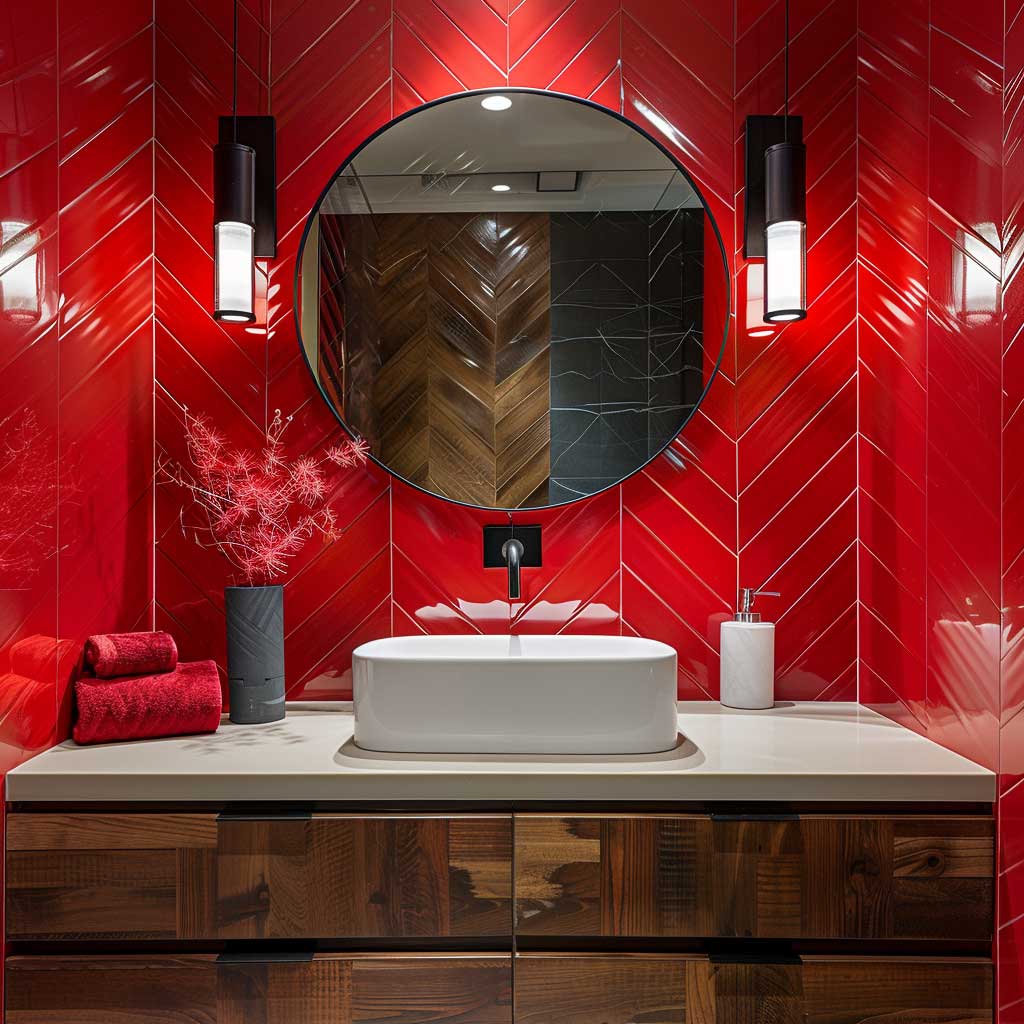

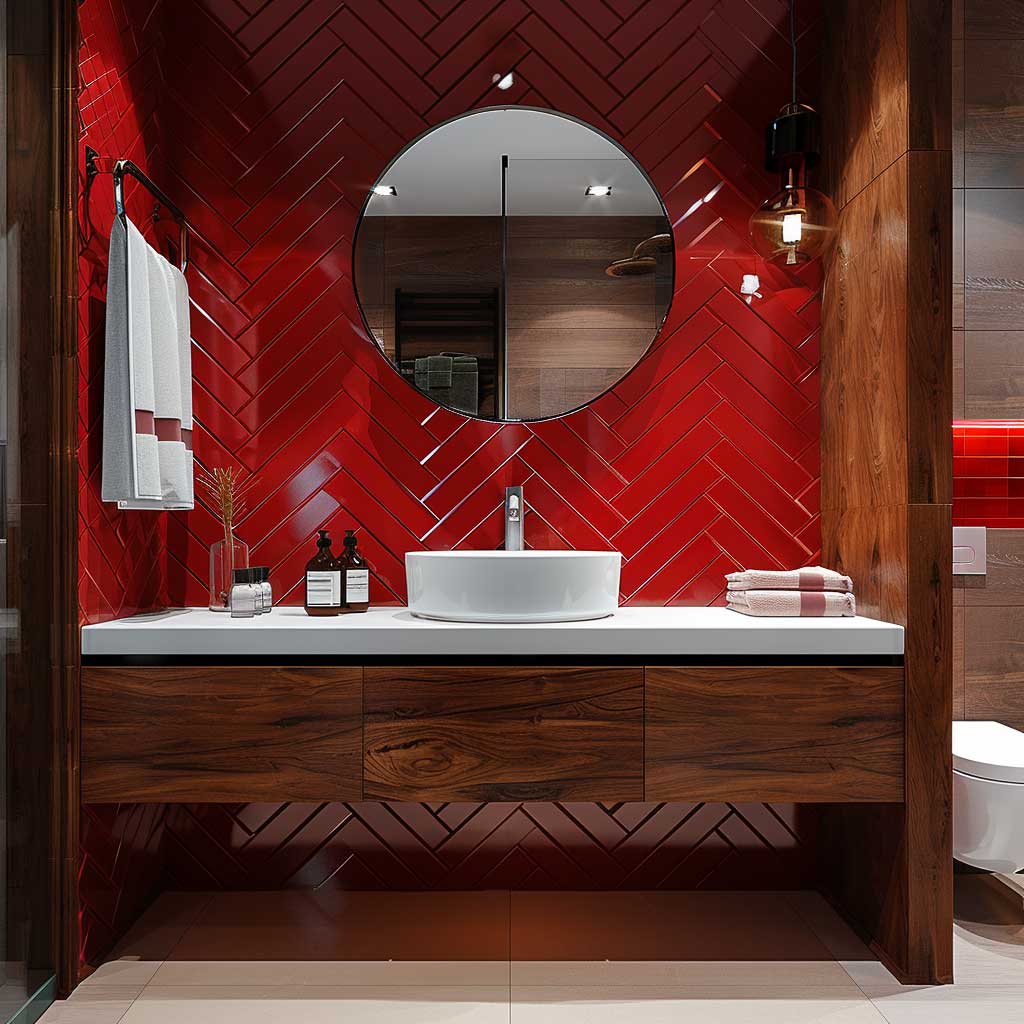
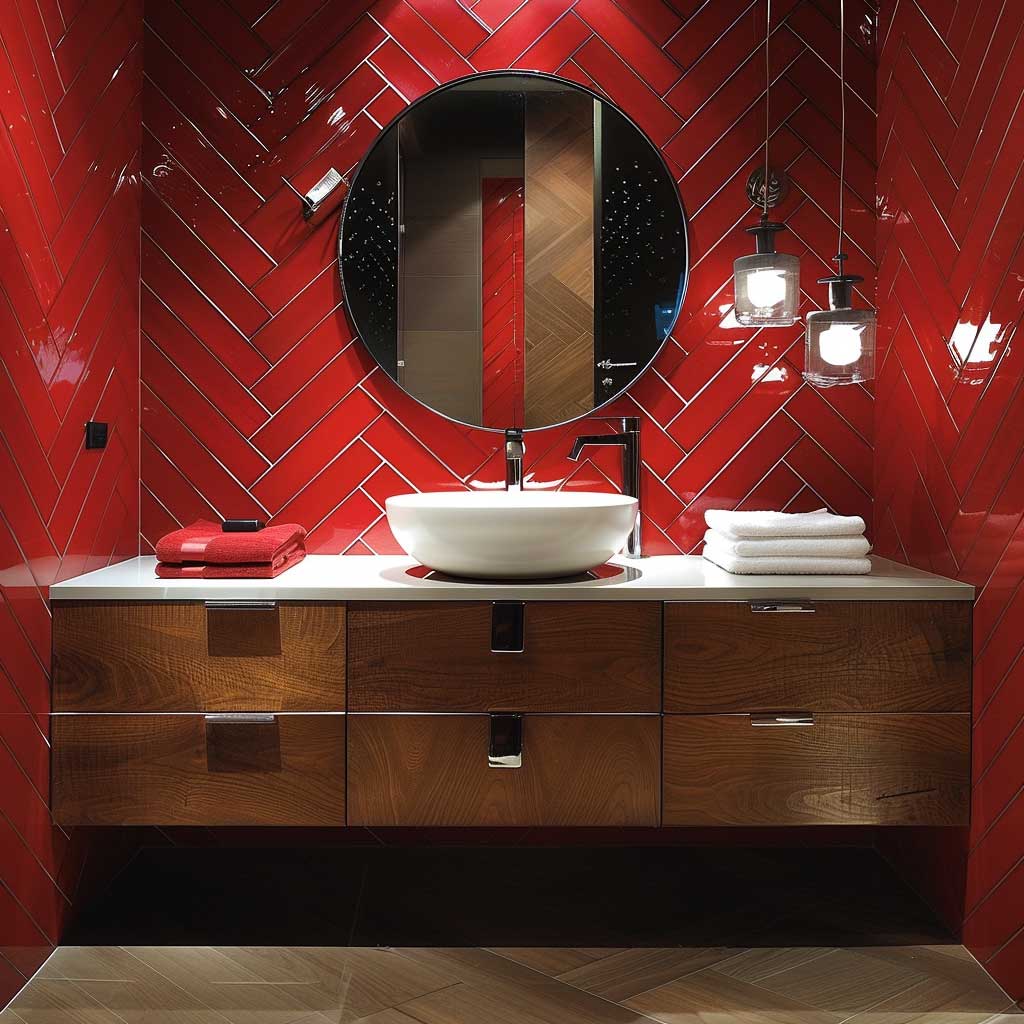
Red bathroom tiles laid in a herringbone or chevron pattern function differently from a plain grid — the layout adds a second layer of visual movement on top of the color, so the wall reads like a composition rather than a surface. The herringbone pattern has appeared in architectural tile work since the Roman Empire, and the reason it survives is structural: the diagonal interlocking layout actually distributes load better than standard brick-lay, which is why it showed up in roads and floors before it showed up in bathrooms. That history is part of why it photographs as expensive even when the material cost stays low.
Labor cost is the honest variable here. Standard brick-lay red tile installation runs $6–$10 per square foot in labor. Herringbone typically runs $12–$20 per square foot — every tile requires an angled cut, and the installer needs a dead-flat substrate because the diagonal joints amplify any surface irregularity. What does a herringbone red tile bathroom cost to install, realistically? A 40-square-foot shower wall in herringbone layout will run $480–$800 in labor alone, on top of tile materials. That’s the number to have before the conversation with a contractor, not after.
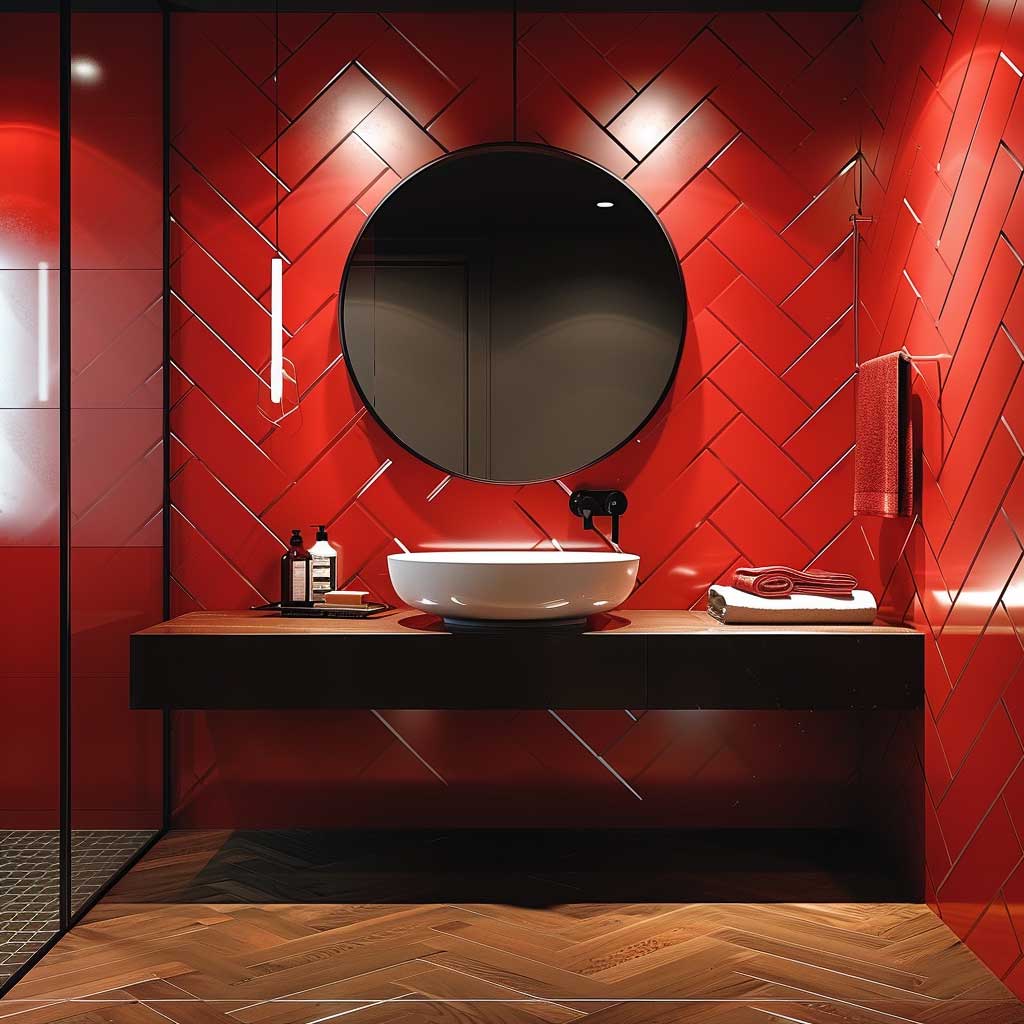
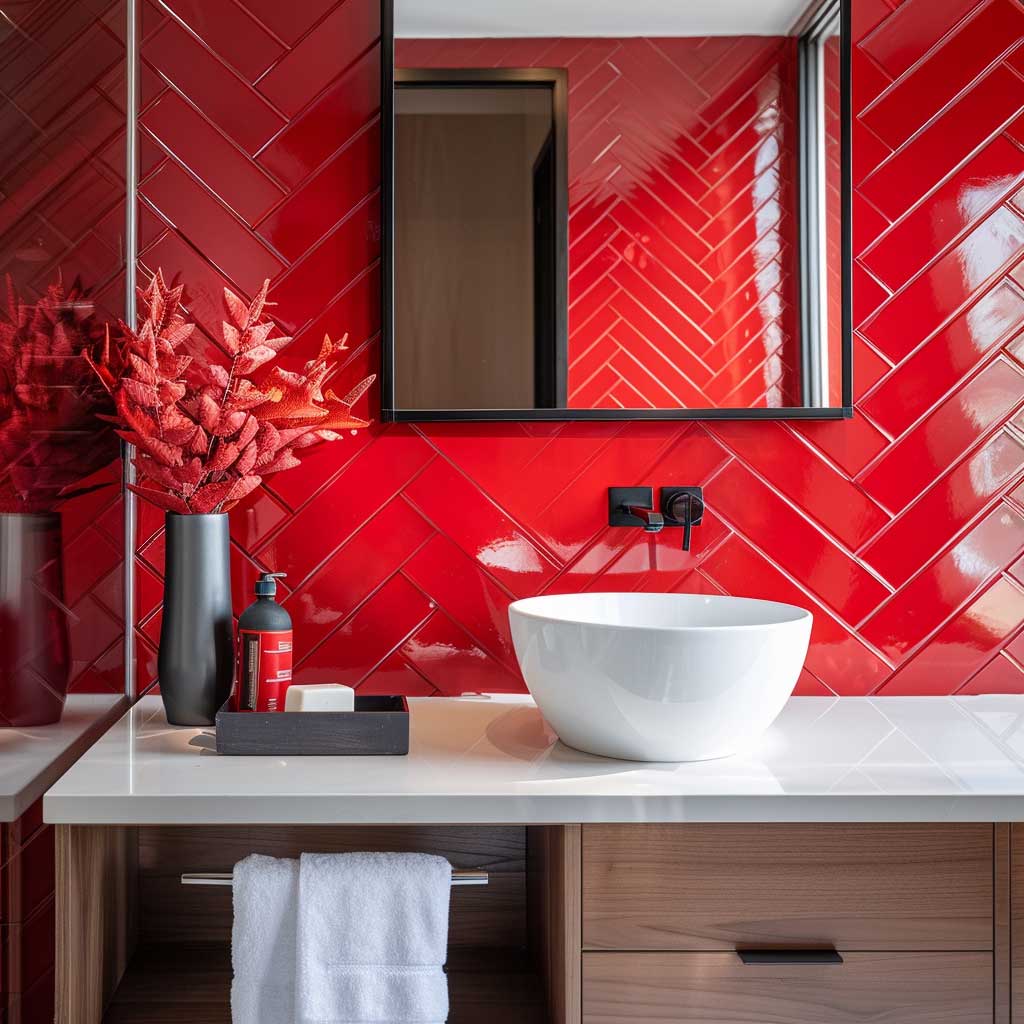
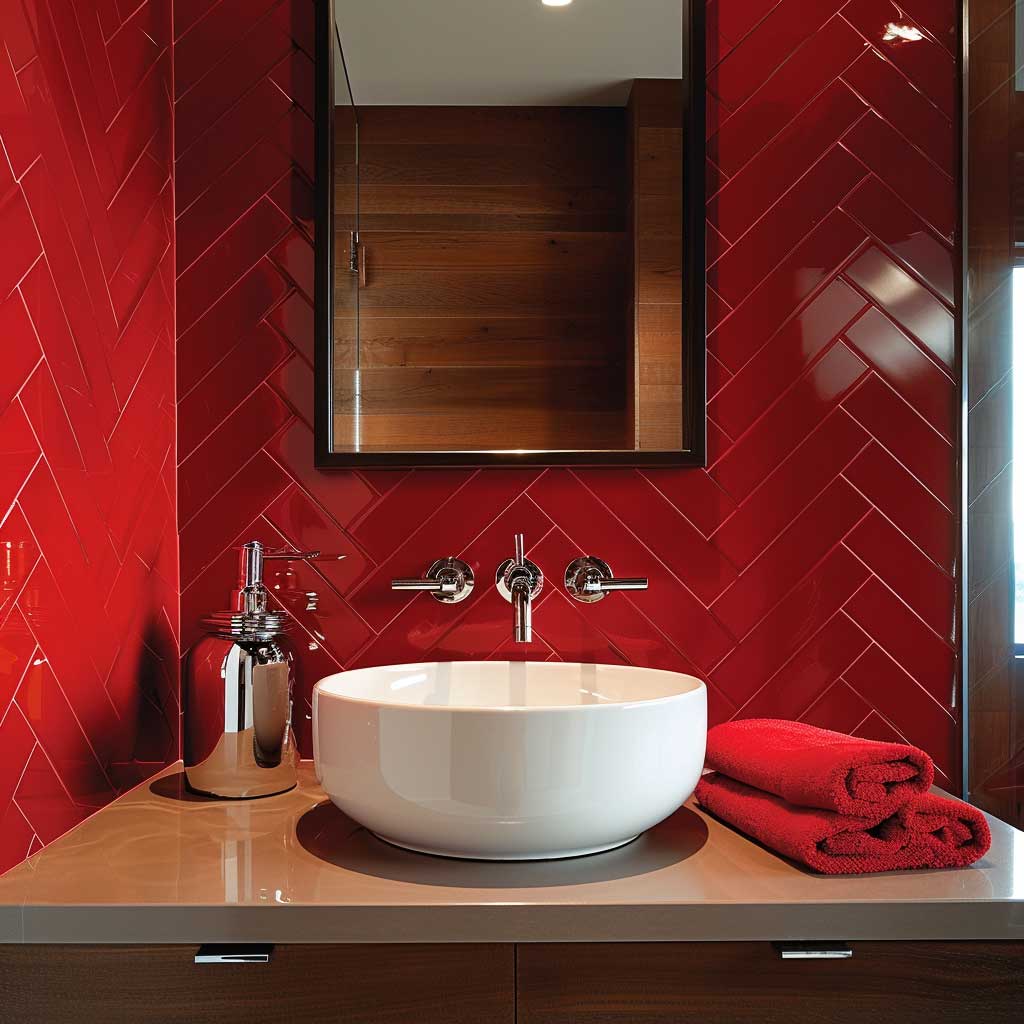
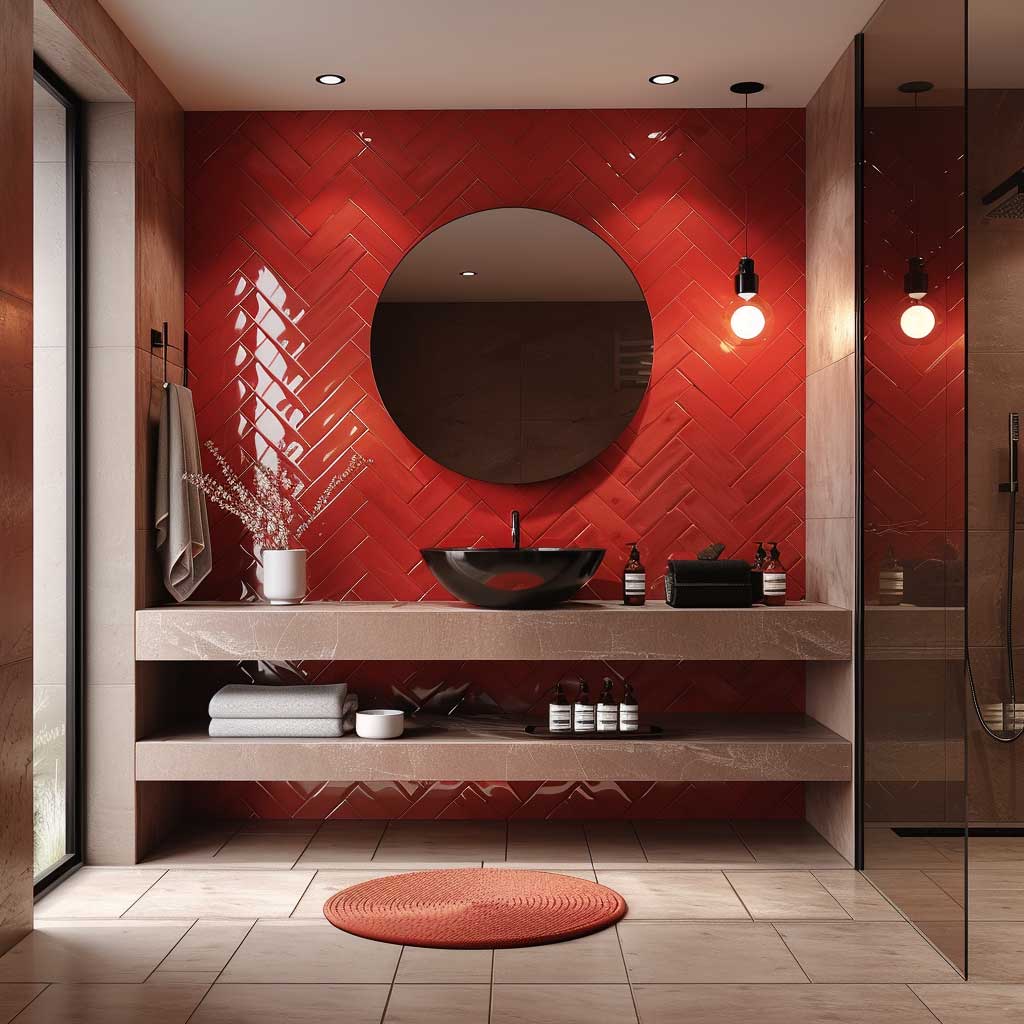
Grout color in a patterned red tile bathroom is a creative decision, not just a practical one. White grout makes every individual tile visible and the pattern reads crisp and graphic — think of it like ink on paper. A near-matching red grout makes the tiles blur together into an almost textile-like surface and minimizes the pattern. The trick stylists use: light grout for smaller tiles where you want the pattern to pop; tone-on-tone grout for larger tiles where you want the surface to read as a single plane of color with subtle movement. Never use dark charcoal grout on red tile — the contrast muddies the color and the room ends up looking like neither decision was intentional.
The restraint rule applies here more than in any other red tile scenario: the patterned wall needs the rest of the room to stand down. A floating vanity in matte white, a frameless mirror, and simple slim taps — that’s the formula. Adding a patterned floor on top of a patterned tile wall turns the bathroom into a geometry argument that nobody wins. For a different approach to pattern and color in bathroom tiles, the blue bathroom tiles ideas for a transitional look article shows how the same layout principles shift when the palette changes.
| Tile Style | Best Finish | Installation Cost (Labor) | Key Maintenance |
|---|---|---|---|
| Glossy Red Ceramic | High-gloss glaze | $6–$10/sq ft | Wipe clean; regrout every 1–2 yrs |
| Matte Red Brick Porcelain | Matte / textured | $6–$10/sq ft | Seal grout annually; epoxy grout recommended |
| Red Herringbone / Geometric | Glossy or matte | $12–$20/sq ft | Flat substrate required; 15% tile overage |
The Takeaway
Red Tile Rewards the Room That Knows What It Wants
Glossy red makes small bathrooms feel larger and cleans fast — budget from $5.29/sq ft in materials with standard installation. Matte red brick runs even lower in tile cost but demands proper grout sealing or epoxy grout from day one. Patterned layouts in herringbone or geometric add the highest visual impact and the highest labor bill — know the $12–$20/sq ft installation cost before committing.
Every version works. What kills a red tile bathroom is not the tile — it’s the surrounding surfaces competing for attention. Quiet floor, quiet fixtures, quiet ceiling. Let the wall do the one thing it was chosen to do.
Save this post before you head to the tile showroom — the finish decision is harder in person when every sample is lit by fluorescent overhead light.
Related Topics
FAQ
What color grout works best with red bathroom wall tiles?
Do red walls make a bathroom feel smaller?
How much does it cost to tile a bathroom in red tiles?
Can red bathroom tiles work in a small bathroom?
What fixtures pair best with red tiled bathrooms?
How do you redesign a bathroom with red tiles on a budget?
Complete guide
Bathroom Design Ideas That Transform Every Space From Ordinary to Exceptional
Tiles, colors, fixtures, layouts, remodels, mirrors, decor — all in one place