Most corner trim on houses I’ve driven past looks like an afterthought. Flat aluminum strips nailed to OSB. Zero personality. The outside corners of your home take more weather abuse than any other spot on the facade — rain hits them at an angle, wind peels caulk off within two seasons, and cheap vinyl quoins start yellowing before the mortgage clears its first year.
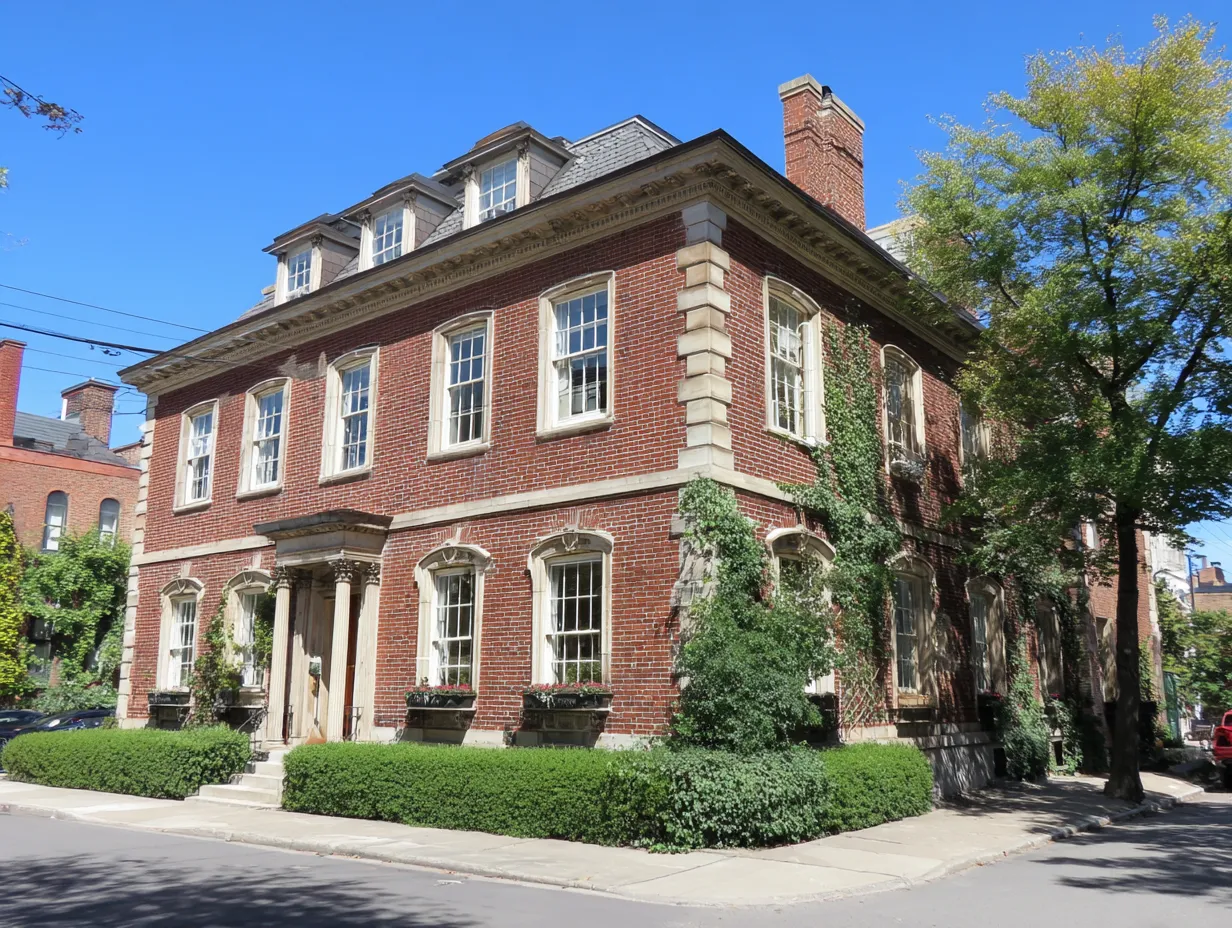
Two approaches actually hold up and look right on a classic exterior: rusticated quoins and corner pilasters. Both come from centuries-old stone construction. Today you can get the same look in EPS foam with acrylic reinforcement for under $15 per linear foot installed. Skip the PVC snap-on corners from the big-box store. They crack in cold climates and the color never quite matches.
I’ll break down both options — what they cost, where they work best, and the one installation mistake that ruins the whole look on 90% of DIY jobs.
Quick Summary
Two main options: Rusticated quoins (staggered stone-block look) and corner pilasters (vertical flat columns).
Cost range: Quoins run $8–$14 per piece, pilasters $80–$120 per unit. Total per corner: $400–$700 for quoins, $160–$280 for pilasters (materials only).
Best material: EPS foam with acrylic reinforcement — lightweight, weather-resistant, paintable.
Biggest mistake: Installing trim flush with the wall. You need 3/4″+ projection for shadow lines, or the whole thing looks flat and fake.
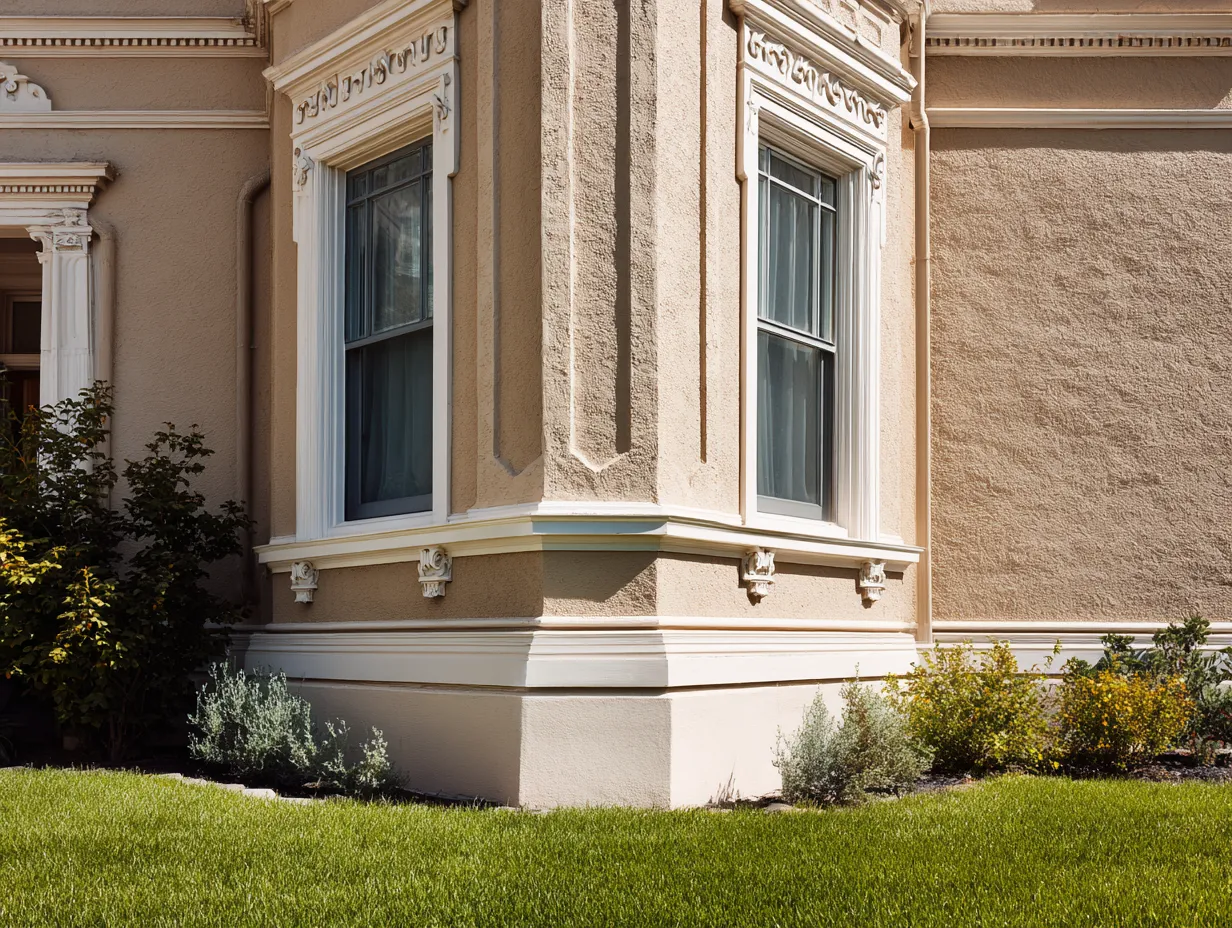
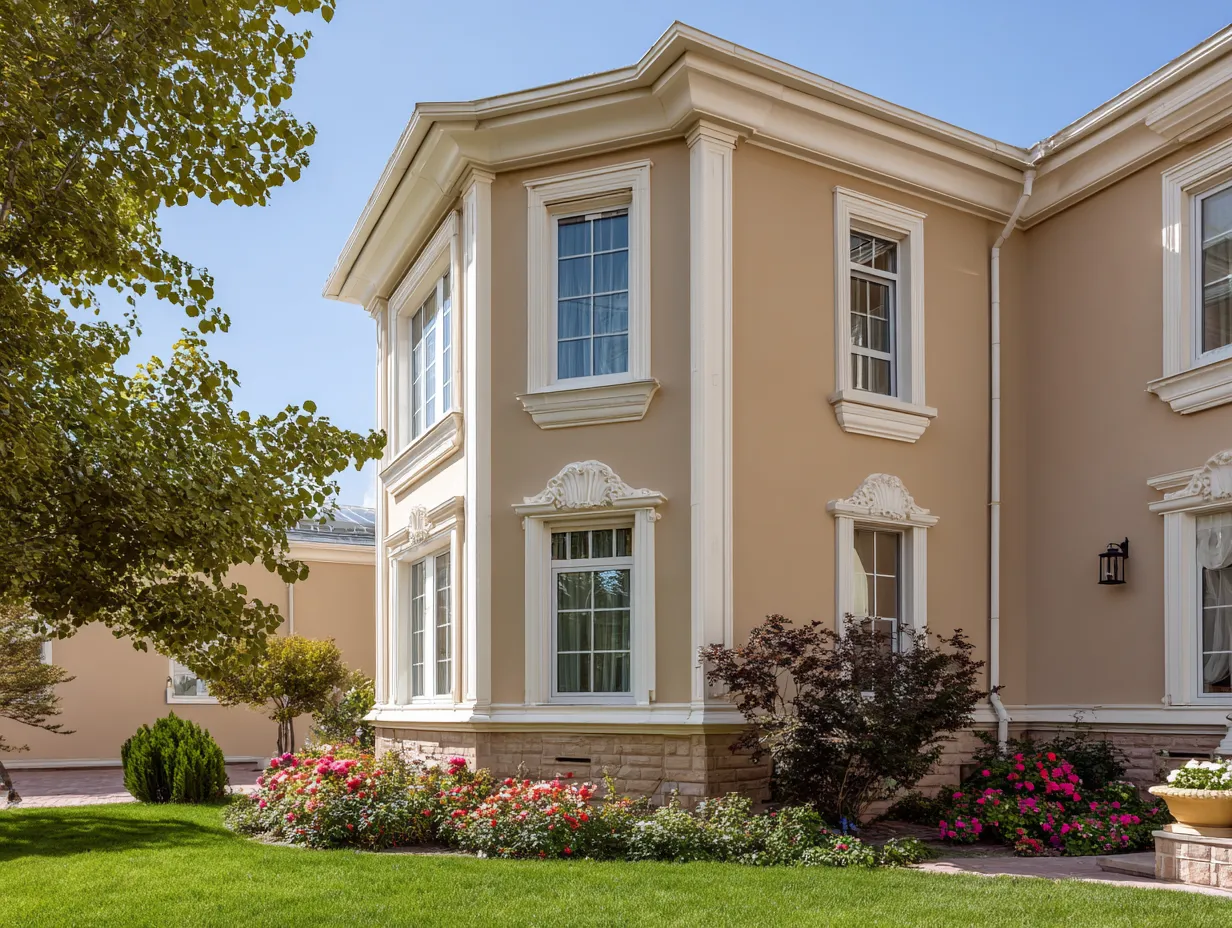
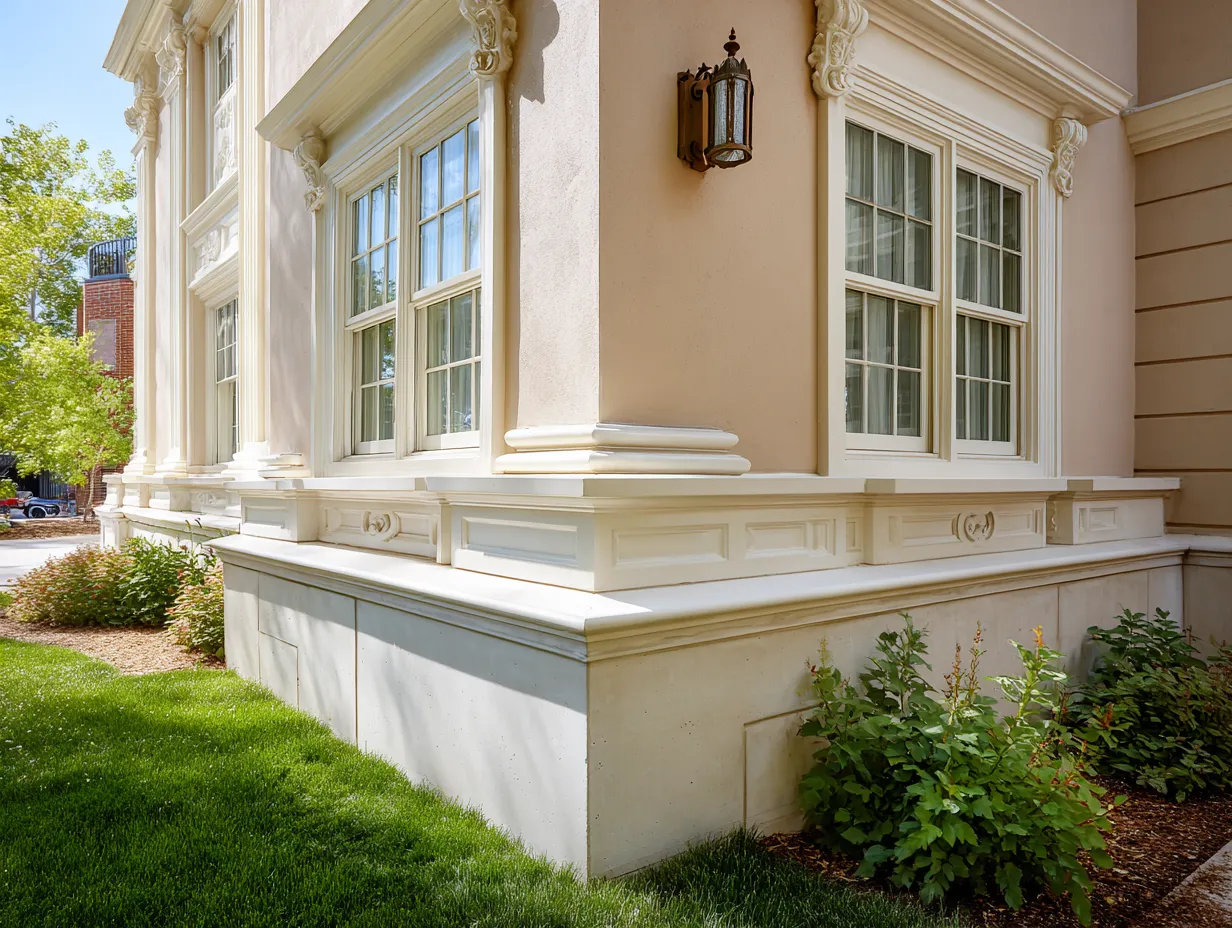

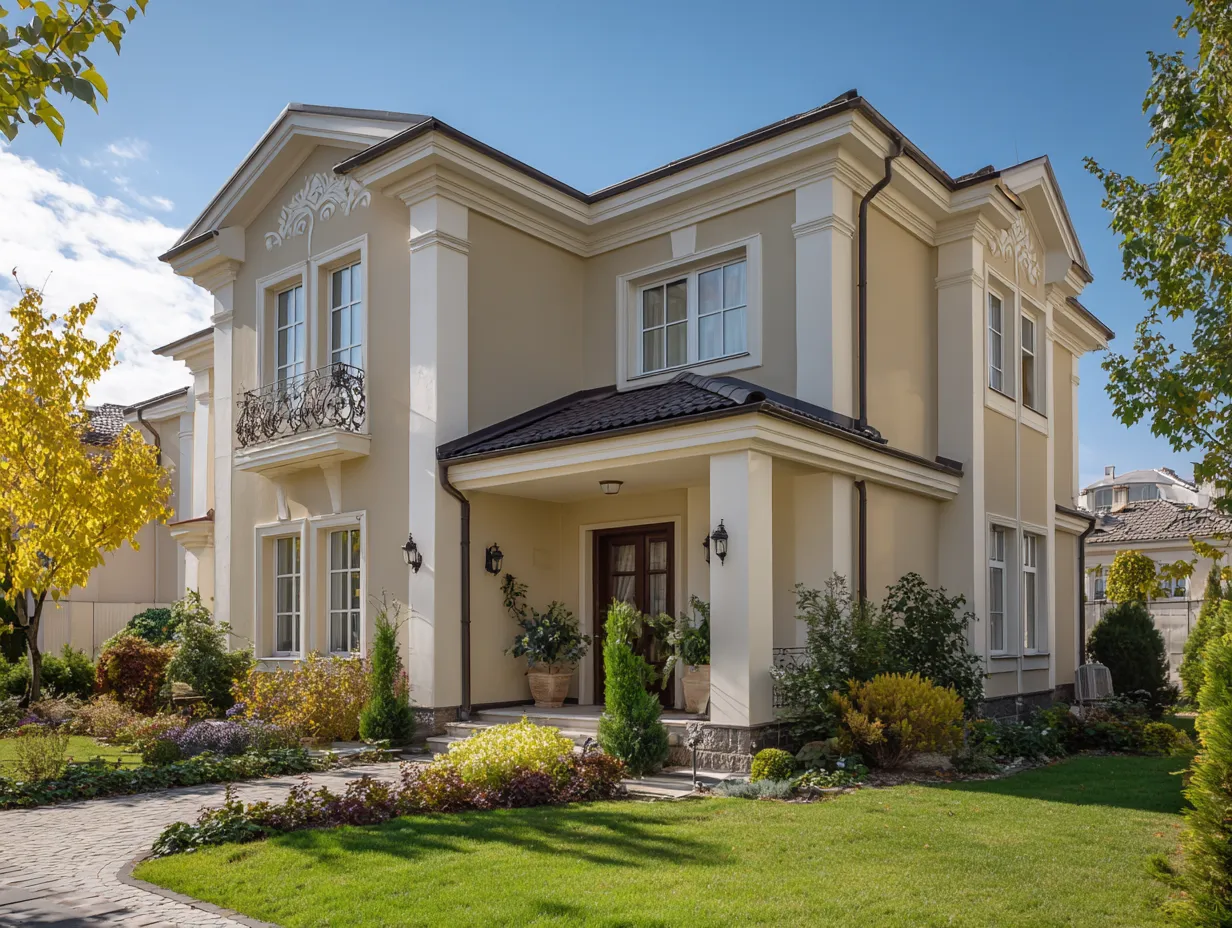
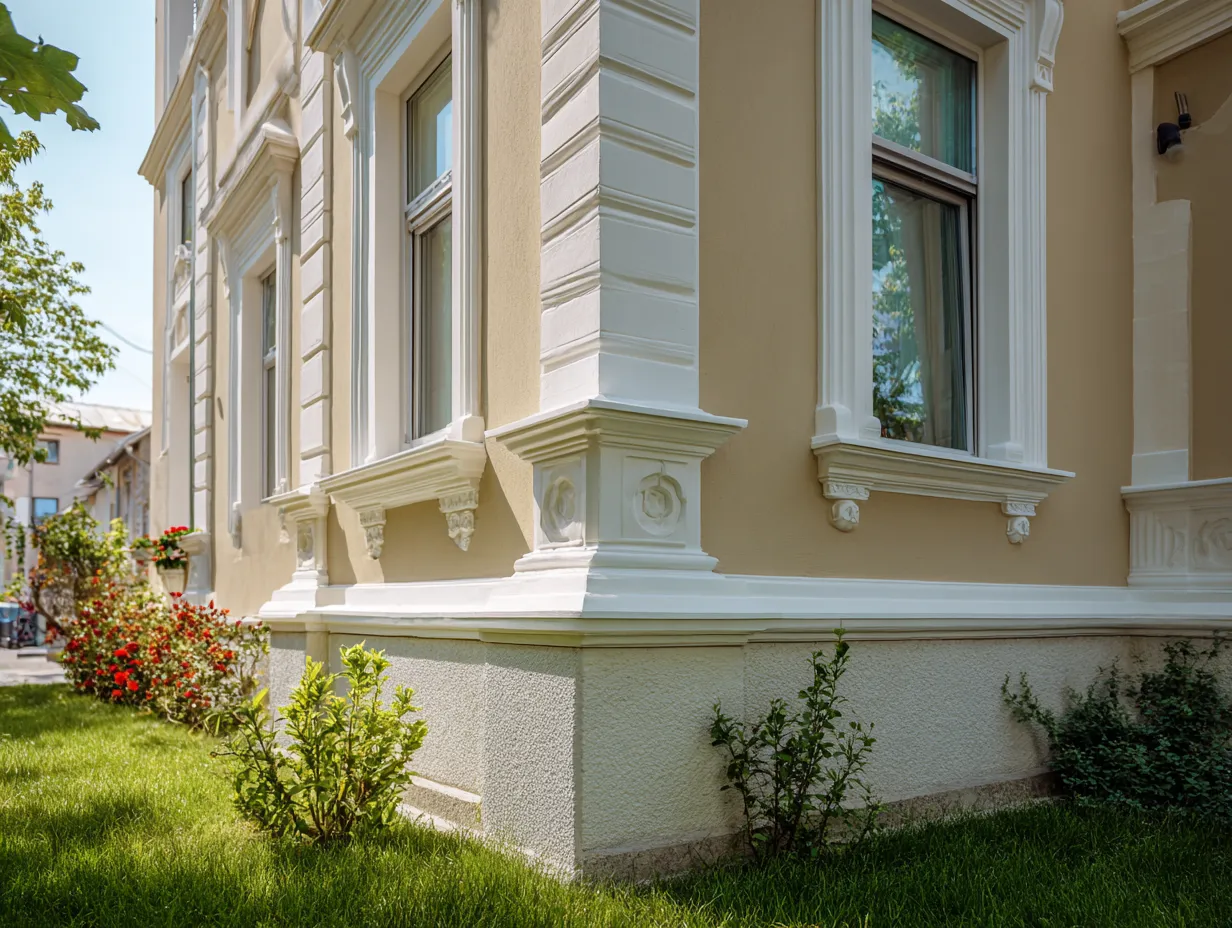
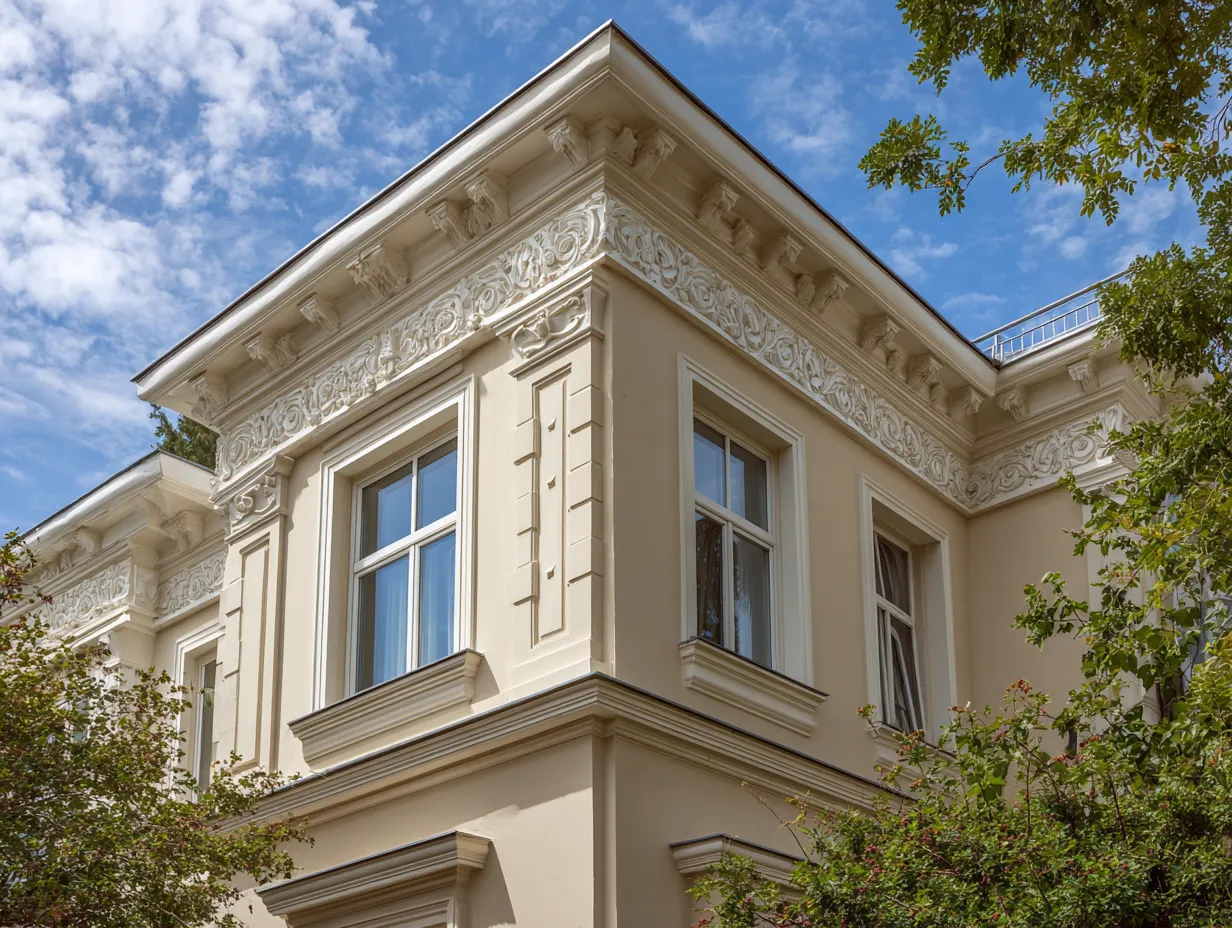
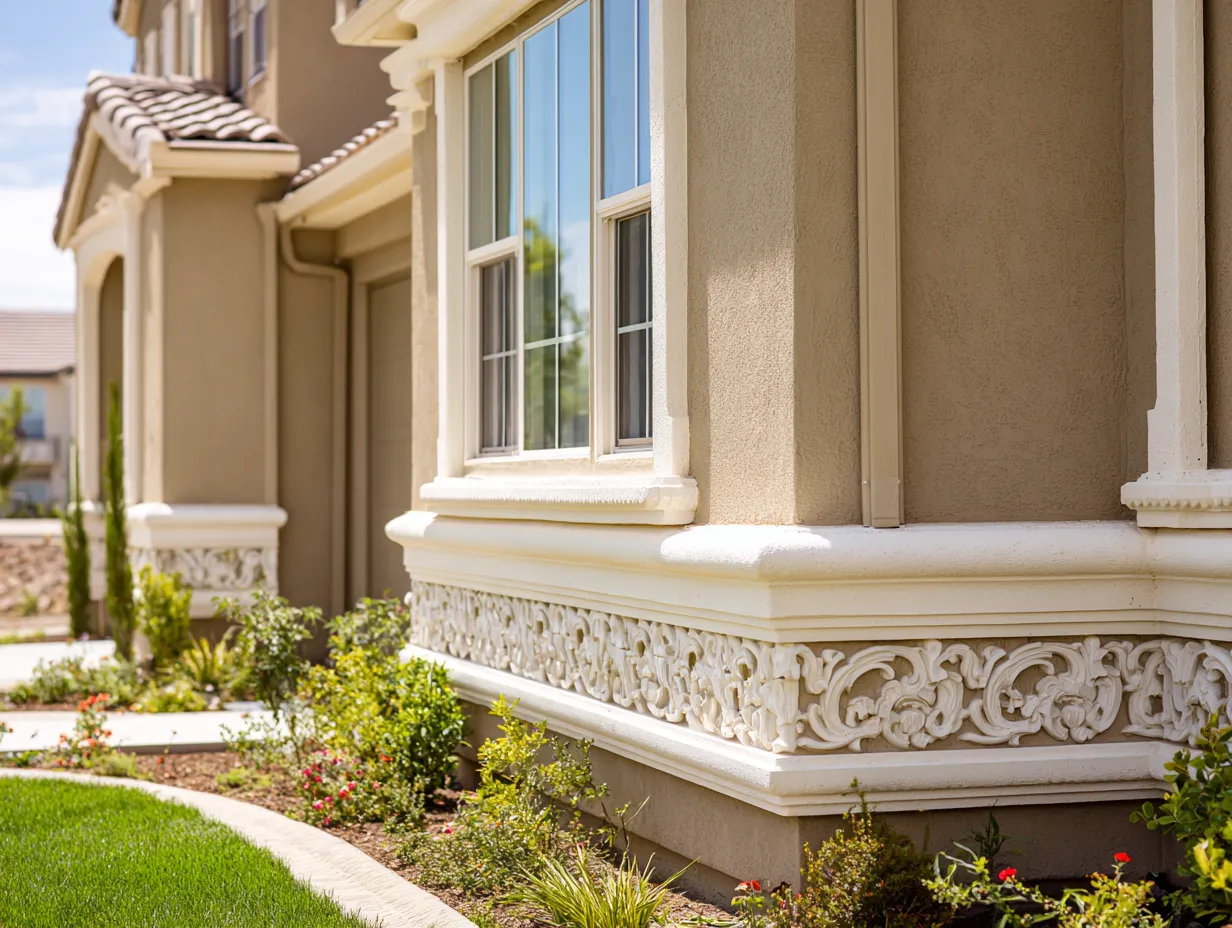
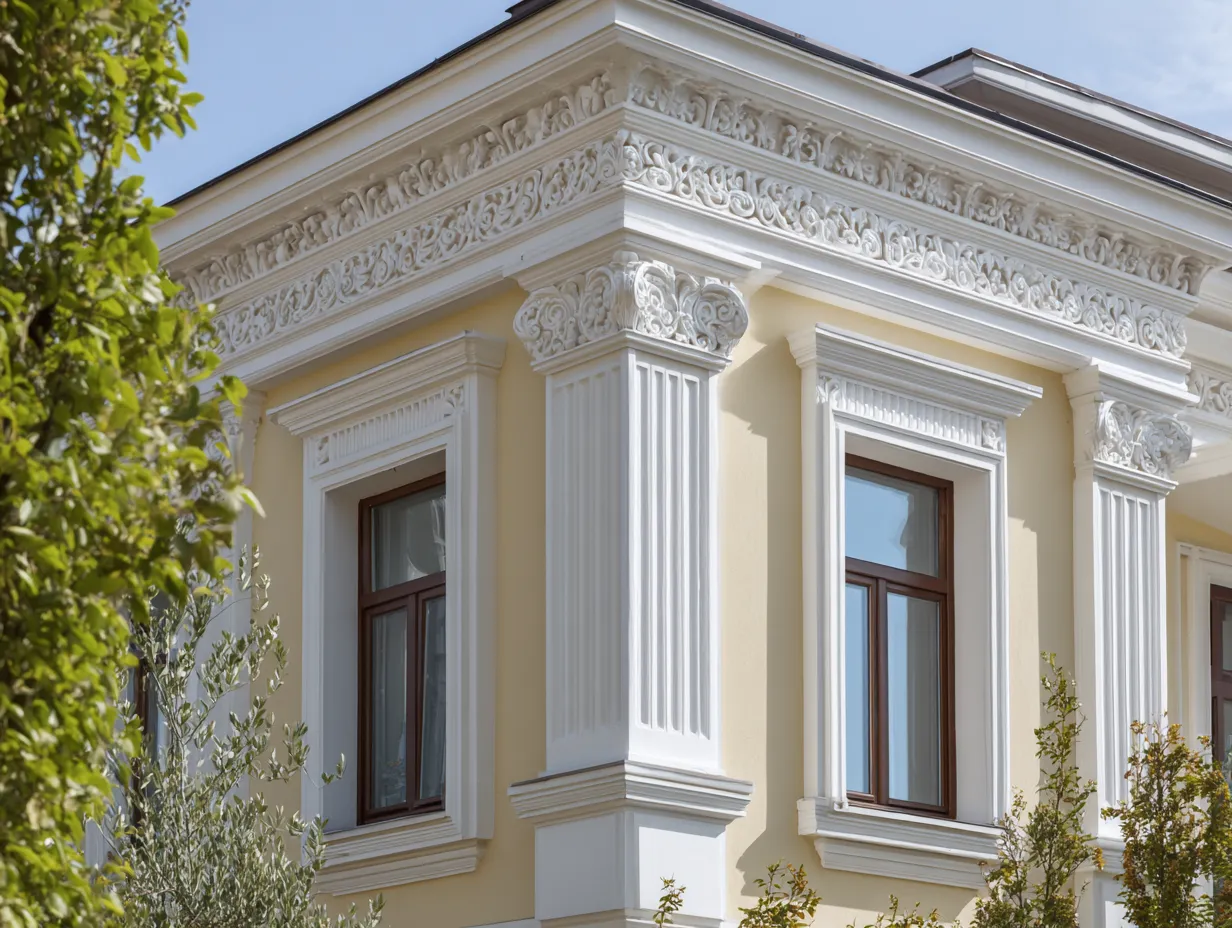

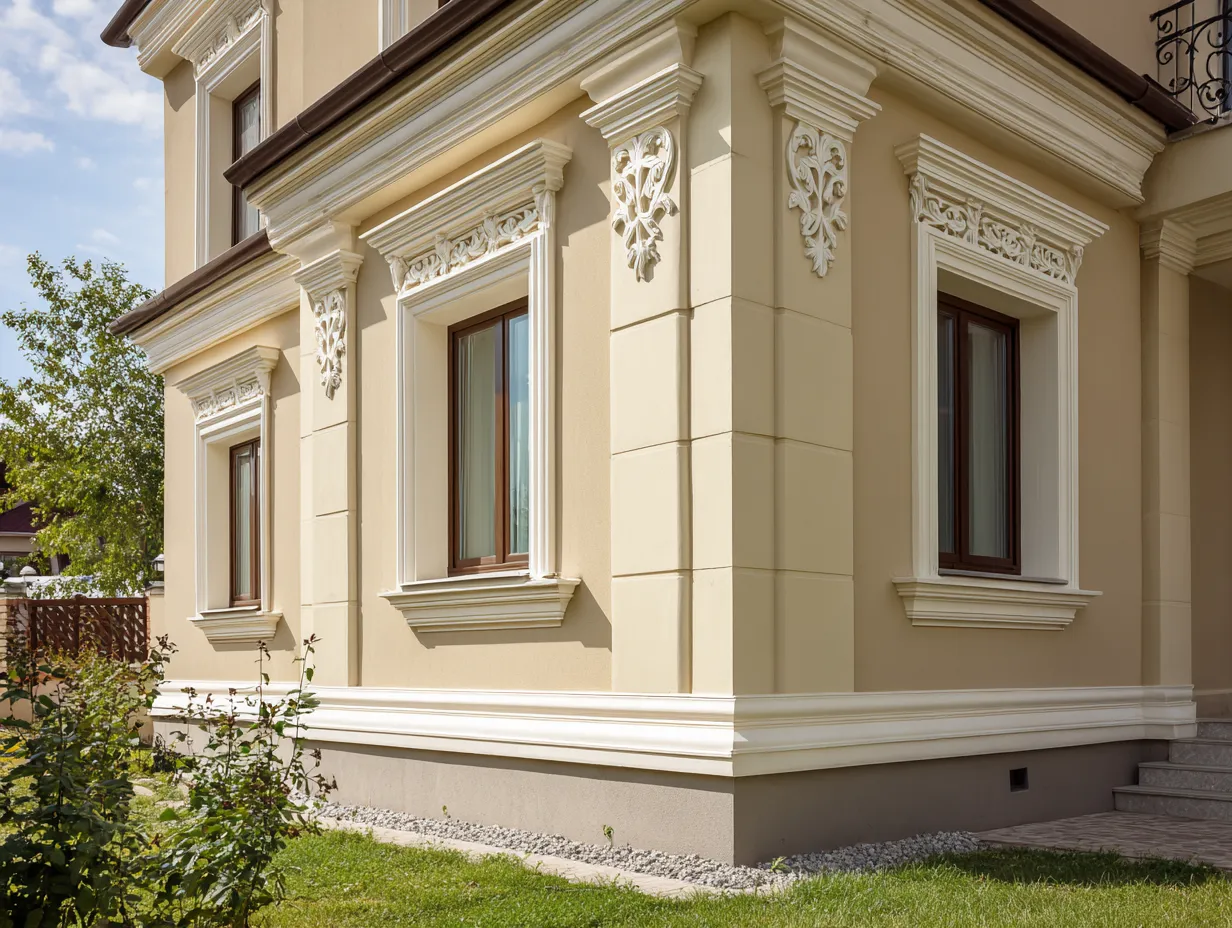
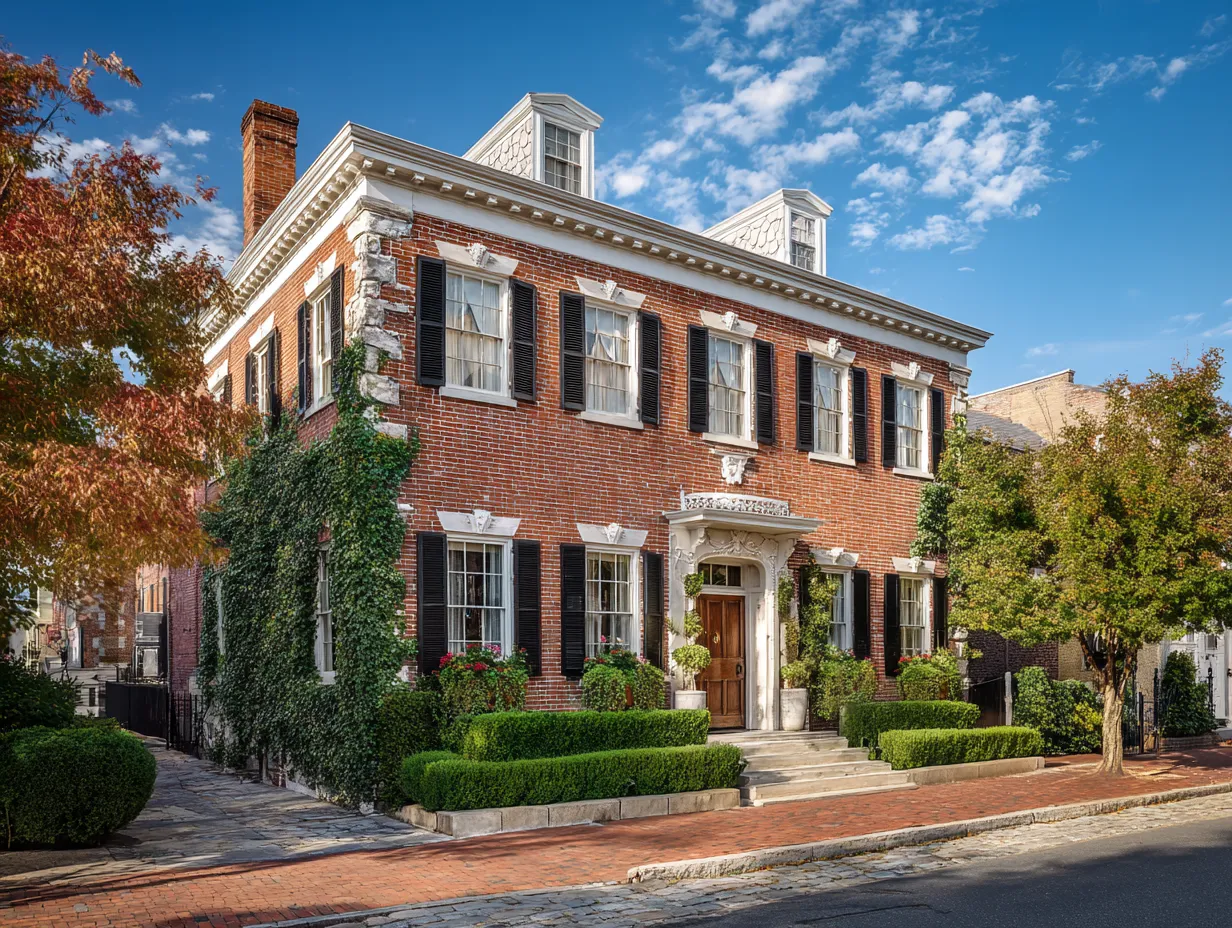
A house with framed corners looks neat and expressive, and its architectural features become even more noticeable and accentuated. For builders going the pilaster route, polyurethane options like the Fypon PIL7X90E Fluted Economy Pilaster Set offer a solid starting point at roughly $80 per piece. For example, a bay window framed at the outer corners will not merge with the facade and will draw more attention to itself.

The house itself gets an outline and stands out clearly against the background of the landscape.
Rusticated Quoins: The Fortress Look for Outside House Corners
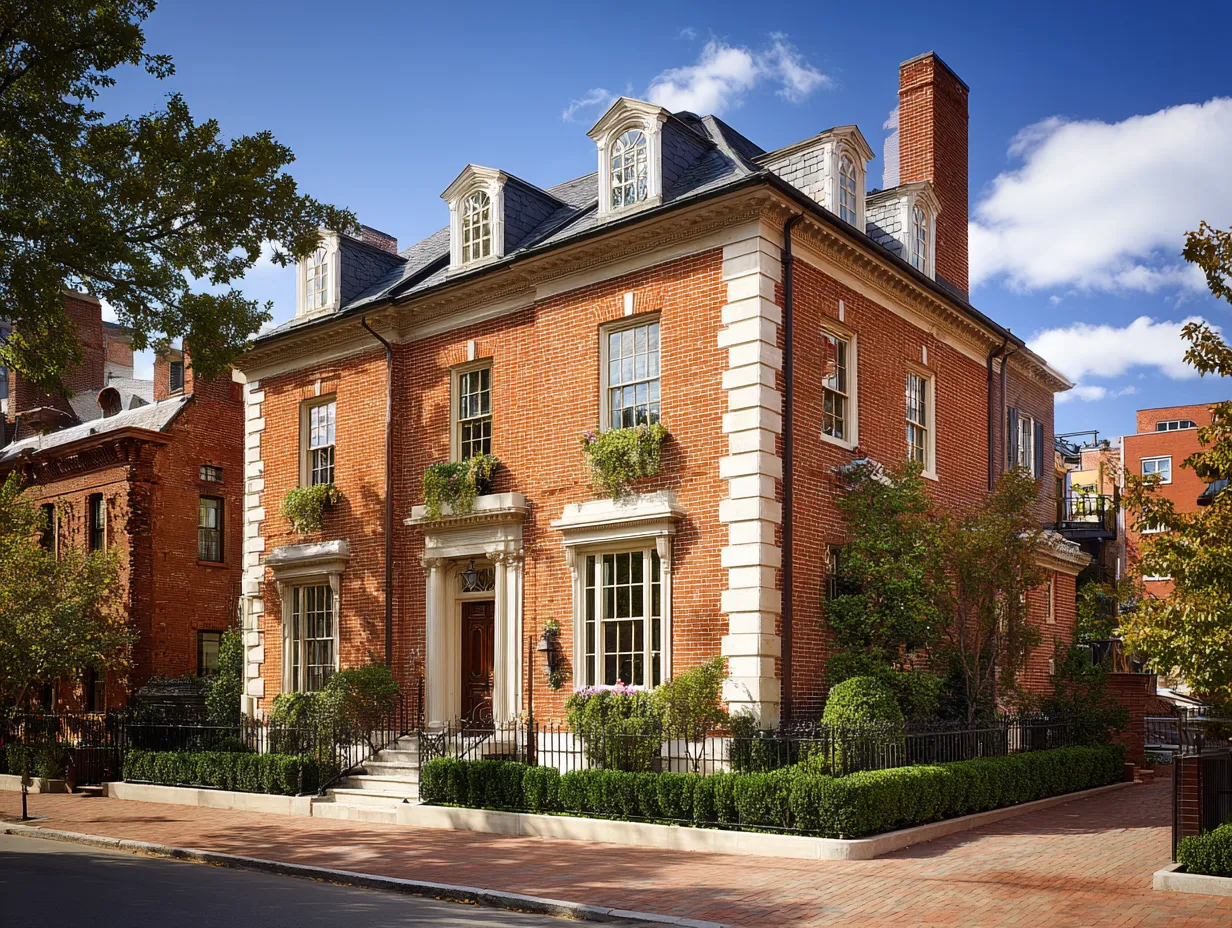
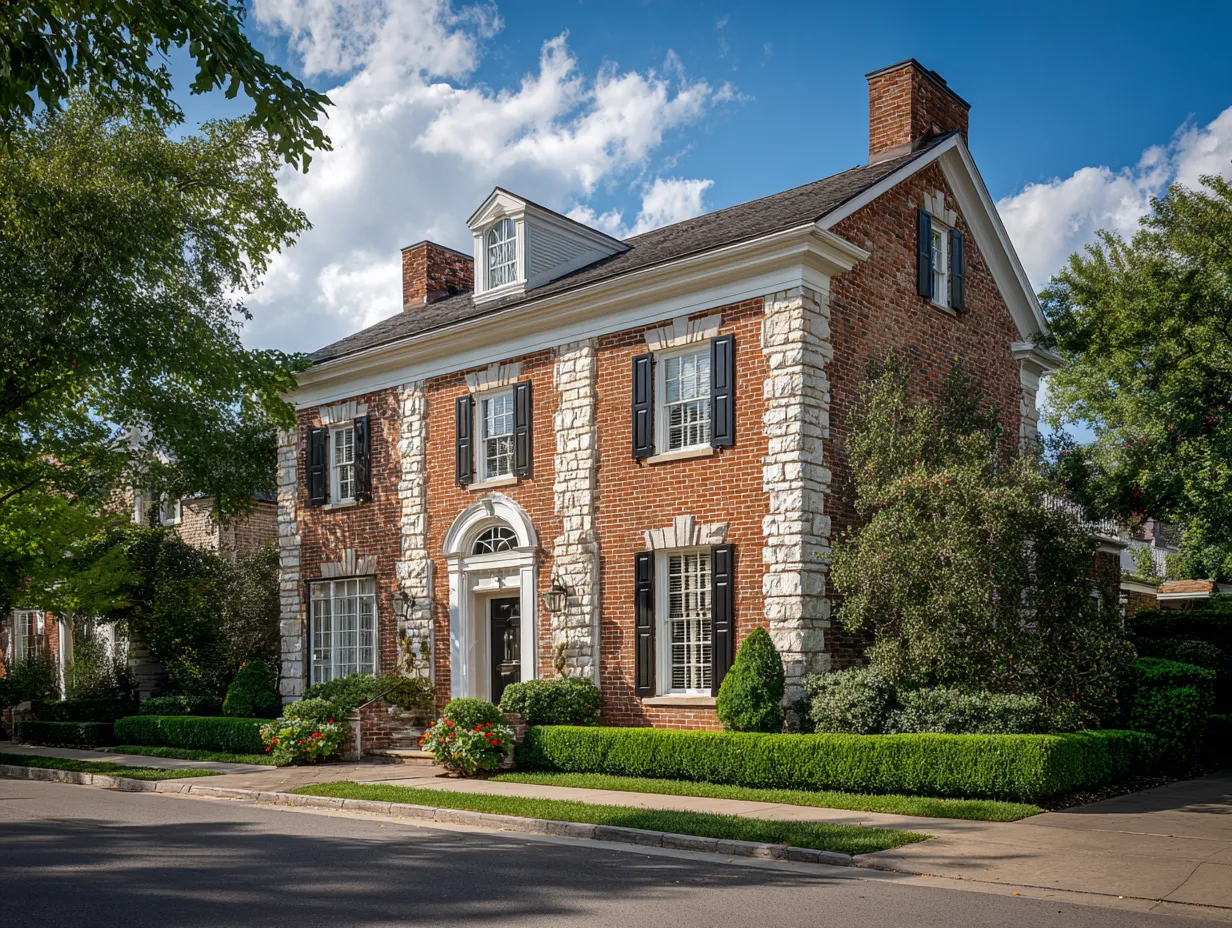
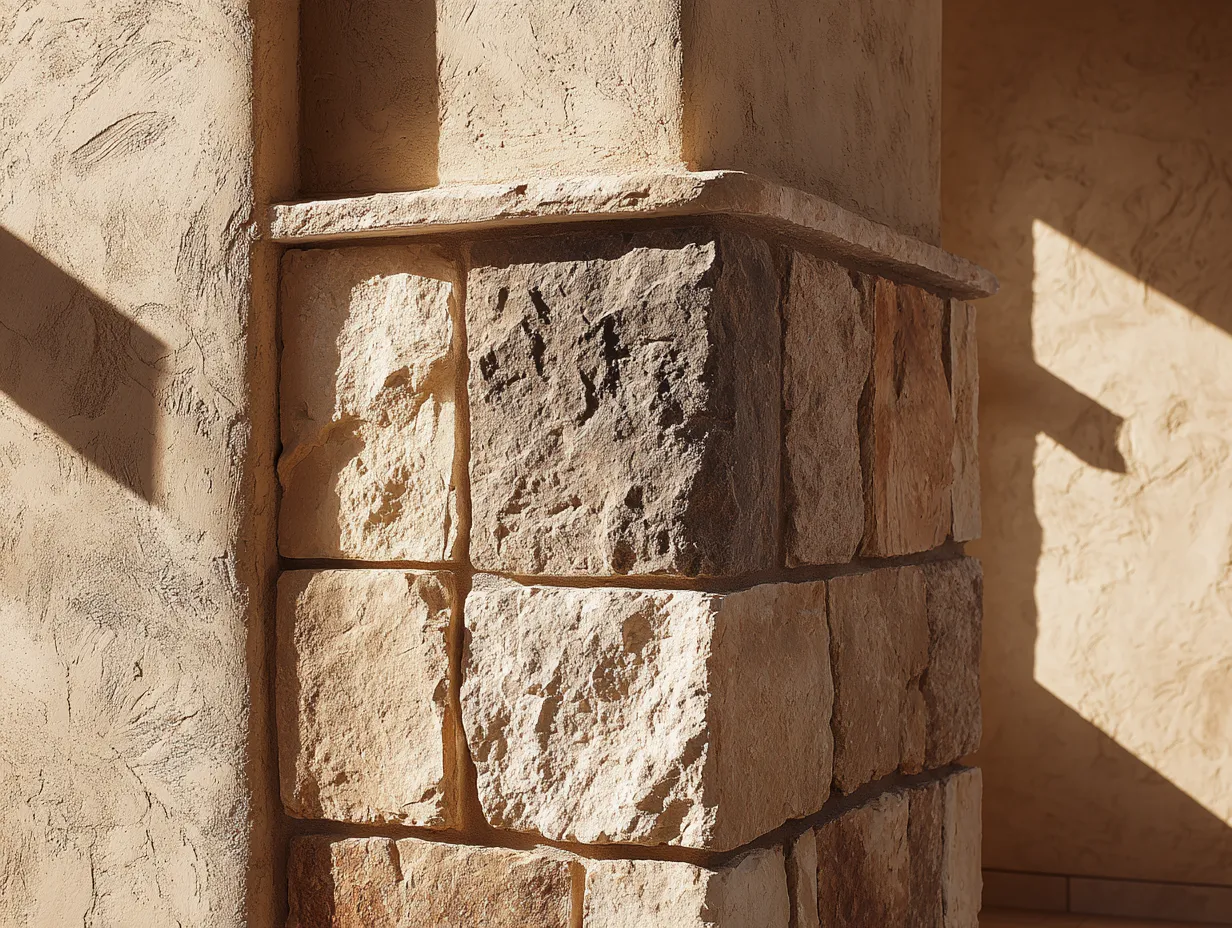
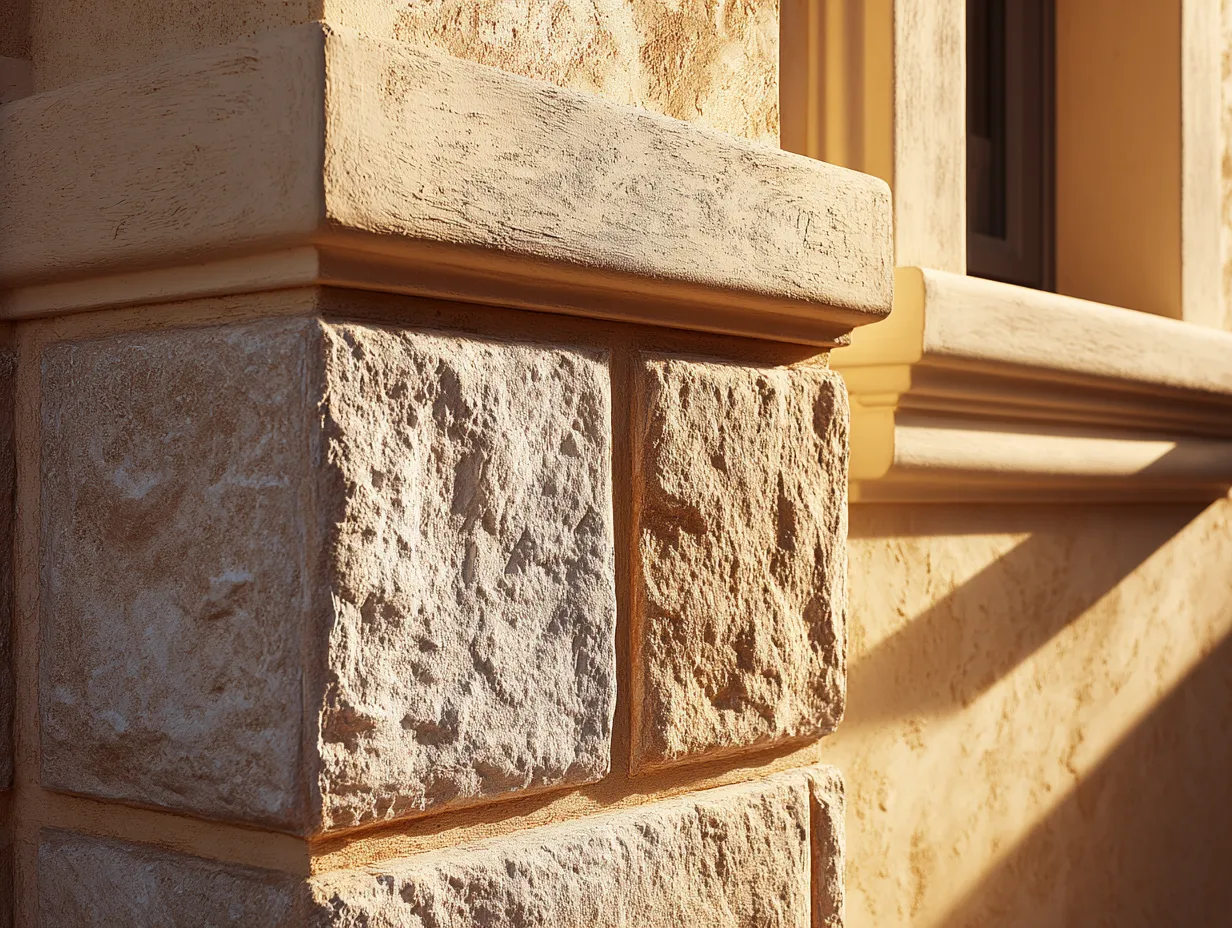
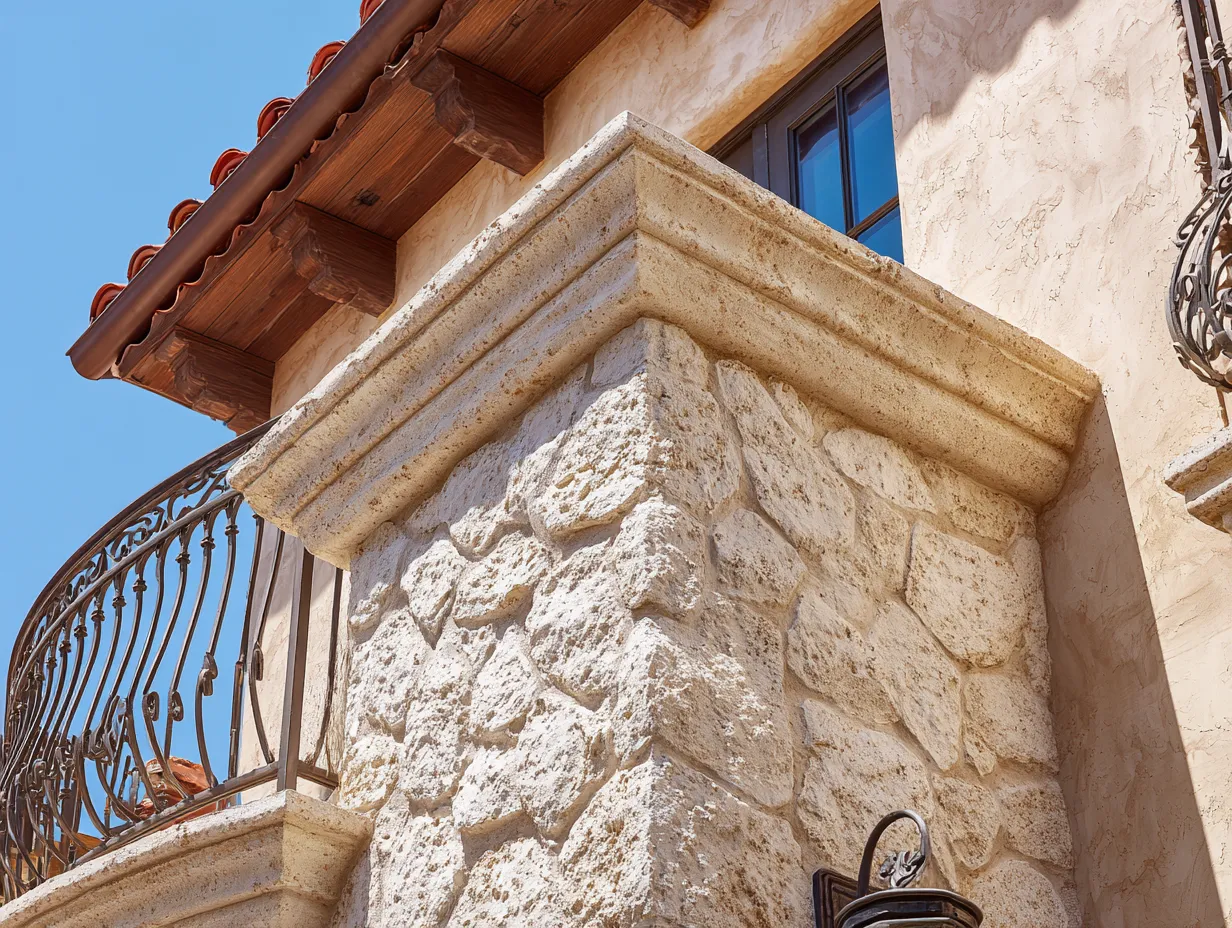
Quoin is an old French word for “corner.” Literally just that. The blocks mimic hand-cut limestone stacked in an alternating pattern — one long side out, one short side out, repeating up the wall. Ancient Romans used real stone quoins to keep rubble walls from collapsing at the edges. Your house doesn’t need structural reinforcement at the corners, but the visual trick still works.
Foam quoins from brands like Synstone or ProMould run $8–$14 per piece depending on size. A typical two-story home needs about 40–50 quoin blocks per corner. Do the math: that’s roughly $400–$700 per corner in materials alone. Not cheap for foam, but real limestone quoins would cost you $3,000+ per corner. I’ve seen homeowners try to DIY quoins with stucco and a homemade mold. Don’t. The edges come out wavy and uneven, and you’ll spend more time fixing it than a pro would charge for the whole job. Even a simple outside house corner design with basic rectangular quoins changes the entire facade. You don’t need ornate profiles or custom moulding ideas for the outside corners — plain staggered blocks do the heavy lifting. The wall corner reads as solid stone from across the street.
The staggered pattern matters more than people think. Equal-sized blocks placed evenly up the wall look like a spreadsheet. You want the randomness — tall block, short block, tall block — that gives the corner weight. It reads as stone from 30 feet away. Nobody’s walking up to your house and tapping the foam to check if it’s real.
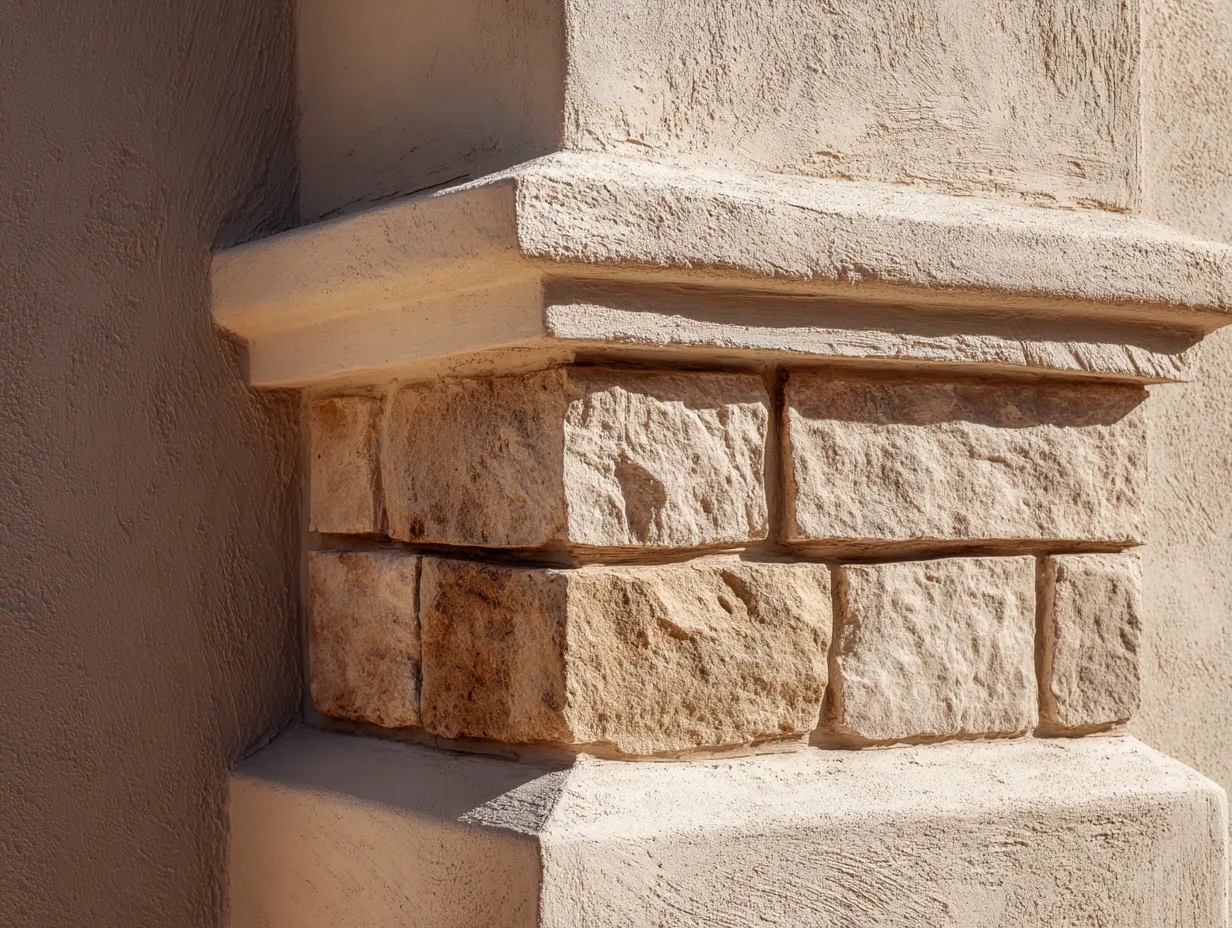
One mistake kills the look instantly. If the quoins sit flush with the wall surface, you get zero shadow lines. They need to project at least 3/4 inch off the facade. That small gap creates depth. Without it, the corner reads as a flat paint job with lines scratched into it. I saw a $600,000 custom build in Texas where the installer glued the quoins dead flush. Looked like a decal.
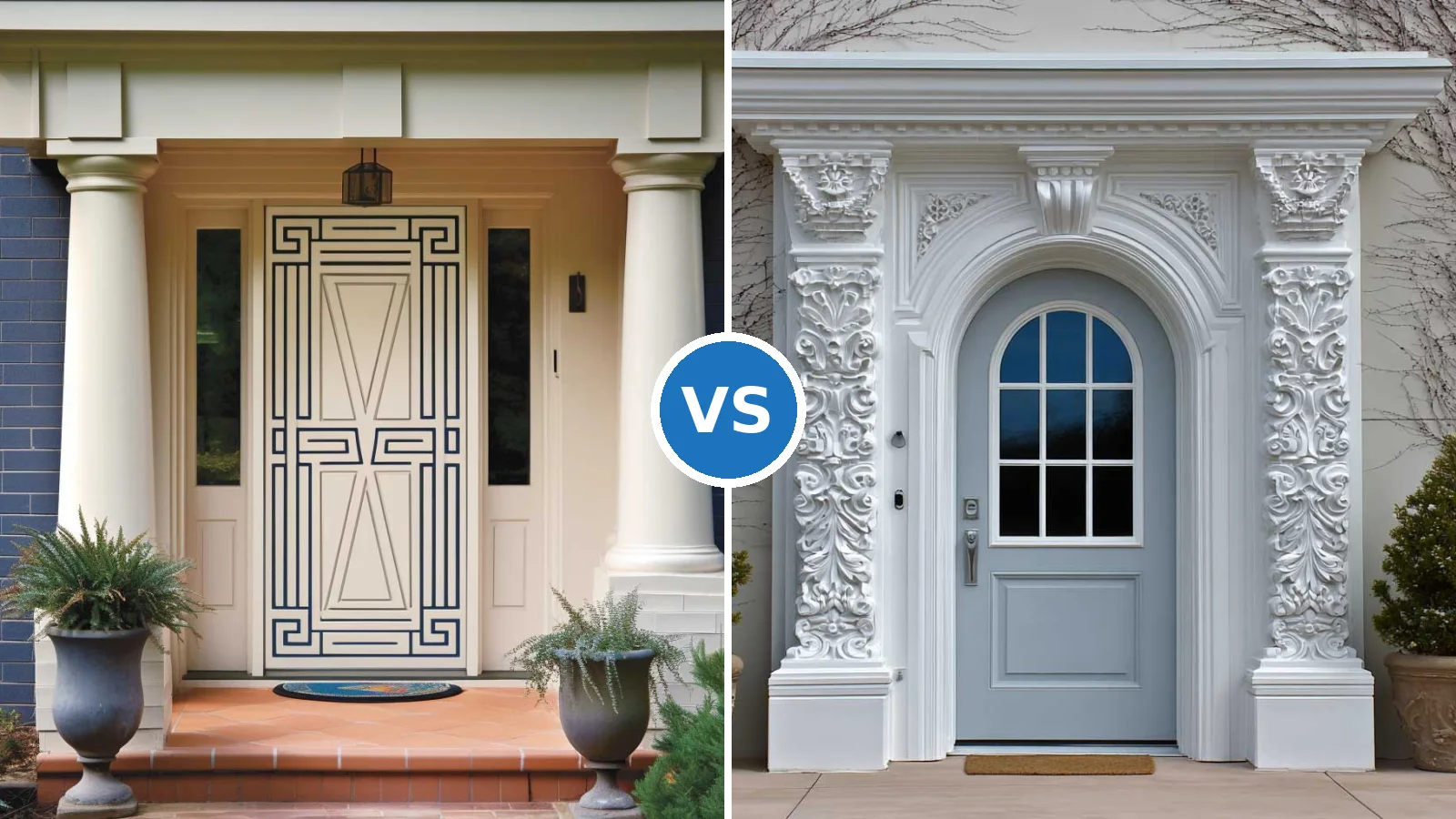
| Feature | Rusticated Quoins | Corner Pilasters |
|---|---|---|
| Visual Style | Rugged, fortress-like, heavy | Refined, tall, aristocratic |
| Material Cost per Corner | $400–$700 | $160–$280 |
| Best For | Colonial, Georgian, farmhouse | Mediterranean, Tuscan, estate |
| DIY Difficulty | Moderate — alignment is critical | Harder — capital and base joints need precision |
| Height Effect | Adds width and mass | Makes the house look taller |
| Common Material | EPS foam with acrylic coat | Polyurethane or EPS foam |
How to Install Exterior Corner Quoins
A step-by-step process for mounting decorative foam quoins on the outside corners of your house. Works for EPS foam quoins with acrylic reinforcement on stucco, EIFS, or primed surfaces.
Tools & Materials:
- Construction adhesive (PL Premium or similar)
- Level (4-foot minimum)
- Tape measure and chalk line
- Fine-tooth saw or hot wire cutter
- EPS foam quoin blocks (40–50 per corner)
- Exterior caulk (paintable, color-matched)
Snap chalk lines on both wall faces
Measure the desired quoin width from the corner edge on each wall and snap a vertical chalk line top to bottom. This gives you a straight boundary so the blocks don’t wander inward as you go up.
Dry-fit the first row of quoins at the base
Place the first quoin block at the bottom of the corner without adhesive. Check that it projects at least 3/4 inch from the wall surface. If it sits flush, you need thicker blocks or furring strips behind them.
Apply construction adhesive and set the first block
Run a zigzag bead of PL Premium on the back of the quoin. Press firmly against the wall within your chalk lines. Hold for 30 seconds. Use painter’s tape or temporary screws to keep it in place while the adhesive cures.
Alternate long and short blocks up the corner
Stack the quoins in an alternating pattern — tall block, short block, tall block. Leave a 1/4-inch gap between each block for the caulk joint. Check level every 3–4 blocks. One crooked block throws off everything above it.
Caulk the joints and paint
After 24 hours of cure time, fill all gaps between quoin blocks with paintable exterior caulk. Smooth with a wet finger. Once the caulk skins over, prime and paint the quoins to match or contrast with your facade color.
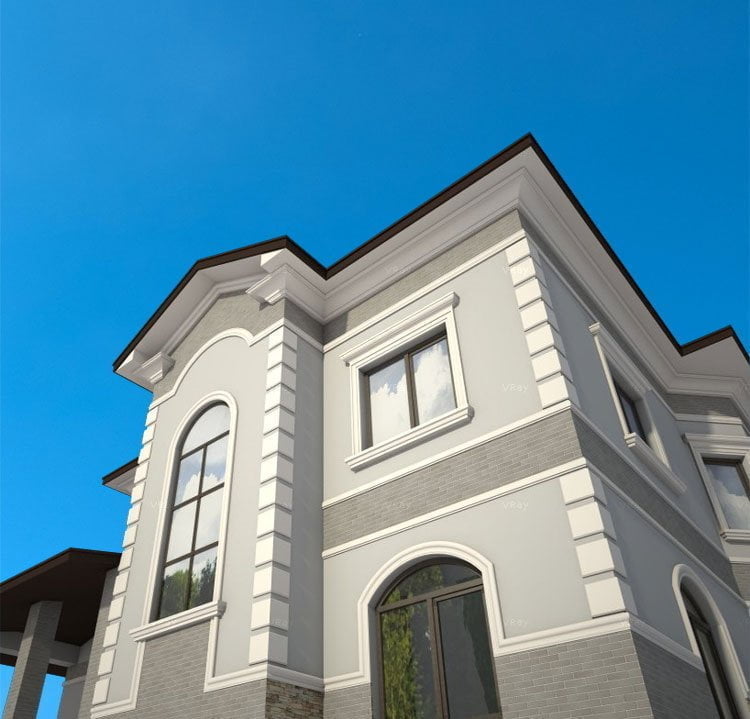
This way of decorating corners is suitable for cases when you need to emphasize the quality of the house. The decor is an imitation of rectangular natural stone. More often the stucco elements are staggered. Quoins pair well with other facade elements — exterior trim moldings along window frames and rooflines complete the classic look and tie the corners into the rest of the facade composition.
Rust focuses on the reliability of the building structure, the traditional construction technology and strength. It reflects the age-old, well-established methods of strengthening and protecting housing from external factors, symbolizes security. The word “quoin” itself comes from the French “coin” meaning corner — these masonry blocks have been reinforcing building edges since ancient Rome, where toothed corner construction was standard practice. And sometimes a rustic house even resembles a fortress.
Corner Pilasters: How to Make a 0K House Look Like a 0K Estate
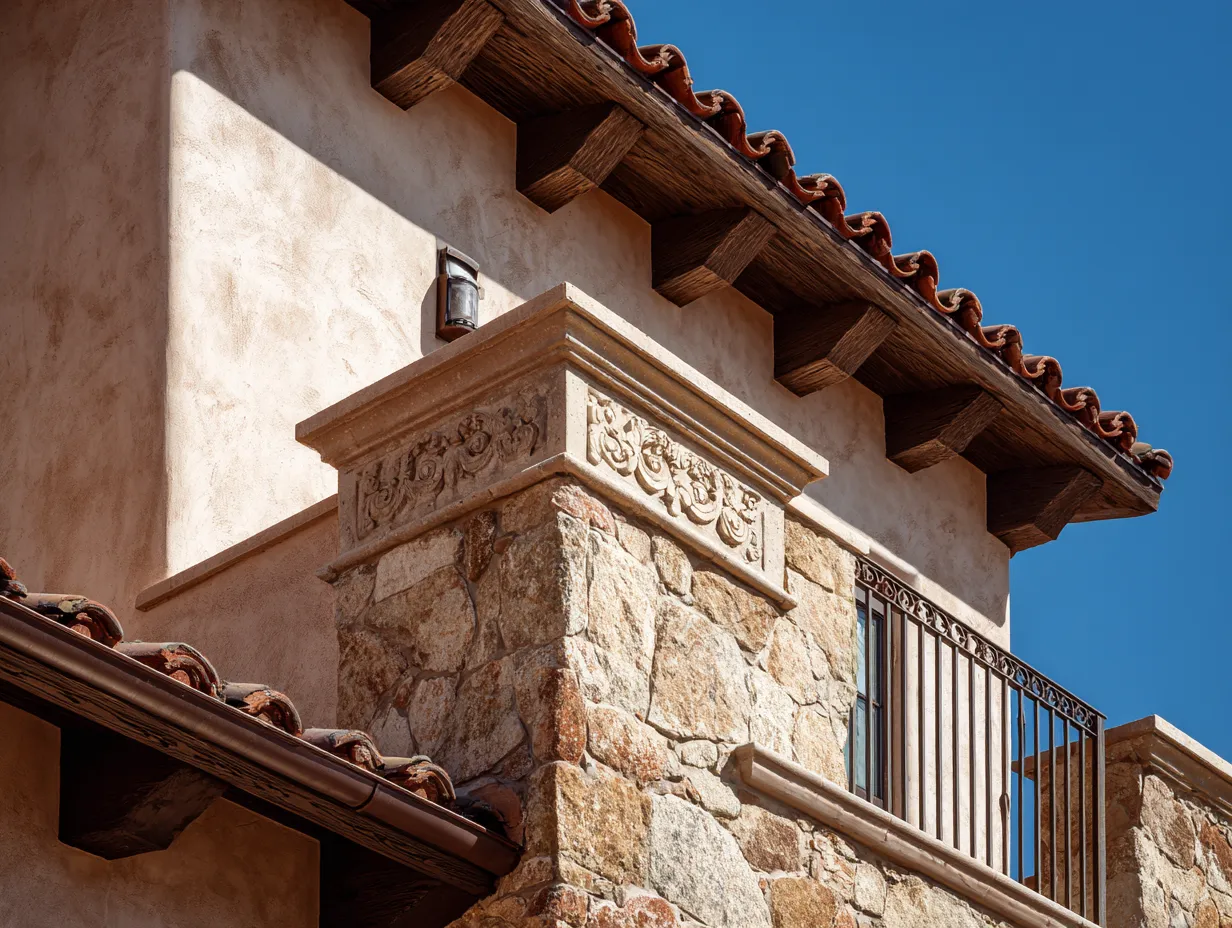
Pilasters are flat columns pressed against the wall. They run floor-to-roof with a base at the bottom and a capital at the top. Unlike quoins, which break the corner into chunks, pilasters create one continuous vertical line. That’s why they make a two-story house look taller than it is.
Fypon’s polyurethane pilasters start around $80–$120 per unit for a 7-foot fluted piece. EPS foam pilasters with acrylic coating — the kind you’d find from Eastern European manufacturers — run $50–$90 for the same height. The capital and base are usually sold separately, so add another $30–$60 per corner. Total cost per corner: $160–$280 in materials. Labor doubles that.
For exterior corner trim ideas on a tighter budget, some homeowners use flat stock trim boards instead of full pilasters. Bad move. Flat stock has no depth, no shadow, no architectural presence. Proper architectural corners need a capital-base-body structure to read correctly. Wall corner trim ideas that skip the capital end up looking like a painted 2×6 nailed to the siding.
Fluted pilasters (the ones with vertical grooves) belong on Georgian and Colonial facades. Smooth or paneled pilasters work better on Mediterranean and Tuscan styles. I’ve seen people slap Corinthian capitals on a ranch house. Looks ridiculous. Match the capital style to your roof pitch and window proportions. Low-slope roof? Go Tuscan. Steep gable? Ionic or Corinthian can work, but only if you have tall windows to balance the verticality.
Biggest fail with pilasters: wrong proportions. A pilaster body that’s too narrow for the wall height looks like a stick glued to the corner. General rule — the body width should be at least 1/8 of the total pilaster height. So a 96-inch tall pilaster needs a body at least 12 inches wide. Thinner than that, and it disappears from the street. Thicker is fine. Thinner is not.
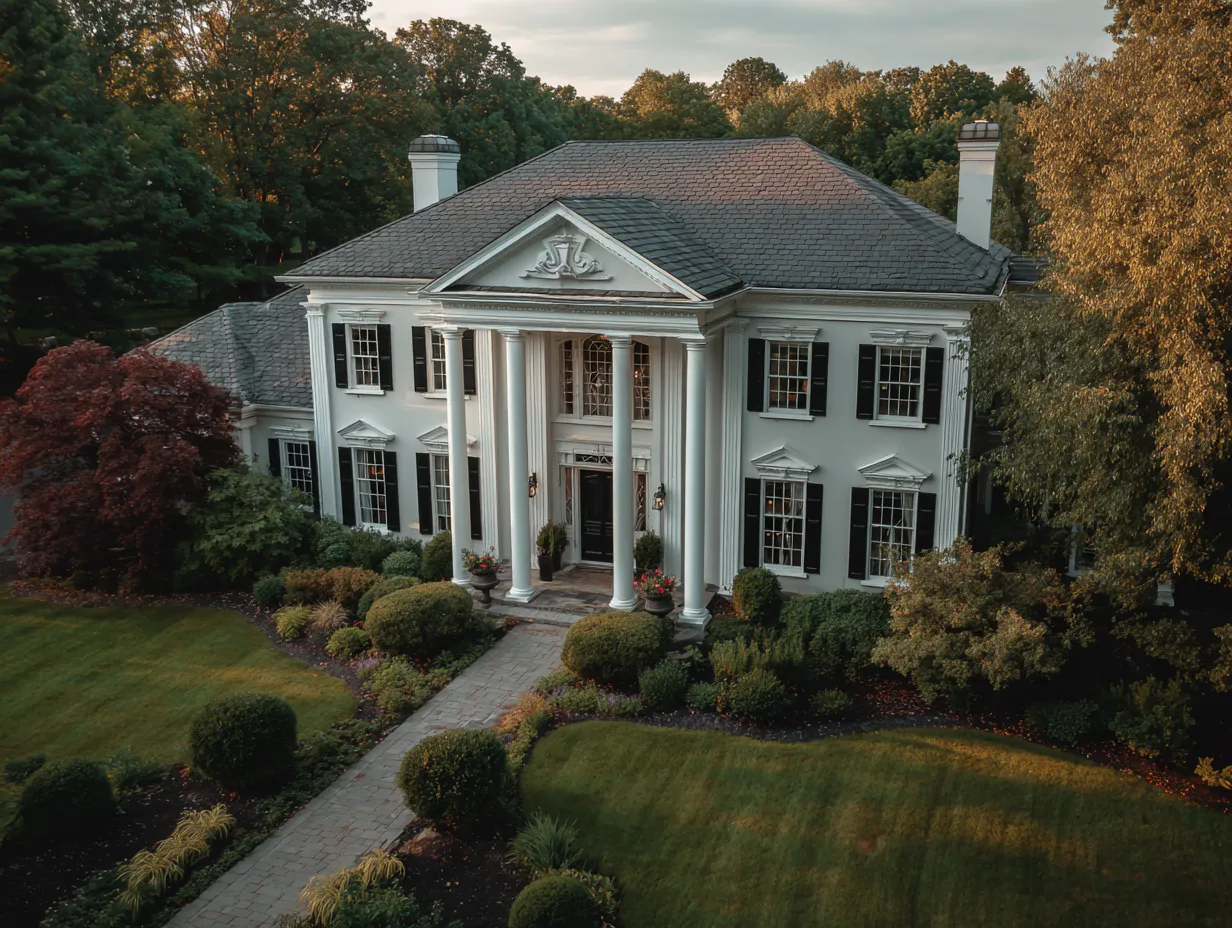
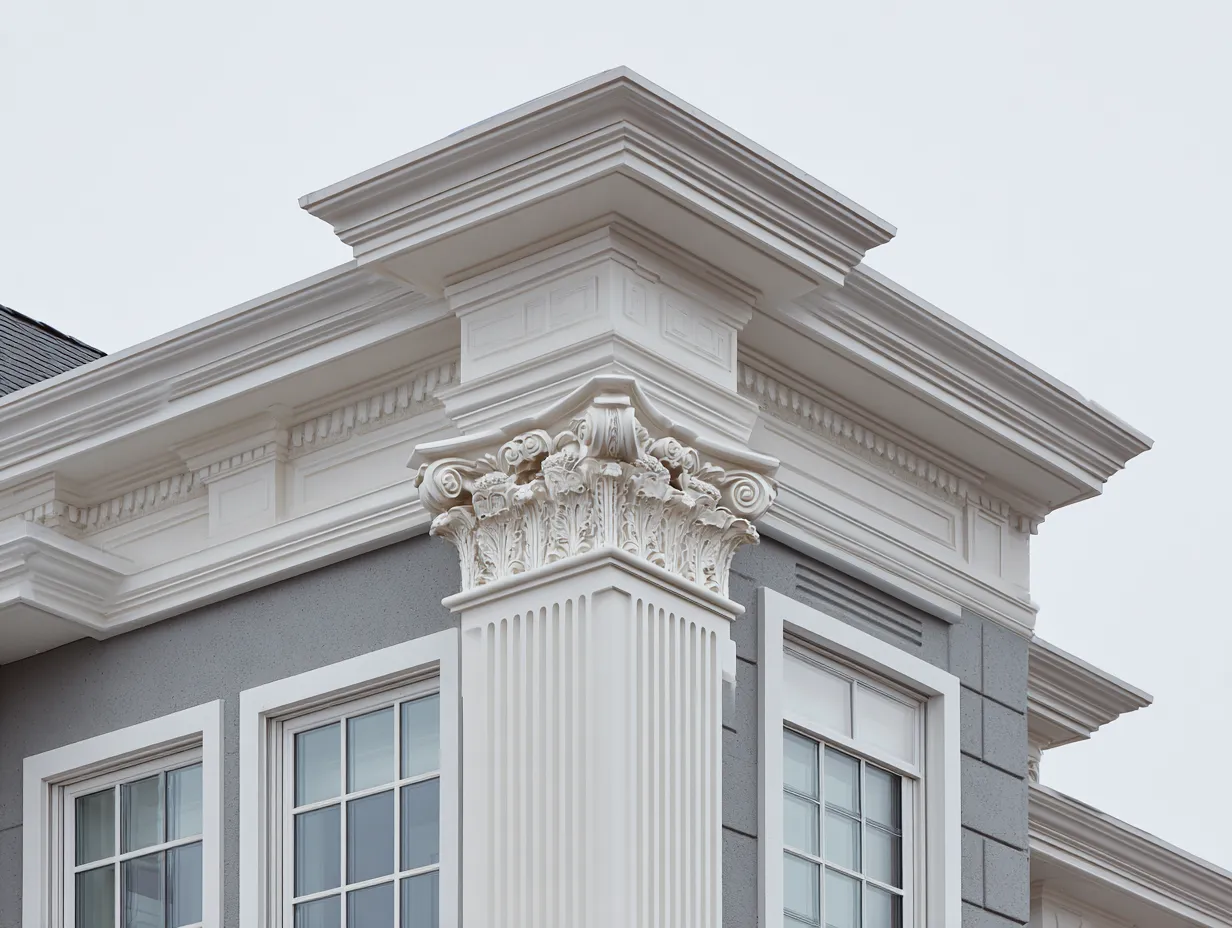
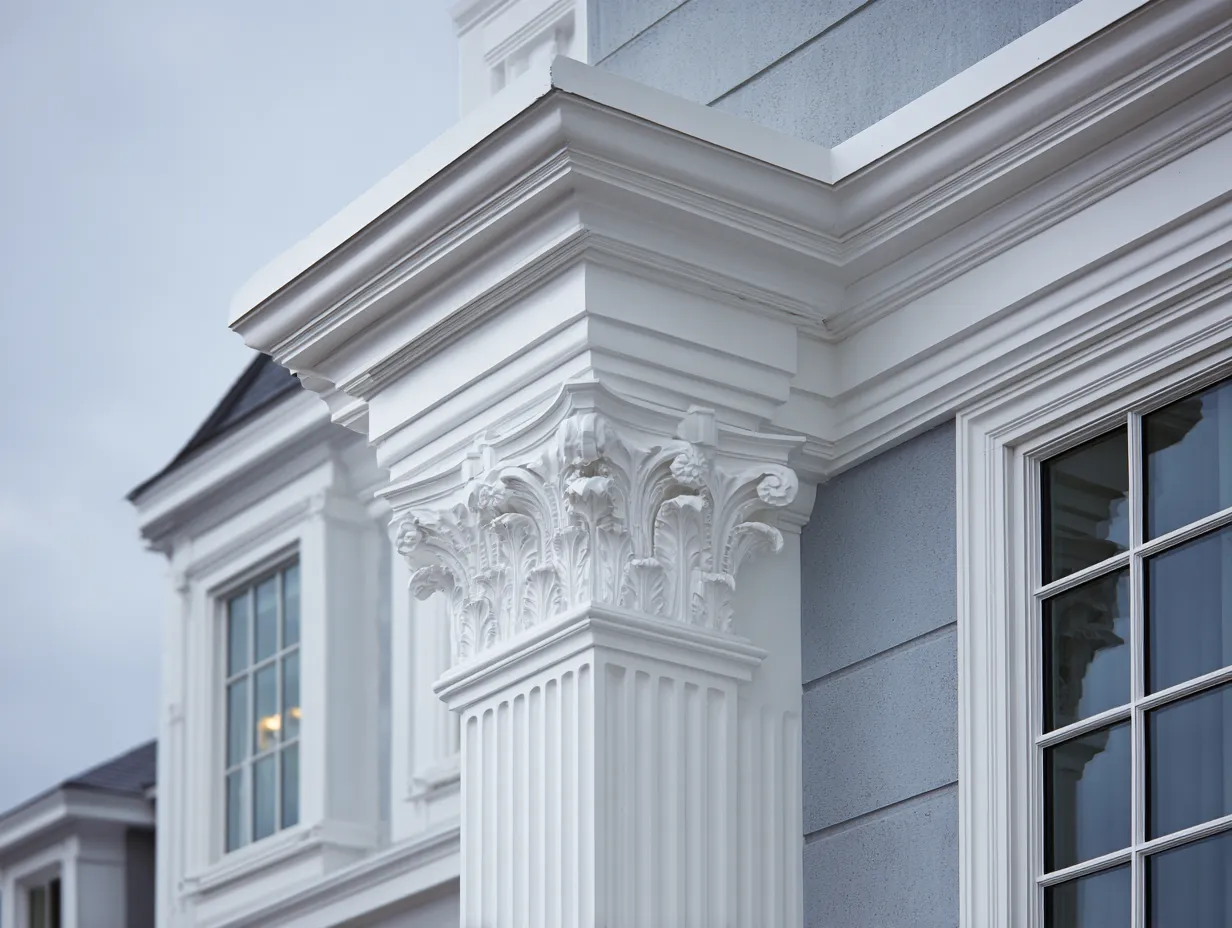
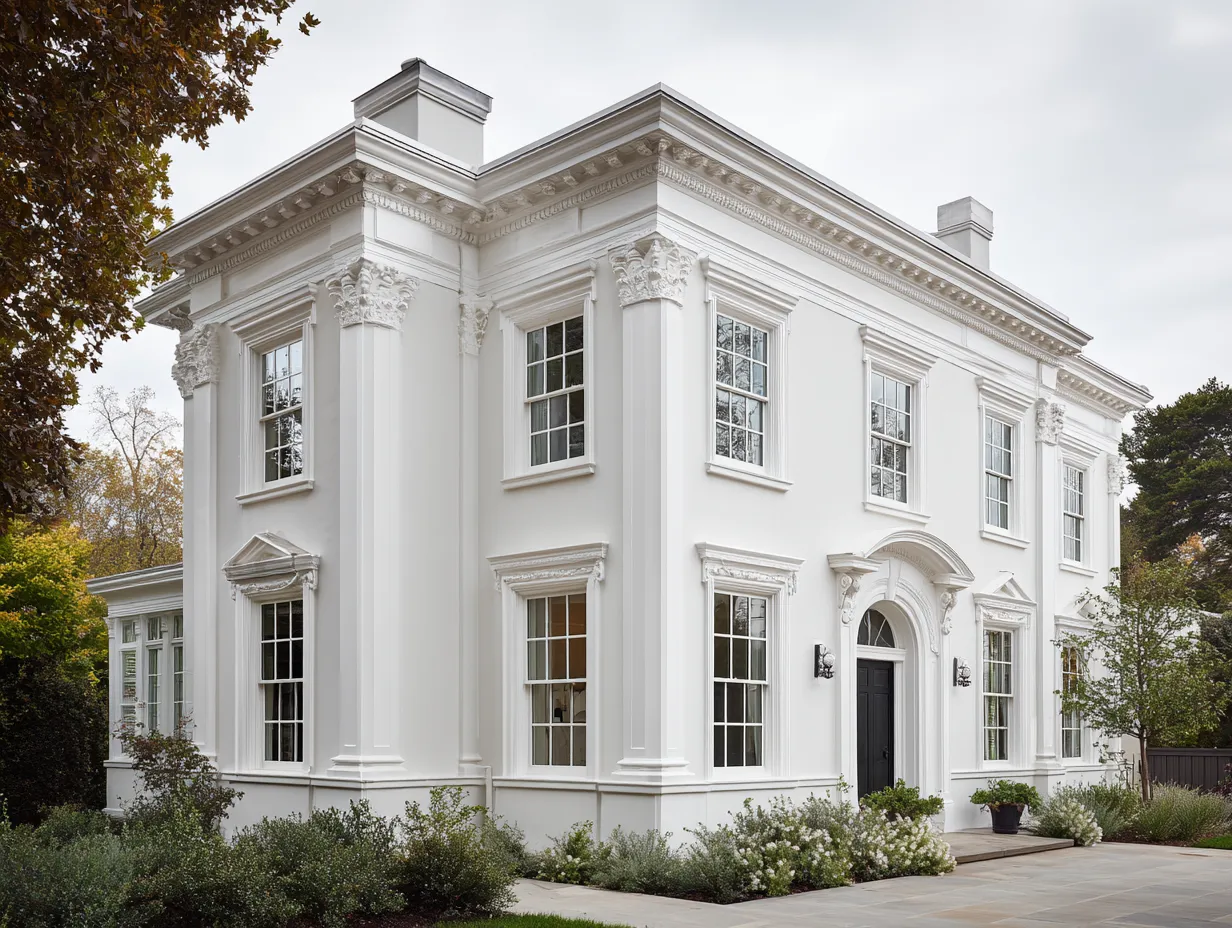
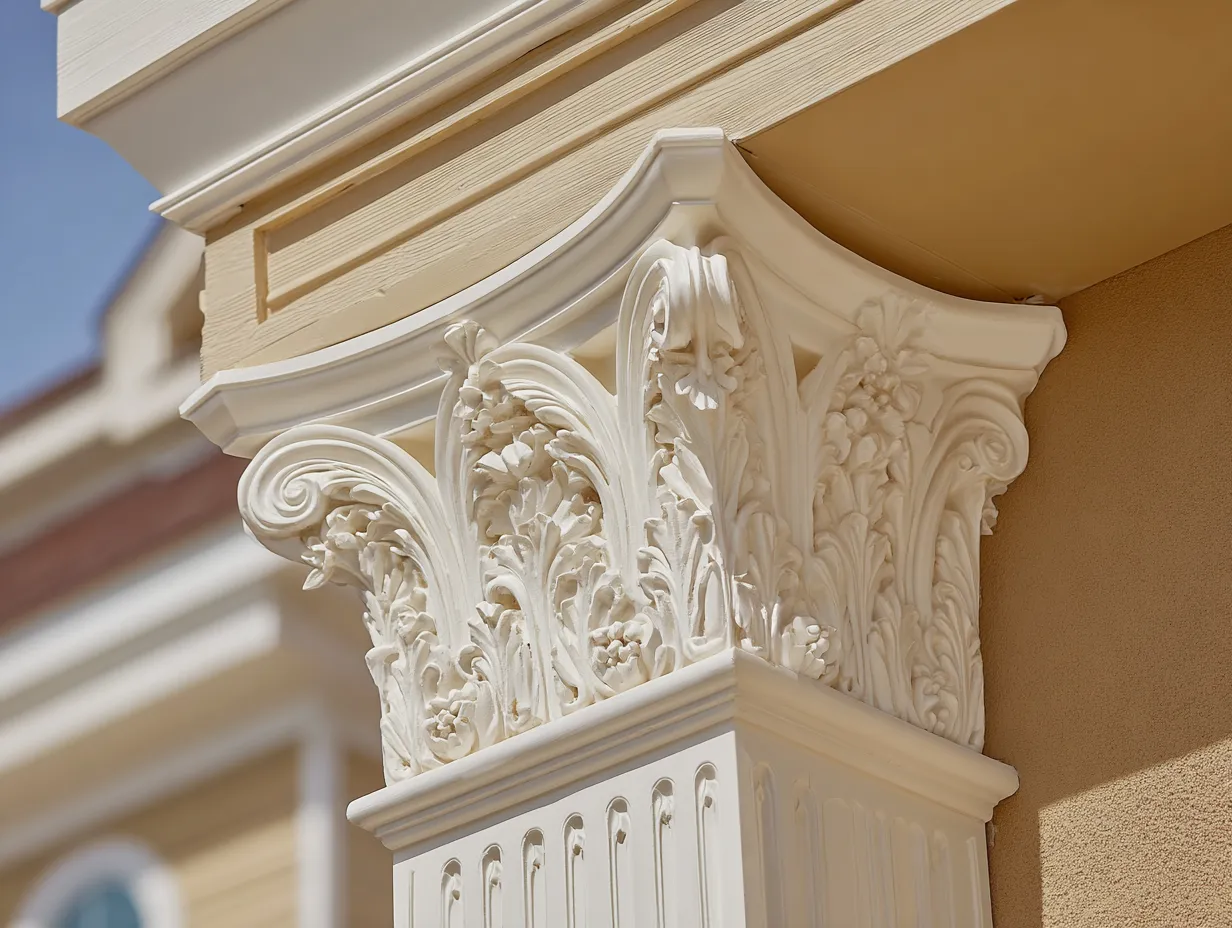
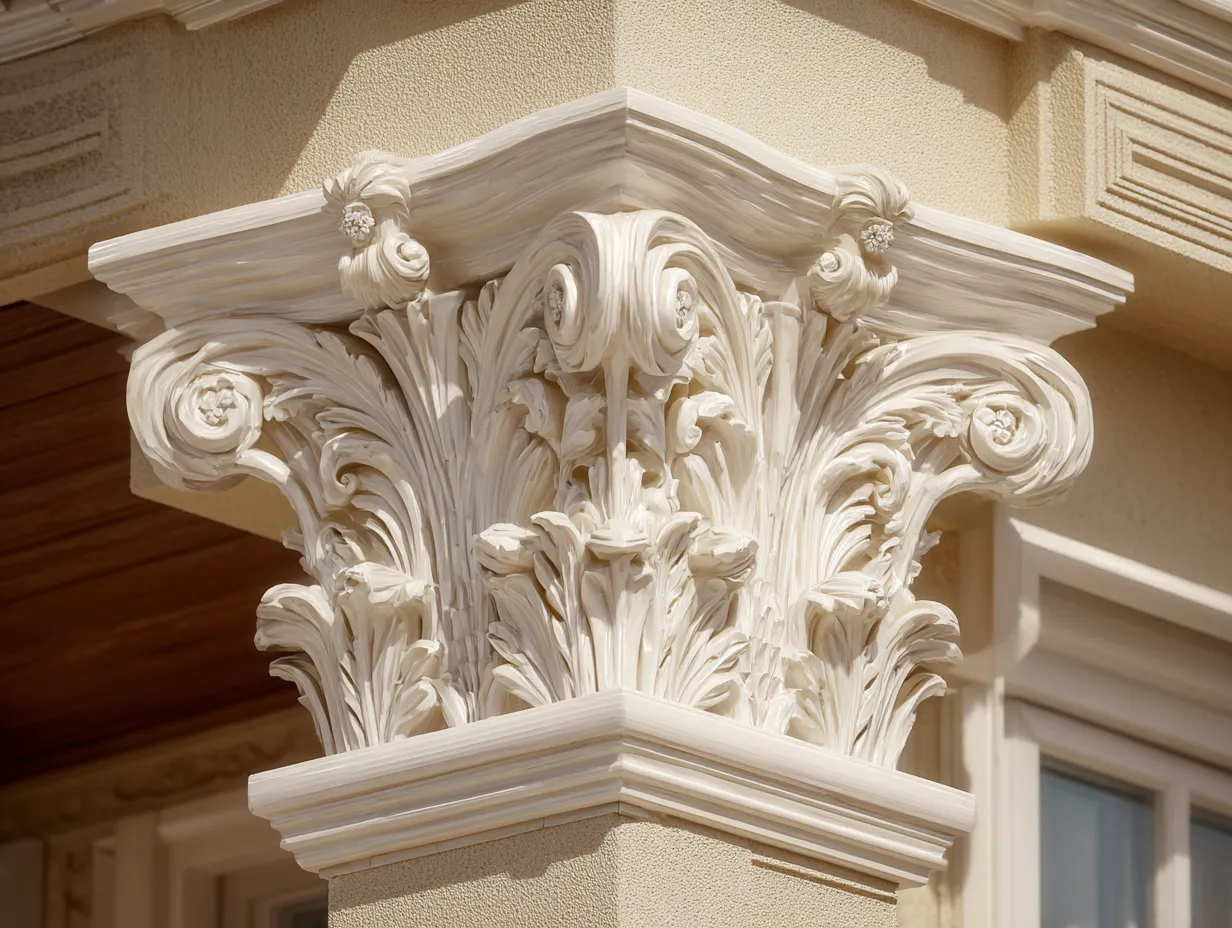
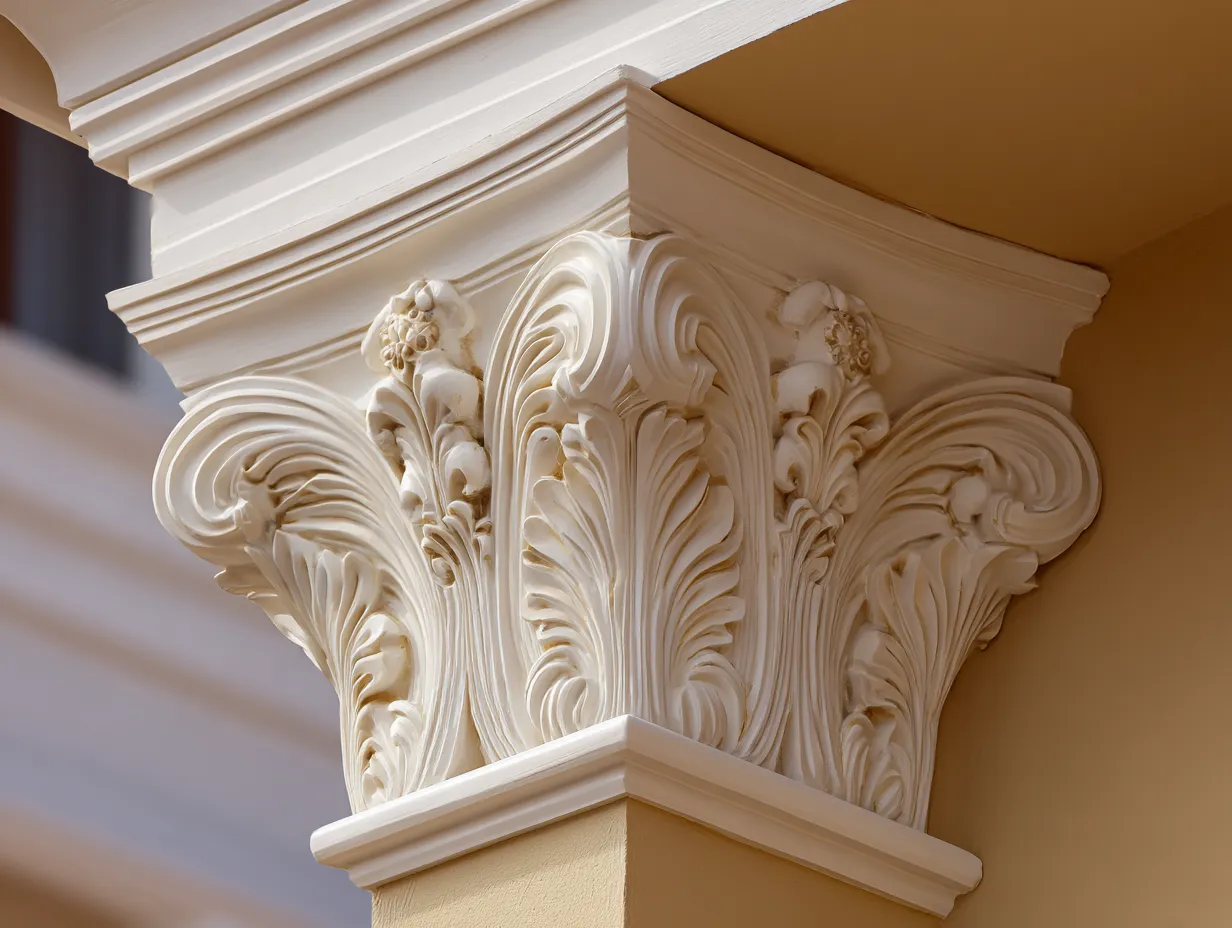

A more sophisticated, complex and intricate option for finishing the outer corners with stucco moldings became corner pilasters. These constructions emphasize the elegance of the architecture and the high status of the owners. Together with cornices in the appropriate style, they form a single decorative pattern around the perimeter of the facade, framing it. Homes that lean into this level of detail often follow principles of traditional exterior house design where symmetry and decorative repetition define the look.
Pilasters visually increase the height of the house. They create a slightly fabulous, romantic atmosphere, transforming an ordinary classic cottage into a palace. Pairing pilasters with matching crown molding along the roofline ties the whole look together — kits like the Creative Crown 64 Ft Angelo Foam Crown Molding Kit work well for that transition zone where the wall meets the soffit. Like the previous finish, the pilasters are expressive and contrasting. Such framing does not go unnoticed and adds a special charm to the house.
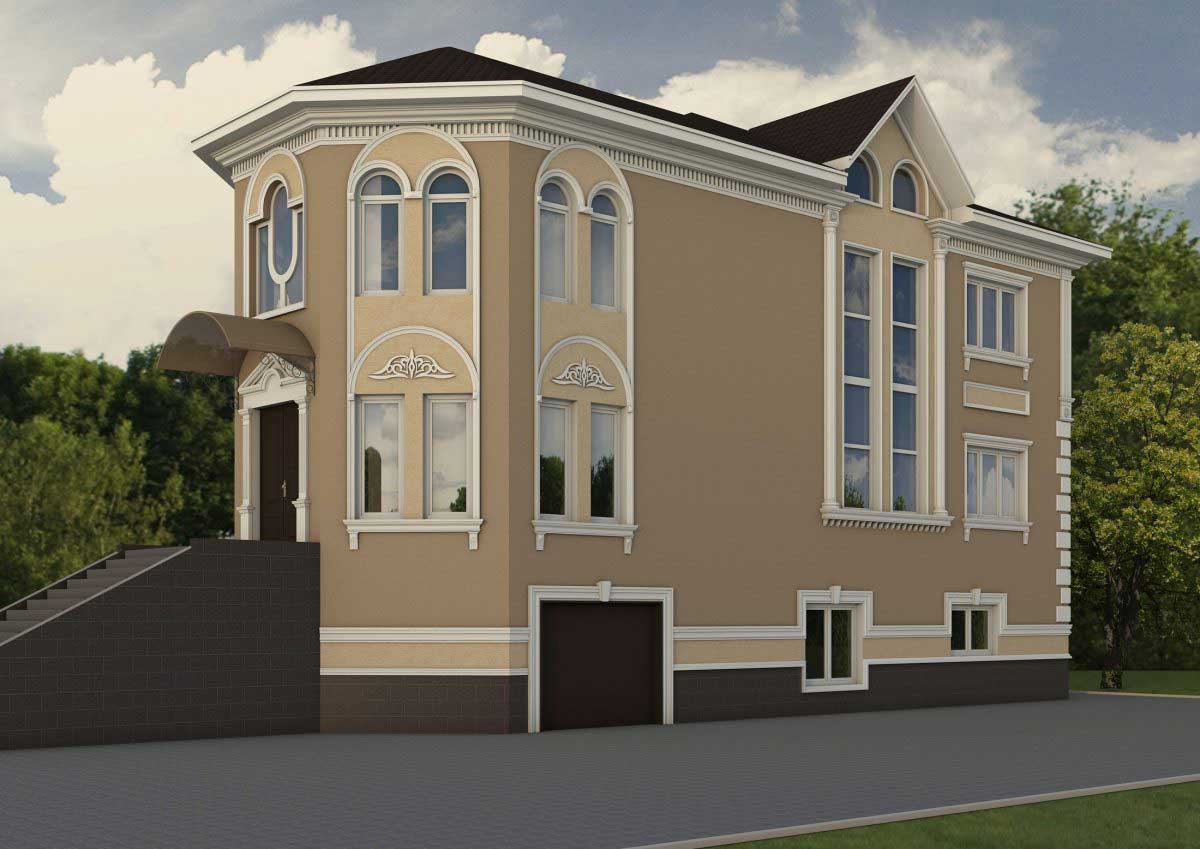
Sometimes architects combine both types of corner finishes in the same house. This design combines elegance with durability and safety.
Bottom Line on Outside Corner Trim
Quoins give you the rugged stone-fortress look for $400–$700 per corner in materials. Pilasters give you the tall, refined estate look for $160–$280 per corner. Both need to project off the wall surface to cast shadows — flush installation kills either style dead.
Skip PVC snap-on corners and vinyl trim strips. They yellow, crack, and cheapen any house they touch. Foam with acrylic reinforcement is the move for 95% of classic exterior corner projects. Get a pro to handle the first corner so you can see the projection depth and joint technique before committing to all four.