Industrial steampunk interior design is the rare style that rewards obsession — once you hang one brass pipe fixture, you’ll start sketching gear wall art at 11pm. My first foray was a single copper Edison bulb pendant over a reclaimed wood table, and three years later I have an entire study that looks like Jules Verne moved in. The appeal is real: this aesthetic holds tension between Victorian opulence and raw industrial grit in a way no other residential style manages.
What you need to understand upfront is that steampunk interiors fail when people treat them as costume design. Slapping a few gear decals on a beige wall is not steampunk — it’s Halloween. The rooms that actually work commit to a material palette of aged brass, dark leather, exposed iron, and rich jewel-toned fabrics, then layer in mechanical curiosities with restraint. You’ll notice the best spaces feel discovered rather than decorated.
This article covers three core rooms — living room, kitchen, and bedroom — with specific product recommendations, real price ranges, and the mistakes I’ve seen (and made) that will save you hundreds of dollars and weeks of regret.
- Industrial steampunk interior design fuses Victorian ornament with raw metal and exposed mechanical elements — it’s not just “dark and rustic.”
- Brass, copper, and aged iron are non-negotiable; chrome and brushed nickel kill the mood instantly.
- A steampunk living room anchors on velvet upholstery + mechanical accent pieces priced $40–$300 from brands like Pottery Barn and Restoration Hardware.
- The kitchen survives on exposed pipes, Edison bulbs, and copper pot racks — custom steel fabrication is almost never worth the cost.
- Bedroom lighting does 70% of the work; a $129 Kichler gaslamp-style sconce changes the entire atmosphere.
- FAQ covers steampunk interior designers, cost ranges, and how to avoid common decor pitfalls.
Victorian Living Rooms That Pull Off Industrial Steampunk Interior Design

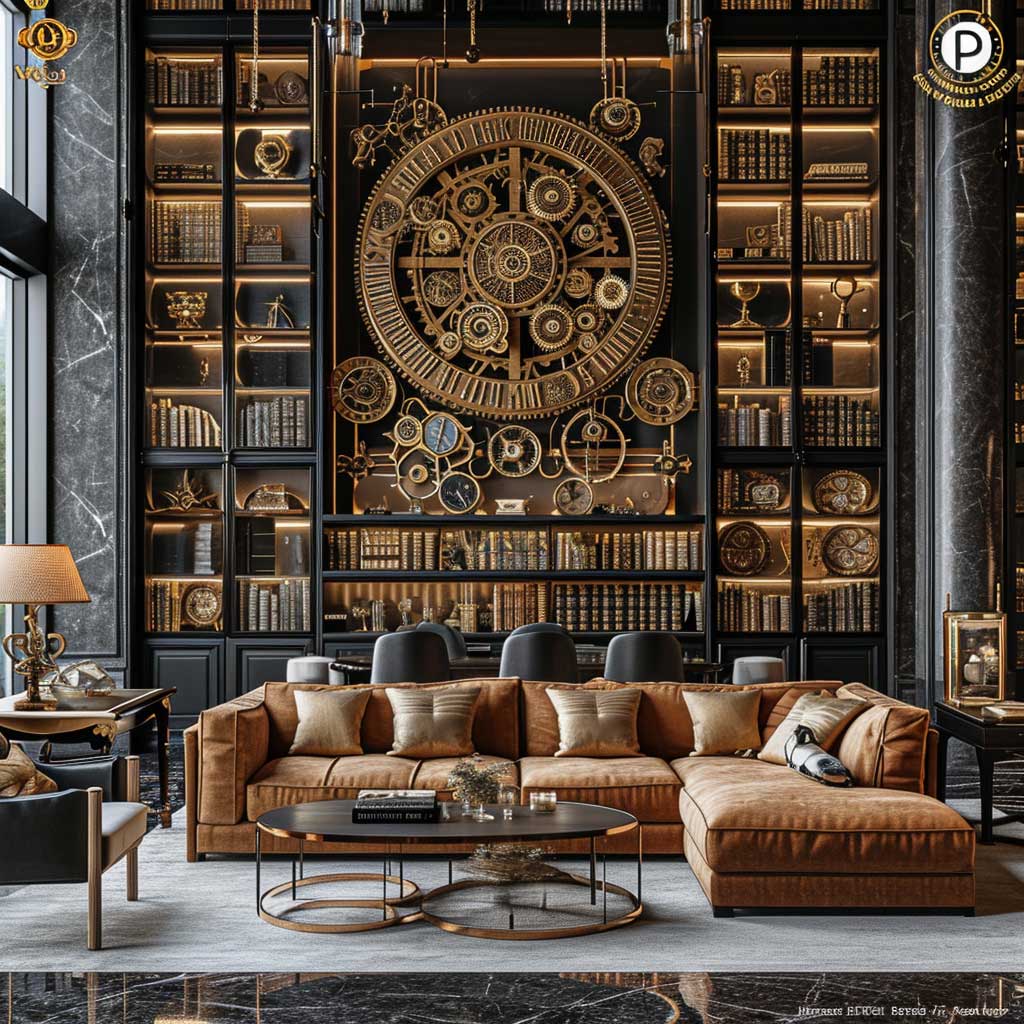

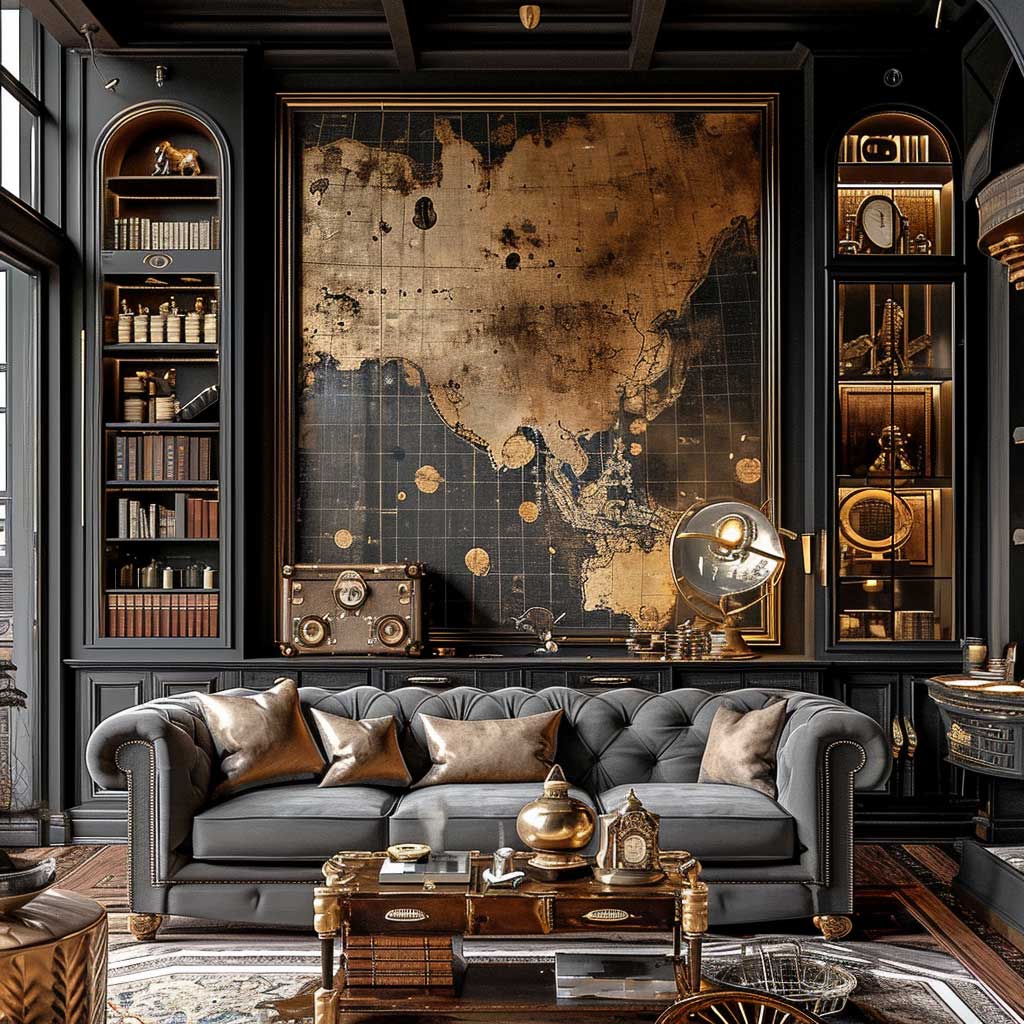
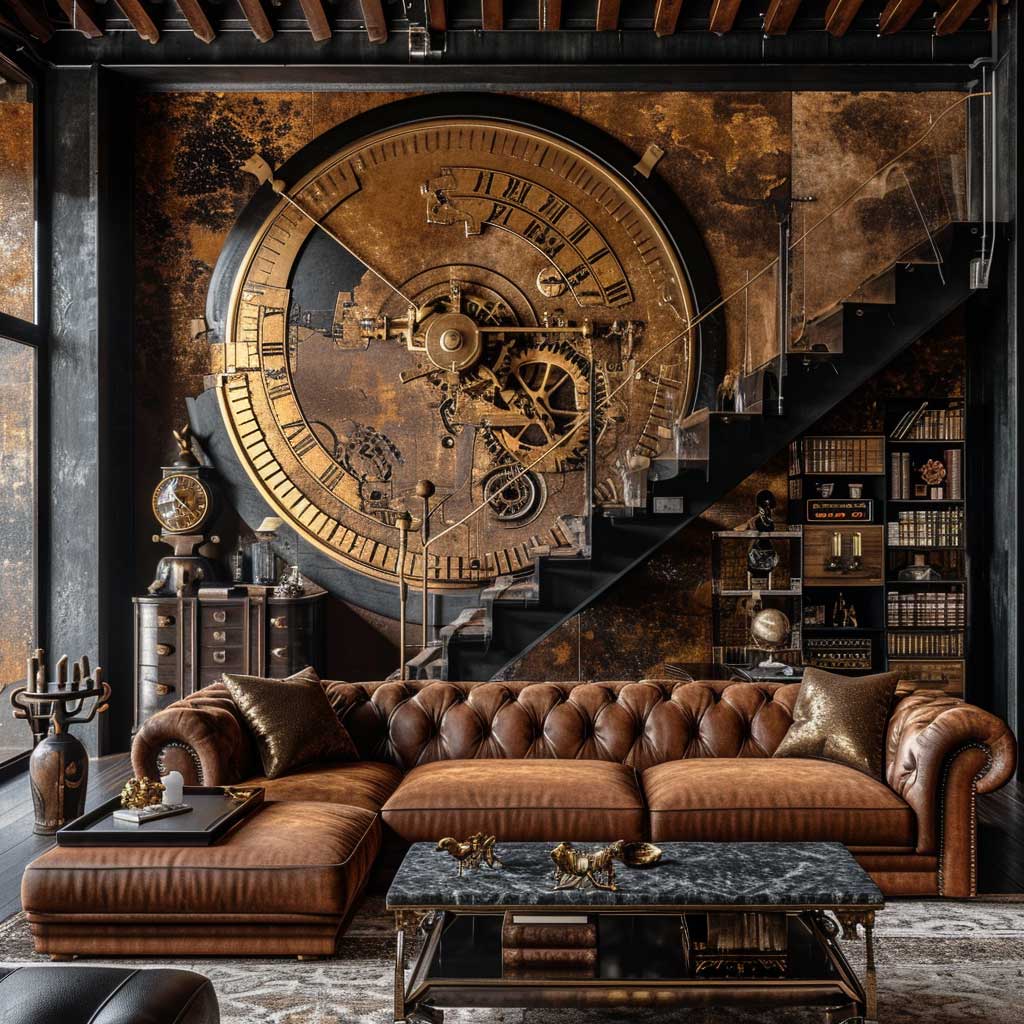
Industrial steampunk interior design in a living room lives or dies on the sofa choice. I’ve bought a tufted burgundy velvet Chesterfield from Article ($1,299) and it instantly became the anchor everything else orbits. That’s how Victorian steampunk works — the upholstery carries the elegance while the mechanical accents carry the grit. Plush velvet in deep jewel tones like forest green, inky navy, or oxblood red signals the Victorian half of the equation before a single gear appears on the wall.
Brass accents are where most people overspend or underspend in equal measure. You don’t need a custom clock — a $45 Umbra gear wall clock from Amazon or a $78 vintage globe from HomeGoods reads as completely authentic in the right context. What you do need is consistency: every metal finish in the room should be in the brass-to-bronze-to-copper family. Mixing in chrome table legs is like wearing sneakers with a Victorian waistcoat. It breaks the spell completely.
The wallpaper question comes up constantly — is it mandatory? Not technically, but dark patterned wallpaper (think damask, toile, or botanical prints in charcoal and gold) does the heavy atmospheric lifting that paint simply can’t. Brewster Home Fashions and York Wallcoverings both carry patterns in the $50–$90/roll range that read as genuinely period-appropriate. Your alternative is dark paint — Farrow & Ball’s “Railings” in navy or their “Pelt” in deep plum — both at roughly $120/gallon but worth every cent for the mood they create.
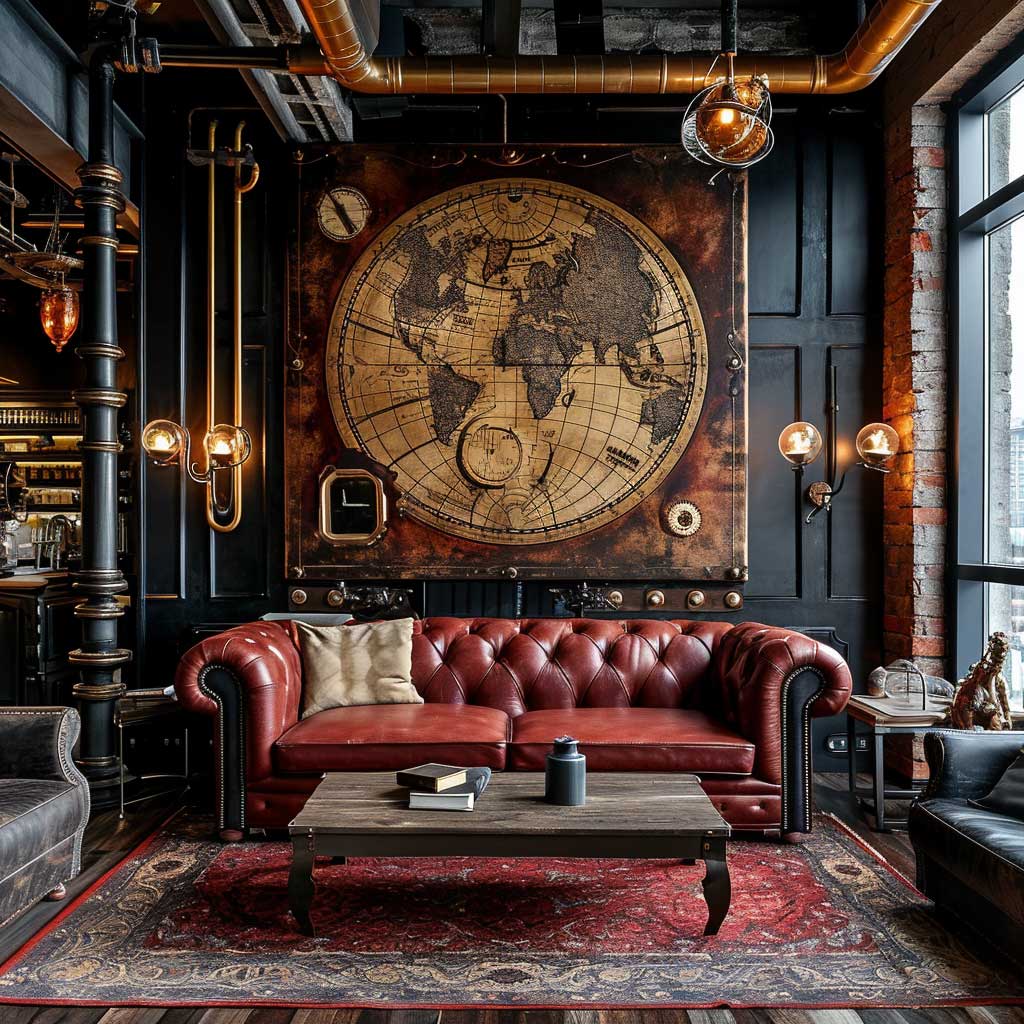
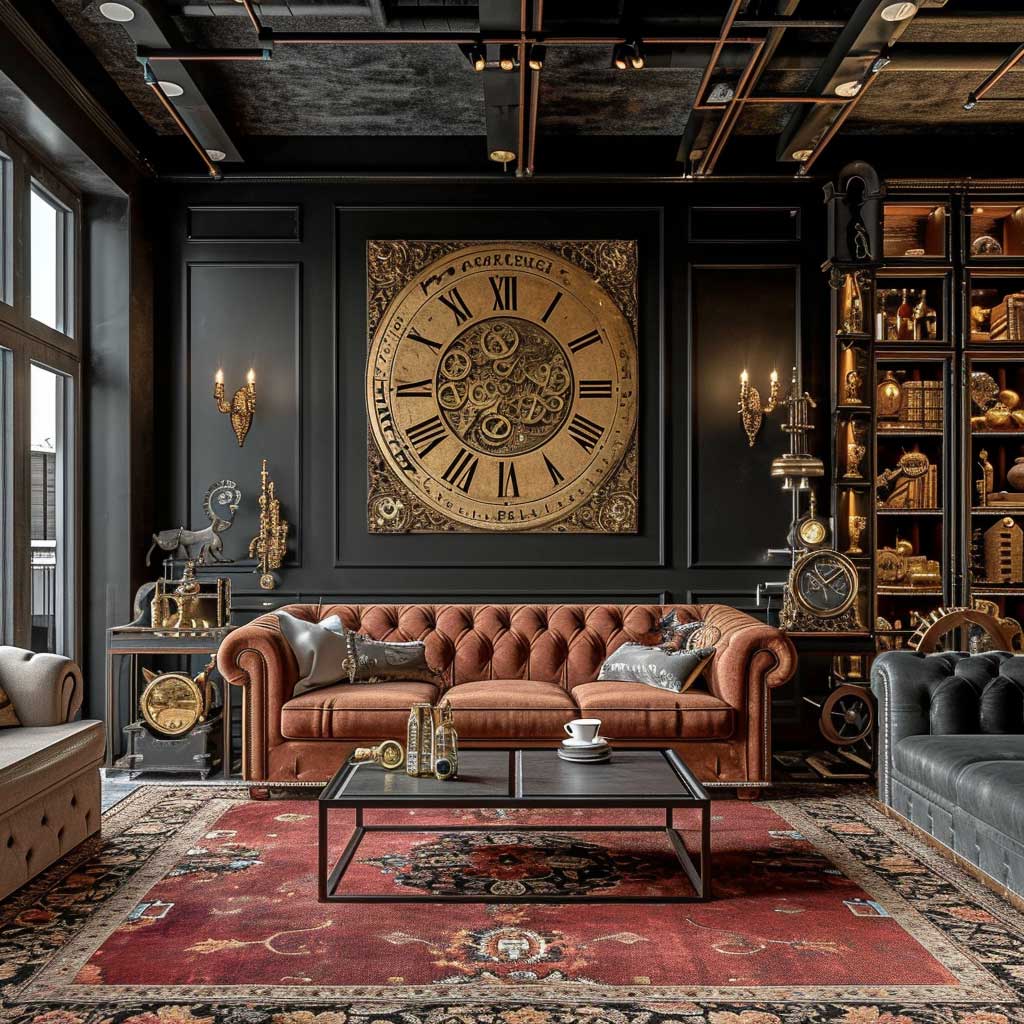
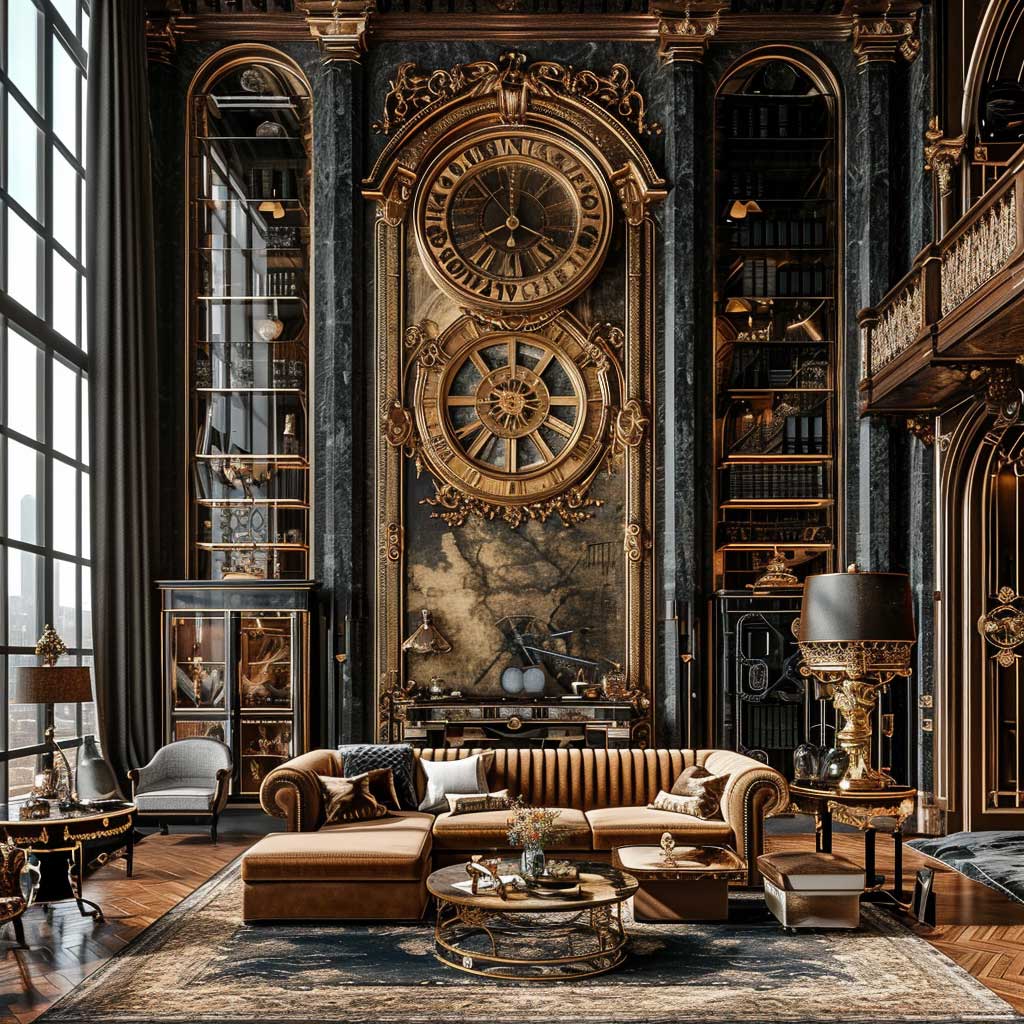
Accessories are the storytelling layer and they need to feel found, not purchased as a matching set. My go-to sourcing strategy is estate sales for navigational instruments and antique maps — a real brass sextant runs $60–$150 at auction and nothing from HomeGoods competes with that level of authenticity. Antique books with cloth spines stacked in groups of three or five cost almost nothing at thrift stores and add texture that no Amazon bundle can replicate. Think of each accessory as a prop from an 1880s explorer’s study rather than a decoration chosen for color coordination.
Color balance is the invisible architecture of a steampunk living room. Dark walls absorb light; metallic accents give it back. The ratio I’ve landed on after two full room redesigns is roughly 60% dark base (walls, sofa), 30% natural or earthy mid-tone (wood floors, leather ottoman), and 10% metallic highlight (lamp bases, clock, picture frames). Flip that ratio and the room feels like a cave. Get it right and it feels like a Sherlock Holmes set that happens to be livable. For more on pairing steampunk with other industrial styles, this breakdown of neo-classic industrial interiors is genuinely useful for understanding how historical and raw elements coexist.
Exposed Pipes and Copper Fixtures in the Steampunk Industrial Kitchen


Steampunk industrial kitchen design starts with a decision that shapes every subsequent choice: do you celebrate the infrastructure or hide it? The answer is always celebrate it. Exposed pipes and ductwork are not a renovation compromise in this aesthetic — they are the feature. I’ve seen kitchens where the plumber’s work (painted matte black or left in aged copper patina) costs $0 extra and reads better than a $4,000 custom hood.
Lighting is the fastest and cheapest way to shift a kitchen into steampunk territory. Rejuvenation sells a 3-light copper pendant cluster for $340 that transforms a standard kitchen island instantly. If that’s over budget, the equivalent Edison-bulb cage pendant from Wayfair runs $65–$110 and is honestly hard to distinguish in photos. What kills the look? Recessed can lighting left as-is. Those flush white discs read as purely suburban and contradict every steampunk signal in the room. Swap them for vintage-style exposed filament bulbs in warm 2200K color temperature at minimum.
- Don’t buy a matching steampunk kitchen set. Pre-packaged “steampunk hardware collections” from Etsy look exactly like what they are — a costume. Source pieces individually from different eras and makers.
- Don’t DIY concrete countertops unless you have professional experience. Composite alternatives like Caesarstone’s “Turbine Grey” ($65–$85/sq ft installed) look identical and won’t crack in year two.
- Don’t skip the warmth layer. A kitchen full of cold metal and dark paint becomes oppressive. You need at least one warm wood element — a butcher block island, open shelves in reclaimed oak, or even just a cutting board collection.
- Don’t use chrome. A single chrome faucet in a brass kitchen is like a typo in an otherwise polished manuscript. Replace it with an oil-rubbed bronze or unlacquered brass option; Kingston Brass makes solid options starting at $89.

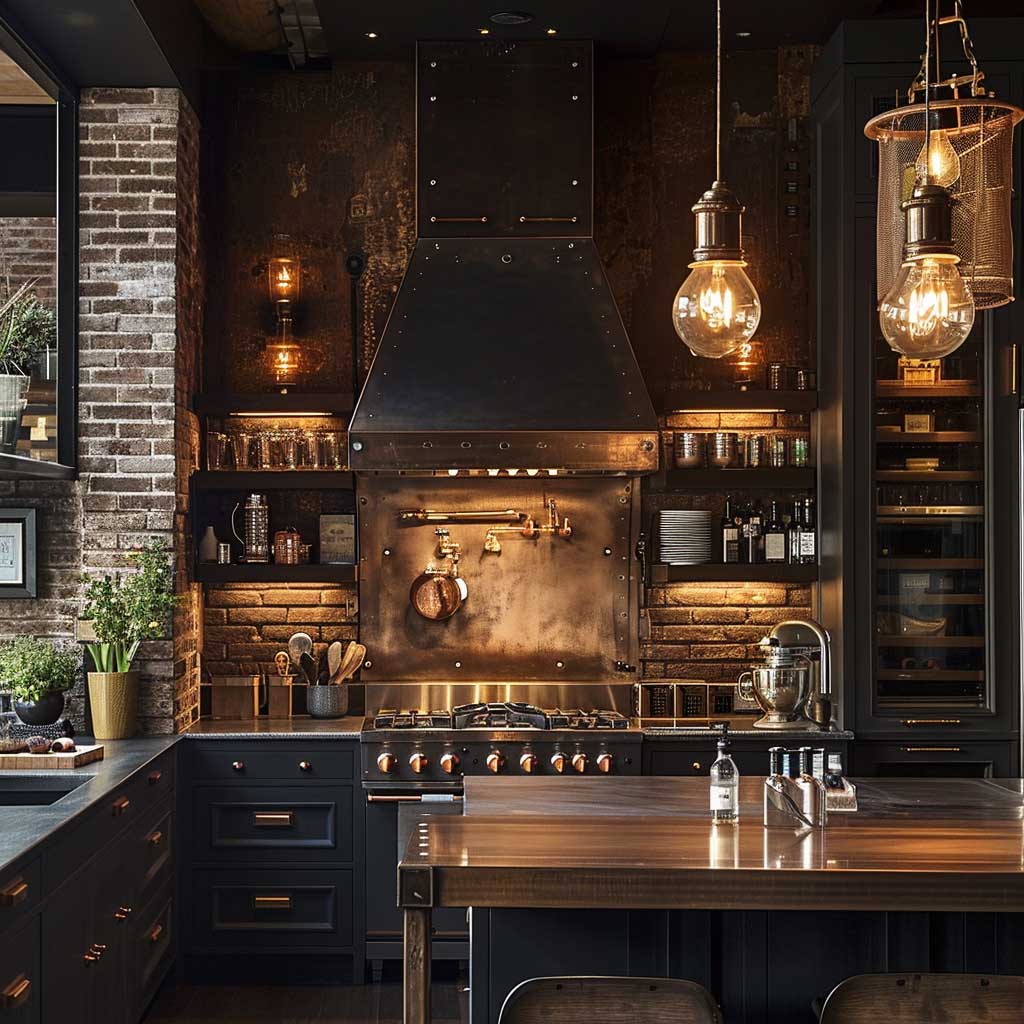

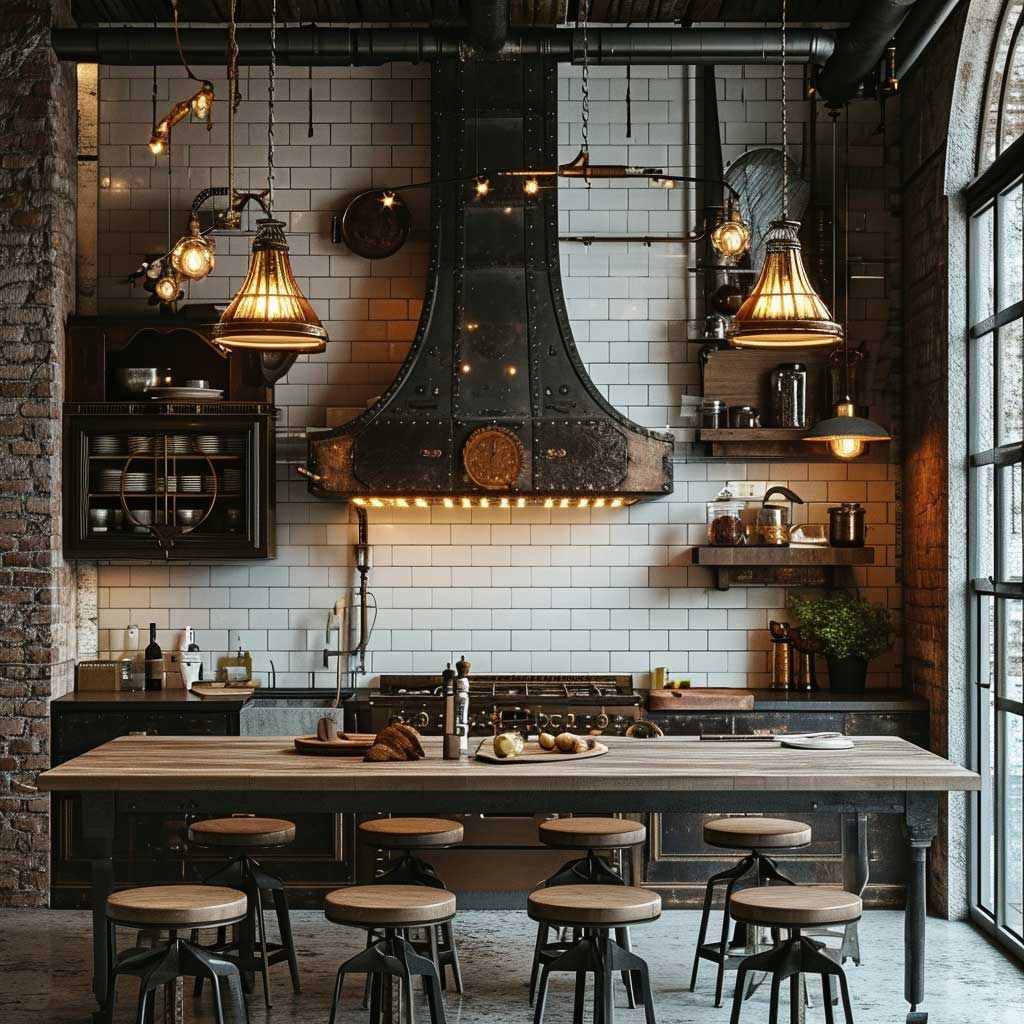
Cabinetry in a steampunk kitchen is the single biggest budget decision and the one with the most flexibility. You don’t need custom dark-painted cabinets — IKEA’s SEKTION frames in black-brown with aftermarket brass bin pulls from D. Lawless Hardware ($1.80–$3.50 each) lands in genuinely convincing steampunk territory for a fraction of the cost. The juxtaposition of a sleek modern cabinet carcass against a vintage butcher block island is exactly the kind of productive tension that defines the style.
Seating at a steampunk island should have industrial bones — think Tolix A-Chair in matte black ($185 each, widely available) or the cheaper Glitzhome metal bar stool with a distressed finish ($65 at Walmart). What doesn’t work: matching upholstered counter stools in a neutral fabric. They read as transitional, not steampunk, and immediately soften a room that should feel forged. The industrial chic interior design primer covers this metal-meets-material tension in more depth if you want to go further on this pairing.
A Steampunk Bedroom Atmosphere Built Around Mechanical Details and Warm Light


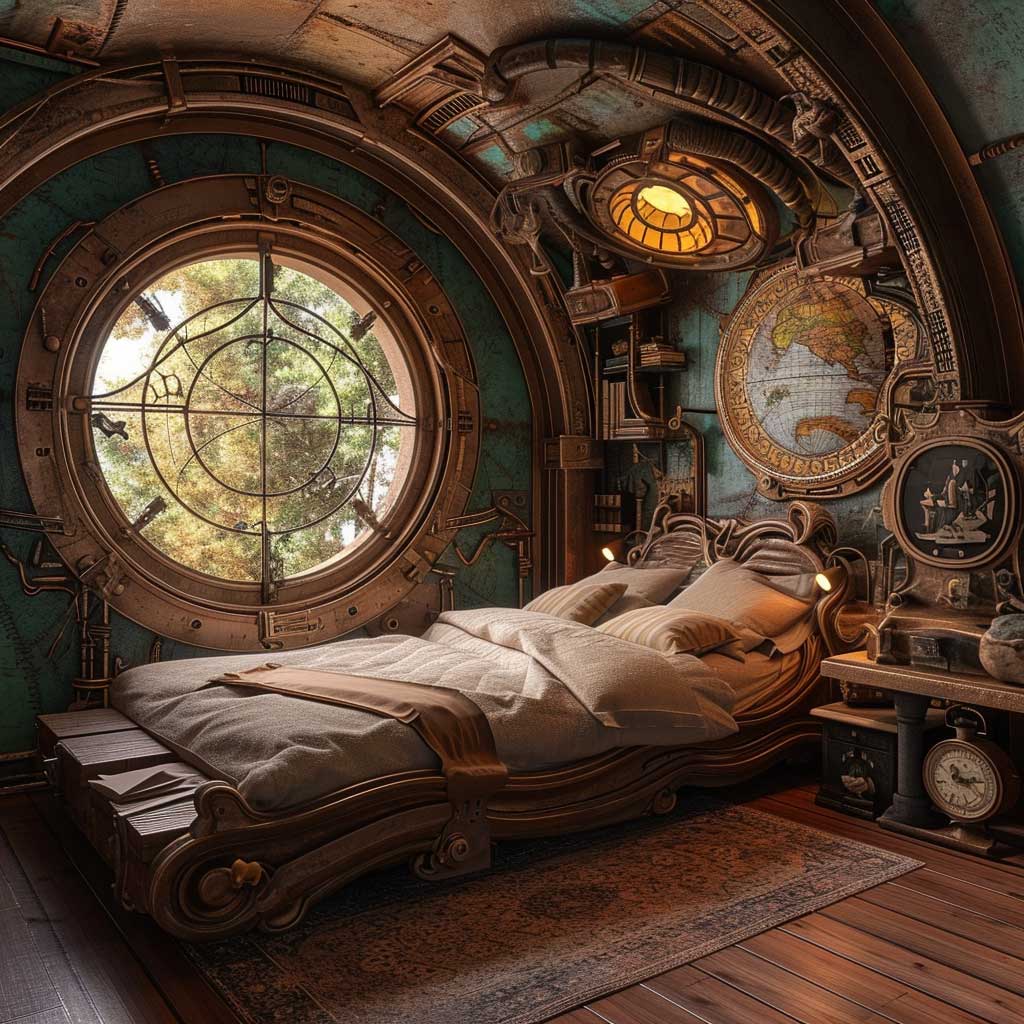
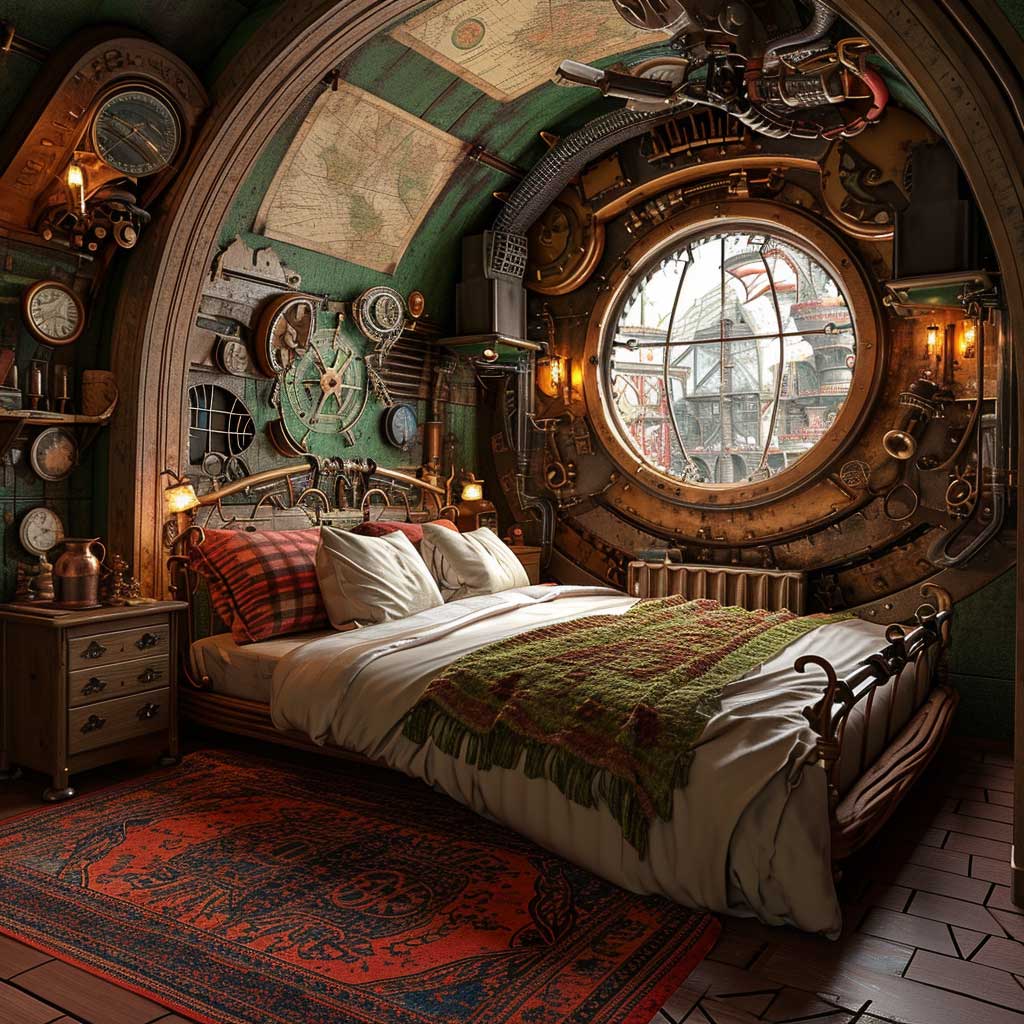
A steampunk bedroom built around the right bed frame is already halfway finished. My go-to is a wrought iron Victorian-style frame — the Zinus Adelaide ($349 on Amazon) hits the aesthetic without requiring a custom fabricator. The headboard silhouette does the storytelling: scrollwork and vertical bars signal Victorian origin; flat platforms and upholstered panels don’t. Pair it with brocade or velvet bedding in teal, plum, or burgundy and the room immediately reads as designed rather than assembled.
Lighting is responsible for 70% of what makes a steampunk bedroom feel right or wrong — and most people underinvest in it. A $129 Kichler gaslamp-style wall sconce on a dimmer switch transforms a room more radically than any amount of gear-shaped accessories. Does this mean you need to rewire? Not necessarily — plug-in sconces from brands like Kenroy Home ($79–$130) mount to the wall with a single anchor screw and the cord tucks behind a small conduit. The warm amber glow at 2200K mimics candlelight in a way that overhead LEDs simply can’t replicate.
Curiosities and mechanical decor should feel earned, not mass-produced. An antique telescope from eBay ($35–$120 depending on age) in the corner says something about the room’s inhabitant. A set of three vintage brass compasses under a glass cloche ($40 thrifted) reads as a collection. What doesn’t work is a pre-packaged “steampunk decor bundle” from Amazon with matching gears, goggles, and a top hat on a stand — that’s a theme park, not a home. Restraint is more powerful than volume here, and I learned that lesson the expensive way after an overcrowded redesign I dismantled after six months.

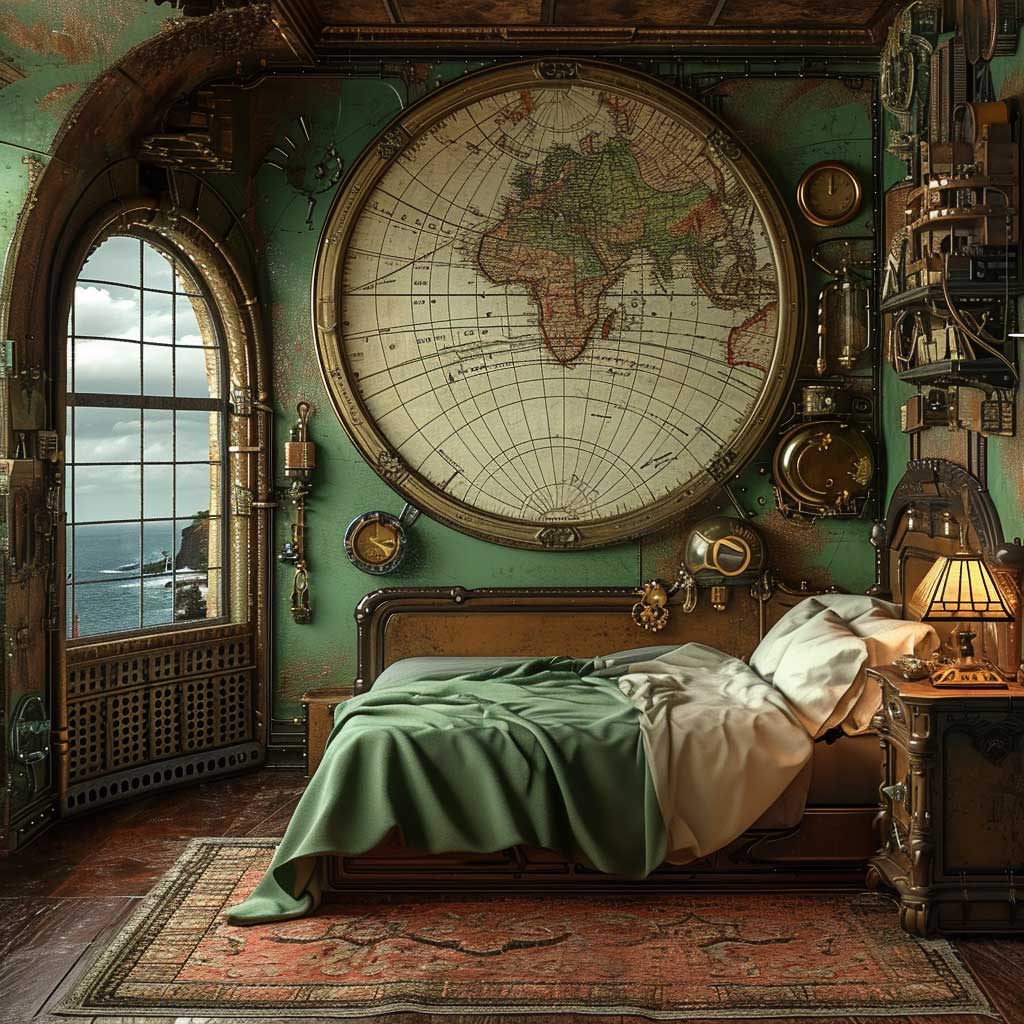


Color in a steampunk bedroom works like a film set — warm earth tones are the base, jewel tones are the hero, and metallic finishes are the punctuation. Earth tones on the walls (Benjamin Moore’s “Raccoon Fur” or “Chocolate Mousse” in the $70/gallon range) keep the room grounded. Deep teal or burgundy in the textiles give it drama. Gold, bronze, and brass in the hardware and lamp bases tie it together without looking like a flea market. What trips people up is adding too much grey — grey reads as contemporary and disconnects from the Victorian warmth that makes steampunk legible as a style. For anyone exploring how this bedroom palette interacts with broader industrial room concepts, this industrial bedroom design breakdown covers complementary approaches with real room examples.
Final Word
Industrial Steampunk Interior Design Rewards Commitment Over Budget
The rooms that pull this off — fully and convincingly — are never the ones with the biggest budgets. They’re the ones where every piece was chosen with a clear material logic: brass over chrome, iron over aluminum, velvet over cotton, warm amber over cool white light.
A $65 Edison pendant beats a $400 recessed-light upgrade every time. An estate-sale sextant beats any Amazon gear clock. The architecture of the style is accumulation over time, not a one-day IKEA run.
Start with one room, nail the lighting and the anchor furniture piece, then layer in the mechanical curiosities slowly. Save this post — you’ll come back to it before every purchase decision.