A ponytail for an oval face is one of those rare style decisions where you genuinely cannot lose — the symmetry that defines this face shape reads beautifully whether the tail sits high, mid, or low. My fixation started when I installed a frontal unit specifically to experiment with ponytail placement, and I spent three weekends testing heights, textures, and color temperatures before landing on the looks below. What I found was that the frontal piece changes everything: it sharpens the hairline and creates a cleaner frame than a natural hairline alone could achieve.
The frontal ponytail is a technique, not just a style. You’re essentially using a lace frontal to extend the hairline and then feeding all that hair back into a secured tail — which means the finish at the root looks airbrushed in a way a regular ponytail never does. Oval face proportions respond best to high and mid placements because both options draw the eye toward the cheekbones rather than adding width at the temples. Skip the low nape ponytail if volume is your priority; it flattens and drags.
Color matters more here than in loose styles. Auburn, platinum, and pastel pink each communicate something different — warmth, edge, or softness — and all three read with more intensity when the hair is pulled back because there’s no curtain of loose strands diluting the shade. I’ve tried all three and ranked them below by wearability, install difficulty, and what they do to the face in real light versus studio light.
- A frontal ponytail suits an oval face at any height — high placement emphasizes cheekbones, mid placement opens the face, low placement elongates the neck.
- Rich auburn with a sleek finish reads most polished under warm or artificial light; a flat iron and Got2b Glued gel ($6) are non-negotiable for the glass-hair effect.
- Platinum silver with curly texture is the loudest of the three options — a diffuser and curl-enhancing cream keep the spirals defined without frizz.
- Pastel pink romantic waves sit at mid-to-low height and are the softest install; a medium-barrel iron and light-hold spray like Kenra Platinum Silkening Mist ($29) are all you need.
- Middle parts in the frontal installation add modern symmetry; avoid center parts only if your forehead is very prominent, because it will push attention there rather than to the cheekbones.
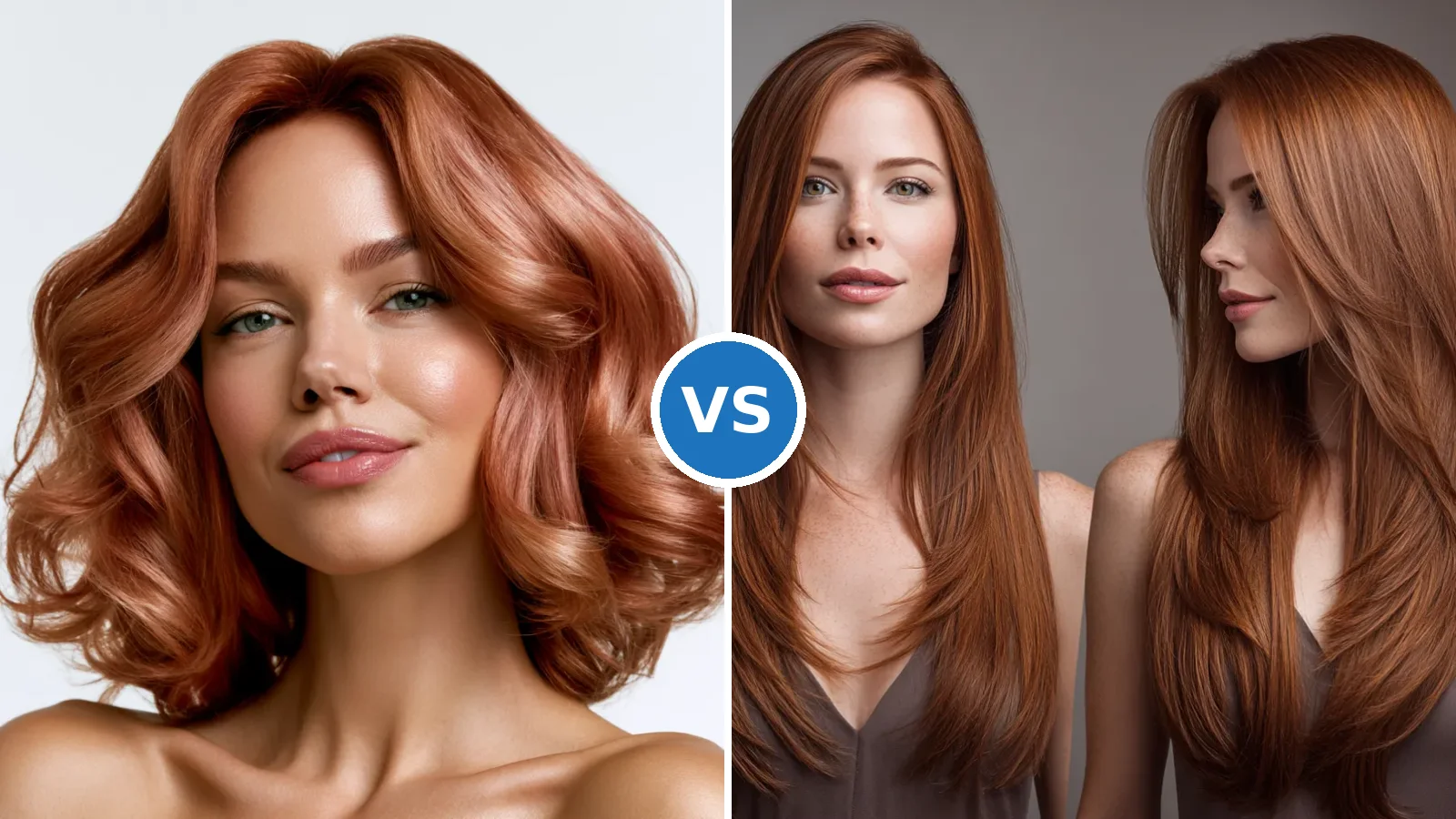
Rich Auburn Frontal Ponytail with Sleek Finish
Auburn is the color that transforms a standard ponytail for an oval face into something you’d see on a magazine cover. The reddish-brown depth shifts under lighting — warm indoors, more copper in daylight — and that constant movement keeps the look alive even when the hair itself is completely still. I’ve installed three auburn frontals over the past year and the response from others is always the same: “Is that your natural color?” That reaction is the benchmark.


The installation sequence matters here. Once the frontal is laid and the edges are melted — I use Got2b Glued Blasting Freeze Spray at about $6 from any drugstore — you do a single smooth pass with a CHI G2 flat iron ($120) from root to tip before securing the ponytail. Do this in sections, not all at once, or you’ll create heat stress at the elastic point. The result is what stylists call glass hair: a surface so smooth it actually reflects light. Without that pre-iron step, the frontal piece and the main body of hair will have two different textures and the contrast will ruin the illusion.
High placement — at or just above the crown — is my go-to for auburn because it creates a vertical line from hairline to tail that visually extends the neck. You’ll notice the jaw reads sharper and the face feels more sculpted than it actually is. Does placement really matter that much? Yes, embarrassingly so. I tested mid-crown versus high crown on the same day and the high version looked like a different person. The oval proportions already give you latitude, but the high placement earns you an extra inch of neck in every photo.
A word on what doesn’t work: loading too many products before the flat iron pass. Shine serums, glossing creams, and edge control applied before heat create a coating that the iron then bakes onto the cuticle, resulting in buildup that dulls the very shine you were chasing. Apply a single pump of Kenra Platinum Silkening Mist ($29) after the iron, not before, and you’ll get the glass finish without the residue. Save this technique — it’s the one professional stylists quietly use and rarely explain in tutorials. For a deeper look at other oval face styles that work with this same sleek logic, straight-back hairstyles for oval face shapes use the same flat-surface principle.
- Don’t wrap the elastic too tight at the base. A tension headache by hour two means you’ll pull the ponytail out early — and tight wrapping on a frontal also stresses the lace edge. Secure at medium tension and use a satin-coated elastic, not a regular rubber band.
- Don’t use dry shampoo to prep the frontal before laying it. Dry shampoo leaves a chalky film that prevents edge control from adhering — your hairline will lift by midday. Start with clean, slightly damp hair and let it air dry 80% before applying any hold products.
- Don’t match the ponytail height to a round face rule. Round face advice (go high, tease for volume) actively works against an oval face, which reads best with clean, not teased, roots at whatever height you choose.
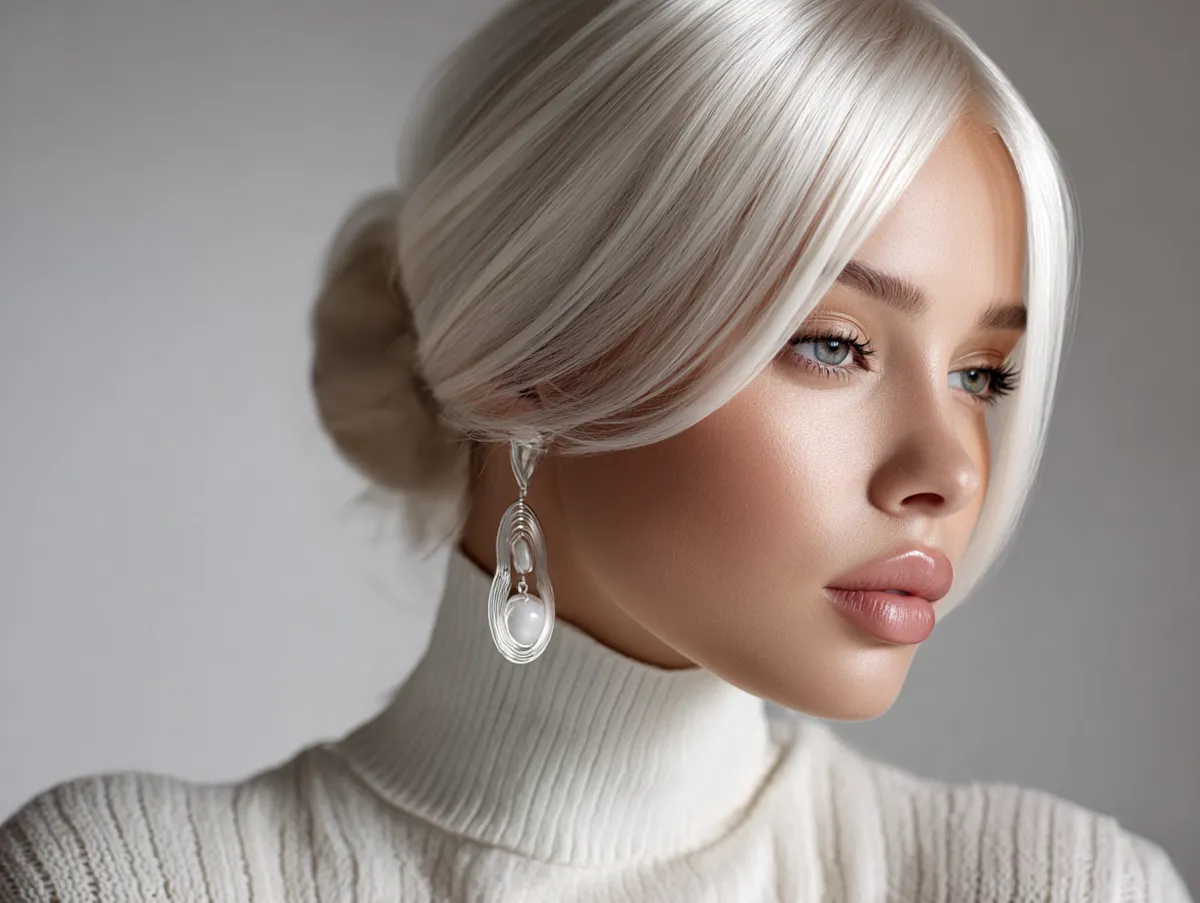
Platinum Silver Frontal Ponytail with Curly Texture
Platinum silver is not a low-maintenance color choice — but it’s the one that reads the most dramatic when pulled into a curly frontal ponytail on an oval face. The curls act like prisms: each spiral catches the silver differently depending on angle, so the full tail shimmers as you move. I’ve worn this look twice, once to an editorial shoot and once to a rooftop event, and both times I spent more time answering questions about the color than talking about anything else.
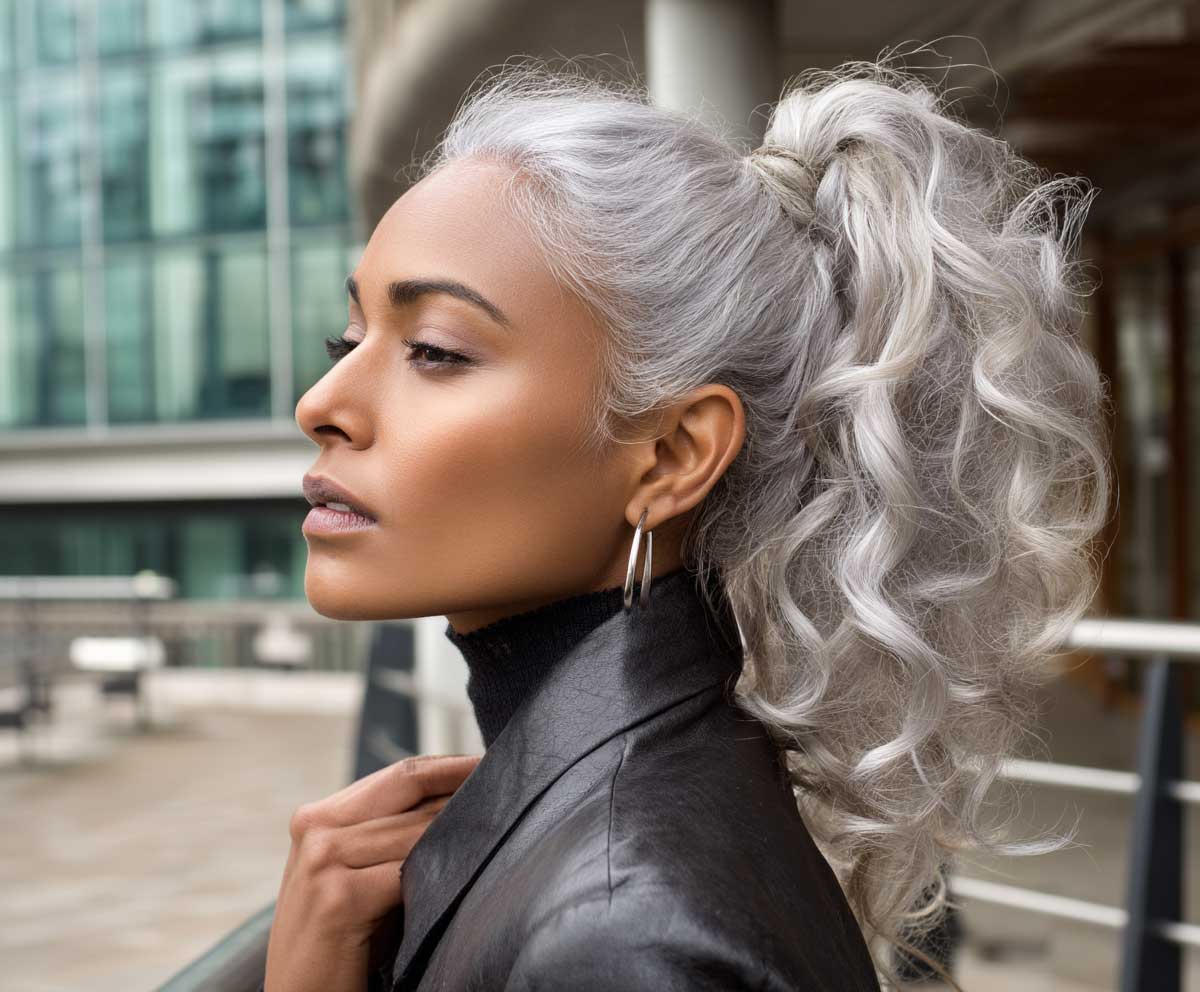

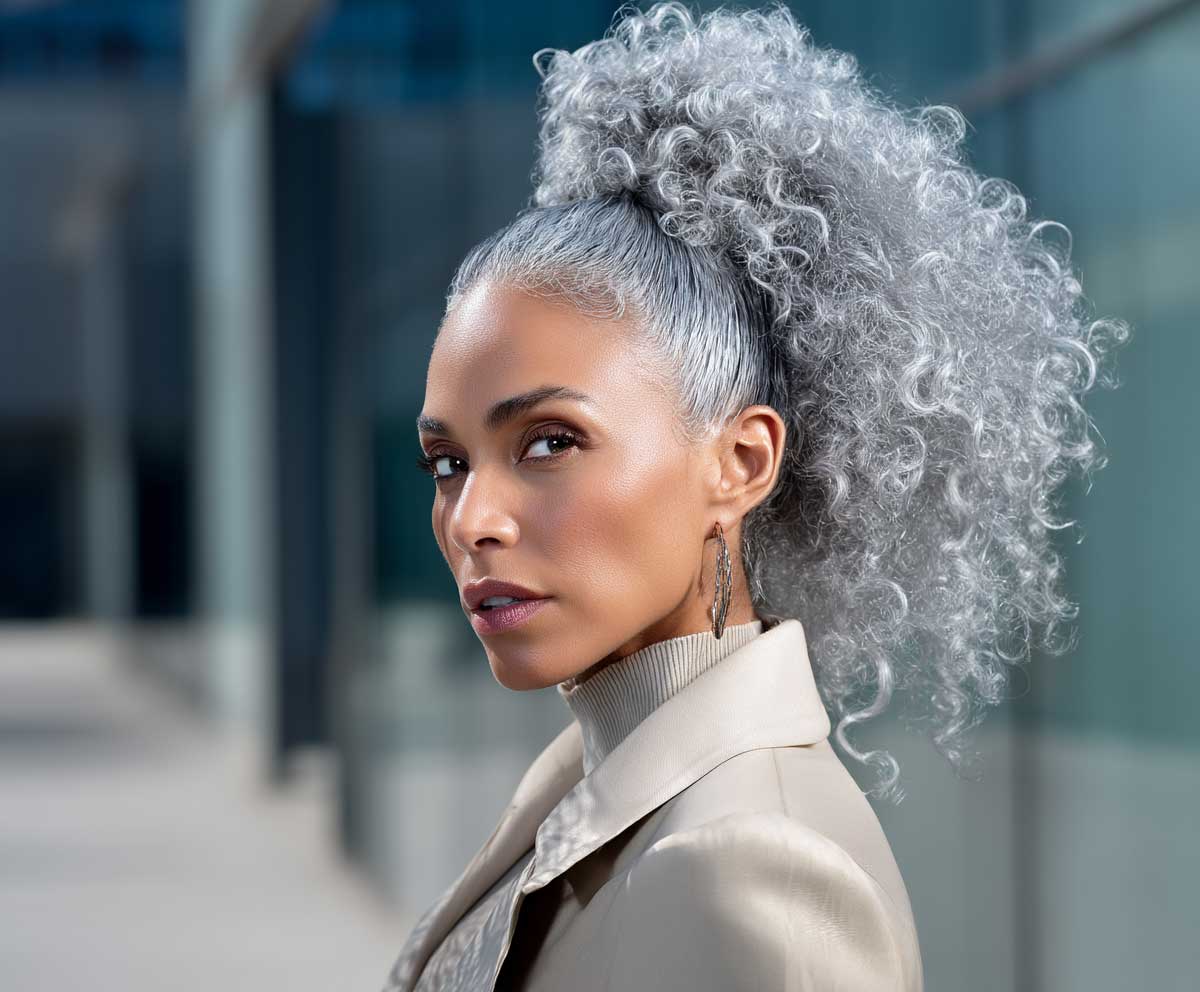

Curl definition is the whole job with platinum. Undefined frizz on a silver unit just reads as grey and flat — the opposite of the effect you want. My process: apply Briogeo Curl Charisma Cream ($26) section by section on damp hair, then diffuse on medium heat and low airflow until the curls are 90% dry. Touching the curls before they’re fully set is the number one way to break curl pattern and create frizz. Think of each spiral as a temporary structure that needs to cool and contract before you disturb it — like setting chocolate in a mold.
A center part in the frontal installation is the right call here because it creates bilateral symmetry that mirrors the oval face’s natural proportions. The curls cascade from a clean central line and distribute volume evenly on both sides, which gives the face more breathing room than an off-center part would. What height works best? A crown-level placement — not extreme high — lets the curls fall around the shoulders and adds circumference at the widest point of the face frame, which is exactly where you want visual mass on an oval shape.
Platinum units cost significantly more to maintain than other colors: toning every 3–4 weeks with Shimmer Lights Purple Shampoo ($15) at home, plus a full salon toning session around $60–$80 every 6–8 weeks to prevent brassiness. That’s not a reason to avoid it, but it’s a number you should know before committing. The payoff is that no other color responds to studio or event lighting the way silver does — other colors absorb light; platinum bounces it.
Pastel Pink Frontal Ponytail Styled in Romantic Waves
Pastel pink is the softest ponytail choice for an oval face, and when the hair is set in romantic waves rather than tight curls or flat silk, the combined effect reads like a fashion editorial rather than a costume. The pink registers differently depending on skin tone — warmer complexions bring out the coral undertone, cooler complexions push the shade toward lilac — so what you see on screen may shift once the unit is installed on your actual head. I stole this trick from my colorist: hold a swatch of the pink unit next to your face in natural light before committing, not indoor fluorescent light, which flattens everything.


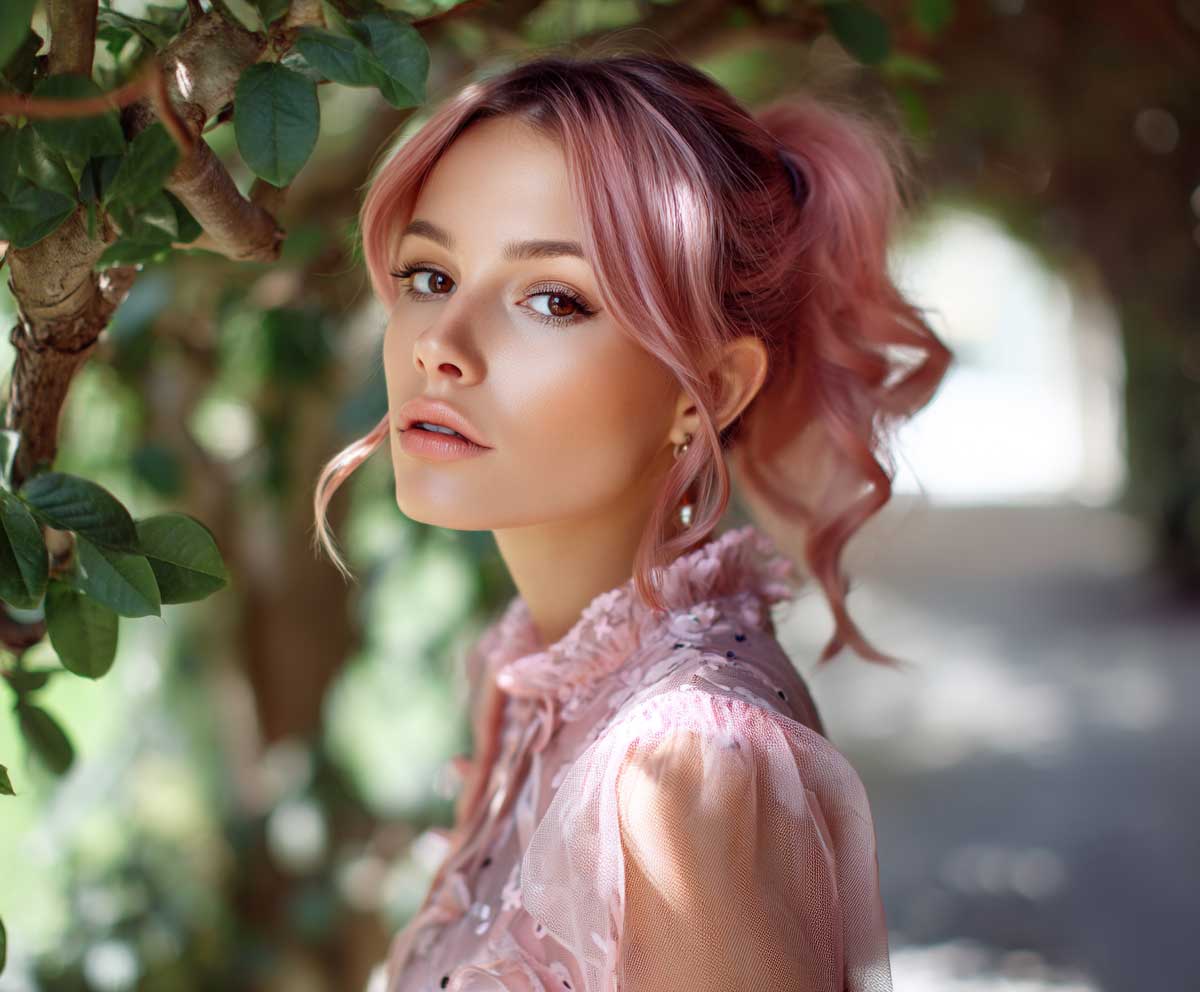
Wave creation on a frontal unit follows the same rules as on natural hair, except the hair fibers are more heat-sensitive than most people expect. Use a 1-inch barrel iron — the Beachwaver S1 at $99 is my go-to — and set the temperature no higher than 350°F on synthetic-blend units, 380°F on 100% human hair. Wrap each section away from the face, hold for six seconds, then release without unraveling. Letting the curl cool completely before opening into a wave gives you that loose, deliberate bend rather than a tight ringlet. After all sections are done, I run a wide-tooth comb through exactly once to open the waves — never a brush, which stretches the wave into a limp S and kills the volume.
Mid-to-low placement is where this version lives. Positioning the ponytail at the back of the crown rather than the very top lets the waves spill over the shoulder and frame the face from below, which is a completely different visual grammar than the high auburn placement. Does lower automatically mean less flattering? Not for an oval face — you can afford the latitude. The lower tail elongates the neck and creates a column of movement that photographs extremely well from the side profile, which matters if you’re wearing this to an event with cameras involved. Baddie hairstyles designed for oval faces use the same logic of letting the style extend downward rather than building upward.
Kenra Platinum Silkening Mist ($29) as a final-step product keeps the waves soft rather than crunchy — spray six inches away from the hair while it hangs, not while it’s tied up. The pastel pink fades faster than most colors: expect four to six weeks of true pigment before the unit starts pulling toward blush or ivory. You can extend life with a color-depositing conditioner like dpHUE Cool Blonde Conditioner used as a pink-pigment mask, but it’s a workaround, not a fix. Plan the wear accordingly.
How Ponytail Placement Changes What Your Face Looks Like
The best ponytail for an oval face is less about finding the single correct answer and more about knowing what each placement amplifies. High ponytails at the crown sharpen the jawline and cheer up the cheekbones — it’s why this placement looks so good in photos. Mid-height placement at the back of the crown keeps features centered without adding drama. Low placement at the nape elongates the neck and softens the overall silhouette. All three work on oval proportions; the variable is the impression you want to make in the room.
The frontal unit changes the outcome of all three placements because it creates a controlled hairline instead of relying on natural edges. Natural hairlines have recession points, baby hairs, and uneven density — none of which behave the same way when the hair is pulled back under tension. A frontal gives you a uniform perimeter that holds its shape at any height without the ghost bumps or scalp show-through that plagued every ponytail I attempted before I switched to using one. The cost of a quality frontal is $80–$200 depending on whether you go synthetic or human hair; I’ve found the Outre Perfect Hairline Collection ($45–$65 at Sally Beauty) to be the most reliable at the mid-price point.
What face shape advice gets wrong is treating placement as a binary — high good, low risky — when the real answer is that texture and color have more impact than height on an oval face. A low sleek ponytail looks sharper than a high frizzy one. A mid placement with defined curls reads more editorial than a high placement with product buildup. Placement is the starting point; finish quality is what seals the look. I’ve worn all three versions in all three placements, and the common thread across the ones that worked was obsessive attention to the surface — smooth, defined, or deliberately airy — not where the elastic was tied.
Final Word
Oval Face Ponytails Reward Every Height — If the Finish Is Right
Auburn at high placement gives you the most polished, formal read. Platinum silver with curls is the loudest and most editorial. Pastel pink waves at mid-to-low placement is the most effortless and the most photographable from the side.
A frontal unit is the difference between a ponytail that looks installed and one that looks like your actual hair growing from a perfect hairline. The $45–$200 investment pays off in every single look.
All three styles come down to one principle: finish quality over placement height. Surface texture, color vibrancy, and product sequencing matter more than where the elastic sits. Save this post.
Related Topics
FAQ
What is the best ponytail for an oval face shape?
Does a frontal unit make a difference for a ponytail on an oval face?
What color looks best in a frontal ponytail for an oval face?
How do I get the glass-hair sleek finish on an auburn frontal ponytail?
How do I keep platinum silver curls defined without frizz?
What ponytail height suits an oval face if I want to look taller in photos?
Complete guide
The Right Haircut for Your Face Shape Starts Here
Oval, round, square, heart, long, diamond — all in one place