
The midi skirt is one of the most polarizing lengths in fashion. From the knee to the mid-calf — roughly 24 to 32 inches depending on height — it occupies the zone that stylists call “the danger zone of hemlines.” Go too loose, too heavy, or too layered incorrectly, and the midi reads as shapeless, heavy, and visually shortening. Get the proportions right, and it is one of the most elegant and versatile silhouettes in a winter wardrobe.
The frumpy midi problem is not about the skirt itself — it is about proportion errors, fabric choices, and shoe decisions that work against the silhouette. According to a 2023 consumer fashion survey by Edited, midi skirts saw a 47% increase in sell-through rate between 2021 and 2023, confirming sustained demand. But search data from the same period shows “midi skirt frumpy” and “midi skirt not flattering” as consistently high-volume queries — meaning millions of women are buying them and struggling to make them work in colder months.
This guide solves that problem with specific formulas: which fabrics hold their shape in winter, which boot heights actually work with different midi lengths, how to layer without adding bulk at the hip, and how to style the midi across every winter dress code from casual to formal.
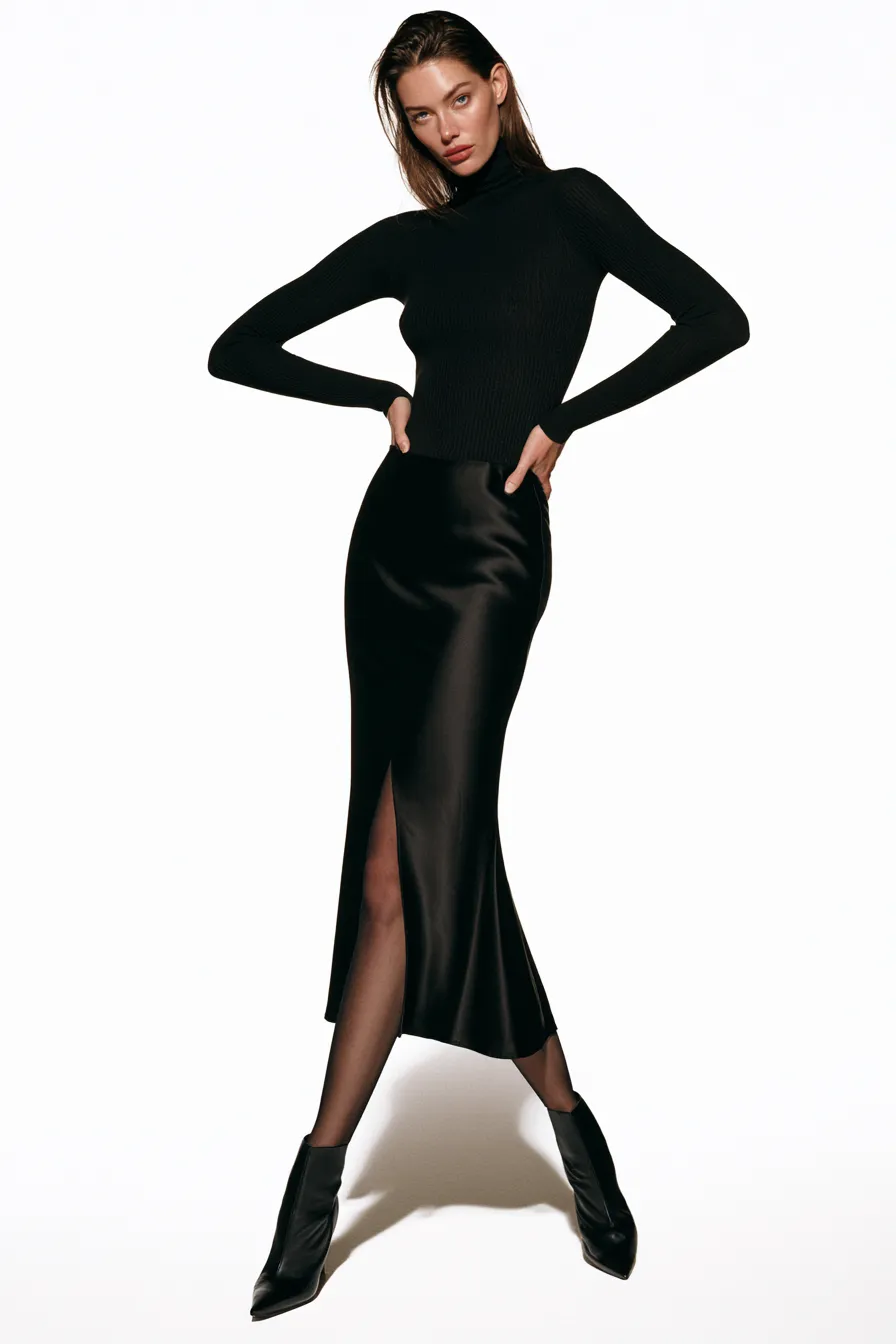

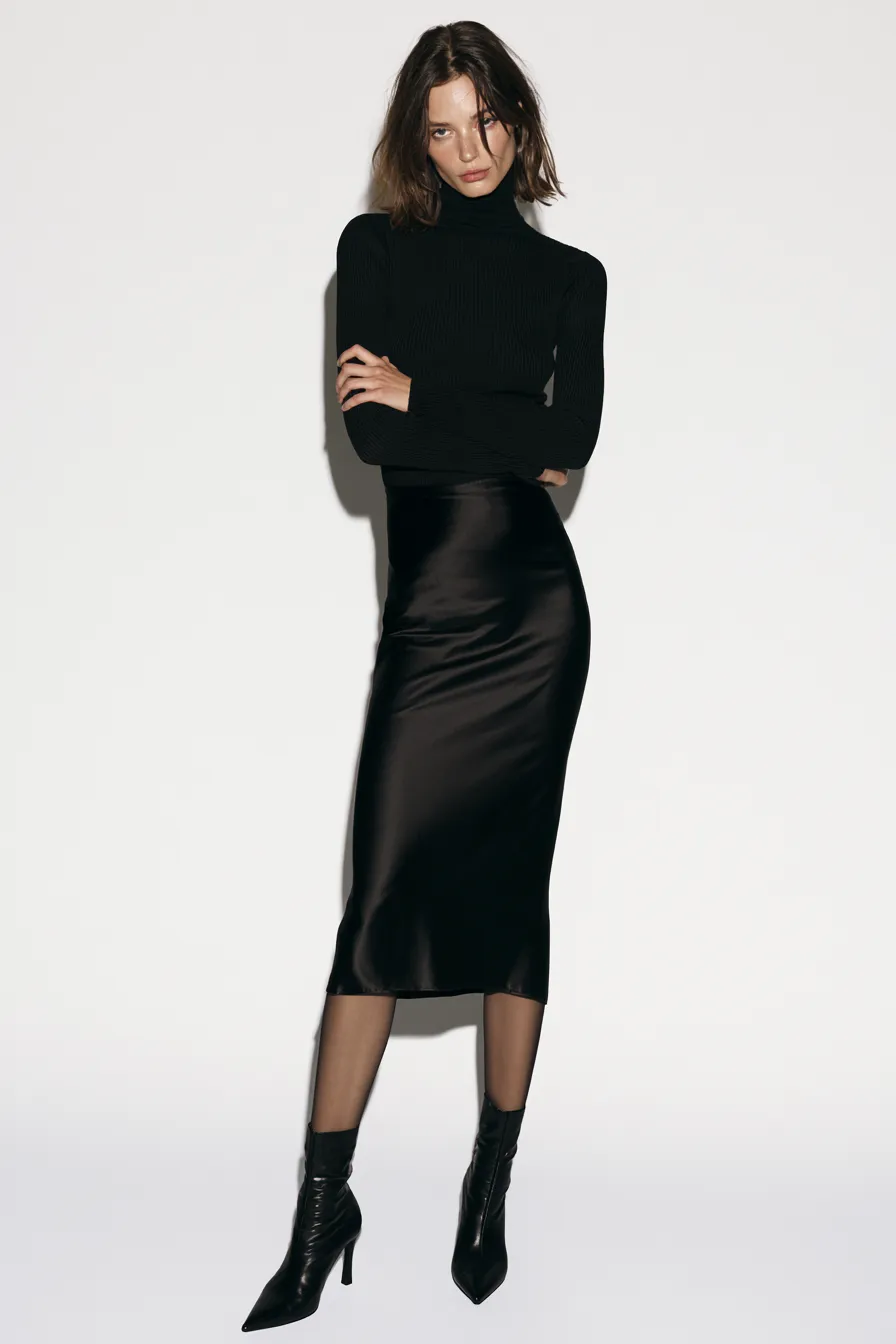
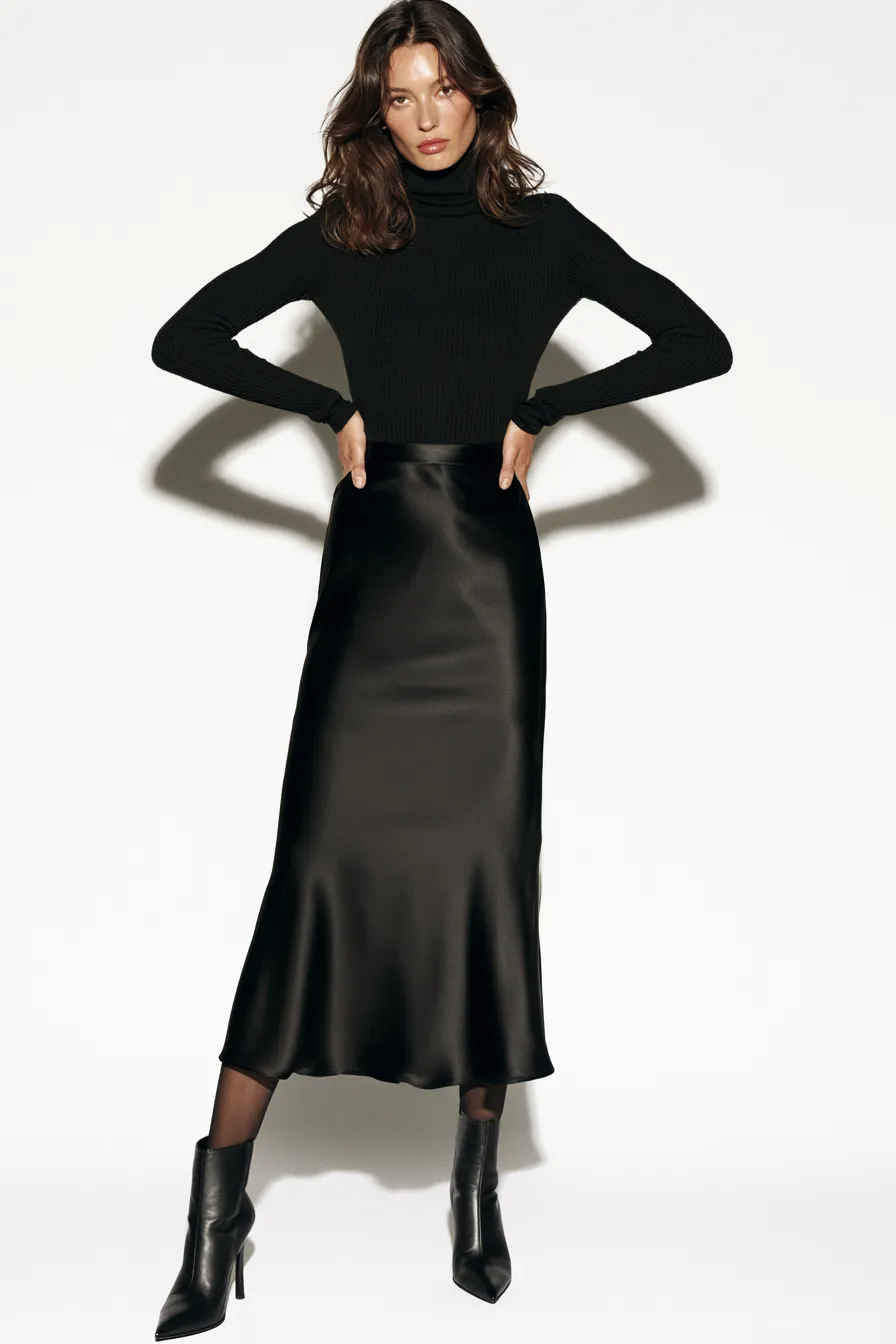
Why Midi Skirts Look Frumpy in Winter and How to Fix It
The frumpy midi is not a random occurrence — it follows a predictable pattern of three compounding errors. Understanding each one makes the fix straightforward.
Error 1: The wrong hem length for your height. The midi skirt “frumpy zone” sits at the widest point of most women’s calves — roughly 2 to 4 inches below the knee. A skirt that hits exactly here cuts the leg at its widest horizontal point and stops the eye there, making the leg look shorter and heavier than it is. The fix is hemming the skirt either just below the knee (where the calf is still slim) or at true mid-calf (where the calf narrows again). For women under 5’4″, a midi that hits at 23 to 25 inches from the waist usually avoids the frumpy zone. For women 5’5″ to 5’8″, 26 to 28 inches tends to work best.
Error 2: Layering bulk where the eye already stops. Adding a heavy sweater over the waistband of a midi skirt, or tucking a thick knit into a full-volume midi, creates a visual block of mass between the hip and the hem. The eye reads a wide top on a wide skirt with no visual break in between — which is the definition of shapeless. The fix is always creating a defined waist, even if the waist is inside a layered look.
Error 3: Flat shoes that cut the leg short. A midi skirt worn with flat sneakers or flats without a heel leaves the ankle area as a visual gap between the skirt hem and the shoe. This gap — especially when the shoe is a dark color against pale skin or light tights — creates a chopped horizontal break that reads as stumpy. The fix is closing this gap with tights matched to the shoe, with boots that eliminate the gap entirely, or with a heel that lifts the eye line.
The Boot Rule That Makes Every Winter Midi Skirt Outfit Work
Boots are the single most powerful tool for styling a midi skirt in cold weather without looking frumpy. The relationship between boot shaft height and skirt hem length determines whether the outfit reads as elegant or awkward — and it follows rules that are simple once you understand the underlying logic.
The fundamental principle: either leave a deliberate gap of skin or thin tights between the boot and the hem (the “flash of leg” technique), or eliminate the gap entirely by matching boot-top to skirt hem. What creates the frumpy effect is an accidental mid-calf break where neither intention is clear — the boot shaft ends too close to the hem without touching it, and the visual result looks unplanned.
Ankle Boots with Midi Skirts in Winter
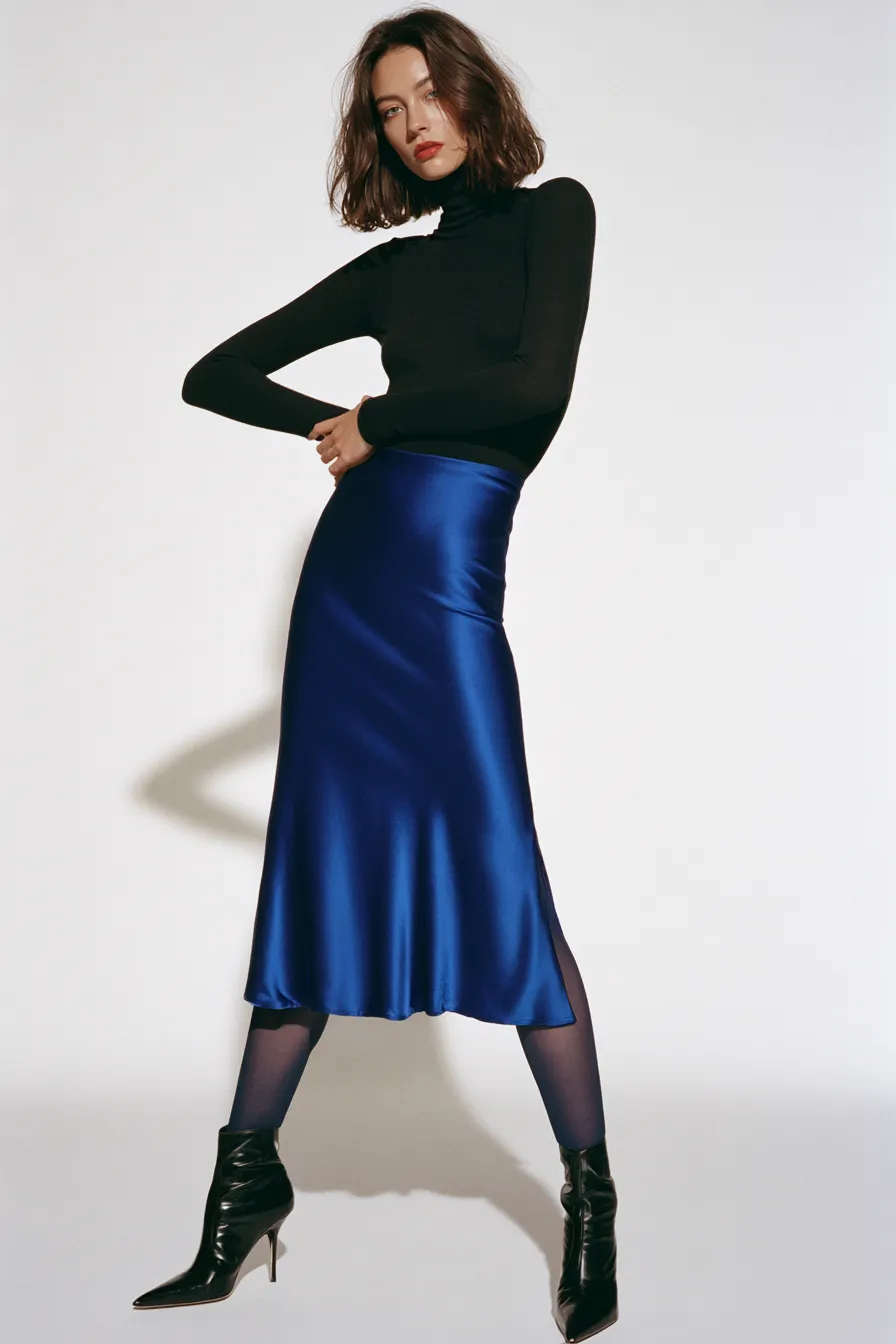
Ankle boots work with midi skirts in winter when paired with opaque tights that match or closely approximate the boot color. The tights close the gap between the boot shaft and the skirt hem, creating a continuous vertical line from shoe to knee that reads as elongating rather than chopping. A black midi skirt with 80-denier opaque black tights and black pointed-toe ankle boots creates one of the cleanest winter silhouettes available. The pointed toe is important — a round-toe or square-toe ankle boot creates a wider horizontal at the foot that makes the leg appear shorter.
The heel height of the ankle boot also matters more with a midi than with other lengths. A 4 to 7 cm block heel or stiletto adds enough lift to elongate the visible leg above the boot, while a flat Chelsea boot in a contrasting color to your tights will typically shorten the silhouette. If flat ankle boots are the preference, match tights to boot color precisely — within two shades.
Knee-High and Over-the-Knee Boots with Midi Skirts
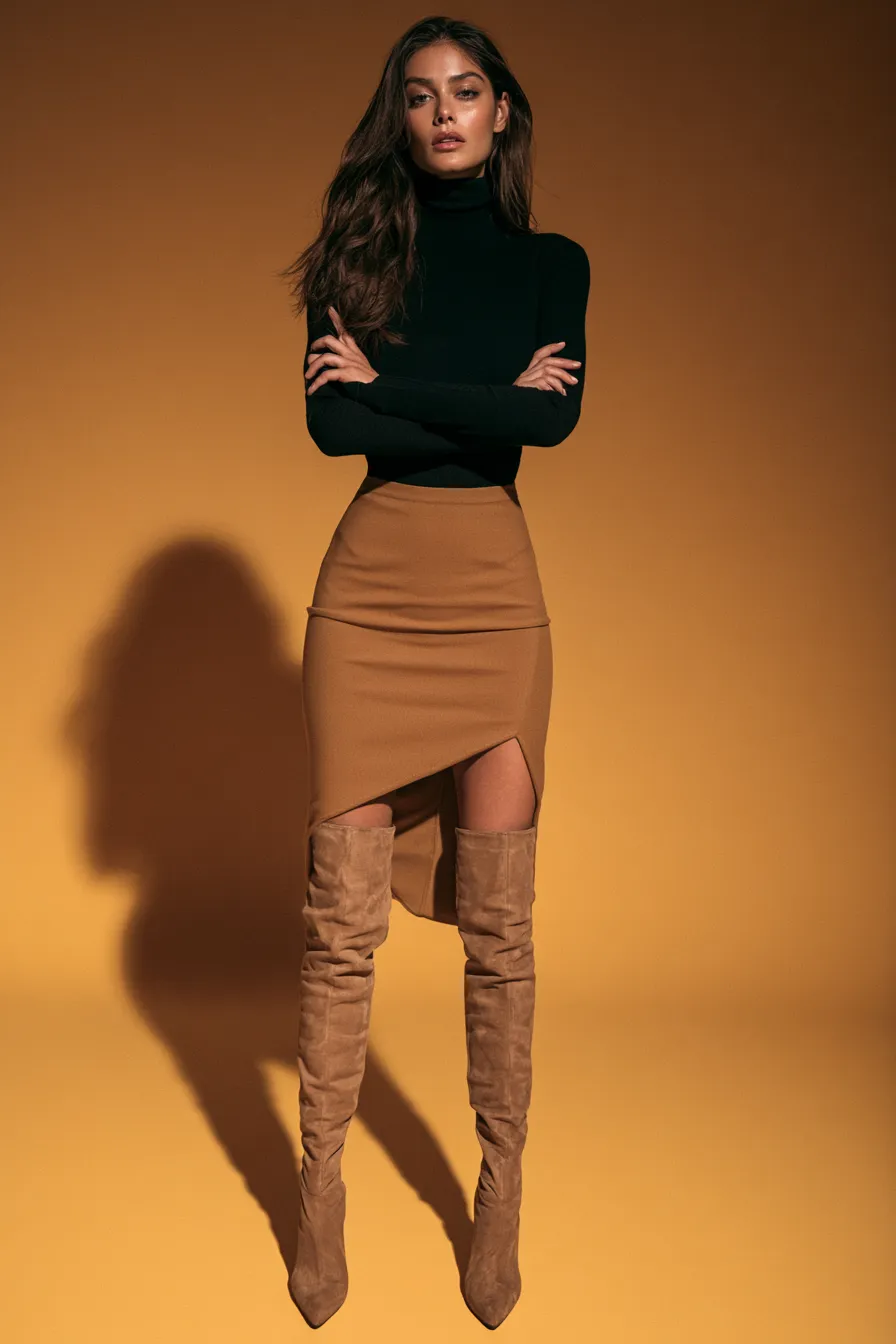
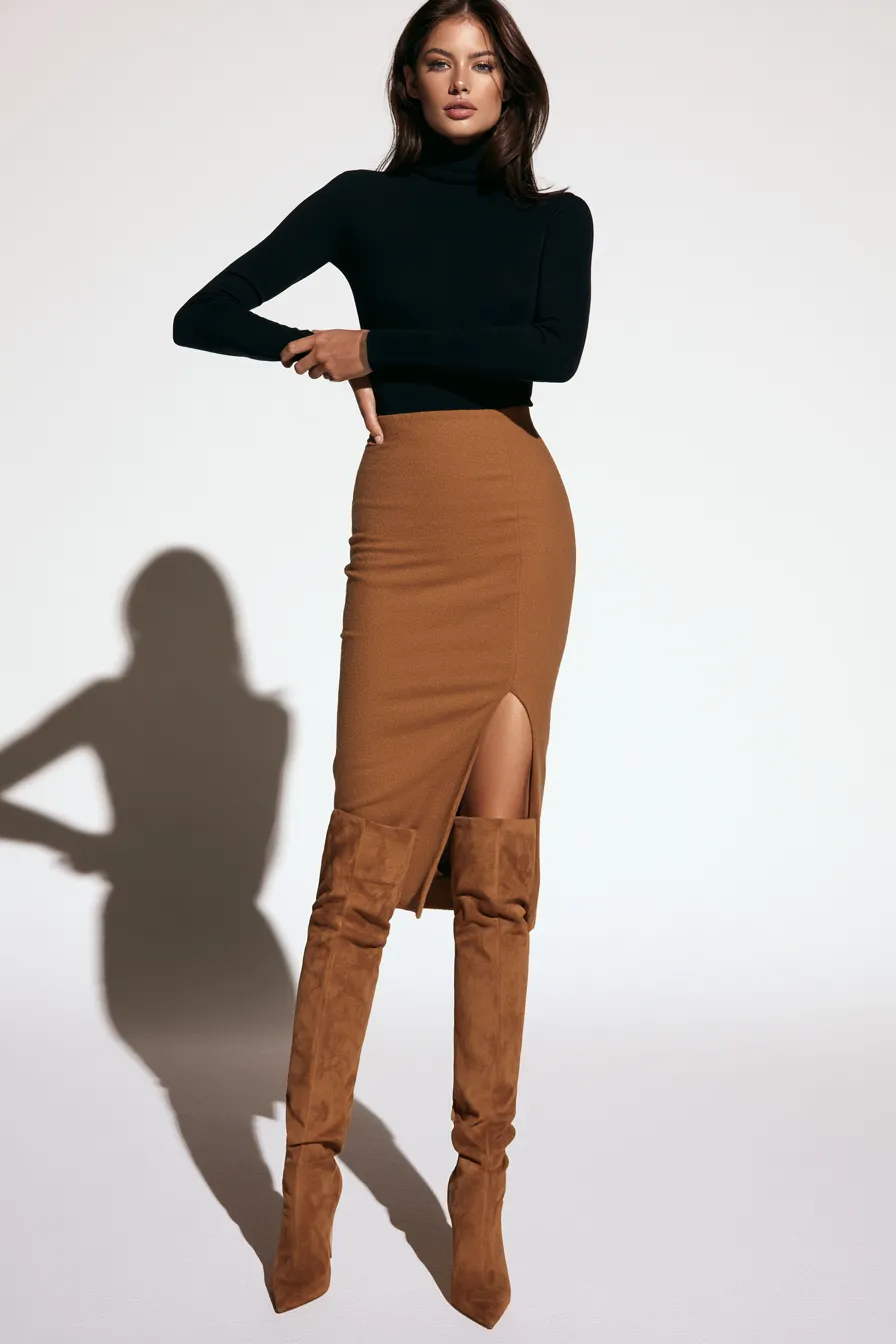
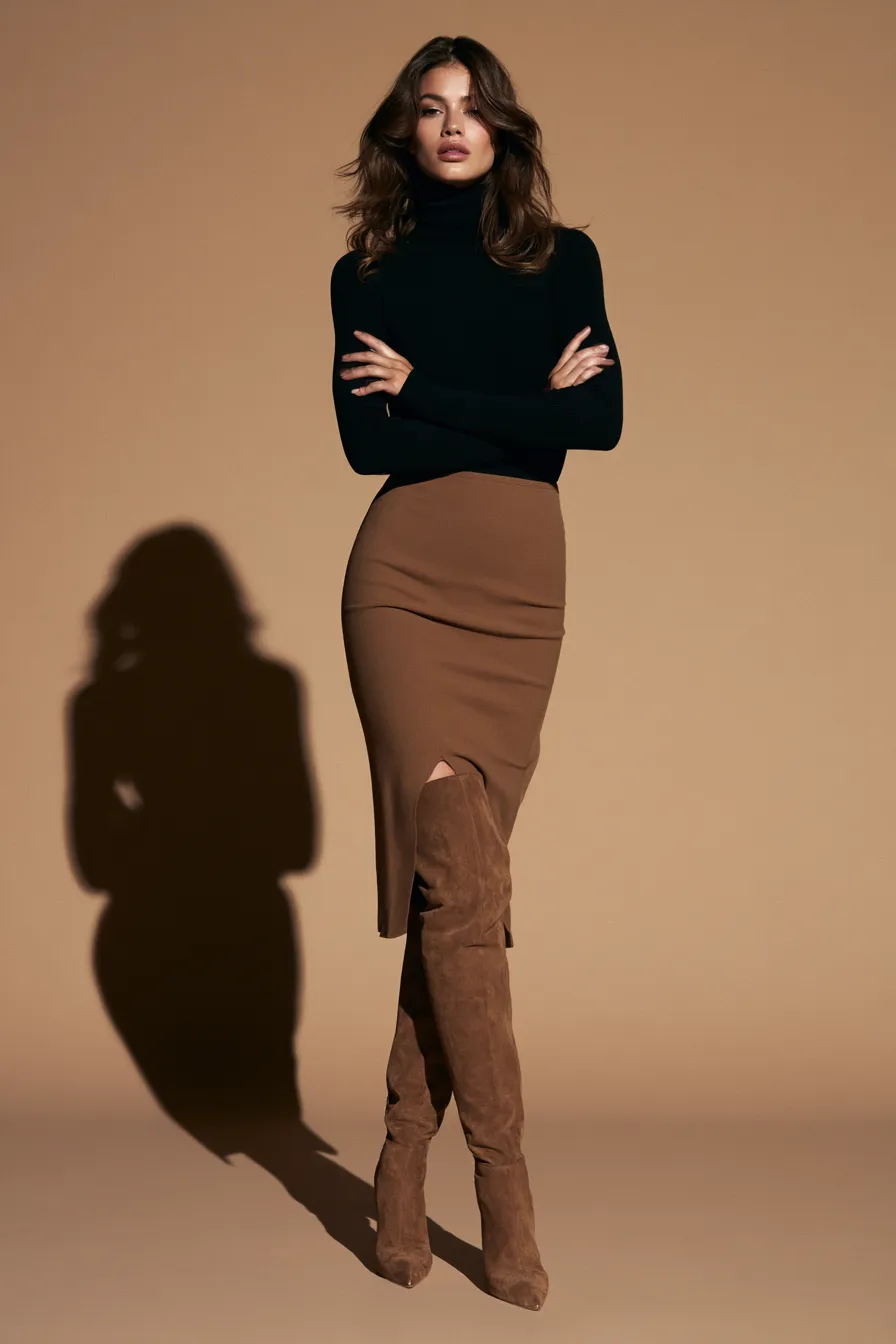
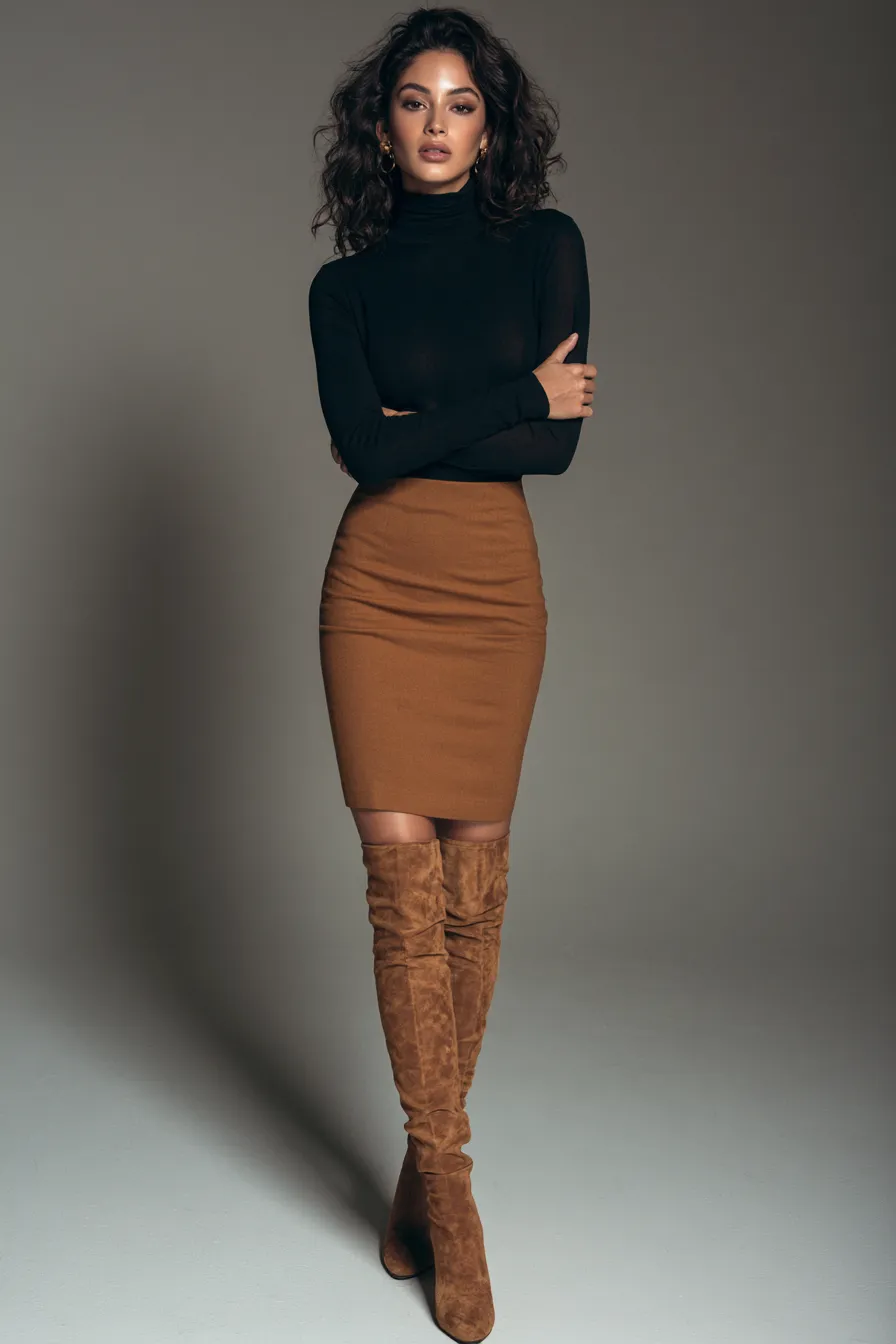
Knee-high and over-the-knee boots are the most forgiving boot option for midi skirts in winter because they eliminate the gap problem entirely. The boot shaft meets the skirt hem or overlaps it, creating a continuous vertical line. This combination also requires no tights, which reduces layering complexity.
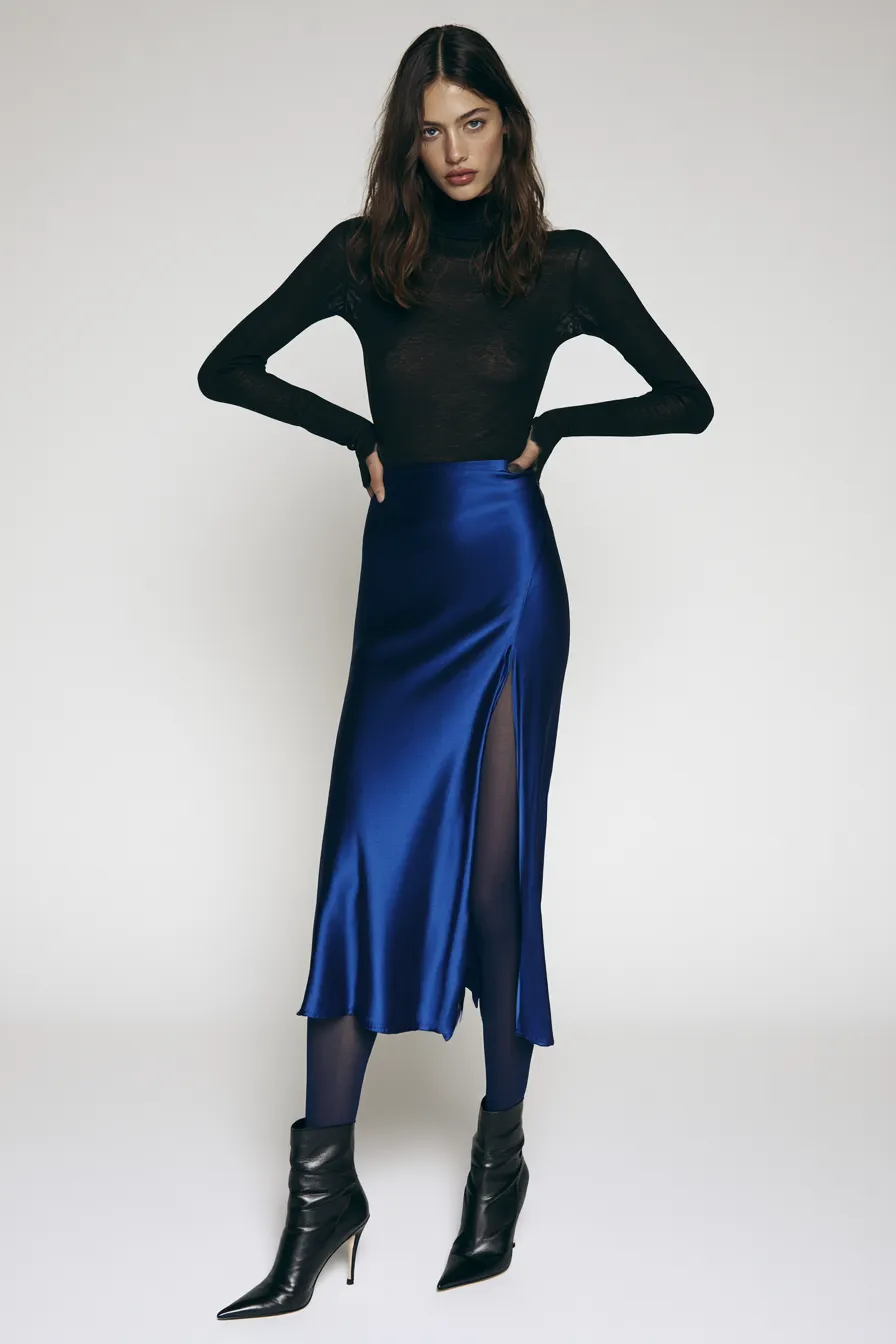
For this to work without looking heavy, the midi skirt needs to be narrow — a pencil cut, a fitted A-line, or a slit-front midi. A full-volume midi paired with wide over-the-knee boots creates mass at both the hip and the calf, which is the opposite of what the look needs. Keep one of the two elements — skirt or boot — slim, and the combination reads as polished.
Fabrics That Keep a Winter Midi Skirt from Looking Heavy
Fabric choice determines whether a midi skirt reads as structured and intentional or as heavy and shapeless in cold weather. The instinct in winter is often to reach for the thickest, warmest fabric available — but thickness and warmth do not always produce good results at the midi length. The fabrics that work best in winter are those that hold their shape without adding visual weight.
| Fabric | Winter Wearability | Best Midi Cut for This Fabric | Frumpy Risk | Styling Note |
|---|---|---|---|---|
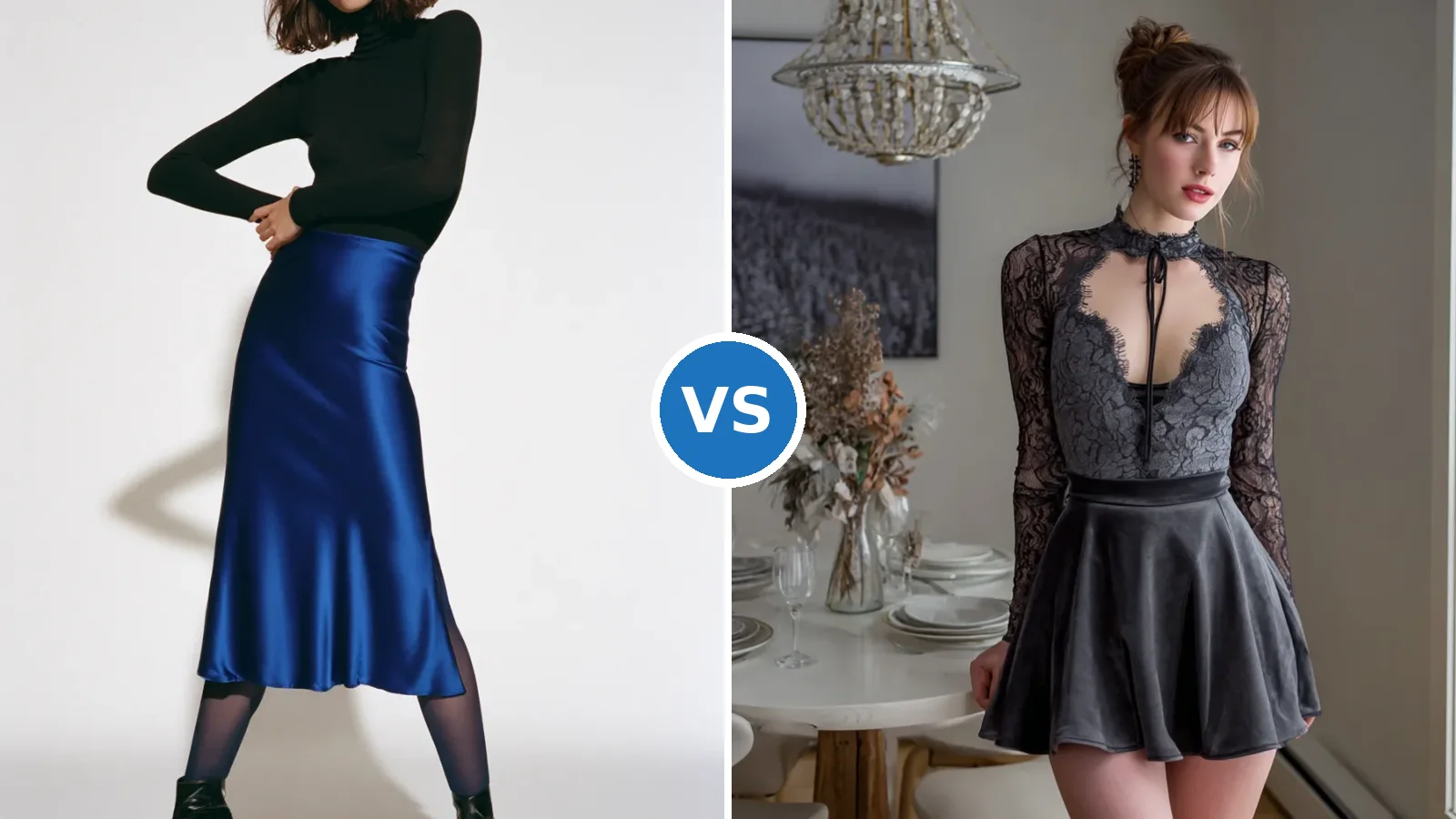
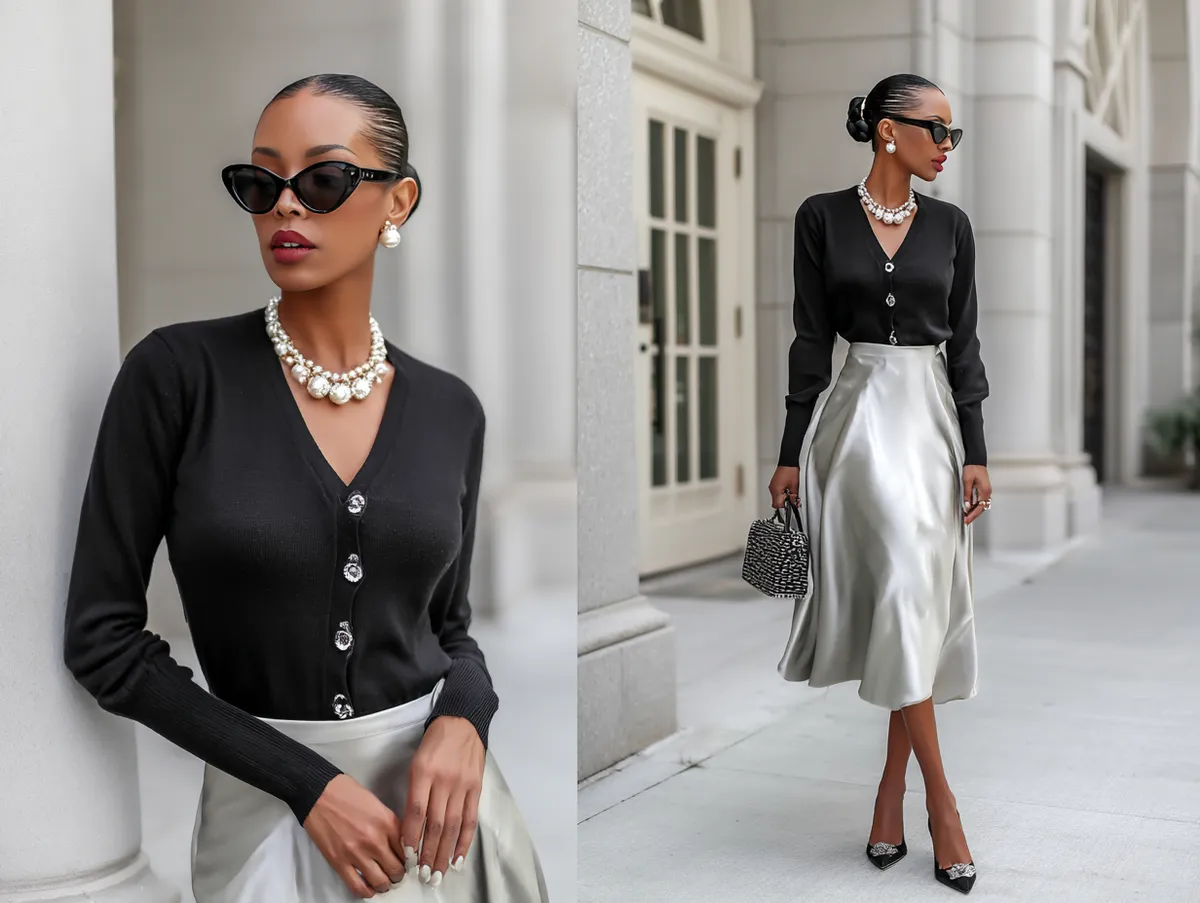
| Satin / matte satin | High (worn with layers) | Bias-cut or pencil | Low | Reflects light, reads as slim — avoid puckering at hip |
| Ponte / double-knit | Very high | Pencil or A-line with waist seam | Low | Structured but flexible, holds shape all day |
| Leather / faux leather | High | Pencil or slit-front | Very low | Adds edge, pairs well with oversized knitwear above |
| Wool tweed / boucle | Very high (warmth) | A-line with defined waist seam | Medium-High | Keep top slim and fitted — tweed adds significant visual bulk |
| Velvet | High (festive) | Pencil or bias-cut | Low-Medium | Rich texture reads elevated — avoid full volume in velvet |
| Jersey knit | Medium | Pencil or fitted wrap style | Low | Clingy if thin — choose mid-weight jersey for structure |
| Corduroy | High | A-line or straight | Medium | Pairs best with slim tops — wide-wale cord adds horizontal texture |
| Heavy linen / cotton canvas | Low (cold weather) | Any | High | Stiff in cold, wrinkles easily — save for spring |
| Pleated chiffon / silk | Low (worn alone) | Pleated midi | High | Layered under a structured coat it works, but alone reads summer |
The standout winter performers are ponte, satin, and leather or faux leather — all three hold their shape regardless of temperature, pair with the heaviest layering pieces without adding bulk of their own, and maintain the vertical line that prevents the midi from reading as shapeless.
How to Layer a Midi Skirt in Winter Without Adding Bulk
Layering for warmth is the central challenge of wearing a midi skirt in winter without looking frumpy. Every layer added above the skirt has the potential to create bulk at the hip and waistline — which is precisely the area where the midi silhouette most needs visual clarity. The solution is not to layer less, but to layer strategically.
The Tuck Rule
Every top worn with a midi skirt in winter should either be fully tucked, half-tucked, or cropped at or above the hip. A top that falls to the hip or below covers the waistband of the skirt and eliminates any visual contrast between the torso and the skirt — which collapses the look into one undifferentiated mass. Tucking, even partially, creates a visual waist and gives the eye a break between the top and the skirt.
For fitted turtlenecks and fitted knits, a full tuck works without creating bulk. For thicker knit sweaters, a half-tuck — where the front is tucked and the back is left out — creates the waist definition without forcing volume into the waistband. For very thick or structured sweaters, a cropped length that ends at the natural waist is preferable to tucking.
Turtlenecks and Fitted Knits as the Core Winter Top
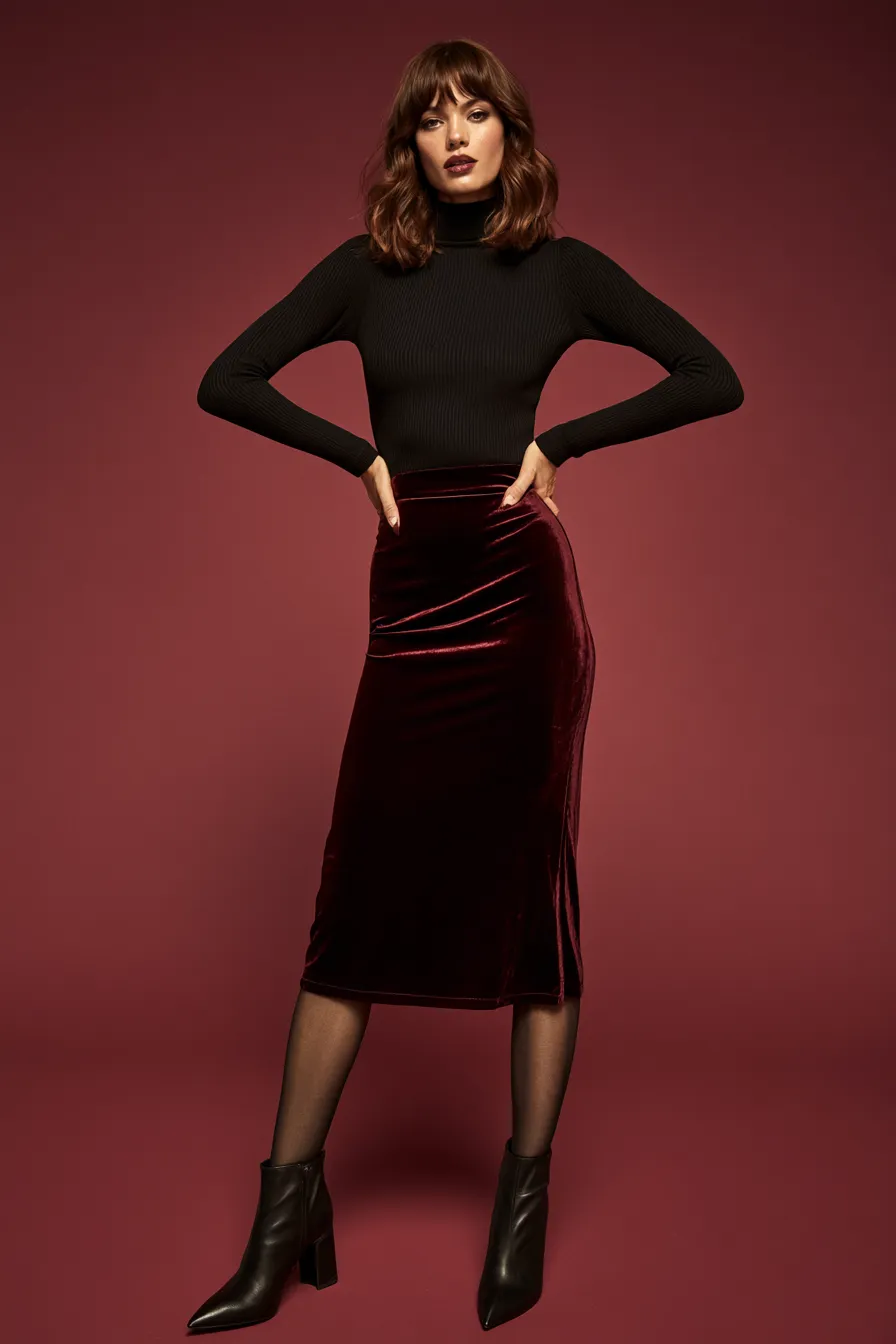
A fitted ribbed turtleneck tucked into a midi skirt is the most reliable winter formula in this guide. The turtleneck provides warmth through the neck and shoulders without adding bulk at the hip or waist. It reads as deliberately styled — pairing a slim-fit top with a flared or fitted skirt is a classic proportion balance that has appeared in every decade of fashion photography since the 1960s.
The combination of turtlenecks and midi skirts is one of the most consistently photographed and referenced winter outfit formulas, and for good reason — it works across body types, across midi lengths, and across nearly every color combination. Black turtleneck into black midi skirt for the most streamlined result; cream turtleneck into a jewel-tone midi for a more expressive look.



The Oversized Knit Exception
An oversized sweater with a midi skirt is one of the most frequently attempted and frequently failed winter combinations. It works — but only under one condition: the sweater must end above the hip at a length that creates a clear visual break, and the skirt beneath must be narrow, not full-volume.
The formula: cropped oversized knit (ending at or just above the natural waist) over a pencil midi or fitted A-line midi, with ankle boots and opaque tights. The cropped length of the sweater means the waistband of the skirt is partially visible or the transition point is clear, which prevents the outfit from reading as a single heavy shape. Oversized sweater layering dominated fashion through 2025 and into 2026 precisely because designers found ways to use volume on top without overwhelming the lower half — that same logic applies here.
Blazers and Structured Coats Over Midi Skirts
A structured blazer worn over a fitted top and midi skirt is one of the most polished winter combinations possible. The blazer adds warmth through the torso, provides structure at the shoulder that balances the length of the skirt, and — when it ends at or just below the hip — creates three clear visual zones: blazer body, the visible waistband or belt of the skirt, and the skirt itself. Three zones read as intentional; two zones (if the blazer hem aligns with the skirt waist) read as one merged block.
For a full coat over a midi skirt, the same principle applies: the coat should ideally be shorter than the skirt — ending at the knee while the skirt falls to mid-calf — or significantly longer. A coat that ends exactly at the skirt hem creates a confusing double-hem line that flattens the entire look. A cropped trench coat that ends above the knee is an ideal outer layer over a midi skirt for exactly this reason — the trench hem reveals the full skirt below it, and the two lengths read as a deliberately composed outfit rather than an accidental hemline match.
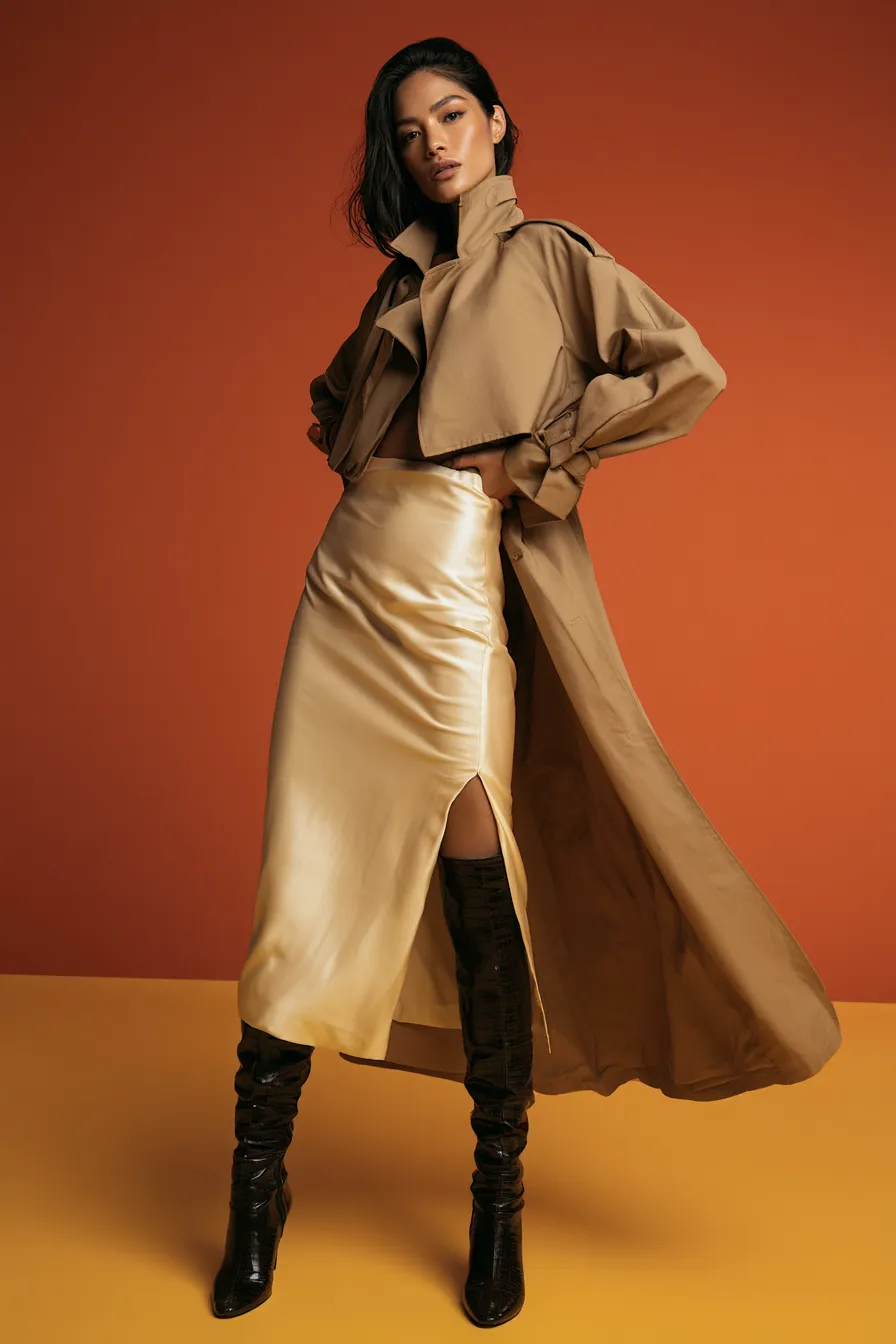
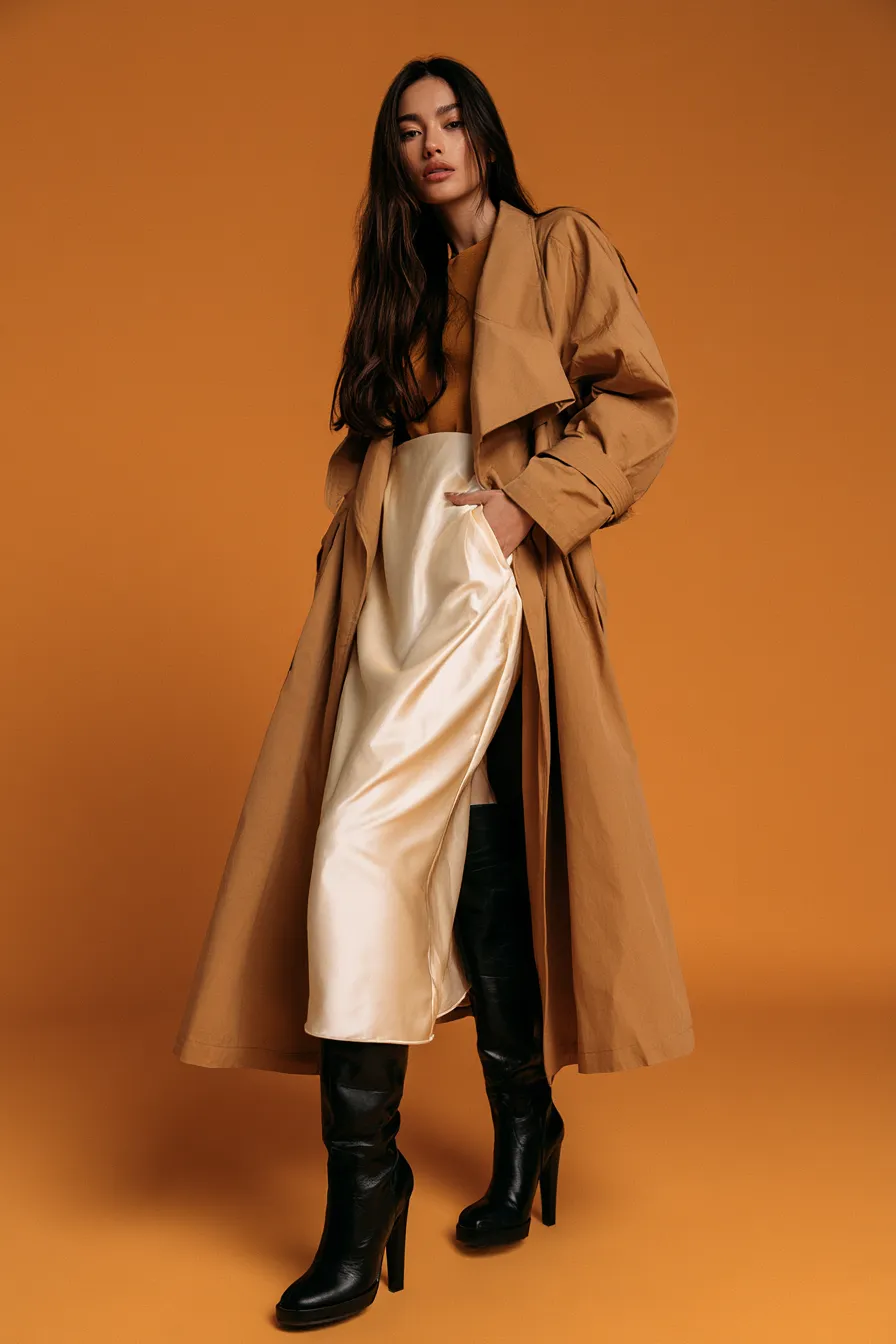
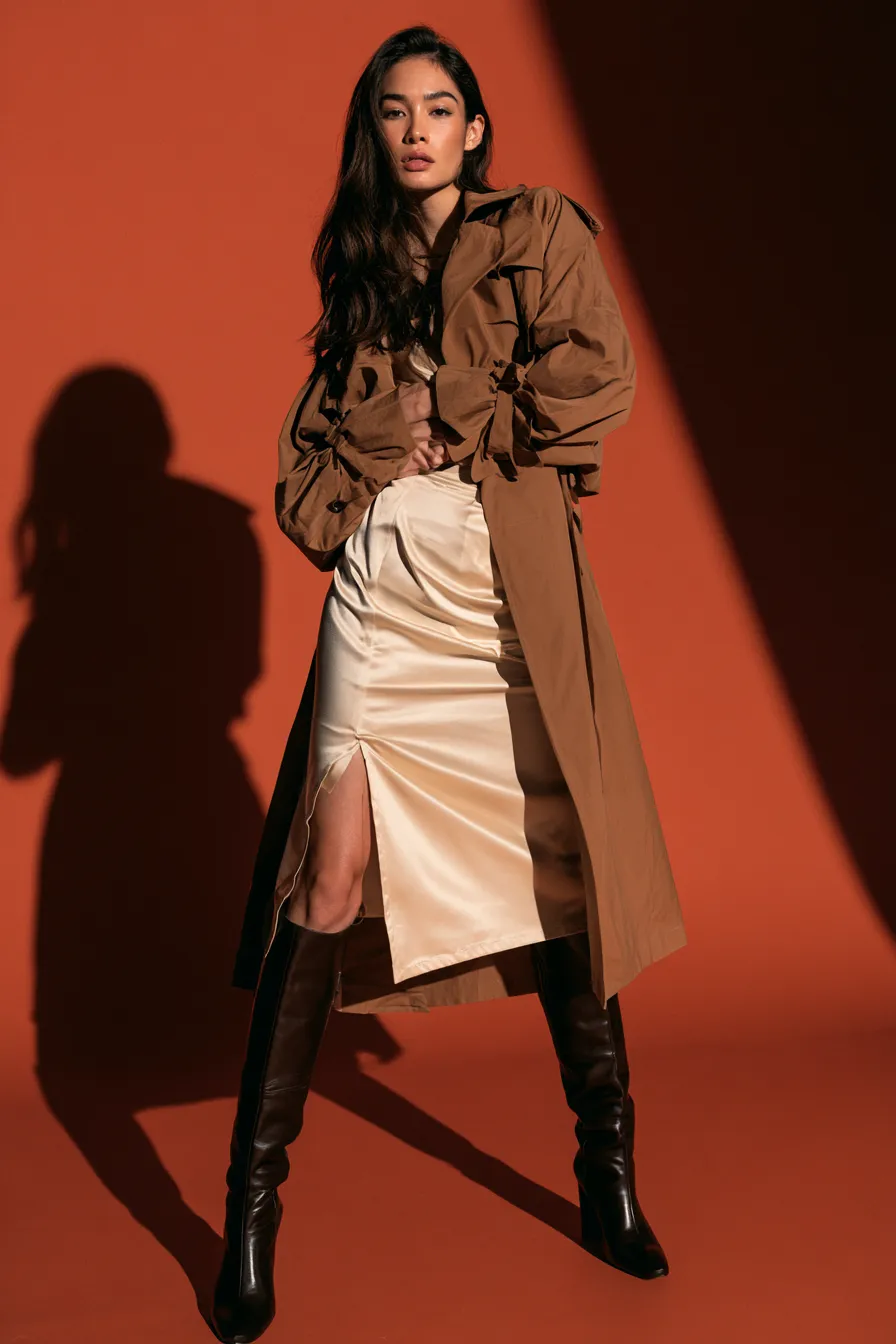
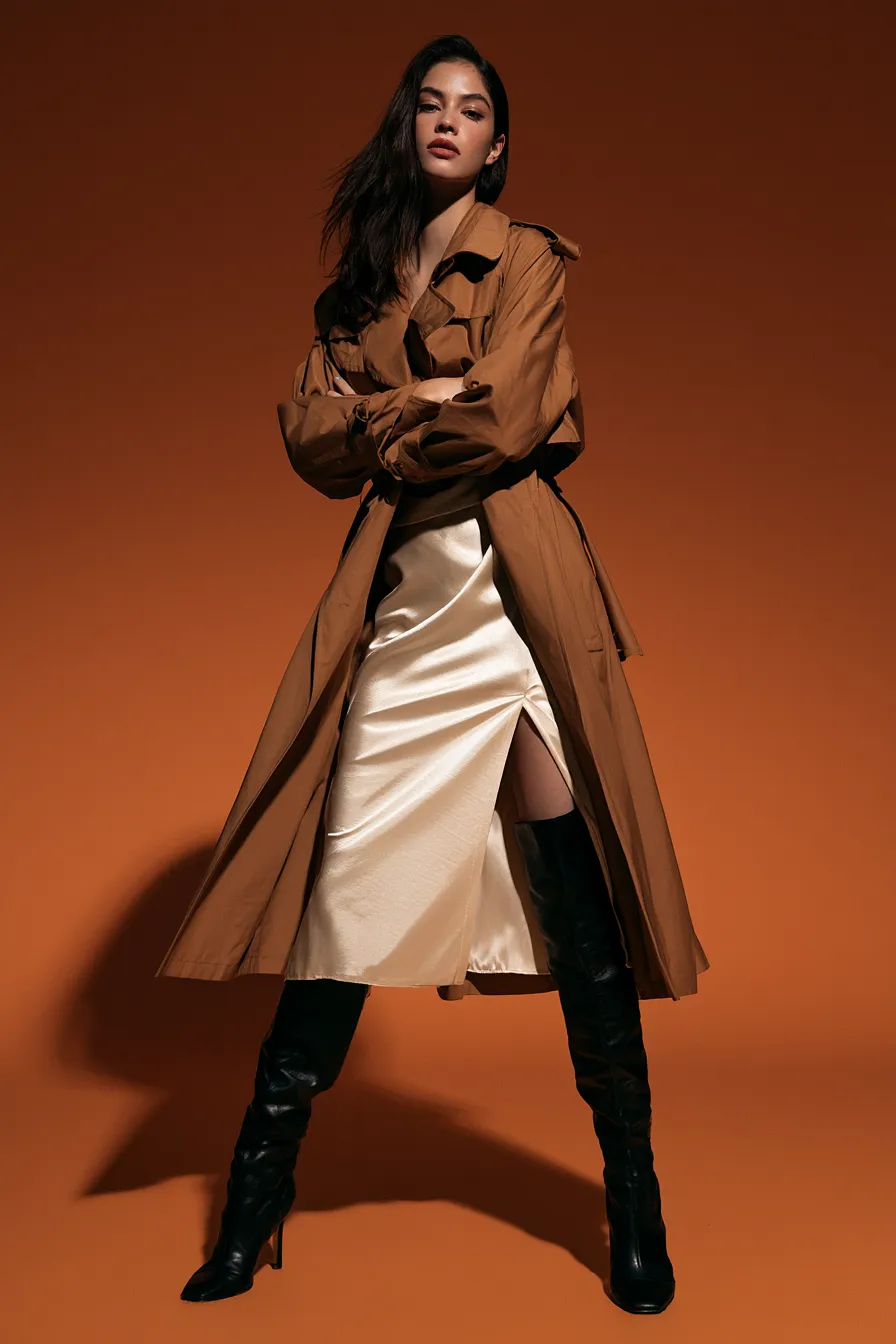
Midi Skirt Winter Outfits That Never Look Frumpy — 8 Complete Formulas
These are repeatable, proven outfit formulas for wearing a midi skirt in winter without looking frumpy. Each combination follows the three core principles: waist definition, deliberate gap management between boot and hem, and fabric that holds its shape. Mix and match colors within each formula according to your personal palette.
- The Monochrome Foundation: Fitted black turtleneck tucked into a black ponte pencil midi skirt + 80-denier black opaque tights + black pointed-toe ankle boots with a block heel. Every element is the same color, which creates maximum elongation. This is the most foolproof winter midi formula that exists.
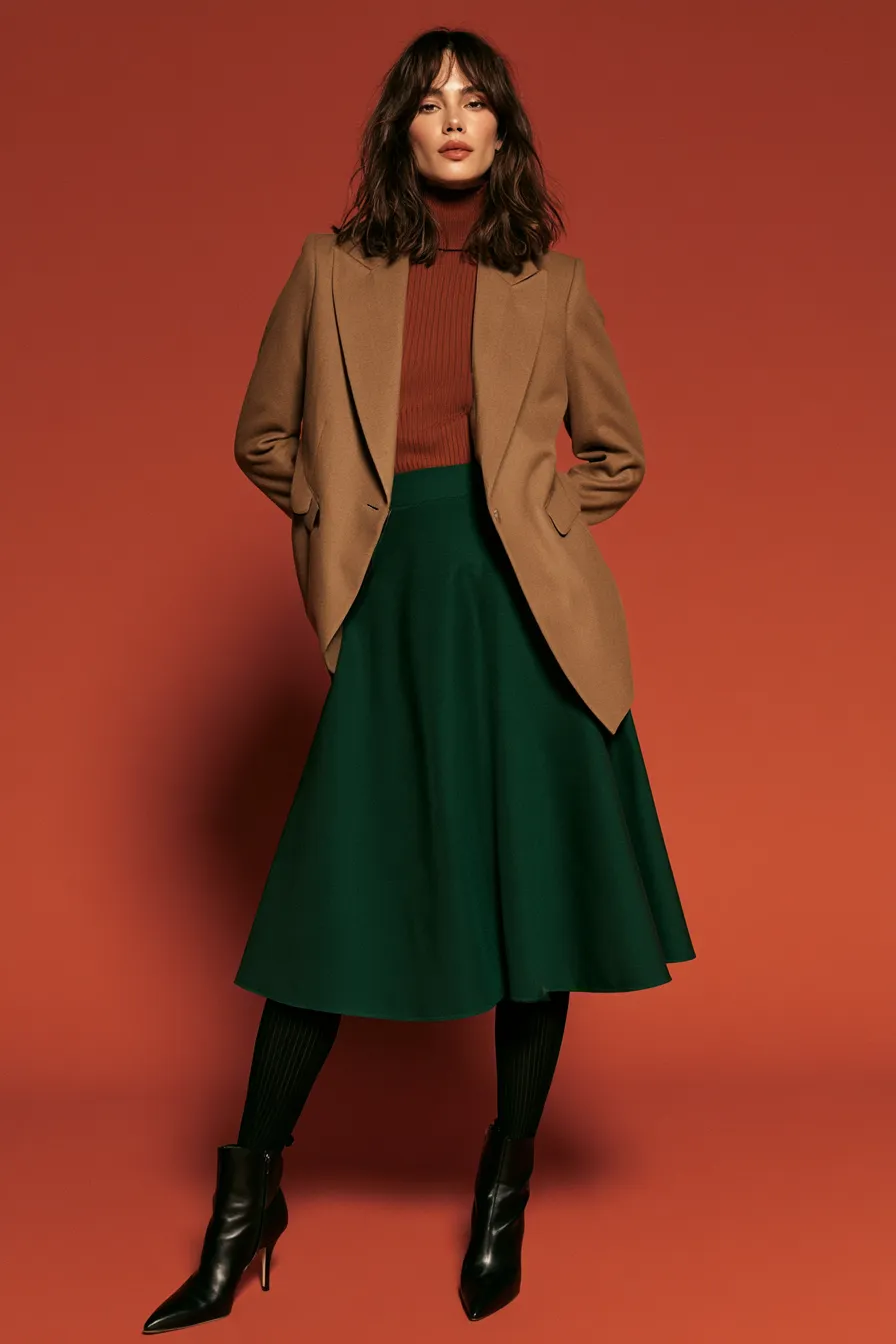
- The Contrast Top Formula: Fitted cream or camel ribbed turtleneck tucked into a deep jewel-tone midi (burgundy, forest green, navy) + matching-tone tights + brown or tan ankle boots. The contrast between the neutral top and the rich bottom color creates visual interest without bulk.
- The Blazer Formula: Structured blazer over a fitted silk or satin blouse, both tucked into a high-waisted pencil midi skirt + sheer or semi-opaque tights + block-heel ankle boots. Blazer ends above the skirt waistband so all three layers read distinctly.
- The Over-the-Knee Formula: Fitted cropped knit sweater (ending at the natural waist) over a leather or faux-leather midi skirt + knee-high or over-the-knee boots. No tights needed. The boot shaft meets the skirt hem for a continuous vertical line.
- The Velvet Evening Formula: Fitted velvet camisole or spaghetti-strap top tucked into a velvet midi skirt + same-tone tights + pointed-toe heel. Add a slim-fit blazer or structured cardigan over the top for warmth. Works for holiday events, dinners, and evening occasions.
- The Texture Mix: Fitted wool turtleneck tucked into a midi skirt in a contrasting texture — satin, leather, or corduroy + tights + ankle boots. The mix of textures (matte knit vs. shiny satin, for example) creates the visual interest that keeps the look from reading as heavy despite the warm fabrics.
- The Cardigan Formula: A midi skirt styled with a cardigan works in winter when the cardigan is belt-cinched or cropped rather than loose. Fitted cardigan belted at the waist over a simple tee, tucked into an A-line midi + tights + ankle boots. The belt at the cardigan waist is the critical element.
- The Tonal Neutrals Formula: Camel or stone fitted top tucked into a camel, cream, or tan midi skirt + nude or skin-tone tights + camel or tan ankle boots or loafer heels. Tonal dressing from head to hem creates maximum length with zero contrast breaks to interrupt the vertical line.
The Tights Guide for Winter Midi Skirts
Tights are the underrated hero of the winter midi skirt outfit. The right tights extend the leg, create a seamless transition between boot and hem, and add warmth without visual weight. The wrong tights — or no tights at all — can undermine every other styling decision you make.
Opaque tights (60 to 100 denier): The standard choice for winter. At 80 denier, tights become fully opaque and add a layer equivalent to thin leggings in warmth. The key rule: match tights to boot color, not to skirt color. A dark boot and dark tights create a continuous vertical line from shoe to knee. A dark boot with nude or light tights creates a horizontal break at the ankle that shortens the leg.
Patterned tights: Cable-knit, ribbed, or subtle pattern tights add texture to the outfit and read as deliberately chosen rather than functional. These work best with solid-color, simple midi skirts — a patterned tight under a patterned skirt creates visual noise that the eye cannot resolve. The pattern in one place, solid in another, is the rule.
Sheer or semi-sheer tights: 20 to 40 denier tights add warmth without full opacity. These work well for transitions between seasons but are typically not warm enough for temperatures below 5°C (41°F). For true winter, 60 denier is the practical minimum.
Skin-tone tights: Nude or skin-tone tights in winter work in one specific context: tonal dressing where the midi skirt is also in a nude or skin-adjacent color and the shoe is a matching neutral. Outside this context, nude tights in winter with a dark boot create the dreaded ankle gap effect described above.



Midi Skirt Length Guide by Height — Avoiding the Frumpy Zone
The “frumpy zone” is not a fixed measurement — it moves based on height because the proportion of the leg changes. The following guide is based on where the calf reaches maximum width on an average leg at each height range, which is the measurement to avoid with a hem. These are starting points — individual leg proportions vary, so treat them as a first-draft guideline and adjust by trying the specific skirt on.
| Height | Avoid Hem Landing At | Best Midi Hem Length (from waist) | Ideal Boot Pairing |
|---|---|---|---|
| Under 5’2″ (157 cm) | 18–22 inches from waist | 22–24 inches (just below knee) | Heeled ankle boot, knee-high |
| 5’2″ – 5’4″ (157–163 cm) | 21–24 inches from waist | 24–26 inches or 28–30 inches | Heeled ankle boot, over-the-knee |
| 5’5″ – 5’7″ (165–170 cm) | 24–27 inches from waist | 27–29 inches or 31–33 inches | Ankle boot with tights, knee-high |
| 5’8″ – 5’10” (172–178 cm) | 27–30 inches from waist | 30–32 inches or 34–36 inches | Any boot, flat ankle boot works |
| Over 5’10” (178 cm) | 30–33 inches from waist | 33–35 inches (approaching maxi) | Flat or heeled, full flexibility |
The key insight from this table: every height range has a “skip zone” and two safe zones on either side of it. The shorter option lands closer to the knee (where the leg is slimmer), and the longer option lands at true mid-calf or below (where the leg narrows again). The zone in between — where the calf is widest — is where the midi becomes visually shortening and heavy.
How to Style a Midi Skirt for Winter Work Without Looking Frumpy
The professional context adds a constraint — the outfit needs to read as polished and intentional in an office environment while still meeting the warmth requirements of winter. The good news is that the most flattering winter midi formulas are also naturally professional in their structure.
For a corporate or business-formal environment: a pencil midi skirt in ponte, wool blend, or leather + fitted silk blouse tucked in + structured blazer + opaque tights + heeled ankle boot or pointed-toe low heel. The blazer and pencil cut together signal professional authority; the tights and boot create the warmth. Tailored blazers paired with midi skirts are already an established combination for smart occasions — the same formula translates directly to the office.
For a business casual or creative office environment: an A-line midi in satin or ponte + fitted ribbed turtleneck tucked in + structured cardigan belted or left open + ankle boots with tights. This reads as effortful without being rigid, and the cardigan adds warmth without the formality of a blazer.
For a smart casual or relaxed office environment: a straight-leg or slightly full midi in corduroy or a subtle print + fitted long-sleeve top tucked in + loafer with a heel or ankle boot + 80-denier tights. The skirt fabric carries the visual interest; the top stays quiet.
Color Strategies That Make Winter Midi Skirts Look Expensive Rather than Heavy
Winter color instincts tend toward dark and heavy — which, applied without strategy, make midi skirts look exactly as heavy as they feel. Color is actually a powerful tool for controlling how the midi reads at its most challenging length.
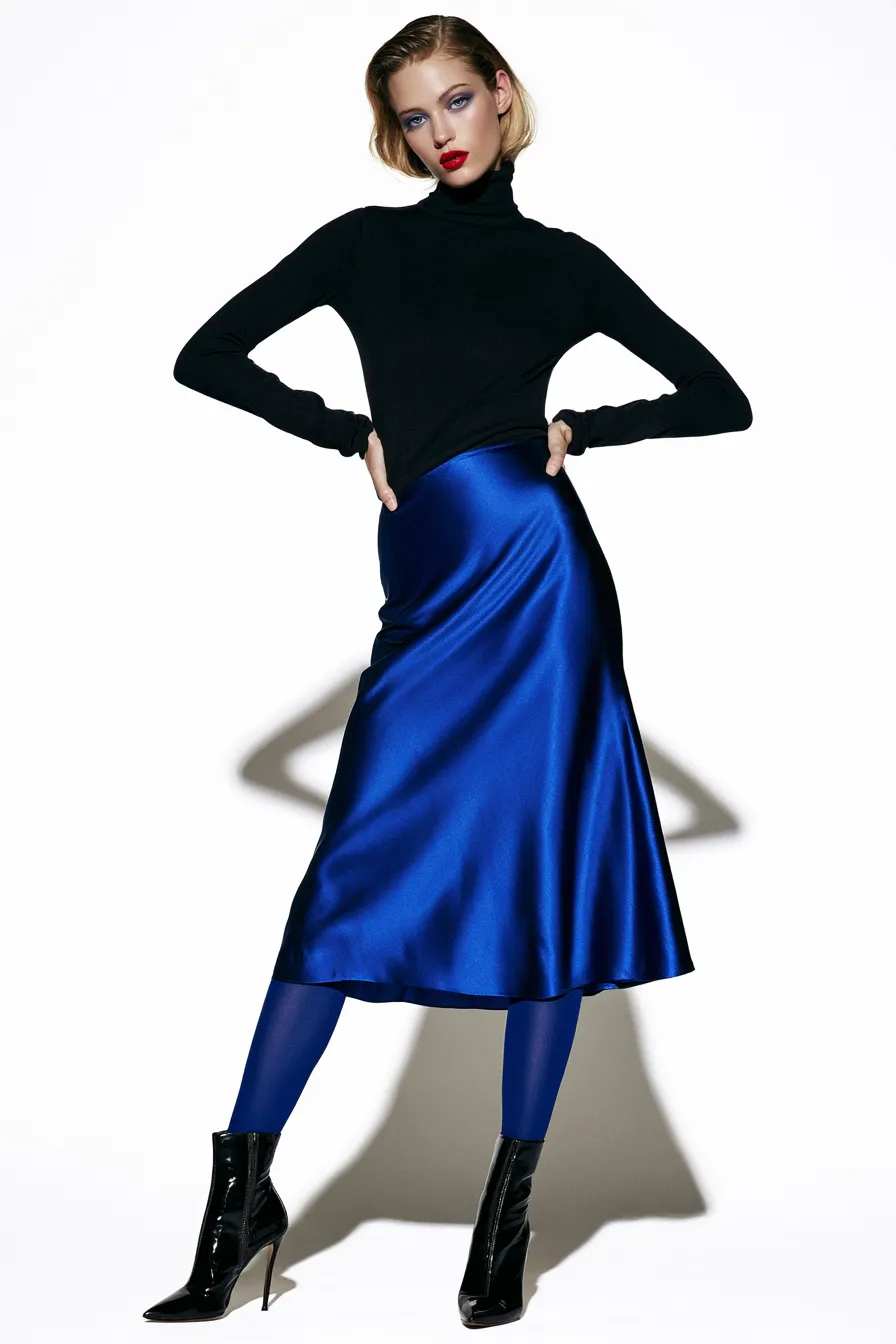
Monochrome from toe to hip: Matching tights, boot, and skirt in the same color family creates an uninterrupted vertical line through the lower half of the body, which reads as length. A black boot, black tights, and black midi skirt read as one elongated shape rather than three stacked horizontal bands. This is the most technically effective approach for shorter women or anyone whose midi tends to look cutting rather than elongating.
Rich jewel tones for the skirt: Burgundy, forest green, cobalt, deep plum, and navy all read as rich and intentional at the midi length in ways that medium tones like army green, rust, or muted brown sometimes do not. The depth of a jewel tone gives the fabric visual weight that looks expensive rather than heavy — particularly in satin or velvet.
Contrast at the top, not the bottom: In winter, keep visual interest concentrated above the waist — in the top, the jewelry, the blazer, or the scarf. A bright or patterned element above the waist draws the eye upward and away from the hem, which is where the frumpy risk sits. A plain, dark midi skirt with an interesting top consistently reads as more polished than a patterned or complex midi with a simple top.

What to Avoid When Wearing a Midi Skirt in Winter
These are the specific choices that reliably produce the frumpy midi effect — not stylistic preferences or matters of taste, but structural errors in proportion, color, or fit that work against the silhouette regardless of the specific garment.
- A midi skirt hemmed exactly at the widest point of the calf. Check in the mirror where the hem falls — if it hits the widest horizontal of your calf, have it hemmed 2 inches shorter or longer.
- A dark boot with light or nude tights under a midi skirt. The color break at the ankle creates a chopping effect that makes the leg read shorter. Match tights to boot or go monochrome all the way up.
- A full-volume skirt with a full-volume top. A gathered or pleated midi with a loose sweater or untucked blouse creates mass at both the waist and the hip with no visual break. One element is allowed to have volume; the other must be fitted.
- A midi skirt with flat sneakers and no tights. Bare ankle or ankle sock between a flat shoe and a midi hem is the visual combination that reads most clearly as “accidental” rather than styled. Either add tights, switch to a boot, or raise the hem to mini.
- A heavy wool or tweed midi that hits the widest calf point. Thick fabric adds horizontal mass to wherever the hem falls. At the widest calf point in a heavy fabric, the effect is doubled — the leg reads as wider and the hem more final. Thick fabrics work better in narrower cuts and adjusted lengths.
- A coat that ends exactly at the skirt hem. Two hems at the same horizontal level read as one heavy band. Either go shorter with the coat (revealing the full midi below) or longer (covering the midi and creating a clean single silhouette).
One Last Thought on Wearing Midi Skirts in Winter
The frumpy midi is a styling problem, not a midi problem. The length itself is elegant — it has appeared in every decade of fashion history as a marker of sophistication precisely because it requires intention to carry well. Mini skirts style themselves. Maxi skirts drape themselves. The midi makes you think — and that thinking, applied through the formulas in this guide, is what separates the polished winter midi look from the one that looks unresolved.
Start with one formula from the list above. Test it with the specific midi you own. Check the hem against the height table. Match the tights to the boot. Define the waist. Once the logic clicks in one outfit, it transfers to every midi in your wardrobe — and a length that has frustrated you becomes one of the most versatile pieces you own in winter.
Complete guide
Skirt Outfit Ideas for Every Length Style and Occasion
Mini, midi, maxi — outfit ideas for every style and occasion
You Might Also Like




Related Topics