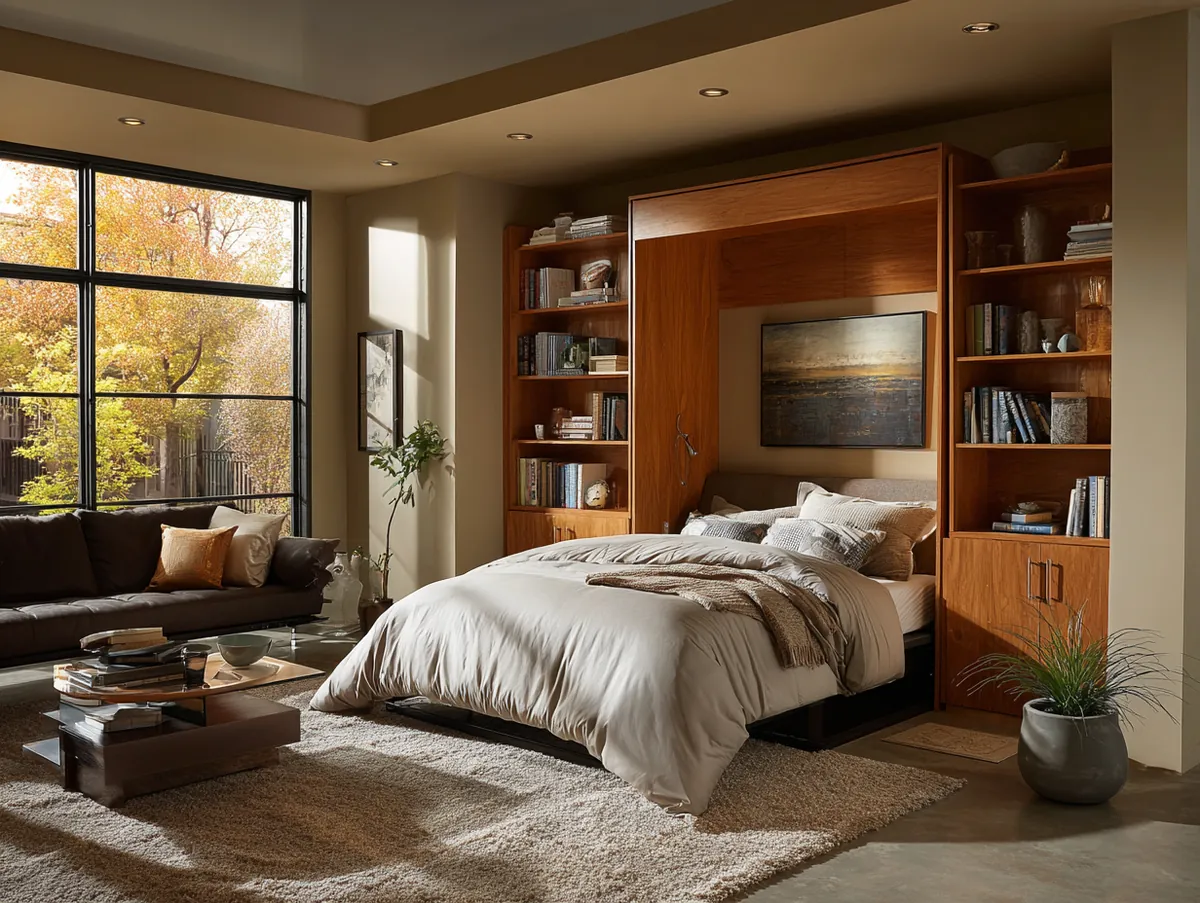
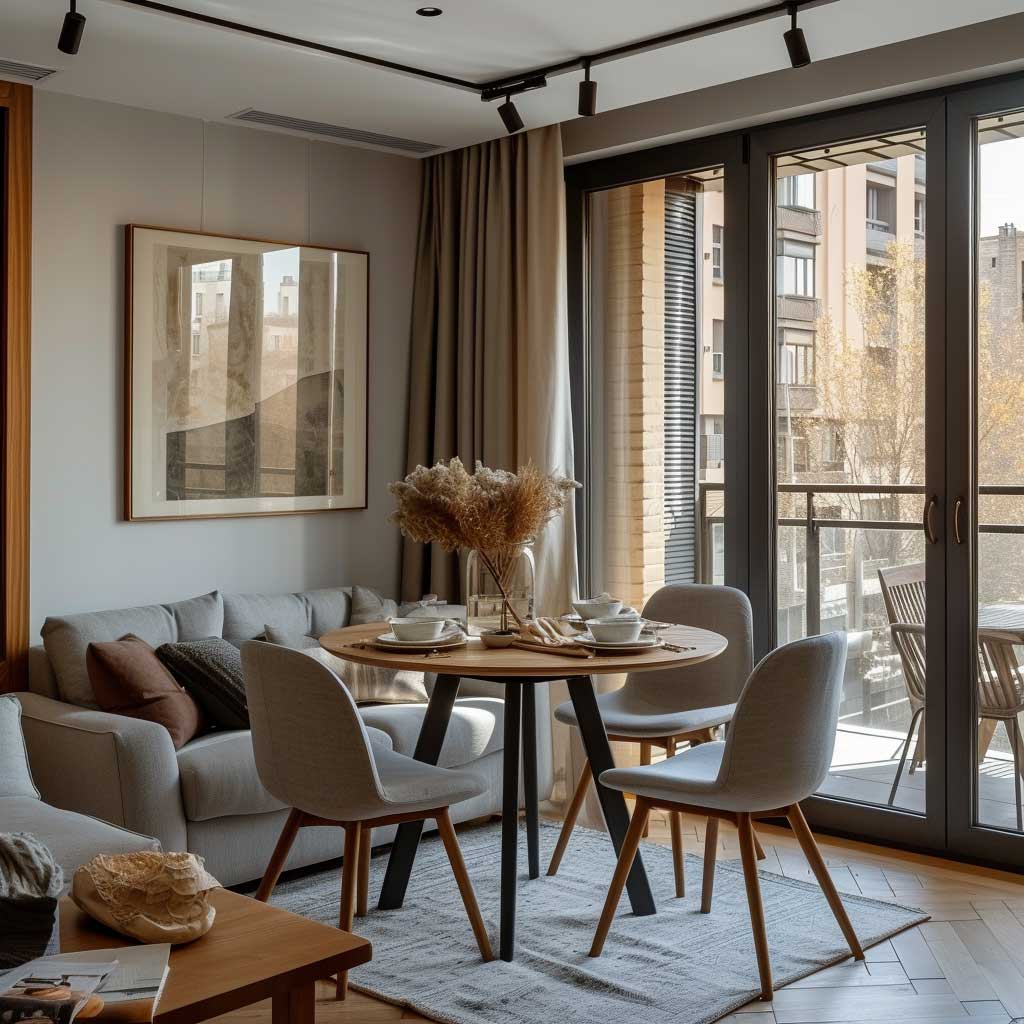
A dining table in a small living room works when you stop treating it like an afterthought and start treating it like the anchor. I’ve rearranged my own 280-square-foot open-plan flat three times, and the version where a 36-inch round table sat in the corner was the one I stopped apologizing for. Every query I see about a small living dining room comes down to the same fear: that you’ll gain a table and lose the room. You won’t — if you pick the right shape, set it in the right spot, and stop buying chairs that belong in a ballroom.
Most people get this wrong in the furniture store. They measure the table in isolation, forget the 36 inches of pull-back space every chair needs, and bring home something that leaves the room looking like a cafeteria. You need to measure the room first, tape the footprint on the floor, and live with it for two days before buying anything. That 15 minutes of taping saves a $600 return.
Quick Scan
- Corner placement keeps the center floor clear — the single highest-impact move in a small living dining room
- Round and oval tables seat the same number as rectangular ones while feeling 30% less bulky
- Extendable tables (like IKEA EKEDALEN at $279) solve the six-person problem without stealing daily floor space
- Pendant light directly above the table creates a zone — the room reads as two spaces, not one cramped one
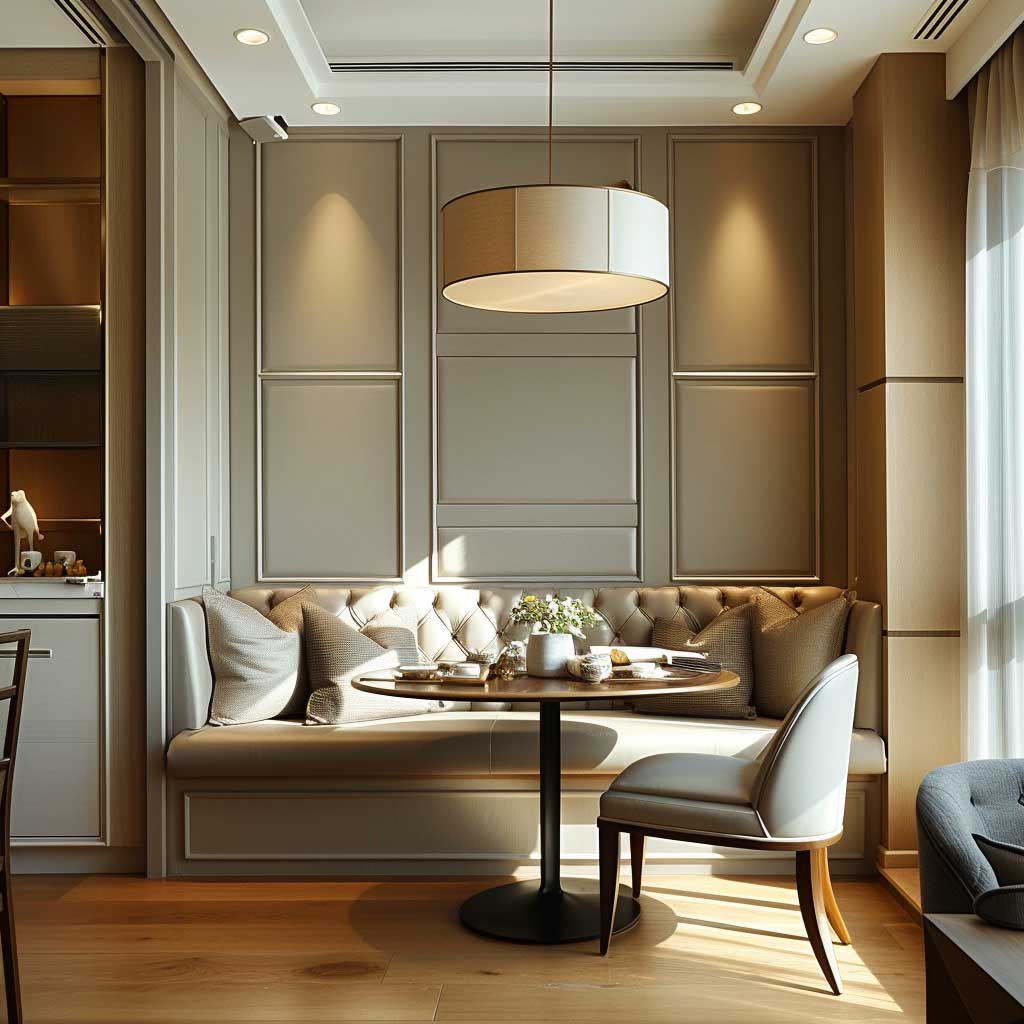
- Benches along a wall seat two and tuck completely flat — they recover 8–10 inches of circulation space versus chairs
- A mirror on the wall behind the table doubles perceived depth — the oldest trick in small-space design and still the cheapest
Corner Dining Placement and Why the Center of the Room Thanks You
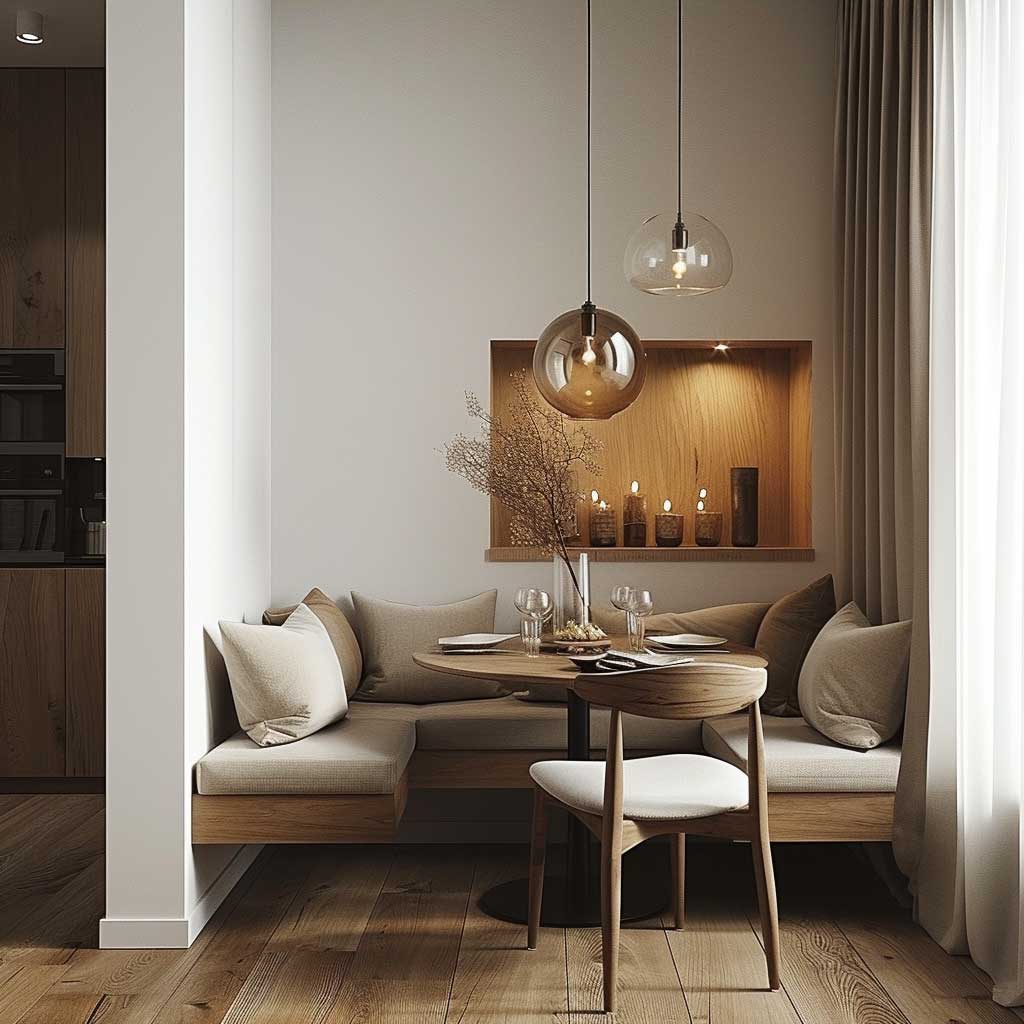

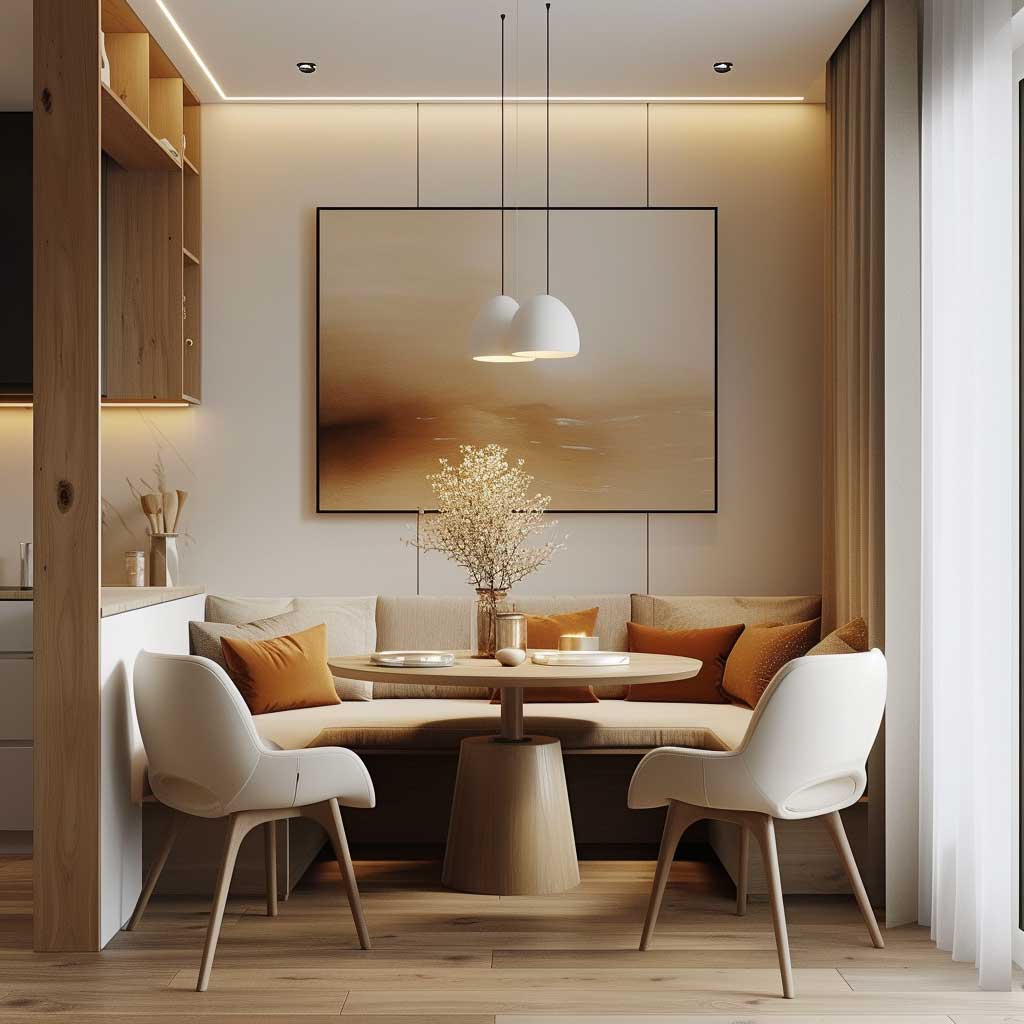
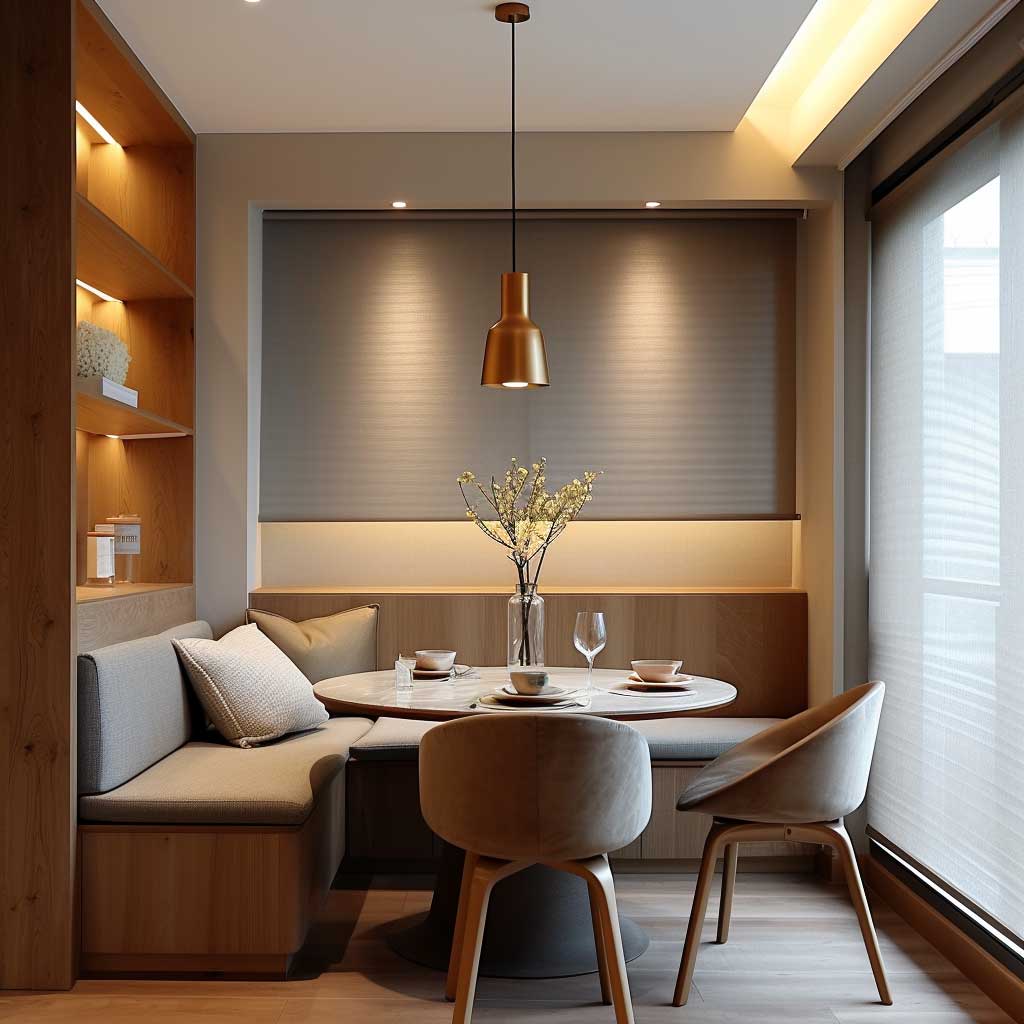
Corner placement is not a compromise — it is the correct answer. Pushing a table into any corner immediately frees the central floor, which is where the room breathes. I moved my table from the center wall to the corner on a Tuesday, and by Wednesday the sofa area felt like it had gained four feet. The room did not get bigger. It just stopped fighting itself.
Shape matters as much as position. A round or oval table eliminates the dead corner problem you get with rectangular tables, where the two far seats are always elbow-to-wall. You can pull up an extra chair on any side of a round table — interior designer Laura Williams, quoted in Forbes Home, notes you can typically squeeze more people around a round table because there are no corners competing for bodies. My go-to is the IKEA DOCKSTA (47-inch round, $299) — slim pedestal base, no legs to straddle, white lacquer that reads light against any wall color.
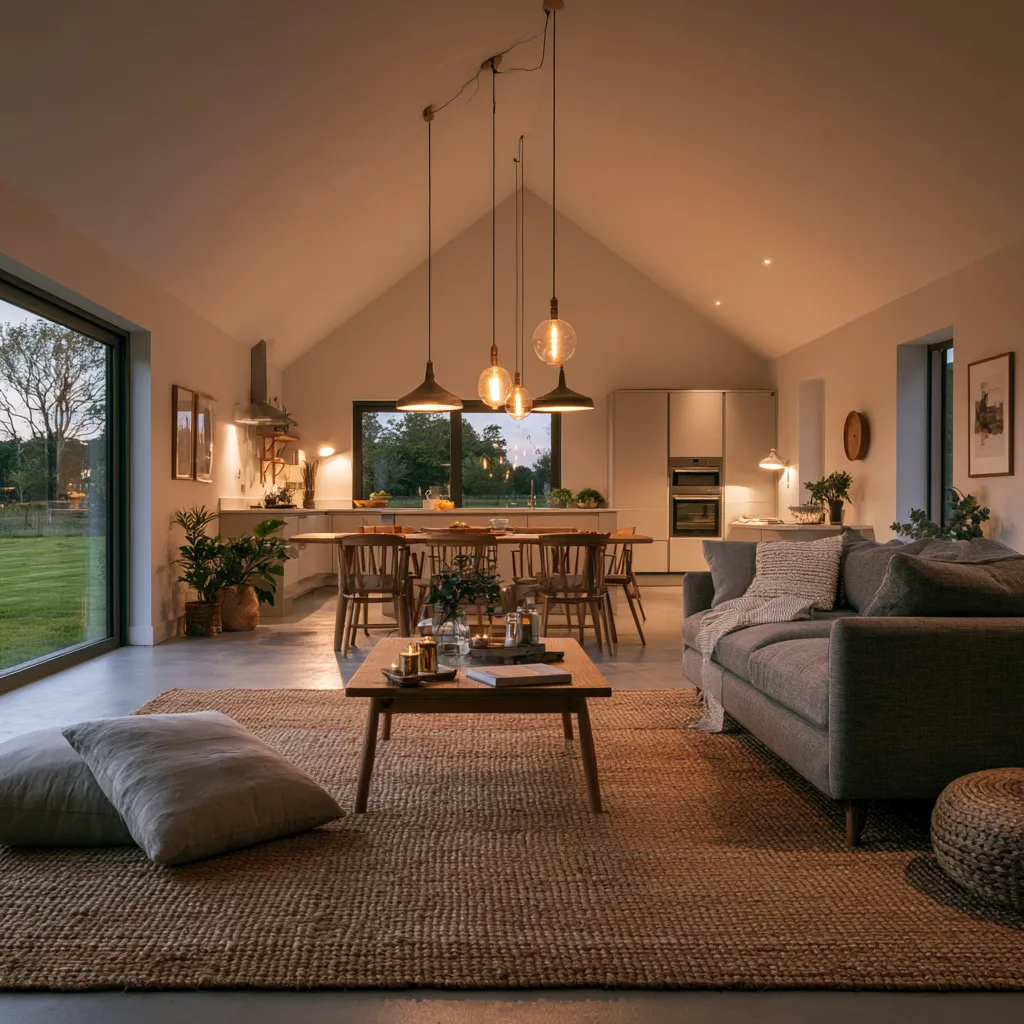
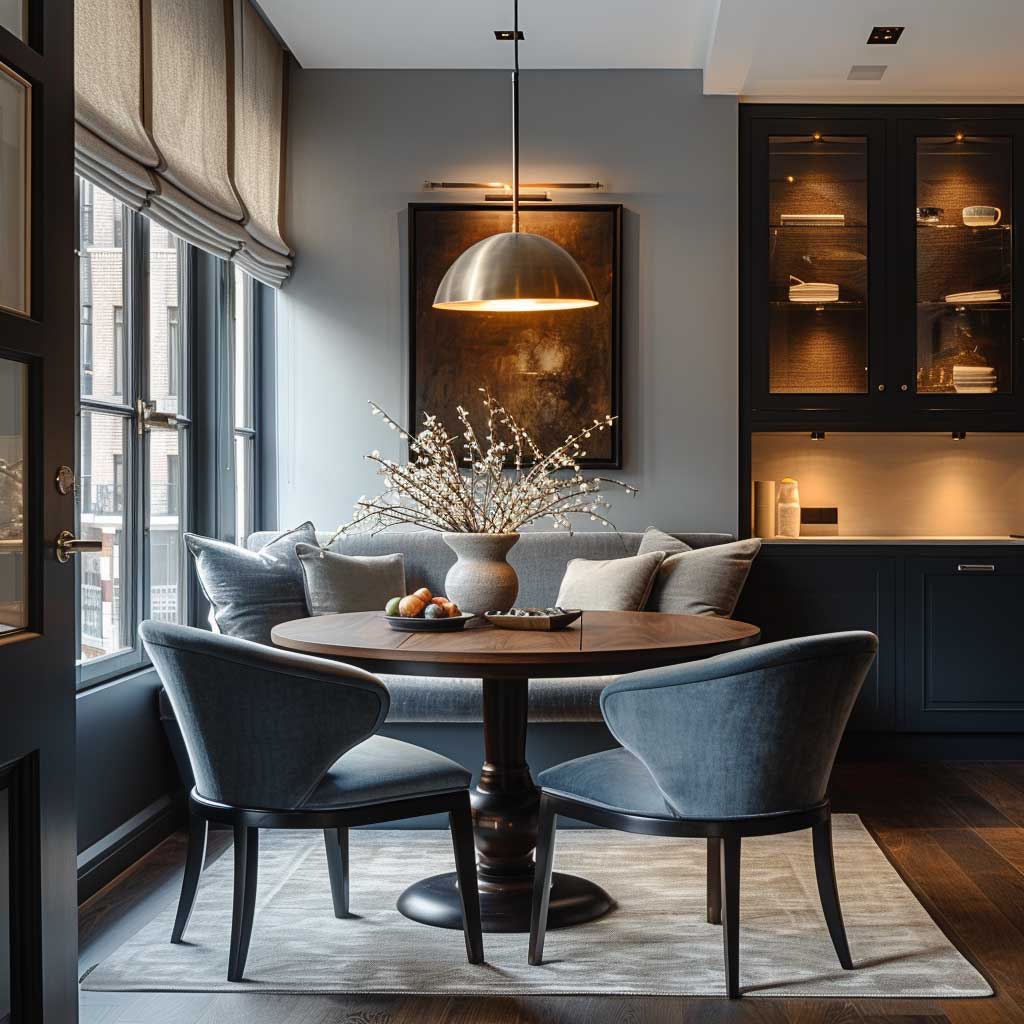
The decor layer around the corner seals the effect. Hang a pendant 28–32 inches above the tabletop — this is the measurement that makes the fixture feel intentional rather than dropped at random. A small rug (5×7 or even 4×6) under the table defines the dining zone without spending more than $120. Skip the oversized chandelier trend in a small room; a heavy fixture at low height compresses the ceiling visually, which is the opposite of what you need.
What does not work here: a rectangular table pushed diagonally across the corner to look “editorial.” It photographs well on Pinterest and fails immediately in real life. You lose a triangular dead zone behind two table legs, chairs cannot pull back cleanly, and every guest gets a different amount of elbow space. Stick to parallel or perpendicular placement. Diagonal is for rugs, not tables.
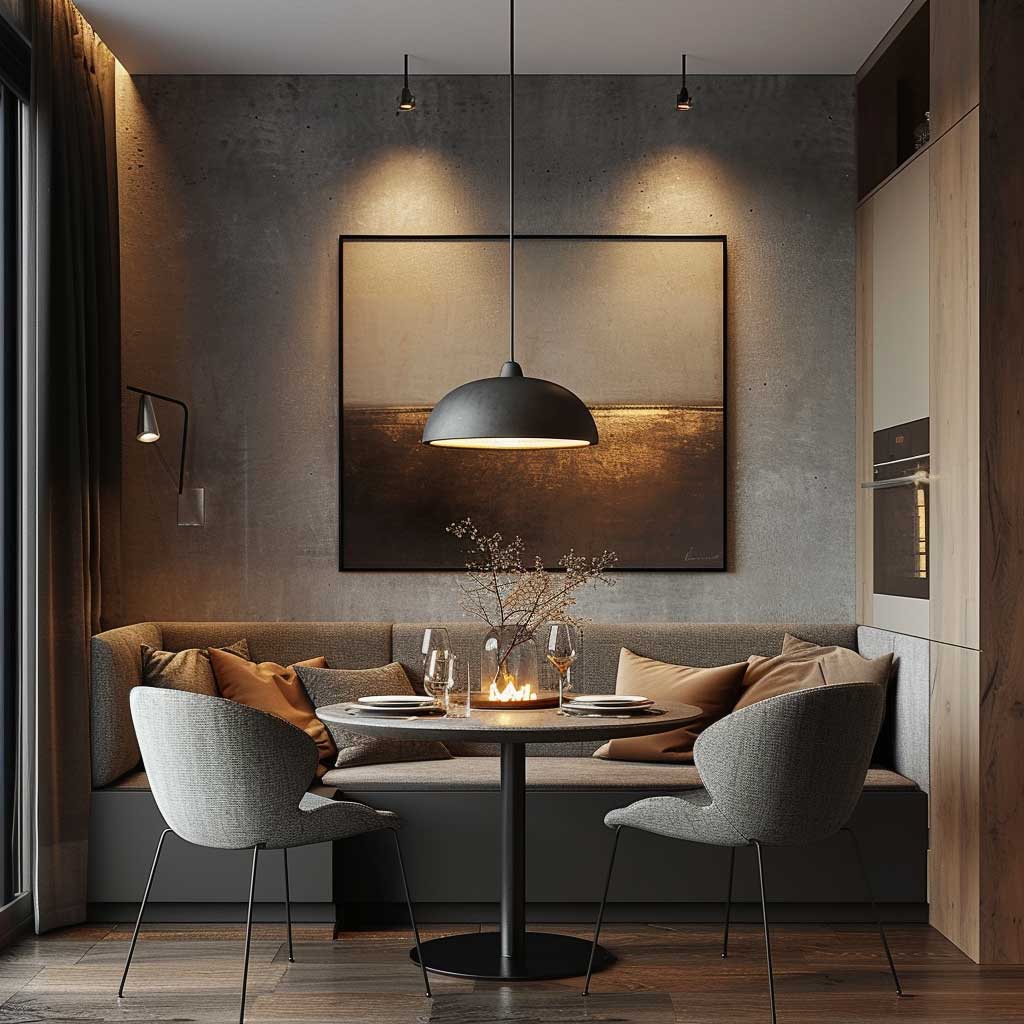
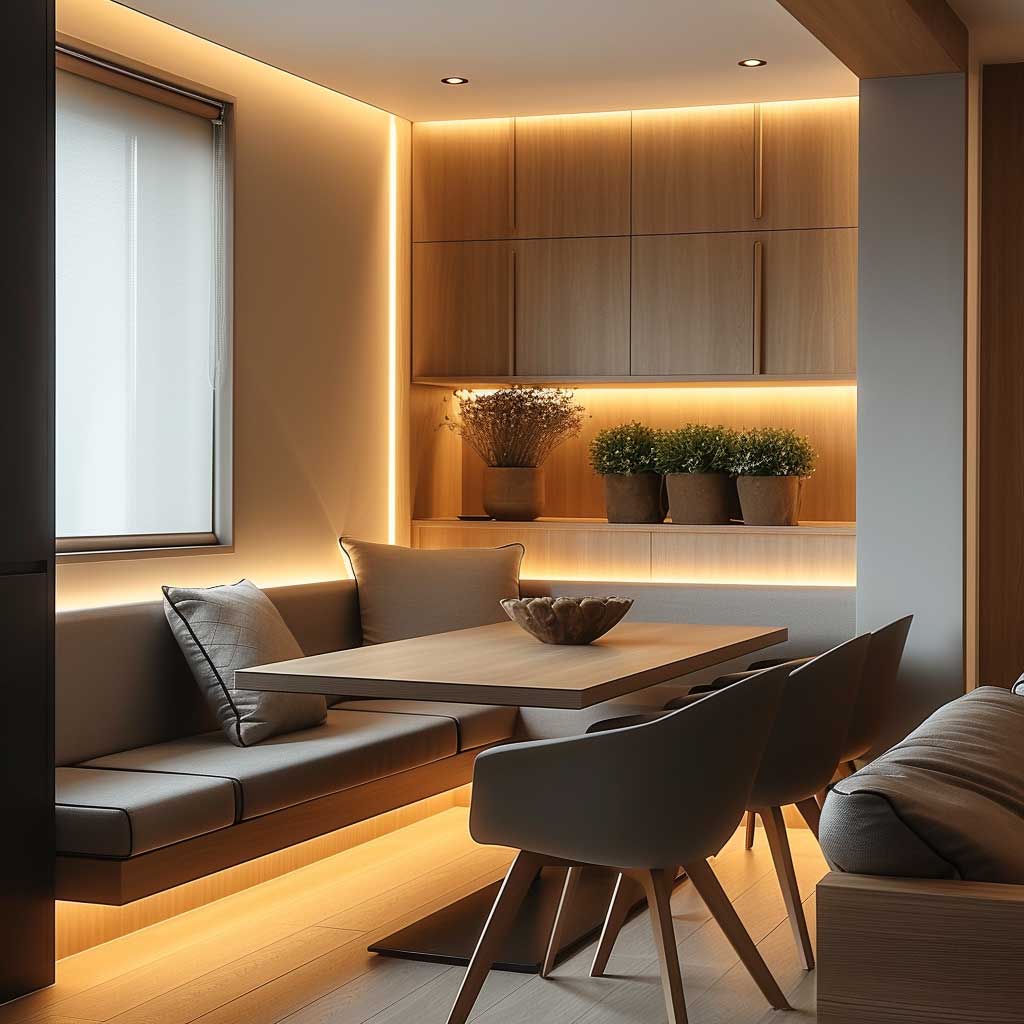
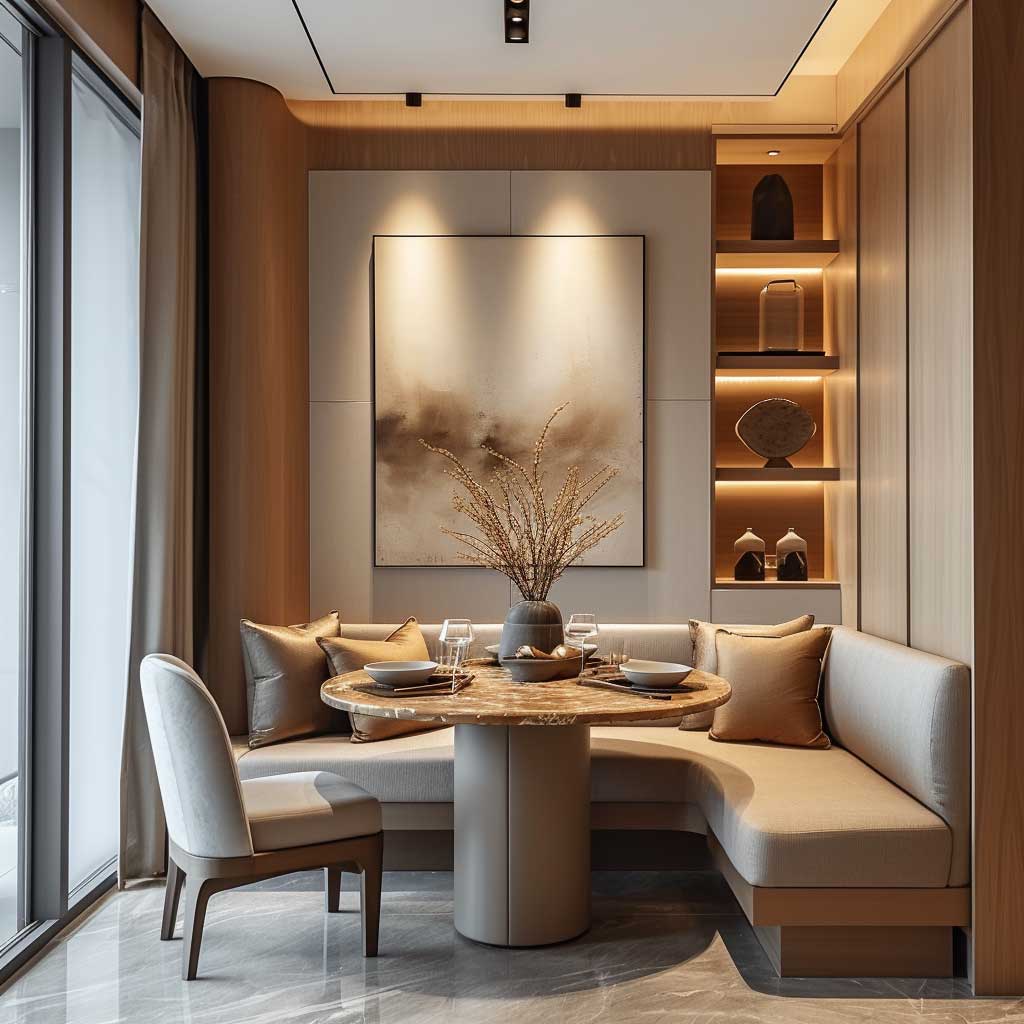
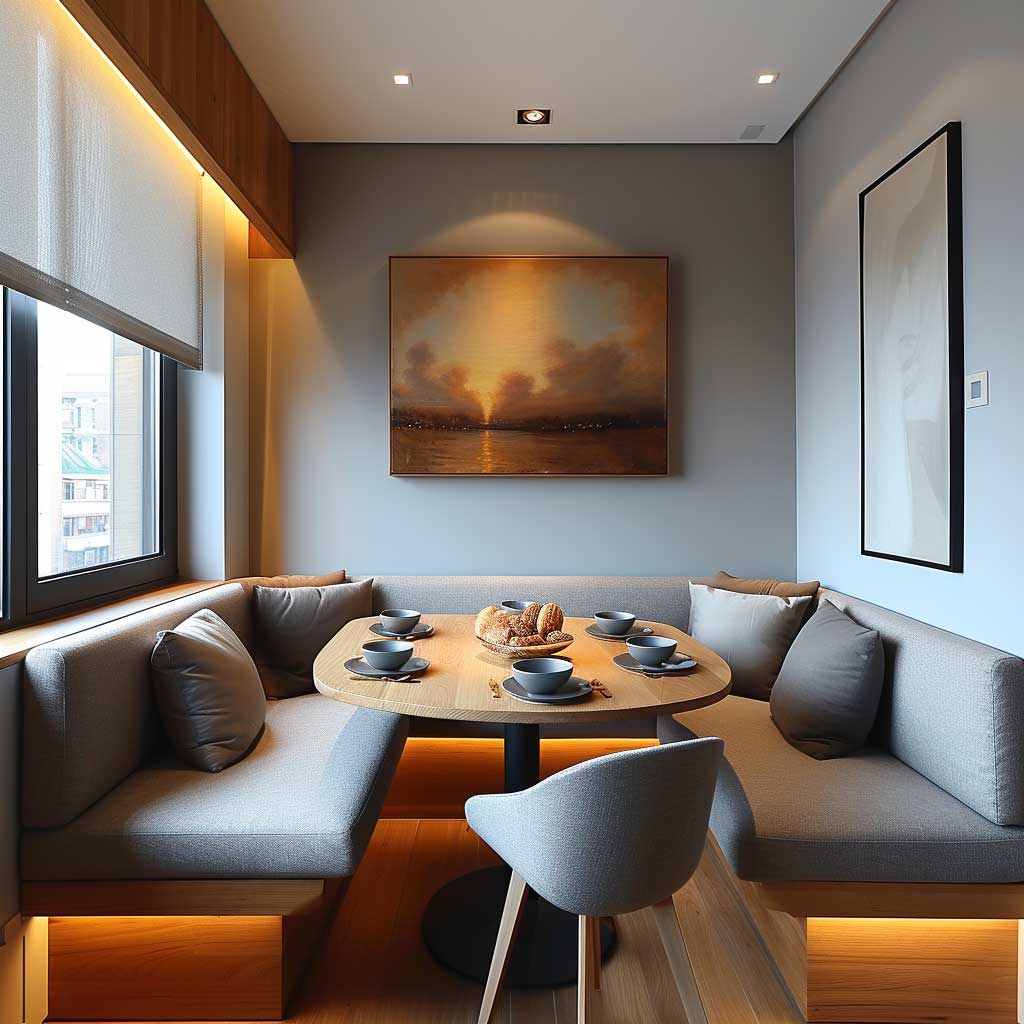
Color cohesion between the dining and living zones matters more here than in a full-sized room. Use the same wood tone for the table and any nearby open shelving — even if they are different brands. The eye reads matching materials as a deliberate zone rather than two pieces of furniture awkwardly sharing a room. One accent color (a chair cushion, a rug, a pendant shade) repeated in the sofa throw ties it together without a decorator’s budget. You’ll notice the difference immediately.
A mirror on the wall adjacent to the table is my oldest cheat. Not a small gallery piece — a proper full-length or landscape-format mirror, at least 24×36 inches. It visually extends the far wall past its actual position, and when placed across from a window, it bounces light into the corner where you eat. IKEA NISSEDAL (65×26 inches, $79) is what I own and what I recommend without hesitation. Tiny living room ideas that go further with this principle are worth reading if you want to take the whole room further.
The Table That Does Three Jobs Without Looking Like It Tries
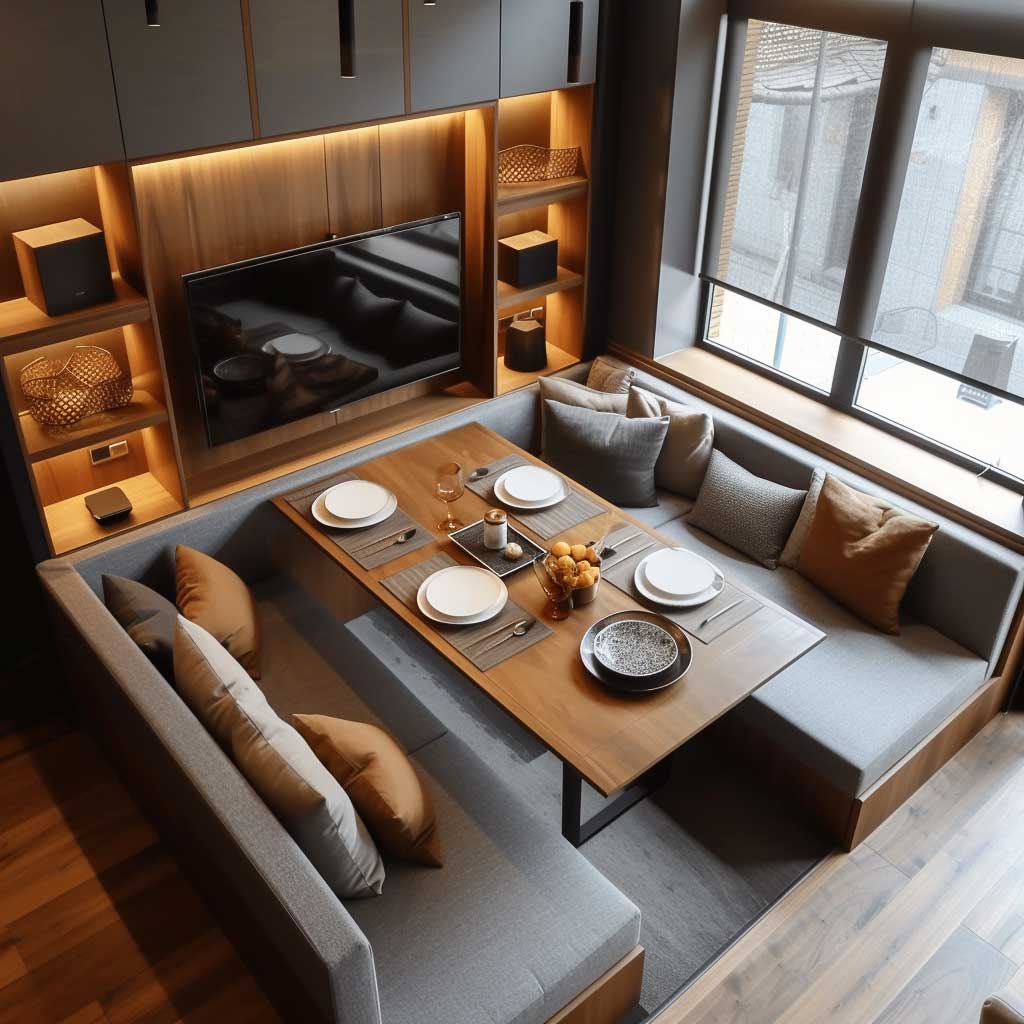
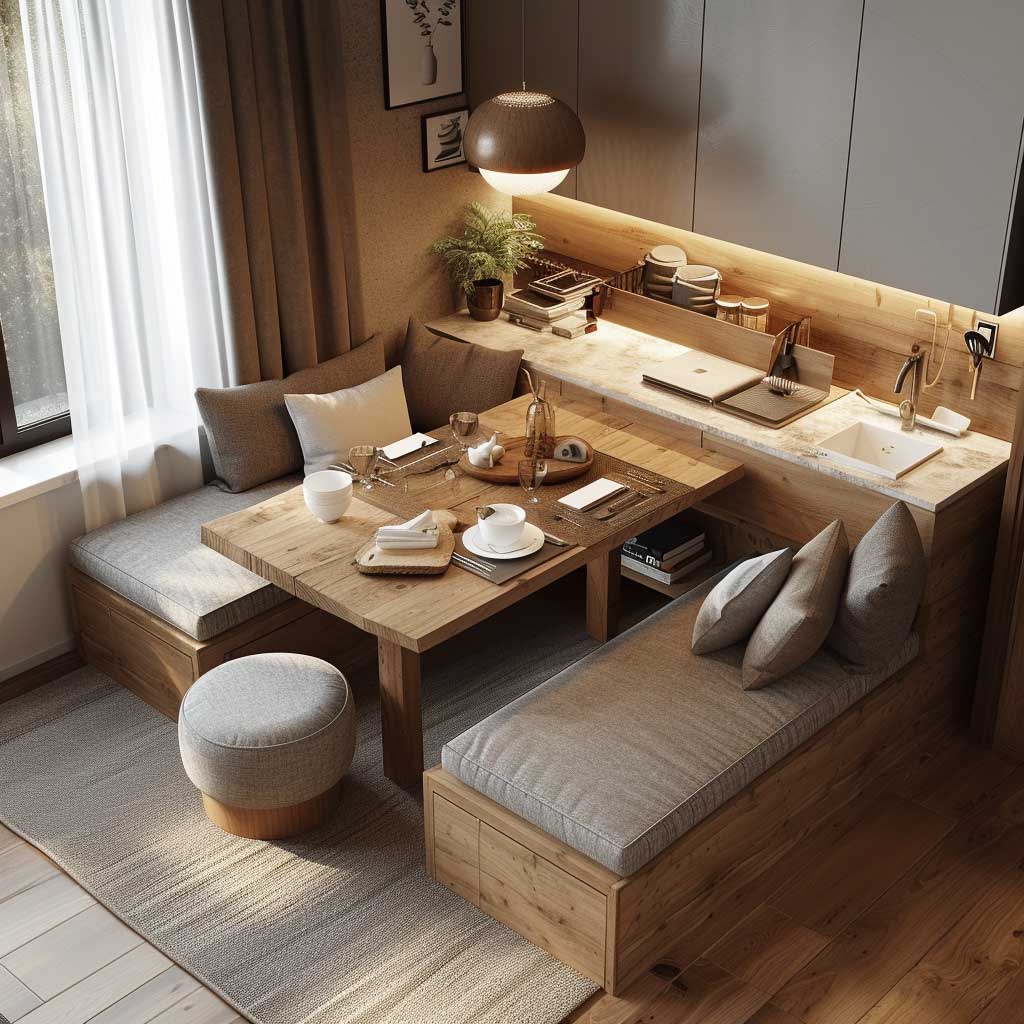
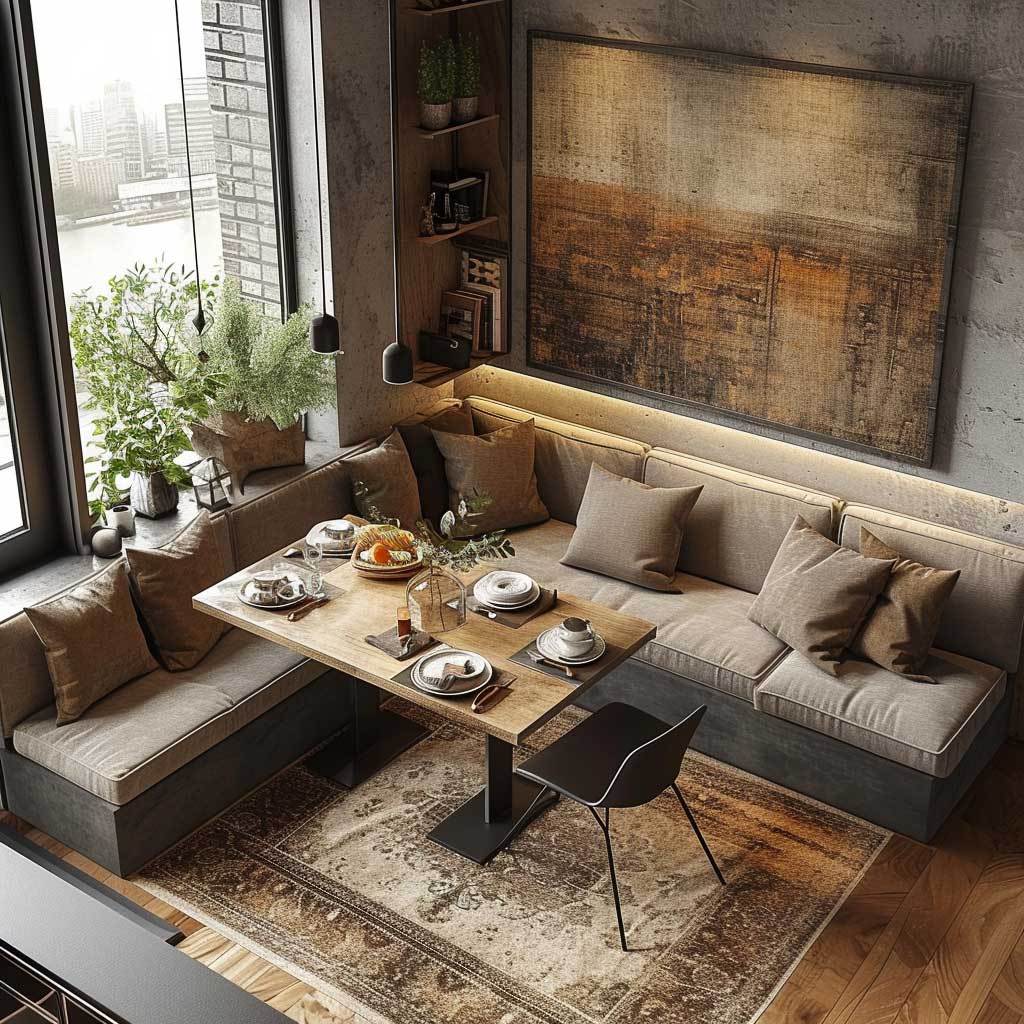
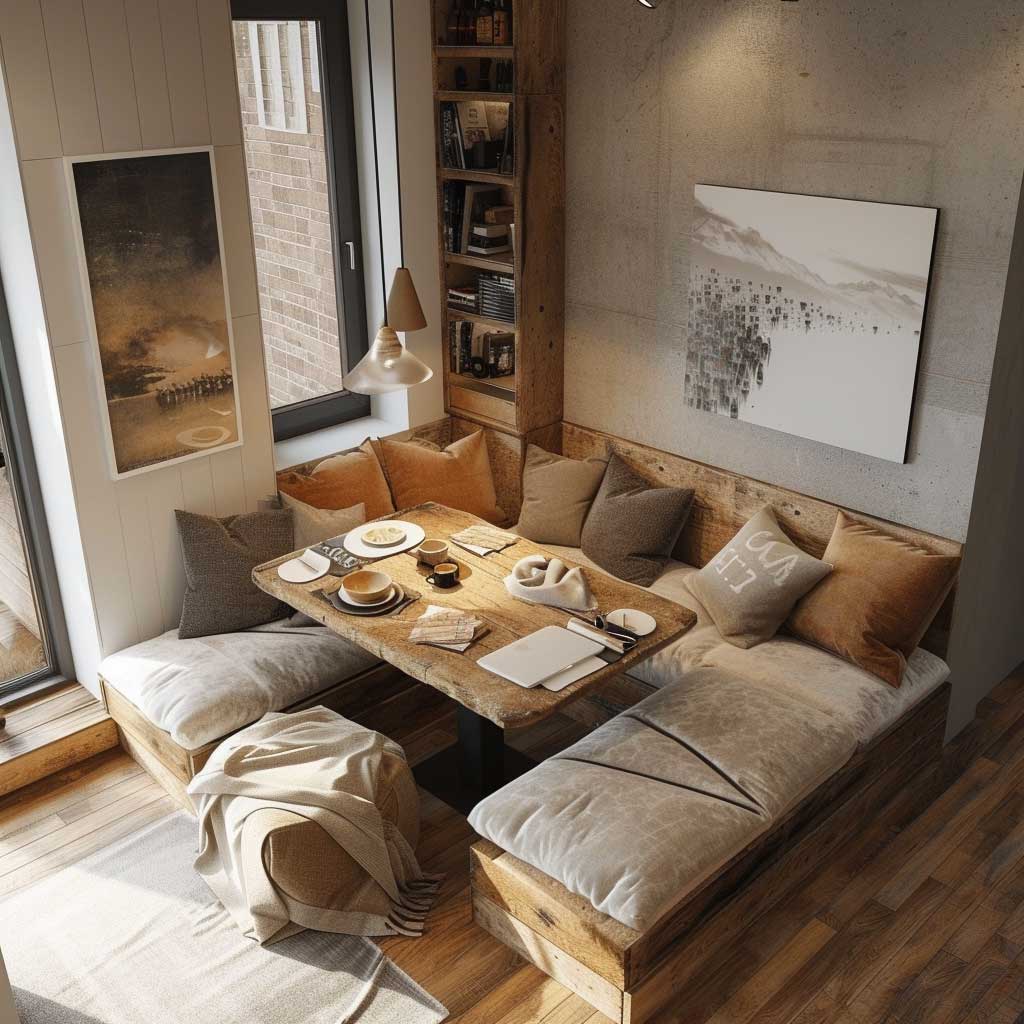
The extendable table is the single smartest furniture category for a small living and dining room combined. Closed, the IKEA EKEDALEN seats four in 70×85 cm — smaller than a standard office desk. Open, it seats six at 105 cm. I use mine closed every day as a work surface and open it maybe twice a month for dinner parties. That ratio makes the purchase completely logical. The leaf slides in from underneath in about eight seconds and does not require two people or profanity to operate.
Drop-leaf tables work in even tighter layouts. West Elm’s Mid-Century Drop-Leaf Table ($499) folds to 12 inches wide — essentially flat against a wall — and opens to 48×32 inches for four people. I stole this trick from a friend in a 240-square-foot studio: she leaves both leaves down all week, sets it for Sunday brunch, folds it back before Monday morning. The table becomes almost invisible on weekdays. Nothing else in a small living dining area achieves that kind of shape-shifting.
Chairs are where most people waste money and floor space simultaneously. Bulky upholstered dining chairs in a small room look like furniture from the wrong apartment. My go-to replacement: HAY About A Chair AAC22 ($195 each) — open backrest, slim aluminum legs, stackable. Four of them stack against a wall in a 16-inch footprint when guests leave. Alternatively, a built-in bench along one side recovers 8–10 inches of pull-back clearance versus a full chair. That is not a rounding error in a 12-foot room.
Lighting control is the variable that changes which mode the room is in. A single overhead fixture on a dimmer switch does more work than three separate lighting zones. Bright for homework and laptop work, dimmed for dinner. Do not buy a statement chandelier you cannot dim — it will lock the table into one mood and that mood will feel wrong at least half the time. A plug-in pendant over the table (no electrician required, cord runs to the ceiling and hooks down) starts at $45 on Amazon and solves this for anyone renting.
Do Not Do This
Do not buy a 6-seat rectangular table for a room under 180 square feet. You will spend every dinner with at least two guests trapped between their chair and the sofa. The table will look enormous, the room will look borrowed, and you will eat most meals standing in the kitchen to avoid setting it. A 4-seat round or extendable table is not a downgrade — it is the correct scale. Save the 72-inch farmhouse table for the house you buy later.
Do not use matching chair sets. Four identical bulky chairs from a box set read as one giant rectangle of furniture rather than individual seating. Two slim side chairs plus a bench on the wall side breaks up the visual mass and recovers real floor space.
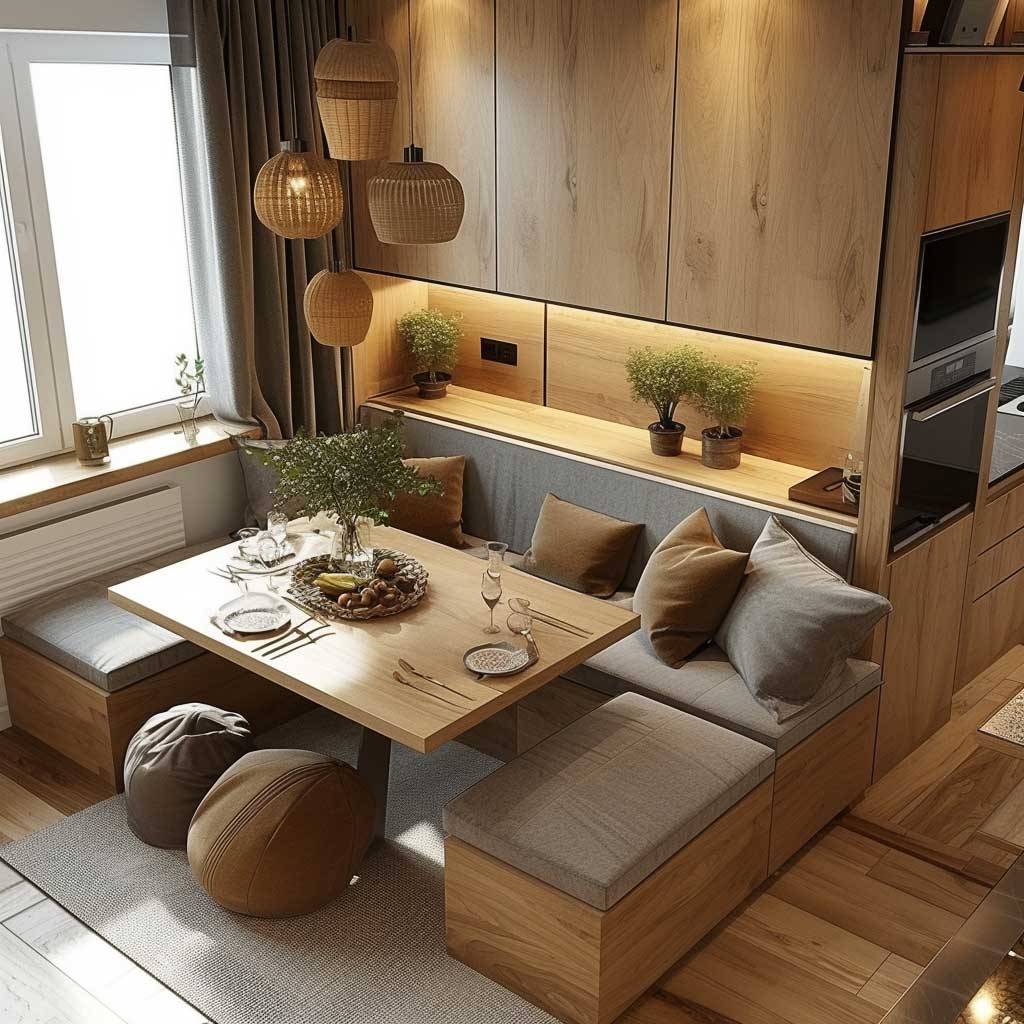
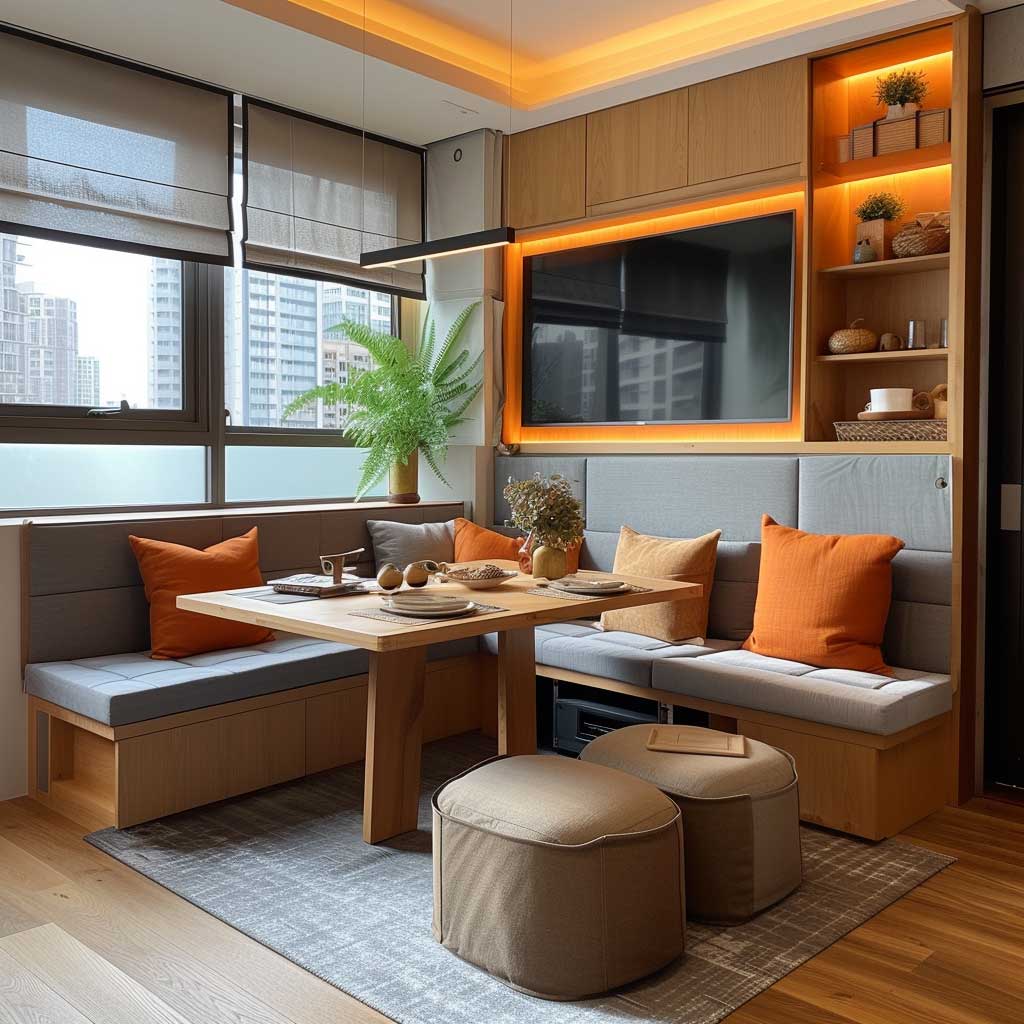
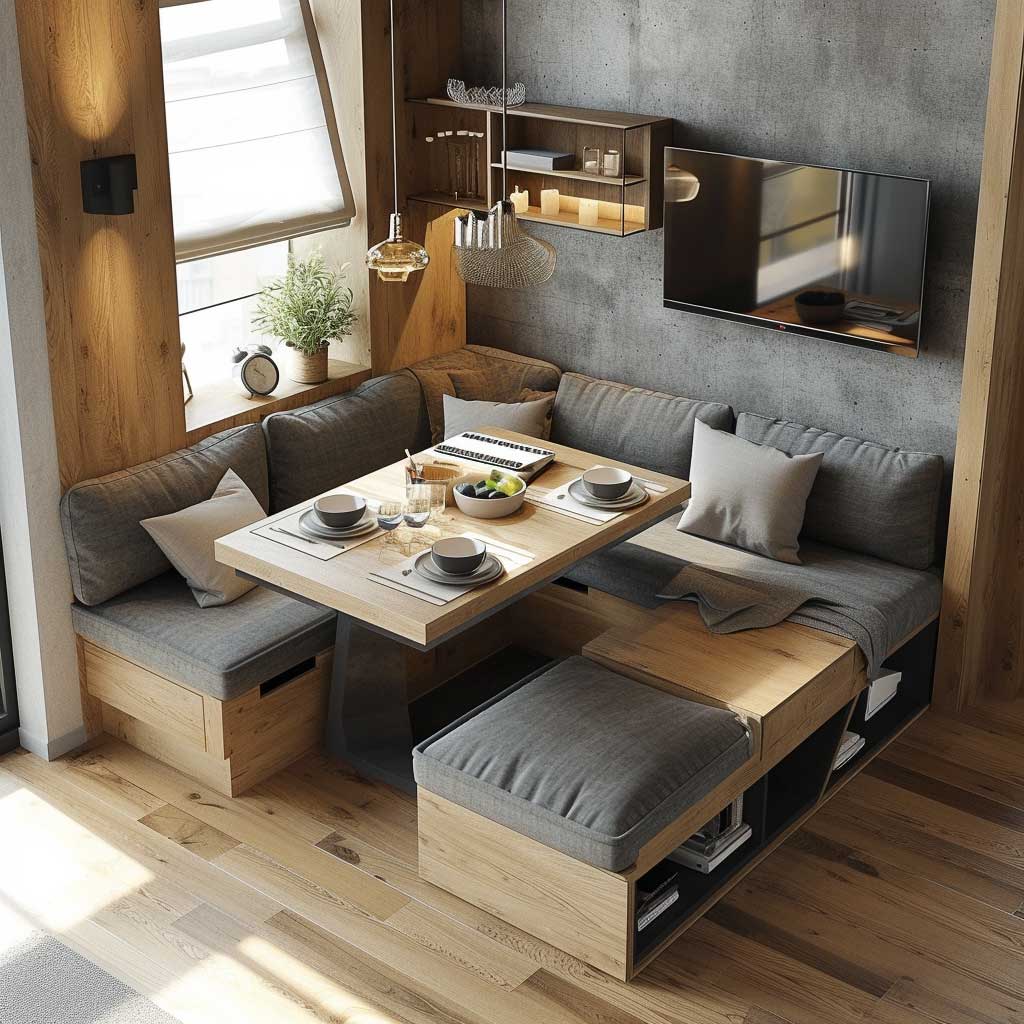
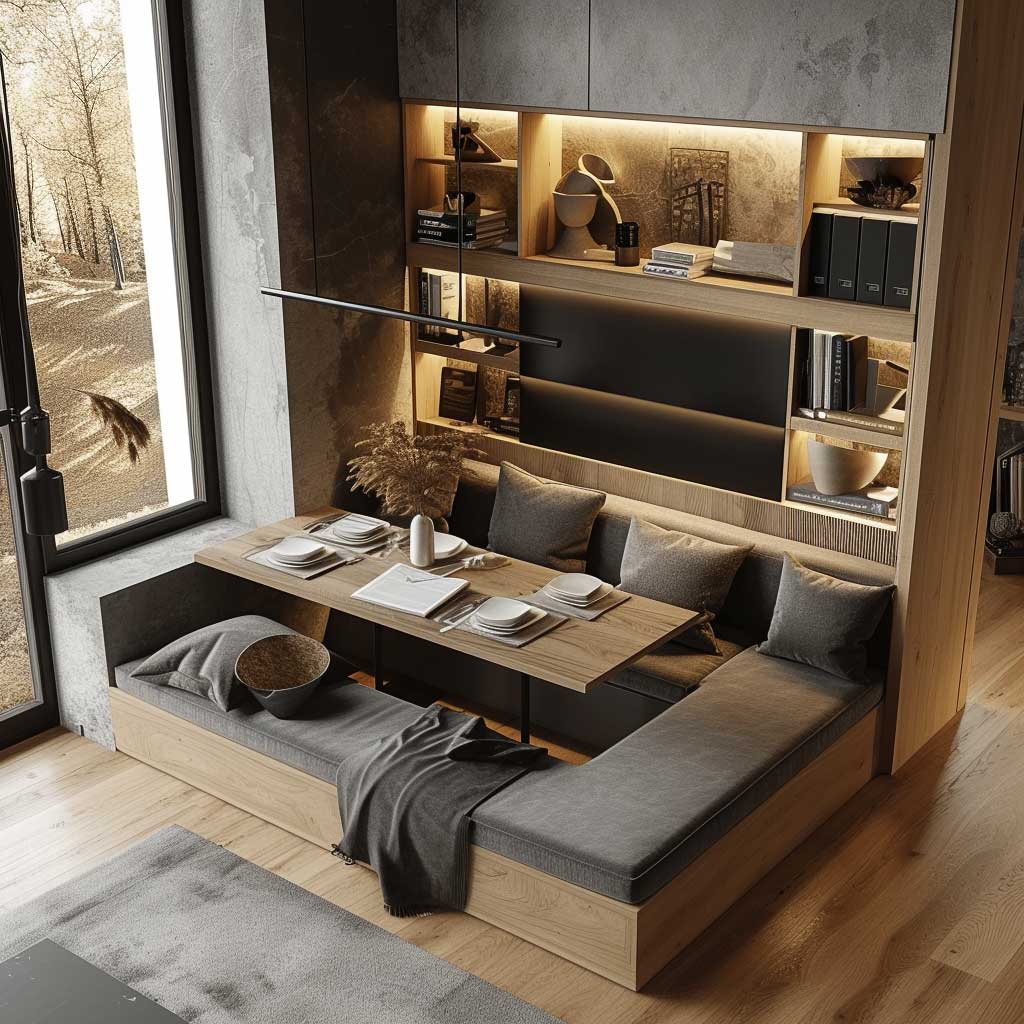
Storage built into the dining zone is the difference between a room that stays organized and one that drifts toward clutter by Thursday. A narrow sideboard (18 inches deep or less) behind or beside the table holds everything: placemats, candles, a spare tablecloth. The Crate and Barrel Rigby Sideboard ($699, 14 inches deep) is specifically engineered for small spaces and does not protrude past a standard doorway swing. That one piece eliminates the need for a separate storage unit elsewhere in the room.
Floating shelves above the table recover vertical space without touching the floor. Three shelves at 10 inches deep, running 36 inches wide, hold dinnerware, cookbooks, and a plant without adding any floor footprint. Keep the bottom shelf at 68 inches minimum so no one stands up into it. I have seen this arrangement in rooms as small as 160 square feet and it reads as intentional rather than cramped. Narrow living room layouts use the same vertical logic and are worth cross-referencing if your room is long and thin.
Seating Six Around a Small Square Table Without Losing Your Mind
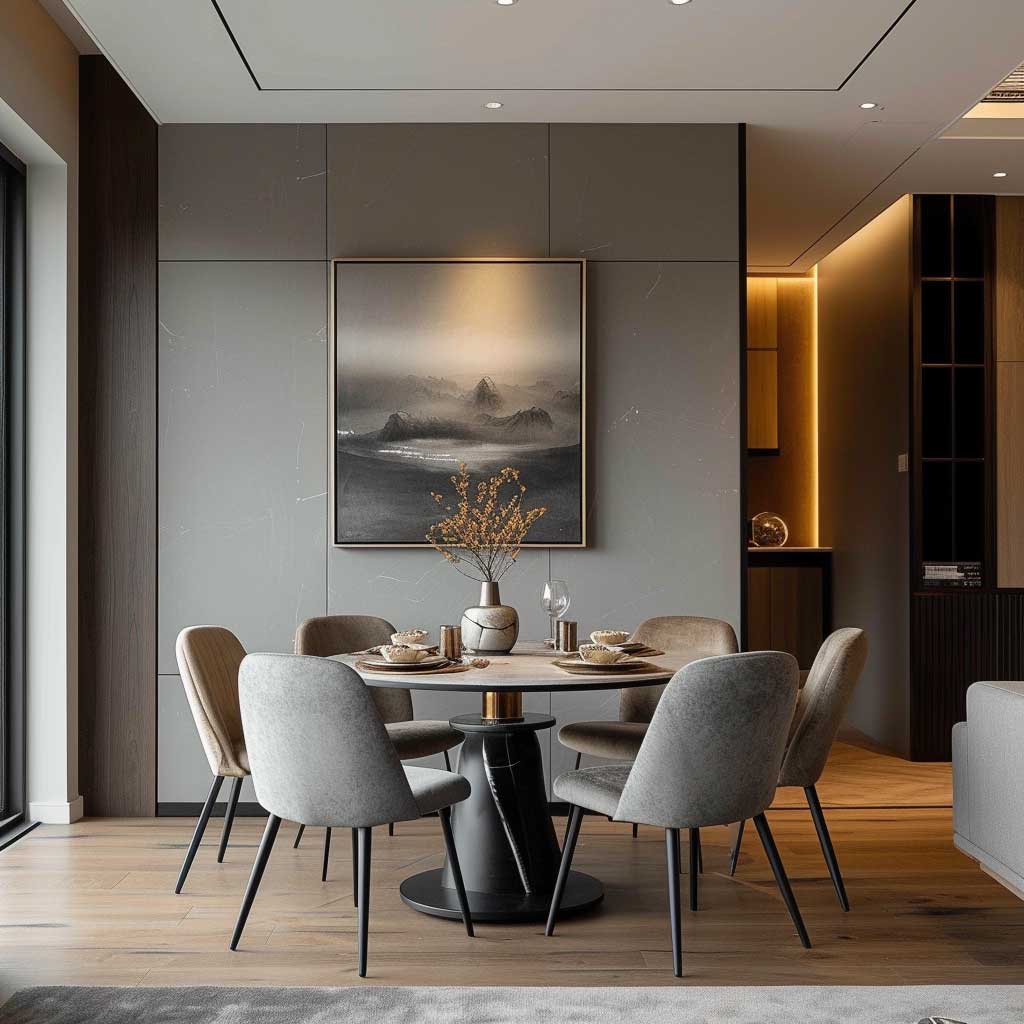
Six people around a table in a small living dining area is a spatial puzzle that actually has a clean solution. The answer is a 48-inch round table, not a square one. Designer Laura Williams at ATX Interior Design puts it plainly: round edges let you pull more bodies in because no one is fighting a corner. At 48 inches, six adults fit with 10 inches of shoulder clearance each — tight but functional. At 36 inches, you top out at four unless everyone is very close friends.
Glass table tops are the honest answer for maximum seating without visual weight. A glass table does not disappear, but the eye travels through it rather than stopping at it — the room reads as larger even when the table is fully set. Cb2’s Silverado Dining Table ($699, 48-inch round glass top on a brass base) is the one I have photographed the most in clients’ homes. It photographs warm against any wall color and is easier to wipe down than wood at a dinner party where someone always spills the wine.
Seating strategy matters here more than the table itself. Two slim side chairs on the room-facing side plus a continuous wall bench on the window or wall side is the configuration that works. The bench seat holds two or three without individual footprints. Acrylic ghost chairs (Kartell Louis Ghost, $195 each) leave sight lines open — you see through them to the floor, which reads as more space. Solid dark chairs in a small room are like placing four black squares on a white canvas: the eye counts them as obstacles, not furniture.
A tonal color palette is what makes a six-person setup feel intentional rather than packed. Sticking to one wood tone, one metal finish, and a single textile color (bench cushion plus a rug) creates visual rest even when every seat is occupied. Mixing oak, walnut, chrome, and brass in a 100-square-foot dining zone looks like a furniture showroom, not a home. Pick one finish and hold it. You’ll notice immediately how much calmer the room becomes — not because it got bigger, but because the eye has fewer decisions to make. Living Etc’s guide on making small dining rooms look bigger expands on the tonal palette argument with specific paint and upholstery pairings worth bookmarking.
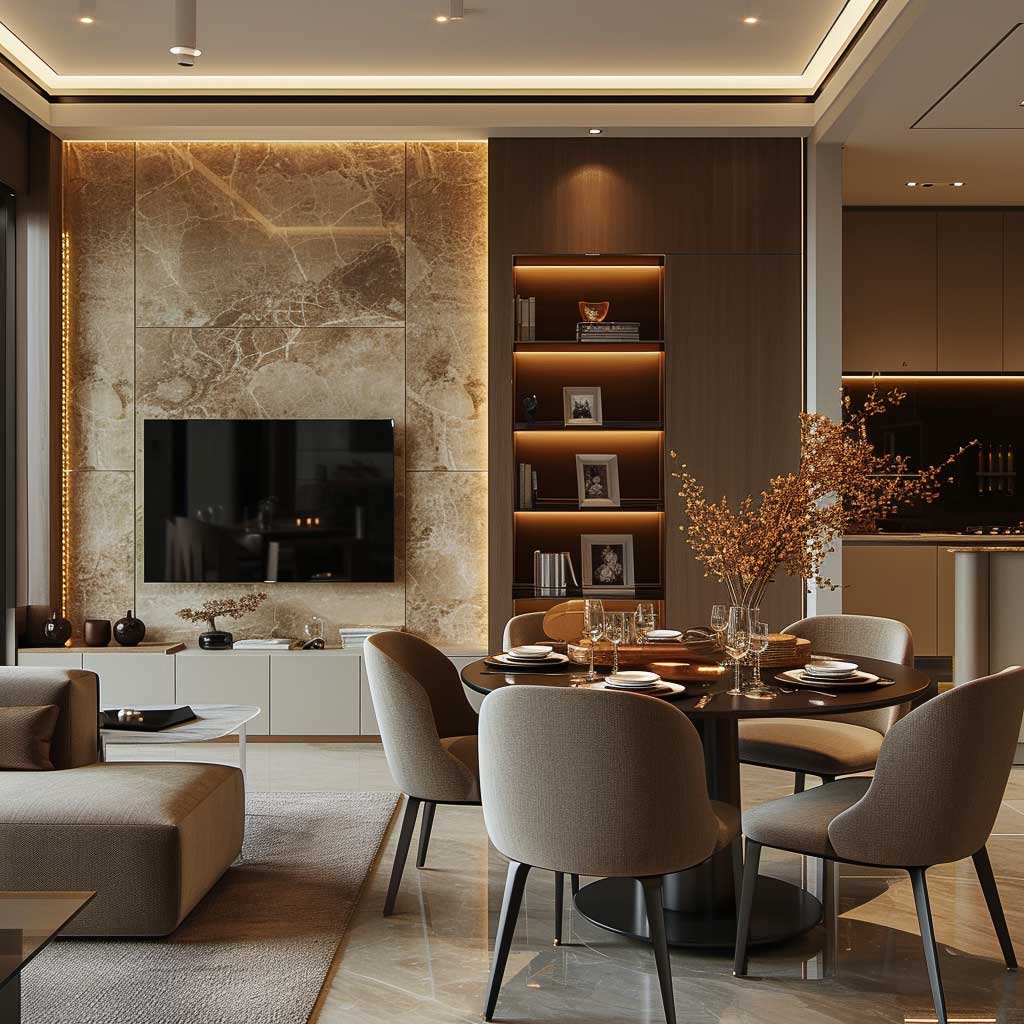
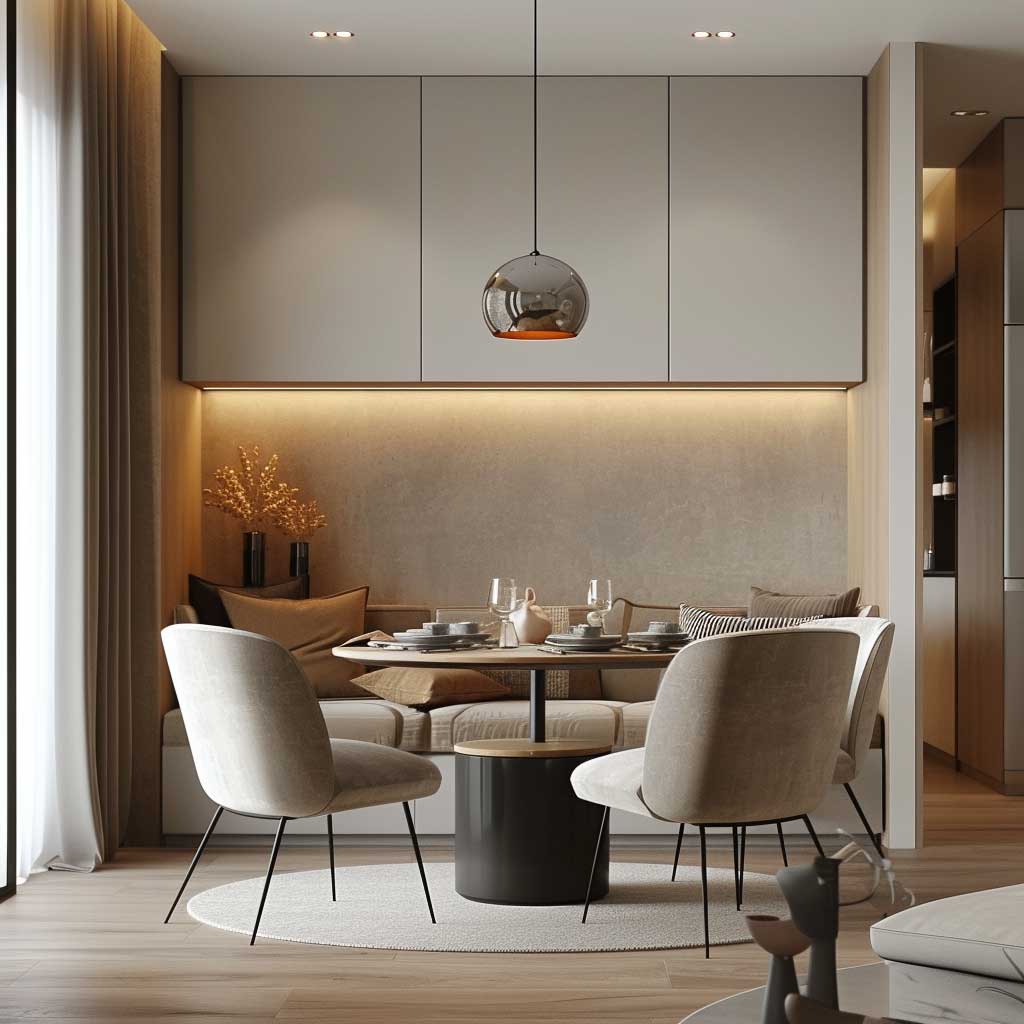
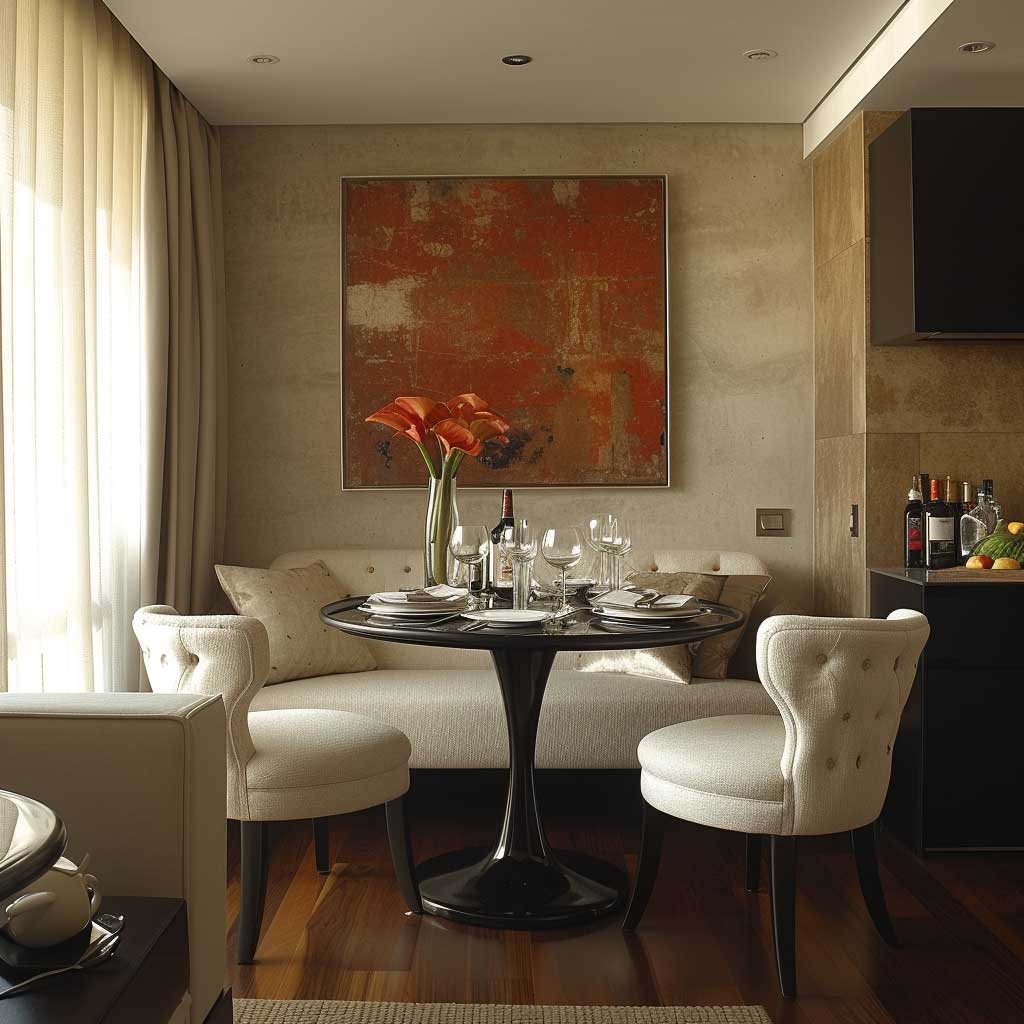

Textiles close the design loop in a way hard furniture cannot. A rug under the table defines the dining zone even when the table is pushed to the wall and the room reverts to living mode. Size matters: go at least 5×8 so chairs stay on the rug when pulled back — a rug too small for the chairs reads as a decoration rather than a zone anchor, and that is worse than no rug at all. Low-pile flatweave in a natural tone (Ruggable’s Jute-Look Washable Rug, $189 in 5×7) is my current recommendation for anyone who entertains with children or wine around.
Vertical space is the one resource a small living dining area consistently wastes. Wall-mounted artwork hung at eye level draws the gaze horizontally, which emphasizes how narrow the room is. One tall piece — 30×48 inches or larger — hung above the bench pulls the eye upward instead, stretching the perceived ceiling height. I’ve bought large format art prints from Society6 for $45 framed in IKEA RIBBA frames ($25) and the result photographs identically to a gallery piece at 10 times the price. The art does not have to be expensive. It has to be tall.
The Takeaway
A Dining Table in a Small Living Room Is a Layout Problem, Not a Size Problem
The table is never the issue. Position, scale, and chair choice are. A 48-inch round table in the right corner with two stackable chairs and a wall bench takes up less visual and physical space than a 36-inch square table surrounded by four bulky arm chairs centered in the room.
Start with tape on the floor. Live with the outline for 48 hours. Buy nothing until you have confirmed the pull-back clearance on all four sides. Every mistake in a small living dining room was made by someone who skipped this step.
Save this post before you go furniture shopping — you will want to come back to the measurements.
Related Topics
FAQ
How do I arrange a dining table in a small living room without blocking the sofa?
What is the smallest dining table that comfortably seats six people?
How can I make a small dining area in my living room feel more spacious?
Can I fit a dining table for six in a room under 200 square feet combined with a living area?
What type of rug works best under a dining table in a small living room?
Should the dining table match the living room furniture in a combined space?
Complete guide
The Living Room Design Ideas Vault Every Home Needs Right Now
Color, walls, furniture, layouts, styles, smart tech — 300+ ideas in one place
Complete guide
Small House Design Ideas That Make Every Square Foot Feel Intentional
Exteriors, layouts, kitchens, bedrooms, bathrooms, outdoor — all in one place