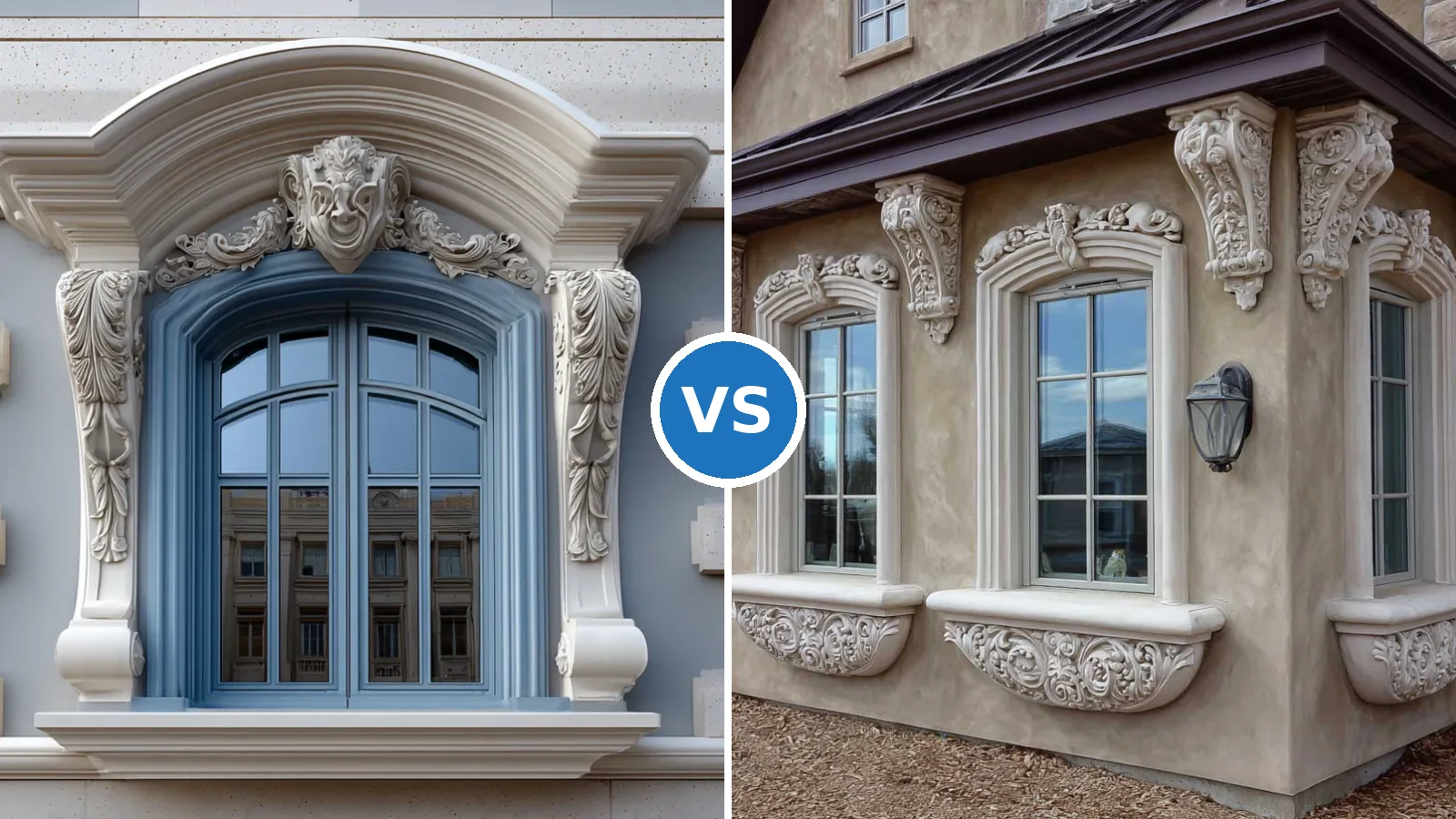
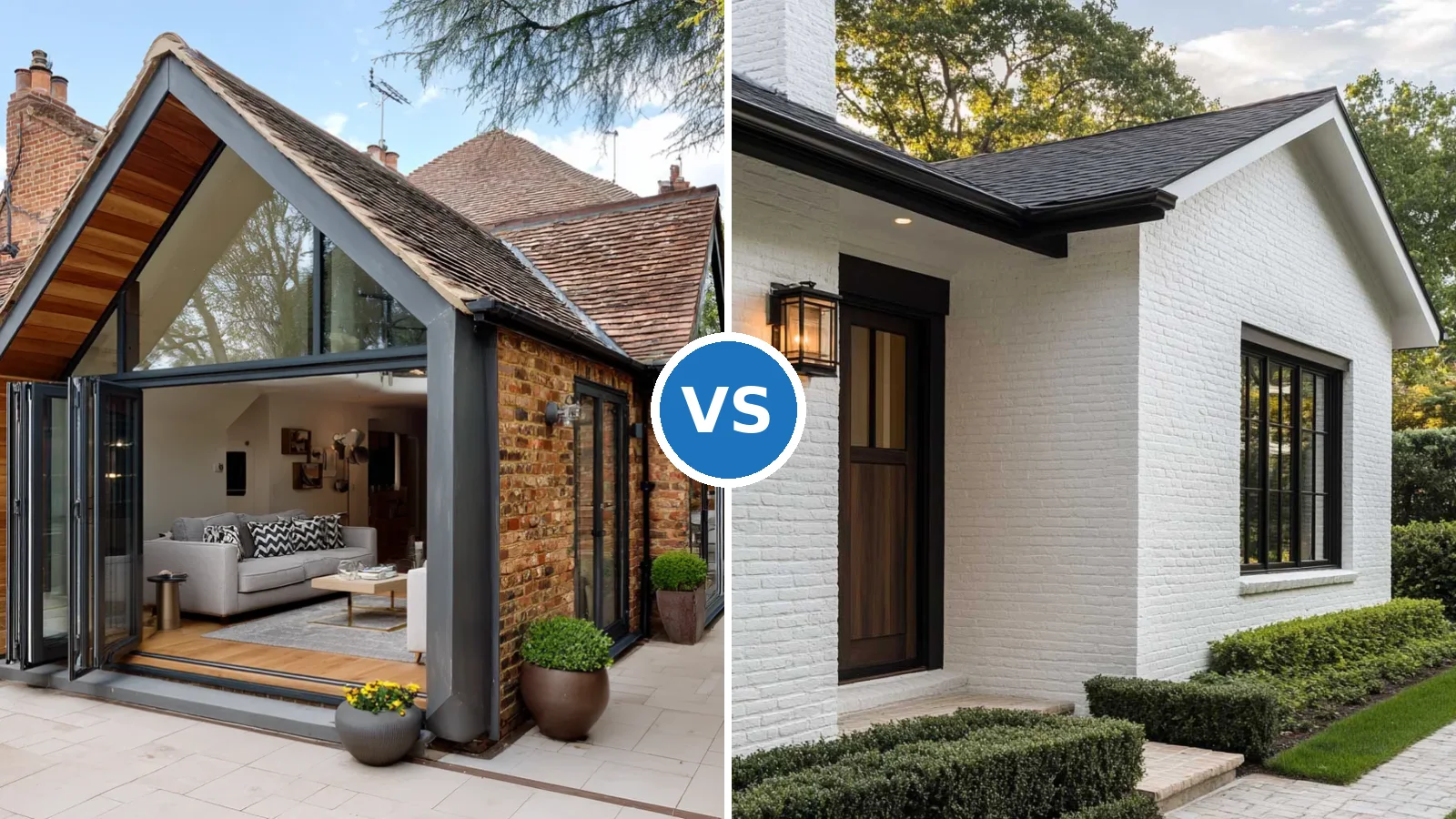
Exterior house finishes decide how a modern home looks from the street and how well its walls survive rain, frost and sun for the next 20 to 100 years. Which one works best? Vinyl is the cheapest at about $3–$12 per square foot, fiber cement sits in the middle at $5–$14 and typically lasts around 50 years, while brick and stone cost more but can pass the 100-year mark. For most contemporary facades, one material is not enough, because a mix of two finishes protects weak spots and gives the house a clear structure. Match the material to your climate first, then to your budget.
Price gaps grow fast once you scale up to a whole house. On a 2,000 sq ft home, average material costs run about $9,000–$14,000 for vinyl, $16,000–$26,000 for wood and $18,000–$100,000 for brick or stone. That spread works like buying a car: the sticker price matters less than how long it runs and how often it needs the shop. Count the cost per year of service life, not just the quote on day one.
The examples below come from the Yarrbat Residence, a hillside home that pairs dark stone panels, timber and glass. Each section breaks down one finish with prices, lifespans and the mistakes that shorten them. Use the comparison table near the end to shortlist two materials before calling contractors.

Quick Scan
- Vinyl costs about $3–$12 per sq ft and lasts 20–40 years.
- Fiber cement runs $5–$14 per sq ft, lasts around 50 years and needs only yearly cleaning.
- Natural stone costs $7–$30 per sq ft vs $5–$11 for stone veneer with a similar look.
- Brick and stone veneer last at least 100 years, roughly 2.5–5 times longer than vinyl.
- Wood boards cost $2–$6 per sq ft in materials but need cleaning every year.
- Two or three finishes read as modern on one facade; more turns a small house cluttered.
Exterior Finishing Materials Ranked by Price and Lifespan

Exterior finishing materials for a modern home fall into five main groups: stucco or render, siding, wood, stone and manufactured facade panels. Each group covers its own price band, from about $2 per square foot for basic wood boards to $30 for natural stone. Think of them like shoe soles: some are light and cheap, others heavy and close to indestructible. Pick the group first and the specific product second.
- Stucco and render: materials average about $5.50 per sq ft, up to $12.
- Vinyl siding: $3–$12 per sq ft with 20–40 years of service.
- Wood siding: $2–$6 per sq ft before labor and protective finish.
- Stone and stone veneer: $5–$30 per sq ft, depending on real vs manufactured.
- Fiber cement and steel panels: roughly $4–$16 per sq ft for most residential products.

Which material looks most modern? Large panels and smooth render usually win, because fewer joints create flat, quiet planes that suit cubic shapes. Stucco is so common that more than half of homes in the western U.S. use it, so it rarely looks out of place. Don’t choose a finish from one photo taken on a sunny afternoon. Ask for a sample board and look at it in rain and evening light before you commit.
Mixing Two Materials on a Modern House Facade
Modern house exterior finishes rarely depend on one material, and the Yarrbat Residence shows why with stone, timber and glass on a single hillside home. A second finish marks where one volume ends and the next begins, the way a belt divides an outfit. It can also save money: natural stone at $7–$30 per sq ft only on the base, with a $5–$11 veneer or lighter panels higher up, keeps the look without the full bill. Put the toughest material where splashback and knocks hit hardest, usually the plinth and the entrance wall.

Should the cladding be chosen at the design stage? Yes, because heavy finishes change the whole wall build-up. Full brick needs a structure that can carry its weight, while brick veneer at $3–$10 per sq ft hangs on a lighter frame and still gives the look of a $10–$20 brick wall. If you are weighing new volumes against surface upgrades, this comparison of steel frame extensions versus brick accents shows how each one changes a facade’s character. Don’t swap a finish during renovation without checking what the existing wall is built from.

Climate Comes First When Picking Exterior House Finishes
Exterior house finishes have to suit the local weather before they suit the mood board. Brick holds heat, which makes it a strong pick in cool regions and a weaker one in hot climates. Stucco stays cool in summer and resists fire and rot, which explains why it dominates warm, dry areas. Treat the climate like the dress code of an event: ignore it, and the facade pays for it every season.
How long should a good finish last? Fiber cement typically runs around 50 years, brick and stone veneer at least 100, and vinyl 20–40 years. Vinyl, wood composite and fiber cement all expand and contract with temperature, so they need flashing and expansion channels to keep water out of the wall. Don’t let a crew skip those details to save a day of labor. Ask the installer to list every flashing point in the written quote.
Dark Stone Facade Panels Bring Calm Minimalism

Stone facade panels are the modern exterior finish behind the Yarrbat Residence’s quiet, grounded look. The house steps down its slope in interlocking cubes, so from the street it reads as one level rather than two. Stone on the lower volumes works like the heavy base of a lamp, anchoring everything above it. Use the darkest, heaviest finish at the bottom and lighter ones higher up.

Rectangular panels go up faster than hand-laid stone because they lock into one continuous grid. Natural stone siding costs about $7–$30 per sq ft and can last at least 100 years with almost no maintenance. Stone veneer cuts the material price to $5–$11 per sq ft, but poor installation leads to cracks. Is the cheaper version worth it? On upper walls and accent zones it often is, provided a specialist installs it.

Weight matters on cantilevers and slopes. Light panels let a complex structure look almost airy, while full stone would demand a heavier frame underneath. Fiber cement at $5–$14 per sq ft can imitate stone, wood or concrete at a fraction of the load. Don’t hang real stone on a projecting volume without a structural check.
Wood Cladding Brings Warmth That Stone Cannot Match

Wood cladding remains the most natural outside finish for a house and the fastest way to make a modern facade feel lived-in. Until the 1990s, nearly 50% of new U.S. homes used wood siding, and boards still cost only about $2–$6 per sq ft in materials. Next to dark stone, timber works like a wool throw on a leather sofa, softening a hard composition. Pair it with at least one mineral finish so the house doesn’t read as a cabin.

Why does timber feel so cozy from the road? Its grain and warm tone echo interiors, so the house looks open even behind closed doors. Wood is natural, recyclable and renewable, which matters when a low environmental footprint is part of the brief. Don’t expect it to keep its color without care, because neglected boards gray, grow mold or rot. Budget for a cleaning every year and resealing on the schedule the finish maker sets.

On the Yarrbat house, a timber-clad side wall flows into the stone base, and narrow windows sit inside sharply projecting frames. Natural wood costs $2–$6 per sq ft vs engineered wood at $1–$6, which resists rot and mold and lasts 15–30 years. Real boards suit walls you can reach easily, much like a garden bed you can tend from the path. Choose engineered boards for high, hard-to-access walls.

Wood and glass make the warmest modern pairing on this project. A curved wall splits into a timber section and a glazed band that mirrors the landscape and pulls daylight deep inside. Full-height glazing typically runs about $150–$300 per sq ft installed, far more than any cladding around it. These floor-to-ceiling glass wall ideas with real costs and glass types help size the glazed share before you finalize the facade.
Where Exterior House Finishes Meet Protection and Style

A strong facade finish protects the family inside and shows the owner’s taste at the same time. The two goals rarely clash, since brick and stone, the most durable options, also read as the most premium from the street. Metal is another route, with steel at $4–$16 per sq ft and up to 50 years of service vs tin at $1–$3 and only about 15 years. Set the protection level first and the look second.

Siding replacement averages about $11,450, so a wrong choice is expensive to undo. Check contractor quotes against national figures such as this siding cost and lifespan breakdown from Angi before signing. Is the cheapest finish ever the smart buy? Only when the wall is out of sight or you plan to sell long before it wears out. Ask every contractor to split material, labor and finishing into separate lines.
Don’t Do This
- Don’t stack four finishes on a small facade; two or three keep it calm.
- Don’t pick vinyl for a 50-year plan when it typically lasts 20–40 years.
- Don’t pay $7–$30 per sq ft for natural stone where a $5–$11 veneer looks the same.
- Don’t leave timber uncleaned for years; one wash a year prevents mold and rot.
- Don’t skip flashing on vinyl, wood composite or fiber cement walls.
Price and Lifespan Side by Side
The table puts the most common exterior finishing materials next to each other on cost, service life and upkeep. Installed prices include labor, which pushes wood from $2–$6 to about $8–$15 per sq ft. Material prices alone can mislead, much like comparing flights without the baggage fees. Shortlist two rows, then request itemized quotes for both.
| Finish | Material per sq ft | Installed per sq ft | Typical lifespan | Upkeep |
|---|---|---|---|---|
| Vinyl siding | $3–$12 | $4–$8 | 20–40 years | Low, yearly wash |
| Wood siding | $2–$6 | $8–$15 | 20–40 years | High, yearly cleaning and resealing |
| Engineered wood | $1–$6 | Varies by installer | 15–30 years | Low to medium |
| Fiber cement | $5–$14 | $8–$14 | Around 50 years | Low, yearly cleaning, occasional repaint |
| Stucco | About $5.50, up to $12 | $7–$12 | Decades, fire- and rot-resistant | Low |
| Brick veneer | $3–$10 | $10–$20 | 100+ years | Low, periodic sealing |
| Natural stone | $7–$30 | Specialist install | 100+ years | Very low |
| Steel panels | $4–$16 | Varies by installer | Up to 50 years | Low |
| Zinc panels | $15–$25 | Varies by installer | 80–100 years | Very low |
The Finish Worth Paying For
Fiber cement and stone veneer give most modern homes the best value, at about $5–$14 per sq ft with 50 to 100+ years of service, compared with 20–40 years for vinyl.
Spend the premium where people touch the walls and weather hits hardest: the base, the entrance and the street side. Natural stone at $7–$30 per sq ft earns its price there and almost nowhere else.
Treat wood as the warm accent rather than the whole envelope unless you can clean it every year. Engineered boards at $1–$6 per sq ft cover high walls with far less upkeep.
Collect at least three itemized quotes and compare them with the table above before committing to a project that can easily pass $10,000 on a 2,000 sq ft house.
| Architects | K2Ld Architects |
| Photo | Jeremy Wright |