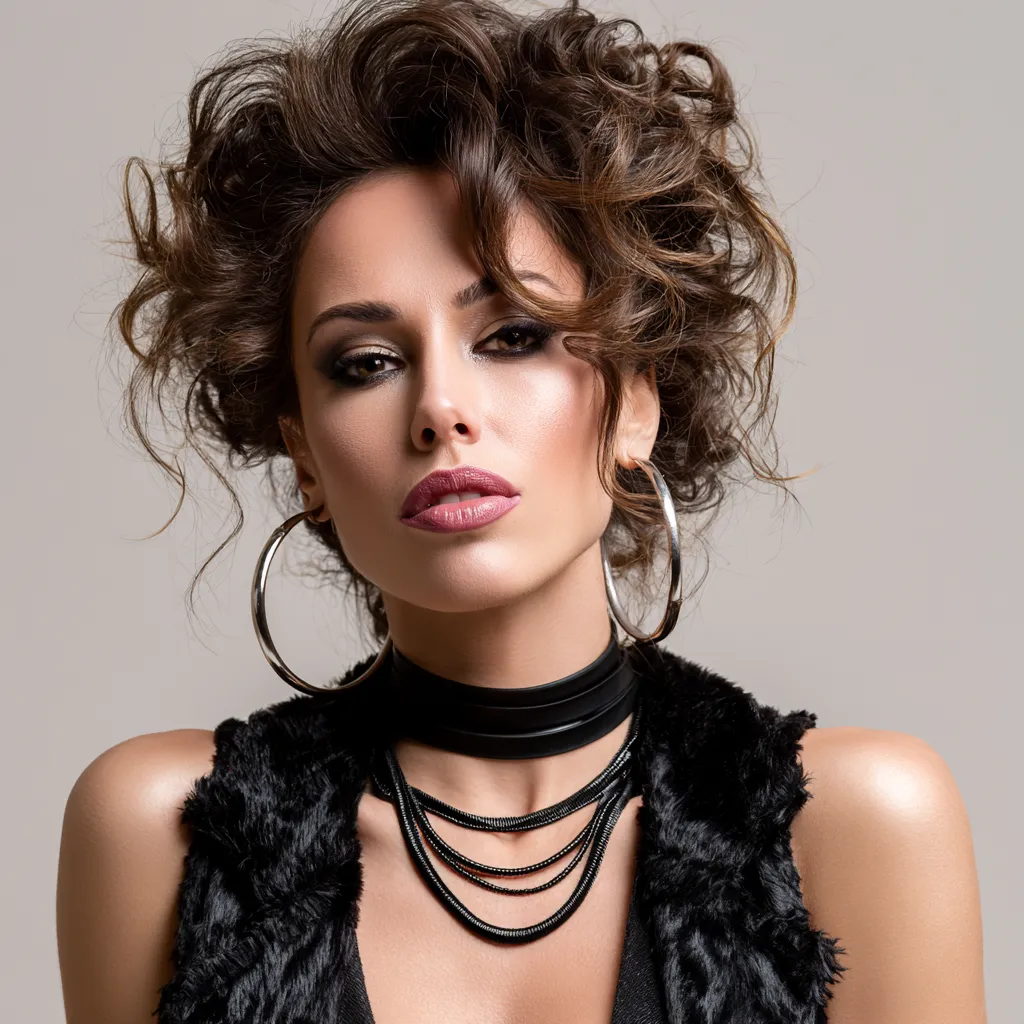
Disco hair styles for women are having a full-scale comeback — and I’m not talking about half-hearted waves with a diffuser. The real deal is bold volume, mirror-like shine, and movement that catches every beam of light in the room. I’ve spent more nights than I can count trying to recreate that Studio 54 energy, and the looks that actually work all share three things: heat-styled texture, a reflective finish, and at least one statement accessory that keeps the whole thing from collapsing by midnight.
What most people get wrong with disco glam hair is going too stiff. Freeze-spray everything into submission and you lose the movement that makes the 70s silhouette so magnetic — it’s supposed to bounce and sway like a dancer, not sit there like a helmet. The magic is in the balance between hold and flow, and that balance looks completely different on golden blonde waves versus deep brunette layers versus copper-toned curls with glitter.
You’ll find three full looks below — each broken out by hair color and technique — plus honest product callouts, one hard-won lesson about what kills the vibe, and answers to every question I’ve been asked about disco party hairstyles. Whether you’re heading to a themed night or just want your hair to feel like an event in itself, these styles deliver.
– Disco glam hair lives and dies by shine — volumizing mousse first, shine spray last.
– Golden blonde waves work on medium to long hair; large-barrel curling iron, then brush through.
– Brunette volume needs a round-brush blowout as the foundation — layers without that base fall flat.
– Copper hair with glitter: medium-barrel iron, then targeted glitter spray at mid-lengths only.
– Skip the heavy-hold hairspray — it kills movement. Use flexible-finish spray instead.
– Metallic headbands and sparkling hair combs do more for a disco look than any single styling product.
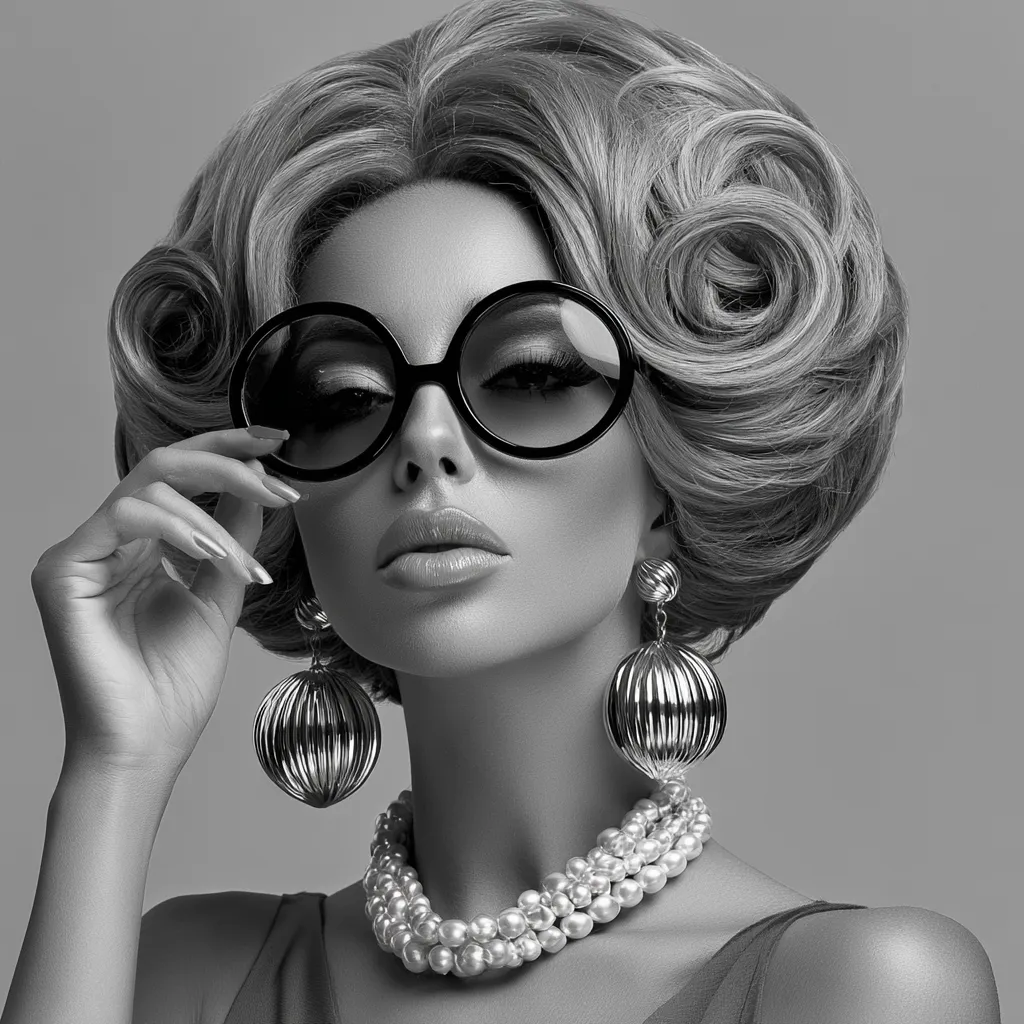

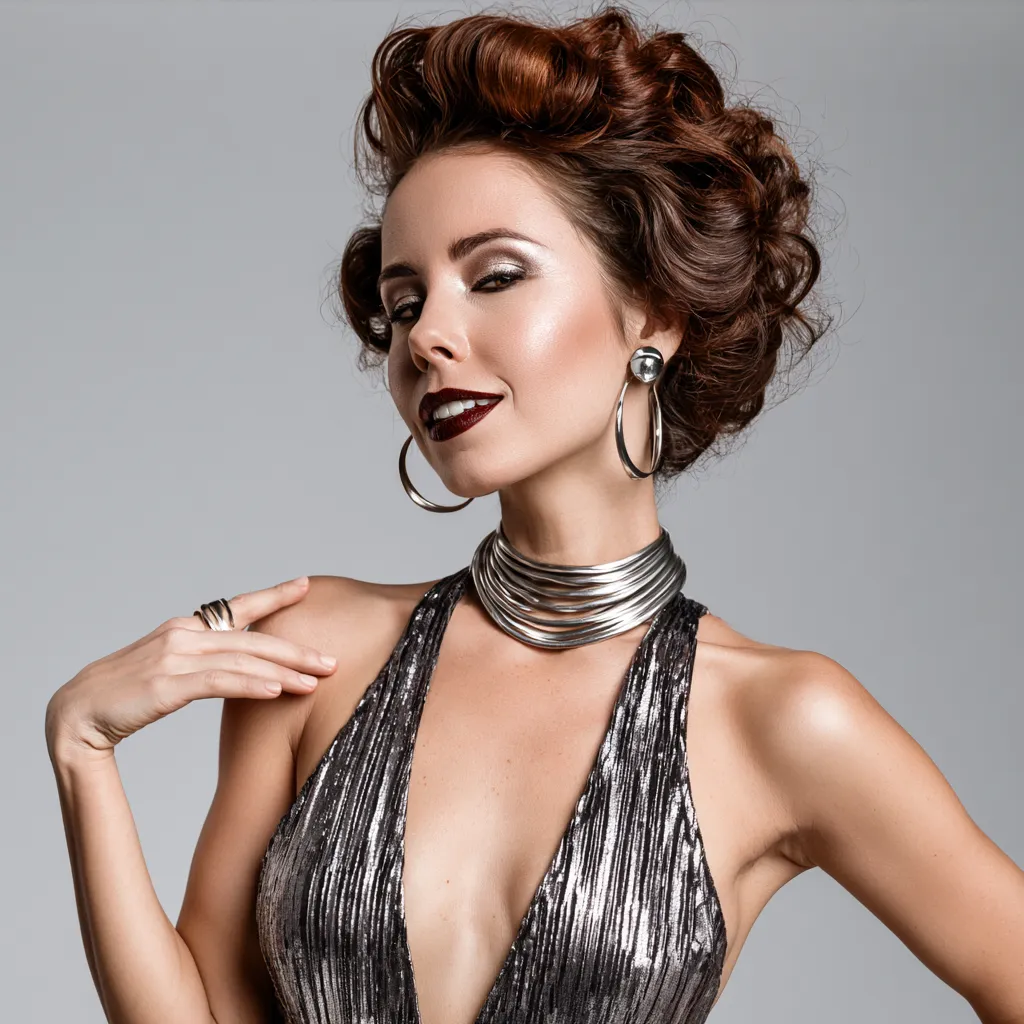
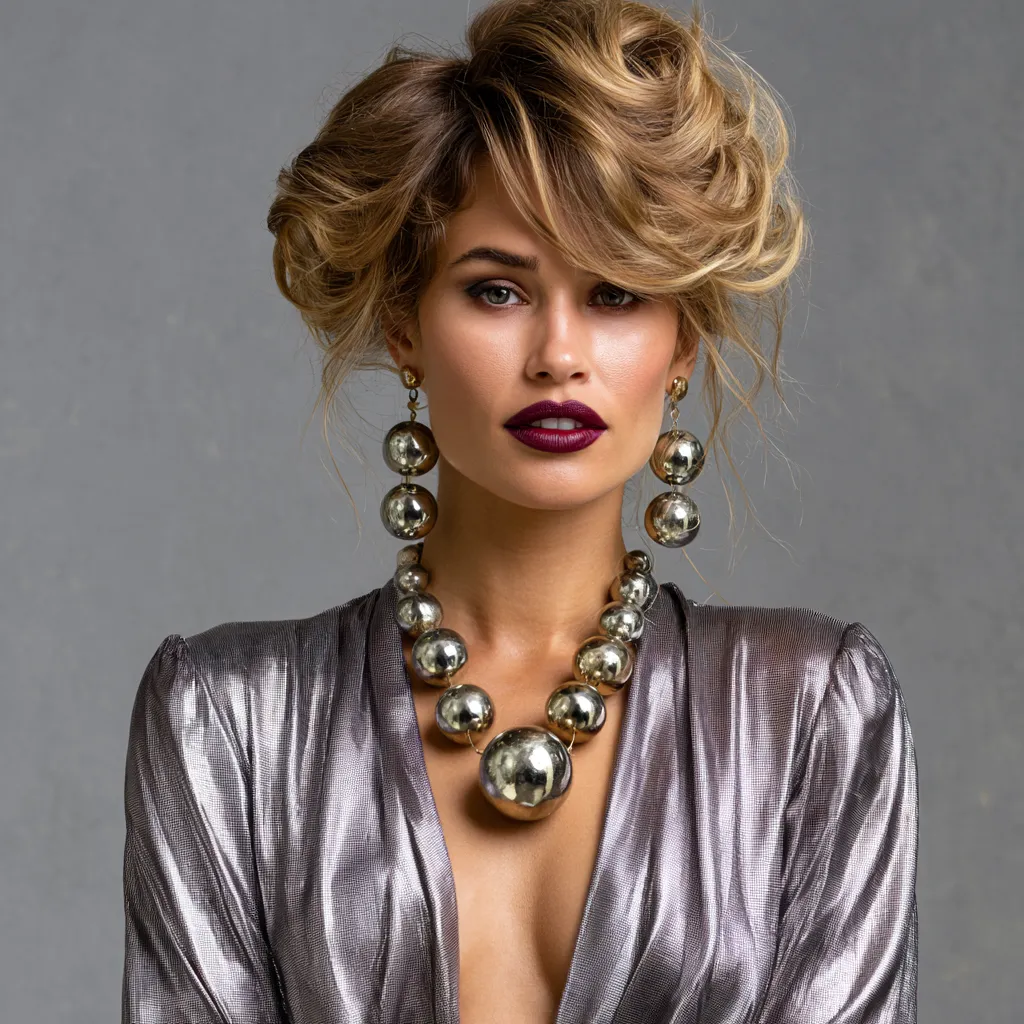
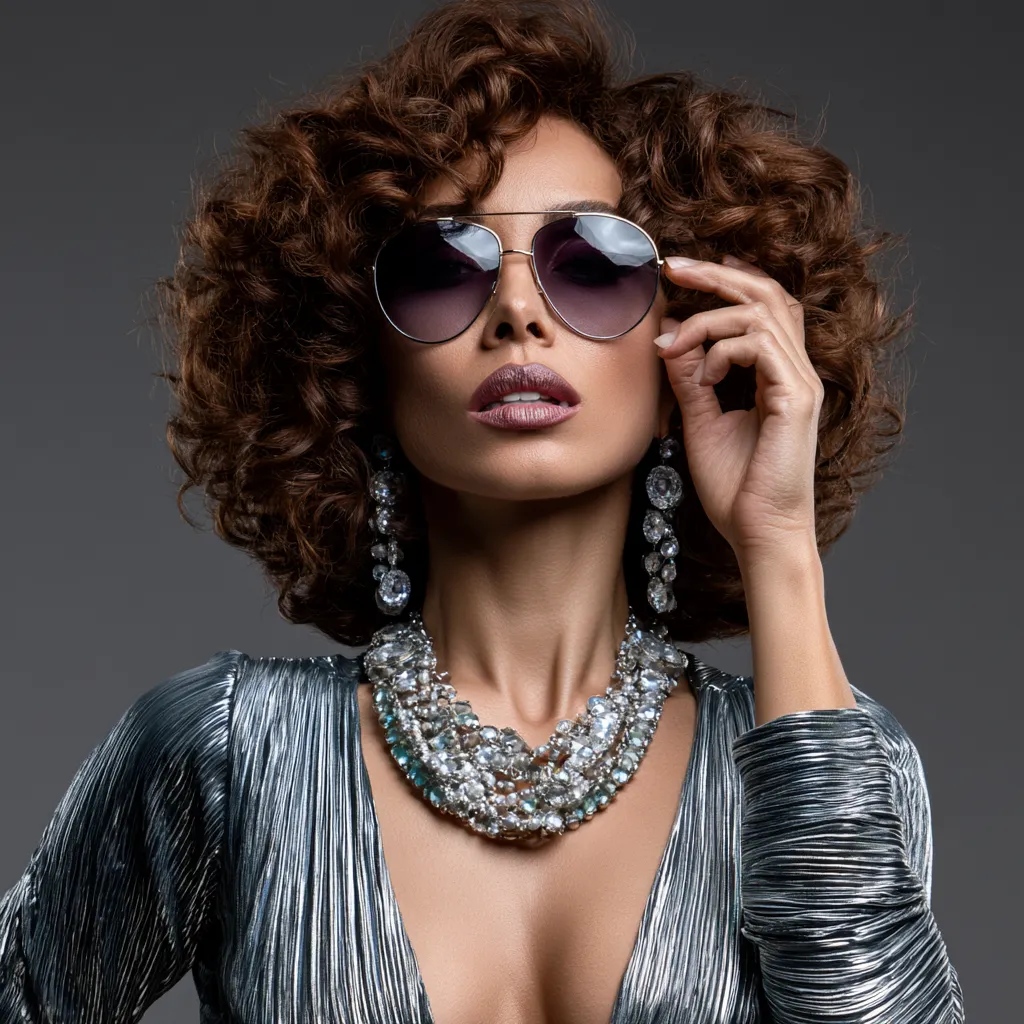
Golden Blonde Waves Lit from the Inside
Disco hair styles built on golden blonde waves are the closest thing to wearing a spotlight — the warm tones pick up every color in the room and throw it back twice as bright. My go-to for this look is Redken’s Volume Injection mousse ($20, available at Ulta), worked into damp roots before any heat touches the hair. The difference between this and a generic mousse is real: you get lift that actually holds through four hours of dancing rather than collapsing by the second song.


Use a 1.5-inch barrel curling iron and start mid-length — never at the root, or you’ll get that stiff, dated look that reads more pageant than disco. Curl each section away from the face, hold for eight seconds, release. Once everything is set, run a paddle brush lightly through the waves to break them into something softer and more organic. That brushed-out texture is exactly what separates 70s-inspired waves from standard curls — it’s loose, it moves, and it photographs like a dream under warm light.

Finish with a shine spray — I’ve tried six and always come back to Kenra Platinum Silkening Mist ($28) — held 12 inches from the hair and swept in a fast arc rather than aimed at one spot. Two passes, done. Does the spray alone make the hairstyle? No. Does skipping it make the whole effort look flat and mattified under colored lights? Every single time. Sparkling hairpins or a skinny metallic headband from ASOS ($12–$18 range) are the only accessories you need; oversized statement pieces on top of this much hair look cluttered, not glamorous.
Golden blonde disco waves are forgiving across face shapes because the movement draws the eye down and out rather than straight across. You’ll notice the look reads especially strong on medium to long hair — anything chin-length or shorter won’t catch enough light to get the full effect, and that’s the honest truth most styling posts skip. Pair with a gold sequin mini or a structured satin jumpsuit and you have a complete look that doesn’t need to be explained.

One thing I stole from a session stylist I worked with: after the shine spray dries, scrunch the ends lightly upward with your palm rather than touching the roots. It re-activates the wave pattern without adding frizz and takes maybe ten seconds. The mistake most people make here is touching the roots to add volume at the last minute — you’ll destroy the smoothness you built and spend the rest of the night with a halo of flyaways instead of mirror-gloss waves.
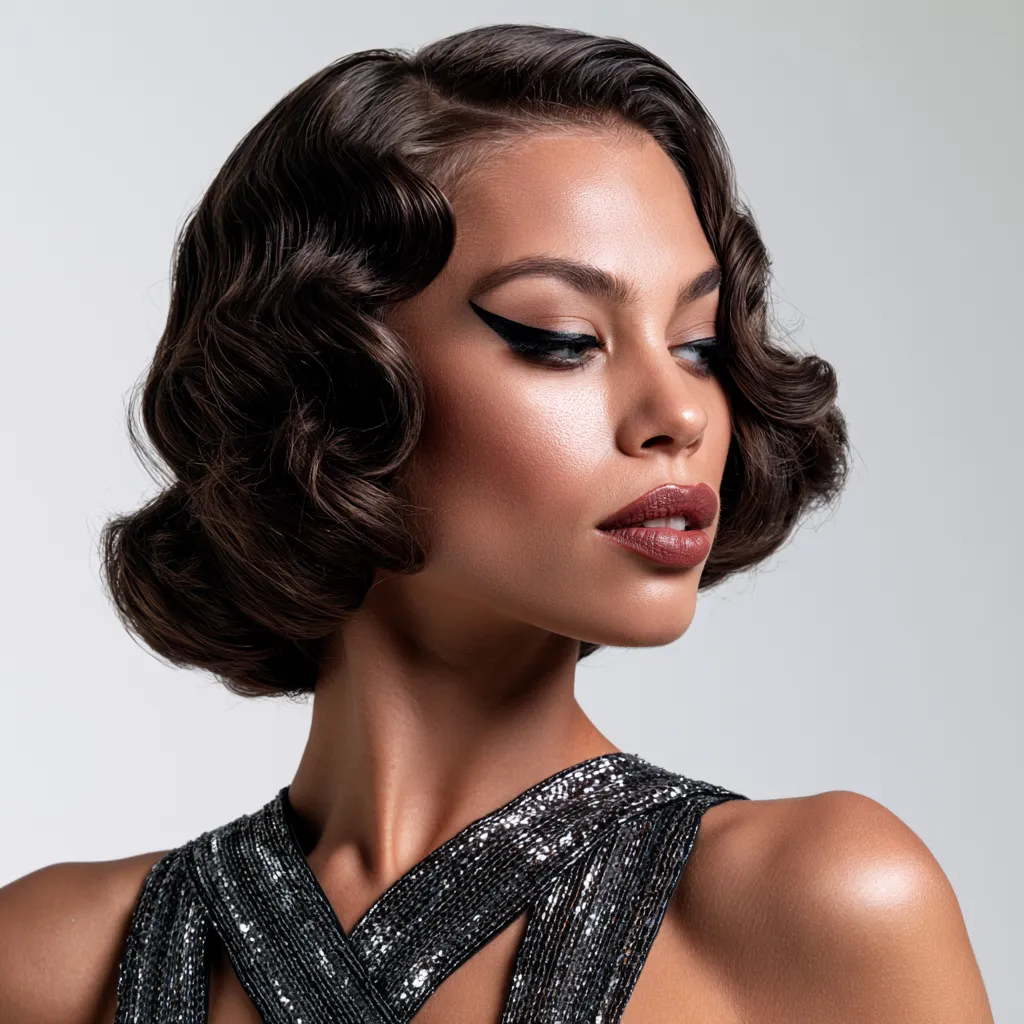
Brunette Layers That Own the Dance Floor
Rich brunette disco hair styles with voluminous layers are proof that darker tones don’t need shimmer products to command a room — the depth of a true chocolate brown creates its own visual weight, and when you add layered movement to that, the effect is closer to a full-body sculpture than a hairstyle. The key that most tutorials bury in step seven: the round-brush blowout has to come first. I’ve skipped this step exactly once to save time before a party and spent the next three hours watching my “voluminous layers” droop into a flat, lifeless mass by 10 PM.
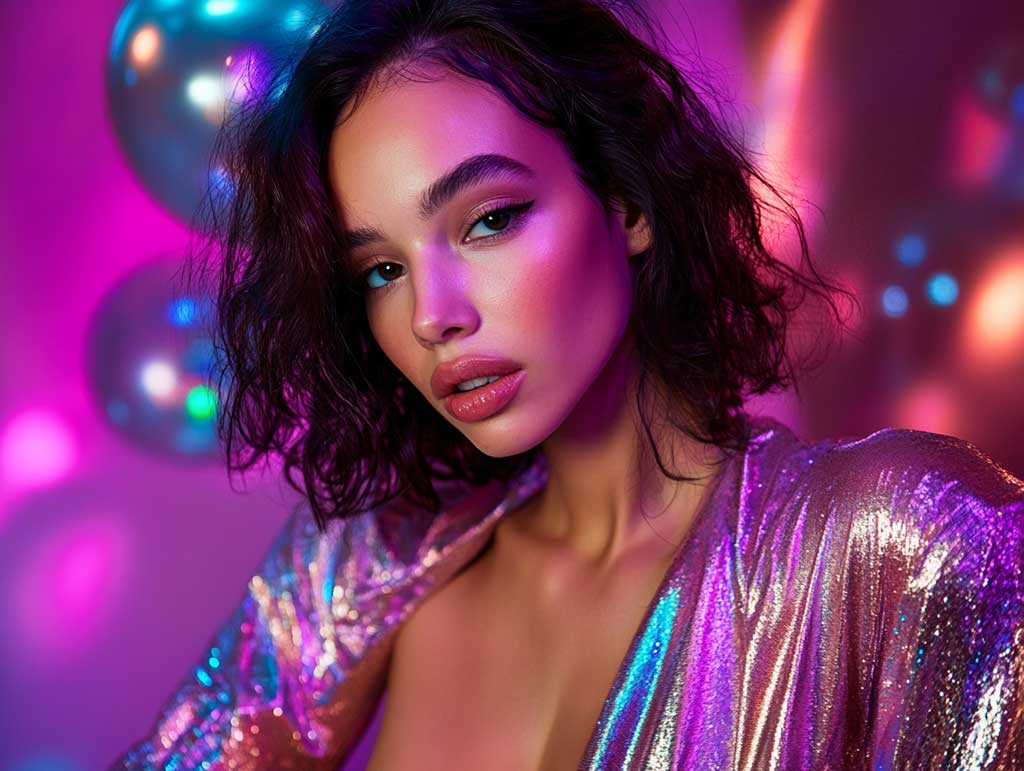

Start with Olaplex No. 4 volumizing shampoo ($30) and follow with a light conditioner at the ends only — avoid the roots or you’ll flatten the lift before it begins. Apply Moroccanoil Volumizing Mousse ($34) section by section from root to mid-length, then blow-dry each section upward with a 2-inch round brush. Work from the nape upward. Does this take longer than a quick diffuse? Yes, about 20 extra minutes — and yes, every one of those minutes shows in the final silhouette. Once dry, take a large-barrel curling iron through the mid-lengths and ends to define the layers without adding the stiff ringlet look that immediately reads 1980s rather than 1970s disco.

A pea-sized amount of Oribe Glossing Serum ($46) worked through the mid-lengths gives brunette hair the glossy, almost-wet richness that catches colored light beautifully. Don’t go heavier than that — on thick or medium hair, too much serum collapses the volume you just spent 40 minutes building. Smoky eye and a glossy burgundy lip read perfectly against deep brunette tones; if you want an accessory, an oversized tortoiseshell comb pushed into the side gives a nod to the era without competing with the hair itself. For more party-ready styling options, these medium hair techniques pair well with this foundation.
Don’t reach for maximum-hold hairspray to lock in disco volume. Freeze-hold sprays kill the movement that makes the 70s silhouette work — your layers will look stiff and flat rather than lively and dimensional. Don’t skip the heat protectant (Tresemmé Thermal Creations, $8, works fine) thinking it doesn’t matter for one night. Repeated heat without protection breaks down the hair’s surface, and that damage shows up as dullness exactly when you need shine the most. And don’t pile on shine products at every layer — serum at mid-lengths, shine spray at the end, nothing else. More is not more here.
Brunette disco hairstyles work across medium and thick hair naturally; fine hair needs extra mousse and a lower heat setting to avoid the style going limp midway through the night. What most people miss about this look is that the layers do the heavy lifting — you don’t need to tease or backcomb if the cut is right. Ask your stylist for face-framing layers that hit at the cheekbone and again at the shoulder, and the shape will hold its structure even after hours of dancing.

Pair brunette disco layers with warm-toned outfits — burnt orange, deep gold, chocolate velvet — and the contrast between fabric richness and hair richness creates a fully cohesive look that doesn’t require jewelry to feel complete. A glittering party dress works just as well, but keep the jewelry minimal: brunette hair this structured is already making a statement and doesn’t need competition from every direction. The unexpected fact about this style is that it photographs better in dim warm light than in flash — which makes it exactly right for the kind of night you actually want to have.
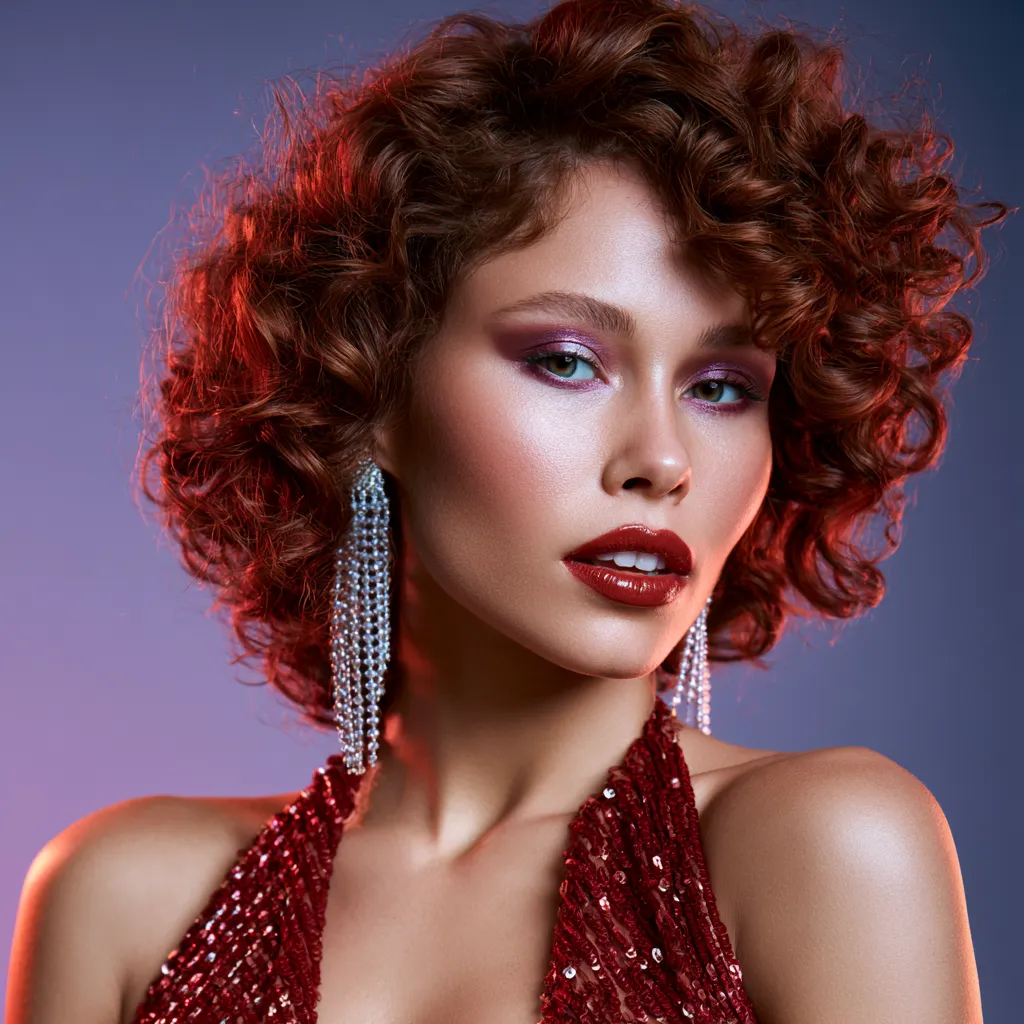
Copper Hair with Glitter Accents
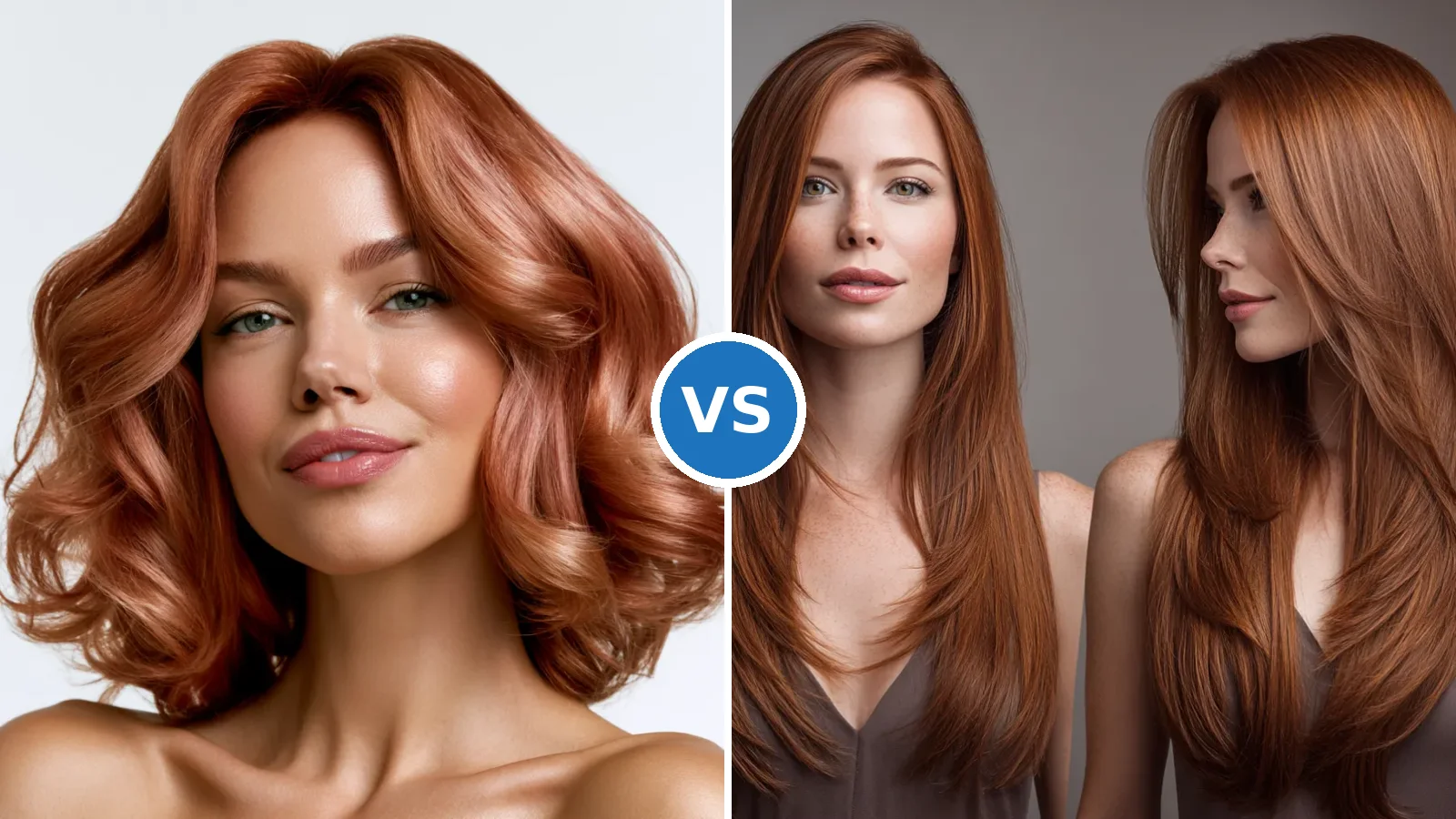
Disco hair styles in copper with glitter accents are the most visually aggressive option in this collection — and that’s entirely the point. Fiery copper is already a statement color that reads warm and electric under any lighting; add a targeted shimmer application and you get something that functions less like a hairstyle and more like a moving light installation. I own two copper wigs from the era specifically because I’ve never been able to maintain real copper tone past six weeks without it pulling orange, but the styling principles below work identically on both natural and color-treated hair.

Apply a heat protectant spray first — Kenra Platinum Silkening Mist doubles here — then work a smoothing serum (Moroccanoil Treatment Original, $46 for 3.4oz) through damp hair. A 1.25-inch barrel gives you the defined wave pattern copper needs; the medium size creates more structure than a large barrel and keeps the color from getting lost in a cloud of soft waves. Curl in alternating directions for the most natural result. What ruins copper disco hair every time — and I mean every time — is applying glitter spray all over rather than at the mid-lengths and ends only. Roots covered in glitter look costume-ready, not dance-floor-ready. Fenty Beauty Hair Glitter Spray ($30) in gold is my go-to because the particle size is fine enough to read as shimmer rather than craft project.

Small gold hair clips placed at the temples — I use the flat pin style from Anthropologie, around $14 for a set of six — add structure without the bulk of a full headband. The trick is pinning one side slightly higher than the other; perfectly symmetrical clips look deliberate in a way that undercuts the free-spirited energy the whole look is built on. Pair with copper or amber eyeshadow — Charlotte Tilbury’s Copper Charge palette ($75) is a reliable match — and a high-gloss terracotta lip, which picks up the warmth in the hair rather than fighting it. For a broader look at disco-era styling history and technique, this disco hair breakdown covers the original 70s influences in helpful detail.
Copper disco hairstyles perform especially well for warm skin tones — the orange-red register in the hair picks up undertones in the skin that cooler blonde or ash brunette shades suppress. Can it work on cool skin? Yes, if the copper leans toward a rose-copper rather than a true orange-red. You’ll notice in every reference image from the Studio 54 era that the women with copper hair are almost always photographed at 45 degrees under warm light — that angle and that light are doing half the work, and keeping that in mind when you’re positioning yourself for photos makes a real difference to how the final result reads.

Copper with glitter works across hair lengths above the collarbone — shorter lengths actually display the shimmer more efficiently because there’s less surface area for the particles to spread thin. The style holds for a full evening without touchups as long as you seal the curls with a flexible-hold spray before applying the glitter layer. Bold jumpsuit, sparkling mini, or a structured blazer with nothing underneath — all three work with this hair, but the jumpsuit wins because the metallic fabric picks up the copper tone and creates a head-to-toe color story that photographs in a single frame.
FINAL WORD
Disco hair styles work because they refuse to be subtle — lean in or don’t bother.
Golden blonde waves need the brushed-out finish; brunette layers need the round-brush blowout foundation; copper with glitter needs targeted shimmer placement at mid-lengths only. Skip any of these and the whole look reads half-finished.
Heat protectant first, mousse at the roots, flexible hold to finish. That sequence works on every color and every texture in this collection.
Save this post before your next disco night — you’ll want the product names when you’re standing in the Ulta aisle.