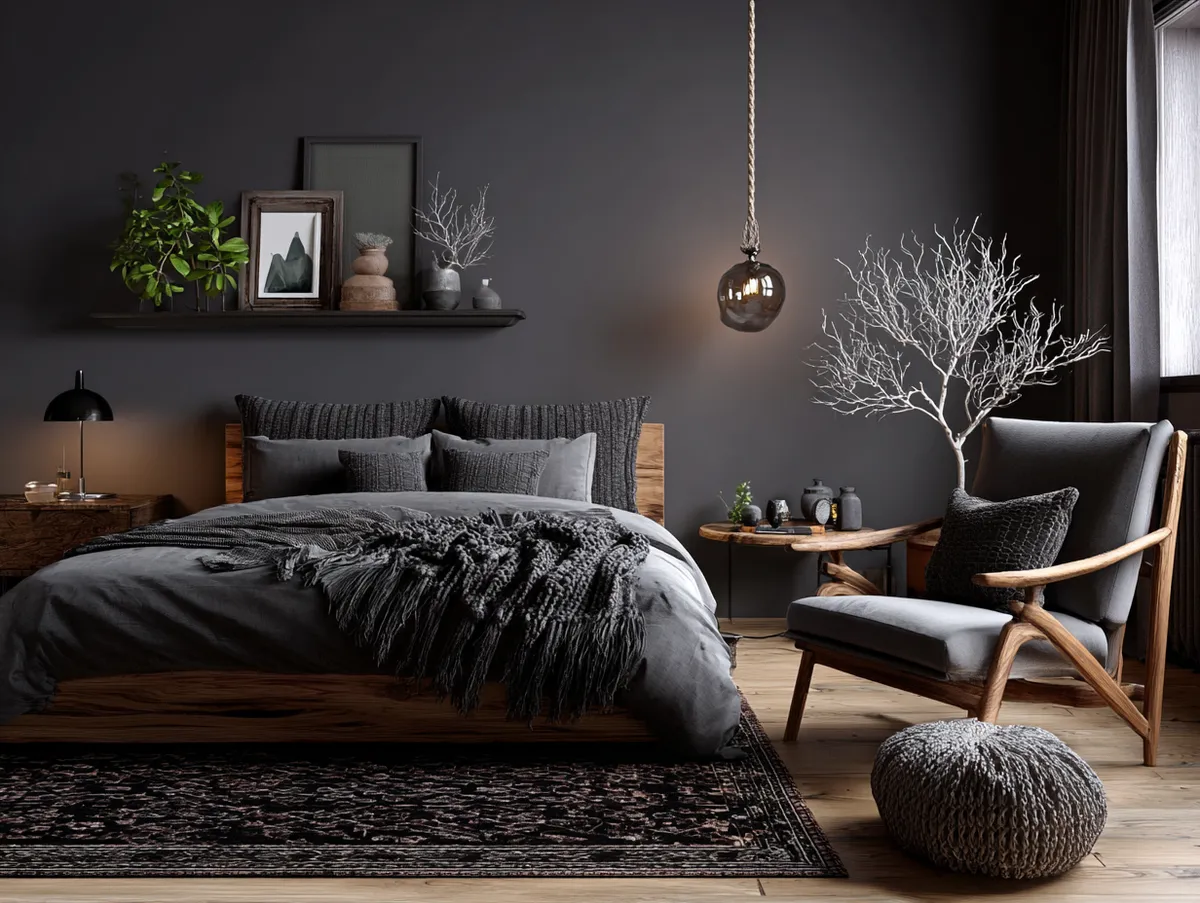
Black bedroom ideas for couples look magnetic in photos and frustrating in real rooms — because the photos skip the part where three pieces of matte furniture fight each other for dominance. The difference between a couple’s black bedroom that feels intentional and one that feels like a cave is almost always the same three decisions: which surfaces stay dark, which ones pull back, and where the light does actual work. Get those right and the color does everything you hoped it would.
A minimalist frame around the color is what keeps it from collapsing. Black works in a couple’s bedroom because both people live in it — and minimalism is the design language that makes shared space feel calm rather than crowded. Strip the room down to the pieces that earn their place. A low bed frame, a floor-to-ceiling wardrobe, a nightstand with one lamp. Each one chosen carefully. That restraint is what makes black look expensive rather than heavy.
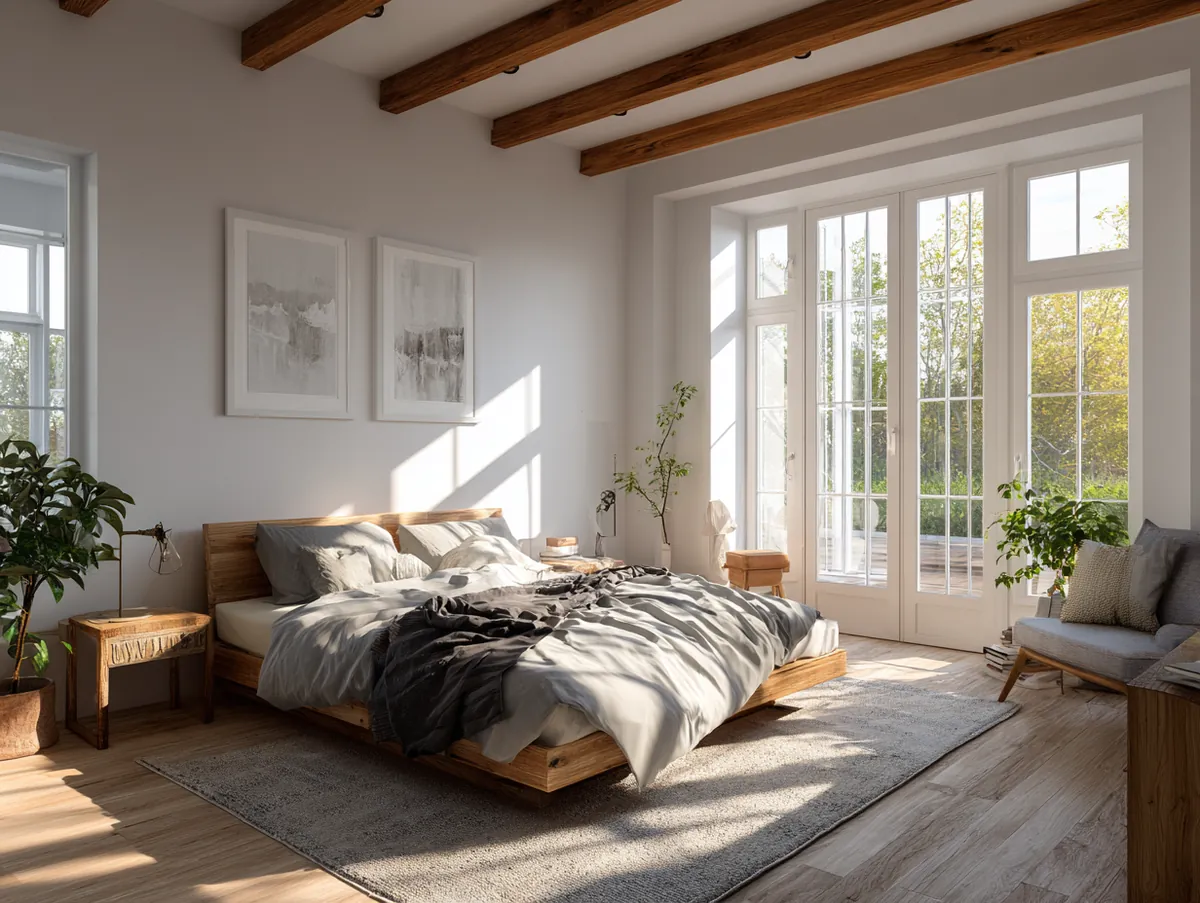
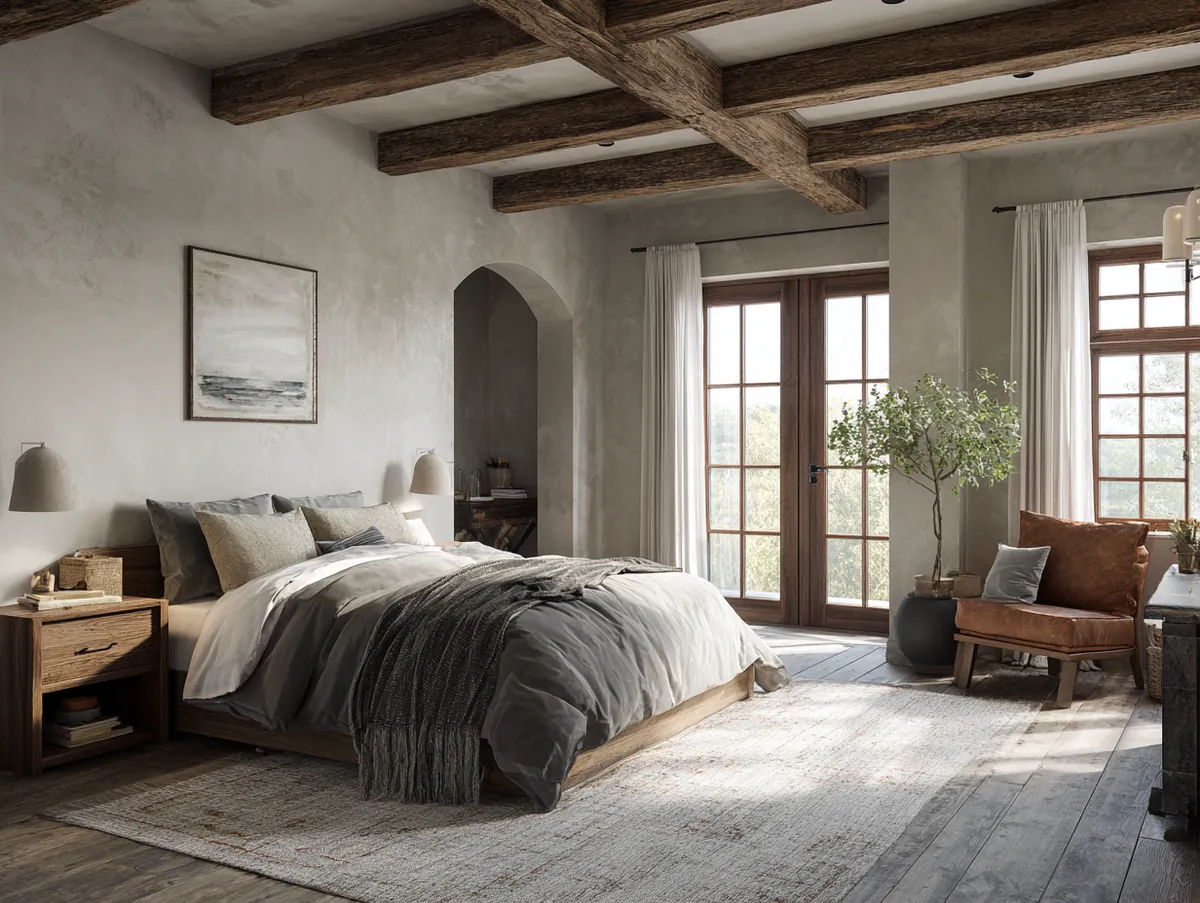
The images in this article show a sleek couple’s bedroom where black furniture anchors every zone — the bed, the wardrobe, the bedside. Soft gray walls and white linens hold the contrast without competing for attention. Light wood flooring keeps the floor plane from disappearing. The result is a room that reads dark and airy at the same time, which is the exact balance couples hunting for black bedroom ideas usually can’t name until they see it.
Quick Scan — Black Minimalist Bedroom for Couples
- Low-profile matte black bed frame anchors the room without adding visual weight
- Floor-to-ceiling black wardrobe maximizes storage while keeping walls unbroken
- Black nightstand with a single lamp creates a warm contrast to the dark frame
- Gray walls + white linens + light wood floor = the three-part formula that makes black breathe
- Natural light is non-negotiable — a black bedroom with no window source reads like a closet
Low-Profile Black Bed Frame Where Black Bedroom Ideas for Couples Start
Black bedroom ideas for couples almost always hinge on the bed frame first — because the bed occupies more visual space than any other piece in the room, and in a dark palette, the wrong choice makes everything feel heavier than it should. A low-profile matte black frame solves this by keeping the mass horizontal. The frame sits close to the ground, the eye follows the line toward the windows, and the ceiling reads taller. Zinus makes a minimalist metal platform frame starting at $229.99 that nails this proportion without overcomplicating the room.
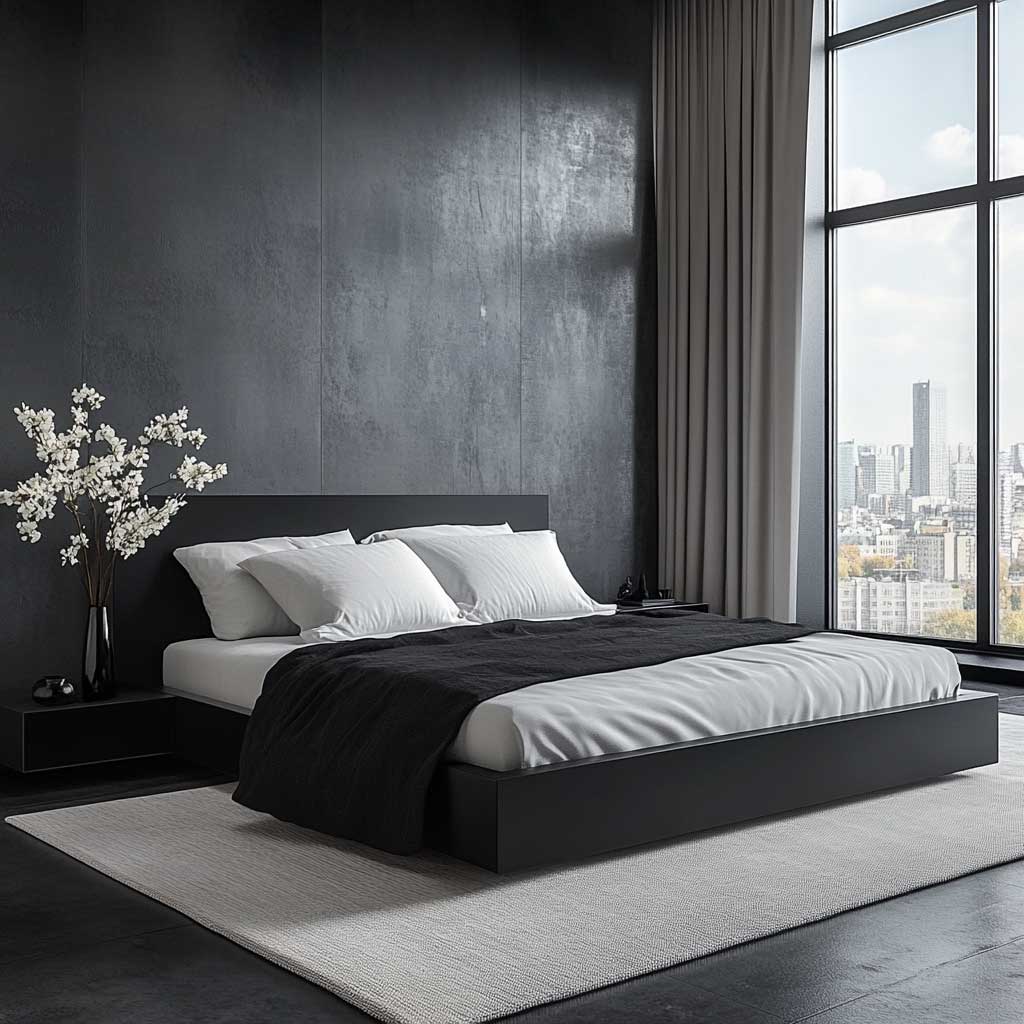

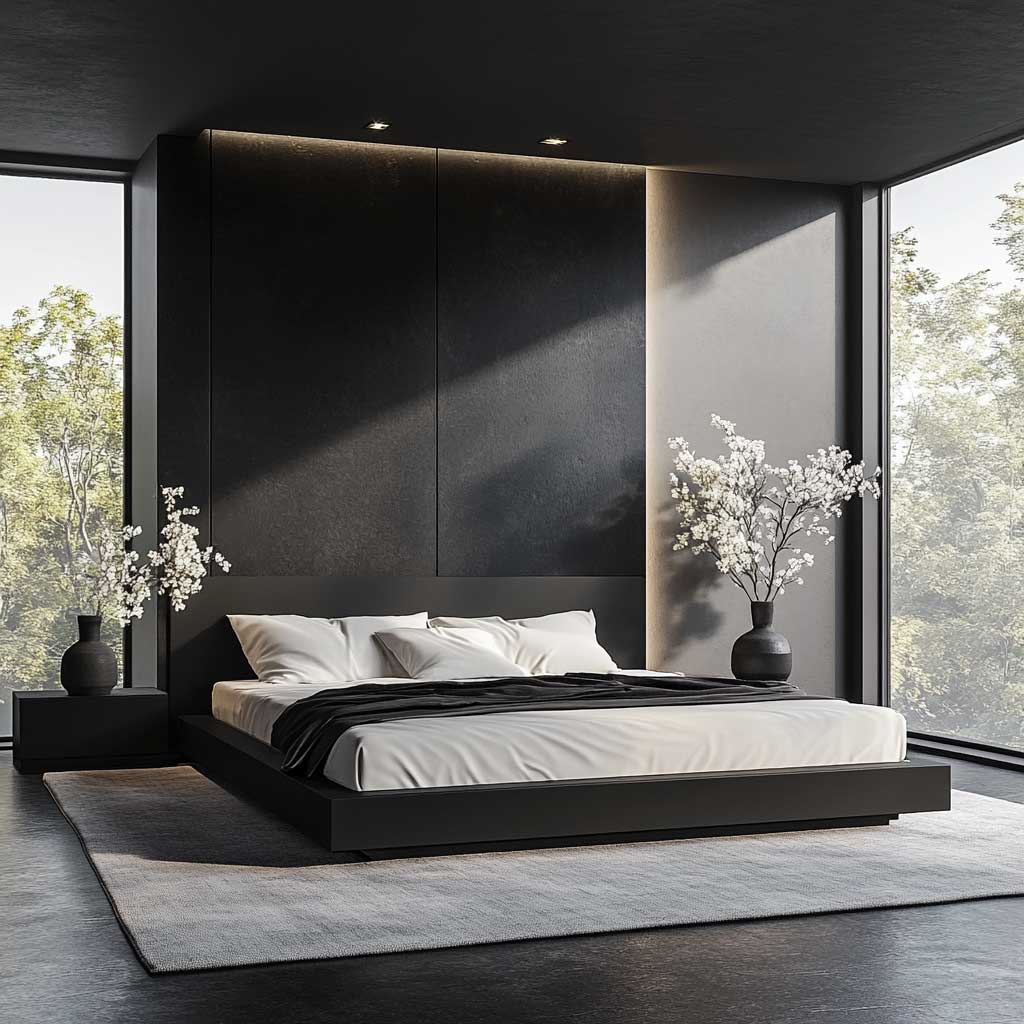

Natural light is the actual secret ingredient here. What softens a matte black frame — which can read flat and aggressive in dim conditions — is daylight coming in from the side, raking across the surface and creating depth. The frames in this room work because large windows push morning light across the bedding, and the white linens act as a reflector. Without that, a matte black frame in a dim room is just a dark rectangle. The trick here is treating window placement as part of the furniture decision, not an afterthought.


Decor in this zone stays sparse by design. A floating nightstand with a single black vase holding white flowers does more for the composition than a collection of objects would — it introduces one organic note without breaking the horizontal calm. What doesn’t work: matching the textured gray rug to the wall color. When both surfaces share the same tone, the floor disappears into the wall and the room loses its layered depth. Keep at least a half-step of contrast between them. For more context on how a platform bed carries a full minimalist layout, minimalist bedroom design approaches cover the full range from Scandi to urban loft.
Gray walls in the range of soft warm gray — not cool blue-gray — protect the room from feeling institutional. The walls are quiet enough to let the black furniture lead, and light enough to keep the room from collapsing into darkness. Couples who paint the walls charcoal to “go all in” with the dark palette almost always repaint within a year: the room reads like a basement regardless of how much furniture you bring in. One strong color is enough. Let the walls do the quiet work.
Don’t Do This — Black Bedroom Mistakes That Cost the Whole Look
- Two dark surfaces competing. Black bed frame plus dark gray walls plus dark rug — three surfaces fighting for the same visual weight. One of the three has to be light.
- No dedicated light source near the bed. Overhead lighting alone in a dark bedroom reads as a hotel hallway. Add a warm-toned bedside lamp as a minimum.
- Matte black in a room with no natural light. Without daylight to create surface variation, matte finishes look flat and cheap. Use a lower-sheen finish or add reflective materials nearby.
- All black furniture of the same scale. A large black bed frame plus a large black wardrobe at the same visual weight makes the room feel crowded. Break up scale with a smaller nightstand or a lighter accent piece.
Floor-to-Ceiling Black Wardrobe That Earns Every Centimeter
A floor-to-ceiling black wardrobe in a couple’s bedroom does something a standard wardrobe can’t — it reads as architecture rather than furniture. The eye registers it as part of the wall rather than an object placed against it, which is why the room feels more open even though the wardrobe takes up significant surface area. IKEA’s PAX system with sliding doors in dark gray runs from $675 upward and reaches 93 inches in height, which sits at or near ceiling height in most standard rooms. What makes this approach work is that the integrated handle-free panels stay smooth and visually uninterrupted — an exposed handle pulls the eye to a specific point and breaks the effect.


The contrast between the matte black wardrobe and the light wood floor is doing heavy lifting here. Light wood acts as a counterweight — it keeps the floor plane bright and grounded, preventing the wardrobe from pulling the entire room into shadow. This is the same principle that makes Scandi interiors feel airy despite their dark accents. You’ll notice that rooms where the wardrobe, floor, and walls all occupy similar dark tones feel compressed, almost oppressive. The light floor is not an aesthetic bonus; it’s structurally necessary for the room to read as spacious.


Soft ambient lighting positioned to graze the wardrobe surface adds texture that flat photography tends to flatten out. In person, the effect is significant — the light picks up any micro-texture in the matte finish and makes the wardrobe read as a material, not just a color. A single piece of art on the adjacent wall, framed simply in black, provides the one personal note the room needs without becoming clutter. The rule here is one piece, not a collection: the moment you go to two, the wall starts competing with the wardrobe for attention. For a closer look at how black furniture works across different bedroom configurations, black bedroom furniture design ideas cover the full range from wardrobes to platform beds to tufted benches.
Storage capacity is where this format justifies itself practically. A standard two-door wardrobe gives roughly 48–60 inches of hanging space. A floor-to-ceiling unit spanning a full wall can provide two to three times that — enough for two people to share without any compromise. For couples who have been defaulting to a second wardrobe in a spare room, a properly sized floor-to-ceiling unit is the design solution that eliminates the need entirely. The bedroom stays as the only bedroom, not a storage overflow zone.
Black Nightstand and the Lamp Doing More Than You Think
Bedroom designs for couples often underestimate the nightstand — and then wonder why the bedroom feels unfinished. The nightstand is the closest piece of furniture to where you spend most of your time in the room, and its design either anchors the bedside or creates friction every morning. A matte black nightstand with a single integrated drawer and no visible handle continues the same visual logic as the bed frame: clean line, no hardware to catch the eye, no break in the surface. That continuity is what makes the bedside read as designed rather than assembled.
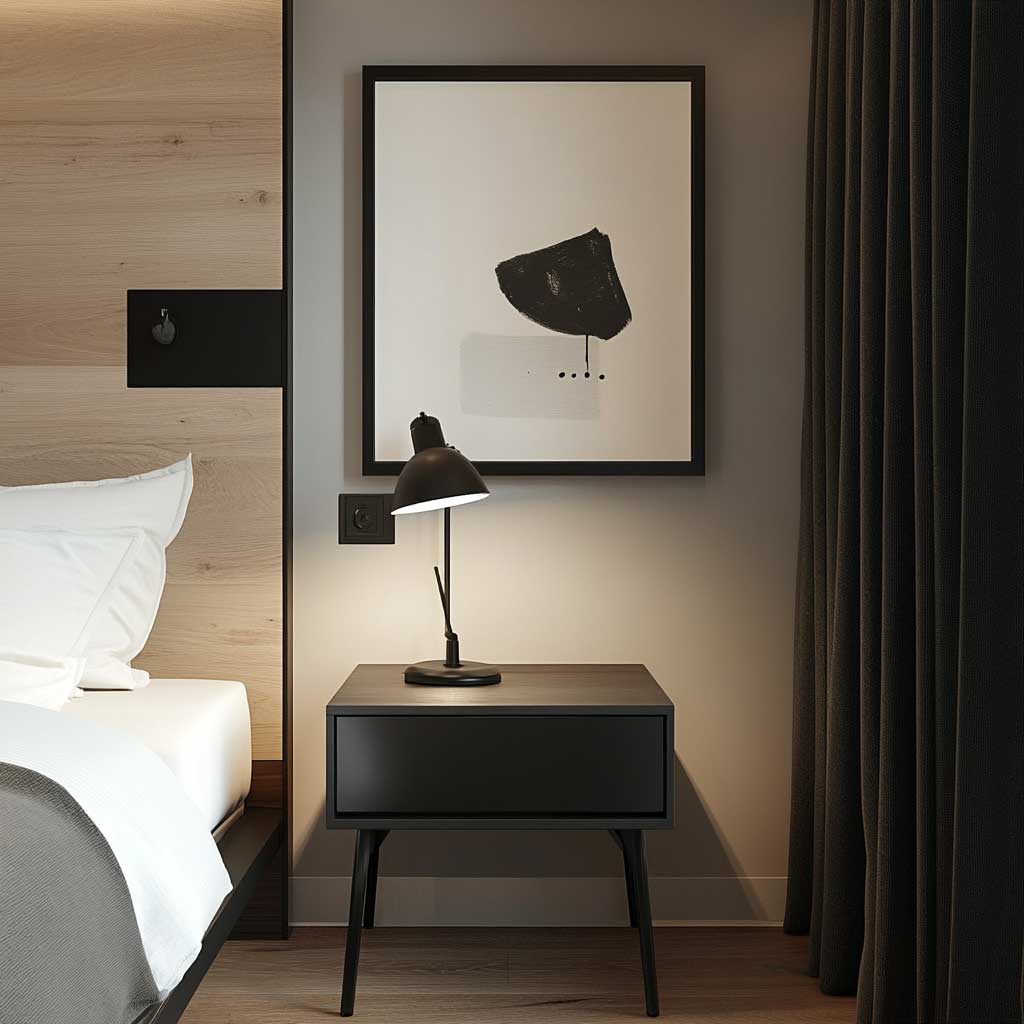


The lamp earns its place here in two ways. A black base with a white shade introduces the white into the bedside zone — keeping the bedding’s brightness from feeling isolated in the upper half of the room. And the warm glow it casts downward creates a pocket of light that makes the whole side of the bed feel inviting rather than austere. Stylists recommend a lamp height that puts the bottom of the shade at roughly shoulder height when seated in bed — about 24–28 inches from the nightstand surface. At that height, the light hits the page of a book and doesn’t glare into a partner’s eyes from across the bed.
What doesn’t work at the bedside is two mismatched lamps — one taller, one shorter, in different finishes. In a minimalist bedroom for two people, asymmetry at the bedside creates a before-and-after reading: one side looks considered, one side looks temporary. Symmetry here doesn’t mean matching furniture sets; it means matching lamp height and roughly matching visual weight. The nightstands themselves can vary slightly in design as long as scale and proportion align. A lamp that casts daylight-temperature light (above 4000K) in a black bedroom is almost always a mistake — it bleaches the color from every surface and makes the room feel like an office.


A small black-and-white abstract print above the nightstand completes the bedside zone without demanding attention from across the room. The key word is small — a piece in the 12×16 to 16×20 inch range reads as personal and intentional. Scale it up to 24×30 or larger and it starts competing with the wardrobe as a focal point, which collapses the hierarchy the room is built on. Think of the bedside art less like a gallery piece and more like punctuation — it ends the sentence, it doesn’t start a new paragraph.
The external source Home Designing’s full breakdown of black bedroom design approaches covers an expanded set of lighting, mirror placement, and wardrobe strategies for dark bedroom palettes — worth the read before committing to a color direction.
| Element | Recommended Spec | Common Mistake | Result of Mistake |
|---|---|---|---|
| Bed frame | Low-profile, matte black, from $229.99 | High platform with dark headboard | Ceiling reads lower, room feels smaller |
| Wardrobe | Floor-to-ceiling, integrated handles, from $675 | Standard two-door with visible hardware | Breaks wall plane, reads as furniture not architecture |
| Nightstand | Handleless drawer, matches bed frame scale | Mismatched heights left and right | Bedside looks assembled, not designed |
| Lamp | Warm-tone bulb, 2700–3000K, shade at shoulder height | Cool daylight bulb above 4000K | Bleaches surface color, feels like an office |
TAKEAWAY
Black Doesn’t Make a Bedroom Feel Small — The Wrong Black Does
Low-profile bed frame, floor-to-ceiling wardrobe, a lamp at the right height. Three decisions, and the room reads like the photos you saved. Miss any one of them and the palette works against you.
Gray walls and light wood flooring aren’t optional extras — they’re the counterbalance that lets black furniture breathe. Remove either one and you’re solving a different problem than the one you started with.
Save this post. Come back to it when you’re choosing between the bed frame first and the wardrobe first — the answer depends on which wall gets the most light.