Black bathroom flooring is one of the most powerful design choices you can make. Whether you are renovating a small powder room or redesigning a master suite, a dark floor instantly anchors the space and adds a layer of sophistication that lighter alternatives rarely achieve. From smooth matte finishes to richly veined marble and rugged natural slate, black flooring works across a surprising range of styles — modern, industrial, rustic, and even classic Victorian. In this guide you will find ten practical and visually striking black bathroom flooring ideas, each explained with material characteristics, pairing advice, and maintenance tips so you can choose the right option for your specific bathroom.
4 Black Bathroom Flooring Options at a Glance
| Type | Best For | Maintenance | Slip Resistance |
|---|---|---|---|
| Matte Tiles | Modern & minimal look | Low | Good |
| Glossy Marble | Luxury interiors | Medium–High | Low (needs mat) |
| Slate Tiles | Rustic & natural style | Low–Medium | Excellent |
| Geometric B&W | Bold statement floors | Low | Good |
Matte Black Tiles: Sleek, Modern, and Surprisingly Practical
Matte black tiles provide an understated elegance that instantly elevates any bathroom. Their non-reflective surface adds a touch of modernity, making them perfect for those who appreciate sleek and sophisticated design. These tiles are particularly effective in creating a chic and contemporary look without overwhelming the space.
| Material | Cost (per m²) | Durability | Warmth Underfoot | DIY Friendly |
|---|---|---|---|---|
| Matte Porcelain | $20–$60 | Excellent | Low (use UFH) | Yes |
| Black Marble | $80–$200+ | Good (needs sealing) | Low (use UFH) | Not recommended |
| Black Slate | $30–$80 | Very good | Low (use UFH) | Yes |
| Geometric Cement | $40–$120 | Good (needs sealing) | Low (use UFH) | Moderate |
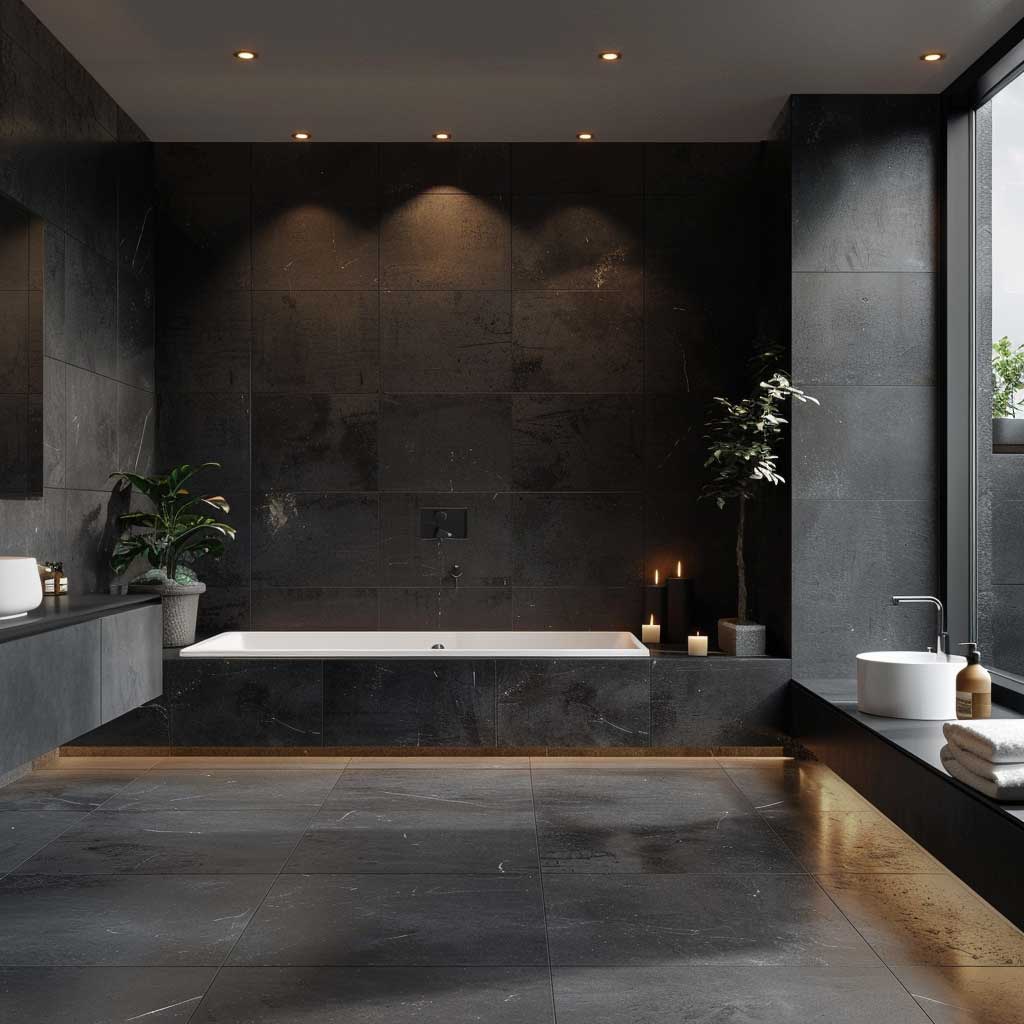
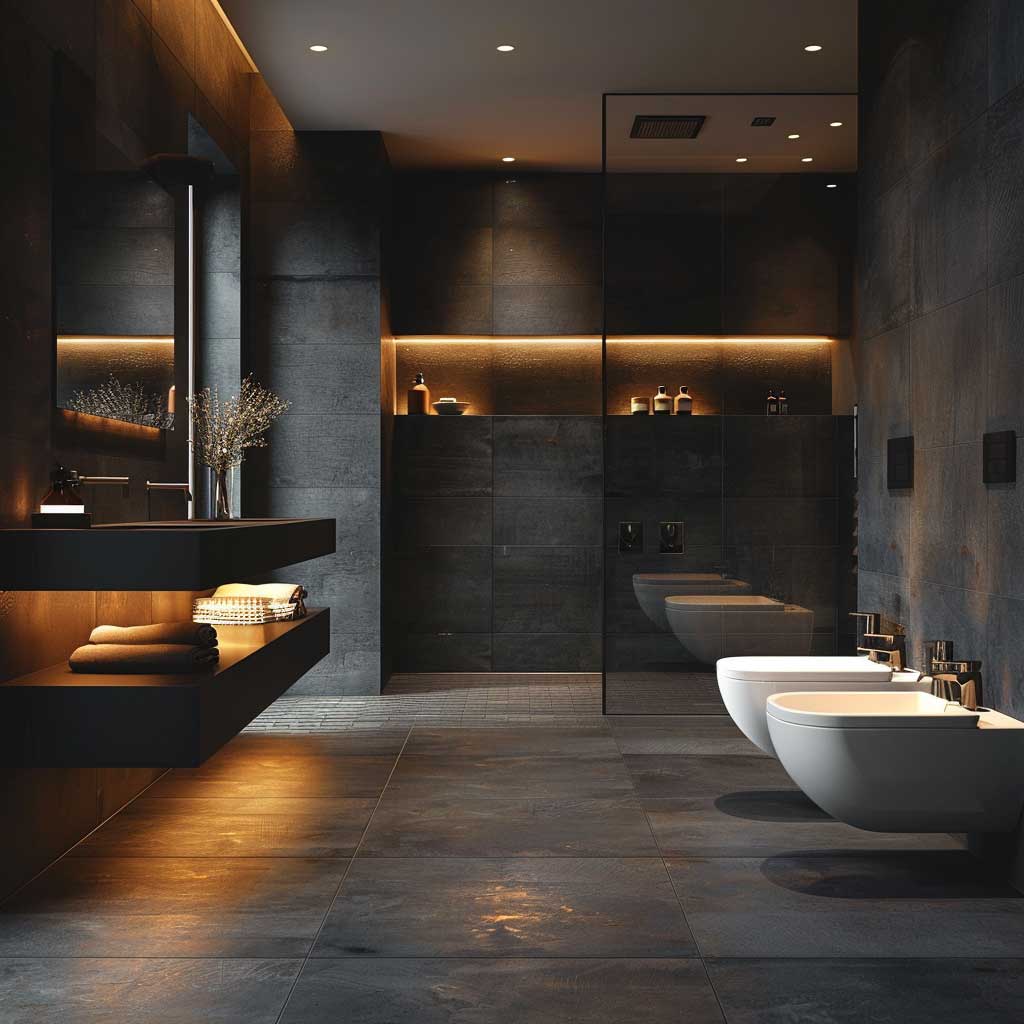
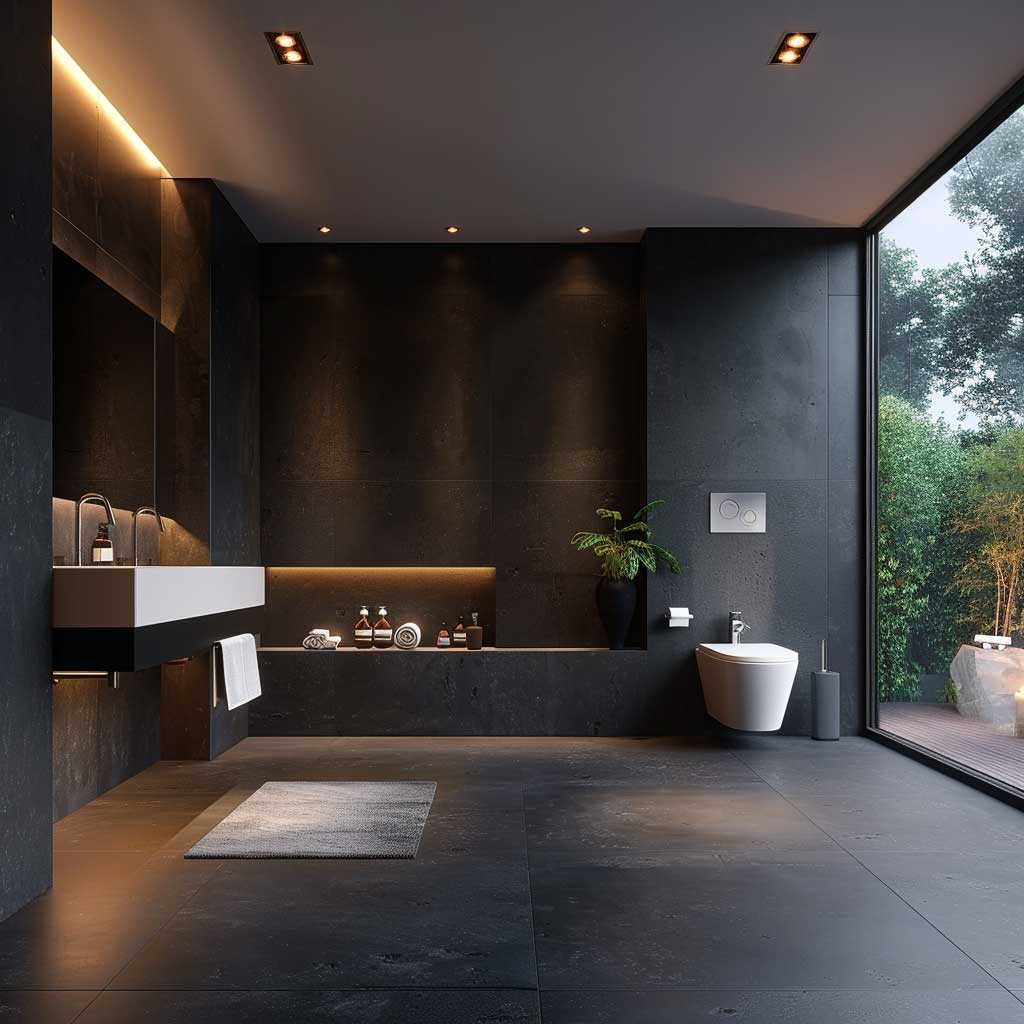
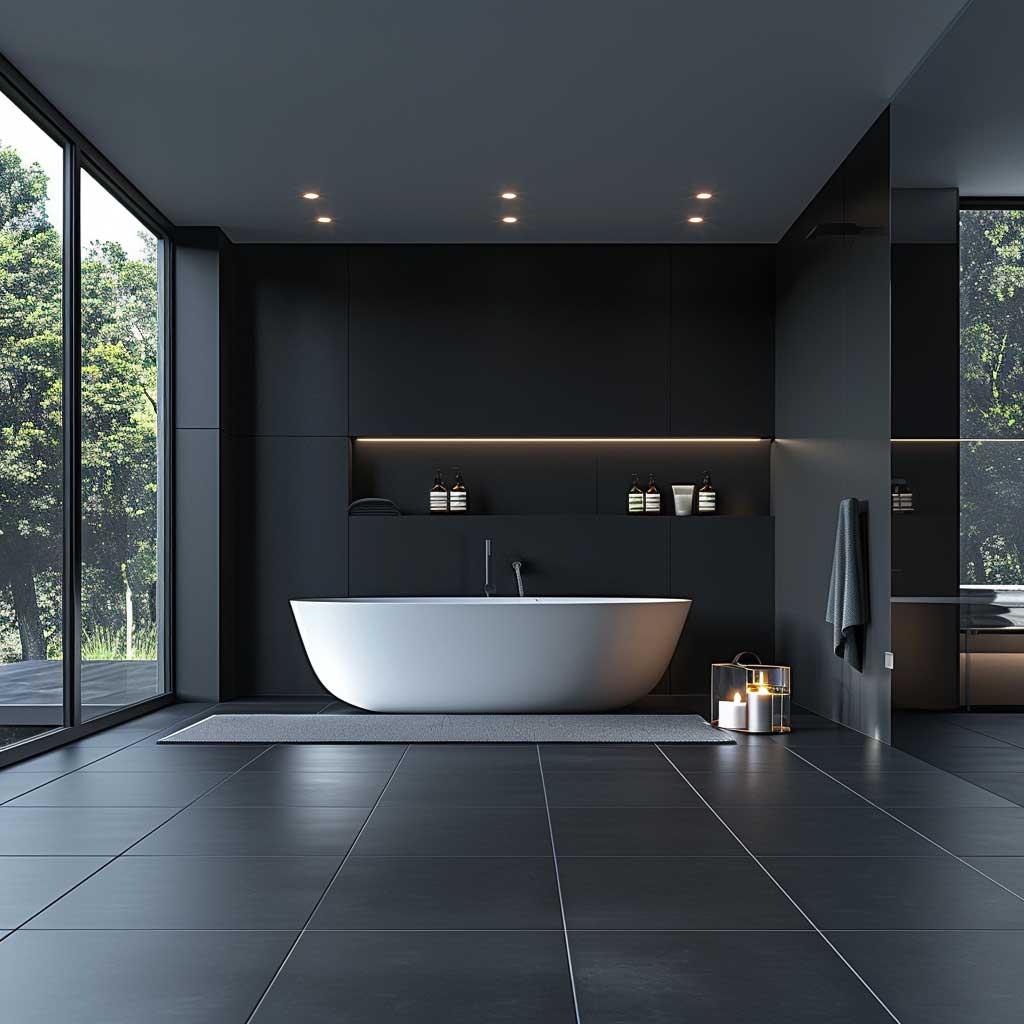
Large-format matte black tiles — anything from 60×60 cm upward — reduce the number of grout lines visible on the floor, which keeps the look clean and uninterrupted. If your bathroom is compact, this is one of the most effective tricks for making it feel more expansive. Smaller rooms benefit from fewer visual breaks across the surface, and a large matte tile delivers exactly that.
Grout color matters more than most homeowners expect. Dark charcoal or near-black grout creates a seamless, monolithic surface and hides everyday grime far better than white grout ever will. If you want a subtle grid effect, mid-grey grout splits the difference and prevents the floor from looking too uniform. Either way, avoid bright white grout with black tiles unless you specifically want a graphic, high-contrast result.
Matte tiles are also significantly more fingerprint- and water-spot-resistant than glossy alternatives, which is a real advantage in a bathroom that gets daily use. The tradeoff is that they can accumulate a faint mineral haze from hard water over time. A monthly wipe-down with a diluted white vinegar solution keeps the surface looking sharp without damaging the tile or the grout.
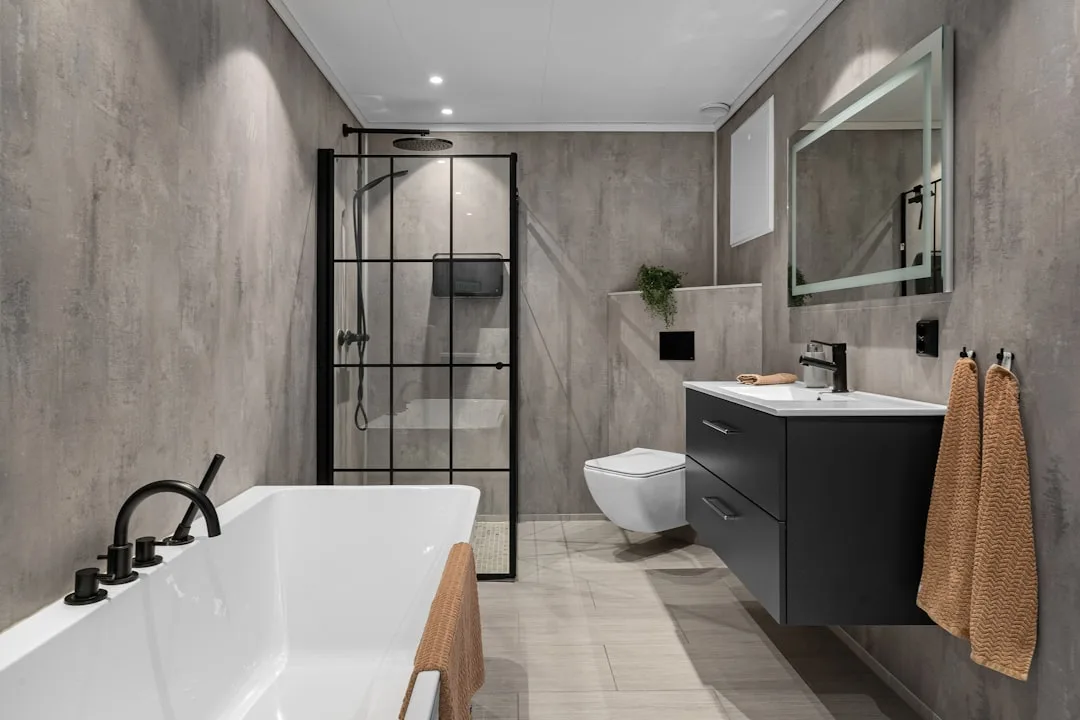
Matte black tiles work wonderfully in bathrooms with white or neutral fixtures. The contrast between the dark floor and lighter elements enhances the overall design, adding depth and interest. This combination creates a balanced and harmonious aesthetic, where each element complements the other beautifully.
One of the advantages of matte black tiles is their ability to hide imperfections and stains better than glossy finishes. This makes them a practical choice for high-traffic areas like bathrooms. Additionally, they provide a non-slip surface, making them a safe option for wet environments.
To further enhance the elegance of matte black tiles, consider adding metallic accents in fixtures and accessories. Gold or brass elements add warmth and a touch of luxury, while chrome or silver maintains a clean, minimalist vibe. If you are exploring complementary flooring styles for other rooms in your home, our guide to bathroom and home flooring ideas covers a wide range of materials and finishes worth considering alongside your tile choice.
When selecting bathroom flooring ideas, it’s essential to consider the overall theme and style you want to achieve. Matte black tiles offer a versatile and timeless option that can suit various design preferences, from modern to industrial. Their subtle sophistication can transform your bathroom into a stylish sanctuary.
How to Choose the Right Black Bathroom Flooring
A practical step-by-step process for selecting black bathroom flooring that suits your space, budget, and lifestyle.
Tools & Samples Needed
- Tile samples in matte, gloss, and textured finishes
- Tape measure and room floor plan
- Grout colour swatch cards
- Slip-resistance rating sheet from tile supplier
Measure your bathroom and map the light sources
Note the floor area, the position of windows, and how much natural light reaches the floor at different times of day. Small, dark bathrooms benefit from glossy finishes that reflect light. Large, well-lit bathrooms can handle matte or textured options without feeling heavy.
Check the slip-resistance rating
Look for a tile with a minimum R9 wet slip-resistance rating for bathroom use. Slate and textured matte porcelain typically achieve R10 or R11. Highly polished marble and gloss porcelain are usually R9 at best — adequate for a low-traffic ensuite, less suitable as a family bathroom main floor.
Order physical samples and test them in the room
Place samples on your bathroom floor for at least 48 hours. View them under artificial light at night and natural light during the day. Lay your grout swatch card alongside each tile sample. What looks right in a showroom under bright halogen lighting often reads very differently in a real bathroom.
Decide on tile format and grout width
Large-format tiles (60×60 cm or bigger) with 2–3 mm grout joints create a seamless, expansive look. Smaller tiles with wider joints suit period-style or patterned bathrooms. As a rule, the grout joint width should be proportional to the tile size — very wide joints on large tiles look clumsy and collect more dirt.
Factor in sealing and long-term maintenance
Natural stone — marble and slate — requires sealing before use and re-sealing annually. Porcelain tiles, whether matte or gloss, are vitrified and require no sealing. If low maintenance is a priority, large-format matte or geometric porcelain tiles give you the full visual impact of black flooring without ongoing stone care commitments.
Glossy Black Marble Flooring: How to Pull Off a Luxury Look
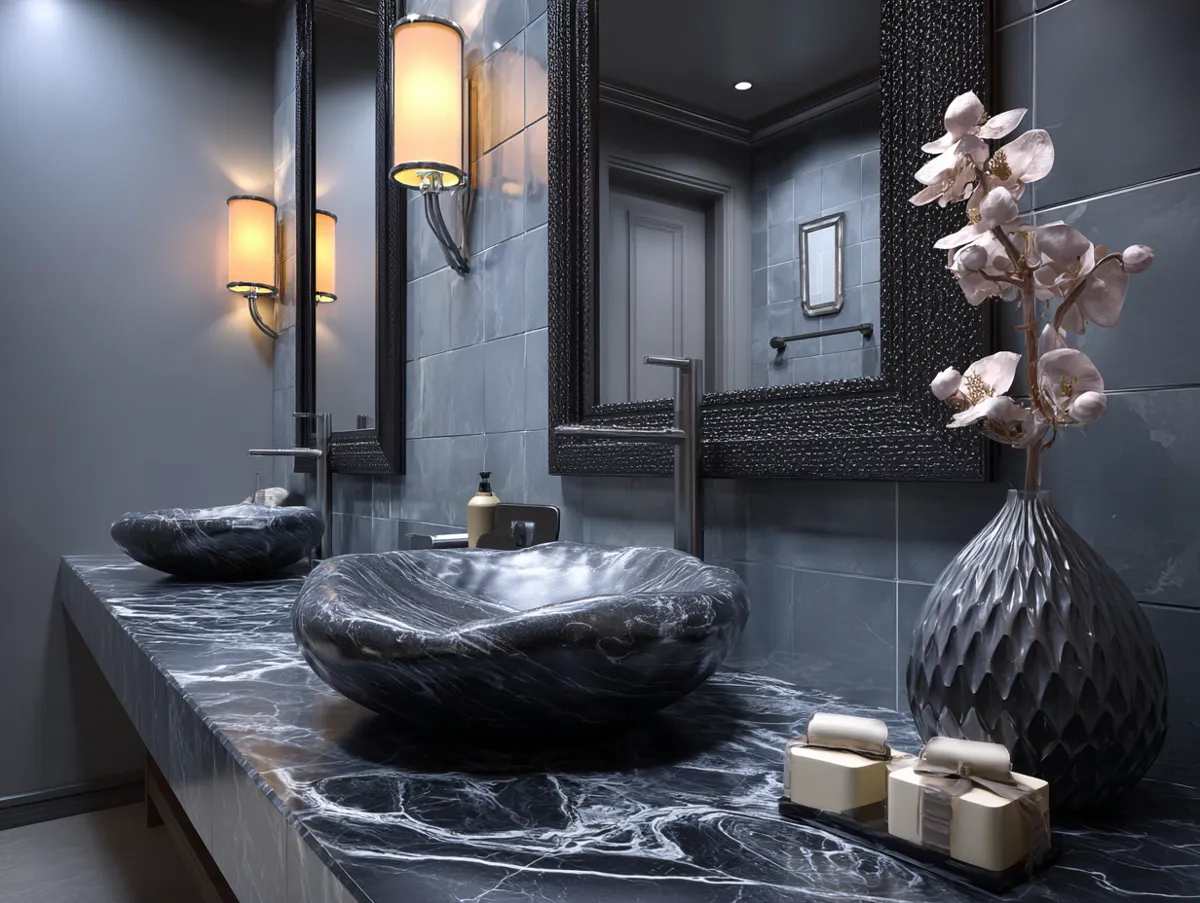
Glossy black marble flooring is the epitome of luxury and sophistication. Its high-gloss finish and intricate veining create a sense of opulence that few other materials can match. This type of flooring is perfect for those looking to make a bold and dramatic statement in their bathroom design.
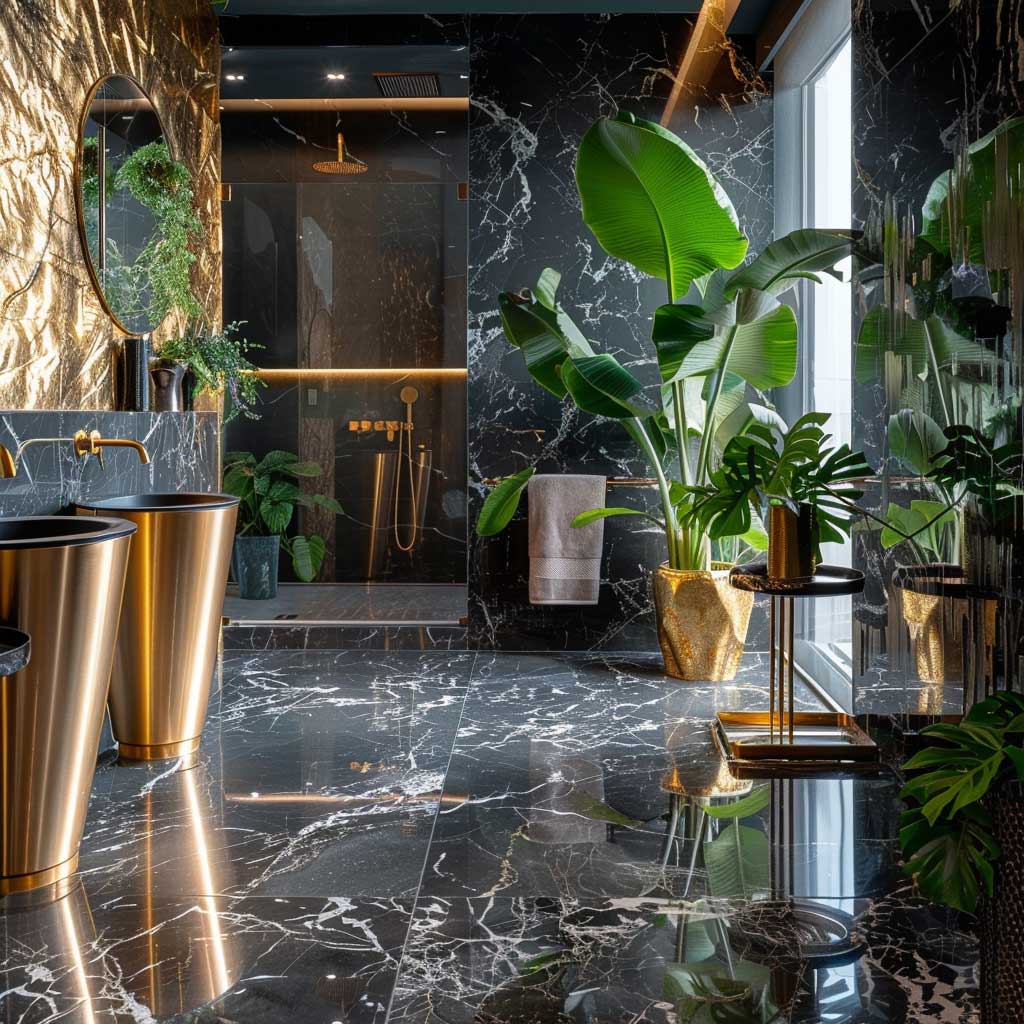
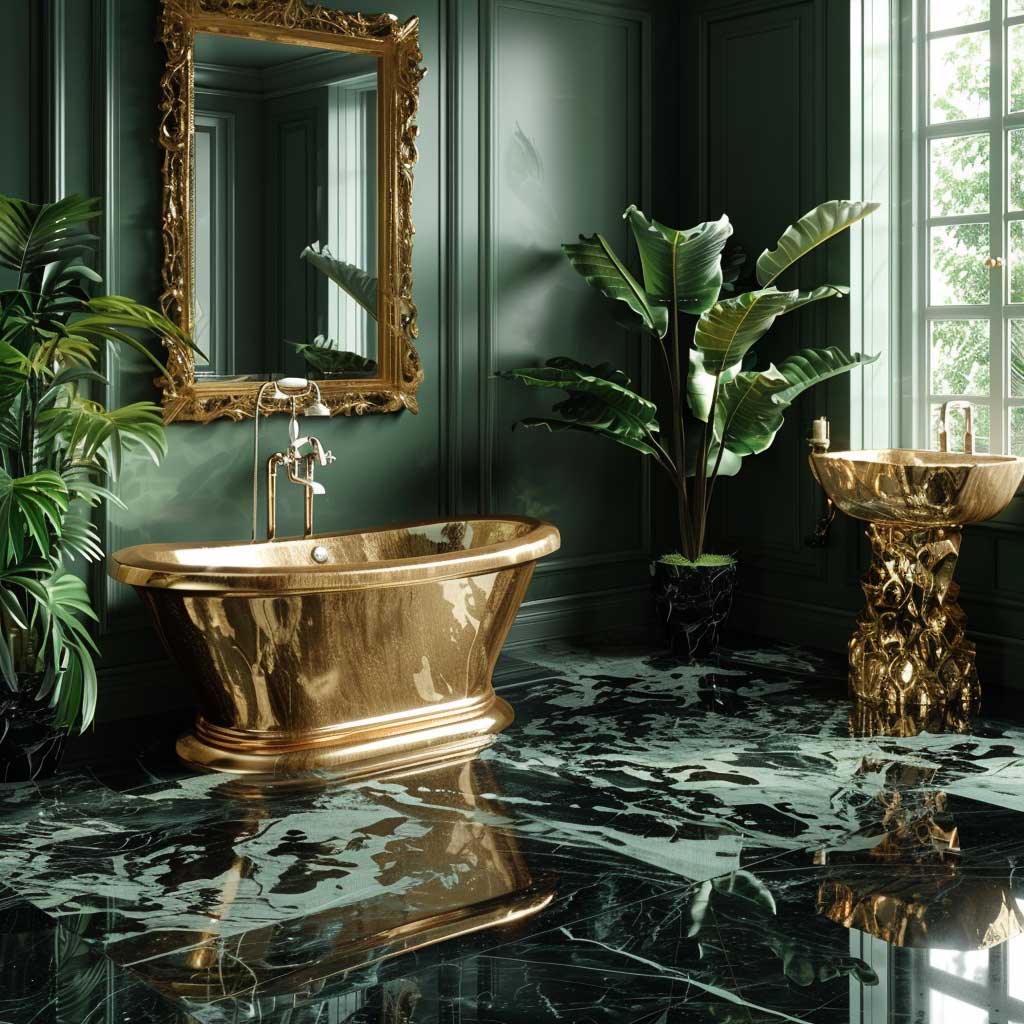
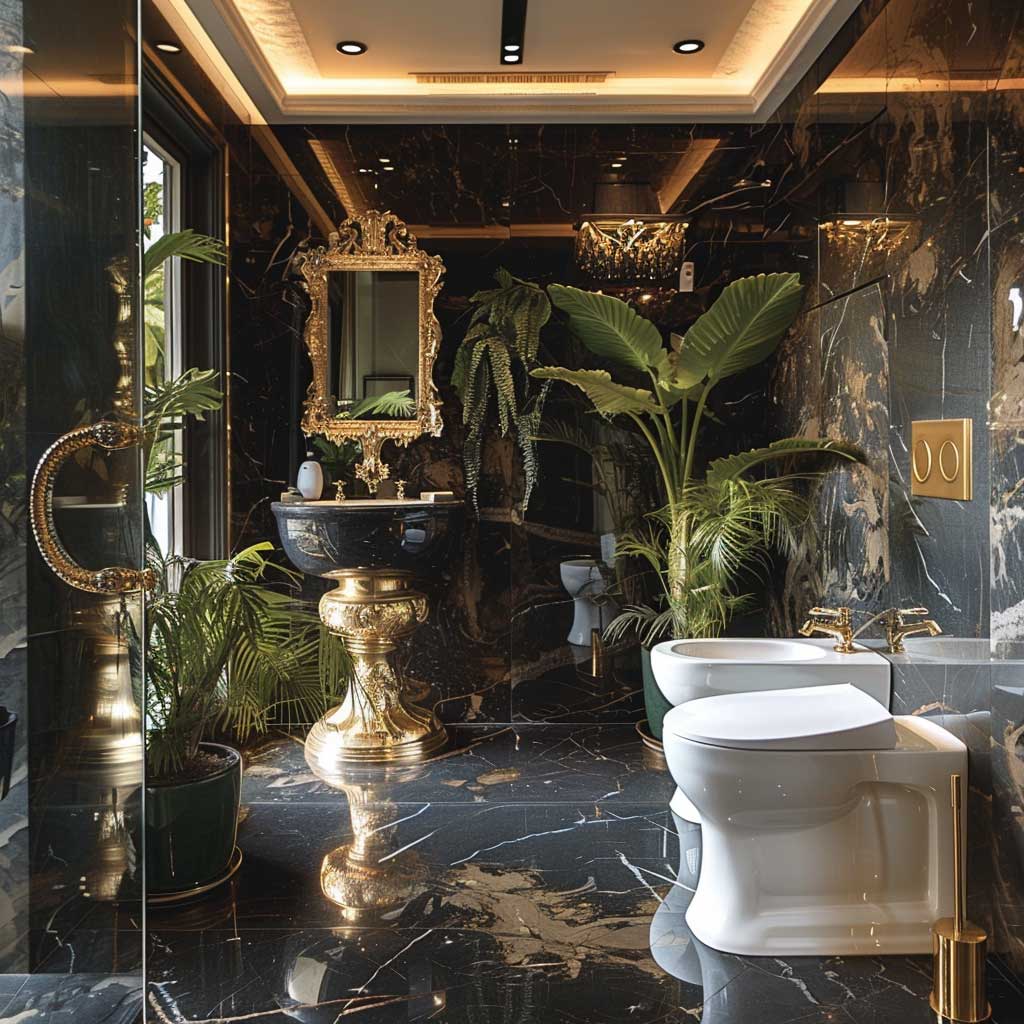
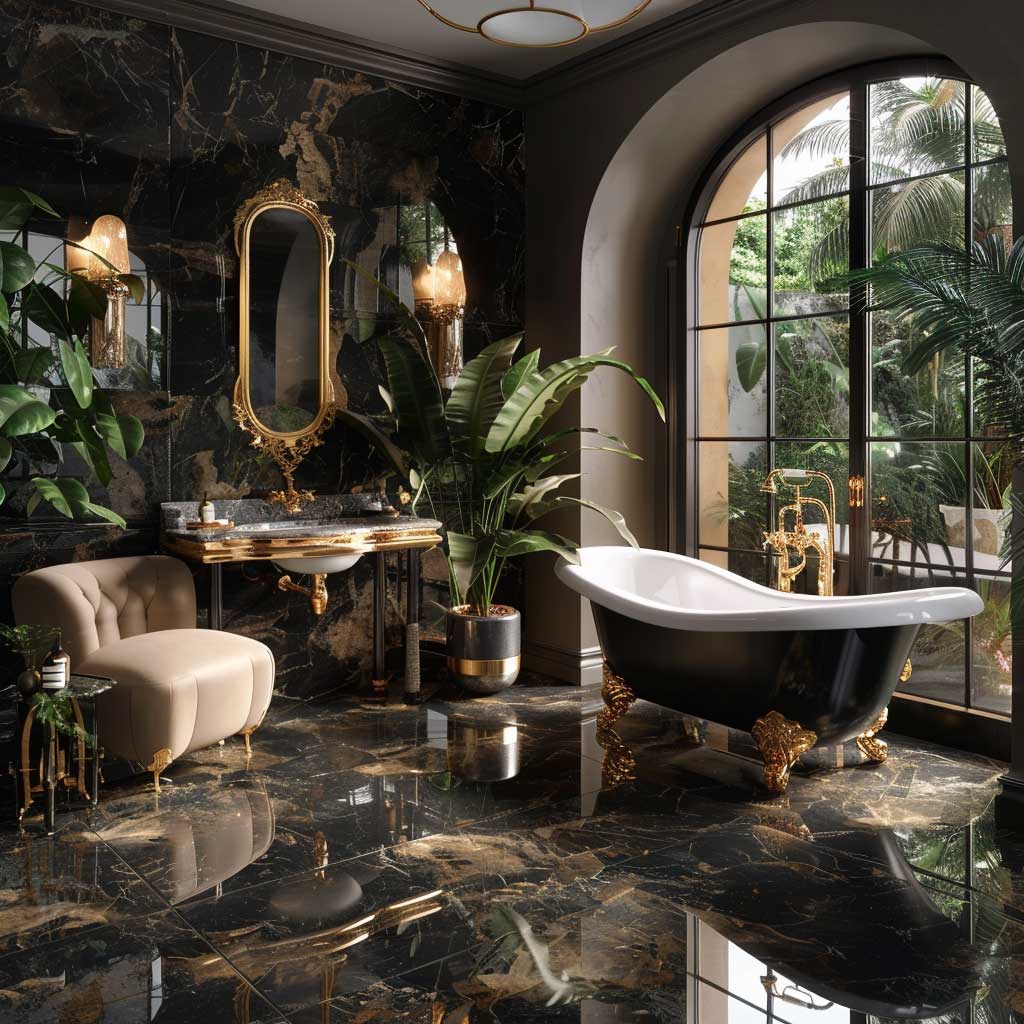
The veining in black marble varies dramatically between slabs. Nero Marquina, one of the most widely used varieties, features bright white veining on a deep black ground and works beautifully in both contemporary and classical bathrooms. Nero Portoro has golden veining that pairs naturally with brass fixtures. If you are ordering marble tiles rather than large-format slabs, ask to see the full batch before purchase so the veining feels consistent across the floor rather than patchy.
Glossy marble amplifies light, which makes it genuinely useful in bathrooms with limited natural light. The reflective surface bounces light from a window or a well-placed vanity fixture across the floor, lifting the mood of the space considerably. The practical downside is that water marks and footprints show immediately after someone steps out of the shower. A good bath mat positioned at the shower or tub exit solves most of this problem day to day.
Black marble is known for its durability and timeless appeal. Its natural veining patterns make each piece unique, adding a touch of individuality to your bathroom. The reflective surface of glossy marble not only enhances the sense of space but also creates a stunning visual impact.
Pairing glossy black marble with gold fixtures can elevate the luxurious feel of your bathroom. The combination of black and gold exudes elegance and glamour, creating a space that feels both modern and classic. Adding deep green plants can introduce a natural element, balancing the opulence with a touch of freshness.
When considering bathroom flooring ideas, it’s crucial to think about maintenance. While marble is durable, it requires regular care to maintain its glossy finish. Sealing the marble can help protect it from stains and scratches, ensuring it remains a beautiful feature in your bathroom for years to come.
Glossy black marble flooring can transform an ordinary bathroom into a statement space. Its luxurious appearance and timeless beauty make it an excellent choice for those looking to create a sophisticated, high-end result. For inspiration on complementary furniture and fittings that suit this level of finish, see our article on mid-century modern bathroom furniture ideas, which pairs particularly well with dark marble floors.
Textured Black Slate Tiles: Natural Character with Real Grip
Textured black slate tiles offer a unique blend of modernity and natural beauty, making them an excellent choice for bathroom flooring. Their rugged surface and natural variations in color and texture provide a distinctive and earthy aesthetic that can add character and warmth to your bathroom.
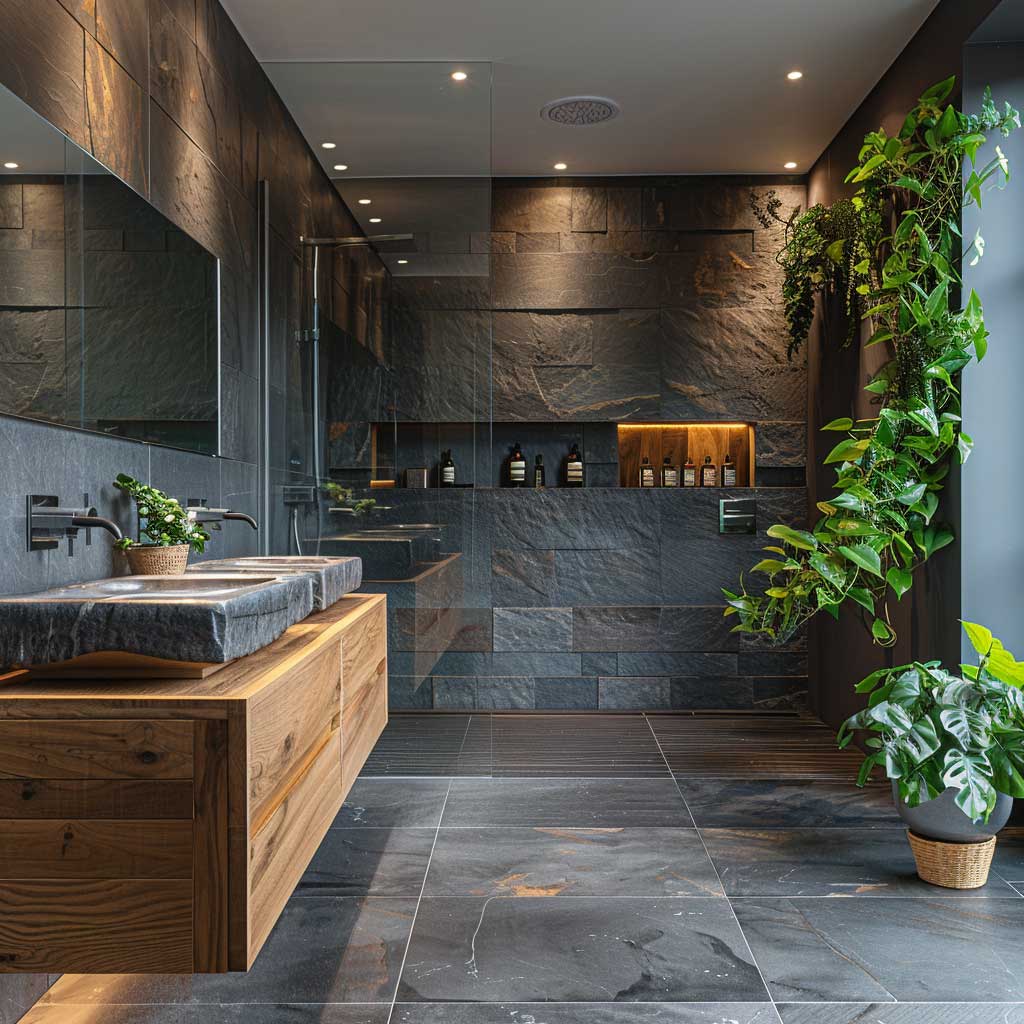
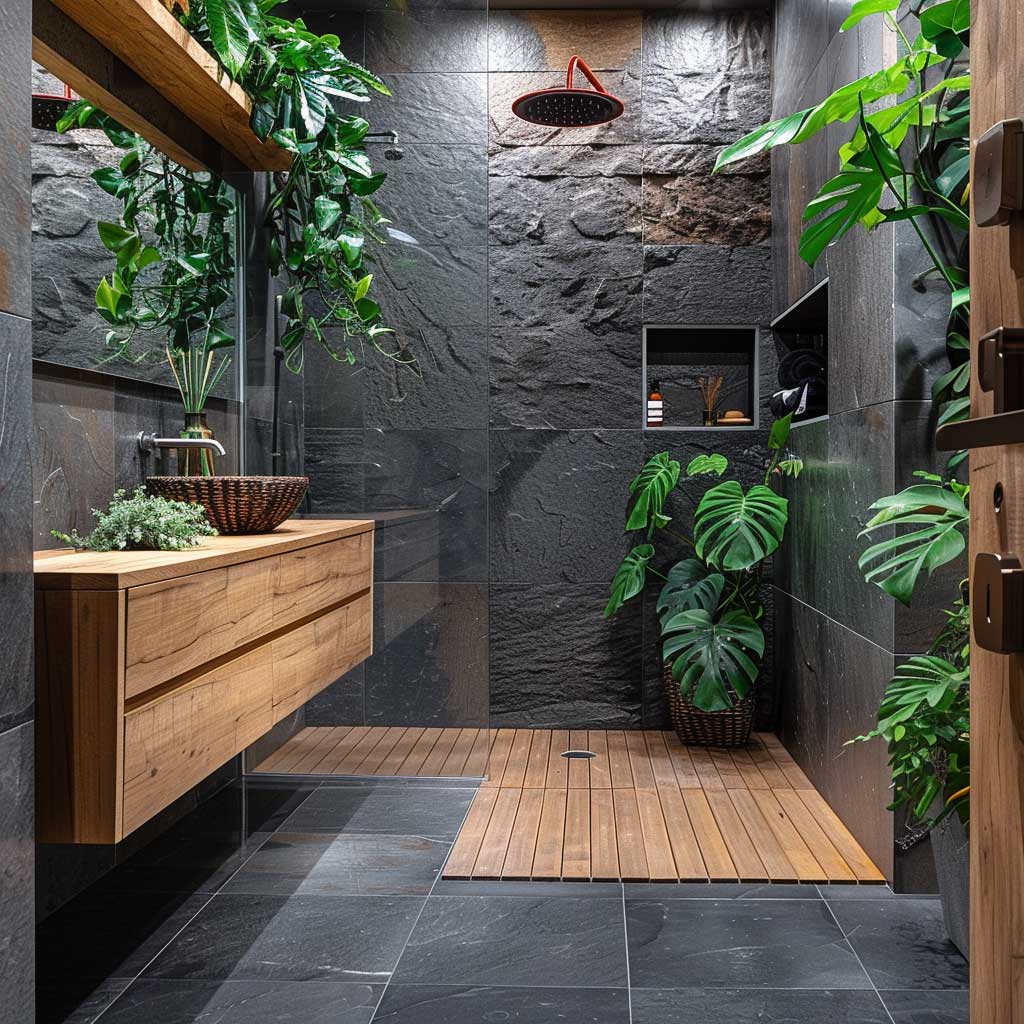
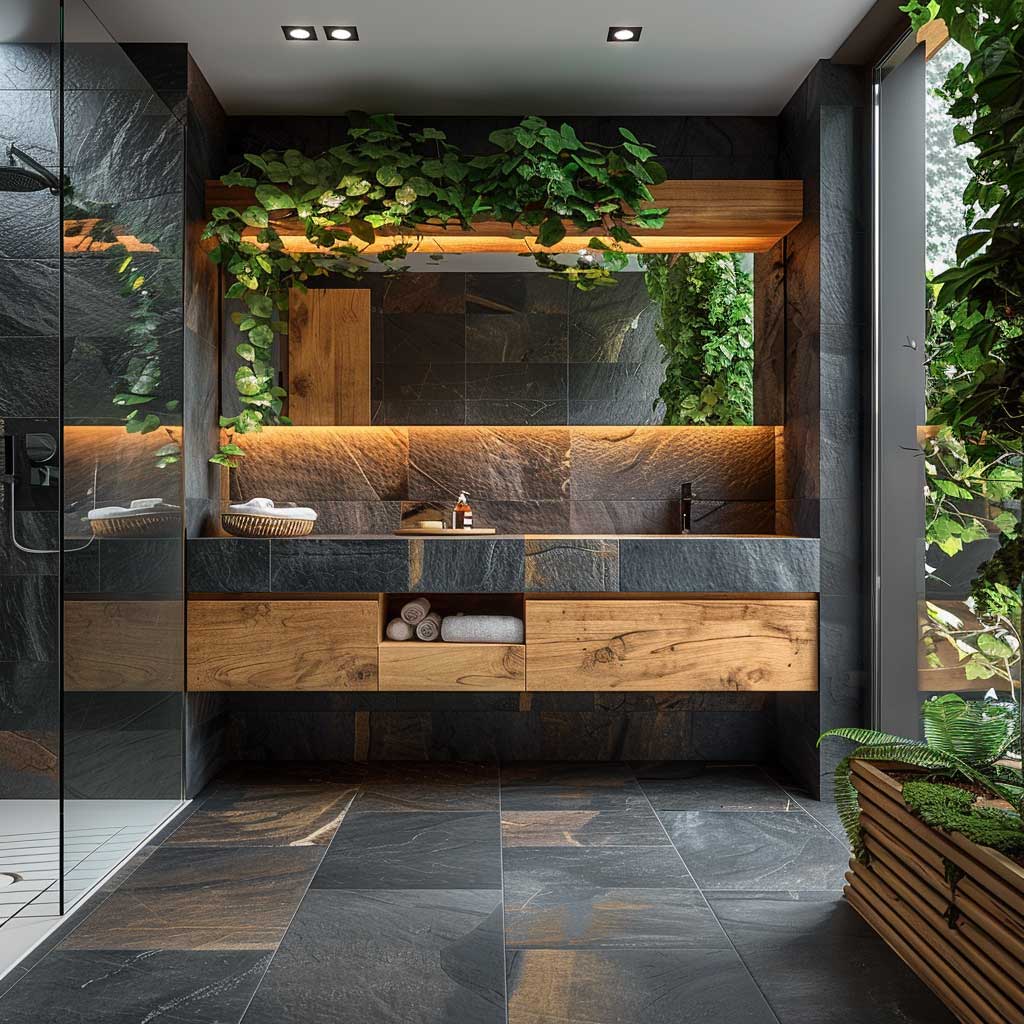
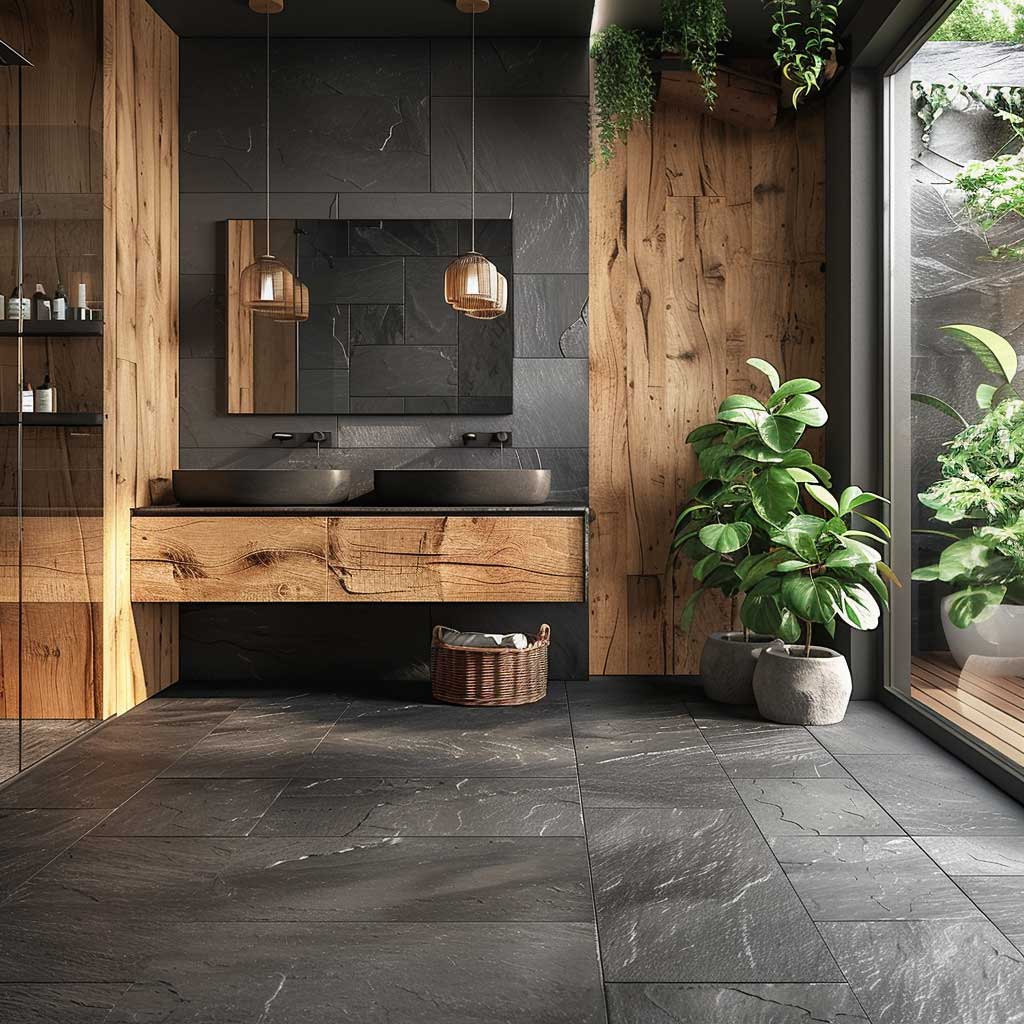
Slate’s naturally cleft surface gives it an inherent slip resistance that most other tile materials cannot match without artificial texture applied. This makes it one of the safest flooring choices for a wet bathroom environment, particularly for families with children or older adults. The grip is built into the material rather than added as a coating that can wear away.
Color variation is one of slate’s most distinctive qualities. True black slate often carries subtle undertones of green, grey, or blue that become visible depending on the light. This variation is not a defect — it is the character of the stone, and it prevents the floor from reading as flat or artificial. If you want a uniform, solid black, slate is probably not the right material. If you want a floor with depth and natural movement, it is ideal.
Slate tiles are known for their durability and slip-resistant properties, making them a practical option for bathroom flooring. Their textured surface adds a tactile element to the space, creating a cozy and inviting atmosphere. This type of flooring is particularly suitable for those who appreciate a natural and rustic look in their bathroom design.
Pairing black slate tiles with wooden cabinets can enhance the natural feel of your bathroom. The combination of dark, textured flooring with the warmth of wood creates a harmonious and balanced look. Adding greenery can further soften the space, bringing a touch of nature indoors.
When exploring bathroom flooring ideas, it’s important to consider the overall ambiance you want to create. Textured slate tiles can help achieve a modern yet rustic look, providing a unique and stylish foundation for your bathroom design. Their natural beauty and practicality make them a versatile choice for various design styles.
Maintaining slate tiles is straightforward with the right routine. Seal the surface every twelve to eighteen months to protect against moisture penetration and staining, and clean with a pH-neutral stone cleaner rather than acidic products. For a broader look at how natural materials work in bathroom design, our roundup of Scandinavian bathroom furniture ideas shows how slate and wood combine particularly well in hygge-inspired interiors.
Black and White Geometric Floor Tiles: Bold Pattern Done Right
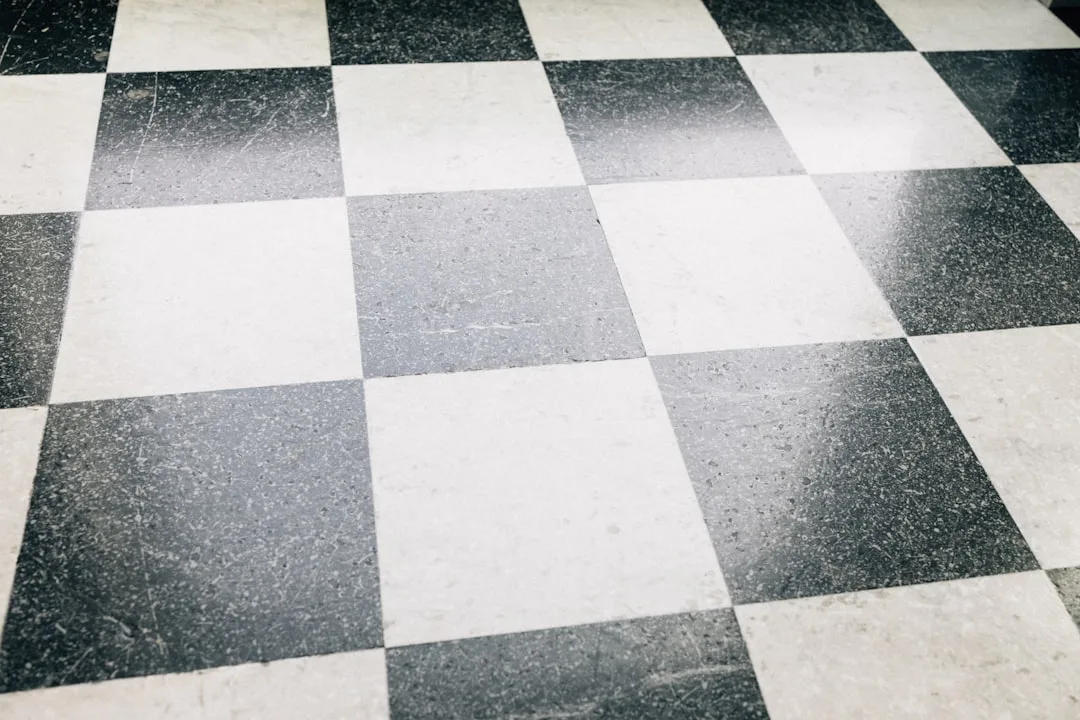
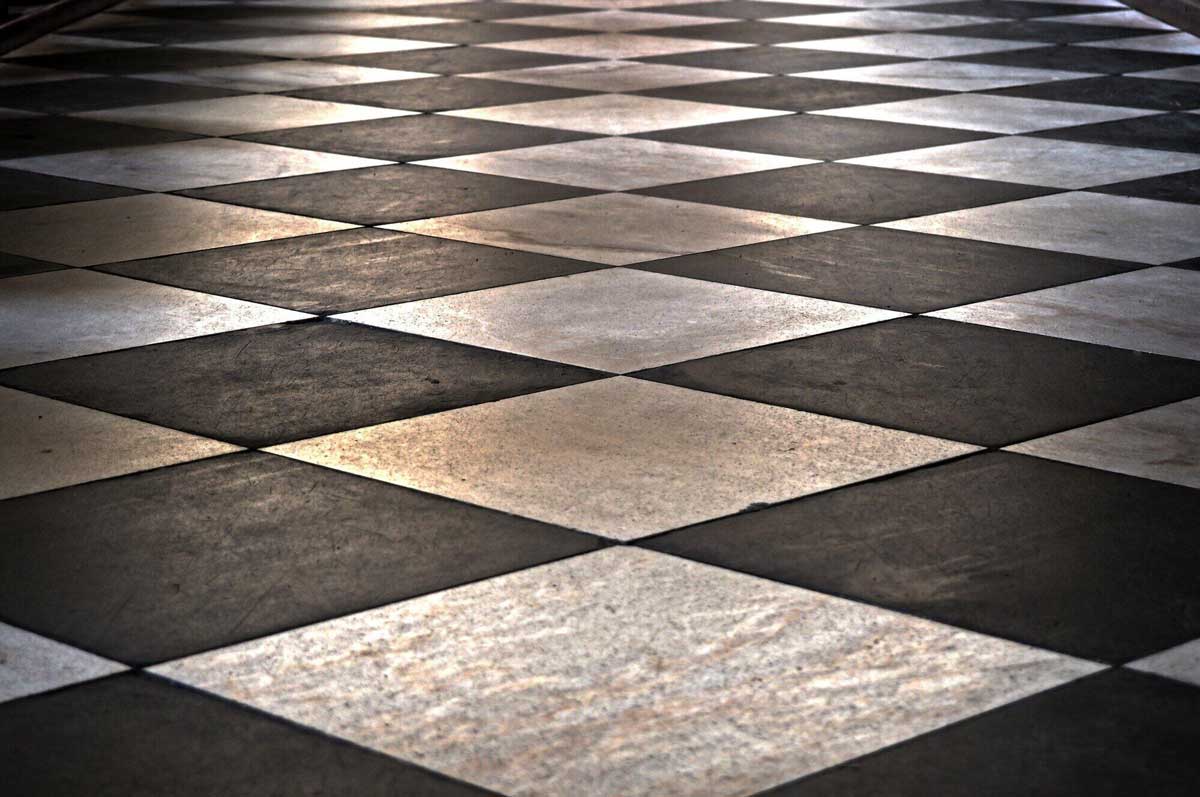
Geometric black and white floor tiles are a bold and stylish choice for modern bathrooms. Their striking patterns and high contrast can create a visually dynamic space that stands out. These tiles are perfect for those looking to make a design statement while maintaining a contemporary aesthetic.
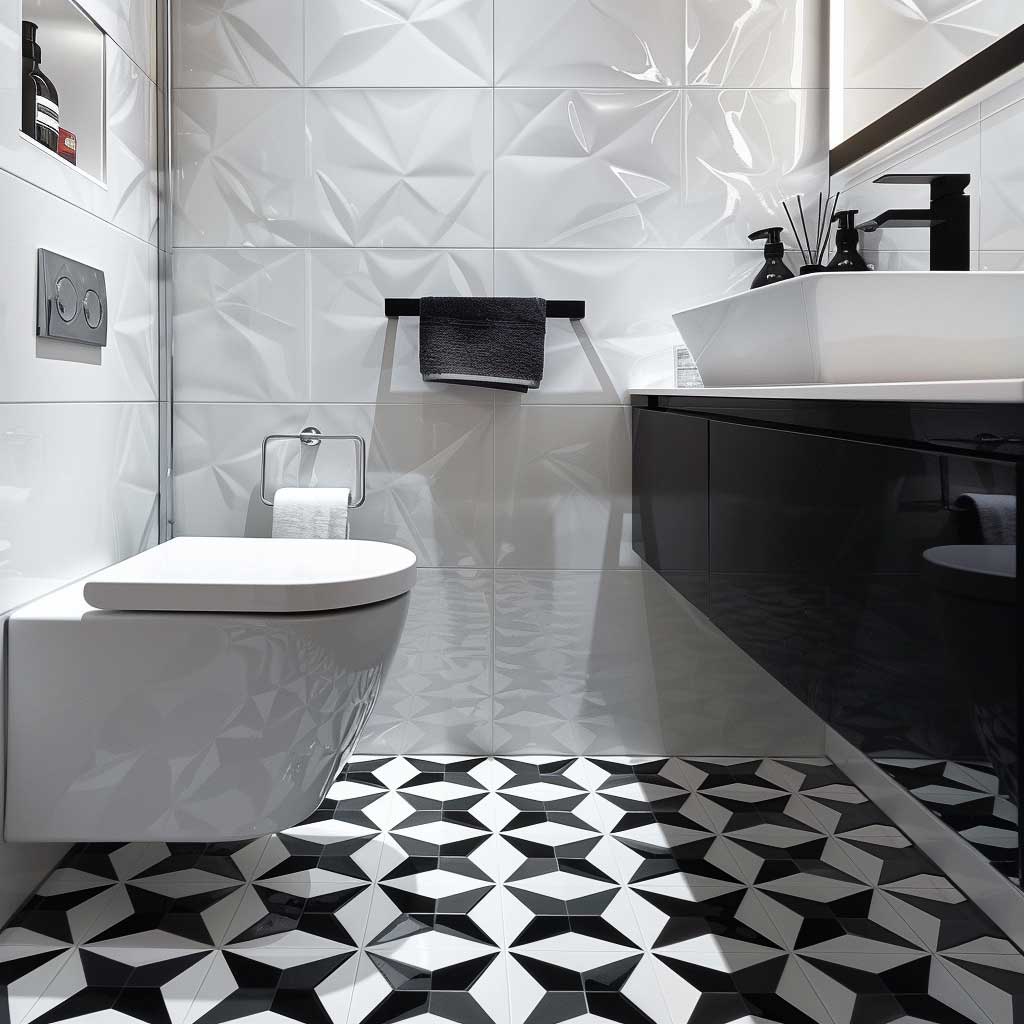
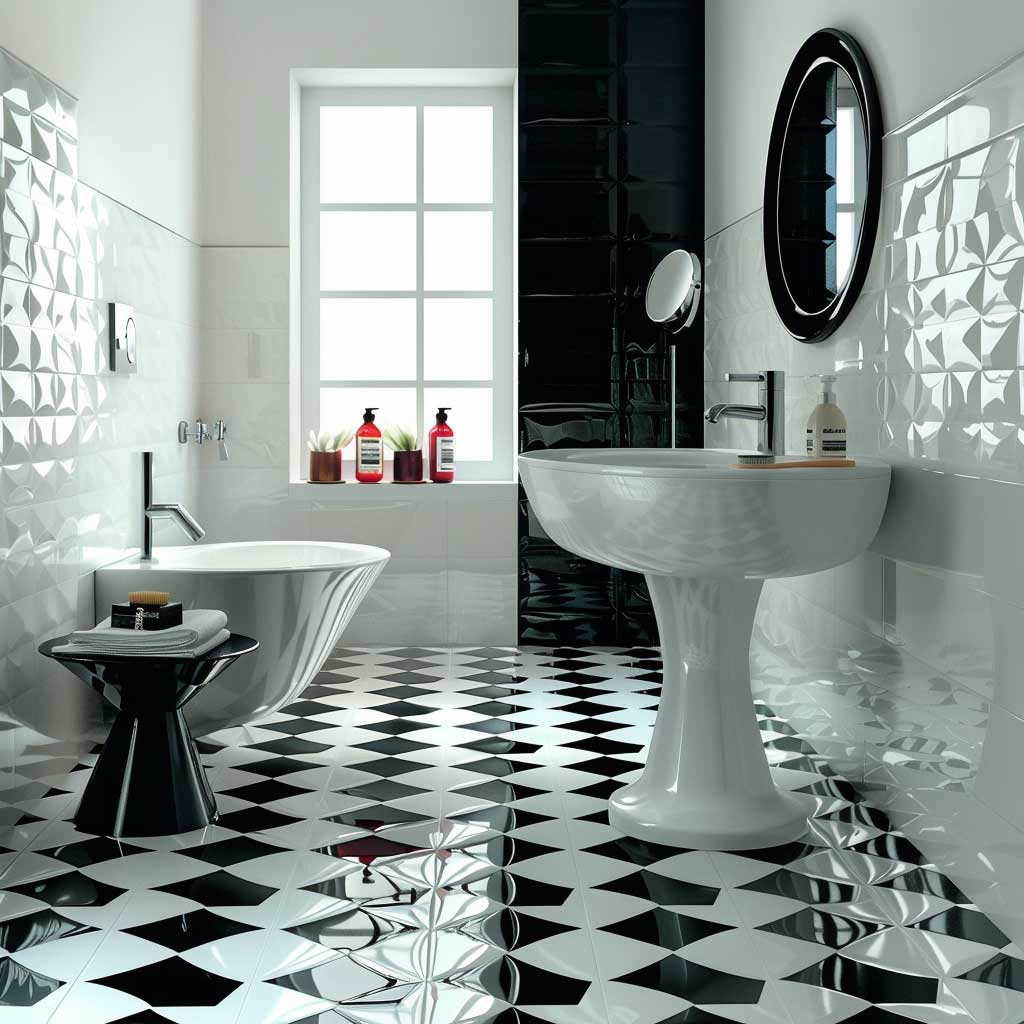

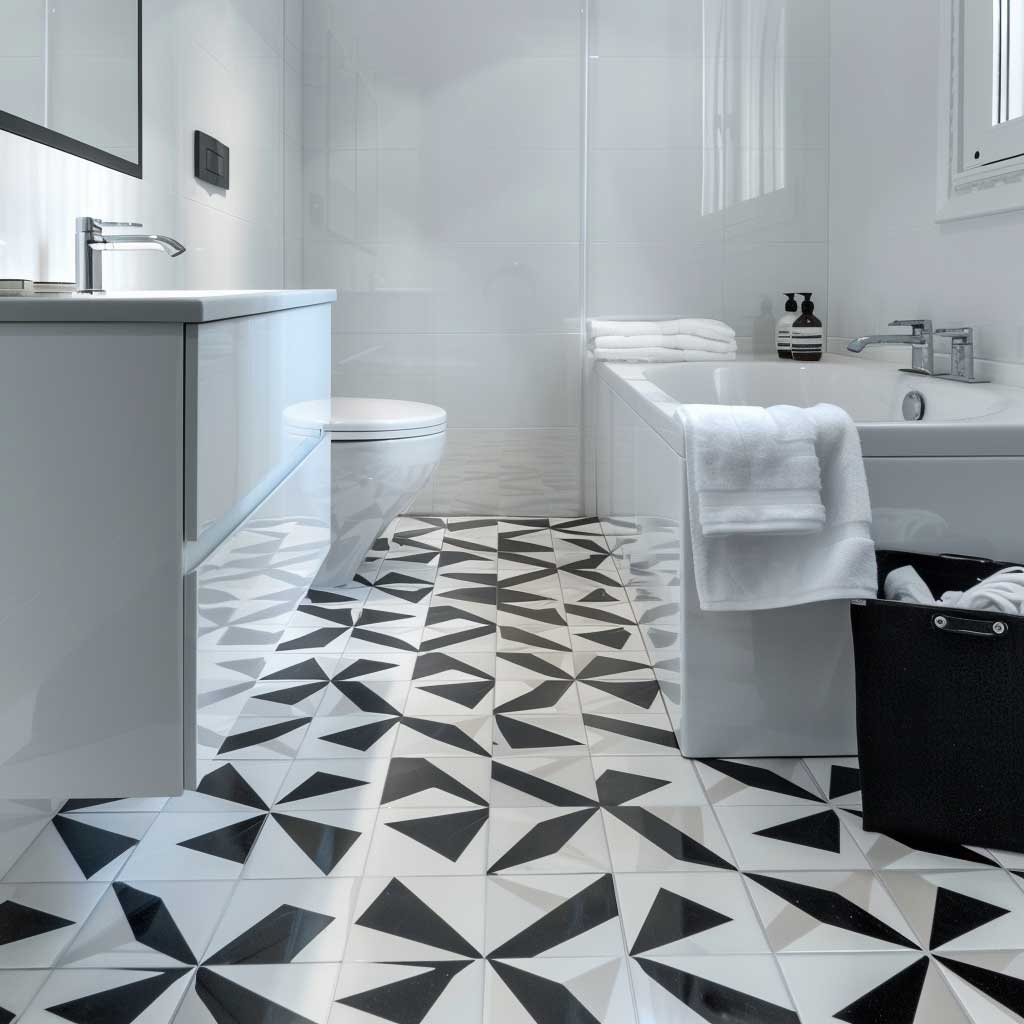
Scale is the most important decision when working with geometric floor patterns. Small mosaic-scale hexagons or penny tiles suit compact bathrooms and powder rooms where a large bold repeat would feel overwhelming. Medium-format encaustic-style cement tiles work well in standard bathroom sizes. Large-scale patterns — anything with a repeat of 30 cm or more — are best reserved for generous floor plans where the full pattern can be read from a standing position.
The surrounding walls and joinery should stay calm when the floor is doing a lot of visual work. Plain white subway tile, smooth plaster, or simple shaker-style cabinetry all let the geometric floor breathe without competing with it. The moment you add pattern to both the floor and the walls, the bathroom risks becoming visually exhausting rather than dynamic.
The combination of black and white in geometric patterns can add a sense of movement and energy to your bathroom. Whether you choose intricate designs or simple shapes, these tiles can instantly elevate the look of your space. They are particularly effective in creating a focal point, drawing attention to the flooring as a key design element.
Pairing geometric black and white tiles with minimalist white fixtures can enhance the modern feel of your bathroom. The clean lines and simplicity of the fixtures allow the bold flooring to take center stage. Adding sleek black accessories can tie the look together, creating a cohesive and stylish design.
Marble is a calcium-based stone and reacts adversely to acidic cleaners — including vinegar, citrus-based sprays, and many common bathroom products. The Natural Stone Institute publishes practical care guidance for natural stone floors covering correct sealing, safe cleaning products, and how to address etching — all directly relevant to keeping a black marble bathroom floor looking its best long term.
Maintaining geometric tiles is straightforward — regular sweeping and a damp mop keep the pattern looking sharp. Use a colour-matched grout sealer after installation to prevent the lighter grout lines from picking up staining over time. If you enjoy bold colour-driven bathroom design, our feature on bathrooms in bold pop art style shows how geometric floors work as part of a fully committed, high-impact interior.
KEY TAKEAWAY
Black bathroom flooring is one of the most versatile design decisions you can make. Matte tiles bring understated modernity and hide daily wear. Glossy marble delivers unmatched luxury with a reflective finish that amplifies light. Textured slate offers natural grip and earthy character. Geometric black and white patterns create a focal point that elevates the entire room.
Each of these options works best when the surrounding fixtures and wall finishes are chosen to complement — not compete with — the floor. Get the pairing right, and black flooring becomes the element that defines your entire bathroom.
Related Topics
FAQ
Is black bathroom flooring hard to keep clean?
Does black flooring make a small bathroom feel smaller?
What colour grout should I use with black floor tiles?
Can I use underfloor heating under black stone or porcelain tiles?
How do I stop black slate tiles from looking dull?
Complete guide
Bathroom Design Ideas That Transform Every Space From Ordinary to Exceptional
Tiles, colors, fixtures, layouts, remodels, mirrors, decor — all in one place
Complete guide
Black Home Color Ideas for Every Room and Every Mood
Living rooms, bedrooms, kitchens, bathrooms, exteriors — all in one place