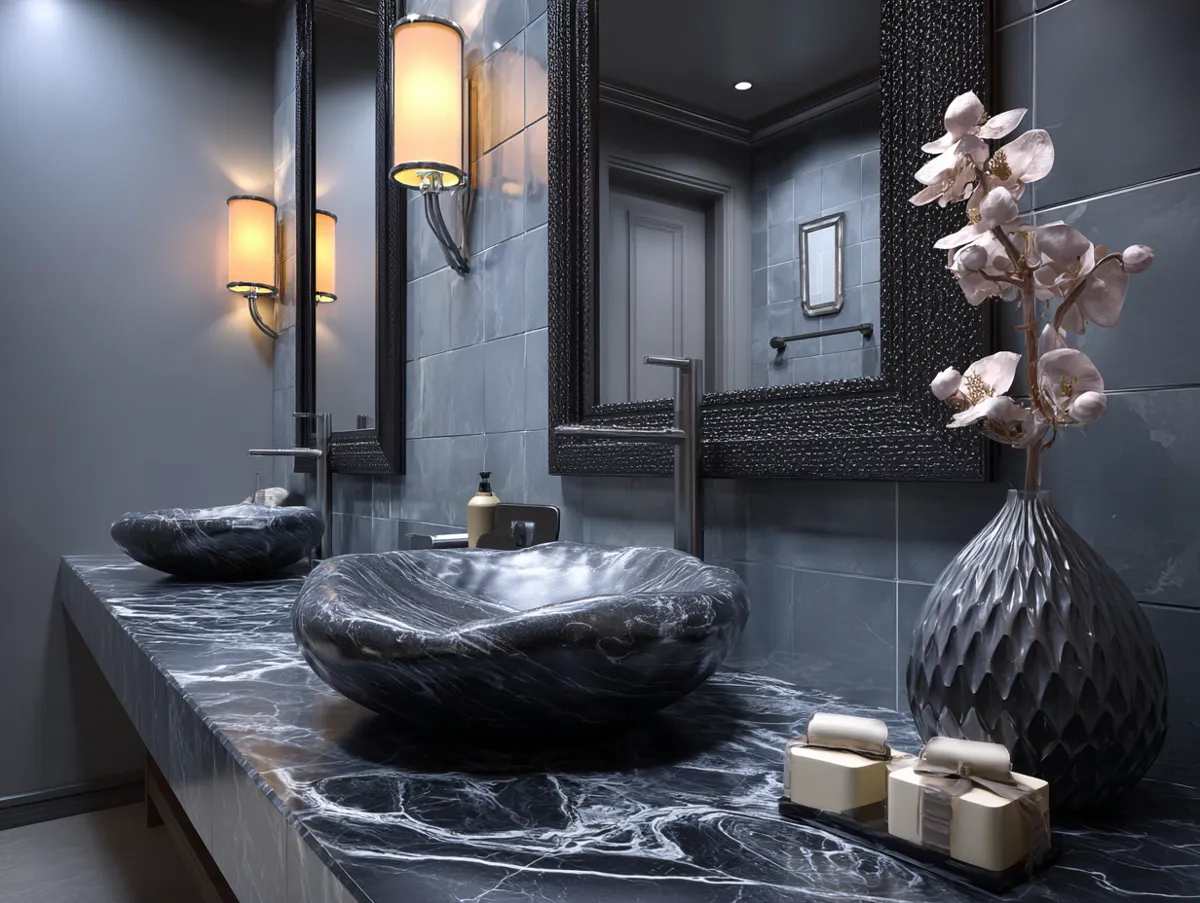
Vintage black and white bathroom ideas work best when they borrow from Art Deco: one bold geometric pattern, one metal finish, and clean white surfaces that let the contrast breathe. The style suits small powder rooms and large primary baths alike, because black and white reads as structure rather than color. Does it date quickly? Not when the pattern sits on the floor or one wall and everything else stays quiet.
Three formulas cover almost every room: geometric floor tiles with chrome, gold trim with an octagonal mirror, or mirrored cabinets against fan-shaped wall tile. Pick one, commit to it, and treat the other two as reference rather than a shopping list. Think of the room as a tuxedo, where the cut does the talking and the accessories only confirm it. Start by choosing the floor, since it fixes the scale for every other decision.
The sections below break down each look, the real costs behind the materials, and the mistakes that turn a glamorous bathroom into a chessboard with plumbing. A comparison table near the end puts the three directions side by side. Use it to match the look to your budget and floor structure before buying a single tile.
- Art Deco took its name from the 1925 Paris decorative arts exhibition, and its black and white bathrooms still follow the same rule: geometry first.
- Let one pattern lead, either the floor tile or a feature wall, never both at full volume.
- Choose one metal: chrome for crisp and cool, gold for warm and theatrical.
- A cast iron clawfoot tub weighs roughly 200–500 lb empty, so check the floor before ordering one.
- Plan 1,600–3,000 lumens at a single vanity with CRI 90+ bulbs so black surfaces do not swallow the light.
Geometric Floor Tiles and Chrome Anchor the Art Deco Black and White Bathroom
An Art Deco black and white bathroom starts at floor level, where a diamond or hexagon tile pattern sets the rhythm for the whole room. The style earned its name from the Paris Exposition Internationale des Arts Décoratifs of 1925, which gathered roughly 15,000 exhibitors around machine-age geometry and luxury materials. A diamond floor works like a metronome: once it is set, every fixture either keeps time or sounds wrong. Lay the pattern on the diagonal in a small room, because diagonal lines push the eye toward the corners and make the floor read wider.


Chrome is the natural partner for this black and white deco floor, since polished metal repeats the hard edges of the tile without adding color. Keep faucets, towel bars and cabinet pulls in the same finish, and let a matte black vanity absorb the shine around it. Average installed estimates for hexagon mosaic flooring land near $11 per square foot, with marble-look porcelain sheets selling for about $5 per 0.93 sq ft piece at big-box stores. Skip real marble mosaic on a busy family floor, because porcelain gives the same look and shrugs off cleaners.
Britannica describes how the Art Deco movement turned machine-age symmetry into fashion, and that symmetry is the reason a large round mirror works so well above a black vanity. Center it, flank it with two matching sconces, and the wall instantly reads as composed. Frosted glass shades soften the glare that chrome and gloss tile would otherwise bounce around. Mount sconces at roughly eye level on both sides of the mirror rather than one bar overhead, so the face is lit evenly.
The same 70/30 balance that keeps black and white bedroom decor calm and restful applies here: white should cover most of the walls, with black reserved for the floor pattern, vanity and trim. Push the ratio past half black and a small bathroom starts to feel like a cave at night. Count the black surfaces before ordering paint, and stop at three.
Gold Trim and an Octagonal Mirror for Glamorous Vintage Black and White Bathroom Ideas
A glamorous black and white bathroom swaps chrome for gold, and the octagonal mirror becomes the piece everything else answers to. The eight-sided shape is pure Deco: angular enough to echo tile geometry, soft enough to sit above a rounded pedestal sink. Gold trim works like the stitching on a dark suit, visible only where it outlines the structure. Keep gold to the mirror frame, faucets and one band of molding so it reads as jewelry, not wallpaper.

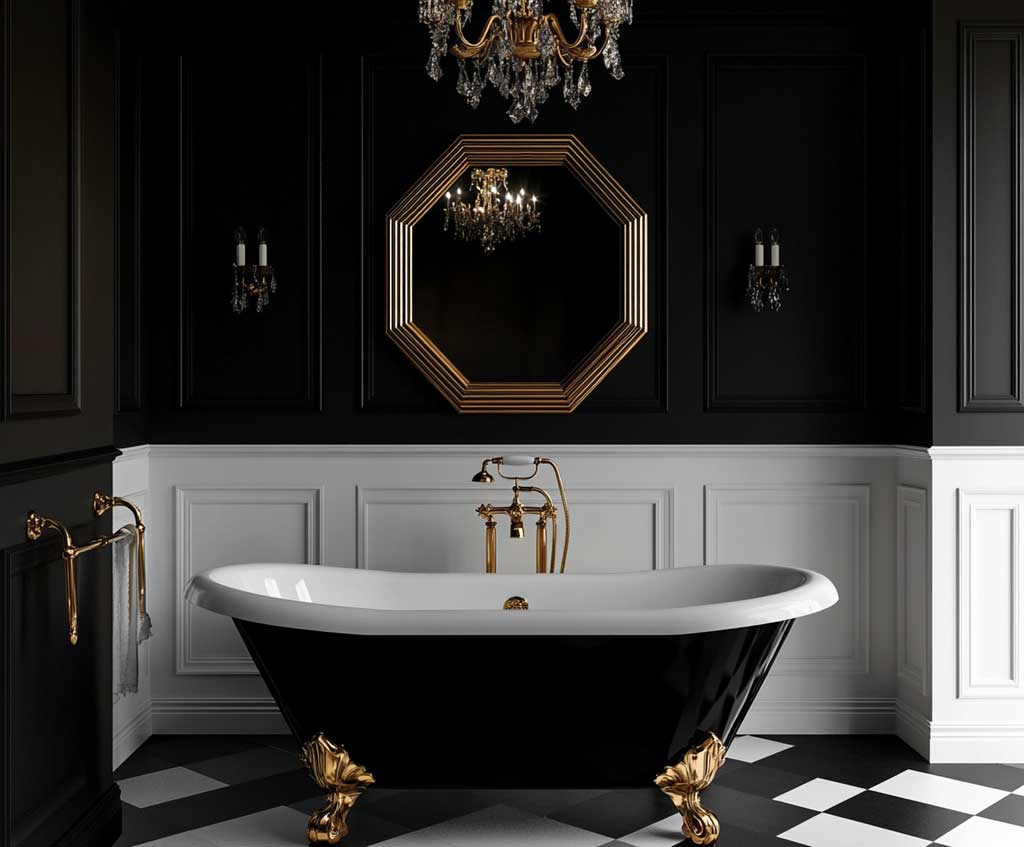


Black walls above white wainscoting reverse the usual formula and give vintage black and white bathrooms instant depth. The white panel protects the splash zone, while the dark upper wall makes gold glow instead of glare. Pair this with a checkerboard floor and the room starts quoting a 1930s hotel lobby. Use a scrubbable satin or semi-gloss on the black paint, since flat finishes show every water spot.
Is a black clawfoot tub worth the effort? Visually, yes, but a cast iron model typically weighs 200–500 lb empty, and one popular 72-inch version is listed at 411 lb before a drop of water goes in. Fill it and add a bather, and the load can approach 1,000 lb on a few small feet. Do not order cast iron for an upstairs bathroom in an older home without a contractor checking the joists, or choose an acrylic clawfoot that weighs around 75–150 lb.
A gold and crystal chandelier finishes the look, provided the ceiling clears it comfortably above the tub. Warm 2700K bulbs flatter gold finishes and keep black walls from turning gray in the evening. Treat the chandelier as ambient light only and keep task lighting at the mirror.
Mirrored Cabinets and Fan Tiles Bring Retro Black and White Bathroom Drama
A retro black and white bathroom built around fan-shaped tile leans on the sunburst motif that Deco designers used on everything from radios to elevator doors. White fan tiles with black grout turn a plain wall into texture, a bit like fish scales catching light. The pattern is busy enough to carry the room alone, so the floor should drop to a small, quiet hexagon. Order extra tile for scalloped patterns, since edge cuts waste more pieces than square formats.
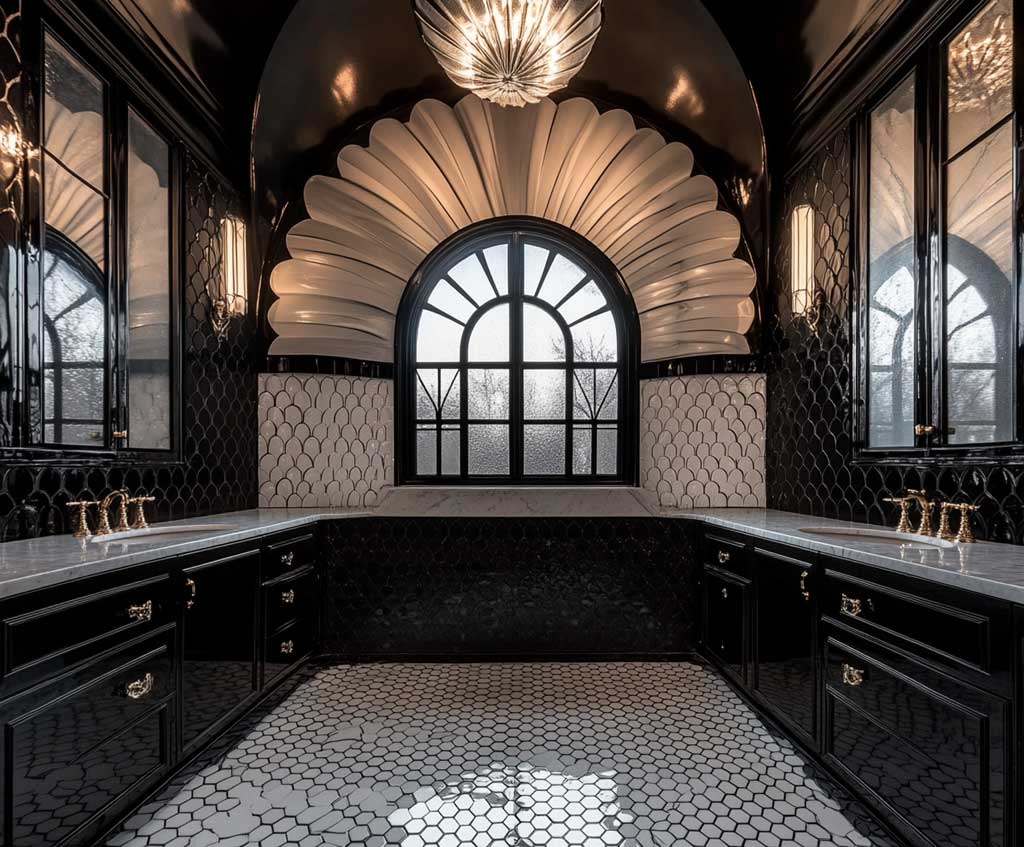
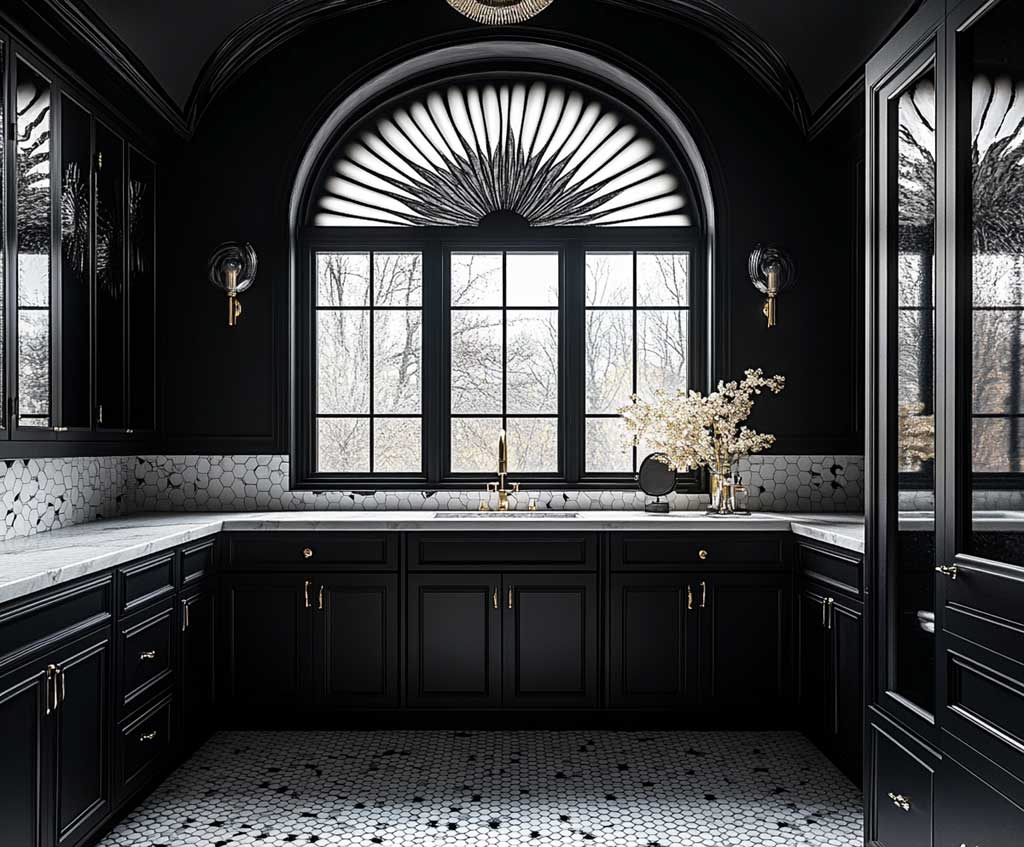


Black mirrored cabinets double the light in the room and hide clutter at the same time. Below them, a white marble countertop provides the one soft, veined surface in an otherwise graphic space. Bathroom marble tops usually run 6–12 square feet, and average installed costs fall between roughly $360 and $2,400 depending on the slab. Plan the install carefully, and review the do’s and don’ts of bathroom countertop installation before the fabricator templates the vanity.
Marble in a bathroom needs sealing every 6 to 12 months, because perfume, toothpaste and acidic cleaners etch the surface. Leaving a glass of cleaner on Carrara is a little like leaving a lemon on a silk tie. If that maintenance sounds tedious, choose a quartz top with gray veining and keep the look without the upkeep.
An oversized Deco pendant above the vanity gives the room its crown, but black surfaces absorb light fast. Lighting associations recommend 1,600–3,000 lumens from mirror fixtures at a single-sink vanity, with CRI 90 or higher so skin tones look true. Natural light from an arched window softens the contrast during the day. Add a dimmer so the same fixture handles bright mornings and low evening baths.
Chrome, Gold or Mirror and How the Three Looks Compare
Comparing black and white vintage bathroom styles side by side makes the choice faster than scrolling through endless pictures. Chrome reads cool and crisp, gold reads warm and theatrical, and mirrored cabinetry reads polished and practical. A 1950s black and white bathroom sits closer to the chrome column, with penny or square tile and simpler fixtures, while the 1930s look leans into gold and fan shapes. Pick by the room you have, not the photo you saved.
| Look | Lead pattern | Metal | Key cost or load factor | Best for |
|---|---|---|---|---|
| Geometric floor and chrome | Diamond or hexagon floor tile | Polished chrome | Hexagon mosaic around $11 per sq ft installed | Small baths, 1950s-leaning retro |
| Gold trim and octagonal mirror | Checkerboard floor, black upper walls | Brushed or polished gold | Cast iron tub 200–500 lb empty | Primary baths with solid floors |
| Mirrored cabinets and fan tile | Fan or scallop wall tile | Black and mirror, minimal metal | Marble top $360–$2,400 installed | Rooms needing storage and light |
Which look forgives a tight budget? Chrome with a patterned floor, because porcelain tile and standard fixtures carry most of the effect. Gold demands better hardware, since cheap plated finishes wear through first at the handles. Spend on the pieces hands touch every day and save on the walls.
Don’t do this
- Don’t run a checkerboard floor and a fan-tile wall in the same small room; two loud patterns cancel each other out.
- Don’t mix chrome, gold and brushed nickel; one metal keeps the vintage look deliberate.
- Don’t paint every wall black in a windowless bathroom unless the vanity delivers at least 1,600 lumens.
- Don’t pick bright white grout for a black floor; charcoal grout hides wear and keeps lines crisp.
- Don’t install a cast iron tub on an older upper floor without a structural check.
One Pattern Leads and Everything Else Follows
The strongest vintage black and white bathroom ideas share one habit: a single confident pattern, backed by restraint everywhere else.
Choose the floor or the feature wall as the lead, then match one metal to it. Chrome keeps the room crisp and budget-friendly, while gold brings warmth and needs better quality hardware.
Check the structure before falling for a cast iron clawfoot, and seal any marble surface on a 6–12 month cycle. Both steps cost little compared with fixing a sagging floor or an etched vanity top.
Light the vanity generously with high-CRI bulbs, because black finishes absorb more light than photos suggest. A dimmer turns the same room from morning workspace into evening retreat.