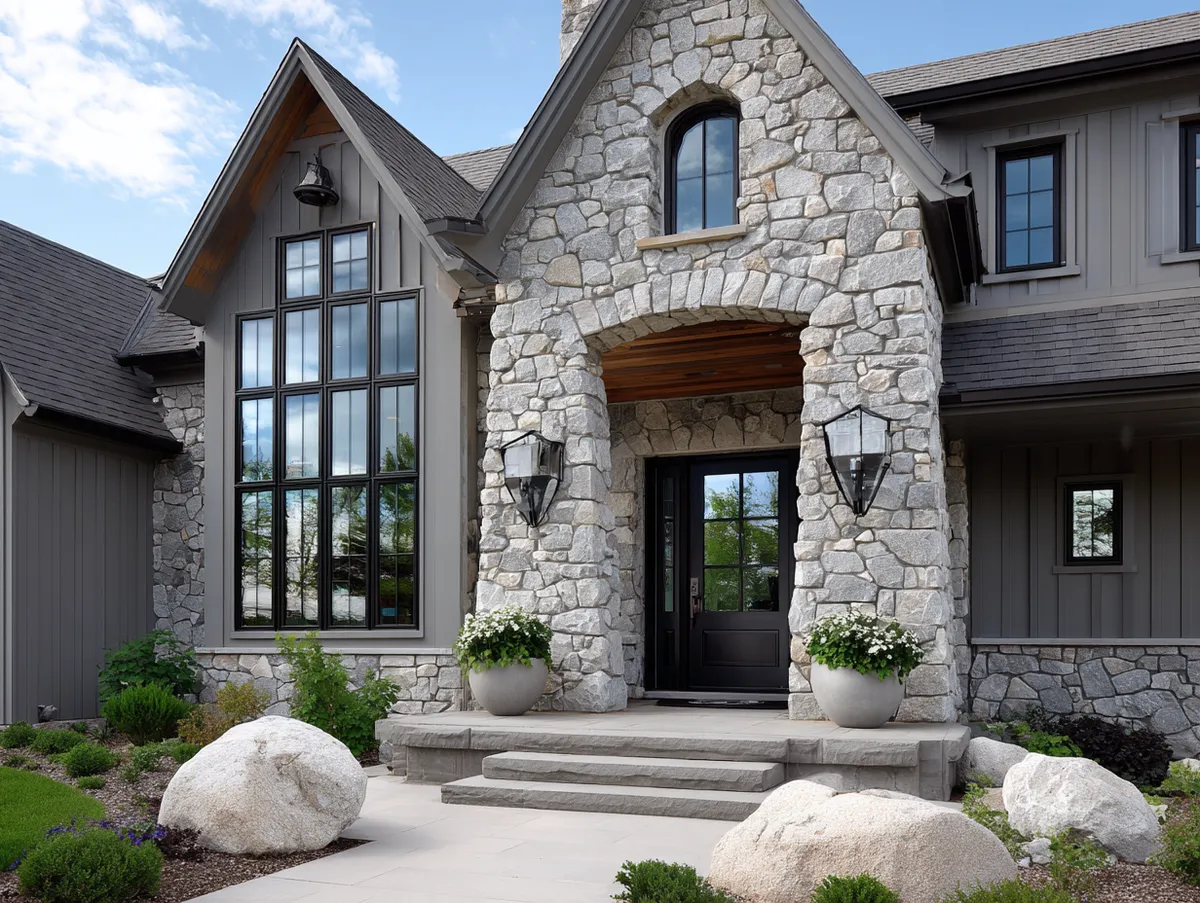
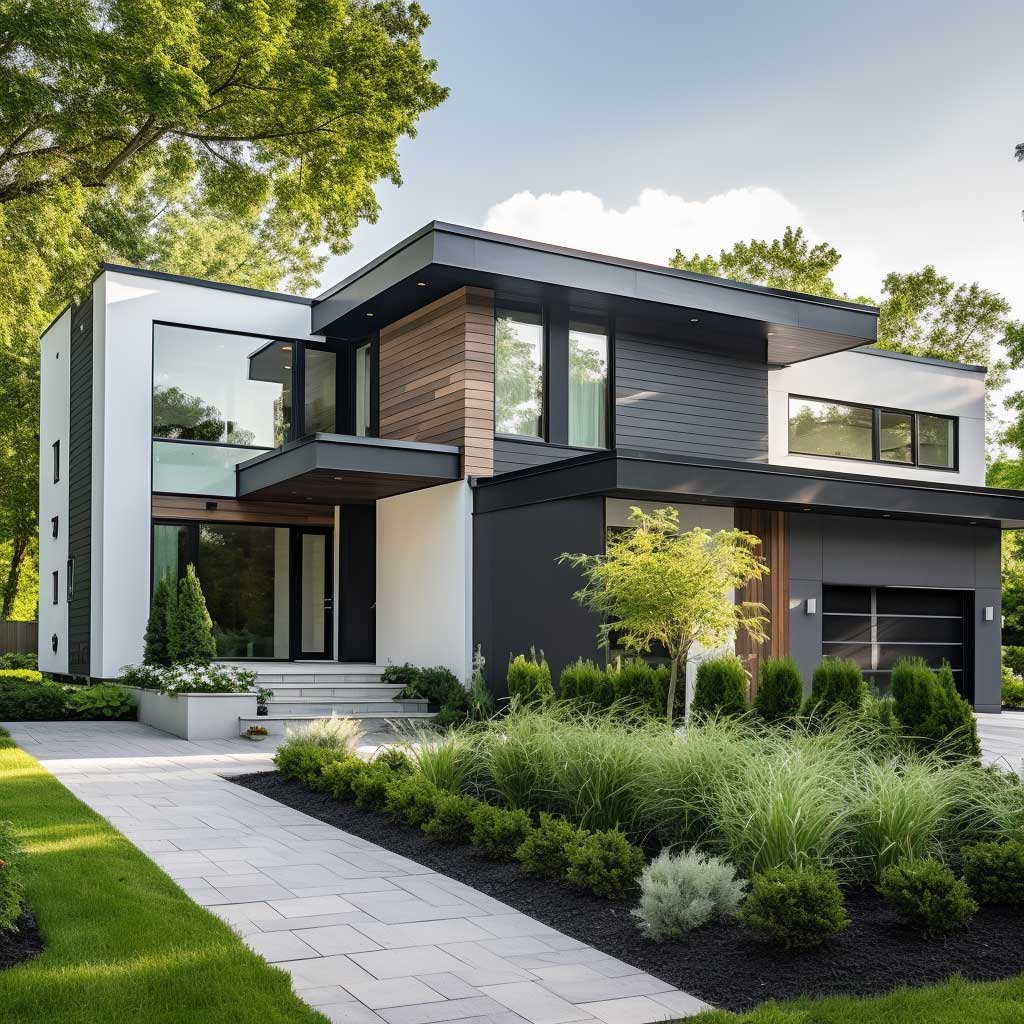
Charcoal and red house siding lands somewhere between bold and outright confrontational — and that’s exactly what makes it work. The pairing exploits the most fundamental rule of exterior color: warm against cool reads louder than any single saturated hue on its own. Red advances, charcoal recedes, and the house stops being invisible from the street.
The combination suits a surprisingly wide range of architectural styles — contemporary boxes, craftsman bungalows, and even traditional two-stories read differently under this palette. What changes is the proportion: whether red or charcoal dominates shifts the whole register from aggressive to refined.
Before committing, there’s one trade-off worth knowing upfront. Red pigments are notoriously unstable under UV exposure — according to siding contractors, they fade faster than almost any other color category. Charcoal siding with an LRV of 30–45 shows noticeable color shift within 7–10 years even with premium materials. Fiber cement with a factory-applied finish, like James Hardie ColorPlus, is the one material category that actually holds dark and saturated colors long-term — backed by a 15-year fade warranty.
- Red on top, charcoal below is the most photogenic split — it raises the visual roofline and grounds the structure
- Charcoal as the dominant field with red on accent walls delivers drama without looking like a fire station
- Red pigments fade faster than almost any other color — fiber cement with a factory finish is the only durable long-term solution
- James Hardie ColorPlus backs dark and saturated colors with a 15-year fade warranty; field-painted fiber cement needs repainting every 10–12 years
- Black-framed windows and charcoal trim tie both colors together without adding a third visual element
- Red brick plus charcoal siding works best when the charcoal reads cool — Benjamin Moore Kendall Charcoal is the pairing designers reach for most
Red on Top, Charcoal Below — and Why the Split Actually Flatter the Structure
Splitting red and charcoal house siding horizontally — red on the upper facade, charcoal anchoring the lower half — is the arrangement that photographs most cleanly and reads most confidently from the street. The logic is structural rather than decorative: charcoal at the base functions like a visual weight line, keeping the house from appearing to float. Red above it catches light differently throughout the day and holds attention at eye level, which is where curb appeal actually registers.
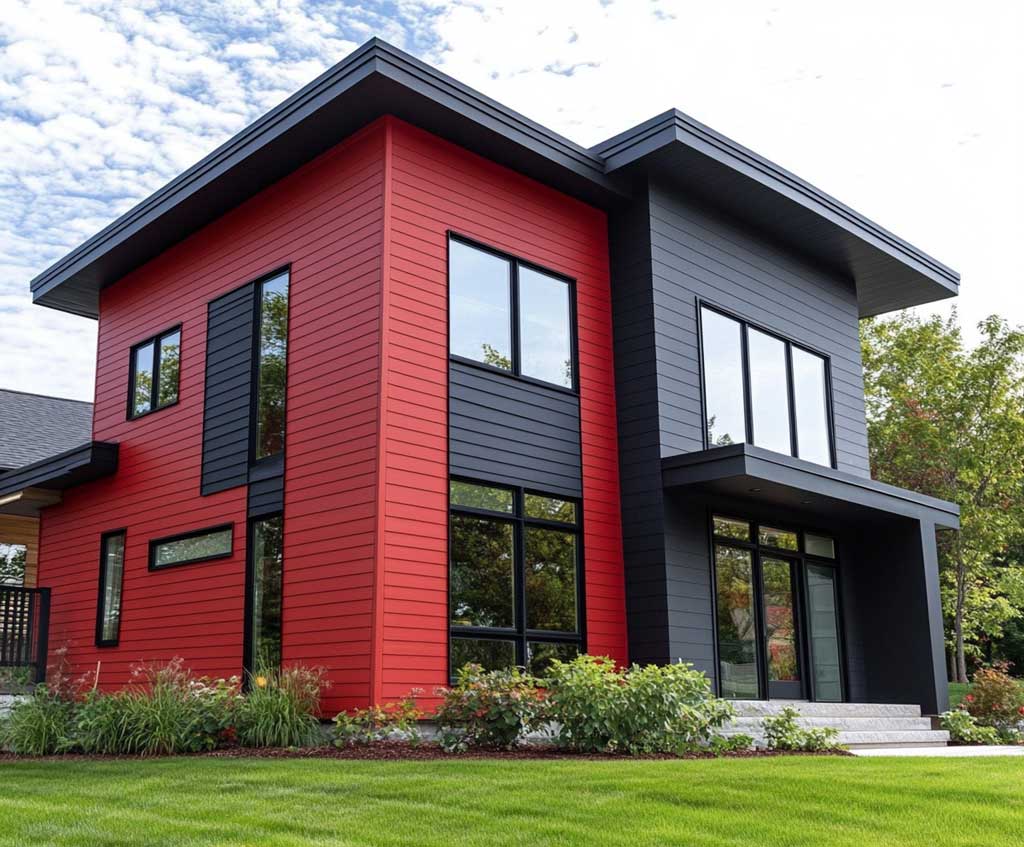
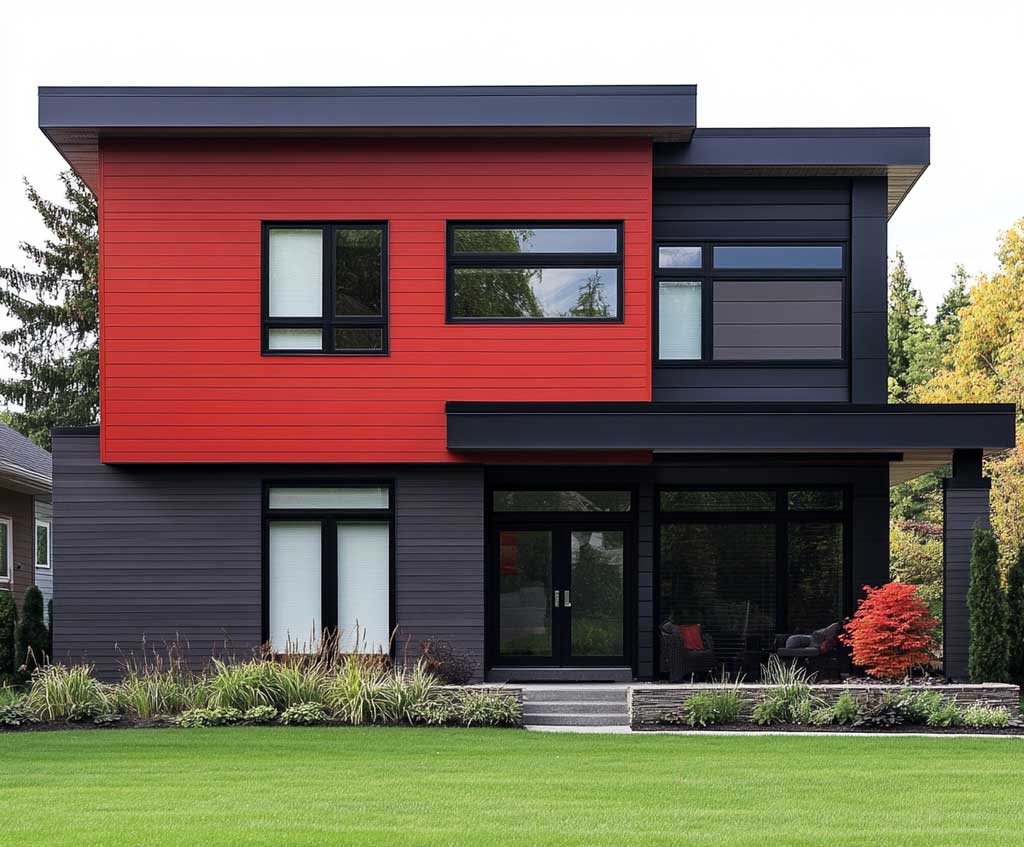
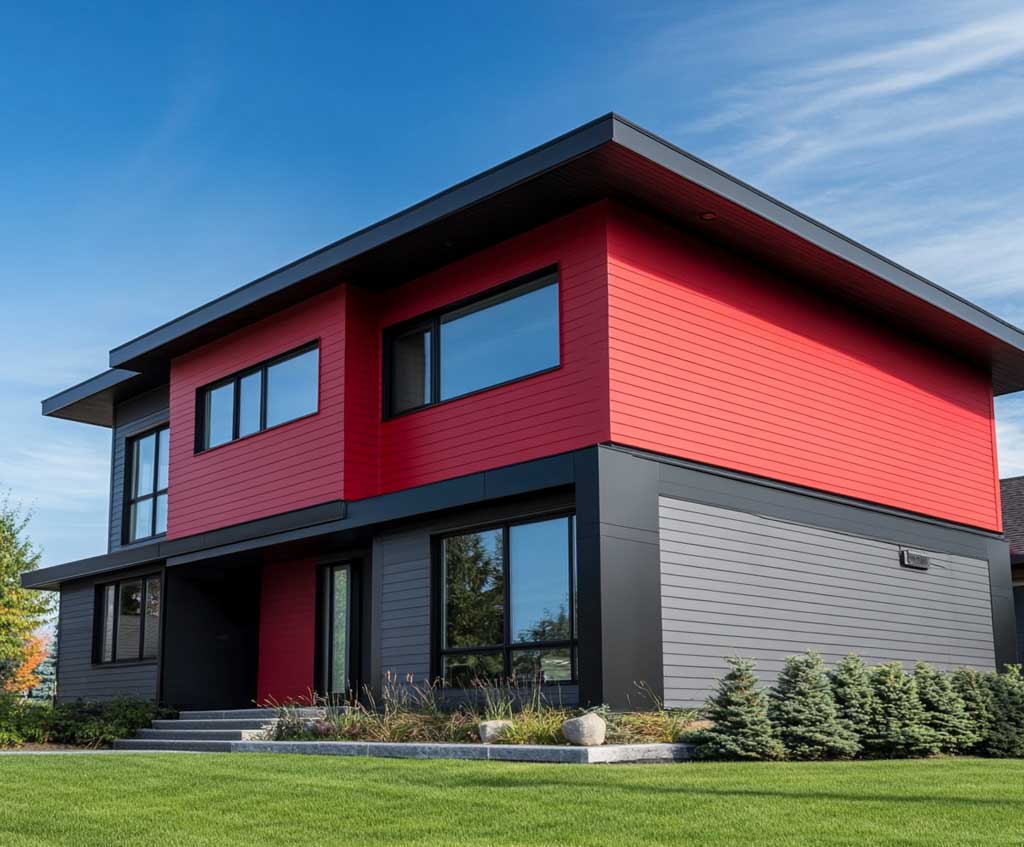
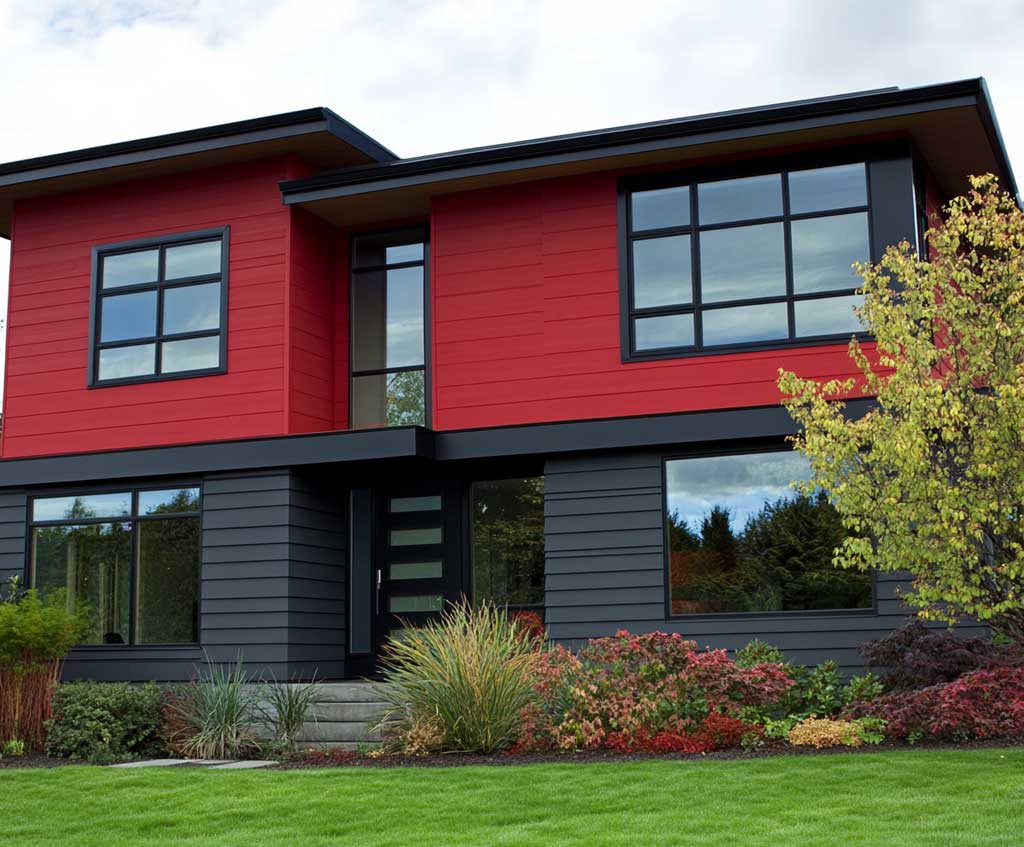
Black trim around windows and doors is the third element that locks this combination together — it borrows from the charcoal without duplicating it and frames the red without fighting it. Fiber cement siding installed at $5–$14 per square foot is the material range where this combination works as intended; vinyl in these two colors fades unevenly, with red losing saturation faster than charcoal, which creates a mismatch that only gets worse after year five.
What doesn’t work: placing red at the base and charcoal above. Visually, it reads as top-heavy and unstable — the darker mass sits where your eye expects lightness, and the result feels off without being obviously wrong. The split also fails when the transition line is placed too high or too low. Stylists recommend landing the horizontal divide at the floor plate between the first and second stories on a two-story house, or at the window sill line on a ranch. Eyeballing it mid-wall produces a band that looks like an accidental stripe.
- Don’t reverse the split — red at the base and charcoal above creates a top-heavy façade that reads as unstable even when viewers can’t identify why.
- Don’t use vinyl siding in red — red pigments are the most UV-unstable color category in exterior coatings, and vinyl has no factory finish to protect them. You’ll see noticeable fading within 5 years on south- and west-facing walls.
- Don’t add a third color to the trim — white trim with red and charcoal fractures the palette. Black or dark gray trim extends the charcoal without adding a competing element.
- Don’t place the horizontal split at a random mid-wall height — it needs to align with an architectural feature (floor plate, window sill line, or fascia) or it reads as an accident rather than a decision.
Charcoal Dominant Field with Red House Siding on Accent Walls
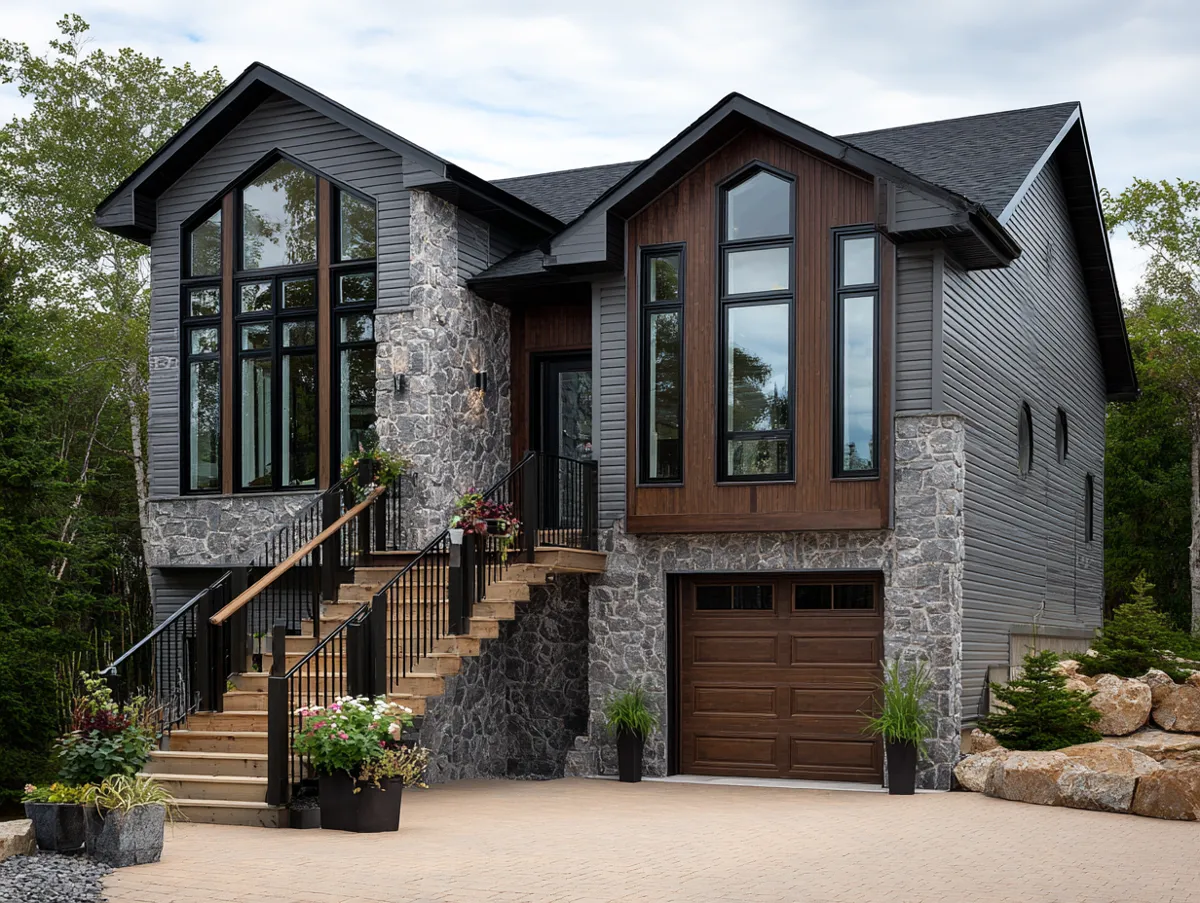
Charcoal and red exterior house siding with charcoal as the dominant field color is the more restrained application — and arguably the one with the longest visual shelf life. Charcoal covers the primary structure and most of the wall area; red appears on a single accent wall, a recessed entry bay, a garage face, or a gable end. The effect is targeted rather than saturating. A passing driver registers the red first, then understands the charcoal as the thing making it possible to look at.
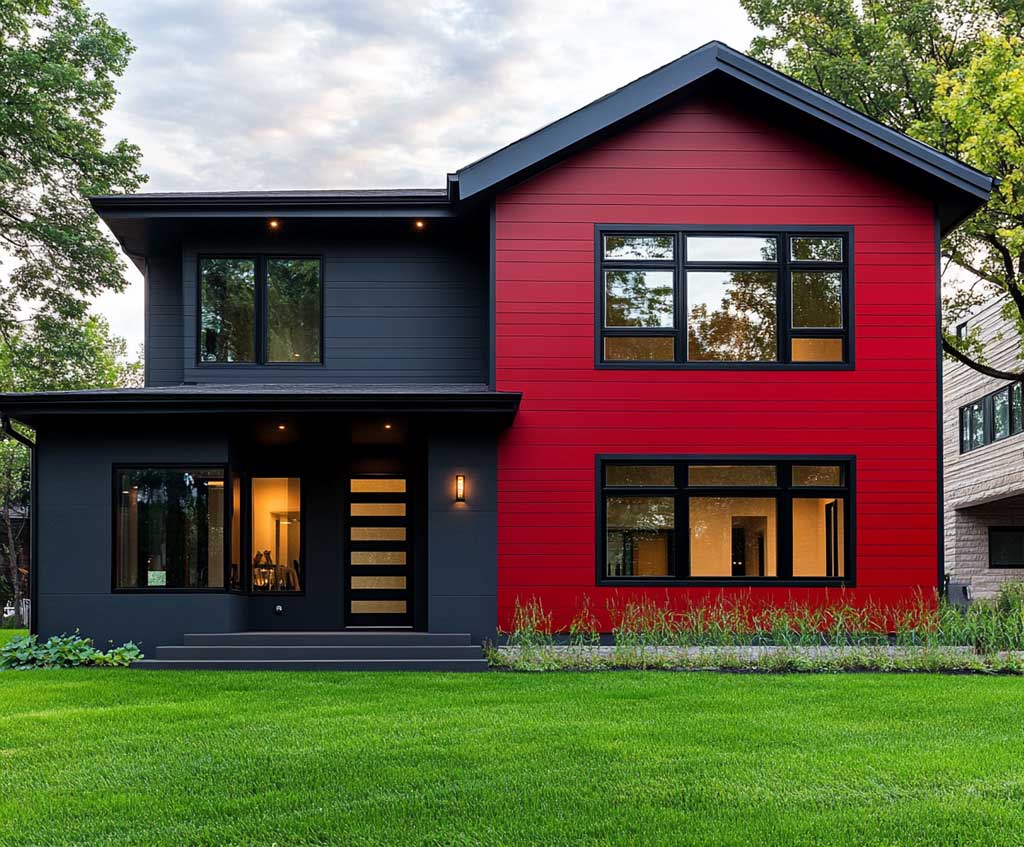
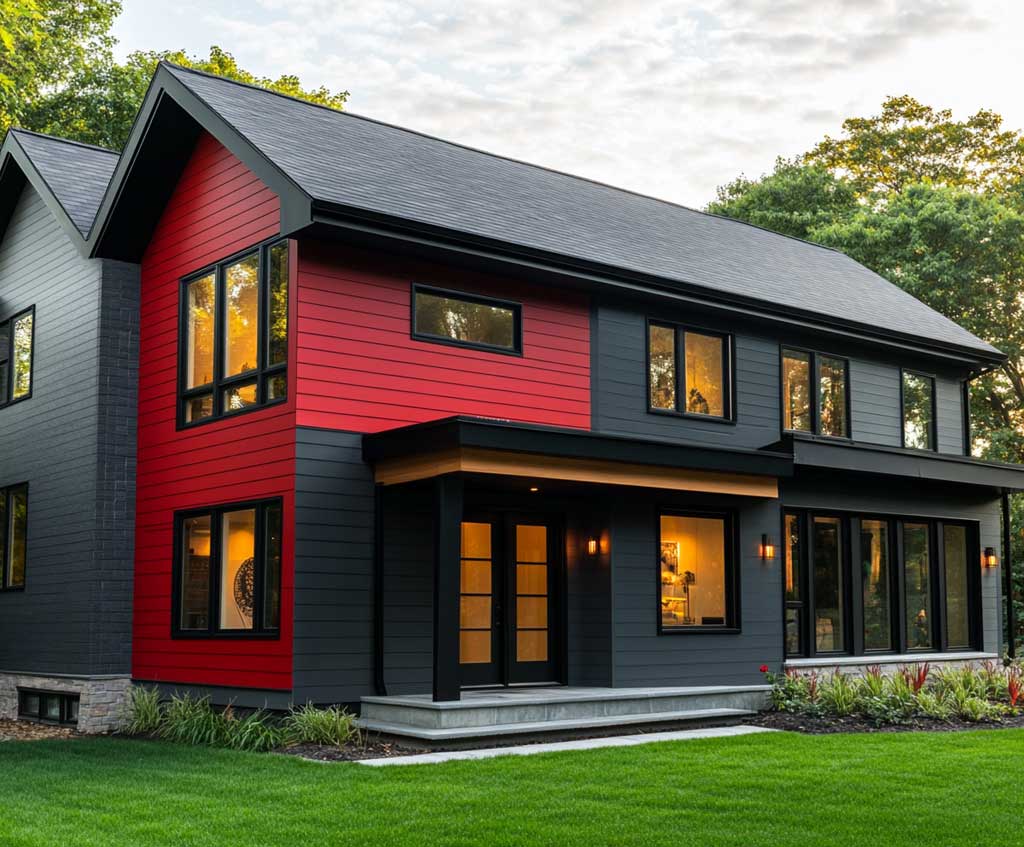
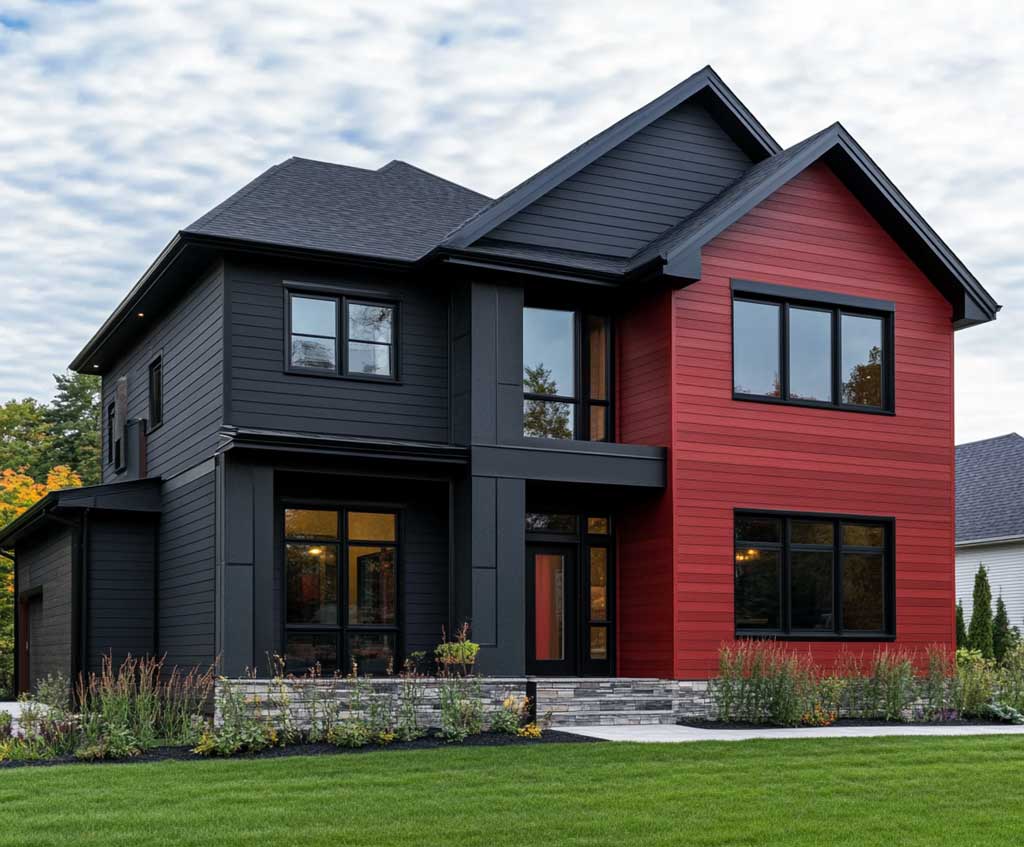
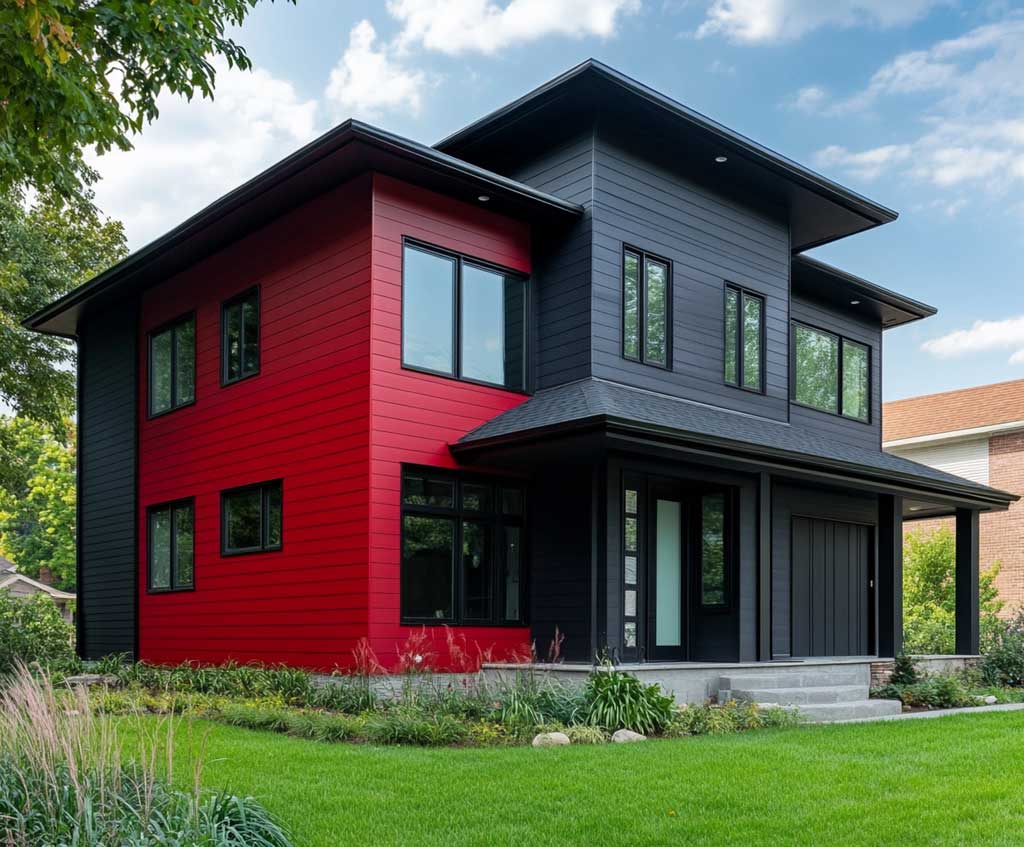
The question most homeowners ask at this stage: how much red is too much? A common approach is the 10–20% rule — red covers no more than one-fifth of the total visible wall area from any given vantage point. Beyond that threshold, the charcoal stops functioning as a neutral field and becomes a competing color. Think of the accent wall the way a designer would treat a statement chair in a neutral living room: isolated, deliberate, and clearly outnumbered by the surrounding palette. Fiber cement with a factory finish is worth the $5–$14 per square foot installed cost specifically in this configuration, because any fade differential between the charcoal and red panels will be obvious over time.
Landscaping performs real work in this combination. A lawn or established plantings in front of the charcoal field soften the visual weight of the dark surface — without greenery, an all-charcoal exterior reads as harsh at street level, and the red accent loses its energy against a uniformly heavy backdrop. Exterior lighting positioned to graze the accent wall after dark extends the effect into the evening hours and is a detail that distinguishes intentional design from an accidental color choice. For more on how siding and exterior materials interact with color contrast, stone and siding combination strategies cover the proportion logic that applies across all mixed-material exteriors.
Red Siding Dominant Facades with Charcoal Trim and Framing
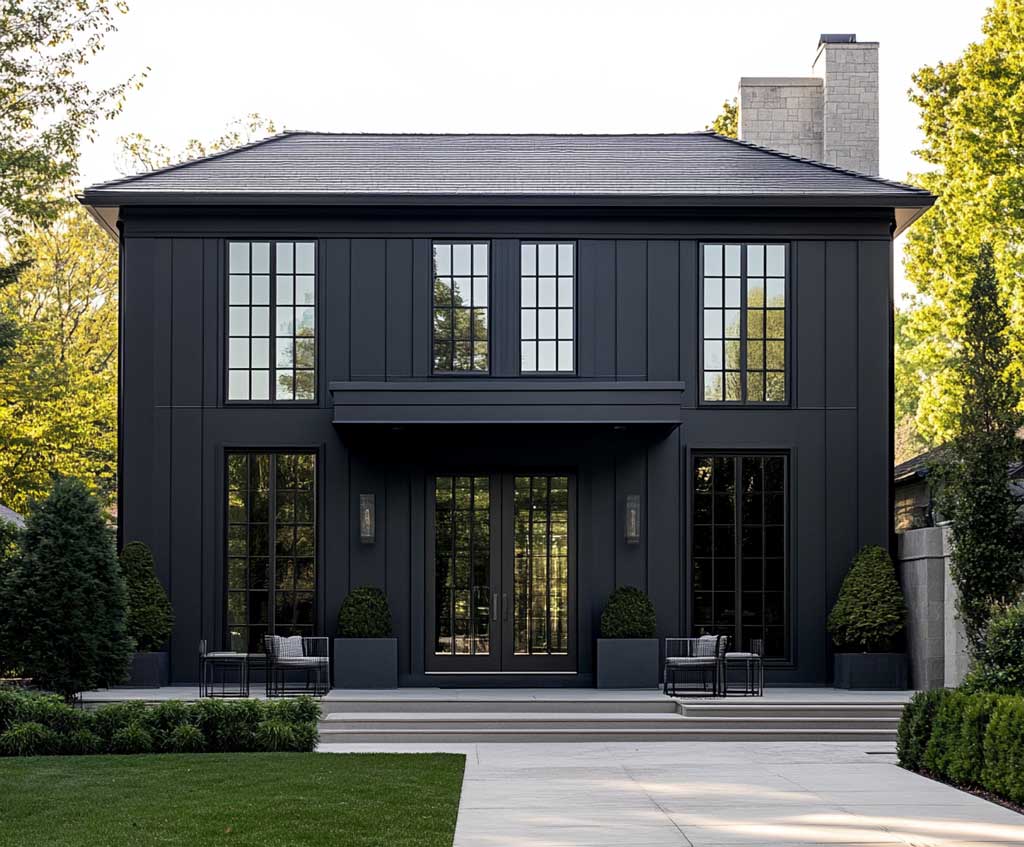
Red house siding as the primary field — charcoal confined to trim, window framing, roof fascia, and door surrounds — is the most committal version of this combination and the one that reads most unmistakably as a red house from a distance. The charcoal trim performs a specific optical job: it draws a hard edge around every architectural element, making the structure read as sharply defined rather than blurry. On a contemporary single-story, this can be extraordinarily precise-looking. On a house with complex rooflines or multiple window groupings, the same charcoal trim can start to feel busy.
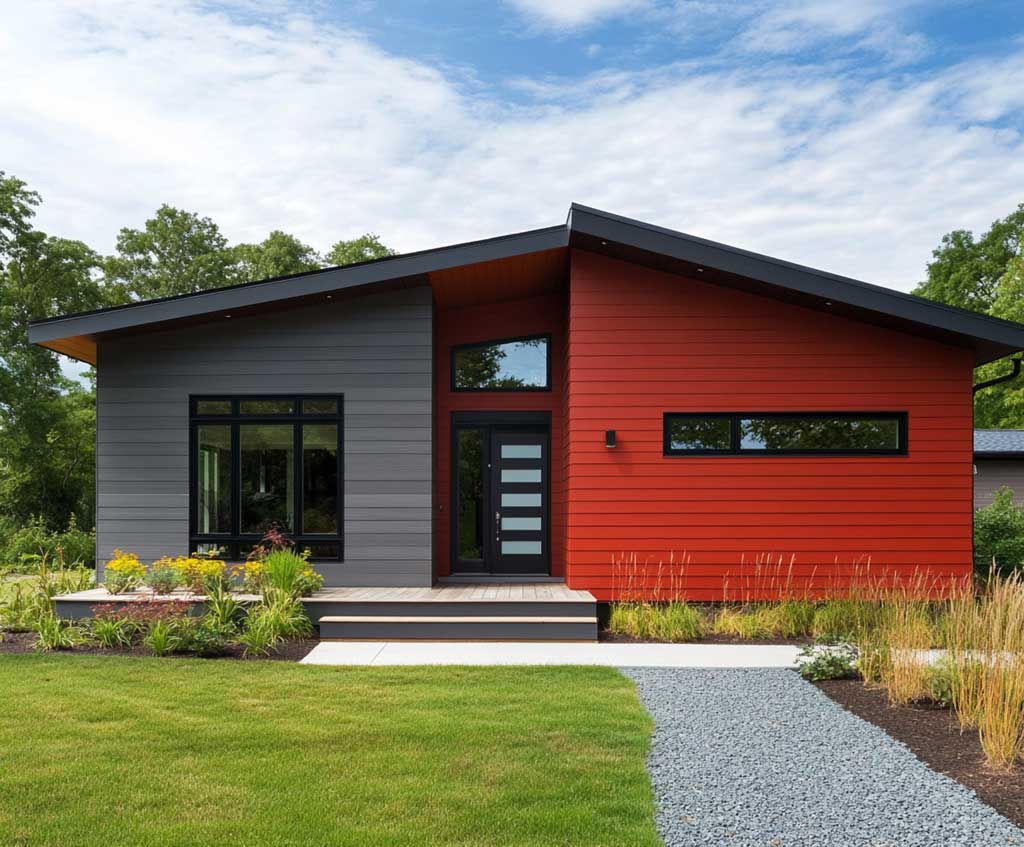
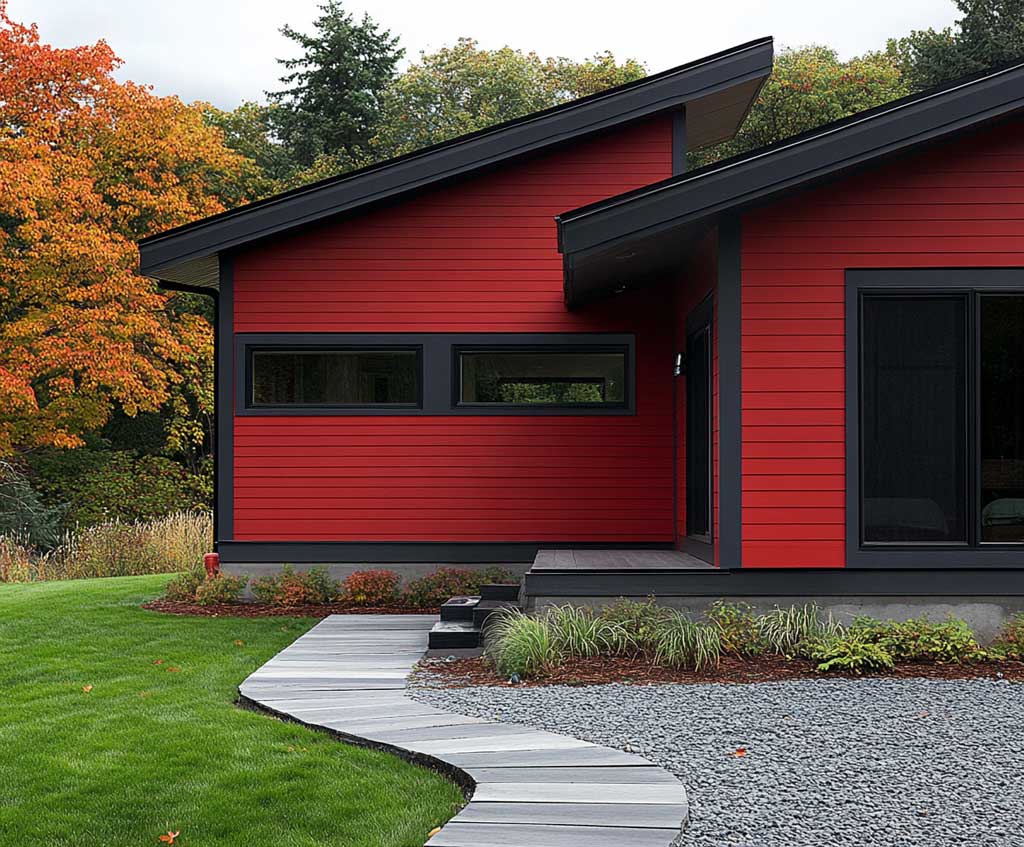
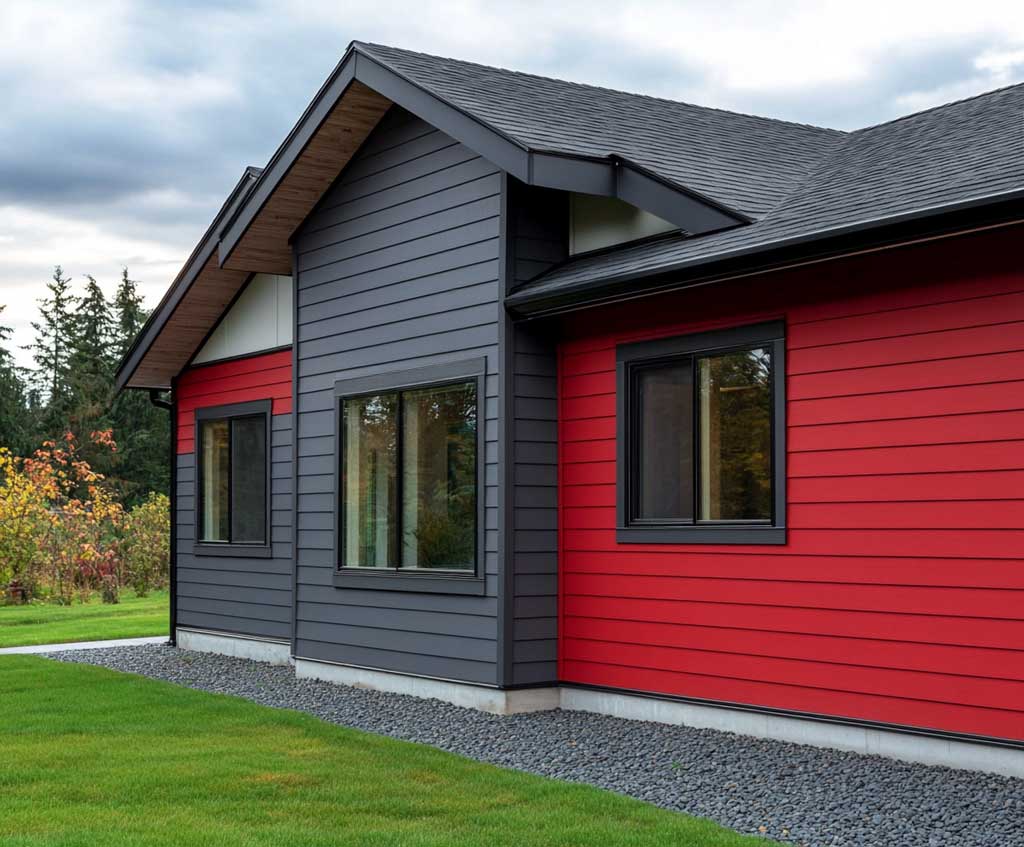

The durability concern with dominant red siding is more acute than in the accent-wall approach, because there’s no visual tolerance for uneven fading across a large field. Field-painted fiber cement requires repainting every 10–12 years to maintain the color integrity — James Hardie ColorPlus, by contrast, carries a 15-year fade warranty against peeling, cracking, and chipping, which is a meaningful difference when red pigments are involved. The charcoal trim can be matched with standard exterior paint (Sherwin-Williams Iron Ore is the color designers reach for most consistently when specifying a near-black charcoal trim), but it should be repainted on the same schedule as the siding to avoid a two-tone degradation effect. For a neutral baseline to compare against before committing to a red-dominant exterior, gray and white modern siding ideas show what the same architectural language looks like with a cooler, lower-risk palette.
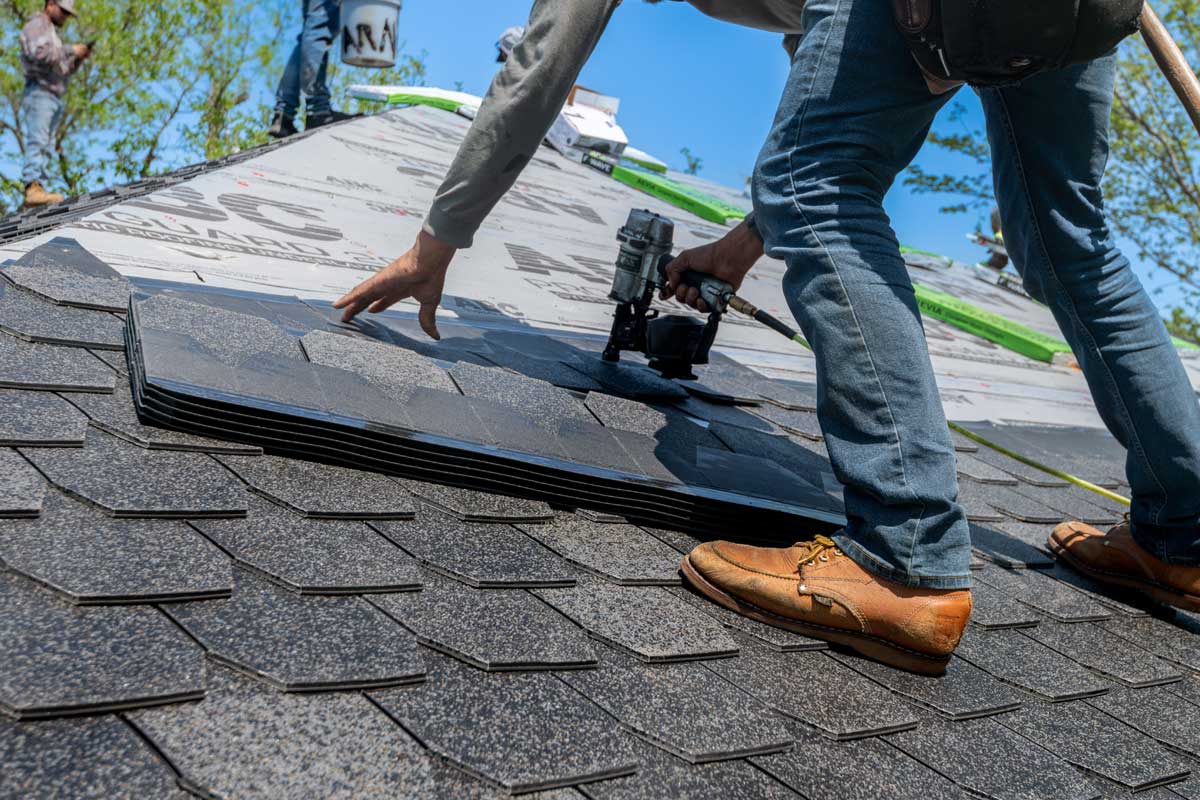
The roof is the element most homeowners under-specify in this configuration. A charcoal or dark gray roofing material — architectural shingles in a slate or weathered wood tone — locks the trim and roof into the same visual register and prevents the red field from reading as a disconnected slab of color. A warm brown or tan roof fights the red rather than framing it, and the result is a house that looks like it was assembled from two separate design decisions rather than one coherent exterior scheme.
Red Brick House with Charcoal Trim Requires a Different Color Logic Entirely
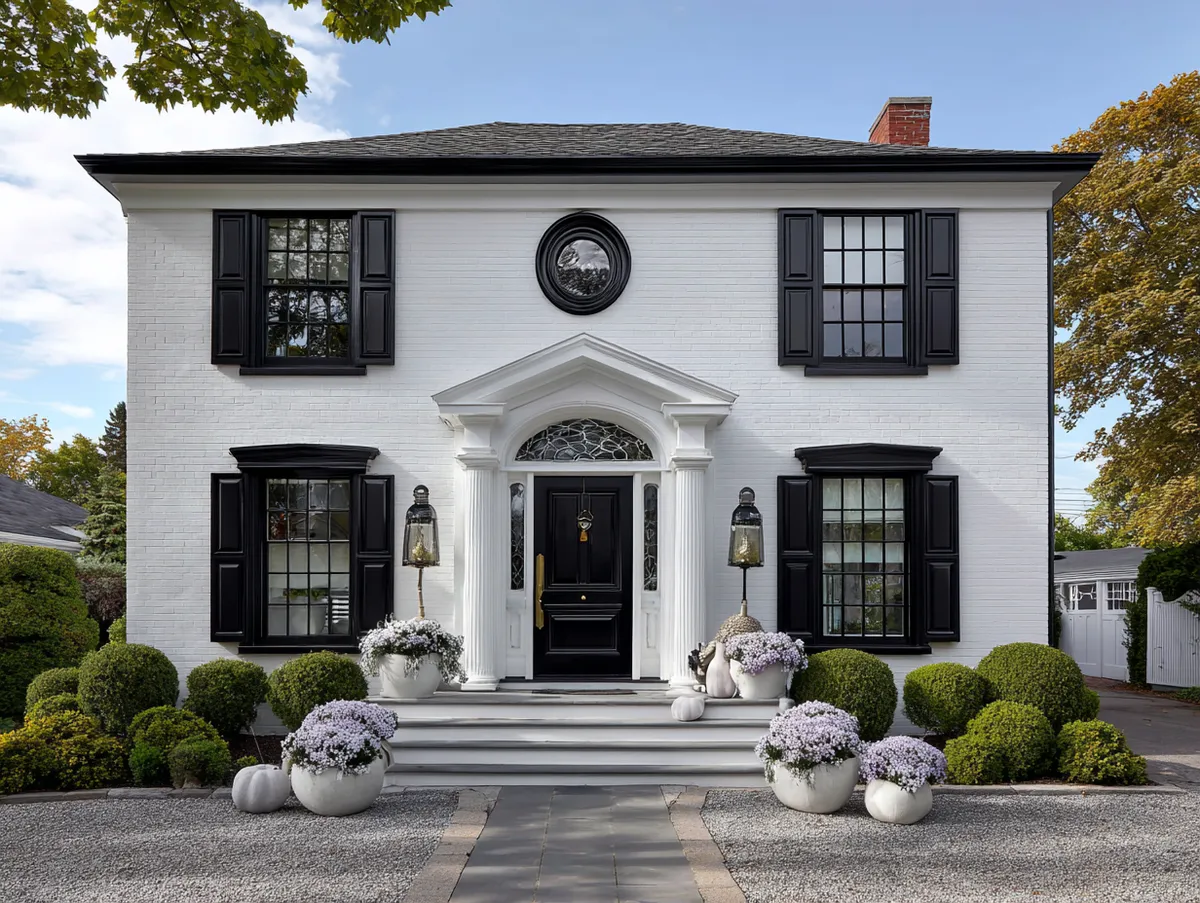
A red brick house with charcoal trim operates differently from a painted red siding exterior — the brick’s inherent texture and tonal variation means charcoal functions as a framing element rather than a contrasting surface. The brick already carries multiple undertones (rust, brown, orange, and occasionally pink depending on the age and firing), and charcoal trim works specifically because it pulls from the darkest values already present in the mortar and the brick’s shadow tones. The combination feels resolved rather than imposed. Designers at Brick & Batten specified Benjamin Moore Kendall Charcoal plus Onyx for the windows, gutters, and door on a two-story red brick renovation — that pairing pulls out the existing cool-gray tones in older brick in a way that warm neutrals cannot.
What doesn’t work: warm-undertone charcoals (anything with visible brown or green cast) applied as trim against red brick. The brick already reads warm, and a warm charcoal competes with it rather than contrasting it. The charcoal needs to sit in the cool-gray register — LRV 30–45 with no perceptible warm undertone at arm’s length — to perform the visual separation that makes the combination legible from the street. A quick test: hold the paint chip directly against the brick in outdoor light. If the charcoal looks greenish or brownish next to the brick, it’s the wrong charcoal.
Repainting charcoal trim on a red brick house typically falls on a 5–10 year cycle depending on sun exposure and climate — south- and west-facing trim on an unshaded lot will need attention closer to the five-year mark. The brick itself doesn’t need repainting (painting brick creates a maintenance obligation that’s difficult to reverse), so the trim maintenance budget for this configuration is lower than a full siding exterior. The critical detail: mortar color. Stylists recommend keeping mortar in the gray family when the trim is charcoal — white or beige mortar against charcoal trim creates a three-tone visual noise that reads as unresolved.
| Approach | Red Coverage | Maintenance Interval | Key Risk |
|---|---|---|---|
| Red top / charcoal base split | 50–60% of facade | 10–12 yrs (factory finish); 5–10 yrs (painted) | Misaligned split line reads as accidental |
| Charcoal dominant / red accent wall | 10–20% of facade | 10–15 yrs (factory finish) | Accent area too large loses framing effect |
| Red dominant / charcoal trim only | 70–80% of facade | 10–12 yrs repainting required | Uneven red fading visible across large field |
| Red brick / charcoal painted trim | Brick only (no siding) | 5–10 yrs (trim repainting) | Warm-undertone charcoal fights brick tones |
Charcoal siding fade resistance is a documented engineering limitation, not a marketing concern. According to exterior contractors, charcoal and dark gray siding with LRV values of 30–45 shows noticeable color shift within 7–10 years even with premium materials — because surface temperatures on dark panels can reach 160–180°F on hot days, accelerating pigment and polymer breakdown. For homeowners committed to this palette long-term, the choice of material is more consequential than the choice of exact color. Siding fade resistance explained by material type covers exactly how LRV, capstock technology, and factory finishes interact — useful before finalizing any dark exterior.
Final Take
Charcoal and red house siding rewards the homeowner who understands proportion — not the one chasing the boldest possible result.
Red pigments are the most UV-unstable color in exterior coatings; fiber cement with a factory finish is the only material that holds them long-term without repainting every decade.
Charcoal works best when it outnumbers red — whether as the dominant field or the framing trim — because it gives the red somewhere to land rather than a surface to compete with.
Save this post before your next consultation with a contractor or color consultant — these proportion rules and material notes will keep you from a decision you’ll repaint your way out of in five years.