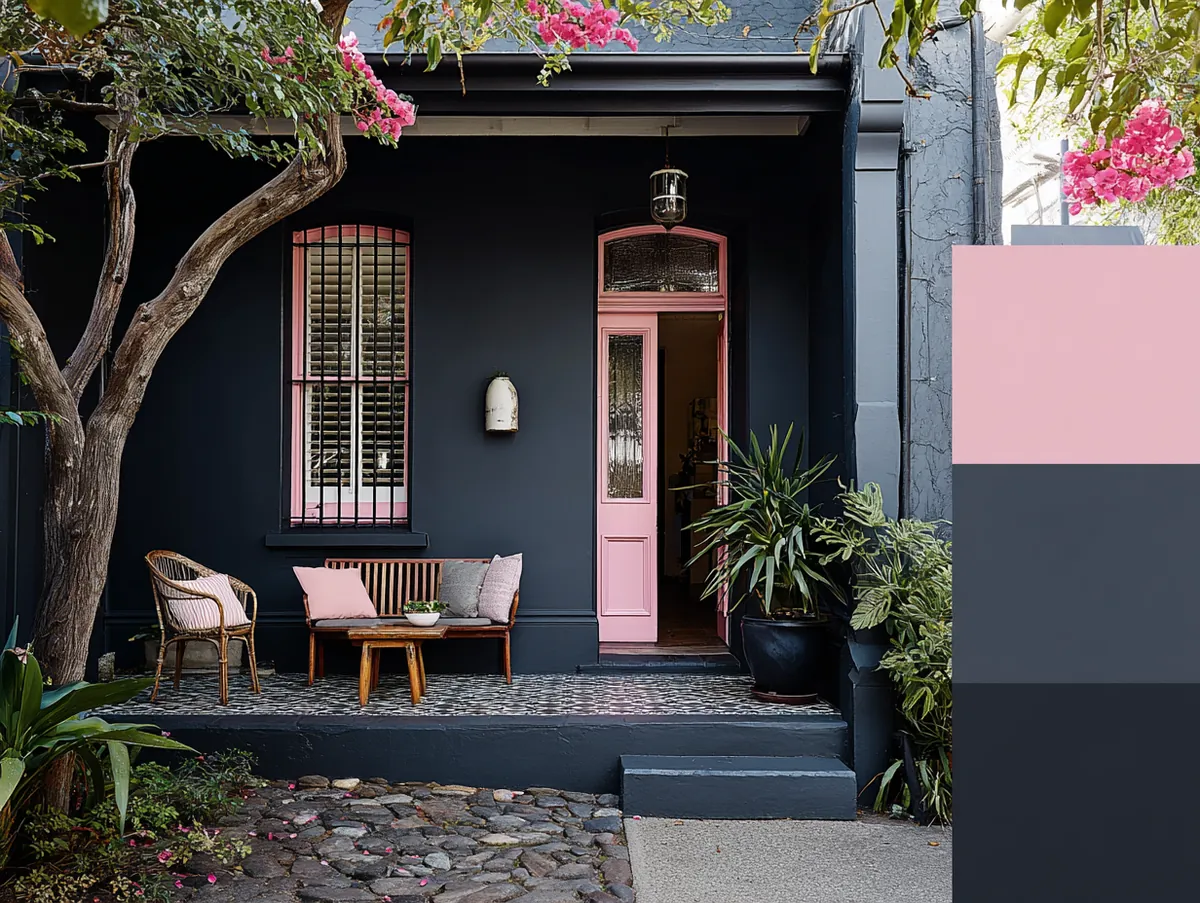
Benjamin Moore Hale Navy HC-154 has been the most-searched navy exterior paint color for three years running, and I get why. Pair it with a creamy white trim and even a $180K ranch house starts looking like a $400K colonial. Not every navy-and-white combo works, though. I painted a test patch of Sherwin-Williams Anchors Aweigh on my garage door once and it dried almost purple. Took me a full weekend to fix that.
Below you’ll see 12 exterior house paint designs where white and navy actually land right — colonial, coastal, and modern. For each one, I’m calling out what shade of white sits next to that navy, what finish goes where, and the one placement mistake that makes the whole thing look cheap. Skip the shutters section if you’re working with a flat-front build. Start there if you’ve got a porch.
Quick Summary
Best navy shade: Benjamin Moore Hale Navy HC-154 (LRV 6.83) — reads blue, not black, even at dusk.
Best white pairing: BM White Dove OC-17 — warm enough to soften the contrast without looking yellow.
Finish rule: Flat or eggshell on white walls, satin or semi-gloss on navy accents.
Biggest mistake: Painting large surfaces navy on north-facing walls — reads black by 4 PM.
Budget estimate: $4,200–$5,800 for full exterior repaint on a 2,000 sq ft home.
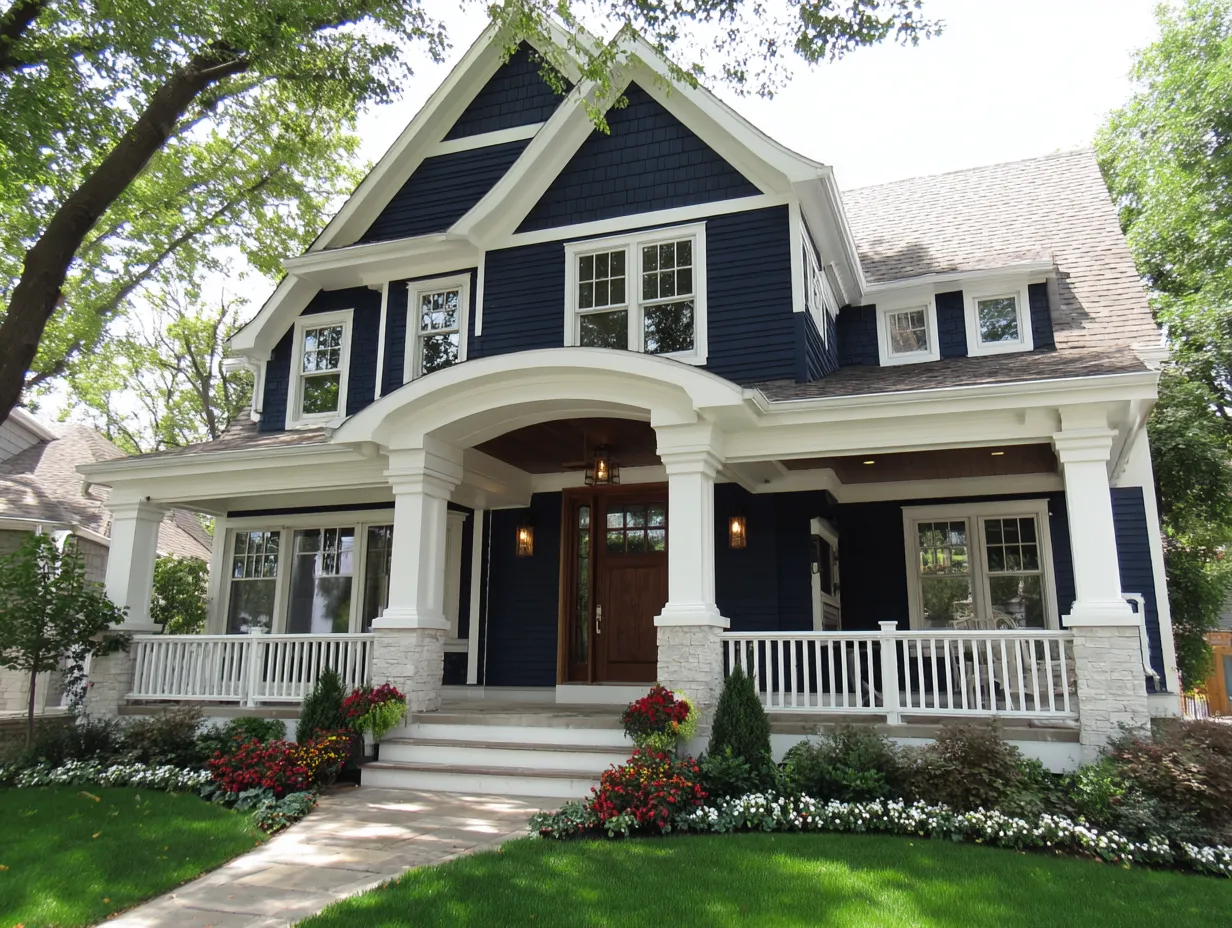
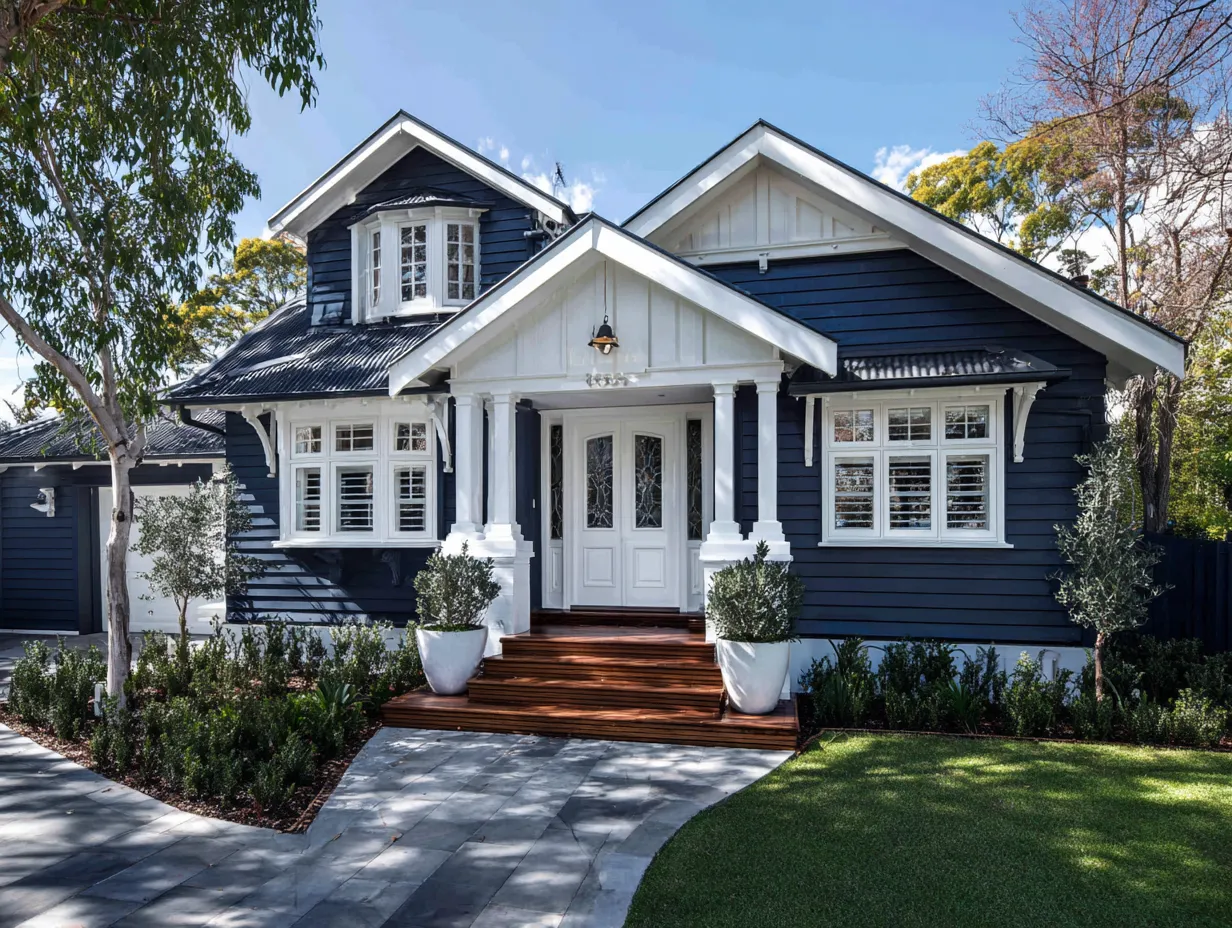
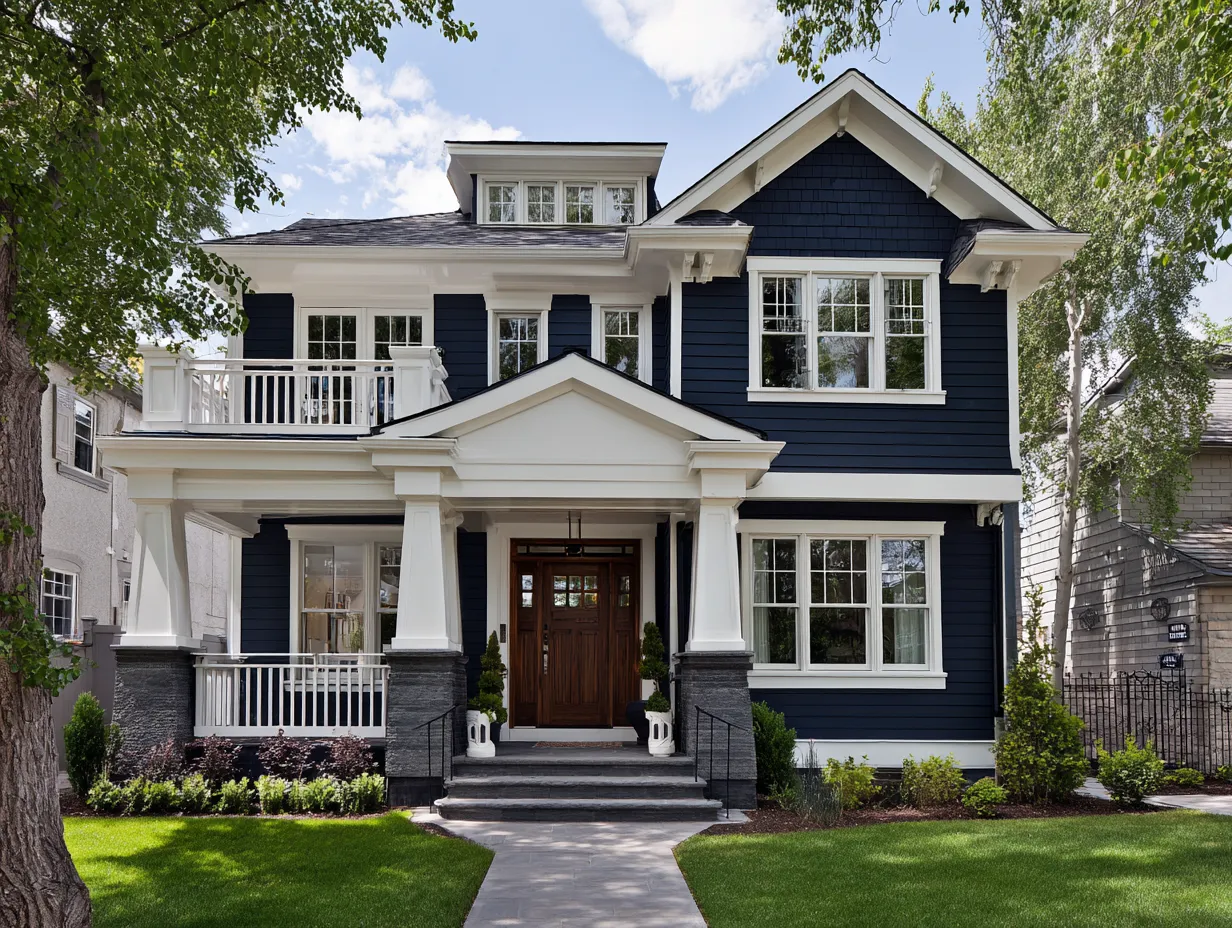
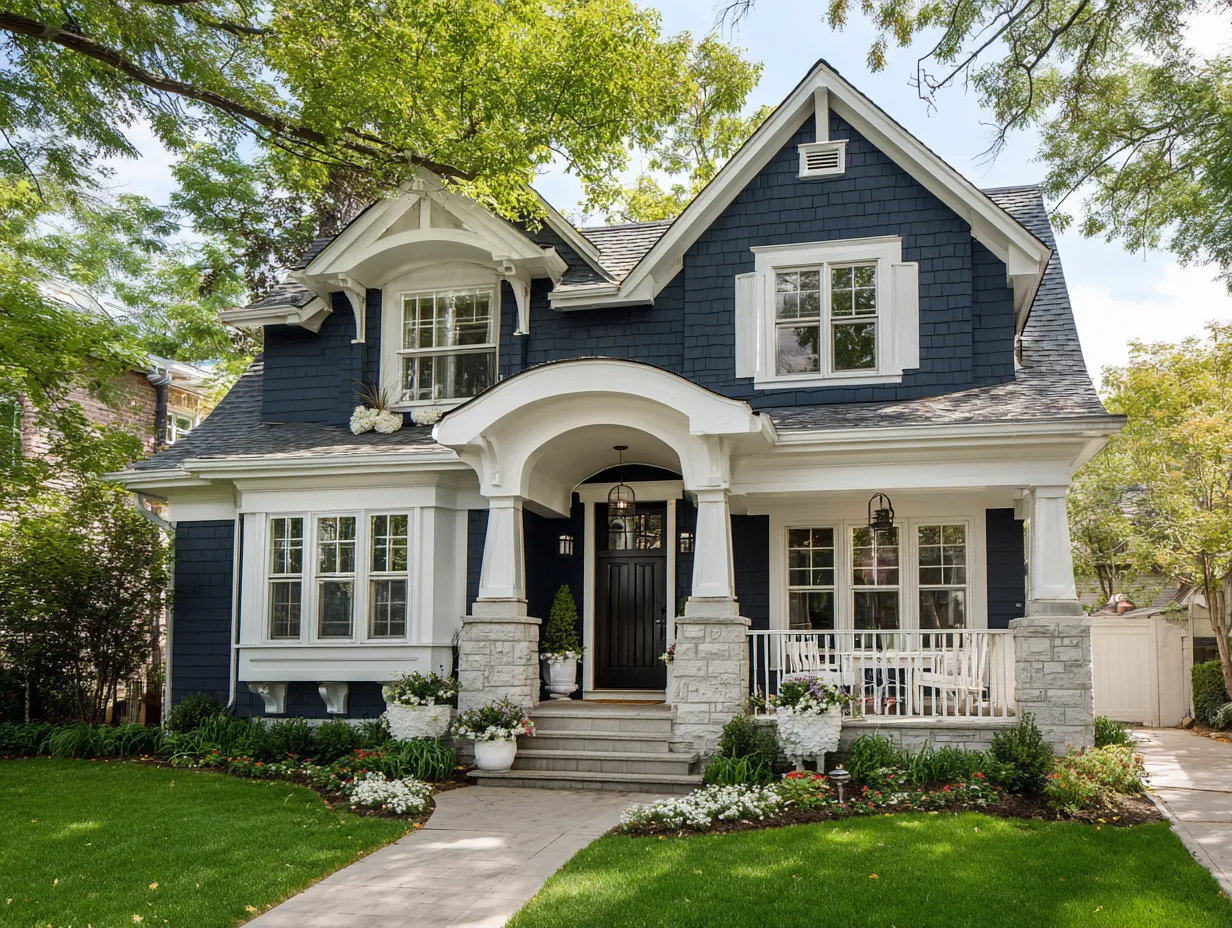
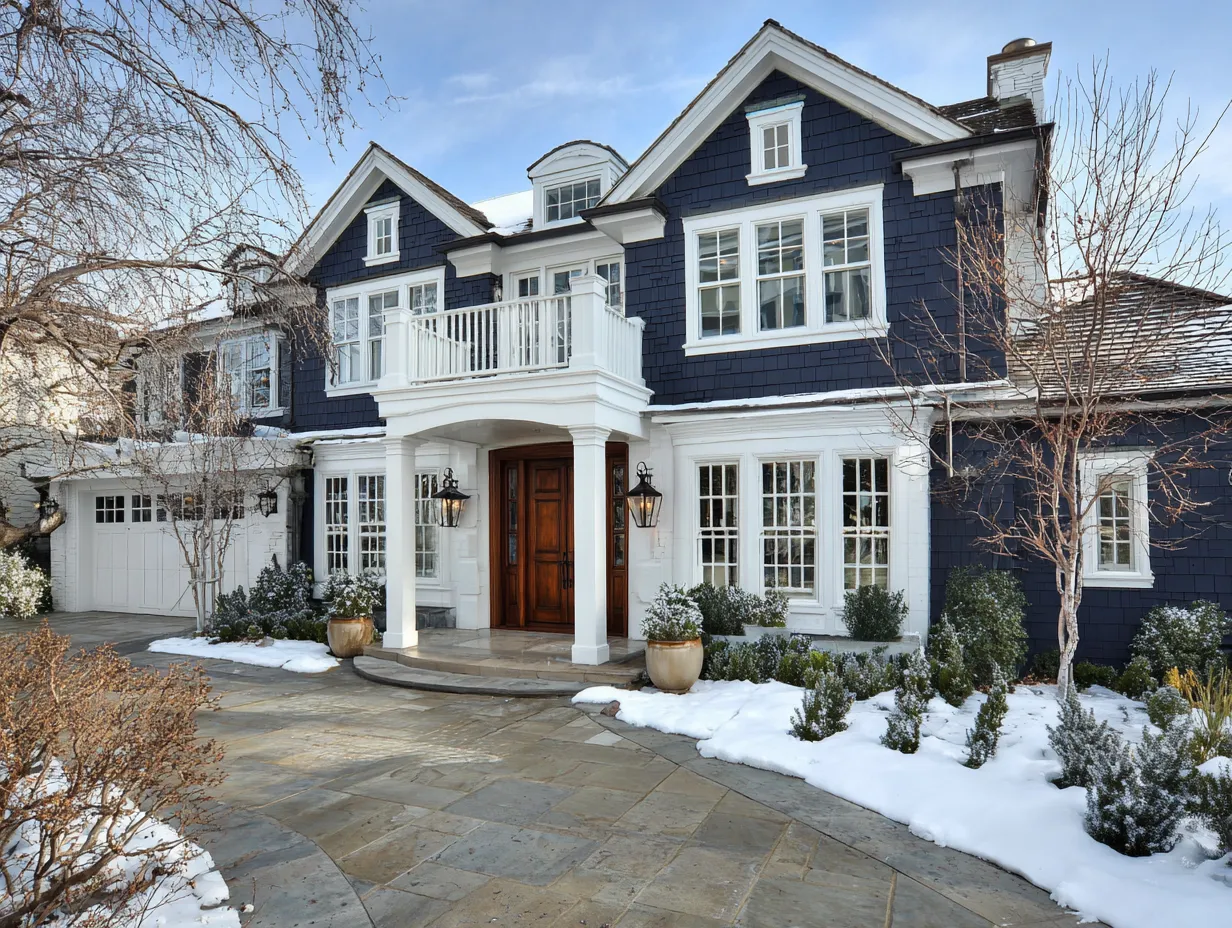
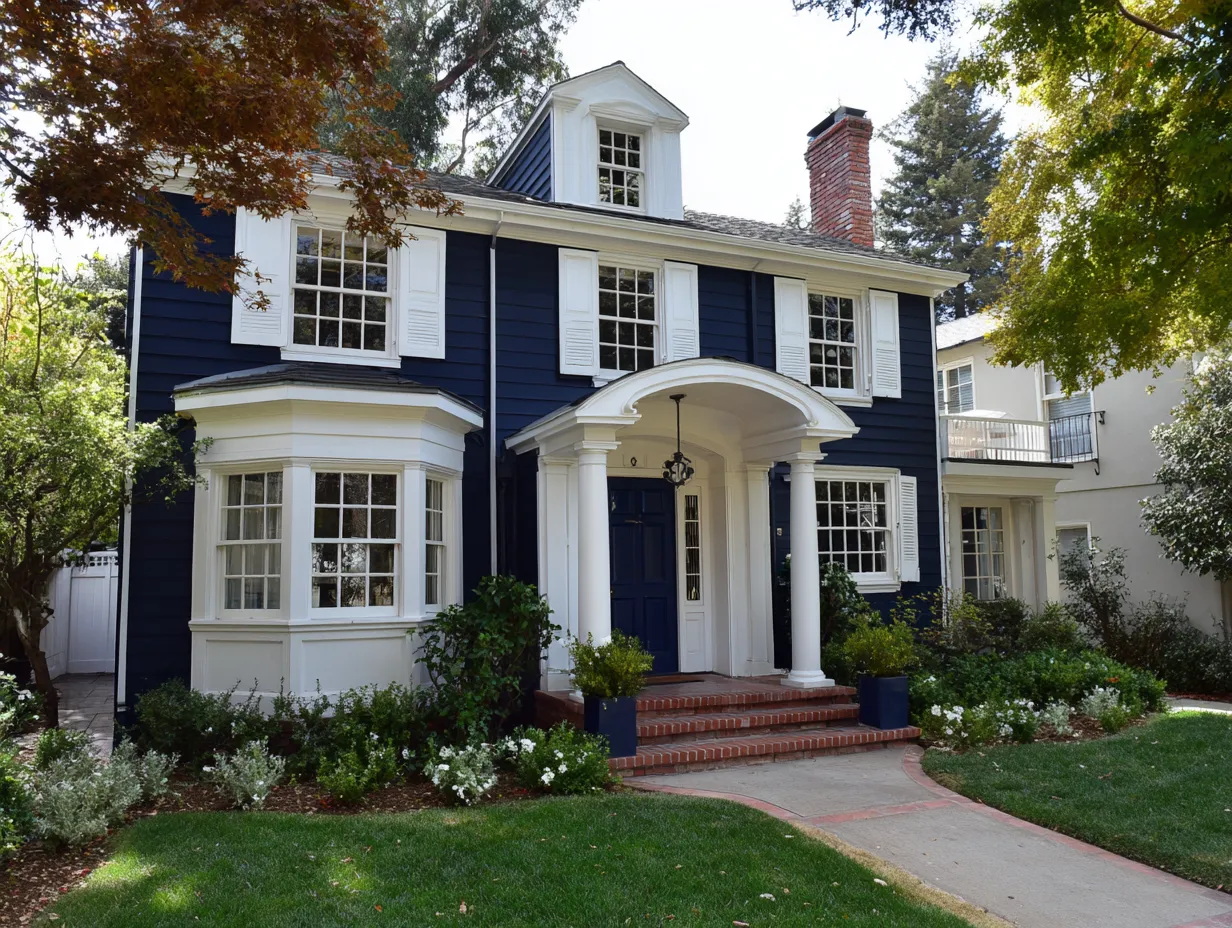
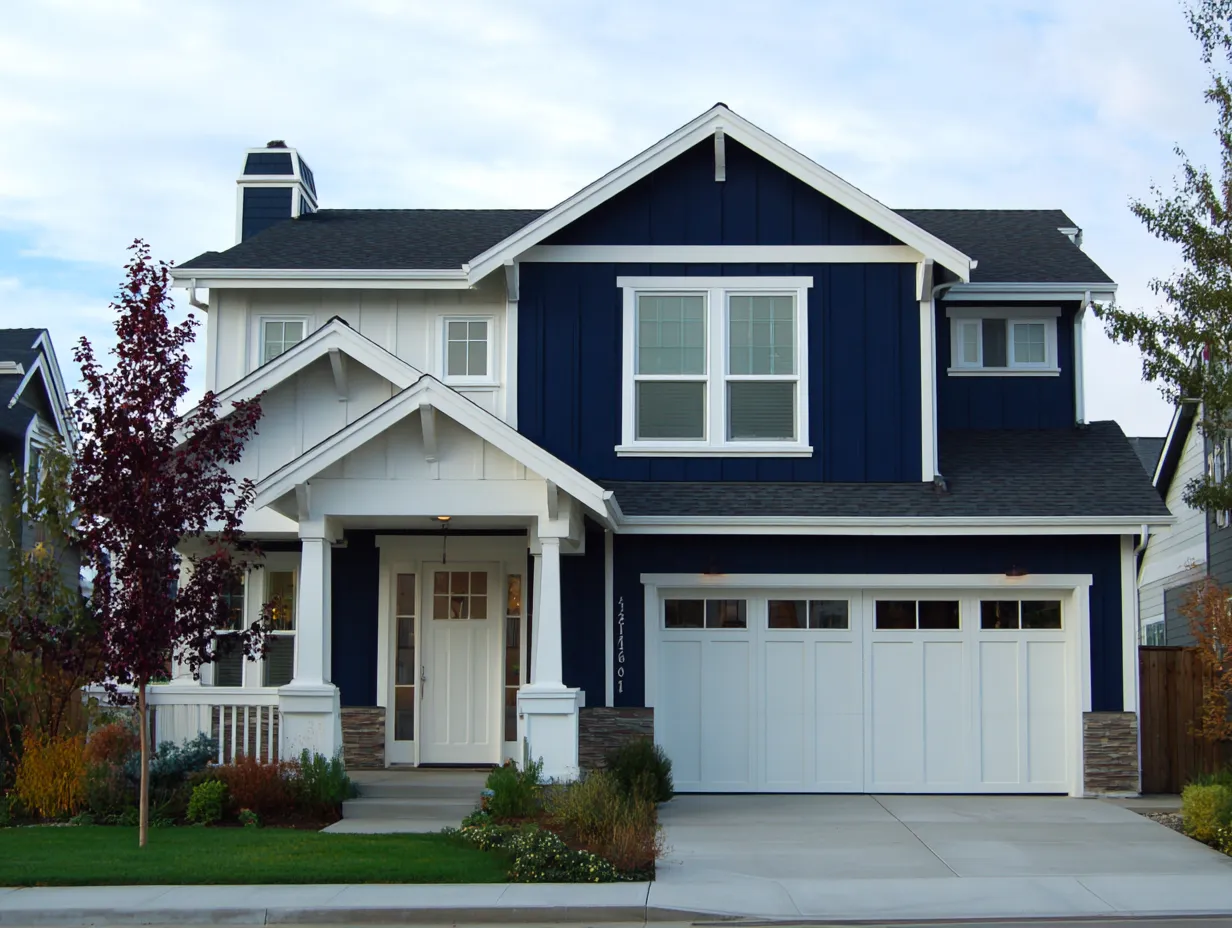
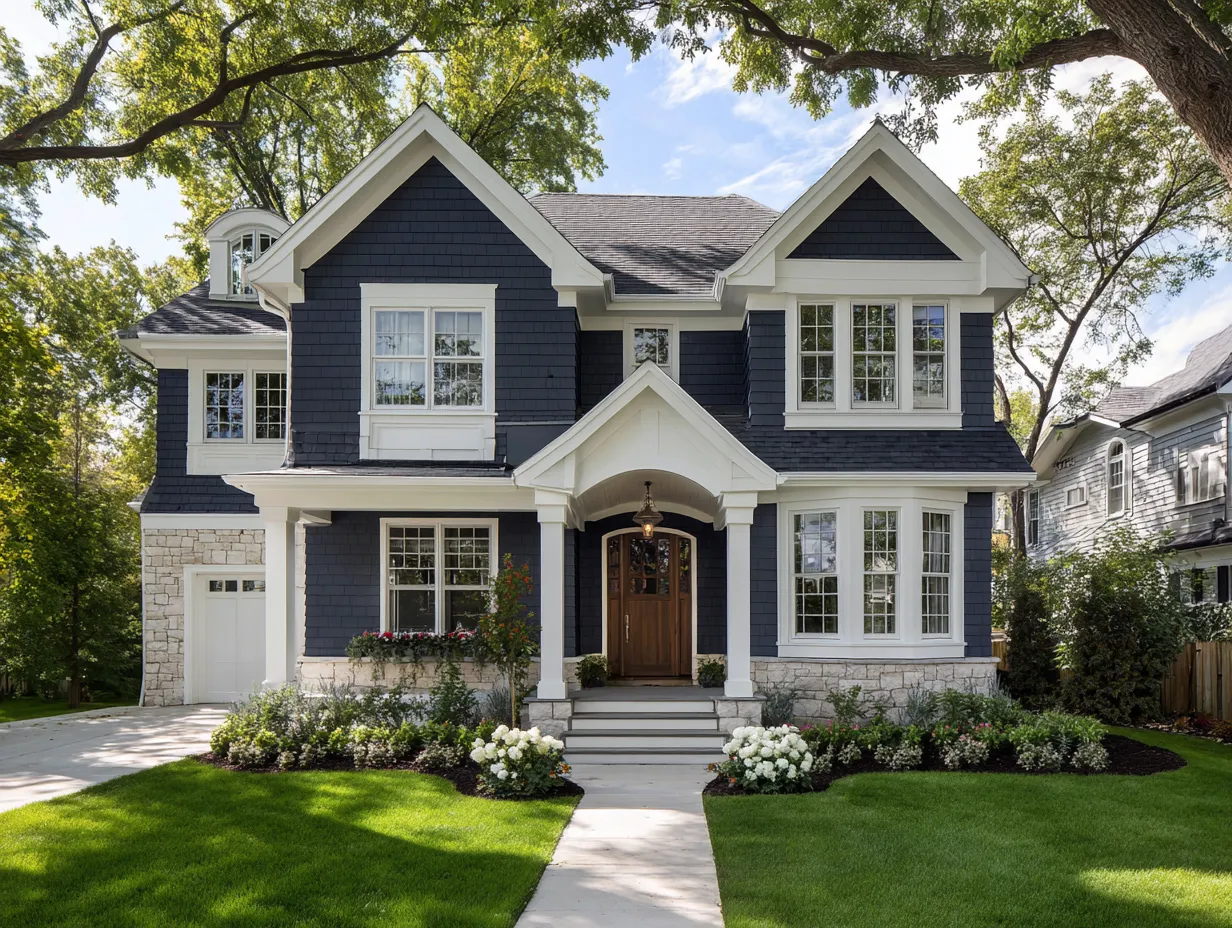
White and Navy Exterior Paint for Classic Home Styles
A classic exterior paint design instantly elevates a home, bringing sophistication and curb appeal with just the right color combination. White and navy are a timeless pairing, each shade balancing the other to create a striking yet inviting facade. When considering this exterior house paint design, the crispness of white walls allows for light reflection, brightening up the overall look. Meanwhile, navy blue accents—especially on trim, shutters, and doors—add depth and definition, turning simple elements into focal points.
| Paint Color | Brand | LRV | Undertone | Best For | ~Price/Gal |
|---|---|---|---|---|---|
| Hale Navy HC-154 | Benjamin Moore | 6.83 | Cool gray | All-around safest pick, doors + full siding | $80–$85 |
| Naval SW 6244 | Sherwin-Williams | 4.0 | Warm blue-black | Front doors, shutters (too dark for full walls) | $75–$79 |
| Sea Serpent SW 7615 | Sherwin-Williams | 7.0 | Blue-green | Coastal homes, pairs well with natural wood | $75–$79 |
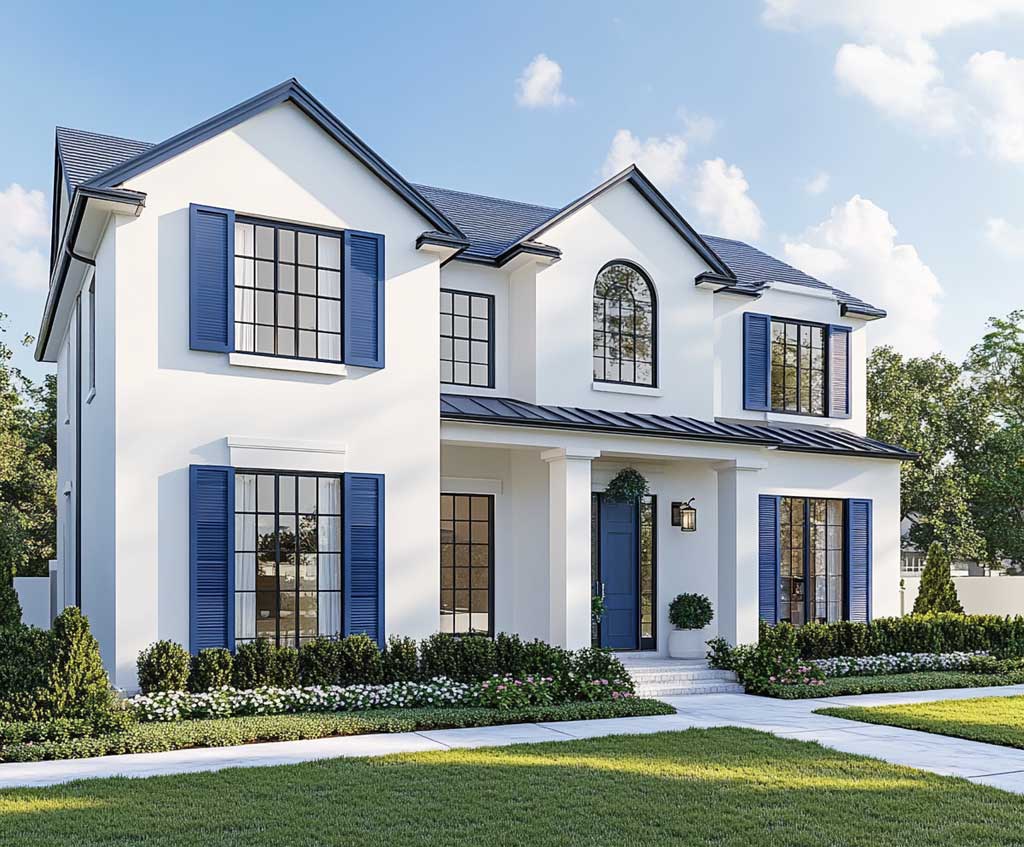
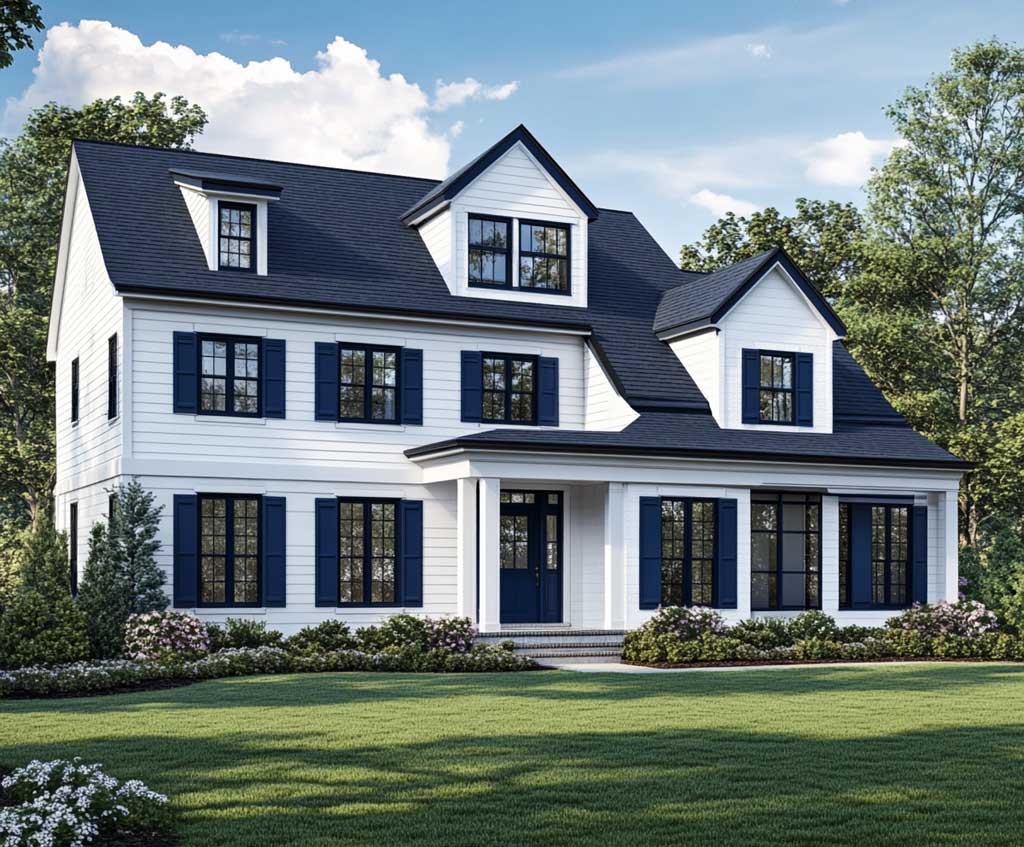
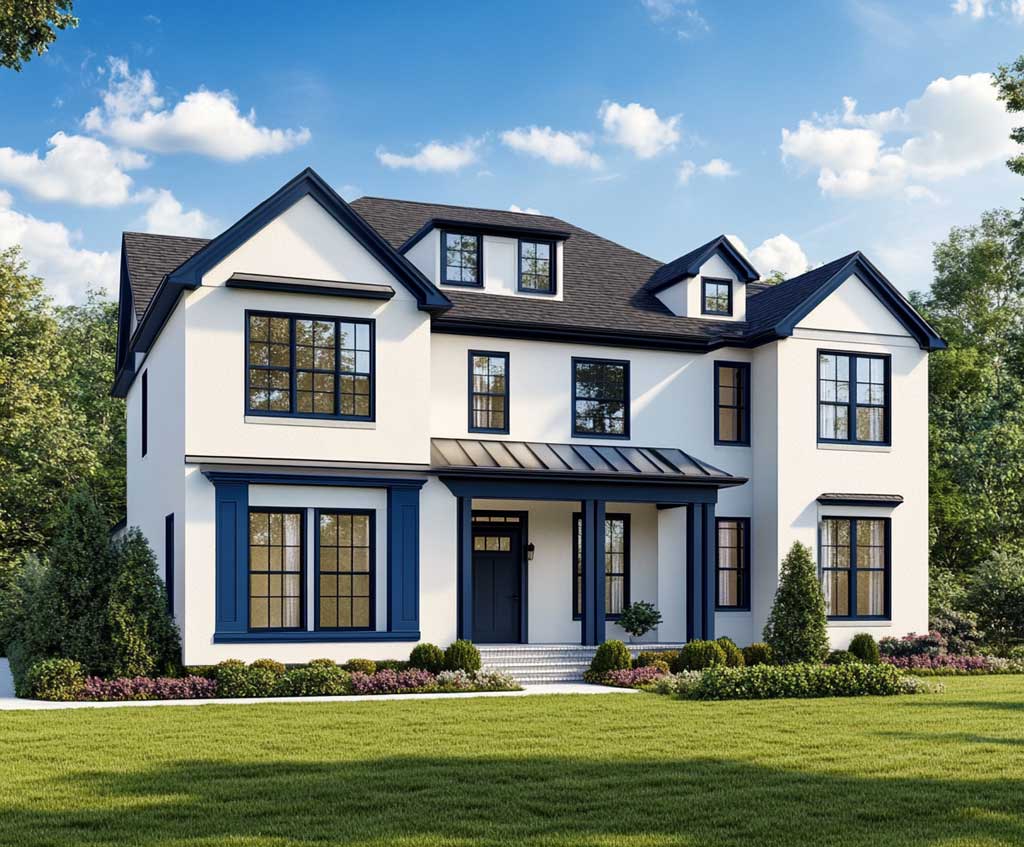
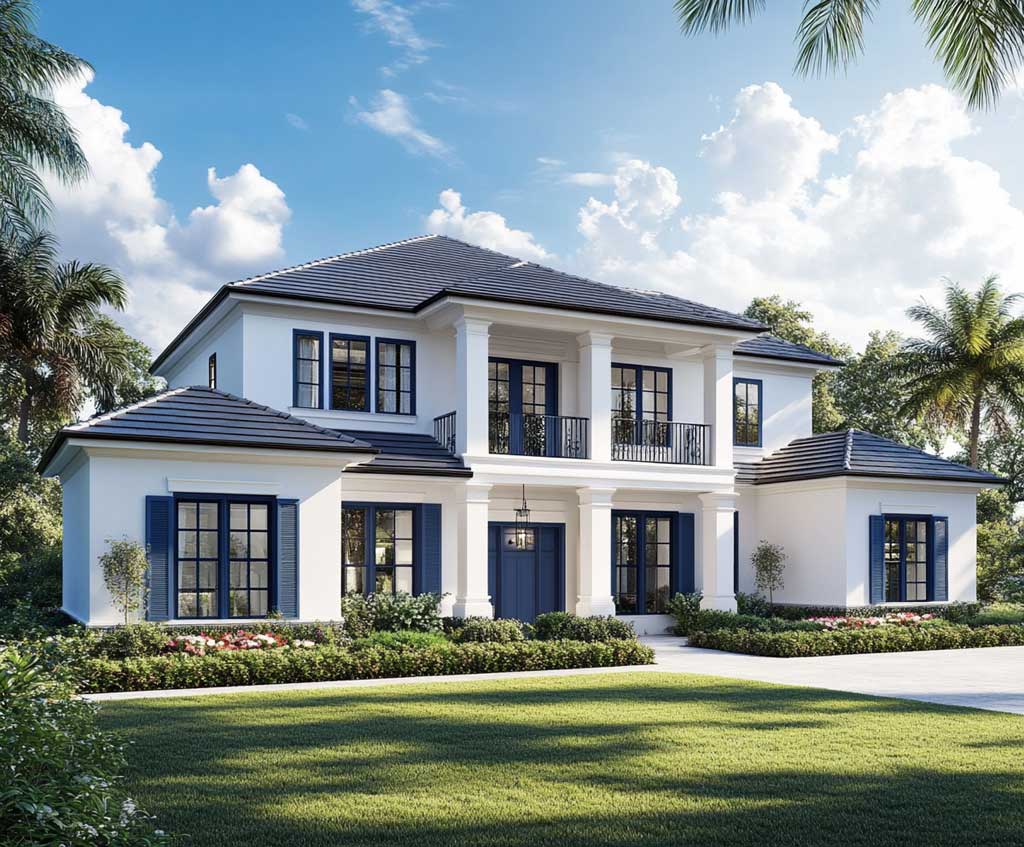
The elegance of white and navy is versatile, blending well with various architectural styles, from colonial to coastal. This combination also complements lush landscaping. White provides a clean canvas, letting greenery and garden colors shine, while navy adds a sophisticated undertone. The classic look suits various neighborhoods, whether in bustling urban settings or tranquil countryside. For more ideas on pairing bold exteriors with contrasting trim, see our breakdown of two-tone exterior house paint ideas for traditional homes.
In terms of application, choosing a high-quality exterior paint is essential for both white and navy shades to maintain their vibrancy and resist fading. White paint often requires careful selection to ensure it doesn’t discolor with exposure, while navy, with its bold pigmentation, needs UV-resistant qualities to stay rich and dark. Together, these colors bring balance and a polished charm, turning a simple house exterior into a standout design. For a specific navy shade recommendation, Benjamin Moore’s Hale Navy HC-154 has become the industry standard among exterior designers for its cool gray undertone that reads blue — not black — in every light condition.
This exterior house paint design also allows for seasonal decorations to pop. White and navy provide a perfect backdrop for colorful flowers, holiday wreaths, or outdoor lighting. The design adapts to various decor changes throughout the year without losing its appeal. The key lies in harmonizing shades to highlight both the structure and the landscaping, creating an enduring, visually appealing home exterior.
Sherwin-Williams Naval SW 6244 runs about $79 per gallon for Emerald line. It’s darker than Hale Navy by a full two LRV points, so it reads almost black on north-facing walls. I learned that after watching my neighbor’s Cape Cod turn into a haunted house in November. Stick with something in the 6–8 LRV range if your front facade doesn’t get direct afternoon sun. Benjamin Moore Hale Navy HC-154 sits right at 6.83 — dark enough to feel serious, light enough to still read blue at dusk.
For white, stop reaching for pure Decorator’s White. It photographs well but in real life it clashes hard with navy because there’s zero warmth to absorb the contrast. White Dove OC-17 has the tiniest yellow push that softens the edge between the two colors. Costs the same per gallon. Takes the same number of coats. Just looks twice as intentional on siding.
Colonial House Paint Design in Navy Blue and White
Drawing inspiration from colonial architecture, this white and navy exterior design captures timeless charm with a modern twist. Colonial homes are known for their symmetrical layout and elegant details, making them ideal canvases for classic color schemes. This exterior house paint design embraces simplicity with white as the main shade, softened by navy accents on doors, shutters, and window frames.
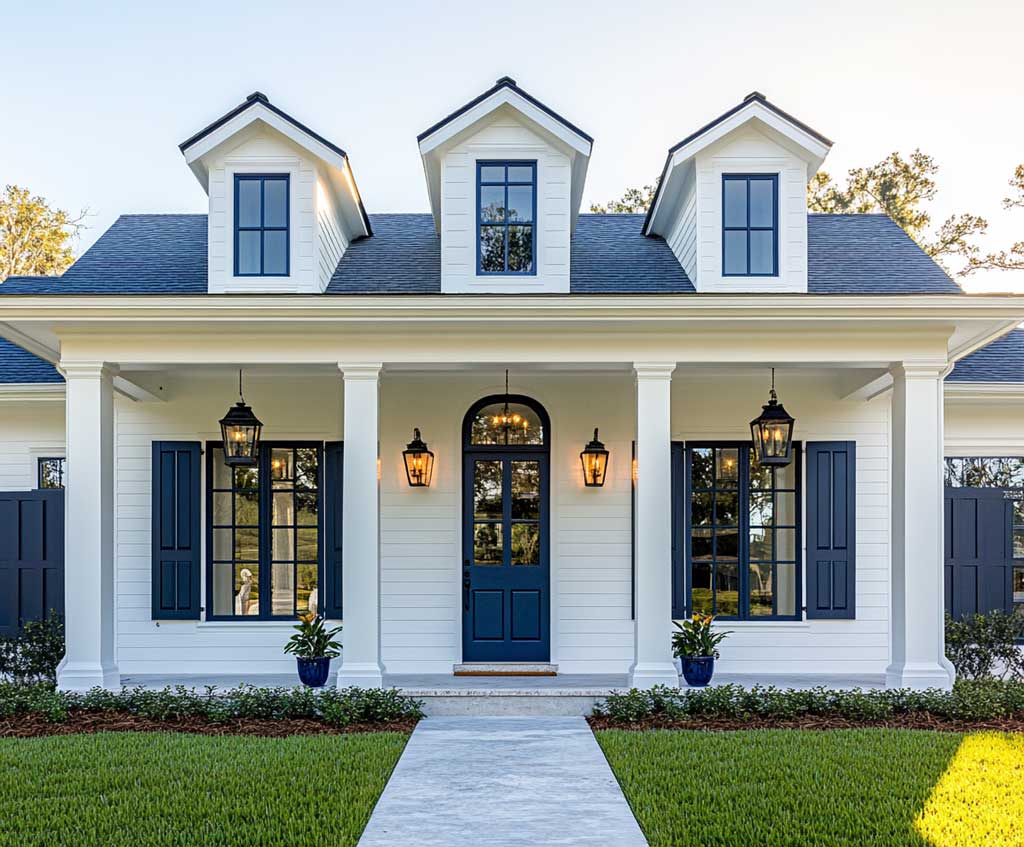

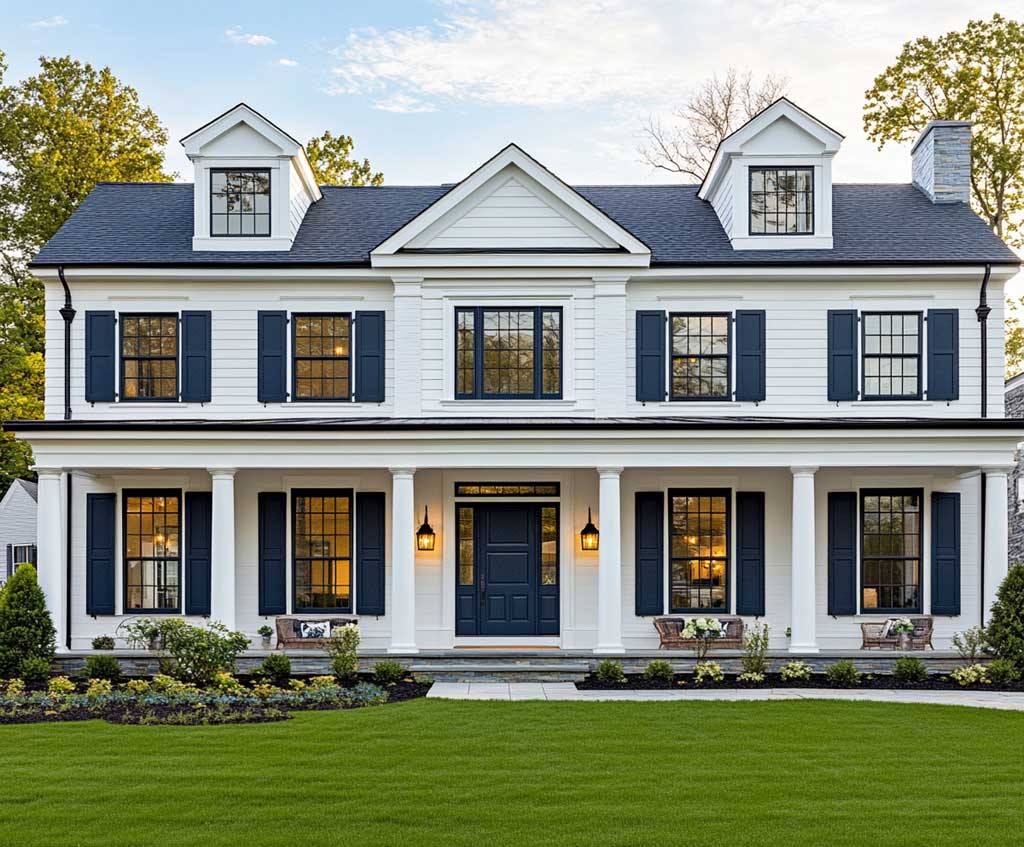
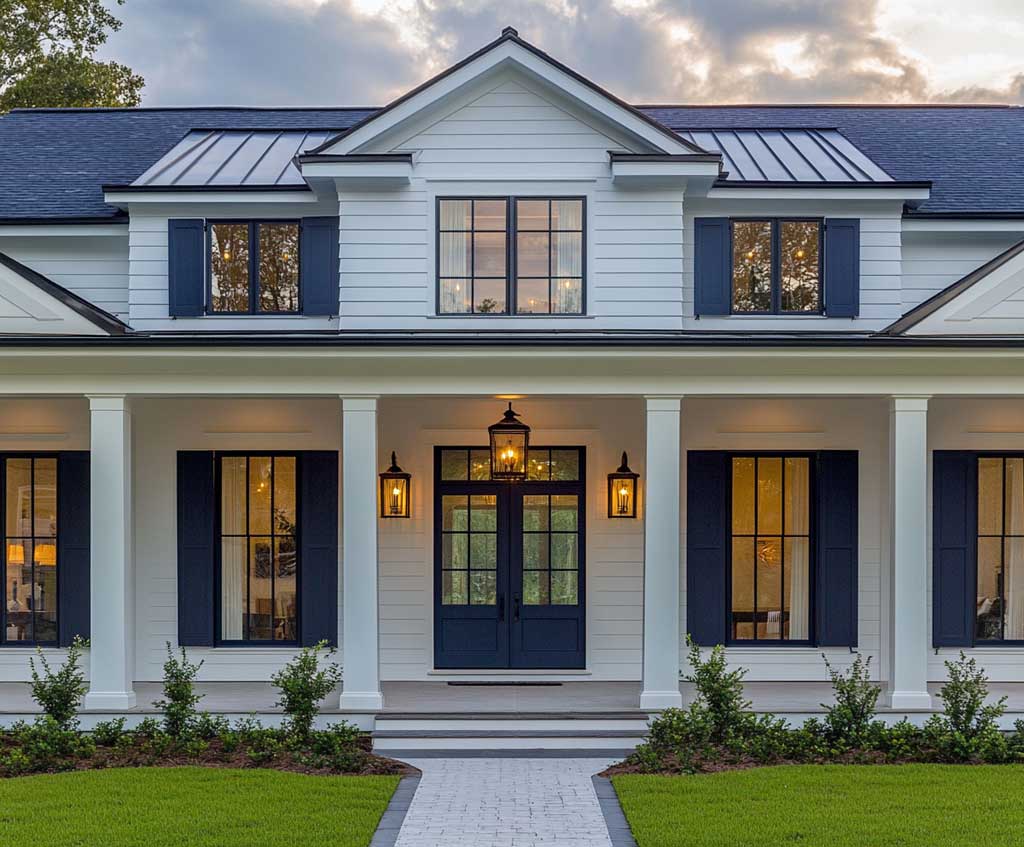
The elegance of navy against white enhances colonial architectural elements, like columns and crown molding. Navy details bring depth and strength to the exterior, framing windows and doors with a touch of regal sophistication. The look is particularly striking against a backdrop of greenery, with navy accents lending a rich contrast to surrounding plants and trees.
Maintenance considerations for this classic paint design are straightforward. A durable, weather-resistant white paint is essential for maintaining a clean appearance over time, as white can easily show signs of wear. Choosing a high-quality navy paint with UV protection helps it stay bold, as intense sun can cause darker colors to fade. Together, white and navy create a balanced contrast that’s easy to maintain yet delivers a strong visual impact.
The colonial-inspired exterior house paint design is perfect for those who appreciate tradition yet want a fresh and updated look. White keeps the house looking light and airy, while navy adds a grounded, welcoming feel. Adding classic decor, such as lantern lights by the front door or vintage-style outdoor furniture, further enhances the look, making it feel cohesive and charming.
How to Paint a Navy and White House Exterior
Step-by-step process for painting your home exterior in a white and navy blue color scheme — from prep to final coat.
Tools & Materials
- Pressure washer
- Painter’s tape (FrogTape)
- Roller + 3/4″ nap cover
- Angled sash brush (2.5″)
- Exterior primer (tinted gray for navy areas)
- White paint — flat/eggshell (BM White Dove)
- Navy paint — satin/semi-gloss (BM Hale Navy)
Pressure wash and scrape
Blast the entire exterior with a pressure washer at 2,500 PSI. Scrape all peeling paint. Let everything dry for 24–48 hours. Painting over flaking paint is the fastest way to waste $800 in materials.
Prime all bare surfaces
Use a bonding primer on bare wood and previously painted surfaces. For navy areas specifically, tint the primer gray — white primer under navy causes bleed-through within six months.
Paint the white body first
Roll two coats of flat or eggshell white on all siding and large trim. Work top-to-bottom, keeping a wet edge. White is forgiving — navy isn’t. Get the easy part done first so you can focus when it matters.
Tape off and paint navy accents
Apply FrogTape along all edges where navy meets white. Brush navy in satin or semi-gloss on shutters, doors, window sashes, and trim. Two coats minimum — the first coat on dark colors always looks streaky. Pull the tape while the second coat is still slightly tacky for clean lines.
Inspect and touch up
Walk the full perimeter at midday when the sun is highest — that’s when every missed spot, drip, and thin area shows. Touch up with an angled brush. Navy shows imperfections that white hides, so spend extra time on the dark sections.
One thing nobody mentions about colonial navy-and-white: your gutters will make or break the whole look. White gutters disappear into white siding — good. Navy gutters on white walls look like someone drew on the house with a marker. Bad. I’ve seen otherwise beautiful colonials ruined by mismatched gutter color because the painter treated them as an afterthought.
Brass or black hardware pulls the colonial look forward without making it costume-y. Brushed nickel reads cold against navy. Oil-rubbed bronze at $12–$18 per piece from Schlage or Kwikset gives you that old-money feel for less than a dinner out. The mailbox, house numbers, and porch light should all match — mix metals and it looks like three different people decorated the front of your house.
Modern Navy and White Exterior — High-Contrast Paint Ideas
For those who favor modern design with a hint of tradition, a white and navy exterior paint design achieves just that. This exterior house paint design relies on bold contrast, with pure white walls acting as a bright canvas, paired with deep navy details that bring a sense of refinement. The look is clean, modern, and sophisticated, making it ideal for homes in various settings, from coastal to suburban.
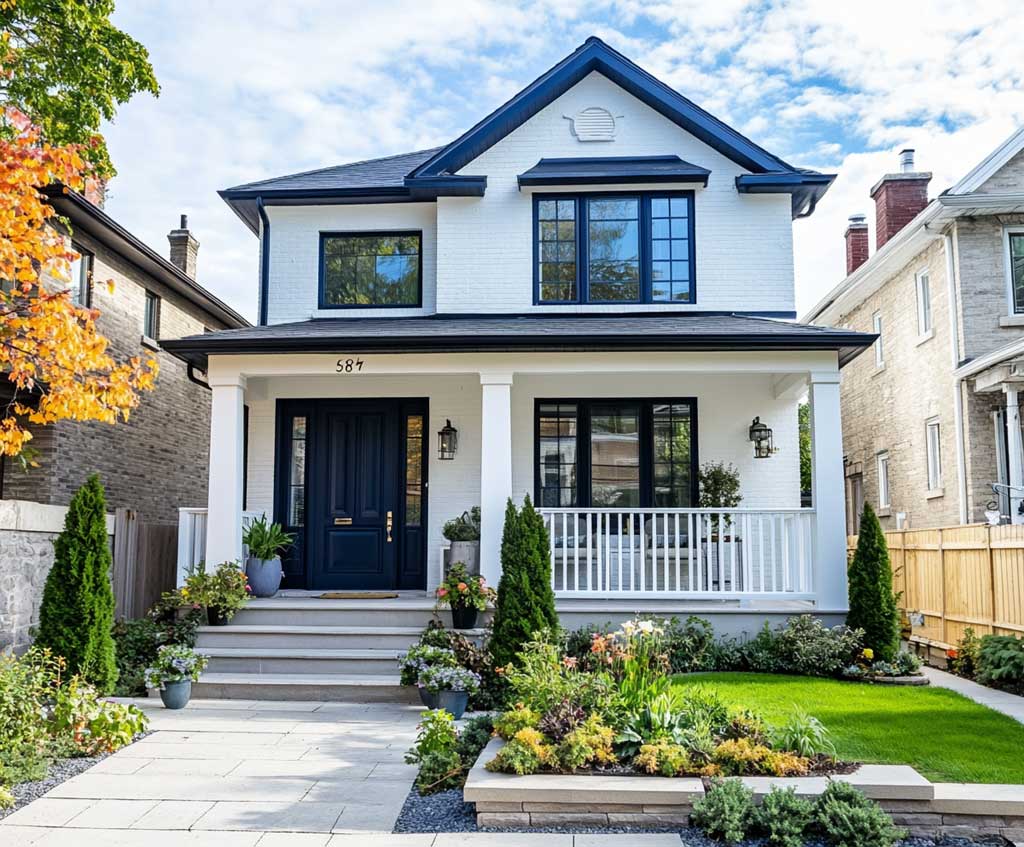
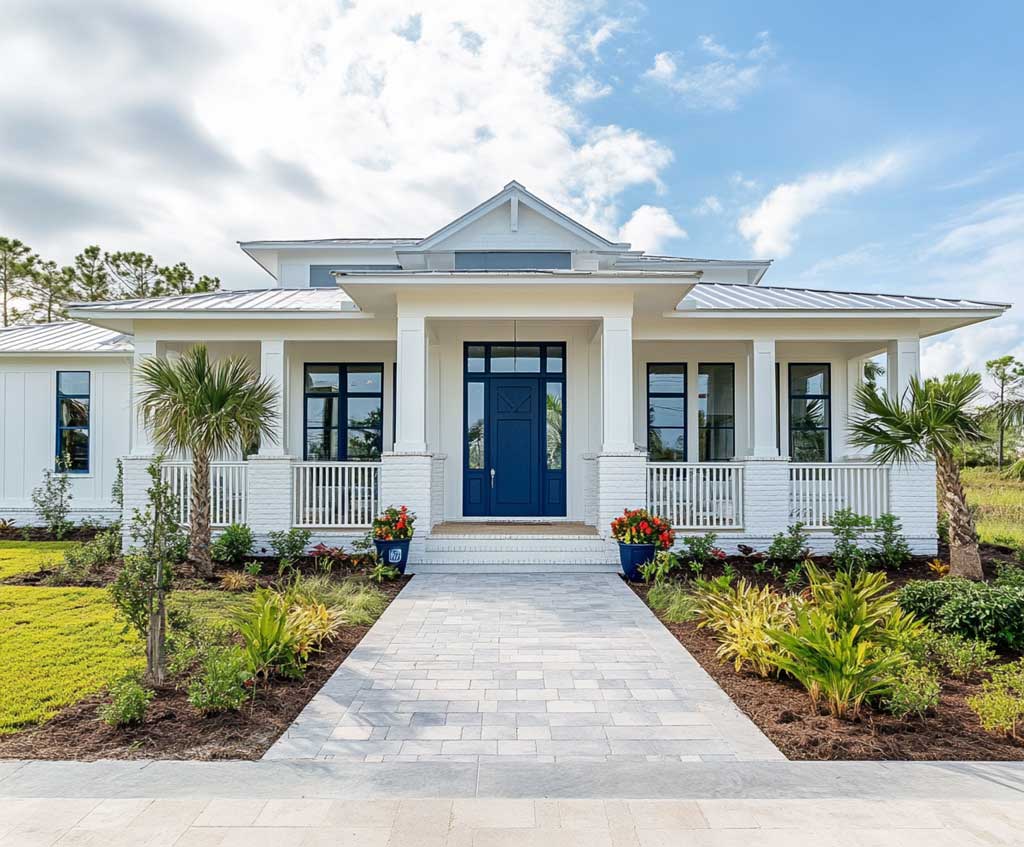
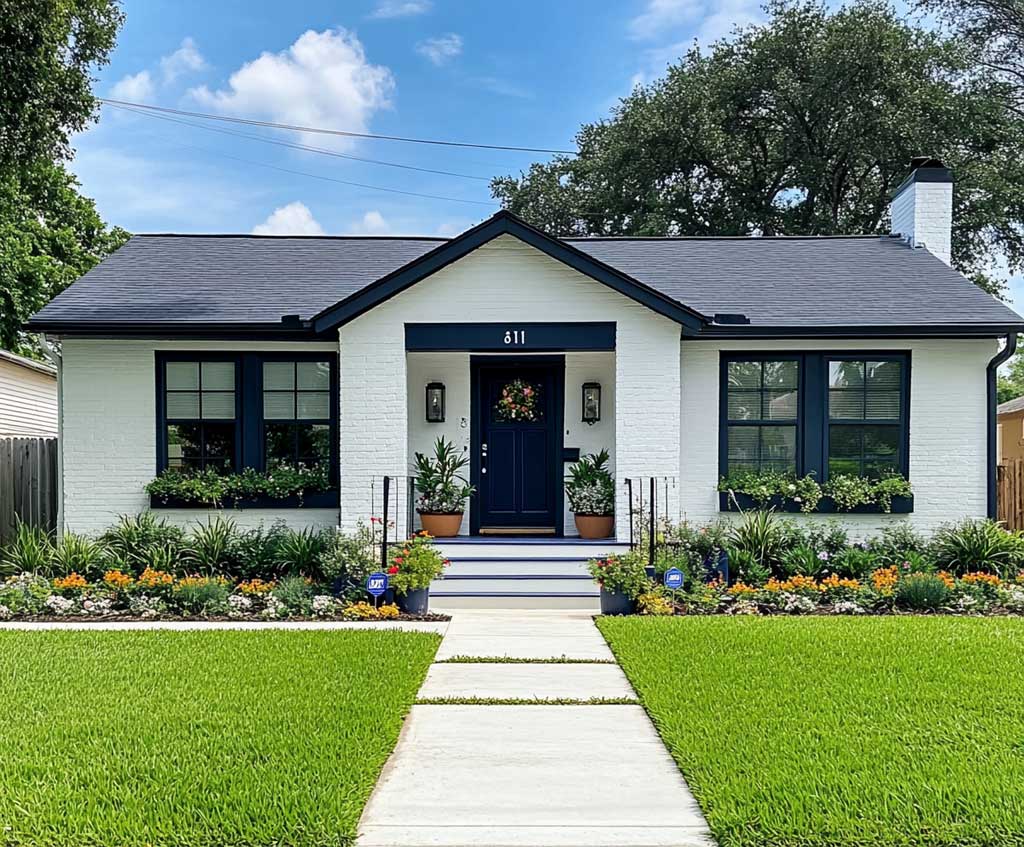

A sophisticated white and navy contrast brings character to architectural details, whether they’re sleek and contemporary or have vintage elements. The navy details emphasize doors, window frames, and any decorative moldings, lending a polished, upscale feel. The simplicity of this color pairing lets the home speak for itself, highlighting its structure without overwhelming the viewer with overly bold colors. You can see how similar blue tones perform on full exteriors in our collection of exterior house color ideas in shades of blue.
In terms of upkeep, choosing paints with weatherproof qualities is crucial. White should be chosen in a shade that remains vibrant and doesn’t turn yellow over time, while navy must hold its rich hue without fading. These colors work together to showcase a home’s best features, enhancing its curb appeal with minimal yet effective detail.
Styling options with a white and navy palette are plentiful. Adding potted plants with deep green foliage or pops of bright flowers can enhance the entrance, while simple outdoor furniture in matching colors completes the look. This color pairing is not only timeless but provides a foundation for a dynamic exterior design that remains striking in every season.
Flat white next to semi-gloss navy creates a texture contrast you can see from across the street. The matte surface eats light while the glossy navy throws it back. It looks intentional and architectural, like a design firm planned it. Behr Ultra Scuff Defense in semi-gloss runs about $55 per gallon and holds its sheen through two full winters without chalking. That’s the cheapest route to a high-end finish I’ve found.
Don’t paint your garage door navy if it faces the street and gets full sun. Navy garage doors fade faster than a spray tan in July. They also show every water spot, bird dropping, and leaf stain. Paint the garage door white and put your navy on the front door, where it’s sheltered by a porch or overhang. That door gets half the UV exposure and all the visual impact.
Bottom Line on White and Navy Exteriors
Navy and white works on colonials, ranch homes, Cape Cods, and flat-front modern boxes. The formula is the same everywhere: white body, navy accents on recessed elements, satin or semi-gloss on the dark color, flat or eggshell on the light one. Benjamin Moore Hale Navy plus White Dove is the safest bet if you want to skip the sample stage entirely. Budget about $4,200–$5,800 for a full exterior repaint on a 2,000 sq ft home using contractor-grade labor.
Two coats minimum on the navy — one coat will show primer bleed-through within six months. And test your white on the actual siding material before committing. White looks completely different on vinyl, wood, and fiber cement. What reads warm on a paint chip can go ice-cold on HardiePlank.
Related Topics