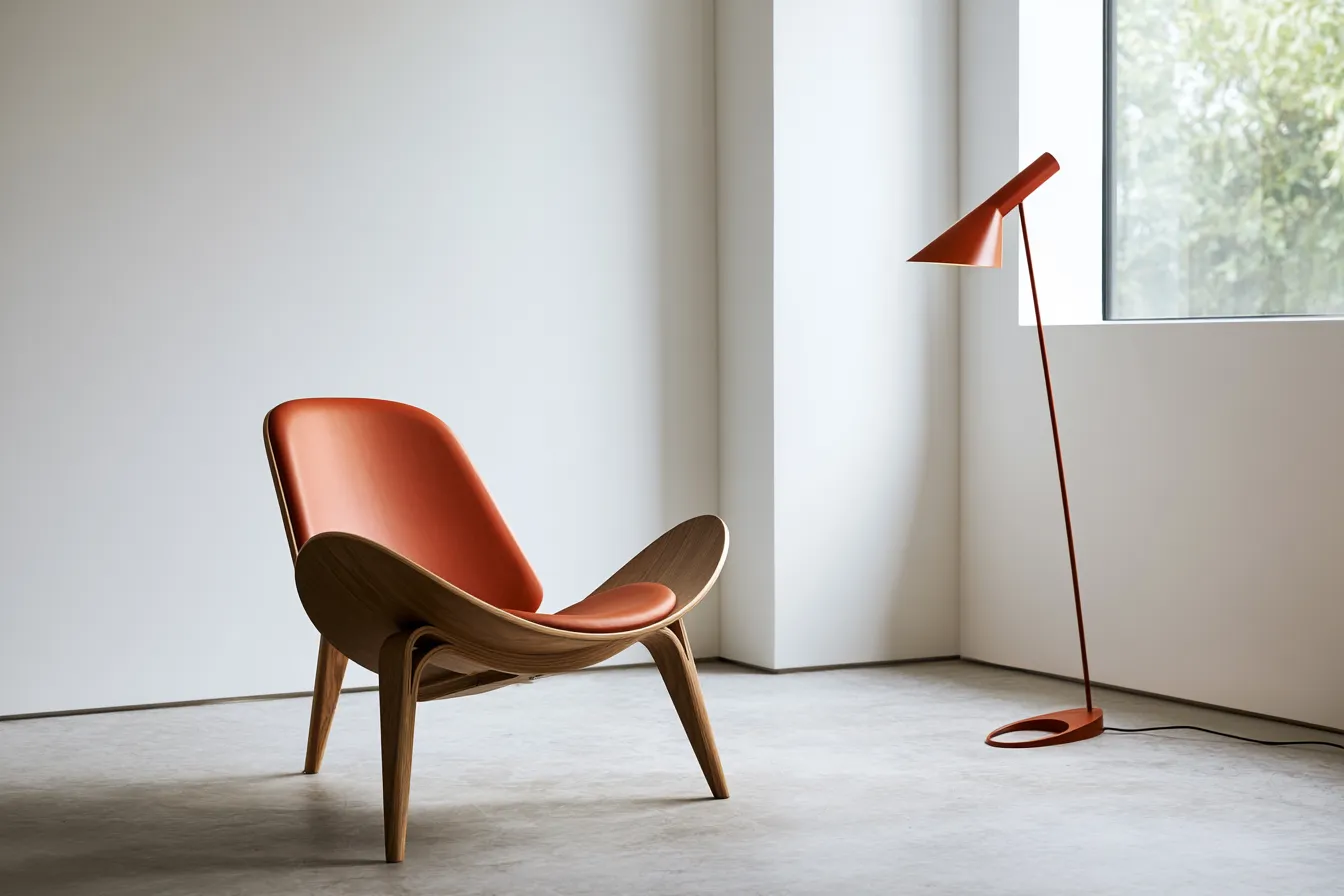
Red office furniture works best as one or two strong pieces set against gray, not as a whole room painted in the same loud shade. A red chair, a pair of red cabinets or a red lounge seat gives the space a focal point, while gray desks, frames and walls keep it calm enough for an eight-hour day. Does red actually help you work? Research from the University of British Columbia found red cues improved detail-oriented tasks such as proofreading by up to 31% compared with blue. Start with the piece you look at most, which is usually the chair.
Budgets stay reasonable at the entry level. Typical retail listings put a red faux leather manager chair with a chrome base at about $211–$237, a red two-drawer vertical file cabinet near $117 and a red lounge chair with ottoman around $308. A classic 60-30-10 split keeps the balance right: roughly 60% gray, 30% a supporting neutral and 10% red. Price one hero piece first and let gray do the rest.
The sections below cover chairs, desk storage, lounge seating, color proportions and the gray vs black question, with a comparison table near the end. Every option includes typical prices, sizes and the mistakes that turn bold into chaotic. Pick the section that matches the piece you plan to buy next.
Quick Scan
- Red faux leather manager chairs with chrome bases list at about $211 (mid back) vs $237 (high back).
- A red 18-inch two-drawer vertical file cabinet costs near $117, while a 36-inch four-drawer lateral model climbs past $1,000.
- Red boosted detail-task accuracy by up to 31% vs blue in a study of 600+ people; blue doubled creative ideas.
- Keep red near 10% of the room and gray near 60–70% so the color reads deliberate.
- A red lounge chair and ottoman set runs about $308 and takes a 25 x 35.5 inch footprint.
- Gray softens red; black sharpens it and absorbs over 90% of the light that hits it.
A Red Leather Office Chair on a Gray Metal Frame
A red leather office chair on a gray metal frame is the simplest way to bring red into a workspace, because the chair is the one piece you see every time you sit down. Typical listings put a red faux leather mid-back manager chair with a chrome base at about $211 and a high-back version near $237. Real leather sits in a different league: a mid-century red leather swivel chair can list around $3,520. Choose faux leather for daily use and save genuine leather for a statement office.


Gray metal vs polished chrome is the frame decision that sets the tone. A gray or brushed frame works like a charcoal suit under a red tie, holding the color in check, while bright chrome pushes the look toward retro diner. Gray frames also hide scuffs from shoes and casters better than mirror finishes. Pick brushed or matte gray metal if the chair rolls across a hard floor every day.

Is a red chair comfortable enough for full workdays? Some red faux leather executive models are rated for up to 110 kg and around 8 hours of daily use, so check those two numbers before color. A minimalist gray desk behind the chair keeps the red as the only accent in the sightline, the same logic that drives these mid-century modern gray interior design ideas built around one warm highlight. Don’t buy a red chair rated only for occasional use if you sit for a full shift.

Daylight changes how red leather reads through the day. Near a large window, glossy upholstery and metal pick up reflections and look brighter by midday, while a north-facing room keeps the red deeper and calmer. A red accent wall behind the chair doubles the effect, which can work in a large office but crowds a small one. Place the chair facing the window and keep the wall behind it gray.
Red Desk Accents and Filing Cabinets Beside Gray
A red desk setup works best when the red sits in storage beside a gray work surface, not on the desktop you stare at all day. Red filing cabinets give the color a job: a red 18-inch two-drawer vertical cabinet lists near $117, and a red three-drawer vertical model measures about 29.5 inches tall by 14.25 inches wide. Two of those flanking a gray desk create symmetry without filling the room. Put red on the furniture at the edges and keep the middle neutral.


Vertical vs lateral cabinets is the real size and budget fork. Vertical units stay narrow and cheap, while a 36-inch four-drawer lateral cabinet in lava red lists around $1,032 and takes up almost a full wall section. A lateral cabinet behaves like a sideboard, giving you a long top for a printer or plant. Choose vertical pairs for a home office and a single lateral unit only when files truly need the space.

Matte gray vs glossy red is the finish pairing that keeps the setup from looking flat. The matte desk absorbs glare where you read and type, while glossy cabinets bounce light into the corners like small reflectors. Should the desk itself be red? Only as a single accent in a large room, because a red work surface sits in your field of view for hours. Keep the writing surface gray and let the cabinets carry the color.

Abstract red and gray artwork above the desk repeats the palette at eye level and links the cabinets to the chair. One large canvas reads calmer than five small frames, the way one good coat beats a stack of accessories. Don’t hang art in a third accent color here, because it splits attention away from the red. Pick art that already contains both shades.
Lounge Seating Built for Breaks and Quick Meetings
A red lounge chair with gray cushions turns an empty office corner into a break spot, and it is often the easiest red piece to add because it sits away from the desk. Typical listings put a red faux leather lounge chair and ottoman set at about $308, with the chair measuring roughly 25 inches wide and 35.5 inches deep. Most sets in this range carry a weight capacity near 200 lbs and a 16-inch seat height. Measure the corner before ordering, since depth matters more than width.


Fabric vs faux leather decides how the corner feels. Red fabric reads warmer and quieter, while faux leather wipes clean after coffee and looks sharper next to metal furniture. Gray cushions on a red chair work like a gray scarf on a red coat, softening the strongest color right where your body touches it. Choose faux leather if the chair will host visitors and fabric if it is only for you.

Is the ottoman worth the extra floor space? A typical ottoman stands around 15.5 inches high, low enough for a footrest and firm enough for a quick extra seat during a short meeting. That double duty matters in a small office where a second chair would not fit. Don’t buy a soft pouf instead if you expect anyone to sit on it.

A small gray side table and a warm lamp finish the corner. Soft, low light makes red look deeper and more relaxed after dark, while bright overhead light makes it louder. Keep the table gray so the chair stays the only red element in that zone. Add one red cushion or book stack at most, then stop.
How Much Red Office Furniture One Room Can Carry
Red office decorating ideas succeed or fail on proportion, and the 60-30-10 rule gives a reliable starting point. Designers apply it as 60% dominant color, 30% secondary color and 10% accent, and some red-and-gray schemes push gray even higher with a 70/20/10 split. In practice, that means gray walls and desk, wood or metal as the secondary layer, and red limited to one or two furniture pieces. Treat red like hot sauce: a few drops change the dish, a full bottle ruins it.
Does red really sharpen focus? In a UBC study of more than 600 participants across six tasks, red improved detail-oriented work by up to 31% compared with blue, while blue produced twice as many creative ideas. Later research suggests the effect shrinks on harder tasks, so red is a nudge, not a productivity hack. Place red where you check numbers or proofread, and keep brainstorming zones cooler.
- Paint walls and pick the desk in gray, covering about 60–70% of what you see.
- Add a secondary layer of wood, metal or white at roughly 20–30%.
- Choose one red hero piece, such as a $211–$237 chair or a pair of $117 cabinets.
- Repeat red once at eye level with art or a cushion, keeping the total near 10%.
- Check the room under both daylight and evening light before adding more red.
Bright red vs deep red changes how much you can use. A tomato or fire-engine red caps out fast, while burgundy and oxblood can stretch toward 15% without feeling loud. Warm reds pair with warm grays and cool reds with cool grays, the same way matching undertones keep a suit and shirt from clashing. Don’t add a third saturated color once red is in the room.
Gray vs Black as the Partner for Red
Black and red is the main alternative to a red and gray office, and the two pairings create very different moods. Gray lets red sit calmly, while black turns the same red chair into a high-contrast statement. Most black paints sit below LRV 10, so they absorb over 90% of the light that hits them, and the darkest shades reach LRV 3. Choose black only for rooms with strong daylight.
Which pairing suits a small home office? Gray almost always wins there, because a light or mid gray reflects far more light and keeps a 10 x 10 foot room from closing in. Black works like a frame around a painting: perfect on one wall or a desk base, too heavy on all four sides. The same logic shows up in this guide to a modern small black bathroom that stays bright with LRV planning. Never pair a red chair with black walls and a black desk in one compact room.
A split approach often works best. Keep the walls gray, use black only on thin lines such as chair legs, lamp bases or frames, and let red carry the color. That gives you about 10% red, 5–10% black and the rest gray, a mix that reads sharp without turning dark. Test the black on one small item before committing to a larger piece.
Don’t Do This
- Don’t push red past roughly 10–15% of the room; a red desk, red chair and red wall together read like a warning sign.
- Don’t buy a chair rated for occasional use if you sit 8 hours a day; check the weight and hours rating first.
- Don’t order a 36-inch lateral cabinet at about $1,032 when two narrow vertical units near $117 each fit the files.
- Don’t pair bright red with black walls in a small office; black absorbs over 90% of incoming light.
- Don’t mix warm red with cool blue-gray; match undertones instead.
Compare Red Office Furniture by Price and Footprint
Comparing these red office furniture pieces side by side shows where the money and floor space go. Chairs and vertical cabinets cost the least per piece, while lateral storage and genuine leather drive budgets up fast. Which piece gives the most color per dollar? A $117 red cabinet or a $211 chair changes the room as much as a $1,000 statement unit. Read the footprint column before the price column.
| Piece | Typical price | Size or spec | Best spot | Upkeep |
|---|---|---|---|---|
| Red faux leather mid-back chair, chrome base | About $211 | Mid back, tilt and lumbar support | Main desk | Wipe clean |
| Red faux leather high-back chair | About $237 | High back, chrome base | Executive desk | Wipe clean |
| Vintage red leather swivel chair | About $3,520 | Genuine Italian leather | Statement office | Condition leather |
| Red 2-drawer vertical file cabinet | About $117 | 18 in deep | Beside or under desk | Low |
| Red 3-drawer vertical file cabinet | Varies by retailer | 29.5 in H x 14.25 in W x 18 in D | Paired at desk edges | Low |
| Red 4-drawer lateral file cabinet | About $1,032 | 36 in wide | Along a full wall | Low |
| Red lounge chair and ottoman set | About $308 | 25 in W x 35.5 in D, 200 lb capacity | Break corner | Wipe clean |
One Red Piece, Plenty of Gray
A red and gray office works when red stays near 10% of the room and gray covers 60–70%, which usually means one hero piece rather than a matching set. That single rule matters more than any specific product.
For the fastest change, start with a red faux leather chair in the $211–$237 range on a gray or brushed frame. Check that it is rated for full-day use before choosing the shade.
For storage, two red vertical cabinets near $117 each beat a $1,000 lateral unit in most home offices. Keep the desk surface gray and let the cabinets frame it.
For comfort, a red lounge chair and ottoman around $308 turns a spare 25 x 36 inch corner into a break zone. Choose gray over black as red’s partner in any room without strong daylight.