Red and charcoal paint delivers high-contrast drama that works in living rooms, kitchens and bedrooms when proportions stay controlled. One accent wall in saturated red against three charcoal walls keeps the space balanced instead of heavy, and the pair costs roughly the same as any mid-range interior project—$35–$85 per gallon depending on brand quality.
Designers treat red as the 10–20 % accent and charcoal as the dominant field so the eye has a clear focal point without visual fatigue. Warm 2700 K lighting and light textiles prevent the dark tones from closing in, turning the combination into a practical everyday palette rather than a weekend-only statement.
Test large samples under both daylight and evening bulbs before buying full cans; deep reds and charcoals shift more than lighter neutrals and often need a tinted primer plus two finish coats for full coverage.
- Keep red at 10–20 % of visible wall area for lasting balance
- Benjamin Moore Kendall Charcoal (LRV 14.61) pairs cleanly with most true reds
- Interior paint runs $25–$100 per gallon; dark shades often need 2–3 coats
- Charcoal hides minor wear better than white in high-traffic kitchens
- 2700 K warm bulbs stop red from reading orange or brown at night
- Accent wall + three charcoal walls beats full-room red for daily comfort
- Metallic brass or wood textures soften the contrast without adding new colors
Living Room Layouts Built Around Red and Charcoal Walls
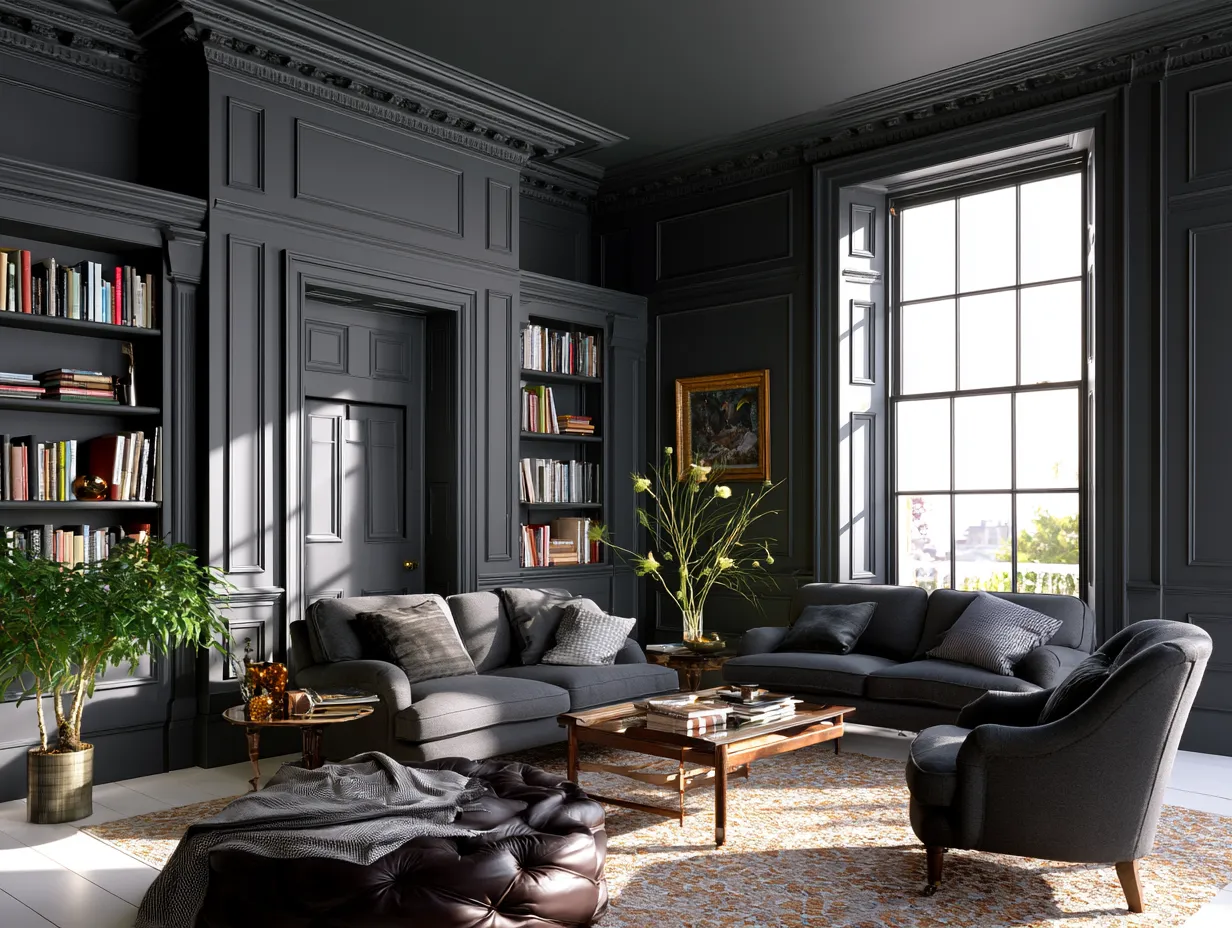
Charcoal and red living rooms gain depth when one wall carries the red and the rest stay charcoal gray. The red wall anchors a fireplace or media unit while charcoal recedes, making the room feel larger than an all-red scheme. A typical 12×15 living room needs about 2–3 gallons of mid-range paint at $40–$70 each plus primer.
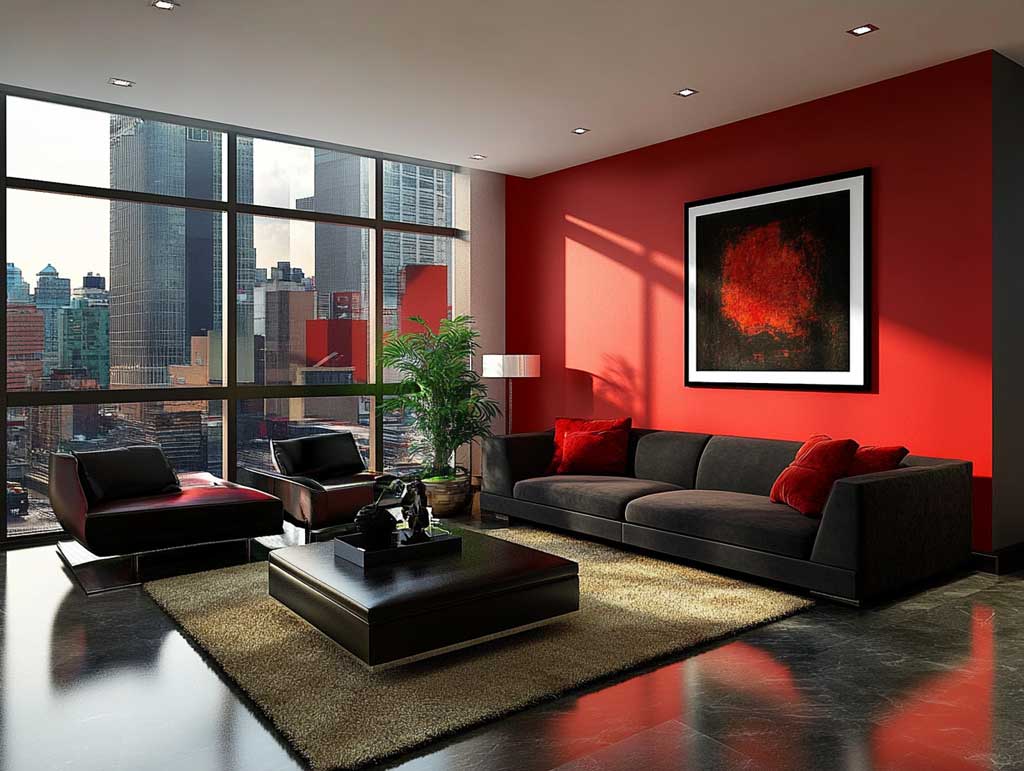
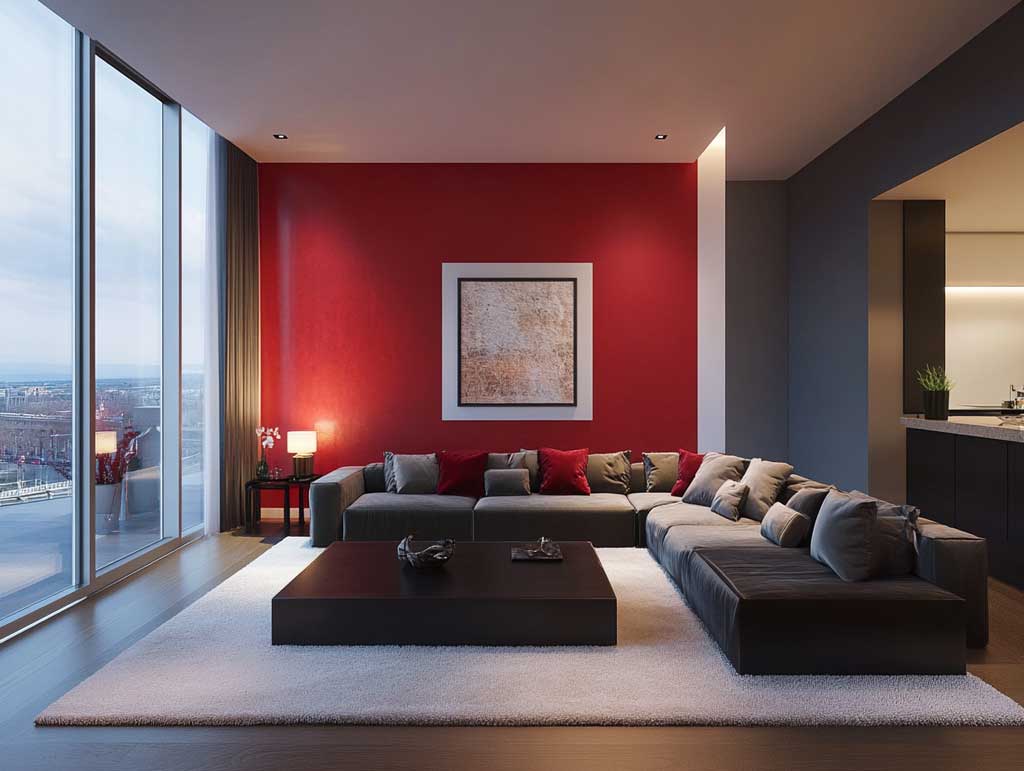
Why does full-room red tire the eye after a few weeks while an accent wall stays fresh? Saturated red advances optically; surrounding it with charcoal gives the color somewhere to rest. Soften the edges with cream or light-gray textiles and a brass lamp—metals reflect warmth that pure charcoal alone cannot supply.
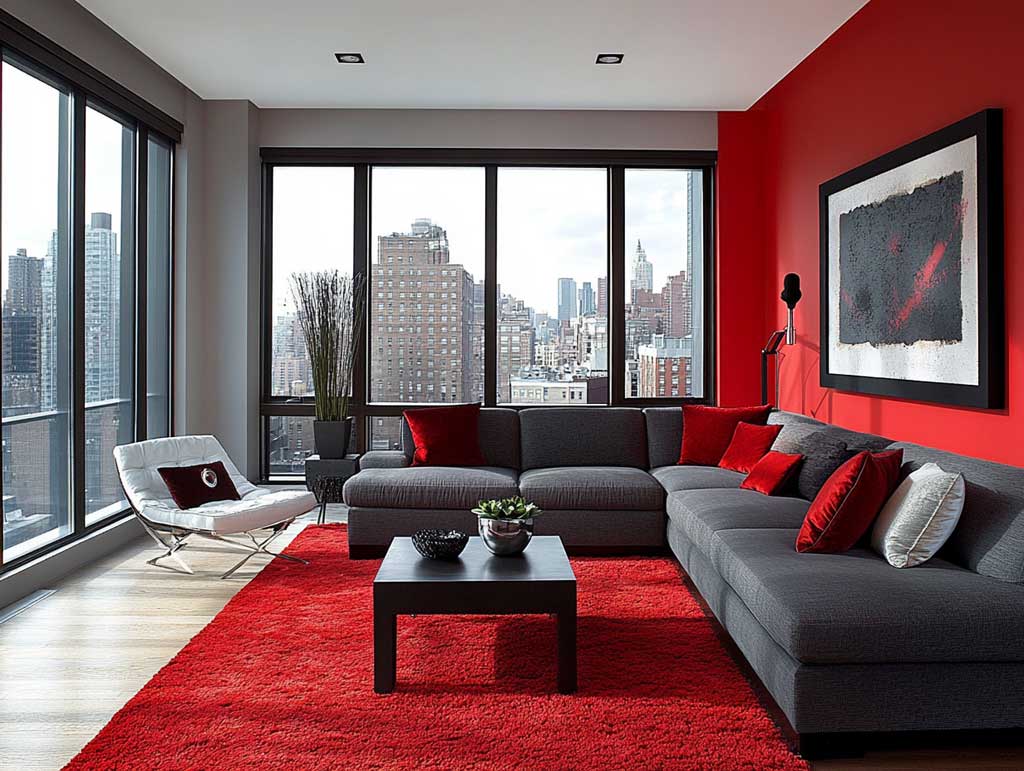
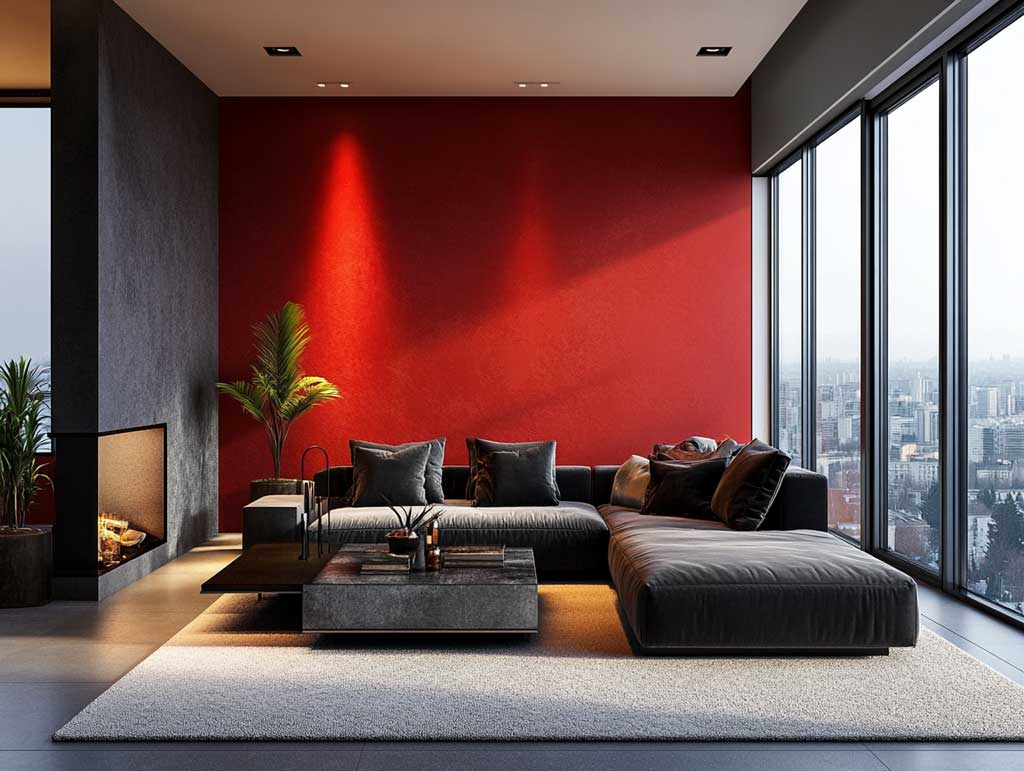
Don’t paint every surface the same deep tone; the room will absorb light like a closed box. Instead, leave the ceiling white or soft off-white and add sheer curtains so daylight reaches the darkest corners. One large area rug in a mid-tone neutral further breaks the vertical planes and keeps foot traffic practical.
For more exterior proportion rules that transfer indoors, explore charcoal and red house siding proportions that hold up outdoors.
Kitchen Surfaces That Pair Red Accents with Charcoal Fields
Red and charcoal kitchen ideas succeed when charcoal covers the bulk of walls or lower cabinets and red appears only on a backsplash, island face or single upper run. Charcoal’s low LRV hides cooking marks better than white, while a controlled red pop keeps the room energetic without feeling like a diner. Mid-range cabinet paint averages $50–$90 per gallon and typically requires two coats after a bonding primer.
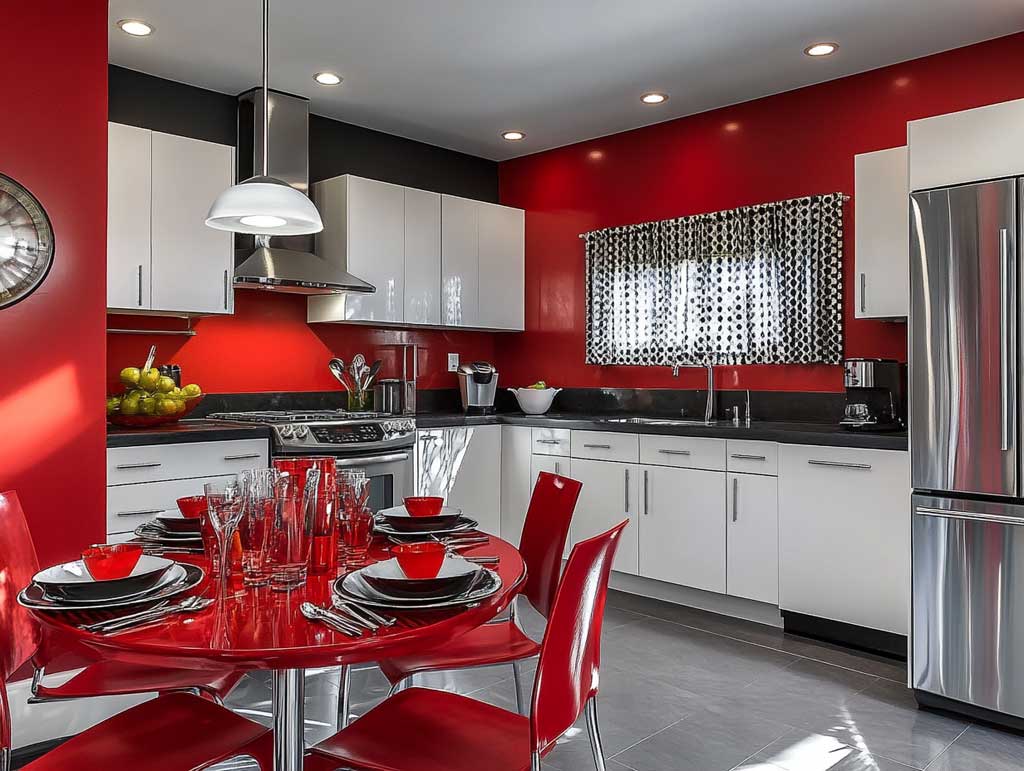
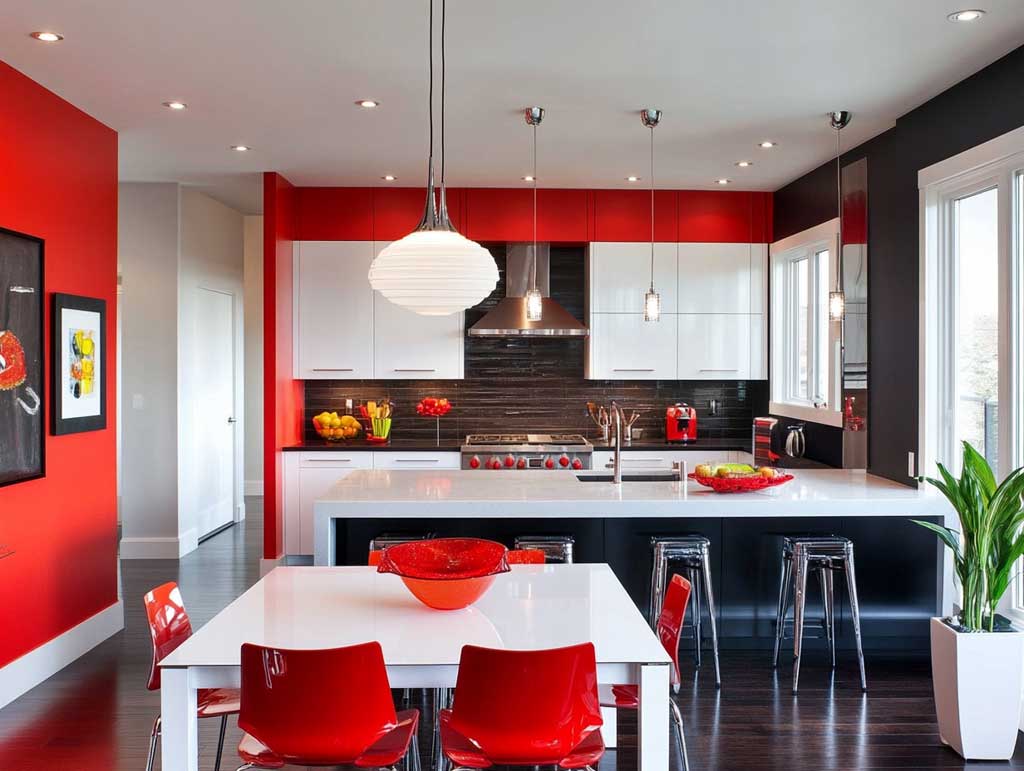
Is a full red backsplash practical next to charcoal walls? Only if the red is a deeper brick or burgundy rather than pure cherry; bright red shows every water spot. Under-cabinet LED strips at 2700–3000 K lift the darker surfaces so the space never feels cave-like during evening meal prep.
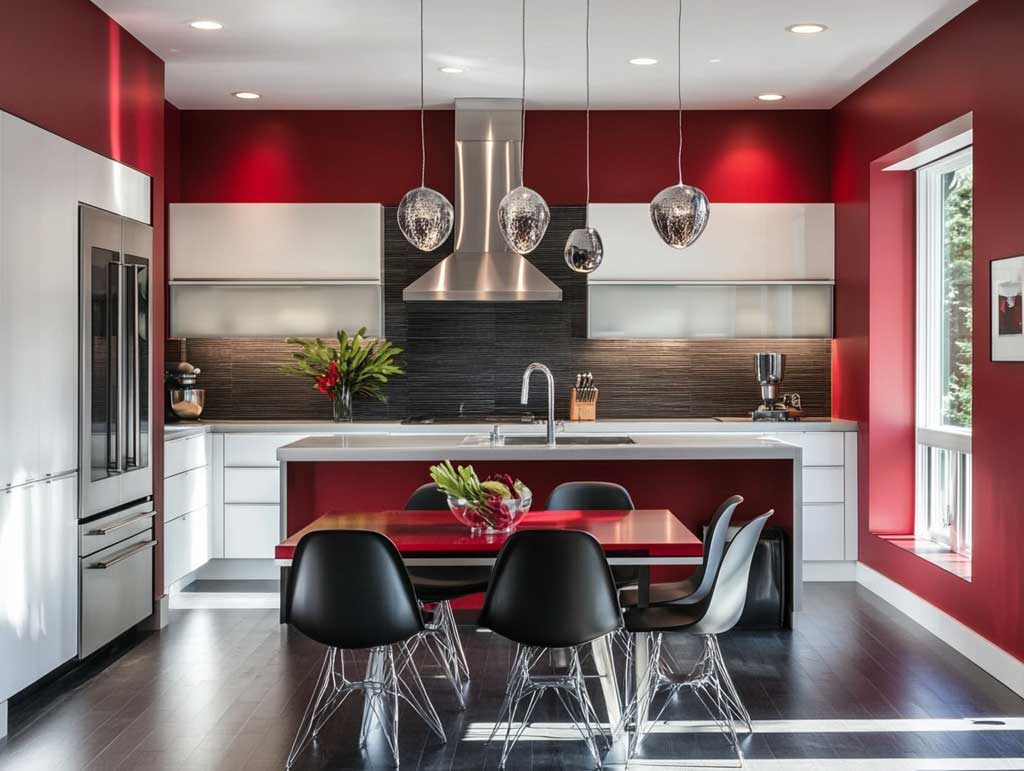

Don’t match red cabinets to red walls; the double dose removes any neutral breathing room. Keep at least 60 % of the visible surfaces in charcoal or light neutral so the red reads intentional rather than accidental. Stainless or matte-black hardware finishes the industrial edge without introducing a third strong color.
Bedroom Contrast Using Red Feature Walls and Charcoal Backdrops
Bedroom charcoal and red schemes stay restful when charcoal covers three walls and the red sits only behind the headboard. The darker field promotes calm while the single red plane adds just enough energy for the morning. A standard bedroom uses 1.5–2.5 gallons of paint; premium lines with better hide run $70–$100 per gallon and often finish in two coats.
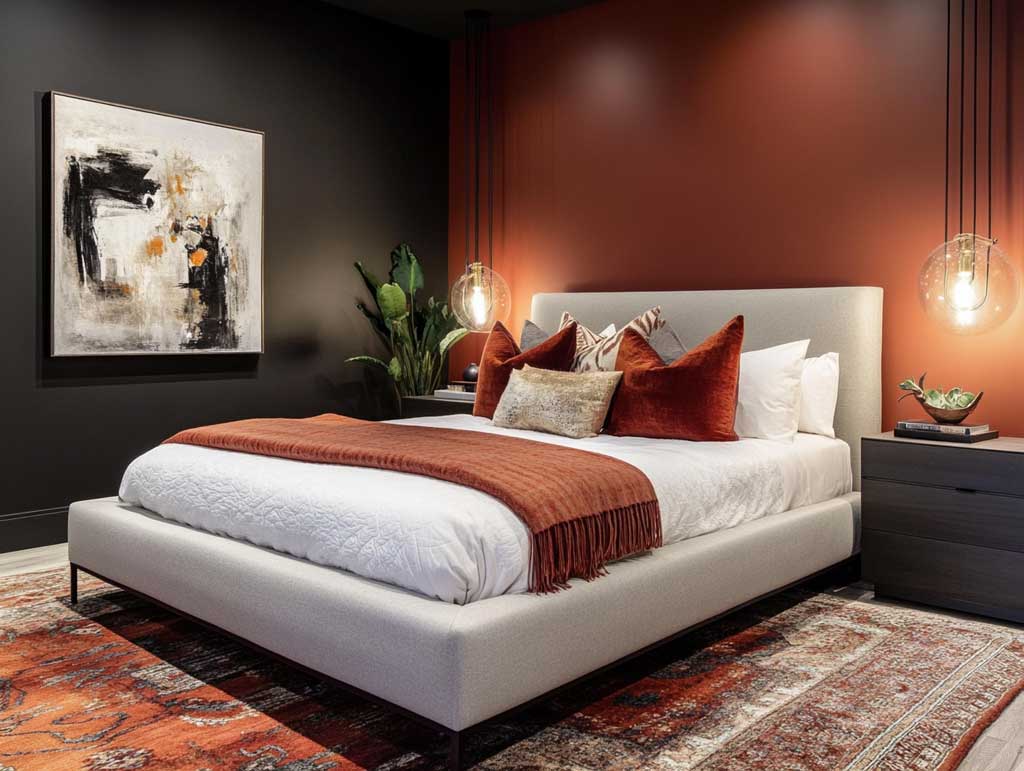
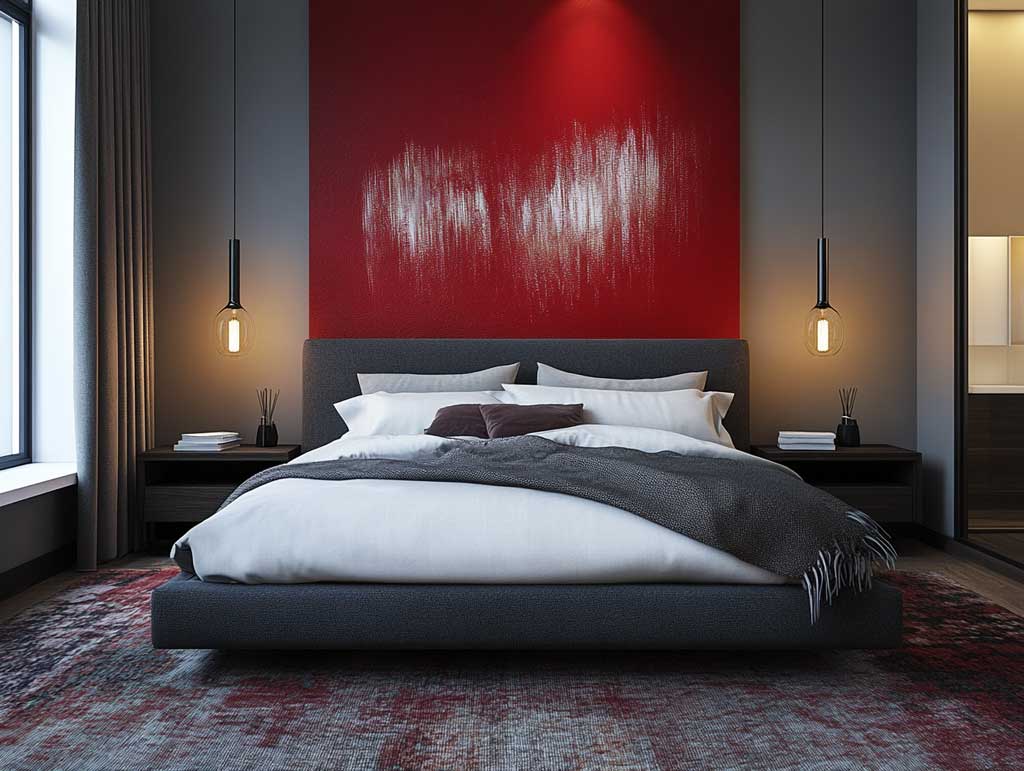
How much red is too much for sleep? Once the red wall exceeds roughly one-quarter of the room’s wall surface the contrast begins to stimulate rather than soothe. Layer cream or soft-gray bedding and dimmable table lamps so the bold wall can recede after lights-out.


Don’t choose a glossy red for the feature wall; sheen amplifies every imperfection and reflects light in a restless way. Matte or eggshell keeps the surface quiet. Pair the palette with natural wood nightstands—the warm grain acts as a visual bridge between the cool charcoal and the warmer red.
Similar high-contrast dining setups appear in these red and charcoal gray dining area decor ideas that reuse the same proportion logic.
Proportion Rules That Separate Successful Pairings from Overload
The 60-30-10 guideline adapts cleanly to red and charcoal: charcoal takes the 60 %, a light neutral the 30 %, and red the final 10 %. Rooms that ignore this ratio and push red past 25 % of the wall surface start to feel smaller and more intense within a few months of living with them.
Coverage numbers matter too. Most quality interior paints cover 350–400 sq ft per gallon on a smooth wall; deep reds and charcoals often need an extra coat because their high pigment load reduces hide. Budget an additional 20–30 % material when switching from light to dark colors.
| Approach | Red Share | Charcoal Share | Typical Cost per Room | Best Room |
|---|---|---|---|---|
| Accent wall only | 15–20 % | 80–85 % | $120–$250 | Bedroom, living |
| Cabinets + accent | 20–25 % | 75–80 % | $200–$400 | Kitchen |
| Full three walls charcoal + red art | 5–10 % | 90–95 % | $150–$300 | Any |
| Red dominant | 60–70 % | 30–40 % | $180–$350 | Avoid for daily use |
Don’t skip the sample stage. Paint 2×2 ft boards and move them around the room at different times of day; charcoal can read almost black in north light and softer in south exposure. The extra $10–$15 in samples prevents a $300 repaint.
Practical Lighting and Finish Choices for Dark Palettes
Charcoal walls with red accents demand layered lighting. One overhead fixture leaves deep shadows; three sources—ambient, task and accent—keep the colors readable after dark. Warm 2700 K bulbs preserve the true red rather than shifting it toward orange, a common complaint with cooler LEDs.
Finish sheen also changes perception. Flat or matte charcoal absorbs light and hides texture; eggshell on the red wall gives just enough reflectivity to make the accent pop without glare. In kitchens, a satin or semi-gloss on cabinetry resists cleaning better than matte.
According to manufacturer data, premium paints with higher solids content cover dark-over-light transitions in two coats more reliably than budget lines that often need three. Spending $20–$30 more per gallon frequently saves a full day of labor and an extra can.
Confident Daily Living with the Pairing
Red and charcoal paint works longest when red stays the minority player and charcoal carries the visual weight. Rooms that follow the 10–20 % red rule retain energy without fatigue for years rather than months.
Start with a single accent wall, test the exact red and charcoal under real lighting, and add warm metals or wood only after the walls are dry. The combination rewards restraint more than excess.
Budget $150–$400 for a typical room including primer and two coats of quality paint. That range covers most mid-size living spaces or bedrooms without specialty finishes.
Keep ceilings light, textiles soft and lighting warm. Those three moves turn a potentially heavy palette into a space people actually want to spend time in every day.