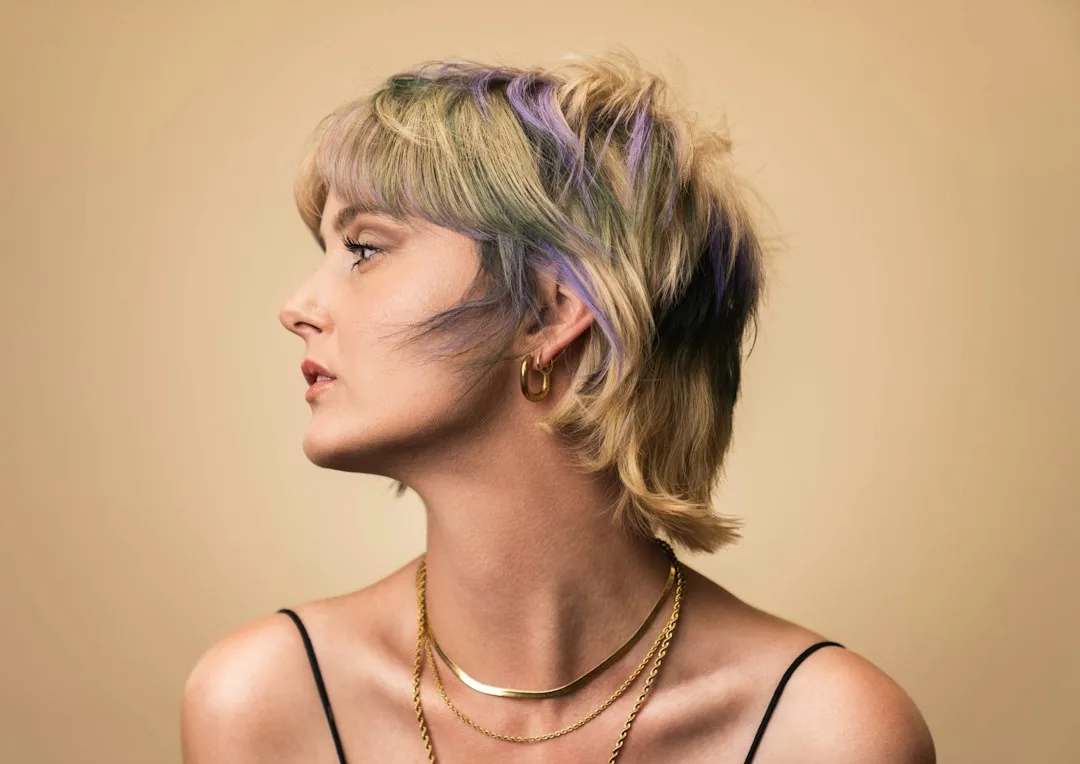
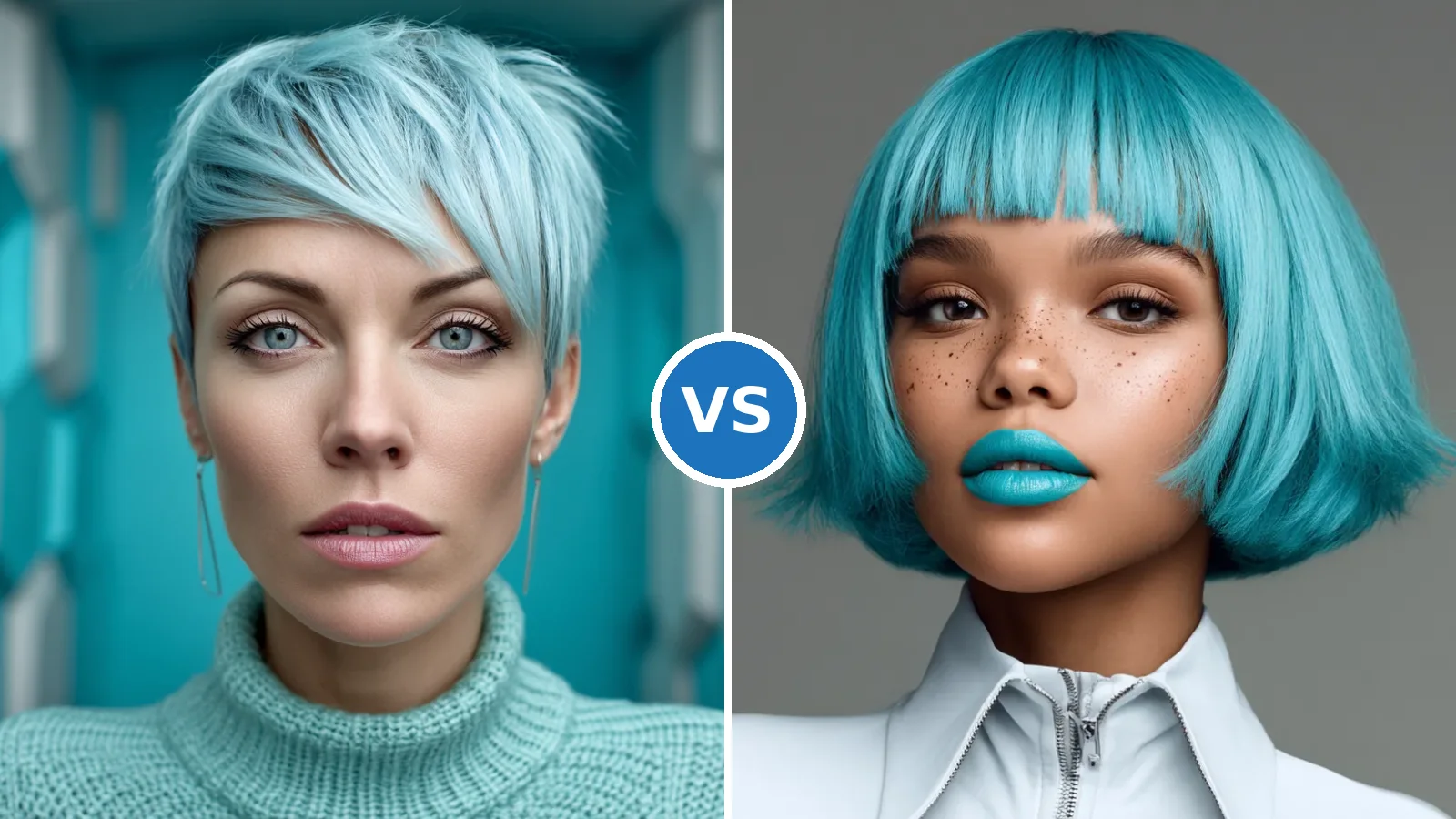
Hair styles for oval faces have one structural advantage that most face shapes never get: the geometry already works in your favor, so color becomes the primary variable. The gentle egg-shaped curve from forehead to chin accepts bold hues, dramatic cuts, and layered movement without the compensating tricks that rounder or longer faces require. Tina Farey, editorial director at Rush Hair, puts it plainly — oval face shapes offer nearly unlimited styling freedom, which makes color choices more consequential, not less.
What that freedom actually means in practice is that you can lean into saturated, non-natural shades — tangerine, lavender, sapphire — without worrying that the color will distort your proportions. The oval contour absorbs the visual weight of a vivid hue and redistributes it evenly. The cut still matters, but it’s the color placement that determines whether a look lands as intentional or accidental. Get the placement wrong and even a flattering lob will read flat.
Three distinct approaches are laid out below — shoulder-length tangerine waves, a lavender lob, and sapphire cascading waves. Each pairs a specific cut structure with a specific color logic. The section on double-process vivid color is the one most people skip and then regret skipping, because it explains why the same shade that looks neon on one person reads rich and dimensional on another.
– Oval face geometry accepts virtually any cut length — the color placement does the heavy lifting
– Tangerine waves work best starting at cheekbone level; layers placed higher create a top-heavy silhouette
– Lavender lobs fade to silver in 4–8 weeks without a toning routine — budget for salon gloss every 4–6 weeks
– Sapphire blue requires a pre-lightened base; rushing past this step produces a muddy teal, not a clean royal blue
– Vivid double-process color runs $110–$364 at most mid-to-high salons; at-home kits like Splat Pure Sapphire cost around $16
– Center parts elongate oval faces — a side part starting below the cheekbones is a more proportional choice
Tangerine Shoulder Waves — Hair Styles for Oval Faces That Lead with Warmth
Shoulder-length tangerine waves rank among the most requested hair styles for oval faces precisely because the cut length and the color work together rather than competing. Colorists achieve tangerine by pre-lightening to at least a level 9 blonde before depositing the orange pigment — skip the lift and you get copper, not citrus. At-home options like Bleach London Tangerine Dream (around £6–£8) work on pre-lightened hair, but salon double-process color — which runs $110 to $364 nationally — delivers the saturation and evenness that makes this shade photogenic rather than patchy.


Layer placement is the make-or-break variable here. Starting layers at the cheekbones and letting them flow downward follows the oval face’s natural rhythm — the face widens slightly at the cheek, then narrows to the jaw, and layers that begin at that widest point reinforce the taper rather than fighting it. Starting layers near the crown creates a Christmas-tree silhouette that reads visually heavy and flattens the color’s movement. What does flattering layer placement actually feel like when you’re looking at reference photos? The tangerine catches light at mid-length and again at the ends, with the face emerging cleanly from the top section.

Maintenance for tangerine is more demanding than for natural shades. Washing two to three times per week with a sulfate-free, color-safe shampoo slows fade — every additional wash strips a small amount of pigment. Aveda’s Color Conserve shampoo is formulated specifically for this, and the salon that did the color often carries it for take-home. Trimming ends every six to eight weeks keeps the layer shape sharp; beyond that window, the layers start to blend into each other and the whole point of the structure is lost. A medium-barrel curling iron or hot brush creates the wave, but curl in alternating directions — same-direction curling produces a uniform ringlet pattern rather than the loose movement that makes this cut read current.
For daily finish, a lightweight volumizing spray at the roots provides lift, followed by a small amount of shine serum on the mid-lengths to amplify the tangerine’s reflective quality. Skip the serum on roots — it will weigh the volume down within two hours. The one mistake that kills this look on warm skin tones is choosing a red-leaning tangerine rather than a true orange; the red undertone competes with golden skin instead of complementing it, and the contrast between face and hair turns harsh rather than vibrant. Ask the colorist specifically for a yellow-orange base.

Avoid layering highlights on top of tangerine to “add dimension.” Two vivid shades competing at shoulder length produce visual noise, not depth. If dimension is the goal, the better approach is to vary the saturation of the tangerine itself — lighter ribbons at the front frame, darker base in the back sections — using a single-family pigment rather than introducing a second hue. Also avoid center parts with this cut: a center part on an oval face adds length to the forehead and draws the face into an elongated oval. A side part positioned just below the cheekbone creates natural asymmetry that the wave reinforces.
Lavender Lob — When Pastel Meets Precision Cut
A lavender lob — that collarbone-grazing long bob — sits at the intersection of structure and softness in a way that few other pairings achieve on oval face shapes. The lob was made famous on oval faces partly by Victoria Beckham, and stylists have recommended it consistently since because it draws a clean horizontal line at the jaw and collarbone while letting the oval’s natural proportions provide all the vertical interest. Add lavender to that structure and the result shifts from refined to editorial — the cool pastel pulls forward the face’s neutral tones and makes eye color appear more saturated by contrast.

Achieving a clean lavender requires a very light blonde canvas — typically a level 9 or 10. Darker bases yield a violet-grey that reads muddy rather than ethereal, and this is the most common disappointment for first-time lavender clients. Cooler complexions should ask for a silver-leaning lavender base; warmer complexions respond better to a formula with a slight pink undertone, which neutralizes any golden skin tones rather than clashing with them. A gloss treatment applied after the color seals the cuticle and creates the reflective sheen that makes lavender appear luminous rather than chalky — this single step is often the difference between salon-quality results and a look that reads like a home dye job.

Lavender pastel colors fade to silver in 4 to 8 weeks depending on wash frequency — the more often you shampoo, the faster the shift. A toning session every 4 to 6 weeks keeps brassiness from creeping in, and at-home toning masks used 1 to 2 times per week extend the window between salon visits. Cool water rinses during every wash help lock in pigment; hot water is one of the fastest ways to accelerate fade on pastel shades. The lavender-to-silver transition is predictable, which means you can actually plan for it — some clients let it drift silver intentionally and return to lavender only when they want the contrast again. That cycle costs less than constant re-saturation and keeps hair in better condition.
Styling options for a lob are more varied than they appear at first. Pin-straight texture creates geometry — the lob becomes almost architectural, drawing a precise horizontal frame around the jaw. A loose wave adds movement and softens the structure, which reads more casual and romantic. The oval face handles both interpretations equally well, which is part of why the lob works as a format. You can also wear it with hidden interior layers for more body without altering the clean perimeter line that defines the shape from the front. Statement earrings — long linear drops or geometric hoops — stand out distinctly against a pastel backdrop and amplify the precision of the cut without competing with the color.

The practical risk with lavender that nobody warns about is over-toning. Using purple shampoo daily deposits pigment faster than the cuticle releases it, and on porous bleached hair the deposit reads lavender or grey inside four washes — dulling the very brightness you were trying to preserve. Stylists recommend 1 to 2 times per week in the maintenance phase, with a 2-to-3-minute contact time rather than leaving it in during the entire shower. The fix for over-toned hair is a gentle clarifying wash, a one-week pause on the purple product, and then resuming at half frequency. A lob in lavender is a commitment to consistent maintenance — walk in for color planning with that reality already in mind, and ask the colorist for a written home-care schedule before leaving the chair. For more color placement strategies that work specifically with oval proportions, the approach used in highlight hair ideas for oval face types translates directly to pastel placement decisions.
Sapphire Wave — the Hair Styles for Oval Faces That Absorb Light Differently
Sapphire blue sits in a specific register of vivid color — deeper than cobalt, less green than teal — that behaves differently on oval faces than lighter shades do. Hair styles for oval faces in saturated cool tones use the contrast between the blue and the skin’s undertones as a framing device: cool-undertone skin appears more luminous against royal blue, while warm-undertone skin gets a striking complementary contrast that makes the color look intentional rather than harsh. Cascading waves extend that framing downward, letting the sapphire catch light at different angles as the hair moves — a static straight cut would show the color but not the dimension.


Salon double-process color for a vivid blue runs $110 to $364 depending on hair length, density, and stylist level — the wide range reflects how much pre-lightening time and product each individual client requires. At-home semi-permanent options like ion Permanent Brights in Sapphire (available at Sally Beauty) or Splat Pure Sapphire (around $16 at Walmart) work only on pre-lightened hair and last approximately 20 washes before significant fade. The pre-lightening step cannot be skipped for a true sapphire result; dark hair without lifting will produce a black-blue visible only in direct sunlight, which is a fundamentally different look. A final gloss treatment after color application seals the shade and adds the healthy radiance that distinguishes a professional finish from a DIY result.

Wave structure matters as much as color saturation for this look. Stylists recommend waves that begin at eye level and flow downward — this placement draws attention to the oval’s balanced contour, guiding the eye across the cheekbones and down to the jawline in one smooth motion. Curling in alternating directions using a wand or iron prevents the uniform ringlet effect and creates the dimensional, beach-inspired movement that makes sapphire appear to shift between deep navy and bright royal as the head moves. A heat protectant is non-negotiable before any heated styling on bleached, color-treated hair — the cuticle is already compromised by the lightening process, and heat damage at this stage causes breakage that disrupts the wave pattern and exposes lighter, damaged sections through the blue.
A weekly hydrating mask is the single most effective maintenance step for sapphire — moisture retention directly extends color longevity because a sealed, hydrated cuticle releases pigment more slowly than a dry, porous one. Washing two to three times per week rather than daily adds another layer of preservation. Metallic hair clips or thin headbands in gold or silver create elegant contrast against the sapphire backdrop without introducing a competing color; braids or loose twists woven through sections of the wave add dimensional interest without requiring any additional chemical service. Avoid purple shampoo for maintenance — purple neutralizes yellow and orange, which are not the tones appearing in faded blue. Use a blue-pigmented conditioner or toning mask instead to refresh the shade between salon visits. The approach to short and layered oval-face structures that draw out similar proportional framing is covered in detail in the article on short layered hairstyles for oval faces.

| Color | Cut Structure | Maintenance Interval | Key Risk |
|---|---|---|---|
| Tangerine | Shoulder waves, cheekbone layers | Trim every 6–8 weeks | Red-leaning base clashes with warm skin |
| Lavender | Lob, collarbone length | Toning gloss every 4–6 weeks | Over-toning with daily purple shampoo |
| Sapphire | Cascading waves, eye-level start | Weekly hydrating mask | Skipping pre-lightening lift |
Celebrity hairstylist Ashley Streicher notes that the goal of any cut-and-color pairing is always to create a flattering silhouette that draws attention to the face’s best features — and for oval faces, that means using color placement to reinforce the natural balance rather than defaulting to all-over saturation. According to Who What Wear’s coverage of oval face hairstyle trends in 2025–2026, face-framing layers that start near the cheekbones specifically accentuate the oval shape, which explains why all three looks above share that structural principle even as the colors diverge completely. For current color pricing ranges across regions, MG Hair Studios’ 2026 salon hair color cost breakdown covers vivid double-process services in detail.
The Verdict
Oval faces don’t need a forgiving cut — they need a color that earns its place
Pre-lightening is the step that determines whether a vivid shade reads editorial or accidental. Tangerine, lavender, and sapphire all require a proper blonde canvas — the color result is only as clean as the lift underneath it.
Layer placement starts at the cheekbone, not the crown. That single positioning decision changes the silhouette entirely and prevents the top-heavy shape that kills movement in vivid cuts.
Maintenance cadence is non-negotiable: toning every 4–6 weeks for lavender, a weekly hydrating mask for sapphire, and a trim every 6–8 weeks for tangerine waves. Save this post.
Related Topics
FAQ
What hair styles work best for an oval face shape?
How long does vivid hair color last on an oval face cut before fading?
How much does salon color cost for vivid hair like tangerine or sapphire blue?
Does a lavender lob require toning between salon visits?
What's the difference between a center part and side part on an oval face?
Can I go sapphire blue without bleaching first?
Complete guide
The Right Haircut for Your Face Shape Starts Here
Oval, round, square, heart, long, diamond — all in one place