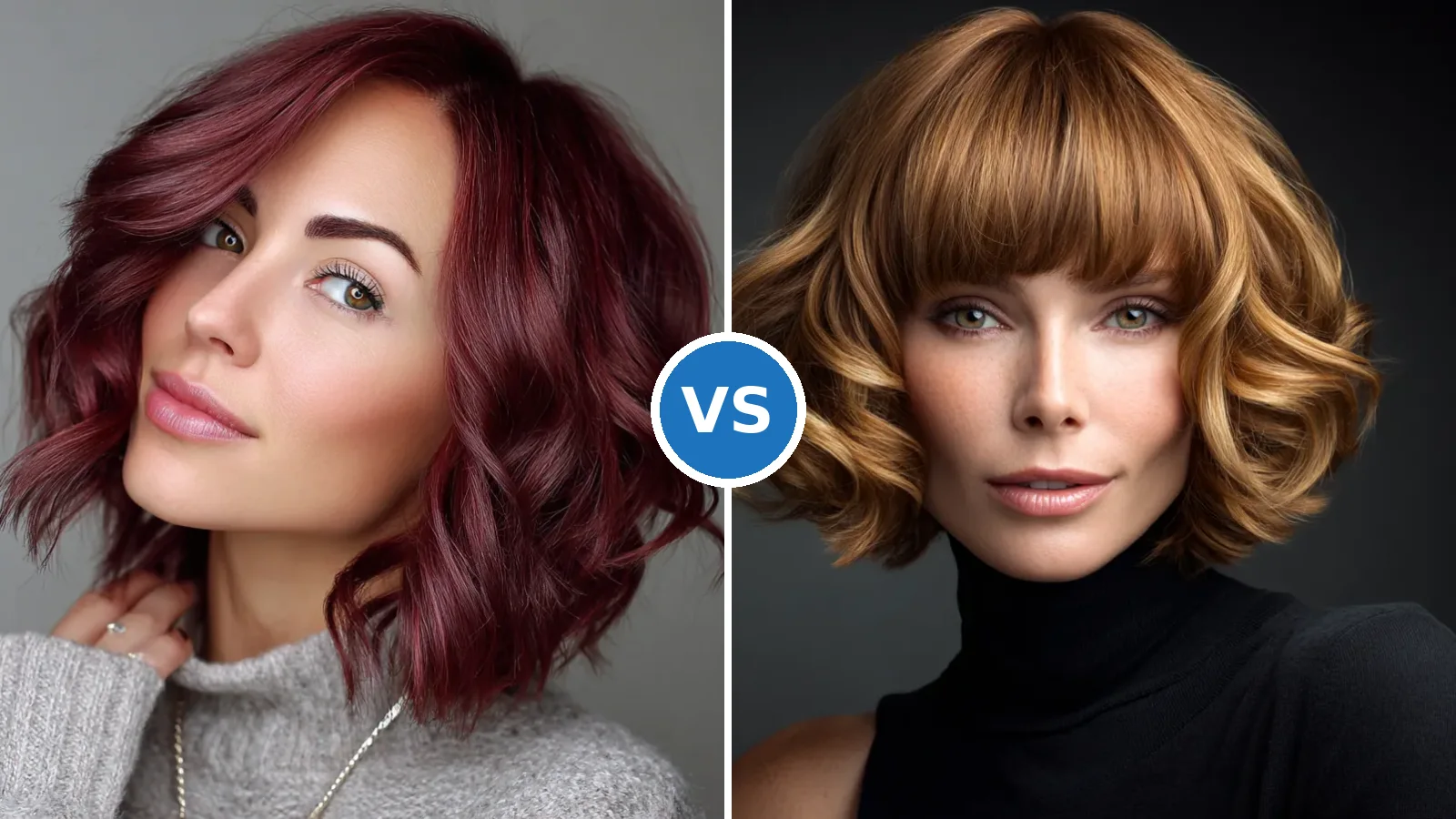
Hair color for oval face shapes works on a different logic than most tutorials let on — the proportions are already there, so the color’s job is to amplify symmetry, not create it. That single shift in thinking changes everything about placement, tone, and technique. Oval faces can hold both warm and cool palettes, bold and ribbon-thin applications, geometric cuts and cascading lengths.
The three looks below cover that range deliberately. Tangerine ribbons on layered waves, aquamarine balayage on long curls, and magenta-dipped tips on a black lob — each targets a different dimension of what an oval face does well. None of them require drastic commitment; all of them change how the face reads in a room.
Stylists typically charge $110–$220 for face-framing color work, which is the most relevant category for these placements. That’s a meaningful investment, which makes getting the technique right before walking into the salon essential.
– Tangerine ribbons placed vertically through layered waves elongate without competing with the face shape
– Aquamarine balayage on brunette curls deepens the lower half for visual length — touch up every 12 weeks for highlights
– Magenta-dipped asymmetrical lobs leverage contrast geometry, not softness — sleekness is mandatory
– Oval faces suit all three color families: warm citrus, cool fantasy, graphic neon
– Manic Panic semi-permanent dyes in bold shades run $9.74–$15.99 and require reapplication every 4–6 weeks
Vertical Movement Is Where Tangerine Ribbons Earn Their Place
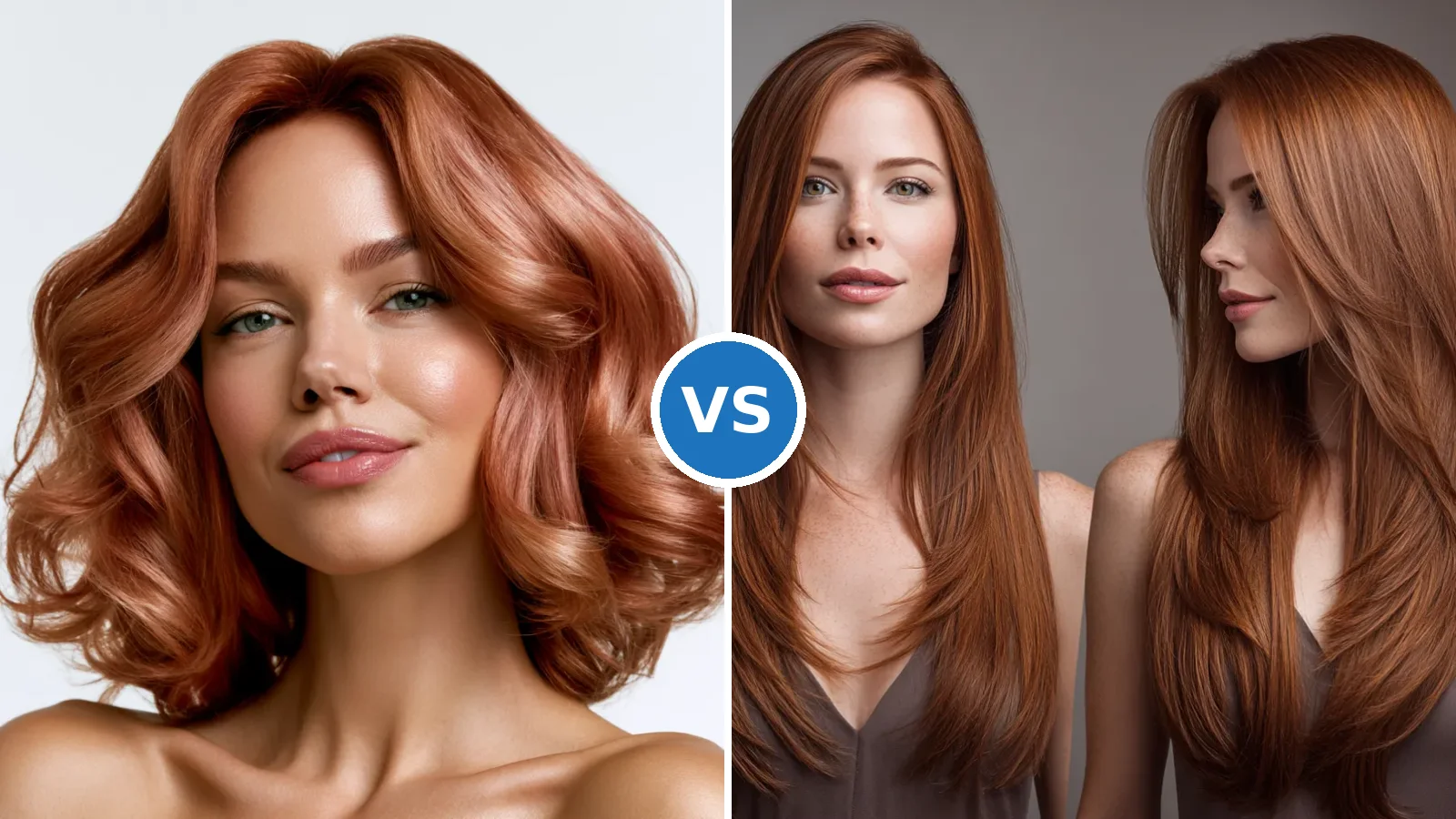
Tangerine highlights on honey brown waves succeed on oval faces because they follow the vertical axis — the one directional cue this face shape reads most favorably. Thin, ribbon-like color placements woven through the mid-lengths create movement that travels down rather than out. The trick here is spacing: too many ribbons and the tangerine turns flat; too few and the honey brown base absorbs them entirely.


The orange itself matters. A flat, highly saturated tangerine reads costume; the version that works here is more of a juicy glaze — orange with warmth baked into it, catching light differently from the base honey brown rather than sitting on top of it. What makes it function as a highlight and not a statement piece is the way it integrates with the curl pattern. Each ribbon surfaces and disappears as the wave moves. Orange highlights at this intensity require a touch-up around every 12 weeks to stay readable against the base.
Layered cuts amplify this effect by creating multiple planes — each layer catches the light at a different angle, which means the tangerine shows up at the crown one moment and at the shoulder the next. Oval faces thrive in this kind of balanced visual flow because there’s no single feature that needs softening or elongating. A diffuser on low heat enhances the curl pattern without flattening the color bands. What doesn’t work is brushing these out — it kills the separation between ribbons and turns the whole thing into a muddy warm blend.
Does this color translate outside the salon? Yes — with one condition. The tangerine-to-honey contrast only stays clean if the hair is washed no more than two to three times per week with a sulfate-free shampoo. More frequent washing accelerates fade and dulls the glaze finish within weeks rather than months. A weekly color-depositing conditioner in a copper-adjacent tone keeps the warmth calibrated between appointments.
Aquamarine Balayage on Curls Elongates the Oval Without Touching the Structure
Aquamarine balayage on a deep brunette base gives an oval face something most color techniques can’t: visual length that operates through gravity rather than contrast. The color starts near the mid-shaft and intensifies toward the ends — a gradient that pulls the eye downward along the curl’s full drop. For an oval face, that’s precisely the direction you want attention moving. Face-framing balayage at this level typically runs $110–$220 depending on hair length and stylist tier.


Aquamarine sits at the intersection of blue and teal, which makes it more flexible across skin undertones than pure navy or turquoise. Cooler-leaning aquamarine reads crisply against light skin; versions with more teal warmth work on golden and olive complexions. The L’Oréal Paris guide to hair color for cool skin tones specifically identifies aquamarine and icy blue as the most compatible fantasy shades for cool undertones — a useful reference before booking. What you want from the colorist here is a seamless melt, not hard edges — the aquamarine should feel like the brunette base simply dissolved into it.
Curl pattern is the mechanism that makes this work. Think of each curl as a prism — the aquamarine catches at the outermost point of the spiral and fades toward the root, mimicking how light naturally hits curved surfaces. That’s what prevents the color from looking like a flat dye job. Strategically placing the strongest aquamarine concentration in the face-framing curls draws emphasis to the cheekbones and jaw in a way that flatters the oval silhouette without disrupting it. The one mistake to avoid: applying aquamarine too high on the shaft. Anything above mid-length starts to compete with the face rather than frame it.
Maintenance leans on cold-water washing and a color-safe conditioner applied generously after every shampoo. Heat tools are the main threat to aquamarine’s vibrancy — even one high-heat styling session can shift the tone toward a muted gray-green. Loose, diffuser-dried curls preserve both the shape and the color range best. For cool-tone fantasy hair on shorter lengths, the same maintenance logic applies.
Applying aquamarine balayage without pre-lightening to at least a pale yellow: Celebrity colorist Reece Walker specifically notes that teal applied to unbleached hair looks muted rather than vibrant — the dark brunette base simply absorbs the pigment. On a jet black base, aquamarine reads as a slight greenish sheen at best. Pre-lightening the sections that will carry the balayage is non-negotiable for this look to land. Similarly, don’t assume a box-color balayage kit can replicate hand-painting — the freehand technique is what produces the gradient, not the product alone.
Magenta-Dipped Lob Plays Geometry, Not Softness — and Oval Faces Handle That
A jet black asymmetrical lob with magenta-dipped ends approaches hair color for oval face styling from the opposite direction: instead of softening or elongating, it introduces angular tension. The asymmetry — one side slightly longer than the other — adds sideways visual movement to a face shape that has no need for it, which creates a dynamic edge rather than imbalance. Oval faces can absorb this without looking heavy on one side because the symmetry is baked in at the bone structure level.

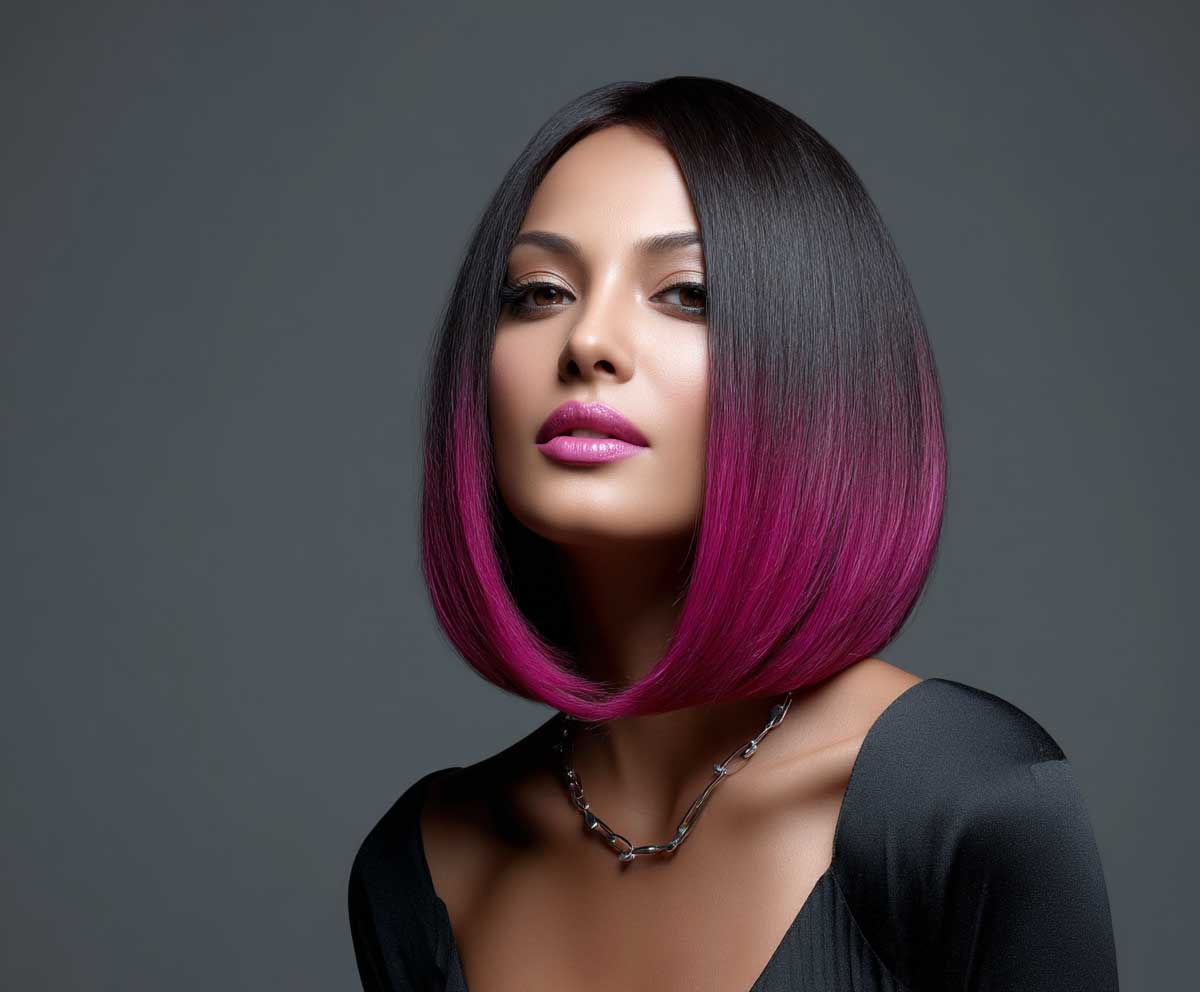
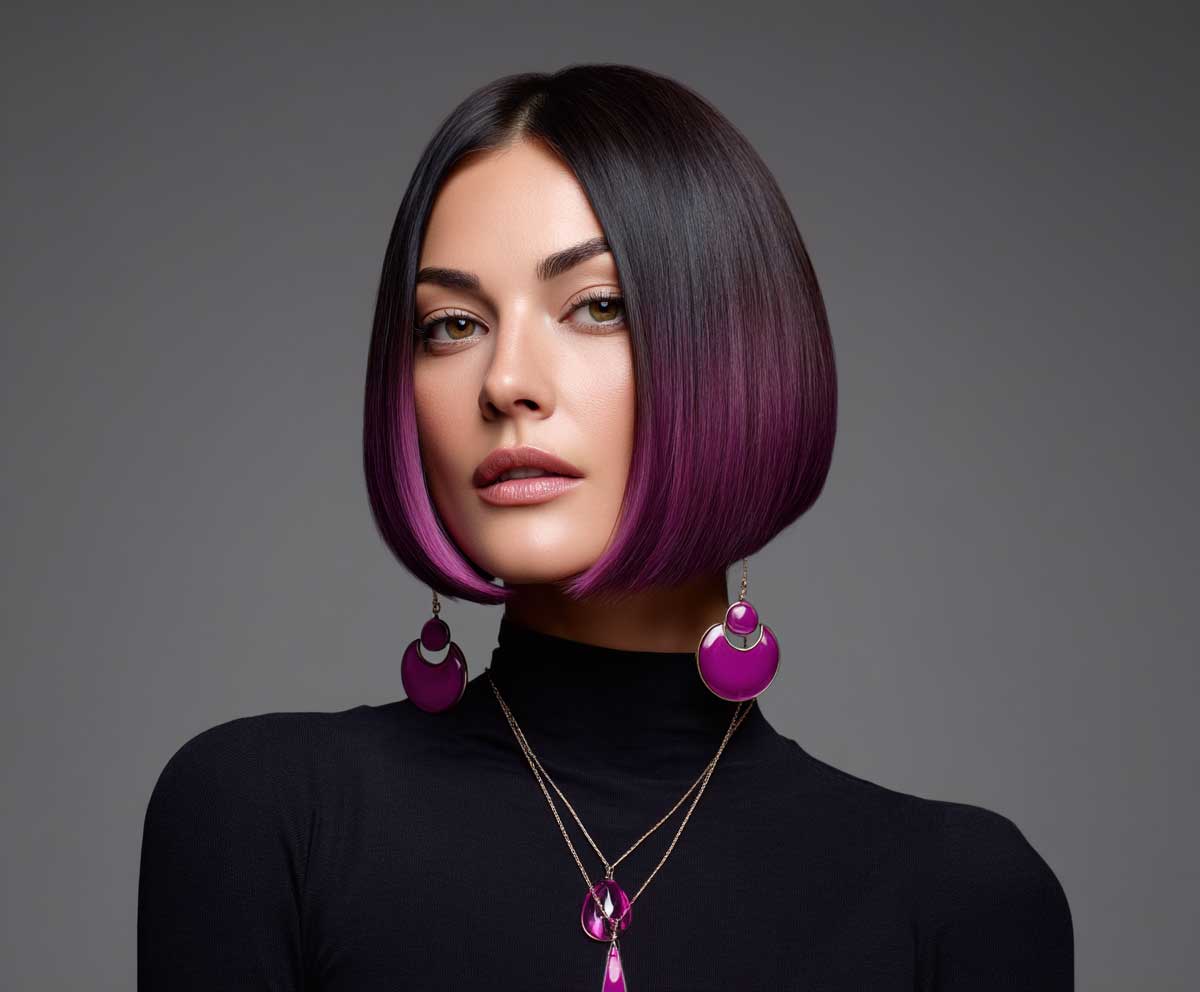

Magenta dips work on a contrast logic: the starker the transition between the jet black base and the neon ends, the sharper the look reads. The color doesn’t just sit at the tips — it bleeds upward slightly into the lower third of the lob, giving the ends a sense of weight and intentionality rather than an afterthought. For home maintenance, Manic Panic semi-permanent dyes in the $9.74–$15.99 range (4 oz, available at Walmart) are a viable option for refreshing the magenta between salon visits — the semi-permanent formula lasts 4–6 weeks with proper care.
Sleekness is the non-negotiable variable. Straight-ironed, glossy hair turns the magenta tips into precise punctuation marks — graphic, deliberate, impossible to miss. Textured or frizzy hair softens the contrast and the look loses its architecture. A gloss spray applied to the black section before heat styling intensifies the depth of the base, which makes the magenta pop harder. What kills this look fastest is color fade — a pigmented magenta conditioning mask once a week (look for brands like Manic Panic’s Love Color line) maintains vibrancy between full applications.
Does the asymmetry feel risky? Only if you expect it to follow symmetrical styling rules — it doesn’t, and that’s the point. The longer side frames the face; the shorter side creates negative space. Together they set up a visual rhythm that draws attention to facial structure rather than just hair length. Oval faces are the ideal candidate for this specific experiment because the face shape provides a stable, proportionate backdrop against which the geometry can actually register. For peekaboo color placements that work on similar dramatic lob cuts, short layered bob hairstyles with peekaboo highlights show how hidden color adds dimension without changing the overall silhouette.
| Color Approach | Best Placement | Touch-Up Interval | Key Risk |
|---|---|---|---|
| Tangerine Ribbons | Mid-length to ends, vertical strands | Every 12 weeks | Over-saturation kills contrast |
| Aquamarine Balayage | Mid-shaft to ends, face-framing curls strongest | Every 4–6 months | Heat styling shifts tone to gray-green |
| Magenta Dip Dye | Lower third of lob, bleeding upward slightly | Every 4–6 weeks | Sleekness required — texture kills contrast |
L’Oréal Paris publishes a detailed undertone guide that pairs cool versus warm skin tones with compatible fantasy hair colors — a useful starting point before committing to any of these three palettes. The guide covers blue, violet, and teal families with specific maintenance notes. Read it at L’Oréal Paris hair color for cool skin tones.
Hair Color for Oval Face
Color placement decides everything — shade is secondary
Oval faces give colorists the rarest starting point: balanced proportions that can absorb warm ribbons, cool gradients, or graphic contrasts without needing compensatory framing. The direction of placement — vertical for tangerine, downward-pull for aquamarine, angular for magenta — is the variable that actually changes the result.
Orange highlights on waves need 12-week refresh cycles. Aquamarine balayage lasts 4–6 months but demands cold-water washing. Magenta dip dye fades in 4–6 weeks without a color-depositing mask.
Save this post before your next color consultation.