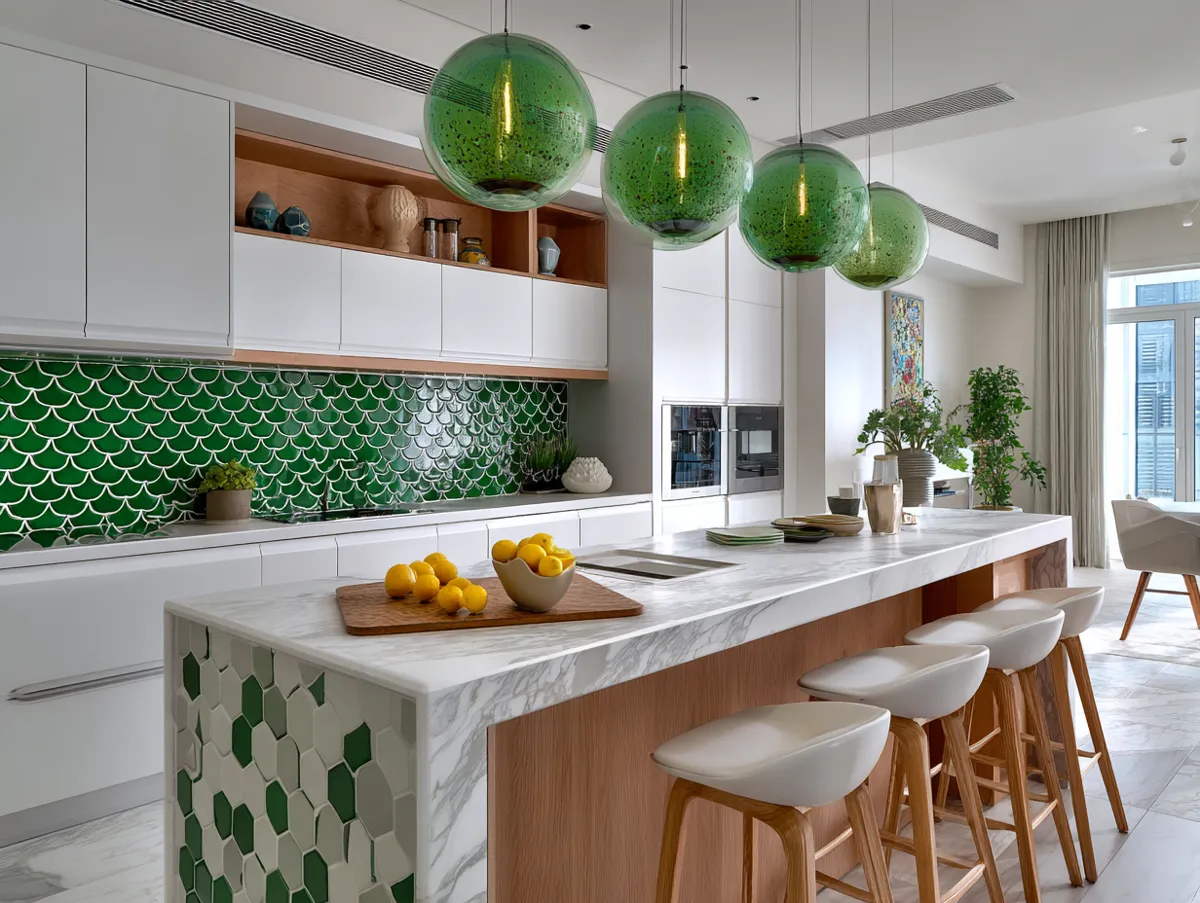
A green backsplash with white cabinets changes the entire energy of a kitchen — and the shade of green you pick determines whether the result reads as spa-calm, jewel-box dramatic, or warm farmhouse. That distinction matters more than most people expect before they start shopping tile. The wrong tone against white cabinetry can flatten the space or pull it into a murkiness that no amount of pendant lighting fixes.
Sage, emerald, and olive are the three greens that actually work at scale on a kitchen backsplash. Each one has a different light behavior, a different grout requirement, and a different finish pairing — and the gap between a well-executed sage tile and a poorly installed one of the same color is bigger than most renovation budgets account for. Tile installation for a standard 30-square-foot kitchen backsplash runs $200 to $1,100 depending on material and pattern complexity, according to HomeGuide, so getting the choice right before grouting matters.
The sections below break down each green variant by tile format, material behavior, lighting interaction, and finish combination — so you can walk into a tile showroom knowing exactly what to test and what to reject.
- Sage green subway tile in matte finish reads calmest against white cabinets — ceramic materials run $2–$15/sq ft before labor
- Emerald glass mosaic tiles cost $8–$30/sq ft for materials and reflect light actively — they read darkest in north-facing kitchens
- Olive textured tile suits farmhouse and organic-modern rooms; installed cost with pro labor runs $25–$45/sq ft
- Grout color has as much visual impact as tile color — white grout widens the space, dark grout tightens the grid
- A comparison table at the end of this article summarizes all three variants side by side
Sage Green Subway Tile Reads Calmest Against White Cabinets
Sage green backsplash tile with white cabinets works because sage sits at a gray-green midpoint — it neither competes with white the way a vivid leaf green would, nor disappears behind it the way a barely-there mint does. A 3×6 ceramic subway tile in matte sage on a standard offset stack creates a texture that reads like linen from across the room: present without demanding attention. Ceramic sage subway tile starts around $2 per square foot for materials, making it the lowest-cost entry into the green-backsplash category according to HomeGuide data.
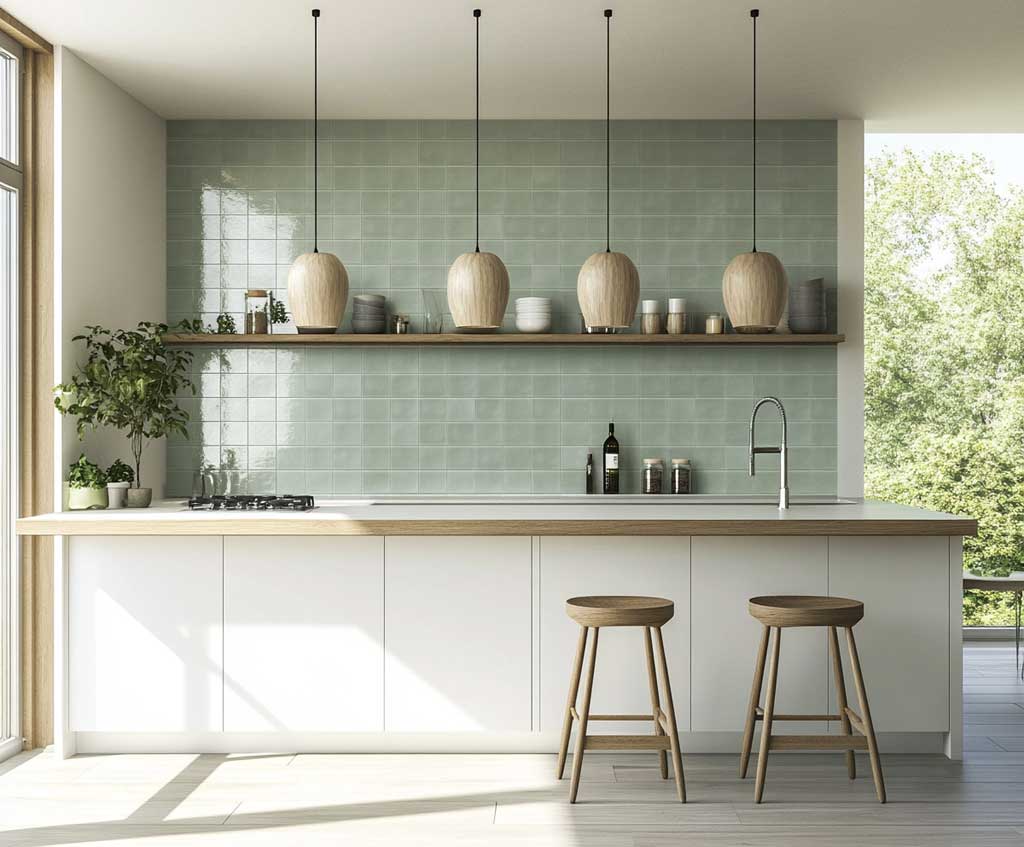
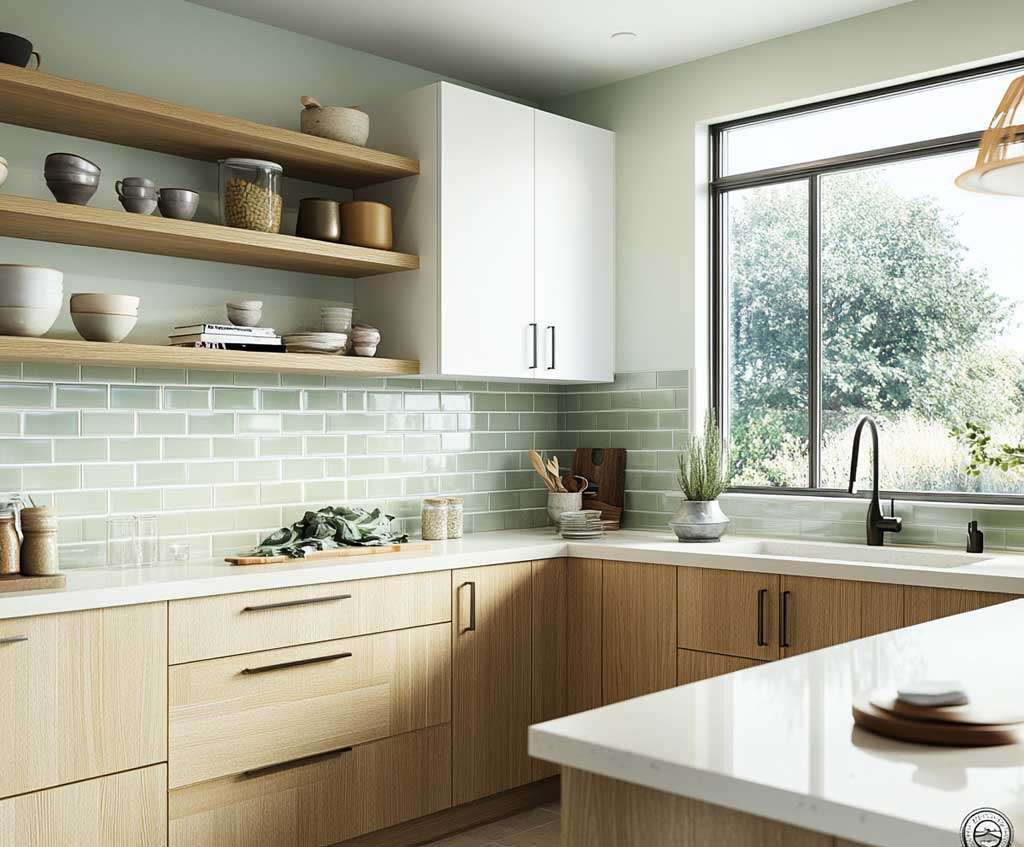
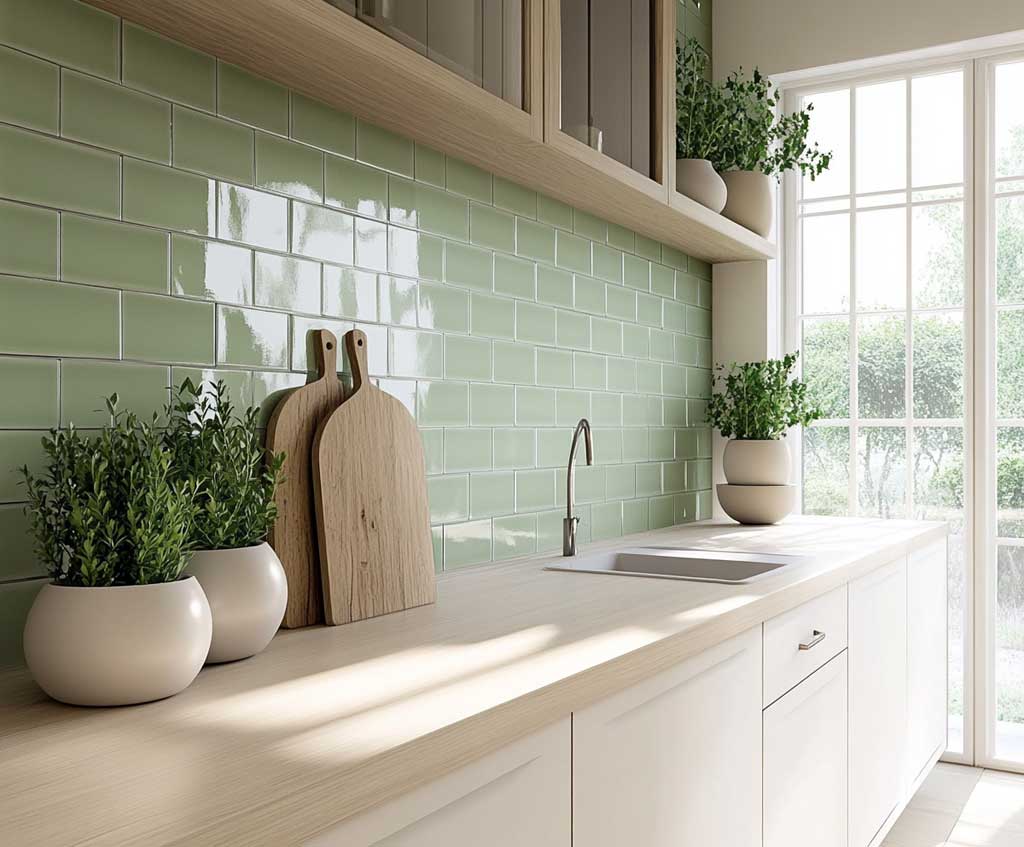
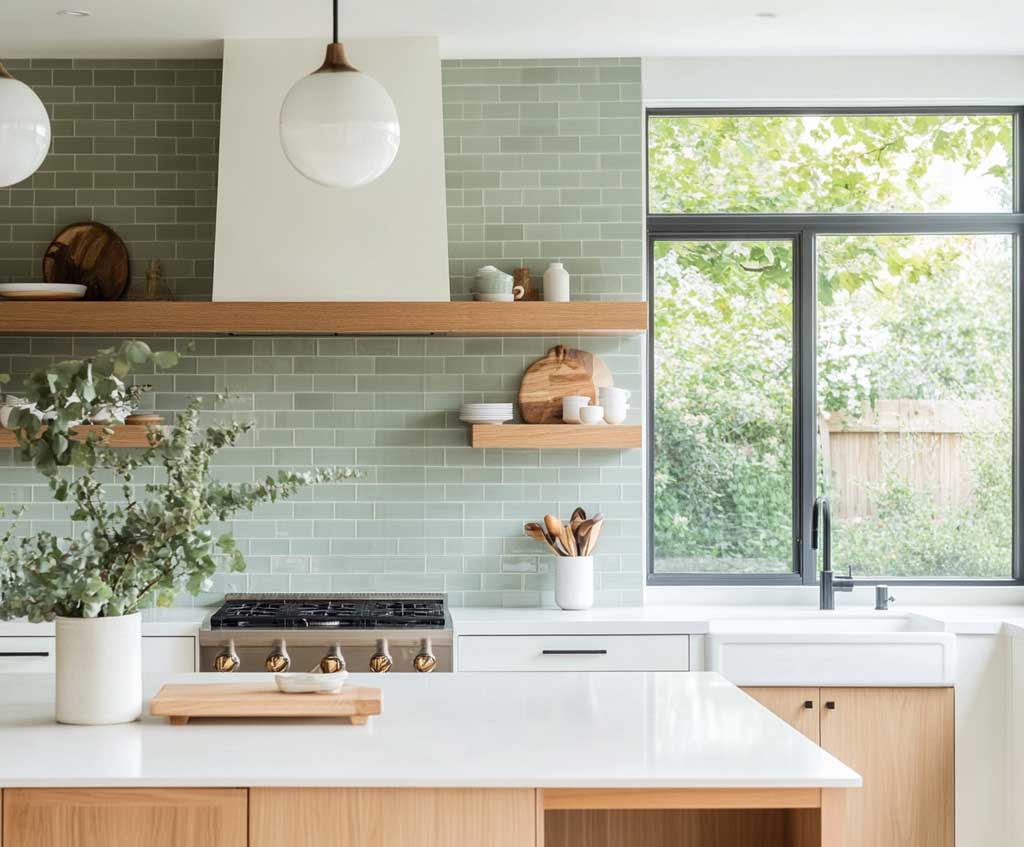
The finish decision here is consequential. A glossy sage tile reflects light and makes the color appear 20–30% lighter depending on the room’s exposure — useful in north-facing kitchens, but potentially washed out in kitchens that already get strong afternoon sun. Matte absorbs light, which preserves the depth of the green through different times of day. Stylists generally recommend matte for kitchens where sage is the primary color accent, and gloss only when the backsplash is a small strip rather than a full wall between countertop and upper cabinet.
Light oak floating shelves or a butcher-block island pull out the yellow undertone in sage without clashing — it’s the same botanical relationship you’d see between moss and pale birch bark. What doesn’t work: brass hardware in a yellow-gold finish. It competes with the warm undertone in sage rather than anchoring it. Brushed nickel or unlacquered brass (which reads cooler) keeps the palette from veering into avocado-kitchen territory. The grout call is equally important — a light gray grout over sage tile keeps the joints from reading as lines on a map.
Ask yourself: does my kitchen get direct sunlight between 10am and 2pm? If yes, a matte sage tile without any gloss will perform more consistently across seasons. Glossy finishes in sun-drenched kitchens shift from soft sage to near-white during peak hours, making the backsplash disappear exactly when you want it visible. The trick is to order three sample tiles in matte, satin, and gloss and hold each one against your actual cabinet door under midday light before committing to a full order. Skipping this step is the single most common mistake in backsplash renovations.
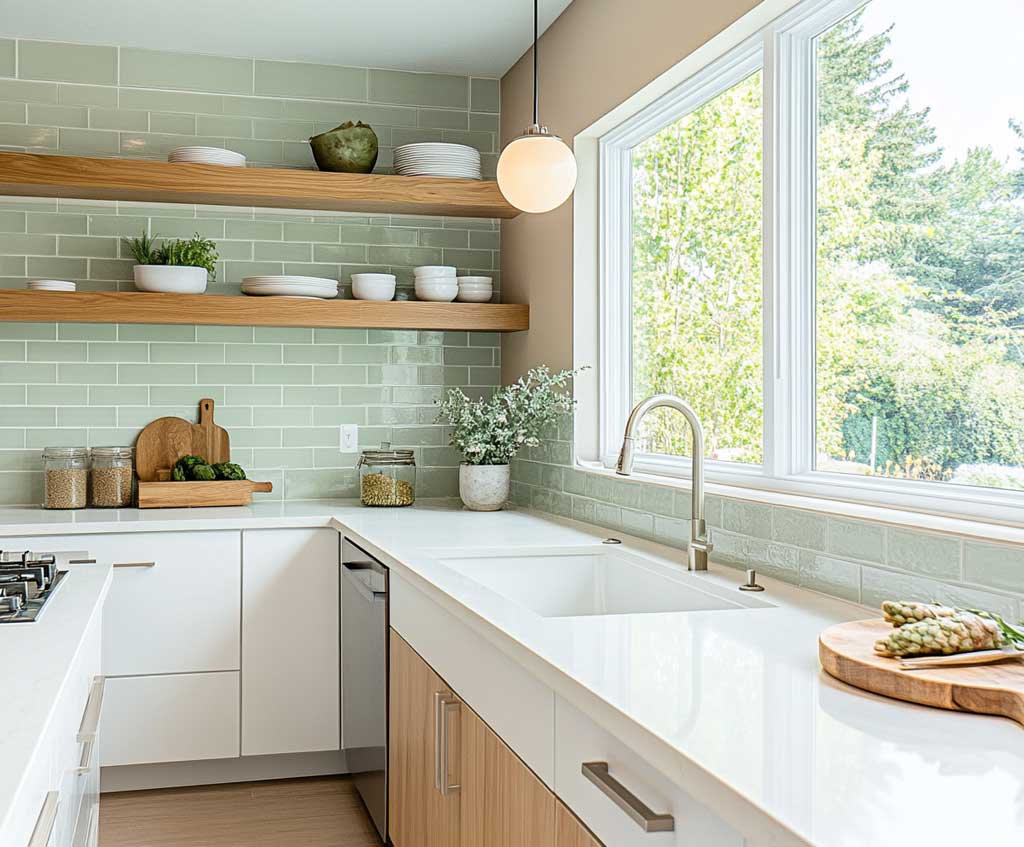
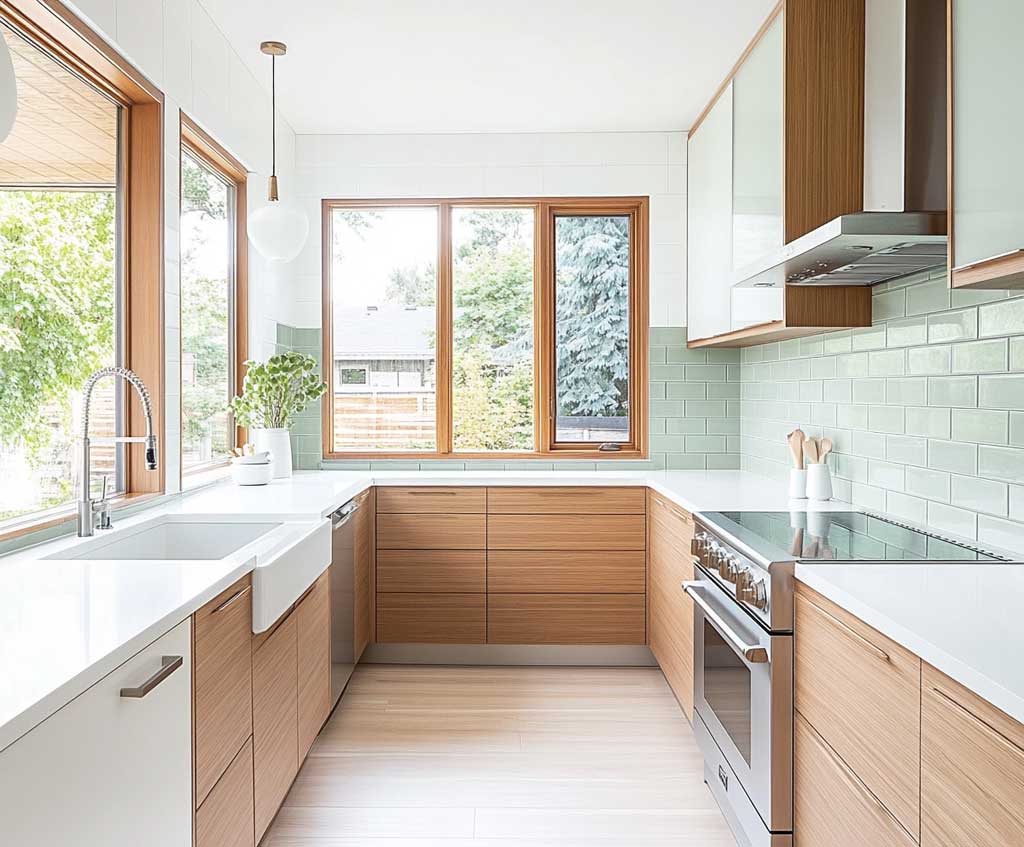
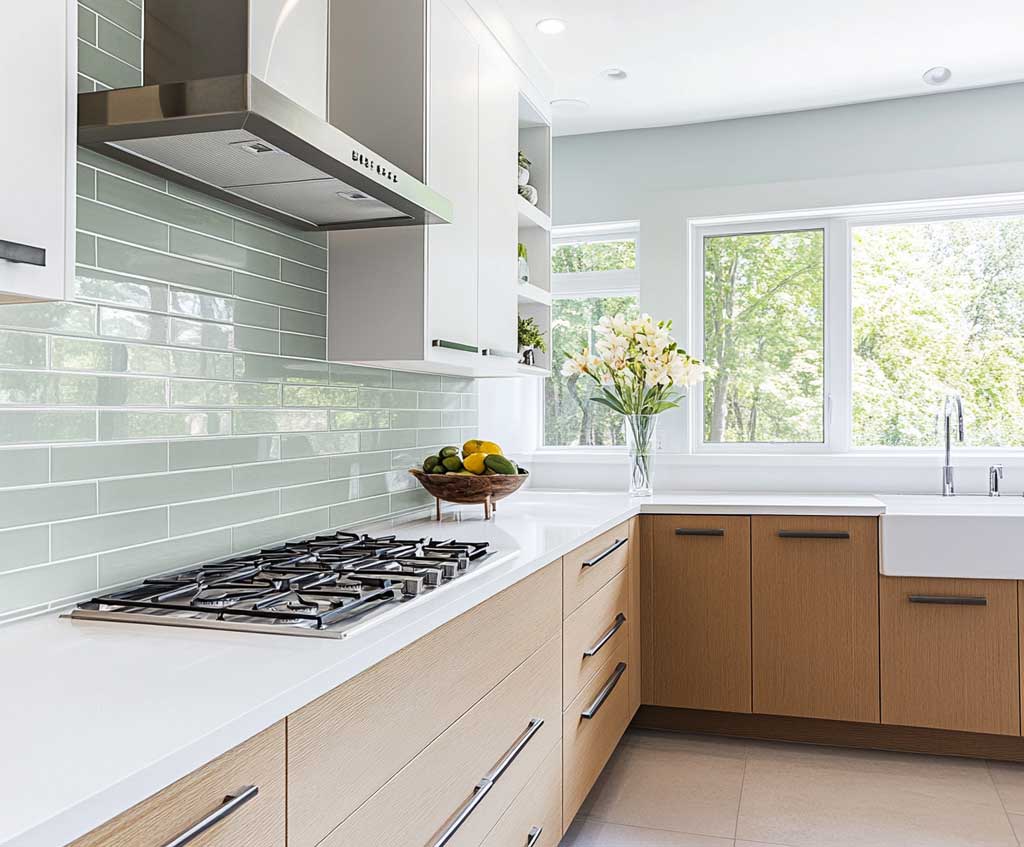
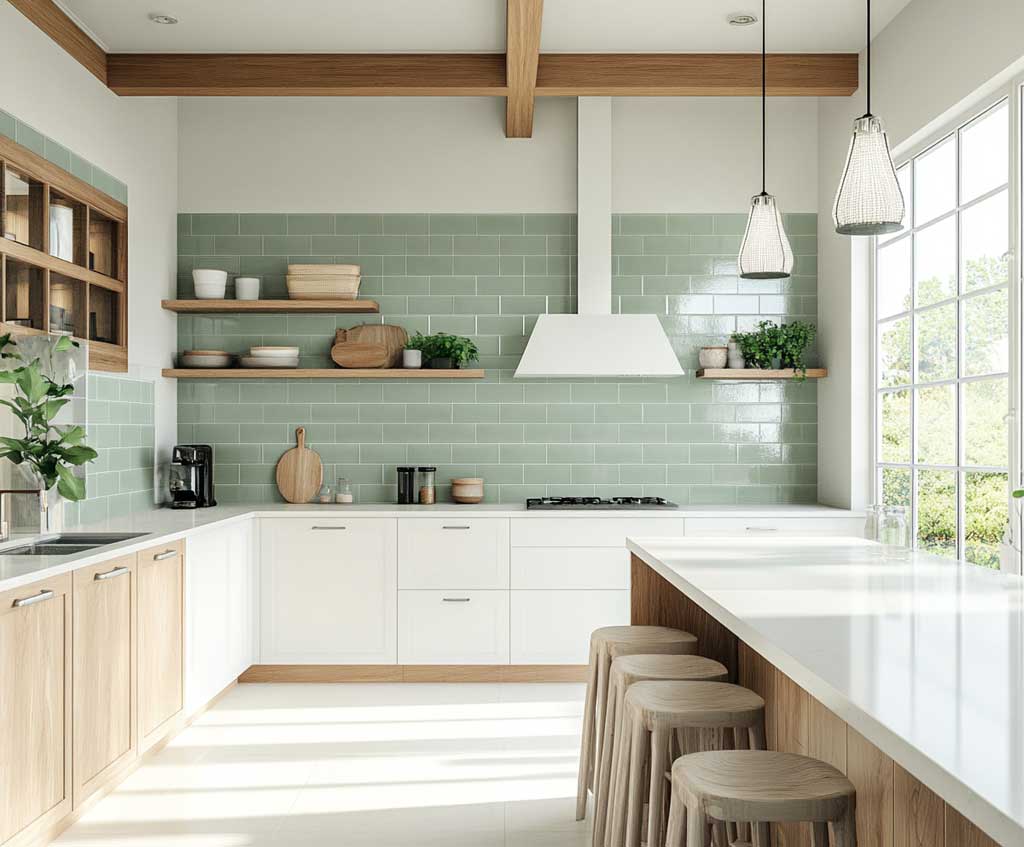
For kitchens pairing sage tile with green kitchen backsplash designs across multiple surfaces — like a sage tile wall plus green-painted island — keep the cabinet color a true white rather than a warm cream. Cream cabinetry pulls the sage toward yellow-green and loses the cool botanical quality that makes the pairing work in the first place. White quartz countertops in a vein-free or minimal-vein format complete the look without adding visual noise.
Avoid running sage green tile all the way to the ceiling on every wall in a small kitchen. Floor-to-ceiling tile in a muted green in a compact space creates the effect of being inside a terrarium — the color closes in rather than receding. Limit full-height tile to one focal-point wall, typically the range wall, and use a standard backsplash height (typically 18 inches) on the remaining walls. The same principle applies to mixing sage tile with sage cabinet paint — unless the ceiling is very high, two surfaces in the same muted green read as a single undifferentiated mass.
Emerald Glass Mosaic Brings Green Backsplash Drama to White Cabinet Kitchens
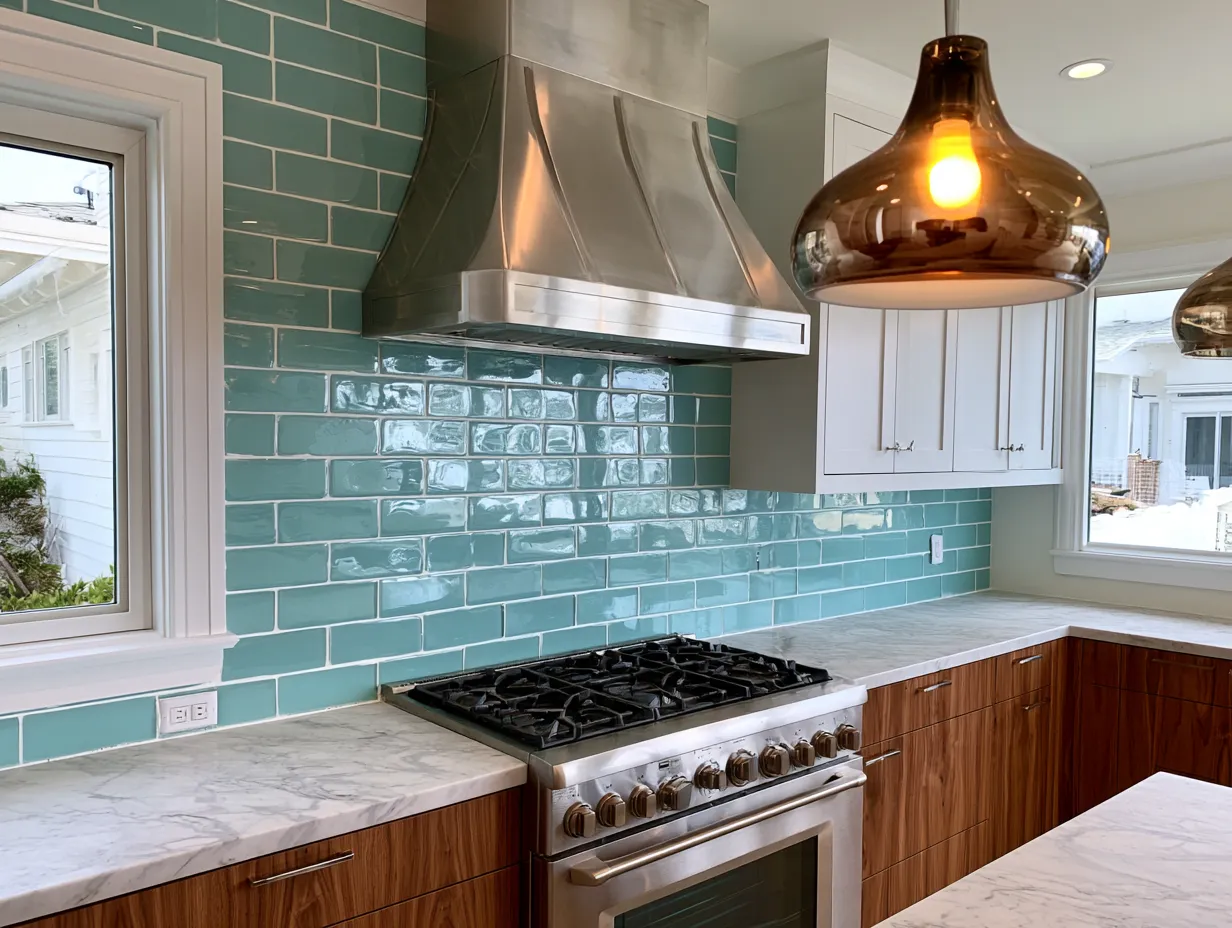
Emerald green glass mosaic tile as a green backsplash with white cabinets operates on a completely different logic than sage — it’s not about calm, it’s about focal-point drama. Glass mosaic tile in emerald runs $8–$30 per square foot for materials according to Stone Market USA’s 2026 cost data, and the reflective quality of glass means every piece of that tile is doing active work: bouncing light, shifting color with the sun angle, and changing how large the kitchen feels at different times of day. A typical 30-square-foot kitchen backsplash in glass mosaic costs $500–$1,500 installed.
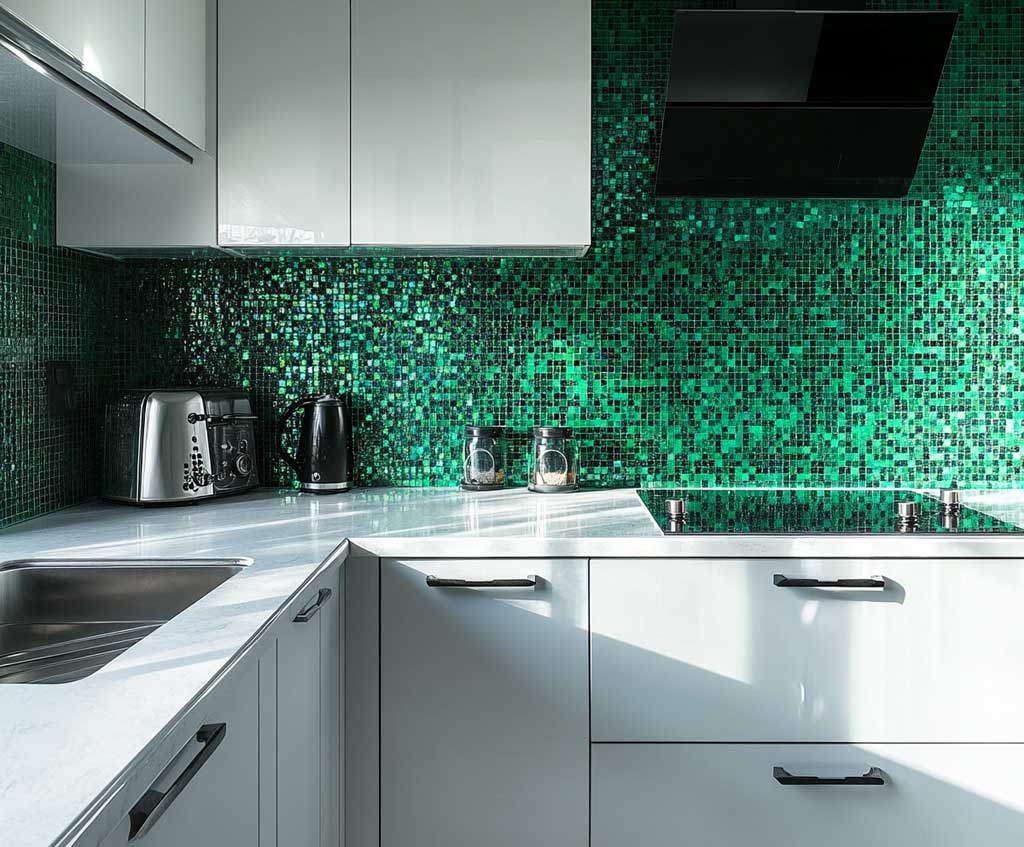
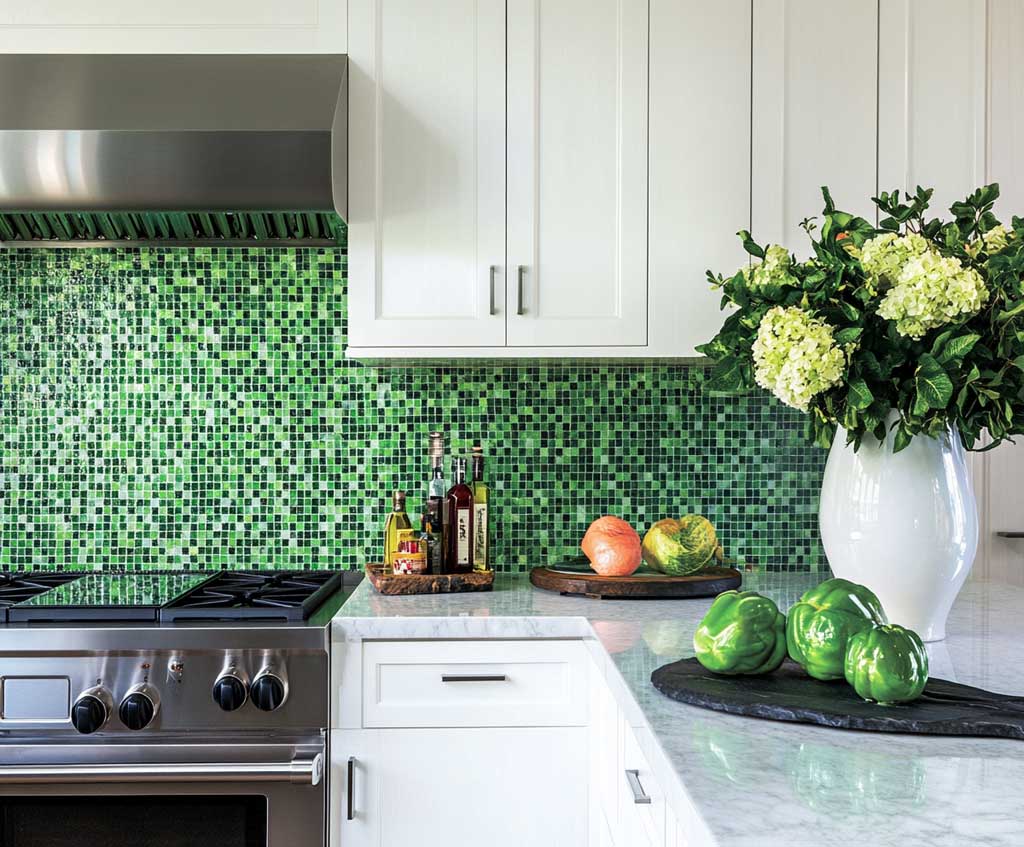
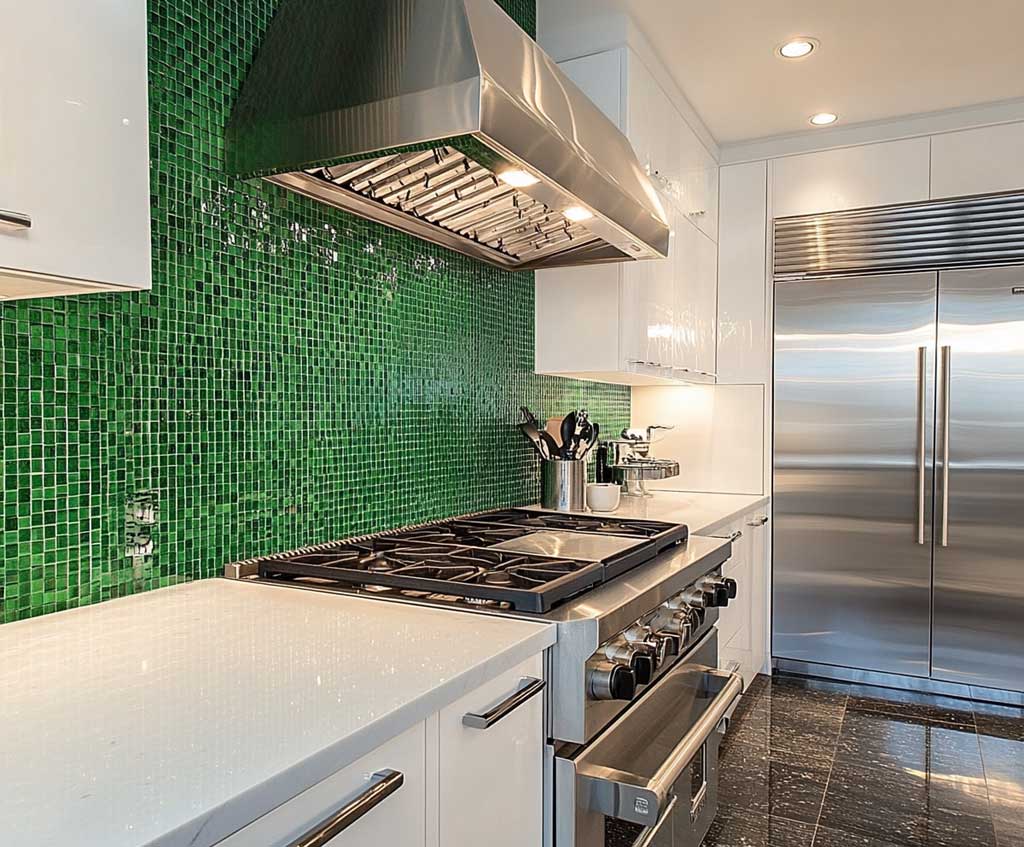
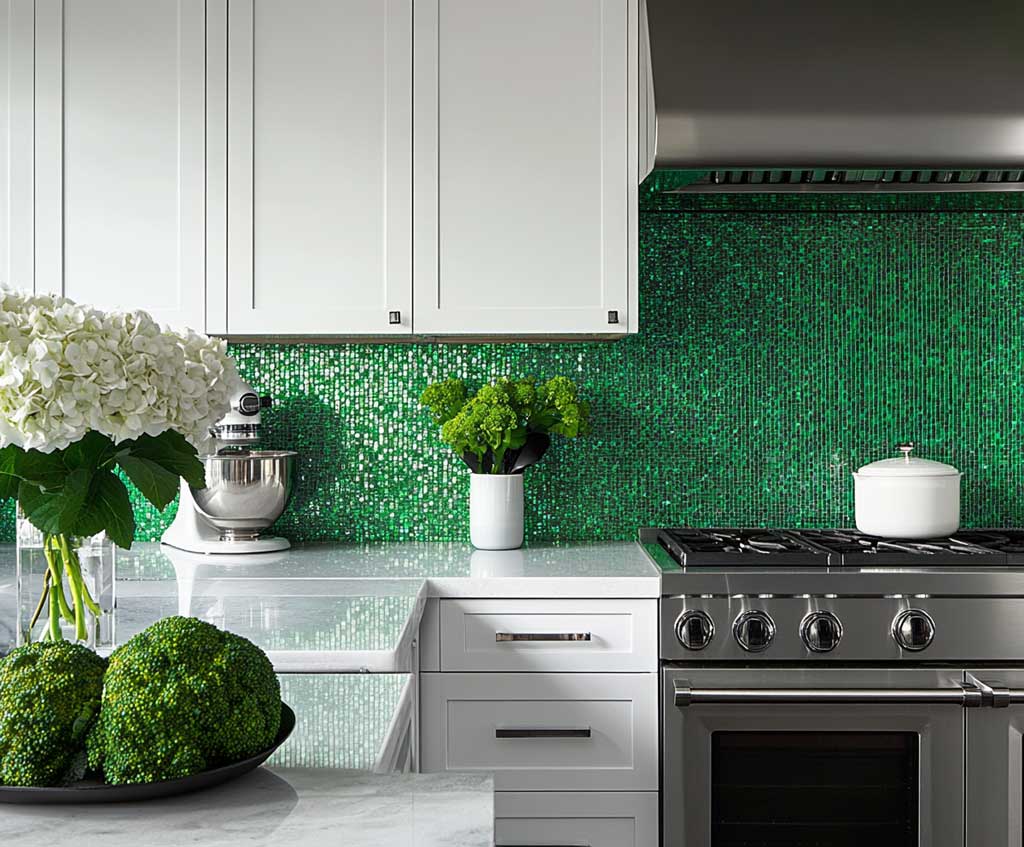
The ¾-inch mosaic format — the standard for mesh-mounted glass sheets — creates a textured surface that a single large-format tile cannot achieve. Each small tile captures light at a slightly different angle, so the wall appears to shift between deep forest green and bright emerald depending on where you’re standing. Think of it like how a cut gemstone reads differently from across a room versus up close — the mosaic scale makes the wall itself behave like a faceted surface. This is why emerald glass mosaic works especially well behind a range, where pendant lighting directly overhead creates the most dynamic shadow-and-reflection effect.
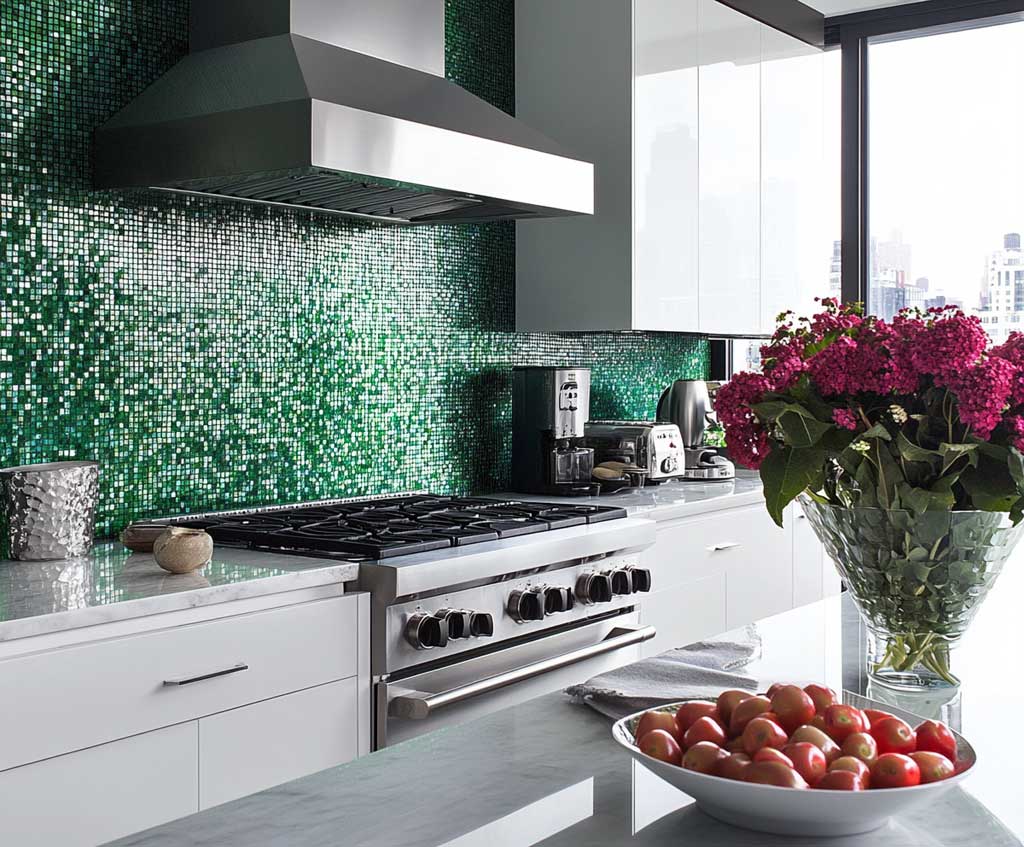
White Carrara marble countertops and stainless steel appliances are the two pairings that most reliably land with emerald glass mosaic. Marble’s cool white veining gives the green a polished frame — the same reason emerald jewelry tends to be set in platinum or white gold rather than yellow. What to avoid: dark wood countertops or dark-stained lower cabinets. The combination of dark wood plus deep emerald behind white upper cabinets creates an uneven weight distribution — the bottom of the room feels heavy and the white cabinets look stranded in the middle. Keep all horizontal surfaces light if the backsplash is going deep green.
Under-cabinet LED strip lighting makes emerald glass mosaic perform at a different level than it does with overhead lighting alone. The light grazes the surface at a low angle rather than hitting it from above, which activates the reflective dimension of the glass and creates a slow shimmer across the wall surface. Does this mean you need an expensive lighting system? No — a plug-in LED strip starting around $30–$50 achieves the same effect as a hardwired system for the range or prep area. The color temperature matters: 2700K (warm white) pulls the green toward teal; 3000K (neutral white) is the most flattering for emerald.
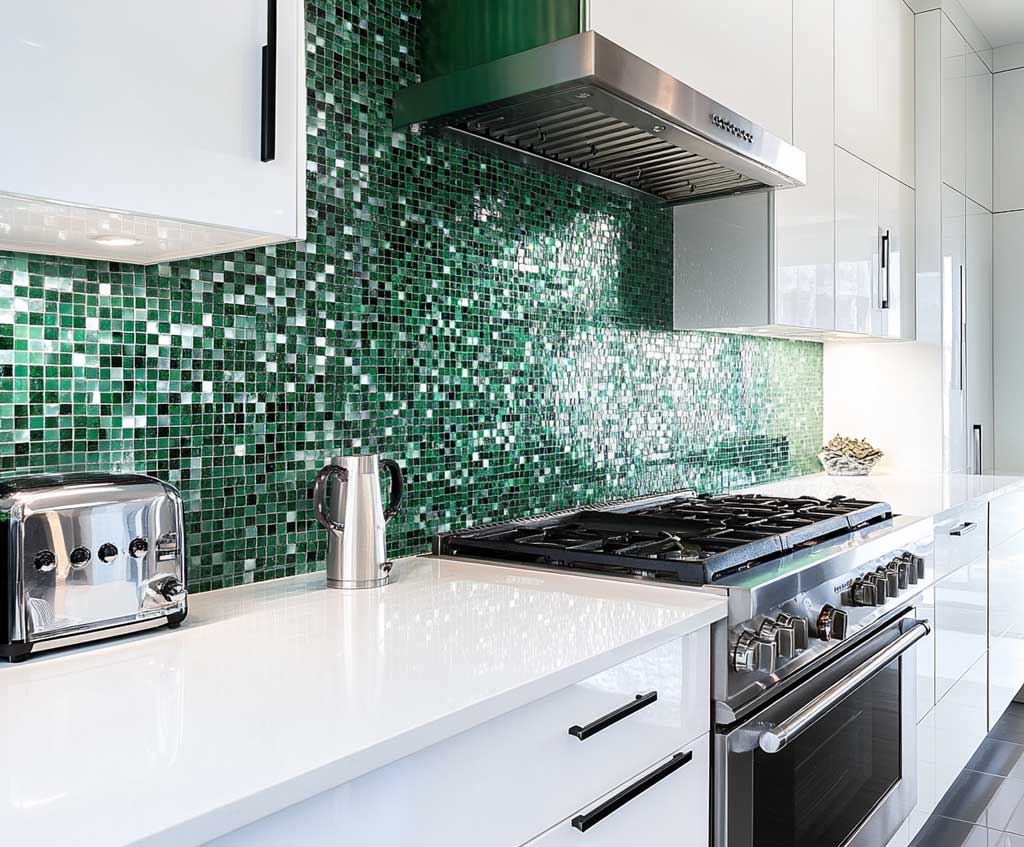
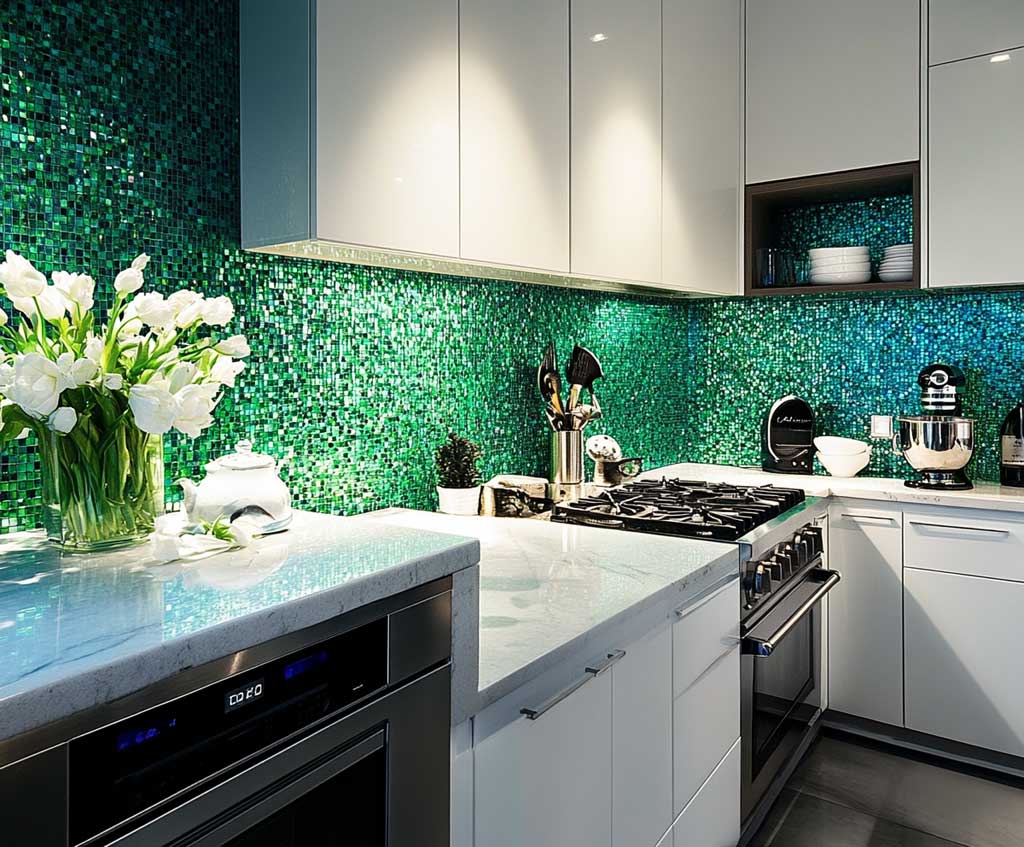
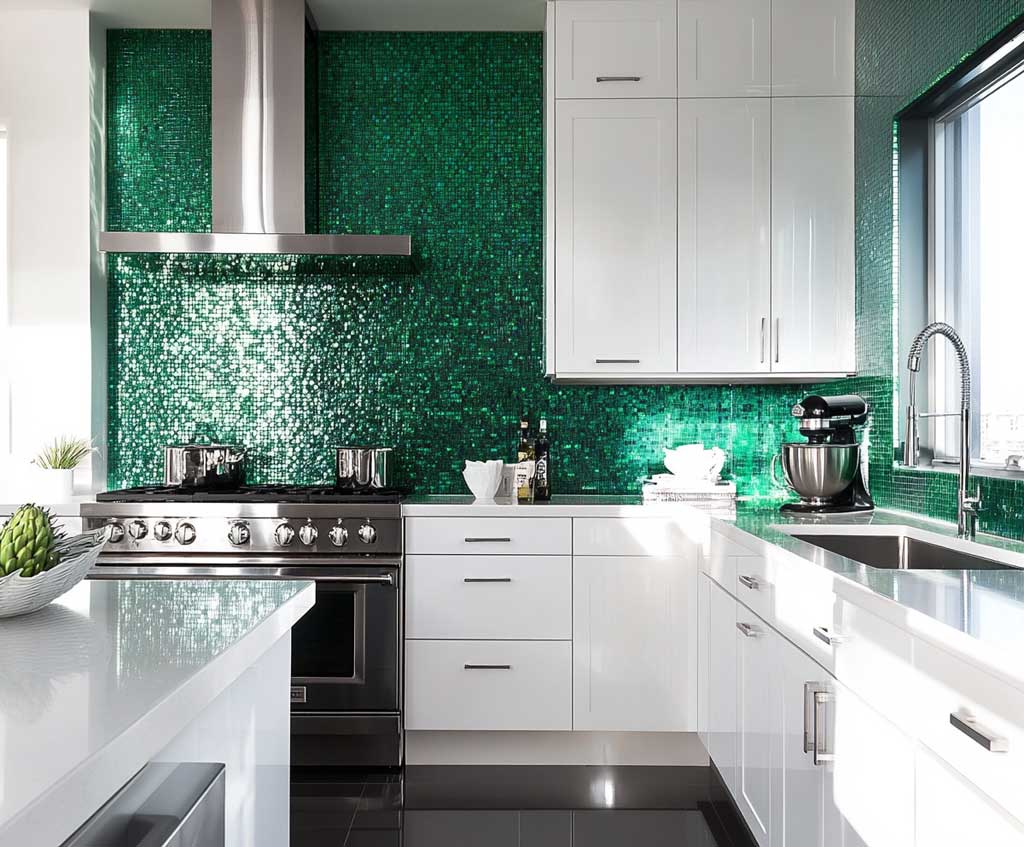
Hardware choice at this saturation level is binary: go matte black or brushed gold, and commit. Polished chrome or polished nickel competes with the reflective surface of the tile — two shiny things in close proximity cancel each other rather than amplifying each other. Matte black provides visual anchor points that stop the eye from sliding continuously across the tile surface. Brushed gold reads warmer and shifts the emerald slightly toward a vintage-luxe register. Either works; mixing both in the same kitchen does not.
Grout selection for glass mosaic is where many installations lose their intended effect. A grout color that closely matches the tile — deep charcoal or bottle green — allows the mosaic pattern to read as a single continuous surface from across the room, which emphasizes the color mass. White or light gray grout does the opposite: it breaks the surface into a visible grid that draws attention to the tile geometry rather than the color. For emerald mosaic behind white cabinets, a dark grout almost always produces a more sophisticated result. The grid-on-white approach works better for small-format penny tiles in lighter colors.
Olive Textured Tile Earns Green Backsplash Credibility in Farmhouse Kitchens
Olive green textured tile on a kitchen backsplash with white cabinets sits at the intersection of color and material — the interest comes from both simultaneously rather than from one or the other. Olive as a color pulls brown and gray into green rather than blue, which means it reads as earthy and warm rather than cool and botanical. Professional installation of olive green tile averages $25–$45 per square foot according to Apollo Tile’s 2026 pricing data, which reflects both the material cost and the additional labor that textured or handmade-look tiles require.
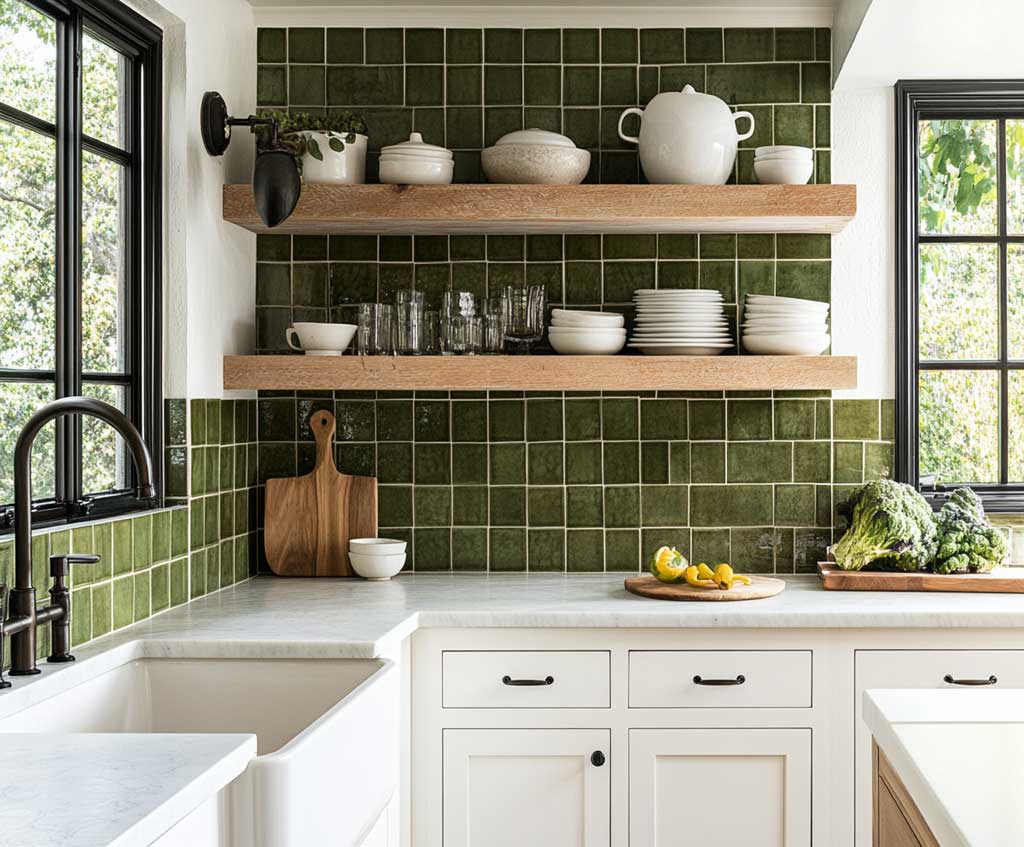
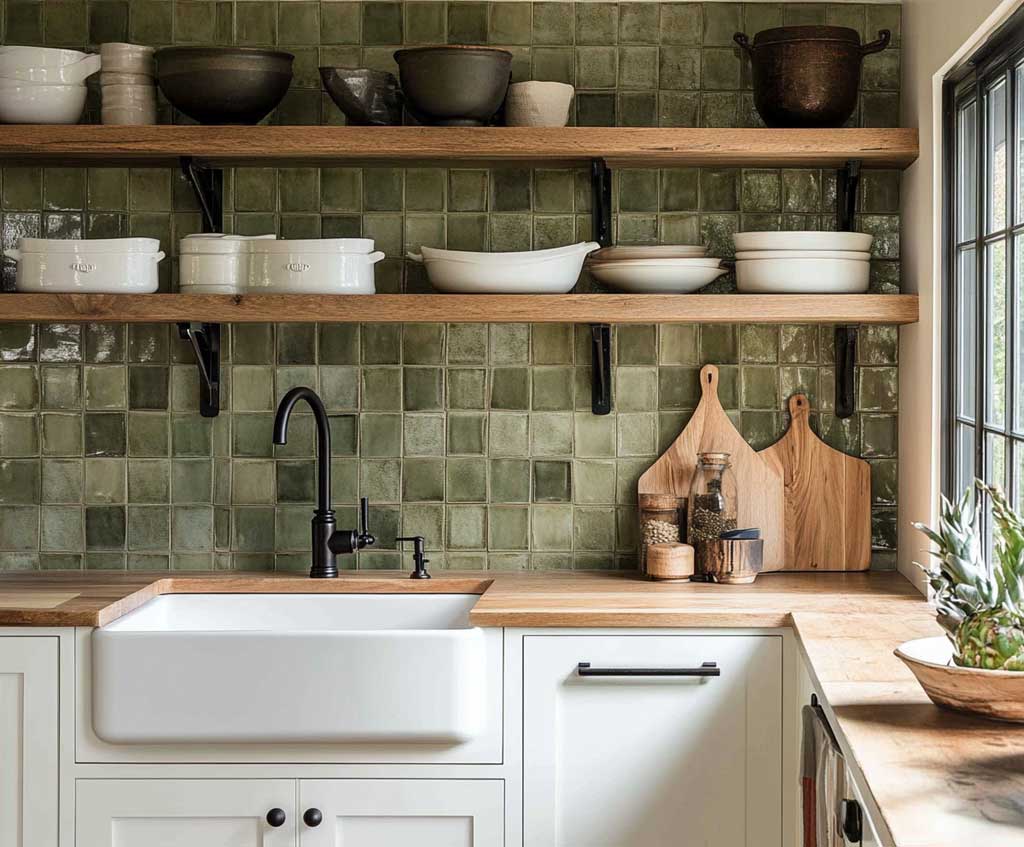
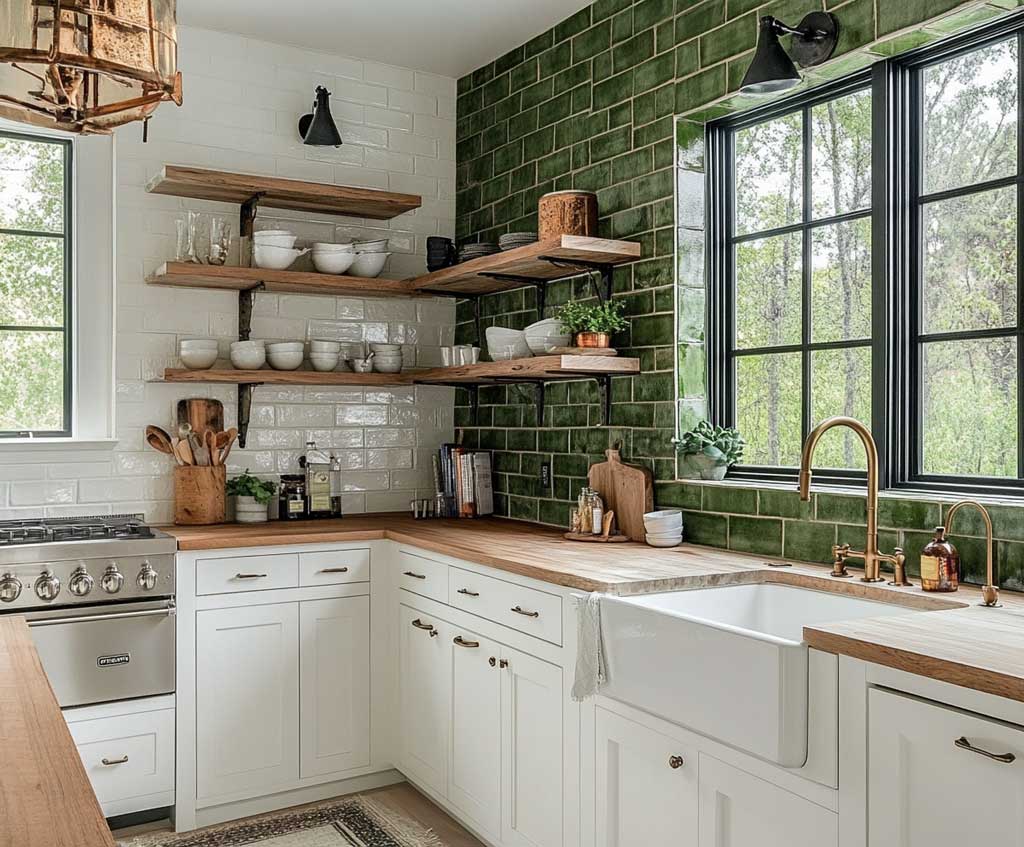
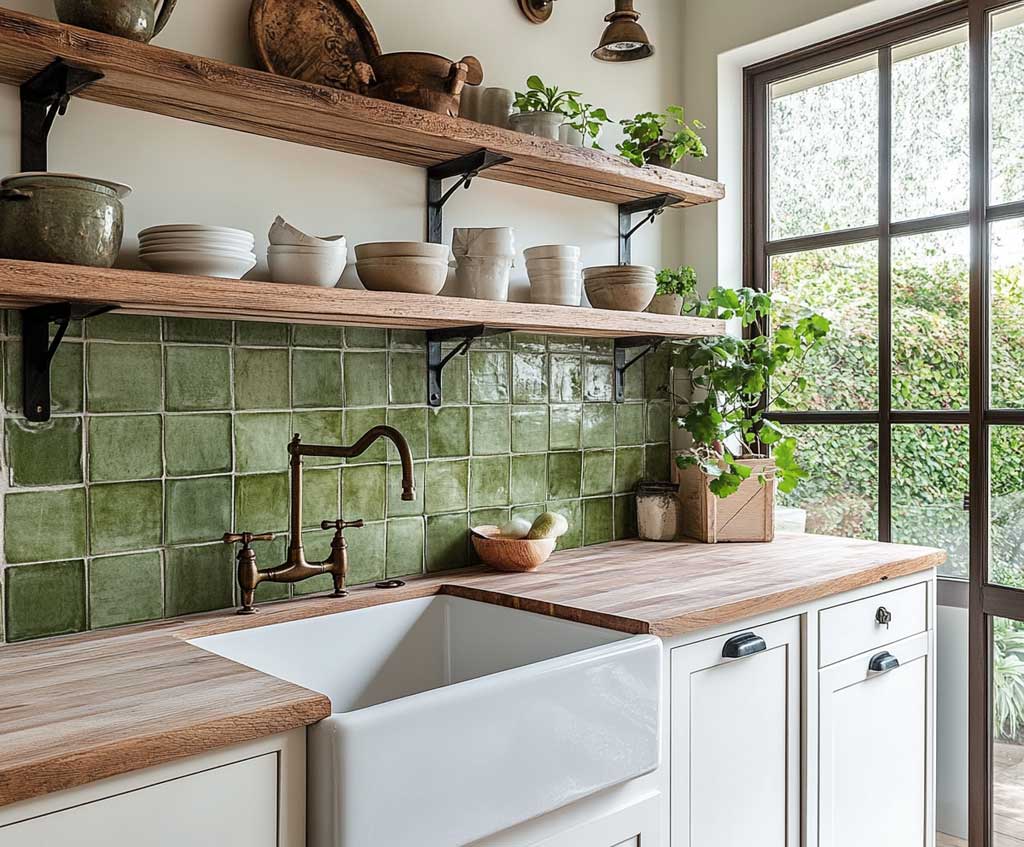
Zellige-style olive tiles — the handmade Moroccan-influenced format with slight surface variation in each piece — bring the most visual complexity at this price point. Each tile captures under-cabinet light slightly differently from its neighbors, creating a slow undulation across the surface that flat-glazed ceramic tiles simply cannot produce. A common approach with zellige olive is to run it in a straight stack pattern rather than a traditional offset, which emphasizes the surface variation of individual tiles rather than the geometric rhythm of the layout. The zellige format pairs particularly well with a farmhouse sink, where the depth and aged quality of the basin mirrors the handmade character of the tile.
Bronze and unlacquered brass fixtures are the natural hardware pairing for olive green tile. The oxidized warmth of bronze against the earthy green mimics the way copper patina looks against aged foliage — it’s an outdoor-to-indoor translation that reads as intentional rather than accidental. What genuinely doesn’t work: polished chrome or white hardware. Both finishes pull the olive toward a clinical territory that undercuts the warmth the color is supposed to provide. Matte black is the only cooler-toned hardware that works here, because its flatness doesn’t compete with the texture of the tile surface.
Is olive too dark for a small kitchen? Not necessarily — but placement matters more than size. A full-height tile covering three walls in a galley kitchen will darken the space. The same tile on the range wall only, with white painted walls flanking it, creates a grounded focal point without the tunnel effect. The trick is treating the olive backsplash like a piece of furniture: it should anchor the room, not paper it. Under-cabinet lighting pointed at a textured tile surface also helps considerably — the shadows caught by the raised texture add depth rather than mass, which prevents the wall from reading as heavy.
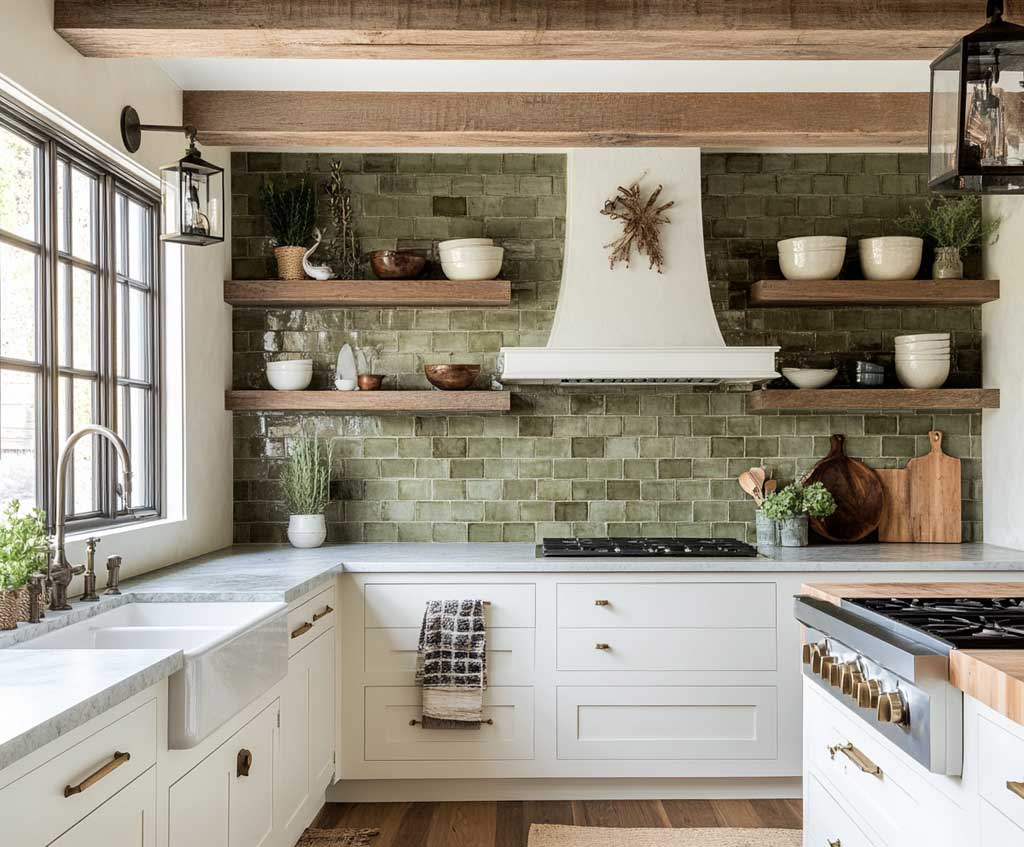

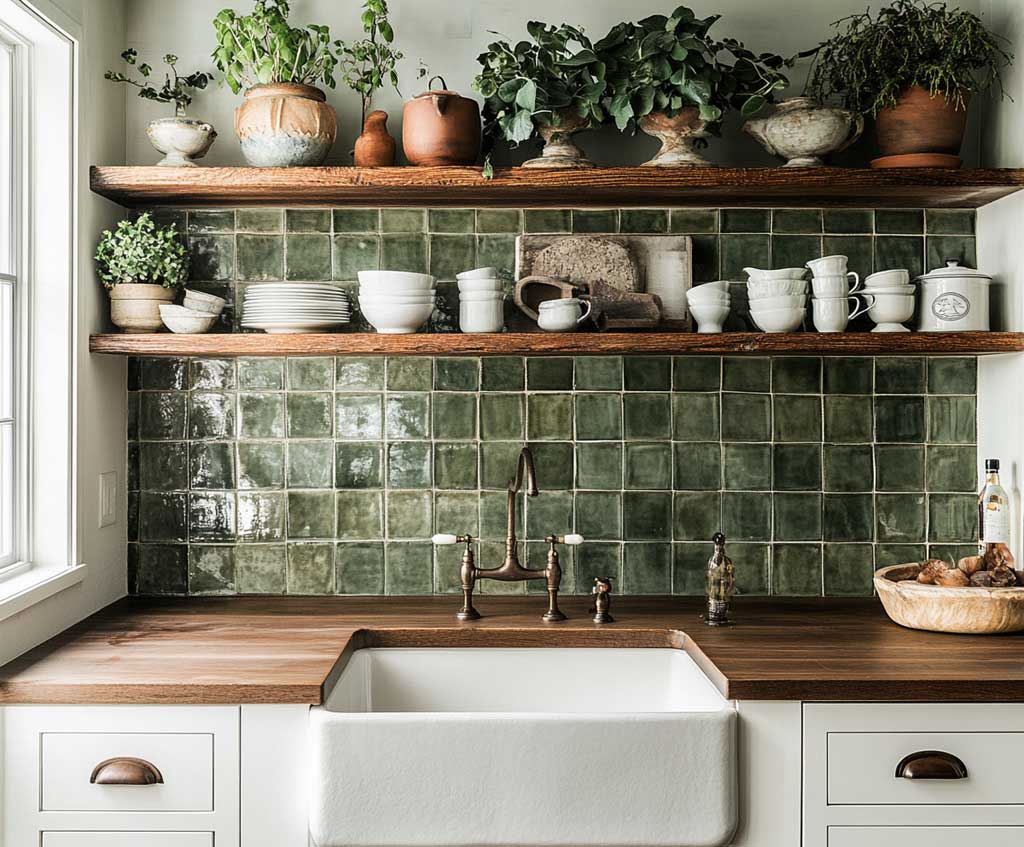
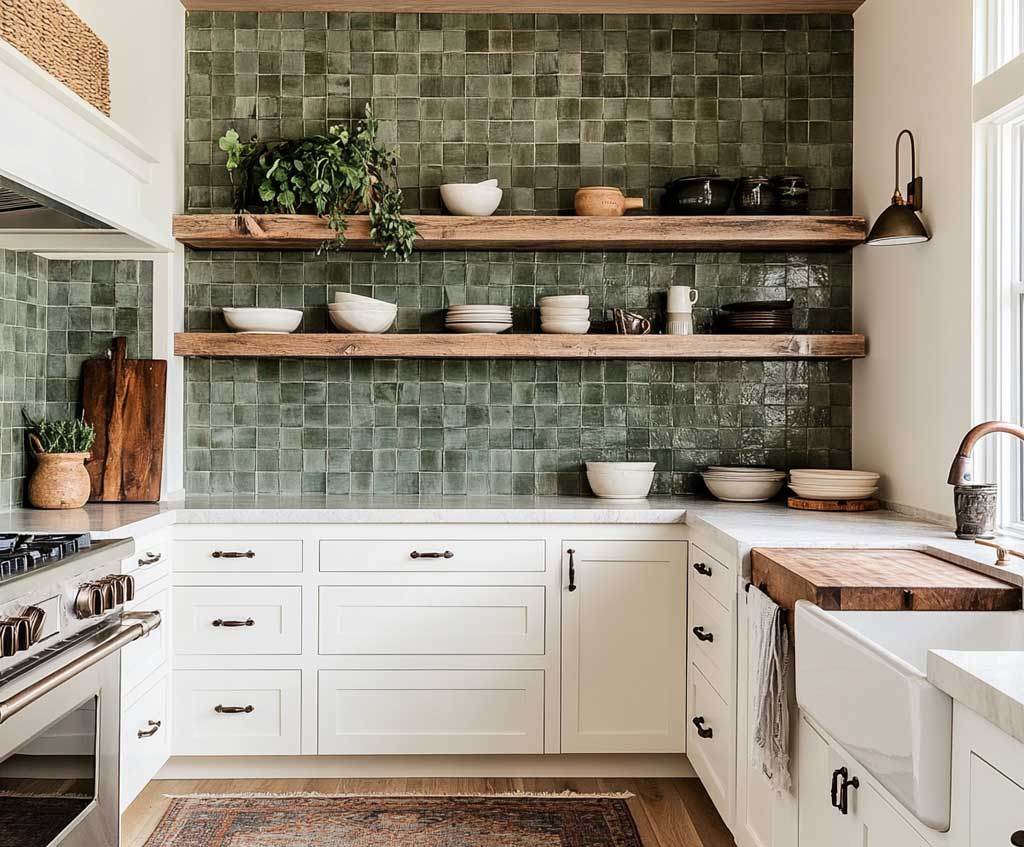
Open wood shelving in walnut or white oak becomes a structural ally to olive tile rather than decoration when placed directly above the backsplash. The warmth of the wood grain mediates between the cool white of upper cabinets and the earthy depth of the tile below — it occupies the color temperature space between both surfaces rather than competing with either. A kitchen with olive tile, white cabinets, and wood shelves reads as intentionally layered; the same kitchen with olive tile and no wood at all reads as an unresolved color question. For those researching a wider range of kitchen backsplash ideas with white cabinets that push into bolder territory, contrast-focused approaches like dark marble or patterned tile are worth reviewing alongside the green options here.
| Variant | Best For | Material Cost | Key Pairing Risk |
|---|---|---|---|
| Sage subway tile (matte ceramic) | Calm, transitional, Scandinavian kitchens | $2–$15/sq ft | Glossy finish in sunny kitchens washes out |
| Emerald glass mosaic | Contemporary, jewel-box, range-wall focal points | $8–$30/sq ft | Light grout breaks surface into visible grid |
| Olive textured tile (zellige-style) | Farmhouse, organic modern, rustic-contemporary | $25–$45/sq ft installed | Polished chrome hardware pulls color clinical |
Planning a green backsplash renovation? HomeGuide’s subway tile installation cost guide breaks down national price averages by tile size, material, and pattern complexity — useful for comparing installer quotes before committing.
The takeaway
Shade determines everything — pick the green before you pick the format
Sage tile calms the kitchen down without dulling it. Emerald glass mosaic turns the range wall into a focal point that changes through the day. Olive textured tile grounds the space with warmth that white-only kitchens lack.
Matte finishes always perform more consistently across changing light conditions than glossy — this is the rule that tile showrooms rarely volunteer upfront.
Save this post before your next tile appointment — the comparison table above covers everything you’ll want to reference in the showroom.