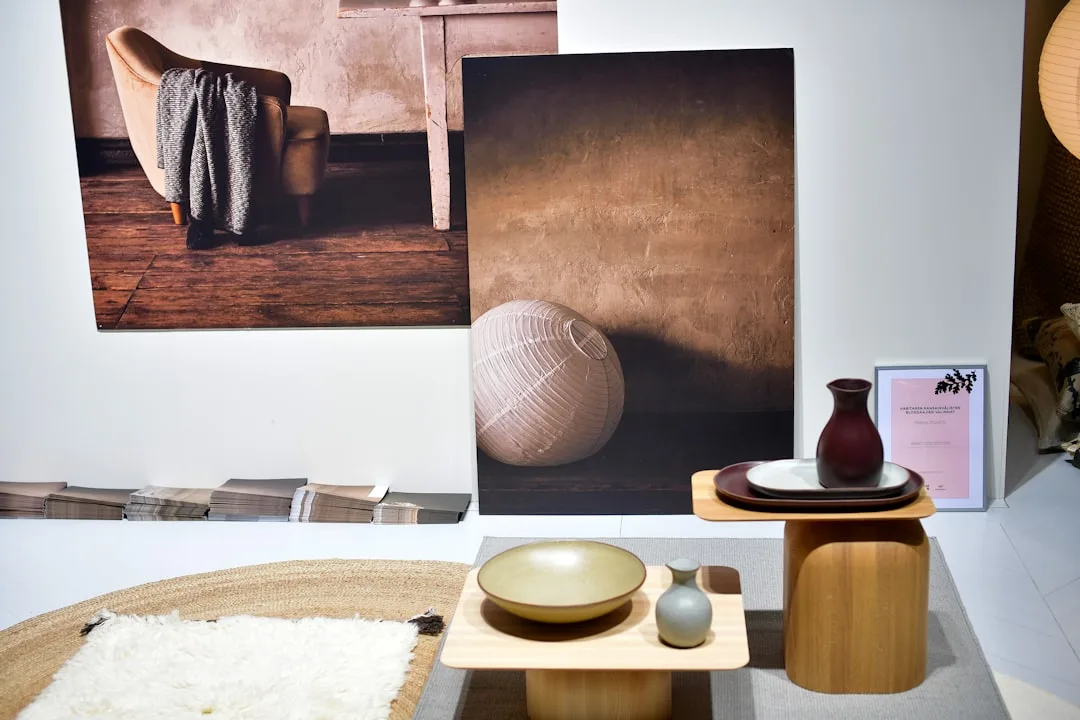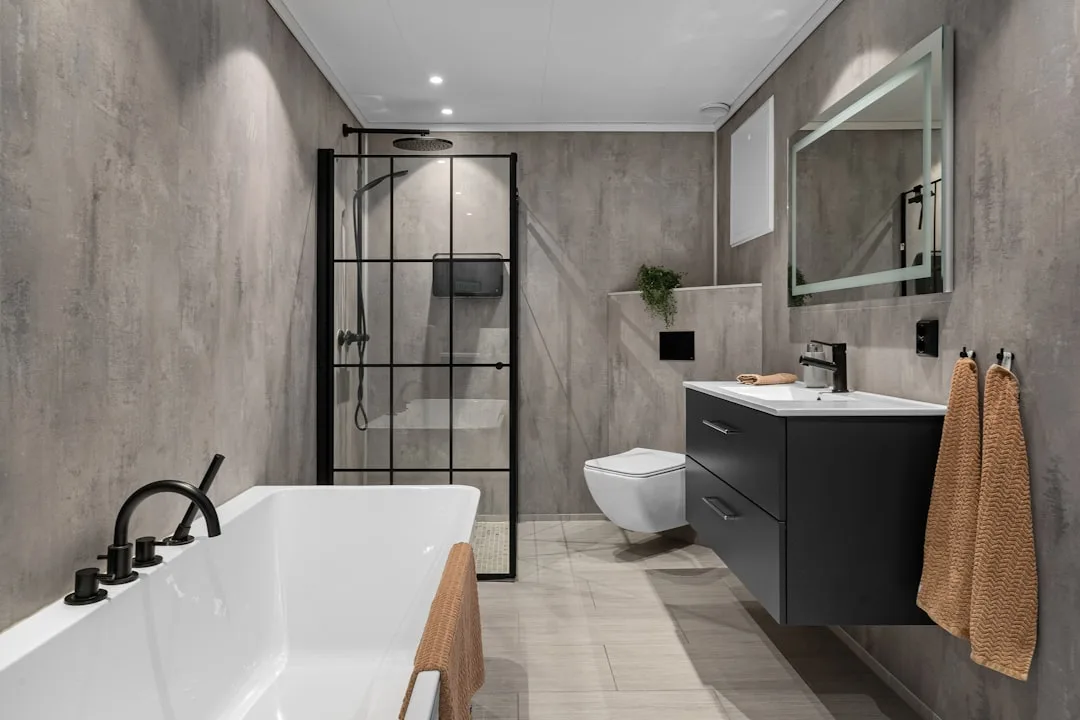
Walk into a luxury spa, and you’ll notice something absent from most home bathrooms: walls that whisper, not shine. Textured bathroom walls have become the 2026 antidote to five decades of smooth drywall and glossy tile—a shift driven by homeowners tired of institutional finishes that amplify sound, trap moisture, and feel cold underfoot in the mind’s eye. Textured bathroom walls introduce warmth, absorb acoustic energy, and create visual movement that flat surfaces simply cannot deliver.
This isn’t trend whimsy. German manufacturer Knauf, a leader in drywall and specialty finishes, now ships their Safeboard range with textured plaster substrate options specifically for moisture-prone spaces, allowing contractors to skip paint altogether. High-end hotels like Rosewood properties have begun specifying limewash finishes in guest bathrooms—a 4–6 mm layer of mineral-rich lime putty applied by hand, creating irregular striations that cost 3–5 times more than standard paint but last decades and breathe with humidity fluctuations.
Limewash and Mineral Plaster Lead the Movement
Limewash arrived in American bathrooms around 2023 but didn’t dominate until 2025–2026, when supply chains stabilized for specialty European imports. Unlike paint, limewash is a slaked lime (calcium hydroxide) mixed with natural pigments and water—applied wet, it hardens through carbonation, creating an irreproducible surface.
The material breathes. Water vapor passes through limewash at rates up to 10 times faster than latex paint, meaning bathrooms dry faster, mold risk drops, and the wall itself acts as a humidity regulator. Rooms stay fresher without constant mechanical dehumidification.
British brand Farrow & Ball now offers their limewash specifically in humidity-tested formulations for wet rooms. Application requires skilled labor—typically 2–3 coats over 10–14 days—and a bathroom wall (roughly 200 square feet) runs $1,200–2,000 in labor alone, plus material. What you gain: a surface that patinas with age, reads as consciously crafted, and never chips like paint.
Quick Tips
- Test limewash in your bathroom before committing to full walls—humidity levels vary by region and ventilation design.
- Pair textured walls with matte or satin brass fixtures; glossy chrome reads cheap against organic finishes.
- Avoid limewash in direct shower spray zones; use it on feature walls opposite the tub or around the vanity mirror.
- Request samples from three contractors—application technique creates huge visual differences.
Stone-Textured Finishes Mimic Natural Architecture
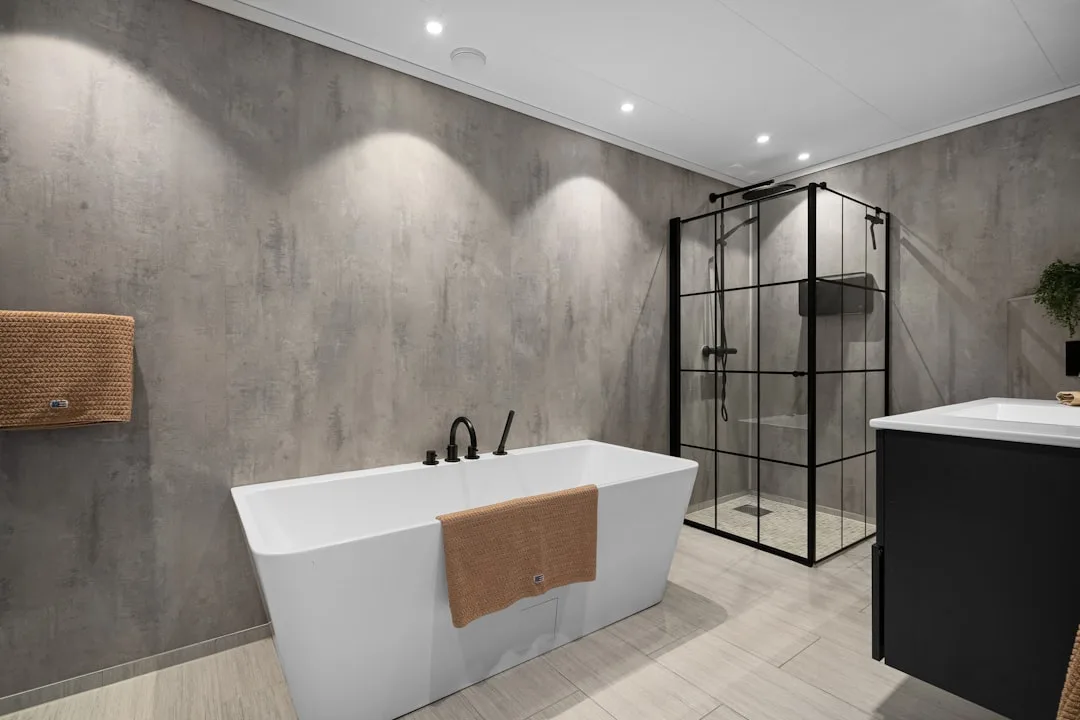
If limewash feels too precious or labor-intensive, stone-effect textured products deliver similar visual drama with easier maintenance. Italian brand Marmopal creates thin stone veneers (3–8 mm) that replicate slate, granite, or limestone through compressive molding, then finish with a textured topcoat that mimics natural weathering.
A single bathroom wall (60 square feet) installed by a certified contractor costs $800–1,400 in materials and labor combined. What replaces this? Smooth drywall with paint—which feels institutional and doesn’t absorb sound.
| Finish Type | Labor Complexity | Moisture Resistance |
|---|---|---|
| Limewash | High (hand-applied, 3 coats) | Excellent (breathable) |
| Stone veneer | Medium (cut-to-fit, adhesive) | Very good (sealed) |
| Textured plaster | Medium (spray + burnish) | Good (matte absorption) |
| Smooth drywall + paint | Low (standard finish) | Fair (vapor barrier) |
The Acoustic Bonus Nobody Mentions
Smooth bathroom walls bounce sound like a tile court. Every drop, flush, and word ricochets. Textured surfaces—plaster, limewash, or stone—absorb 15–30% of sound energy depending on depth and material density.
This matters. A bathroom with textured walls feels quieter, more private, more spa-like than one with flat finishes. People perceive quiet as luxury, and quiet costs little beyond material choice.
Durability Under Wet Conditions
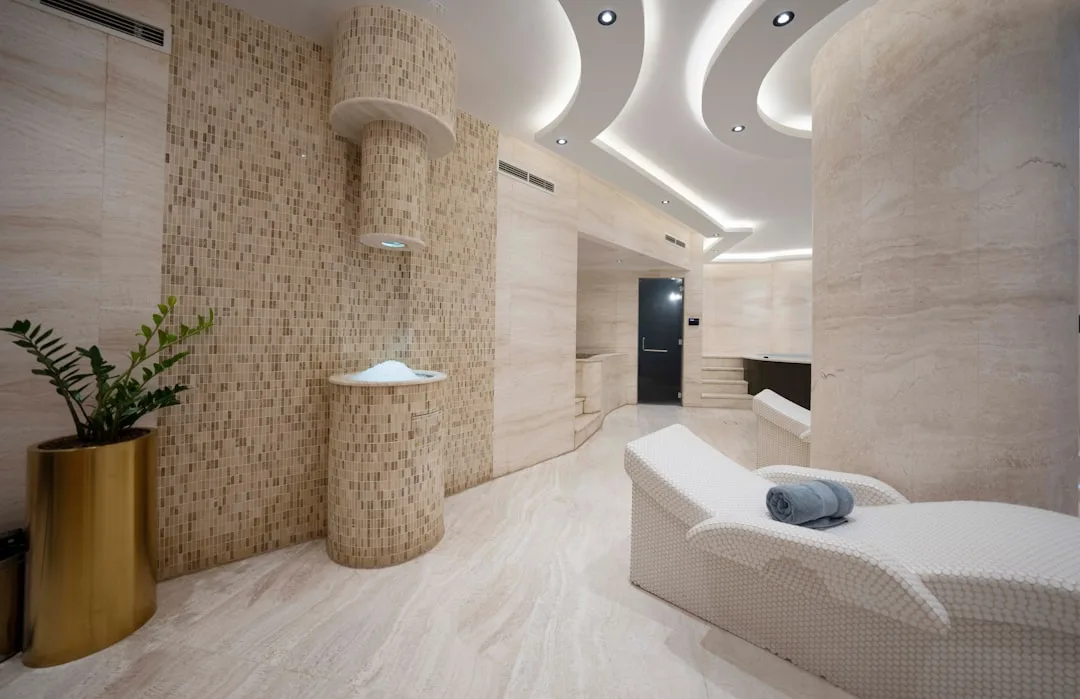
Bathroom walls endure constant moisture cycles—steam from showers, splashing water, and humidity swings between 40% and 90% relative humidity. Textured finishes handle this better than smooth paint alone because the surface profile allows water to move through micro-channels rather than pooling on flat areas where mold thrives.
Materials like lime-based plasters and mineral paints breathe naturally, releasing trapped moisture vapor before it condenses behind the surface. This capillary action prevents the wet substrate conditions that encourage biological growth. Sealed smooth finishes, by contrast, can trap moisture at the paint-wall interface—a breeding ground for mildew in poorly ventilated spaces.
The texture also makes periodic maintenance easier. Touch-ups blend seamlessly into textured walls; patching smooth finishes often leaves visible seams that demand full repainting.
Creating Visual Depth and Dimension
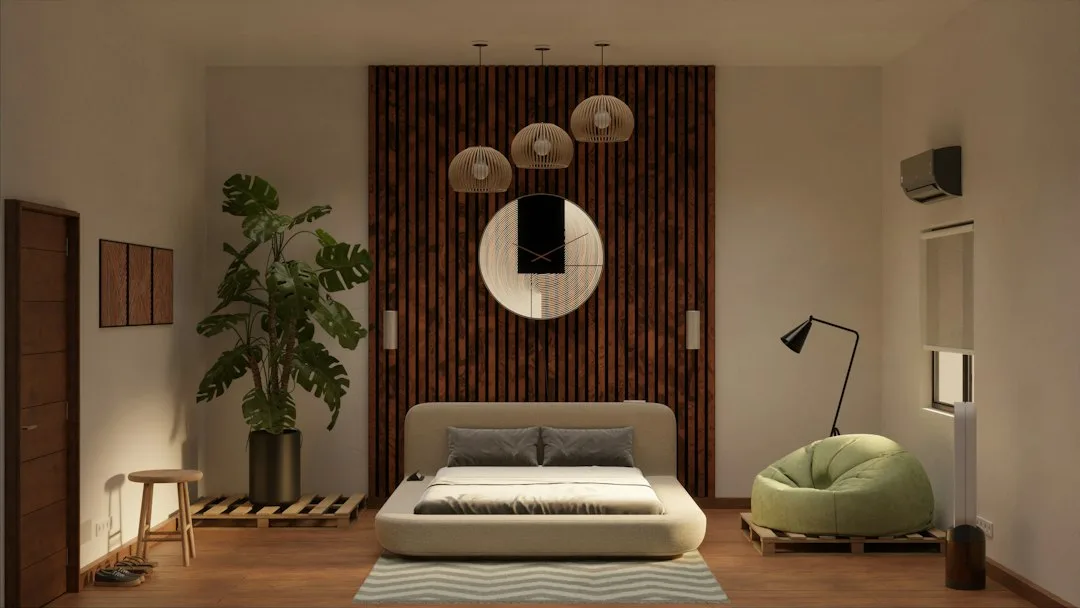
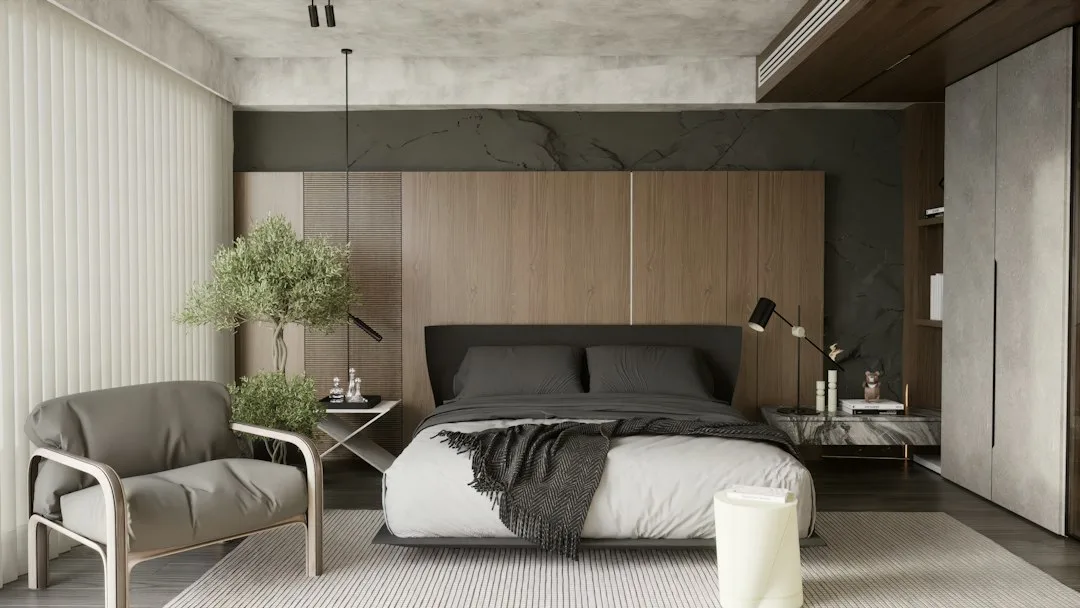
A plain white bathroom feels institutional. Textured walls, even in the same color, create shadow lines and depth perception that makes the space feel larger and more intentional. This principle applies whether you choose stylish interior designs with a purpose or embrace minimalist restraint.
Troweled finishes cast micro-shadows under bathroom lighting—recessed, sconces, or natural light from windows. These shadows define the wall plane without requiring bold color or pattern. The effect is subtle but measurable in how occupants perceive space and atmosphere. A 6 by 8 foot bathroom with textured walls feels noticeably more layered than the identical space with flat drywall and standard paint.
Paired with warm lighting (3000K color temperature), texture enhances the spa-like quality. The Japanese design philosophy of Japandi, with its focus on zen interiors, often employs subtle surface variation for this exact reason—quietness and calm through visual simplicity that includes tactile dimension.
Practical Resources for Textured Bathroom Wall Projects
These tools and guides cover moisture safety, color selection, material estimation, and application technique — the steps between choosing a textured finish and living with it.
How do I keep mold from growing behind a breathable wall finish like limewash?
How do I pick a quiet, energy-efficient exhaust fan for a bathroom with textured walls?
What exhaust fan specs do I need so a breathable finish dries properly?
How many gallons of paint or primer do I actually need for my bathroom walls?
What does limewash application actually involve, and can I see the technique before hiring someone?