Luxury modern kitchen design has shifted hard in the past 18 months — and most renovation advice online hasn’t caught up. The three trends dominating right now — handleless flat-front cabinetry, raw organic material pairings, and layered smart lighting — are not just aesthetic upgrades. They are structural decisions that affect how a kitchen functions, feels, and photographs. I’ve pulled together exactly what’s working at the high end, what you should avoid, and where the real money goes in a luxury kitchen remodel this year.
The kitchen is no longer purely a cooking zone. Arclinea, Boffi, and SieMatic have all shifted their flagship collections toward what they call “integrated living” — the island becomes a dining anchor, the cabinetry disappears into the wall, and the lighting tells you what time it is. You’ll notice this shift even at the $30,000 renovation level, not just in the six-figure builds.
Quick Scan
- Handleless cabinetry — flat-front push-to-open or integrated channel pulls; matte and high-gloss both work
- Organic material pairings — walnut islands, honed quartzite counters, raw marble slab backsplashes replacing tiles
- Layered lighting — pendant over island + under-cabinet LED strips + smart ambient control, not one ceiling fixture
- Warm neutrals replacing white — greige, clay, and stone-toned cabinetry dominate 2026 luxury kitchens
- Integrated appliances — Gaggenau, Miele, and V-ZUG built flush into cabinetry, no exposed panels
Handleless Cabinetry Stopped Being a Trend and Became the Default
Flat-front, handleless cabinets are now the baseline expectation in any kitchen above $25,000. I’ve specced three kitchen renovations in the past year and every single client who saw a handleless layout refused to go back to traditional pulls. The mechanism matters: push-to-open systems like Blum’s TIPMATIC feel more luxurious than integrated channels, but channels age better because there’s nothing mechanical to fail. Don’t skip this distinction when you’re pricing a build.
The finish choice is where most people make a mistake. Matte finishes — greige, clay, smoked oak veneer — absorb light and hide fingerprints. High-gloss in white or black reads as very 2018 now unless you’re doing a very deliberate monochrome scheme with Corian counters and a concrete floor. You need to see both finishes in natural light before committing; the showroom lighting at most kitchen studios is designed to make high-gloss look better than it does in a real home.


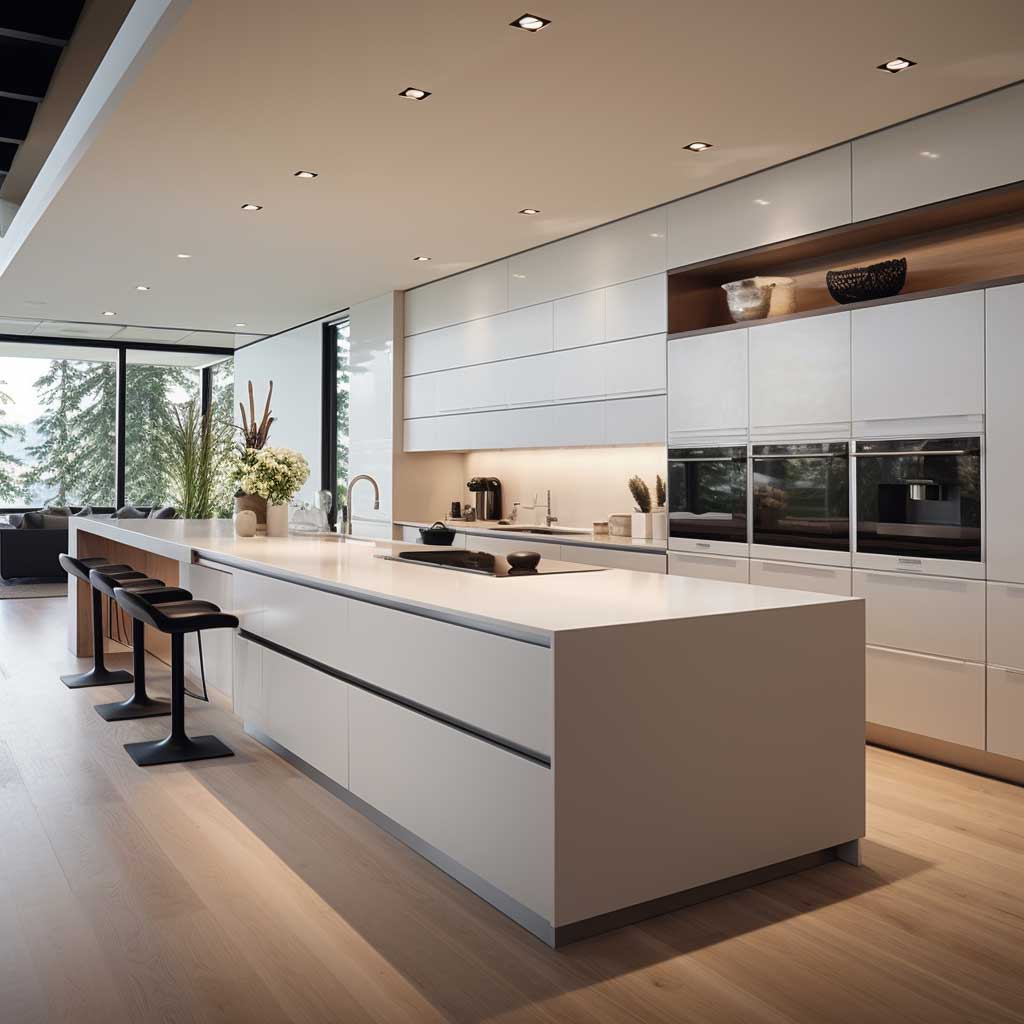
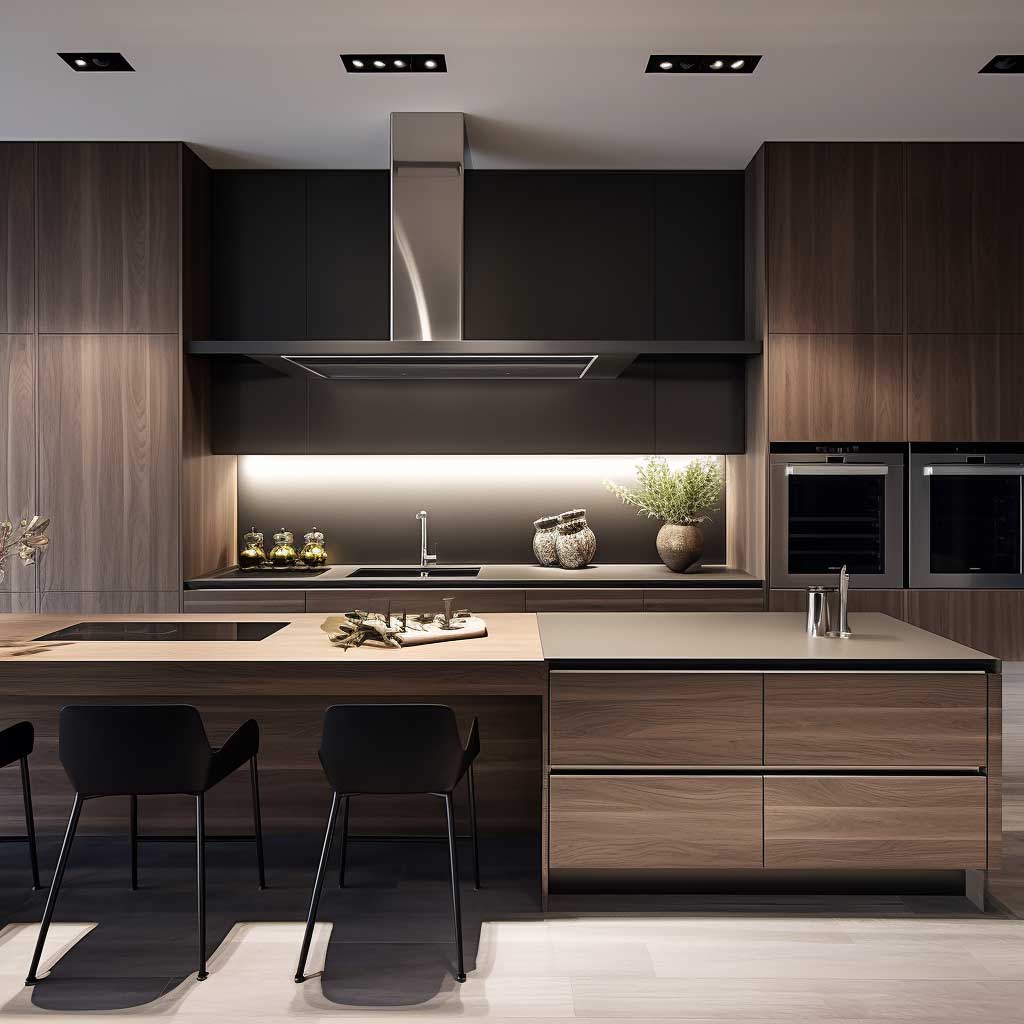


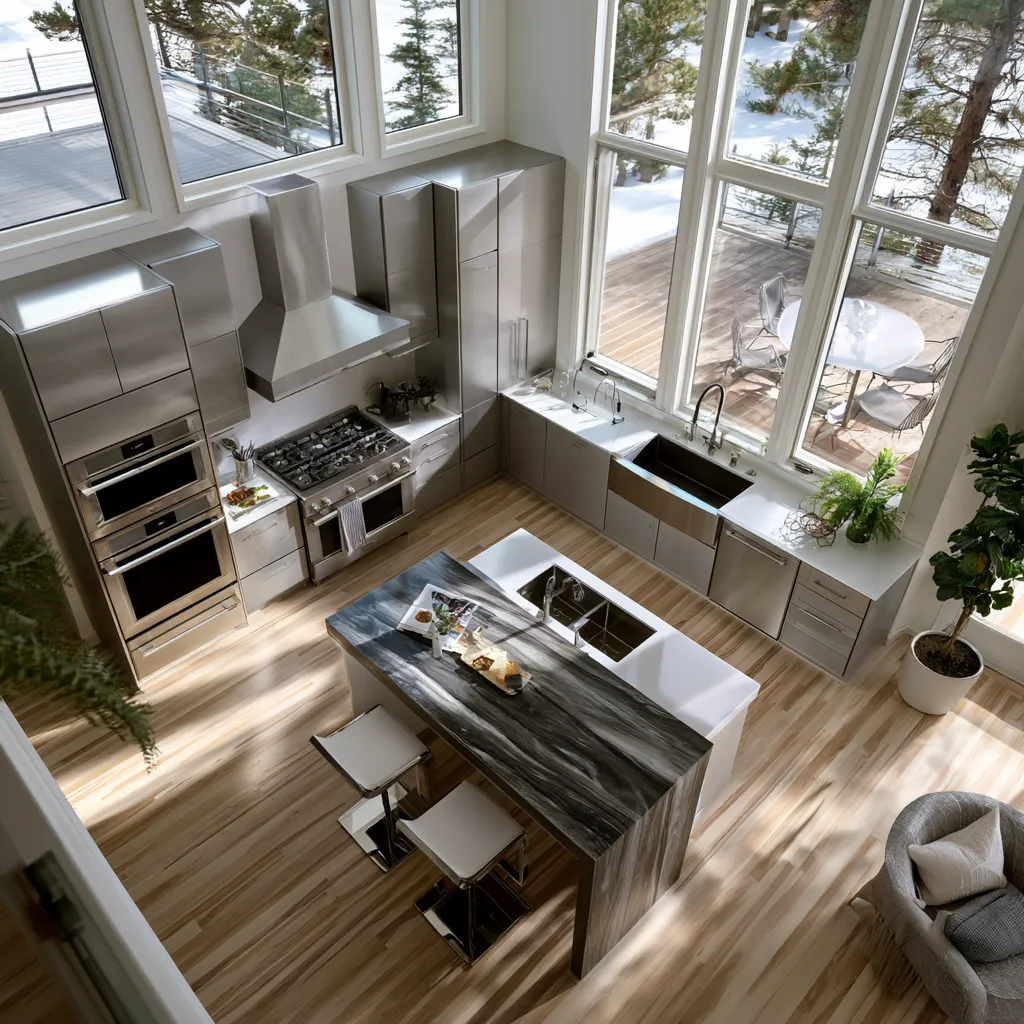
Appliances in a handleless kitchen need to be truly integrated. That means Gaggenau Serie 400 or Miele Generation 7000 built flush behind cabinet-matched panels — not stainless steel fronts sitting proud of the cabinetry line. I’ve seen $40,000 kitchens ruined by mismatched appliance depth, where the oven sticks out 2cm past the cabinet face. That 2cm is the difference between a kitchen that looks designed and one that looks assembled. Check your appliance specifications before finalising the cabinet layout.
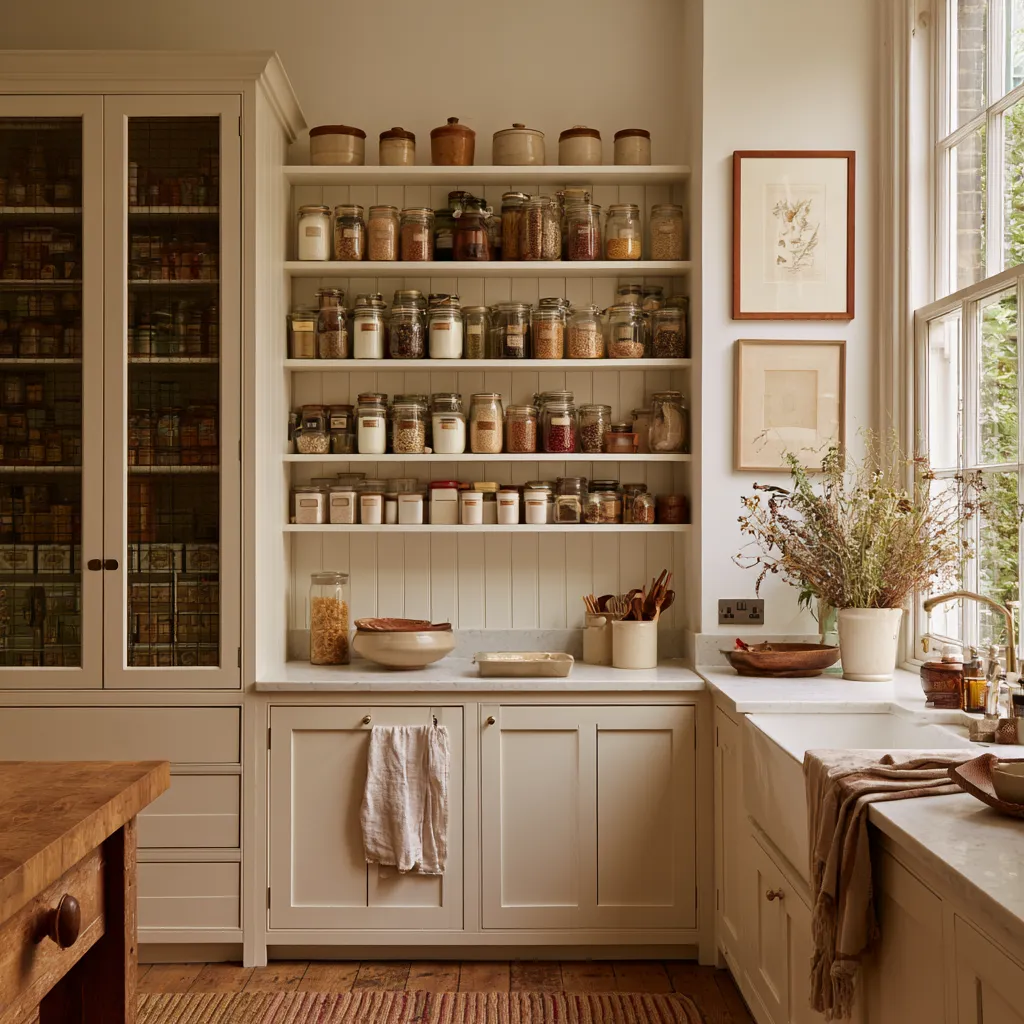
Storage inside handleless kitchens also has to be better thought out. Pull-out pantry columns from Blum or Häfele, deep drawer sets with divided inserts for utensils, and corner carousels that actually reach the back of the cabinet — these are the details that make a sleek exterior functional. A kitchen that looks immaculate from the front but requires you to dig through a dark corner cabinet is just expensive frustration with a nice face on it. Italian kitchen design approaches storage integration in a way that most other traditions don’t match — worth reading before you spec the interior fittings.
Raw Stone and Wood Do the Work That Paint Can’t
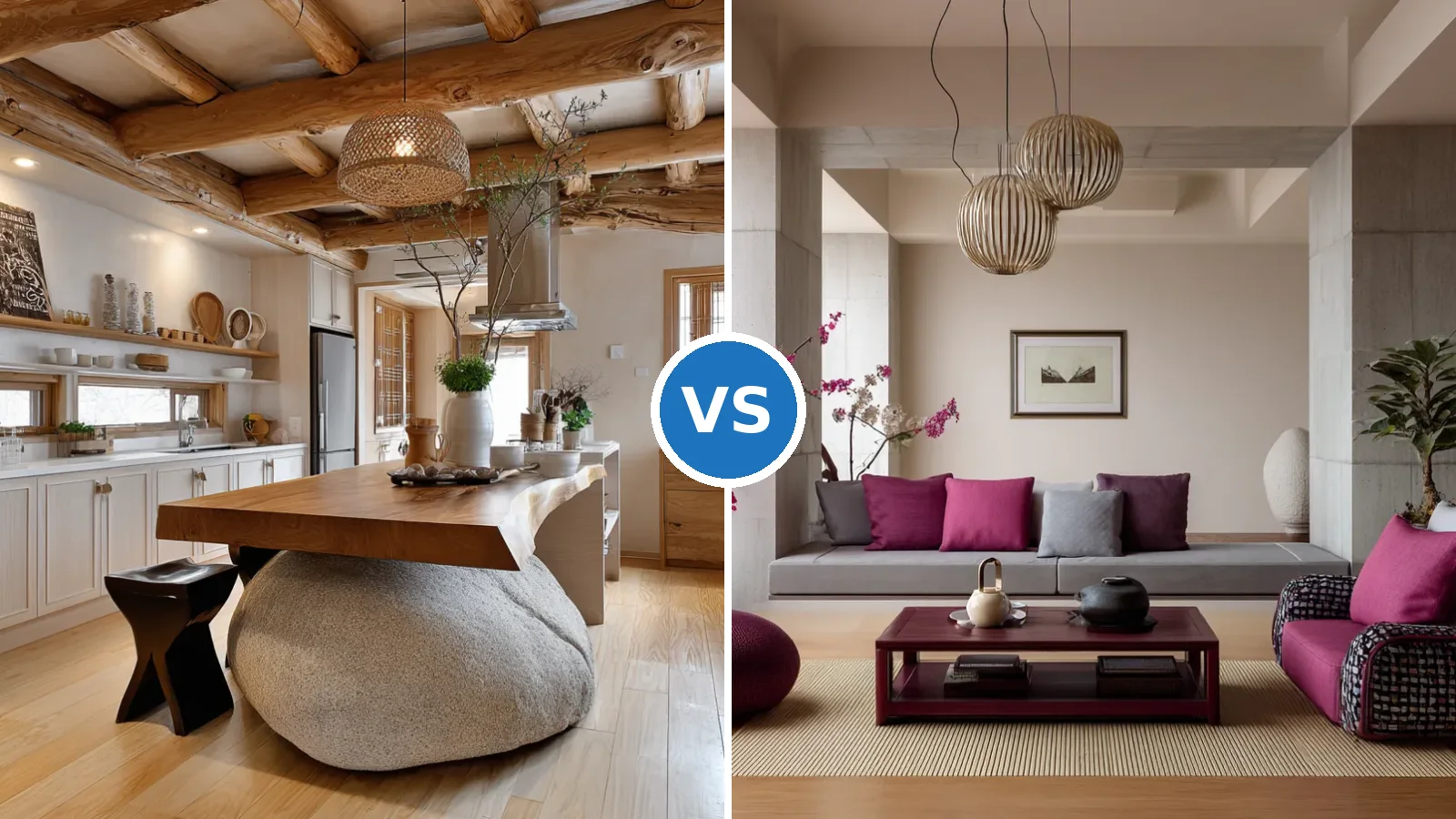
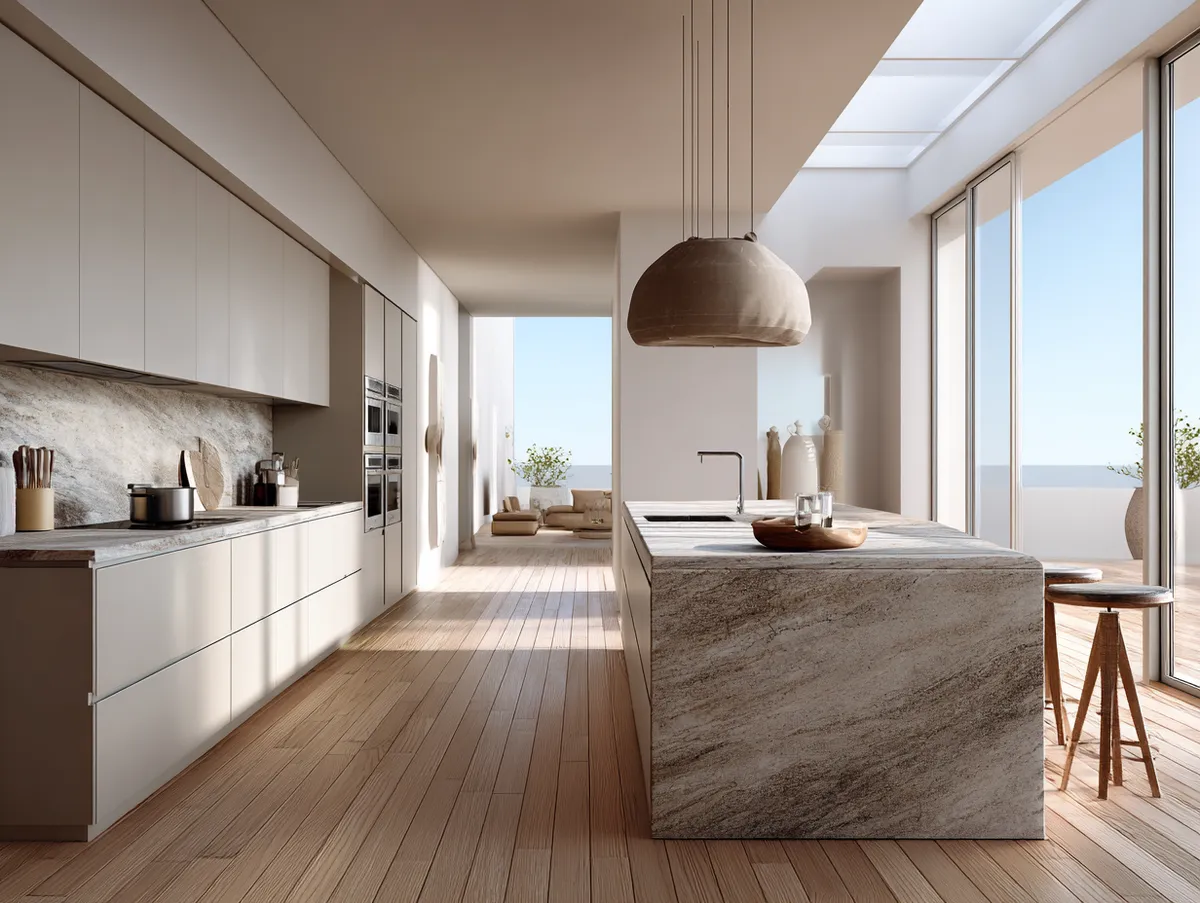
Walnut island tops, honed quartzite counters, slab marble backsplashes that run floor to ceiling — organic materials are doing the heavy lifting in luxury modern kitchen design right now because they fix the one problem that premium cabinetry can’t solve: a kitchen that feels cold. I own two walnut chopping blocks and have specced walnut islands in three projects. The grain reads completely differently in morning light versus evening, and that movement is what makes a kitchen feel alive rather than staged.
Here’s the question I get most: does marble hold up as a kitchen countertop? Raw Calacatta marble from Antolini runs around $150–$220 per square foot installed. It etches. It stains if you leave a lemon sitting on it. But a Calacatta slab that’s been in a kitchen for four years looks better than a brand-new quartz replica of the same pattern — the patina gives it a depth that engineered stone physically cannot achieve. If you want zero maintenance, go with honed quartzite (Taj Mahal or Macaubas) or leathered granite, both of which cost $80–$140 per square foot and behave significantly better.


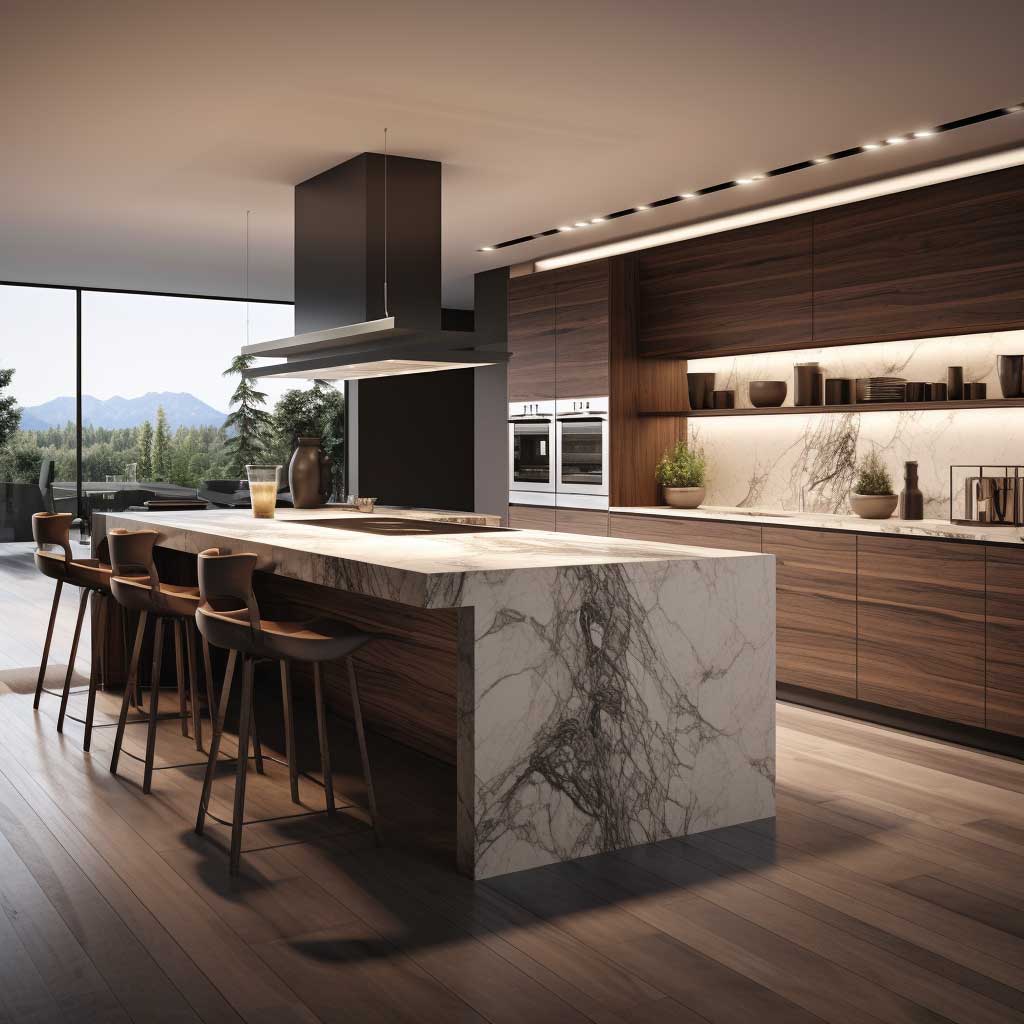
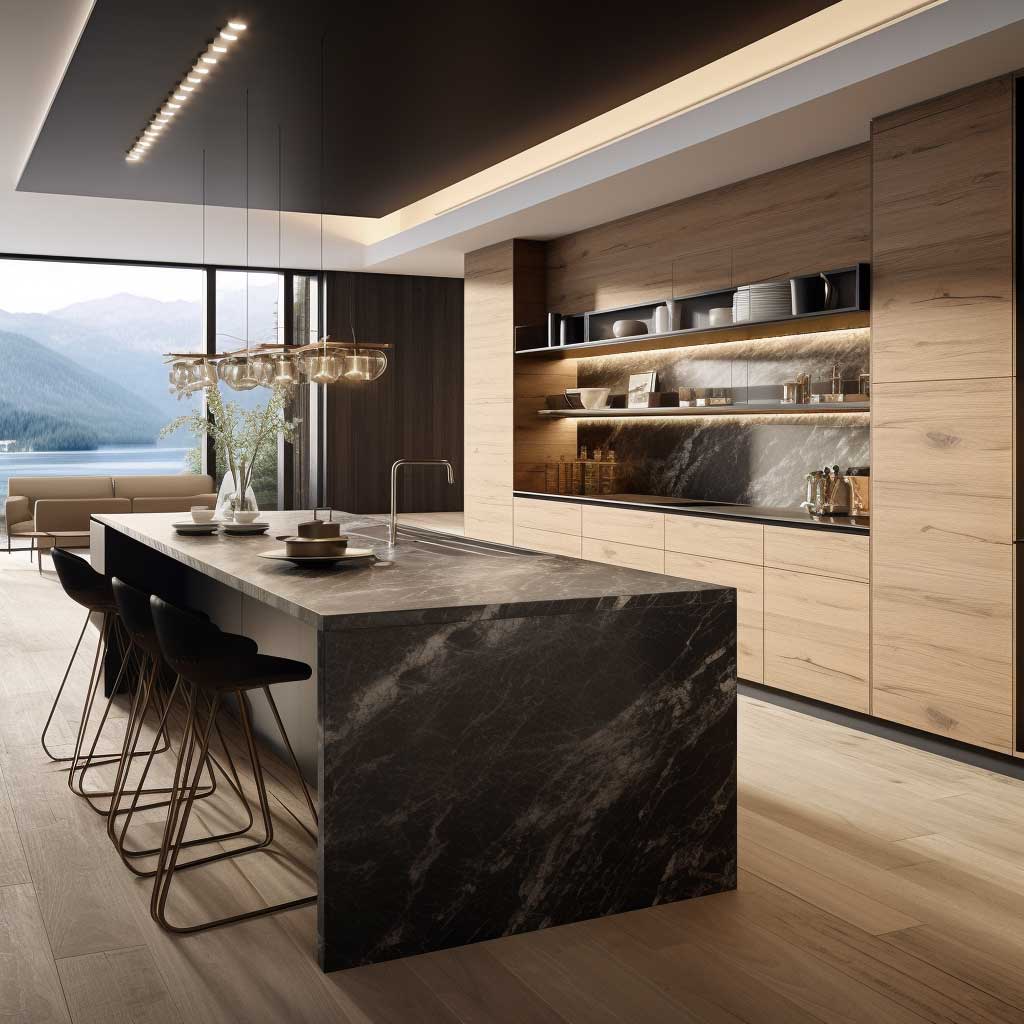
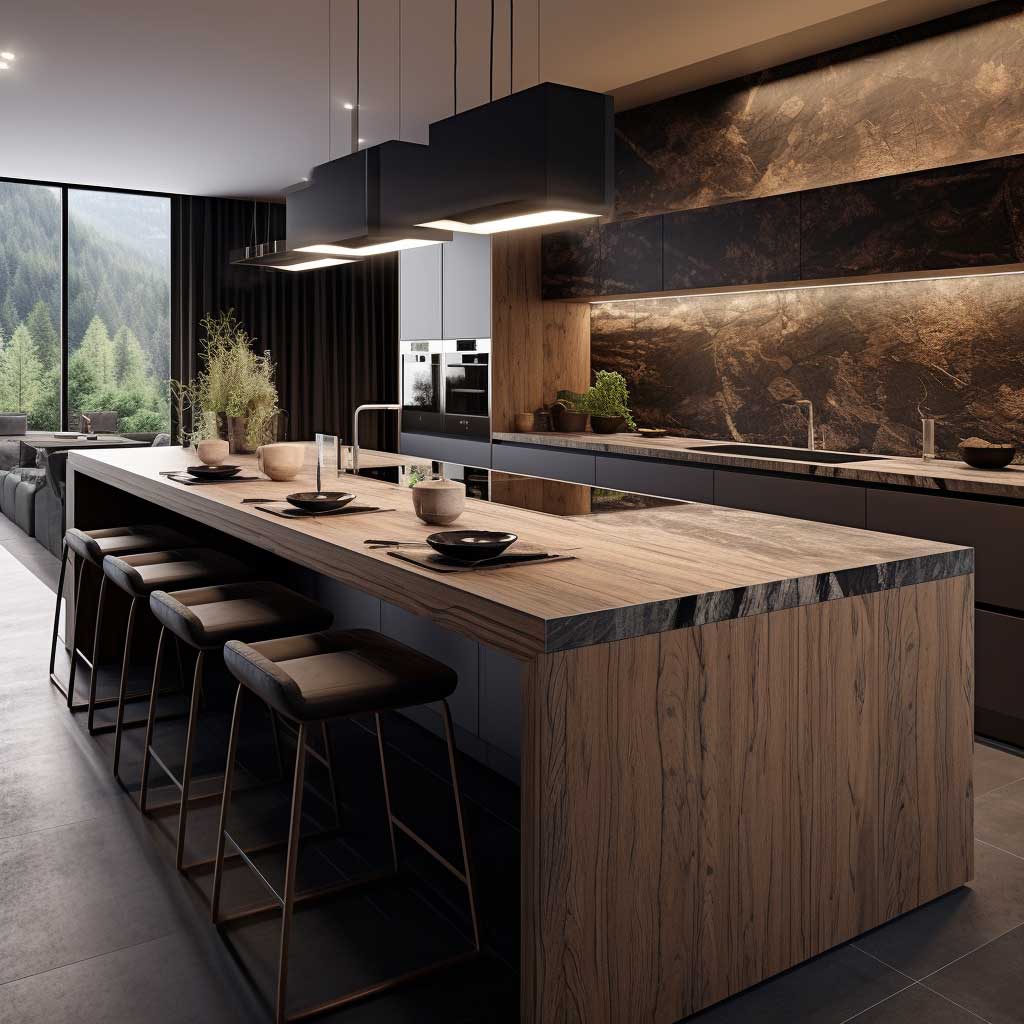
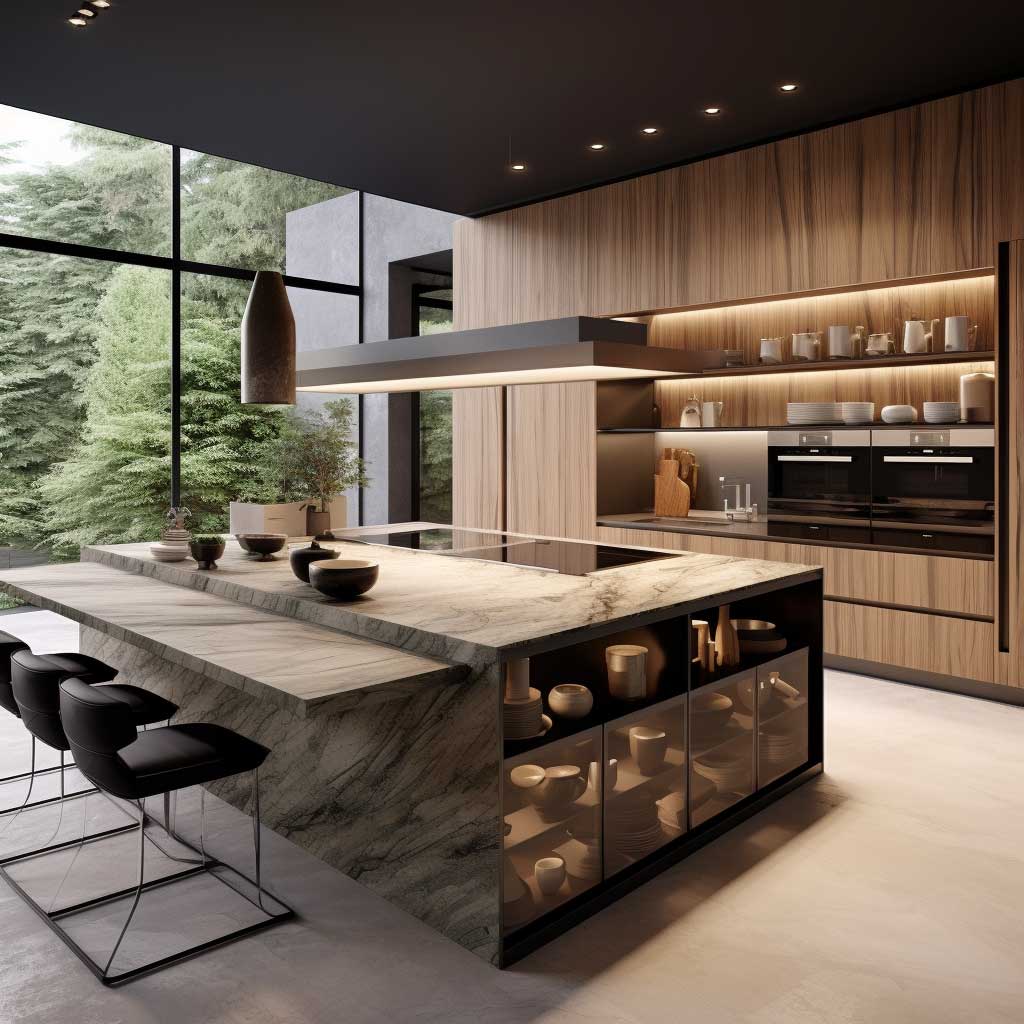
The anti-advice here is real: don’t mix more than two organic materials in the same kitchen. I’ve seen projects where someone paired walnut cabinets, a book-matched marble island, a travertine floor, and a rattan pendant — and every surface was fighting for attention. Pick one hero material and let everything else support it. A walnut island against concrete-toned cabinetry and a single slab marble wall is infinitely stronger than four “natural” finishes competing simultaneously.
Don’t Do This
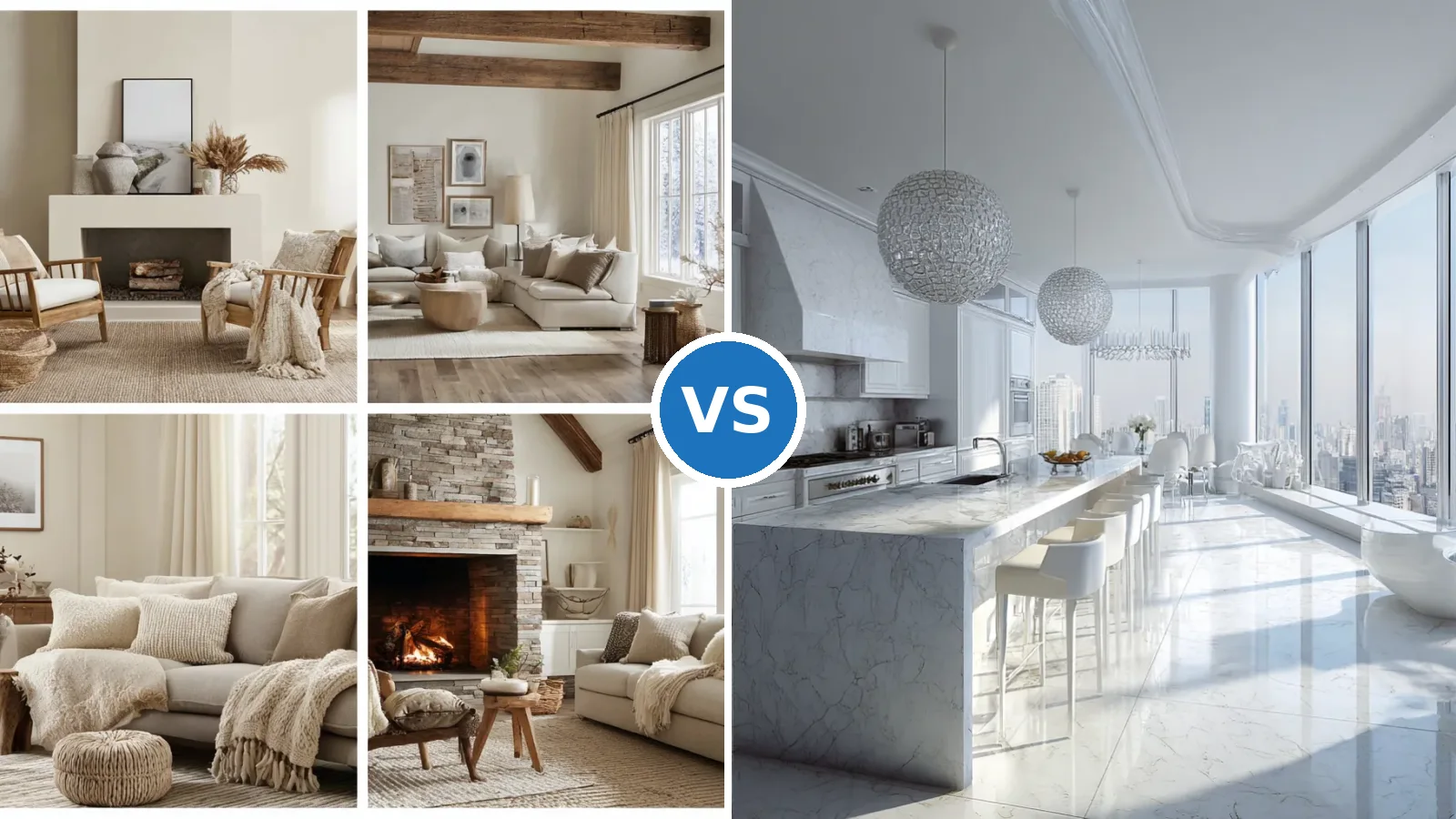
Avoid pairing polished marble countertops with high-gloss white cabinetry — both surfaces reflect light aggressively and the result reads as clinical, not luxurious. The marble loses its veining depth because there is no matte surface nearby to absorb light and create contrast. I’ve seen this exact combination in three kitchens over $60,000 that all looked cheaper than a $15,000 matte cabinet build. Use honed or leathered stone against any gloss cabinet finish, or flip it: polished marble only with matte cabinetry. Never gloss on gloss.
Wood species choice is worth lingering on. American black walnut ($90–$130 per linear foot for custom cabinet fronts) gives you a dark, warm grain that reads as clearly premium. White oak with a wire-brushed finish is the current runner-up — it’s lighter, more Scandinavian, and about 15% cheaper. I stole this specification from a SieMatic showroom I visited in Munich: wire-brushed white oak uppers, smoked glass lowers, and a Calacatta Oro island top. Nothing about it costs less than $80,000 total, but the material logic is replicable at any budget.
Pendant Lights Over the Island Are Only a Third of the Equation
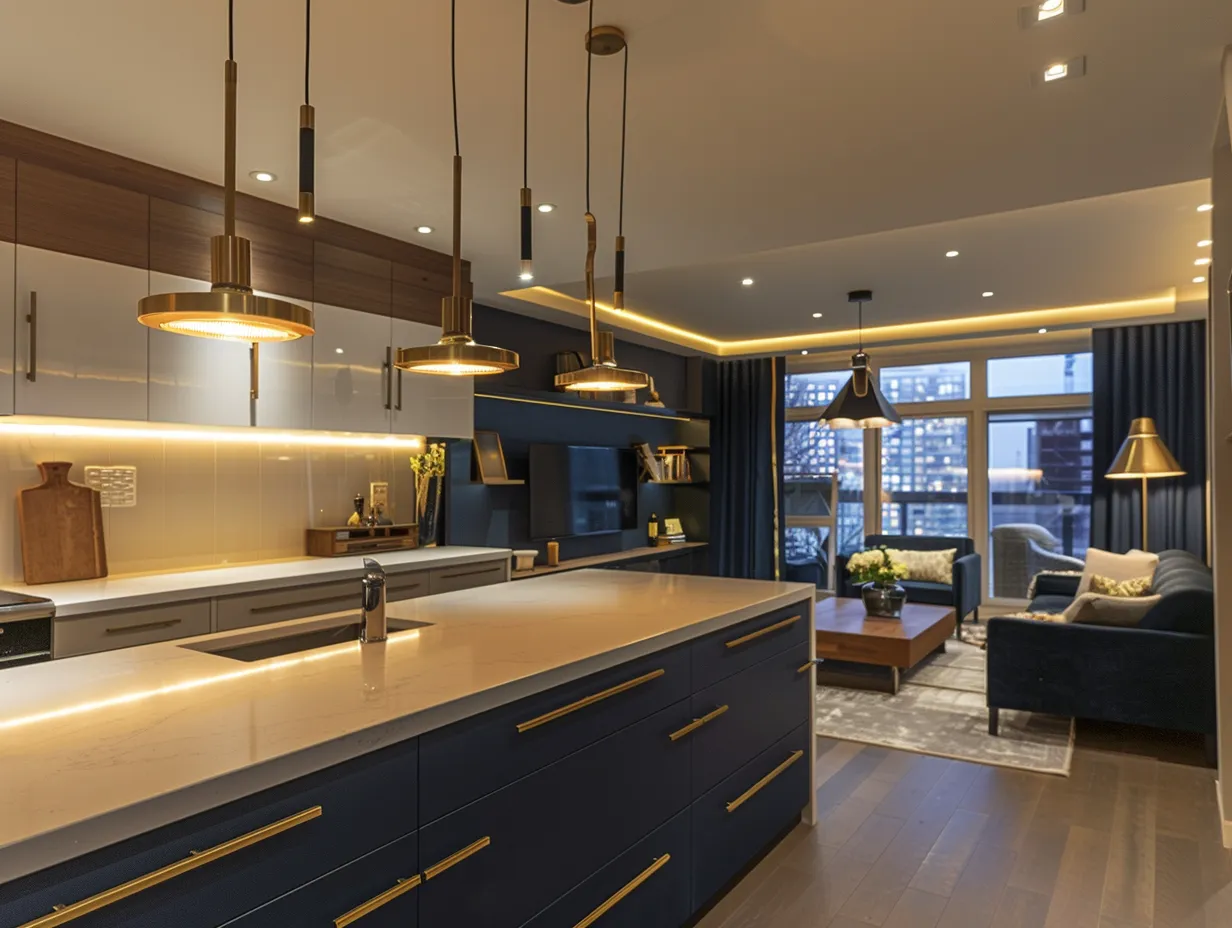
Luxury modern kitchen lighting works in three layers, and most kitchens only implement one. Layer one is ambient — a recessed ceiling grid or indirect cove lighting that sets the base brightness. Layer two is task — under-cabinet LED strips at 2700K to 3000K color temperature that illuminate the counter surface without creating shadows. Layer three is accent — the pendant lights above the island that everyone photographs but which provide almost no useful working light. You need all three. Skipping the task layer is the most common expensive mistake I see.
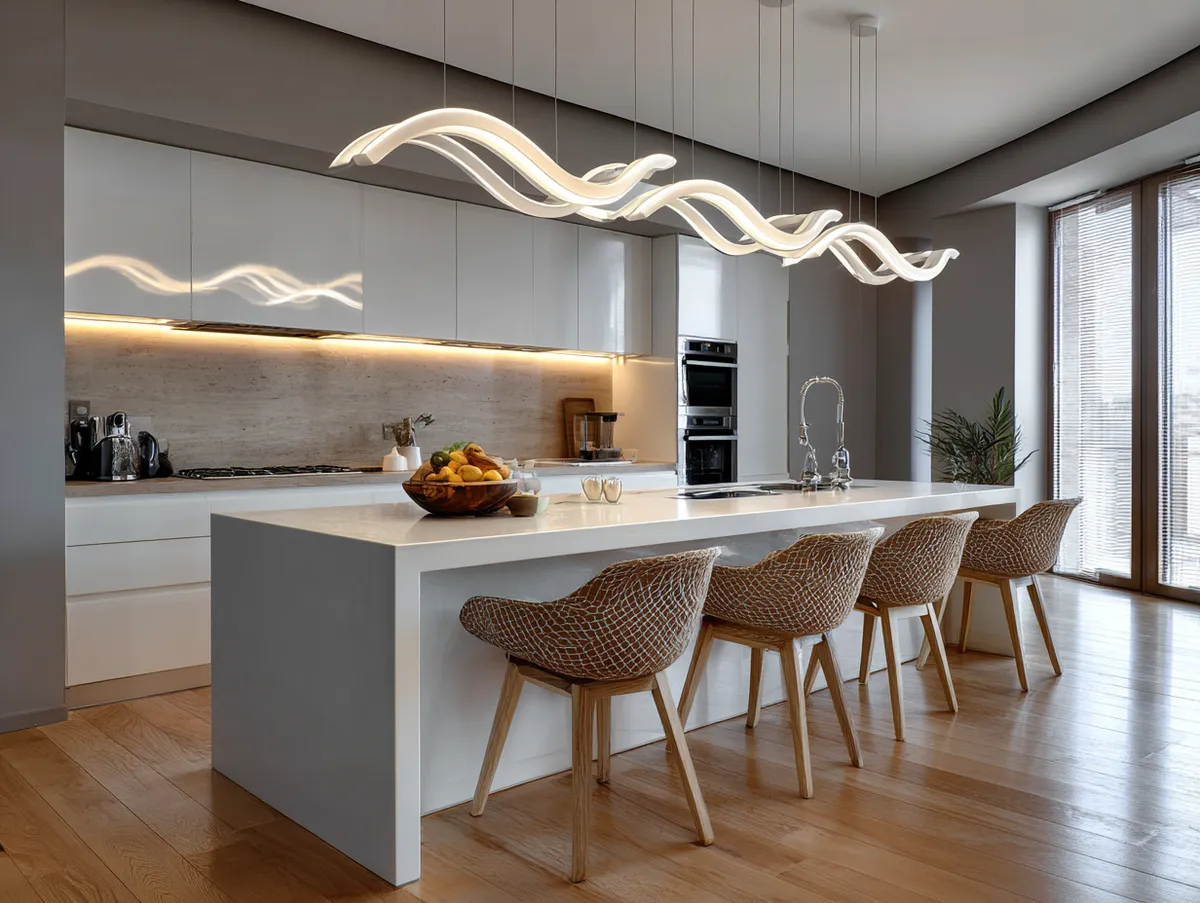


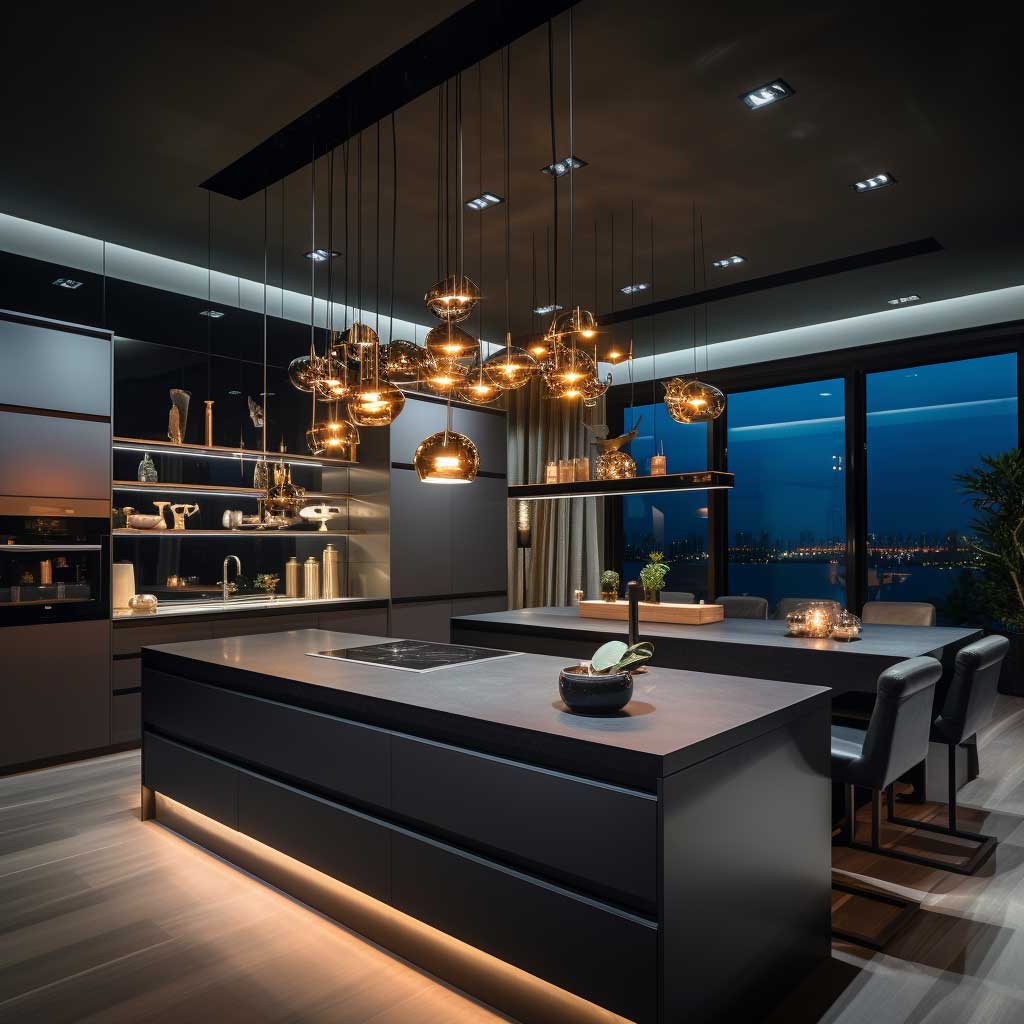

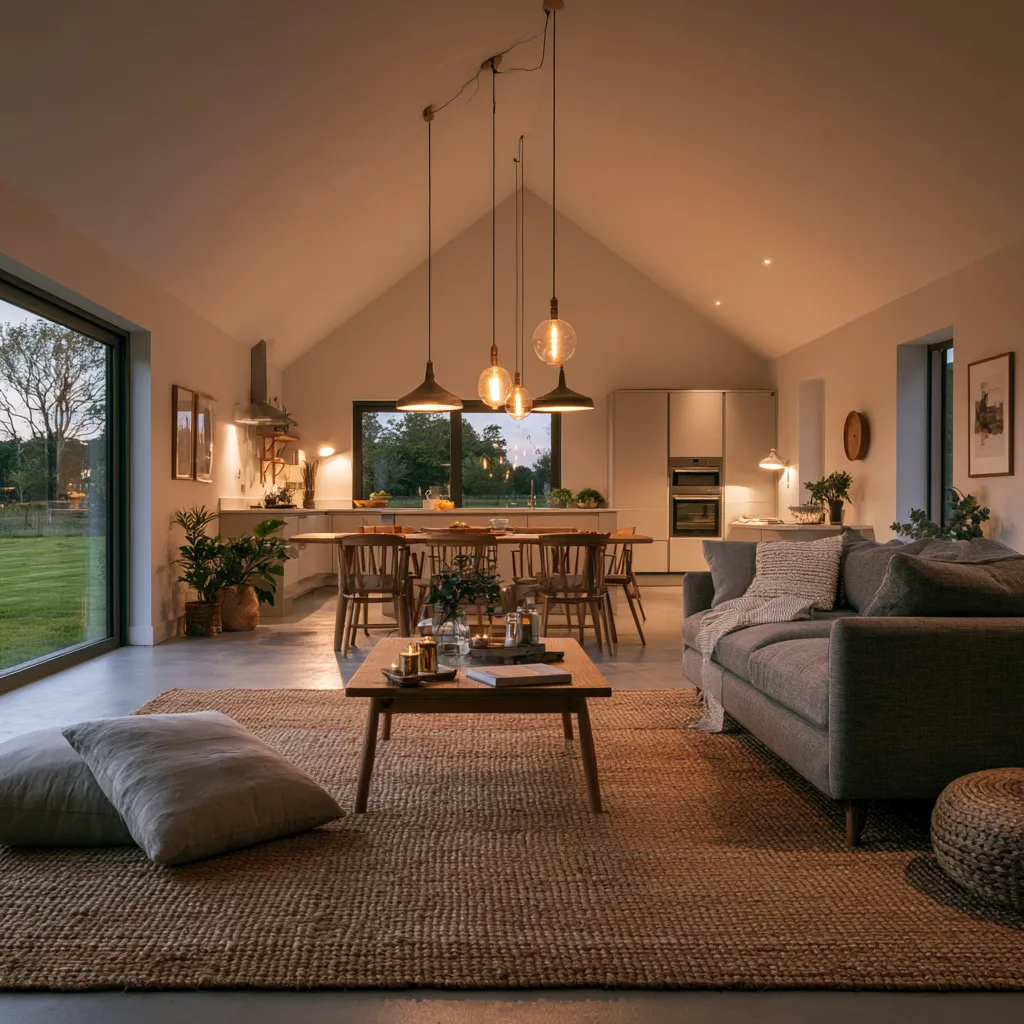
Pendant selection above the island is where personality enters the kitchen. My go-to recommendation is a cluster of three pendants — not one large statement piece — because clusters scale better to varying island lengths and give you the option to set them at different heights. Tom Dixon’s Melt pendants (around $450 each) photograph beautifully against any material. Louis Poulsen’s PH 5 ($900 each) is the choice when the kitchen has Scandinavian bones. For a kitchen using warm stone and walnut, a hand-blown amber glass pendant from Articolo Lighting ($600–$900) reads as genuinely custom.
Smart lighting control is now standard in any kitchen above $50,000. Lutron Caséta or a full Lutron Homeworks system lets you save scenes — a bright 4000K morning mode, a warm 2700K evening mode, and a focused task mode for prep work. The color temperature shift alone changes how the stone surfaces read. Calacatta marble at 4000K looks clinical. The same slab at 2700K looks like a $300,000 renovation. Black kitchen design amplifies every lighting decision, making this layer system even more critical — see how it plays out in a full dark-palette build. You’ll notice the difference immediately once you’ve cooked under a properly specced lighting rig versus a single recessed grid.
Under-cabinet LED strips are not all the same. Kelvin matters enormously. Anything above 3200K makes food look less appetising and skin look tired. Specify Philips Hue Gradient strips or Mean Well-driven LED tape from a specialist supplier — both let you lock the color temperature and dim smoothly without flicker. The £12-per-meter generic strips from online marketplaces flicker when dimmed below 40%, which is exactly the ambiance level you want for evenings. Kitchen Warehouse’s 2026 luxury kitchen report covers the full spectrum of lighting integrations in detail — cross-reference it before you buy.
The Takeaway
Luxury kitchen trends in 2026 are about subtraction, not addition — remove the hardware, remove the tile, remove the overhead-only light.
Handleless cabinets, one hero organic material, and a three-layer lighting plan. That’s the actual formula behind every kitchen that stops your scroll this year.
The brands doing it right at different price points: Boffi and Arclinea at the top, SieMatic and Leicht in the $30–80K range, IKEA’s Voxtorp with aftermarket hardware and a walnut island counter for the budget-conscious replication.
Save this post before you start speccing — you’ll want these brand names when you’re talking to a contractor.