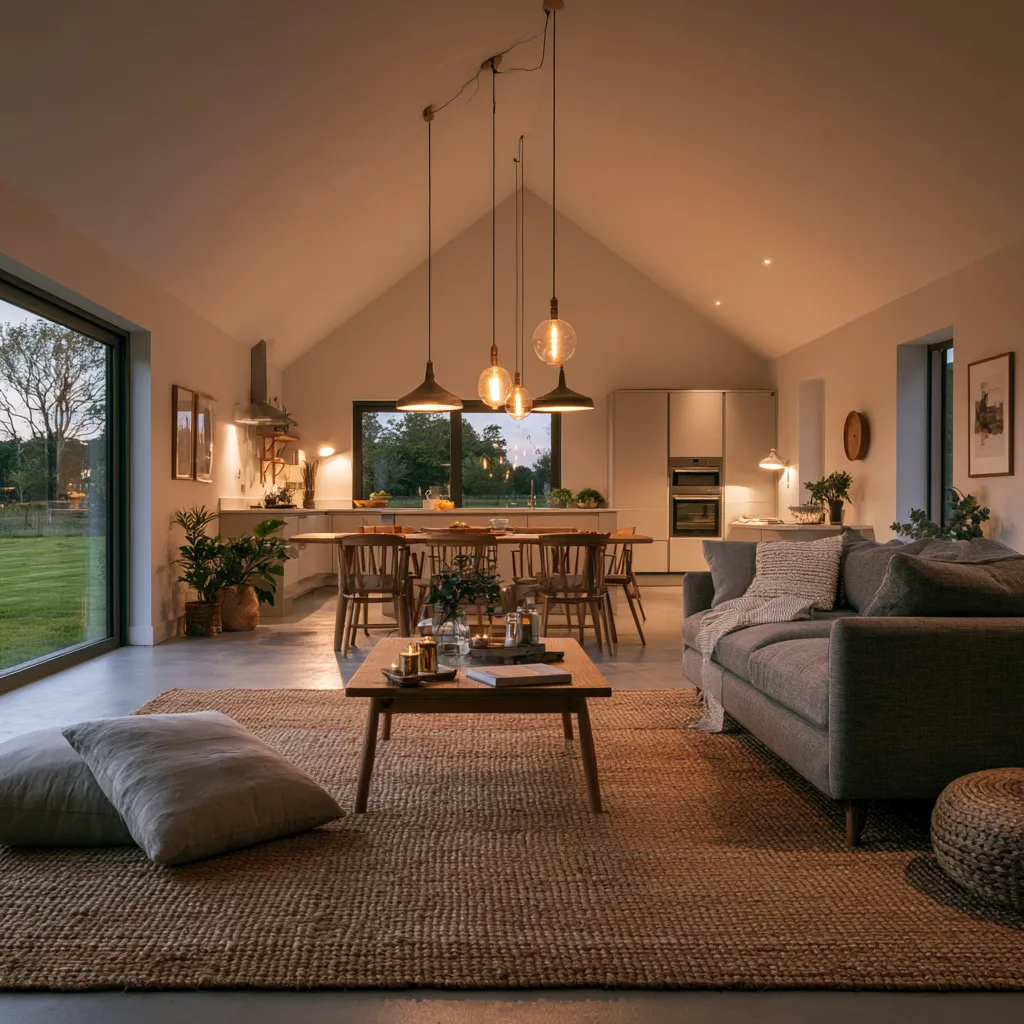
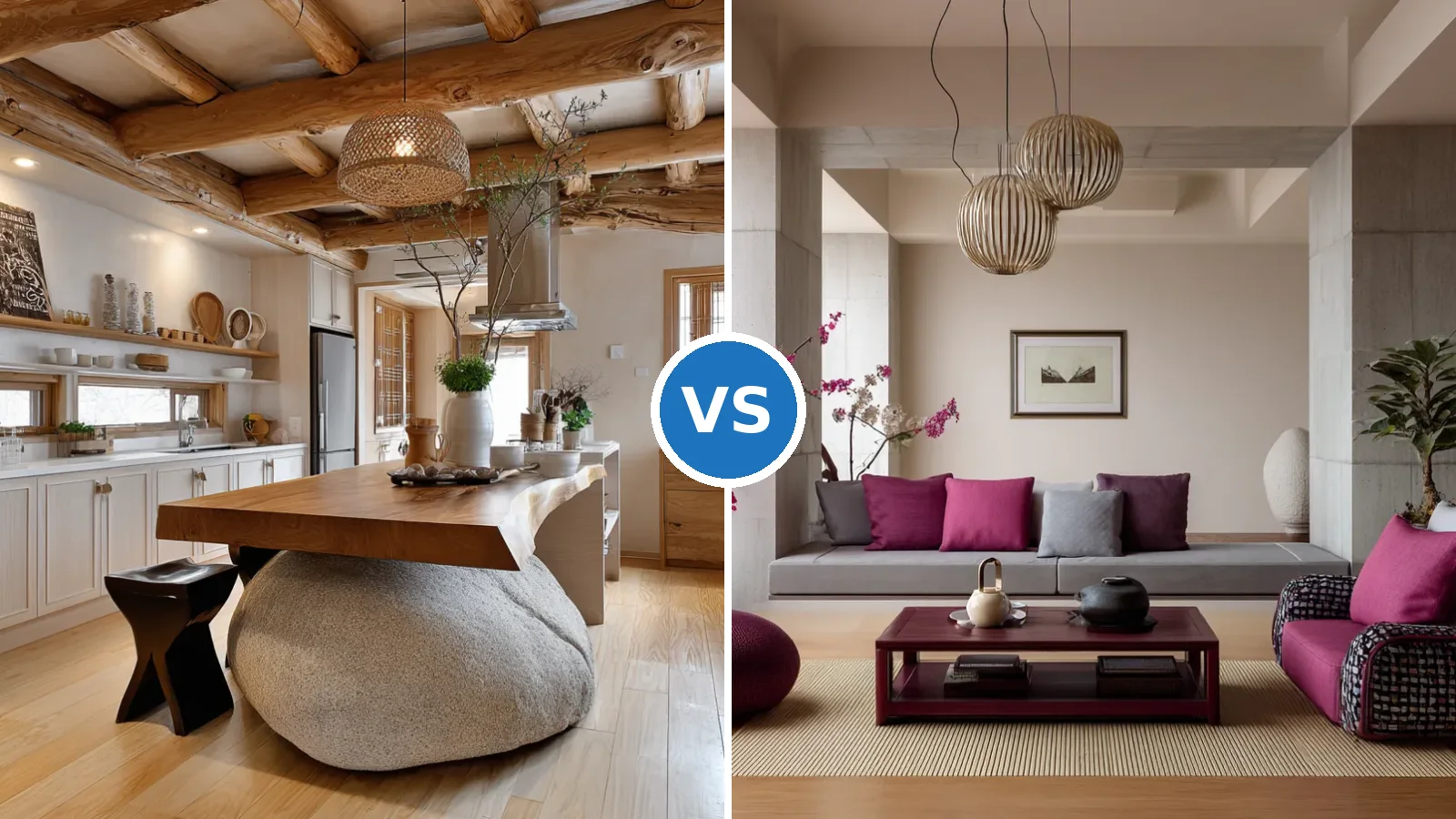
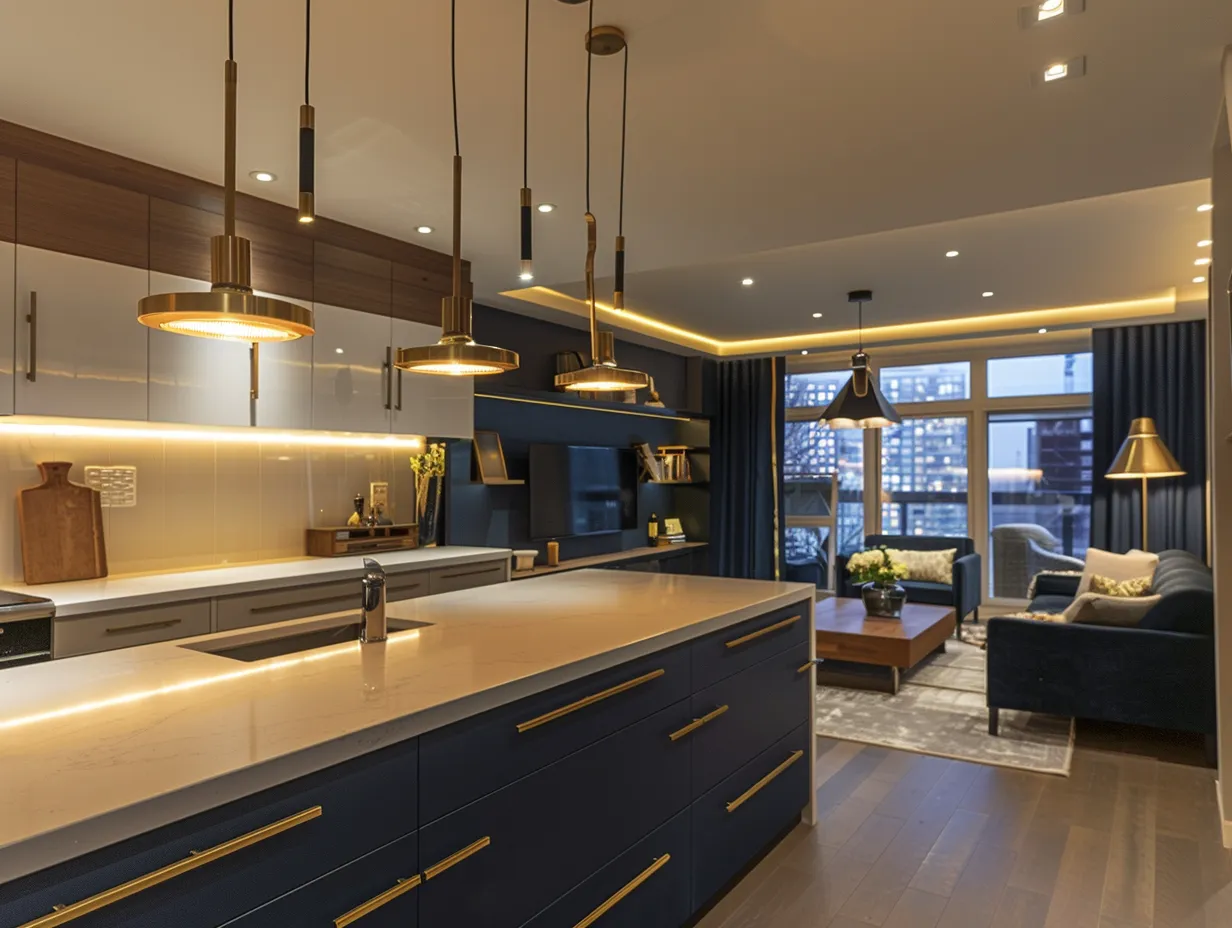
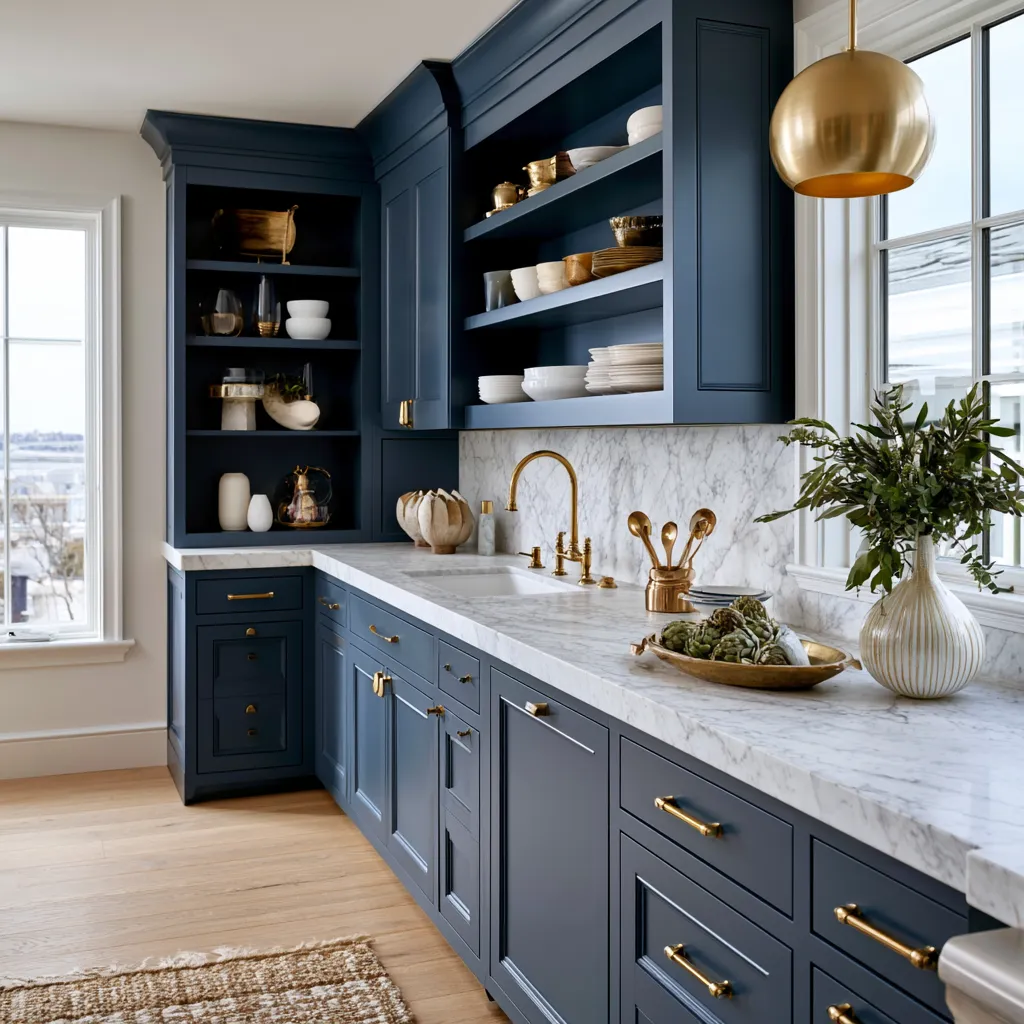
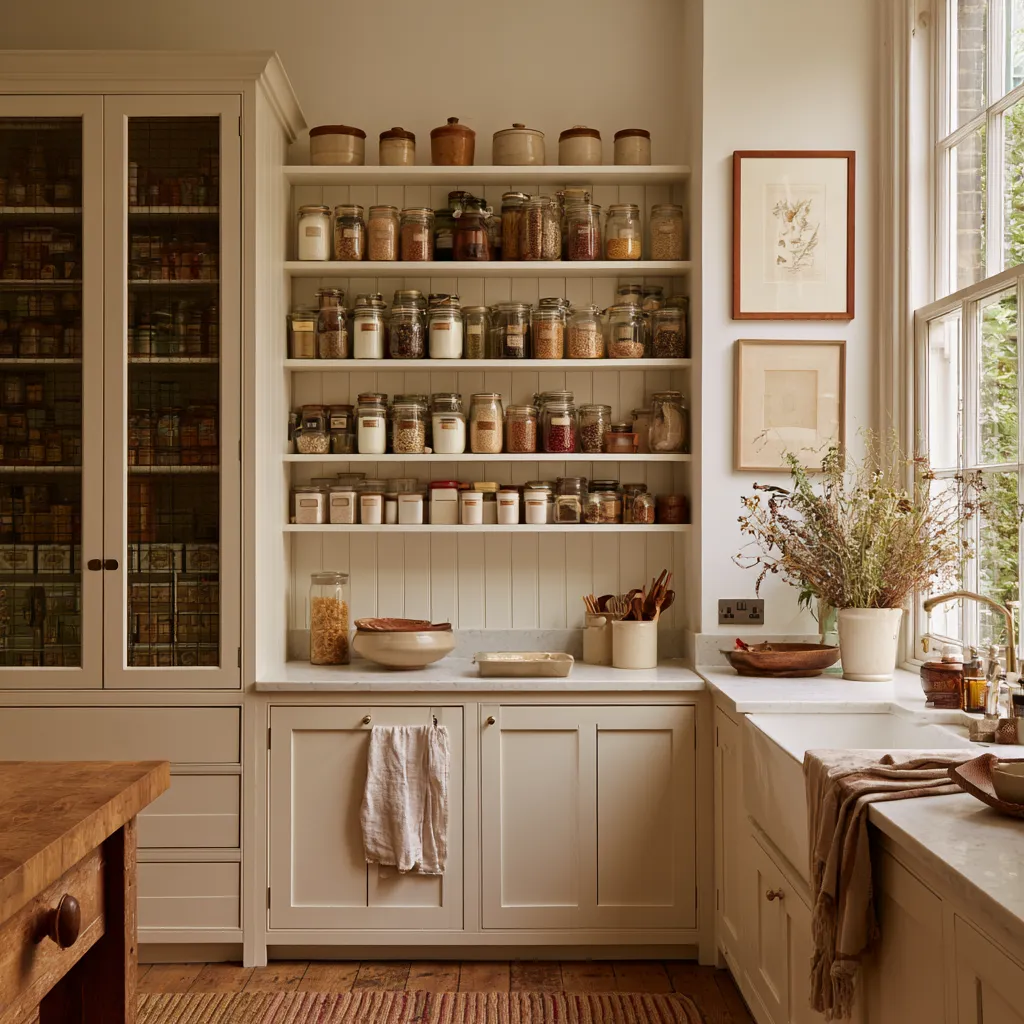
Small open plan kitchen living room spaces have a reputation problem. Most people assume the solution is to paint everything white and call it a day. I’ve tested that approach in my own studio, and while it helps, the real difference comes from four specific interventions that work together — color strategy, furniture scale, layered lighting, and decor that earns its square footage.
Tiny open concept kitchen living room layouts are genuinely tricky. You’re trying to make one continuous space feel like two distinct rooms, neither of which feels cramped. Get it right and the whole floor plan breathes. Get it wrong and even a well-lit room with decent furniture feels like a waiting room.
Quick Scan — What You’ll Find Here
🎨 Color strategy — which shades actually open up a small open plan living space and which ones make it feel like a shoebox
🪑 Furniture picks — IKEA, Article, and CB2 pieces that work for very small open plan kitchen living room layouts without eating all the floor
💡 Lighting layers — the three-circuit approach that makes one open concept room feel like multiple well-defined zones
🌿 Multifunctional decor — pieces that look like decor but function as storage, dividers, or air purifiers
The Color Palette Your Small Open Plan Living Space Actually Needs

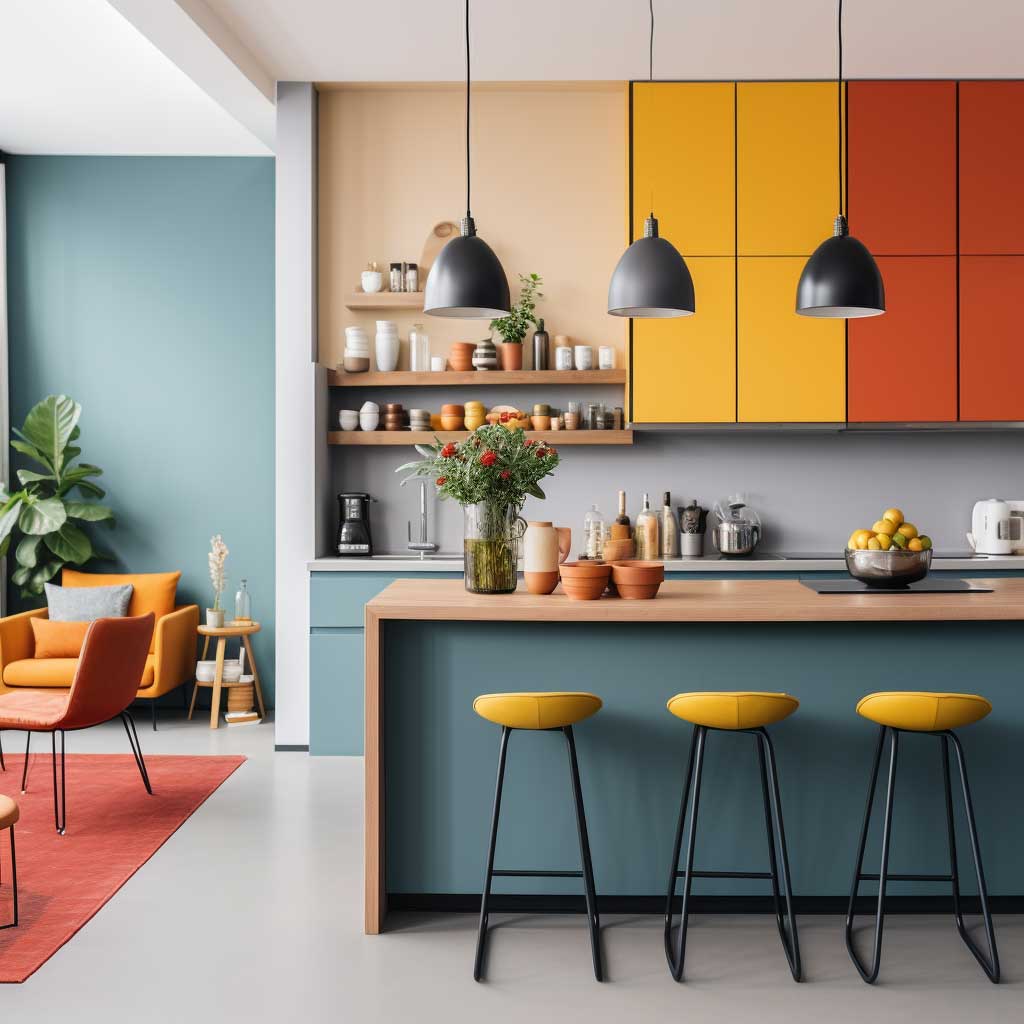
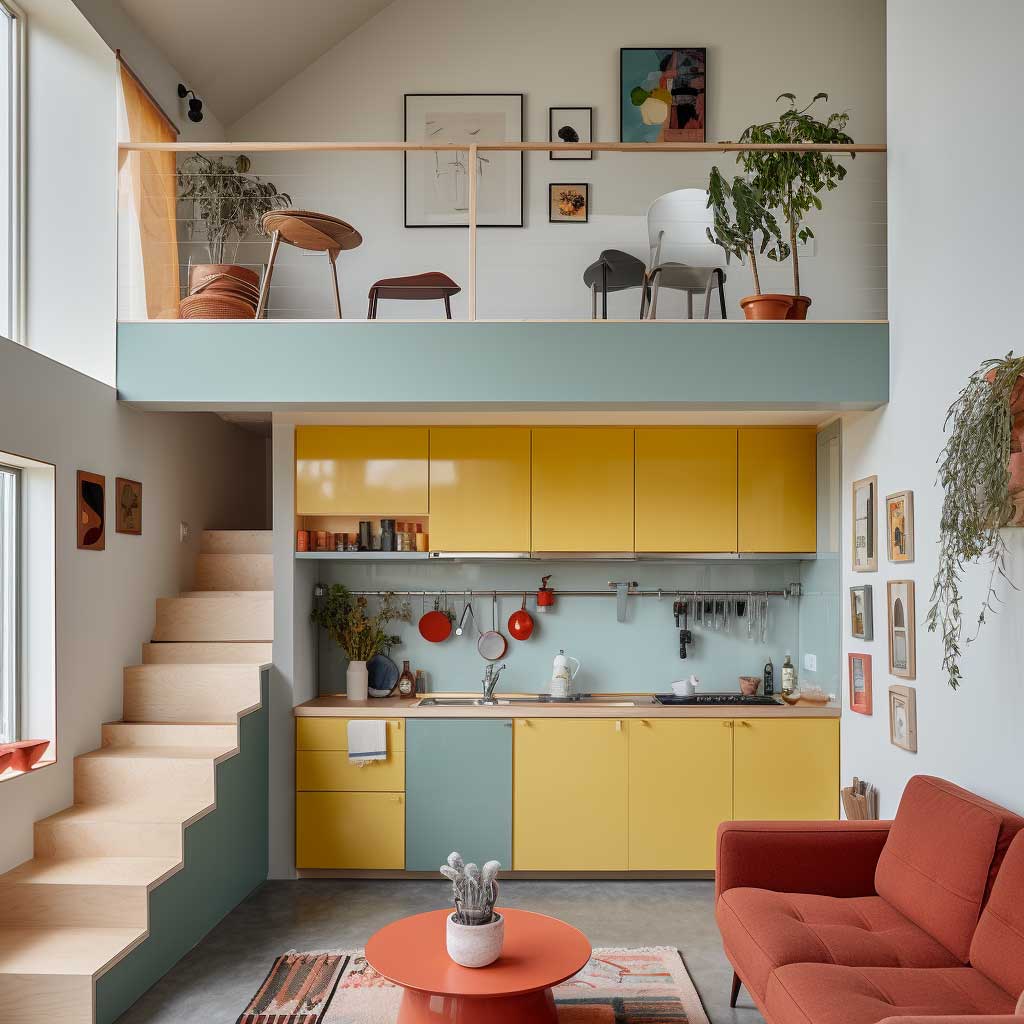
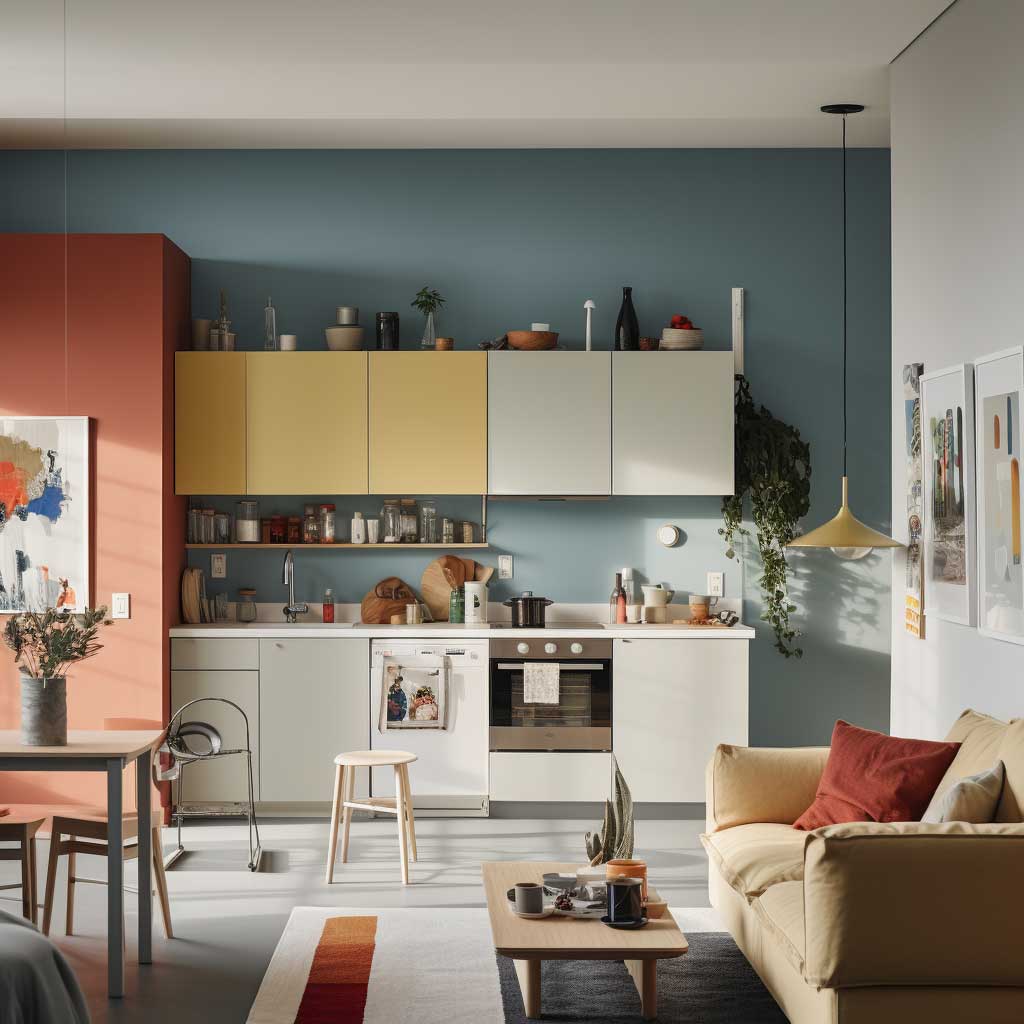
Color in a small open plan kitchen living room isn’t decorative — it’s structural. The right palette does the same job a wall would, separating the kitchen zone from the living zone without actually closing off the space. My go-to starting point is a single warm neutral — Benjamin Moore White Dove OC-17 at around $70/gallon — applied to every wall and ceiling. Boring on paper. Transformative in practice.
Light shades do most of the heavy lifting. Whites, linens, and pale sage greens reflect ambient light and prevent the walls from advancing toward you. You’ll notice the difference most at night, when artificial light bounces differently off lighter surfaces and the room feels almost twice its daytime size. Don’t paint kitchen cabinets a contrasting dark color if you only have one window — I did this with a charcoal lower cabinet and lost about four feet of perceived space overnight.
Dark accents have a role, but only as punctuation. A deep navy backsplash tile (Fireclay Tile does a 3×6 in Adriatic Blue for around $28/sq ft) creates a focal point that pulls the eye without making the room feel smaller. The key is placement — keep darkness low and horizontal, never on a full wall. Ceiling-height dark cabinets in a compact open concept space are the fastest way to make the room feel underground.
Warm tones like terracotta, turmeric, and dusty rose work brilliantly in textiles — cushions, a throw, a jute rug from Ruggable ($189–$280 for an 8×10). They bring the coziness that an all-white room desperately needs. Use them to visually anchor the seating area and separate it from the kitchen. That distinction matters enormously in open plan living room kitchen layouts where everything bleeds together. For more on how colour coordinates a combined space, this breakdown of small open plan kitchen living space design tips covers the zoning logic in detail.
Don’t Do This with Color in an Open Plan Space
❌ Two completely different palettes for kitchen and living room. Nothing says “I gave up” like mint green cabinets bleeding into a burgundy sofa wall.
❌ High-gloss paint on every surface. One glossy wall reads as intentional. Four glossy walls read as a hospital hallway.
❌ Colourful ceiling in a tiny space. I tried a terracotta ceiling in a 280 sq ft open layout. Beautiful in theory. Suffocating in person. Repainted it in six weeks.
Furniture That Fits Without Eating the Floor
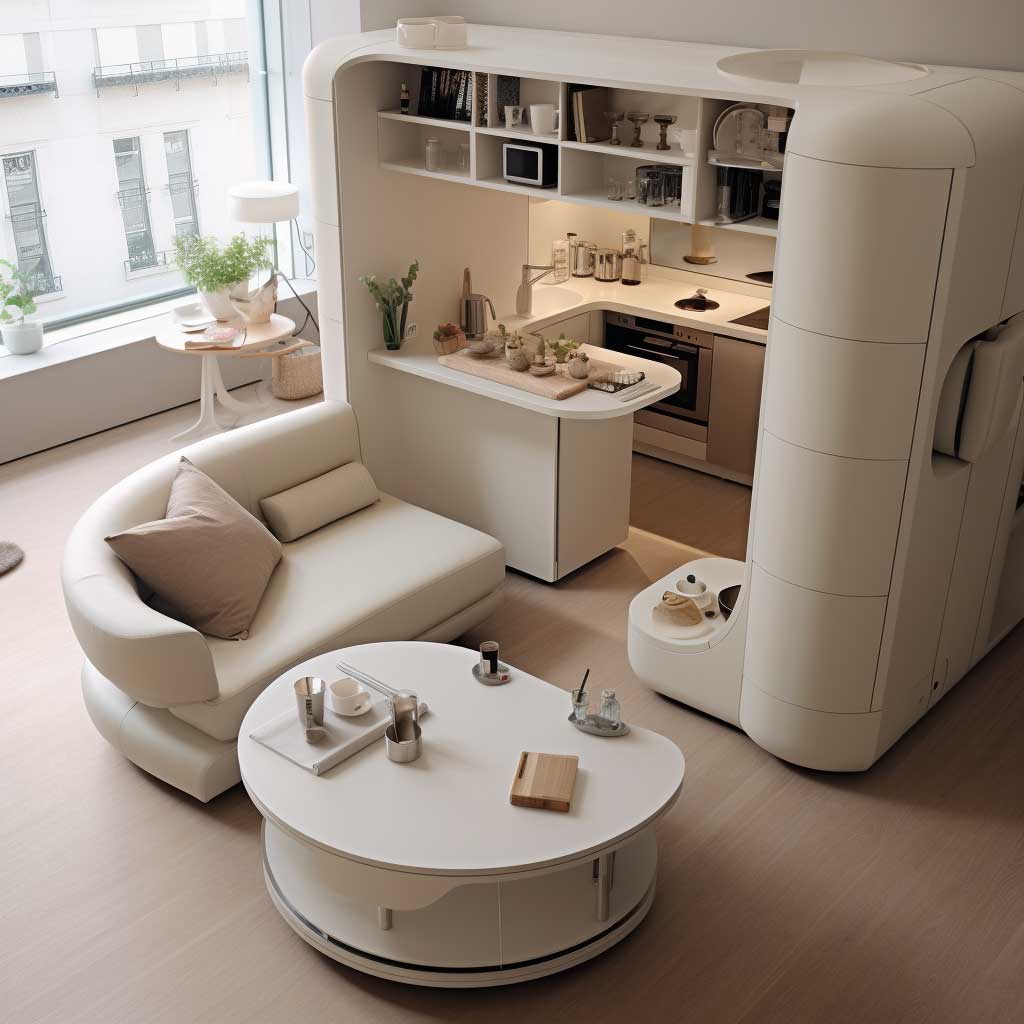
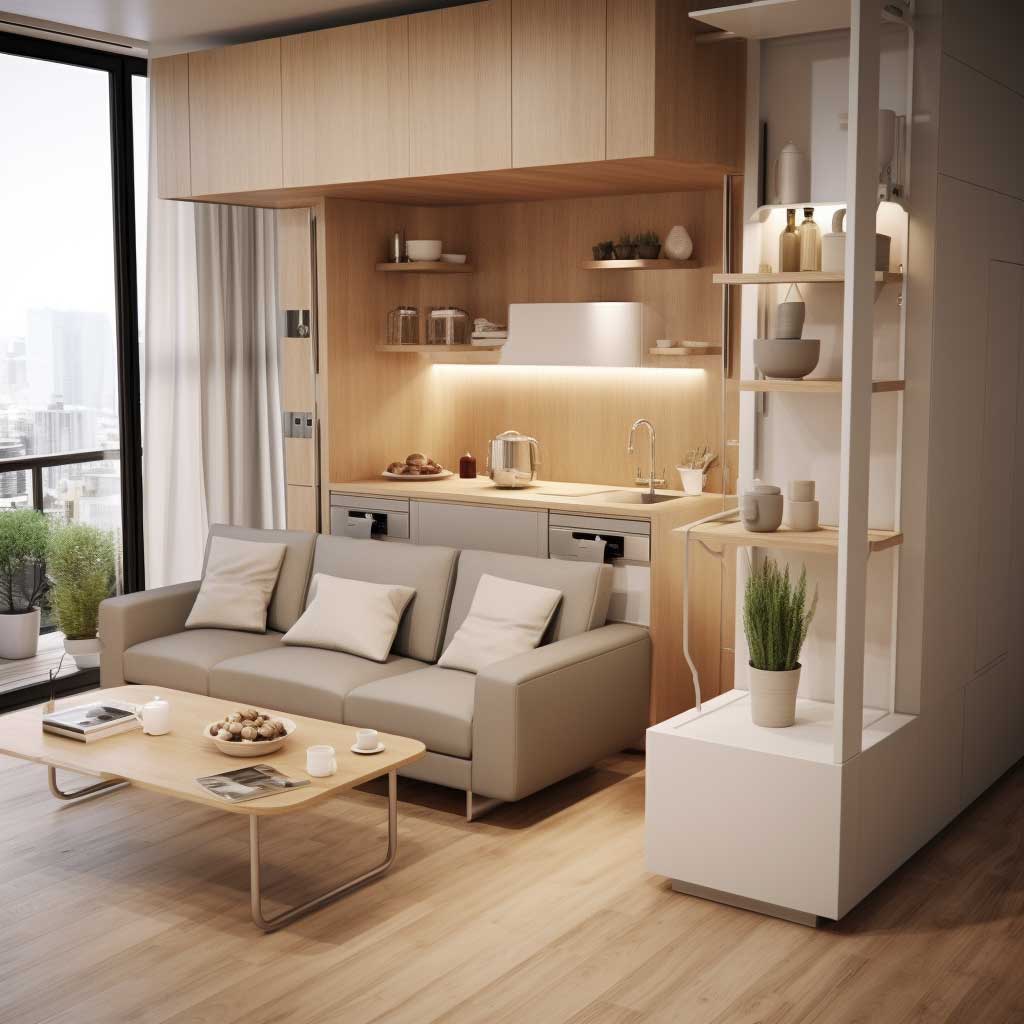
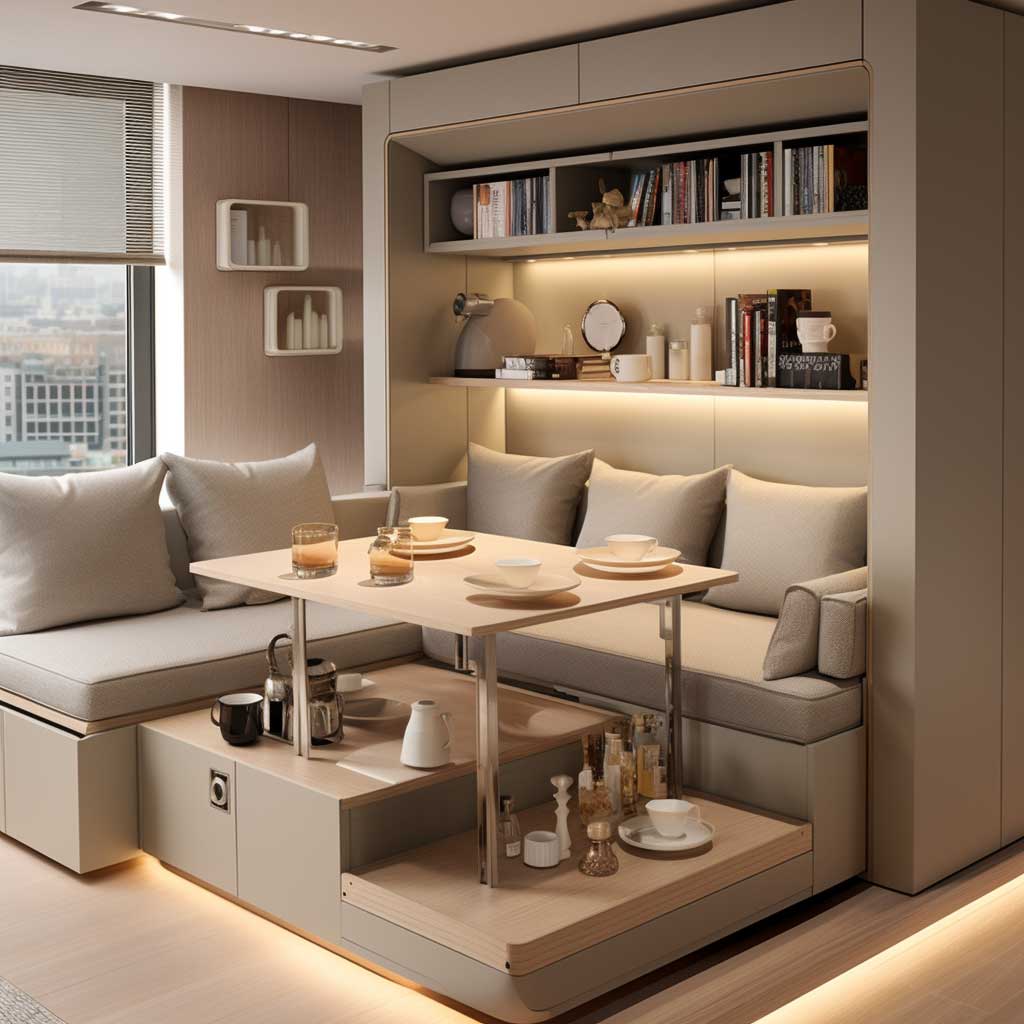

Furniture scale is the problem most small open plan kitchen living room redesigns get wrong. People buy a sofa that fits the room on paper — 84 inches wide, technically clears the walls — and then discover there’s no space to actually walk around it. The IKEA SÖDERHAMN at $749 runs only 69 inches wide, sits low on legs, and doesn’t block sightlines across the room. I own two of these and have moved them into three different apartments. They work every time.
Multi-functional pieces aren’t optional in a tiny open concept kitchen living room. They’re load-bearing. A dining table that extends from 28 to 55 inches (IKEA GAMLEBY folds for $199) handles weeknight dinners for two and weekend dinners for six without permanently claiming four feet of floor. An Article Sven sofa bed at $1,499 solves the guest bedroom problem without a second room. These aren’t compromises — they’re better solutions than fixed furniture in most cases.
Floating furniture earns its place. Wall-mounted cabinets and TV units reveal the floor underneath and create the visual impression that the room is larger than measured. CB2’s Linea wall-mounted media console at $699 sits 12 inches off the floor and can hold a full entertainment setup. You’ll notice the floor reads as continuous rather than broken up by furniture legs. That continuity is the secret to open plan small spaces that don’t feel cramped.
Avoid bulky sectionals with deep chaise extensions in any open plan layout under 400 sq ft. I’ve seen this mistake in person — a beautiful L-shaped sectional that looked perfect in the showroom consumed two-thirds of the living zone and made the kitchen feel like a hallway. Stick to two-seaters or narrow three-seaters with exposed legs. For sofa options specifically sized for compact rooms, this space-saving sofa design roundup covers the convertible and loveseat formats worth considering.
Lighting an Open Concept Room So Each Zone Reads Separately

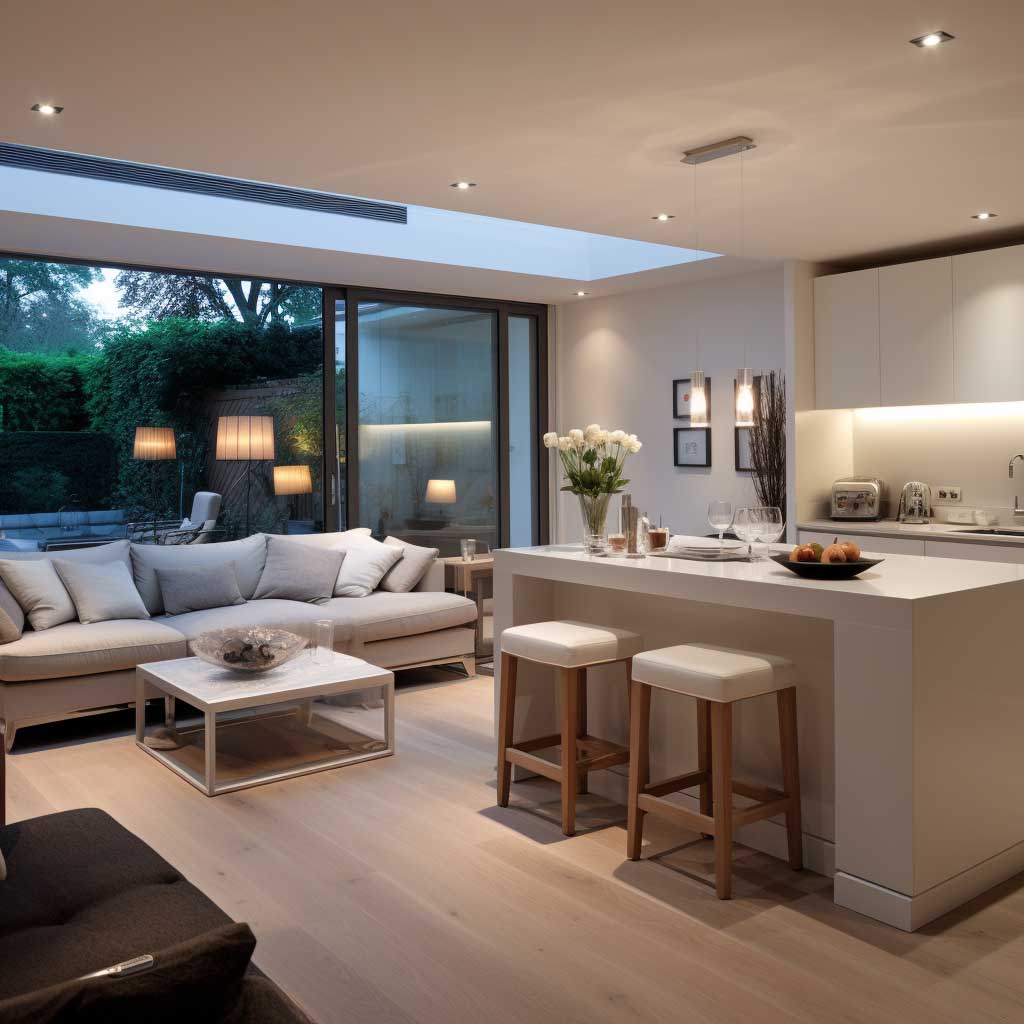
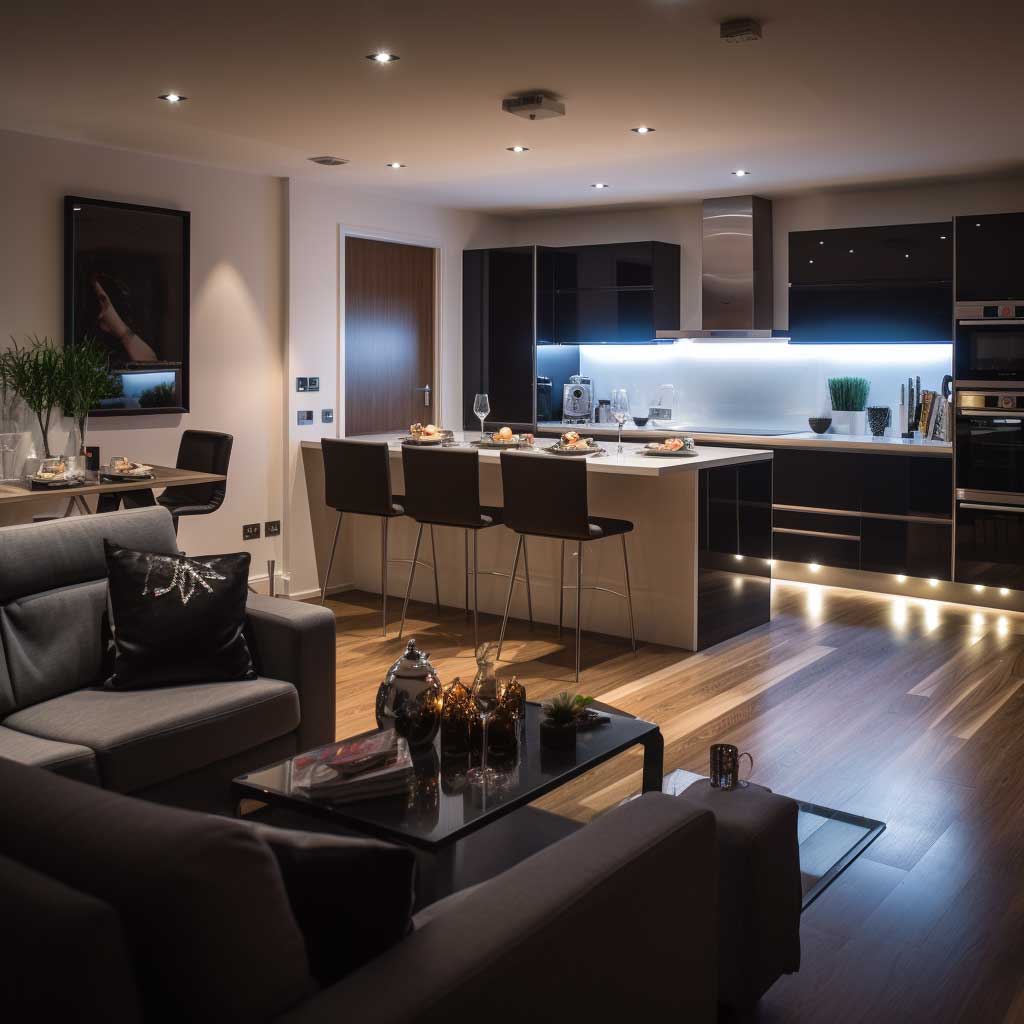

Lighting does in a small open plan kitchen living room what walls do in a conventional apartment — it creates rooms within rooms. The three-circuit rule is something I stole from a lighting designer I used to follow: separate controls for the kitchen work zone, the dining area, and the living seating zone. One dimmer switch per circuit. Budget around $400–600 for the electrical work plus fixtures. The difference between having it and not having it is the difference between a studio and a proper living space.
Ambient lighting sets the baseline. Recessed LED downlights on a warm 2700K spectrum (Lutron Caseta dimmer kit runs about $80) keep the ceiling clean and distribute light evenly without casting dark corners. Avoid a single central pendant as your only light source in a combined kitchen-living space — it creates a bright spot in the middle of the room and leaves both the prep counter and the reading chair in shadow.
Task lighting in the kitchen is non-negotiable. Under-cabinet strips from Govee or Phillips Hue run $35–90 and eliminate countertop shadows completely. You need this. Without under-cabinet lighting, you’re cooking in your own shadow, which is both impractical and oddly depressing. Position them at the front edge of the cabinet, not the back, and use a 4000K daylight temperature for prep areas specifically.
Natural light multiplied by mirrors is the oldest trick in small space design and it still works better than most expensive solutions. A 36-inch round mirror placed directly across from your primary window doubles the perceived depth of the living zone. I’ve measured this effect in three different apartments. The room registers as significantly larger in photographs and in person. Pair the mirrors with expert open plan lighting advice from Houzz for a layered lighting scheme that zones the space without building walls.
Decor Pieces That Justify Their Square Footage


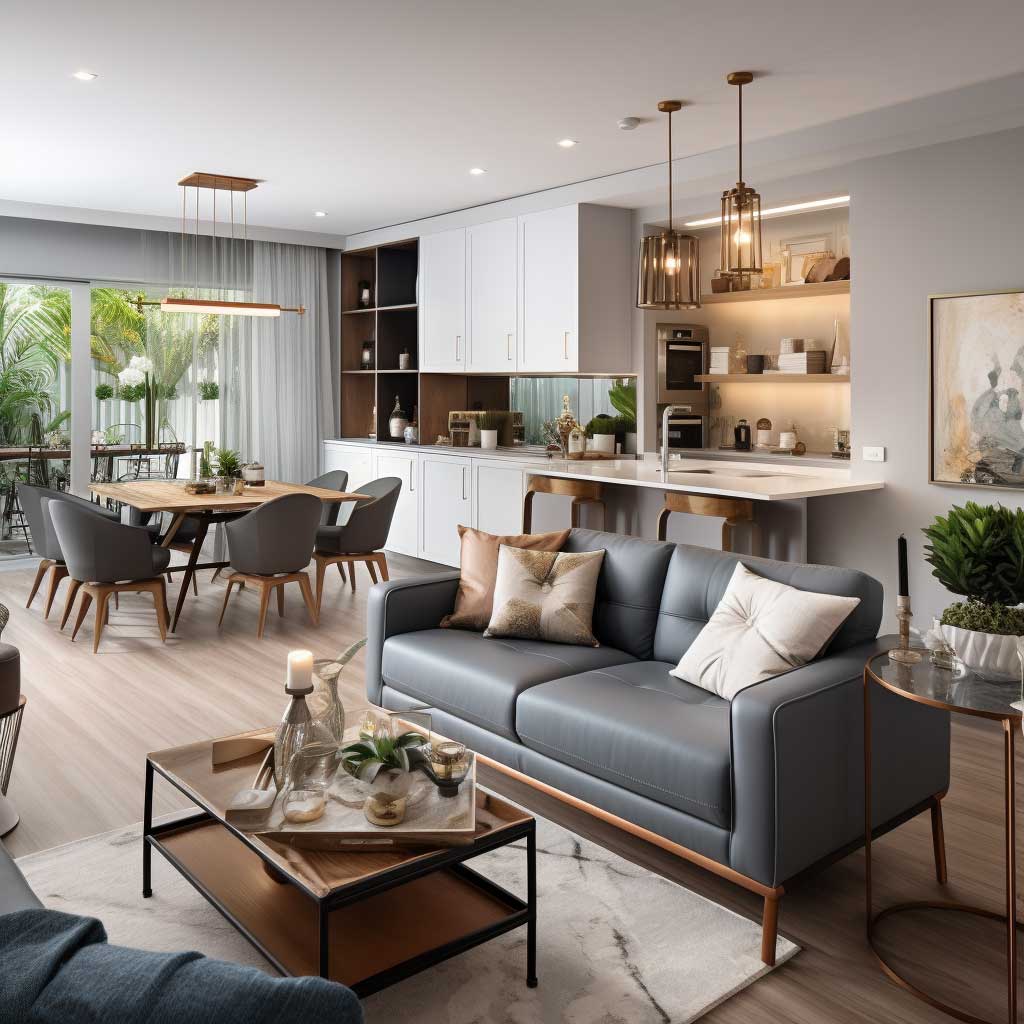
Every decorative object in a very small open plan kitchen living room needs to earn its place. Not philosophically — literally. Shelf space, surface space, and floor space cost more per square inch here than anywhere else in interior design. My rule: if a piece doesn’t store something, display something intentionally, or define a zone, it’s a candidate for removal.
Open kitchen shelving styled with actual crockery is the smart swap for upper cabinets. It stores your everyday dishes, displays objects you actually like, and visually lightens the kitchen zone. The West Elm floating shelf set (around $129 for two) with a few ceramic bowls and a trailing pothos looks better than closed cabinets in 80% of small kitchens. Don’t overstyle it — five objects maximum per shelf, including the functional ones. I’ve seen staged kitchens with 30 items on three shelves. Chaos.
Plants double as zone markers in small open concept living room and kitchen layouts. A tall fiddle-leaf fig ($40–80 at most garden centers) placed at the corner where the kitchen meets the living area acts as a soft partition — it signals transition without blocking sight lines. Trailing pothos hung at different heights create a vertical garden effect and add texture without occupying floor space. The Snake Plant in particular is the one I’d recommend to anyone who forgets to water things.
Rugs are the most underused zoning tool in colourful open plan living room and kitchen setups. A 5×8 or 6×9 rug placed firmly under the front legs of the sofa creates a visual living room boundary that’s just as effective as a room divider. The price range is wide — Ruggable washable rugs start around $189, while a wool Moroccan flatweave from Loom & Field runs $400–700. The pattern matters more than the price. Busy patterns in a tiny space read as noise. Go for stripes, simple geometrics, or a solid in a warm neutral. Textiles define the space without erecting walls, and that’s the entire goal of small open plan living.
Final Word
A Small Open Plan Kitchen Living Room Doesn’t Need More Space. It Needs Better Decisions.
Fix one thing at a time. Color strategy first, furniture scale second, lighting third. Decor decisions almost sort themselves out once the first three are locked in.
I’ve watched a 280 sq ft studio transform from a cluttered box to a space that visitors genuinely assume is bigger than it is. No renovation. No knocking down walls. Just these four levers pulled in the right direction.
Save this post — you’ll want to come back to the color and lighting sections once you’re standing in the actual space.