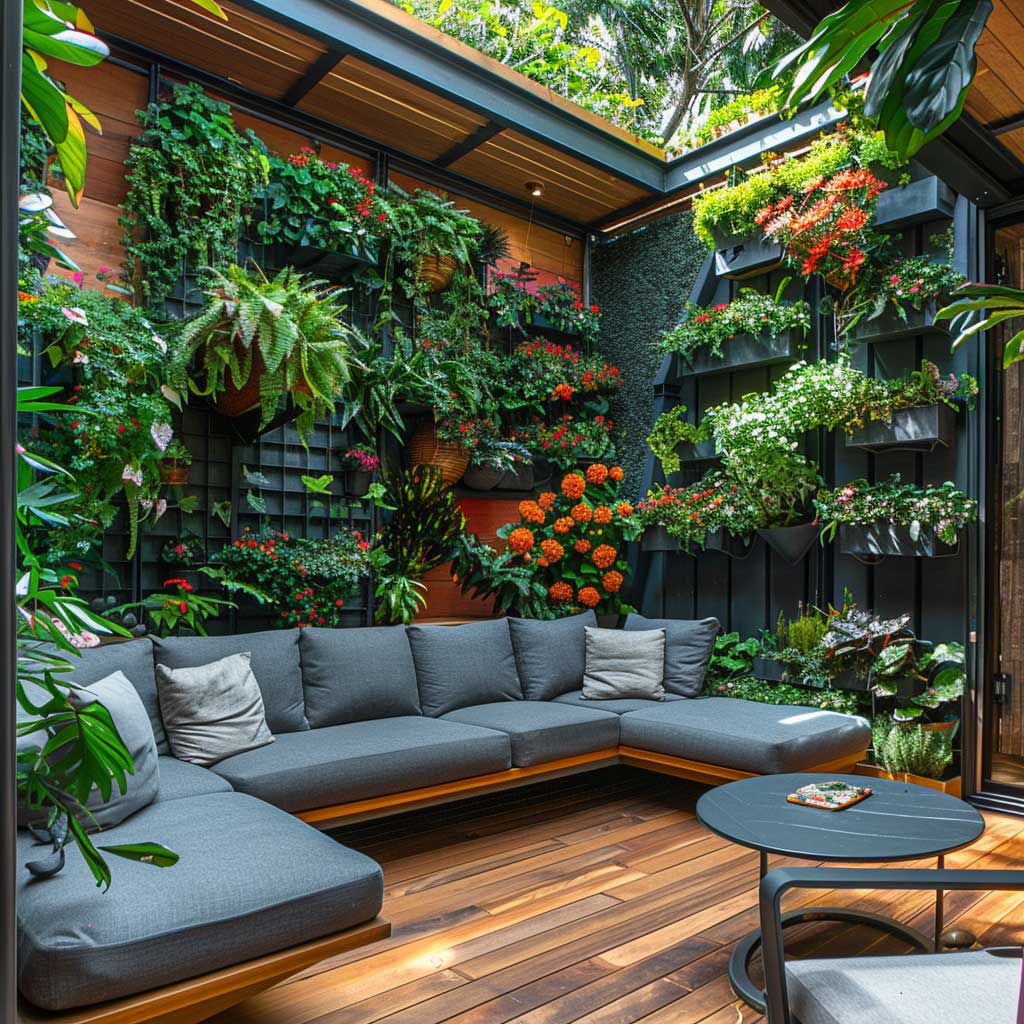
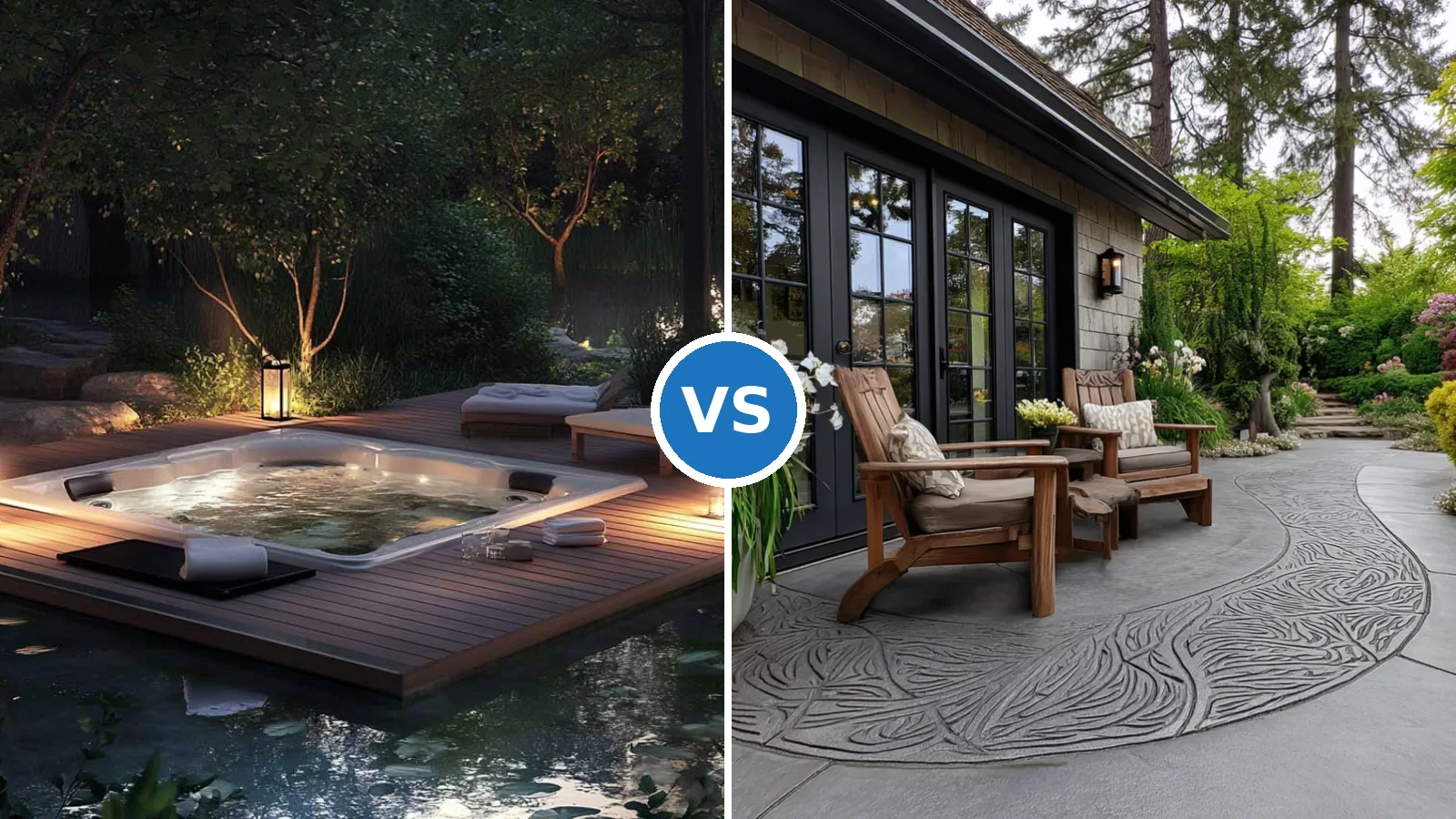
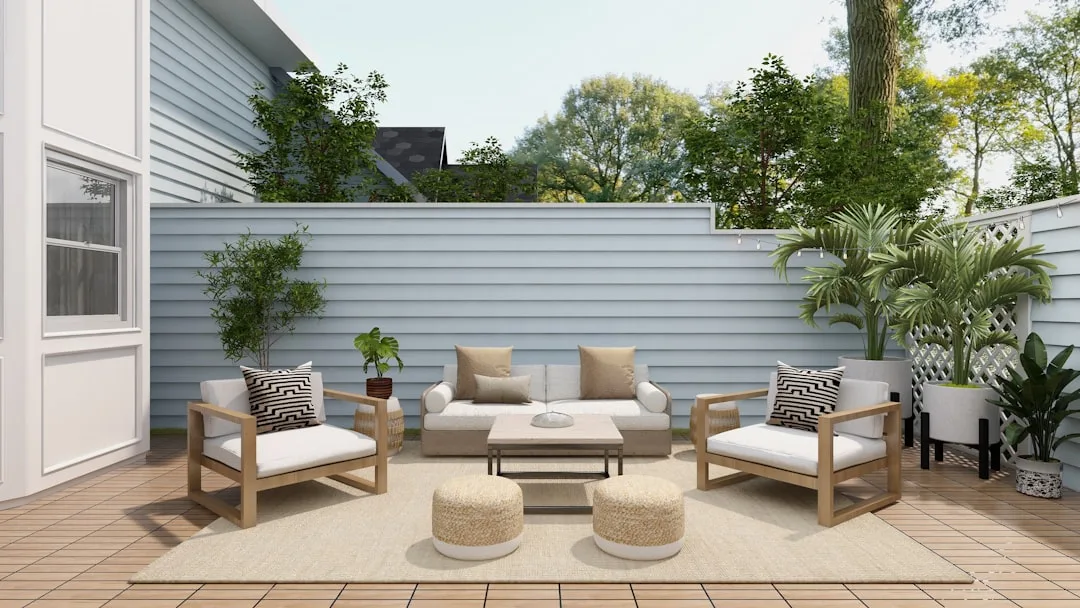
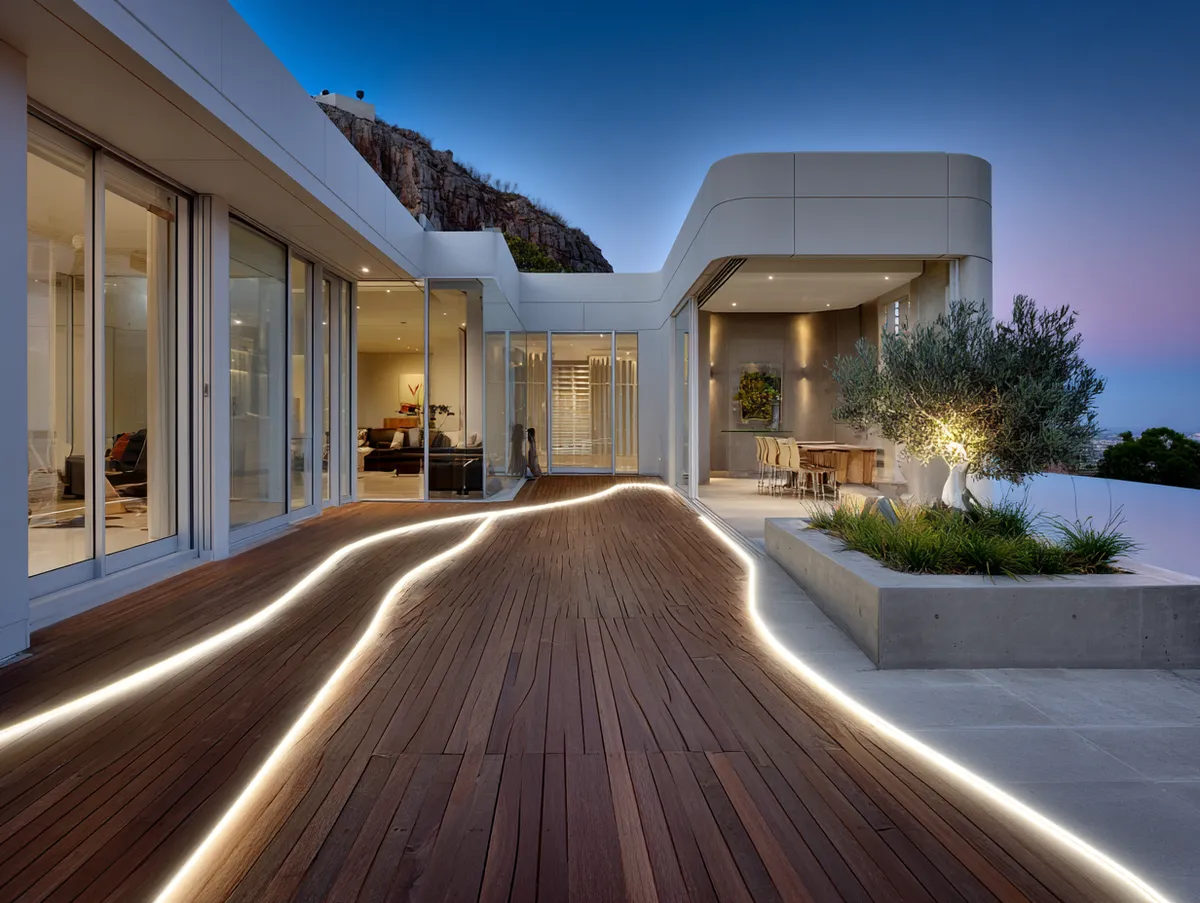
Small pool deck ideas for above ground pools work best when the layout is designed around the pool’s footprint—not squeezed in around it. I’ve seen dozens of compact backyards transformed with nothing more than smart framing and the right material choice. A 12×12-foot corner lot can feel like a proper resort when the deck wraps the pool at rim height and a pair of Lifetime folding loungers ($89 each at Costco) fill the remaining platform.
The mistake most homeowners make is treating the deck as an afterthought. You pick the pool, you set it up, and then you wonder why the yard looks unfinished. Small pool deck ideas that actually hold up visually start with material and shape before the pool even gets inflated or installed. Pressure-treated pine runs about $2.50 per linear foot; Trex Enhance composite starts at $4.80—both will outlast three summers of barefoot traffic if you frame them correctly.
My go-to rule: the deck surface should never exceed three times the pool diameter in total area for a small yard. Push past that and you lose the lounge zone entirely, or the whole thing starts looking like a landing pad rather than a backyard retreat. The five layouts below are scaled for real small backyard conditions—not Pinterest fantasy lots.
- Corner decks in pressure-treated pine or cedar max out a tight lot without crowding the pool.
- Elevated platform decks solve sloped or uneven ground and add hidden storage under the frame.
- L-shaped wraparounds separate lounging and pool access zones on one compact footprint.
- Minimalist composite decks with vertical slat screens block wind and look expensive for under $3,000 total build.
- Tiered two-level decks add visual depth in yards too narrow for horizontal expansion.
- Small deck for Intex pool setups work best with modular resin systems like Vinyl Works SD ($499–$799).
Corner Decks in Natural Wood Pull Double Duty in a Tight Lot
Small pool deck ideas for above ground pools hit differently in a corner layout—you get two fence lines doing half the enclosure work for free. Cedar from Home Depot runs $1.89 per board foot and weathers to a silver-gray within two seasons unless you seal it annually with Cabot Australian Timber Oil ($28/quart). Pressure-treated pine is cheaper upfront at $1.10 per board foot but will splinter barefoot if you skip the annual sanding. I’ve had both, and cedar wins on texture alone.


The entry steps are where corner decks earn their keep. A wide three-step entry acts like a mini patio landing—you can hang a string of IKEA Solvinden solar lights ($14.99) overhead and suddenly it reads as an intentional outdoor room rather than a ramp to a pool. Foldable Lafuma Mobilier lounge chairs ($179 each) tuck flat against the fence when not in use, leaving the walkway clear. Keep the furniture count to two maximum on a corner platform under 80 square feet or you’ll lose the open feel entirely.
What doesn’t work here? Diagonal deck boards. I know Pinterest loves them, but on a small corner platform the diagonal pattern makes the space feel busier and visually shrinks it. Straight horizontal boards running parallel to the pool wall read cleaner and actually make the deck look wider than it is—same optical trick as horizontal wall cladding on a narrow house. Build the deck in modular 4×8 sections and you can reconfigure or add a section later without tearing out the whole frame. For more inspiration on pulling together a full outdoor zone, see what works in current backyard deck design trends.
Elevated Platform Decks Fix Sloped Yards and Create Hidden Storage
Small above ground pool deck ideas on sloped ground almost always require an elevated platform—and that’s actually a gift in disguise. Raising the deck 18–24 inches creates a cavity underneath that holds a standard Intex pump, a chemical caddy, and two folded foam noodles without any visible clutter. I stole this trick from a neighbor who built a 10×14-foot elevated cedar platform for a 15-foot Intex Prism Frame pool ($449 at Target) and suddenly had the tidiest backyard on the block.


The platform surface should sit flush with the pool’s top rim—you want a single continuous horizontal plane, not a step up to peer over the edge. Trex Transcend in Gravel Path color ($6.20/linear foot) holds up to wet feet without the splinter risk of raw wood and doesn’t need annual sealing. The gray tone reads warmer than it sounds in photos; it looks like expensive stone when freshly cleaned. Two slim Fermob Bistro chairs ($148 each) fit on a 6-foot-wide platform without crowding.
Vertical elements are your friend on an elevated setup. Slim cedar slat privacy screens on the open sides block wind without adding bulk—think of them like the collar on a tailored coat, they define the shape without adding weight. You don’t need screens on all four sides; one or two panels on the windward side does the job. Avoid hanging heavy planters from the frame rail—the torque load on a narrow platform structure adds up fast and I’ve watched a railing pull loose mid-season from exactly that mistake.
- Don’t use untreated lumber for any deck frame member that touches the ground or sits within 6 inches of soil—rot sets in within 18 months.
- Don’t build a full wraparound deck for a round pool in a yard under 400 sq ft—you’ll sacrifice all lawn space and the deck will feel like a parking lot.
- Don’t install diagonal decking boards on a platform under 80 sq ft—it makes the space feel smaller, not more dynamic.
- Don’t skip post footings on an elevated platform deck above 24 inches—a 4×4 post sunk into packed soil without concrete will heave on the first hard freeze.
- Don’t use dark composite in a south-facing yard without testing surface temp first—Trex in Spiced Rum can hit 145°F on a July afternoon in full sun, which is a genuine burn risk barefoot.
L-Shaped Wraparound Splits Zones Without Splitting the Budget
Small above ground pool deck ideas in an L-configuration give you two functional zones—a sunbathing wing and a pool-entry wing—without doubling the material cost. The L-shape hugs two pool sides and leaves the remaining two sides open for landscaping or a simple gravel border, which keeps the yard from feeling paved over. I’ve priced out a basic L-deck for a 15-foot round pool at roughly $1,200–$1,800 in pressure-treated lumber, depending on your regional lumber market in 2025.
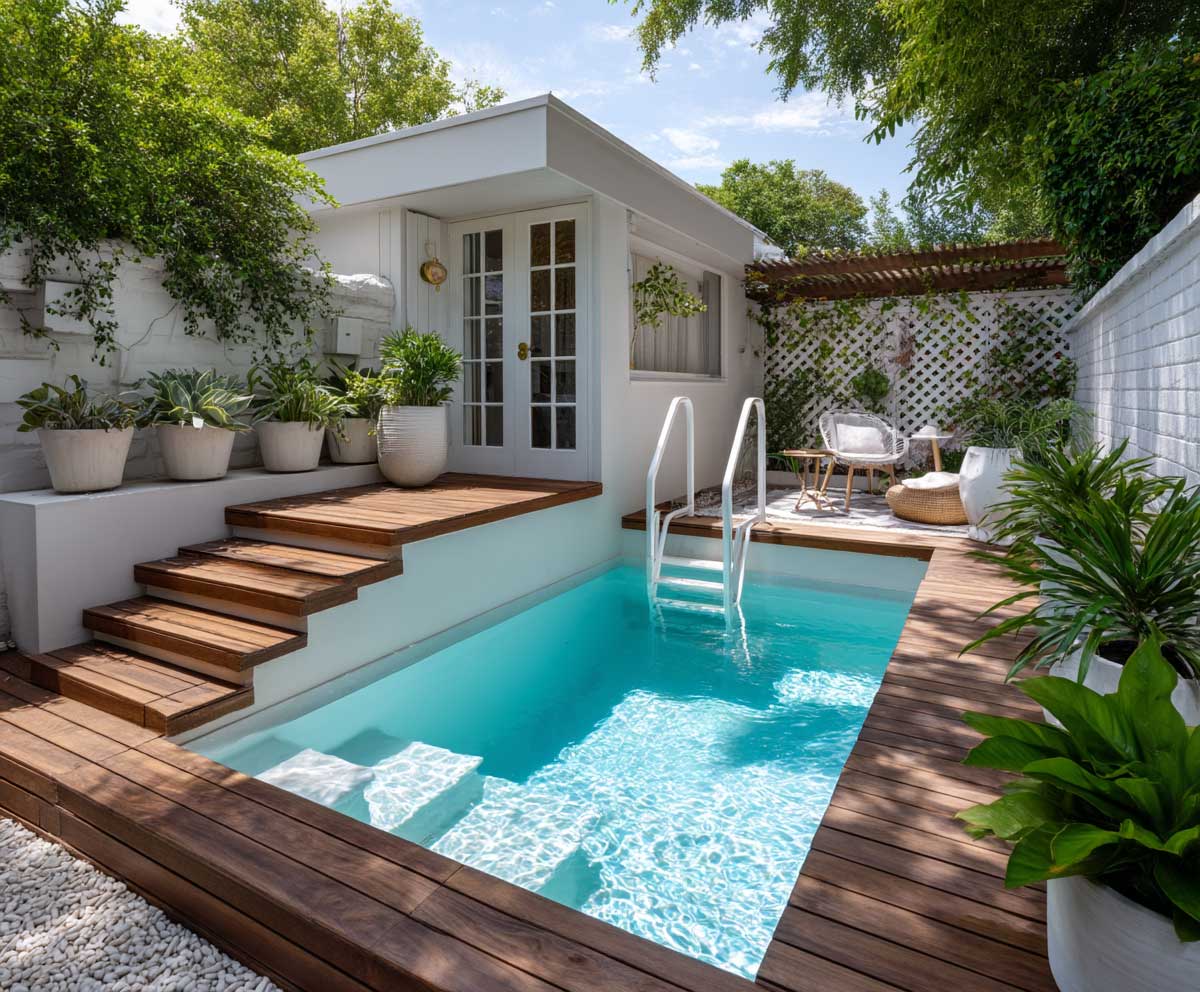


Place the step entry at the inner corner of the L—that’s the natural visual anchor of the shape, and it makes the deck read as intentional rather than asymmetrical. Each wing should be at least 5 feet wide to function; narrower than that and you can’t open a lounger without bumping the pool wall. The longer wing (typically 8–10 feet for a 15-foot pool) handles sunbathing; the shorter wing (4–6 feet) handles towels, a small outdoor side table, and pool access.
Contrasting stain at the step faces is a detail that costs nothing extra and looks professionally designed. Try Cabot Semi-Solid in Chestnut Brown on the main deck boards with Raw Natural on the step risers—the two-tone effect guides the eye without any structural change. Does the L-shape work for oval pools? Yes, even better than for round ones, because the straight pool wall gives you a clean reference line for the deck framing and you waste less triangular filler material at the curve.
Minimalist Composite Deck With Privacy Screens Costs Less Than You Think
Small pool deck ideas built around composite materials and vertical slat screens photograph beautifully and hold their shape for 25 years without refinishing—that’s the sales pitch, and for once it’s accurate. Fiberon Sanctuary composite in Coastline gray runs $5.10 per linear foot and comes with a 25-year fade and stain warranty. You’ll need roughly 200 linear feet of board for a 10×10-foot deck around a 12-foot pool, putting material cost at $1,020 before framing lumber and hardware.

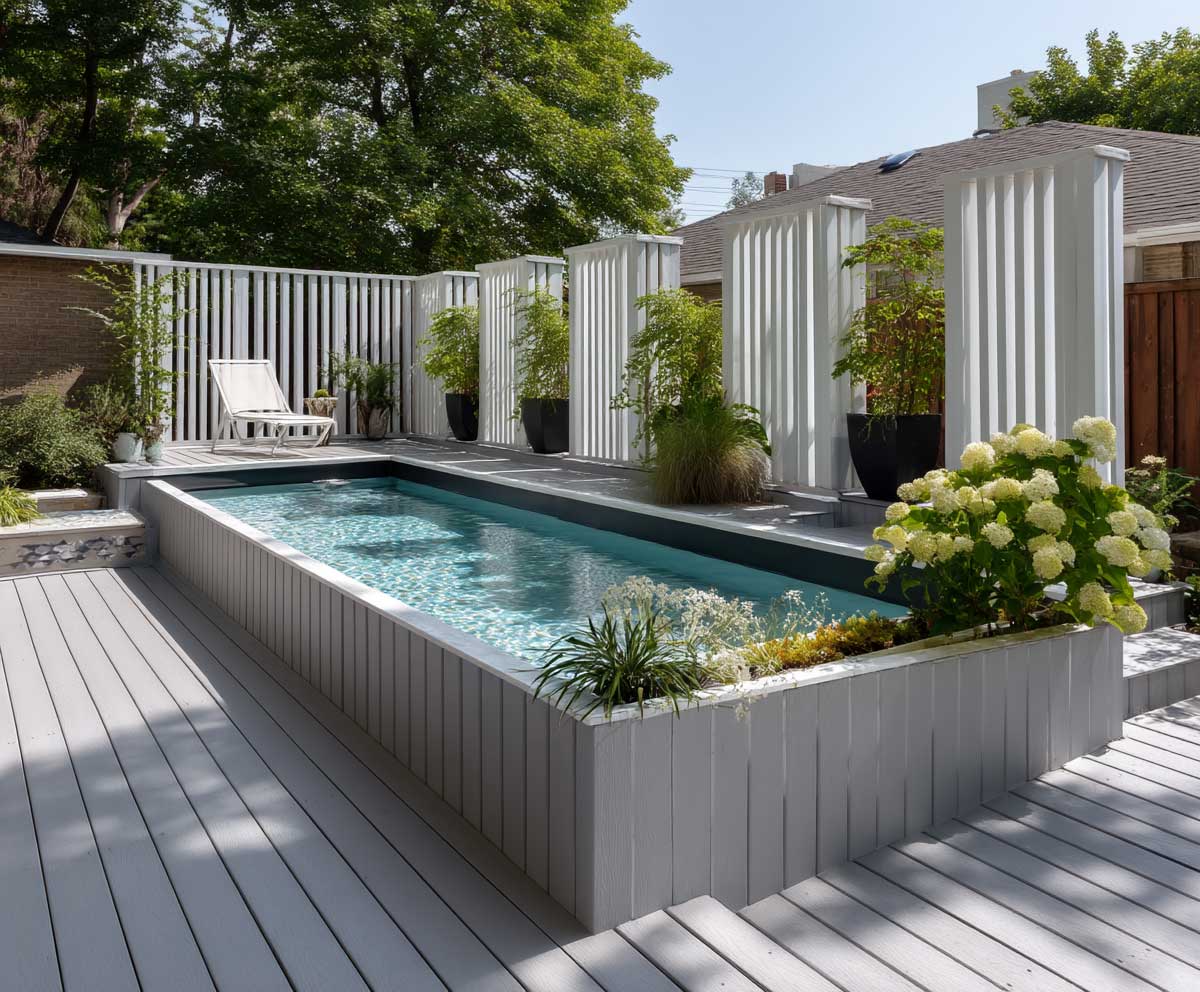


The privacy screens are where this layout justifies its cost. Cedar 1×4 slats spaced 1.5 inches apart block about 65% of wind and sightlines while still letting air move through—a solid fence blocks wind but creates turbulence at the edges that’s actually worse on a small deck. Mount them on two sides maximum for a small pool area; three or four sides start to feel like a fence pen. Pair the gray composite surface with black powder-coated hardware (Simpson Strong-Tie connectors, about $0.60 each) and the whole thing looks like a $30,000 custom build for under $3,000 installed DIY. HGTV’s above-ground pool deck gallery shows this exact material combo on multiple featured builds.
Built-in storage under a fold-down bench on the long side of the deck takes care of towels, floats, and chemical bottles. IKEA ÄPPLARÖ outdoor storage bench ($149) also works if built-in isn’t in the budget—the teak-look finish pairs well with composite gray. What you want to avoid: adding a pergola overhead on a small composite deck. The overhead structure darkens the pool surface and makes the already-compact space feel like a tunnel. Natural light is your main design asset here; protect it.
Tiered Two-Level Deck Adds Depth When Width Runs Out
Small backyard above ground pool decks go vertical when the lot simply won’t give you horizontal room, and a tiered two-level build is the most direct solution. Picture a split-level ranch floor plan applied to a 300-square-foot yard: the lower tier sits at grade or near it, the upper tier rises to pool rim height, and wide steps between them function as casual seating. I’ve seen this done beautifully with a 12-foot Coleman SaluSpa pool ($399) on a lot that measured only 18 feet wide.


Lower tier: a compact bistro table and two chairs for morning coffee—that’s 6 square feet of furniture on a 6×8 lower platform and it reads perfectly in proportion. Upper tier: two Keter Pacific lounge chairs ($189/set on Amazon) fit side by side on a 5×10-foot upper surface. The wide transition steps between tiers—go 48 inches minimum—double as guest seating during a pool party, which means you never need to buy more furniture than the platform technically holds. Eucalyptus wood at $3.40 per board foot naturally resists rot and insects without chemical treatment, and it weathers to a warm honey tone faster than cedar.
The sculptural quality of a tiered deck is its real asset—it makes a 250-square-foot yard look designed rather than stuffed. Add low-voltage Govee LED strip lights ($24.99) along the step risers and the yard transforms completely after sunset without a single overhead fixture. For reference on how a complete pool area can be layered around an above ground pool, these swimming pool area ideas cover the full picture from decking to plantings. Avoid installing tiered decks with a height differential greater than 36 inches without a code-compliant railing—at that point you’re building a structure that most municipalities require a permit for, which changes your timeline and budget significantly.
Final Take
A small pool deck that works is built around one constraint—your actual yard dimensions, not a Pinterest lot.
Corner and L-shaped wood decks under $2,000 solve 80% of small backyard scenarios. Composite builds cost more upfront but cut lifetime maintenance to near zero.
Tiered and elevated platforms are worth the extra framing cost on any lot with slope or under 400 square feet of usable space.
Save this post before you price out materials—the board footage math above will save you at least one wasted Home Depot trip.