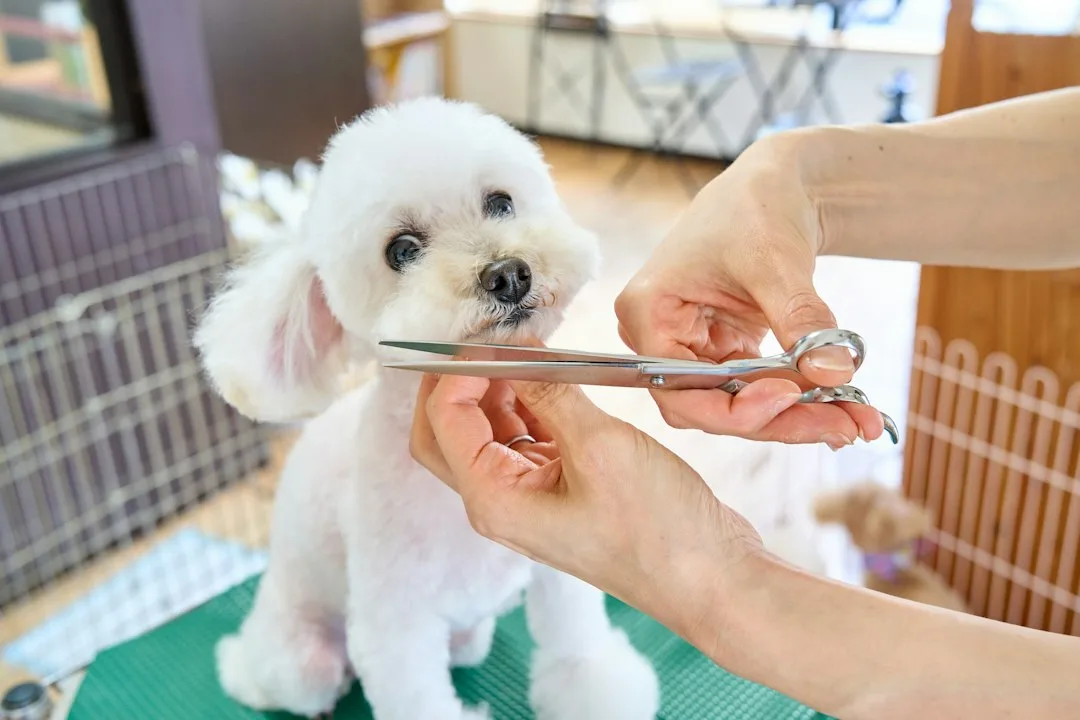
The pomeranian bear cut turns one of the world’s fluffiest dogs into something that looks like it belongs on a shelf next to a Build-A-Bear — and I mean that as the highest compliment. My own Pom, Mochi, got her first bear cut two years ago, and the difference in our daily routine was immediate. No more thirty-minute detangling sessions, no more mat crises behind her ears, no more grooming anxiety for either of us. The pomeranian bear cut achieves something rare in dog styling: it actually makes life easier while making your dog look better.
You’ll notice pretty fast that not all bear cuts are the same. There’s a version for the owner who wants zero-effort weekday upkeep, a version for the dog who hates being brushed, and a version that photographs so well it practically runs its own Instagram. I’ve tried all three on Mochi and watched enough grooming appointments to know which details separate a great result from a “what happened?” moment. The three styles here are the ones that consistently deliver for busy owners who still want their Pom looking pulled-together.
One number worth knowing before you book that appointment: professional Pomeranian grooming runs $60–$90 per session at most full-service salons, with touch-ups recommended every 4–6 weeks according to groomers at Hound Therapy in Plano. The pomeranian bear cut in its low-maintenance variations can stretch that to 6–8 weeks between visits if you brush twice a week at home — a Hertzko self-cleaning slicker brush ($15–$20 on Amazon) handles daily upkeep without drama.
– The rounded head short body version cuts grooming sessions by about 60% compared to a full-coat Pom — the contrast in length is the whole trick.
– Clean face minimal fluff is the only pomeranian bear cut style where a quick wipe-down actually replaces brushing on weekday mornings.
– All-over even trim is the single most forgiving option when a grooming appointment runs late — it grows out uniformly so your dog never looks ragged.
– Never skip the blow-dry after a bath on a Pom: air-drying causes hidden mat formation in the undercoat even on short bear cuts.
– Daily Paws cites shave alopecia as a real risk — avoid going too short on any bear cut variation; always leave at least an inch of guard coat.
Rounded Head Short Body — the Pomeranian Bear Cut That Actually Saves You Time
The rounded head short body is the pomeranian bear cut style I come back to every time someone asks me where to start. Your groomer clips the body coat down to about an inch or less while sculpting the head fur into a soft, full sphere — the contrast is what makes this look so distinctive. Think of it like a lollipop silhouette: small body, dramatically rounded head, maximum teddy bear payoff. I’ve clocked it: Mochi went from needing forty minutes of brushing per week with a full coat to about twelve minutes with this trim.


Does the shorter body fur compromise the Pom’s ability to regulate temperature? Actually, the opposite. Pomeranian.org’s expert Denise Leo, who has groomed champion Poms for over 50 years, notes that the double coat’s insulating function comes primarily from the undercoat — keeping a moderate length preserves that while eliminating the bulk that traps debris and heat. The belly and underarm zones, the two spots where mats are basically inevitable on a full-coated Pom, become almost non-issues with this trim. You’ll see that for yourself after the first summer month.
The rounded head is where a skilled groomer earns their fee. I’ve seen this shape done badly at discount clip shops and it looks lopsided — the ears end up crooked, the cheeks uneven. My go-to groomer in Chicago charges $75 for a full bear cut session, and the head shaping alone takes her about twenty minutes with thinning shears. Ask your groomer specifically to blend the ear fur into the cheek fur so you get one continuous dome shape rather than a head with ears stuck on top. That blending step is what makes it read as “teddy bear” versus “trimmed dog.”
Touch-ups for this style land at the 6–8 week mark for most owners. Between visits, a Hertzko slicker brush or a Chris Christensen wooden pin brush ($28) handles the head fur in about four minutes. Avoid matting cream on the short body sections — you don’t need it, and buildup makes the next grooming session harder.
Asking your groomer to shave the body coat down to the skin on any pomeranian bear cut is the one mistake that’s genuinely hard to reverse. Daily Paws and multiple grooming experts warn that shaving a Pom’s double coat too close can trigger shave alopecia — a condition where the guard coat grows back patchy, thin, or not at all. The short body in the rounded head version should still leave at least 3/4 inch of coat. If a groomer offers to shave “for easier maintenance,” find a different groomer. The maintenance comes from the length, not from removing the coat entirely.
Clean Face Pomeranian Bear Cut — Minimal Fluff, Maximum Hygiene
Clean face minimal fluff is the pomeranian bear cut version you’ll see on older dogs or dogs with sensitive skin, and once you try it you’ll understand why it converts so many skeptics. Your groomer trims the muzzle and eye area short — we’re talking precision scissor work, not shaving — while keeping the body coat at a uniform short-to-medium length. The result reads as clean and bright rather than heavily styled, which is exactly right for a dog who spends half her day face-down in a food bowl. Mochi’s tear staining dropped by about 70% after her first clean-face appointment.


What makes this particular pomeranian bear cut stand out from the others is how low the at-home maintenance bar actually is. Short face fur means Earthbath grooming wipes ($14 for 100 count) genuinely replace a brush on busy mornings. I stole this trick from Mochi’s groomer: swipe the wipe around the muzzle and eye corners each morning, and the whole face looks fresh-washed in thirty seconds. Debris doesn’t cling to short fur the way it clings to the fluffy face versions, so outdoor dogs especially benefit from this trim — no more coming home from a park walk with half the trail in your dog’s face.
You’ll notice this style is particularly kind to dogs that hate grooming sessions. Less face fur means less time under the scissors during appointments, which translates to a calmer dog and a faster visit. For older Pomeranians or rescues with a history of grooming stress, starting with the clean face minimal fluff version is genuinely the right call — my rescue Pom, Butter, went from shaking through his first three grooming sessions to falling asleep in the groomer’s arms after we switched to this trim.
The one thing to watch for: a groomer who trims the face fur so aggressively that it removes the rounded bear-cut shape entirely. You still want soft curves around the cheeks and brow — without them, you get a “plain trim” look rather than a bear cut. Show your groomer a reference photo. The line between “clean face bear cut” and “generic short cut” is about two millimeter of fur, and a photo makes that conversation much easier. For more Pomeranian grooming inspiration, the 9 cute photos of bear cut for Pomeranian dogs on ArtFasad shows exactly how much shape variation is possible within this single style.
All-Over Even Trim — the Pomeranian Bear Cut With the Shortest Learning Curve
All-over even trim is the pomeranian bear cut that requires the least explanation to a new groomer, which is its secret weapon. The fur is cut to a single uniform length across the head, ears, body, legs, and tail — no length contrasts, no precision shaping zones, no complicated blending. The result is a compact, plush sphere of a dog that looks like it was made in a factory specifically to be adorable. I’ve booked this style at three different grooming salons across two cities and gotten consistent results every time, which is more than I can say for fancier variations.


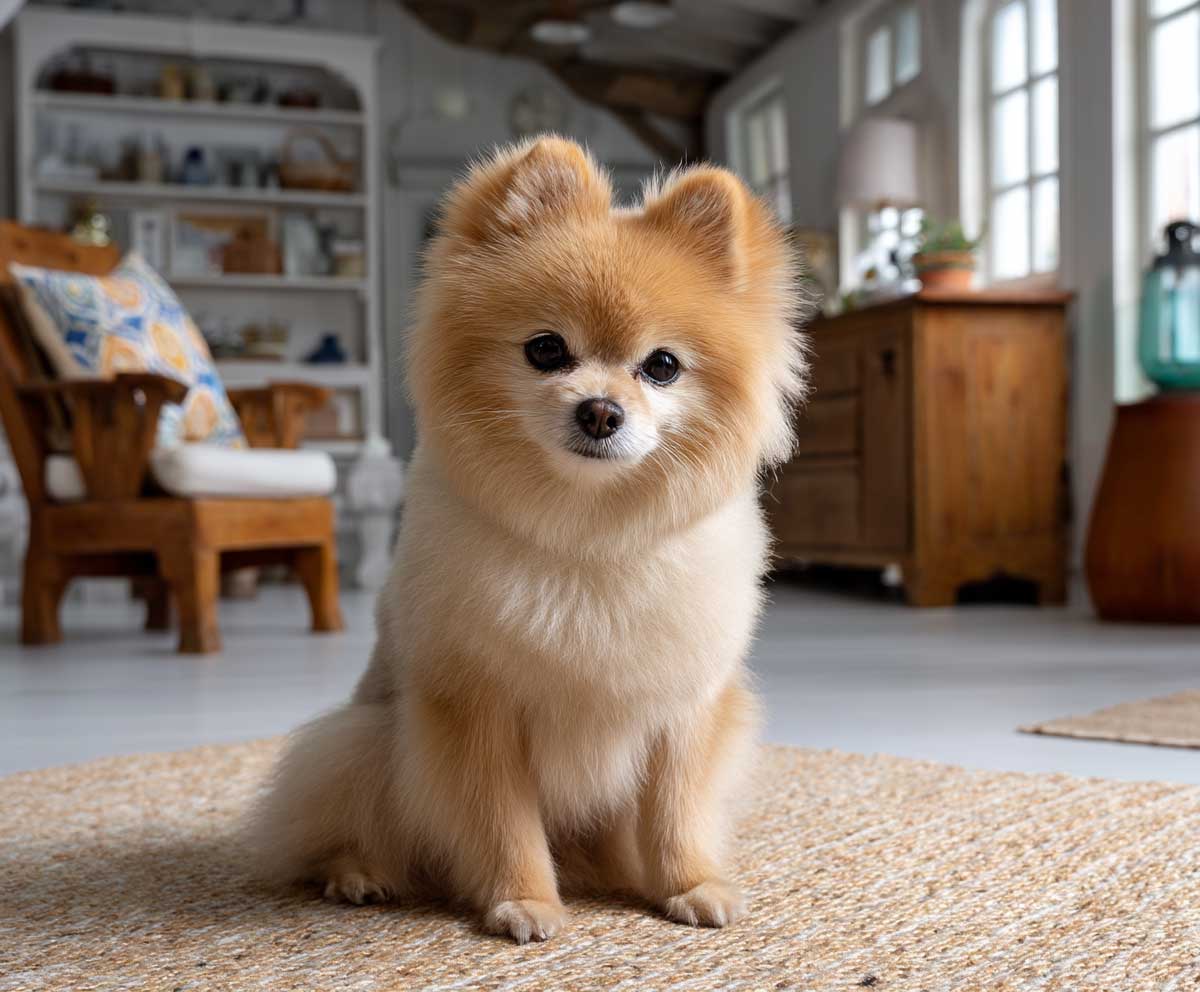
Pomeranians with particularly thick double coats — the ones where you push a brush in and it disappears — are the biggest winners with this style. Keeping everything even means tangles form far less often, and when they do, they’re surface-level rather than buried deep in a length-contrast zone. My friend’s Pom, a white female named Ghost, has the densest coat I’ve ever touched and she went from biweekly mat emergencies to a twice-weekly brushing routine with no drama after switching to the even trim. A Chris Christensen “Big K” slicker brush ($32) on her twice a week keeps everything smooth between 7-week grooming appointments.
What’s the right length to request? I ask for a one-inch uniform length as a starting point and adjust from there based on season. In summer, 3/4 inch keeps Ghost comfortable without the shave-alopecia risk. In winter she wears a Canada Pooch puffer vest ($35–$45) on cold walks, so we keep the trim at 3/4 inch year-round for consistency — the coat grows out evenly enough that the vest always fits the same. The all-over trim grows out so uniformly that even if you miss a grooming appointment by two weeks, your Pom still looks intentionally styled rather than overdue.
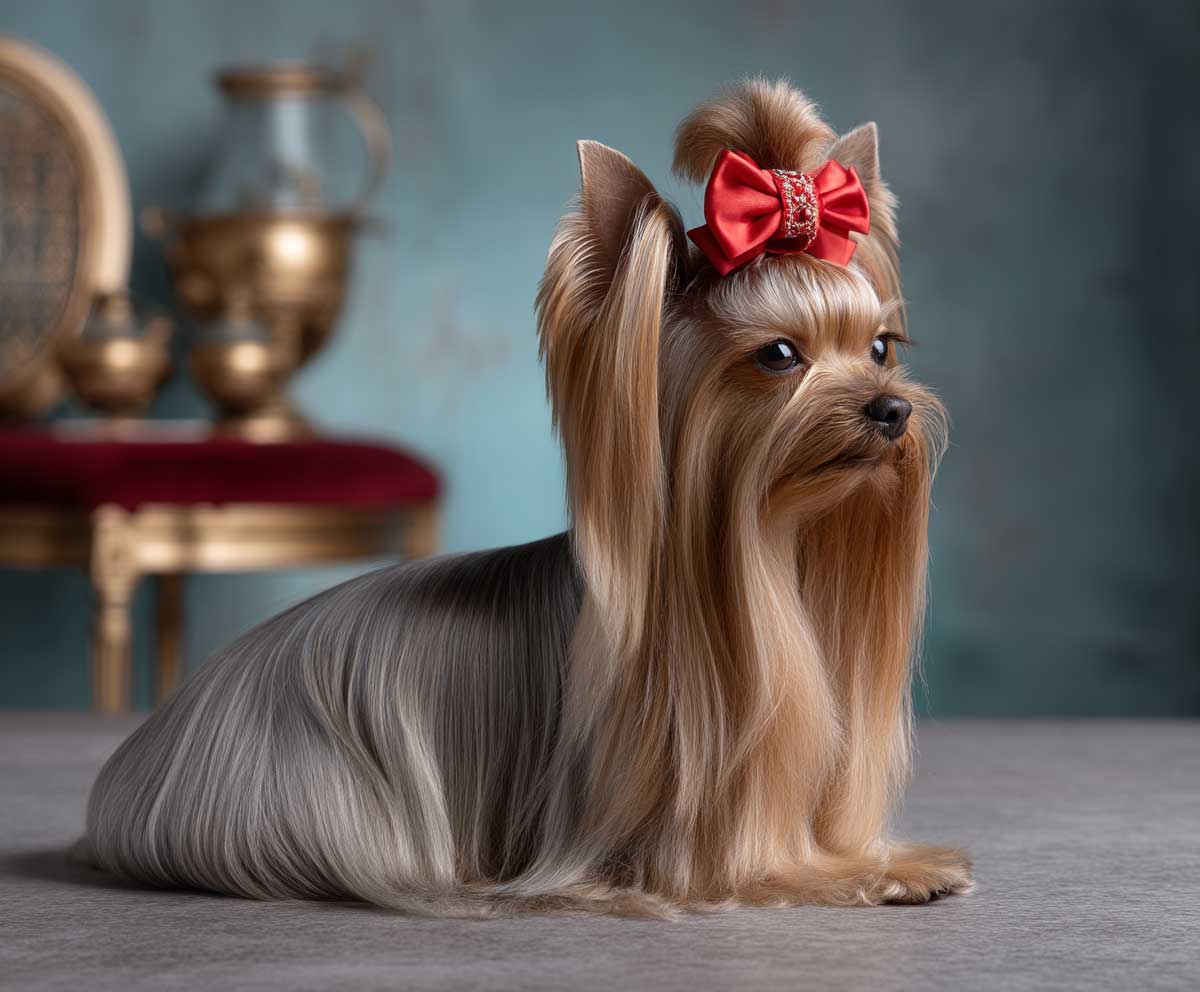
One underrated benefit: this pomeranian bear cut photograph exceptionally well. The uniform texture picks up light evenly, which means phone camera shots come out looking like professional grooming photos without any effort on your part. If your Pom has an Instagram or you share a lot of dog photos with family, I own two Poms and the even-trim one photographs noticeably better than the one with a length-contrast cut — the camera loves that consistent plush surface. For owners who want to see how this style sits alongside other small-breed trims, this piece on Yorkie haircuts covers a similarly structured uniform puppy cut that makes a useful visual comparison.
Final Verdict
The Pomeranian Bear Cut Pays Off in the Brushing Time You Get Back
The rounded head short body version is the most visually striking — it makes the biggest “wow” impression and works best for owners who love the contrast between a plush sphere of a head and a tidy, compact body.
Clean face minimal fluff is the smartest choice for older dogs, outdoor dogs, and anyone whose Pom tends toward tear staining or debris accumulation around the muzzle. Maintenance drops to wipe-and-go on weekdays.
All-over even trim is the one to request if you travel often, use multiple groomers, or have a dog with an especially dense double coat that mats in the length-contrast zones of other styles. It also grows out the most forgivingly. Save this post before your next grooming appointment.