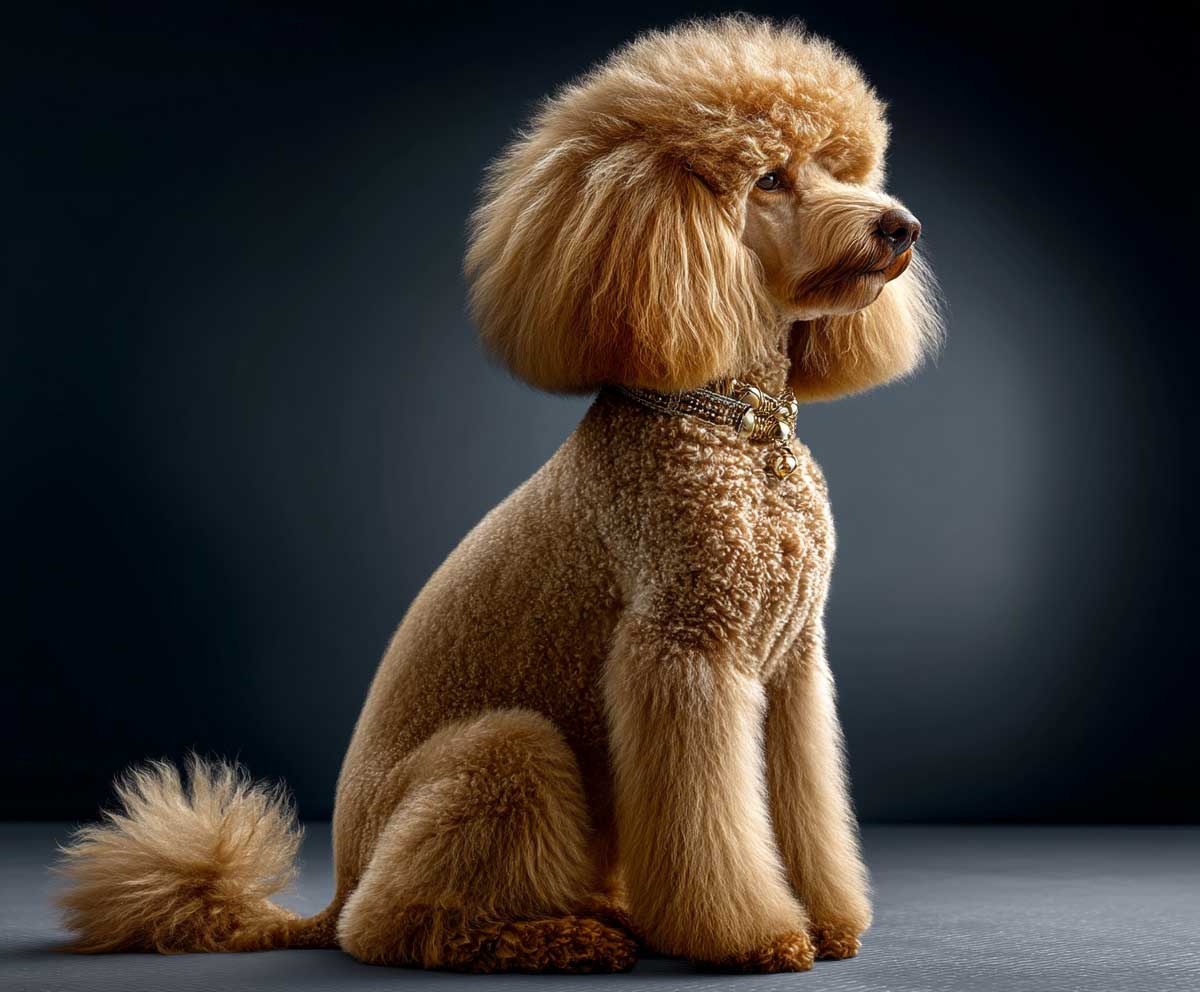
The german cut poodle is the style that finally answers the question most dog owners have wondered but never asked out loud: why do poodles look like that? It’s not arbitrary. This trim traces directly back to working-dog logic — shaved areas reduced drag in water, and full coat sections protected joints from cold. I’ve spent enough time around professional groomers to know that the German cut sits at the top of their list precisely because it honors that history while still looking razor-sharp on a modern dog. You’ll see it executed on black standards in Brooklyn and apricot miniatures in Los Angeles, and the silhouette reads the same every time — structured, intentional, alive.
What you won’t see coming, until you watch a skilled groomer work through it, is how technically demanding this cut actually is. The clean shave on the feet and face has to meet the body volume at exactly the right line, or the whole proportion collapses. My go-to analogy is tailoring: a jacket looks expensive only if the seam hits the shoulder at the precise right spot. The German poodle trim works the same way — one centimeter off, and the dog looks unfinished instead of editorial. That’s what keeps it in heavy rotation at competition salons.
You’ll notice, looking through the photos in this article, that no two groomed poodles look identical even when the cut is the same. Bone structure, coat density, and coat color each shift the visual result. A black standard reads angular and dramatic. A cream miniature reads airy and soft. The german trim poodle is one of those rare styles that adapts to the individual animal rather than flattening it into a formula — which is exactly why groomers and owners keep coming back to it.
– The German cut poodle shaves the face, feet, and throat — all areas that trap dirt and moisture — while leaving volume on the chest and body
– Grooming a standard poodle professionally costs $65–$200 per session; the German trim sits at the mid-to-upper range because of the scissor work required
– The shaped head is the hardest part: a rounded topknot demands careful blending so it reads as one fluid form, not a hat sitting on top of the dog
– This cut works on all poodle colors — black, white, apricot, silver, and cream each create a different visual mood with the same silhouette
– Poodles need a full groom every 4–8 weeks; skipping sessions makes the German cut’s clean lines impossible to maintain
A Shaped Head and Clean Feet Change the Whole Silhouette
The german cut poodle earns its reputation most visibly in the contrast between a sculpted, rounded head and feet clipped completely clean. I’ve watched groomers hold their scissors still for a full five seconds, just studying the dog’s head from across the table, before making a single cut. That pause is not hesitation — it’s calibration. The topknot has to be round without being cartoonish, balanced against the jaw and ear placement, and it has to look effortless from every angle. Achieving that at a Paws & Claws Salon session that costs $120 means the groomer is earning every dollar.


Clean feet serve two functions at once — visual and hygienic. You’ll notice the line where fur stops at the ankle is razor-precise, and that precision prevents a common grooming disaster: debris matting into foot fur on an active dog. I’ve seen owners let the feet go “just a little longer” between appointments and end up with solid mats between the pads by week six. The AKC recommends Andis or Oster clippers with a size 15 or 30 blade specifically for the feet and face — that blade number isn’t just brand preference, it’s what gets the clean shave that makes the German cut work structurally. Don’t try to substitute a #7 body blade on the feet and expect the same result.
The health logic behind shaved feet and face is worth stating plainly: poodle hair grows continuously rather than shedding seasonally, which means moisture and bacteria accumulate in untrimmed areas at a rate most people underestimate. Leaving face fur long on an active dog that eats wet food is like wearing a sponge on your chin all day. The german trim poodle design removes that problem at the source. Groomers at salons like Petco’s Grooming Studio and independent boutiques charge extra for face and foot detailing specifically because it requires a different blade, a steadier hand, and a dog willing to hold still near its eyes — which is a skill the groomer earns, not a task the dog performs automatically.
Body volume in the chest and mid-section is where owners can see the difference between a groomer who understands bone structure and one who is just cutting hair. The chest fur should balloon slightly at the sternum and taper toward the loin without looking stuffed. Think of it like a well-fitted blazer with a bit of structure through the chest: the dog looks athletic, not padded. Coat density varies by bloodline — a show-lineage standard will have denser curl than a pet-line miniature — and a groomer worth their $150 fee adjusts scissor tension accordingly. That nuance is what separates a photo-ready dog from one that just had a haircut.
From a photography standpoint, this version of the cut is nearly unbeatable. The contrast between bare skin on the feet and dense coat on the body creates depth in photos that flat all-over cuts simply don’t produce. Pet influencers on Instagram who feature standard poodles almost always feature German or German-adjacent cuts because the silhouette reads at thumbnail size — you can identify the dog’s shape before the image even loads fully. That’s visual storytelling at the level of good editorial fashion photography, and it’s not an accident. Read more about why the German cut poodle is trending right now.
Skipping the topknot blend: Cutting the head fur round without blending the transition at the ears creates a floating-ball effect that makes even a correctly executed body look wrong. The topknot should flow from behind the skull into the ear set, not sit as a separate puff on top.
Using the same blade on body and feet: A #4 or #7 blade appropriate for the body creates an unacceptably rough finish on paw pads. The standard German trim poodle look requires a #15 or #30 on feet — anything coarser leaves visible stubble that breaks the clean line defining the cut.
Letting appointments slip past 8 weeks: At week 9 or 10 the coat starts to lose shape, especially around the topknot and the chest-to-loin transition. By week 12, the lines that define this cut are completely gone and the groomer has to start from scratch rather than maintain — which adds time and cost.
What Professional Hands Actually Do During the German Poodle Cut
The german poodle cut mid-session is something most owners never see — they drop off a fluffy, pre-bath dog and pick up a finished one. What happens in between is genuinely worth understanding because it explains why this style costs what it costs. The groomer starts with a full brush-out using a slicker brush before any water touches the coat, because wet hair mats faster and makes pre-existing tangles nearly impossible to release without breakage. A standard poodle in a longer coat takes 20–30 minutes of line brushing alone before the bath even starts — the AKC confirms this is non-negotiable for coat health.


After the bath and high-velocity dry — which straightens the curl enough to see true coat length but leaves the texture intact — the groomer maps the cut on the actual dog, not on a mental template. Does this dog carry its weight forward or back? Do the hips sit high? Where does the neck meet the skull? Every decision follows the animal’s actual anatomy, not a diagram. This is where years of experience create a visible difference in outcome. A groomer with fewer than three years on standard poodles often produces a technically correct cut that still looks slightly off — and off is almost always a proportion error made in the first five minutes of planning.
Straight shears handle the head and topknot; curved shears handle the body. Most professional groomers working German cuts on standard poodles use Kenchii Grooming shears — the 8-inch curved model runs about $180 and is the kind of tool that outlasts a decade of regular salon use. The question I always ask groomers at shows is which scissors they’d replace first if they lost everything, and the curved body shears win every time. Blunt or poorly tensioned scissors drag through dense poodle curl and create lines that look chewed rather than clean. Your dog can tell the difference too — a sharp scissor glides without pressure, and a dull one pulls.
The cooperation of the dog is not incidental — it’s structural to the result. Poodles that have been groomed since puppyhood build what groomers call table manners: they stand still under tension, shift weight on request, and don’t flinch at clippers near their face. A dog without those habits can add 45 minutes to a German cut and still produce a less clean result because the groomer has to work in shorter passes. If you own a poodle and aren’t starting table-training in puppyhood, you are making every future grooming session harder and more expensive than it needs to be. See how show-inspired cuts shape the grooming conversation beyond poodles.
The Grooming Table After the Cut Is Where You Actually Read the Results
A freshly finished german cut poodle standing still on the table is the most honest moment in the grooming process — no movement to hide errors, no distraction. Every line is visible. The shoulder-to-hip line should be level and clean. The topknot should center over the skull. The tail base, if shaved, should create a neat break that transitions into whatever tail presentation the groomer has chosen. I’ve judged pet grooming competitions and the still evaluation is where placements are actually decided, not during the active trim — because stillness reveals what motion conceals.

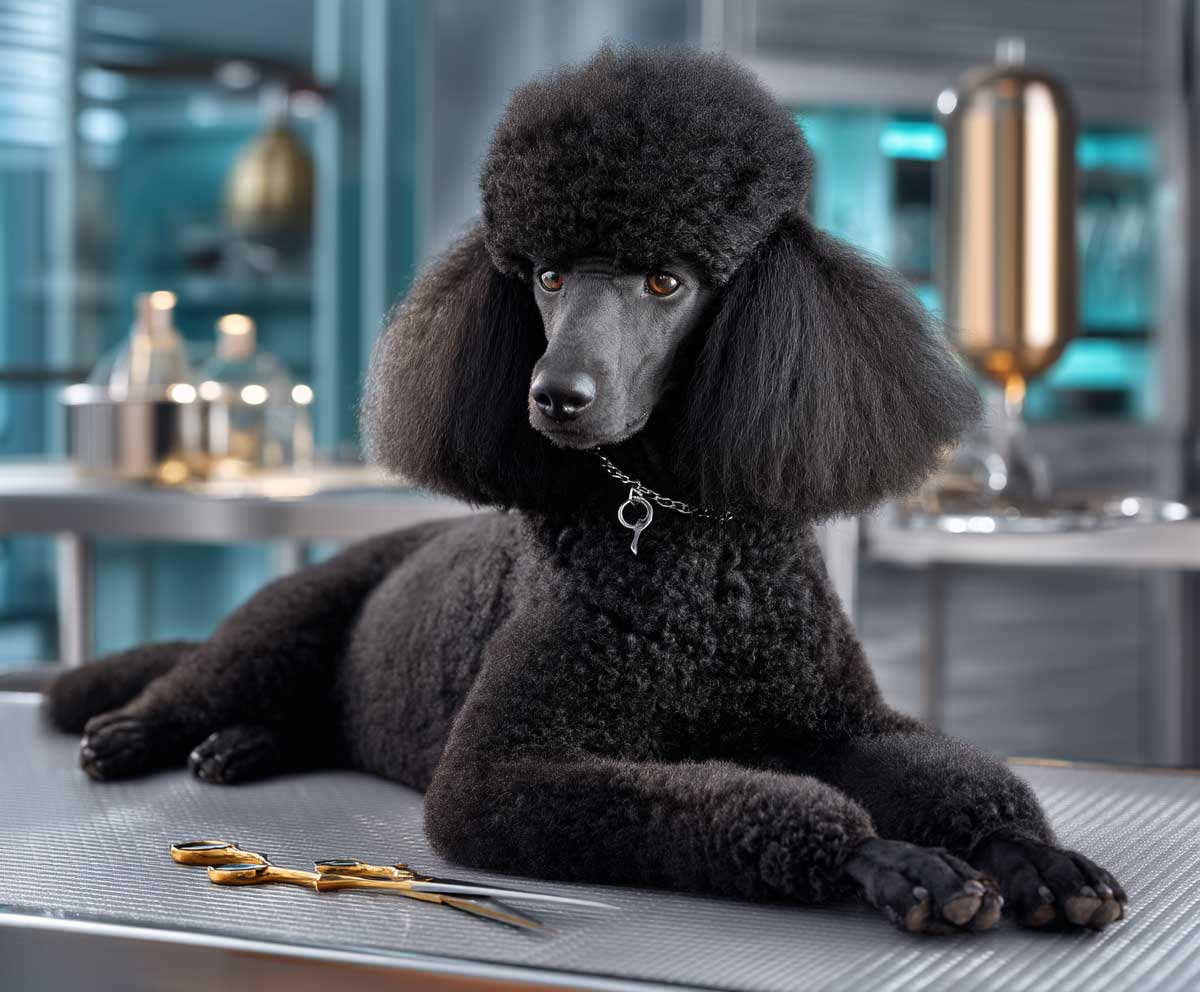


Black and dark-coated poodles reveal scissor marks with brutal clarity — any hesitation in a blade pass shows as a ridge in the coat when light hits it at an angle. That’s why black standards are considered the advanced test for German cut execution. You need consistent pressure and consistent direction across each scissored section, or the coat reads stripey rather than smooth. Apricot and cream coats are more forgiving — minor inconsistencies blend into the lighter color — which is part of why many groomers learning this cut practice on lighter-colored dogs before taking on a show-black client. The result looks the same to the untrained eye, but the technical tolerance is completely different.
The table also functions as a health audit. A well-lit grooming table is where groomers catch things owners miss entirely: a small lump near the shoulder, an early hot spot under the ear, skin redness around the hock that signals early joint irritation. The AKC recommends using every grooming session as a physical exam opportunity precisely because poodles’ dense coats hide surface changes for weeks. A groomer I know in Chicago found a tick so embedded in a standard’s topknot that the owner had never felt it in three weeks of daily petting. The German cut’s requirement for thorough brushing before and during the session makes these discoveries more likely, not less.
What coat color does the German cut work on? Every single one. The cut adapts to the individual — white, black, silver, blue, apricot, red, café-au-lait — and in each case it draws attention to different qualities. Silver and blue coats have a metallic shimmer that the structured body shape concentrates at the shoulder and chest, almost like a spotlight. White dogs photographed against dark backgrounds in this cut look almost architectural. The rule is not which color works best with the german cut poodle; the rule is that the cut itself has to be executed correctly first, and then the color does its own work. The AKC’s standard poodle grooming resource covers the specific blades and bathing frequencies that support any structured cut like this one.
The Bottom Line
The German cut poodle is the cut that makes the most sense once you know what poodle grooming is actually for
The shaved feet and face aren’t decorative choices — they’re functional ones rooted in working-dog history. Keeping those areas clean reduces infection risk, eliminates matting in high-friction zones, and lets the coat volume elsewhere do visual work it can’t do when everything is the same length.
Professional German cuts on standards run $100–$200 per session at quality salons, with appointments every 4–8 weeks. Kenchii curved shears, Andis clippers with interchangeable blades, and a slicker brush you use every other day at home are what keep the look intact between visits.
The topknot is where most home-trim attempts fail — scissoring a head round requires curved shears and an understanding of skull shape that takes years to develop. Budget the salon appointment and let a professional own that part. Save this post.