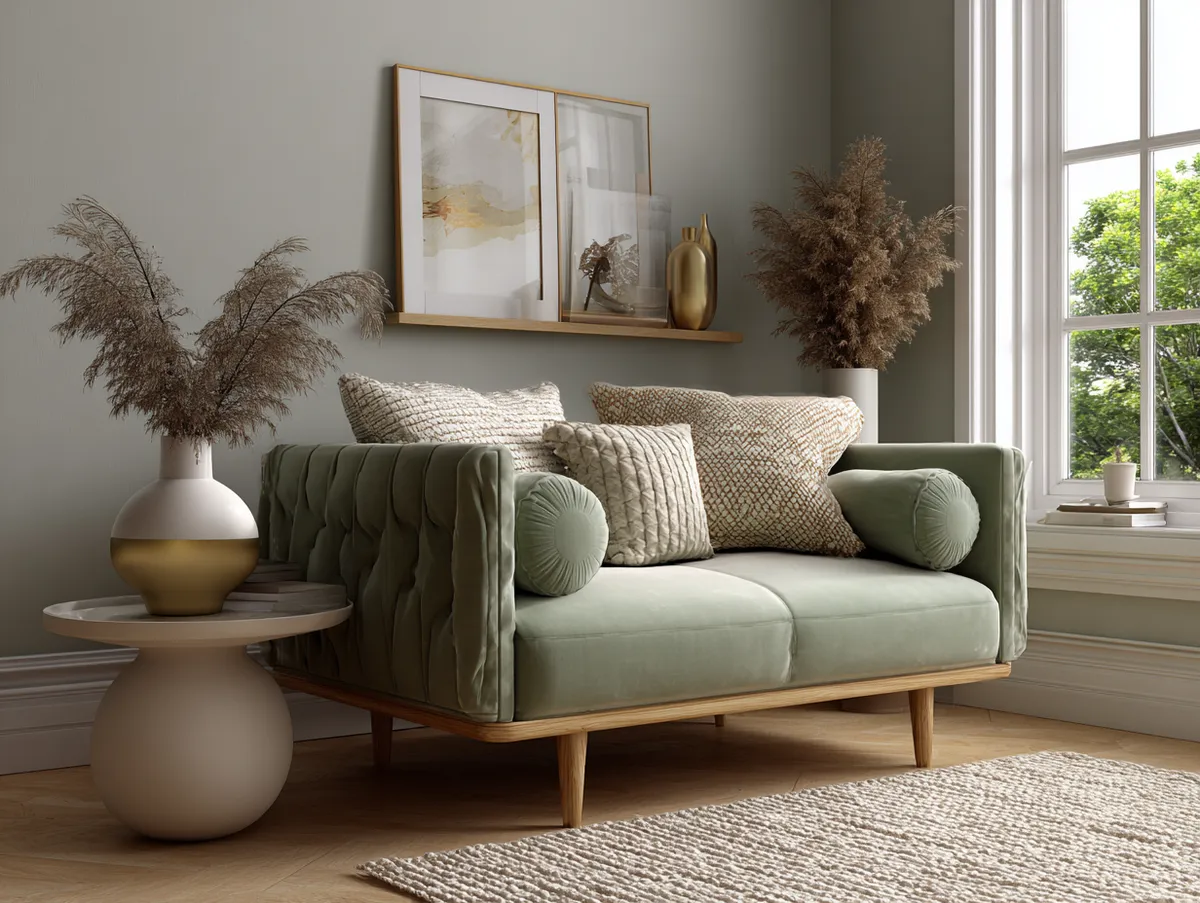
An emerald green living room hits differently than any other jewel tone — and not just because of the color itself. Emerald carries the optical weight of something rare, the way a gemstone holds depth even in dim light. Stylists regularly reach for it when a room needs to feel finished rather than decorated.
The color sits at a precise intersection of warm and cool, which means it reads differently depending on what it’s placed next to. Against brass, it glows. Against white, it sharpens. Against walnut, it settles into something that feels almost ancestral. That’s the trick here — emerald isn’t loud on its own; it responds to everything around it.
What follows breaks down the five decisions that determine whether an emerald green living room looks considered or chaotic: the sofa, the drapes, the accent wall, the gold pairing, and the accessories layer. Each one has a right and a wrong version.
– Emerald green velvet sofas run $1,999–$2,498 at retailers like Anthropologie — performance velvet holds up longer than standard velvet
– Sherwin-Williams Emerald Interior Acrylic Latex costs around $81/gallon and covers 350–400 sq ft per coat
– The accent wall works best behind the sofa, not a window wall — reflected light flattens the hue
– Gold and emerald pair naturally; yellow-gold fabrics are the exception and tend to fight with the green
– Velvet curtain panels add thermal insulation and block 70–90% of light, depending on density
– One or two emerald throw pillows on a neutral sofa achieve the same visual impact as a full green sofa — at a fraction of the cost
What a Velvet Emerald Green Sofa Actually Costs — and Why Fabric Weight Matters More Than Color
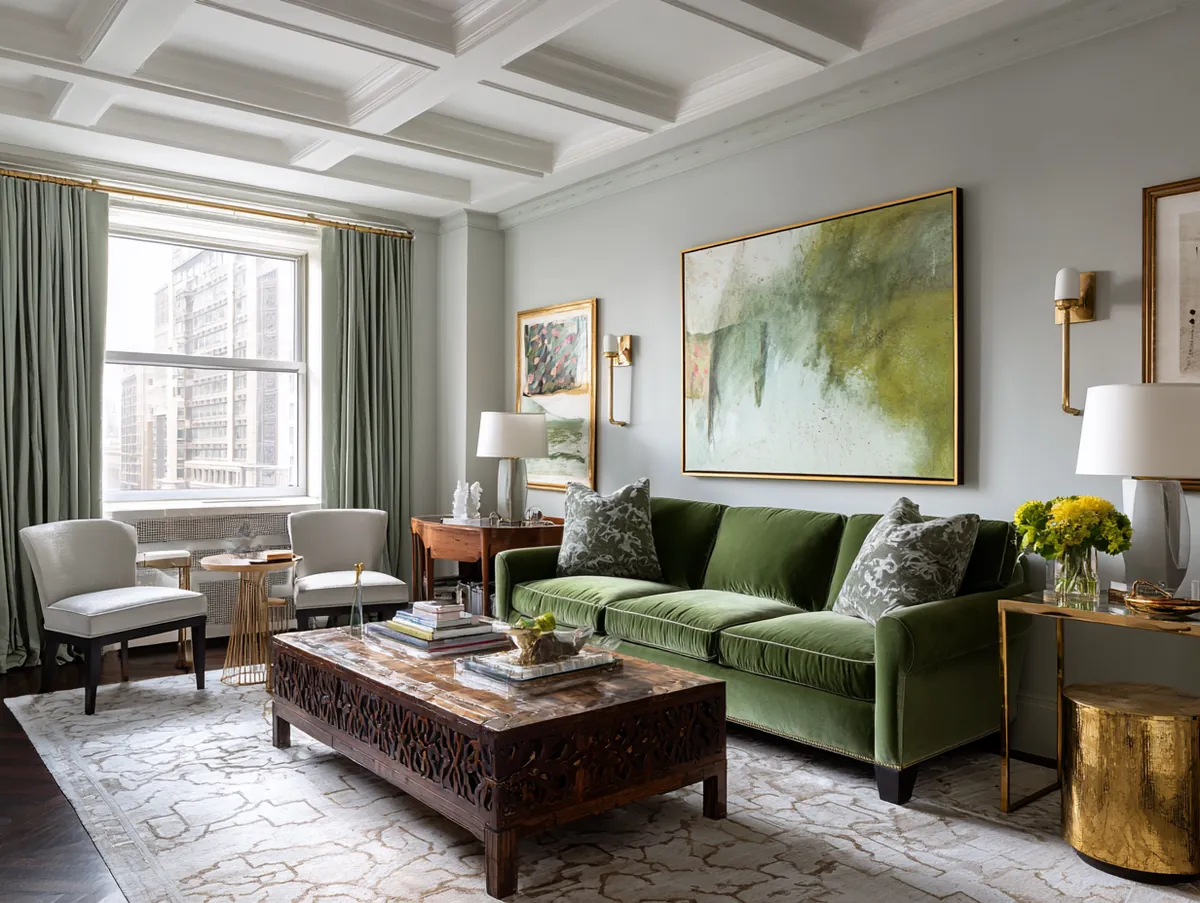
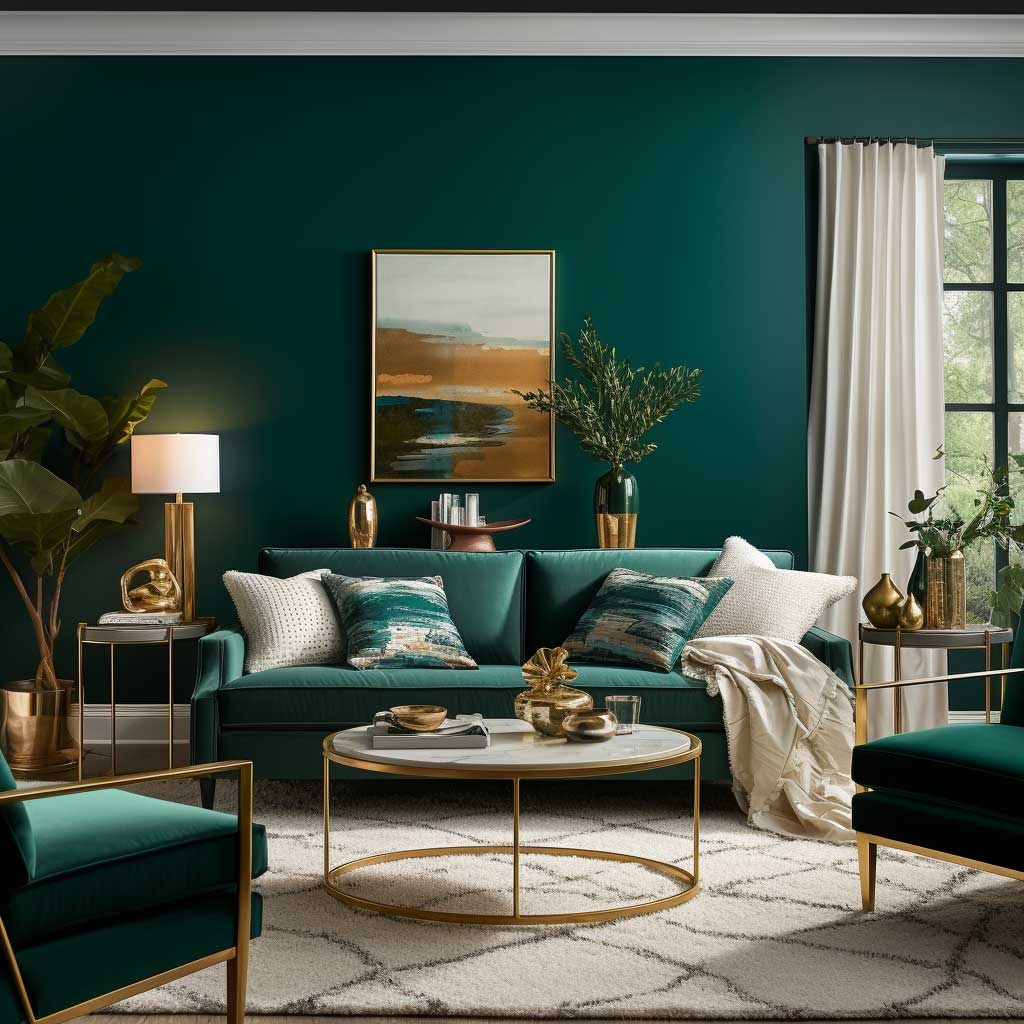
An emerald green velvet sofa functions less like furniture and more like a room’s thesis statement. Stylists treat it as the first decision, not the last, because every other choice — rugs, pillows, wall color — gets made in response to it. The Anthropologie Lyre Chesterfield in emerald velvet runs around $2,498 and shows up regularly in professional shoots for good reason: its button-tufted back catches light at multiple angles, which gives the green its characteristic depth.
The fabric question matters more than most buyers expect. Standard velvet crushes along the seat seams within two years of regular use; performance velvet or a tightly woven velvet blend holds pile direction much longer. You’ll notice the difference most in the seam areas, where cheap velvet starts to look shiny and matted while quality velvet maintains an even nap. A sofa in this price range should last 10–15 years with normal household use — that’s the benchmark to hold it to.
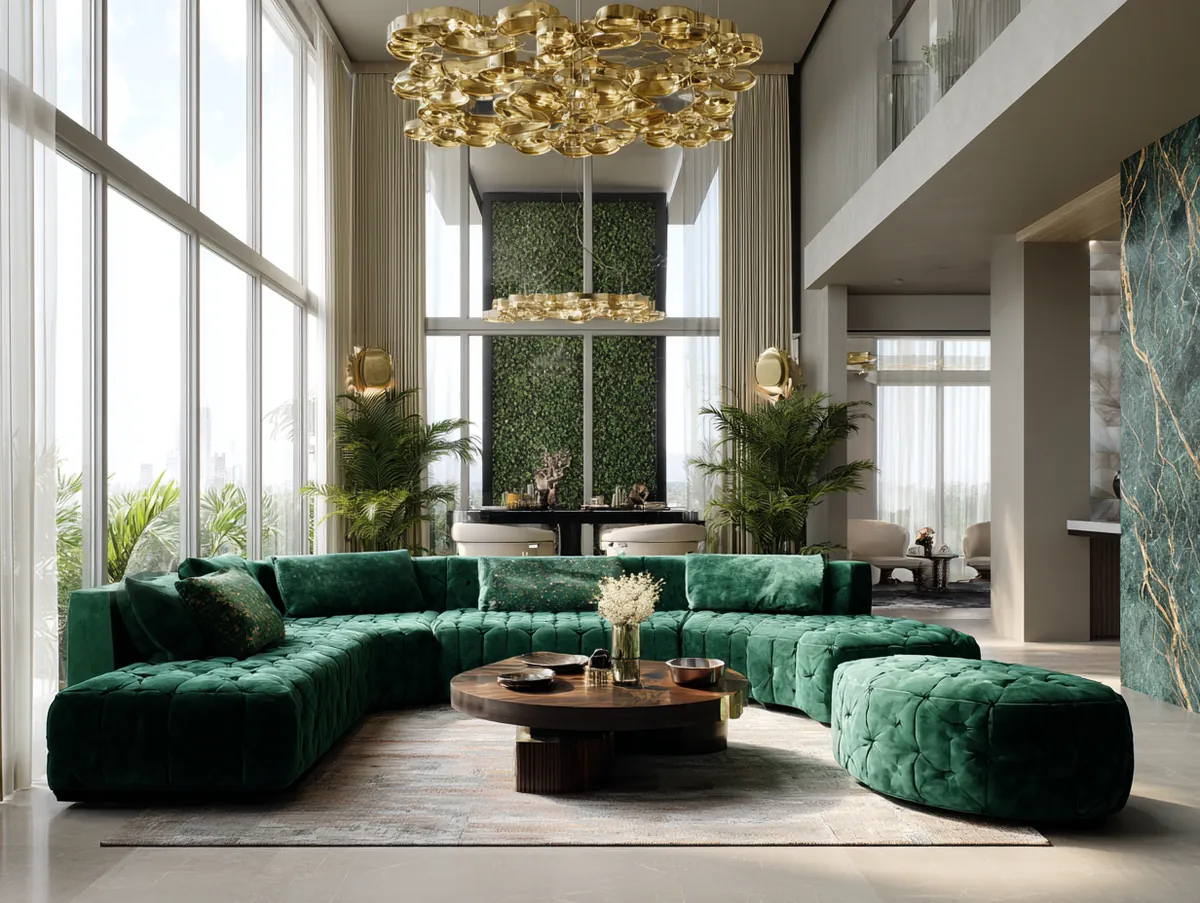
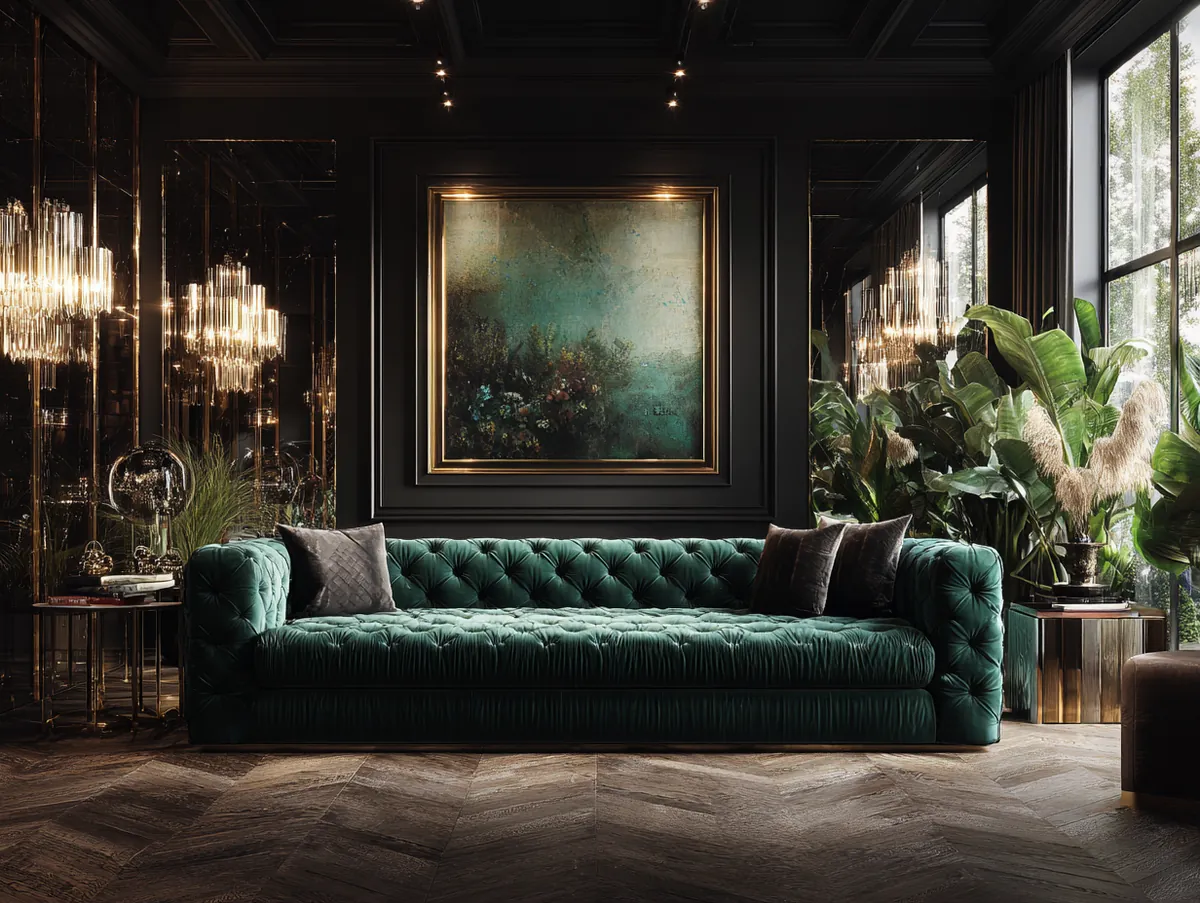
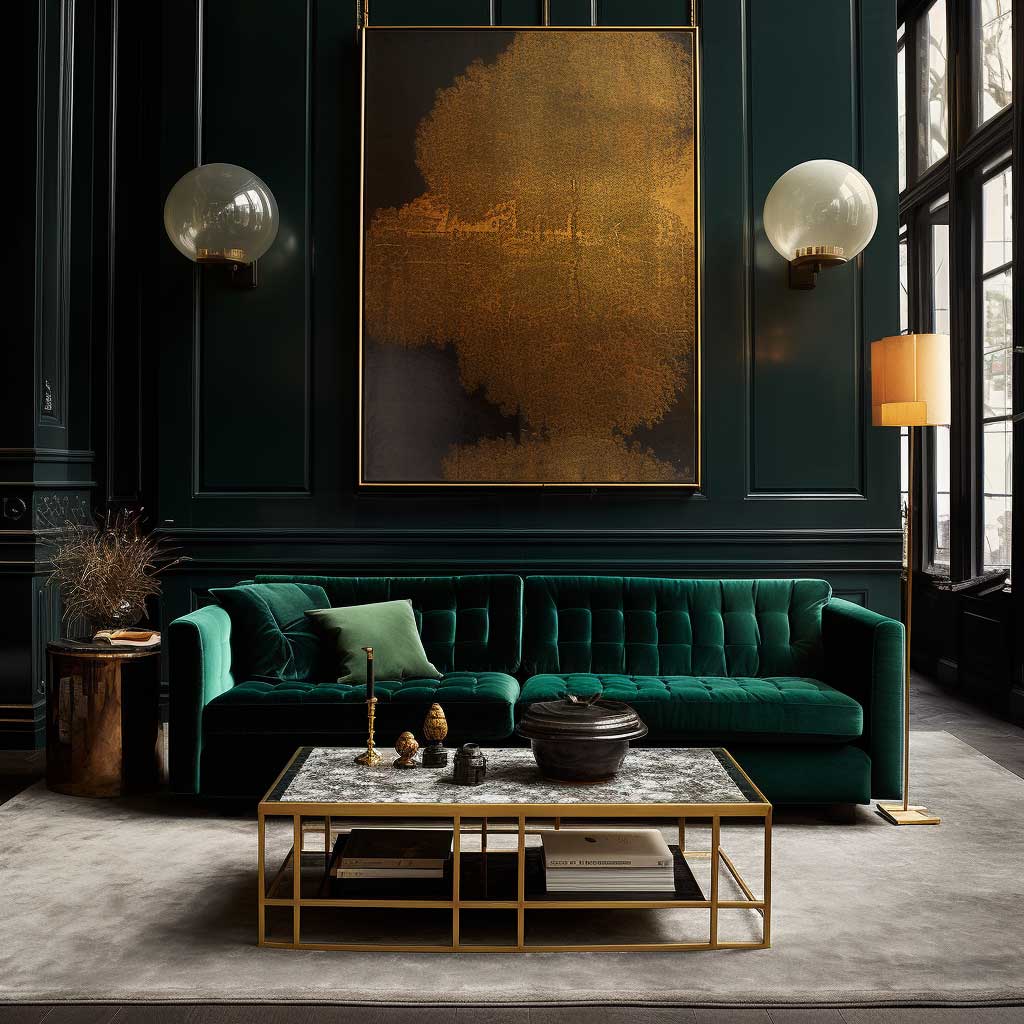
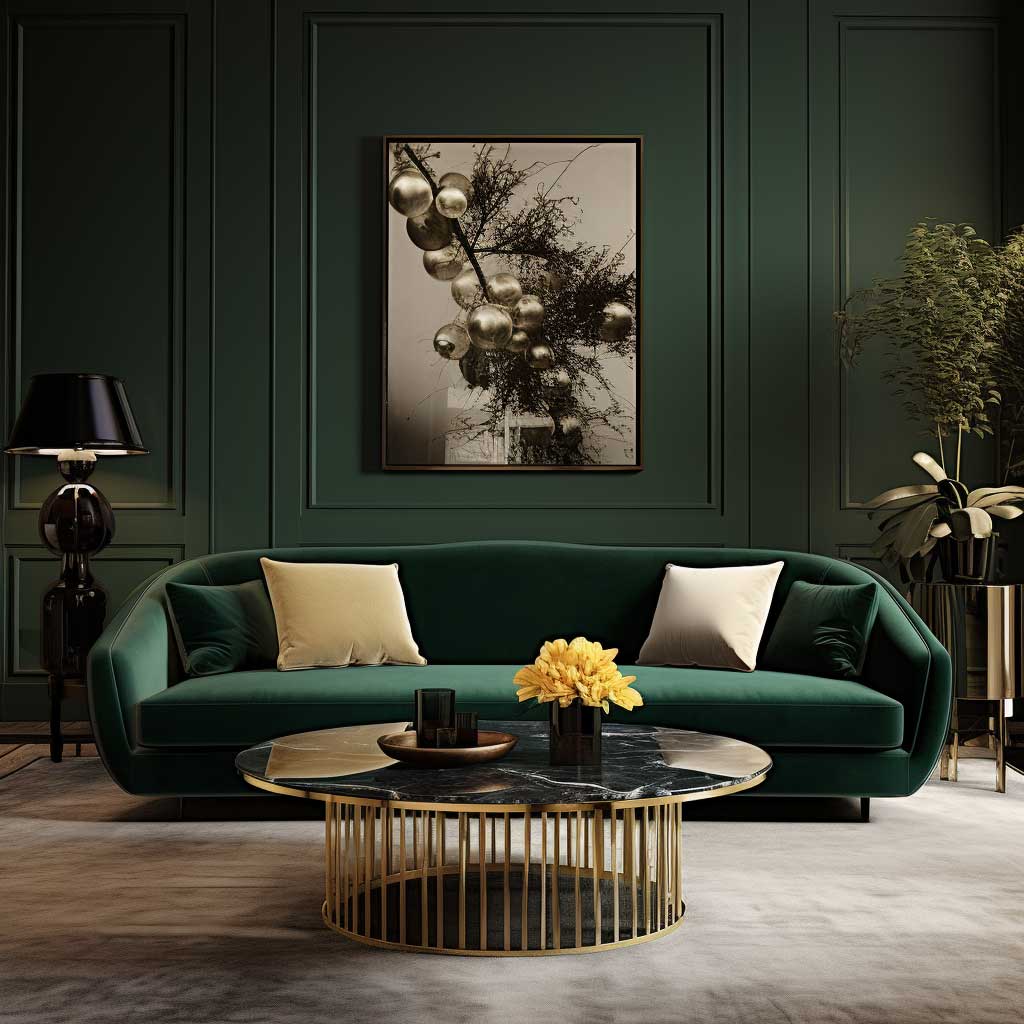
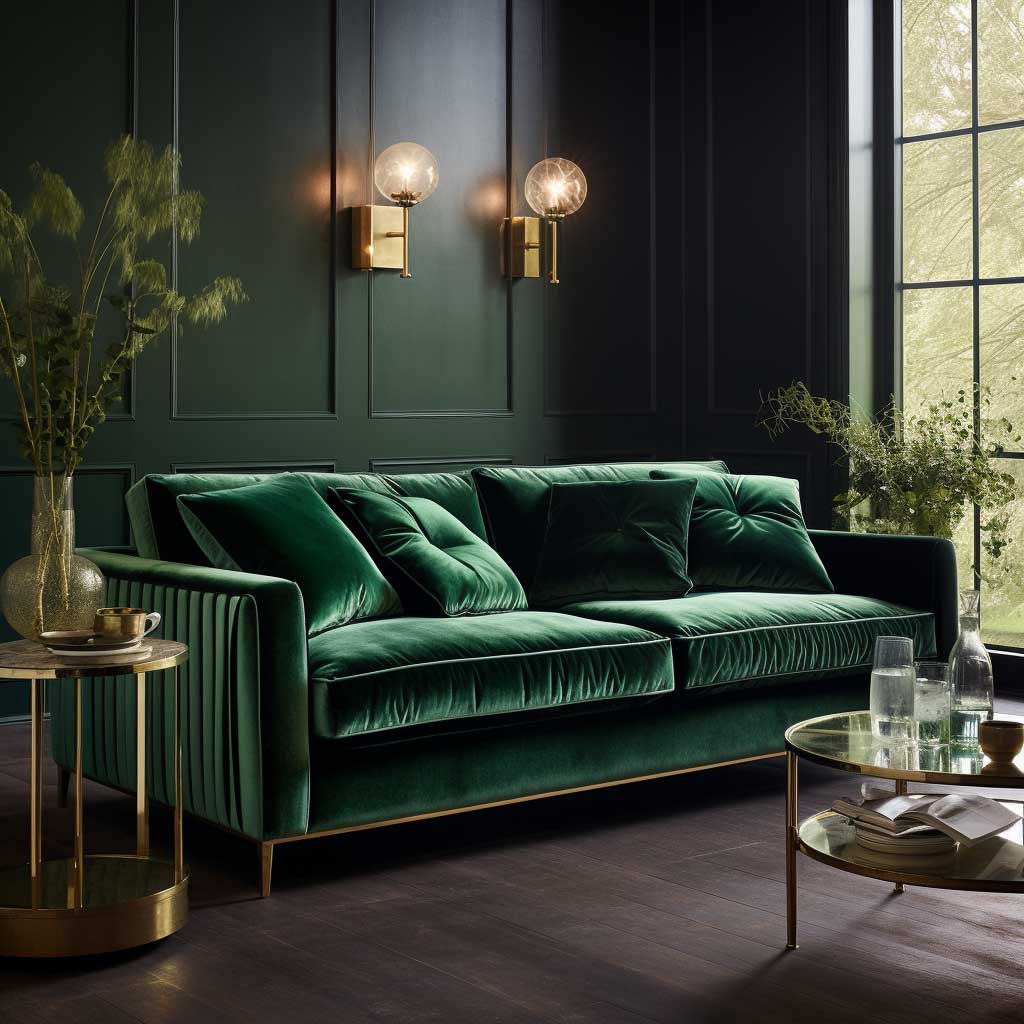
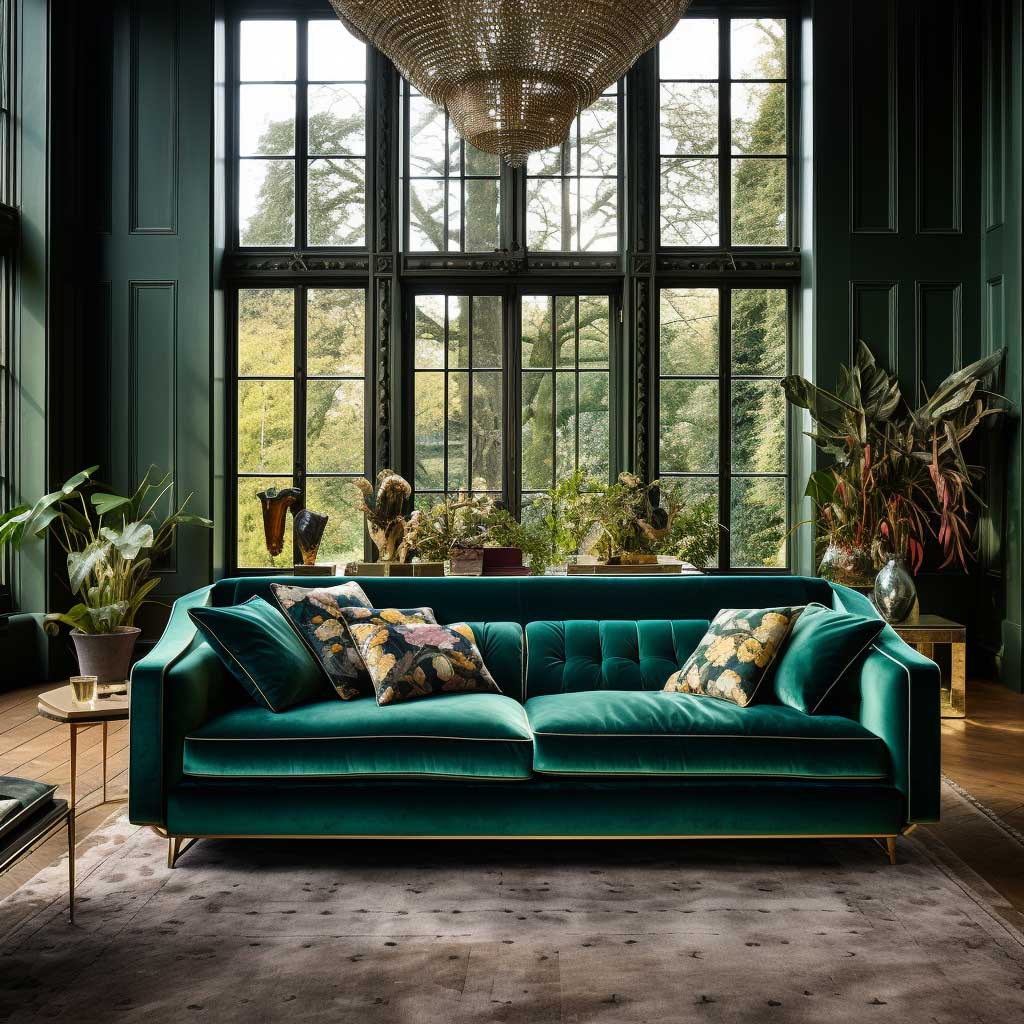
Styling a sofa like this requires restraint, not matching. One gold accent pillow per side is enough — stylists who work with this combination consistently note that more gold starts to look forced rather than intentional. A glass or marble coffee table in front keeps the arrangement from feeling top-heavy, and a wool or jute rug underneath grounds the piece without competing. What doesn’t work: pairing the sofa with a second bold-colored piece in the same room. The sofa earns its space by working alone.
Lighting deserves specific attention here. Warm-toned floor lamps with brass or antique gold finishes bring out the sofa’s shimmer; cool white bulbs pull the green toward blue-gray and flatten the velvet’s reflective quality entirely. The trick here is to keep all light sources in the same temperature range — mixing warm and cool bulbs in one room is the fastest way to undermine an otherwise well-planned scheme.
Don’t pair an emerald green velvet sofa with yellow-gold fabrics — mustard cushions, golden-yellow throws, or ochre rugs fight with the green rather than warming it. The pairing that works is brushed brass hardware and warm white or ivory textiles. Yellow-adjacent golds read as a color clash, not a complement. Also avoid placing the sofa on a dark-colored rug; the visual weight compounds and the room starts to feel smaller than it is.
Drapes in Emerald Green Block 70–90% of Light and Still Look Regal
Emerald green curtains in a living room do something wall paint cannot — they move. Floor-length drapes in this color shift with air currents and change appearance from morning to evening light, which means the room never looks static. For the living room specifically, velvet panels are the standard professional recommendation: the dense pile absorbs sound slightly, blocks 70–90% of incoming light (depending on fabric weight, typically 150–300 GSM), and adds significant thermal insulation — which translates to lower heating costs in winter.
Fabric choice divides into two clear camps. Velvet in emerald creates a palatial, enveloping atmosphere — this is the choice for a room meant to feel like an event. Linen or cotton in the same color reads more casually; the texture is lighter, the drape is softer, and the room stays breathable. Neither is wrong — the right choice depends on how the room gets used. A room that doubles as a home office calls for linen; a formal receiving room can hold velvet.
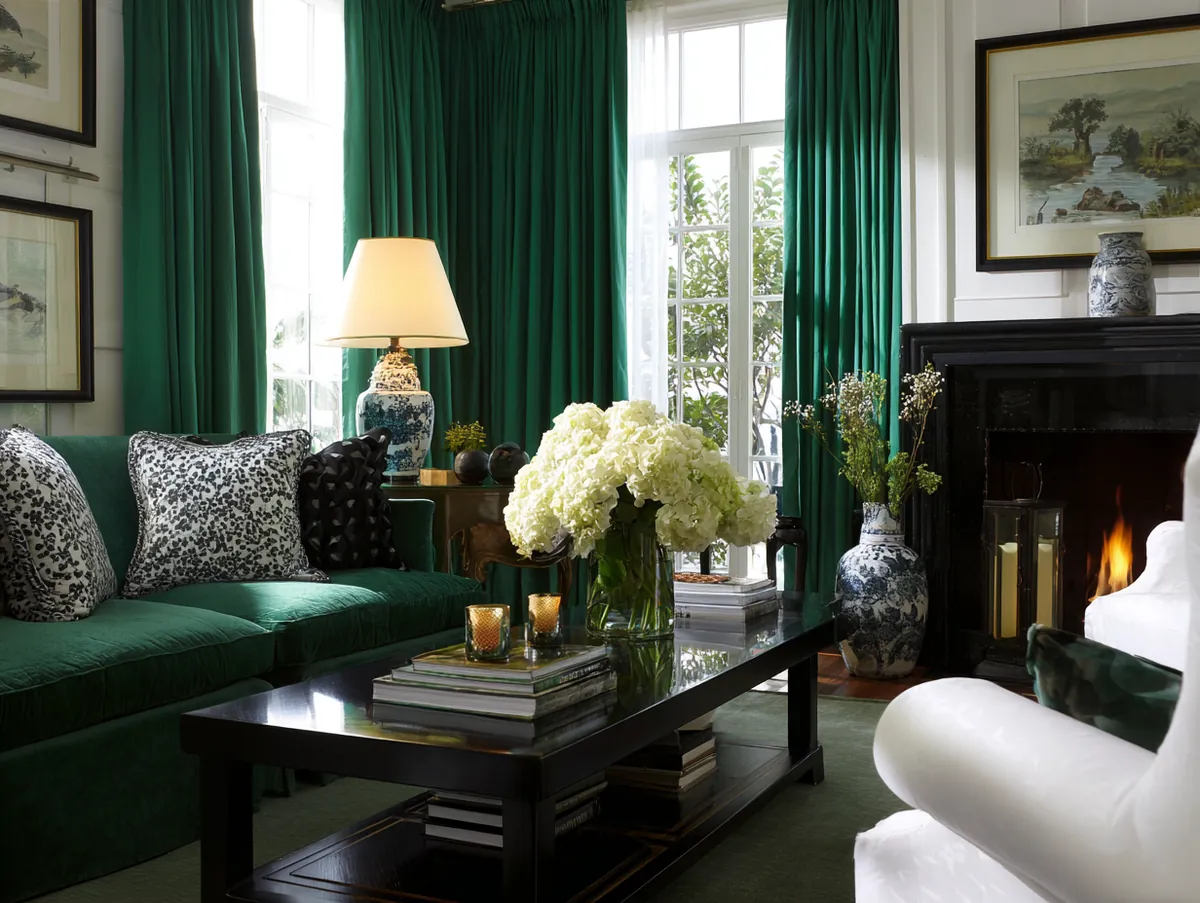
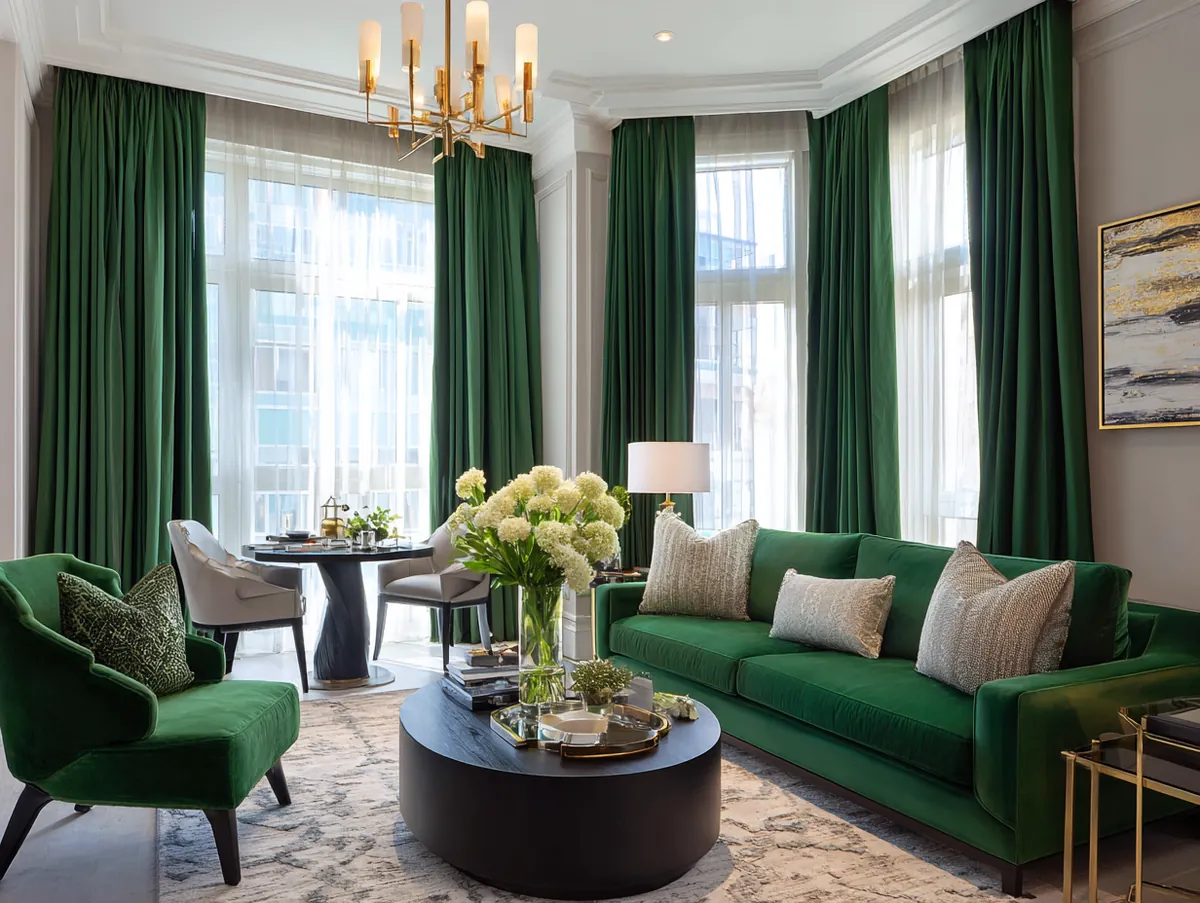
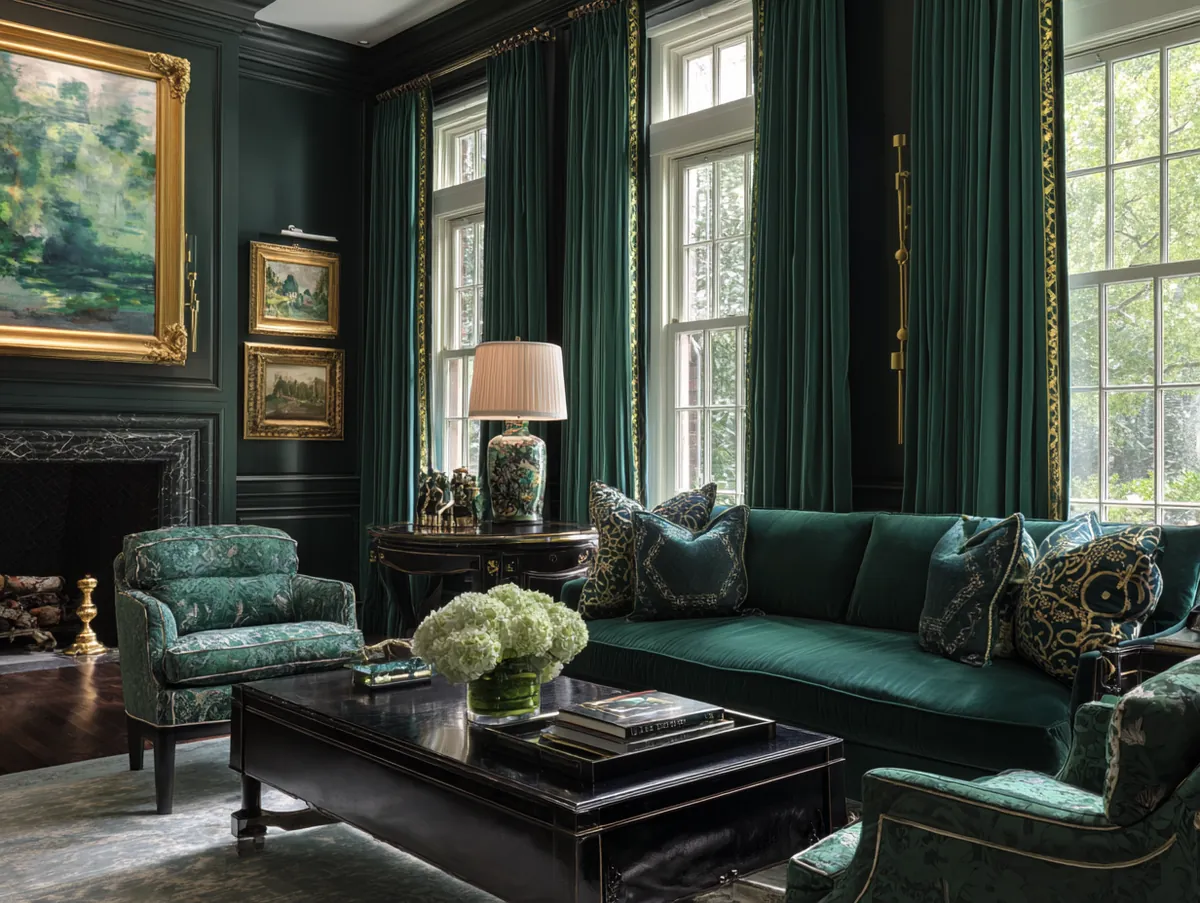


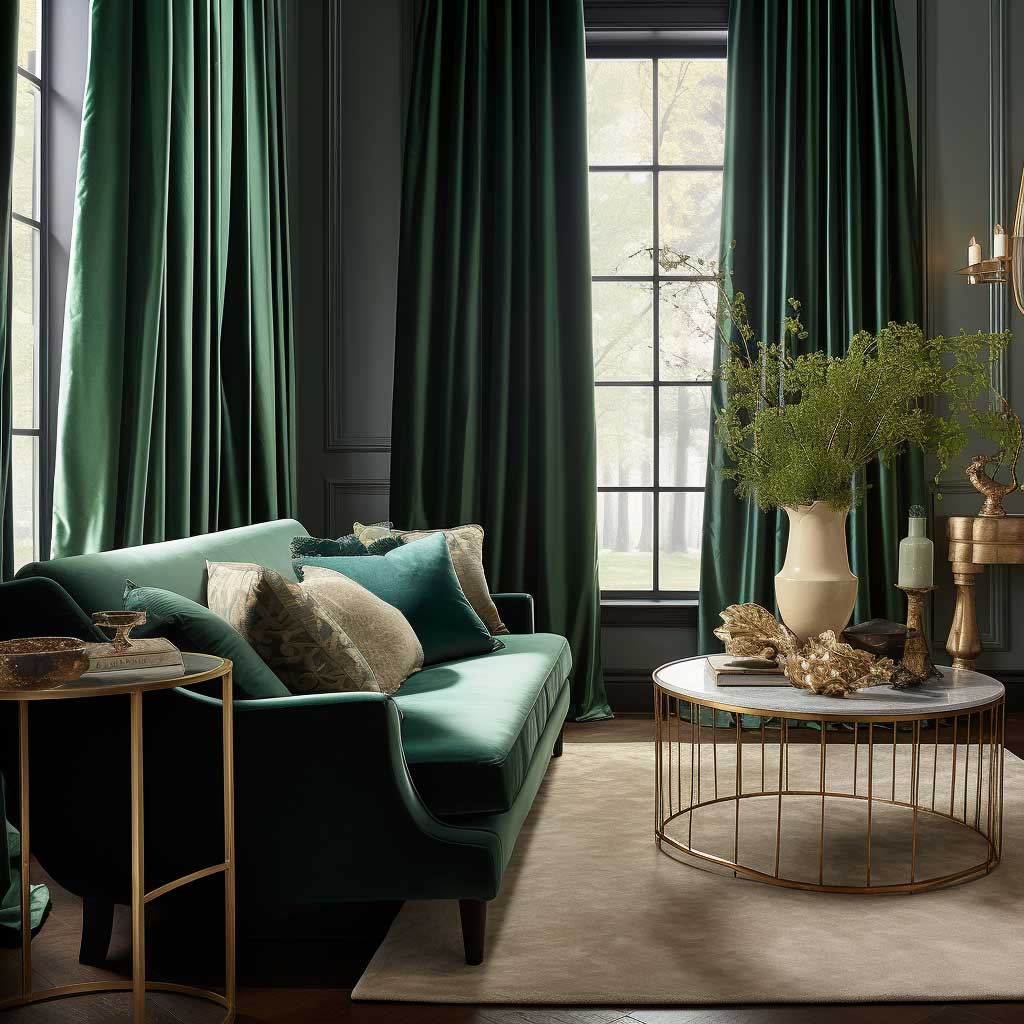

Hanging height is a detail designers argue about less than they should. Mounting the rod at ceiling height — rather than just above the window frame — extends the perceived height of the room by 20–30% visually and gives the fabric a much more intentional drape. Brass or antique gold rods are the safe pairing with emerald green; matte black works if the room carries other black elements; raw wood reads more organic and less formal. What to skip: chrome or nickel hardware, which pulls the green toward cool gray and removes the warmth the color needs to function properly. For more on choosing the right living room window treatment to complement this kind of bold color, the curtains and drapes living room guide covers fabric weights, lining options, and hanging techniques in detail.
A common approach is to keep the rest of the room’s textiles in neutral territory — cream, ivory, warm beige — and let the drapes carry the color load. Plants with large leaves against or near the panels echo the green and soften the boundary between fabric and room, which keeps the look from feeling theatrical in the wrong way.
Paint the Emerald Green Accent Wall Behind the Sofa, Not the Window Wall
An emerald green accent wall reads completely differently depending on which wall gets painted — and this is where most DIY attempts go wrong. The wall behind the primary seating area is the correct choice because it creates a backdrop that frames the furniture from every sightline in the room. A window wall painted emerald green gets washed out by daylight from the opposite direction; the color never reaches its full saturation. Sherwin-Williams Emerald Interior Acrylic Latex costs around $81 per gallon and covers 350–400 square feet per coat — one gallon is usually sufficient for a standard accent wall in two coats.
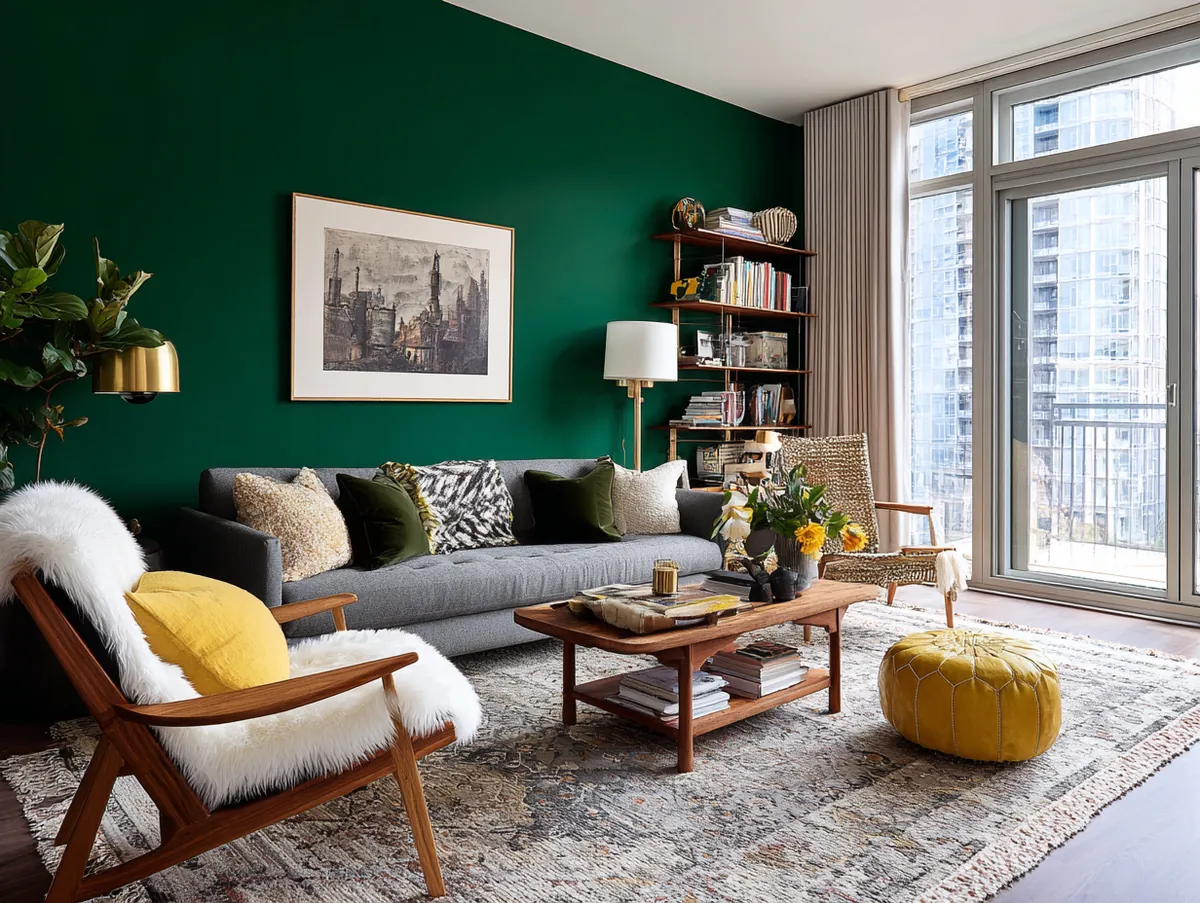

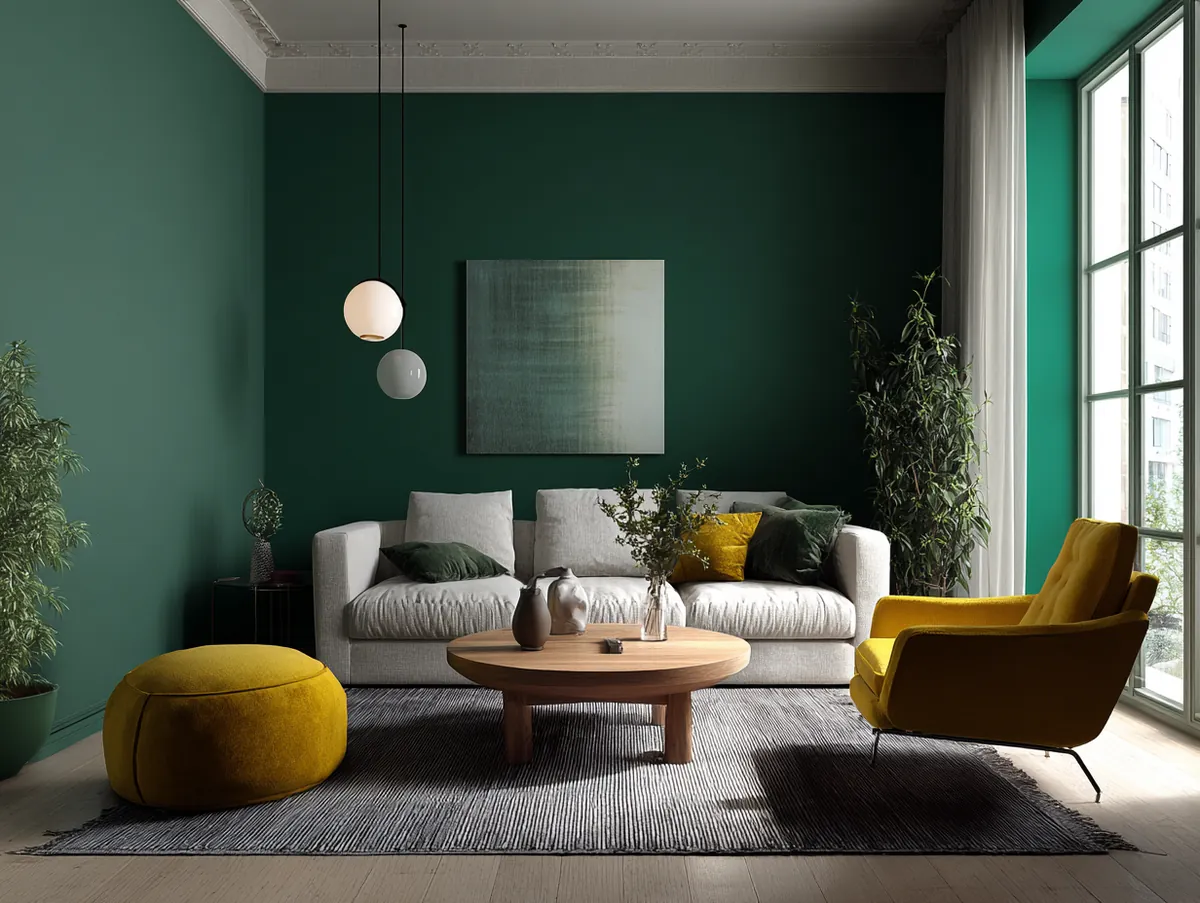

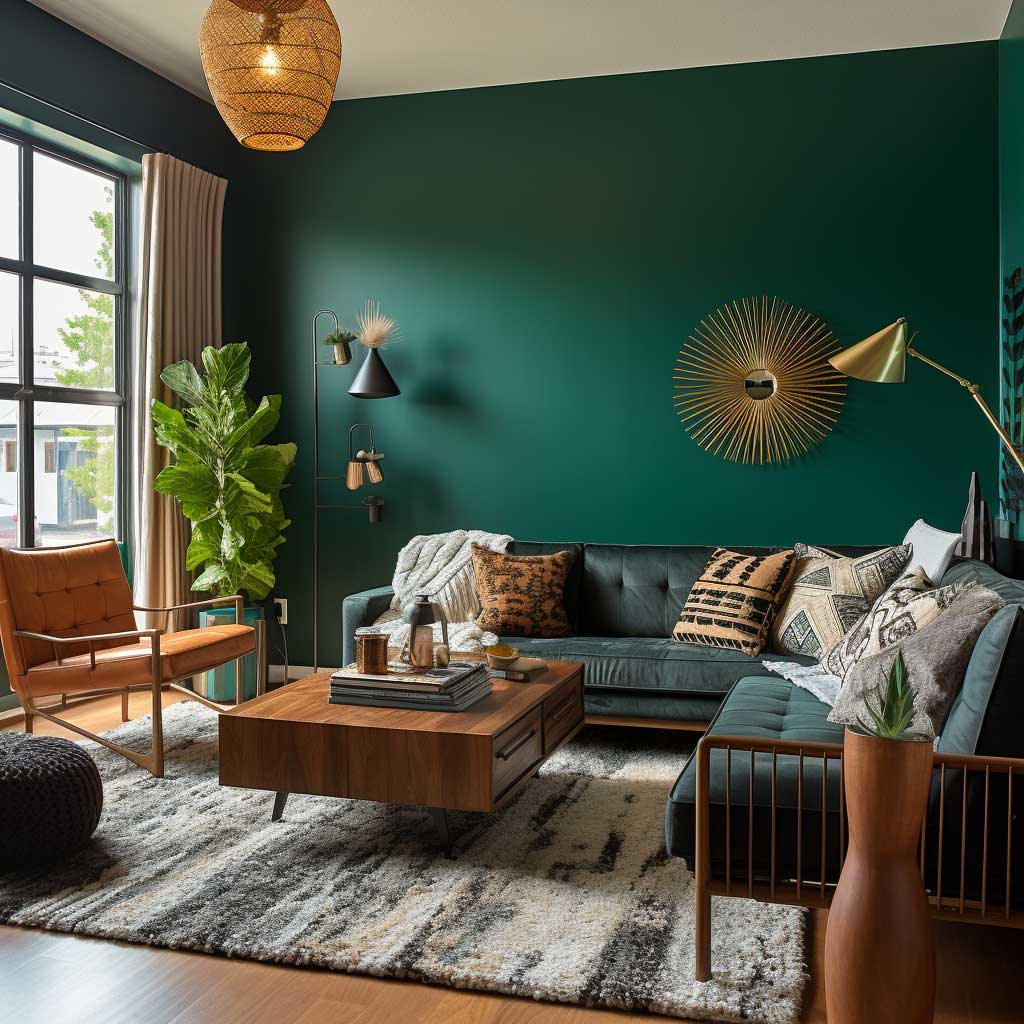

Finish type matters as much as color choice. A satin finish on an emerald accent wall gives it a gentle sheen that activates in evening light — particularly effective in rooms with warm-toned lamps. Flat or matte finish reads more contemporary and works better in rooms with strong natural light, where the absence of reflection prevents the wall from feeling too intense. What doesn’t work: eggshell finish in high-traffic rooms, where scuffs become visible quickly against a saturated dark color.
What to put against this wall matters. A white or cream sofa creates the sharpest contrast and makes both pieces look more deliberate. A beige or linen sofa reads softer and warmer — the wall recedes slightly rather than commanding attention. Wooden shelves or a floating console in walnut or oak bring in natural warmth that prevents the wall from looking like an isolated decision. Light wood floors or neutral-toned carpeting balance the room’s overall weight; dark flooring combined with a dark wall creates a compression effect that works in large spaces but can feel oppressive at smaller scales.
A common approach for artwork is to use gold-framed pieces — maps, botanical prints, abstract panels — which echo the wall’s regality without competing. Black-and-white photography works as a deliberate contrast move. What color experts recommend avoiding: colorful mixed-media artwork with multiple competing hues, which breaks the visual cohesion that an emerald wall is designed to create. The wall itself is the statement; art functions as punctuation, not another sentence.
Decorating with Emerald Green and Gold Comes Down to Metal Finish, Not Volume
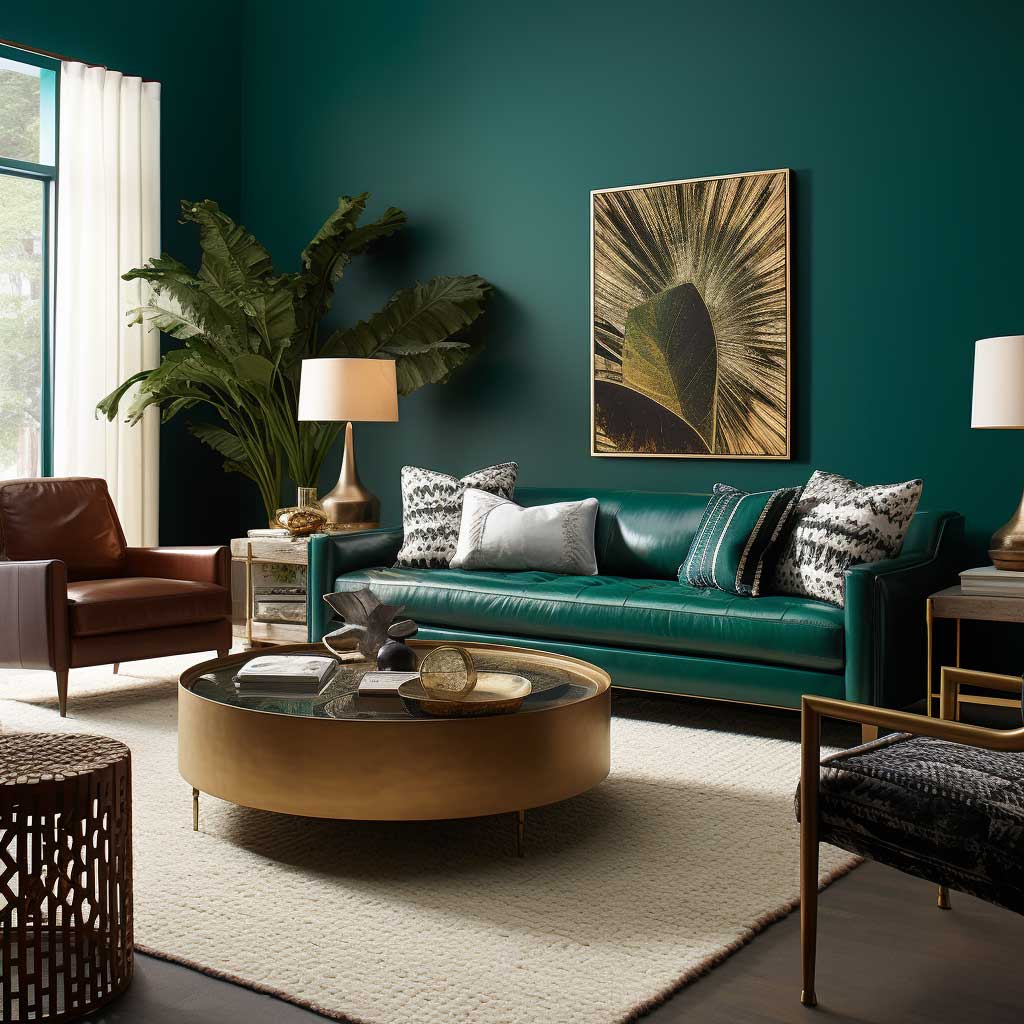
Decorating with emerald green and gold is less about how much gold to use and more about which version of gold — and that distinction determines whether the room looks considered or overwrought. Brushed brass is the standard professional choice: it reads warm without being flashy, and it photographs well without catching light in a distracting way. Mirror-polished gold, by contrast, tends to compete with the green rather than deepen it. The emerald and gold combination works because both carry a certain historical weight — the pairing echoes the aesthetic of botanical illustration and Victorian conservatories, which is why it feels simultaneously opulent and grounded.


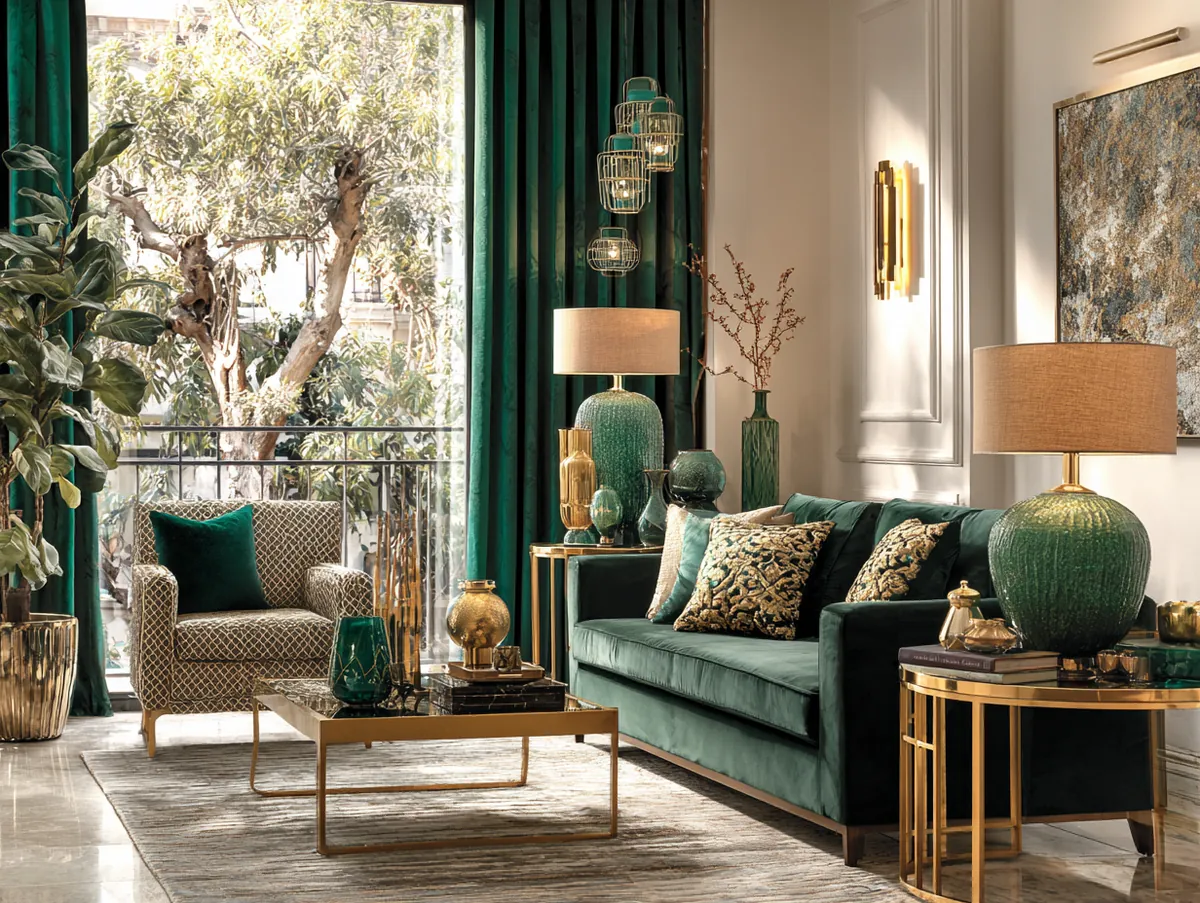

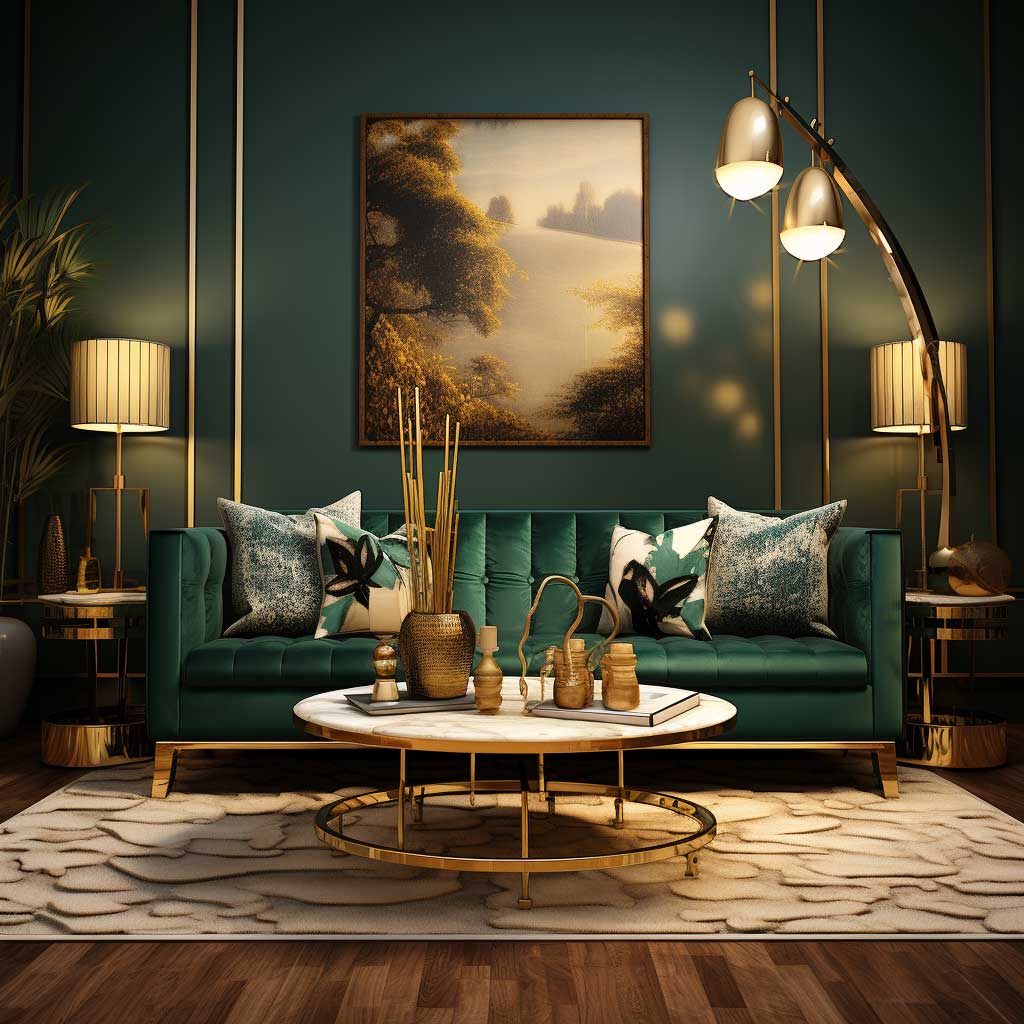
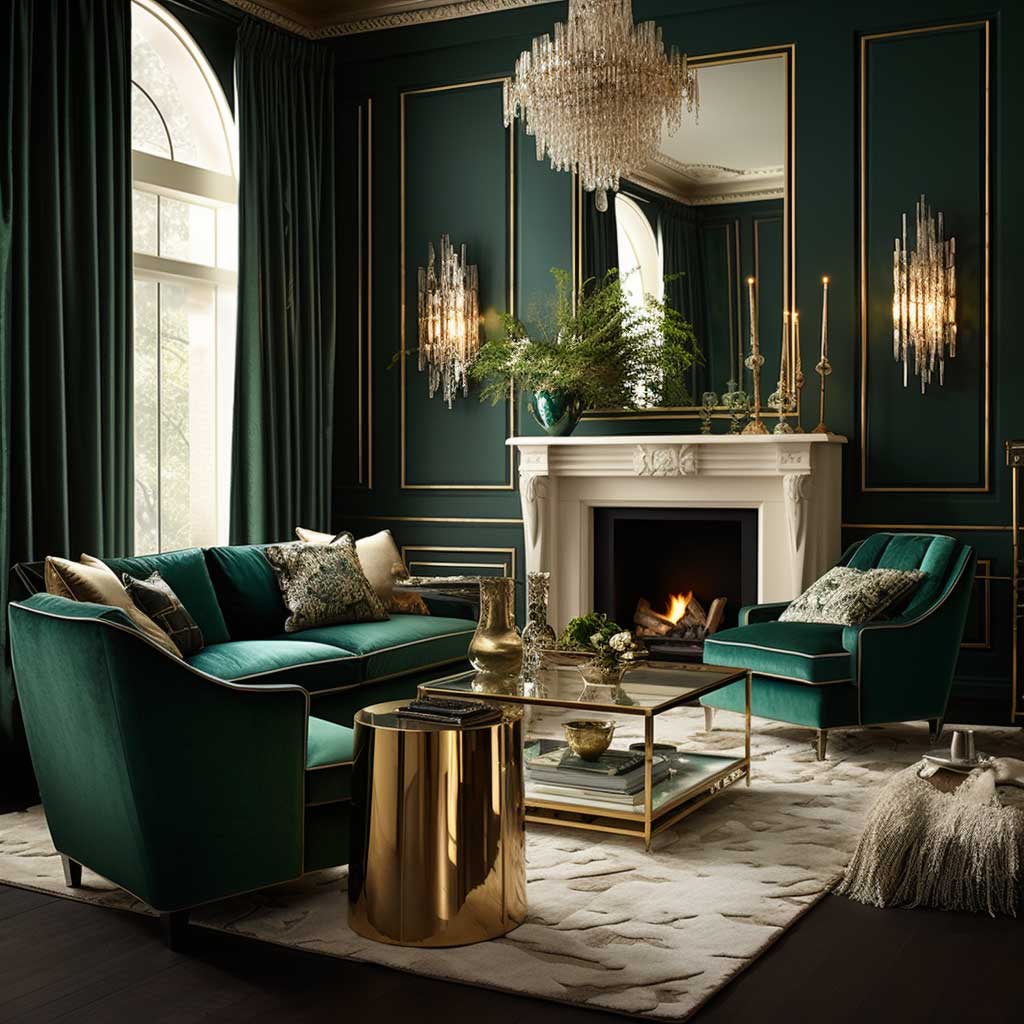
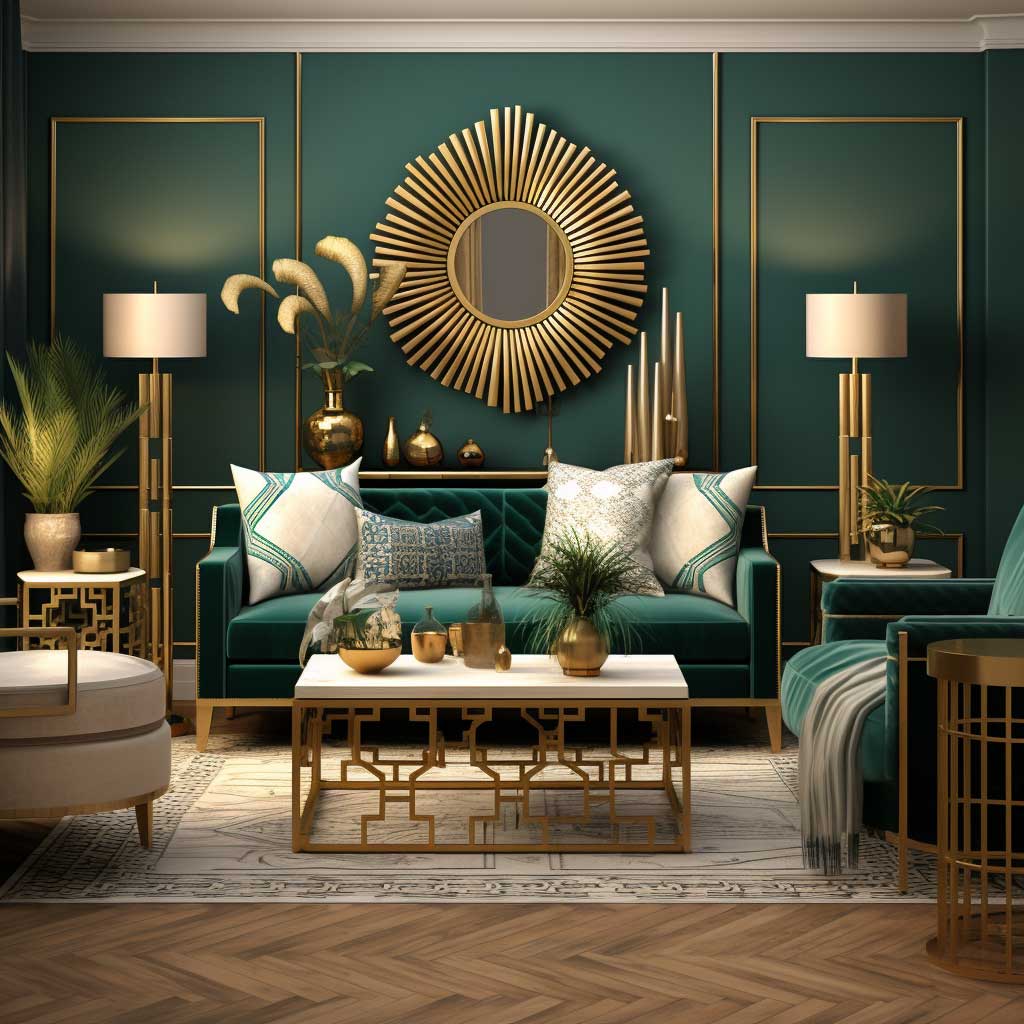
The most effective gold elements in an emerald green living room tend to be structural rather than decorative — lamp bases, coffee table legs, curtain rods, picture frames. These objects serve a dual purpose: they carry the metallic tone through the room without clustering it in one spot, and they catch light from below or from the side, which creates the sunlit-forest-glade effect that makes emerald and gold pairings so persistently popular on visual platforms. Decorative pieces — gold trays, vases, candle holders — layer in the detail, but they work only after the structural elements are established.
Lighting is the multiplier in this combination. A warm-bulb pendant or chandelier with gold or brass elements fills the room with a glow that deepens the green and activates the metallic accents simultaneously. The result is a room that looks different — and better — after dark than it does at noon, which is not a quality most rooms achieve. Gold lampshades with emerald green bases, or the reverse, are a specific detail worth trying: they cast a colored wash on surrounding surfaces that unifies the palette without requiring additional decor. That said, for context on how jewel tones function as a larger interior color strategy, jewel tones interior color design covers how sapphire, ruby, and emerald work together across multiple rooms.
Emerald Green Living Room Accessories Start with Pillows and End with the Rug
Emerald green living room accessories are the part of the scheme most people get backwards — they add them first and build around them, rather than treating them as the final calibration layer. The correct sequence: establish the wall treatment or dominant furniture piece, set the rug, then place accessories as the adjustment. Emerald green velvet throw pillows are typically priced between $15 and $95 for a single cover depending on the fabric quality, which makes them the lowest-risk way to test the color before committing to larger pieces. A pair of emerald pillows on a cream or oatmeal sofa carries as much visual weight as an emerald-painted wall — at a fraction of the investment.

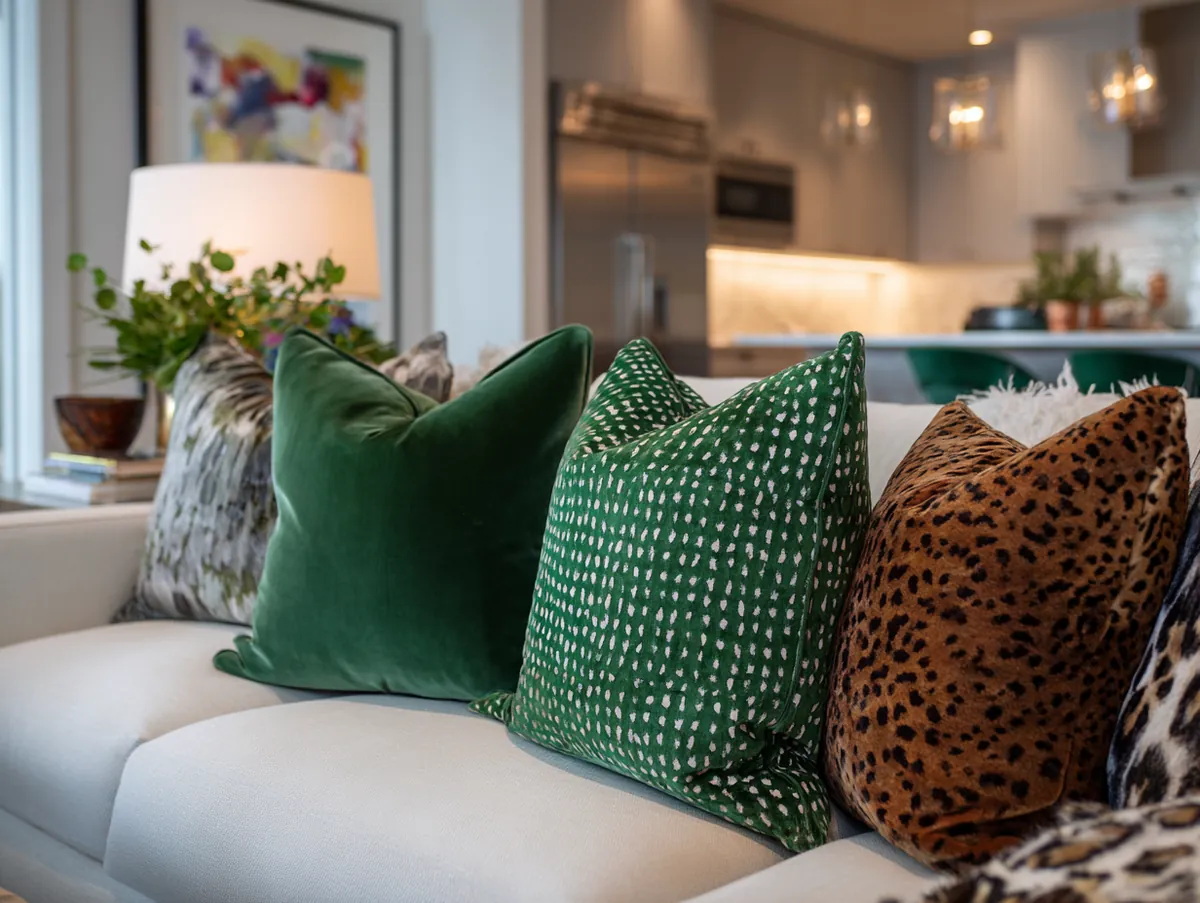


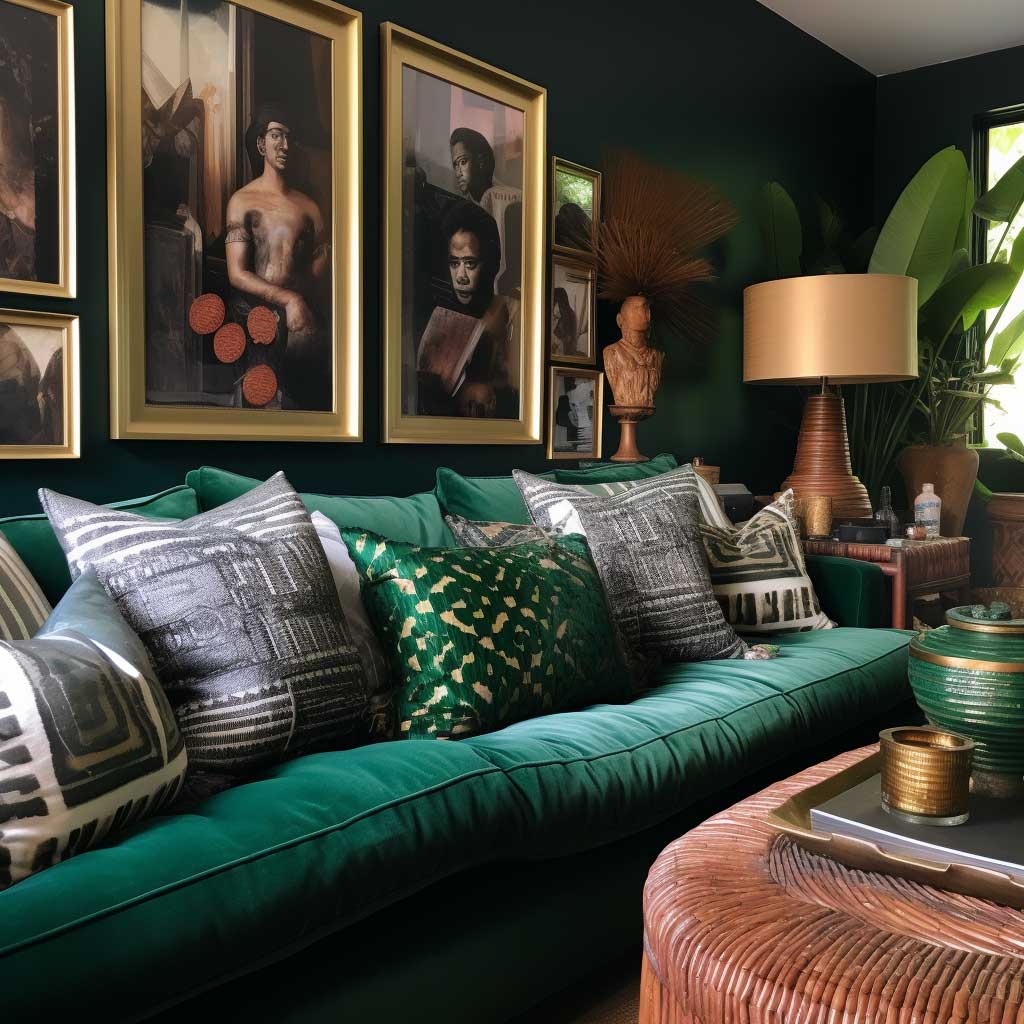

Rugs with emerald in the pattern — geometric, botanical, or abstract — anchor the seating area without requiring a fully green floor covering. A neutral base rug with emerald as a secondary tone keeps the floor grounded while carrying the color downward through the room, which prevents the scheme from floating visually. Solid emerald rugs work in rooms where the walls and furniture are predominantly neutral; in a room that already has an accent wall or a velvet sofa, a solid rug intensifies the saturation past the point where the room reads as deliberate rather than saturated.
Vases, bowls, and decorative plates in emerald work best in odd-number groupings — three pieces of different heights read as a composition; two read as a matched set, which looks retail rather than considered. Mixing finishes within the accessories layer (matte ceramic alongside glazed pottery alongside a glass piece) introduces texture variation that keeps the eye moving. Wall art with green tones extends the color vertically, which helps distribute the palette evenly rather than concentrating it in the seating zone. The detail most people overlook: plants with large, dark green leaves — monstera, rubber plant, fiddle-leaf fig — echo the emerald without duplicating it and add a biological texture that no decor object replicates. According to color experts at Livingetc, even a single emerald accent piece — a vase, a glass, a candle — inevitably draws the eye and creates a focal point, which makes it an effective starting point for anyone uncertain about committing to larger green elements.
| Element | Best Version | Key Risk | Approximate Cost |
|---|---|---|---|
| Velvet Sofa | Performance velvet, Chesterfield or tight-arm silhouette | Cheap velvet crushes at seams within 2 years | $1,999–$2,498 |
| Accent Wall Paint | Satin or matte finish, applied behind sofa wall | Window wall loses saturation from back-lit daylight | ~$81/gallon (SW Emerald) |
| Drapes | Velvet for thermal/light control; linen for casual rooms | Chrome or nickel rods pull green toward cool gray | $30–$120+ per panel |
| Gold Accents | Brushed brass — lamp bases, frames, curtain rods | Mirror-polished gold and yellow-gold fabric both fight the green | Varies |
| Throw Pillows | 1–2 velvet or cotton covers in emerald on neutral sofa | More than 3 emerald pillows at once becomes a saturation problem | $15–$95 per cover |
Design Verdict
Emerald green living rooms work because the color does the structural thinking for you.
The velvet sofa, accent wall, drapes, and gold accents each carry a clear visual role — which means the room has fewer decisions to make once the color is in place.
Keep gold in brushed brass and structural positions. Let accessories be the last layer, not the first. Test paint samples at different times of day before committing to a wall.
Save this post before starting your emerald green living room — the five-element sequence above is the order that works.