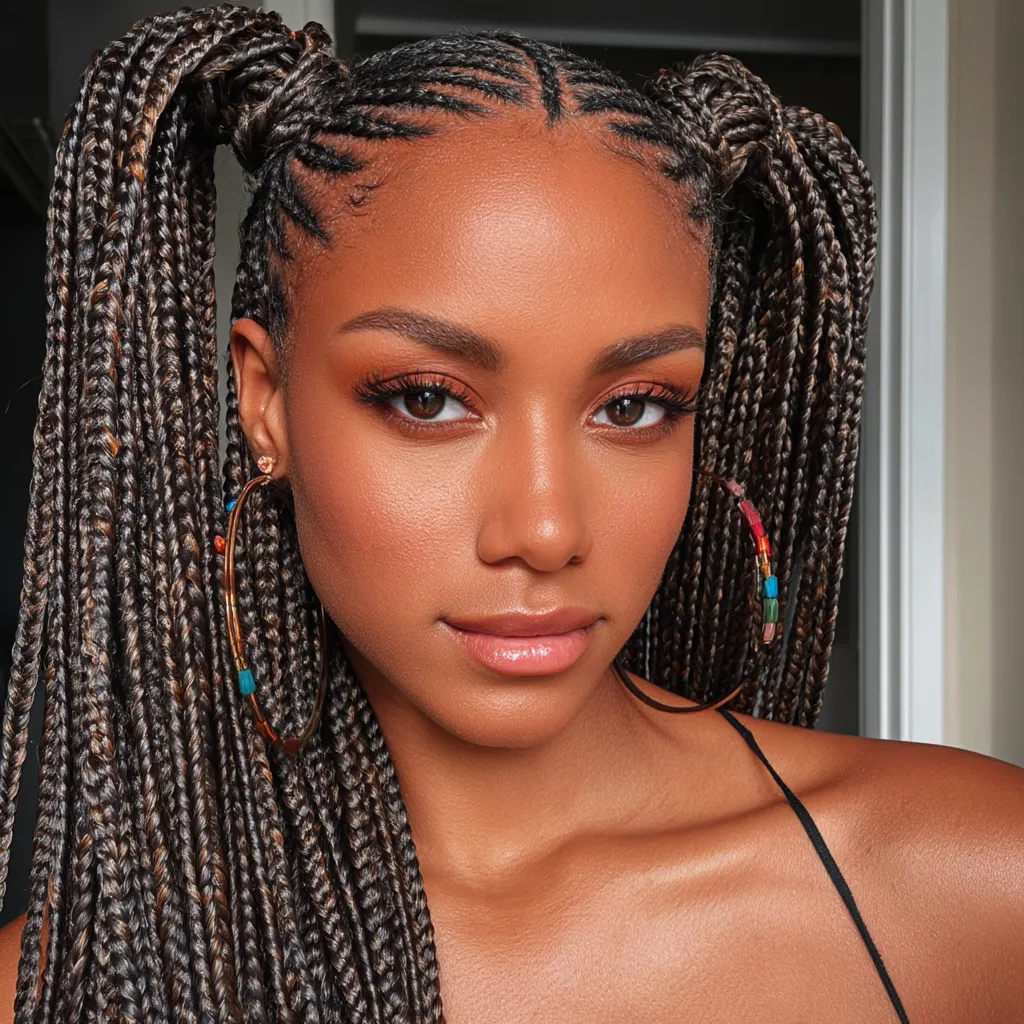
Goddess knotless braids pull off something most protective styles can’t — they look deliberately styled whether you slept on them or just left the salon. The feed-in technique starts with your natural hair at the root instead of anchoring everything with a tight knot, which means zero tension headache on day one and edges that are still intact at week six. Salon pricing runs $200–$350 for medium sizes, with smaller braids reaching $410+ depending on your stylist’s location and technique.
What separates goddess knotless braids from regular knotless braids is the curly or wavy hair woven throughout the length — not just at the ends. That texture gives each braid a soft, undone quality that reads expensive without requiring maintenance between washes. Stylists recommend a gentle scalp cleanse every 7–10 days to keep the style fresh and extend wear through the full 4–8 week lifespan.
The three styles below — center part, side-swept, and half-up half-down — all start from the same installation. The difference is entirely in how you position and gather them day to day. That flexibility is the whole point of knotless goddess braids for everyday wear.
- Knotless goddess braids start tension-free at the root — the feed-in technique is what separates them from box braids and why edges last longer.
- Medium size costs $200–$350 at most salons; small knotless goddess runs $410+ due to longer install time (up to 9 hours).
- Wear time is 4–8 weeks with proper care — stylists flag 8 weeks as the hard cutoff to prevent matting at the root.
- Center part creates symmetry and suits both casual and professional settings without modification.
- Side-swept works best at shoulder to mid-back length — below that, the weight pulls the style off-center too quickly.
- Half-up half-down extends the style’s lifespan by distributing tension away from a single gathered point — use a satin scrunchie, not an elastic.
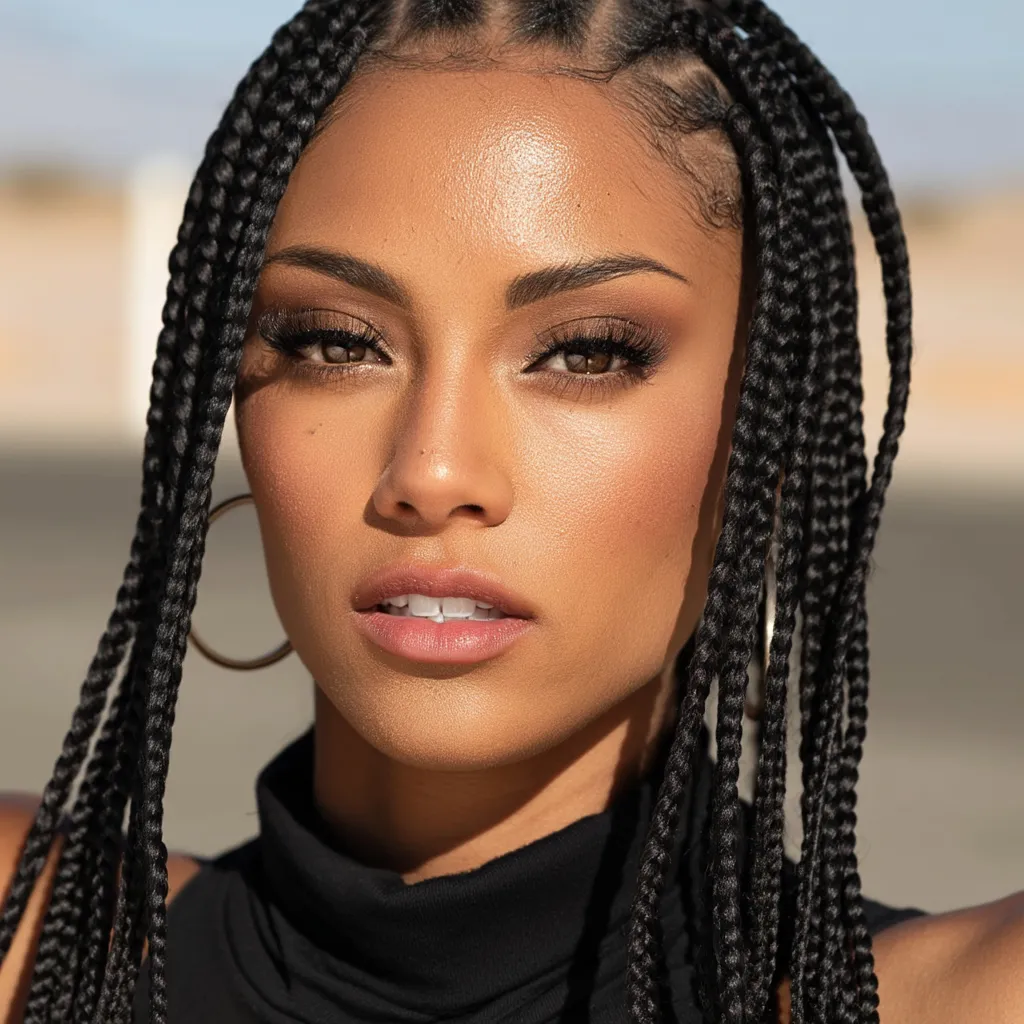

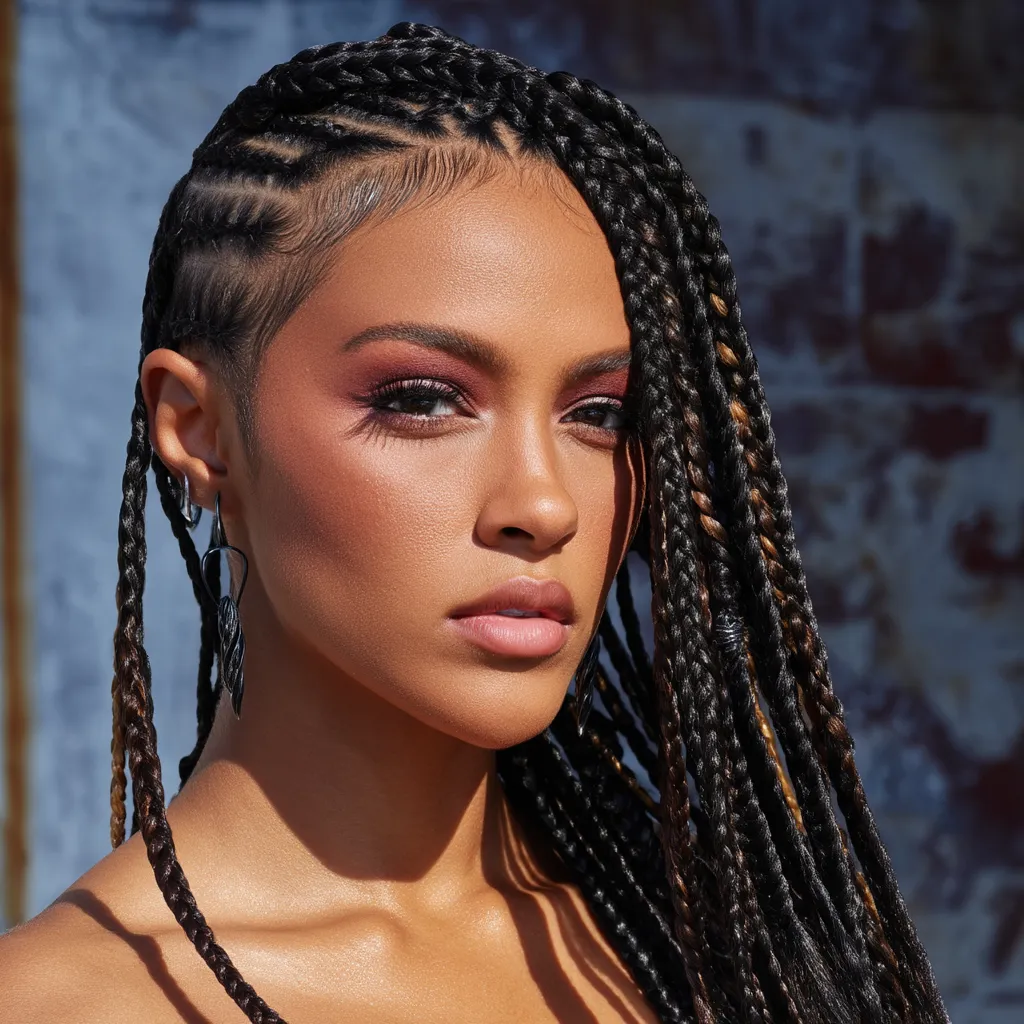


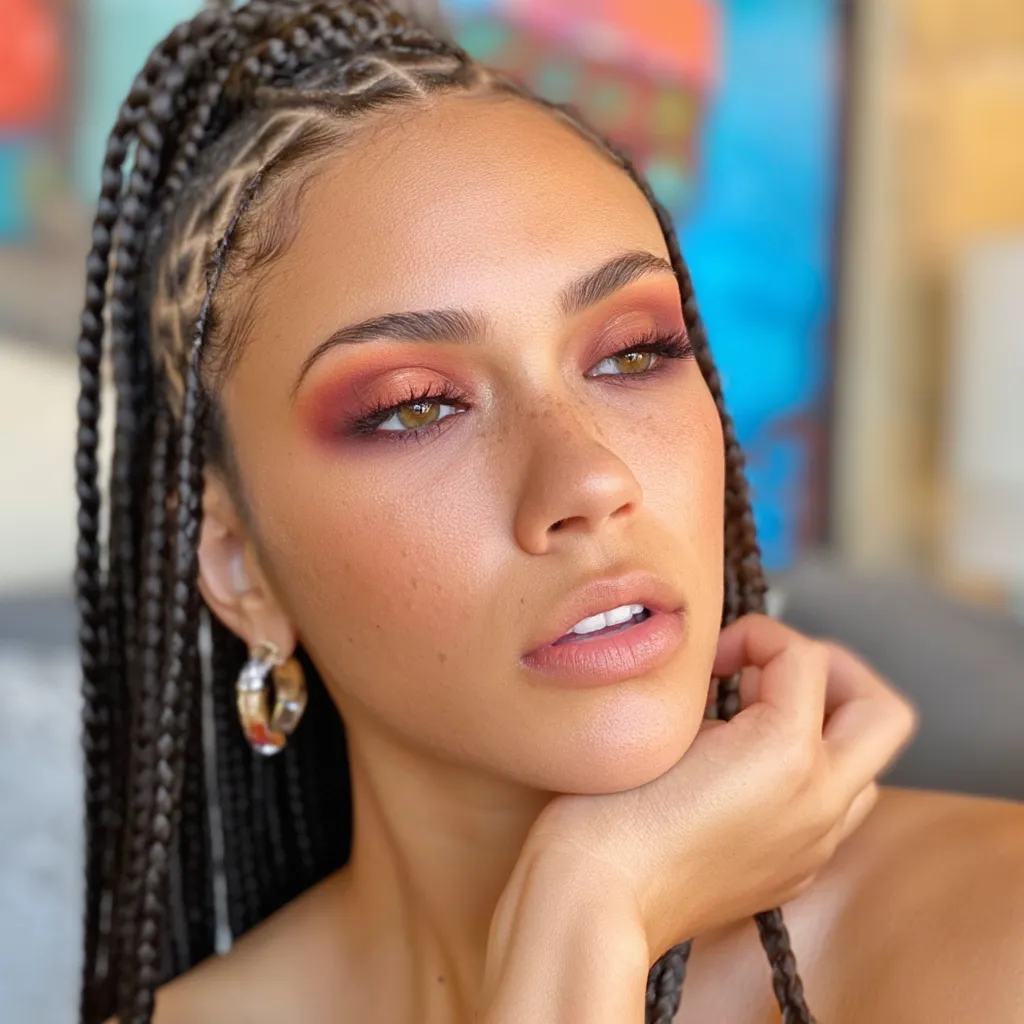

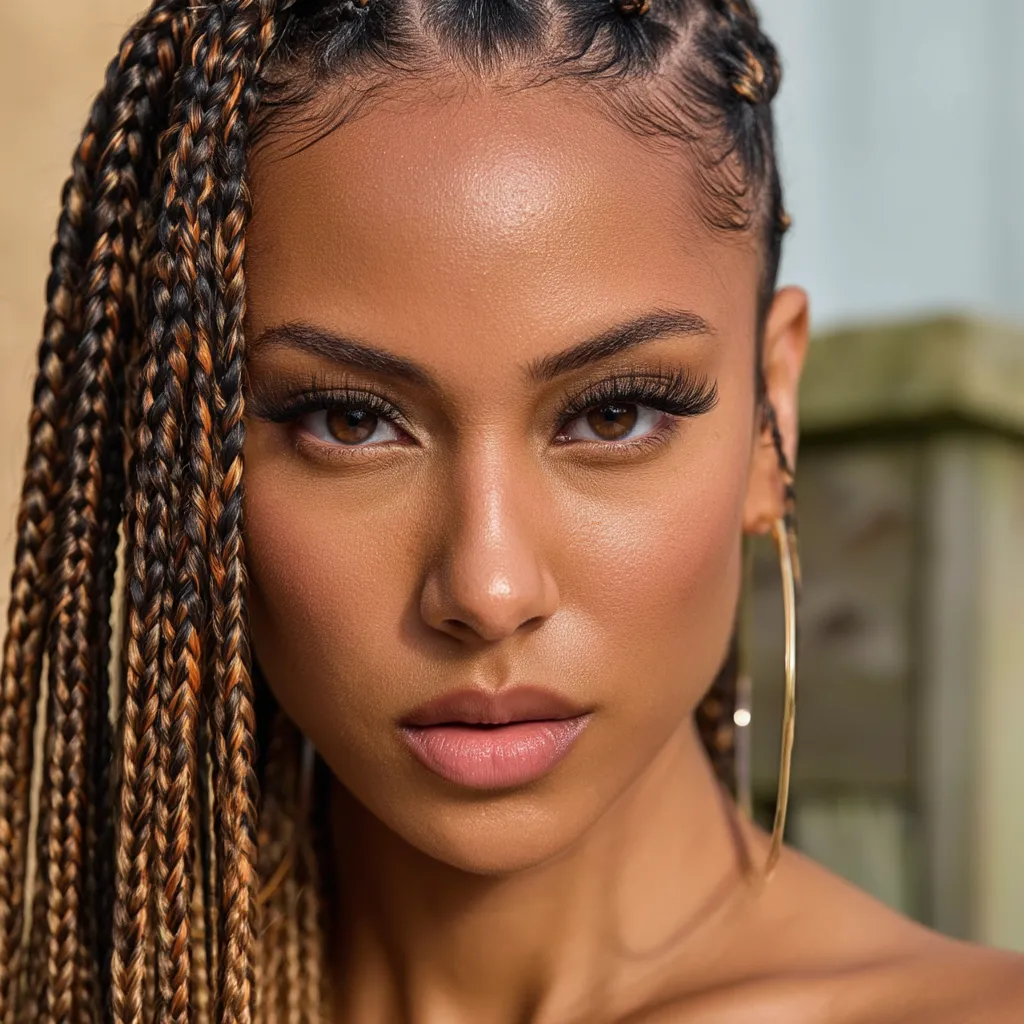

Clean Center Part Goddess Knotless Braids Earn Their Reputation
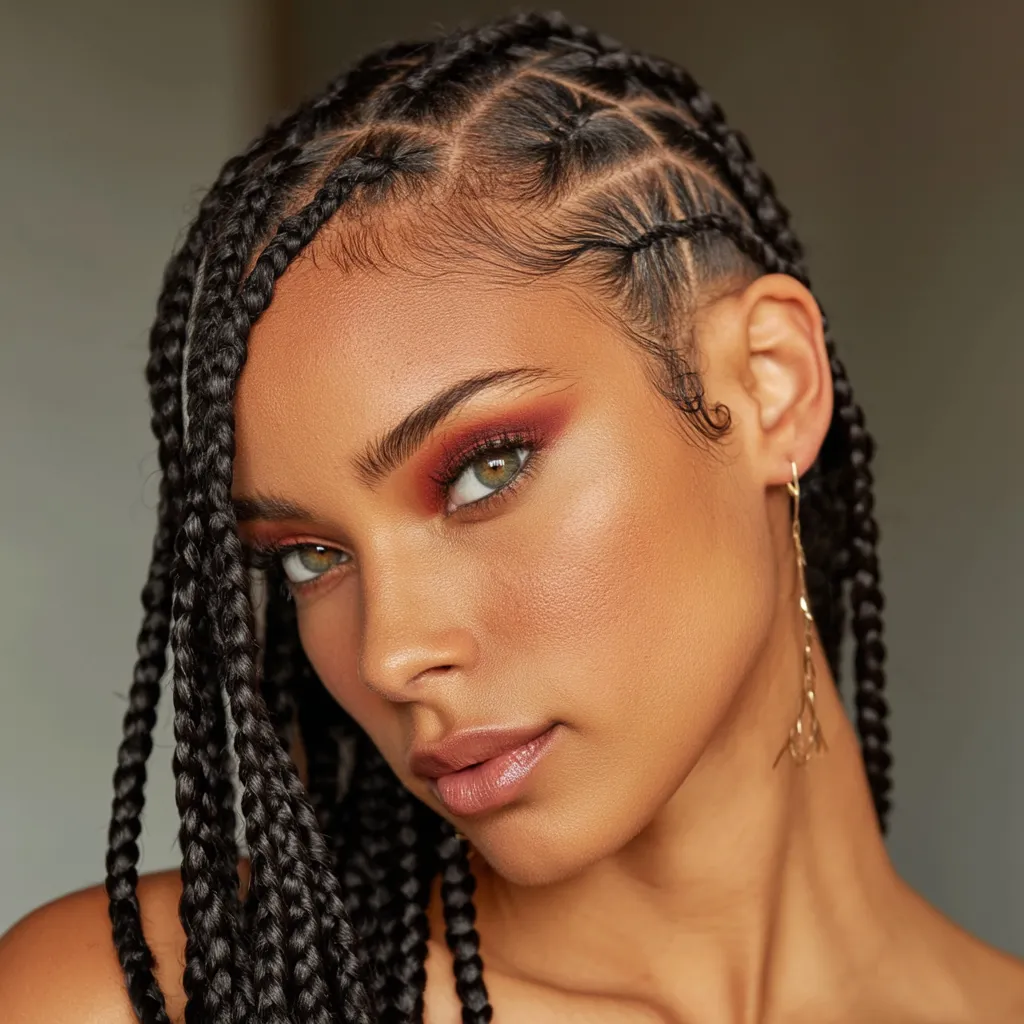
Goddess knotless braids with a center part sit at the intersection of structured and low-effort in a way almost no other style manages. The symmetry frames the face the way a precision cut would — creating the illusion of balance even when the rest of your morning was chaos. Waist-length braids installed with this part read formal enough for a board meeting and relaxed enough for a Saturday at the farmer’s market without a single change.


The reason center-parted goddess braids hold their neat appearance for so long comes down to the knotless installation itself. Because each braid starts with your own hair before synthetic fiber is gradually fed in, the root lays flat against the scalp rather than lifting off it the way a traditional knot would. That flat base stays tidy for 4–6 weeks without requiring a touch-up appointment, which makes this style particularly cost-effective when you factor in the medium salon price of $200–$350.
What kills this style faster than anything else is product buildup at the roots. Heavy pomades and edge-control creams feel satisfying to apply but collect lint and debris within days, making the center part look greasy and undefined. Stylists recommend a diluted clarifying shampoo applied directly to the scalp every 7–10 days instead — it cleans without disrupting the braid texture or causing frizz along the length.


Braids installed with a center part are also easier to style into secondary looks as the weeks progress. By week four, when new growth starts showing, pulling the front two braids back and pinning them at the crown resets the visual focus away from the roots. Think of the center part as the architectural decision that keeps giving — it’s not just for day one.
Side-Swept Positioning Rewrites What Goddess Knotless Braids Can Do Daily
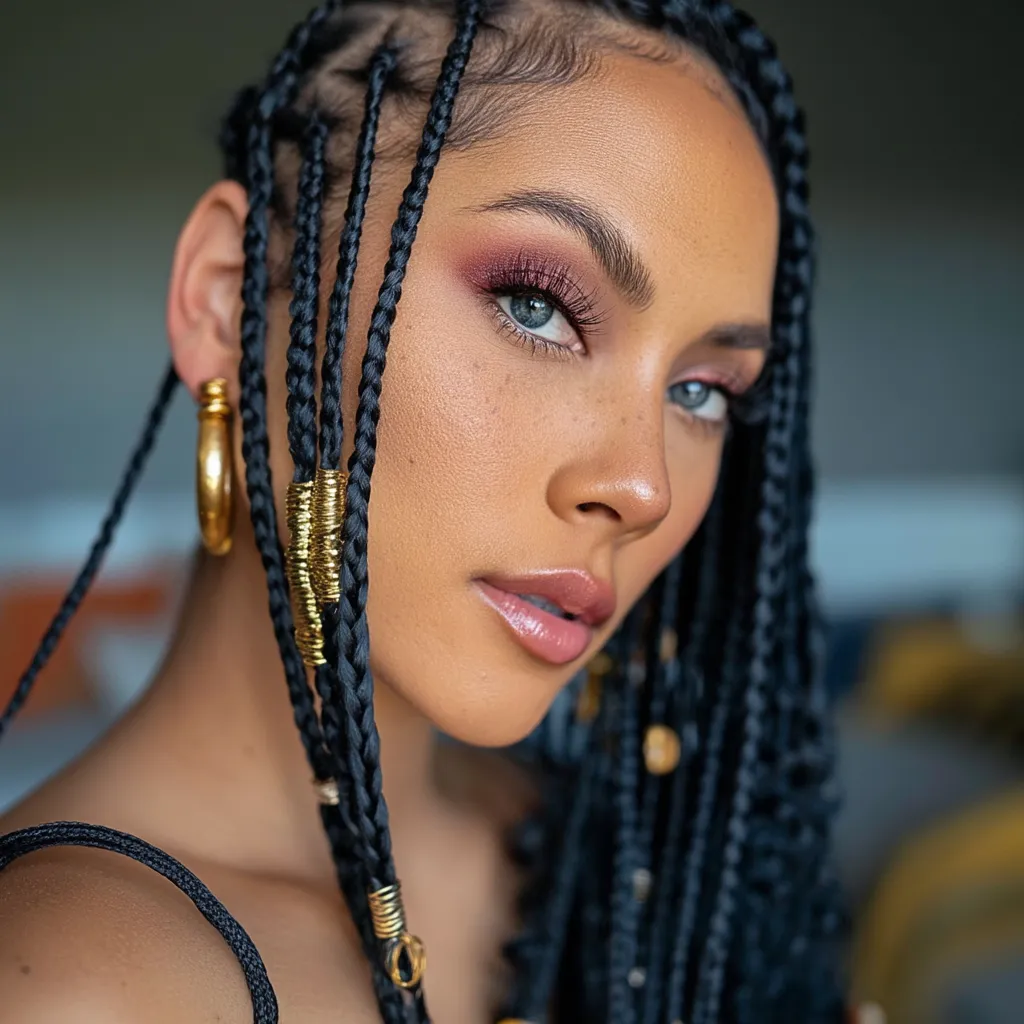
Side-swept goddess knotless braids create an asymmetrical silhouette that reads completely different from the same set of braids worn centered — proof that installation isn’t the only variable that matters. Bringing the braids across one shoulder softens the jawline in a way symmetrical styles don’t, and the draped weight adds a subtle editorial quality to otherwise unremarkable outfits. This approach works best at shoulder to mid-back length; longer braids tend to pull the style too heavily to one side and lose the intentional asymmetry within an hour.


The advantage of side-swept over other everyday positions is how fast you can adjust it. Pulling braids over the shoulder before a meeting takes three seconds and reads polished; releasing them and letting them fall naturally the moment you’re done looks equally intentional. No pins, no clips, no accessories required — the weight of the knotless braids handles everything. That ease is what makes this position popular for workweek styling when the goal is looking put-together without actually spending time getting there.
A common mistake is sweeping all the braids to one side and leaving them gathered too tightly at the nape with a hair tie. That creates a drag at the hairline, which defeats the core benefit of the knotless installation — reduced scalp tension. Stylists suggest simply draping rather than binding: the braids should rest over the shoulder naturally, held by their own weight rather than any mechanical fastening. For more ways to position braided styles by hair type and texture, half up half down hairstyle techniques offer useful framing principles that apply directly here.


Swap sides every couple of days to avoid consistent friction on one shoulder — any textured fabric like cable-knit or denim can cause frizz along the section that rests against it. Silk and satin scarves draped across the shoulder solve this immediately, and they photograph well enough that they look like a styling choice rather than a protective measure.
- Don’t use a rubber elastic to gather side-swept braids at the nape — the tension point creates the exact scalp strain the knotless technique was designed to prevent.
- Don’t apply heavy edge-control cream at the roots daily — it collects lint and makes the parts look dirty within 48 hours; a light edge-smoothing gel every few days is sufficient.
- Don’t keep goddess knotless braids past 8 weeks — new growth tangles around the extension fiber and the takedown damages the hair cuticle, which costs more to repair than a fresh install.
- Don’t sleep without a satin bonnet — cotton pillowcases pull moisture from the extension hair and cause the goddess curls to mat and dull within a week.
Half-Up Half-Down Goddess Knotless Braids Styled with Actual Restraint
Half-up half-down goddess knotless braids work specifically because they do less than you expect. Taking the front third of your braids up into a loose bun or knot while letting the rest hang freely keeps the face clear without sacrificing the length and movement that make the style worth the 4–9 hour install. The trick is keeping the gathered section loose — a tight topknot reintroduces tension at the crown and contradicts the whole logic of a knotless foundation.


Why does this style hold its shape better than the others through a full workday? Because gathering the front braids distributes the weight across the crown rather than letting all the braid mass pull uniformly from the scalp. That load redistribution is similar to why structural engineers use arches — redirecting force to where it can be supported. Practically, it means less frizz at the roots by end of day, which keeps the style looking intentional whether you’re at hour two or hour ten.
Secure the top section with a satin scrunchie rather than a standard elastic. A regular hair tie grips the knotless extension fiber unevenly and can cause breakage at the gathering point after repeated use — the texture of synthetic braiding hair is far more vulnerable to metal and rubber friction than natural hair. Satin-wrapped elastics are sold in most beauty supply stores for under $8 for a pack of ten, and they release from the braid without resistance.


This styling position also extends the perceptual freshness of the install — when the roots start showing new growth at week four, the gathered crown section conceals the most visible evidence. It buys one to two more weeks before the style looks like it’s aging, which matters when a reinstall costs $200–$350 and requires another 4–9 hours in the salon chair. For specific positioning adjustments based on hair type, half up half down styling techniques by texture covers the mechanics in detail.
According to StyleSeat’s braiding comparison, knotless braids should be removed by the 4–6 week mark to give hair and scalp a proper break, with proper washing and deep conditioning between installs protecting long-term hair health. Skipping that recovery window is the fastest route to edge thinning — which no styling position can hide.
THE TAKEAWAY
Goddess Knotless Braids Give You Three Completely Different Looks from One Install
The center part is for days when symmetry and polish matter. The side-swept position is for when you want the style to look like a deliberate choice without being one. The half-up half-down extends freshness by concealing new growth and redistributing scalp tension.
Budget $200–$350 for a medium install, add a satin bonnet and a $6–$8 pack of satin scrunchies, and cleanse the scalp every 7–10 days. Remove by week 6–8 maximum.
Save this post before your next salon booking — these are the details your braider won’t have time to walk you through in the chair.