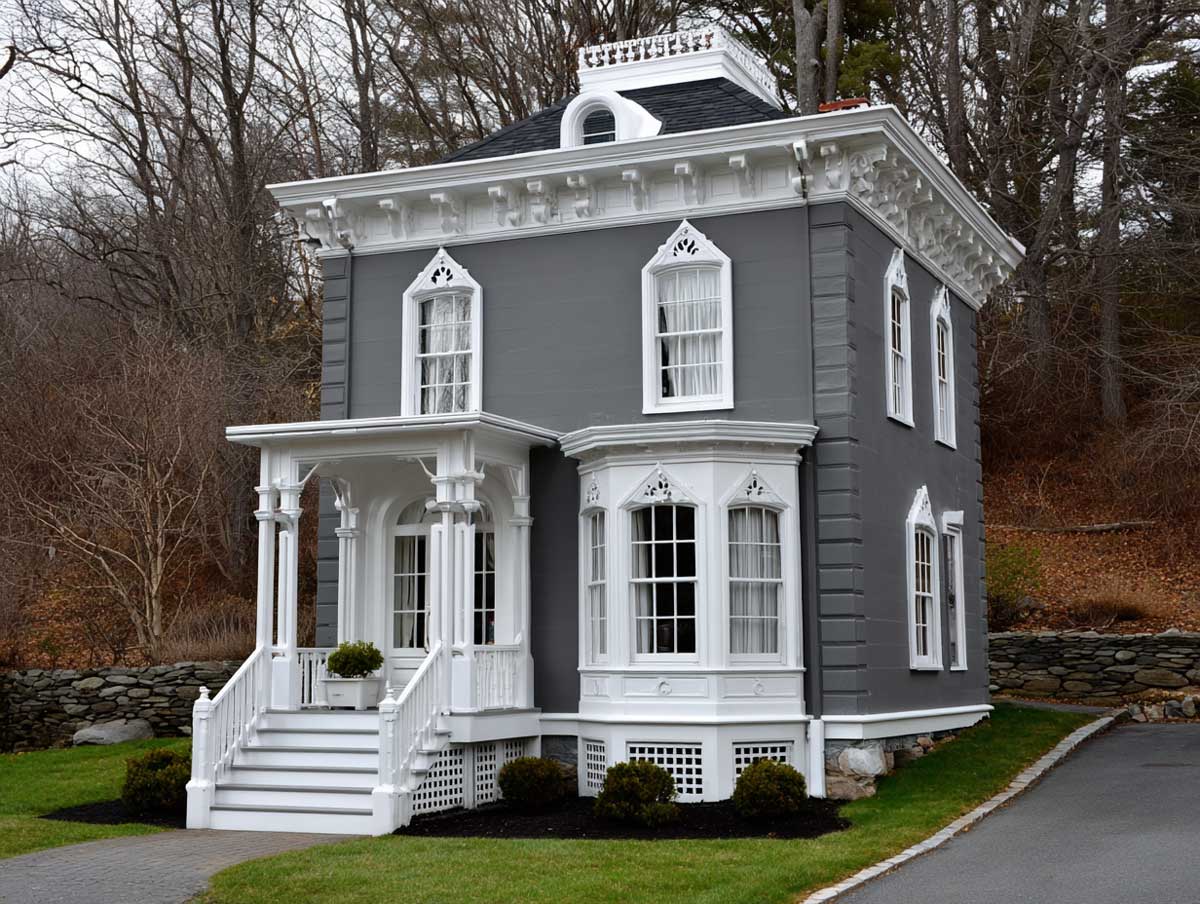
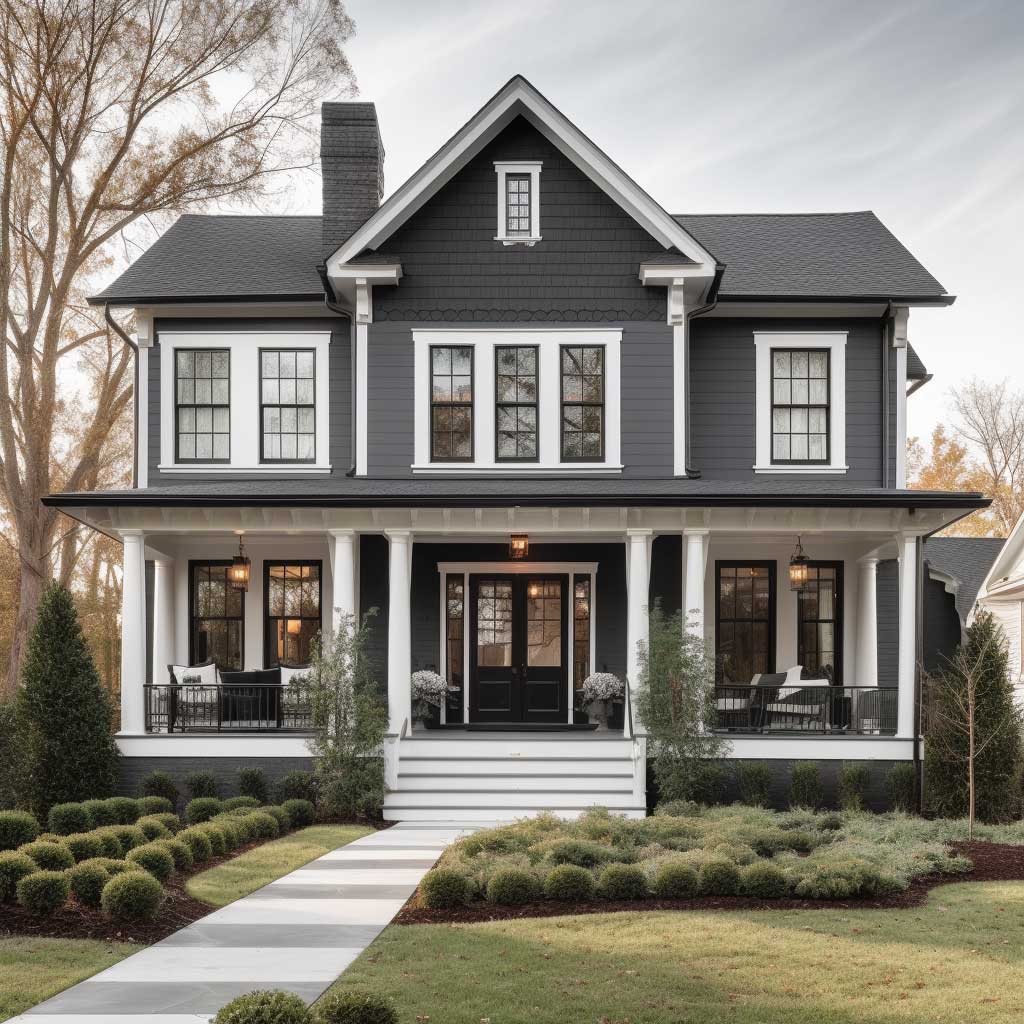
Grey purple exterior house paint lands differently when charcoal enters the picture. On its own, lavender skews romantic — cottages, Victorian trim, maybe a farmhouse in Provence. Pair it with charcoal and the same hue turns structural, modern, and genuinely hard to scroll past on Pinterest. The contrast does the heavy lifting, and how you distribute it across walls, roof, and trim determines whether the result reads elegant or accidental.
Three approaches dominate this palette: lavender as the main body colour with a charcoal roof anchor, charcoal as the dominant facade with lavender trim pulling focus, and charcoal walls with lavender used only as accent on doors or frames. Each produces a different curb appeal — one classical, one refined, one sharply contemporary. Benjamin Moore Regal Select Exterior, which runs $55–$70 per gallon, is the product most exterior painters reach for when working with deep or mid-tone colours like these, because its alkyd-fortified formula resists the colour shift that cheaper acrylics show within two seasons.
Choosing between the three combinations comes down to your home’s architecture and how much sun the facade receives. Charcoal absorbs heat and can stress wood siding — a confirmed risk on south-facing walls that already see 5–7 years of exterior paint lifespan cut short by direct UV exposure. Lavender as the primary body colour sidesteps that problem while still giving the palette its identity. The sections below break down each approach with specific placement logic, verified product references, and the mistakes that undermine each one.
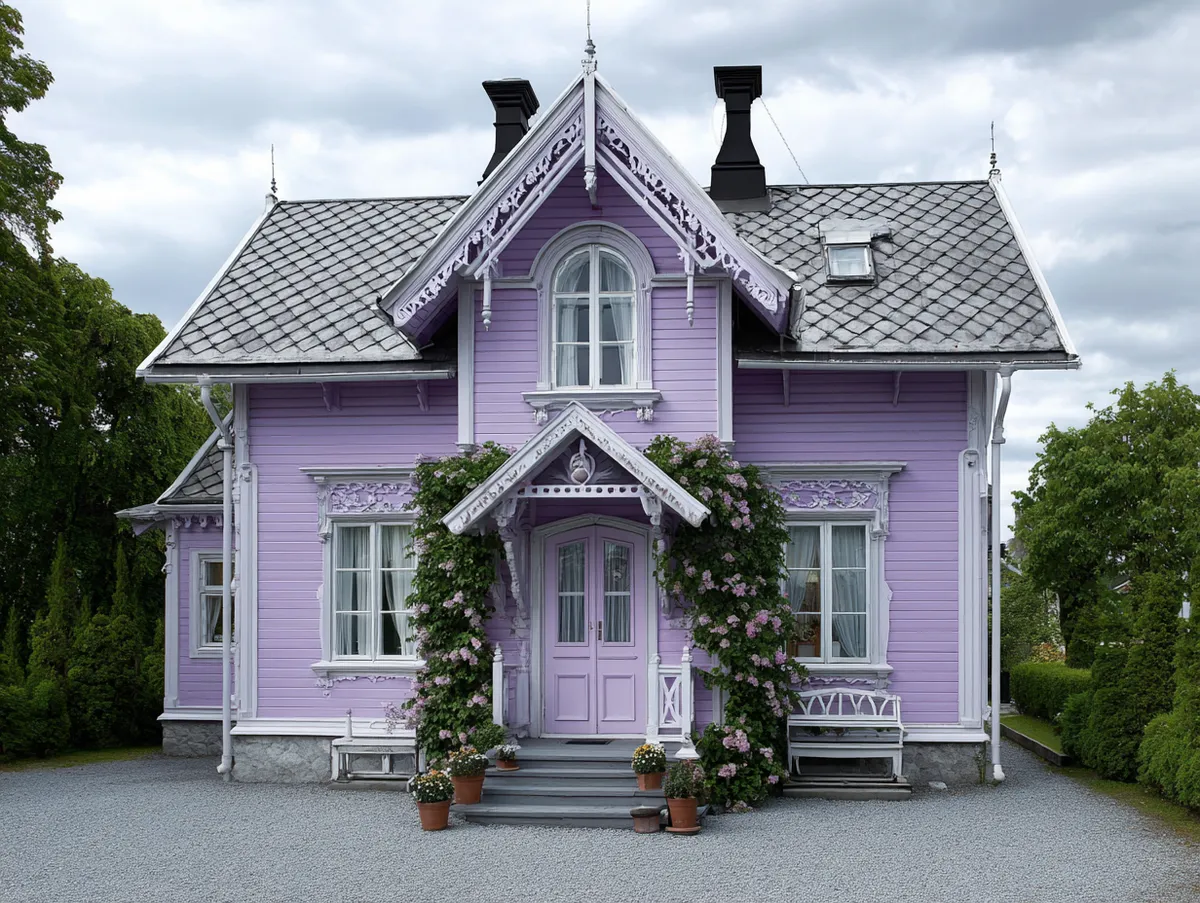
- Lavender walls + charcoal roof: Warmest result; suits traditional and craftsman architecture; charcoal grounds without overwhelming.
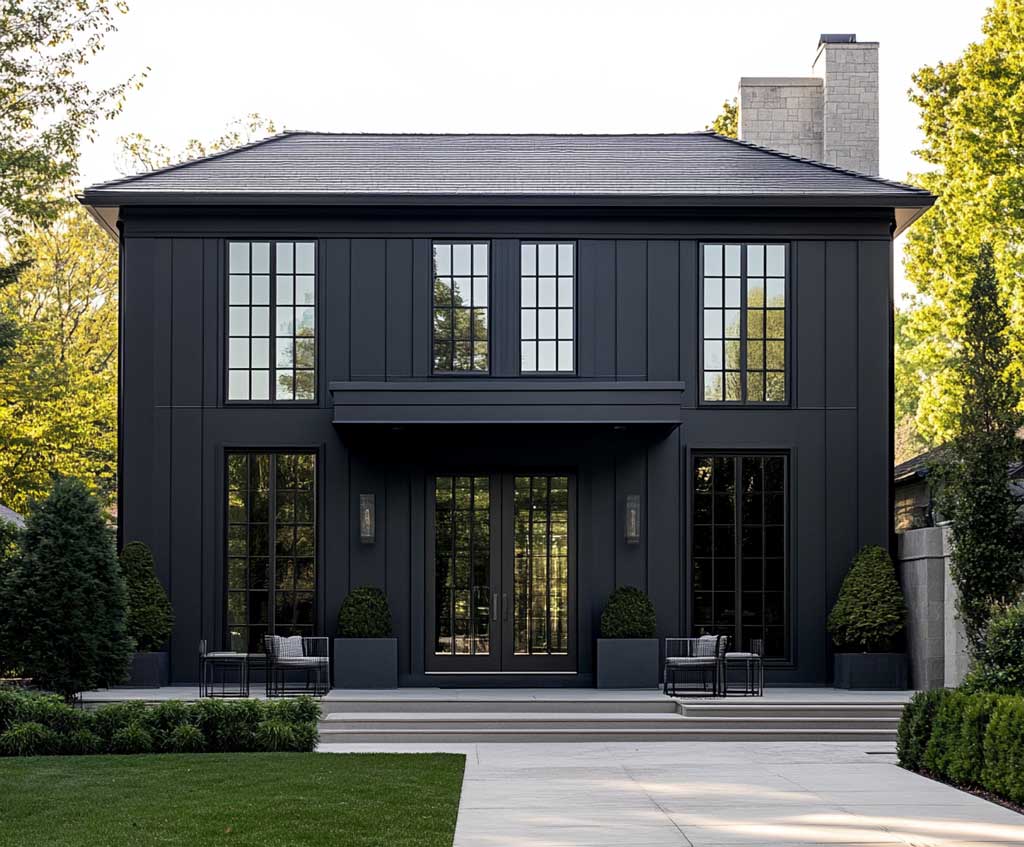
- Charcoal body + lavender trim: Most refined; lavender appears in window frames, fascia, porch details; works in wooded settings.
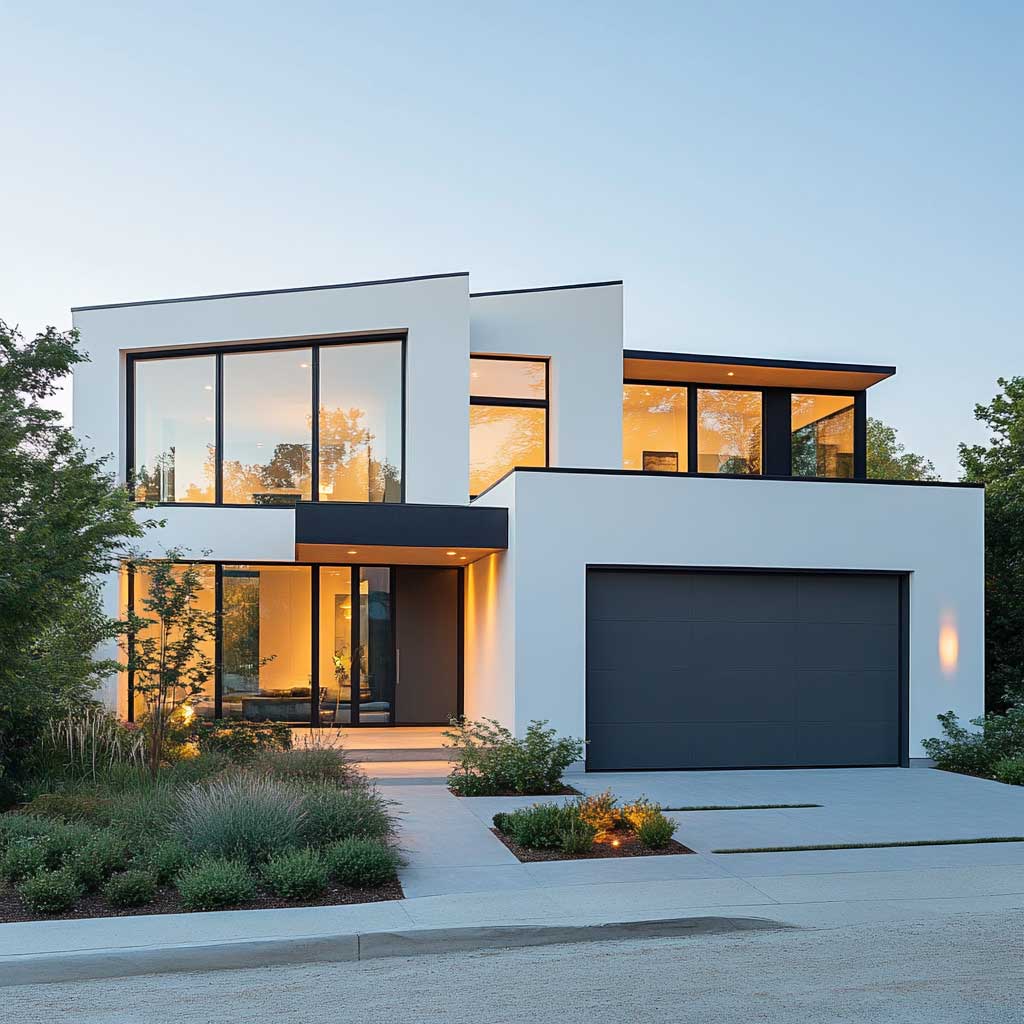
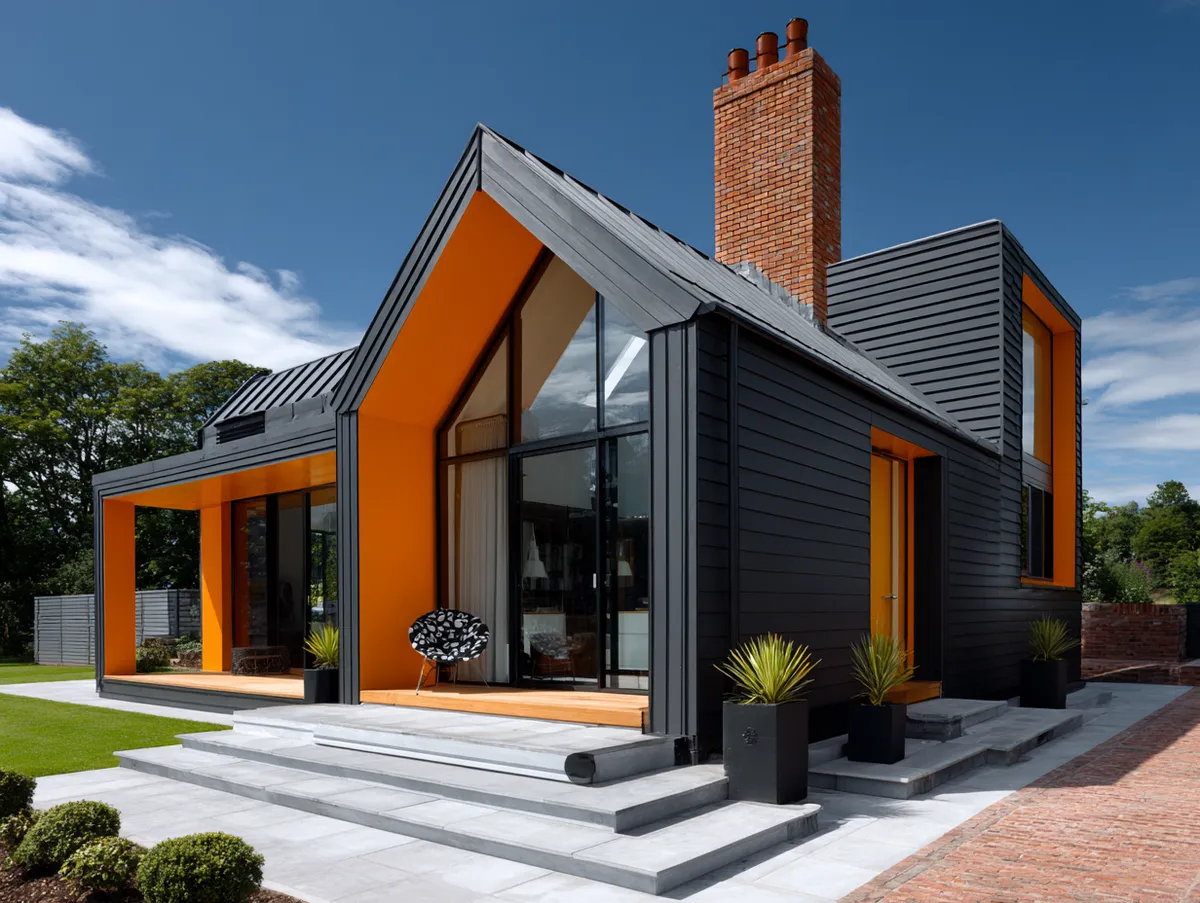
- Charcoal walls + lavender accents: Sharpest contrast; modern and urban-ready; lavender limited to front door or window frames only.
- Benjamin Moore Regal Select Exterior ($55–$70/gal) handles both deep charcoal and mid-tone lavender reliably across climates.
- Exterior paint on wood siding lasts 5–7 years — dark charcoal on south-facing walls may reach the lower end faster due to heat absorption.
- Lavender pulls grey or purple depending on light temperature — test swatches at 8 AM and 4 PM before committing.
Lavender Walls with a Charcoal Roof Read Calmer Than You Expect
Lavender walls paired with a charcoal roof is the most approachable entry point into grey purple exterior house paint territory. Lavender covers the largest visible surface — walls — so it sets the dominant mood: airy, composed, and slightly unexpected for a suburban street. The charcoal roof acts as a visual lid, grounding the palette the way a dark frame grounds a light painting. Stylists who work on traditional and craftsman exteriors recommend this ratio precisely because neither colour overpowers the other — the warm purple-grey of lavender and the cooler depth of charcoal are far enough apart in value to create contrast without clashing.
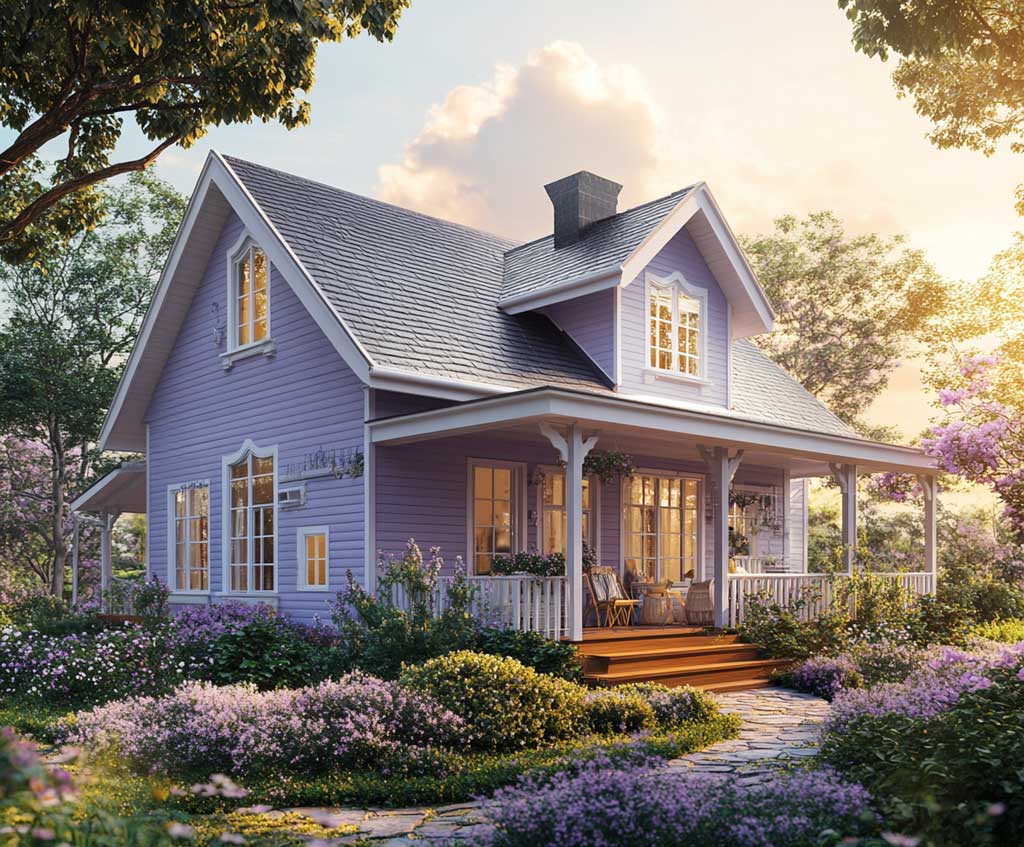
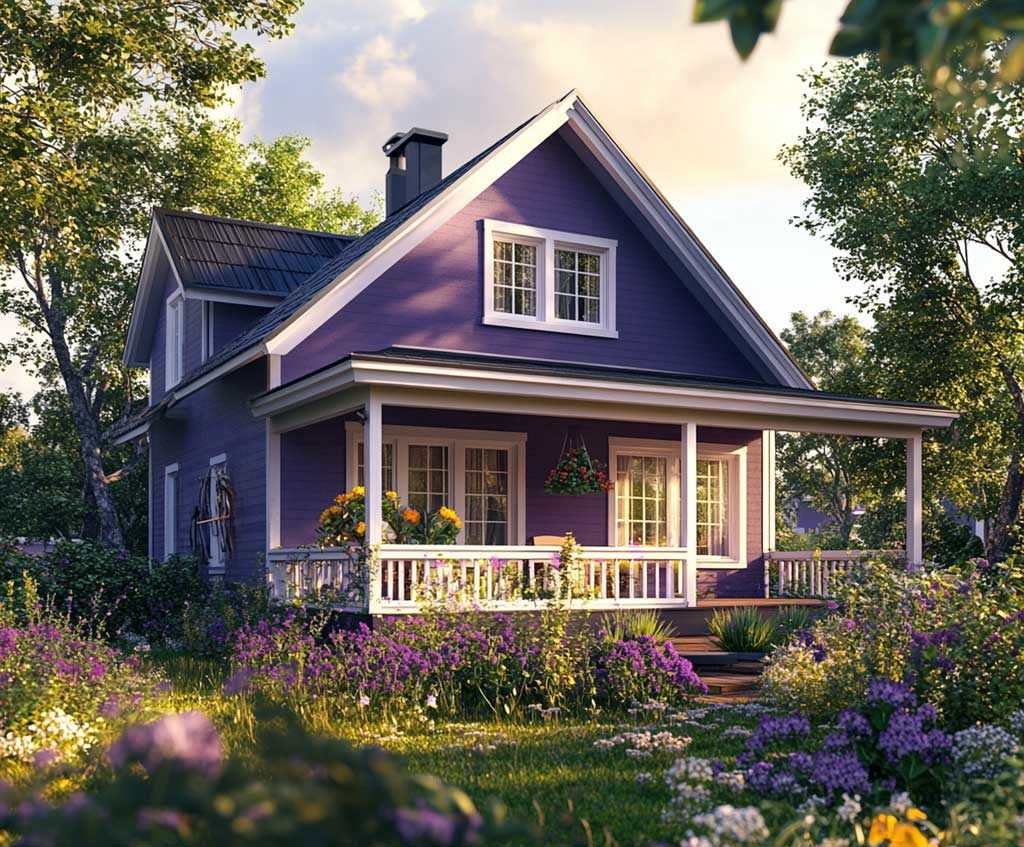
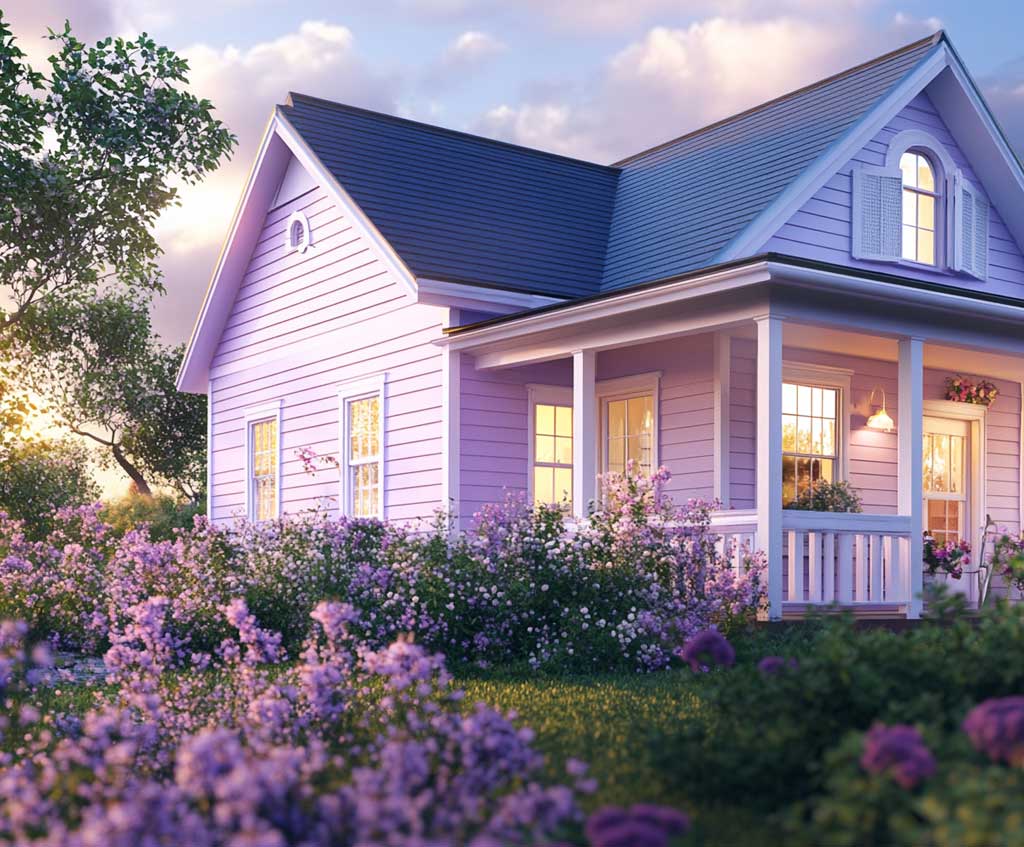
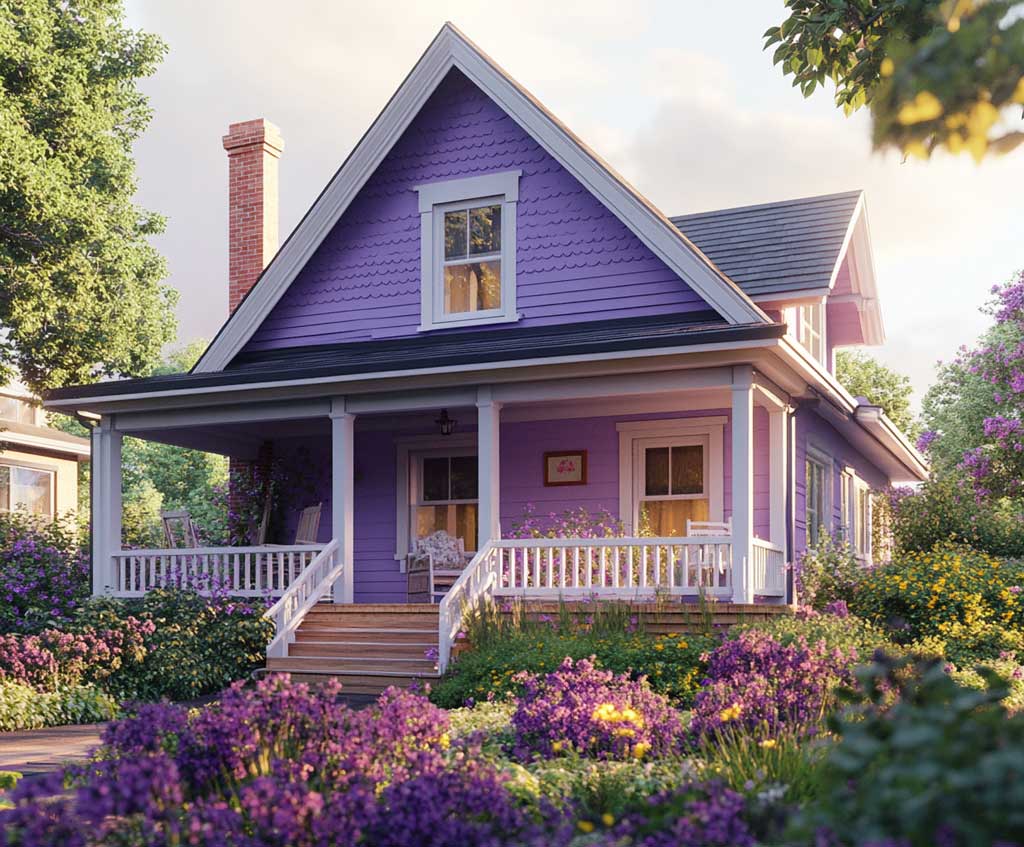
The trick with lavender walls is the undertone. Ask yourself: does your lavender swatch lean blue-grey or pink-purple? Blue-grey lavenders — think Sherwin-Williams Lite Lavender (SW 6554) — stay cooler and hold up better against a near-black charcoal roof. Pink-purple lavenders can read muddy once the roof colour darkens the overall palette from above. Test your swatch on the north-facing wall at 4 PM, not just in morning light — that’s when the cool purple undertone becomes most visible, and it’s also when neighbours walking past will see it most often.
White-framed windows are the standard complement here, and for good reason: white trim provides a neutral buffer between two strong colours, preventing the facade from reading as two-tone in a jarring way. Charcoal pavers or a dark gravel driveway extend the roof colour into the landscaping, making the palette feel deliberate rather than coincidental. Flowering shrubs in lavender, white, or dusty rose amplify the wall colour without adding a third paint shade — a useful technique on tight lots where the facade dominates the street view.
Where this combination fails: don’t run the lavender all the way to the roofline without a trim break. A house with lavender walls and charcoal roof and no white or cream fascia board in between looks like the colours are colliding rather than complementing. That fascia band is structural to the palette — skip it and the contrast turns abrupt. A quality exterior acrylic on wood siding in this combination will realistically last 5–7 years before the lavender shows fading, with south-facing walls at the lower end of that range. For a broader look at how exterior colour pairings hold up over time, house exterior paint colour combinations breaks down four tested palettes with real-world durability notes.
Charcoal Body with Lavender Trim Rewards the Second Look
Flipping the ratio — charcoal as the dominant wall colour, lavender as the trim detail — is where grey purple exterior house paint moves from pretty to genuinely architectural. Charcoal handles 70–80% of the visible facade, giving the home a strong, composed presence. Lavender appears in the places that reward close attention: window surrounds, fascia boards, porch columns, door frames. The effect is like a house that keeps a secret — calm and authoritative from across the street, then surprisingly warm once you’re standing at the front door.
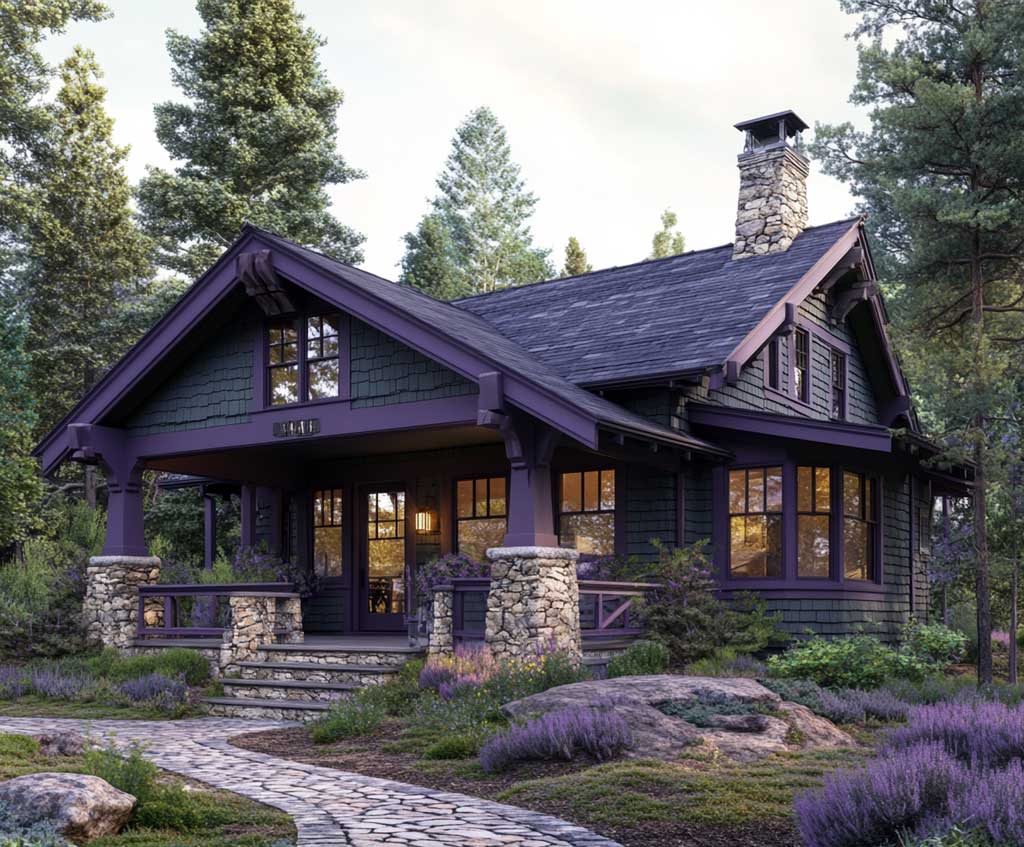
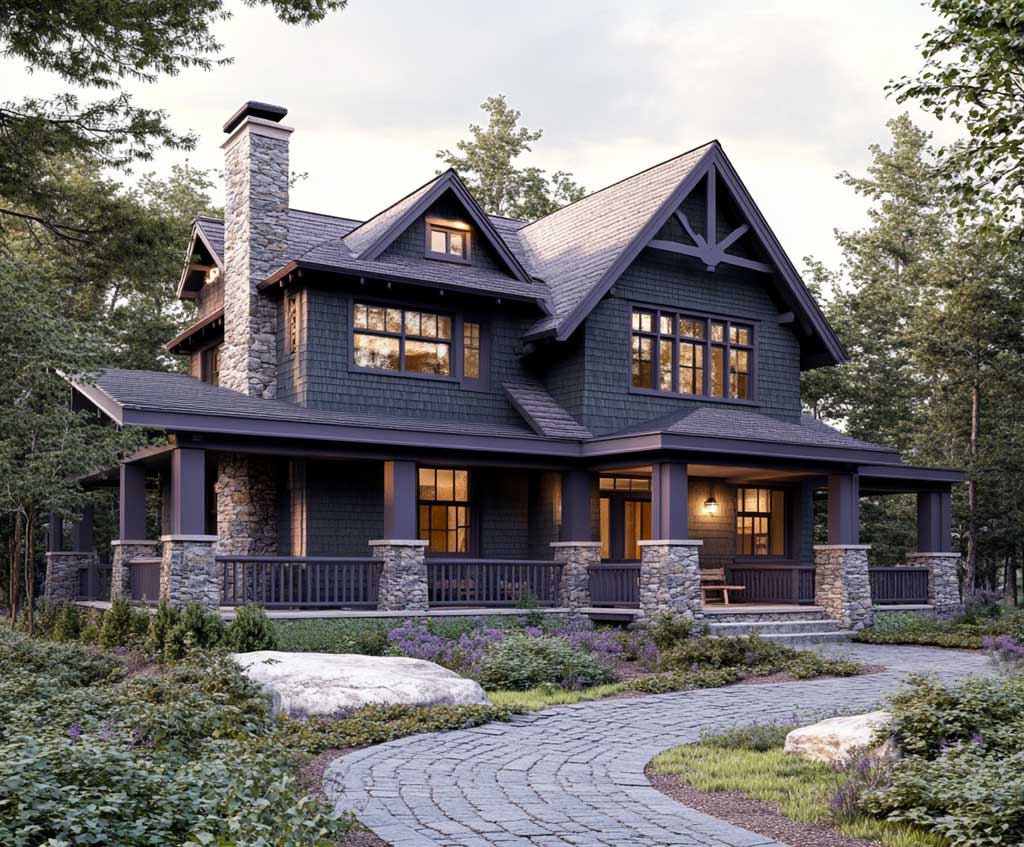
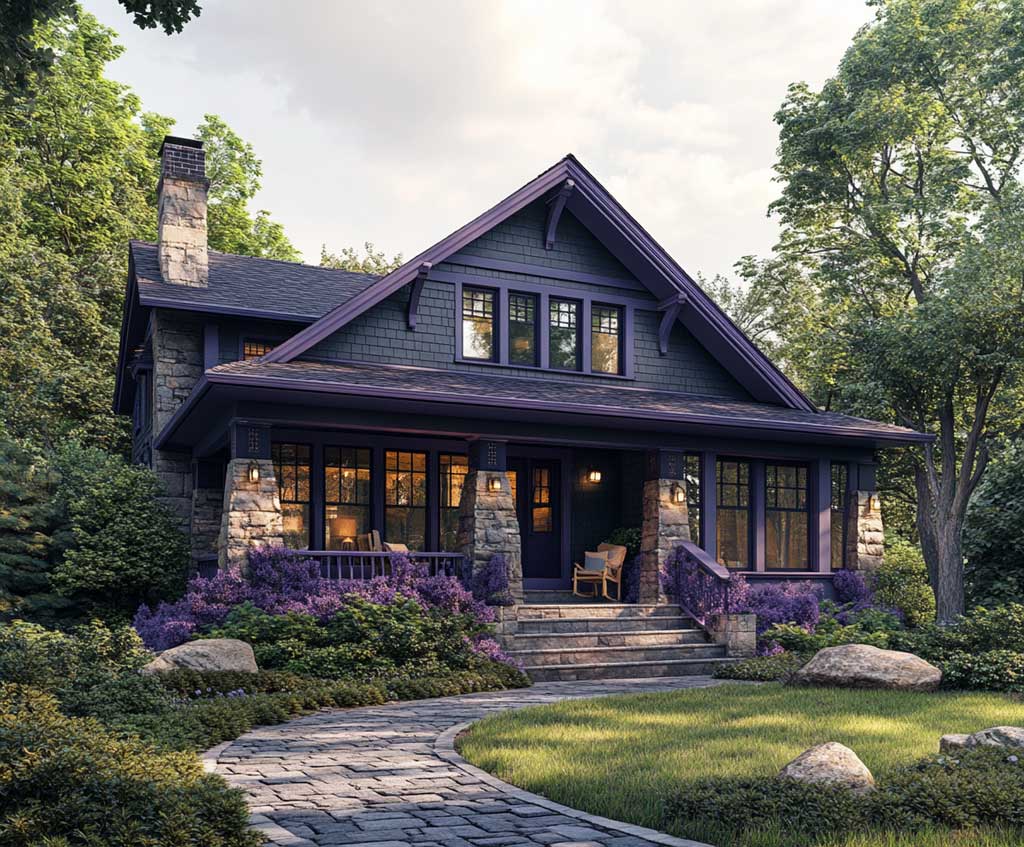
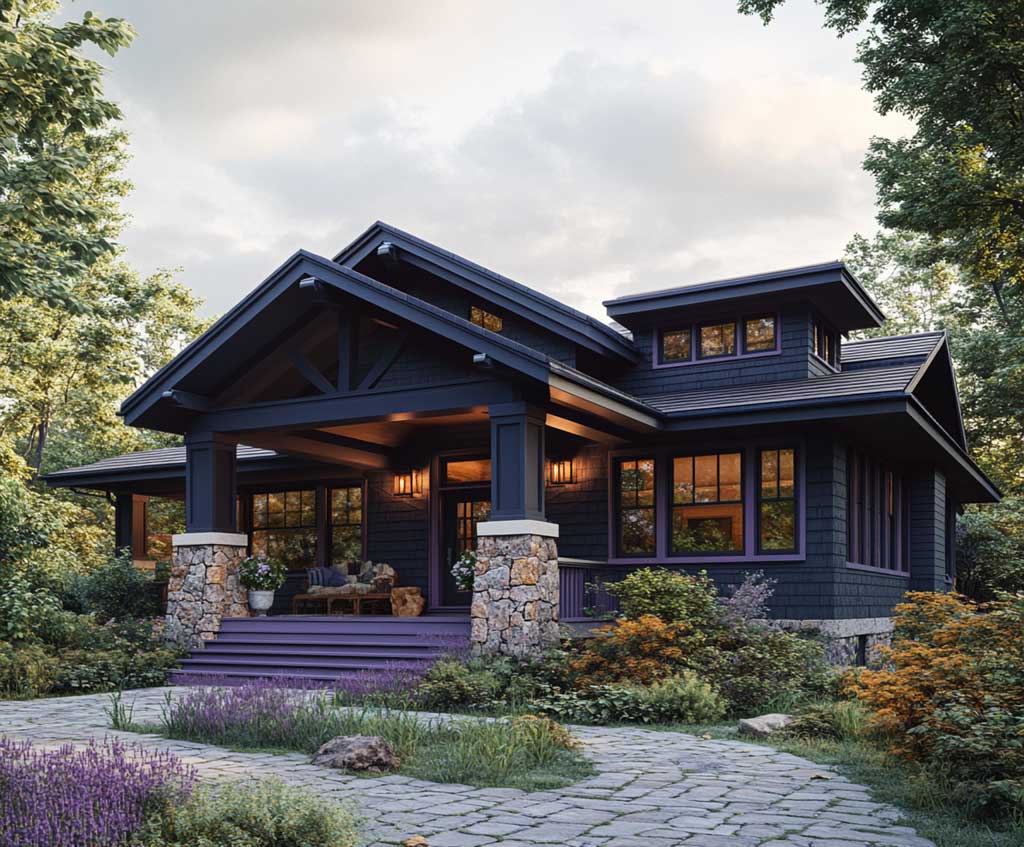
Benjamin Moore Kendall Charcoal (HC-166) has a Light Reflectance Value of 14.61, which means it absorbs significantly more light than it reflects. On craftsman homes with exposed rafter tails, decorative brackets, and layered trim — exactly the architecture where lavender trim shines — this LRV creates the shadowing that makes architectural details legible from the street. Pair it with a lavender in the SW 6554 Lite Lavender range and the trim reads as a deliberate counterpoint rather than an afterthought. Natural stone elements in matching grey tones add texture without adding a fourth colour to manage.
This combination performs particularly well in wooded or garden settings where surrounding greenery provides a neutral buffer. The charcoal reads as grounded and structural against a backdrop of trees; the lavender trim picks up the purple-grey frequency that appears in lichen, stone, and morning light. Think of the combination as a forest floor at dusk — deep, rich, with a surprisingly delicate surface detail when examined closely. The lavender flower boxes or a painted porch swing can extend the trim colour into the outdoor furnishings without requiring additional paint purchase.
Do not apply lavender to both the trim and the front door simultaneously. Lavender trim plus a lavender door gives the facade too many soft moments, undercutting the commanding presence that charcoal walls are supposed to provide. Keep the door charcoal or a near-black, and let the lavender trim do its work on the architectural details. Duration Exterior from Sherwin-Williams runs $60–$93 per gallon and is one of the few exterior products that maintains its sheen on charcoal tones well past the three-year mark — worth the premium on a dark body colour that shows fade and chalk early when cut with cheaper formulas.
- Don’t skip the fascia trim break. Lavender walls meeting a charcoal roof with no white or cream fascia board in between look like a collision, not a combination.
- Don’t paint all trim elements lavender. Lavender on window surrounds, door frame, porch railings, and shutters simultaneously overwhelms the charcoal anchor and reads as a colour scheme that couldn’t make a decision.
- Don’t evaluate swatches on your phone screen. Lavender shifts dramatically between warm afternoon light and cool overcast morning — judge it on the actual wall surface at both times before ordering full gallons.
- Don’t use bright purple as a substitute for lavender. Saturated purple reads jarring against charcoal and loses the sophisticated grey-purple quality that makes this combination work. Stay in the muted, grey-leaning lavender range.
Charcoal Walls with Lavender Accents — the Grey Purple Exterior Paint Approach for Modern Homes
Charcoal walls with lavender accents represent grey purple exterior house paint at its most restrained and most contemporary. The charcoal delivers a sleek, commanding base — modern residential architecture uses dark body colours precisely because they make clean lines read as intentional rather than minimal. Lavender appears in one or two strategic places: a front door, a pair of window frames, or a narrow accent panel. At this scale, lavender doesn’t soften the exterior — it gives the eye a destination, the way a single coloured thread in a dark fabric draws all the attention.
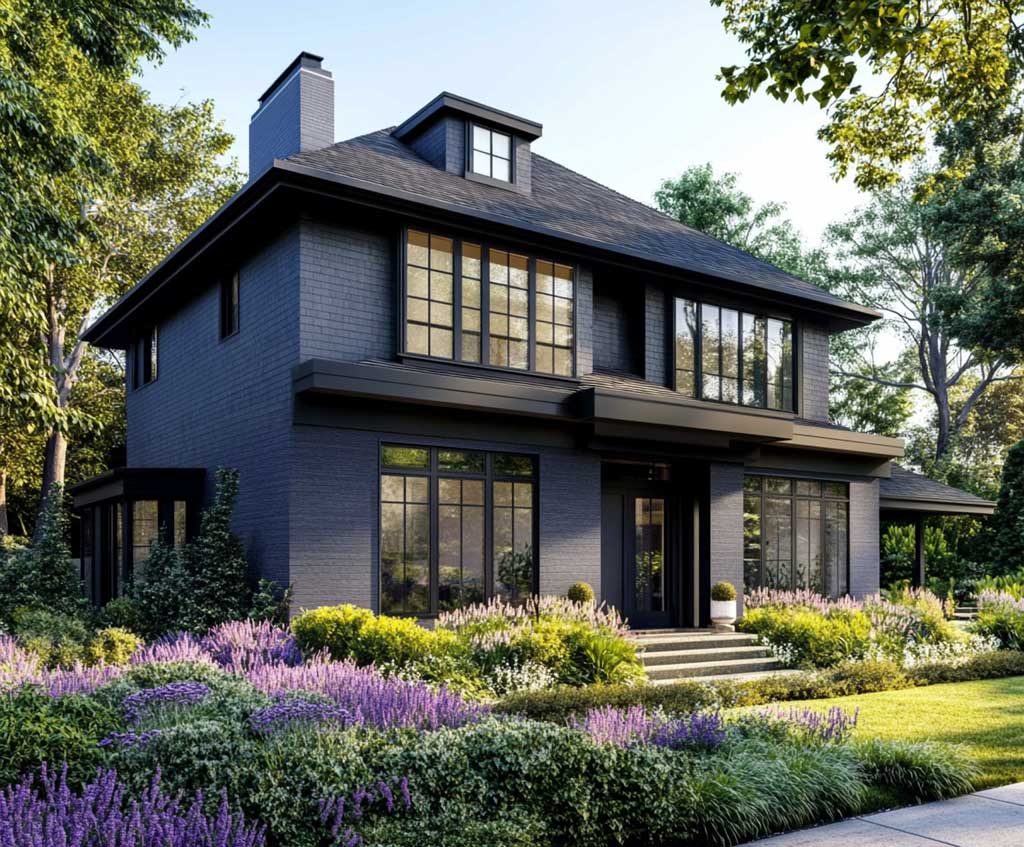
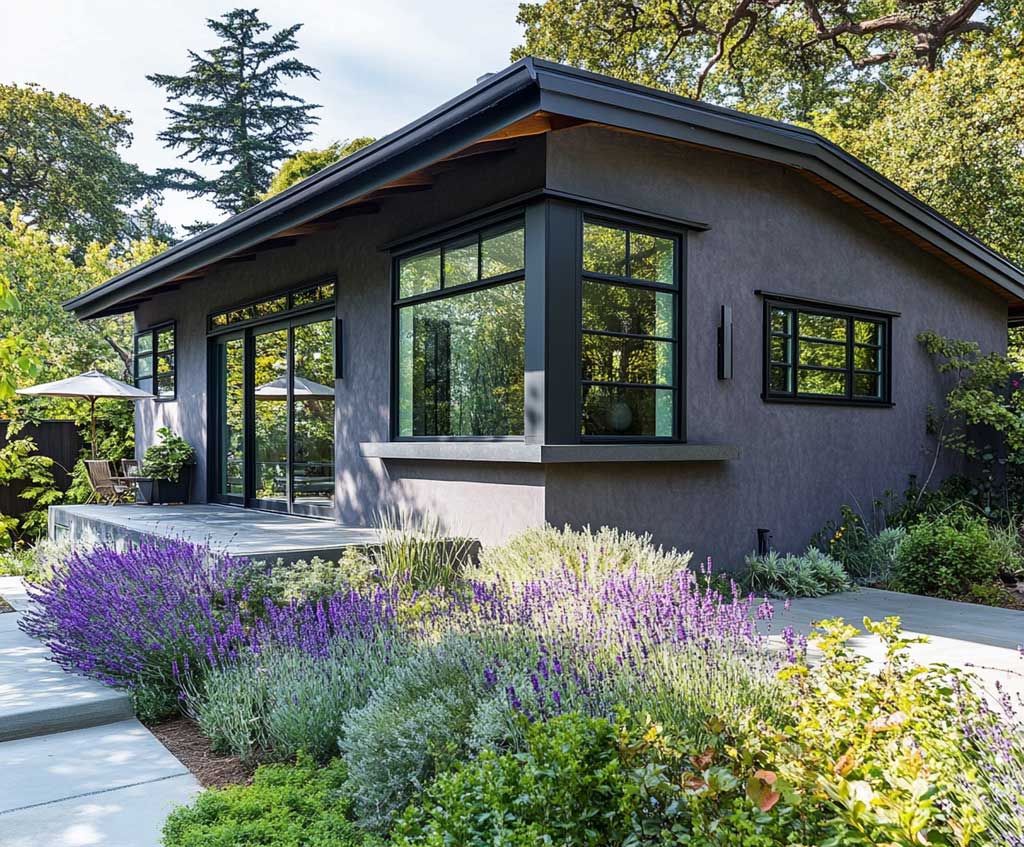
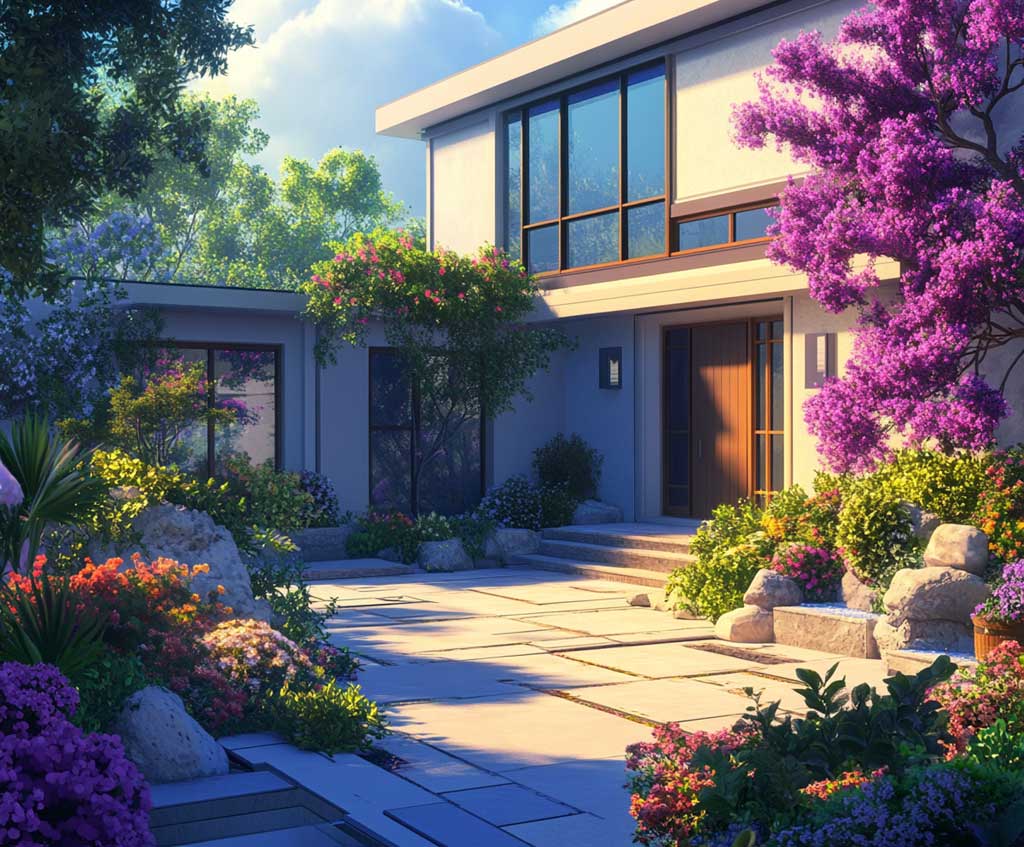
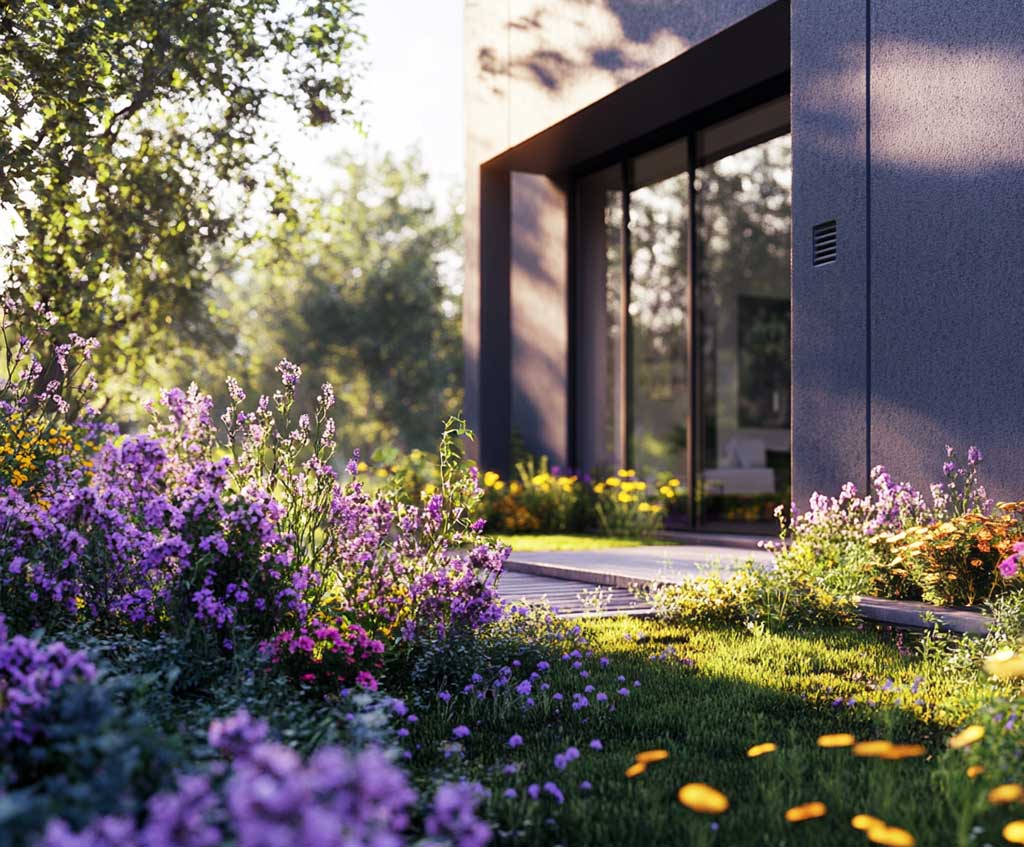
For minimalist architectural styles — flat rooflines, large windows, board-and-batten siding — the charcoal and lavender accent combination creates balance without the decorative complexity of craftsman trim. A charcoal front door that has been repainted lavender becomes the handshake of the facade: the first thing visitors process, the element that makes the house look considered rather than default. Lavender planters flanking the entry reinforce the accent without requiring additional painting and can be swapped seasonally without touching the exterior paint budget.
Dark exterior colours on board-and-batten and smooth fibre cement siding perform well in urban and suburban environments because they reduce the visible accumulation of dust and surface grime between washes. Stucco holds its exterior paint colour for 7–10 years, making it the optimal substrate if the charcoal-dominant version of this palette is the goal — the longer repaint interval makes the higher per-gallon cost of premium paint worth the investment. Large windows framed in lavender create a layered effect: the glass reads as depth, the lavender frame as a boundary, the charcoal beyond as structure. Two-tone exterior paint ideas covers how to apply this kind of colour placement logic across traditional home styles where the architectural vocabulary is different.
The failure mode for this approach is placing lavender accents on more than one architectural element type simultaneously. Lavender door plus lavender window frames plus lavender planters plus lavender shutters is not a restrained accent scheme — it is the charcoal-and-lavender combination from Section 2 but executed without the intentionality. The rule: pick one element. If the door is lavender, the window frames stay charcoal or near-black. Matte black hardware is the right call here — it integrates with the charcoal and doesn’t compete with the lavender accent for attention.
| Approach | Best Architecture | Lavender Placement | Key Risk |
|---|---|---|---|
| Lavender walls + charcoal roof | Traditional, craftsman, suburban | Full body colour | No fascia trim break makes colours collide |
| Charcoal body + lavender trim | Craftsman, wooded lots, cottage | Window surrounds, fascia, porch details | Too many trim elements in lavender reads cluttered |
| Charcoal walls + lavender accents | Modern, minimalist, urban | Front door or window frames only | Multiple accent elements undermine the restraint |
Sherwin-Williams offers a dedicated set of exterior colour palettes organised by architectural style — worth checking before you finalise a lavender or charcoal shade, since the palette tool shows confirmed pairings for your home type rather than abstract swatches. Visit their architectural exterior colour collections and filter by your home style for coordinated starting points.
EXTERIOR PAINT
Charcoal does the work. Lavender gets the credit.
Get the undertone right first: blue-grey lavenders stay cooler against near-black charcoal; pink-purple lavenders can read muddy under a dark roof. Test both on the north-facing wall at 4 PM before ordering full gallons.
Benjamin Moore Regal Select Exterior ($55–$70/gal) handles both charcoal tones and mid-lavender tones reliably. Stucco substrates hold exterior paint 7–10 years; wood siding plans for 5–7 years, south-facing walls closer to 5.
Save this post before your next paint appointment — the combination that looked right on a screen may shift two shades warmer in direct afternoon sun.
FAQ
What colors go with charcoal on a house exterior?
What is the best purple colour combination for house exterior painting?
Does lavender and white work on a house exterior?
Does charcoal exterior paint fade faster than lighter colours?
Can you use purple on a house exterior without it looking too bold?
How do purple and white look on a house exterior?
Complete guide
Grey Home Color Ideas for Every Room and Every Shade
Exteriors, kitchens, living rooms, bedrooms, bathrooms — all in one place