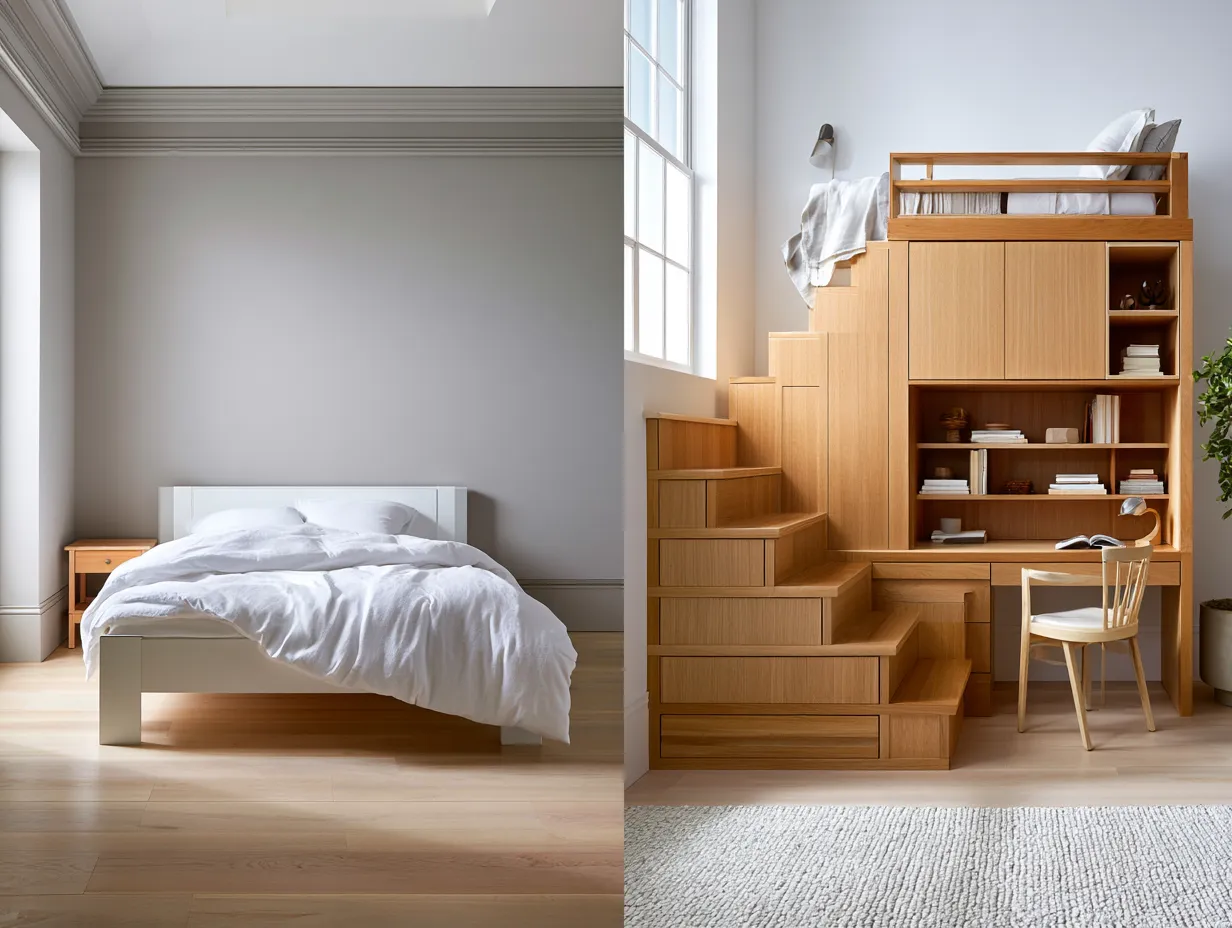
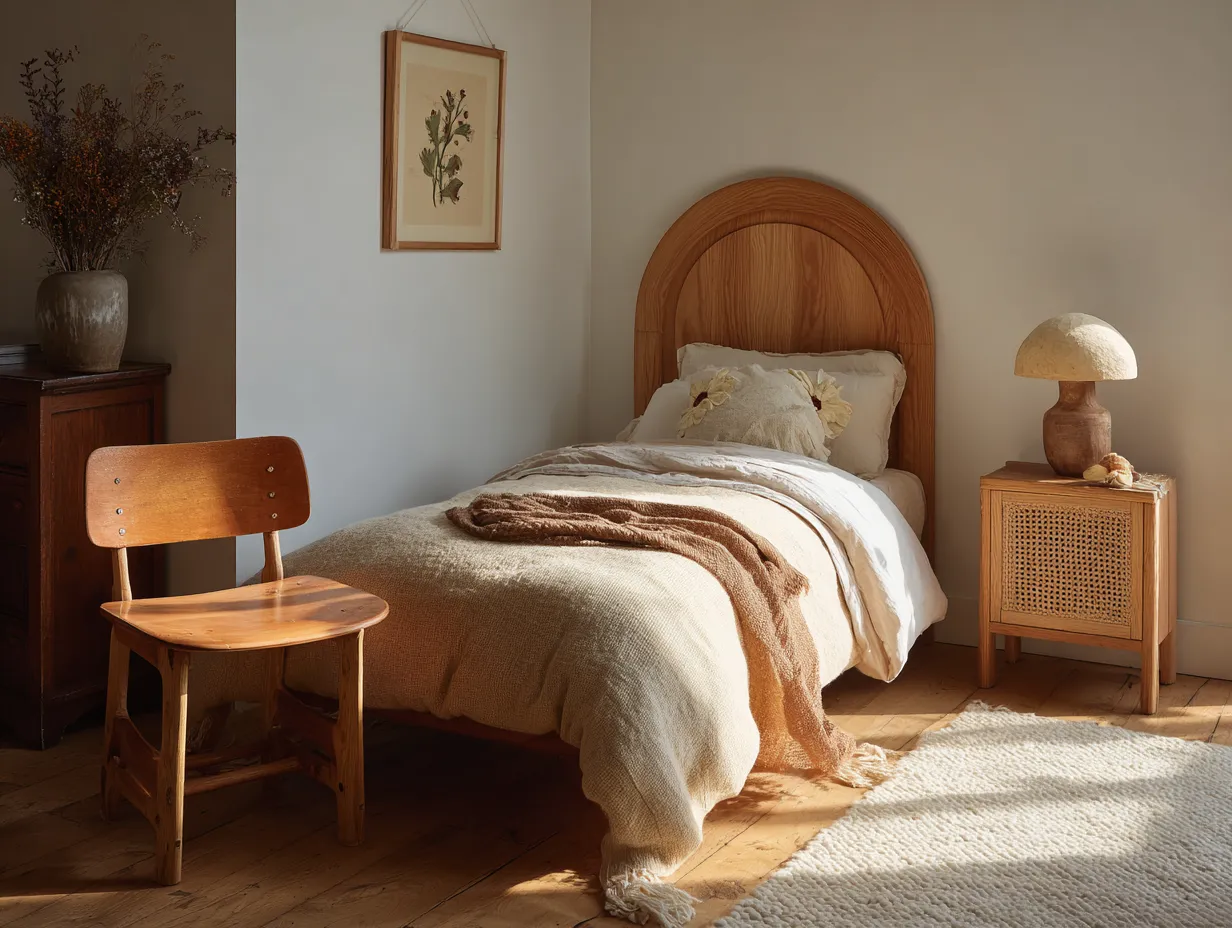
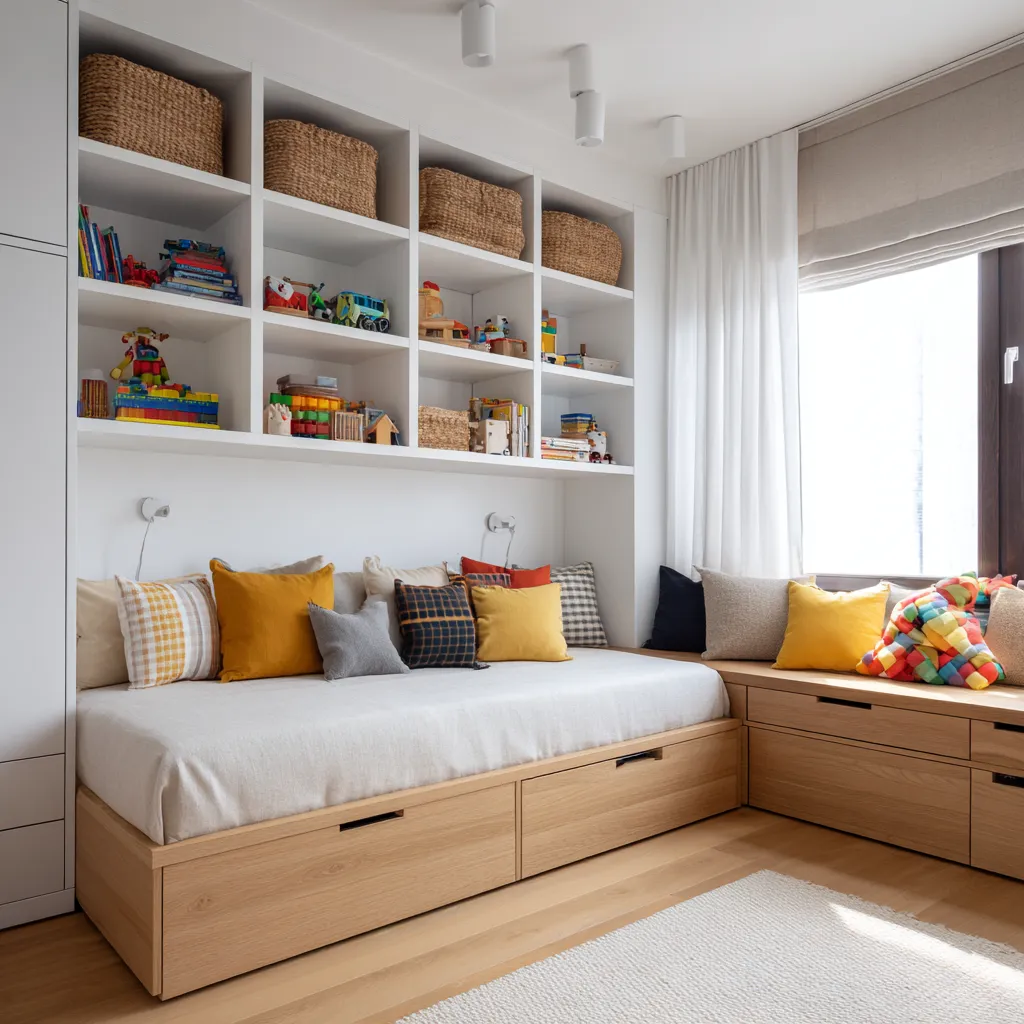
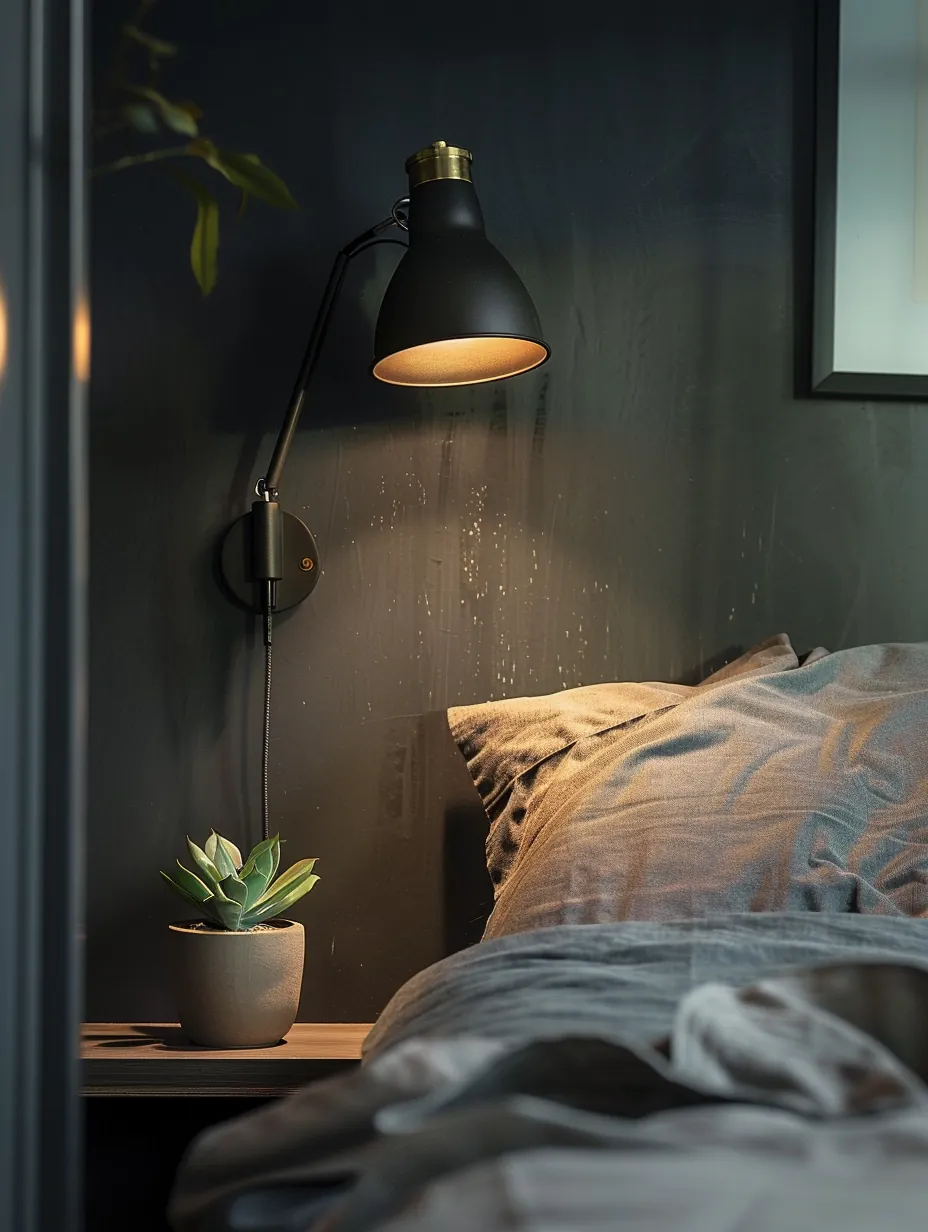
A black and white kids bedroom works when white takes the big surfaces and black draws the lines: walls and ceilings stay pale, while shelves, frames, bedding prints and the play mat carry the contrast. The split matters because a crisp white reflects about 92% of incoming light, while a near-black paint returns only about 3%. Flip that ratio and a child’s room turns into a cave by late afternoon. Start every plan with white walls and add black in objects you can move.
Is monochrome too stark for a child? Not when pattern does the playing. Within a couple of weeks of birth, babies begin to pick out light-and-dark ranges and patterns, and by around 5 months their color vision is good, though not yet as sharp as an adult’s, according to the American Academy of Ophthalmology’s month-by-month guide to baby vision. Bold stripes, checks and animal silhouettes suit that stage, and the same prints still look grown-up at age 10. Choose graphics with thick outlines so they read from across the room.
The ideas below cover monochrome wall art and shelving, geometric bedding, a black and white play corner and the upgrades that carry the room into the teen years. Each comes with real sizes, costs and safety figures rather than mood-board guesses. Treat the room like a white shirt: the base stays, the accessories rotate. Pick one hero element per wall before buying anything else.
- A crisp white reflects about 92% of light vs about 3% for near-black paint, so white belongs on walls and black on details.
- Babies notice light-and-dark patterns within weeks of birth; good color vision arrives around 5 months.
- Percale bedding at 200–400 thread count keeps geometric prints crisp; sateen at 300–500 feels softer and warmer.
- Toddler play mats protect best at 0.75–1.2 inches thick, compared with 0.375–0.5 inches for basic puzzle tiles.
- Most anti-tip kits cost under $20 and take under 20 minutes to install on a bookcase or dresser.
- A 10-year-old needs a desk around 22–24 inches high, against 18–20 inches at age 5.
- Keep roughly 60% white to 40% black so the room reads graphic, not heavy.
Monochrome Wall Art and Floating Shelves for a Black and White Kids Room

Monochrome wall art sets the tone for a black and white kids room faster than any piece of furniture, because it sits at eye level and covers the most visible surface. Abstract circles, bold lines and minimalist animal silhouettes read clearly to a baby at 2 months and still look sharp to a 9-year-old. Fine linework does the opposite, turning gray and fuzzy from across the room. Choose prints with shapes at least as wide as your palm.
Gallery wall or one big statement print? Think of a newspaper page: a single headline grabs attention, while a grid of small stories asks the eye to work. A gallery wall suits a long wall over a dresser, and one large print suits the narrow space above a bed. Mixing both on the same wall breaks the rhythm. Frame every piece in the same black or white moulding so the group reads as one design.

Floating shelves in matte black give books and toys a display line without eating floor space. Freestanding bookcases need more care: by U.S. safety-agency data, 79% of furniture and TV tip-over deaths involve children younger than six. Most anti-tip kits cost under $20 and install in under 20 minutes, which is less time than assembling the bookcase itself. Never store favorite toys on a top shelf that turns the unit into a ladder.

Light decides whether the room feels crisp or gloomy. The same math applies in any monochrome space, as this breakdown of black walls versus black furniture in a monochrome bedroom shows: an LRV 3 black swallows most of the light that hits it, while a crisp white bounces it back. In a child’s room, white walls with black shelves beat black walls with white shelves for daytime play. Use warm 2700–3000K bulbs so the contrast feels calm at bedtime.

A black rug can anchor the floor, but only when the walls stay white and daylight is strong. In a north-facing room, a light gray rug does the same grounding job without absorbing the little light available. Art and shelves are the cheapest pieces to swap, so they should carry the theme while the walls stay neutral. Rotate prints once a year instead of repainting.
Geometric Bedding Gives a Black and White Kids Bedroom Its Rhythm

Geometric bedding is the fastest way to give a black and white kids bedroom a focal point, since the bed is the largest surface after the walls. Stripes, chevrons and triangles turn a plain room into something closer to a chessboard, where the pattern works only because both colors repeat in clear shapes. One bold print on the duvet is enough. Keep sheets and the bed skirt in solid white.
Weave matters as much as pattern. Percale at roughly 200–400 thread count gives a matte, crisp surface that keeps black stripes sharp, while sateen at 300–500 thread count adds sheen and holds more warmth. Which suits a child who kicks off the covers at night? Percale, because it breathes better than sateen. Read the weave on the label rather than trusting the word soft on the packaging.

Stripes or shapes for a monochrome kids bedroom? Wide stripes calm the bed down, much like a zebra crossing reads as order rather than noise, while small triangles and diamonds add energy. Pair one large-scale pattern with one small-scale one, never two of the same size. Two busy prints at equal scale fight each other like overlapping radio stations. Put the big pattern on the duvet and the small one on two cushions.

A black bed frame against white walls works like ink on paper: every edge reads. Add a black nightstand and a white lamp, and the bed corner is finished. Do not stack a black duvet, black frame and black rug in one spot, because the bed sinks into the floor after sunset. Aim for roughly 60% white to 40% black across the visible surfaces.

Gray is the third color that keeps a two-tone room from looking printed. A light gray rug or throw softens bold bedding the way a pencil sketch softens an ink drawing. Line-drawing prints above the bed tie the pattern back to the walls. Limit the palette to black, white and one or two grays so the geometry stays the star.
A Black and White Playroom Corner Built Around the Floor Mat

Black and white playroom ideas start on the floor, because a patterned mat marks the play zone the way a stage marks where the show happens. A checkerboard or zigzag mat tells a toddler where toys belong and where the bed area begins. Typical foam sets cover about 90 by 90 cm with 9 interlocking tiles, while larger ones reach roughly 51.6 inches square. Measure the corner before ordering, leaving a clear path to the door.
How thick should the mat be? Basic puzzle tiles run 0.375–0.5 inches, which suits crawling but offers little protection when a child falls from standing. For active play between 18 months and 3 years, mat makers recommend about 0.75–1.2 inches (20–30 mm). On tile or concrete, go one thickness tier higher than the age baseline. Check the thickness before the pattern, not after.

| Mat type | Thickness | Typical size | Best stage | Fall protection |
|---|---|---|---|---|
| EVA puzzle tiles | 0.375–0.5 in | Modular, any size | Crawling, floor play | Minimal for falls from standing |
| 9-piece foam playmat | 1.4 cm (0.55 in) | 90 x 90 cm | Rolling, sitting, first crawling | Soft landing for small tumbles |
| Expandable foam set | 0.47 in | 51.6 x 51.6 in | Babies to preschool | Light bumps on carpet or wood |
| Toddler activity mat | 0.75–1.2 in (20–30 mm) | Varies | 18 months to 3 years | Falls from standing height |
| Memory foam play mat | 1.3–1.5 in | Varies | Standing, early walking | Highest cushion on hard floors |
Child-size furniture finishes the corner, and scale matters more than style. A 3-year-old fits a table about 16–21 inches high with a chair seat around 9.5–11.5 inches, while a 4-year-old moves up to roughly 18–23 inches. Adult-height tables force a toddler to kneel on the chair, which is how drawings end up on the floor. Pick a table with legs that adjust or swap.

Setting up the corner takes an afternoon if you follow a fixed order:
- Measure the floor and leave a clear walkway to the door and window.
- Lay the mat first, choosing thickness by age and floor type.
- Add low open shelves and anchor any unit taller than the child.
- Place the table and chairs on the mat edge, not the center.
- Finish with one floor lamp or pendant at 2700–3000K.

Color does not break a monochrome play area; it gives it a job. Bright toys and book spines pop against black and white the way a red coat stands out in a snowy street photo. A neutral backdrop also makes the mess look smaller, since nothing in the room competes with the toys. Keep color in objects that move, never in paint or furniture.
Monochrome Kids Bedroom Choices Built to Last Into the Teen Years
Black and white bedroom ideas for teens grow out of the same base, which is the strongest argument for going monochrome early. A white room with black accents reads as nursery at 1, playroom at 5 and sleek study at 13, while a themed room dates in three years. When does a kids room need a teen refresh? Usually when the desk stops fitting, not when the walls look tired. Plan the desk upgrade before the décor upgrade.
Desk height changes faster than taste. A 5-year-old fits a desk of about 18–20 inches with a 10–12-inch seat, while a 10-year-old needs roughly 22–24 inches with a 14–16-inch seat. Children grow about 2–3 inches a year at that stage, so a fixed desk bought at 6 tends to stop fitting around 9. Choose a height-adjustable desk in black or white and buy it once.
The bed frame is the other piece to future-proof. As this look at children’s bedroom modular furniture that grows from toddler to teen explains, grow-with-child systems such as IKEA SLÄKT run from about $4.99 for accessories to $499 for a full setup, and the 80/20 rule keeps 80% of the room neutral. A monochrome scheme fits that rule naturally. Skip car-shaped or castle beds, since the largest object in the room is the hardest one to replace.
Teens tend to ask for darker, moodier rooms, and monochrome handles that without a full repaint. Swap a white duvet for a charcoal one, add a black desk lamp and frame band posters in black. A charcoal at LRV 6 returns roughly twice the light of a true black, so it suits a teen accent wall better than jet black in a small room. Test a large paint sample for 48 hours before committing.
Comparing Monochrome Room Layouts by Age, Cost and Upkeep
Choosing a monochrome layout comes down to daylight, budget and how long the room needs to last. Painter labor typically runs about $2–$6 per square foot, while swapping bedding or adding a play mat costs a fraction of that. White walls with black furniture win for babies and small rooms; black accent walls suit older kids in bright rooms. Use the table to match the layout to the age and the window.
| Layout | Typical cost | Light from main surface | Best age range | Upkeep and flexibility |
|---|---|---|---|---|
| White walls + black shelves and frames | No repaint; anti-tip kit under $20 per unit | About 92% (crisp white) | Nursery to teen | Swap pieces anytime |
| Geometric bedding on a white room | One duvet set; percale 200–400 TC | Room stays mostly white | Any age | Cover changes in minutes |
| Patterned play corner mat | About $70 for a 51.6-inch foam set | Floor zone only | Crawling to preschool | Wipe clean; replace as child grows |
| Charcoal accent wall + white furniture | About $2–$6 per sq ft labor | About 6% (LRV 6 charcoal) | Age 8 and up | Easier to lighten later than black |
| Black accent wall + white furniture | About $2–$6 per sq ft labor | About 3% (LRV 3 black) | Teens, bright rooms only | Primer plus 2 coats to undo |
Don’t Do This
- Don’t leave a bookcase or dresser unanchored; 79% of tip-over deaths involve children under six, and a kit costs under $20.
- Don’t lay 0.375-inch puzzle tiles on a tile floor for a climbing toddler; go up to 0.75–1.2 inches.
- Don’t stack a black duvet, black frame and black rug; keep about 60% white to 40% black.
- Don’t paint a north-facing nursery black; an LRV 3 shade returns only about 3% of light.
- Don’t light the room with 4000K bulbs; 2700–3000K keeps contrast calm at bedtime.
- Don’t buy a fixed 18-inch desk for a 5-year-old and expect it to fit at 10.
The Contrast Worth Keeping
A black and white kids bedroom earns its place because the base never ages: white walls reflecting about 92% of light carry a child from crib to teen desk, while black accents do the styling. Few color schemes survive 15 years of changing interests with nothing more than new bedding and prints.
Put black in objects, not on walls, until the child is at least 8. Shelves, frames, a bed frame and a patterned mat give all the contrast a young child needs.
Spend on safety and fit first. A $20 anchor kit, a 0.75–1.2-inch toddler mat and an adjustable desk matter more than any print.
Choose percale bedding at 200–400 thread count for crisp geometric prints, and let colorful toys provide the only bright notes. When the teen years arrive, swap white for charcoal in textiles before reaching for a paint roller.