Quick Scan
- True modular furniture allows structural reconfiguration — not just swappable colors or drawer pulls.
- The 80/20 Rule: keep 80% of the room in neutral wood tones and reserve 20% for swappable character elements like bedding and decals.
- GREENGUARD Gold Certification is now a baseline expectation at premium children's furniture retailers, not a premium upgrade.
- Urban density is driving demand for bunk beds with integrated desks, trundles, and stair drawers — multi-function in a single footprint.
- Start planning a modular system by asking what the room needs at age twelve, then work backward — not forward from the child's current age.
Every few years, the themed bedroom your child loved becomes the bedroom they resent. The racing car bed that was perfect at four feels embarrassing at nine. The princess canopy that anchored the whole room gets removed during a single afternoon. Parents are starting to ask whether they were buying furniture at all — or just buying a phase. Children’s bedroom modular furniture answers that question by building rooms designed to outlast the phases entirely.
This summer, searches for long-term children’s room investments are surging. Pinterest’s 2026 Parenting Trend Report confirms that parents are not just choosing differently — they are choosing with a longer horizon. Modular systems with interchangeable components, grow-with-child bed frames, and integrated storage that reconfigures as the room’s function shifts are now the dominant conversation across Houzz, Kidrovia, and HomeLane. The goal is no longer a room that delights today. It is a room that works for the next decade.
What Makes a Children’s Bedroom System Actually Grow With the Child
The difference between furniture that claims to grow with a child and furniture that actually does comes down to one thing: whether the frame is the constant and the configuration is the variable. A bed that converts from toddler to twin to full is not a gimmick — it is an engineering decision that saves you from buying three beds across twelve years. IKEA’s SLÄKT bed is the clearest entry-level example of this logic, explicitly marketed as ‘a bed for life,’ with add-on accessories that update the frame as the child’s needs shift. Entry pricing sits within the broader IKEA PS 2026 range, starting near $4.99 for accessories and reaching $499 for the full configured system.
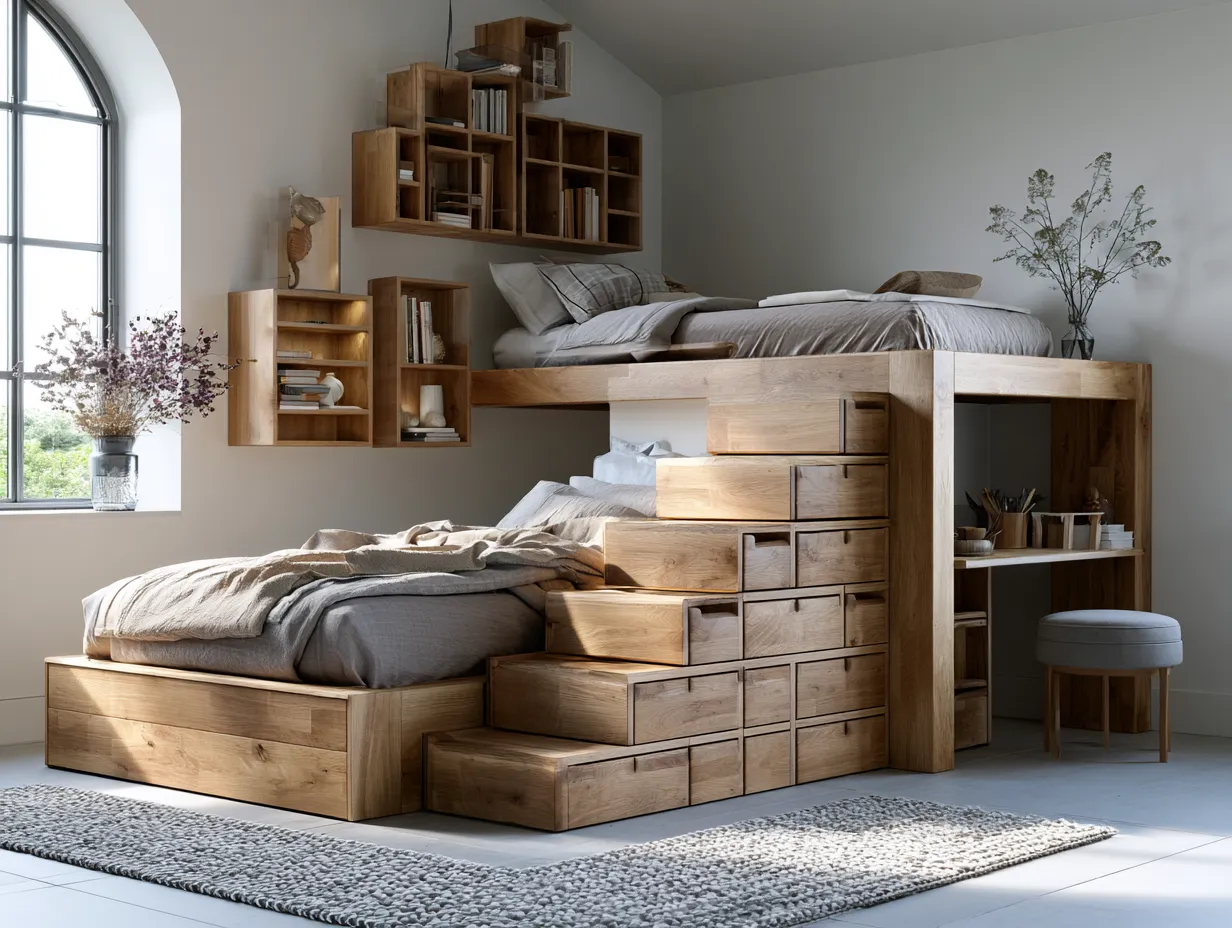
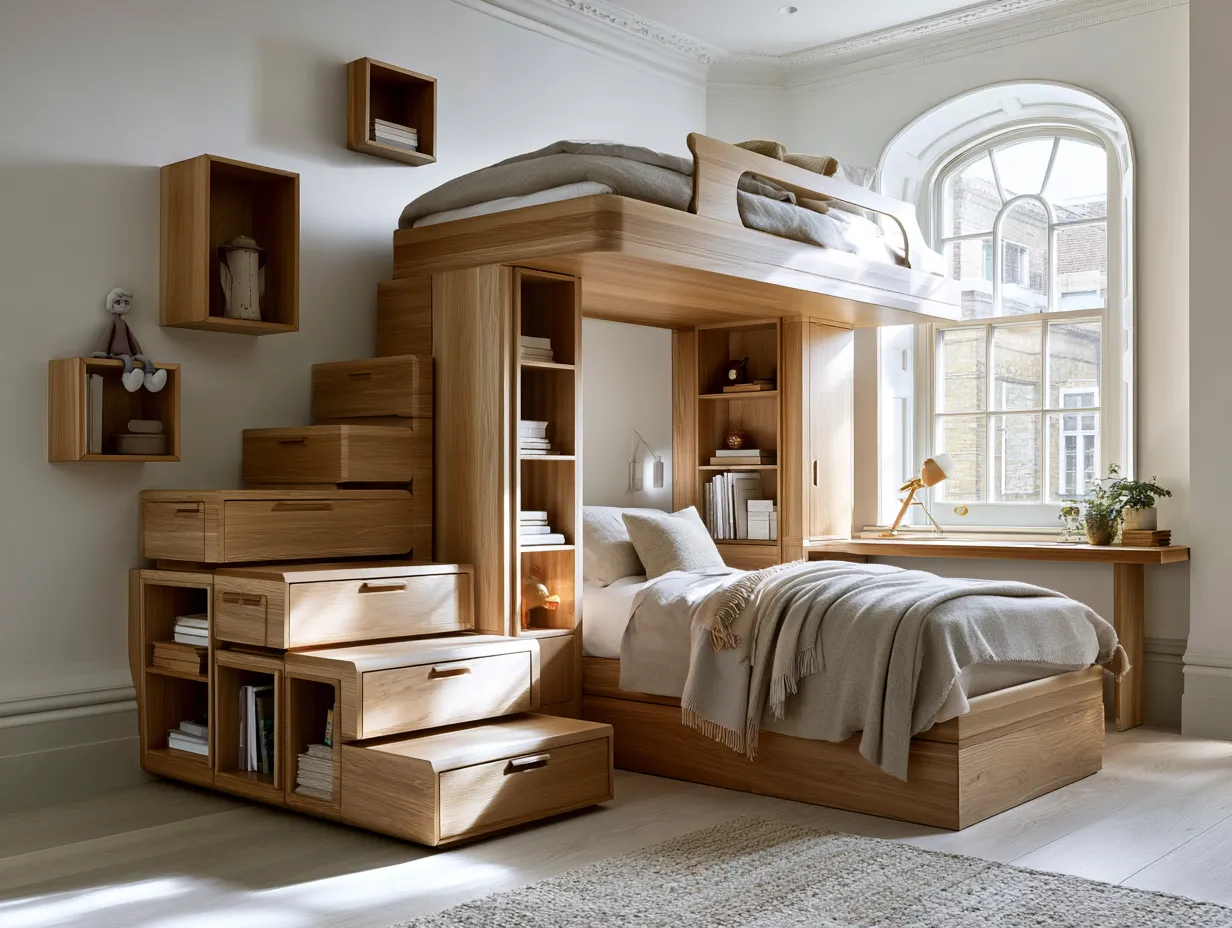
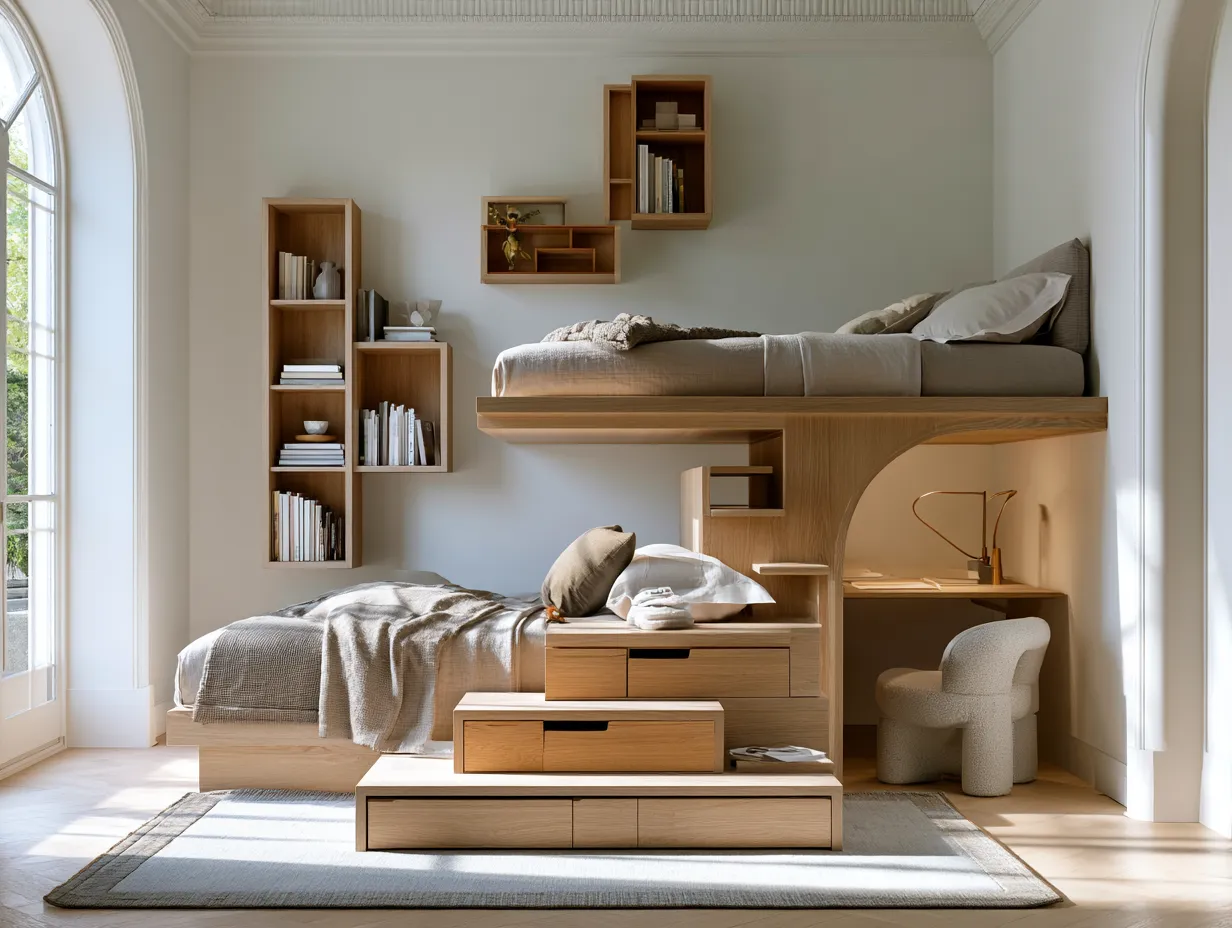
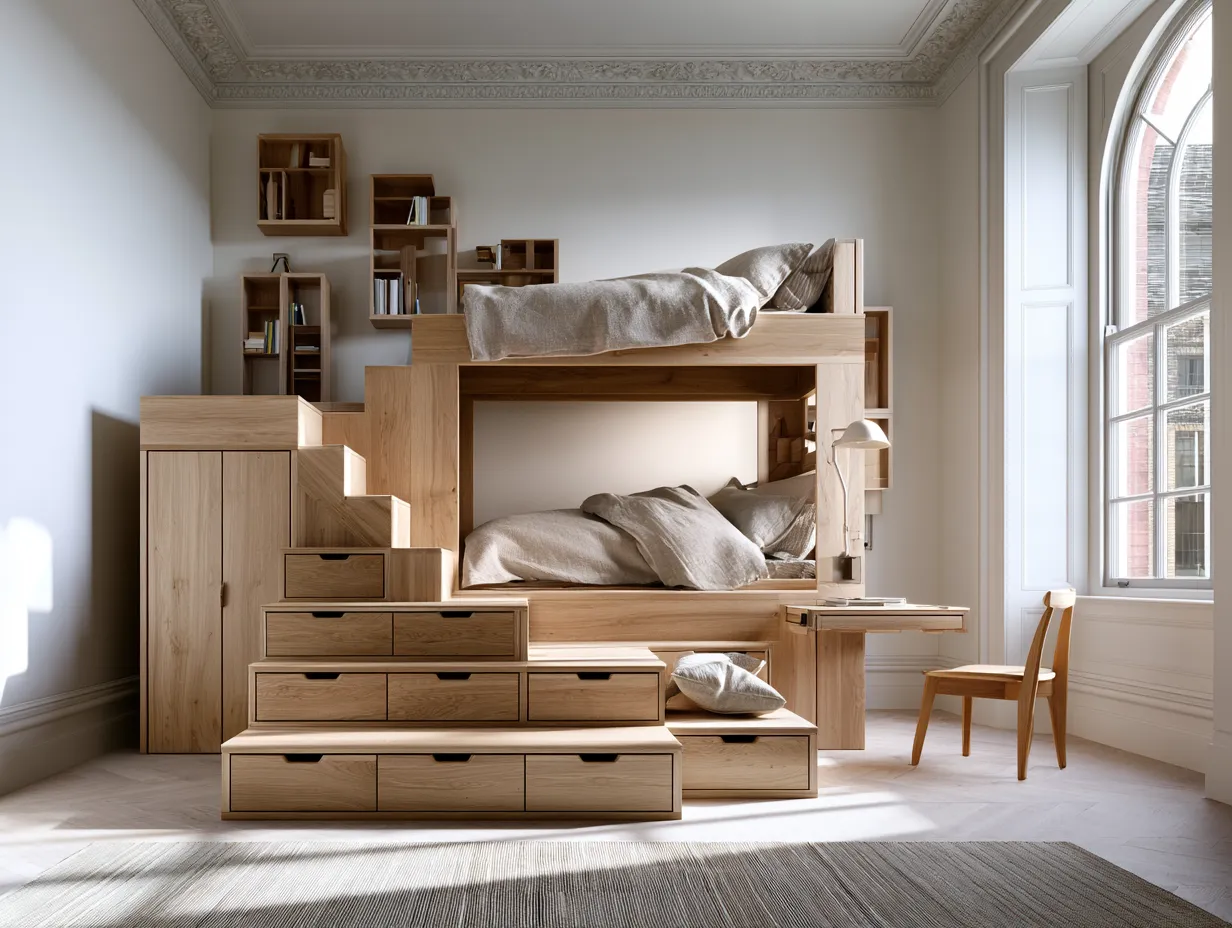
Pottery Barn Kids goes further with its Belden Twin-Over-Full Stair Bunk Bed, a current bestseller as of June 2026 that functions as a bunk in a shared room and reconfigures as two separate beds when siblings age out of sharing. The stair drawers pull double duty as accessible storage for a young child and a footwear landing zone for a teenager. What makes this work is that the product is designed with a ten-year use case in mind, not a two-year aesthetic moment. For a deeper look at how bedroom furniture investments pay off across room types, see 20+ Must-Have Interior Bedroom Furniture Ideas for a Luxurious Sleep Space.
The storage component matters as much as the bed itself. Children’s rooms accumulate function — art supplies give way to homework zones give way to gaming setups. A wall storage system that accepts new shelf heights and desk attachments is doing something a standalone bookshelf never can. Pottery Barn Kids’ Cameron Modular Wall Storage System is built exactly this way, with panels that accept different configurations of cubbies, drawers, and desks as the child’s daily life changes. Both the Cameron system and the Belden bunk carry GREENGUARD Gold Certification, which verifies low chemical emissions — now a baseline expectation at premium children’s furniture retailers rather than a premium add-on.
What should you avoid when choosing modular furniture? Do not choose a system where the modularity is purely cosmetic — swappable drawer pulls or interchangeable colored panels are not the same as reconfigurable structures. A system that looks different at eight but functions identically to how it functioned at four is not a modular system. It is a furniture set with a sticker kit. True modularity means the load-bearing arrangement can change, the footprint can change, or the number of integrated functions can expand without replacing the core frame.
Material quality determines whether the system survives the reconfiguration process. Solid wood or high-grade engineered wood holds screws through repeated assembly and disassembly. Particleboard with laminate veneer often degrades at fastener points after the first reconfiguration, meaning the bed that was supposed to last ten years starts wobbling by year four. The investment logic of modular furniture collapses if the material quality cannot support the intended lifecycle.
Don’t Do This
- Don't choose modularity based only on swappable panels or colored fronts — real modularity means the load-bearing configuration can change, not just the surface.
- Don't apply the 80/20 Rule to walls and then buy a themed bed frame — the bed is the largest object and the hardest to swap, so it must sit in the neutral 80%.
- Don't filter modular furniture by the child's current age — plan for age twelve and work backward, or you will replace the system before it pays for itself.
- Don't buy a 'bedroom system' that is just a coordinated dresser and bed — verify that the bed frame structurally reconfigures and the storage expands before calling it modular.
The 80/20 Room Rule That Makes Children’s Modular Furniture Last Longer
HomeLane designers formally codified something in 2026 that experienced interior designers had been practicing informally for years. They called it the 80/20 Rule for children’s rooms: keep 80% of the room in timeless neutrals and natural wood, and reserve only 20% for swappable personality elements like decals, bedding, and cushion covers. The logic is simple — a room built on a neutral modular base does not become dated when the child’s interests shift. Only the 20% needs to change, and changing bedding costs a fraction of replacing a themed bed frame.
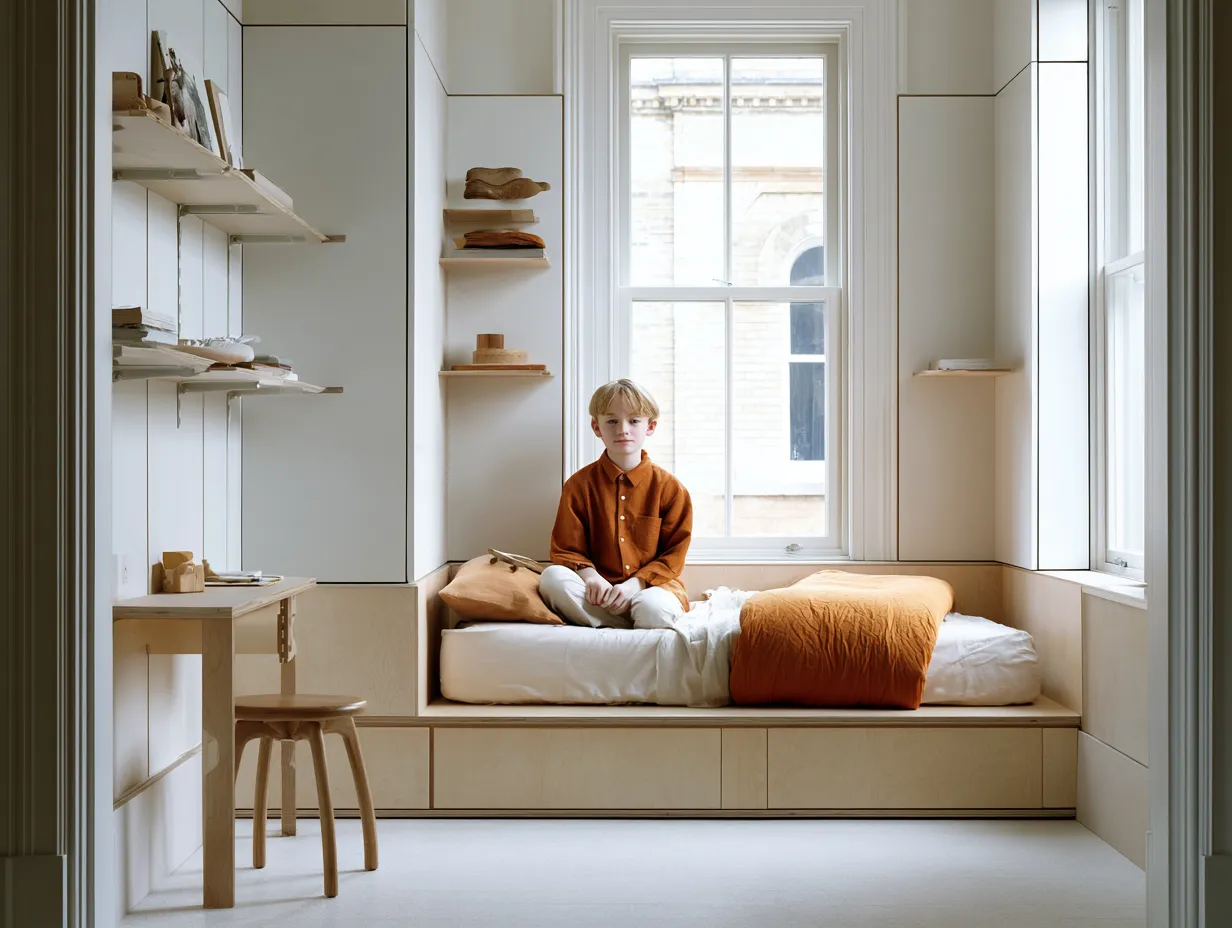
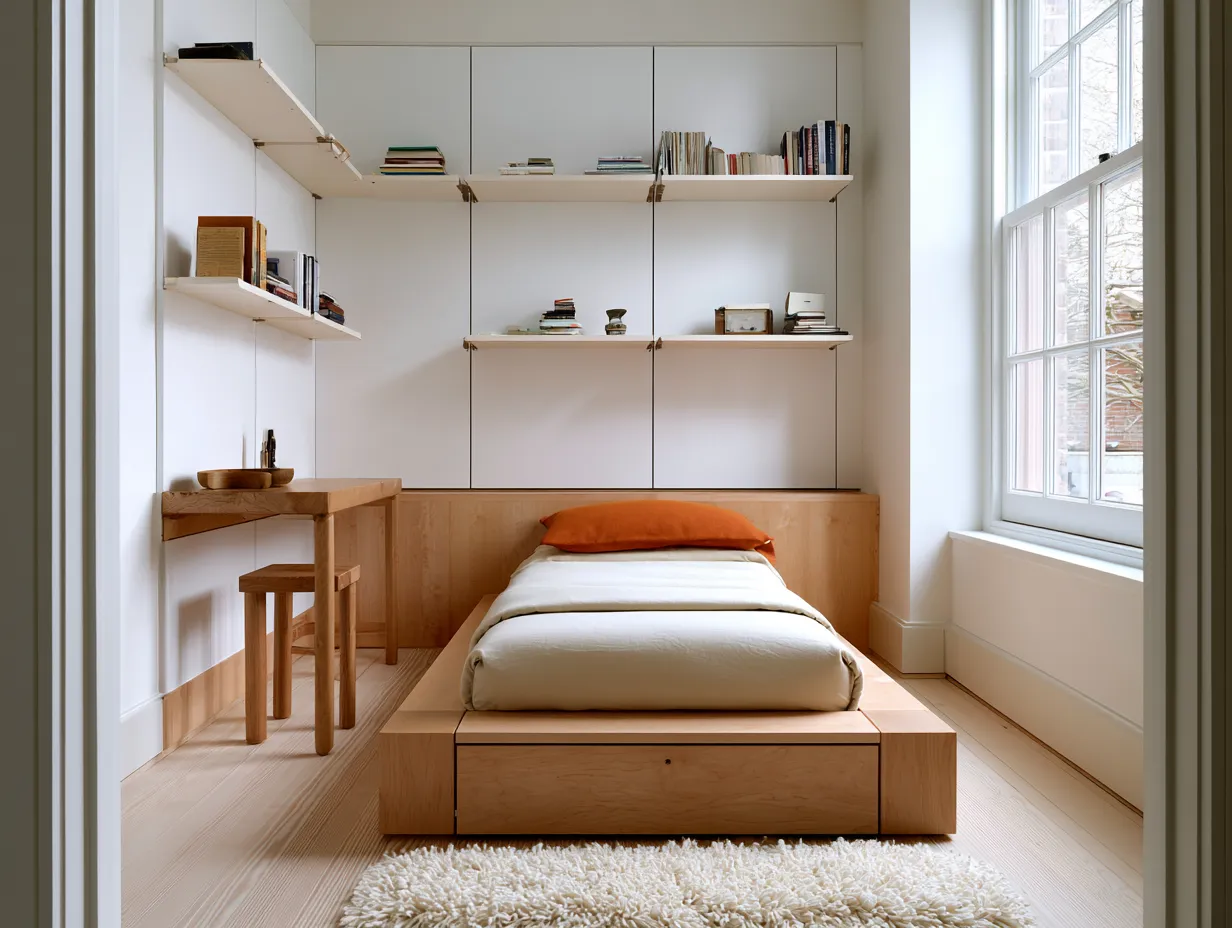
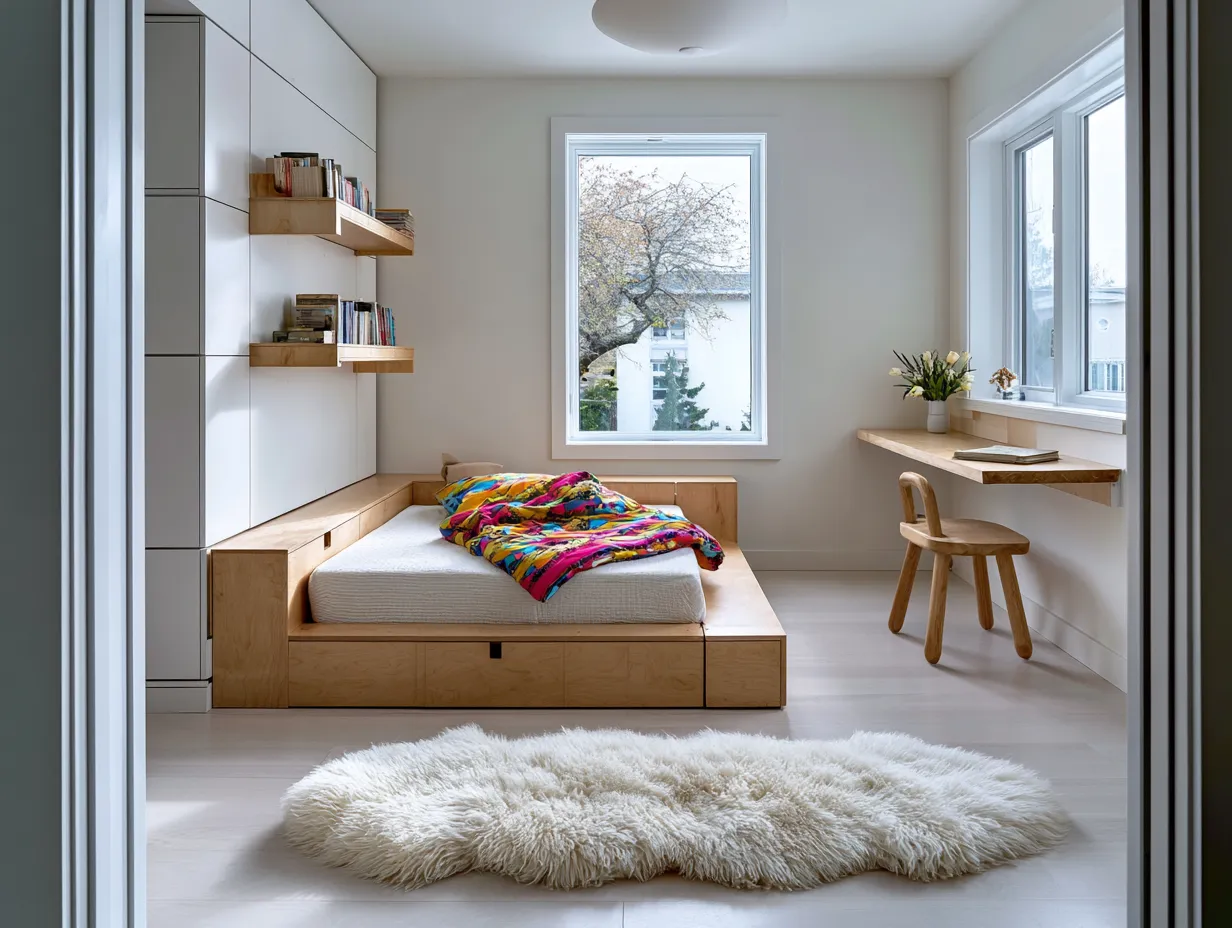
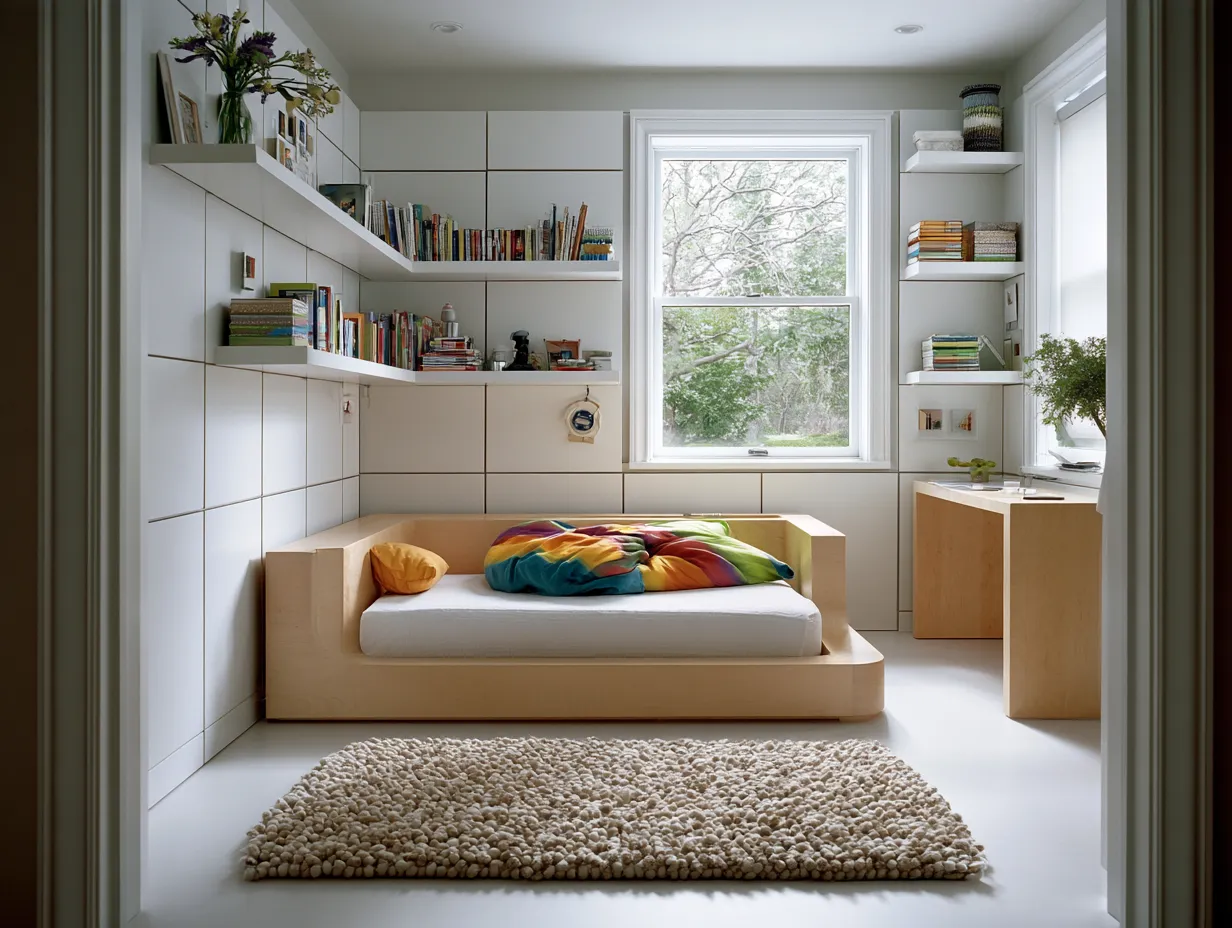
What this looks like in practice is a room anchored by natural birch or oak furniture — a modular bed system in warm wood tones, wall panels in white or greige, and a rug in a geometric or solid pattern with no character imagery. The child’s current obsession lives in the poster taped above the desk, the duvet cover with the dinosaur print, the peel-and-stick stars on one wall. When that obsession ends, the poster comes down and the duvet goes in the wash. The room does not need to be reimagined. For smaller spaces where this principle becomes even more critical, 4+ Innovative Childrens Small Bedroom Ideas for Urban Homes shows how the same neutral-base logic applies when square footage is constrained.
Urban density is accelerating this approach. Multiple 2026 design sources — HomeLane, Newborn Nursery Furniture, and Kidrovia — cite space as the primary reason modular bunk beds with integrated study desks, pull-out trundles, and stair drawers are now outselling single-function beds in city apartments. A child’s bedroom in a two-bedroom apartment cannot afford to be reassigned floor space every few years. The furniture has to carry more functions within the same footprint, and it has to do it through several developmental phases without a redesign.
What not to do here is equally specific: do not apply the 80/20 principle only to wall color and then buy a themed bed frame anyway. The bed is the largest object in the room and the hardest to swap. If the bed carries a character theme — a car shape, a castle turret, a slide attachment — the 80% neutral approach fails at its most load-bearing point. Neutral walls with a racing car bed are still a room that will need replacing in three years. The 80/20 Rule only holds when the furniture itself sits in the neutral 80%.
Material decisions reinforce the rule. Low-VOC paints, organic cotton textiles, and natural wood furniture are now described as core requirements rather than optional upgrades across children’s room design. IKEA and Pottery Barn Kids both center non-toxic material claims in their current marketing — not as differentiators but as table stakes. Choosing furniture in natural wood finishes is not just an aesthetic decision aligned with the 80/20 approach. It is also a health decision that sits well with parents who are already thinking about the room in terms of a decade-long investment rather than a single season.
| System | Price Range | Best For |
|---|---|---|
| IKEA SLÄKT | $4.99–$499 | Entry-level grow-with-child bed, toddler to twin |
| PBK Belden Stair Bunk | Mid-tier | Shared rooms, separates into two beds, GREENGUARD Gold |
| PBK Cameron Wall Storage | Mid-tier | Integrated room system, reconfigurable panels and desk |
| Flexa Classic Range | From ~$600 | Full decade reconfiguration, slide to loft study |
How to Choose Between Modular Children’s Bedroom Systems at Different Price Points
The children’s modular furniture market now has genuine options across three distinct tiers, and the differences are not just about aesthetics — they are about reconfiguration depth, material longevity, and certification standards. Understanding where each tier starts and stops prevents a common mistake: buying mid-tier furniture expecting flagship-tier flexibility and finding that the system cannot actually expand past its original configuration.
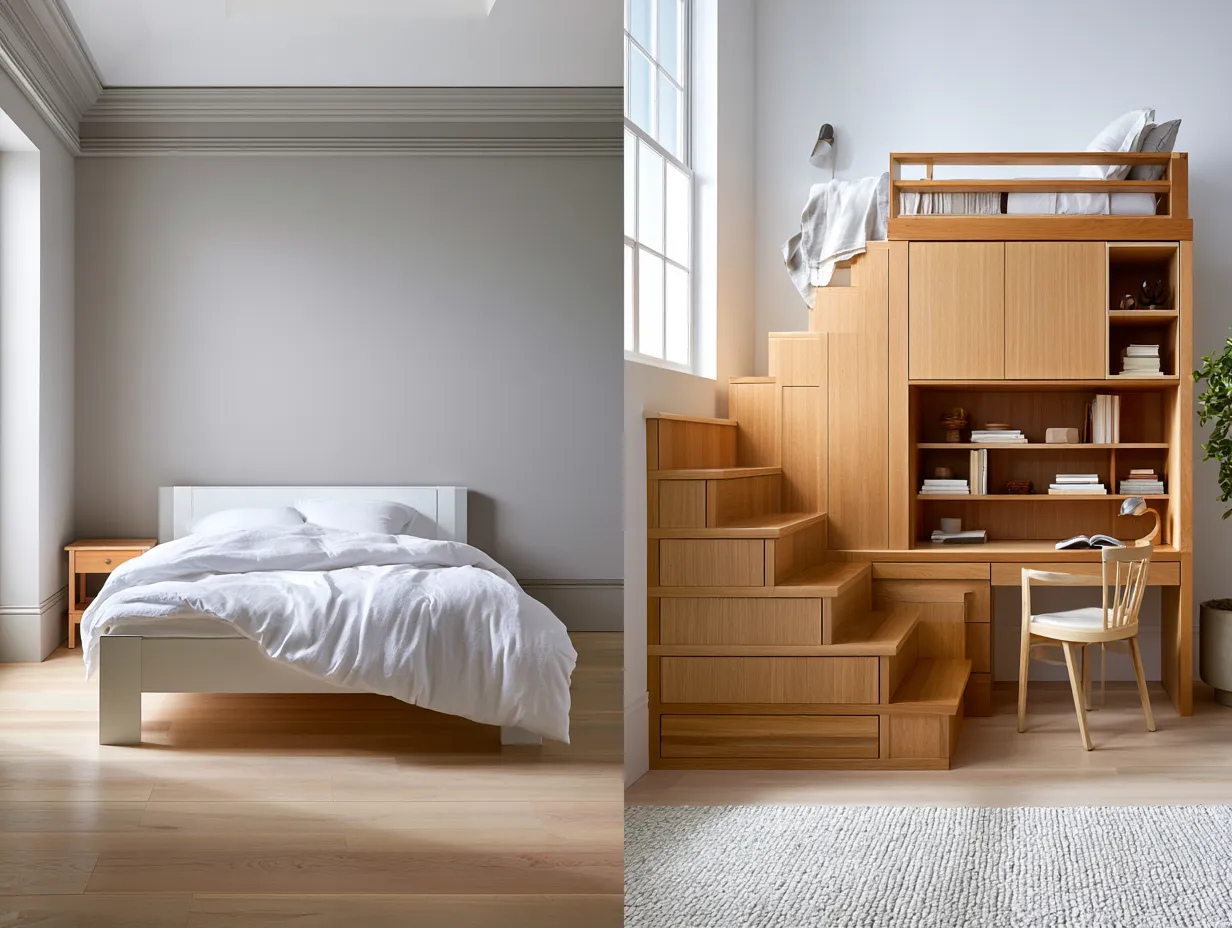
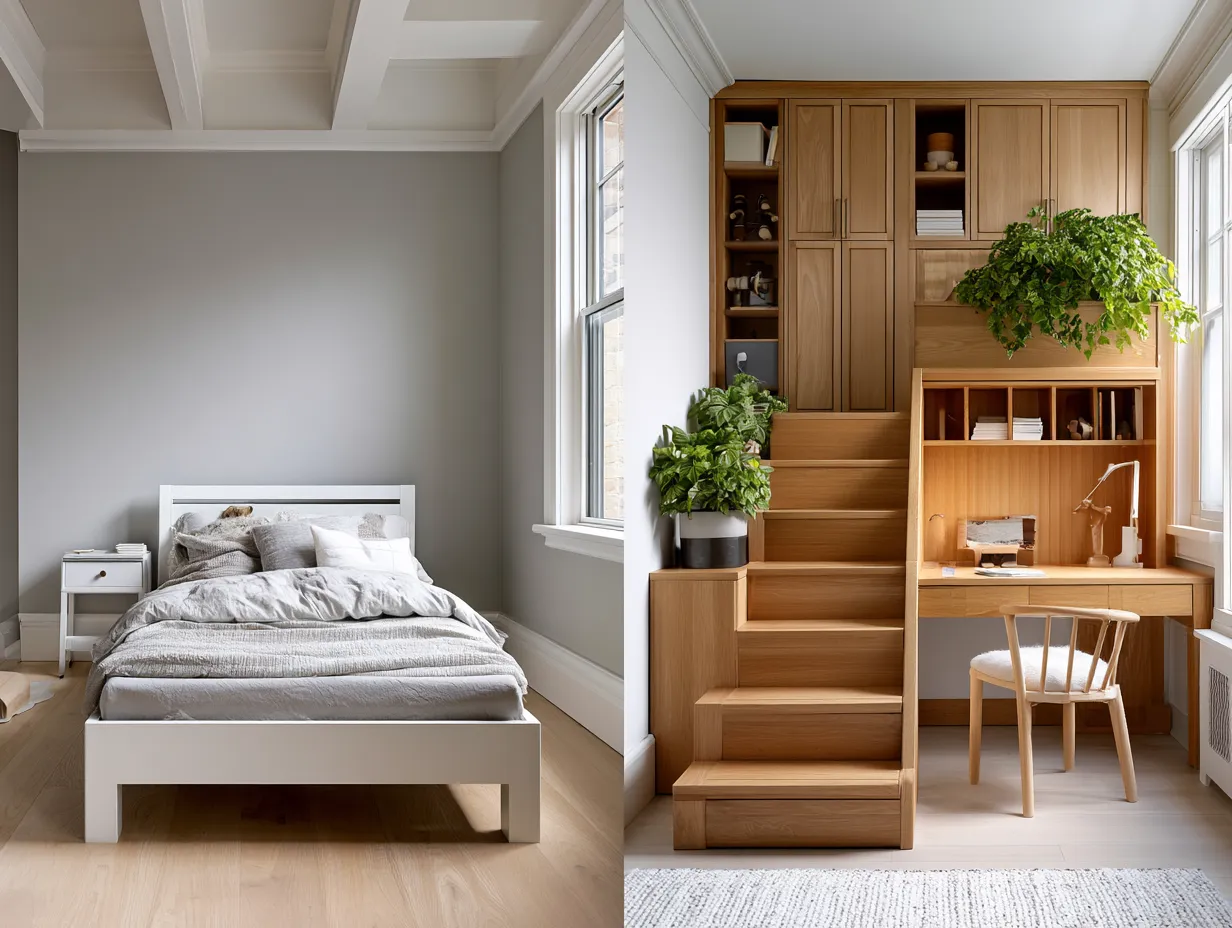
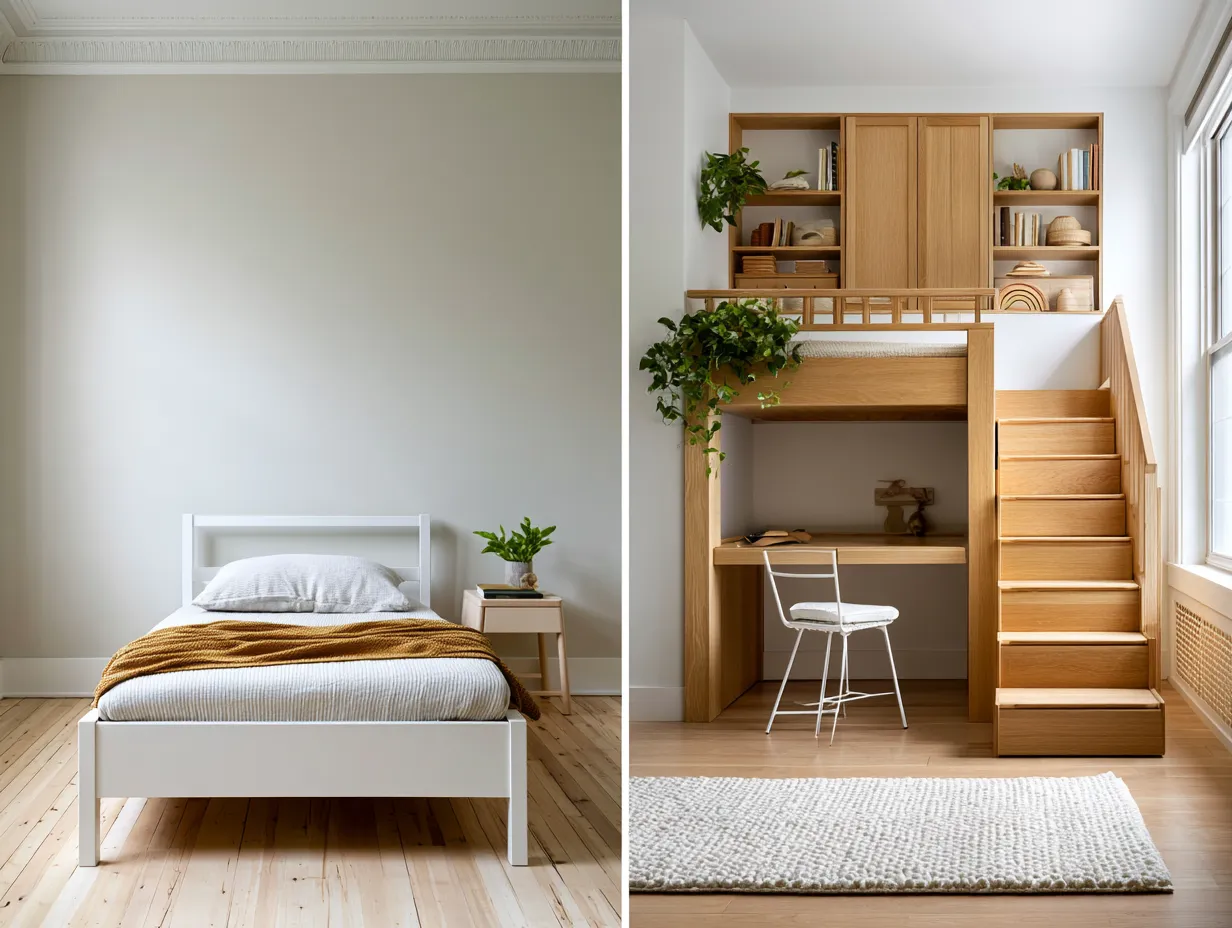
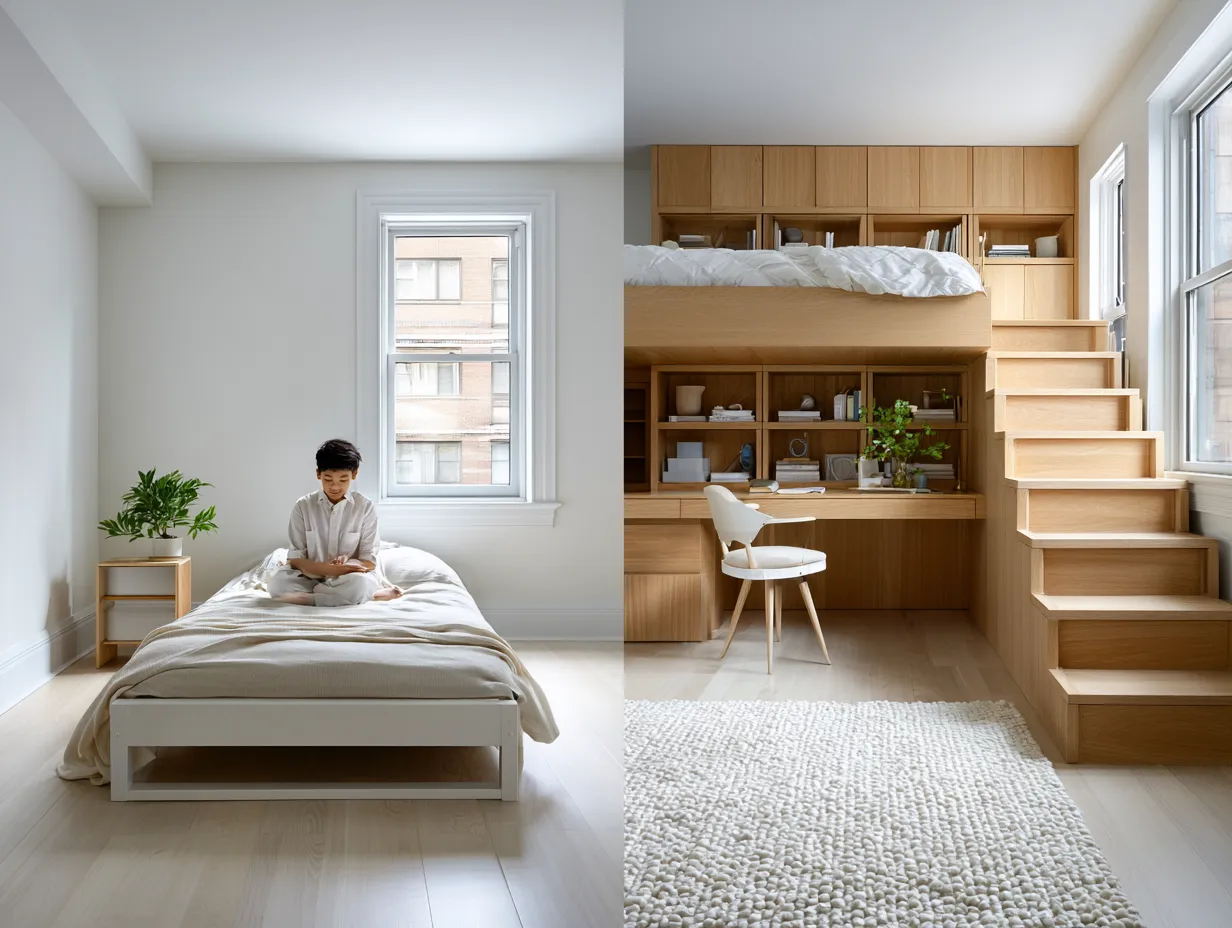
At the entry tier, IKEA’s SLÄKT bed system is the clearest choice for families who want genuine grow-with-child functionality without a significant upfront spend. The frame accepts extension accessories as the child ages, and the pricing model is designed so that updating the system costs far less than replacing it. The broader IKEA PS 2026 range runs $4.99 to $499 across accessories and full configurations. IKEA’s children’s line also leans hard into low-VOC material claims, making it a reasonable entry point even for parents with strict material standards. The limitation is reconfiguration depth — the SLÄKT system adapts within its own framework but does not integrate with wall storage or desk systems the way mid-tier products do.
The mid tier is where integrated room systems become available. Pottery Barn Kids’ Cameron Modular Wall Storage System and the Belden Twin-Over-Full Stair Bunk Bed sit here, both GREENGUARD Gold Certified and designed with a ten-year use arc in mind. The Belden stair bunk is explicitly built to separate into two standalone beds, and the Cameron wall panels accept different shelf and drawer configurations as the room’s function changes. This is where the 80/20 Rule becomes easiest to execute — both products come in finishes that read as neutral architectural elements rather than statement furniture. The investment is higher upfront, but the cost-per-year calculation across a decade changes the comparison significantly against budget alternatives replaced every three years.
At the upper tier, bespoke joinery and custom modular cabinetry from specialists like Lifetime Kidsrooms, Flexa, and custom HomeLane configurations allow full room systems to be designed around a specific floor plan with components that reconfigure as the family’s needs shift. Flexa’s Classic range starts around $600 for a base bed and scales with add-on towers, slides for younger children, and study loft configurations for older ones. The reconfiguration depth is the deepest available — the same system genuinely looks different at four, nine, and fourteen — but the investment requires planning the room’s evolution in advance rather than responding to it.
The mistake most parents make is choosing a price tier based on the child’s current age rather than the room’s planned lifespan. A toddler bed bought at entry tier pricing is not a modular investment — it is a temporary solution at a low price. Real modular thinking starts with the question of what the room needs to do when the child is twelve, then works backward to what the system needs to support at four. That reversal changes which products qualify entirely. Do not start with the child’s current age as the primary filter. Start with the endpoint.
One honest complication: the modular furniture market uses the word ‘modular’ loosely. A dresser sold alongside a bed as a ‘bedroom system’ is not modular furniture. True modularity means the components are structurally interdependent and the arrangement can be changed without buying new core pieces. When evaluating any system, ask specifically whether the bed frame can accept a different configuration — not just different colors — and whether the wall storage can accept additional load-bearing panels as the child’s storage needs grow. If the answer to both is yes, the system qualifies. If only one is yes, it is a coordinated set, not a modular system.
FAQ
at what age should I buy modular children's bedroom furniture
The earlier the better — ideally before the child turns three, so the system can carry them through toddlerhood into school years without replacement. If you are buying for an older child, look for systems that have a clear teen-facing configuration available, such as a loft bed with a full desk area, so the furniture still has runway.
is IKEA modular furniture durable enough to last through multiple reconfigurations
IKEA's SLÄKT system is designed for reconfiguration and holds up reasonably well when assembled carefully using the original fasteners. The main limitation is that IKEA's engineered wood degrades at screw points faster than solid wood when repeatedly disassembled, so plan reconfigurations carefully rather than frequently.
what does GREENGUARD Gold Certification actually mean for children's furniture
GREENGUARD Gold Certification verifies that a product meets strict chemical emission limits for volatile organic compounds, making it safe for indoor environments where children spend extended time sleeping and playing. It has become a baseline expectation at premium retailers like Pottery Barn Kids, appearing across nearly every bed frame and storage unit in their current lineup.
can modular children's furniture work in a small apartment bedroom
It is actually where modular systems perform best. A bunk bed with integrated stair drawers, a pull-out trundle, and a wall-mounted desk replaces four separate pieces of furniture within a single footprint — critical when a child's bedroom in a city apartment cannot afford to dedicate floor space to standalone pieces.
how do I make a modular children's room feel personal without buying themed furniture
Apply the HomeLane 80/20 Rule — anchor the room in natural wood furniture and neutral wall tones, then let the child's personality live in bedding, peel-and-stick decals, posters, and cushion covers. All of those elements can be swapped in an afternoon when interests change, without touching the furniture.
what is the difference between Flexa and Pottery Barn Kids modular systems
Flexa operates at a higher reconfiguration depth — its Classic range is designed to look structurally different at four, nine, and fourteen with add-on towers, slides, and study loft components. Pottery Barn Kids' Belden and Cameron systems are more accessible in price and finish range but reconfigure within a more defined framework. Flexa requires planning the room's full evolution upfront; Pottery Barn Kids allows more reactive updates.
Save this
Children's Bedroom Modular Furniture Pays Off When You Plan a Decade Ahead
The shift away from themed children's bedrooms is not about minimalism or aesthetics — it is about recognizing that a room rebuilt every three years costs more in time, money, and disruption than a modular system bought once with a decade-long use case in mind. IKEA's SLÄKT, Pottery Barn Kids' Belden and Cameron systems, and upper-tier options from Flexa all prove that the market has caught up with what parents actually need.
Build the room's neutral base now, keep the swappable 20% light, and choose furniture certified to the material standards your child deserves. Save this post.
📌 Save to Pinterest