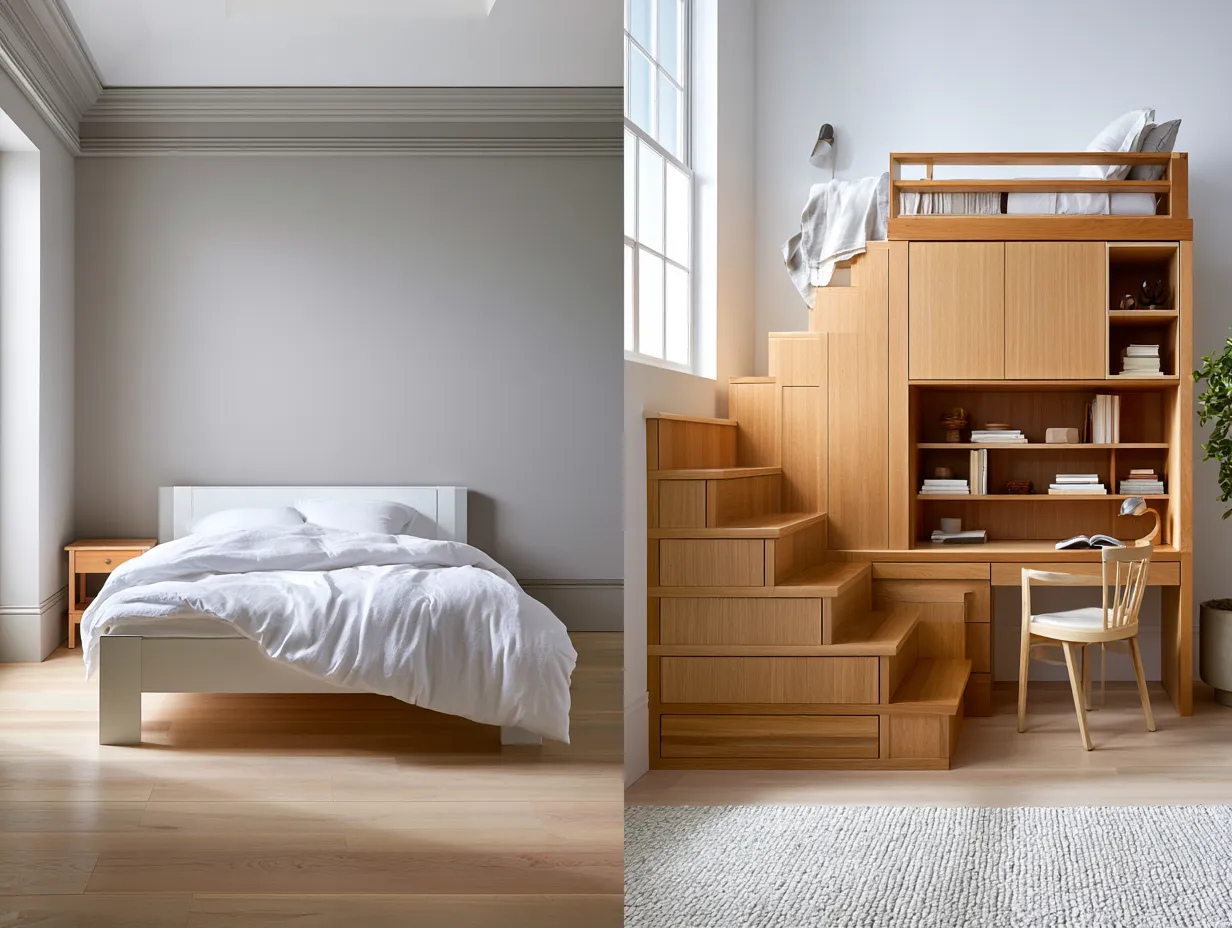
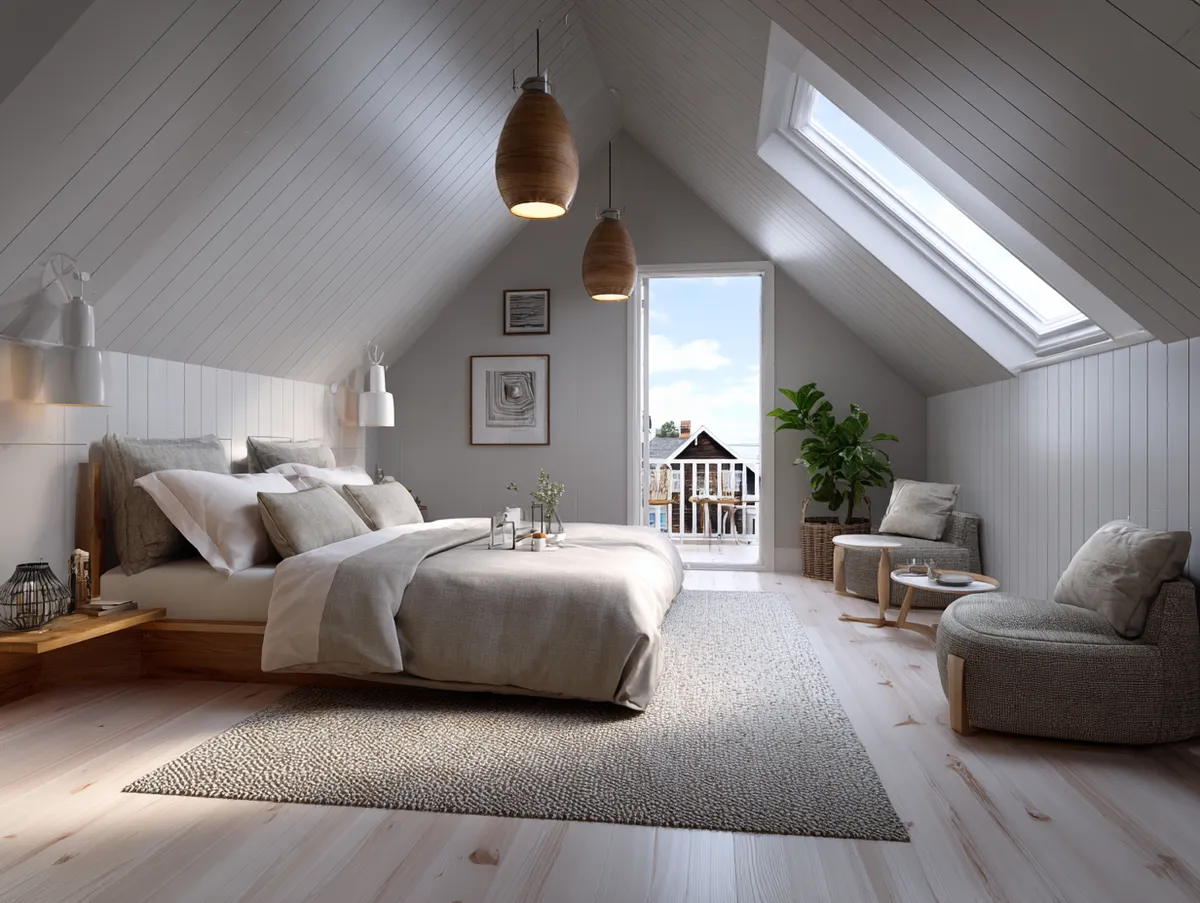
A black furniture bedroom works for men when black and white split the room on purpose: one color carries the weight, the other carries the light. The two classic layouts are black walls with white furniture or white walls with black furniture, and both look sharp in rooms as small as 10 by 10 feet. Which one suits your room depends mostly on daylight, because a near-black paint such as Tricorn Black returns only about 3% of the light that hits it. Decide on the dark surface first and let every other choice follow from it.
Is a monochrome men’s bedroom hard to live with? Not if the white side does real work. A crisp white such as Chantilly Lace reflects about 92% of incoming light, so white bedding, nightstands or trim keep a dark scheme from closing in. Add warm bulbs in the 2700–3000K range and the contrast feels calm at night instead of clinical. Plan at least three light sources before buying a single can of paint.
The ideas below cover black accent walls, geometric white bedding, textured panels with LED strips and a side-by-side cost comparison. A painter typically charges about $2–$6 per square foot, while PVC 3D wall panels start around $3–$4 per square foot before adhesive. Price the wall treatment first, since it sets the tone for every piece placed in front of it.
Quick Scan
- Near-black paint at LRV 3 reflects about 3% of light, against roughly 92% for a crisp white.
- Black walls with white furniture suit rooms with strong daylight; white walls with black furniture suit dim, north-facing rooms.
- One 12-foot accent wall covers 96 sq ft, about a quarter of the wall area in a 12 x 12 ft room.
- Warm 2700–3000K bulbs soften the contrast, while 4000K light makes black walls look flat and office-like.
- Percale bedding (200–400 thread count) stays crisp and matte; sateen (300–500) adds sheen and warmth.
- PVC 3D panels run about $3–$4 per sq ft vs about $5 for MDF, plus 10% extra for cuts.
- LED strips around a bed frame should stay below 300 lumens per foot.
Black Walls With White Furniture Give a Men’s Bedroom Its Backbone
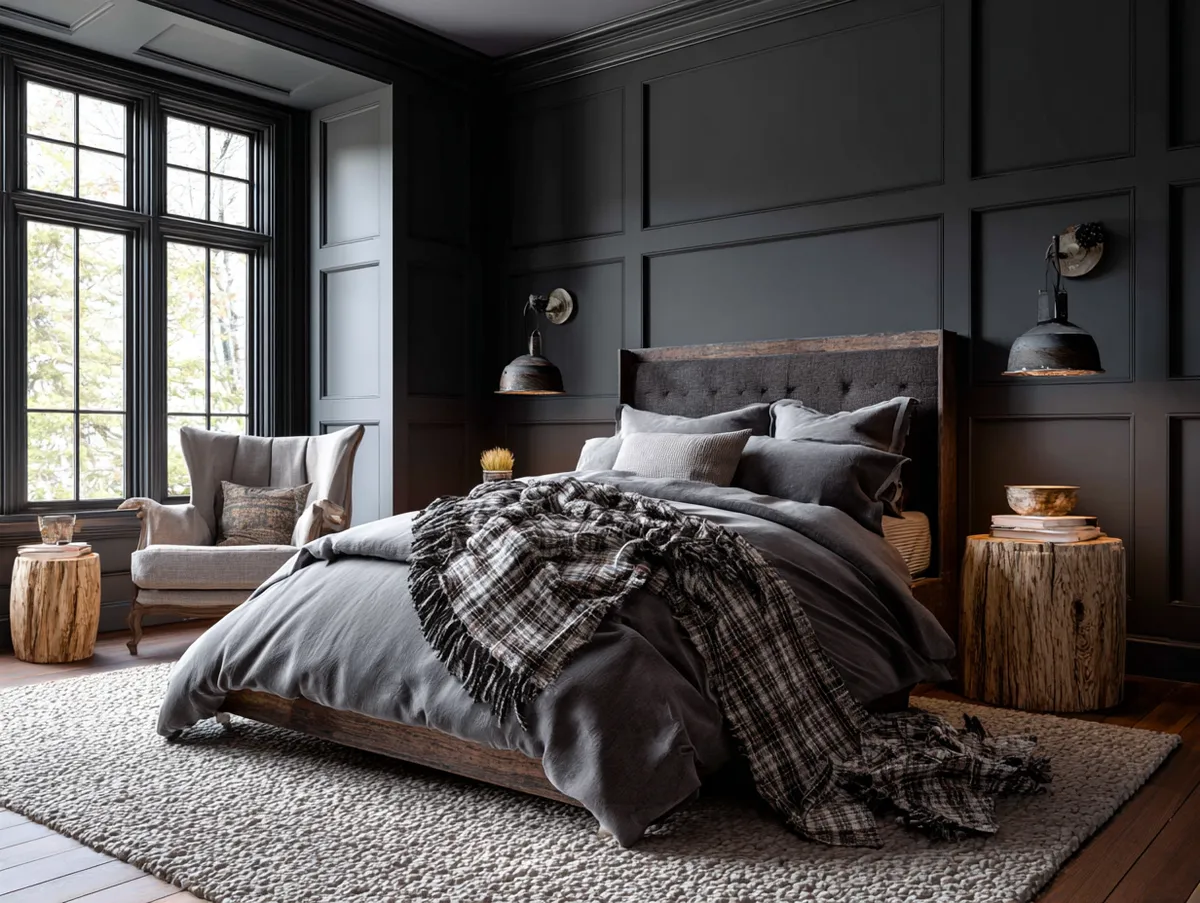
Black walls with white furniture give a men’s bedroom a strong backbone, because the dark surface recedes while every pale piece steps forward. Think of a gallery: the darker the backdrop, the sharper the frame. In a 12 by 12 ft room with 8-foot ceilings, painting only the wall behind the bed covers 96 of 384 square feet, about a quarter of the wall area. Start with that single wall and live with it for two weeks before darkening more.


One wall or four? The trade-offs laid out in this comparison of accent walls versus color drenching in the bedroom apply directly here. A single dark wall keeps the room open, while drenching wraps every surface and needs about 2–3 gallons of paint for a mid-sized room. For black men’s bedroom ideas, the accent route is the safer first step, since adding black later is far easier than covering it. Pick the wall your eye meets first from the doorway.

White furniture needs clean lines and enough mass to hold its own against a dark wall. A white platform bed, two matching nightstands and a low dresser balance the black far better than one small side table floating in the corner. Don’t pair a black wall with charcoal bedding and a dark rug, or the bed sinks into the background after sunset. Keep at least two large pieces in white or pale oak.
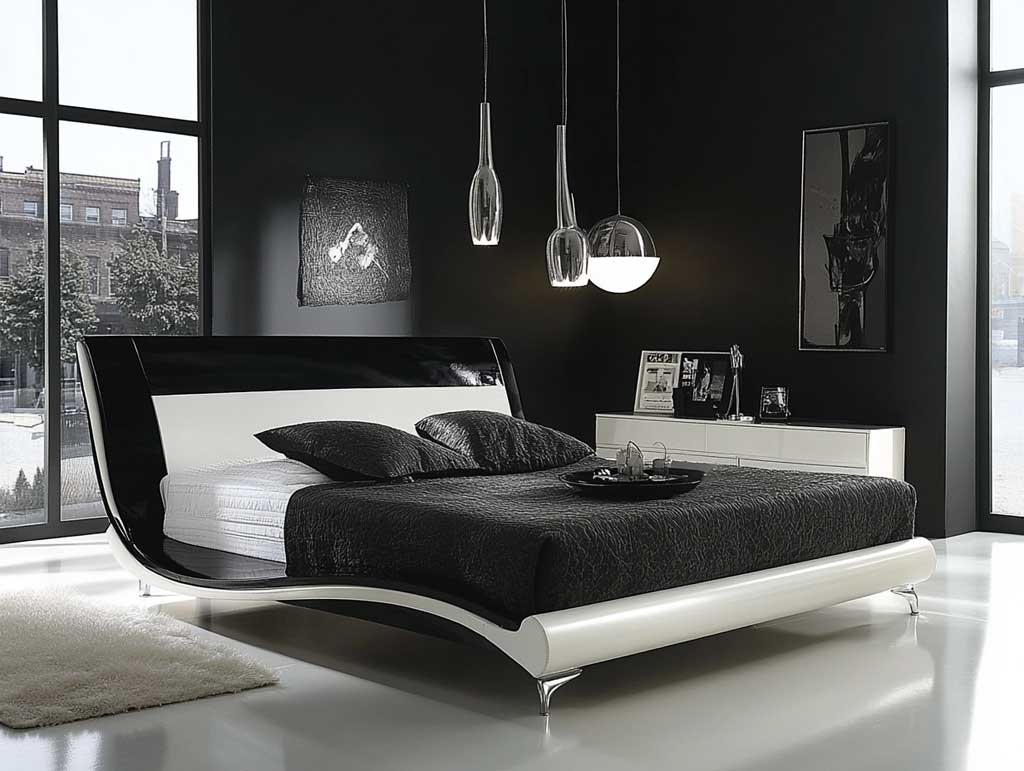
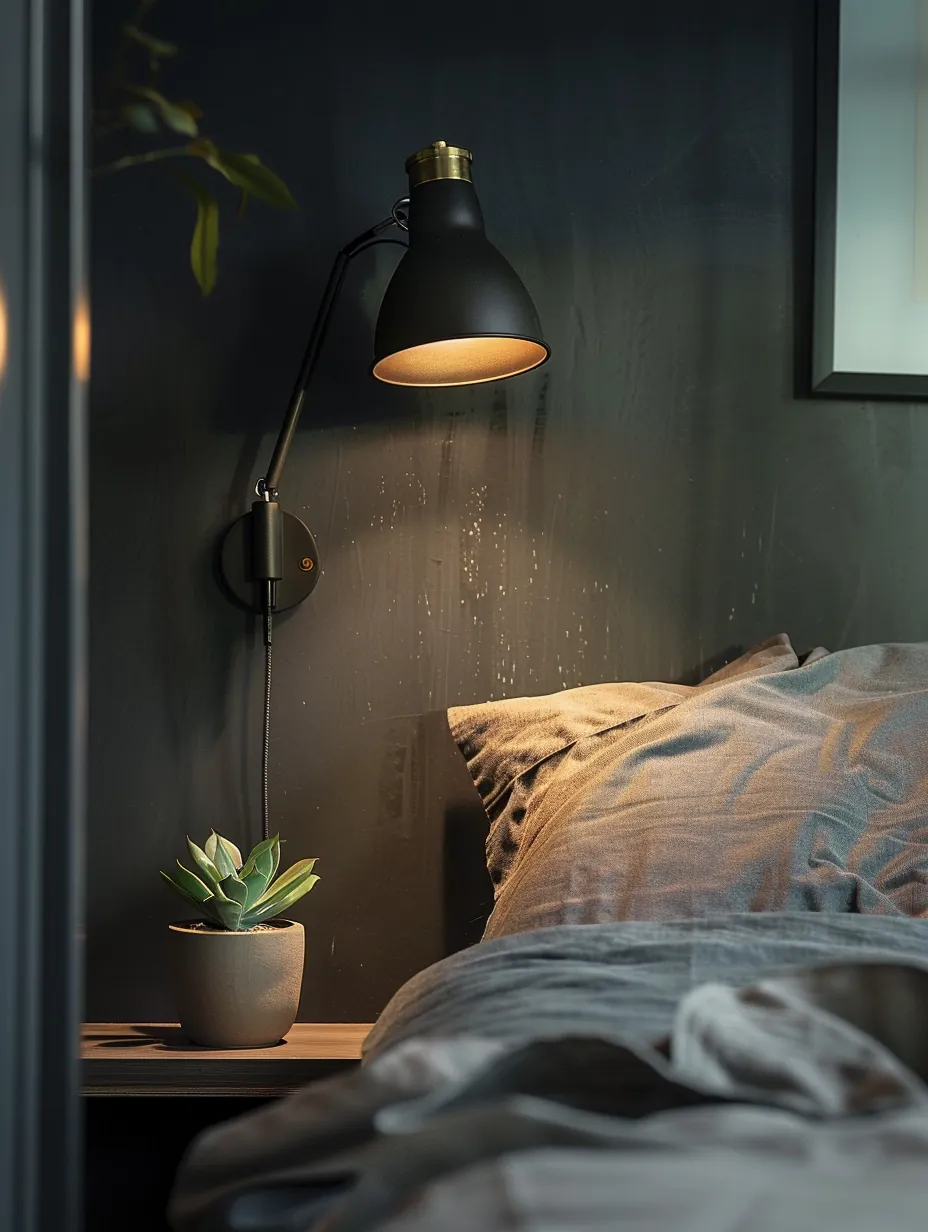
Lighting decides whether the room feels moody or simply dim. Warm bulbs at 2700–3000K soften the contrast, while 4000K light turns black walls flat and white furniture bluish, like a hotel corridor at midnight. A pendant on each side of the bed plus one floor lamp gives three light points, the practical minimum for a dark wall. Put every fixture on a dimmer so the room can shift from reading light to evening glow.

Rugs, art and plants finish the scheme without breaking the palette. An 8 by 10 ft light gray rug under a 60-inch-wide queen bed leaves about 18 inches showing on each side, enough to soften the floor between black walls. Greenery adds the only color the room needs, and a snake plant copes well with the lower light a dark bedroom tends to have. Frame black and white prints with white mats so they read against the wall instead of vanishing into it.
White Bedding With Black Geometric Prints Anchors a Black Furniture Bedroom
A black furniture bedroom with white bedding printed in black geometric patterns flips the first layout: the walls stay bright and the bed becomes the graphic centerpiece. This version suits dim, north-facing rooms and works as one of the easiest men’s white bedroom ideas with a dark edge, because white walls bounce light while a black bed frame, nightstands and lamps supply the contrast. Picture a chessboard, where the pattern works only because both colors repeat in clear shapes. Choose one bold pattern for the duvet and keep the rest of the bed solid.

Weave matters as much as pattern. Percale, woven one over and one under at roughly 200–400 thread count, gives a crisp matte surface that keeps black stripes and chevrons sharp, while sateen at 300–500 thread count adds sheen and holds more warmth. Which suits a black and white bed better? Percale for hot sleepers and graphic prints, sateen for a softer, hotel-style drape. Read the thread count and weave on the label rather than trusting the word luxury on the package.

Black furniture against white walls behaves like ink on paper: every edge reads. A black bed frame, two black nightstands and one accent chair in black or charcoal upholstery are enough for a room of about 12 by 12 feet. Don’t add a black dresser, black wardrobe and black headboard all at once, or the room tips from contrast into heaviness. Keep white as the larger share of visible surfaces, roughly 60% white to 40% black.

Texture stops a two-color room from looking like a printed graphic. A wool throw, a velvet cushion and a ribbed cotton rug give the same black and white three different surfaces, so the eye reads depth instead of flatness. A black-framed mirror at least 30 inches tall, placed opposite a window, sends daylight back across the bed. Hang it where it reflects the window, not the bed itself.

Choosing Between Black Walls and a Black Furniture Bedroom
Choosing between black walls and a black furniture bedroom with white walls comes down to daylight, budget and how often the layout might change. A painter charges about $2–$6 per square foot, so a 96-square-foot accent wall runs roughly $192–$576 in labor, while black furniture can arrive one piece at a time. Is one version more masculine than the other? Neither; both work as dark men’s bedroom ideas once the proportions hold, much like a black suit with a white shirt versus a white shirt under a black jacket. Measure the window wall first, because daylight sets the rules.
Black walls win in rooms with large south or west windows, where daylight keeps an LRV 3 paint from turning cave-like. White walls with black furniture win in small, dim rooms and rentals, since a crisp white reflecting about 92% of light keeps the space open. A charcoal near LRV 6 sits between the two and returns roughly twice the light of true black. Don’t commit to black walls in a room lit by one small north window; test large samples of both shades on the real wall for 48 hours instead.
| Layout | Typical cost | Light reflected by main surface | Best room | Reversibility and upkeep |
|---|---|---|---|---|
| Black accent wall + white furniture | About $192–$576 painter labor for a 96 sq ft wall | About 3% (LRV 3 black) | South or west light, 12 x 12 ft and larger | Repaint needs primer plus 2 coats |
| White walls + black furniture | No paint change; furniture bought piece by piece | About 92% (crisp white walls) | North-facing rooms, small rooms, rentals | Swap pieces anytime |
| Charcoal accent wall + white furniture | Same labor as a black wall, about $2–$6 per sq ft | About 6% (LRV 6 charcoal) | Dim rooms that still want drama | Easier to lighten later than true black |
| Full black color drench | About 2–3 gallons of paint for a mid-sized room | About 3% on every surface | Large rooms with strong artificial lighting | Trim needs eggshell or satin to resist wear |
| Black and white 3D panel wall + LED | About $3–$5 per sq ft panels + $0.50 per sq ft adhesive | Varies by finish; LED under 300 lm per ft | Feature wall behind the bed | Textured panels last decades but are hard to reverse |
Textured Black and White Panels Glow Brighter With LED Lights
Textured black and white wall panels give an aesthetic black bedroom with LED lights its depth, because raised edges catch light while recesses stay in shadow. PVC 3D panels cost around $3–$4 per square foot and MDF about $5, with gypsum as the premium tier that reads as architecture rather than wallpaper. Budget an extra 10% for cuts and roughly 50 cents per square foot for adhesive. Order every panel from one batch so the finish matches.


Placement decides how sleek the black colour feels. A single panel wall behind the bed works like an 8-foot headboard, while panels on two opposing walls create rhythm but double the material cost. For more finishes and layouts, compare these black wall paneling ideas for modern, rustic and contemporary rooms. Don’t cover all four walls in 3D texture, or the room starts to feel like the inside of an egg carton.

LED strips turn the panels from texture into a lit feature. Lighting specialists advise keeping strips around a bed frame or inside furniture below 300 lumens per foot, while ceiling coves can go up to 600 lumens per foot, according to this bedroom LED strip lighting guide. Warm white at 2700–3000K keeps the panels soft, whereas cool 4000K or rainbow RGB modes flatten them at night. Run the strip along the top or side edges so the light grazes the relief.
- Measure the panel edge and buy about 10% more strip than the measured length.
- Choose 60 or more LEDs per meter; strips with 30 per meter show visible dots on nearby surfaces.
- Mount the strip in an aluminum channel with a diffuser to hide individual diodes.
- Pick warm white at 2700–3000K and wire a dimmer for evening use.
- Test the glow at night before pressing the strip into its final position.
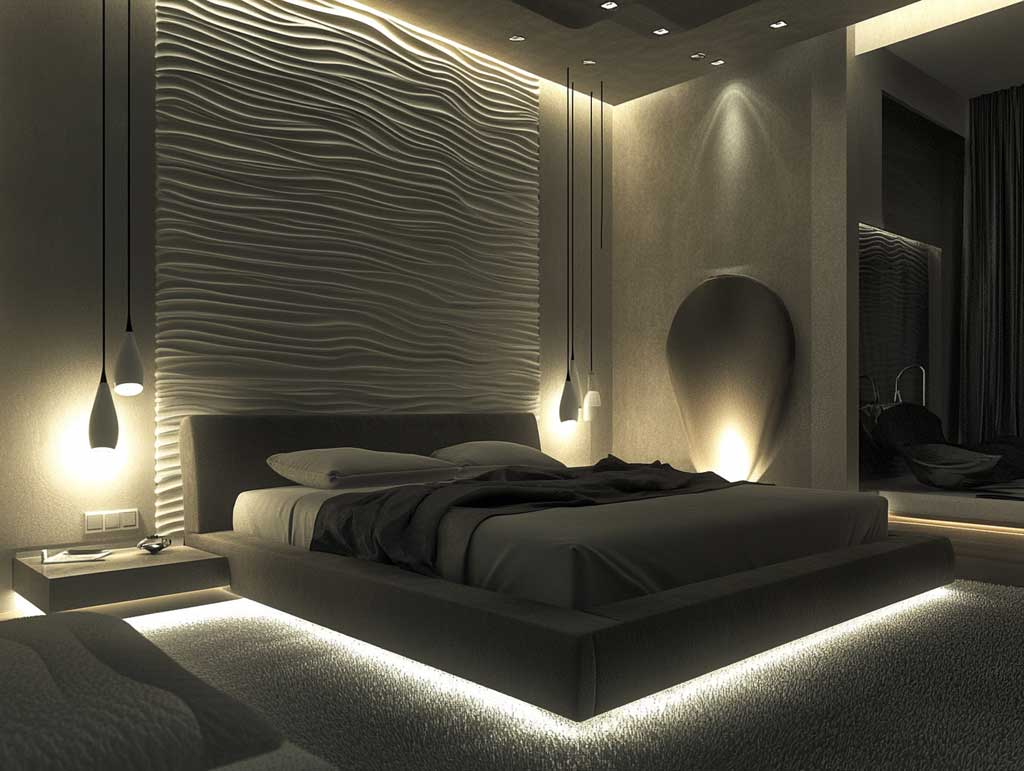
Soft textiles balance the hard geometry of a panel wall. Floor-length linen curtains and a large neutral rug absorb some of the echo that a hard, textured surface bounces around, and they stop the room from feeling like a showroom. Does the bedding need to match the panels? No; plain white or soft gray bedding lets the wall stay the focal point, the way a plain shirt lets a patterned tie stand out. Keep pattern on one surface only.

Mirrors and art close the loop. A black-framed mirror opposite the panel wall doubles the LED glow, and abstract black and white art ties the panel pattern to the rest of the room. Fitting a standard 3D panel wall takes roughly 2 to 4 hours per square meter, so a wall behind a queen bed is a full weekend project, not an evening job. Hang the art after the LEDs are set so you can see where the shadows fall.
Don’t Do This
- Don’t paint black walls in a room with one small north window; an LRV 3 shade reflects only about 3% of light.
- Don’t mix 4000K and 2700K bulbs in one bedroom; the white furniture will look blue under one and cream under the other.
- Don’t use flat paint on trim in a black-drenched room; it needs eggshell or satin to survive daily wear.
- Don’t buy LED strips with 30 LEDs per meter for a visible wall; 60 or more per meter reads as a continuous line.
- Don’t hang black frames on a black wall; they dissolve into the background.
- Don’t skip the 10% overage on wall panels; a short order rarely matches a second batch.
Where the Contrast Pays Off
One black wall of about 96 square feet changes the mood of all 384 square feet of wall around it, which makes it the cheapest high-impact move in a men’s bedroom. A black furniture bedroom with white walls gets a similar effect in dim rooms without touching the paint.
Choose an LRV 3 black for bright south- or west-facing rooms and an LRV 6 charcoal, or white walls with black furniture, for dim and north-facing ones. Test both on the real wall for 48 hours before buying gallons.
Light the room with at least three warm sources at 2700–3000K, and keep LED strips near the bed under 300 lumens per foot. Cool 4000K light belongs in an office, not next to black walls.
For bedding, percale at 200–400 thread count keeps geometric prints crisp, while sateen at 300–500 feels softer and warmer. For a panel wall, budget $3–$5 per square foot plus 10% extra, and keep every other surface calm so the texture leads.