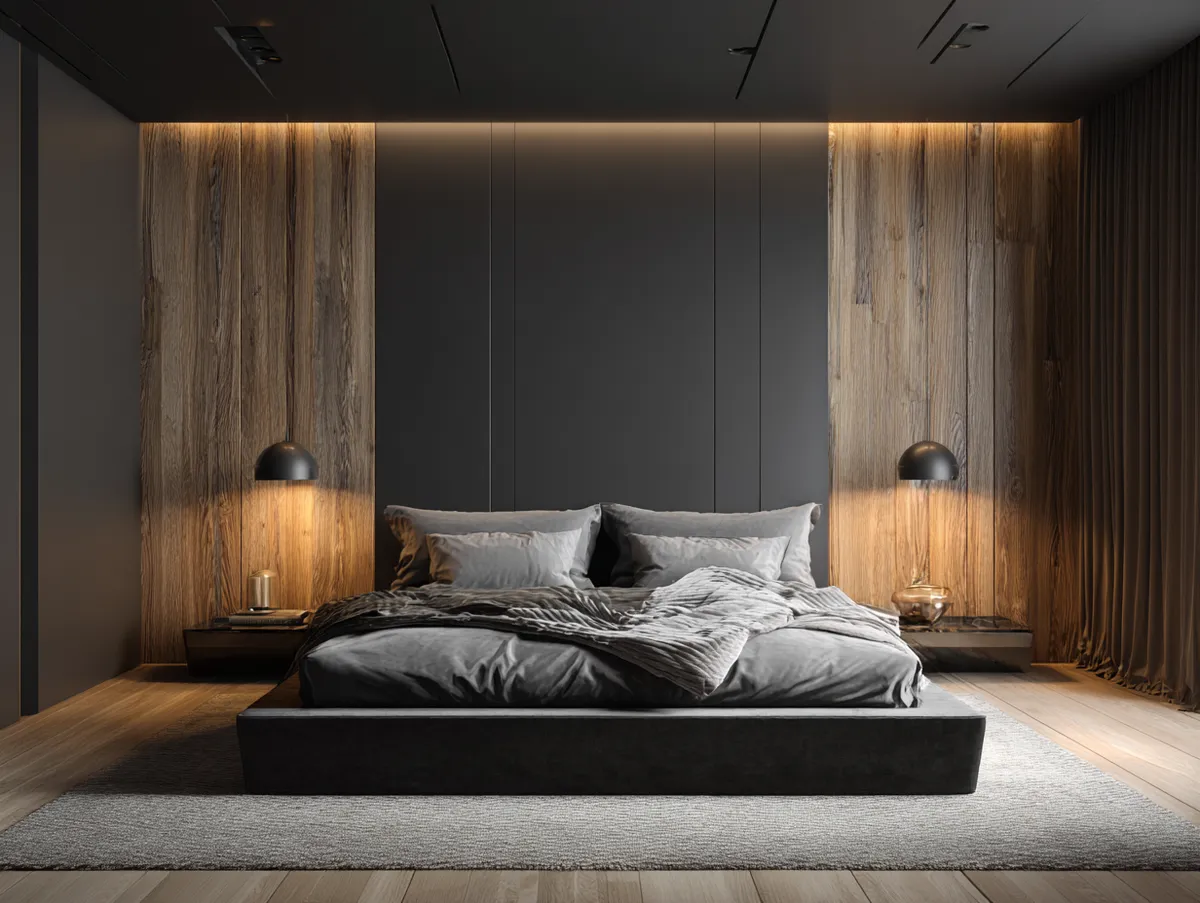
Terracotta bedroom walls do something most paint colors can’t — they change character with the light. At noon they read warm clay; by lamplight they shift closer to rich amber. Pair them with cream paneling and you get a two-tone wall system that does the design work without demanding much from the furniture around it. The combo lands in every search for terracotta bedroom walls because it delivers visual depth on a budget that doesn’t require tearing out drywall.
The reason this pairing keeps appearing in renovation boards is structural, not just aesthetic. Terracotta carries an LRV (light reflectance value) in the low-to-mid range — Sherwin-Williams Cavern Clay SW 7701 sits at roughly 24 — which means the walls absorb light and create intimacy rather than bouncing it back. Cream panels do the opposite, reflecting light and keeping the room from tipping into cave territory. That push-pull is what makes the combination work in rooms of nearly any size.
Three approaches appear consistently in real bedrooms: textured panels that lean into the organic surface quality of clay, wainscoting that splits the wall at waist height into terracotta and cream zones, and geometric paneling that replaces the single solid surface with interlocking shapes. Each one suits a different room proportion and furniture style. What follows covers all three — with actual material costs, finish decisions that stylist recommend, and the mistakes worth avoiding before you buy a single tin of paint.
– Sherwin-Williams Rookwood Terra Cotta (SW 2803) and Cavern Clay (SW 7701) are the most-cited terracotta shades for bedroom walls; both pair cleanly with off-white and cream trim.
– Machine-made terracotta wall tiles run $4–$8/sq ft; hand-crafted versions reach $7–$20/sq ft — choose based on the texture level you want, not the brand name.
– Wainscoting installation averages $1,325 for a typical bedroom (HomeAdvisor 2025 data); MDF panels start at $1/sq ft for DIY.
– Textured panels: keep furniture low and simple — the wall does the work, adding clutter competes with it.
– Wainscoting split: run terracotta on the lower third, cream above. Reversing it (cream below, terracotta above) makes ceilings feel lower.
– Geometric panels: matte finish only — gloss on terracotta-toned surfaces shows every roller mark and catches light unevenly.
Texture Shifts What Terracotta and Cream Walls Feel Like at Night
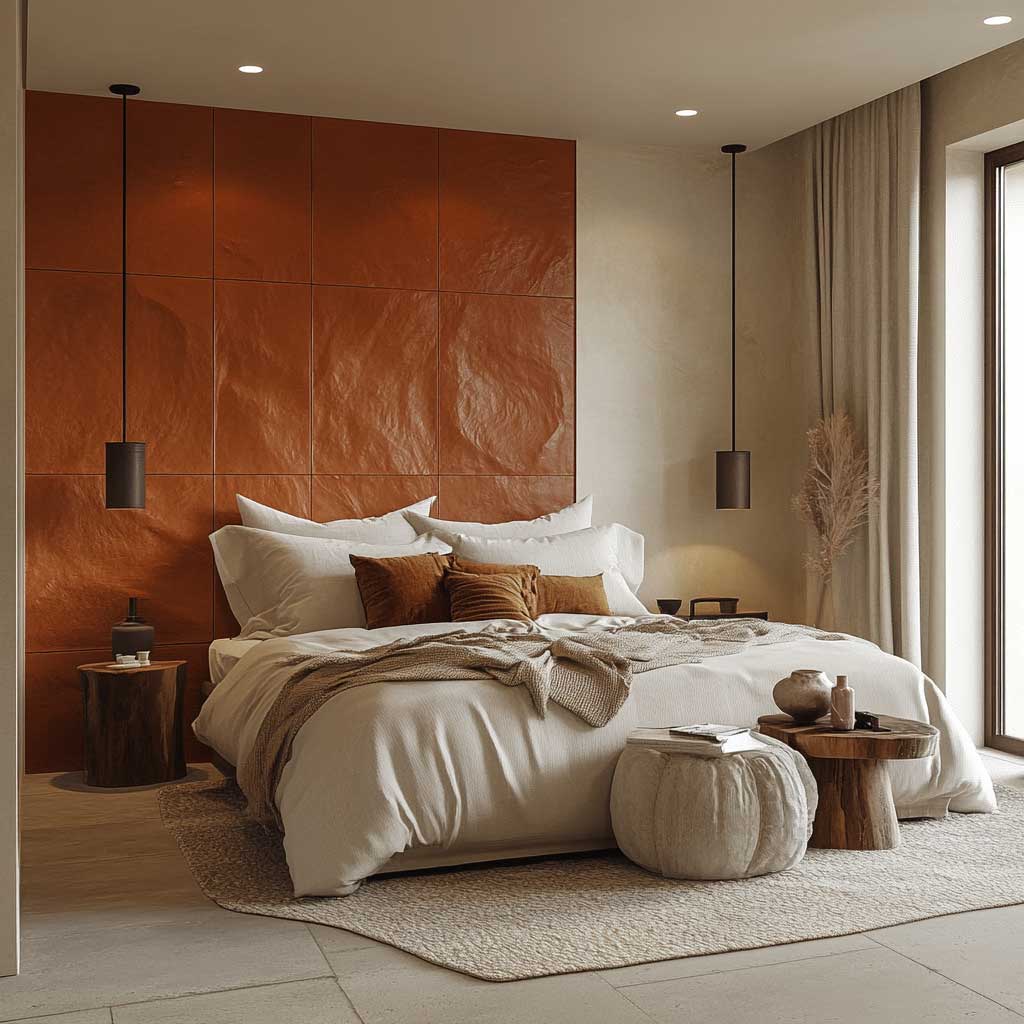

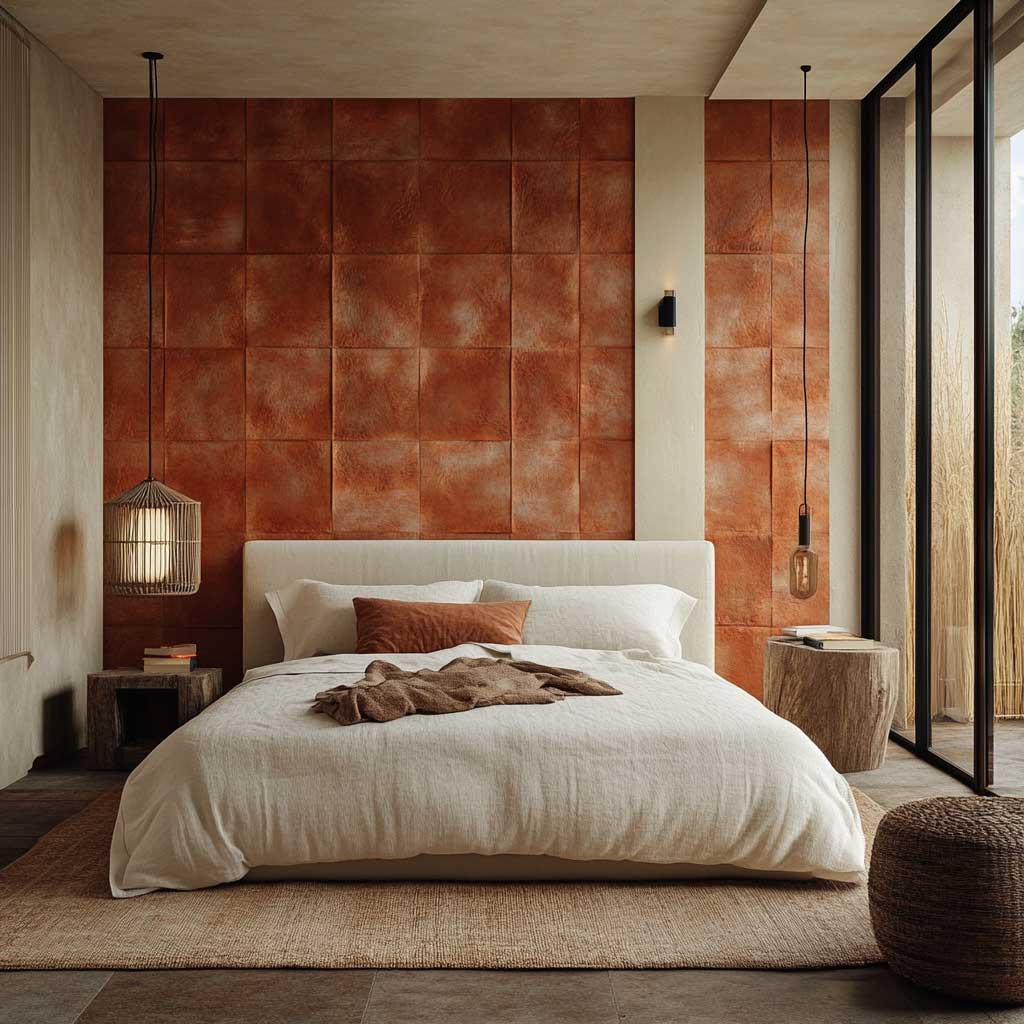

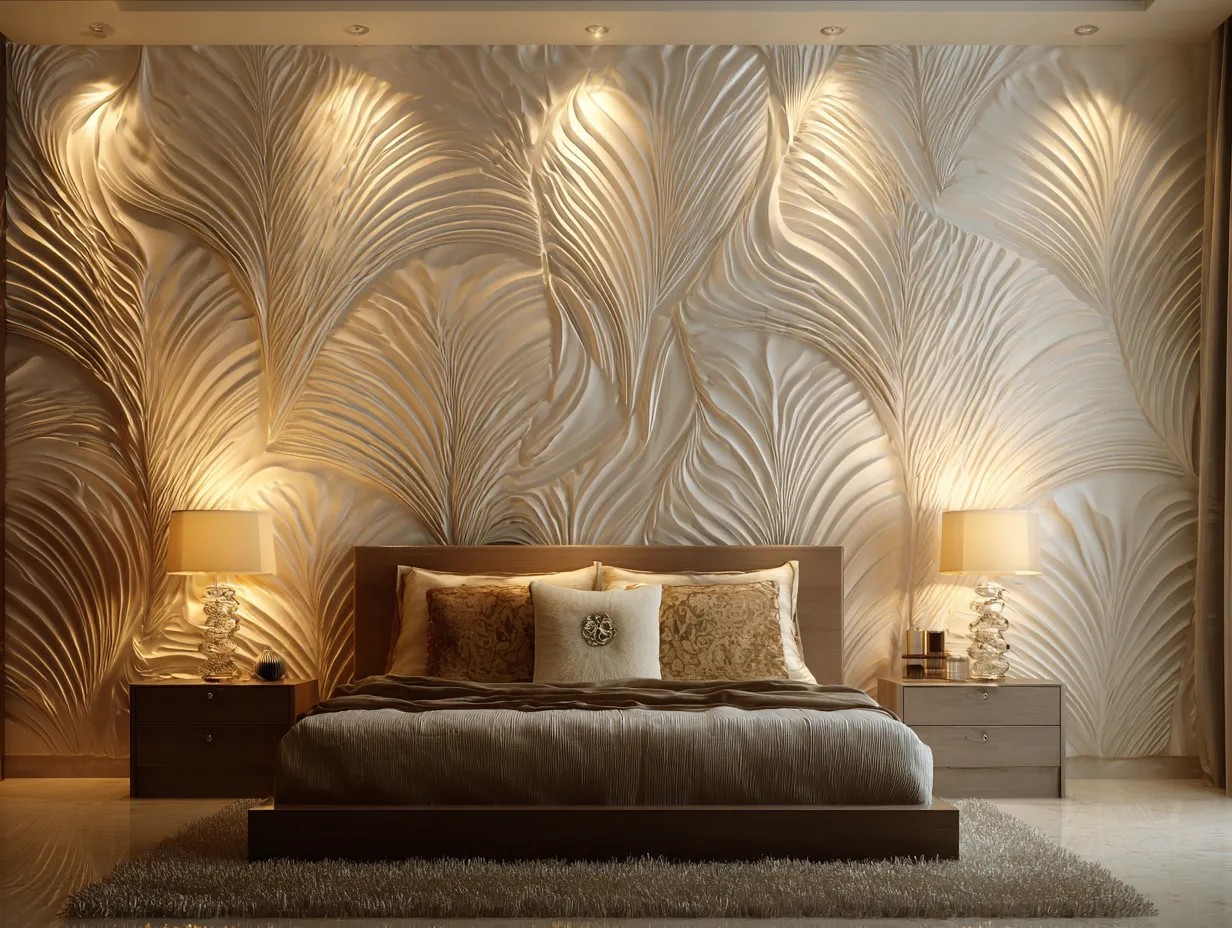
Textured wall panels in terracotta and cream shift appearance more dramatically than smooth paint does — and that’s the whole point. A flat terracotta wall reads the same at 8am and midnight. A panel with surface relief catches raking light differently as the sun angle changes, which makes the room feel alive rather than staged. Stylists recommend choosing a texture depth between 3–5mm: shallow enough to paint cleanly, deep enough to cast shadows that register from across the room.
Machine-made terracotta wall tiles run $4–$8 per square foot at current retail; hand-crafted, kiln-fired versions reach $7–$20 per square foot depending on origin and finish. The price gap is real, but the visual payoff of hand-crafted tiles is mainly in close-up texture variation — useful for headboard accent walls, less critical for side walls where the viewer is never within arm’s reach. Ask yourself how much of the finished wall you’ll actually see at under two feet before committing to the premium tier.
Cream panels adjacent to the textured terracotta are doing light management, not decoration. Cream reflects back the warmth that terracotta absorbs, so the room doesn’t skew dim when the curtains close. A common approach is to use smooth cream on the ceiling-adjacent zone and reserve texture for the lower two-thirds — this way the textured surface stays in peripheral vision from the bed, where the tactile quality actually registers. What doesn’t work: mixing two different textures on the terracotta panels themselves, thinking variation adds interest. It reads as inconsistency, not artistry.
Lighting choice is the variable most people get wrong with textured panels. Recessed ceiling downlights pointed straight at a textured terracotta wall flatten it — the texture disappears because the shadows have nowhere to form. You’ll notice the difference immediately if you try a bedside lamp at 45 degrees instead: the panel comes alive. Try a wall sconce positioned 12–18 inches from the panel surface for the best shadow play without creating hotspots.
Avoid high-gloss finish on any terracotta-toned panel — roller marks, brush lines, and surface imperfections become visible under sheen. Go matte or eggshell. Also resist mixing warm terracotta with cool-gray cream: the undertones fight each other and the junction between panels looks like a color-matching error, not a design choice. Stick to warm-based creams — look for ones with yellow or peach undertones, not blue or gray.
What Wainscoting Panel Design for Bedroom Walls Actually Costs and Delivers

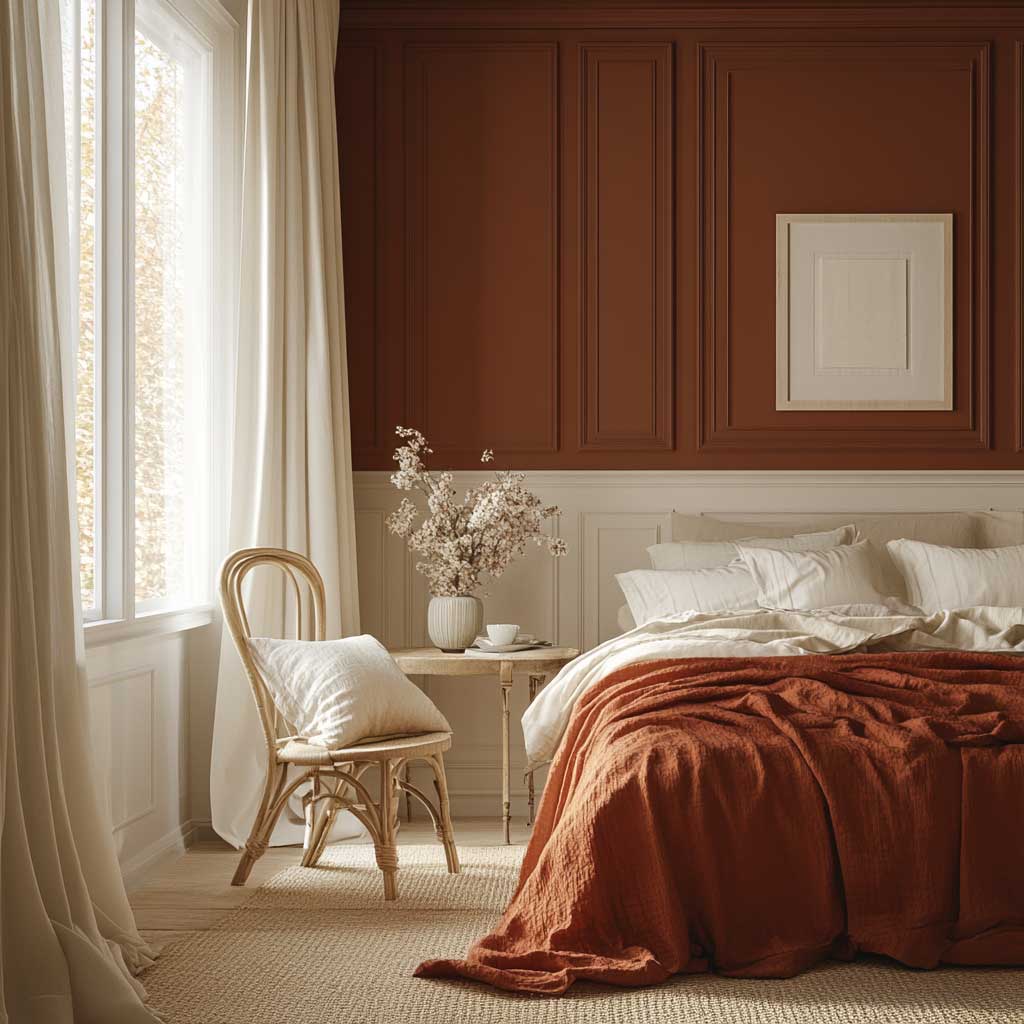
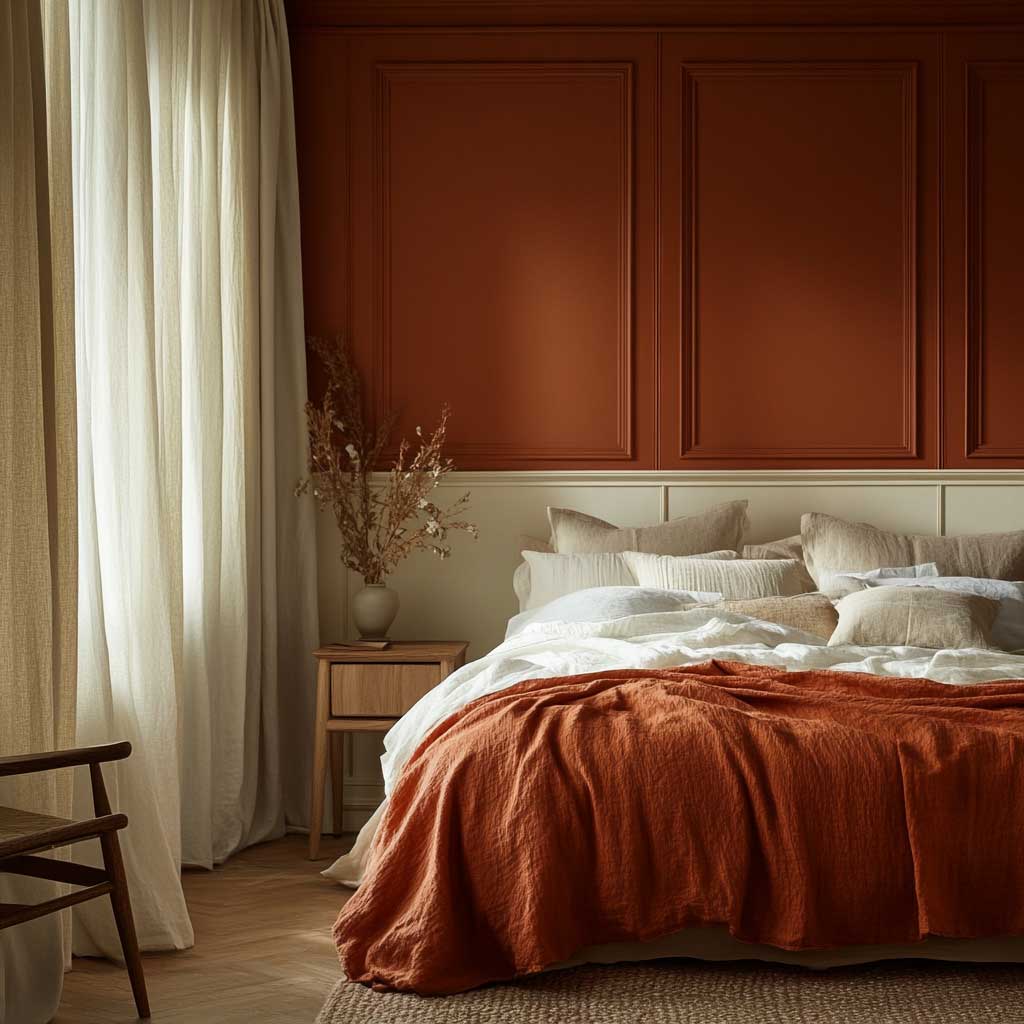
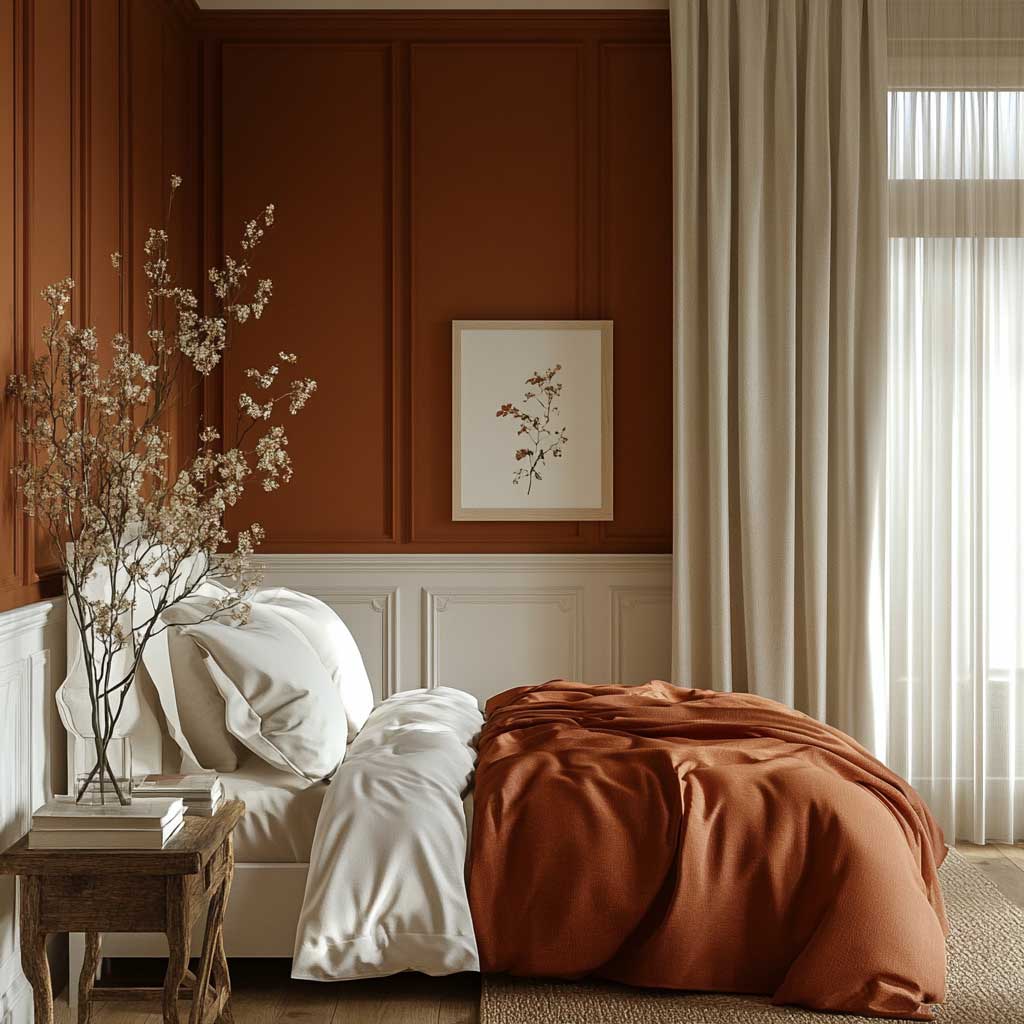
Wainscoting splits the bedroom wall into two distinct zones and gives the terracotta-and-cream combination a structural logic that plain two-tone painting doesn’t. According to HomeAdvisor’s 2025 cost data, the average wainscoting installation runs $1,325 for a typical room, with a range of $1,050 to $2,400 depending on panel type and room size. Flat panel MDF — the right choice for a painted finish in a terracotta scheme — sits at $7–$10 per square foot installed. Raised panel styles run $10–$30, and that extra cost is only justified if the room already has period-appropriate architectural details to echo.
The standard rule positions wainscoting at one-third of the wall height. In a nine-foot bedroom, that’s roughly three feet up — which is also where terracotta’s saturation does its best work. Below the chair rail, the deep clay tone grounds the room and creates visual weight at furniture level. Above it, cream takes over and keeps the upper wall from feeling heavy. Think of it like a horizon line: terracotta is the earth, cream is the sky, and the chair rail is where they meet. When designers reverse this — putting light below and dark above — the ceiling appears to press down, and the room shrinks.
Paint finish on wainscoting panels matters more than most homeowners expect. Sherwin-Williams SuperPaint runs roughly $62 per gallon at standard retail and holds up well to the occasional scuff that lower wall panels inevitably collect. Use eggshell on the terracotta panels, and flat or matte on the cream upper section — the sheen differential makes the color transition feel intentional rather than accidental. What doesn’t work: painting both zones in the same finish, which makes the chair rail look like an afterthought rather than a design division. Find further warm wall colour ideas for bedrooms if you’re deciding between terracotta and other earthy candidates before committing to paint.
Chair rail trim — the horizontal molding at the join — costs $1 to $45 per linear foot depending on material and profile, per HomeAdvisor’s data. A simple ogee profile in MDF is the budget-friendly option and reads as sharp from any distance. Avoid elaborate profiles in small rooms; complexity at eye level competes with the color story the wall is trying to tell.
Geometric Terracotta Bedroom Walls Pull Off Bold Without Becoming Exhausting
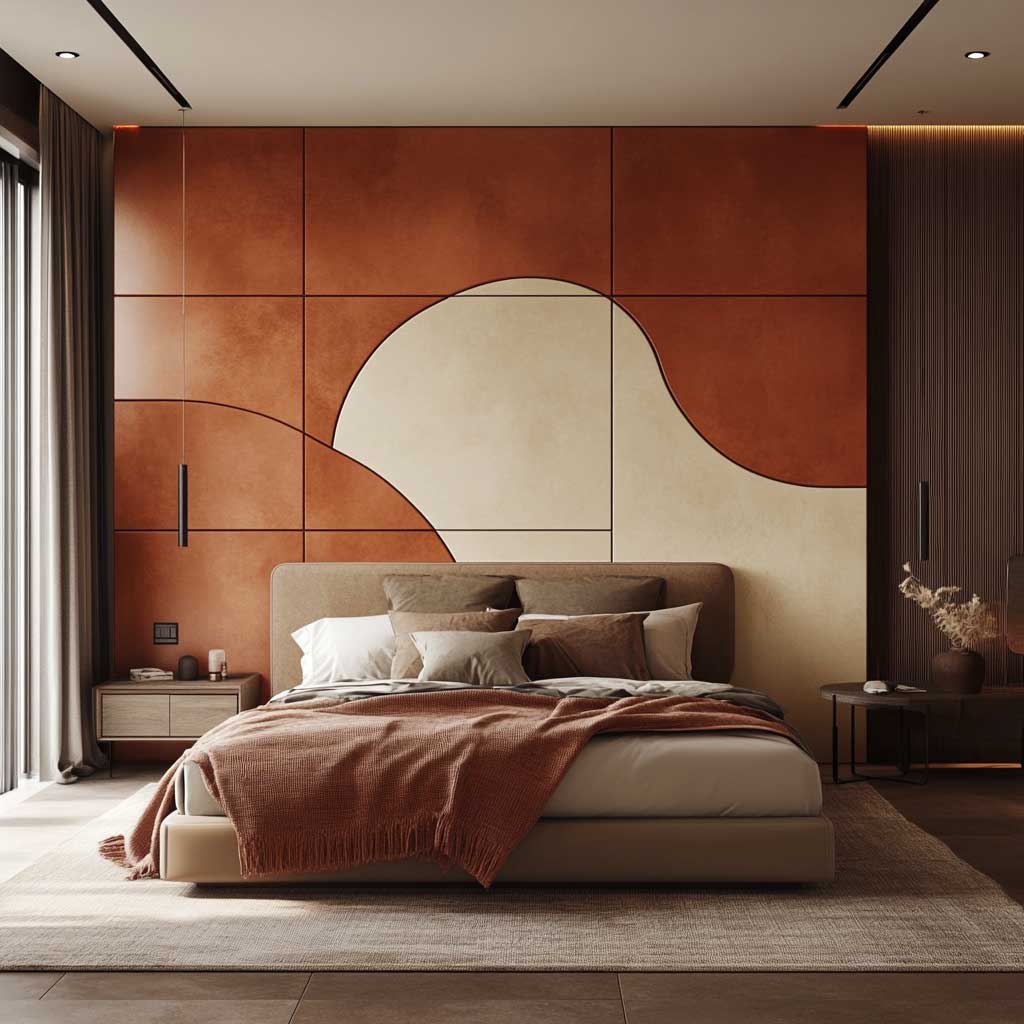

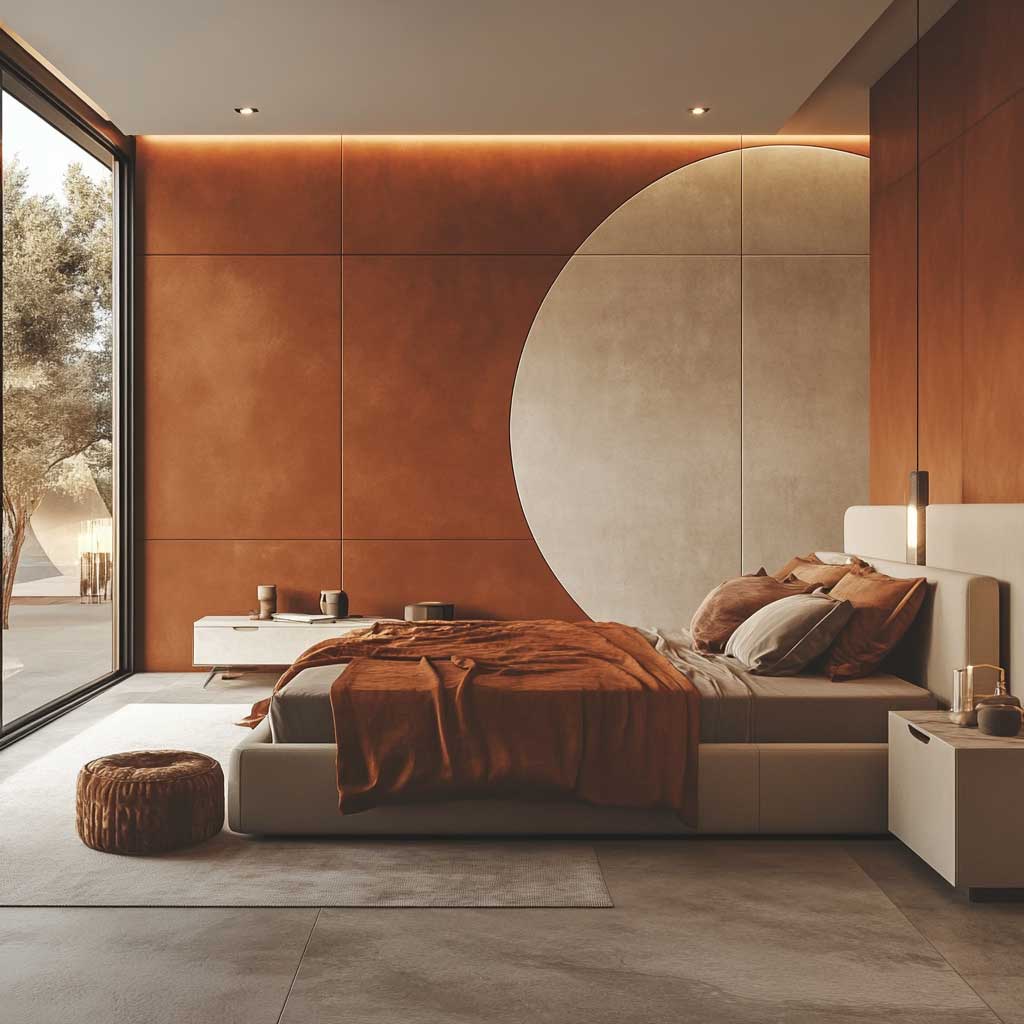

Geometric wall panel design for a bedroom in terracotta and cream works on a different visual principle than the other two approaches: it creates movement through shape repetition rather than color contrast alone. Interlocking diamonds, chevrons, or square grids alternate terracotta and cream cells, turning the wall into something closer to a textile pattern than a painted surface. The trick here is keeping both colors at equal saturation — if the cream leans too white, the pattern reads as terracotta shapes on a white ground rather than a genuine two-color composition.
MDF is the standard material for geometric bedroom paneling, and it starts at $1 per square foot for raw sheet material — though finished geometric panels sold as ready-to-install sets cost considerably more. Walmart and Wayfair currently list 3D geometric wall panel sets covering 29 square feet from around $30, which works out to roughly $1.03/sq ft for basic relief tiles. For a headboard-wall application covering 90–120 square feet, a mid-range pre-finished geometric panel order typically runs $150–$400 in materials before paint.
What does geometric paneling do that plain paint can’t? It creates three-dimensional shadow lines that shift with daylight — the wall reads differently at 7am and 7pm without changing a single element. Pendant lighting positioned to cast at an angle amplifies this effect considerably, turning a daytime feature wall into a nighttime focal point. Avoid track lighting aimed flat at the surface: it kills the shadow lines that make the geometry visible and the whole investment loses its point. For more approaches to bedroom wall panelling in statement colors, the blue edition covers a range of panel styles worth comparing before finalizing a direction.
Furniture restraint matters more here than with either of the other panel styles. A geometric feature wall is already doing a lot of visual work — bed frame, nightstands, and textiles should land in clean-lined neutrals rather than adding another pattern or silhouette that competes. Linen or cotton bedding in warm sand or undyed natural tones is the standard recommendation: it holds the warmth of the terracotta without introducing another color into the mix. Patterned bedding plus geometric panels is the combination most likely to produce a room that photographs well but feels restless to actually sleep in.
| Panel Style | Best For | Material Cost (DIY) | Key Risk |
|---|---|---|---|
| Textured terracotta & cream | Rooms with lamplight, no direct overhead | $4–$20/sq ft (tiles) | Gloss finish kills texture shadow |
| Wainscoting split | Standard-height ceilings, any size room | $7–$10/sq ft MDF installed | Wrong sheen on both zones |
| Geometric panels | Minimalist furniture, feature headboard wall | ~$1/sq ft MDF + paint | Flat lighting erases shadow lines |
For anyone working through the wider color decision before committing to a panel style, HomeAdvisor’s wainscoting cost guide provides a full breakdown of panel types and installation variables worth reviewing before contacting a carpenter: wainscoting cost guide.
Terracotta Bedroom Walls
Three Panels, One Palette — Pick the Right Approach for Your Room
Textured panels need raking light to earn their cost. Wainscoting woks in any bedroom but demands eggshell on the lower zone and matte above. Geometric paneling rewards minimal furniture and punishes flat overhead lighting.
Sherwin-Williams Rookwood Terra Cotta (SW 2803) and Cavern Clay (SW 7701) are the two most field-tested terracotta shades for bedroom walls. Pair with a warm-based cream — yellow or peach undertones, never blue — and use the same brand’s white for trim to keep the transitions coherent.
Save this post before your next trip to the paint store.