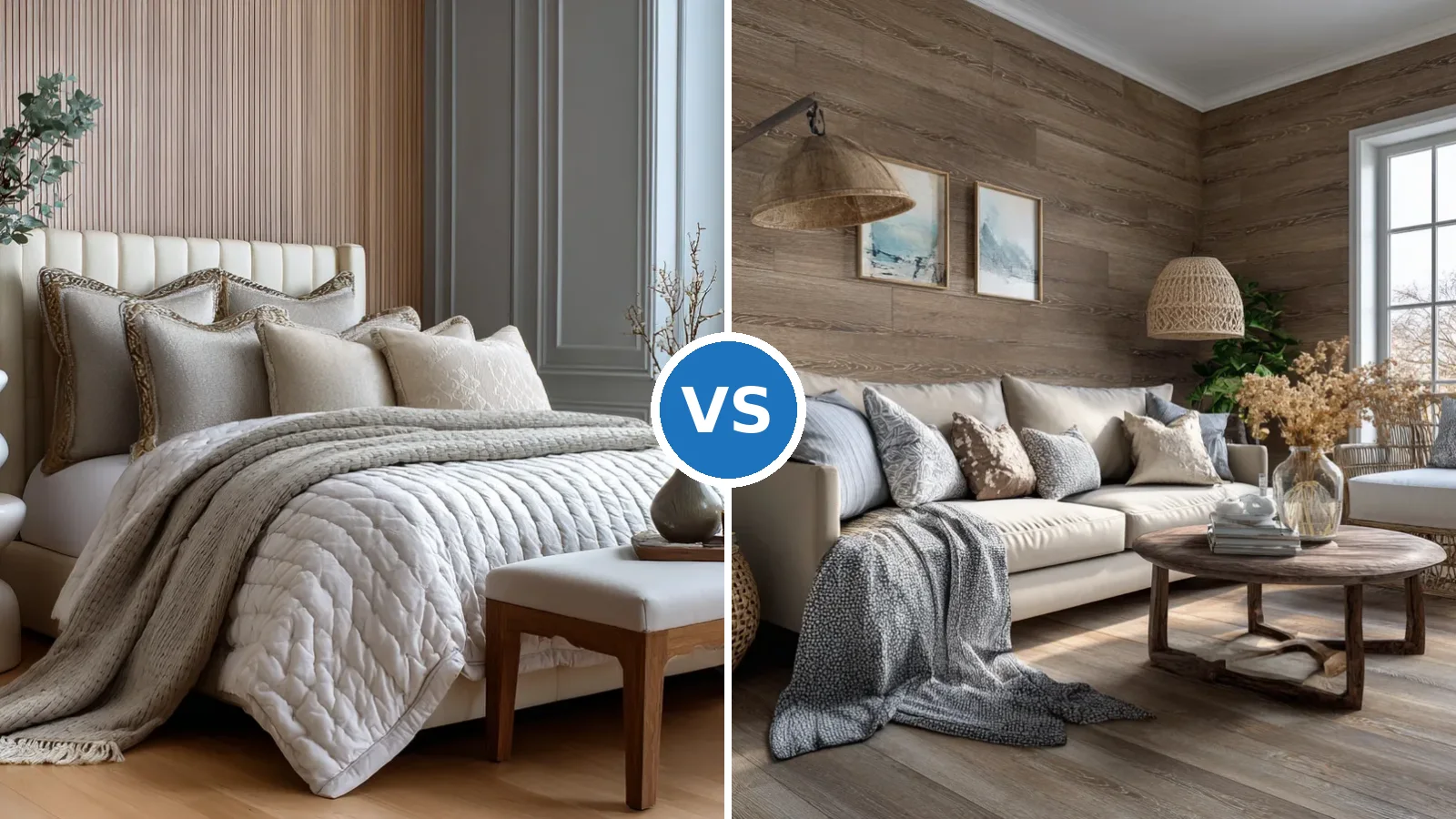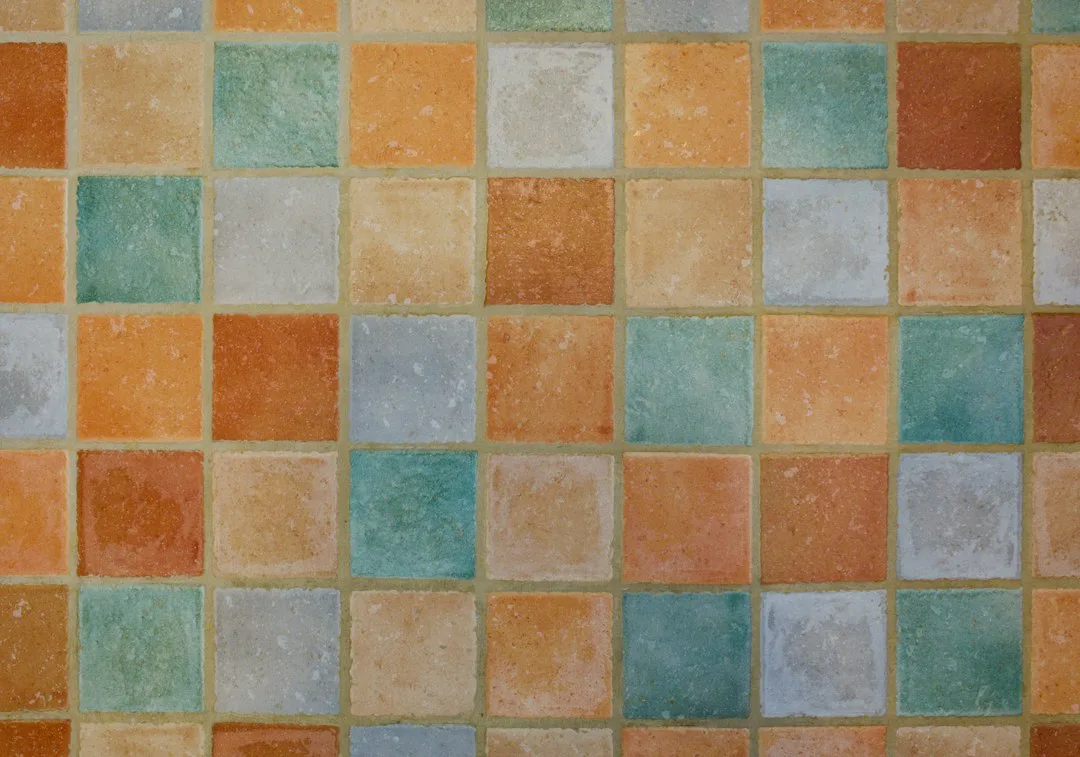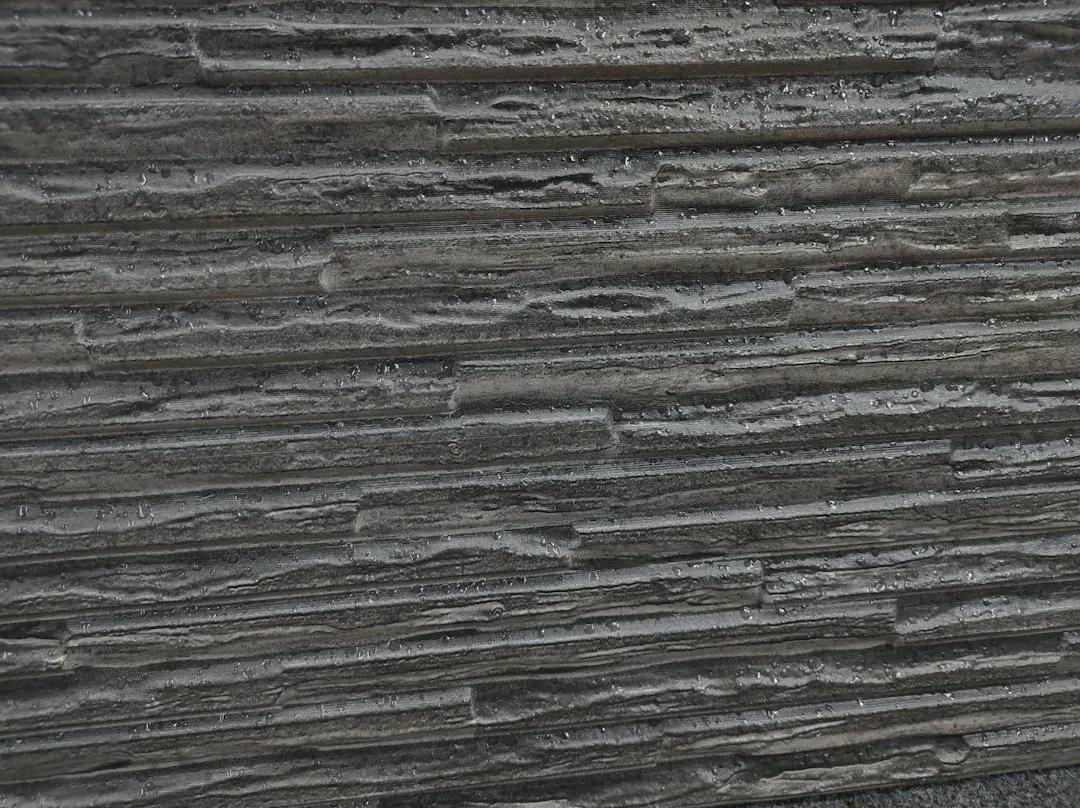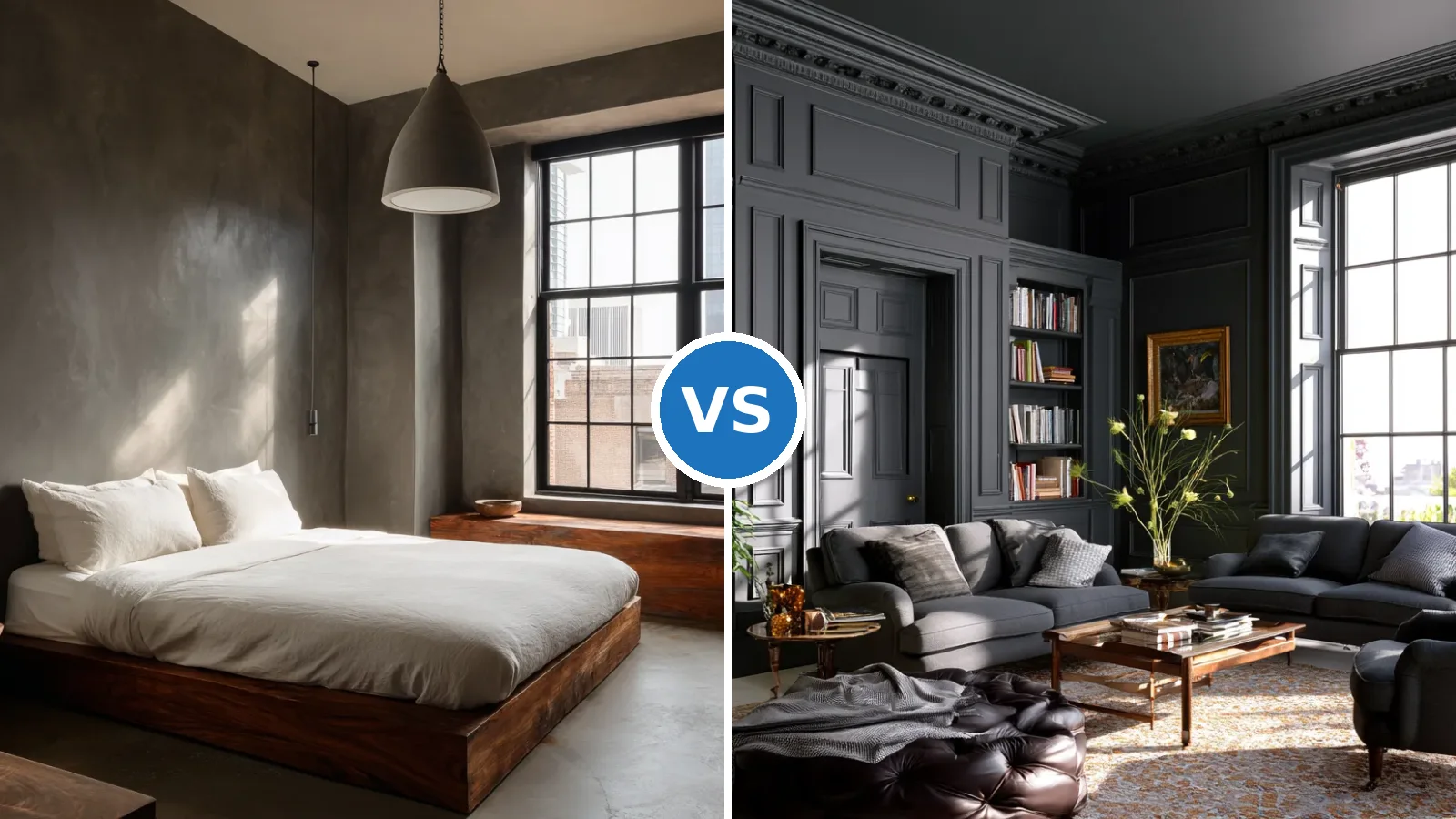
You are standing in your bedroom and the walls feel forgettable. One approach coats a single wall in geometric texture or dark plaster to anchor the room; the other covers walls, ceiling, trim, doors, and built-ins in one enveloping colour. These are not interchangeable strategies. The accent wall vs color drenching decision shapes whether your bedroom feels like it has a focal point or whether it reads as one cohesive architectural statement.
An accent wall, such as those discussed in bold accent wall ideas for modern bedrooms, isolates visual drama to one surface—typically through textured panels, plaster finishes, or natural wood slats. Colour drenching, as explored in colour drenching interior architecture, applies the same hue uniformly across every structural surface including trim, doors, and ceiling. If your bedroom craves a single conversation piece, an accent wall delivers. If you want the room itself to feel architecturally unified, colour drenching performs that work differently.

What an accent wall and colour drenching actually do
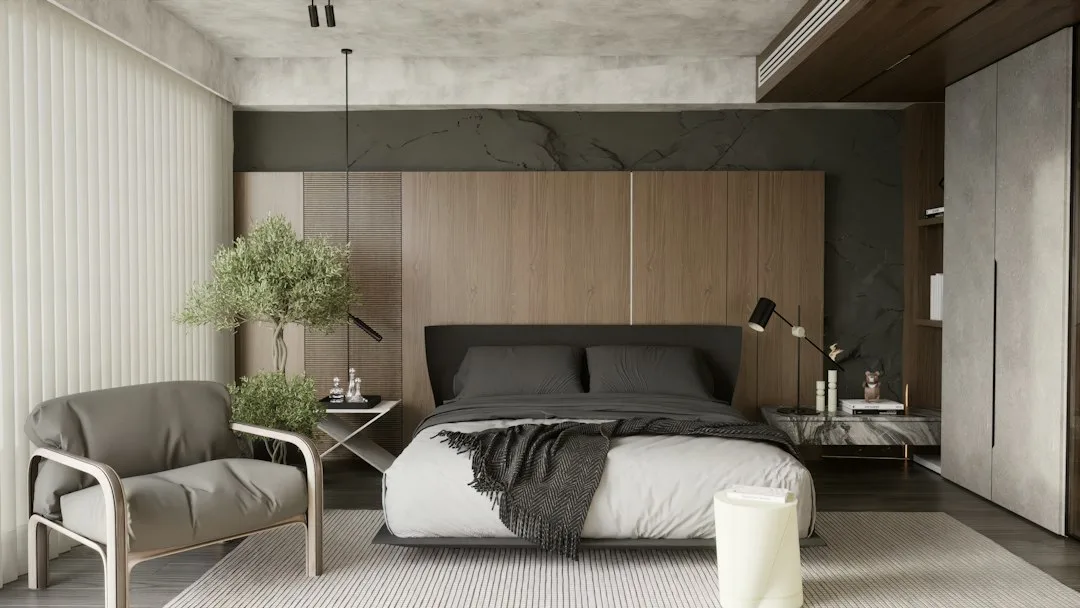
An accent wall introduces a concentrated burst of personality, typically in a texture, pattern, or tone that contrasts with the remaining three walls. Popular options include three-dimensional geometric panels made from wood, gypsum, or composites; handcrafted plaster finishes in deep charcoal; or vertical wood slats in walnut or oak. The wall becomes an art object in itself, drawing the eye inward and anchoring furniture placement around it.
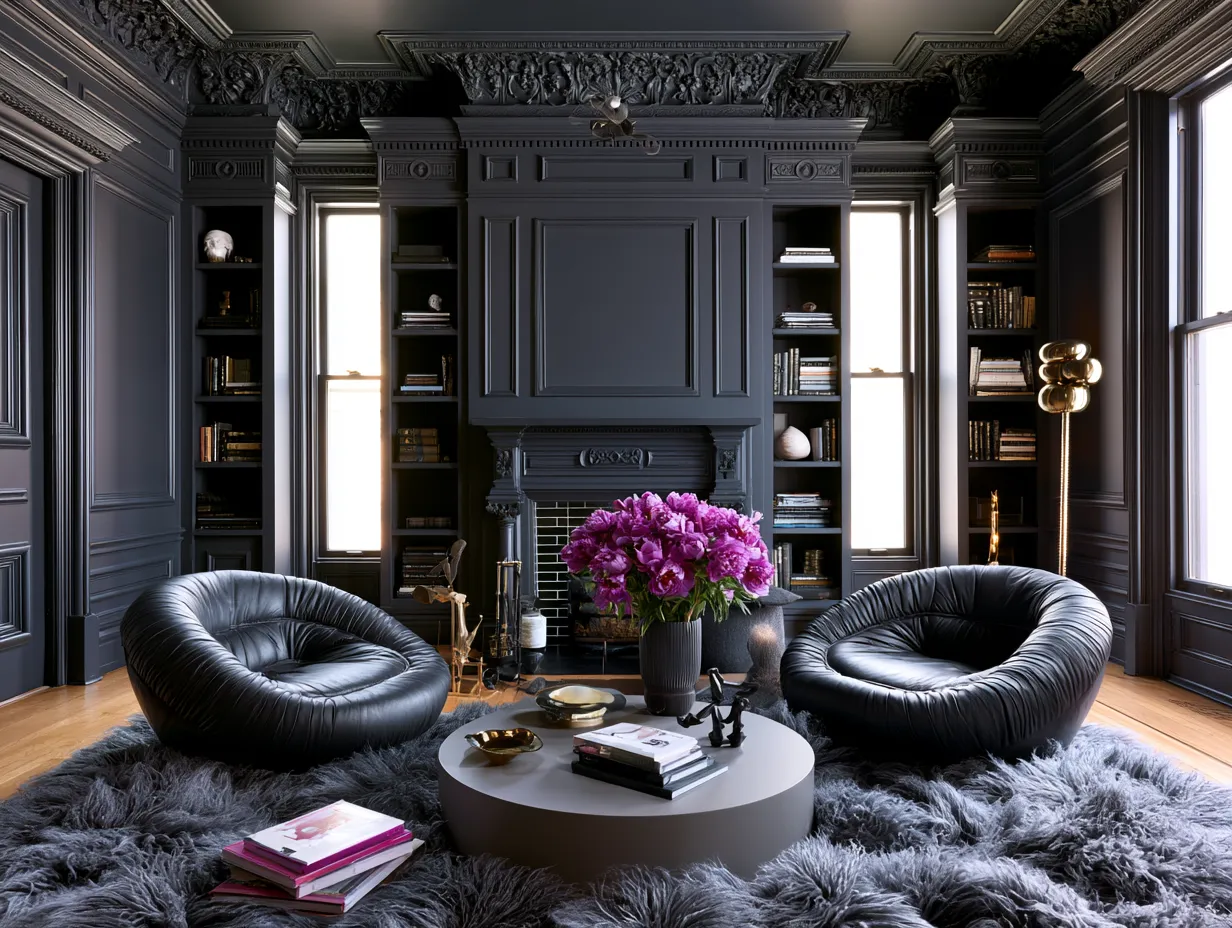
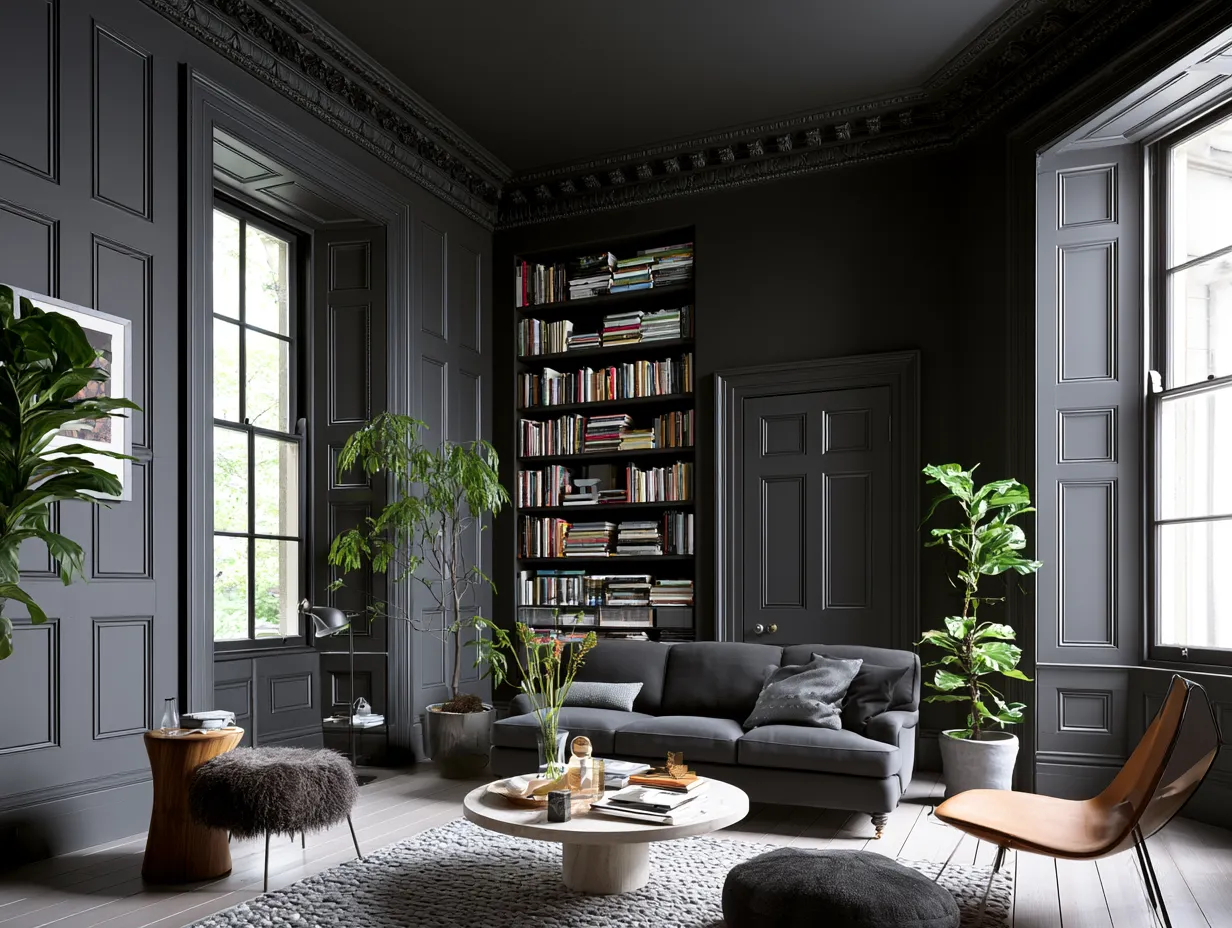
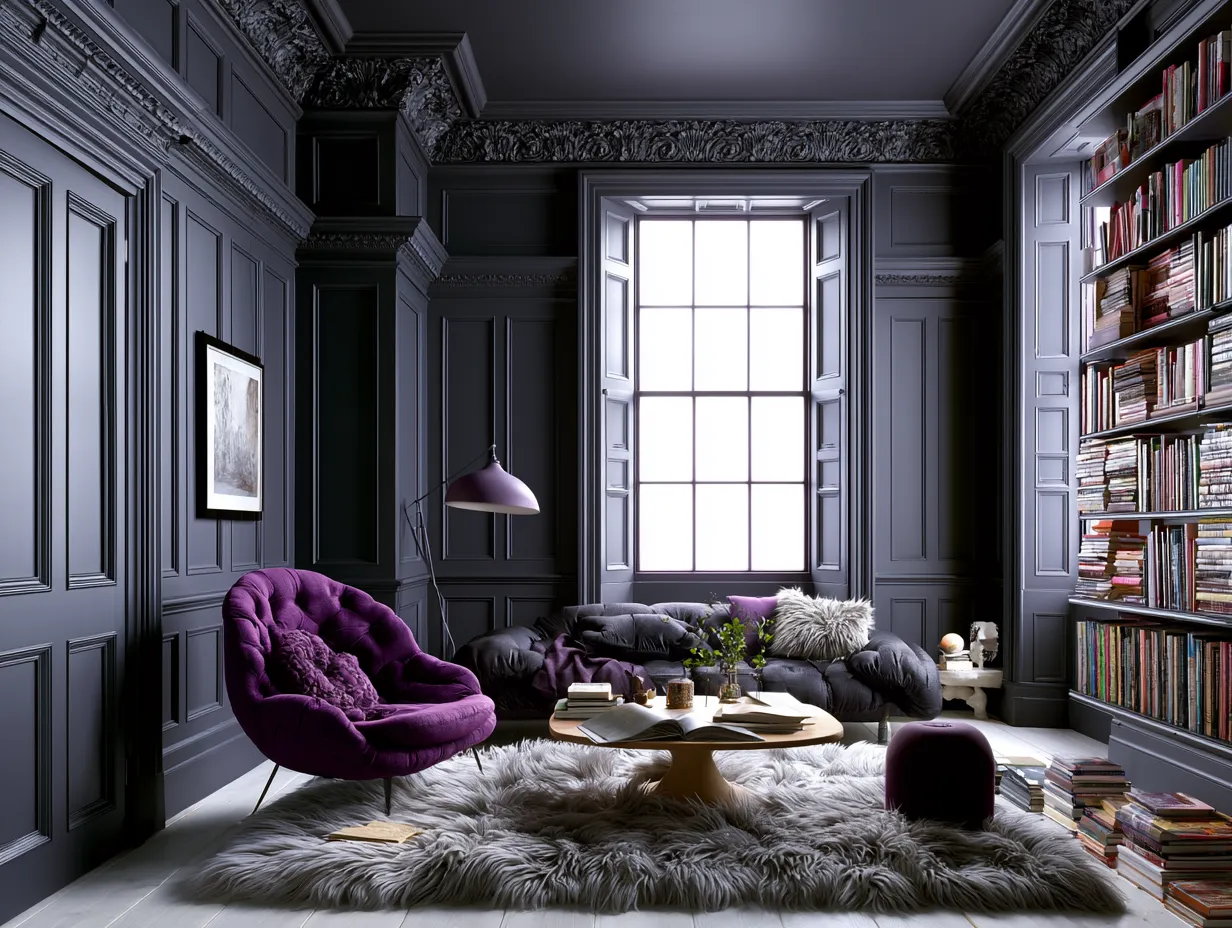
Colour drenching, by contrast, paints walls, ceiling, trim, doors, skirting boards, and built-in cabinetry in a single unified hue. The entire room becomes one colour field. The architectural elements—cornices, moulding, doorways, window frames—do not disappear; instead, they become more legible because they stop competing with white trim against darker walls. A Victorian cornice reads as sculpture rather than blur.
Quick Verdict
- Choose an accent wall if you want a single dramatic focal point, plan to stay in the space long-term, and can commit to specialist installation.
- Choose colour drenching if you want the whole room to feel architecturally coherent, value flexibility, and have adequate artificial lighting planned.
- Accent walls suit minimalist bedrooms where one textured statement anchors sleek, low-profile furniture.
- Colour drenching suits period homes with original moulding, built-in cabinetry, or rooms where architectural details currently read as visual noise.
Cost, installation, and practical durability
An accent wall through textured materials typically carries a higher upfront cost than paint alone. Geometric panels, plaster application by artisans, and quality wood slats require specialist installation—labour that ranges well beyond a standard paint job. Once installed, these surfaces are durable; textured panels resist wear, and plaster regulates humidity naturally.
Colour drenching requires premium paint across all surfaces and careful material selection. Using a flat-finish emulsion on trim and woodwork fails within months as doors and skirting boards show wear; trim must be applied in at least eggshell or satin finish in the same colour to perform durably. Paint brands matter less for aesthetics than for coverage depth—cheaper formulas show lap marks under raking light on ceilings, while high-quality paint covers in one coat. A mid-sized room drenched in colour typically requires two to three gallons total.
Colour drenching is reversible; an accent wall with permanent fixtures is not. This shifts the practical calculus for renters or those who change aesthetic preferences frequently.
| Criteria | Accent Wall | Colour Drenching |
|---|---|---|
| Visual impact | Concentrated focal point on one surface | Unified architectural statement across entire room |
| Installation complexity | High (panels, plaster, woodwork require specialists) | Medium (requires correct finish selection and paint quality) |
| Durability of surface | Textured materials last decades; plaster is breathable | Depends on finish type; trim must be eggshell+ to resist wear |
| Reversibility | Low (fixtures are permanent) | High (paint can be changed) |
| Best colour palettes | Works with any colour; texture and material are primary | Deeper tones reveal architectural detail; lighter tones prevent cave-like feeling |
| Lighting requirements | Works in most conditions; texture plays with light throughout day | Requires strong artificial lighting planning—dark colours absorb light |

Where an accent wall wins
An accent wall excels when your bedroom needs a single visual anchor without committing the entire room to one aesthetic direction. If you favour subtle wall colour but crave dramatic texture or pattern, an accent wall isolates that statement. The geometric panels or plaster finish become functional art, eliminating the need for additional wall decor or artwork. The room feels intentional without feeling overwhelming.
Textured accent walls also provide visual interest through dimensional play with light. Wood slats or geometric panels create shadow and depth throughout the day, anchoring the room without requiring additional artwork. This concentrated visual focus is hard to achieve with paint alone.
An accent wall also allows you to pair bold finishes with neutral surrounding walls, making the room feel larger and less enclosing. If your bedroom is small, a single textured wall holds drama while three neutral walls keep proportions open.


Where colour drenching wins
Colour drenching wins decisively when a bedroom has original architectural detail—moulding, cornices, panelling, or built-in cabinetry—that white trim currently renders invisible. Applying one deep tone across every surface makes these elements read as intentional design rather than structural background. A Victorian cornice suddenly becomes sculptural.
Drenching also creates a sense of visual completion that partial painting cannot match. Because trim, doors, and ceiling are unified, the room feels chosen and finished in a way that white trim against coloured walls does not. The entire architecture reads as one gesture rather than as layered objects competing for attention.
For those who want to change their bedroom without renovation, colour drenching is fully reversible. An accent wall with textured panels or plaster is not.
The number one mistake when choosing between them
The most common error is selecting a drenching colour based on paint chips viewed on a white wall at a shop, then applying it to an entire bedroom without testing it under the actual room’s light conditions. Paint chips viewed against white always read darker than the finished result. Testing a large sample in your bedroom at morning and evening light reveals whether the colour feels cocooning or gloomy—a critical distinction for sleep spaces.
A second mistake is choosing colour drenching without planning artificial lighting first. Deep tones absorb significant light, and a poorly lit drenched room reads as cave-like rather than architectural. Accent walls with textured surfaces work in less-controlled light because the dimensional quality creates visual interest regardless.

Final verdict on accent wall vs color drenching
An accent wall suits bedrooms where you want a single dramatic gesture, plan to stay long-term, and have the budget for specialist installation. It anchors minimalist interiors and works in smaller rooms without feeling confining. Choose this if your bedroom lacks architectural detail and needs a focal point.
Colour drenching suits bedrooms with existing moulding or panelling, or where you want the entire room to feel spatially unified and complete. It suits renters or those who change aesthetic direction frequently because it is fully reversible. Choose this if your bedroom has strong architectural bones or if you want the whole space to feel intentionally chosen rather than focused on a single wall.
Neither is inherently superior. Your choice depends on whether you want the room to have a focal point or whether you want the room itself to read as one cohesive architectural statement.