Brick bbq area ideas multiply the moment you start browsing — yet most backyards end up with a grill that feels like it was dropped into the yard rather than built for it. I’ve visited dozens of outdoor entertaining spaces over the years, and the ones that photograph well and actually function share one thing: the brick bbq design was planned around the cook’s workflow, not the other way around. You need clearance for a 30-inch grill, prep counter on the dominant side, and sightlines to where guests will stand. Get those three things right and the style choice — rustic, modern, or somewhere eclectic — almost doesn’t matter.
The eight ideas below span reclaimed-brick traditionalism through geometric contemporary through full-color artistic builds. Each section covers what works, what I’ve personally seen fail, and the material specs worth knowing before you commit to mortar. My go-to rule for anyone starting from scratch: choose your grill insert first, then size the brickwork around it — not the reverse.
– Rustic brick BBQ builds — reclaimed or hand-molded brick, recessed grate ledges, wood surround → Section 1
– Modern brick BBQ designs — slim-profile veneer, stainless insert, geometric paving → Section 2
– Eclectic brick BBQ with tile and color — Moroccan tile accents, custom shapes, mixed textures → Section 3
– Material comparison — firebrick vs standard brick, mortar types, cost range $500–$5,000+ → Section 2
– What not to do — common layout and material mistakes → throughout
– FAQ — brick type, permit questions, maintenance, chimney additions → bottom
Traditional Brick BBQ Area Ideas with Rustic Charm
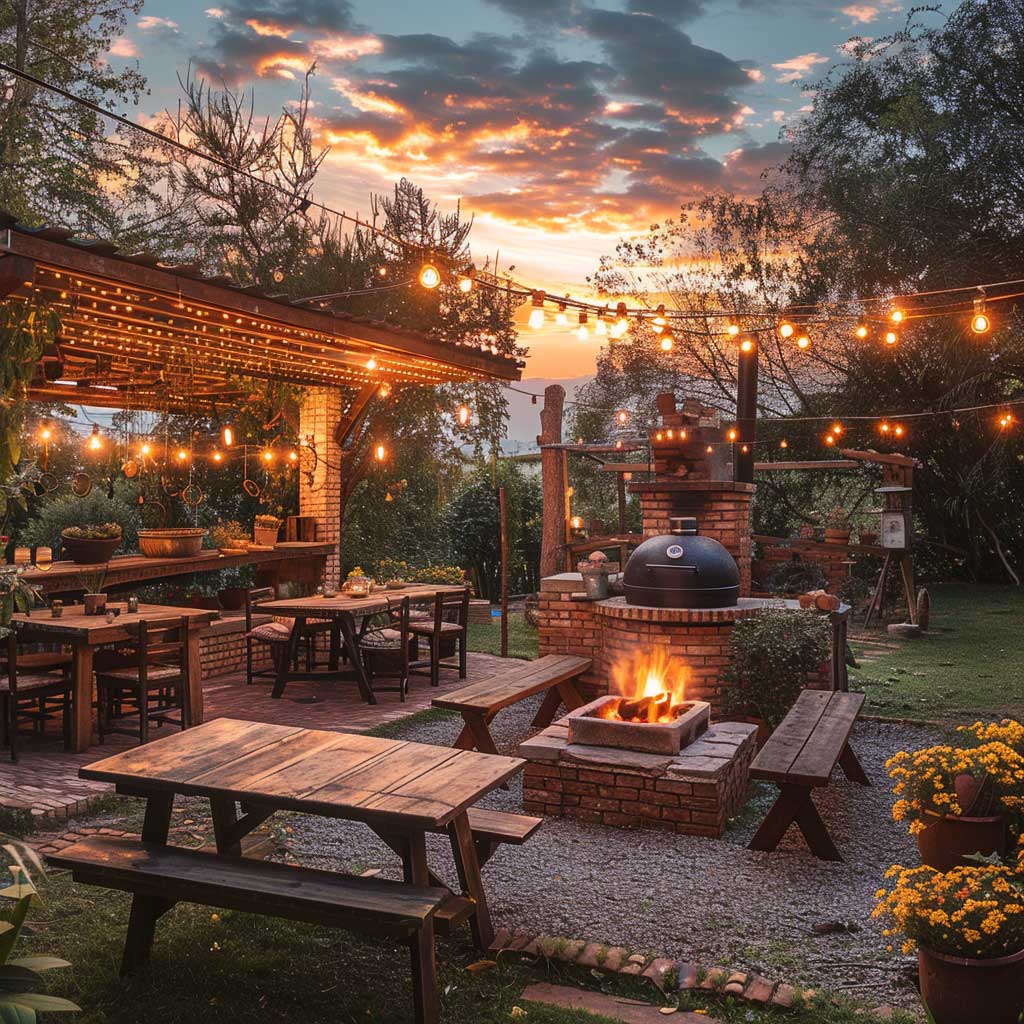
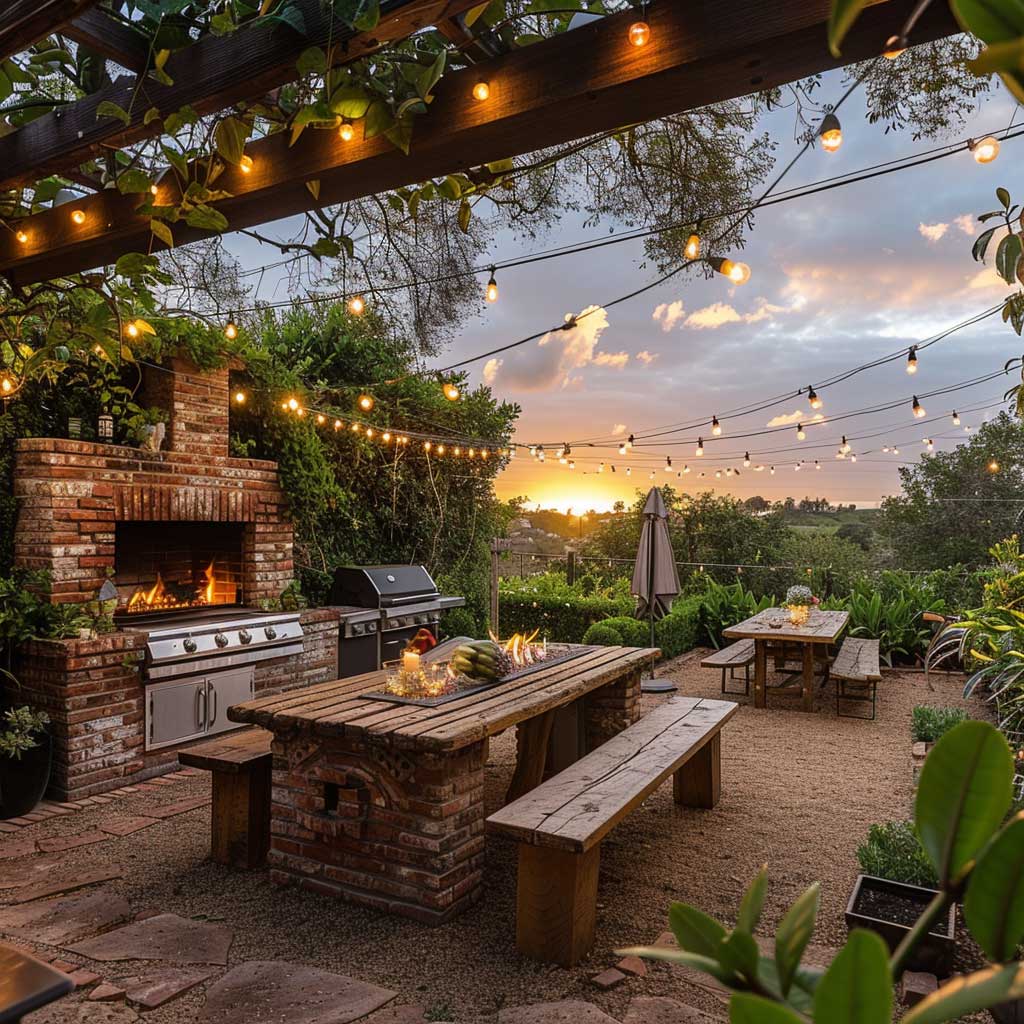

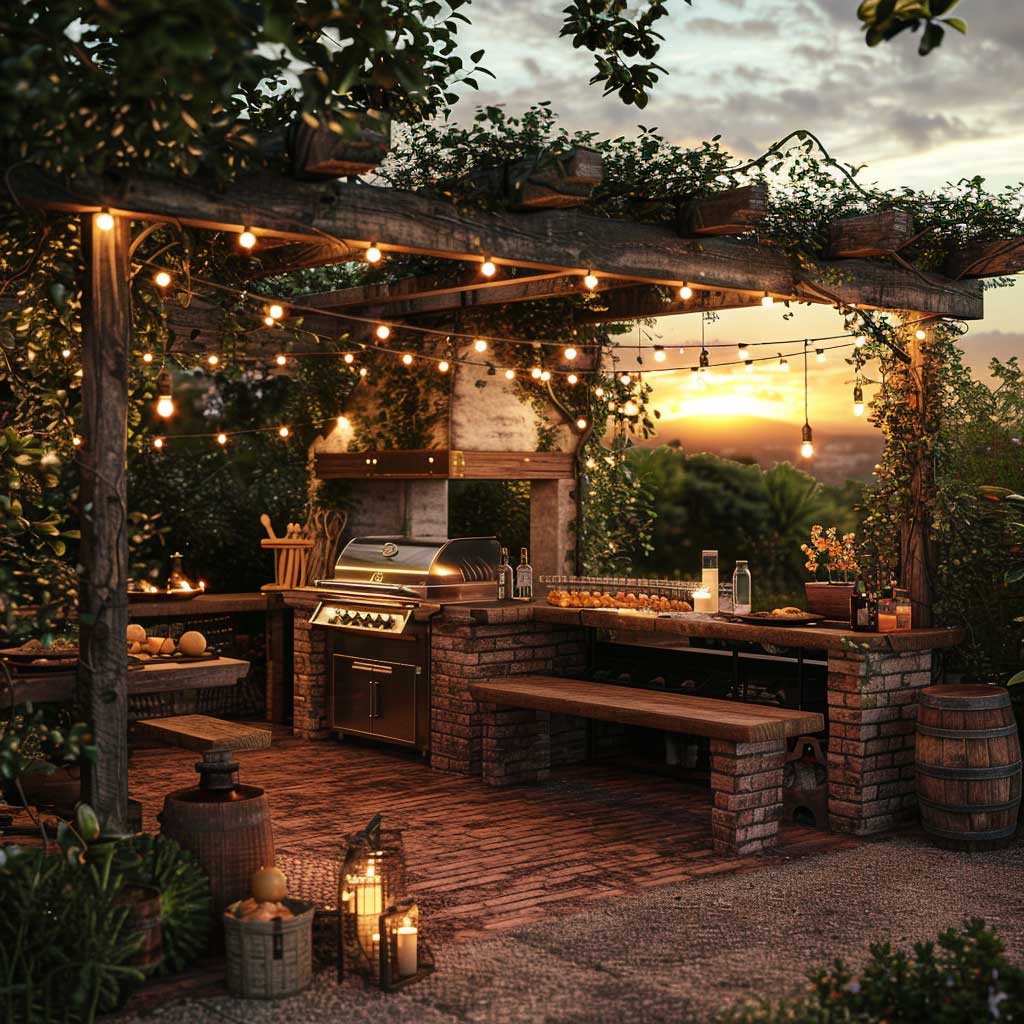
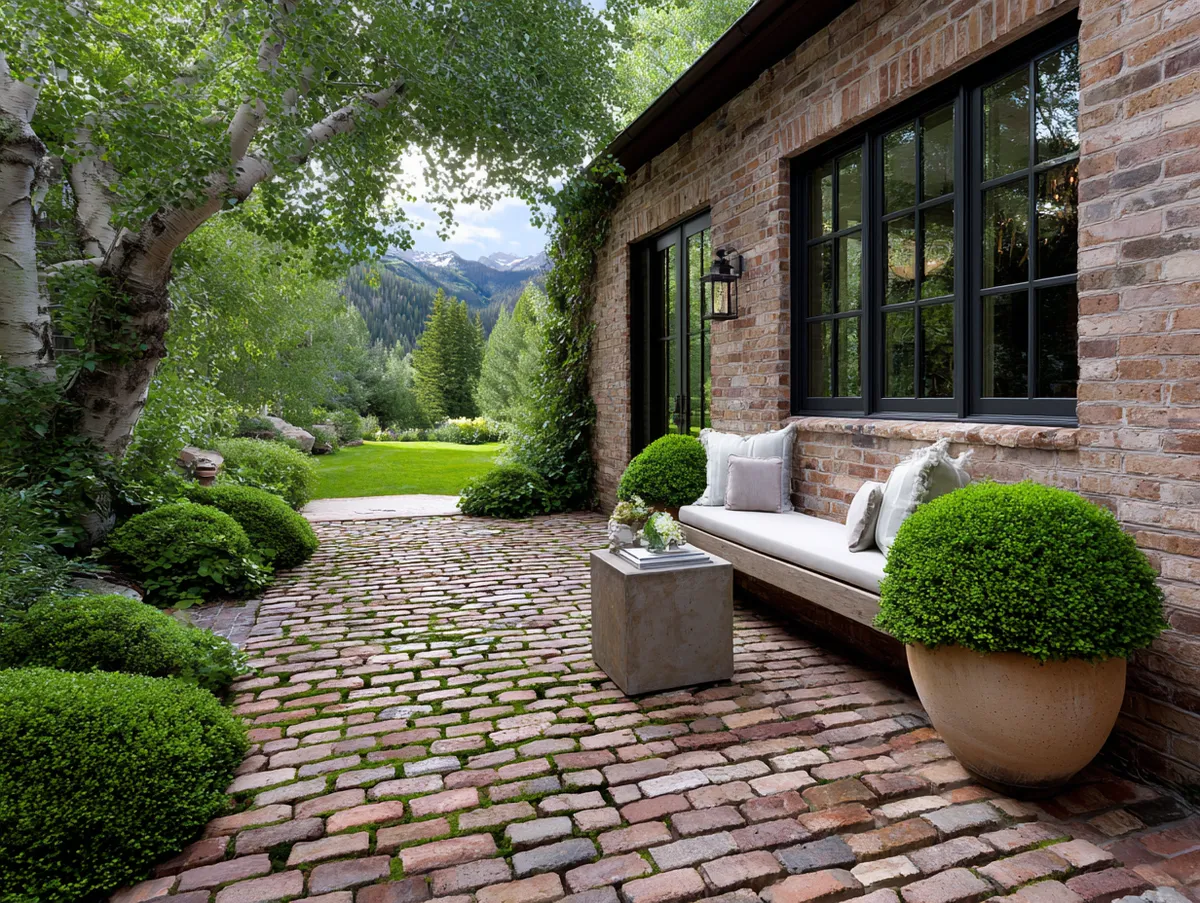
Reclaimed bricks cost around $0.50–$1.50 each at salvage yards versus $0.25–$0.60 for new standard brick — and the visual payoff is real. The color variation and worn surface of old bricks read as intentional, not budget-constrained. I stole this trick from a landscape mason in Austin: sort your reclaimed bricks by tone before you start laying, grouping the darkest at the base. The gradient reads as shadow, which makes the whole structure feel more grounded and intentional.
For the firebox itself, never skip firebricks — they handle heat up to nearly 3,000°F where standard clay bricks crack after repeated thermal cycling. Pair them with refractory mortar applied in 1/8-inch layers. You’ll notice the firebox lining looks thinner than the outer walls. That’s correct: the mass is on the outside, the heat resistance is on the inside.
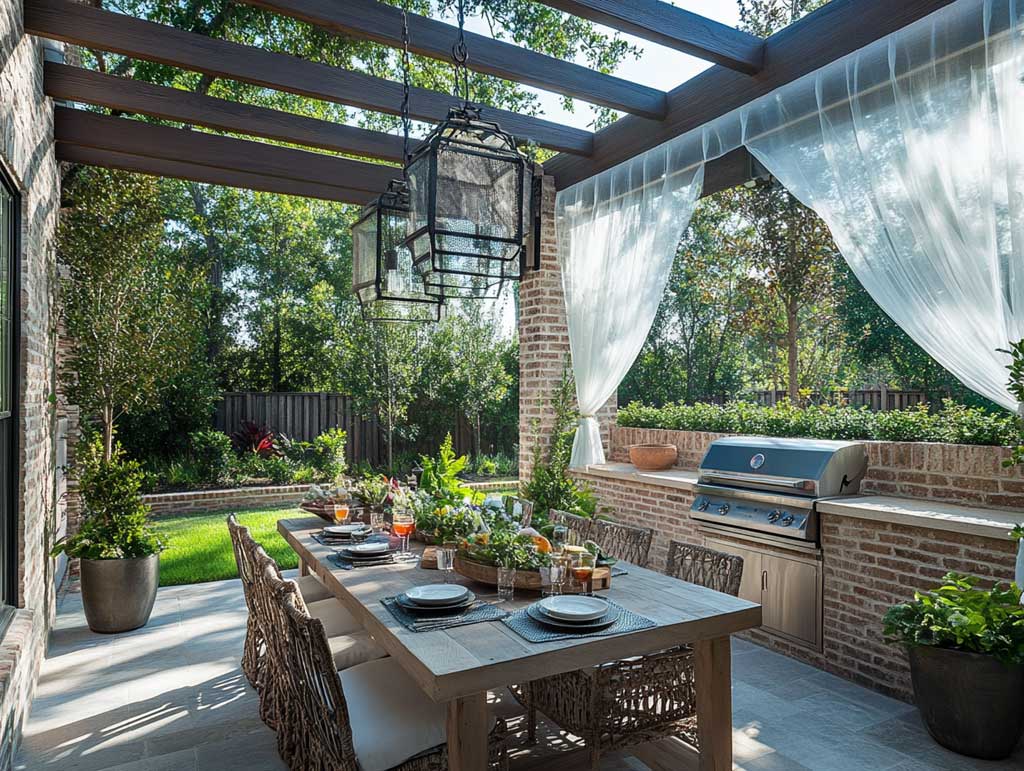
Wooden elements do the heavy lifting aesthetically in rustic bbq area designs. Reclaimed Douglas fir benches, a weathered cedar pergola overhead, or even a rough-sawn oak prep counter all harmonize with brick’s earthy palette. The mistake I keep seeing: pressure-treated pine painted dark brown. It looks exactly like what it is — painted pine — and doesn’t age the way untreated or naturally weathered wood does.
String lights are the single cheapest upgrade that transforms an outdoor brick BBQ area from functional to genuinely atmospheric. I own two weatherproof Edison-bulb strands from Feit Electric (around $28 each at Costco) — draping them from the pergola’s peak to the outer corners creates the tent-of-light effect that makes brick textures pop at night. Skip the solar versions. They dim by 9 PM just when you need them most.
Climbing plants soften the hard lines of any brick structure — but plant them with restraint. Wisteria looks romantic until it starts prying mortar apart within a few seasons. My go-to is climbing roses trained on a wire system attached to the pergola frame, not the brickwork itself. You get the green-and-bloom effect without the structural damage.
Rustic stone BBQ area designs follow a similar layout logic if you want a complementary material for seating walls or paving around the grill structure. Mixing brick and natural fieldstone on the same project works well — keep the brick for the structural mass and use stone for ground-level elements like low walls and edging.
Modern Brick BBQ Designs — Slim Profile, Strong Geometry
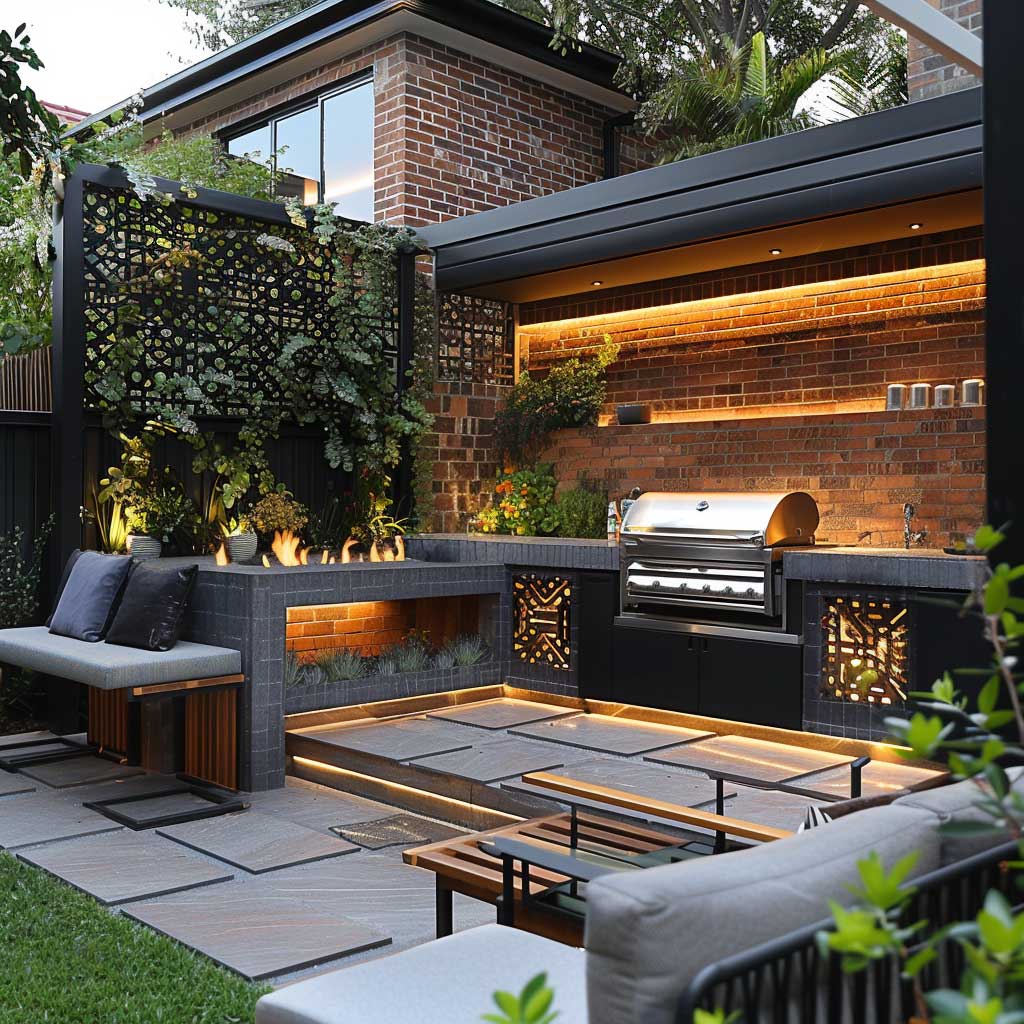
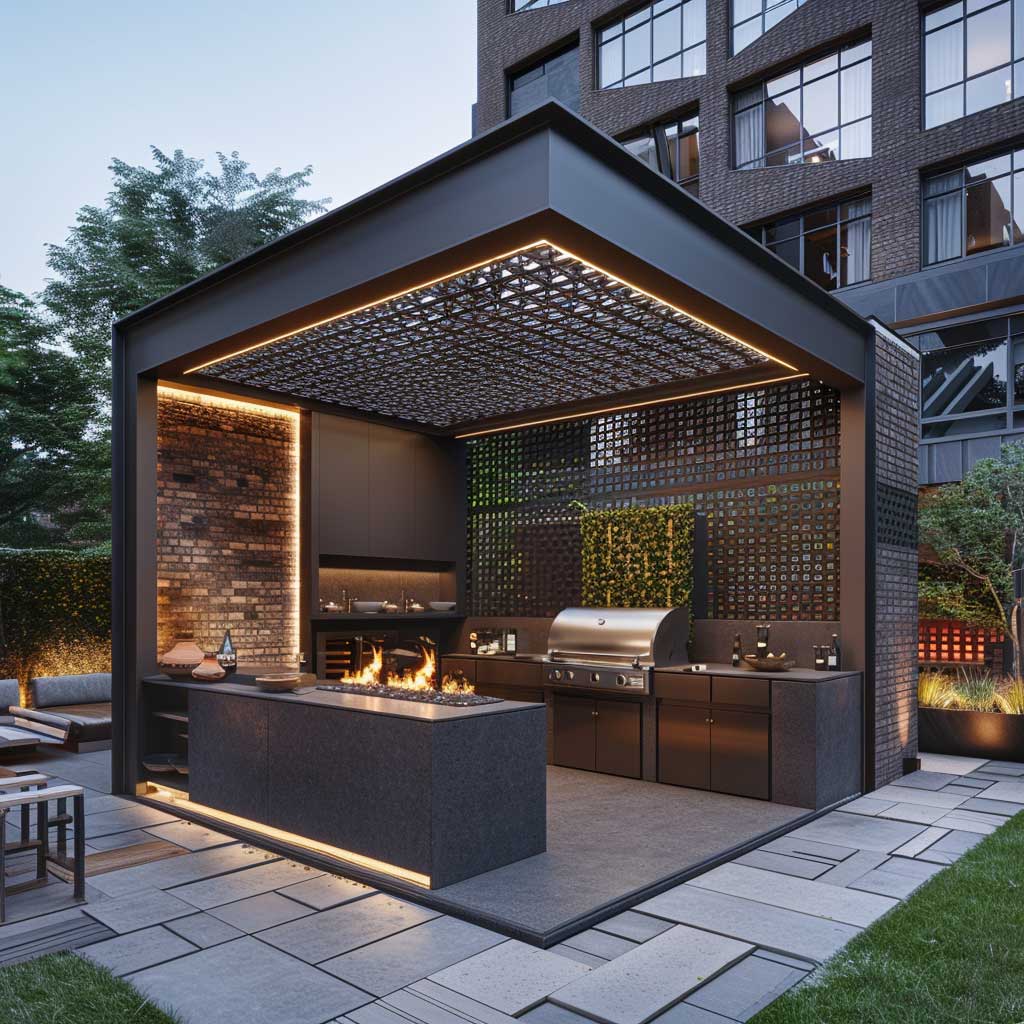
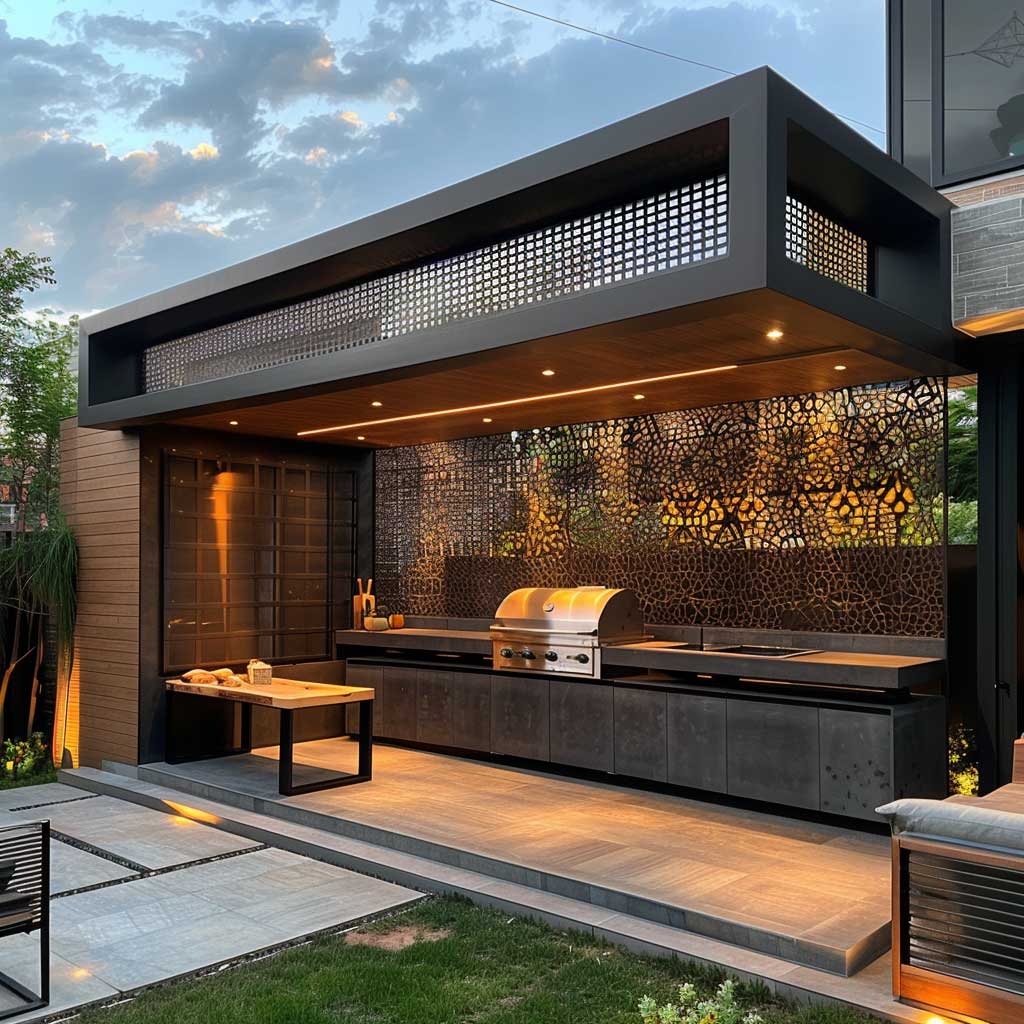
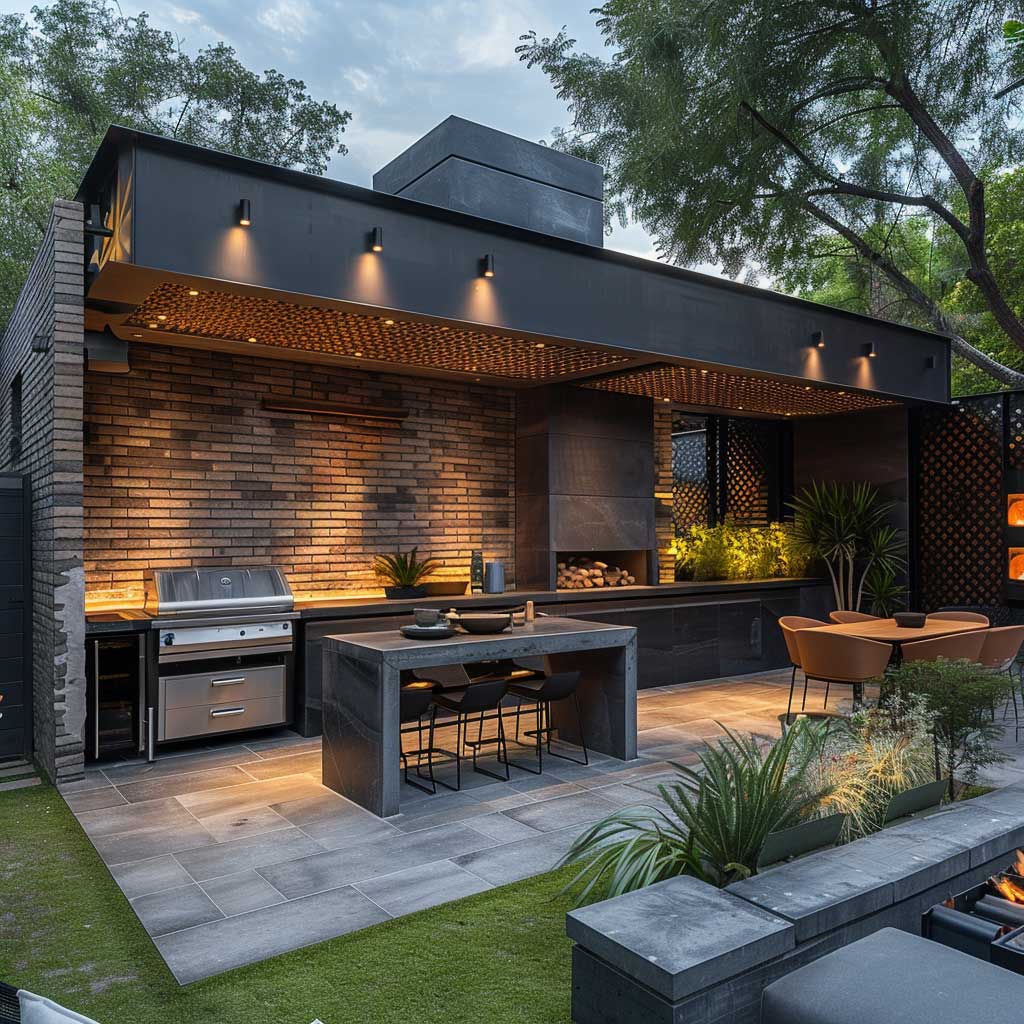
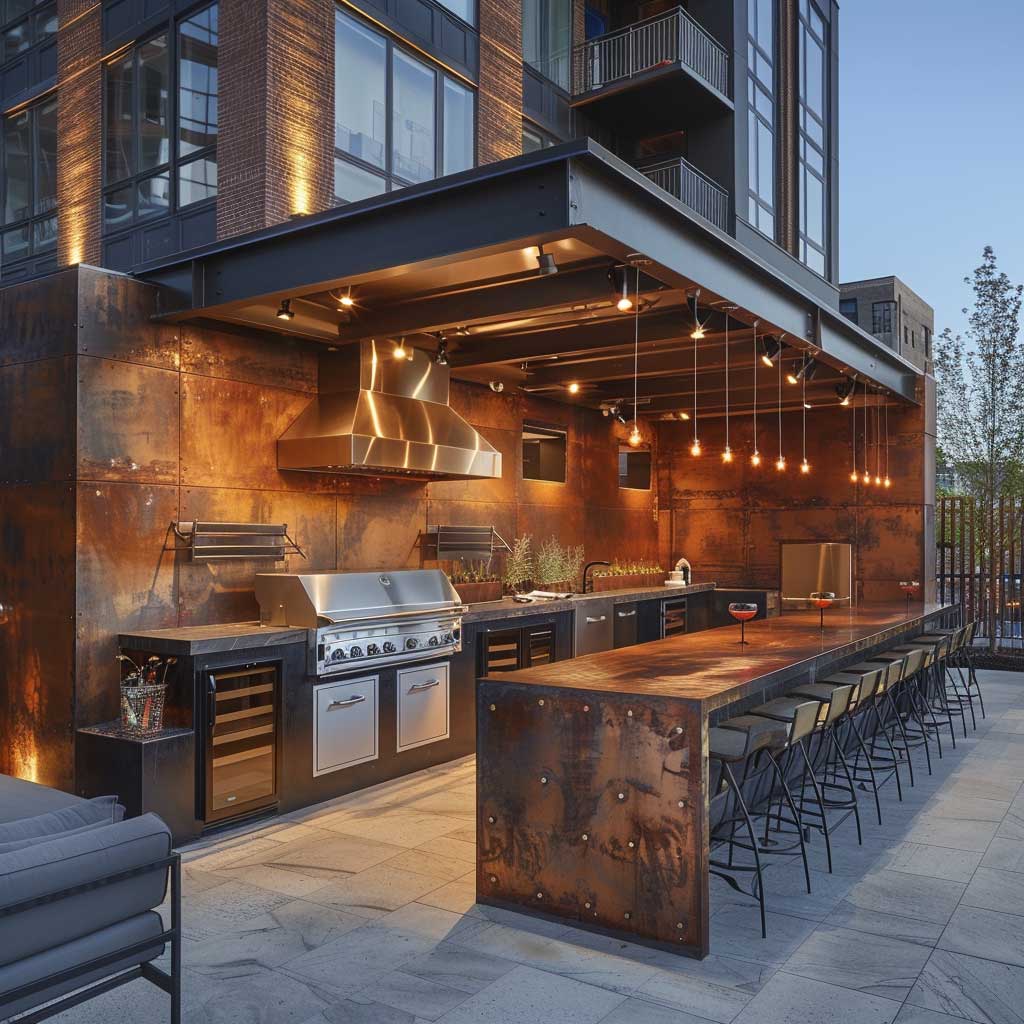
Modern brick bbq designs succeed or fail on the mortar joint. Slim joints — 3/8 inch instead of the traditional 1/2 inch — immediately read as contemporary. Brick veneers or so-called “slim bricks” (typically 3/4 inch thick versus the standard 3.75 inches) give you the same visual result with less structural mass. A full modern brick BBQ island using slim veneer over a concrete block core typically runs $1,800–$4,000 in materials, versus $500–$1,500 for a basic open-format rustic build. Worth knowing before you fall in love with a design from a luxury outdoor living Instagram account.
The grill matters more in a modern bbq area than a rustic one, because there’s less visual noise to hide a mediocre appliance. Weber’s Spirit II E-310 ($599) works in a surround just fine, but if you’re building a proper island, a built-in insert from Napoleon or Lynx reads at the right quality level. Blackened steel or brushed stainless? Blackened steel photographs better and hides fingerprints — stainless looks brighter in person but shows every smear in afternoon light.
Geometric paving locks the modern look together. A herringbone or running-bond pattern in charcoal pavers around the base of the brick bbq structure creates visual rhythm that plain square pavers don’t deliver. Don’t run the same pattern all the way to the property boundary, though — it starts to look like a parking lot. Use it as a defined zone, 10–12 feet from the grill in each direction, then transition to plain concrete or lawn.
Building a modern brick BBQ area without sealing the brickwork first. Exposed brick on outdoor kitchens sounds maintenance-free until efflorescence appears — that white powdery residue that makes your finished structure look diseased. Apply a siloxane-based sealer before the first season, not after the problem starts. Also: avoid recessing your stainless grill insert into the brick too tightly. Metal expands when it heats. Leave at least 1/4 inch clearance on each side or you’ll crack the surrounding mortar by midsummer.
LED strip lighting under the counter lip is the detail that photographs beautifully and costs almost nothing relative to the overall build — $40–$80 in weatherproof LED tape from Amazon or Home Depot. Run it along the underside of any countertop overhang. It makes the structure appear to float slightly and illuminates the cooking zone without harsh overhead shadows. Dimmable driver included is non-negotiable; you want warm light at 10 PM, not stadium lighting.
Here’s a material comparison for anyone choosing between structural options for a modern outdoor brick BBQ build:
| Material | Heat Resistance | Maintenance | Cost Range (materials) | Best For |
|---|---|---|---|---|
| Firebrick (refractory) | Up to 3,000°F | Low | $1.50–$3.50/ea | Firebox lining |
| Standard clay brick | Moderate (cracks under direct flame) | Low–Medium | $0.25–$0.60/ea | Outer structure |
| Brick veneer (slim) | Low (decorative only) | Low | $2–$5/sq ft | Modern BBQ island façade |
| Reclaimed brick | Moderate | Medium (seal annually) | $0.50–$1.50/ea | Rustic outer structure |
| Natural stone countertop | High (granite, bluestone) | Medium (periodic sealing) | $40–$90/sq ft installed | Prep surface on any style BBQ |
For anyone building a proper outdoor brick BBQ island, Gerrior Masonry’s outdoor BBQ design resource breaks down material cost ranges and construction sequencing in detail — particularly useful for understanding foundation requirements and how to account for thermal expansion in metal components.
Eclectic Brick BBQ Areas — Color, Tile, and Artistic Customization
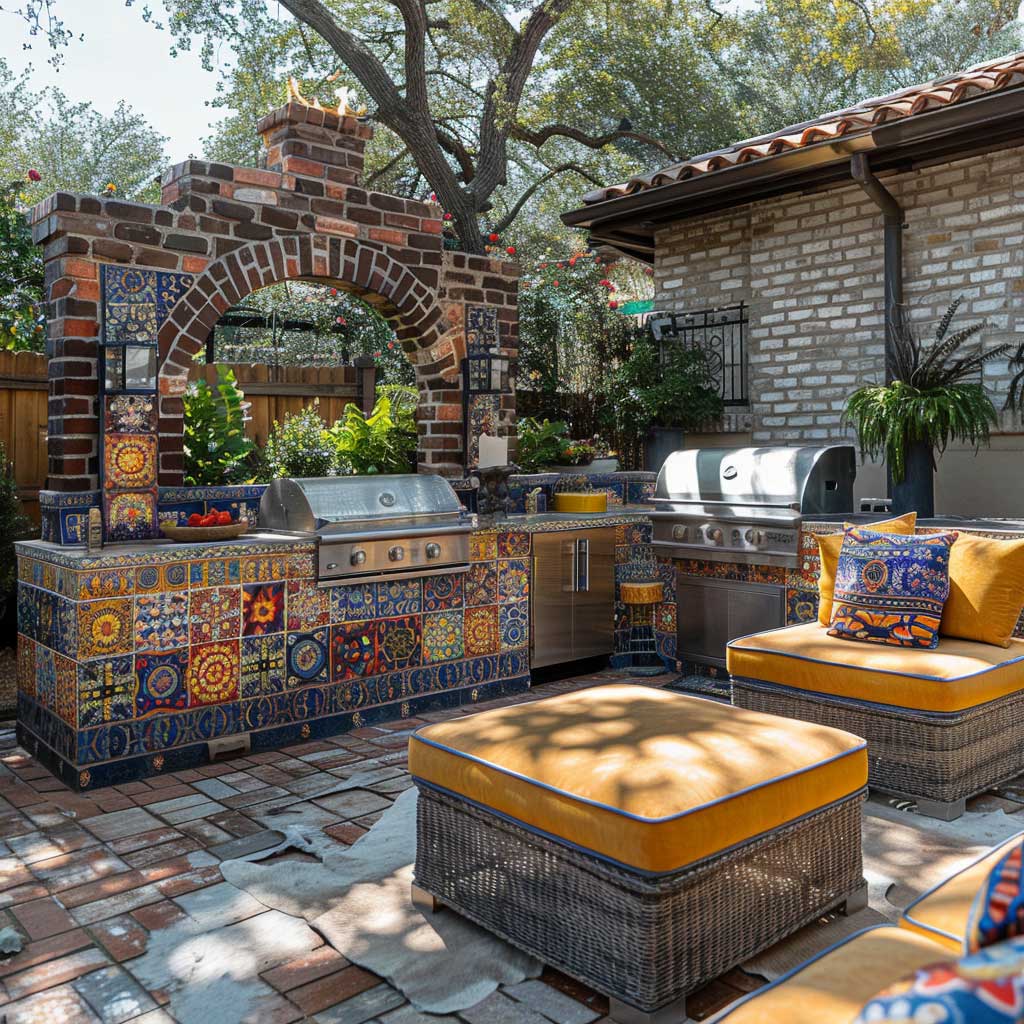
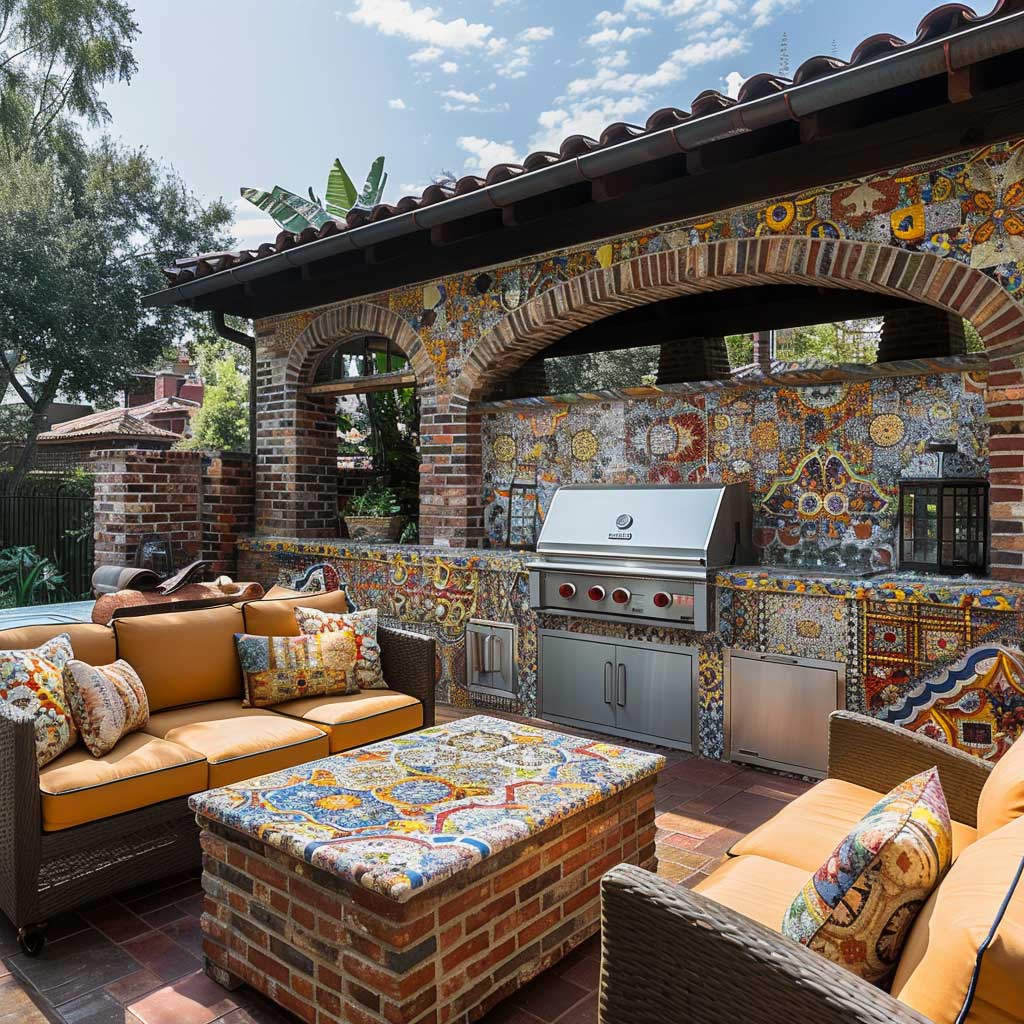
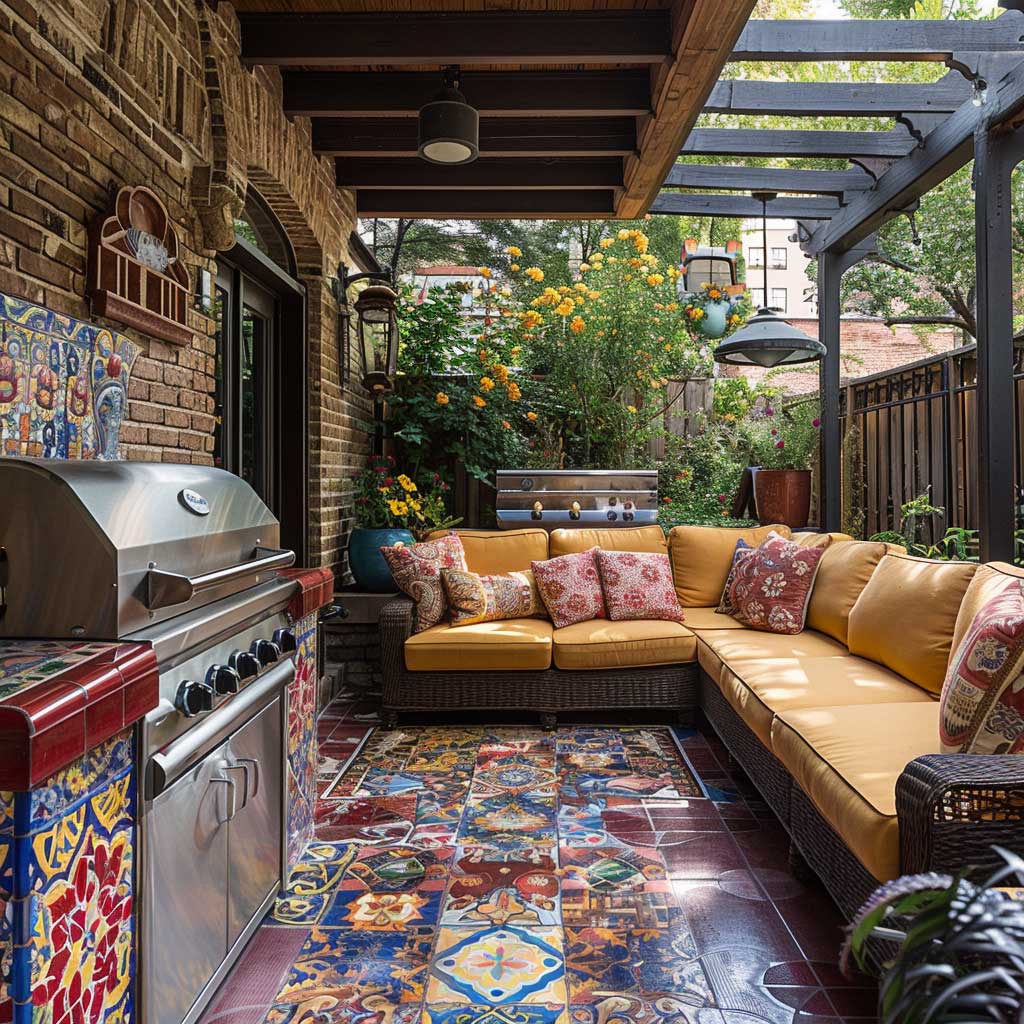
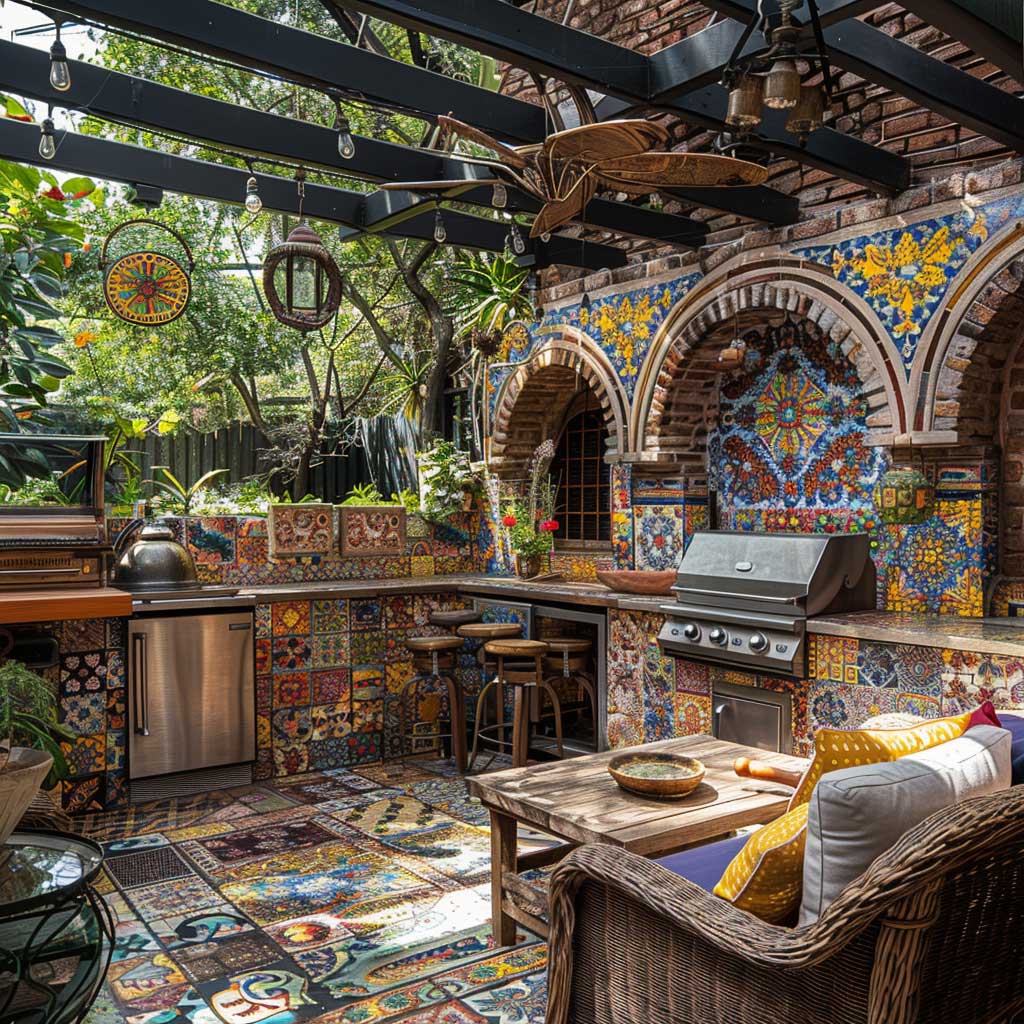
Painted brick BBQ areas live and die by the paint choice. Limewash — Romabio Classico at around $85/gallon — is my go-to for exterior brick because it breathes, meaning moisture doesn’t get trapped behind a film that eventually peels. Standard latex exterior paint on brick looks sharp for two seasons and then starts spalling with the freeze-thaw cycle. I’ve seen it happen to beautiful brick bbq builds that cost $3,000 in materials — tragic and completely avoidable.
Moroccan cement tiles as a backsplash behind the grill run $8–$15 per tile and make the entire structure feel deliberately designed rather than improvised. You’ll want to seal them with a penetrating sealer before grouting and again after — cement tiles are porous and cooking splatter stains permanently without that step. Hand-painted Talavera tiles from Mexican pottery suppliers are a cheaper alternative at $2–$6 per tile, but the glaze is softer and chips faster near a heat source.
What style of furniture actually holds up outdoors? Cast iron and powder-coated steel survive temperature swings without warping. Upcycled vintage chairs sound like a good idea until the third summer when the wooden joints absorb enough moisture to separate. My honest take: vintage pieces work beautifully if they’re covered when not in use and you re-seal or re-oil them annually. Ignore that maintenance window and you’ll replace them faster than IKEA furniture.
Garden sculptures and artistic elements in eclectic bbq spaces function like punctuation — one or two well-placed pieces create rhythm, too many create chaos. A single large ceramic pot planted with ornamental grass reads as intentional. Twelve hand-painted garden stakes, two wind chimes, and a mosaic stepping-stone path reads as a souvenir shop exploded. I’ve learned this the hard way designing spaces for friends who have eclectic taste but no editing instinct.
If you want the outdoor entertaining area to extend beyond the grill structure, built-in BBQ ideas covers how to integrate brick bases with stone countertops and overhead shelter systems — particularly relevant for eclectic builds where you want the cooking zone to anchor a larger designed space.
THE BOTTOM LINE
Brick BBQ areas outlast every portable grill you’ll ever buy — but only if the firebox is lined right and the foundation is solid.
Start with the grill insert dimensions, pour a 4-inch fiber-reinforced concrete pad, line the firebox in firebrick and refractory mortar, and let the style choice — rustic, modern, eclectic — come after the structure is sound. The aesthetic is the last decision, not the first.
A basic open-format brick grill runs around $500 in materials. A modern brick BBQ island with veneer and stainless insert lands at $1,800–$4,000. Elaborate custom builds with pizza ovens, countertops, and pergola cover can reach $15,000–$30,000 professionally installed. Know your number before you fall in love with a layout that’s three tiers above your budget.
Save this post — and pin it before you start shopping for bricks.
Related Topics
FAQ
What kind of bricks work best for an outdoor brick BBQ area?
Do I need a permit to build a permanent brick BBQ in my backyard?
How much does a brick BBQ area cost to build?
What is the difference between rustic and modern brick bbq designs?
Can I add a chimney to an existing brick BBQ grill?
How do I maintain a brick BBQ area so it lasts more than a decade?
Complete guide
Brick in Every Room and Facade Worth Seeing
Exteriors, interiors, patios, bathrooms, colors, patterns, materials — all in one place
Complete guide
Patio and Yard Ideas That Turn Any Backyard Into a Living Room Outside
Flooring, furniture, shade, pools, kitchens, fire pits, courtyards — all in one place