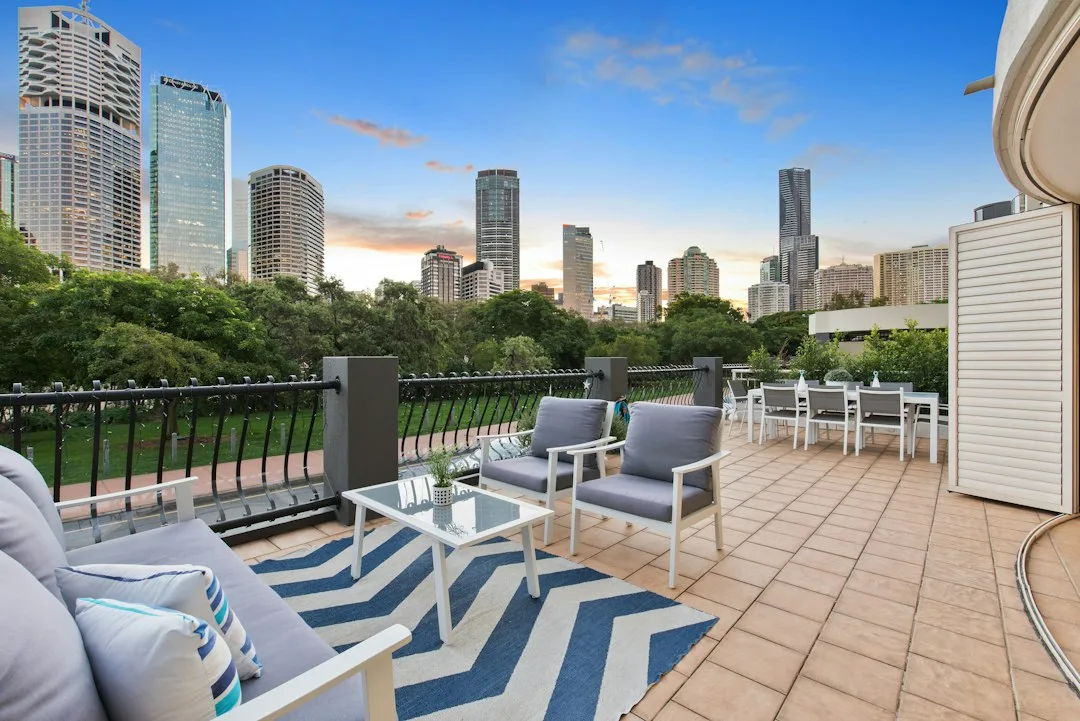
Built in BBQ ideas work differently from portable grills — the structure stays put, the workflow gets designed around it, and the outdoor space finally has a reason to exist past the first cookout of the season. According to HomeGuide, a built-in BBQ grill island runs $3,000 to $10,000 installed, which puts it in the same budget range as a decent patio renovation and far below a kitchen extension. That math is worth knowing before you start sketching layouts.
The three formats covered here — natural stone, stainless steel, and compact brick — suit very different spaces and budgets, but they share one design logic: the grill is a fixed feature, not a guest at a party. Each section covers what the material actually does under real conditions, what goes wrong most often, and where the money is best spent.
Pergola placement gets its own section because it’s the detail most built-in BBQ layouts skip until year two, when the heat and rain make cooking outdoors genuinely unpleasant. Sequence matters more than style here — get the structure right first, then choose the finish.
- Built-in BBQ grill islands cost $3,000–$10,000 installed; full custom outdoor kitchens run $10,000–$35,000
- Natural stone (granite or limestone) is the most durable surround — it withstands freeze-thaw cycles and handles heat without degrading
- 304-grade stainless steel grills last 15–20+ years with proper maintenance; lower-grade 430 steel shows rust by year three in humid climates
- Compact brick built-ins work in spaces as small as 6–8 linear feet — the key is keeping prep surface and storage above, not beside, the grill
- A pergola or covered structure overhead is not optional — open-sky builds require refinishing or replacing components within two to three seasons
- Stone veneer surround costs $10–$45 per square foot installed; stucco is the most budget-friendly finish at $3–$9 per square foot
Natural Stone Surrounds for Rustic Built In BBQ Setups
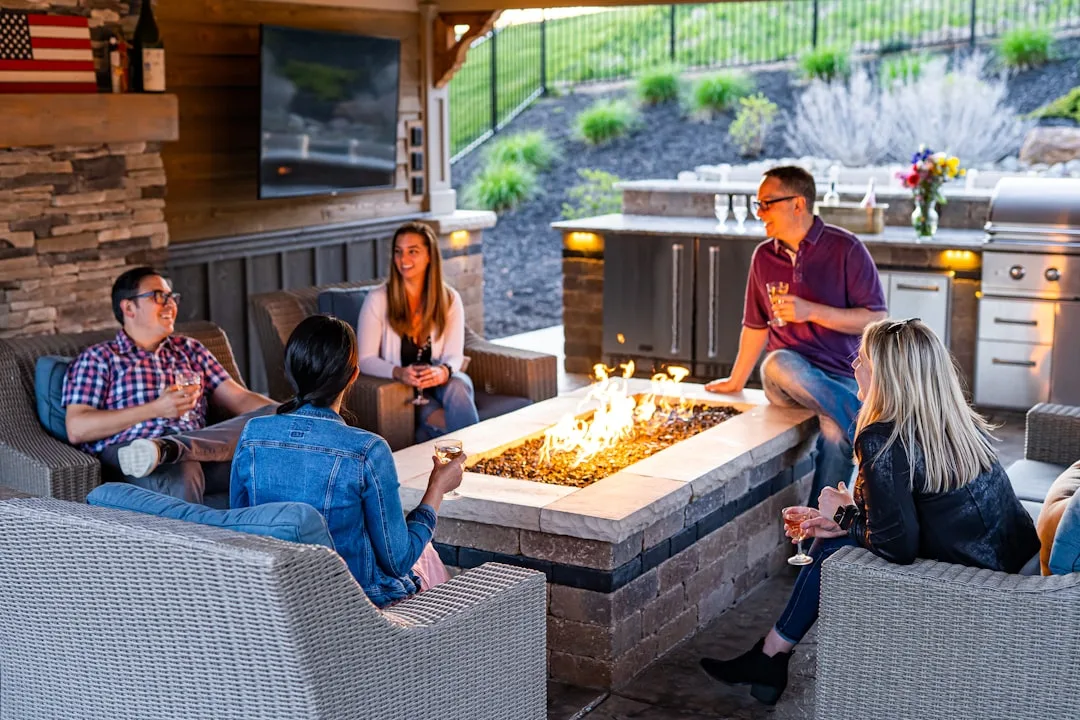
Stone is the material that makes a built in BBQ feel like infrastructure rather than furniture. Natural stone veneer installed around a grill surround runs $20–$40 per square foot depending on type and region — granite and slate on the higher end, limestone and fieldstone on the lower — but the lifespan justifies the premium. Unlike prefab metal frames that show weathering within a few seasons, stone develops a patina over time that reads as character, not neglect. The unevenly shaped fieldstone look popular in rustic backyard builds actually holds up better structurally than uniform cut stone, because the irregular joints reduce thermal expansion stress across the face.
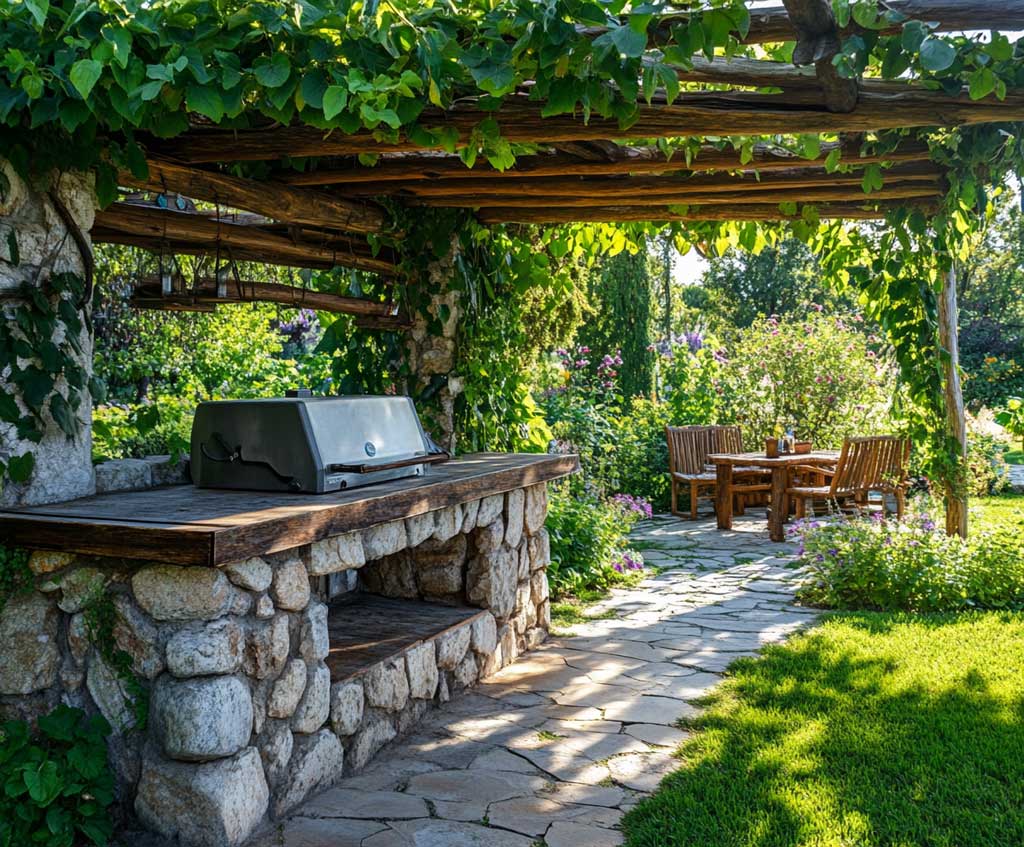
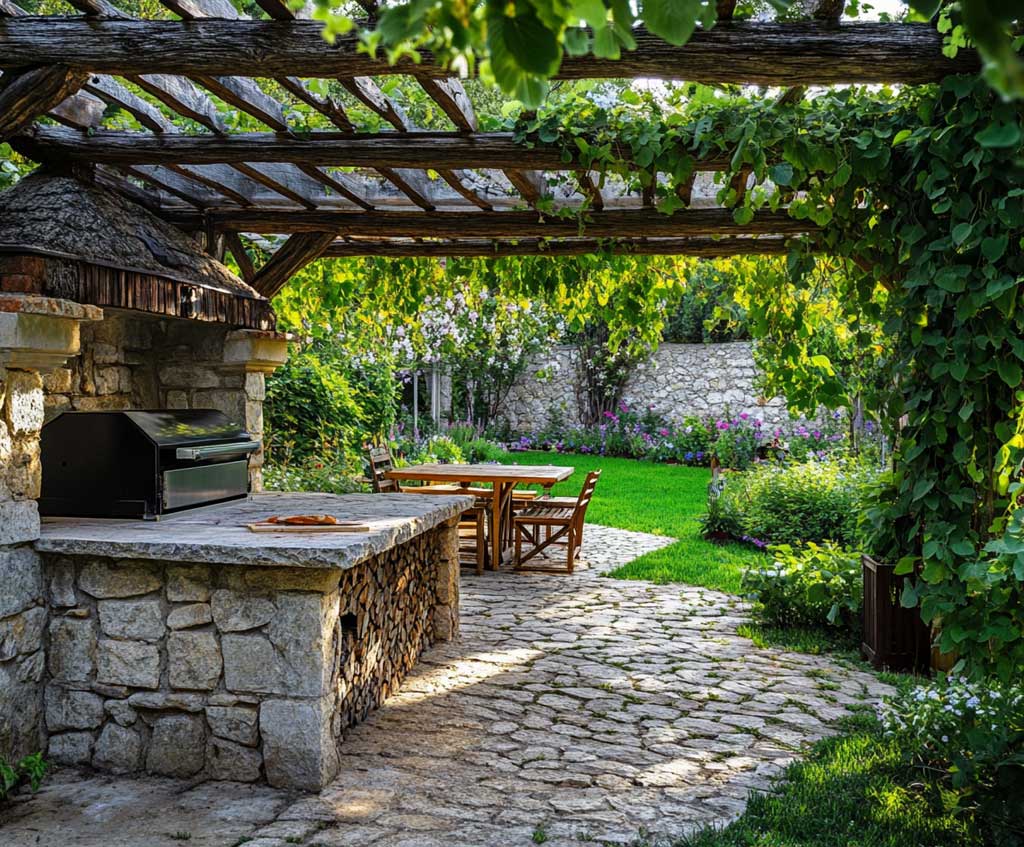
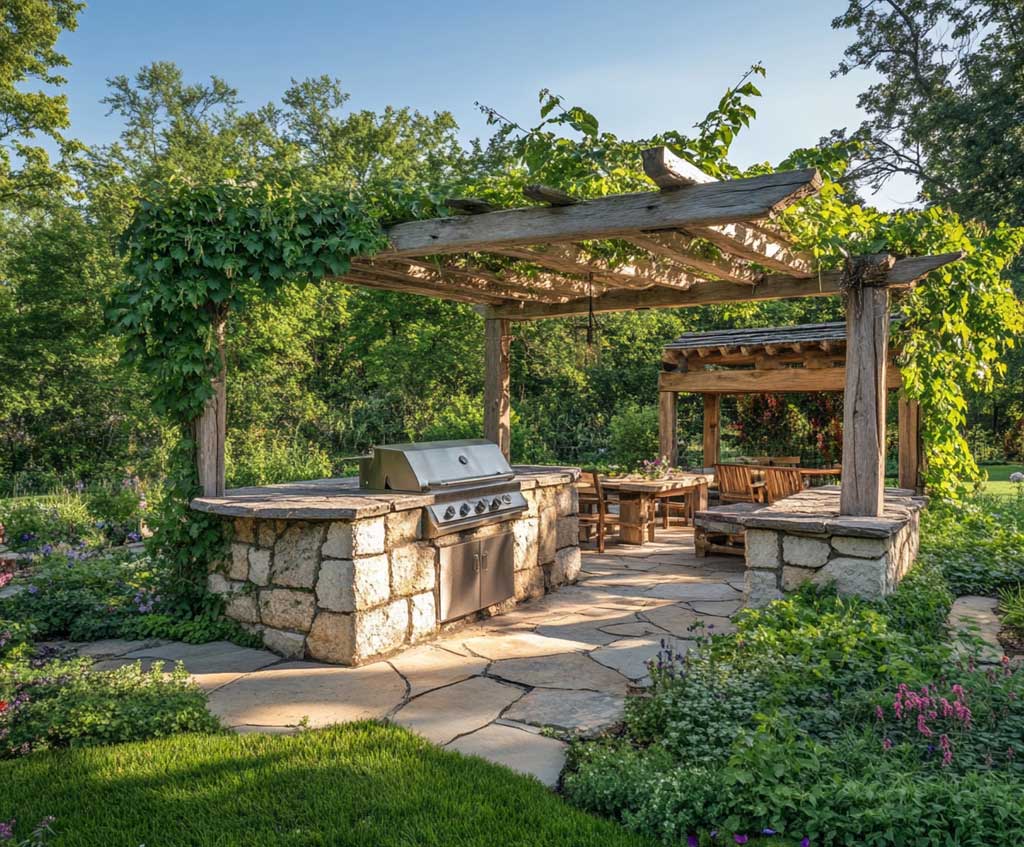
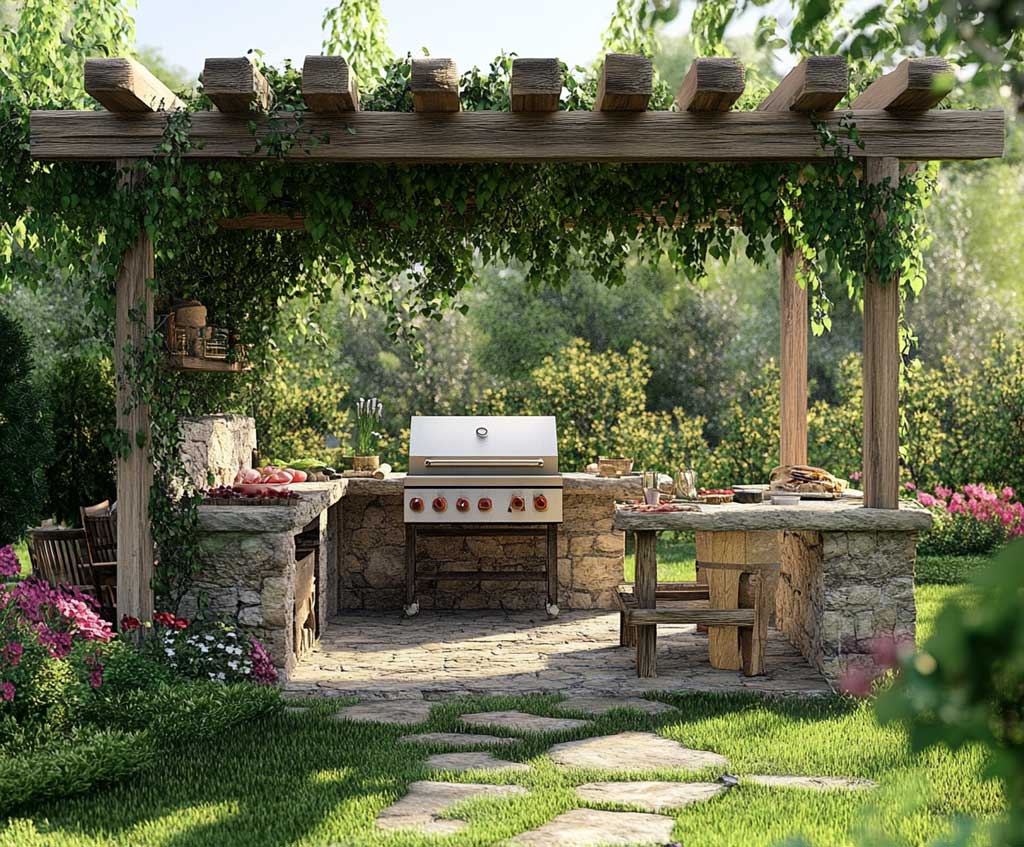
What material should you choose for the countertop? Honed granite is the practical answer — heat-resistant up to 1,200°F, forgiving of surface moisture, and significantly cheaper polished when bought in slab form for outdoor use. Travertine handles direct sun better than polished granite and costs slightly less; slate is appealing visually but delaminates under repeated freeze-thaw cycles faster than most homeowners expect. Skip any polished surface on horizontal planes near the grill — grease and high heat turn a polished stone countertop into a maintenance problem within one summer. Stone veneer on the vertical face costs $10–$45 per square foot installed, with manufactured stone at the lower end and natural stone at the upper.
Stone retains heat differently than steel — the mass of the surround acts as a thermal buffer that keeps cooking temperatures more even during low-and-slow sessions. This is the same principle behind a tandoor oven: thermal mass smooths out the peaks and valleys in cooking temperature. Wooden beams overhead with climbing rosemary or jasmine on the uprights complete the rustic logic without requiring a landscape architect. The trick here is spacing the beams loosely enough to allow smoke to rise and dissipate — tight pergola roofing over a charcoal grill creates a smoke trap that drives everyone back inside. For more stone outdoor BBQ layouts worth studying before committing to a design, rustic stone BBQ area builds covers material choices and structural approaches with real cost ranges.
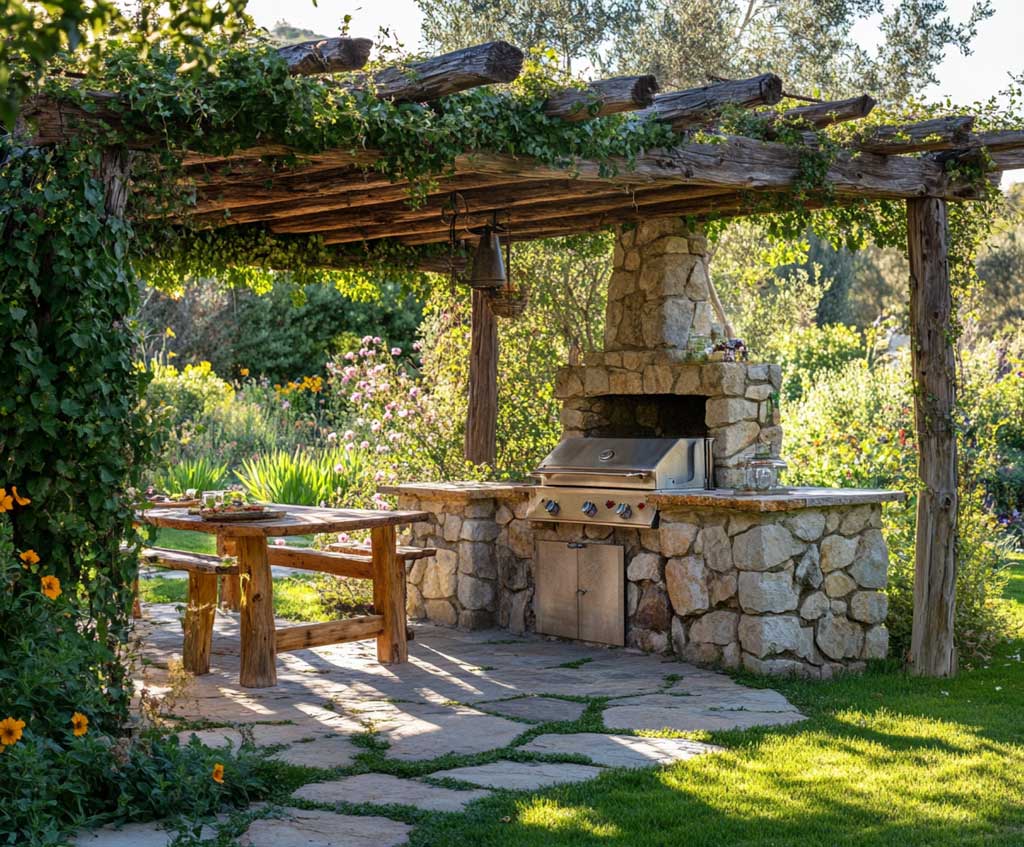
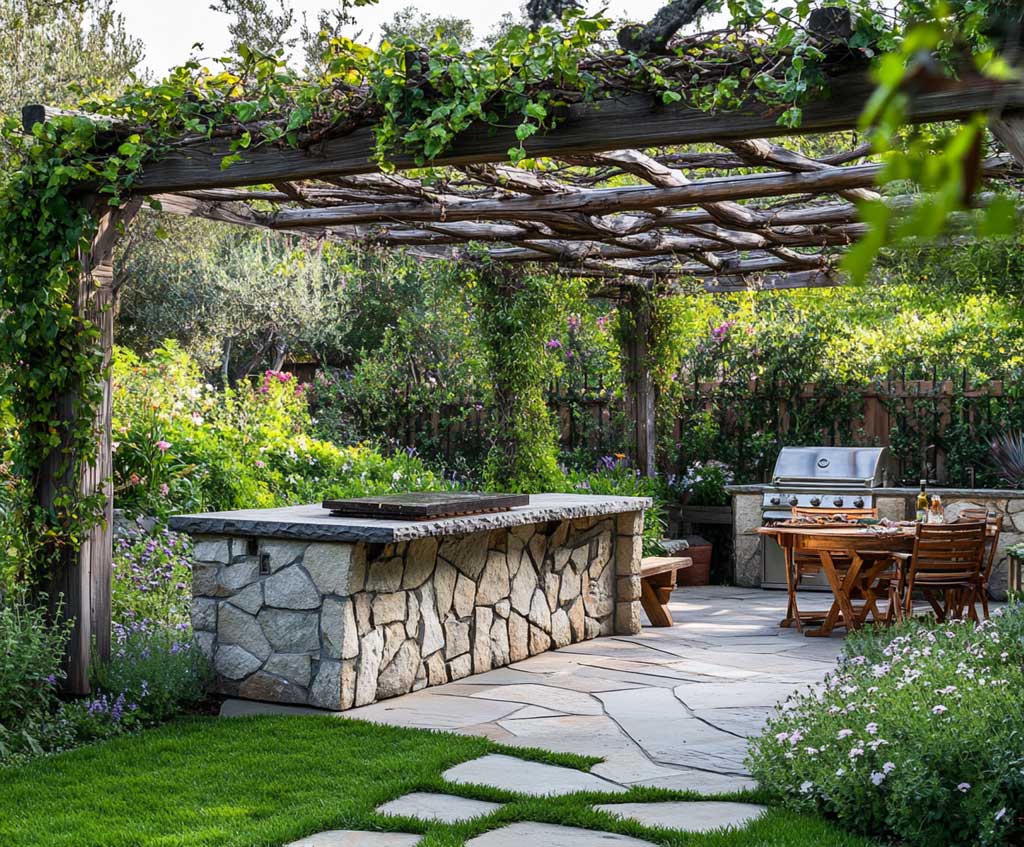
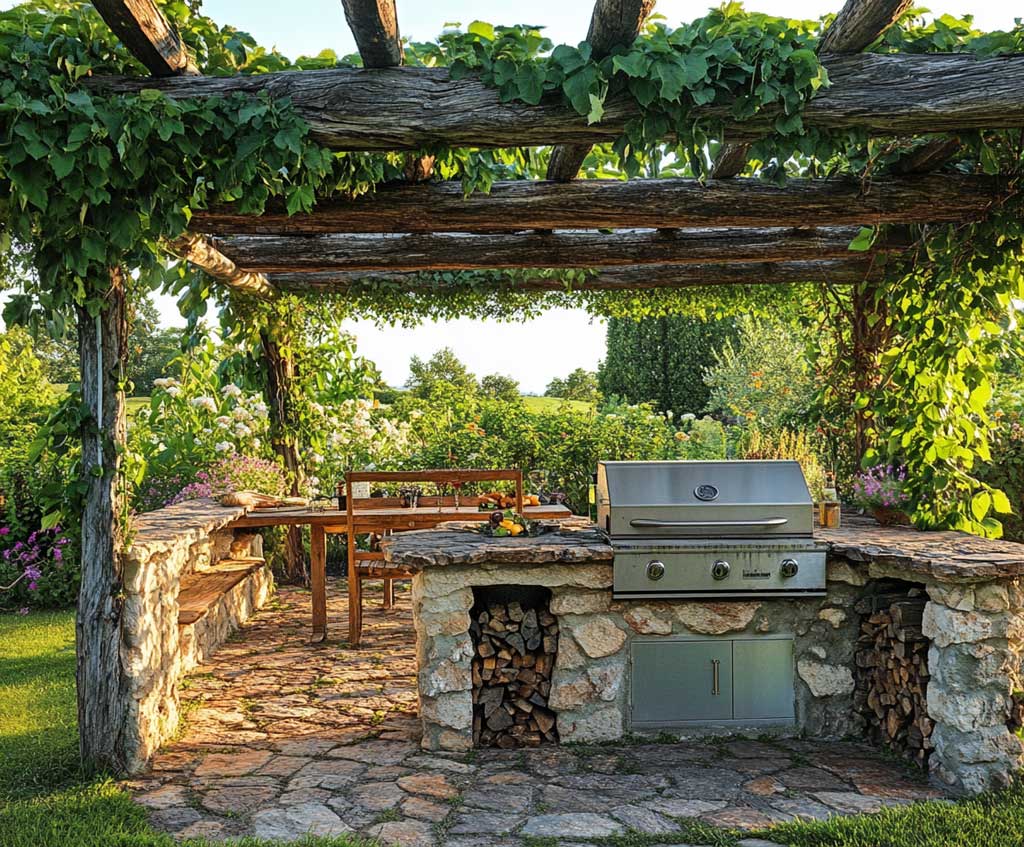
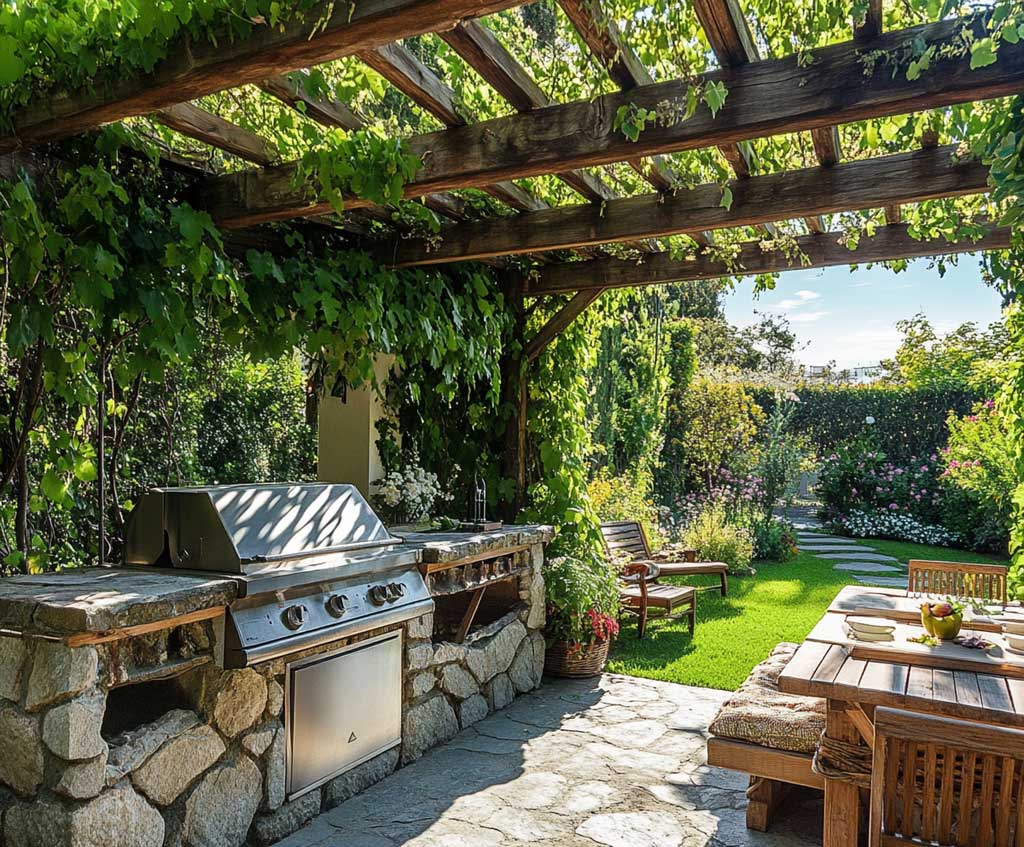
Don’t count on a stone build to be zero maintenance. Granite and travertine countertops require sealing once a year to prevent moisture penetration and staining — this is a 30-minute job with a $15–$25 bottle of penetrating sealer, not a contractor call. Stone that goes unsealed in a climate with wet winters shows staining and surface pitting within two to three seasons. The sealing interval is annual in wet or coastal climates; every two years is adequate in dry inland regions. Warm-white downlighting (2700K) mounted on the underside of pergola beams directly above the grill surface is the functional lighting choice — pendant lanterns look better in photos but provide zero useful light when you’re checking if something’s cooked through at 9 p.m.
Stainless Steel Built In BBQ Ideas for Modern Outdoor Kitchens
Stainless steel built in BBQ ideas divide sharply by grade, and the grade is the detail that separates a 20-year investment from a 3-year replacement cycle. The spec to require: 304-grade stainless steel throughout the body, grates, burners, and exterior panels. A grill built with quality 304 components remains functional for 15–20+ years, while cheaper 430-grade alternatives show visible corrosion by year three in humid or coastal climates. Premium manufacturers including Fire Magic, Summerset, and Coyote document their steel grade in the product specification sheet — if a brand says “stainless steel” without specifying the grade, that’s a reliable signal it’s 430.
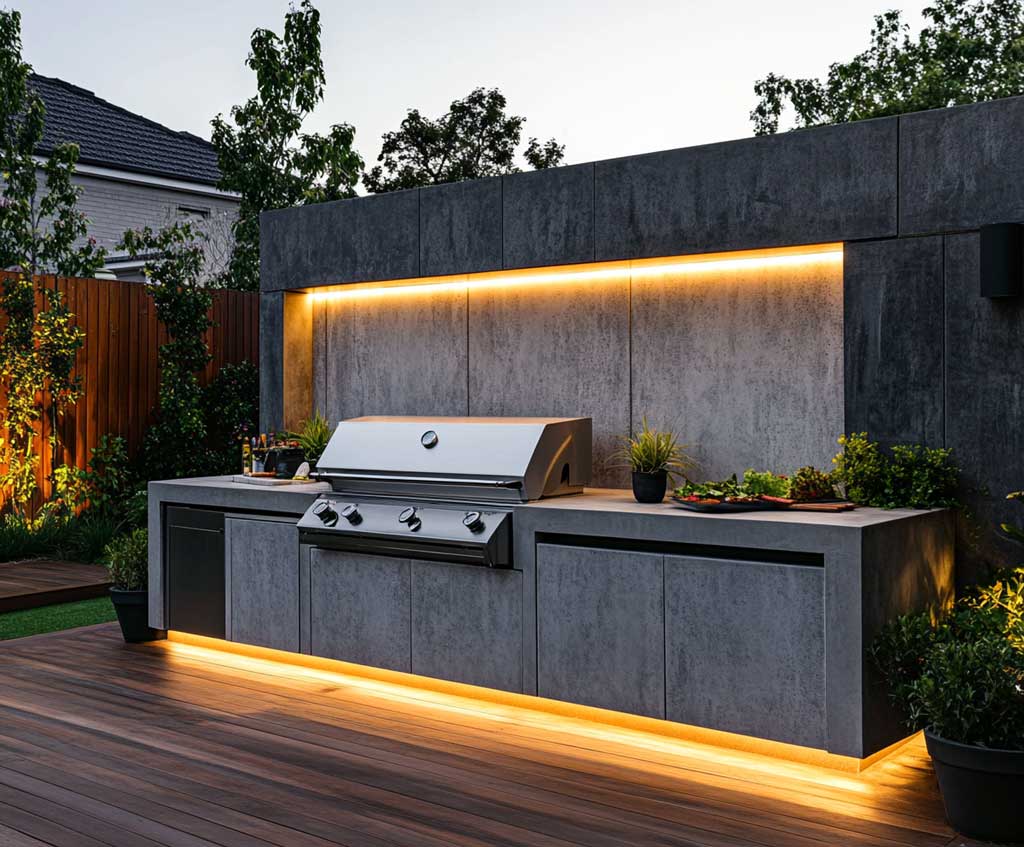
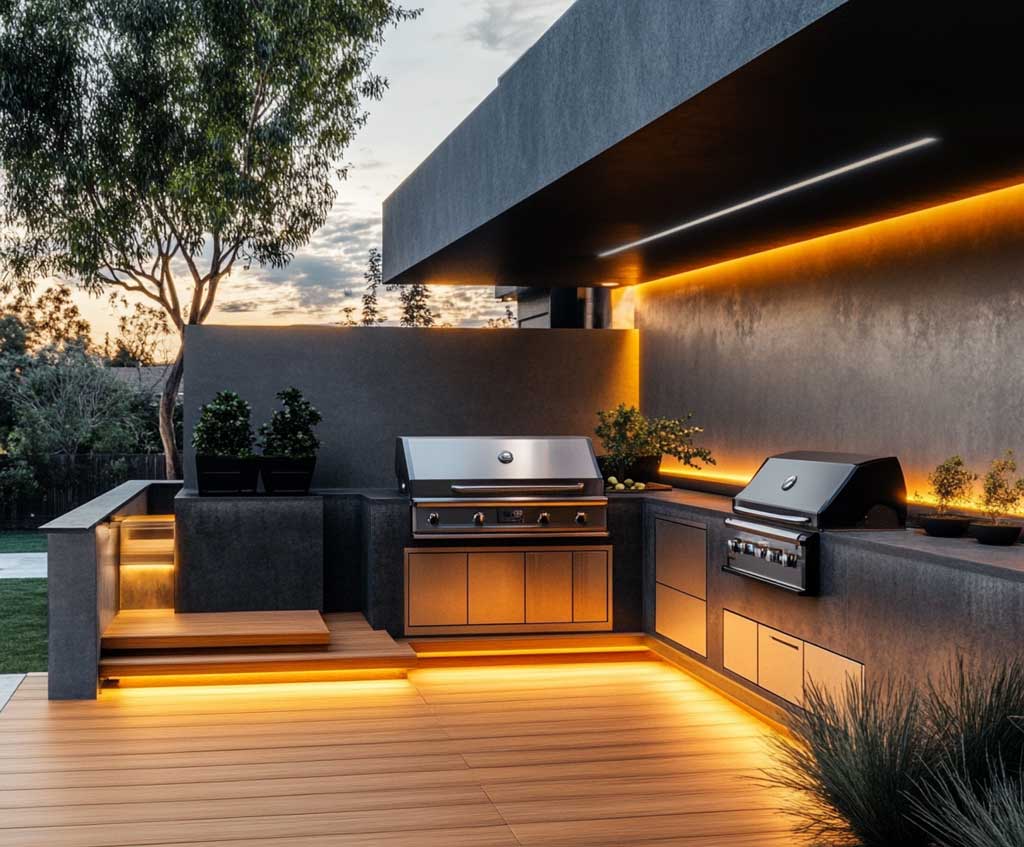

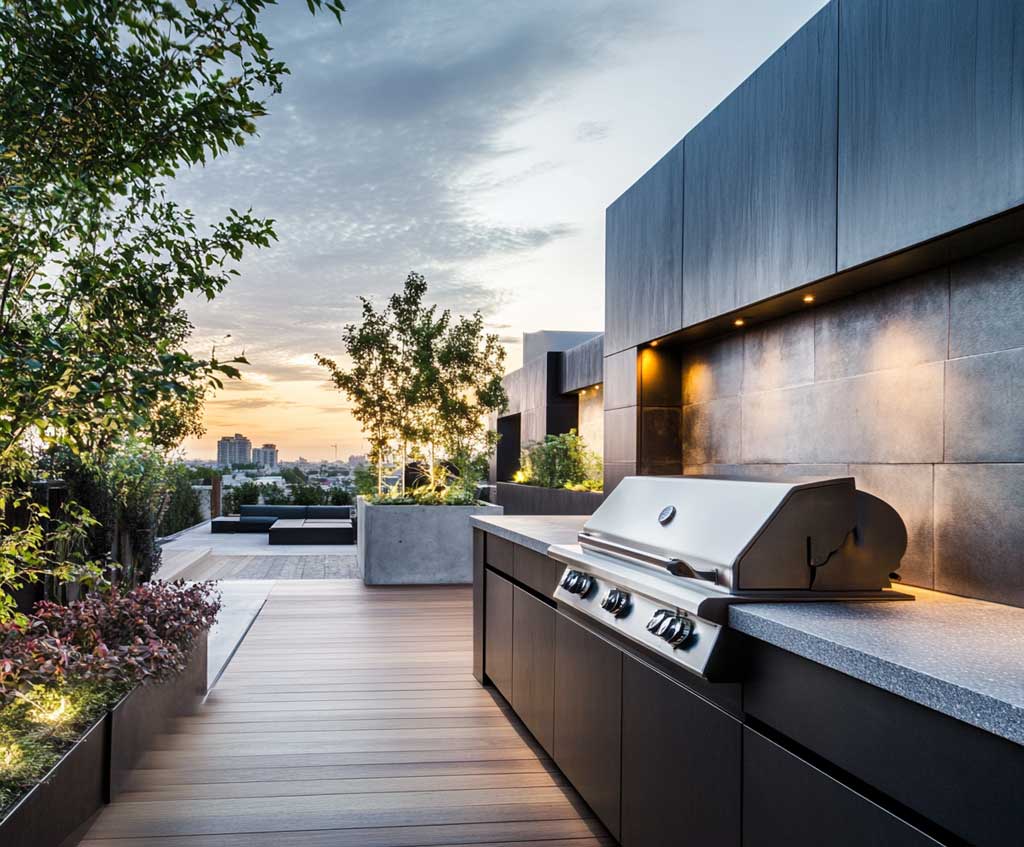
A minimalist concrete surround pairs with stainless steel in a way that no other material quite matches — the thermal neutrality of concrete and the reflective quality of the steel read as intentional rather than assembled. Stainless steel countertops run $80–$200 per square foot installed, which prices them at the top of the outdoor kitchen countertop range, but the maintenance argument is real: no sealing, no risk of acid etching from marinade drips, and straightforward cleaning with a microfiber cloth and stainless cleaner. The practical downside is that stainless horizontal surfaces absorb heat aggressively in direct afternoon sun — prep surfaces facing south or west benefit from an overhead canopy or pergola more than shaded east-facing installations.
Integrated cabinet storage below the grill is where the modern stainless layout earns its cost. A built-in BBQ grill island with 1–2 drawers and cabinet storage runs $3,000–$10,000 installed, which sounds significant until you price out the alternative: a portable grill plus a rolling cart plus an outdoor storage unit plus the friction of managing all three. The linear layout with grill on one end, prep counter in the center, and covered storage on the far end is the format that actually gets used. Avoid the U-shape layout unless the space is genuinely large — tight U-shapes trap the cook and block the sightline to guests.
Don’t spec 430-grade stainless steel to save money upfront on a built-in installation. The cost difference between 430 and 304 on a $3,000–$5,000 grill is typically $200–$500. In a humid climate or within five miles of the ocean, 430-grade components discolor and corrode within two to three seasons. The magnet test is a quick field check: 304 stainless is non-magnetic (a fridge magnet won’t stick), while 430 is magnetic. Run the test in the showroom before you sign anything. Replacing a corroded built-in grill body in an existing stone or concrete surround costs more than the premium you would have spent on 304 at the start.
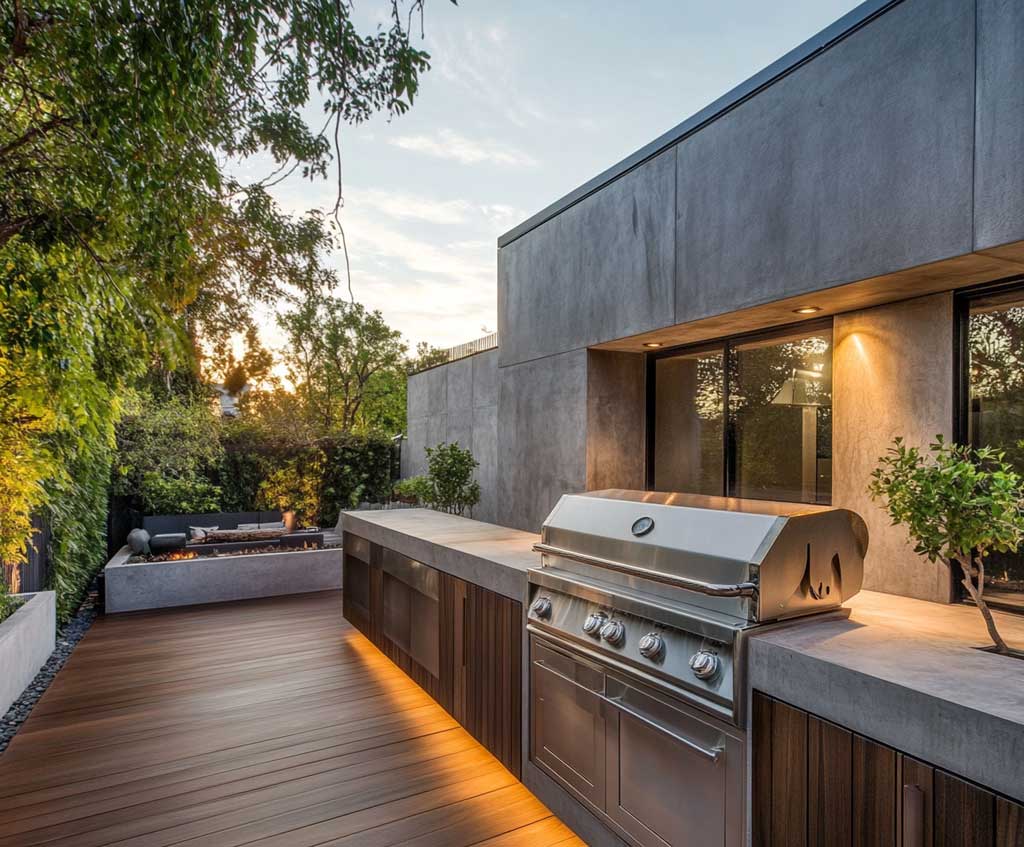
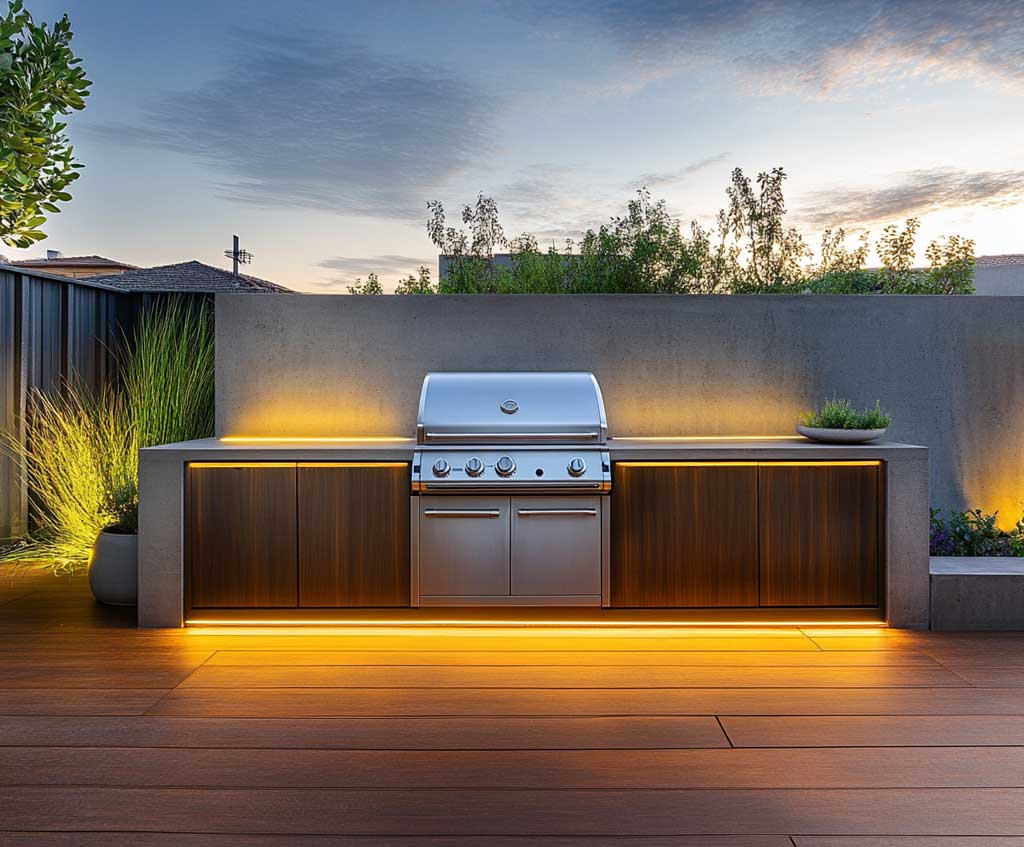
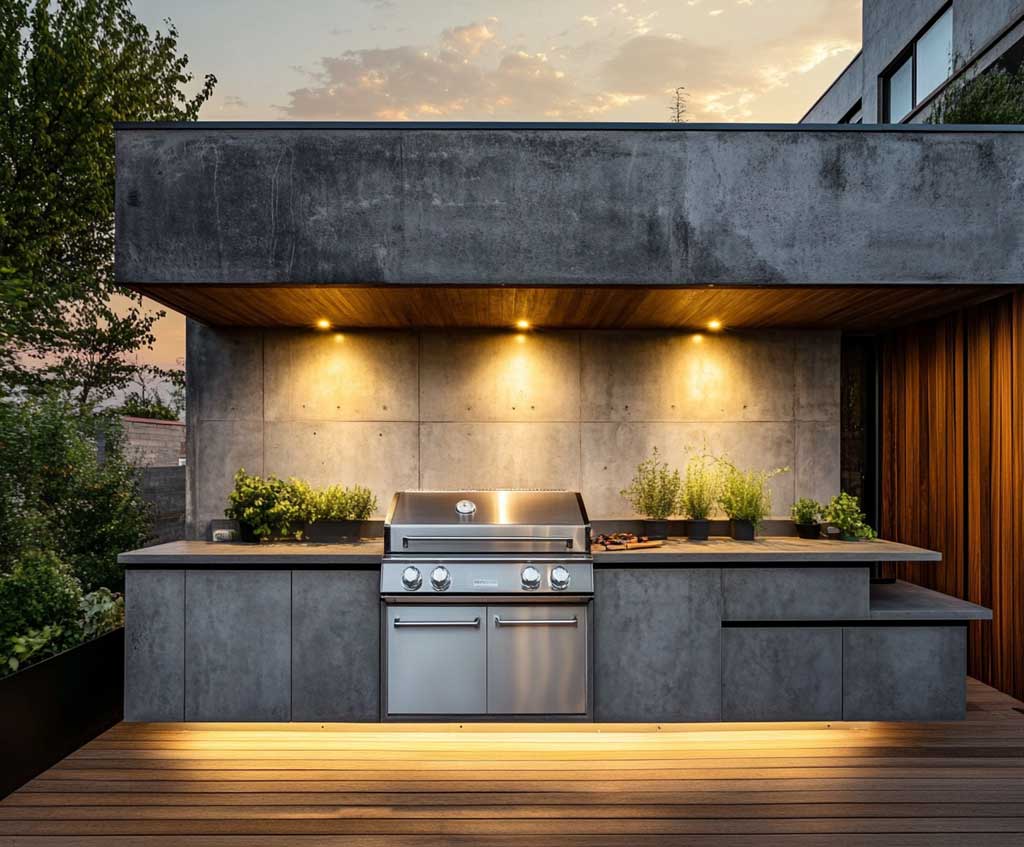
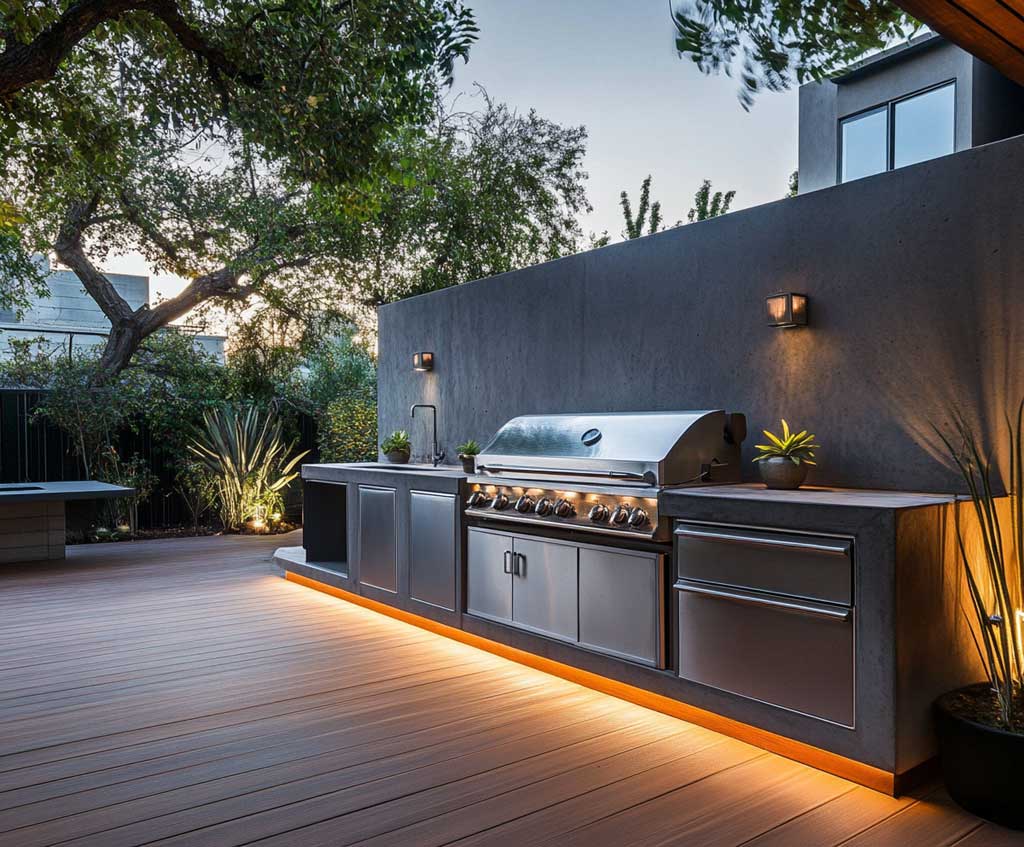
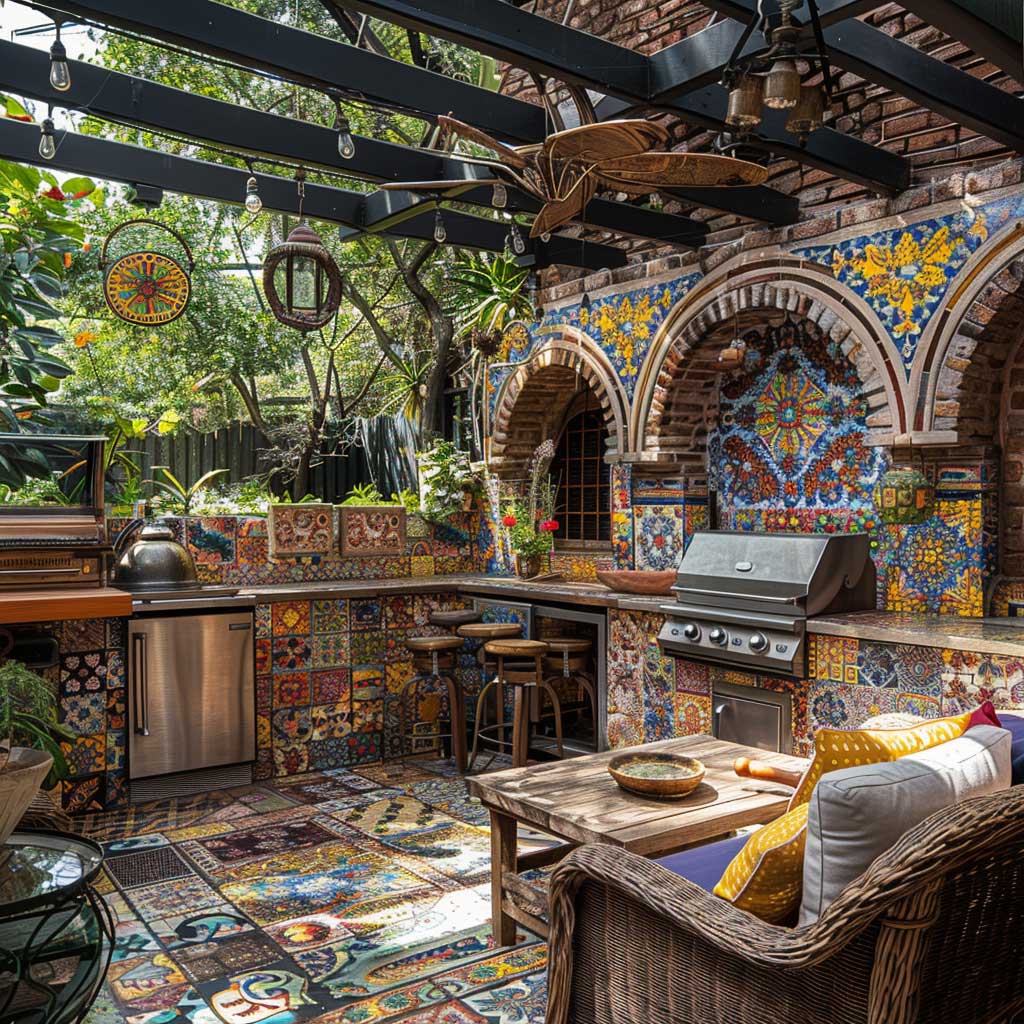
Cool-white LED lighting (5000K–6500K) is the correct pairing for stainless surfaces — it picks up the reflective quality of the steel and reads as intentional design rather than afterthought. Warm LEDs make stainless look yellowed and cheap; save the warm-white bulbs for a stone or wood surround where they complement the earthy tones. The stainless outdoor kitchen layout works best with a restrained plant palette — two or three large-specimen potted grasses or architectural agaves rather than a riot of flowering plants. The contrast between controlled greenery and the cool geometry of steel is the visual that makes these setups photograph well and feel coherent in person.
Compact Built In BBQ Ideas for Small Patios and Urban Yards
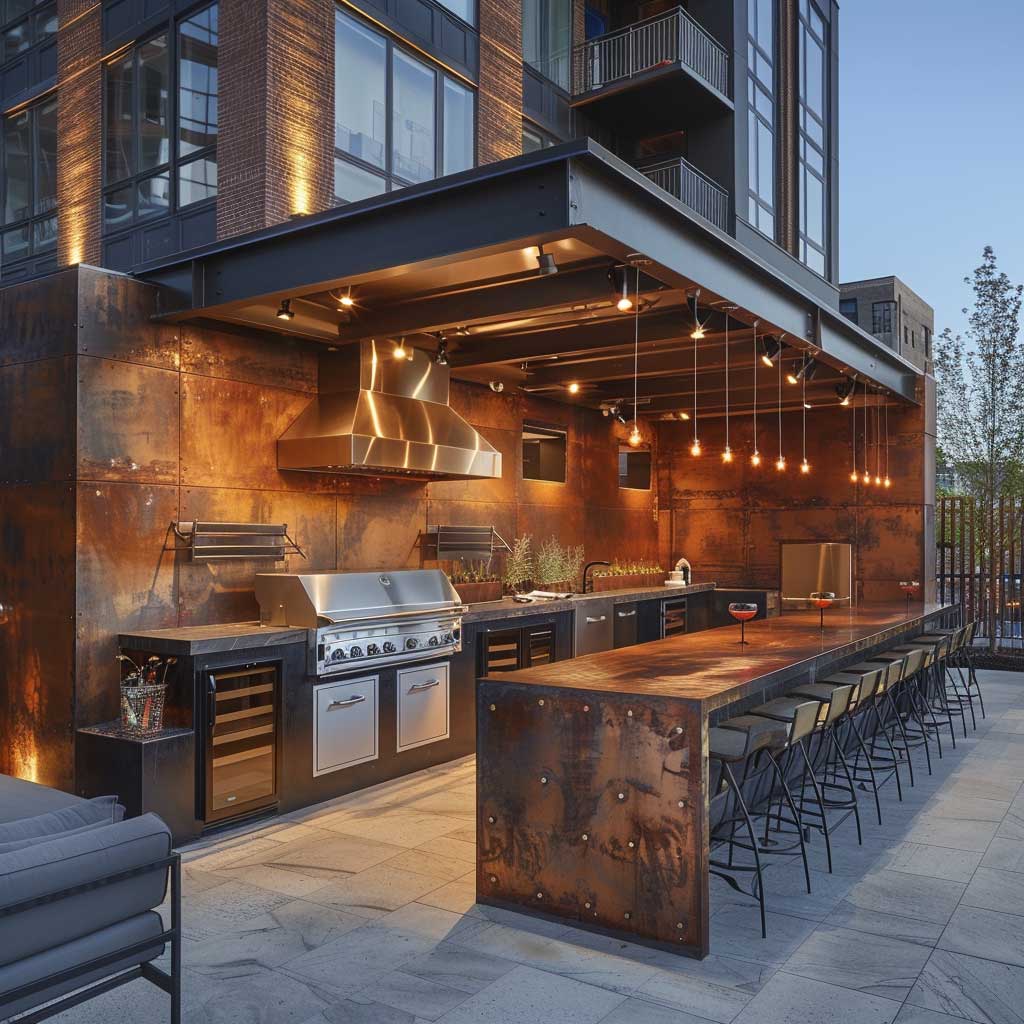
Compact built in BBQ ideas solve a different problem than large outdoor kitchens — the question isn’t how much to add, but how little is needed to make the space actually functional. Brick is the material that works best in tight urban settings: it’s structurally rigid without requiring a thick surround, it reads as permanent rather than assembled, and it’s available in a range of tones that bridge industrial city aesthetics and residential warmth. A 6-foot brick built-in BBQ island with a single grill, stone countertop, and two drawers below runs roughly $3,000–$6,000 installed — on the lower end of the built-in BBQ price range because the compact format reduces both material and labor costs.
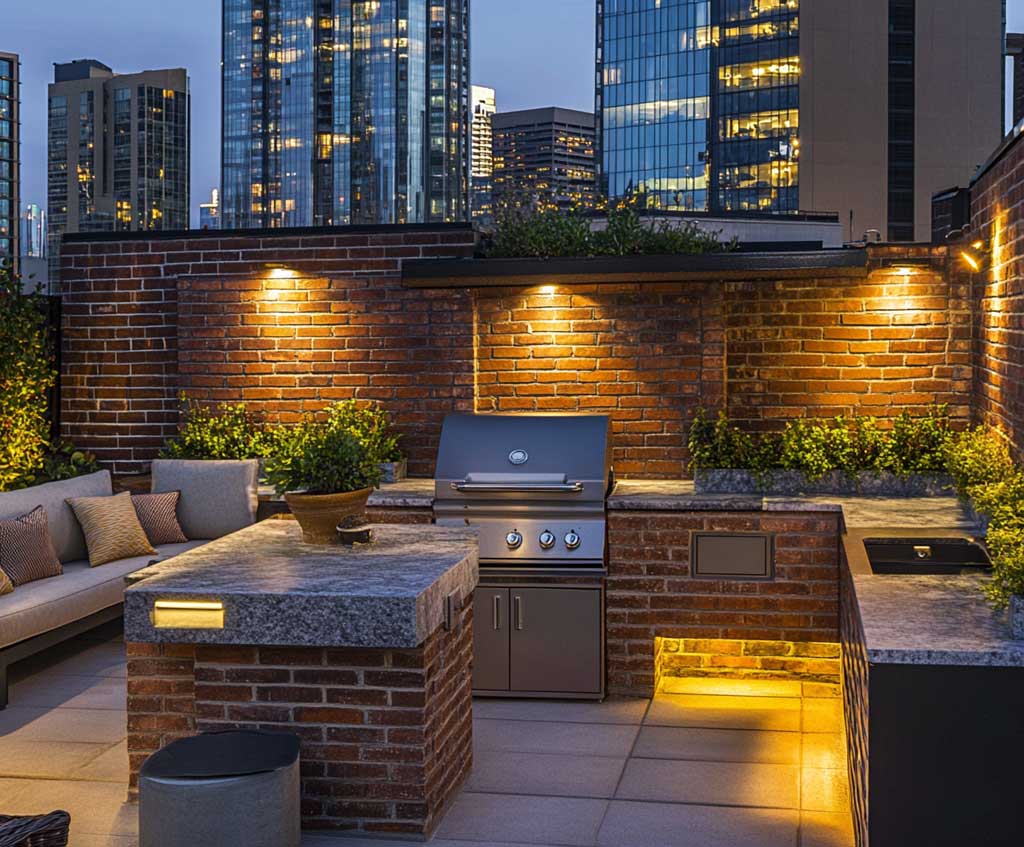
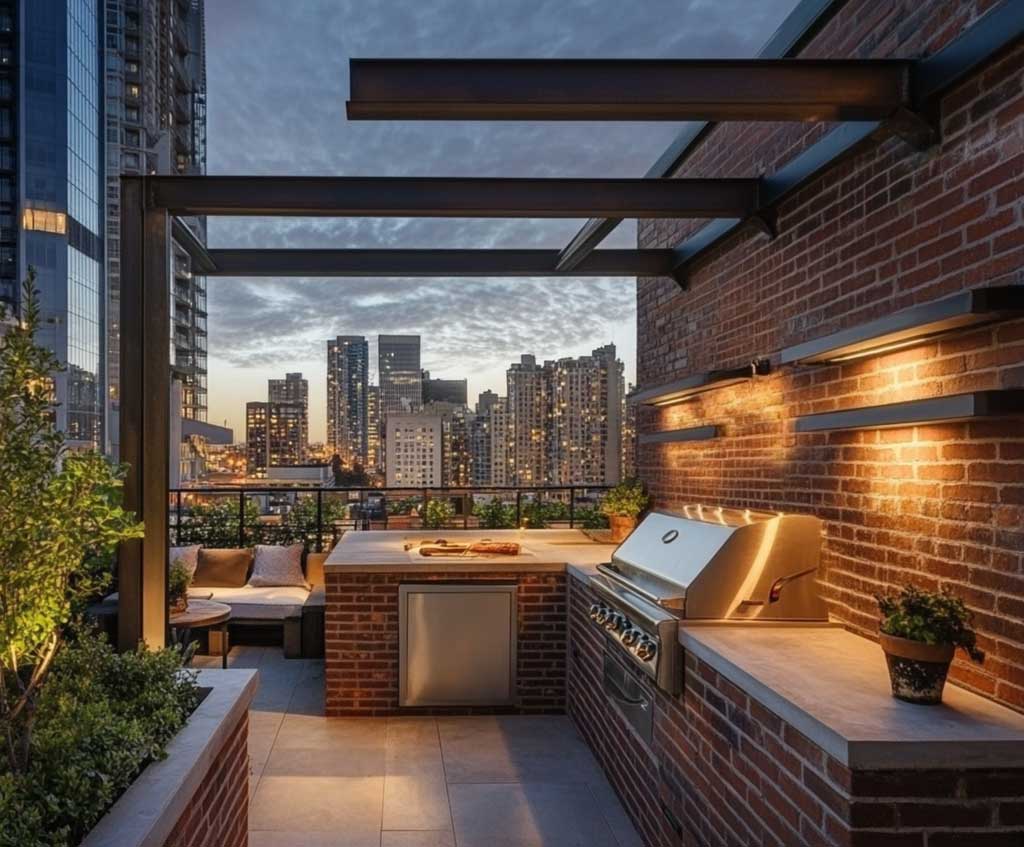
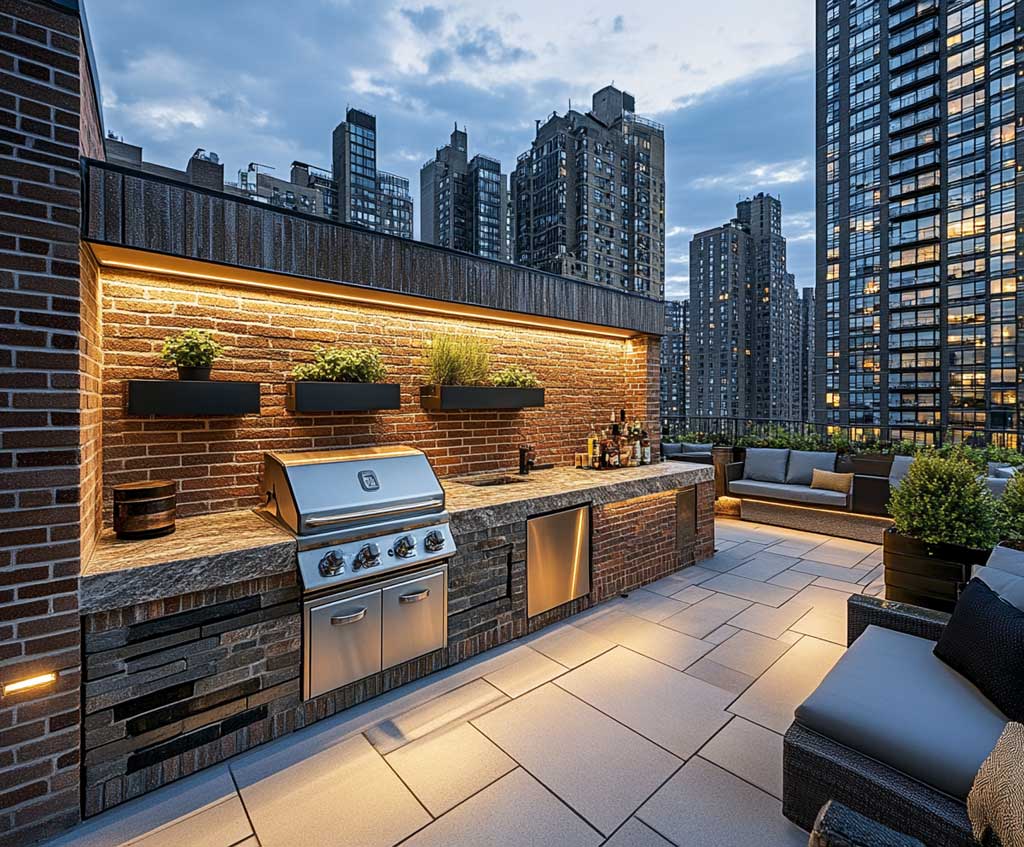
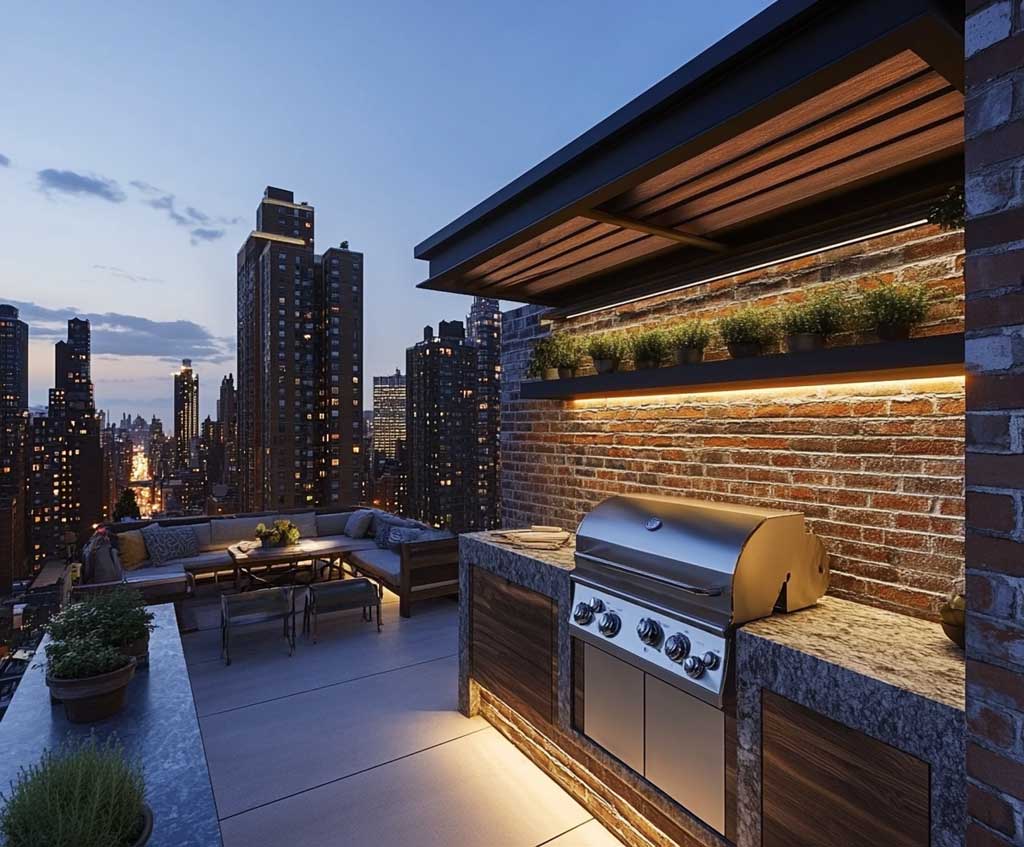
The compact layout logic is vertical before horizontal. A stone countertop above the grill with open minimalist shelving above that uses airspace instead of floor space — the result is a cooking station that occupies 18–24 inches of depth and six linear feet of wall but provides prep surface, grill space, and spice storage in a single footprint. Metal grill inserts with cast iron grates distribute heat more evenly than thin stainless grates in this format, which matters when you’re cooking in a small space and can’t move the food far from the heat source. Cast iron grates cost $40–$90 for most standard inserts versus $20–$40 for thin stainless, and the heat retention difference is immediately obvious on the first use.
What goes wrong in small patio builds is the orientation mistake: grill facing the wall rather than the yard. The cook ends up with their back to the space and the guests, which defeats the social logic of an outdoor kitchen entirely. The grill should face outward — toward the seating, toward the view, toward wherever people congregate. Even in a narrow 8-foot-wide urban patio, it’s possible to orient the build so the cook faces the space rather than the fence. Sketch the sightline before you pour concrete for the footings. For more on how layout sequencing affects the whole outdoor BBQ experience, backyard layout ideas for hosting the perfect BBQ covers zone placement and traffic flow across different yard sizes.
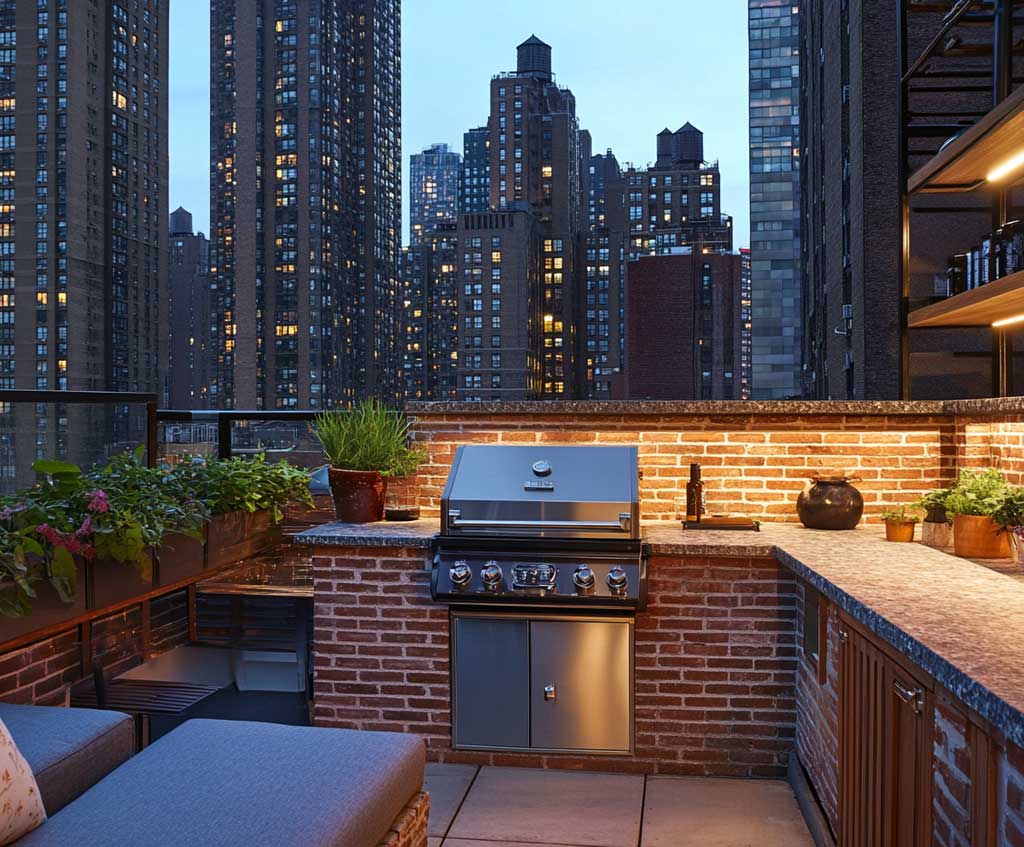
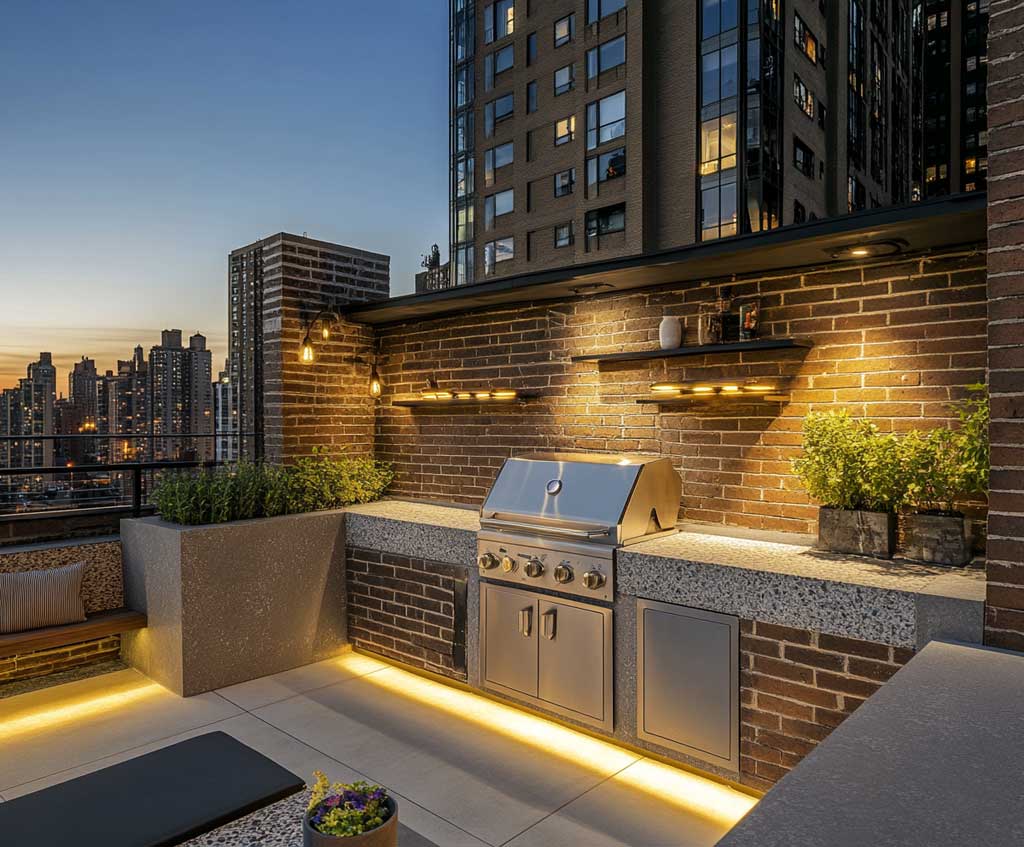
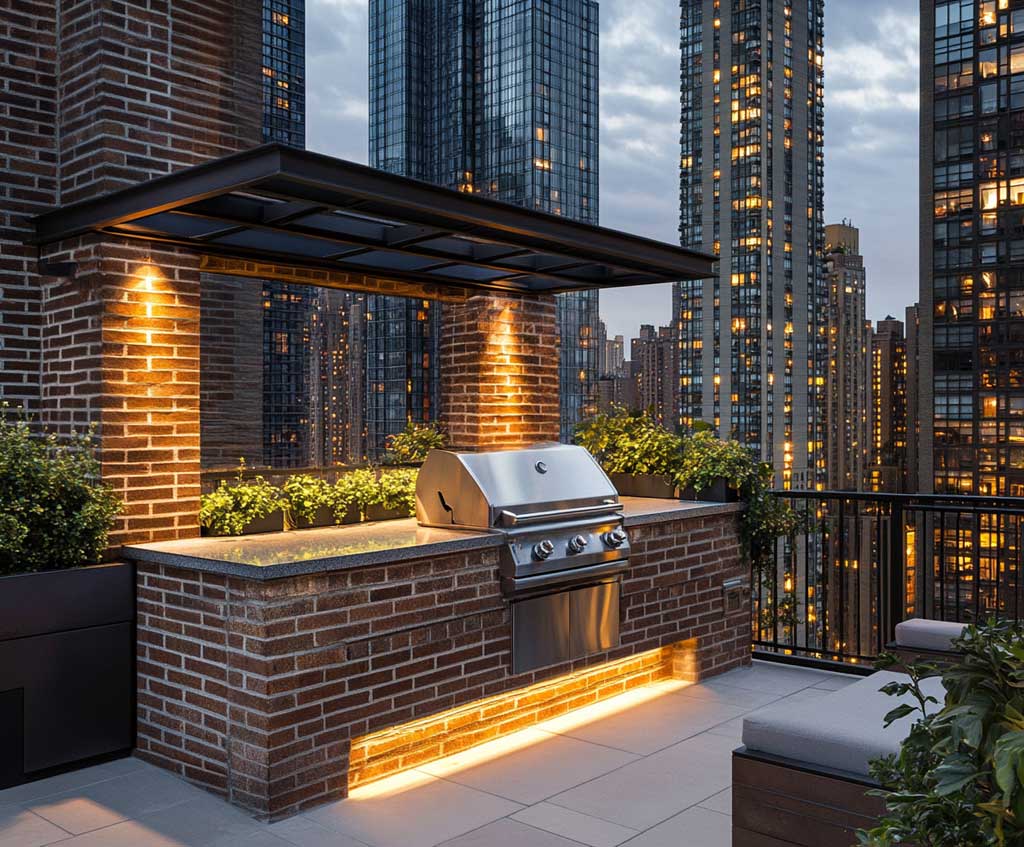
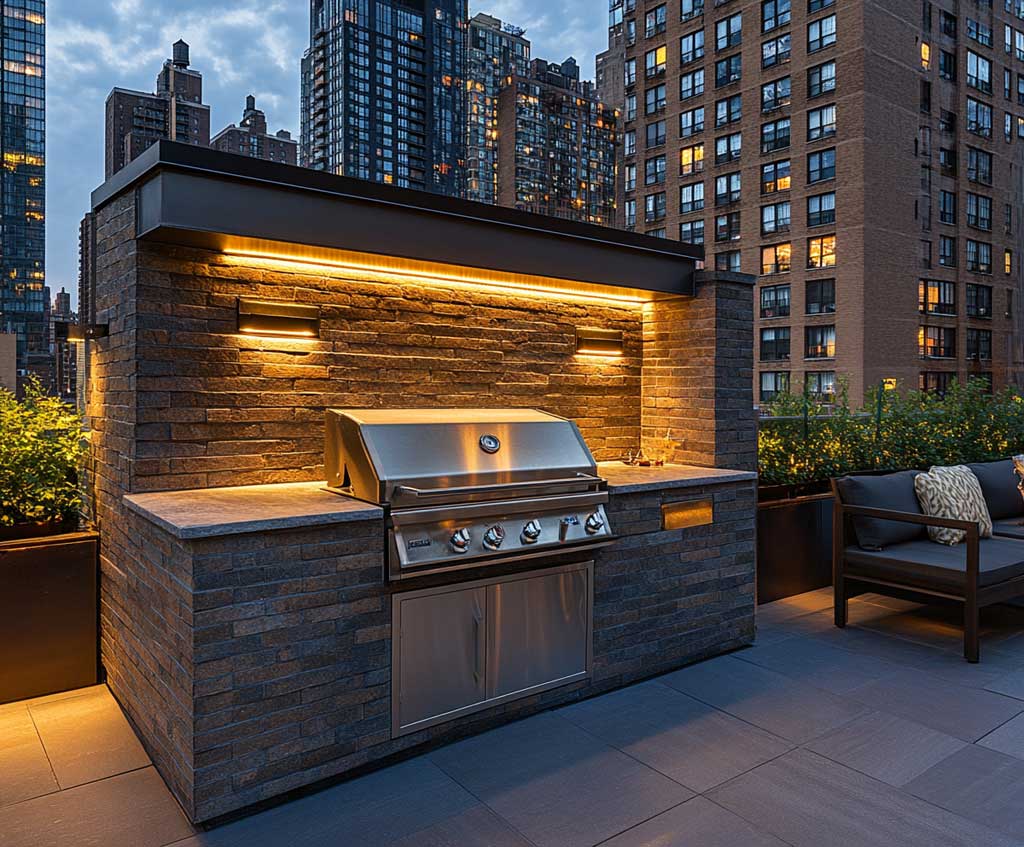
Potted plants in a compact urban patio do specific structural work — they soften the hard geometry of brick and concrete without occupying the floor area that seating needs. Two or three large-specimen plants (a standard olive tree, a tall ornamental grass, a potted bay laurel) read as considered rather than cluttered. Twelve small pots of herbs create the opposite effect and make the space feel like an afterthought. The lighting answer for urban patios with a city backdrop is warm pendant fixtures mounted at canopy height — they compete with the ambient city glow and still define the cooking zone. Flush-mounted wall fixtures wash the brick flat; avoid them.
BBQ Pergola Ideas That Earn Their Cost on Day One
BBQ pergola ideas are almost always presented as an aesthetic add-on, but the functional case is actually stronger than the visual one. A built-in BBQ without any overhead structure loses usability to rain within the first season — grease residue on stone and steel countertops gets significantly worse without shade, UV degrades unsealed wood cabinet finishes within two seasons, and burner ports on gas grills that collect standing water require service calls. A basic 8×10 cedar pergola above the cooking zone runs $1,450–$5,750 installed according to HomeGuide data, and it meaningfully extends the season and the lifespan of every other material in the build. This is the one upgrade where the math is unambiguous.
Which pergola structure actually works over a grill? Slatted designs with 50–60% open coverage hit the functional sweet spot — enough overhead to block direct rain on the cook and direct sun on the food prep surface, not so enclosed that smoke from a charcoal or wood-fired grill builds up and drives everyone away. A solid pergola roof over any open-flame cooking requires a code-compliant ventilation structure; most residential permits for open-slatted designs don’t carry that requirement. Check local building codes before you spec a solid-roof design — the permit and ventilation costs can push a simple pergola into a $10,000+ project quickly. Climbing plants on the uprights (wisteria, climbing roses, or jasmine) provide additional shade and fragrance without closing the overhead plane.
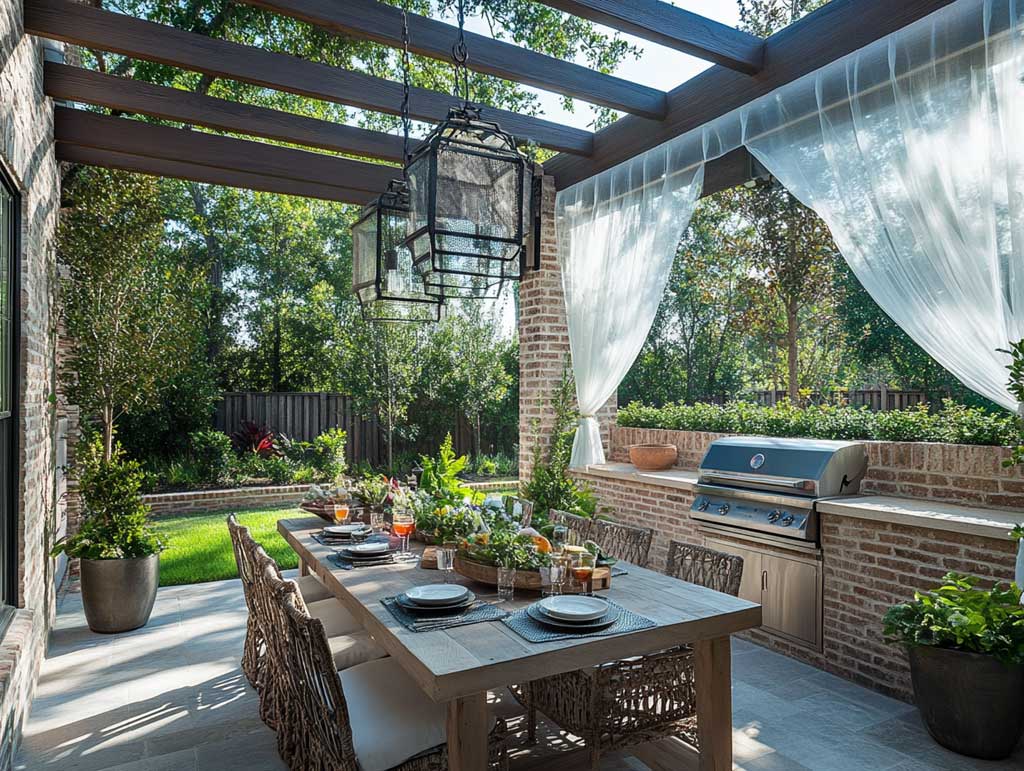
What’s the material call for a pergola over a built-in BBQ? Cedar and pressure-treated pine are the two practical choices. Cedar runs more expensive — $25–$40 per linear foot for structural members — but resists rot and insect damage without chemical treatment and weathers to a silver-gray that reads well against stone surrounds. Pressure-treated pine costs $10–$20 per linear foot but requires paint or stain to look intentional rather than utilitarian. Either material benefits from annual inspection of the joint connections — the post-beam connections are where moisture infiltrates and rot begins. Aluminum pergola systems avoid the maintenance interval entirely but look noticeably thinner and more commercial than timber. For a fully BBQ-focused hosting setup where the pergola connects to a seating and dining zone, the sequence that works is the backyard layout framework for BBQ hosting — structure first, appliances second.
| Format | Best For | Cost Range Installed | Key Consideration |
|---|---|---|---|
| Natural stone surround | Rustic / established gardens | $20–$40/sq ft veneer | Seal annually; avoid polished surfaces near grill |
| 304 stainless steel | Modern / coastal builds | $80–$200/sq ft countertop | Verify steel grade before purchase; check with magnet |
| Compact brick build | Urban patios under 10 linear ft | $3,000–$6,000 installed | Orient grill facing outward, not toward wall |
| Pergola overhead | Any built-in BBQ format | $1,450–$5,750 installed | 50–60% slatted coverage; cedar or pressure-treated pine |
According to HomeGuide’s 2026 cost data, outdoor kitchens with built-in BBQ islands deliver a resale ROI of 50–70% or more in warm climates — which means the pergola and the stone surround aren’t just aesthetic decisions, they’re the details that determine whether the investment reads as luxury or infrastructure on a future appraisal. Buyers respond to permanence; a built-in covered outdoor cooking station signals permanence in a way that a portable grill on a deck never will. The full outdoor kitchen cost breakdown, including regional variations and permit requirements, is covered in detail at HomeGuide’s outdoor kitchen cost guide.
Bottom Line
Pick the format first, the finish second — the material is the decision that outlasts everything else
Stone surrounds with 304-grade grill inserts are the highest-durability combination. A built-in BBQ island runs $3,000–$10,000 installed; a full outdoor kitchen goes $10,000–$35,000. Neither budget works without an overhead structure — skip the pergola and you’re refinishing the materials within two seasons.
Grade matters more than brand on stainless: 304 lasts 15–20+ years, 430 corrodes by year three in humidity. Run the magnet test in the showroom before signing. Orient any compact build so the cook faces the yard, not the wall.
Save this post.