Metal BBQ area design gets chosen for its durability, then abandoned for looking cold and unfinished. I’ve seen outdoor grill setups worth $8,000 in materials that read like a contractor’s leftover pile because the finish, the lighting, and the surrounding surfaces weren’t coordinated. Stainless, blackened steel, and powder-coated metal each demand a different treatment. Get it right and your outdoor BBQ space runs laps around any brick setup on the block. Get it wrong and you’ve got a very expensive, very shiny nothing.
The three layouts below — minimalist stainless, industrial dark steel, and geometric pattern metal — aren’t interchangeable looks. Each one has a logic. Each one has a failure mode I’ve watched people repeat.
What this covers:
- Stainless steel BBQ setups with minimalist outdoor layouts
- Industrial metal grill stations — blackened steel, concrete, and exposed beam combos
- Geometric metal screens, laser-cut grill stations, and patterned paving
- Color combinations that actually photograph well outdoors
- What to skip: finishes that corrode, furniture that fights the metal, lighting that kills the mood
Stainless Steel BBQ Stations Earn Their Cost Only with Matte Surroundings
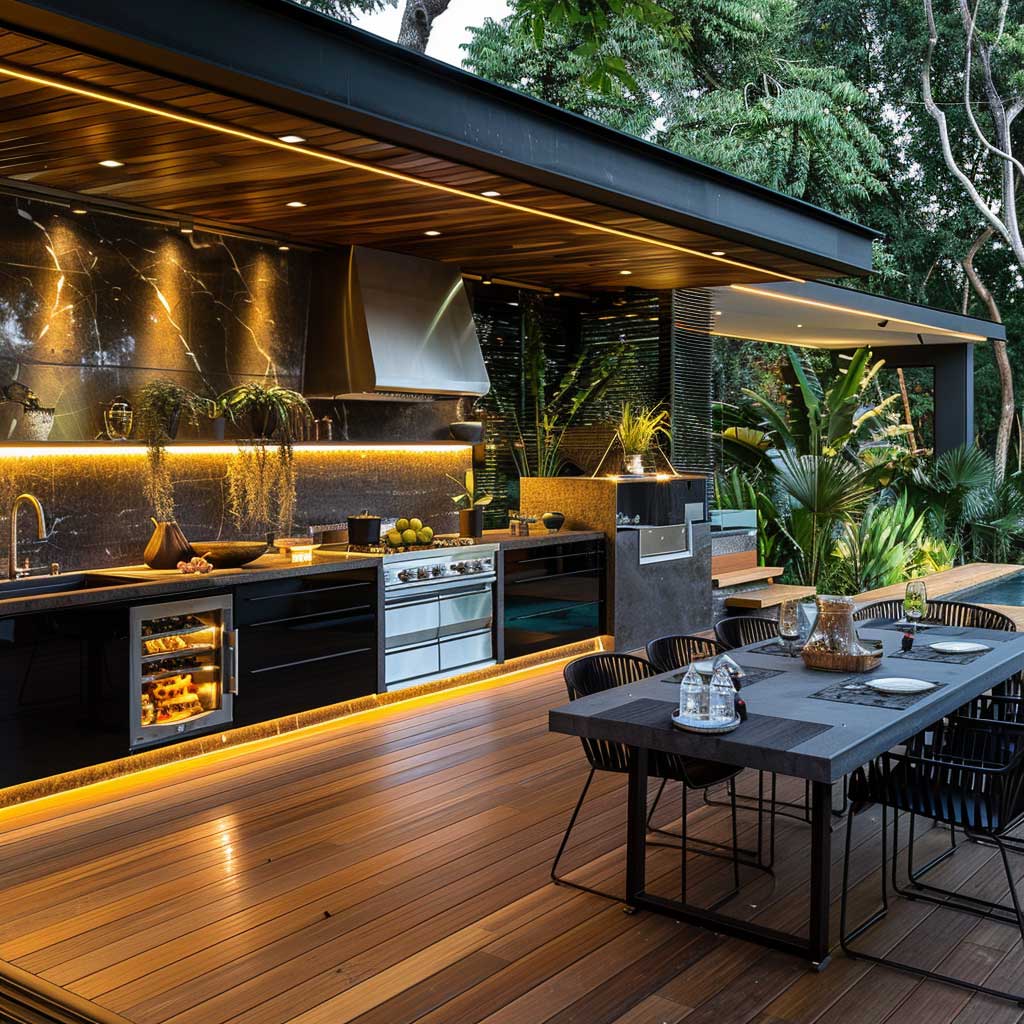

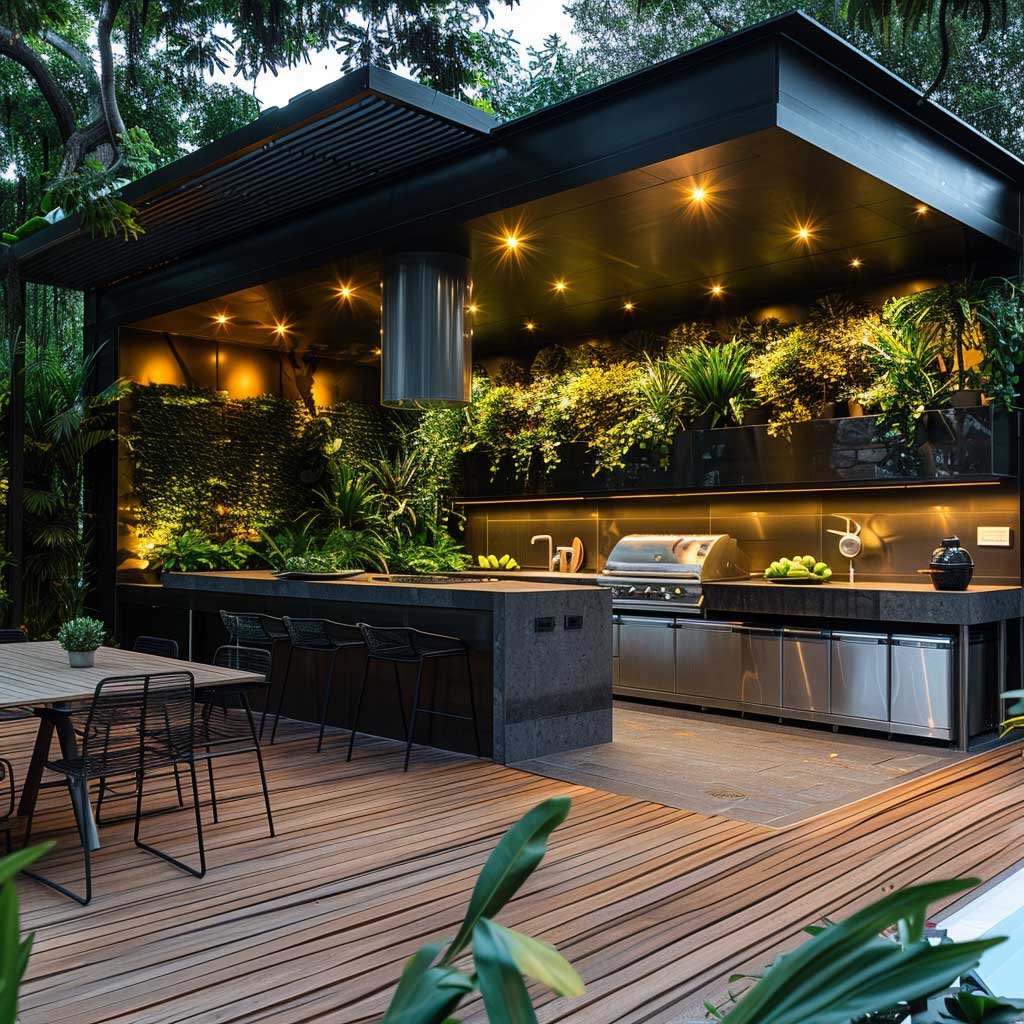
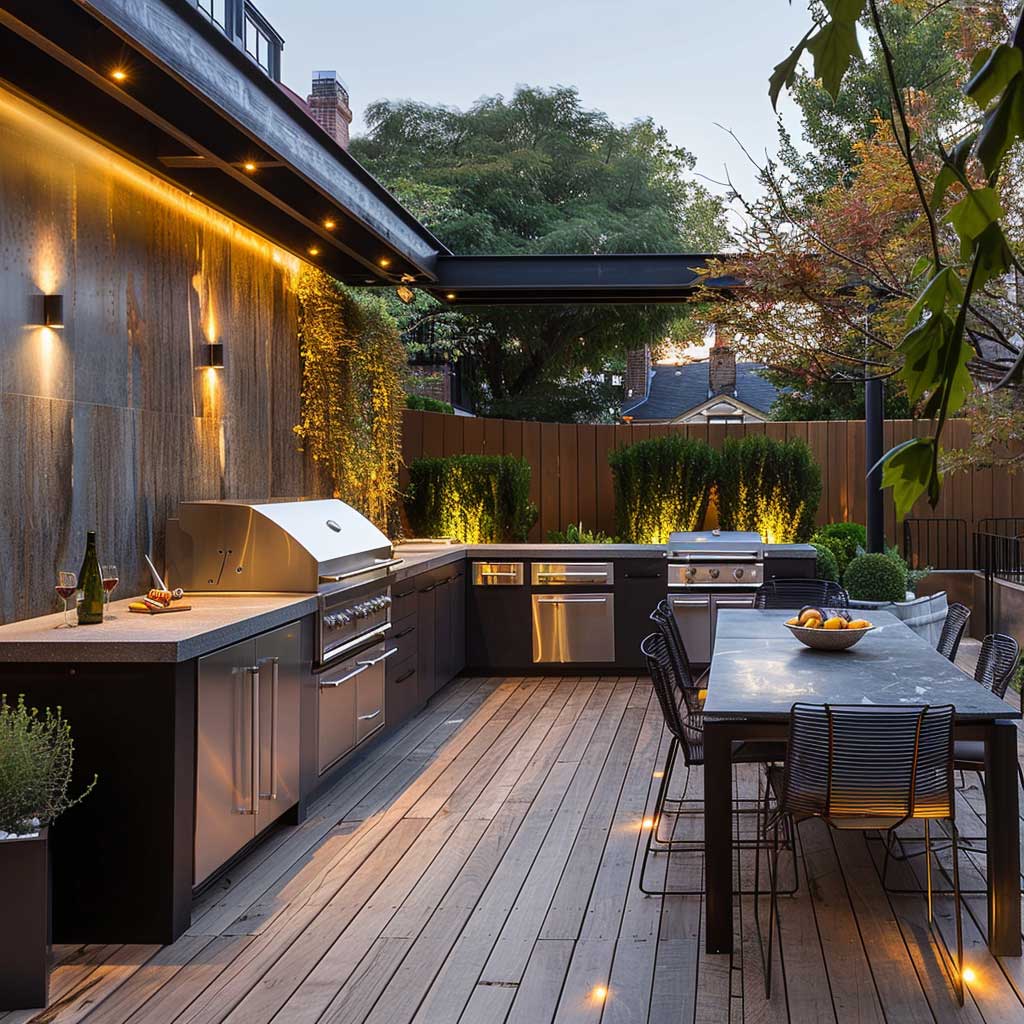
Stainless steel outdoor grill stations are the most requested metal BBQ look — and the most frequently botched. You need around it to be matte, concrete-toned, or deeply green. The steel is already reflecting everything in a 10-foot radius, so if you pair it with glossy tile or bright-white decking, you get a kitchen showroom, not an outdoor space. My go-to move: honed limestone countertops beside the grill ($45–$70/sq ft at most stone yards), a matte grey porcelain deck tile, and a single vertical garden wall behind. That combination stops the stainless from looking like it belongs in a hospital.
Weber’s Genesis series runs around $1,100–$1,400 and holds up to weather without any special coating. Lynx and Twin Eagles are the professional range starting around $2,800 — worth it if you’re building a permanent island structure, not worth it for a standalone cart setup. The anti-advice: don’t buy a brushed stainless grill and then put a polished stainless side burner next to it. The two finishes argue with each other in every photo you’ll ever take of this space.
Lighting here is load-bearing, not decorative. I stole this trick from a landscape architect I interviewed: run two recessed Halo 4-inch LED downlights ($28 each, Home Depot) directly above the grill zone on a separate dimmer circuit from the ambient lights. You want cooking-grade brightness for the grill surface and sunset-level warmth for the seating. One circuit can’t do both jobs. LED strip under the countertop edge adds a floating line at night that photographs extremely well.
Metal furniture pairings: stick to powdercoated aluminium frames in matte black or warm grey — Fermob’s Tulum chairs at $290 each, or the cheaper Threshold line from Target at $65 per chair. Both hold up. The failure case is wrought iron: heavy, rust-prone at the joints, and it visually competes with the grill station rather than framing it. You need the furniture to disappear a little and let the stainless lead.
Glass doors or large sliding panels between interior and exterior work only when the floor level is continuous. A 2-inch step difference kills the visual flow entirely. If you’re building new: pour the slab at interior finish-floor height, waterproof the joint, and use the same tile inside and out for the first 4 feet. That’s the entire trick. Outdoor kitchen design layouts that connect to the interior always perform better in resale appraisals than standalone backyard setups.
Industrial Dark Steel Grill Stations Demand Concrete, Not Tile
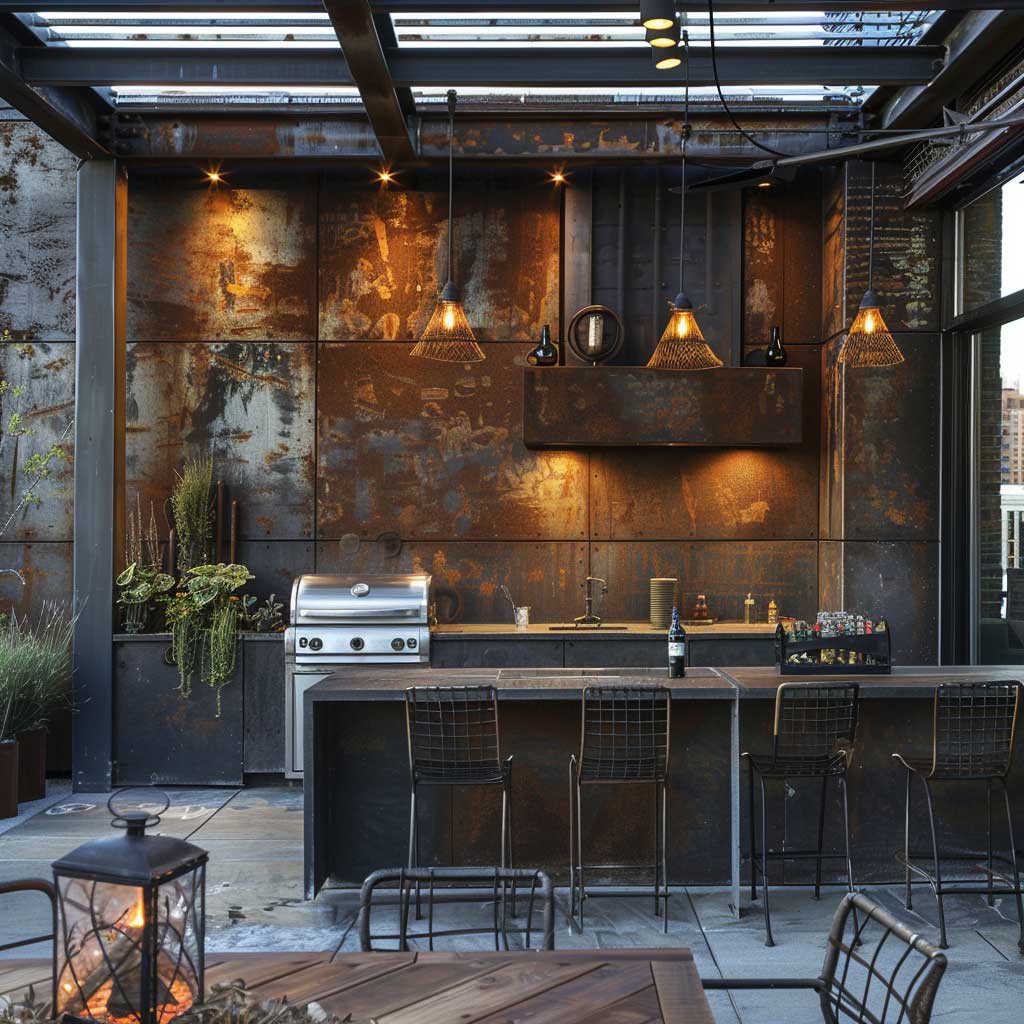


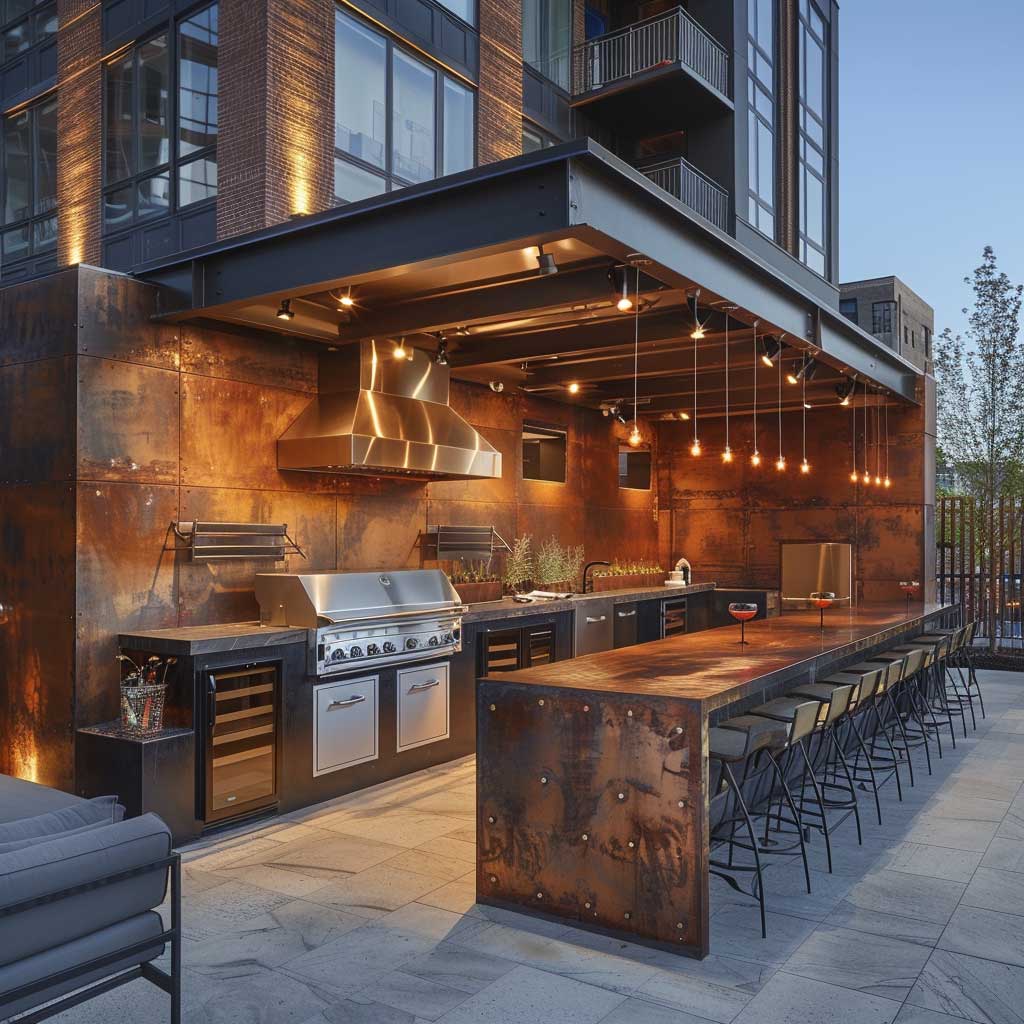
Blackened steel finishes — either factory-applied or hand-waxed raw steel — are the strongest colour move you can make in an outdoor BBQ area. The colour sits somewhere between charcoal and dark bronze depending on the light, and it reads warmer than matte black powder coat. I own two raw steel prep counters and the patina after two seasons is genuinely beautiful: darker at the edges, slightly bronze near the grill heat zone. The maintenance is a wipe-down with linseed oil twice a year, roughly 20 minutes per surface.
What does the industrial BBQ area actually need underfoot? Polished concrete, full stop. Porcelain tile in a wood-look or stone-look pattern fights the steel the same way a floral tablecloth fights a tuxedo. Broom-finished concrete is too textured and traps grease. The right spec is a 3,500 psi flatwork slab with a lithium silicate densifier ($35/gallon, covers 400 sq ft) and a single wet grind. Total cost around $6–$9 per sq ft installed, depending on your region. You do not need epoxy coating. That’s for garages.
Steel grill stations for the industrial look: the DCS Series 9 from Fisher & Paykel runs $3,200–$3,800 and comes in a raw stainless that you can dark-wax the external surfaces of the island frame to match. Alternatively, build the island frame from 2×2 steel tube (weld or bolt-together kits from RTA Outdoor Living start around $800 for a 6-foot L-shape), wrap it in fibre cement board, and apply a graphite-toned stucco finish. That approach costs $1,200–$1,800 total versus $5,000+ for a pre-fabricated dark island from premium brands.
Don’t do this with an industrial BBQ area:
- Edison string lights as the only light source. They throw almost no usable light for actual cooking. Add a $35 RAB adjustable LED floodlight on a dimmer above the grill zone — it changes everything.
- Mixing brushed stainless and matte black metal hardware on the same countertop run. It reads as unfinished, not eclectic.
- Galvanized metal bar counters in coastal climates. The zinc coating fails within 18 months of salt-air exposure. Specify 304 stainless or powder-coated aluminium instead.
- Concrete floor without a drain. Grease, rain, and cleaning water all need somewhere to go. Rough in a 4-inch floor drain at the centre of the BBQ zone before the slab is poured.
Bar counters in an industrial BBQ setup work best at 42 inches height, which accommodates standing guests and standard bar stools without requiring a separate seating island. Brushed steel or dark-waxed steel faces on the counter; a concrete or honed black granite top. Skip leather bar stool seats outdoors — leather cracks in UV within one summer. Woven synthetic or moulded polypropylene seats hold up for 5–7 seasons. Tolix A-Chair in powder-coated dark grey runs about $220 each and is the single most photogenic stool for this setup.
For rooftop or urban terrace BBQ areas, the backdrop does the heavy lifting. Industrial patio kitchen layouts with concrete and metal finishes that frame a skyline view or tree canopy need no additional decoration — the view is the fourth wall. Large-format glazed panels (not frameless — steel-framed) define the edge and keep the industrial material palette consistent.
Geometric Metal Screens Change the Spatial Feel Before Anything Else Does


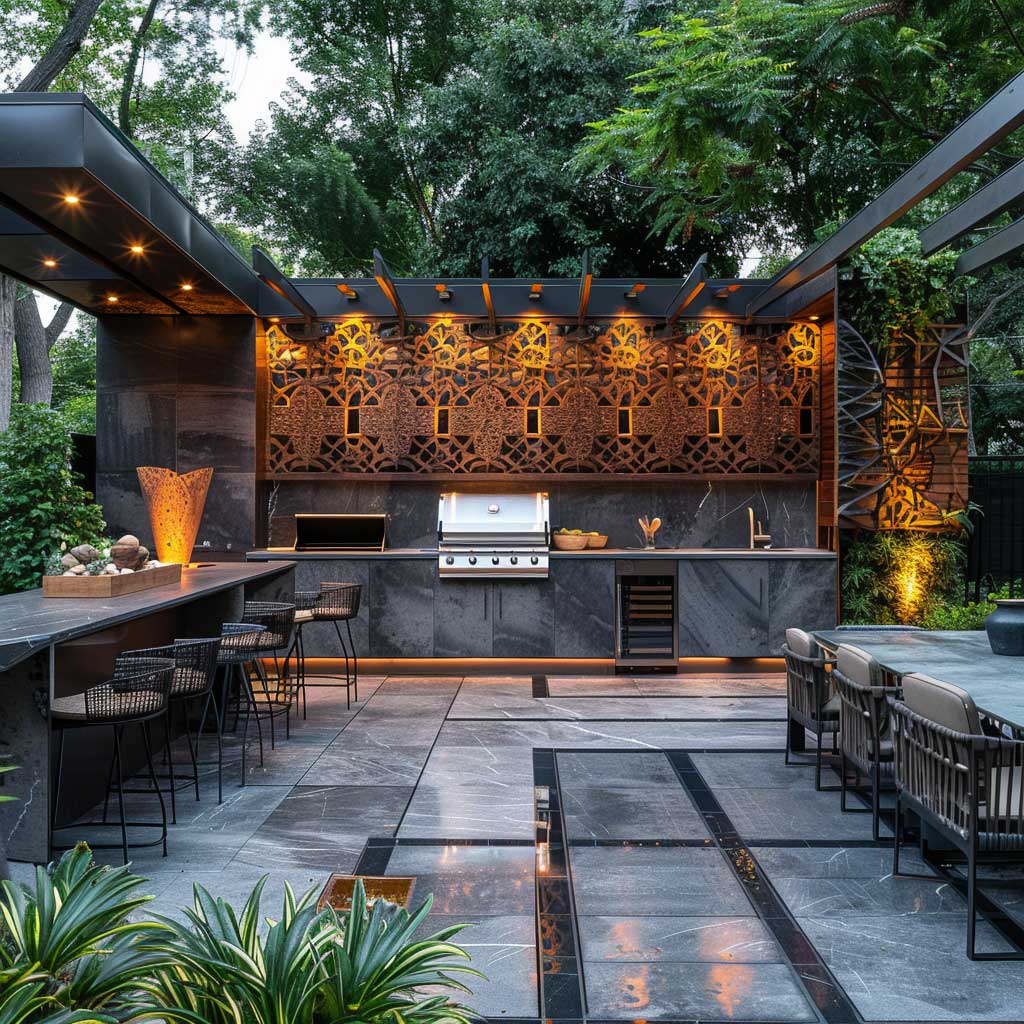
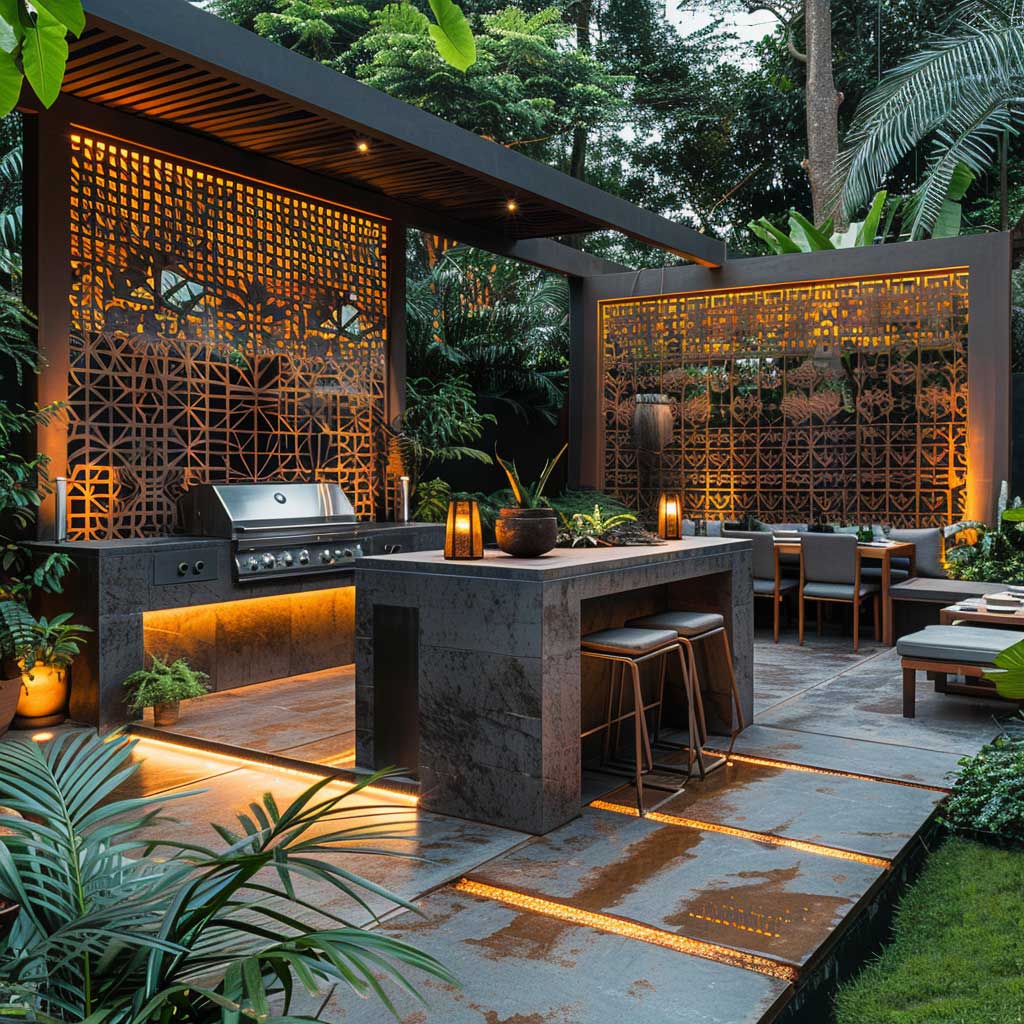
Laser-cut metal screens are doing more structural design work than most people realise when they pin them. A well-placed geometric panel — say, a Moroccan lattice in 3mm Corten steel, 2.4m × 1.2m at around $600–$900 custom-cut — zones the BBQ area from the seating area without building a wall. You get privacy, a visual anchor, and at golden hour, shadow patterns across your concrete deck that no lighting designer could replicate. I’ve used this trick to make a 4×4m patio feel like a designed destination instead of just a slab with a grill on it.
Corten is the right material here, not powder-coated mild steel. Corten develops a stable rust patina — the warm terracotta-orange surface — and then stops corroding. Powder-coated steel will chip and rust at the chips within two seasons outdoors. The anti-advice: don’t install Corten screens within 600mm of a light-coloured paving surface or rendered wall during the first year — the rust runoff will stain permanently. Seal the surrounding surfaces with a penetrating sealer before installation, or allow a 24-inch gap between the screen base and any permeable material.
Custom laser-cut grill station fascias follow the same logic. A flat steel panel with a geometric cutout welded to the front of a standard island frame costs $400–$700 fabricated locally and transforms a generic cement-board box into something that looks like it came from a landscape architect’s portfolio. Pick the pattern based on scale — hexagons and diamonds work at 60mm cell size on a full island face. Smaller cells (under 30mm) disappear from viewing distance and just read as texture. Bigger (over 120mm) look unfinished.
Geometric paving that holds up: herringbone-laid porcelain in a 600×200mm format, charcoal coloured, with a precision-cut steel edge strip separating the BBQ zone from the lawn. The metal edge (standard Permaloc aluminium edging, $2.50/linear ft) is functional and keeps the geometric reading consistent with the screens and station above. Avoid mixing paving patterns under the same BBQ roof — one pattern, one colour, full stop. Two patterns in the same outdoor zone is how spaces end up looking like a sample board.
Ambient lighting for geometric metal outdoor spaces: floor-mounted uplights aimed at the Corten screen create the shadow-pattern effect after dark. Two Kichler 6-inch brass step lights ($55 each) inset into the paving edge give pathway definition without overhead fixtures. You’ll notice that every Pinterest-famous outdoor BBQ space with geometric elements uses exactly zero hanging lanterns — lanterns compete with the geometry for attention and lose. Gardeningetc’s outdoor grill station roundup covers more material-plus-lighting combinations worth bookmarking.
Plants that work alongside geometric metal: ornamental grasses (Karl Foerster, $18/plant) sway against rigid geometry and add the only soft movement in the space. Succulents in square concrete planters, spaced in a grid, extend the geometric theme to the planting. What doesn’t work: anything with a blob shape — rounded boxwood balls, mounding perennials, flowering shrubs with no structure. Those look fine behind a brick BBQ. Against geometric metal they look accidental.
The Bottom Line
Metal BBQ Areas Work When the Material Logic Runs All the Way Through
Stainless needs matte surrounds. Blackened steel needs concrete underfoot. Geometric Corten needs clean geometry everywhere else — paving, planting, furniture. Break the logic at one point and the whole space reads unresolved.
Budgets: a minimalist stainless setup done right runs $4,000–$8,000 all-in. An industrial steel station with polished concrete lands at $6,000–$12,000. A geometric metal BBQ zone with Corten screens and custom fascia: $5,000–$10,000. None of these numbers include the grill itself.
Save this post before you start sourcing materials — the finish and lighting decisions come first, not last.
Related Topics
FAQ
What metal finish holds up best for an outdoor BBQ area in a humid climate?
How much does a metal BBQ island cost to build in 2024?
What colour combinations work best for a modern metal BBQ grill area?
Can a metal BBQ station work in a small outdoor space?
What is the best lighting setup for a metal outdoor BBQ area at night?
Complete guide
Patio and Yard Ideas That Turn Any Backyard Into a Living Room Outside
Flooring, furniture, shade, pools, kitchens, fire pits, courtyards — all in one place