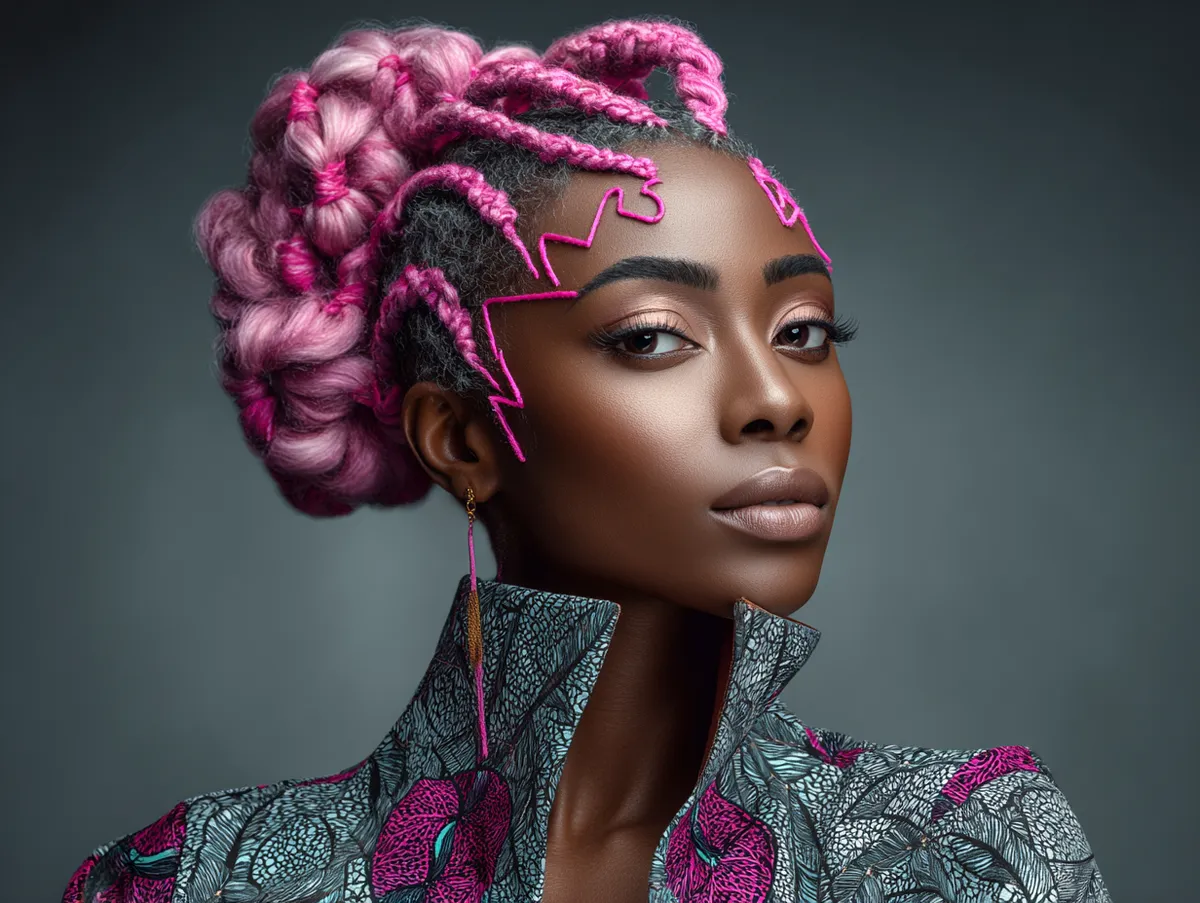
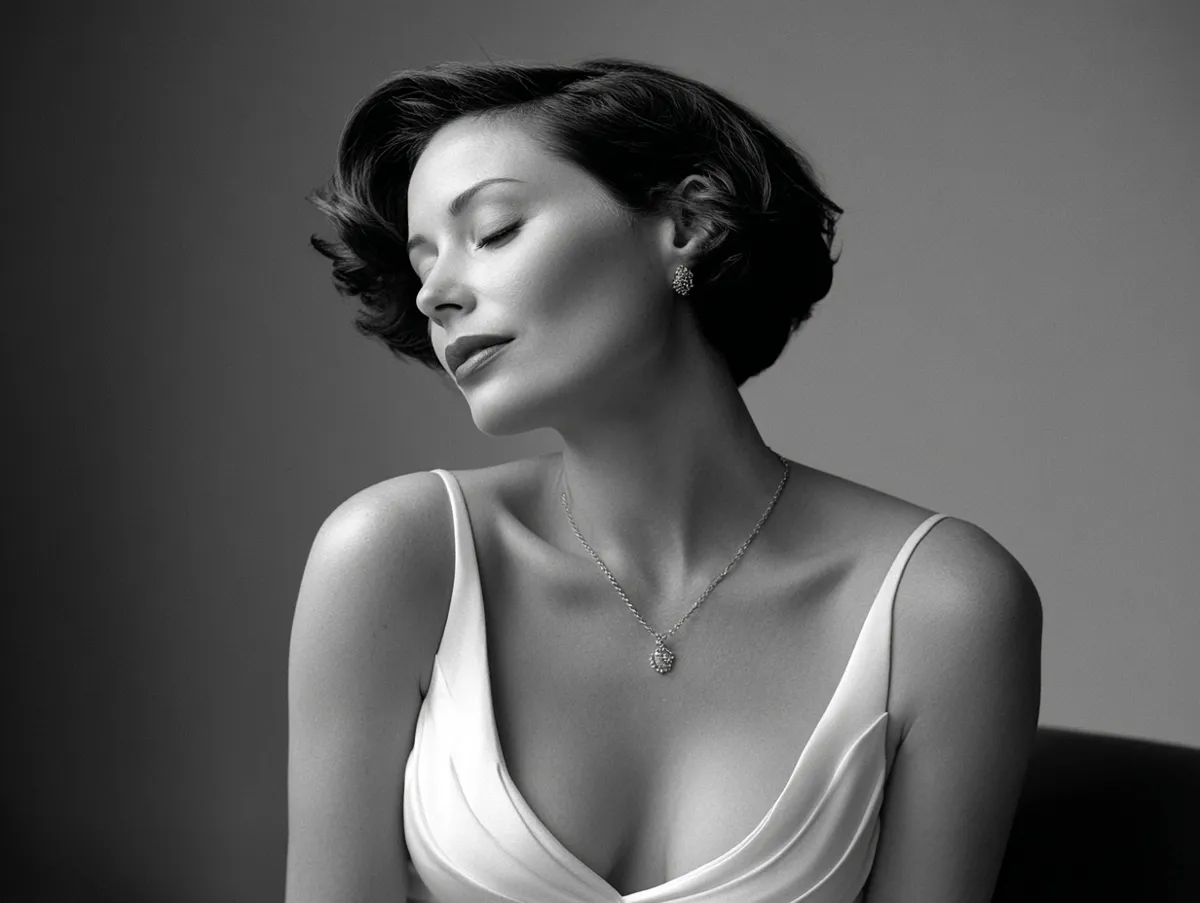
1960s hairstyles carry a kind of architectural confidence that no other decade has matched before or since. The bouffant, the beehive, the flip — each one was engineered to take up space, command a room, and hold up through three hours of dancing. I’ve worn a bouffant to two separate vintage parties and both times someone stopped me to ask if it was a wig. It wasn’t.
You don’t need a salon appointment or a time machine to pull these off. A rat-tail comb, a can of Kenra Platinum Silkening Mist ($22), and about forty minutes is all it takes to get from flat to full-on 1960 glamour. The trick most people skip is prepping with day-old hair — freshly washed strands are too slippery to hold backcomb structure for longer than an hour.
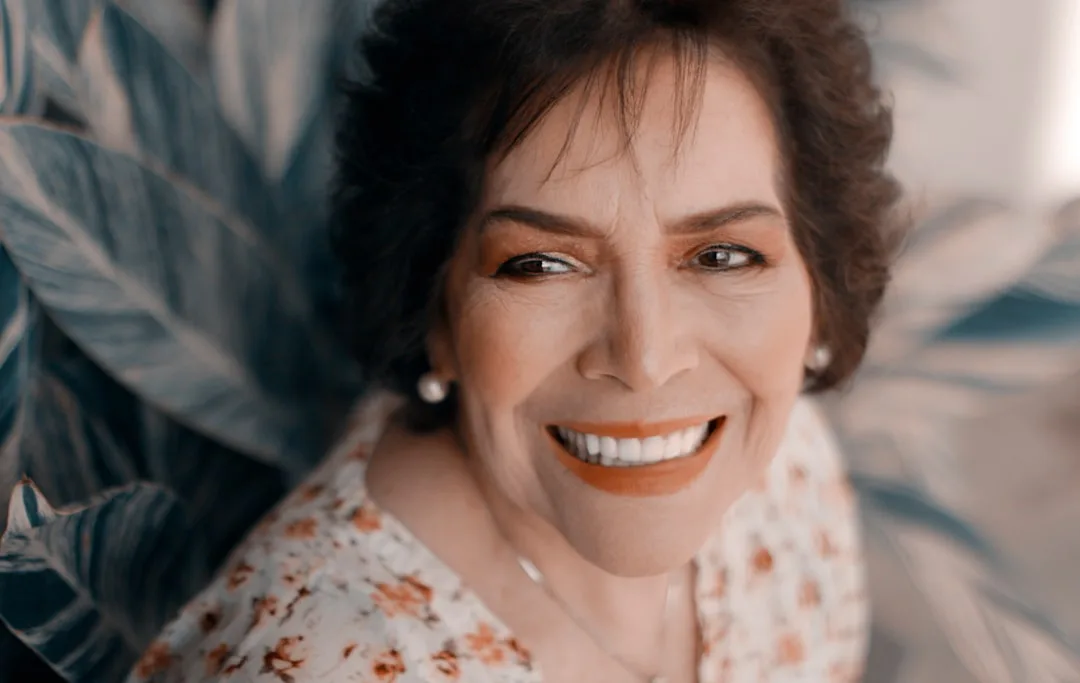
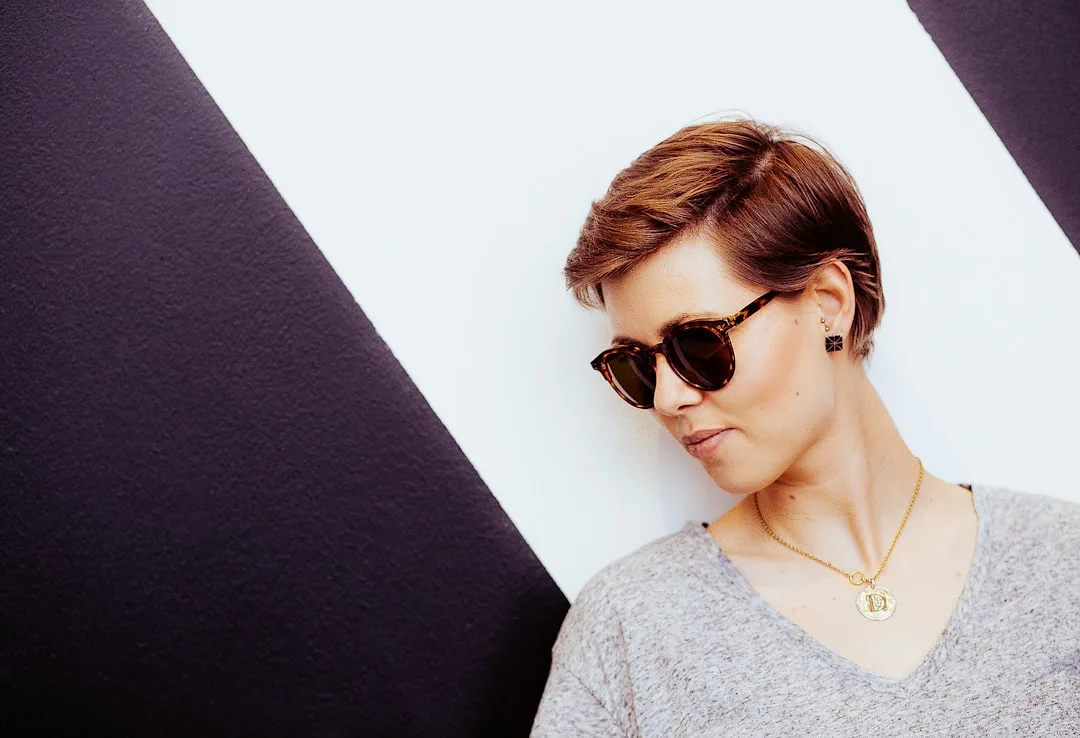
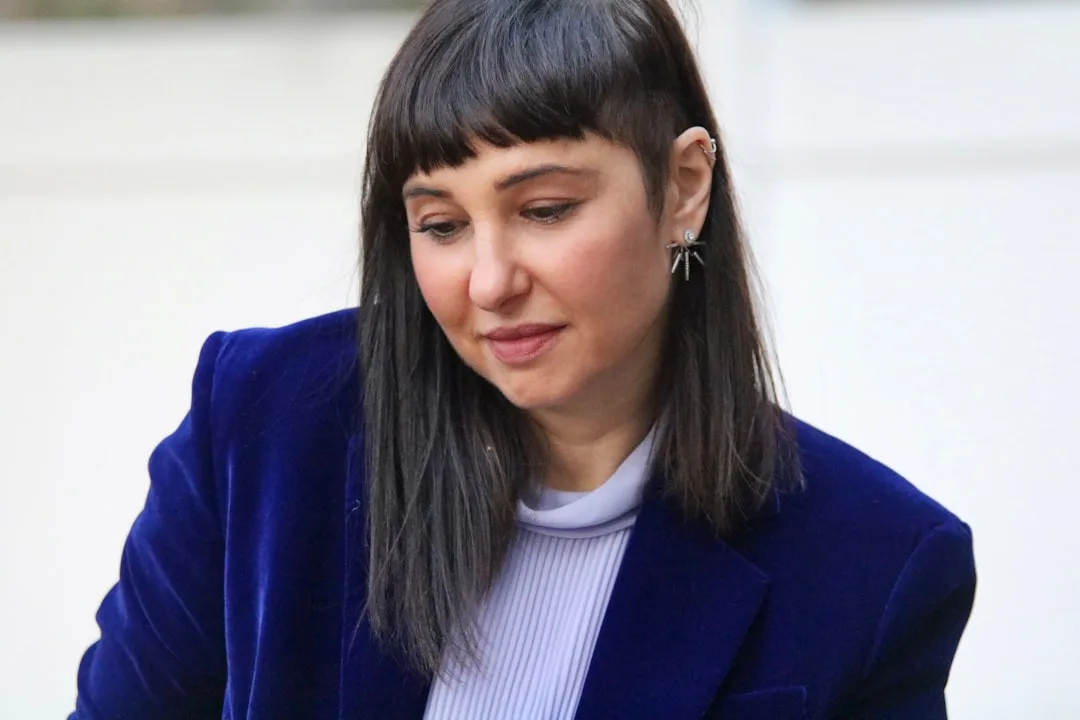
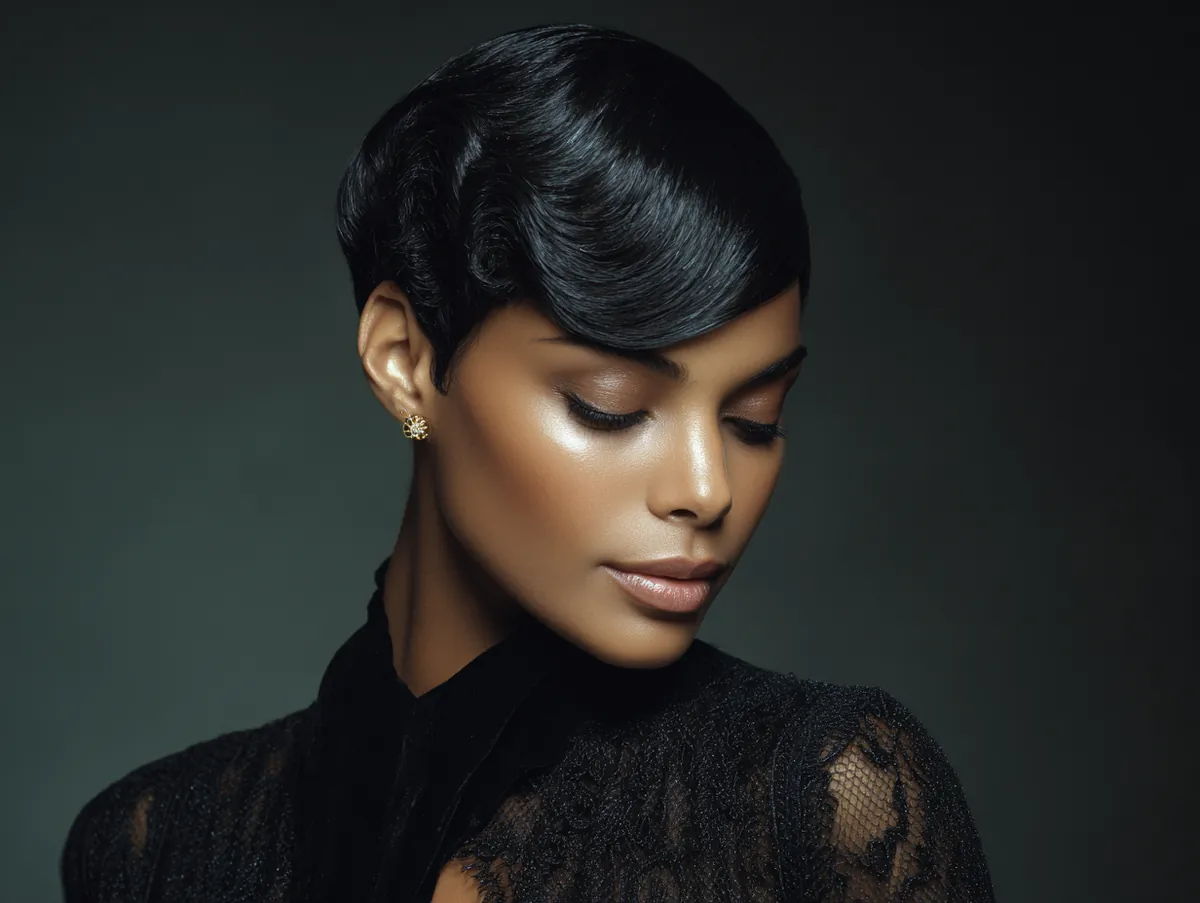
Every style in this collection works with natural hair color, so you’ll find breakdowns for blonde, auburn, and brunette across the three core silhouettes. Pick the section that matches your hair and start there — the images do the heavy lifting, and the text fills in what photos can’t show.
- The blonde bouffant needs teased crown height plus a smoothed outer shell — two separate steps, not one
- Auburn flip hair holds better with a round brush blow-dry than with a curling iron, and the difference shows in photos
- Brunette beehive was invented in 1960 by Chicago stylist Margaret Vinci Heldt — it was designed to fit under a pillbox hat, not to stand alone, which explains the shape
- Kenra Platinum Silkening Mist ($22) and Got2b Glued Spray ($7) together cover every hold scenario across all three styles
- Mod-print shift dresses and A-line silhouettes are the correct outfit pairings — fitted pencil skirts work too, but not maxi lengths
Blonde Bouffant 1960s Hairstyles with Crown Volume
The blonde bouffant is the most recognizable of all 1960s hairstyles and the one most often botched by people who rush the teasing step. Tresemmé Extra Hold Mousse ($6) applied to dry roots before backcombing is what separates a bouffant that lasts six hours from one that collapses by 9 PM. Work the comb in one-inch sections at the crown, pushing the hair toward the scalp rather than away from it — the motion is a push, not a lift. My go-to finish is Kenra Platinum Silkening Mist over the smoothed outer layer, which adds the lacquered sheen you see in every 1960 Vogue editorial.
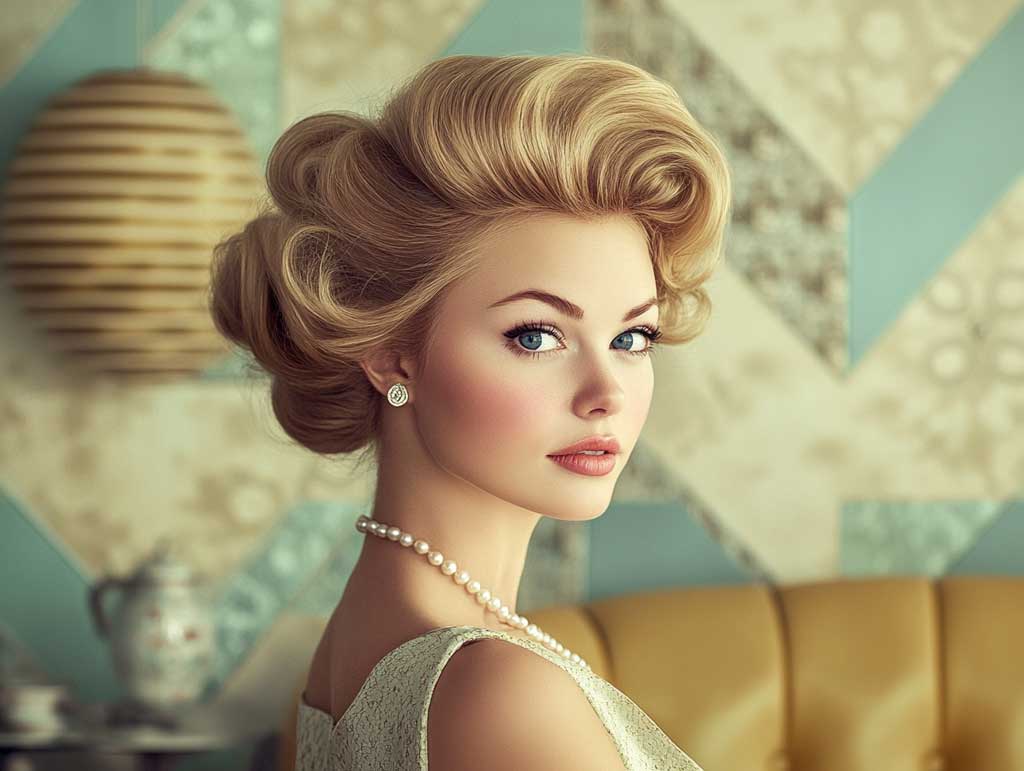


Pair the bouffant with winged liner in black liquid — I use Stila Stay All Day ($22) because it actually makes it to midnight without smudging — and a soft pink lip. The combination reads as authentically 1960 without needing a full period costume around it. A-line dresses in solid colors photograph the best against this silhouette, because the bouffant volume at the crown creates a visual triangle that fitted pencil skirts underscore perfectly. What you don’t want is a high-necked blouse: it competes with the jaw framing the bouffant creates and makes the whole look feel crowded above the shoulders.
Does the hair color matter for achieving height? Not as much as texture does — but blonde hair tends to be finer, which means it holds backcomb structure less stubbornly than darker hair. The fix is a texture spray like Bumble and Bumble Surf Spray ($32) before you begin, which gives blonde strands enough grip that the backcombed sections don’t slip. I’ve tested this method on color-treated platinum and on natural honey blonde and the results hold equally well either way. For a step-by-step breakdown of achieving bouffant height on shorter hair, this guide covers the technique in full.
- Don’t backcomb freshly washed hair. Clean strands are too smooth for the teased sections to grip. Style on day-two or day-three hair, or rough up clean hair with a texturizing spray first.
- Don’t use a fine-tooth comb for the entire process. Use a rat-tail comb for sectioning and a wide-tooth comb for backcombing — the wide tooth creates volume without snapping strands mid-party.
- Don’t spray hairspray directly on the smoothed outer surface while the hair is still loose. Set the shape with pins first, then mist from 12 inches away. Spraying at close range collapses the volume you just built.
Auburn Flip from the 1960s with Outward-Curled Ends
The 1960s flip hairstyle is the most approachable of all vintage party looks — and auburn hair makes it look intentional in a way that blondes and brunettes don’t quite achieve. The warm copper tones catch party lighting in a way that photographs like a filter was applied, but no filter is involved. Achieve the outward curl at the ends using a large-barrel round brush (I use a Dyson Airwrap on the high barrel setting, but a $12 Conair brush and a good blow dryer gets you 90% of the same result). The key is directing heat downward through the hair from mid-shaft to ends, then rolling the brush outward at the final inch — the flip is in the wrist motion, not the tool.
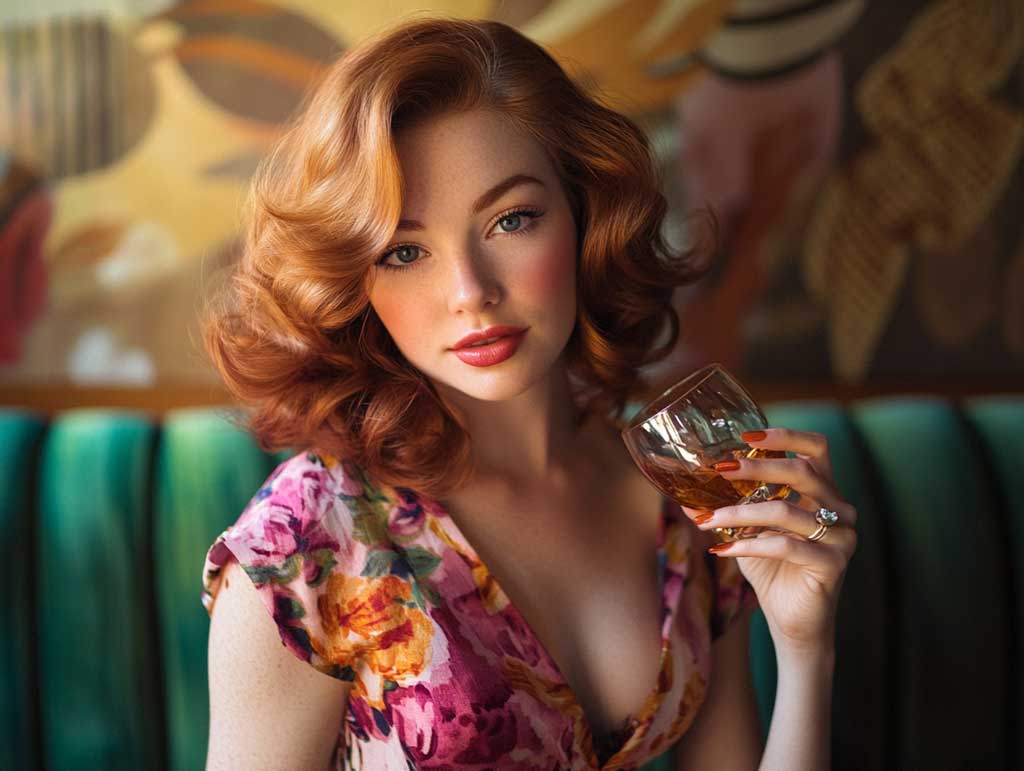


Side-part the hair before you blow dry — a center part is a modern habit that immediately kills the 1960s reference. The side part pulls one side of the hair lower across the forehead in a way that frames the face exactly like the era’s editorial photos. Add a velvet or grosgrain headband ($8-$15 at any vintage or craft store) across the crown once the flip is set; it holds the shape and reads as a costume detail without requiring anything else. Floral print dresses with geometric accents and bold primary colors are the correct pairing here — I’ve worn this combination three times and the look photographs as a cohesive period reference every single time.
Skip the curling iron version of this style. Barrel irons create a curl that is too round and uniform — the flip should have directional momentum, not a spiral. You want the ends pointing away from the face and slightly upward, like a wave breaking at the last second. A curling iron gives you ringlet energy; a round brush blow-dry gives you 1960s energy. The difference is obvious in photographs. If you love this era’s party hair and want to push it into full glam territory, the disco era hairstyles here are a natural next step.
Brunette Beehive Structure from the 1960s Party Playbook
The brunette beehive is the most dramatic of the 1960s hairstyles you can recreate at home, and its history is more specific than most people realize. Margaret Vinci Heldt invented it in Chicago in 1960 after Modern Beauty Shop magazine asked her to create a new decade-defining look — she modeled the shape on a velvet fez hat she owned. The original beehive was actually engineered to fit under Jackie Kennedy’s signature pillbox hats, which explains why the shape tapers upward rather than spreading wide like the bouffant. Darker hair tones make the tapering structure more visible because the sheen runs along the outer surface in a single direction, unlike lighter hair which scatters light and softens the silhouette.


Build the beehive in three stages: backcomb a two-inch section at the crown to create structural core height, then layer two more sections over it and pin them flat against the first, then smooth the outer surface with a boar-bristle brush in single strokes from hairline to tip. Got2b Glued Spray ($7) is the only drugstore option I trust for the base hold — it doesn’t budge for six hours. The outer surface gets Kenra Platinum Silkening Mist for smoothness, not more hold spray. Two different products for two different jobs: the core needs grip, the surface needs gloss.
Mod-inspired shift dresses in bold geometric prints are the correct pairing — think black-and-white Mondrian blocks, the kind of print Mary Quant made famous in 1965. The vertical line of the dress and the upward taper of the beehive create a silhouette that reads as a complete 1960s reference, not just a costume. Statement drop earrings in gold or crystal anchor the look at the jaw level, which matters because the beehive raises your visual center of gravity significantly. What doesn’t work is anything ruffled or prairie-adjacent — the structured geometry of the beehive needs geometric clothes around it, not romantic fabric. Vintage party hair doesn’t stop at the 1960s — the disco era’s take on big-hair glamour is covered here with color breakdowns by shade.
ArtFasad Hair Edit
1960s party hair is an architecture problem, not a product problem — get the structure right first
The bouffant, flip, and beehive each require a different building technique, and all three fail when you skip the structural step and go straight for the hold spray.
Brunette beehives need a two-product system: Got2b Glued at the core ($7), Kenra Silkening Mist on the surface ($22). Blonde bouffants need texture spray before any backcombing. Auburn flips need a round brush blow-dry, not a curling iron.
The outfit matters as much as the hair: shift dresses and A-line silhouettes are the period-accurate frame. Save this post.